
TOKYO / CHUO
Washington R&B Hotel Higashi-Nihonbashi
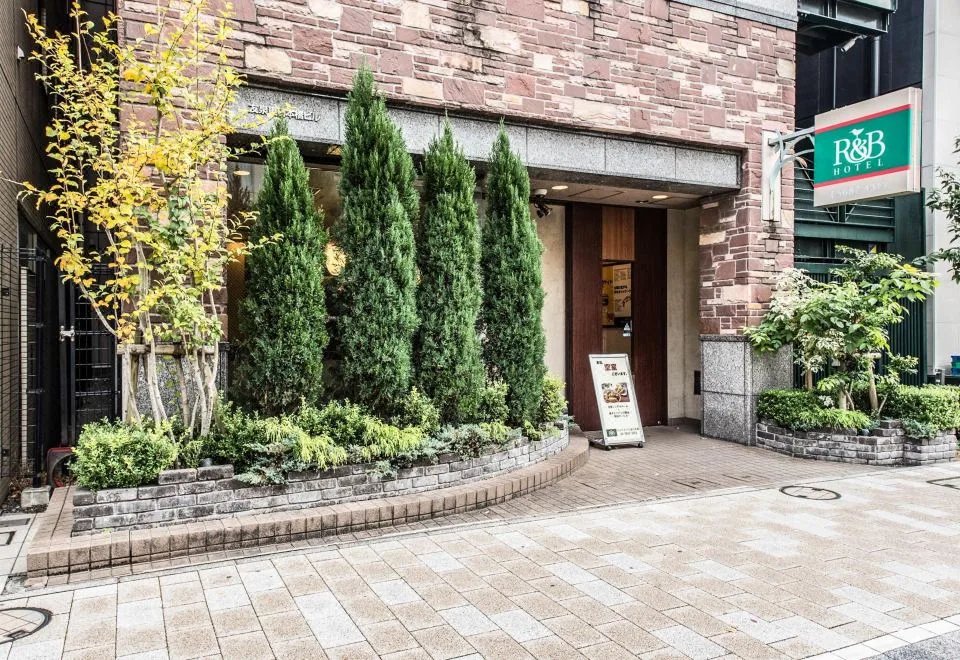
Washington R&B Hotel Higashi-nihonbashi
Washington R&B Hotel Higashi-Nihonbashi is a practical base for days spent exploring Tokyo and evenings when all you need is a shower and a good night’s sleep. Convenience stores nearby cover everyday needs. It works for a solo trip with light luggage, but not as a base for spending much of the day in the room — station access alone does not make up for the small space.
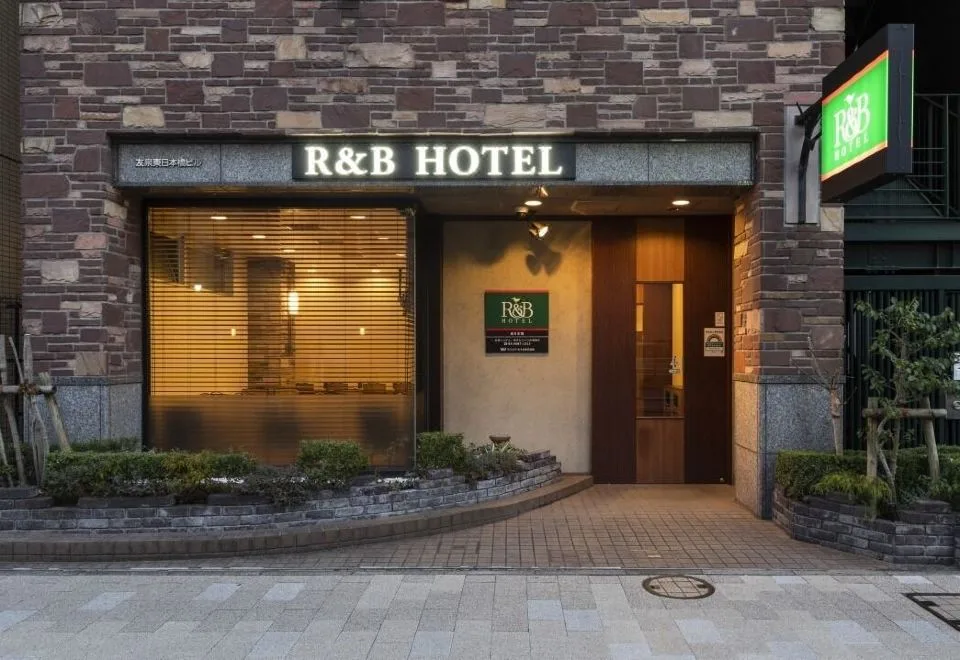
Reasons to stay and trade-offs to consider
Reasons to choose it
- Higashi-nihombashi and nearby stations offer different rail routes, useful for travellers relying on public transport.
- Convenience stores and everyday supplies are close by, so you need not walk far for drinks after returning late.
- Clean rooms and comfortable beds cover the essentials for a short stay.
Trade-offs
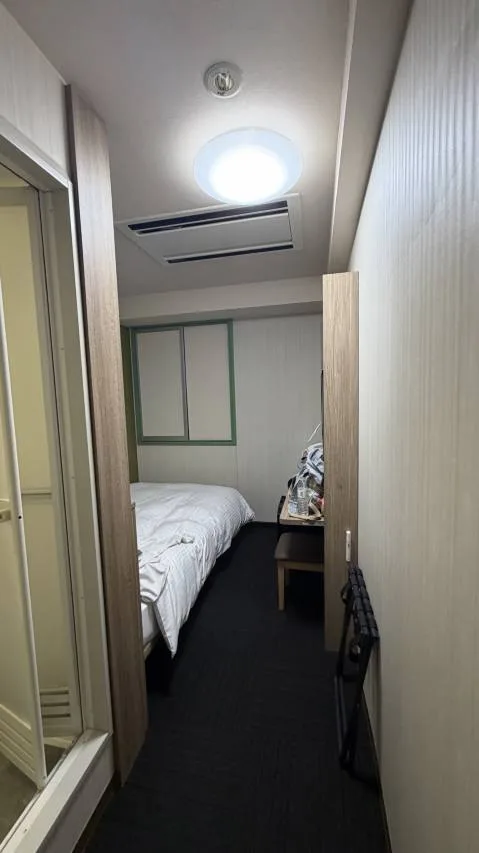
- Rooms can be small and somewhat dim; two travellers with large suitcases should choose carefully.
- There is no microwave inside the rooms; buying food at a convenience store does not mean you can reheat it in your room.
Rooms and luggage space: what to choose
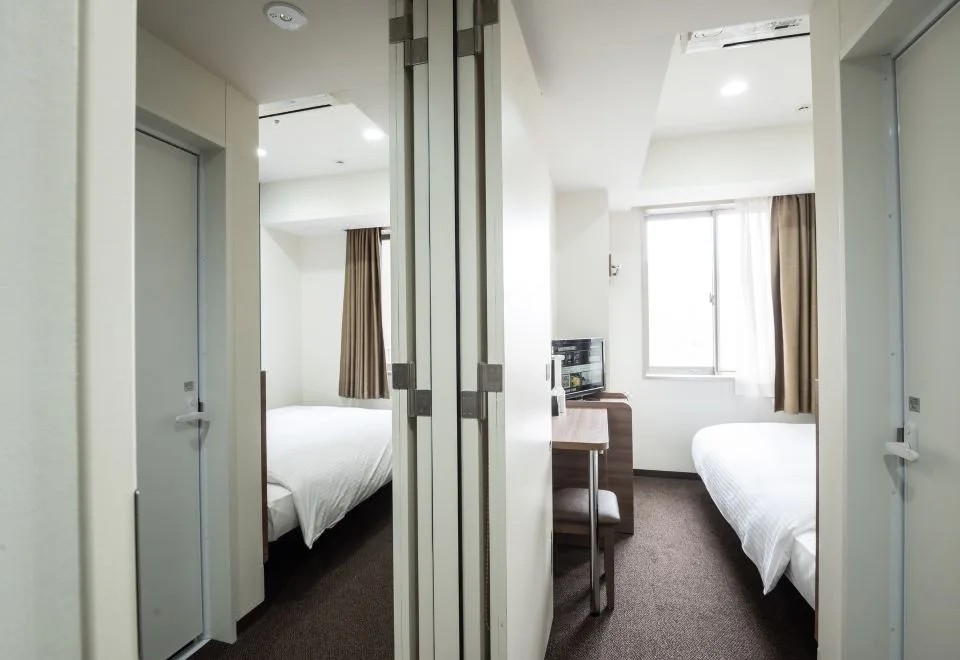
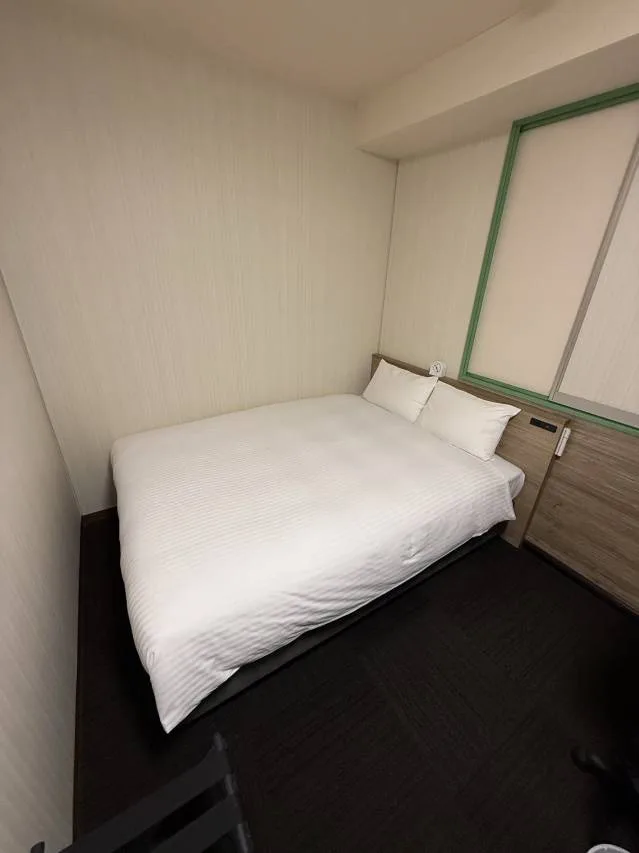
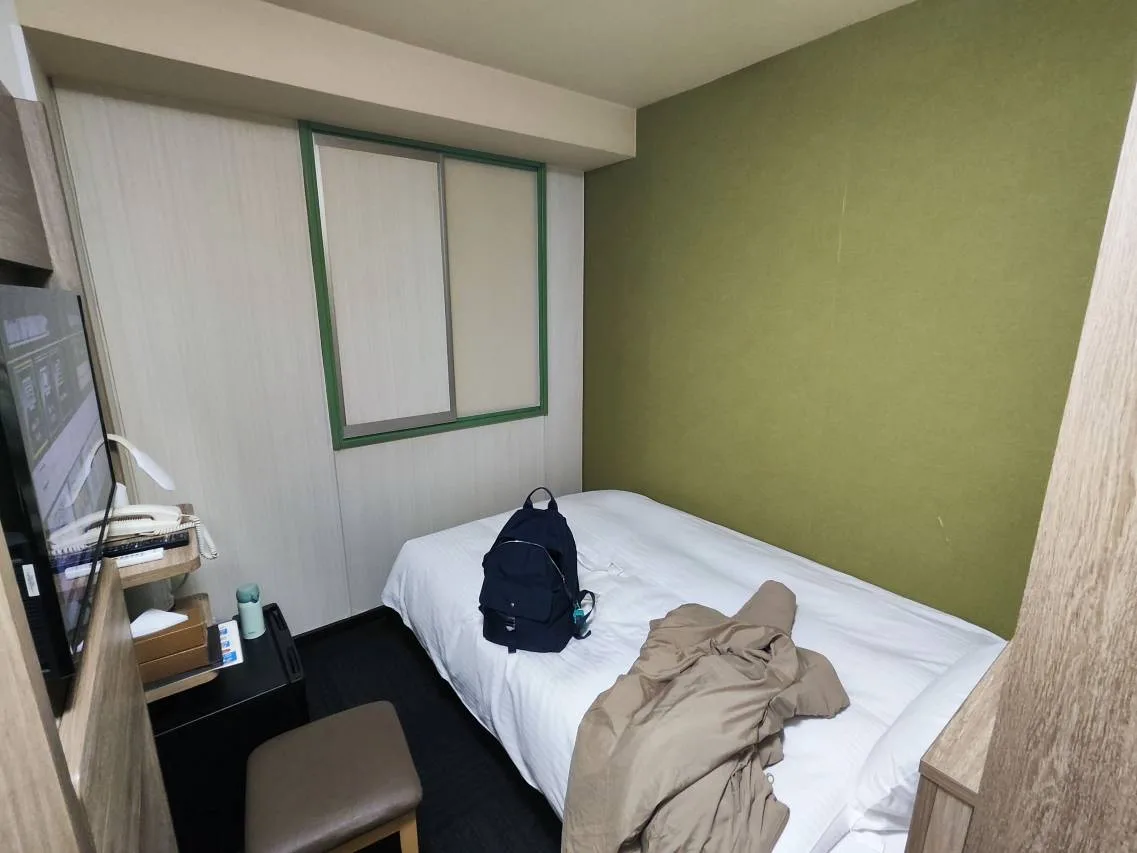
The official Single is 11 m² with a 120 cm-wide bed and suits solo travellers. Two people who want separate beds can compare Connecting Rooms: two 11 m² rooms joined by an internal door. This is not the same as one open 22 m² twin room. The benefit is having a separate bathroom and daily routine on each side. If two people share one room, consider the narrow bed and limited suitcase space rather than relying on the maximum occupancy.
Single rooms come in smoking and non-smoking versions, so pick the one you want at booking. Two people sharing one room can take the Single two-person plan: a 9 square metre room with a 140 cm semi-double bed, cheaper than two Singles but with space to open only one suitcase — two large cases will not fit.
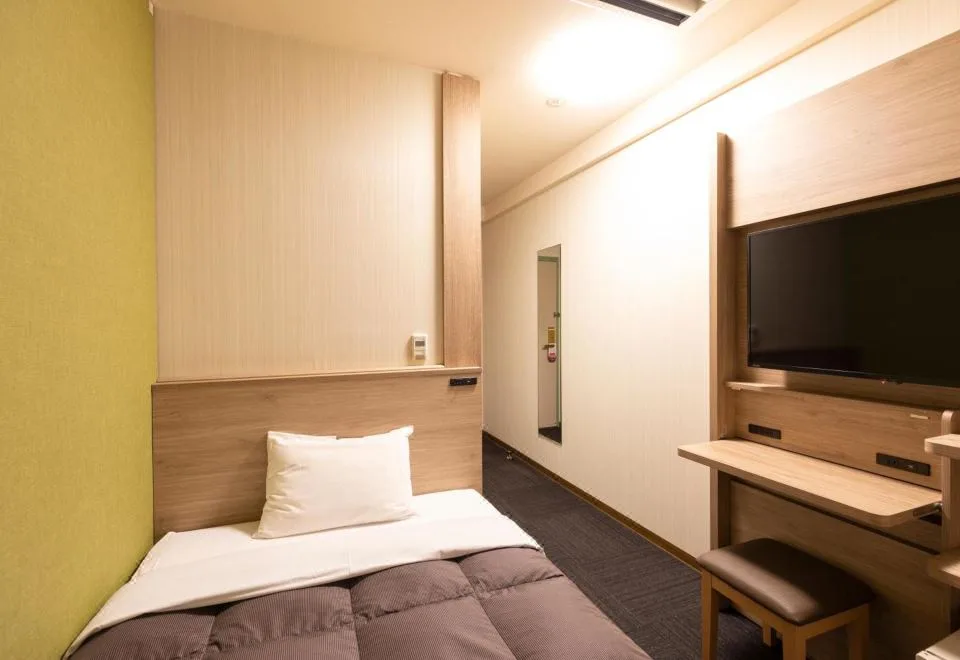
Rooms come with free Wi-Fi and wired internet, a television, a fridge, a washlet toilet, a hair dryer, a desk and an electric kettle, and the bathroom has a tub and a shower. The essentials are covered, so a short stay needs little extra packing; the 19-inch television is enough for an evening in, but do not expect a large screen.
Open one 28-inch suitcase in an 11 square metre room and the walkway leaves only turning space. With two large suitcases, one opens flat while the other stands against the wall. Shopping bags make it tighter still, so for three nights or more with a big Akihabara haul planned, compare the Connecting Room or a larger room before you book.
The Suite Single Room is a fourth room type, with no size published on the booking pages I checked, so look at the room page photos and description before booking rather than judging by the name alone. Anyone wanting more space without a Connecting Room can compare the two side by side.
Check the room page photos before booking: the bedside space, the desk position and the bathroom size are all visible there. For two people sharing a room, ask at booking whether an extra bed is possible and how much walkway space is left with it, rather than finding out the room is too tight after arrival. For corners the photos do not show, asking the hotel before booking is the surest way.
Breakfast: plan around your mornings
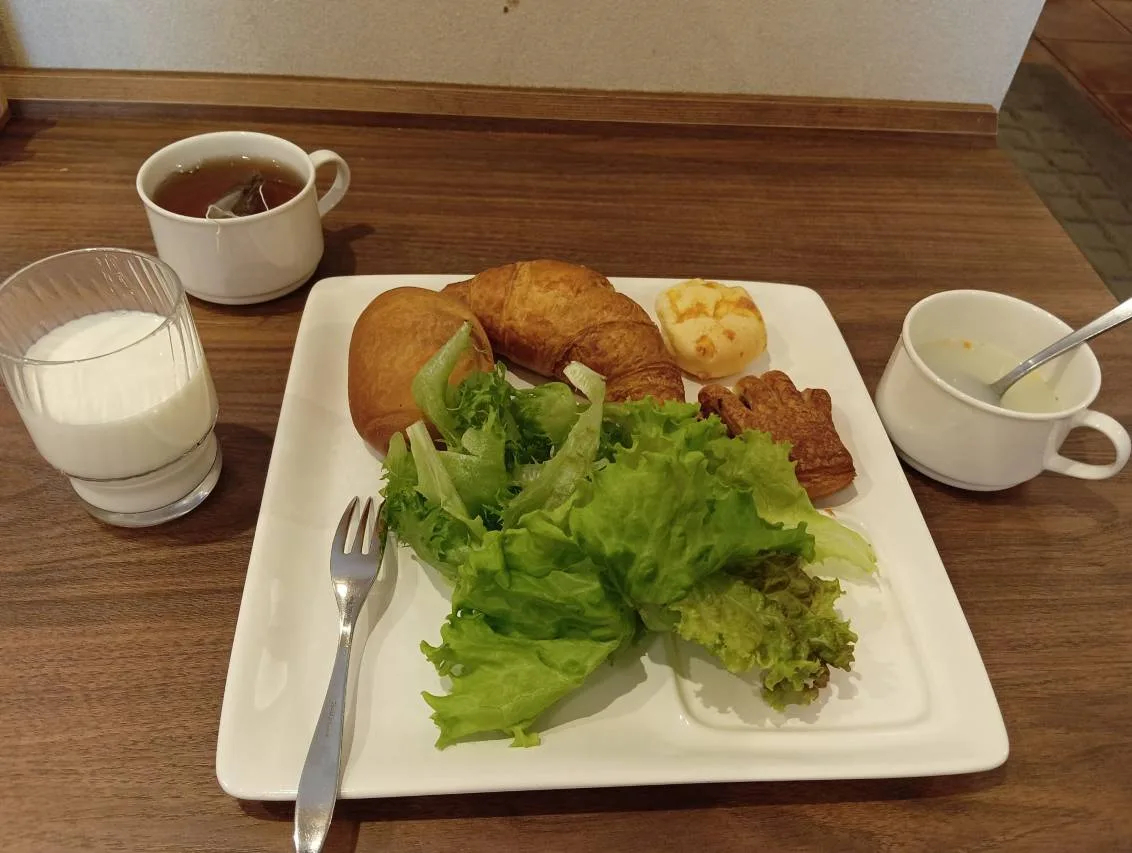
The official buffet breakfast focuses on freshly baked bread, seasoned boiled eggs, salad, curry and drinks, served from 6:30 to 9:30. It is handy for eating before catching a train, but work backwards from your departure and walking time if you need to leave early. Think of it as a simple, filling breakfast rather than a large luxury buffet.
Breakfast costs 700 yen per adult, free for children 11 and under and 700 yen for ages 12 to 17. Room-only guests can add it on the spot for 700 yen per adult. The plate in the photo — bread, croissant, salad, milk and tea — is the combination I take.
For an early train, walk in when it opens and you can eat and leave within half an hour — eat and head straight to the station, with no detour needed. Sleep in a little and arriving before 9:00 still works, but do not leave it until closing time. This is not a grand luxury spread; it suits anyone who wants a simple, filling start before heading out.
Breakfast is Western-style: bread, eggs, salad, curry and drinks, with no Japanese set of rice and miso soup. Anyone wanting a Japanese breakfast can pick up onigiri at the convenience store downstairs instead.
Location, transport and luggage
Official directions indicate around three minutes on foot from Higashi-nihombashi Exit B3, about one minute from Exit C1 near the east exit No. 6 direction at Bakurocho, and around five minutes from Asakusabashi’s east exit. These are ordinary walking routes; check lift access separately when carrying large luggage. For airport trains, confirm the destination of your particular service rather than assuming every Asakusa Line train reaches the terminals.
With large luggage, take the lift route instead of the nearest exit. Beside the Nishimagome-bound ticket gate at Higashi-Nihonbashi station there is a lift straight to the street, surfacing at Exit B1. The concourse between Bakuroyokoyama and Higashi-Nihonbashi stations has another lift, leading to Bakuroyokoyama Exit A4. Bakurocho JR station has no lift of its own from the gate to the street, so from there use the connecting passage to the Toei lift. Bakuroyokoyama has escalators at Exits A1, A2 and A3, but they still involve stairs partway, so the lift is the safer choice with a big case.
Address:2-15-6 Higashi-Nihombashi, Chuo-ku, Tokyo 103-0004, Japan
Three stations sit within walking distance, so the rail choices go beyond Higashi-Nihonbashi alone: Bakurocho on the JR Sobu Line, Bakuroyokoyama on the Toei Shinjuku Line, and Asakusabashi on JR and the Asakusa Line. Nihombashi is about 1.4 kilometres away, Akihabara about 1.7, Ueno about 1.8 and Senso-ji about 2.8, all easy to fit into a day on foot or by train. Ginza looks close on the map but is more than 2 kilometres on foot, so do not trust the straight-line distance.
The Asakusa Line is the smoothest route to Haneda Airport, with through trains that need no change; for Narita, check the Sobu Line departures rather than relying on a single station.
Where to go and eat nearby
The convenience store downstairs and supermarkets nearby matter more on a short stay than having tourist sights directly outside. I would explore Nihombashi on foot and take a train to Asakusa or other districts. If you plan to stay out in Shinjuku late every night, allow for the cross-city journey home. This hotel suits returning after a day out, rather than spending the whole evening around the property.
Nihombashi is a short distance from the hotel, its historic buildings and museums grouped in one area, so half a day of slow walking fits well. When your feet tire there is no need to push on; trains run from the same area back to the hotel.
For a half-day nearby, see Nihombashi museum and historic architecture walk。
Akihabara and Ueno are a few minutes by train or around twenty minutes on foot. The hotel fits an itinerary built around Nihombashi, Akihabara and Asakusa; anyone heading to Shinjuku every night should allow extra time for the journey home.
Senso-ji is reached by taking the Asakusa Line to Asakusa station, and the walk to Kaminarimon is short. Put Asakusa in the morning and Nihombashi in the afternoon and both fit in one day, with no need to split them across two.
Useful amenities and services
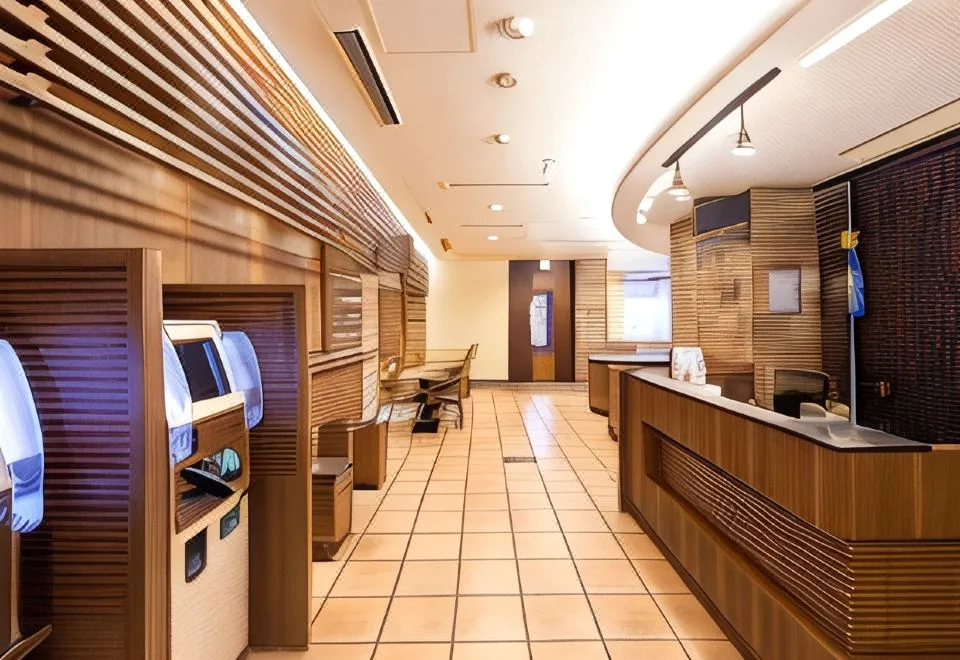
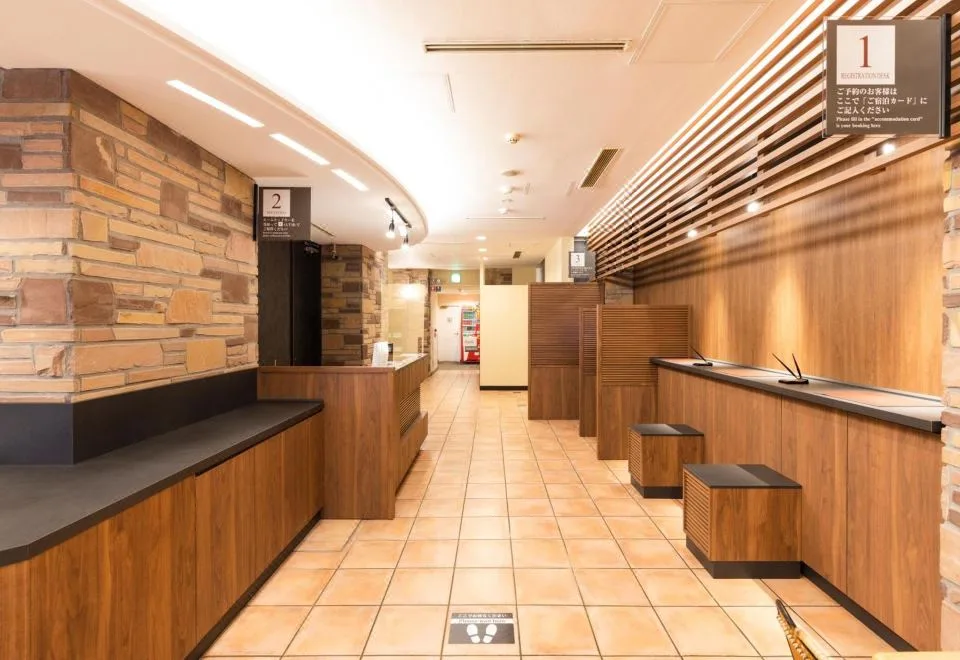
The lobby, luggage storage and basic facilities are practical advantages, and the welcome coffee is poured at the front desk in the afternoon. If you need to send a parcel, borrow a luggage scale or leave very early, confirm what is available in advance. Do not assume the language help you happen to get is staffed all day. Also ask where shared heating facilities are if you need to warm food.
Check in from 3 in the afternoon and the welcome coffee is served at the front desk from 15:00 to midnight, the R&B original freshly ground blend — pour a cup before heading upstairs. The front desk is staffed around the clock, so a late arrival or an early departure never leaves you facing a locked door.
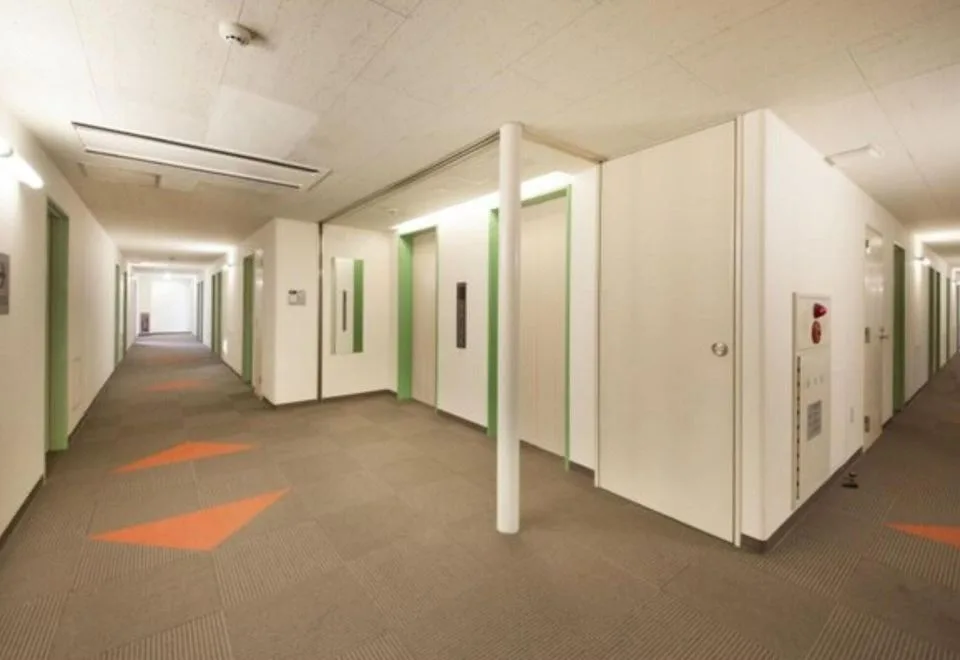
The building has a laundry room, vending machines and a lift, with free Wi-Fi in the public areas. There is a smoking area inside, and non-smoking floors are kept separate.
Room types split into smoking and non-smoking, so anyone sensitive to smoke should pick a non-smoking room at booking rather than asking on arrival. Food bought at a convenience store cannot be heated in the room, so ask the front desk where the shared heating facilities are before you buy, not after.
The front desk serves in Japanese, so anyone who does not speak it should write down questions before going to the desk — it is faster than gestures on the spot. Check-in, luggage storage and the welcome coffee are all handled at the same desk, so ask everything at once before heading upstairs.
One or two nights versus a longer stay
For one or two nights, I would prioritize light luggage and transit access. Over three or four nights, daylight and storage in the room become more important, particularly when two people’s shopping bags accumulate. Standing suitcases upright and unpacking only what is needed each day helps, but if you do not want that extra effort on holiday, choosing a larger room is simpler.
Check-in starts at 15:00 and check-out is by 10:00. Children of all ages are welcome, though an extra charge may apply even without an extra bed, so include the children in the headcount before judging the total price. No deposit is required, and pets are not allowed, so anyone travelling with an animal needs another place to stay.
Rooms are sold with or without breakfast. The breakfast plan costs a little more than room-only, so work out whether you will actually get up for it before choosing. Smoking and non-smoking rooms sometimes differ in price, so compare room type, smoking preference and breakfast together rather than judging by the nightly rate alone.
After the 10:00 check-out, leave your bags behind and go out for another half day of sightseeing. Come back in the evening, collect them and head to the station — walking light beats dragging a case around all day.
Accommodation details worth checking
The most common positives are cleanliness, quiet and transport links. Drawbacks include small rooms, thick duvets and dim lighting. A single complaint does not describe the whole hotel, but if you sleep lightly or get warm easily, these details matter more than the brand name when booking. A one-night stay feels different from spending hours in the room every day.
The bed sleeps well without feeling narrow, and the thick duvet keeps you warm. Anyone who runs hot should ask at booking whether a thinner duvet is available, rather than waking up warm in the middle of the night. The room is small, but the bed and pillows hold up for a night or two, and the bed itself never drags the stay down.
Some rooms feel dim, so anyone planning to read or work in the room during the day should think about how much light they need. On the other hand the building is quiet, and the corridor rarely disturbs sleep at night, which suits light sleepers.
Beyond the thick duvet and the lighting, light sleepers can also pack earplugs. How much sound carries from the next room cannot be checked before staying, and a pair of earplugs takes no space in the luggage — a pair is small enough to keep in a day bag — so bring them just in case.
My recommendation
I would choose this for a solo traveller with light luggage, a one- or two-night transfer stop or a rail-based itinerary. Decide on breakfast according to your departure time and on the room according to bed width and luggage space. For two people with large suitcases on a longer stay, prioritize space over a low nightly rate.
Pros and cons
Pros
- Ground lifts at Higashi-Nihonbashi Exit B1 and Bakuroyokoyama Exit A4, so large cases never need carrying up stairs.
- Welcome coffee from 15:00 to midnight, freshly ground and free.
- Breakfast buffet at 700 yen per adult, free for children 11 and under, open from 6:30.
- Front desk staffed around the clock, with luggage storage for late arrivals.
- Single rooms in smoking and non-smoking versions, and Connecting Rooms with a bathroom on each side.
Cons
- Rooms are small at 11 square metres for a Single, so two large cases need careful room choice.
- No microwave in the room, so convenience store food cannot be heated inside.
- Some rooms feel dim, so anyone spending the day inside should check the light first.
- Thick duvets run warm, so anyone who runs hot should ask about a thinner one at booking.
- Bakurocho JR station has no lift of its own to the street, so the Toei lift via the connecting passage is the way up.
Information checked: 2026-11-23