
TOKYO / CHUO
VIA INN PRIME Nihonbashi Ningyocho (JR-West Group)
VIA INN PRIME NIHONBASHI JR-West Group
Ningyocho convenience: room layouts matter more than the room name
VIA INN PRIME Nihonbashi Ningyocho suits travellers who enjoy a neighbourhood with restaurants, convenience stores and subway stations within walking distance without needing to stay in Ginza. Walks through Nihombashi, Koami Shrine and Ningyocho can become easy local outings. When choosing, focus on the actual beds and suitcase space.
VIA INN PRIME is a business brand of the JR West Group, and this Nihonbashi Ningyocho property sits in Nihonbashi Koamicho, about 250 metres and a four-minute walk from Ningyocho Station. What you get here is not Ginza buzz, but a neighbourhood where you can eat, shop and catch a train just outside the door; the point of this guide is to help you choose the room and sort out the luggage.
Is this hotel right for your trip?
Reasons to choose it
- Ningyocho restaurants and everyday supplies are close
- Compare room layouts for your travel companions
- Great for Nihombashi neighbourhood walks
Trade-offs to consider
- Suitcase space varies considerably by room type
- Breakfast can feel repetitive on longer stays
- Window views are not guaranteed across rooms
Location and access: exits, lifts and luggage
Walk from regular exits
The usual route is roughly three minutes from Ningyocho Exit A6, seven from Mitsukoshimae Exit A2 or eight from Nihombashi Exit D2. Using a different station for a Nihombashi stroll can be pleasant, but when arriving with bags I would pick a straightforward station with fewer transfers and clearly marked exits.
Luggage and lift routes
Ningyocho’s lifts connect the Ningyocho Intersection-side gates to exits A3 and A6. Follow station accessibility signs from your platform with large cases, then continue at street level. Do not mistake a shorter route through another exit for the lift route.
View hotel access directions / Check station lift facilities
| Hotel name | VIA INN PRIME Nihonbashi Ningyocho (JR-West Group) |
| Address | 16-12 Nihonbashi Koamicho, Chuo-ku, Tokyo 103-0016, Japan |
| Check-in and check-out | Check-in 15:00–24:00; check-out 05:00–10:00; reception open 24 hours. |
| Transit reference | About 250 m from Ningyocho subway station, roughly a four-minute walk. |
Ningyocho Station serves two lines, the Tokyo Metro Hibiya Line and the Toei Asakusa Line, so Ginza, Roppongi and Haneda are all easy to reach. Mitsukoshimae serves the Ginza and Hanzomon lines, and Nihonbashi serves the Ginza, Tozai and Asakusa lines. All three stations are walkable from the hotel, so you can pick the one that fits the day instead of always returning through Ningyocho.
From Haneda Airport, the Keikyu Line reaches Ningyocho Station in about 45 minutes; from Narita Airport, the Narita Sky Access Express reaches Nihonbashi Station in about 70 minutes. Neither time includes transfers or waiting, so leave extra margin on arrival day rather than planning to the minute.
By car, the hotel is about five minutes from the Hamacho Exit of the Metropolitan Expressway Central Circular Route. There is an affiliated Times coin parking lot on the hotel grounds, first come first served, with no reservations; if it is full or your car cannot enter, the hotel directs you to a nearby coin parking lot, and the fee is separate.
The surest way to find the lift is the gate name: the Tokyo Metro page states that the outside-gate lifts at Ningyocho connect the Ningyocho Intersection-side gates to exits A3 and A6, so head for a gate with that name and follow the accessibility signs. On the Hibiya Line the station code is H14, which also helps when changing trains.
For Koami Shrine, use Exit A2: it is about five minutes from Ningyocho Station Exit A2, an easier walk than going around from A6; on the way back, stroll the Ningyocho shopping street and return to the hotel from the A6 side, and the two exits loop the neighbourhood into a circle.
The official site notes that Haneda Airport reaches Ningyocho Station with no transfer at all, so with large cases there is no change of train or platform on arrival day.
Choosing rooms: beds, bathrooms and luggage
| Room type | Room size and bed configuration | Best choice for |
|---|---|---|
| Single | 14 m² / one 140 cm bed | For solo guests or two comfortable with compact space |
| Deluxe Single | 15 m² / one 160 cm bed | For travellers who prefer a wider bed |
| Double A | 17 m² / one 160 cm bed | Sofa and table for sitting and relaxing |
| Double B | 17 m² / one 160 cm bed | Desk and suitcase-friendly circulation |
| Deluxe Double | 20 m² / one 180 cm bed | For a wider bed and a 50-inch TV |
| Twin | 18 m² / two 100 cm beds | For two people sleeping separately |
| Deluxe Twin | 21 m² / two 100 cm beds side by side | Hollywood-style twin, separate bath and toilet |
| Triple | 29 m² / three 100 cm beds | For three people sharing, up to 3 |
| Accessible Room | 27 m² / two 100 cm beds | Barrier-free room, bathroom handrails |
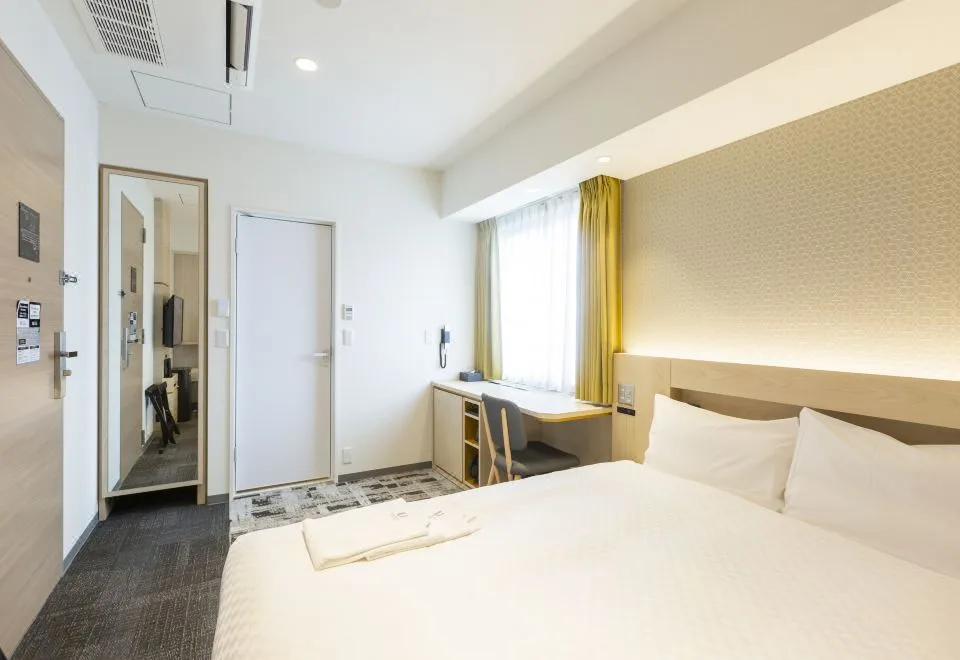
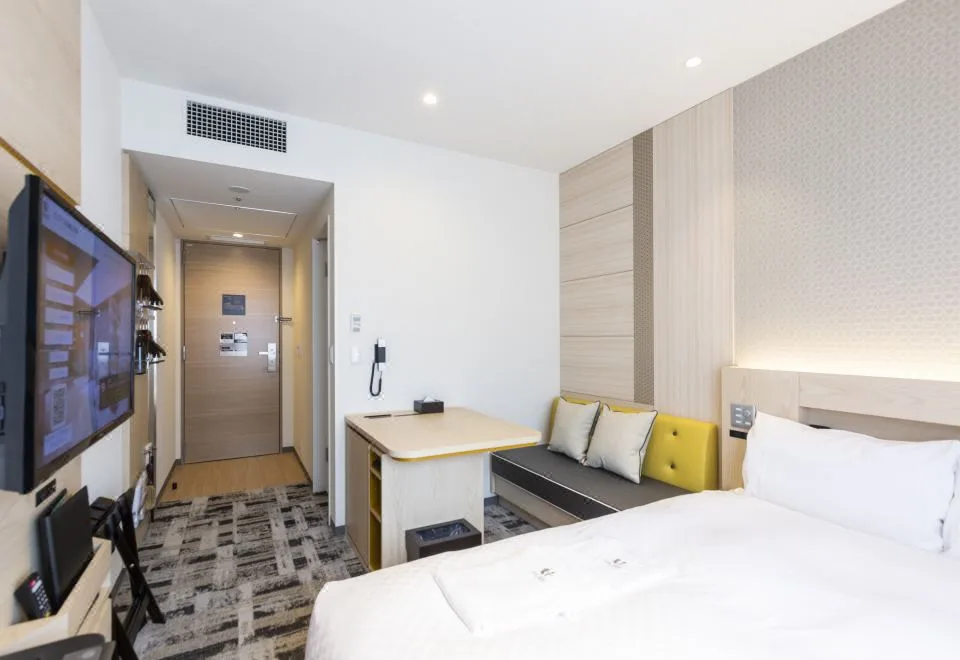
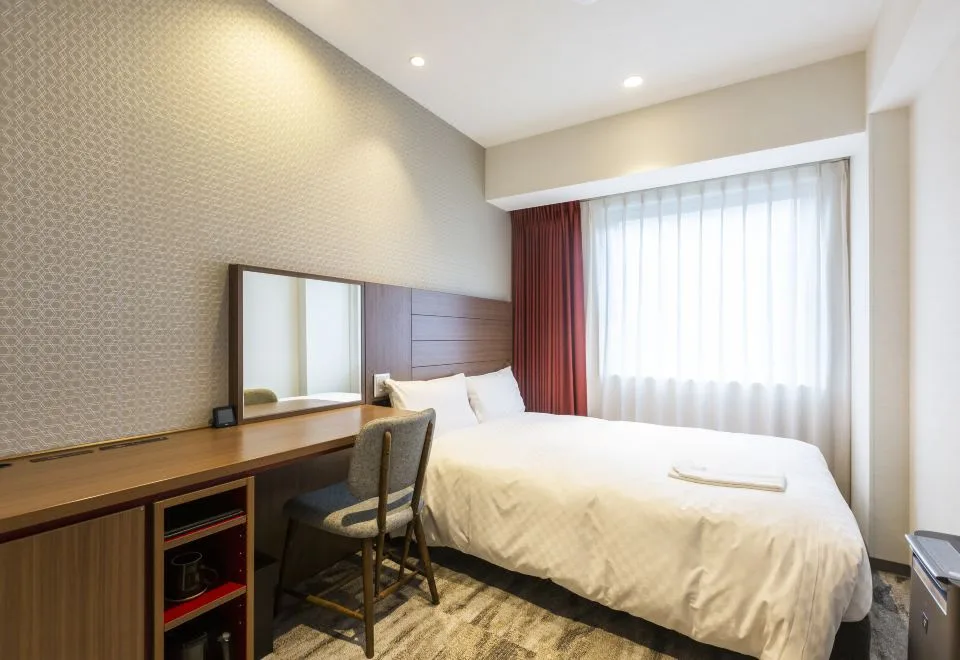
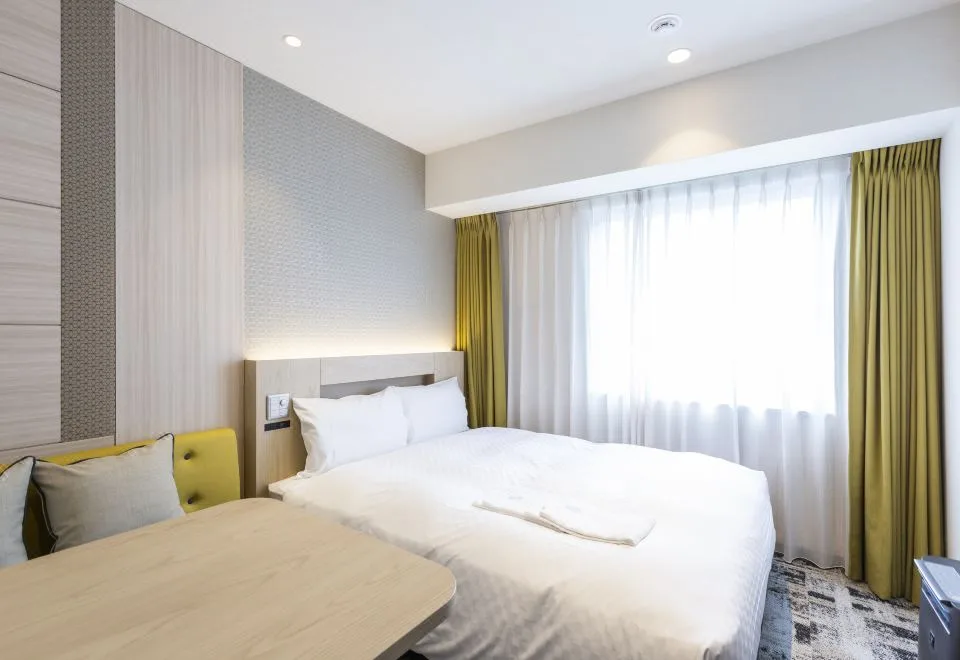
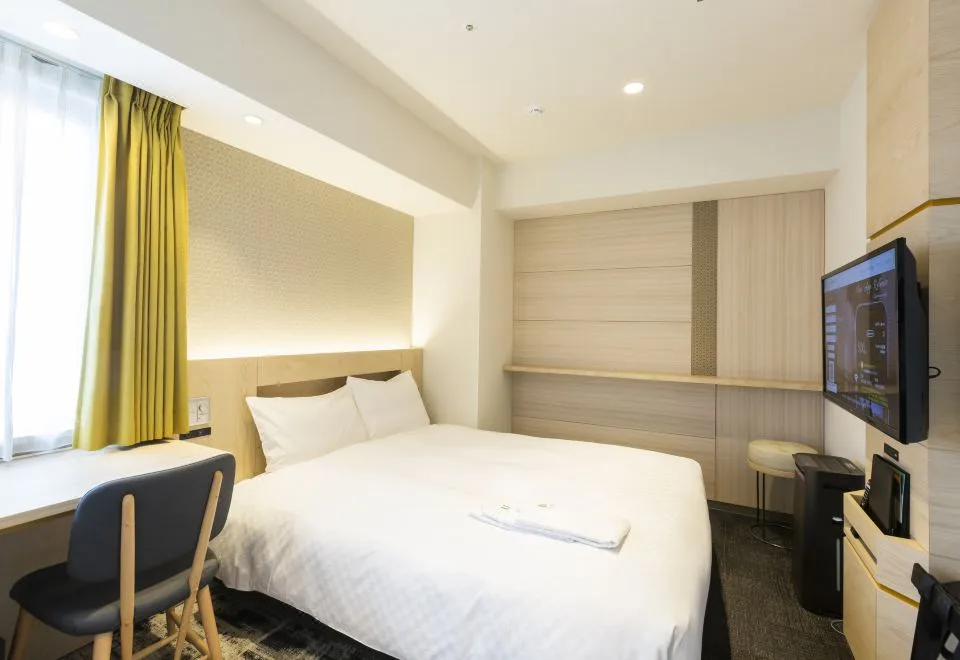
I would compare Double A and Double B side by side: both are 17 m² with the same 160 cm bed. Double A emphasizes a sofa and table, while B is set up with a work desk and different suitcase space. Choose A for eating or chatting in the room, and B if you need to work or organise luggage.
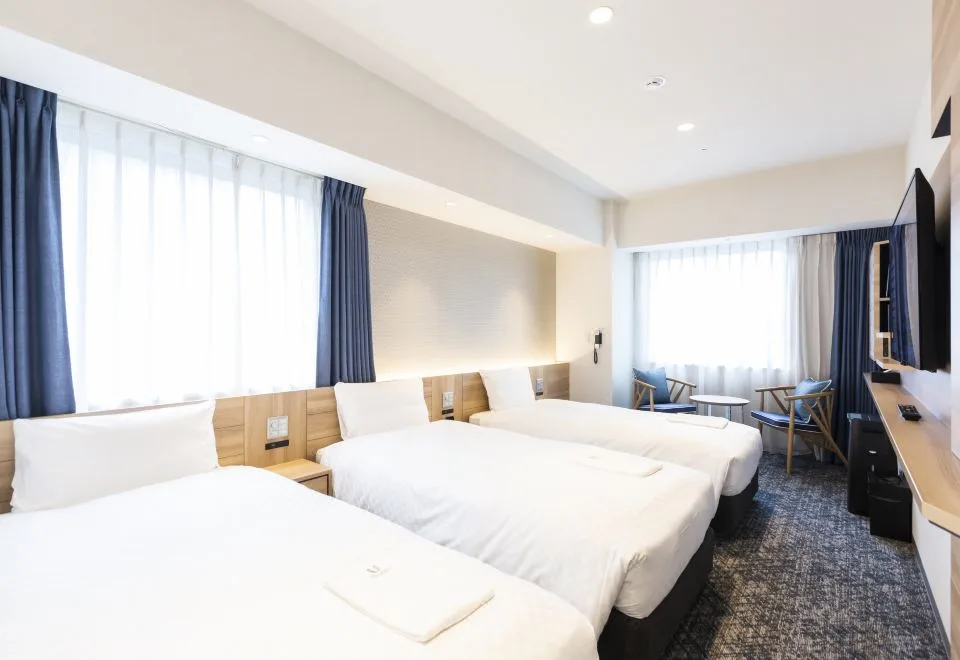
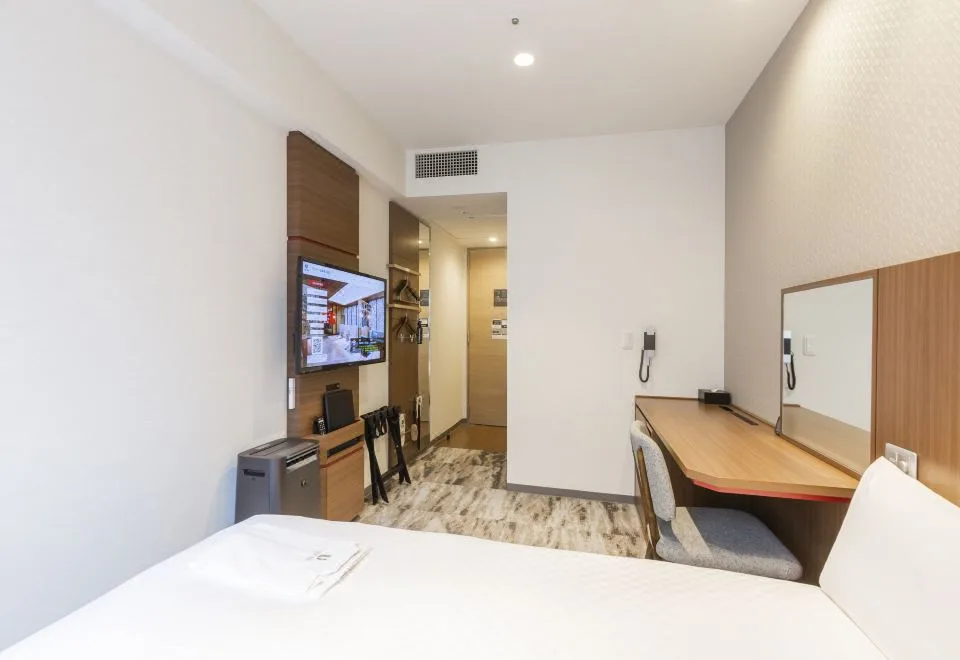
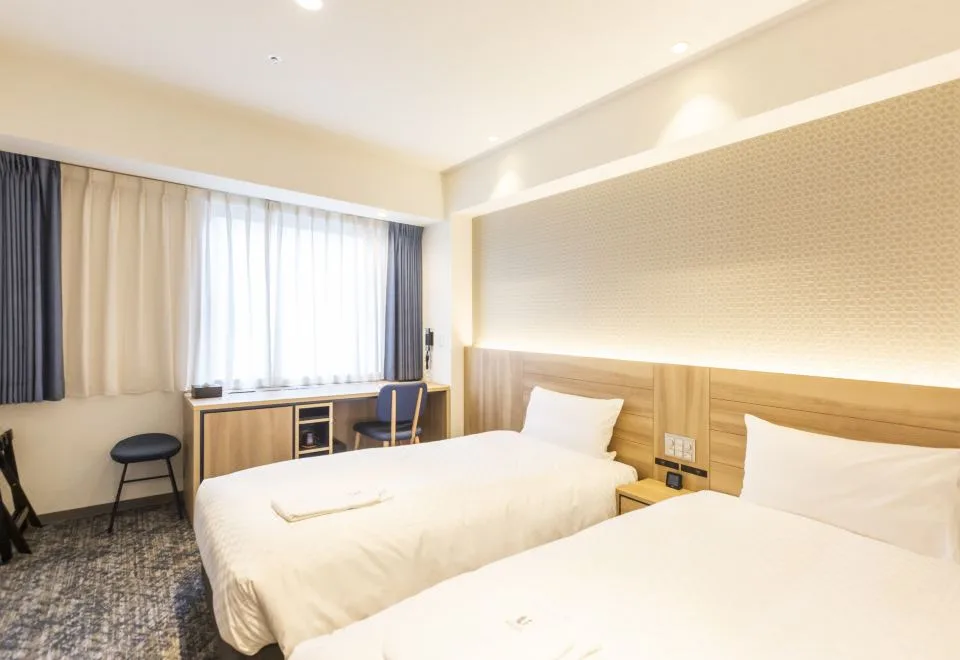
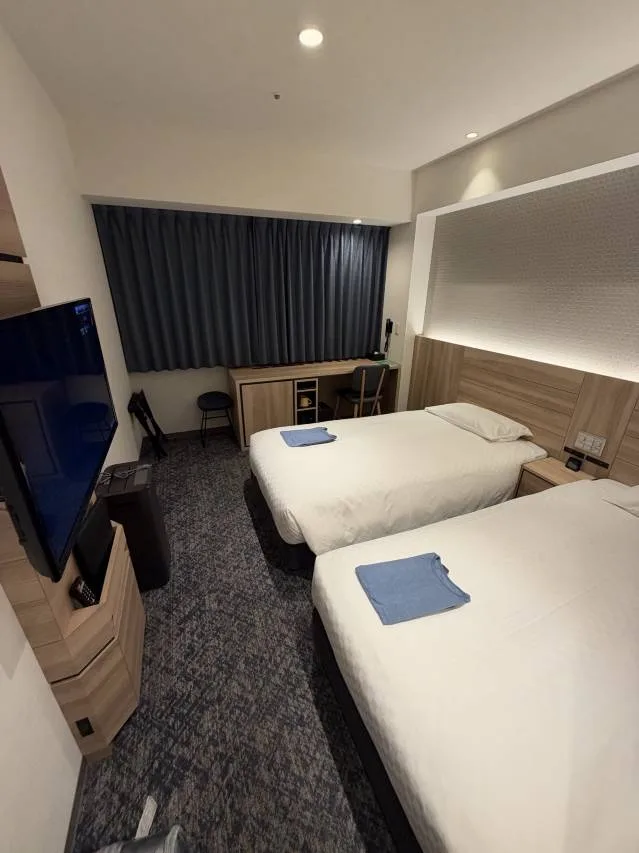
Photos show single-bed and twin rooms with different desks; space at the foot of the bed and near windows varies. In my own experience, whether large cases can be opened at the same time depends a lot on the room type and furniture layout. Choose bed type first, then check if desks or chairs obstruct unpacking. A room labelled Deluxe does not automatically provide a large open floor.
Compare official room configurations
The official site lists nine room types, and the twin rooms in the photos match the table: the Twin is 18 m² with two 100 cm single beds, right for two people sleeping separately; the Deluxe Twin is 21 m² with the two beds joined Hollywood-style and a separate bath and toilet; the Triple is 29 m² with three beds for up to three people, the largest room in the hotel. For a wider bed, the Deluxe Double is 20 m² with a 180 cm bed, and the 27 m² Accessible Room has handrails in the bathroom and steps kept to a minimum.
The official site singles out the Double B for luggage: there is space around the bed to spread out cases, plus a closet and a bedside counter, so large cases do not end up blocking the walkway. The Single sleeps at most two, but 14 m² is tight for two people unpacking; with a lot of luggage, I put the Double B or a room of 17 m² and above at the top of the comparison.
Travelling with children means checking the policy first: the hotel welcomes guests of all ages, though extra fees may apply for children even without an extra bed, and cribs and extra beds vary by room type, so confirm at booking whether one can be added and what it costs. Guests checking in must be at least 18, and pets are not allowed; settle the headcount, the beds and any extra bed before booking rather than finding out at the front desk.
Room colours also vary by type: the Single is deep red, the Deluxe Single and both Doubles are mokuran yellow, and the Twin rooms, the Triple and the Accessible Room are tetsukon blue, all traditional Japanese colours. Colour does not change how spacious a room feels, but on the booking page it helps to tell the room types apart at a glance.
Booking plans come with or without breakfast, and the breakfast-included plan costs more, with the gap varying by date, so compare the two plans for the same dates rather than guessing from another day. The breakfast in the included plan is the same second-floor buffet as the pay-at-the-property option.
Two people in a Single should think it through first: the bed is only 140 cm wide, which is tight for two; for more width, the Deluxe Single has a 160 cm bed in 15 m², just 1 m² larger than the Single. With a lot of luggage and a wish to sleep separately, the Twin with two 100 cm beds is easier to arrange than one large bed.
Breakfast: match your morning routine
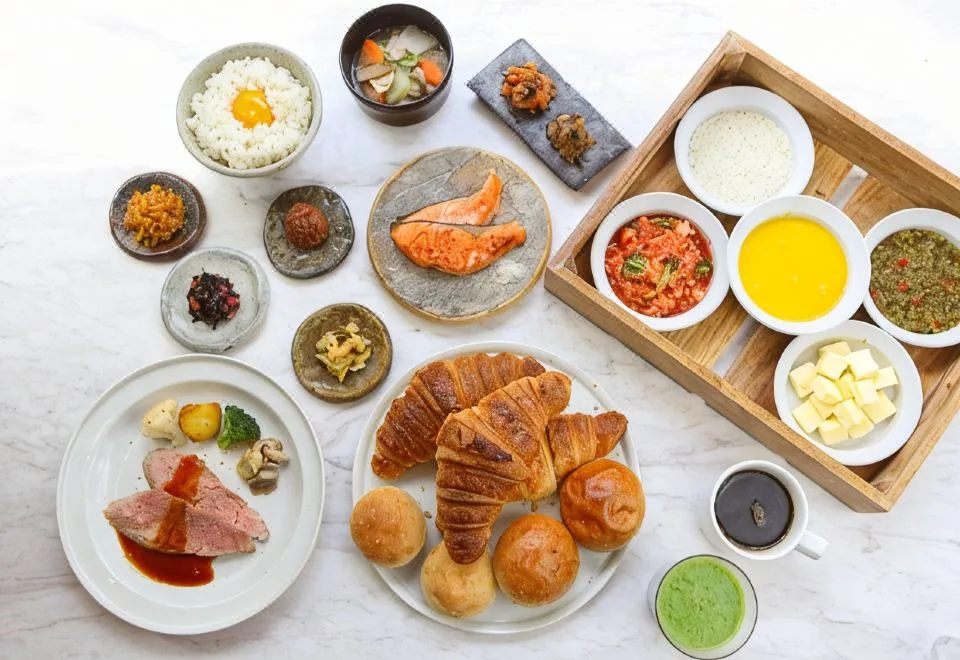
Breakfast is a Japanese and Western buffet with rice, bread and side dishes in photos. Convenient for eating before heading out, but staying several nights I find little variation myself. Alternate the hotel breakfast with Ningyocho cafés if you are staying several nights.
Breakfast is served in the second-floor Guest Lounge from 06:30 to 10:00, with last entry at 09:30; adults and children aged 6 to 17 pay 1,980 yen including tax, and children aged five and under eat free. The official site says the focus is good rice and good bread, and the photo shows it: rice with an egg yolk, miso soup, grilled salmon, croissants and bread rolls, sliced roast meat and small side dishes, with coffee and a green juice at hand.
With children, work out the breakfast bill first: from age six the price is the adult 1,980 yen, and only children aged five and under eat free, so a family of four adds up. No one is admitted after 09:30 and service ends at 10:00 sharp, so sleeping in and eating slowly does not fit this schedule, and at peak times you may wait briefly for a seat.
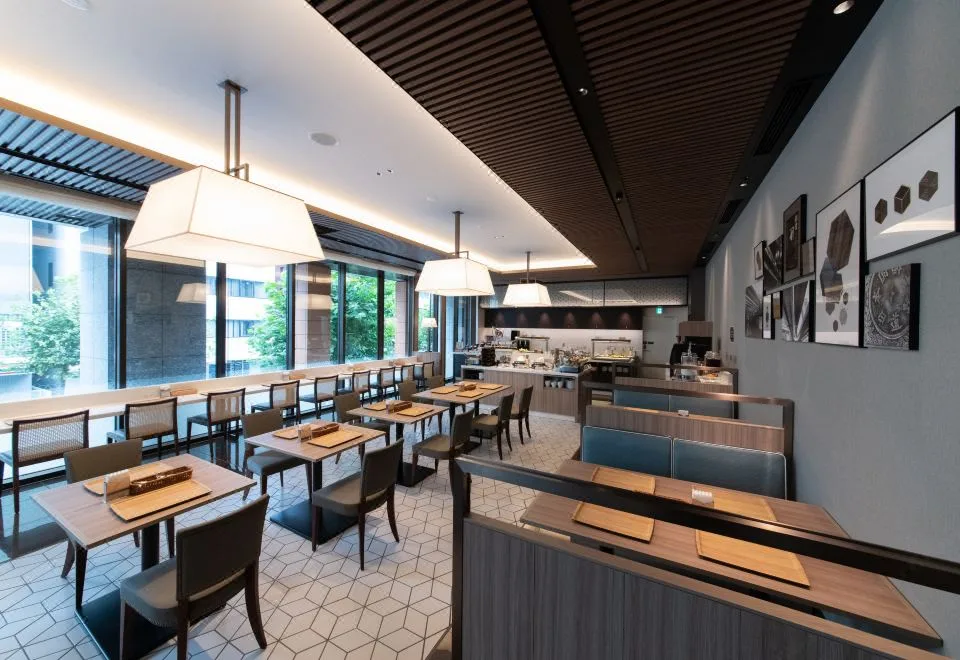
The seating is visible in the photo too: a row of window seats, booth seats on the other side, and the buffet counter at the back. The official site calls this breakfast a quality, royal breakfast; the breakfast charge is separate from the room rate and paid at the property.
The official site describes the rice and the bread separately: the rice is Hokkaido Natsuboshi, served with handmade accompaniments of healthy fish and vegetables, and the miso soup is blended to match the rice; all bread is fermented and baked in the store, with the fermented butter croissant the favourite, its buttery aroma and fluffy texture only found fresh from the oven. The live kitchen cooks fresh every day: grilled fish, the king of breakfast, served fluffy from the steamer and fragrant over open flame, with low-temperature cooked meat and stewed dishes rotating daily; the coffee uses beans from Ogawa Coffee, a long-established Kyoto shop, and pairs with a handmade pudding to finish.
Pros and trade-offs during your stay
Cleaning, odours and room space feel different from room to room. The whole hotel is non-smoking, with smoking allowed only in the second-floor smoking booth, so if you are sensitive to smells, inspect the room at check-in anyway. I once caught an unexpected distant view from one room, but such a skyline is not guaranteed in every room. If you care about a specific view, book a category that clearly states it.
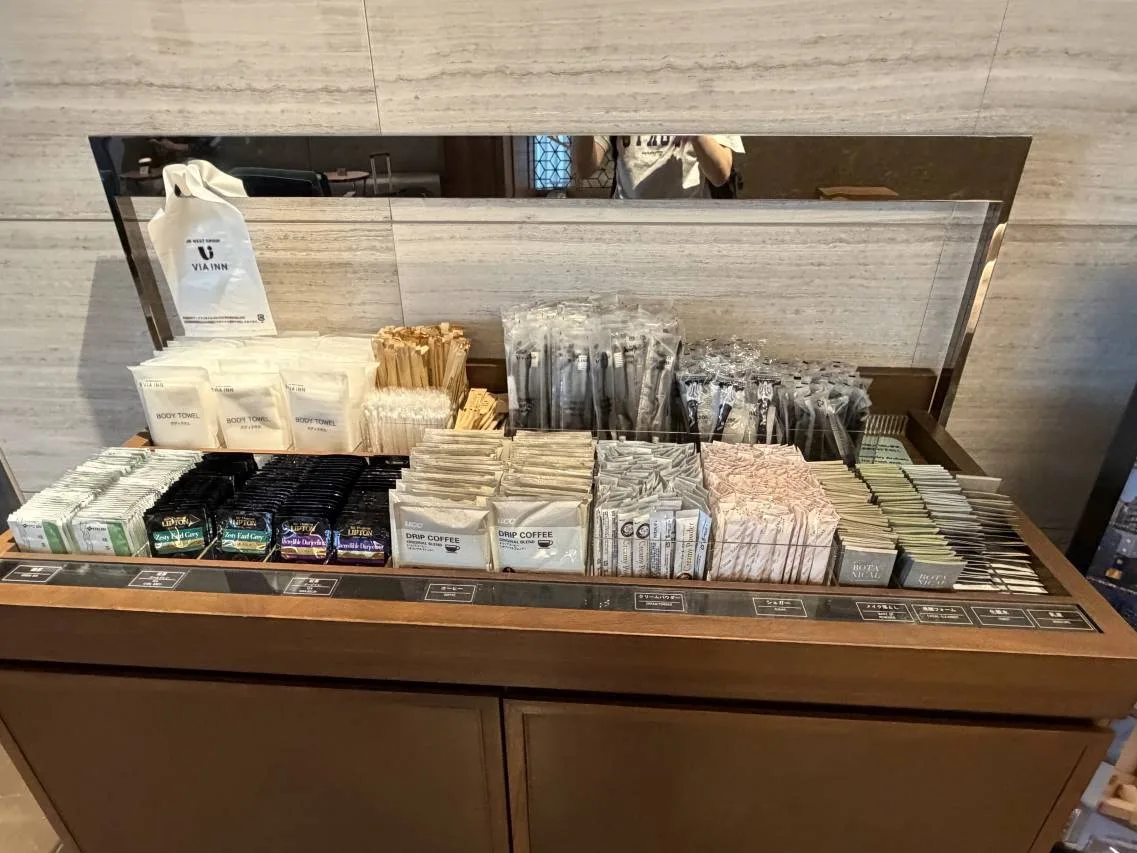
The facilities are practical: public Wi-Fi and luggage storage are both free, and there is a laundry room plus paid laundry and ironing services, vending machines, an ice maker and a smoking booth on the second floor. A wheelchair is kept on site and the front desk works in English and Japanese; fax and photocopying cost extra, and if you want to leave bags after check-out and go out, the front desk takes them.
In-room equipment also varies by room type: most rooms have a 40-inch TV, while the Deluxe Double, Deluxe Twin, Triple and Accessible Room have a large 50-inch screen. The Deluxe Twin, Triple and Accessible Room have a separate bath and toilet, and the Triple adds a separate wash stand; when two people get ready in the morning, a separate bath and toilet is far easier to share than a single combined bathroom.
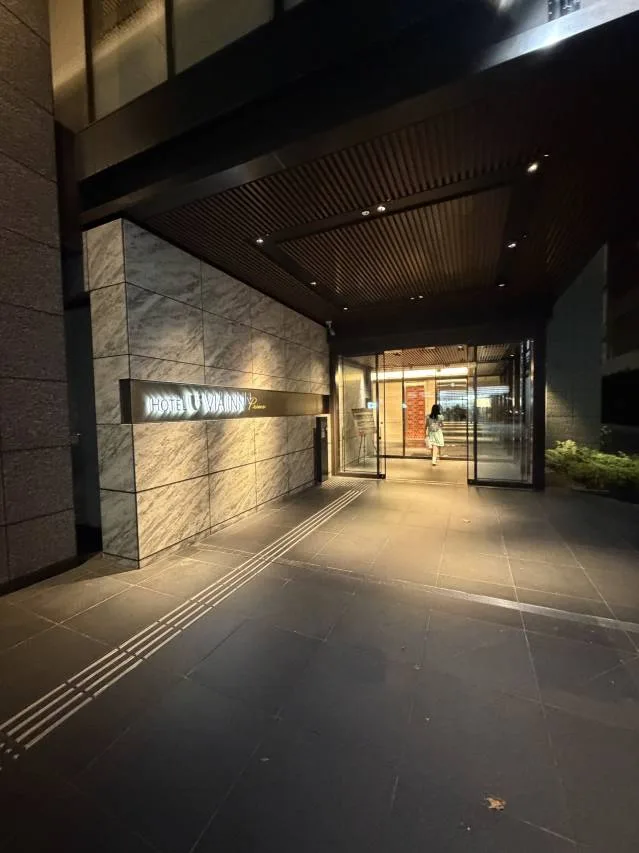
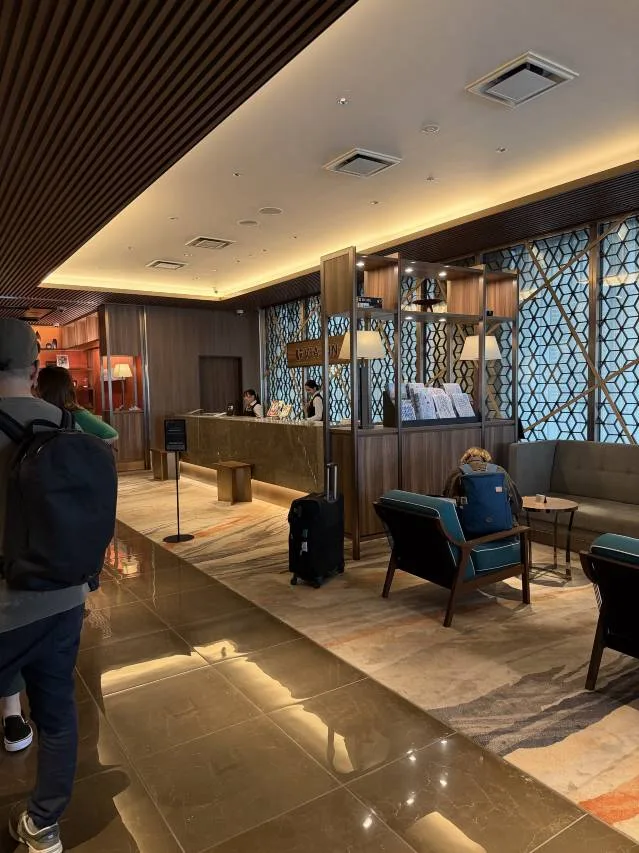
A delayed flight or a late train is no problem: check-in runs until 24:00 and the front desk is staffed around the clock, so even a midnight arrival can check in and leave bags. The entrance doors lock automatically late at night and the lift needs a room card key; the official site says the hotel is designed for solo travellers and women travelling alone to feel safe.
The second floor also concentrates the practical facilities: coin-operated drum washer-dryers with detergent loaded automatically, so there is nothing to buy, plus vending machines and an ice maker on the same floor, so a late-night drink or a load of laundry needs no trip downstairs. On the first floor there is a Domino’s Pizza take-out counter, open 11:00 to 25:00, take-out only with no delivery to rooms.
Short stays, longer stays and nearby outings
For a short stay, combine Nihombashi and Ningyocho into one outing to avoid backtracking. Longer stays suit travellers who use convenience stores and nearby restaurants. Include actual station walking time in your plan. With children, confirm permitted occupancy and bedding as well as photos of the beds.
After the 10:00 check-out there is no need to rush off: leave the cases at the front desk and walk Nihonbashi and Ningyocho unloaded before coming back for them. Head toward Nihonbashi for the old streets and department stores, and toward Ningyocho for food and a stop at Koami Shrine, and the two fit into one day without backtracking.
For an early flight or an early start, note that check-out opens at 05:00, so there is no need to wait for daylight to leave. Sort out the transport and departure time the night before, then check out and go in the morning; pack what you can the night before so the early hours are not a scramble in the room.
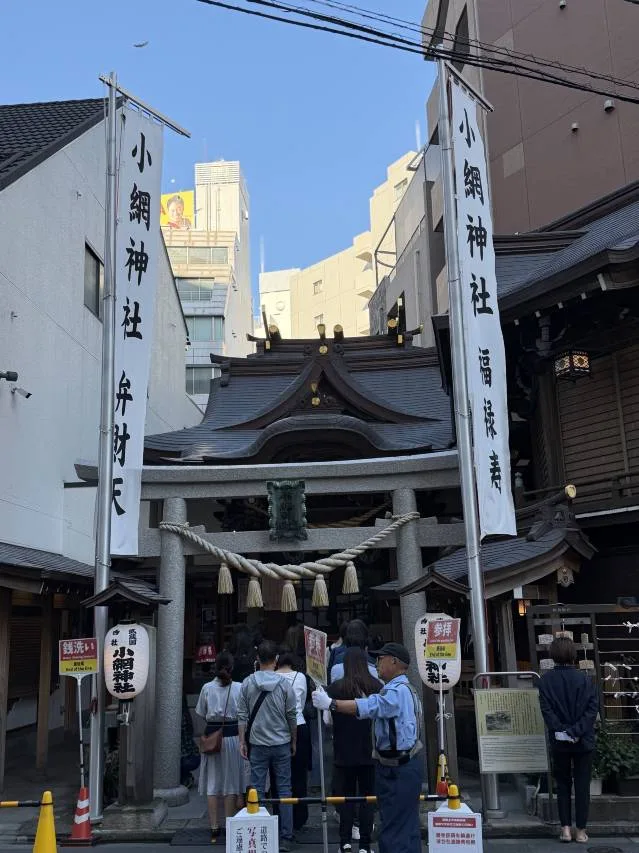
Koami Shrine is a few minutes away on foot in the same neighbourhood: founded in 1466, it is known for strong luck and protection from misfortune, and beneath the Benzaiten statue to the left of the main hall is a money-washing well, where washed coins and bills kept in the wallet are said to bring wealth. The shrine office is open 09:00 to 17:00 and the grounds have no closing time; a goshuin stamp costs 500 yen in three designs, Koami Shrine, Benzaiten and Fukurokuju. The shrine is also one of the stops on the Nihonbashi Seven Lucky Gods pilgrimage, so it is busiest over New Year and quietest on weekday mornings.
Pros and cons at a glance
Pros
- Ningyocho Station Exit A6 is about a 3-minute walk, served by the Hibiya and Asakusa lines.
- The official site lists nine room types: Twin rooms sleep two in separate beds, Triple rooms sleep three, and the Accessible Room has handrails.
- Breakfast is a Japanese and Western buffet in the second-floor Guest Lounge, 06:30 to 10:00 with last entry at 09:30, 1,980 yen for adults including tax.
- Public Wi-Fi and luggage storage are free, with a laundry room and paid laundry and ironing services.
- The front desk is open 24 hours and check-out opens at 05:00.
Cons
- Luggage space varies a lot by room type: the 14 m² Single and 15 m² Deluxe Single are tight for two people unpacking.
- Over several mornings, the breakfast menu changes little.
- Window views are not guaranteed; a specific view needs a room type that states it.
- The affiliated parking lot is first come first served with no reservations, and a full lot means a nearby coin parking lot.
- Check-out at 10:00 is early, so late risers must plan breakfast and departure times.
Information last checked: 2026-11-23