
TOKYO / CHUO
TSUKI Tokyo
Tsuki Tokyo
Return from a Tsukiji walk and make bathing part of your stay
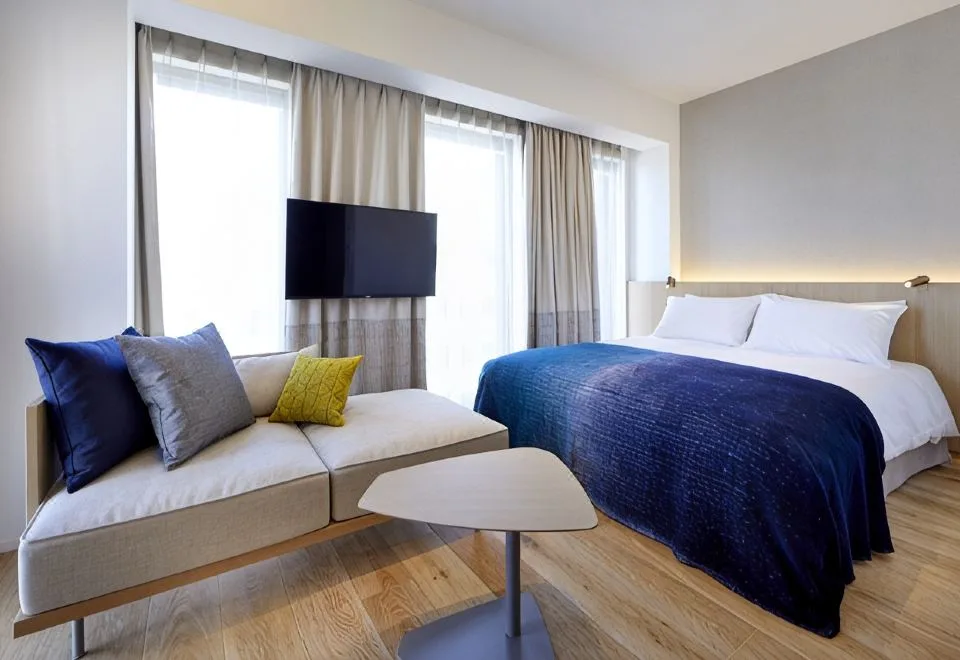
TSUKI Tokyo suits travellers who appreciate refined Japanese design and want Tsukiji and Ginza within reach. Its appeal goes beyond the bed: warm timber colours, bathing spaces and shared lounges create a relaxing atmosphere. If soaking in a bath is a priority, choose a room explicitly listing a bathtub rather than assuming every photograph shows a standard feature.
Is this hotel right for your trip?
Reasons to choose it
- Japanese-inspired design and bathrooms are highlights
- Easy to combine Tsukiji and Ginza outings
- Atmospheric shared lounge spaces
Trade-offs to consider
- Bathtubs are not identical across room types
- Mention blackout and temperature needs in advance
- Breakfast is a simple format
Access: regular exits, lifts and luggage
Walking from regular station exits
Typical access is around three minutes from Tsukiji Station Exit 4, or four minutes from Shintomicho Exit 1. For a trip focused on Tsukiji and Ginza, either can work. Choose the line requiring fewer transfers rather than looking at map distance alone.
Luggage and lift routes
Do not assume Tsukiji Exit 4 has a lift. Street-level lifts are available from the Honganji-side gates toward exits 1 and 2, or the Irifunebashi-side gates toward Exit 3b. Follow the route for your direction of travel, then allow extra time to reach the hotel from street level.
View hotel access directions / Check station lift facilities
| Hotel name | TSUKI Tokyo |
| Address | 1-9-4 Tsukiji, Chuo-ku, Tokyo 104-0045, Japan |
| Check-in and check-out | Check-in after 15:00; check-out by 11:00; reception 24 hours daily. |
| Transit reference | About 200 metres from Tsukiji subway station, approximately a three-minute walk. |
Open map and plan your arrival
Which lift you need at Tsukiji Station depends on your platform: Platform 1 toward Naka-meguro uses the Exit 1 lift, Platform 2 toward Kita-senju uses the Exit 2 lift, both outside the Tsukiji-honganji gates; the Irifunebashi-side gates lead to the Exit 3b lift. Check the platform direction before you enter with luggage, then walk back to the hotel at street level instead of looping inside the station.
On the Yurakucho Line, Shintomicho Station Exit 1 is about four minutes on foot, an easier walk than looping back to Tsukiji Exit 4. Tsukijishijo Station on the Toei Oedo Line is also walkable, about five to six minutes along Shin-Ohashi-dori. Two lines within walking distance means Ginza and Shimbashi are both reachable without first heading back to a major interchange.
The neighbourhood is the itinerary: Tsukiji Outer Market is about 290 metres on foot, easy for a morning shop and a quick drop back at the room; Tsukijigawa Park is about 320 metres in a straight line, right for an after-dinner walk; Tokyo International Forum is about 1.2 kilometres on foot and the Ginza Art Aquarium about 740 metres, so a rainy-day or evening indoor plan needs no train.
From Tsukiji Station Exit 4, walk about three minutes along Harumi-dori toward the Outer Market; the street is busy with market foot traffic and delivery vehicles in the morning, so keep to the pavement with your luggage. From Shintomicho Station, head south along Shin-Ohashi-dori and you are nearly there after crossing Tsukijigawa, through a quiet residential stretch with few shops that feels safe even at night. On a first visit, look for the hotel sign and the first-floor bar rather than trusting the map pin alone; if you miss it, loop back from the market side and look again.
Choosing rooms: beds, bathrooms and luggage
| Room type | Room size and beds | Best choice for |
|---|---|---|
| Premier Double with furo | 28 m² / one 160 cm bed | Separate living area and hinoki cypress bathtub |
| Premier Twin with furo | 27 m² / two 90 cm beds | Separate beds and hinoki cypress bathtub |
| Deluxe Twin with furo | 24 m² / two 90 cm beds | A smaller room with hinoki bathtub |
If bathing is part of your daily rest, look for room types explicitly marked ‘with furo’. Premier Double and Premier Twin differ in bed arrangement but both offer slightly more space than the 24 m² Deluxe Twin. Do not assume Standard Semi Double and Superior Double have the same bathtub configuration.
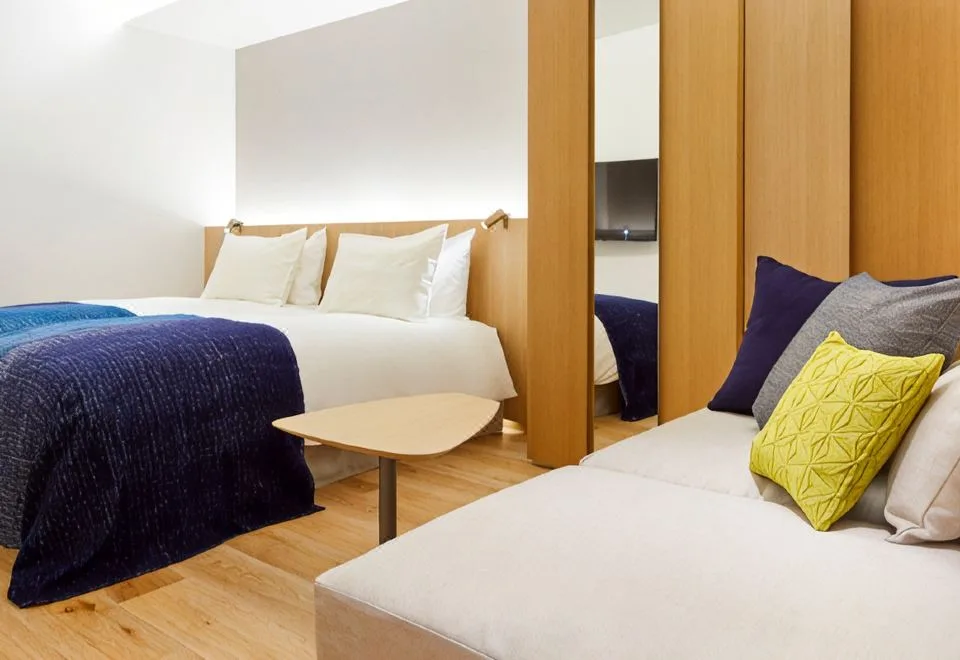
The gallery shows Double and Twin beds, sofa lounges and different bathroom layouts. Some rooms have wooden tubs while others emphasize shower space; verify facilities by exact room type. A larger sofa area is useful for resting or taking turns to organise belongings, while basic rooms suit days spent outside. Bathroom-to-bed visibility also varies, so consider everyone’s privacy needs.
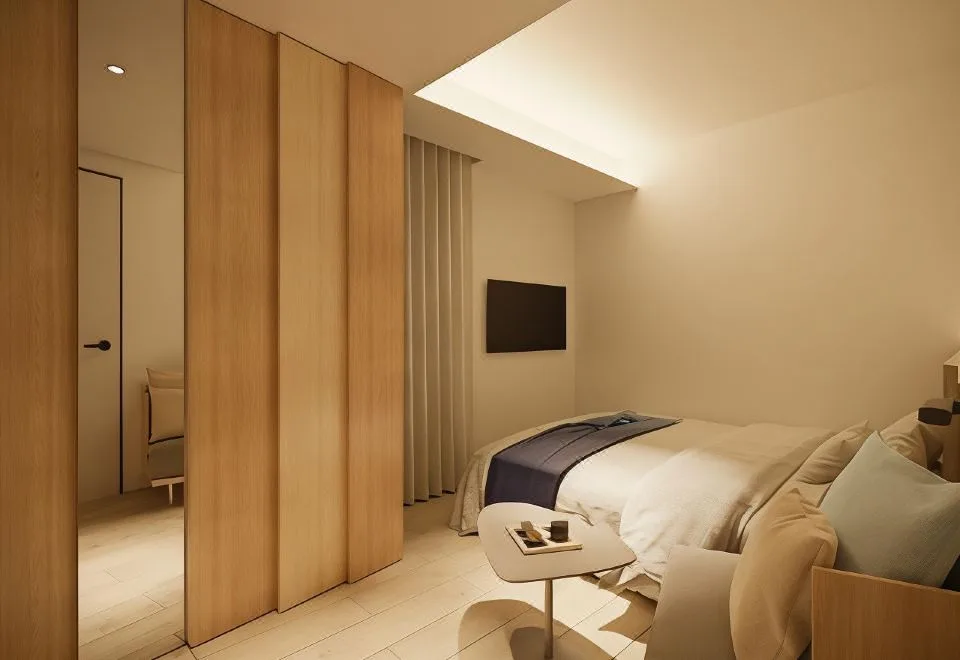
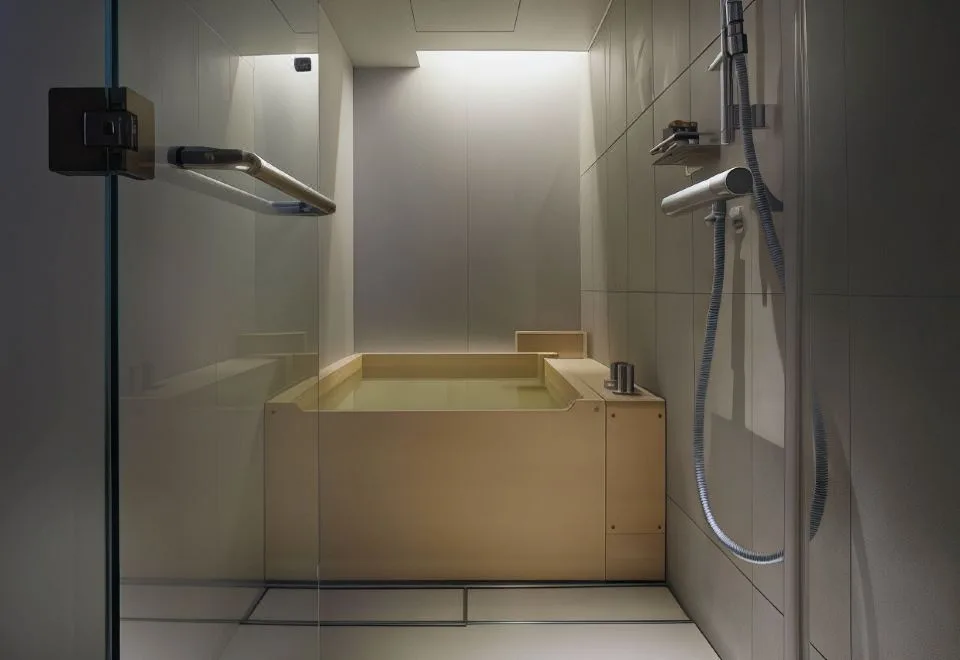
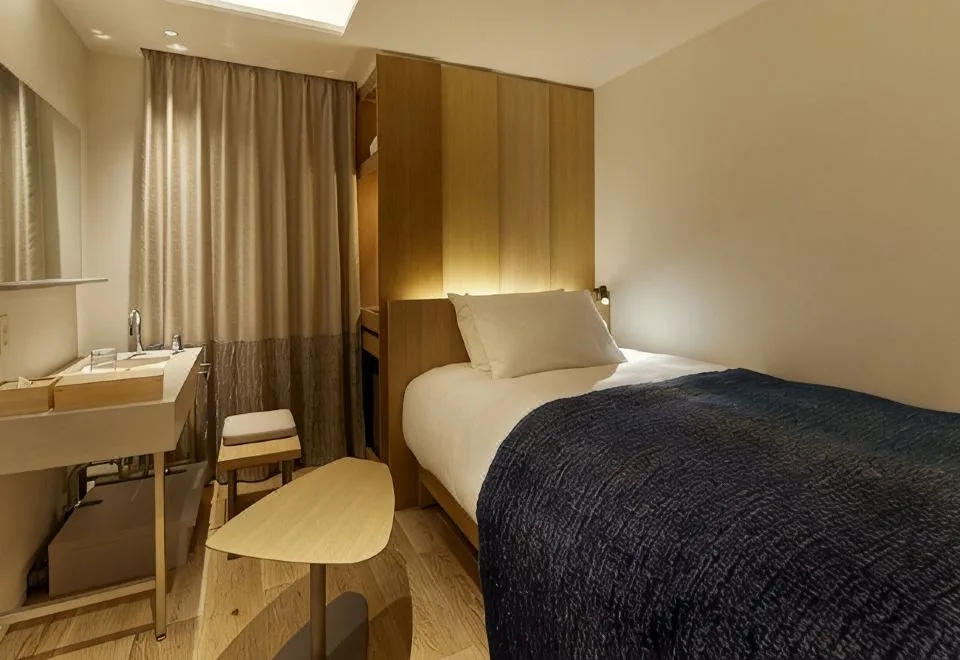
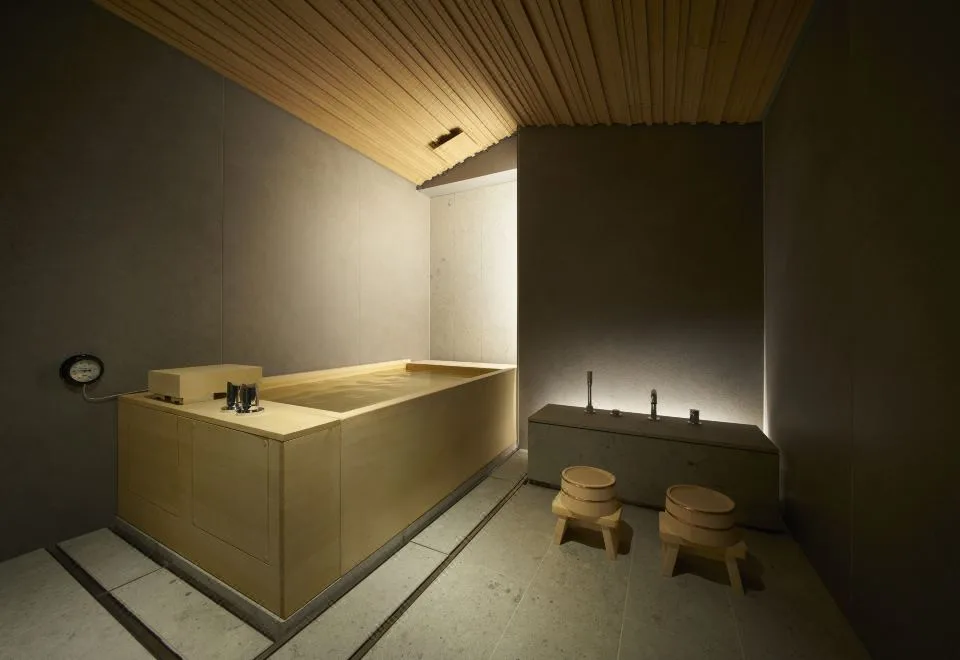
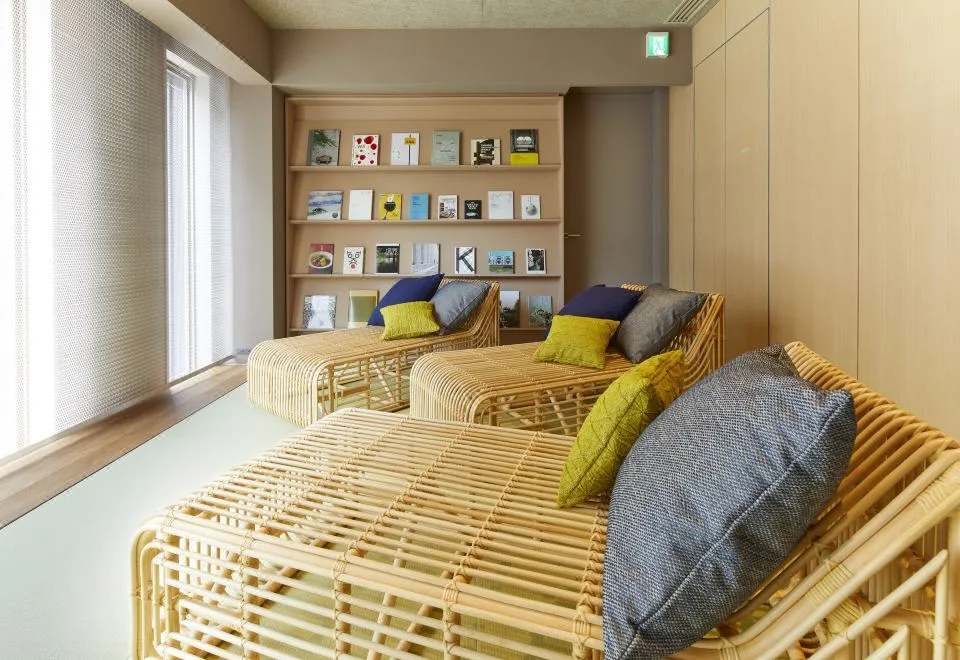
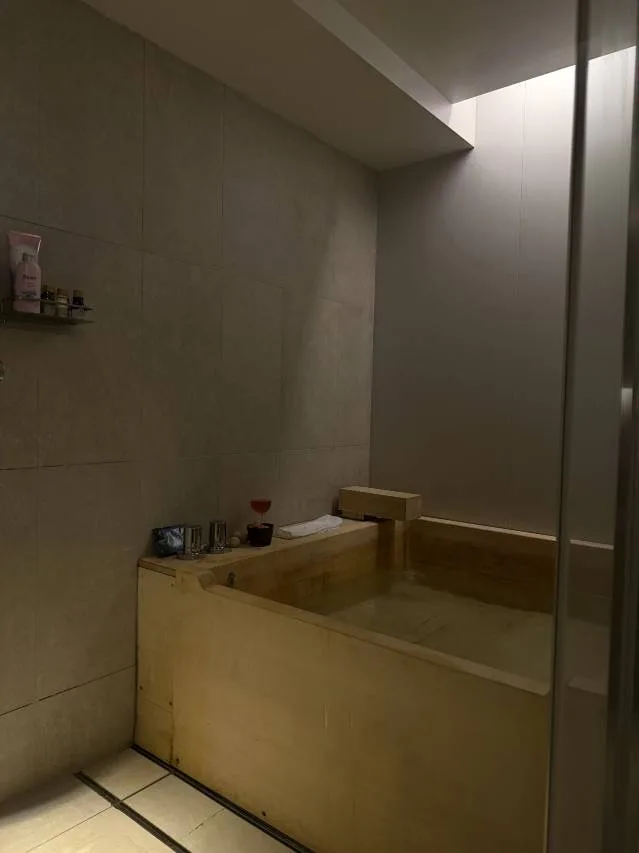
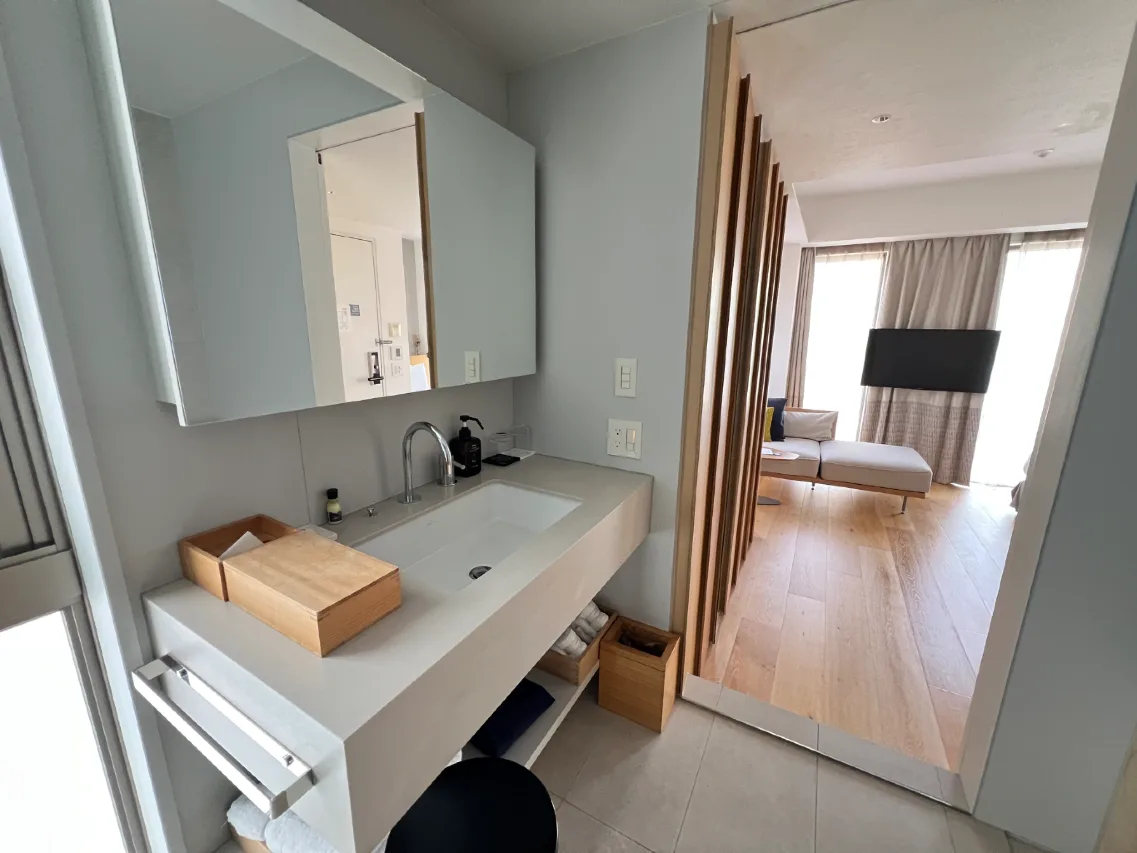
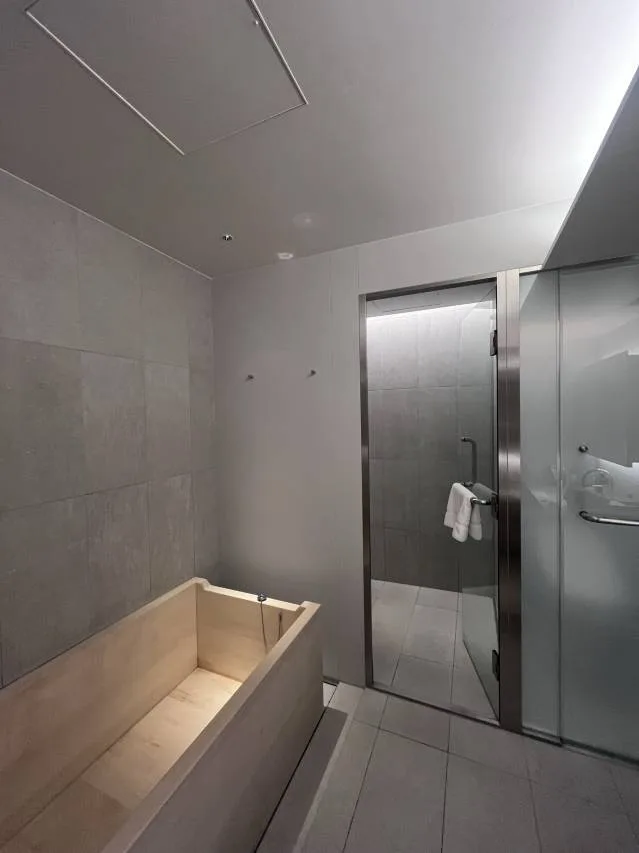
Beyond the hinoki tubs in the rooms, the hotel has two reservable private baths, YUUYA OBORO and KASUMI, built from Aomori cypress. They cost 3,300 yen for 60 minutes including tax, open 6:00 to 12:00 and 15:00 to 24:00, for guests only and by advance reservation at the front desk. After a soak, the private YUAGARI lounge is yours to sit in, with free drinks, bookshelves and massage chairs.
To soak in your own room, stick to the three room types with a hinoki tub: Premier Double, Premier Twin and Deluxe Twin. Other rooms are shower-based, so read the room-type name before booking instead of assuming every photograph shows a tub. The private baths are shared across the hotel on a reservation system, with no separate communal bath for men and women, so book early if you want a slot.
Choose by bed and floor area: Premier Double is 28 m² with a 160 cm bed for two; Premier Twin is 27 m² with two 90 cm beds for separate sleepers; Deluxe Twin is 24 m² with the same bed width in a tighter layout. No room type allows an extra bed or a crib, so work out headcount and charges before travelling with children; children of all ages are welcome, but the guest checking in must be at least 18 years old.
There are five room types in total: Premier Double, Premier Twin and Deluxe Twin have hinoki tubs, while Standard Semi Double and Superior Double are the compact comfortable choices. The three tub rooms run from 24 to 28 square metres, and bed width plus whether there is a tub are the two points worth comparing before booking; note the room-type name, floor area and bed width when you book, then check them again on arrival, and ask the front desk at once if the room is not the one you booked instead of finding out after a shower.
Breakfast: plan around your mornings
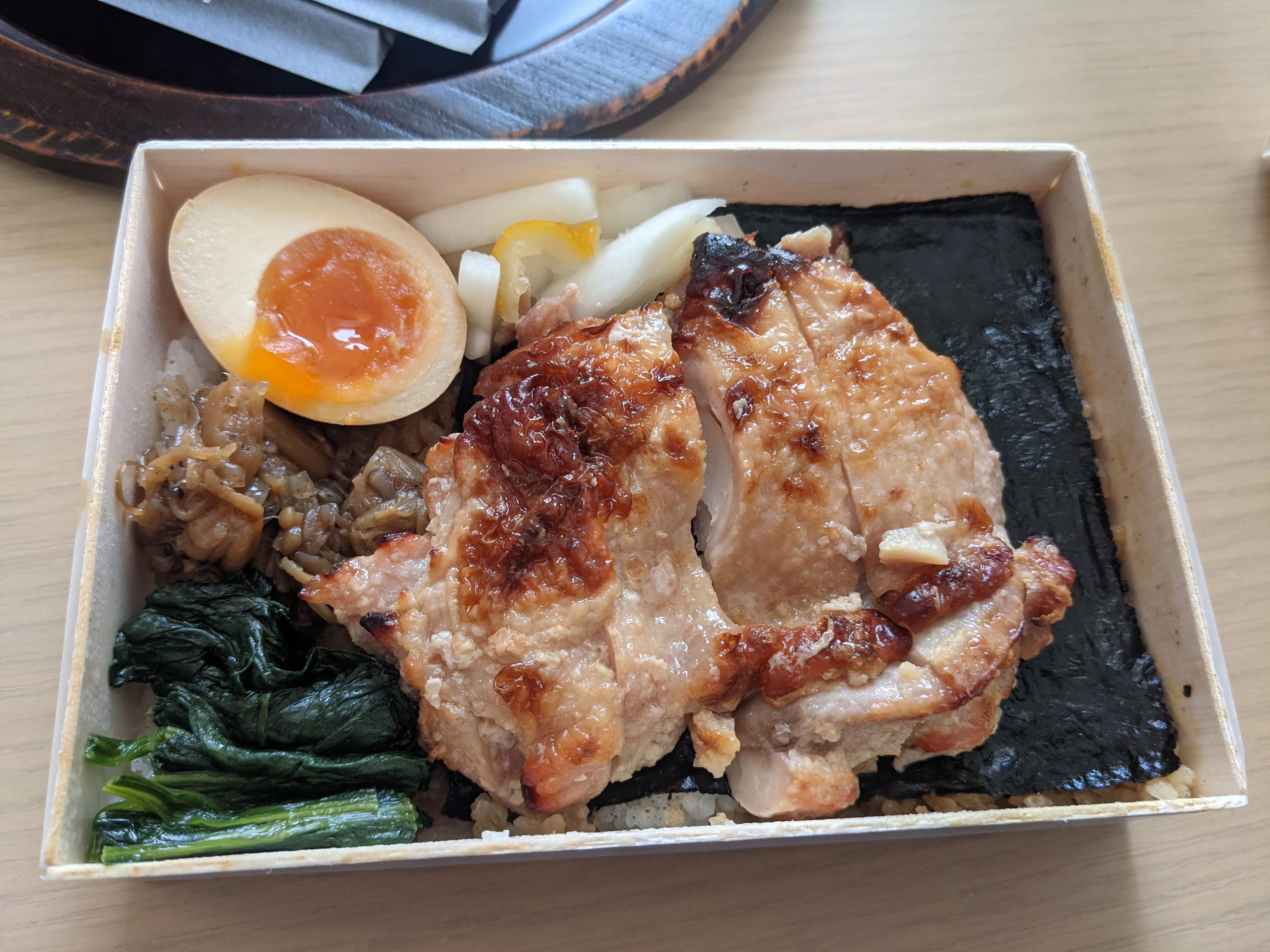
The available breakfast information describes a Japanese-style boxed meal, suited to people who want to eat simply and leave. If you are planning to visit Tsukiji Outer Market, I would reserve one morning for eating there and another for the hotel’s offering. Matcha and sweets shown in lounge photos are a separate relaxation experience, not necessarily breakfast; check availability on the day.
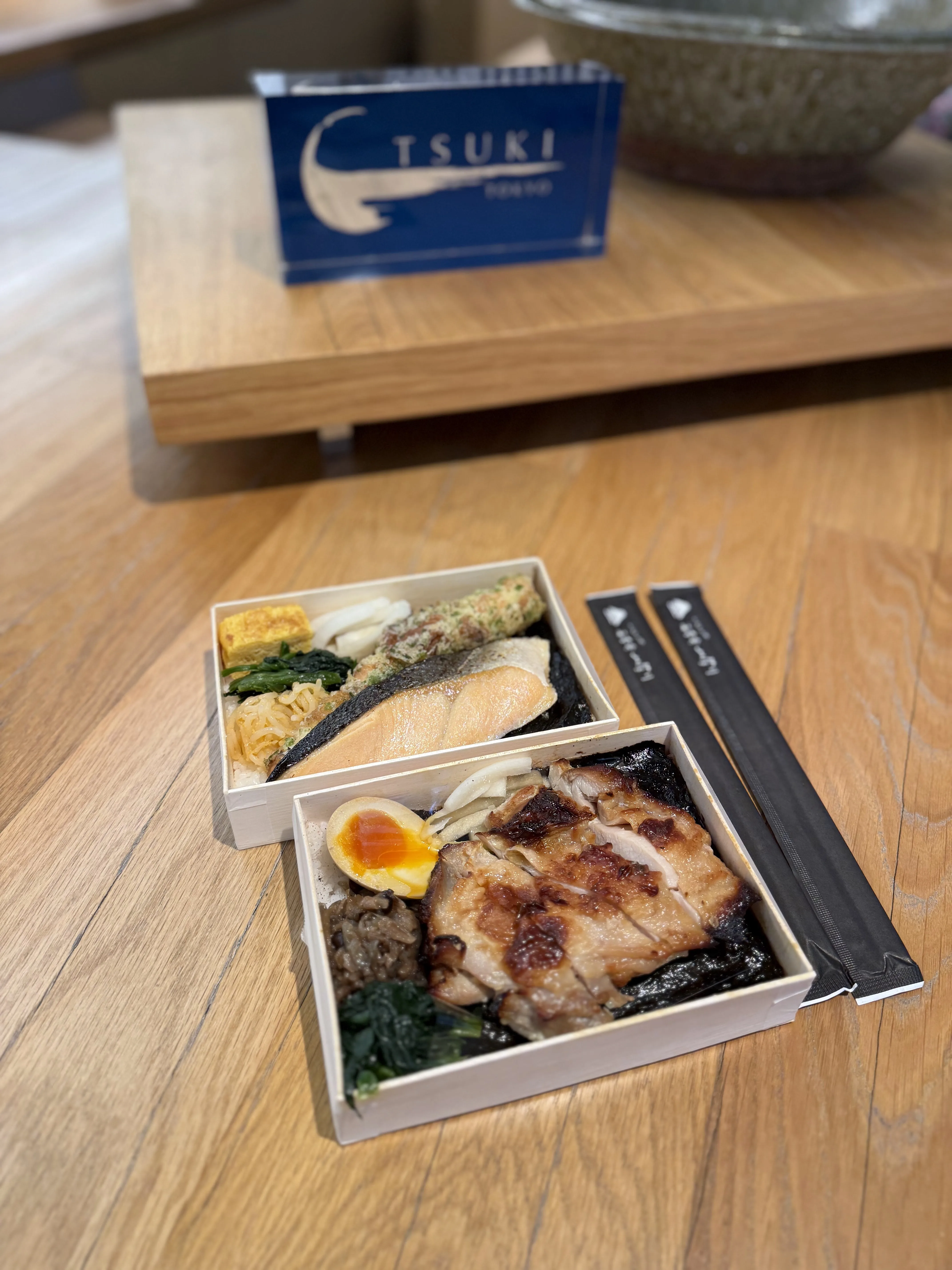
Breakfast is a choice of two nori bento boxes: the Sea bento with salmon and the Mountain bento with chicken, made with high-grade Ariake seaweed, at 1,477 yen per person excluding tax. It is served daily from 7:00 to 10:00 and needs a reservation by 18:00 the day before, so ask the day before rather than on the morning itself.
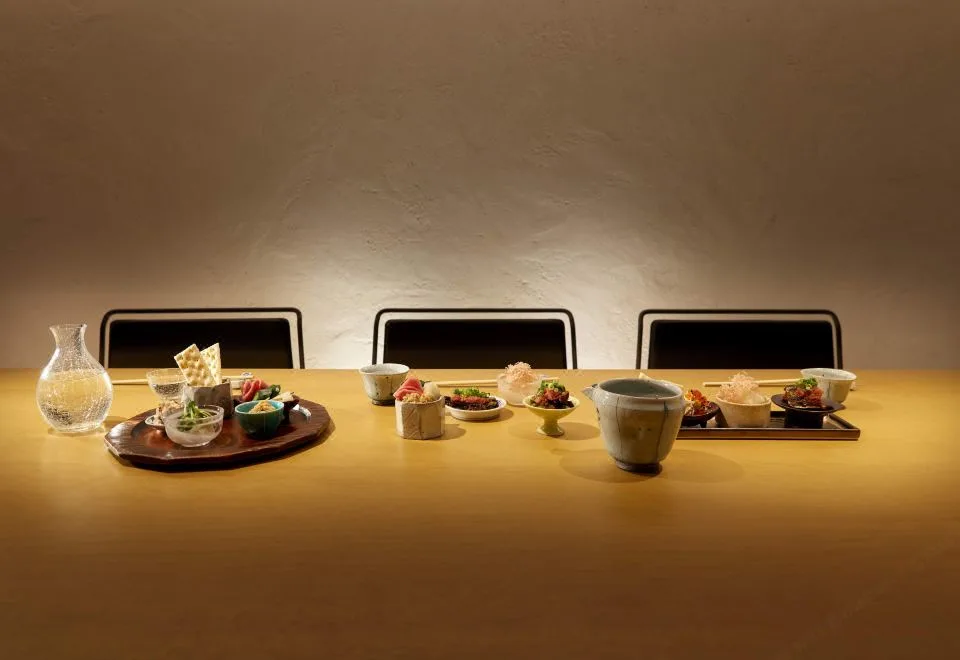
Even without a bento reservation, guests get free bread and coffee from 7:00 to 10:00. From 10:00 to 18:00 there is a welcome drink of matcha and traditional Japanese sweets, served in the seating area of Sake-Bar TABLE TSUKI on the first floor. Both are free services for guests, with nothing extra to pay.
Sake-Bar TABLE TSUKI on the first floor has about ten counter seats, serving selected sake from across Japan, and it is open to non-guests too. An evening drink needs no trip out, just take a seat. I split breakfast across two mornings: one morning at the Outer Market, the other on the hotel nori bento, so both are covered.
Skipping the bento is fine too: Tsukiji Outer Market is about 290 metres on foot, and many stalls are open in the morning, so sushi, seafood bowls and market snacks all work as breakfast. Eat, then come back for your bags and a private-bath soak without breaking the day plan. On the bento day, remember the 18:00 reservation the day before; alternating the two breakfasts wastes nothing, with two nights enough to try each once and one night enough to pick a favourite.
What guests like and trade-offs
I check three things on arrival: how bright the room is, how well the curtains block light, and how warm the duvet feels. If light or heat bothers you, state the need when booking and test the air conditioning and curtains again on arrival, raising any problem at reception early. Enjoying the bathrooms does not mean all room categories have identical bathtubs; this is the most important point to check before booking.
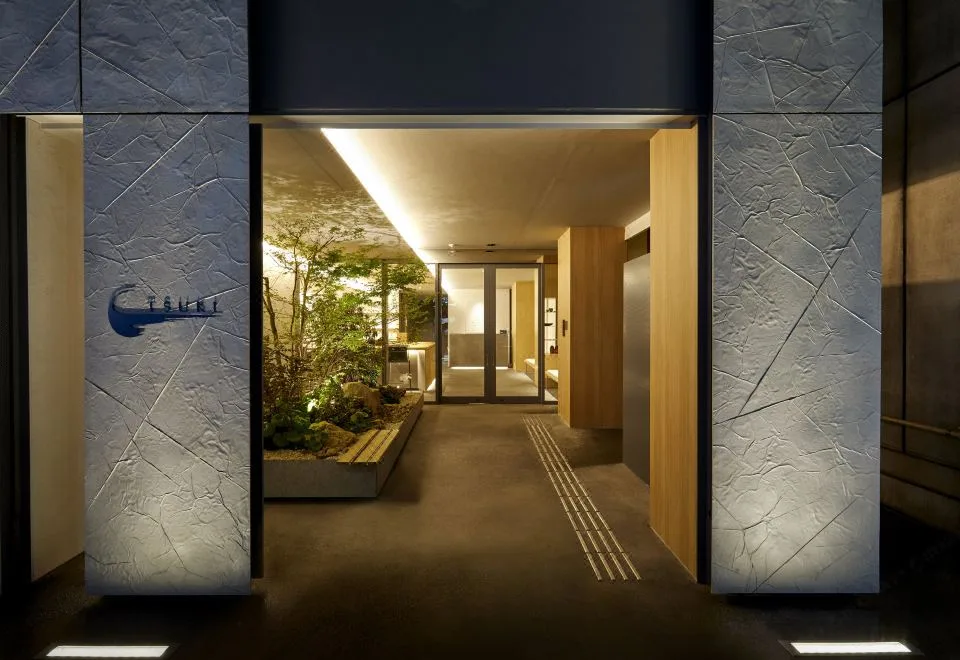
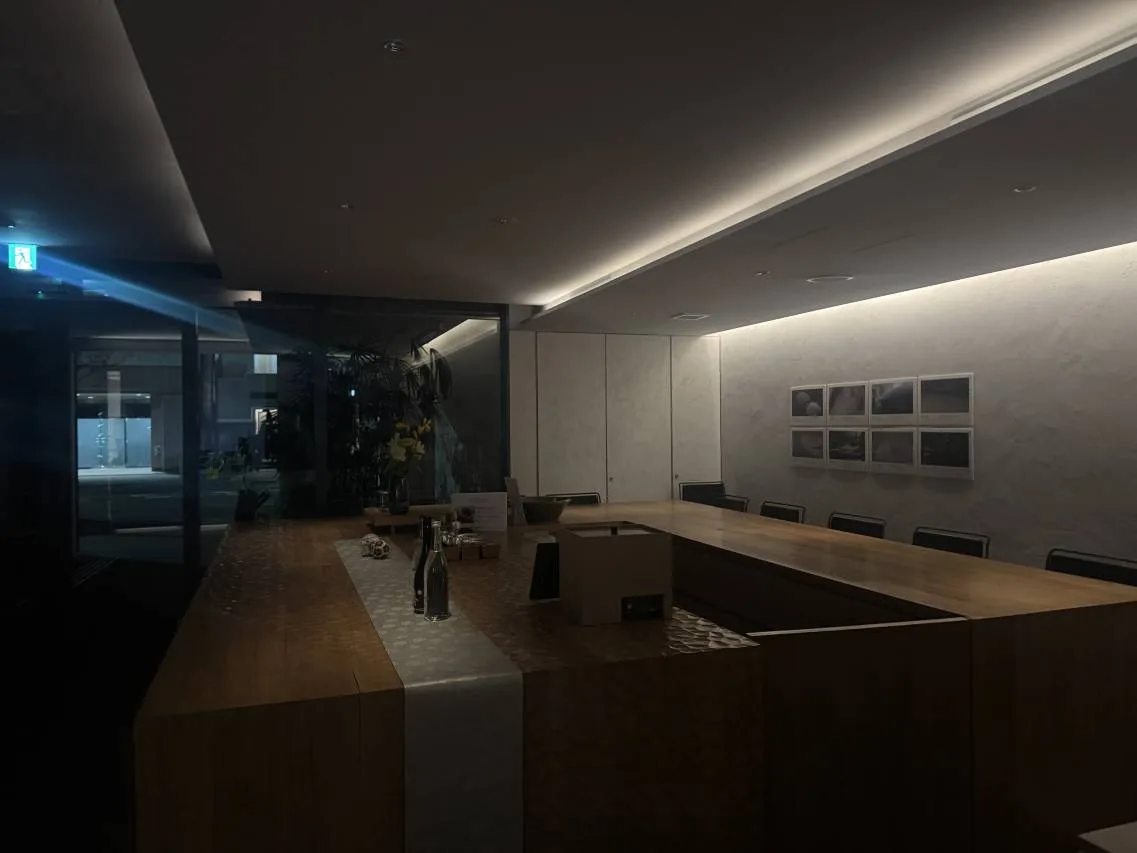
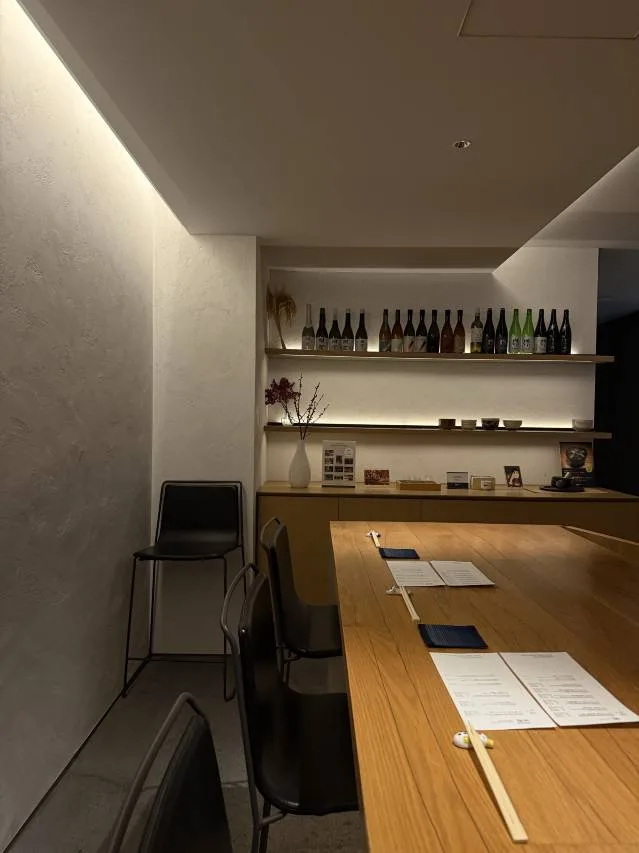
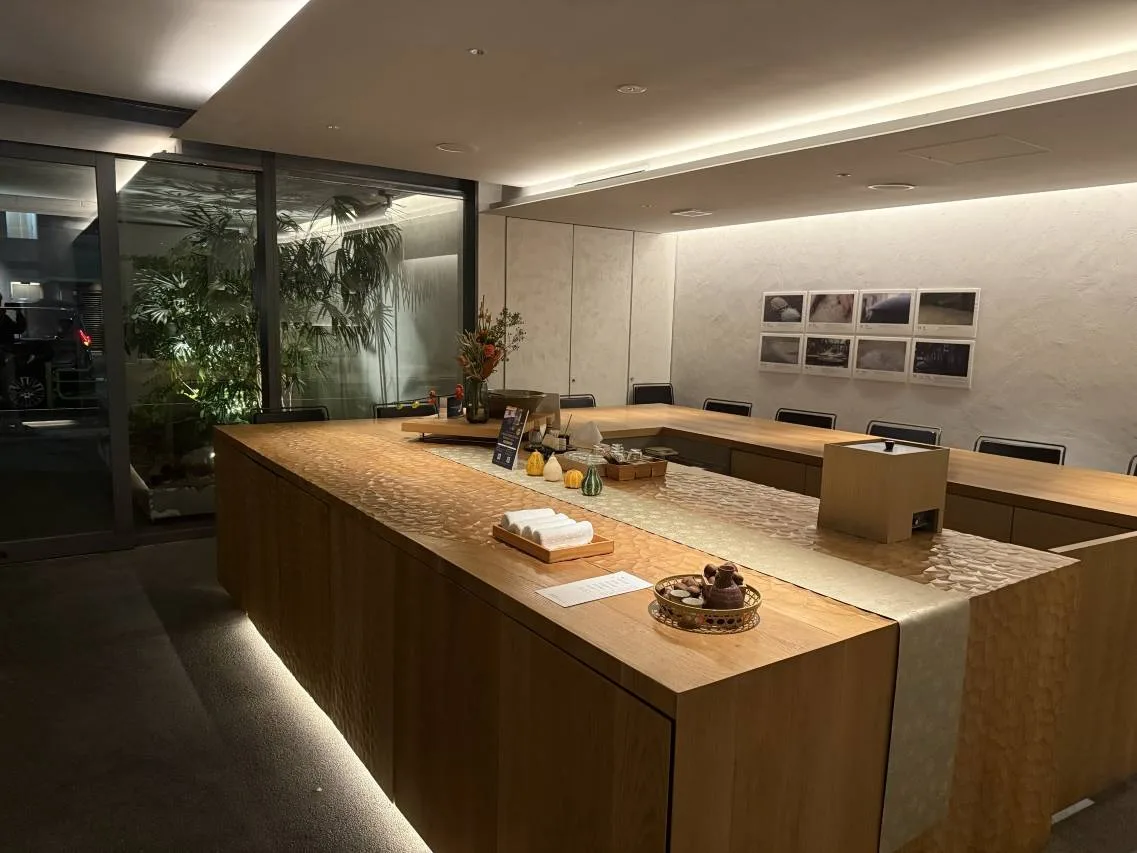
I use the facilities this way: luggage storage is free, so an early arrival or late departure leaves bags at the front desk; public-area Wi-Fi is free; the first floor has a bar and a lobby bar, and room service is available; the lift means no carrying bags up the stairs; public areas and floors are non-smoking with a separate smoking area; the concierge answers itinerary questions, the front desk has a safe, and the front desk team speaks English and Japanese.
Check-in is from 15:00 and check-out is by 11:00, with the front desk staffed 24 hours a day all year, so even a midnight arrival finds someone there; the fastest answer to any question is a call to the hotel at +81-3-6435-6288. With children, note that all ages are welcome but no room type allows an extra bed or a crib; pets and service animals are not allowed; and the guest checking in must be at least 18 years old. The hotel has no car park of its own, so drivers are directed to nearby car parks.
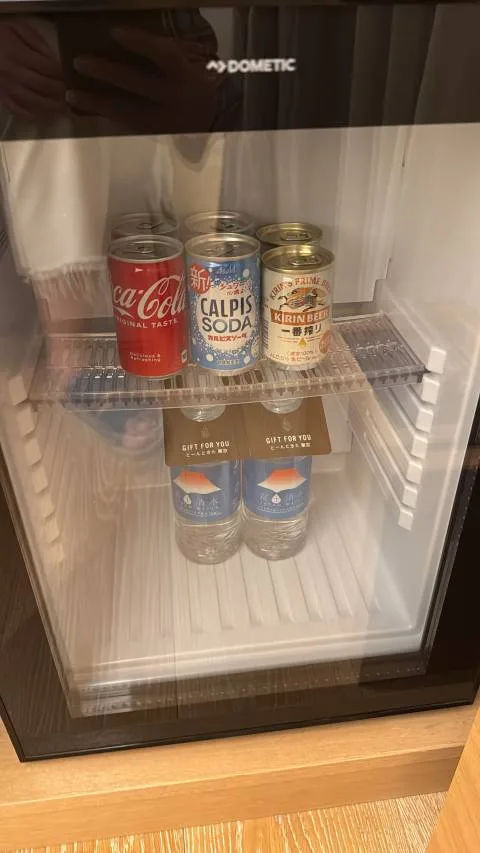
The rooms come stocked, so nothing needs packing: shampoo, conditioner, body wash, towels, bath towels, a toothbrush set, a comb, a shower cap, a hair dryer, yukata, nightwear, a bathrobe and slippers are all there, along with a refrigerator, a minibar, an electric kettle, a free tea set, a television and a safe. The bed throws use traditional indigo dye and the tea sets are Mino ware, timber tones, cypress scent and pottery are the character of this hotel.
After a private-bath soak, do not rush back to the room: the private YUAGARI lounge is open 6:00 to 13:00 and 15:00 to 25:00, with free drinks, bookshelves and massage chairs, so sit down with a book and a drink before moving on. For quiet, pick a morning slot; evenings are busier and livelier. With luggage, leave the bags at the front desk first rather than dragging them into the lounge.
Short and long stays, nearby outings
For one or two nights, combine Tsukiji Market and Ginza shopping, then leave time to relax in the bath. Longer stays suit people who want a slower pace in central Tokyo without moving hotels daily. If you travel to western Tokyo every day, allow for actual transfers and walking inside stations.
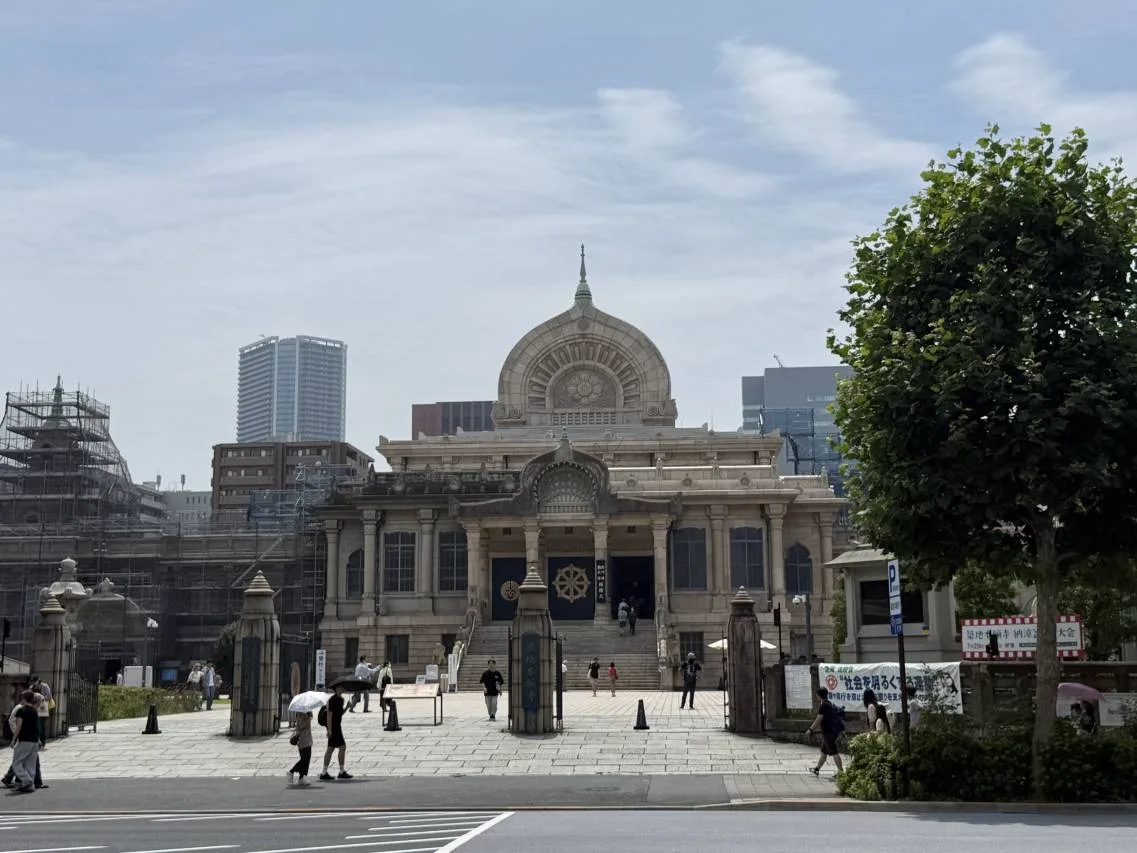
The whole hotel has just 31 rooms and won a Good Design Award in 2019, with only five room types, from wooden-bath rooms to compact comfortable ones. Timber tones, cypress scent and Japanese craft set the tone; the rooms are simple without feeling empty. Choose by floor area and bathtub, not by photographs alone.
Check-out day needs no rush either: luggage storage is free, so soak in a private bath in the morning, eat breakfast, then leave at your own pace. The Hibiya Line runs direct toward Ginza and Roppongi, and toward Ueno it connects to the Yamanote Line, so one transfer reaches the airport trains or the Shinkansen.
I plan the last day like this: breakfast at the market in the morning, a private-bath soak back at the hotel around midday, bags stored before 15:00 for an afternoon in Ginza, then back for the luggage and the Hibiya Line to the airport trains or the Shinkansen. A small hotel with a 24-hour front desk leaves room for a loose schedule, and if you have an early flight the next morning, pack the night before so you can check out and go.
Pros and cons at a glance
Pros
- Three minutes on foot from Tsukiji Station Exit 4 and four minutes from Shintomicho Exit 1, with Tsukiji Outer Market about 290 metres away.
- Premier Double, Premier Twin and Deluxe Twin all have hinoki cypress tubs, and the private YUUYA baths can be reserved at 3,300 yen for 60 minutes including tax.
- Breakfast is a choice of two nori bento boxes, salmon or chicken, at 1,477 yen excluding tax, with free bread and coffee for guests.
- A small 31-room hotel and 2019 Good Design Award winner, with a consistent timber and Japanese craft character.
- The front desk is staffed around the clock, luggage storage is free, and the front desk team speaks English and Japanese.
Cons
- No room type allows an extra bed or a crib, so a family stay needs headcount and charges worked out first.
- Only three room types have a hinoki tub; other rooms are shower-based, and the private baths need advance reservation with no walk-in guarantee.
- Tsukiji Station Exit 4 has no elevator; luggage goes through the elevators at exits 1, 2 or 3b.
- The breakfast bento needs reservation by 18:00 the day before; asking on the morning may be too late.
- The hotel has no car park of its own; drivers are directed to nearby car parks.
Information checked: 23 November 2026