
TOKYO / CHUO
Tosei Hotel Cocone Tsukiji Ginza Premier
Tosei Hotel Cocone Tsukiji Ginza Premier
Near Tsukiji Market: weigh the public bath, breakfast and subway walk
Is this hotel right for my trip?
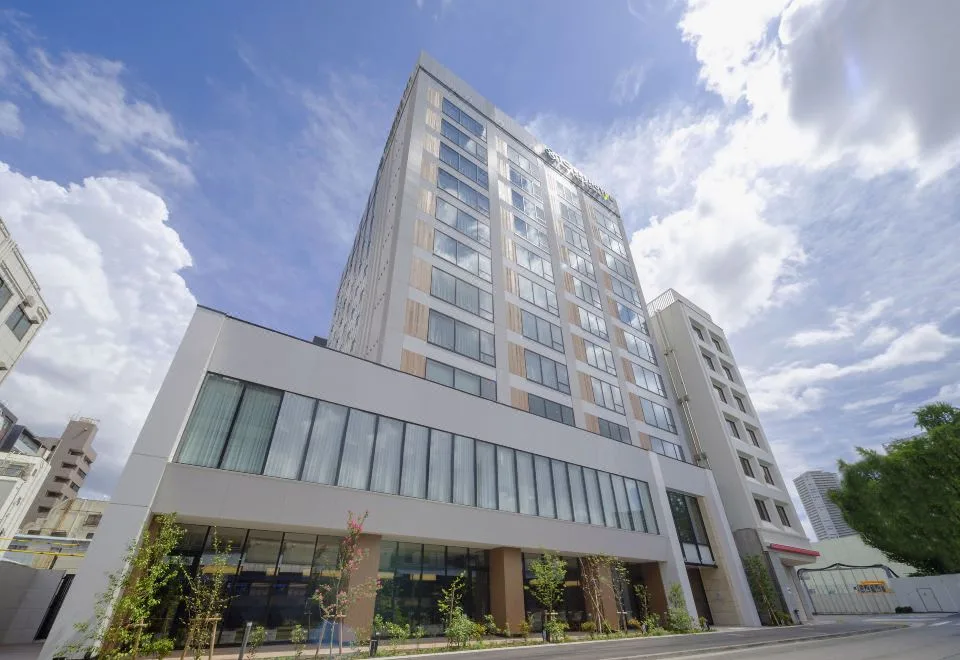
Tosei Hotel Cocone Tsukiji Ginza Premier is suited to travellers who want to visit Tsukiji in the morning and soak in the public bath at night. The bath, lounge and everyday facilities give you reasons to spend time at the hotel. In return, the subway requires a walk and guest experiences of Wi-Fi and air conditioning are mixed.
If your mornings belong to Tsukiji Outer Market and your evenings end with a soak, this location fits. The hotel has 203 rooms, and 96 of them include a raised Japanese-style area where a futon adds sleeping space for a third or fourth guest. Before you book, weigh two things with me: the three nearest stations each need a five to eight minute walk, and Wi-Fi and air conditioning feel different from stay to stay, so put both on your checklist. The market is already busy by five or six in the morning, so staying here means no rush for the first train. I soak in the bath after dinner, wash the day off, and still wake early the next morning.
Advantages and trade-offs
Worth considering: Great for a Tsukiji Market itinerary; the public bath and lounge are popular, and separated bathroom facilities are convenient.
Before booking: In my stay, Wi-Fi felt patchy at times, the air conditioning did not always cool the room the way I wanted, and service felt uneven. If you work remotely, test the connection soon after arrival.
Access: walking light versus carrying luggage
Tsukijishijo Station Exit A1 on the Toei Oedo Line is about five minutes away, Tsukiji Station Exit 1 on the Hibiya Line around seven, and Higashi-ginza Exit 6 about eight. These are ordinary walking routes; with large luggage, follow accessible lift signs rather than assuming the shortest exit is step-free.
View access directions; check lift availability and construction notices before departure.
At Tsukiji Station, lifts run from the Tsukiji Honganji-side gates toward exits 1 and 2, and from the Irifunebashi-side gates toward Exit 3b.Station accessibility facilities
At Higashi-ginza Station, do not use Exit 6 with luggage: it has no elevator. The eight-minute walk is fine empty-handed, but with a suitcase, use the street elevators from the central gates toward Exit 3, or from the Miharabashi-side gates toward Exit A1. Both reach street level by lift. With a suitcase I allow ten extra minutes: I follow the lift signs out of the gates instead of following the crowd down the stairs, and walking a little farther beats carrying a case up and down steps.
For a step-free route from Tsukijishijo Station on the Toei Oedo Line, I use Exit A3. The National Cancer Center Hospital access guide says to head from the gates toward Exit A3 and take the elevator or the stairs to street level. Exit A1, about five minutes on foot, is the ordinary walking route. Exit A3 sits closest to the hospital, so if the market is your destination, the Exit A1 side is nearer. Check which direction you need before you leave the gates.
| Item | Hotel details |
|---|---|
| Address | 6-23-8 Tsukiji, Chuo-ku, Tokyo 104-0045, Japan |
| Japanese name | Tosei Hotel Cocone Tsukiji Ginza Premier |
| Check-in / check-out | Check-in from 15:00 / check-out by 10:00 |
Choosing a room: beds, living space and bathrooms
Compare beds, bathroom use and luggage space for everyone travelling together.room types and facilitiescan help interpret the table below. Room names on the booking platform may differ, so confirm the English room type when booking.
The official site lists 21 room types, and I group them by size. Rooms of 15.9 m² suit two light packers, with a 140 cm bed in the doubles and two 110 cm beds in the Compact Twin. Standard and Superior Twins run 21 to 25 m². Luxury rooms run 30 to 35 m² for three or four guests. Premium rooms run 40.6 to 45 m² on floors 8 to 11, some with a Tokyo Bay view and a coffee machine. The 70.6 m² Suite adds a living room and a dining table for up to six guests. I choose by bed width first: a 140 cm bed sleeps two comfortably, while a 110 cm bed suits one person or a child. A family of four should look at rooms of 30 m² or more instead of squeezing into 15.9 m².
| Room / layout | Size and amenities | How to choose |
|---|---|---|
| Luxury Deluxe Twin | 30 m²; two 140 cm beds, with futon bedding in a Japanese-style area; up to three guests | For wider beds while keeping a Japanese-style area |
| Luxury Large Triple | 35 m²; three 110 cm beds, with futon bedding in a Japanese-style area; up to four guests | Three separate sleepers or a family of four |
| Premium Twin | 40.6 m²; two 140 cm beds, on a high floor | For more living space and views |
| Compact Twin | 15.9 m²; two 110 cm beds; up to two guests | For two light packers who want a compact twin |
| Superior Twin | 25 m²; two 110 cm beds, with futon bedding in a Japanese-style area; up to three guests | For three guests who want a Japanese-style area |
| Suite | 70.6 m²; two 140 cm beds, with futon bedding in a Japanese-style area, living room and dining table; up to six guests | For up to six guests who need a living room and dining table |
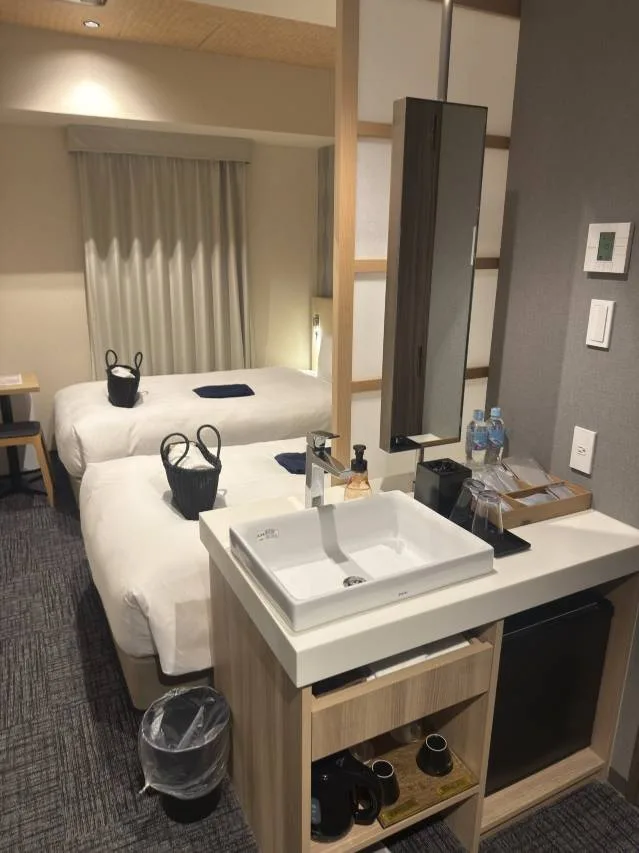
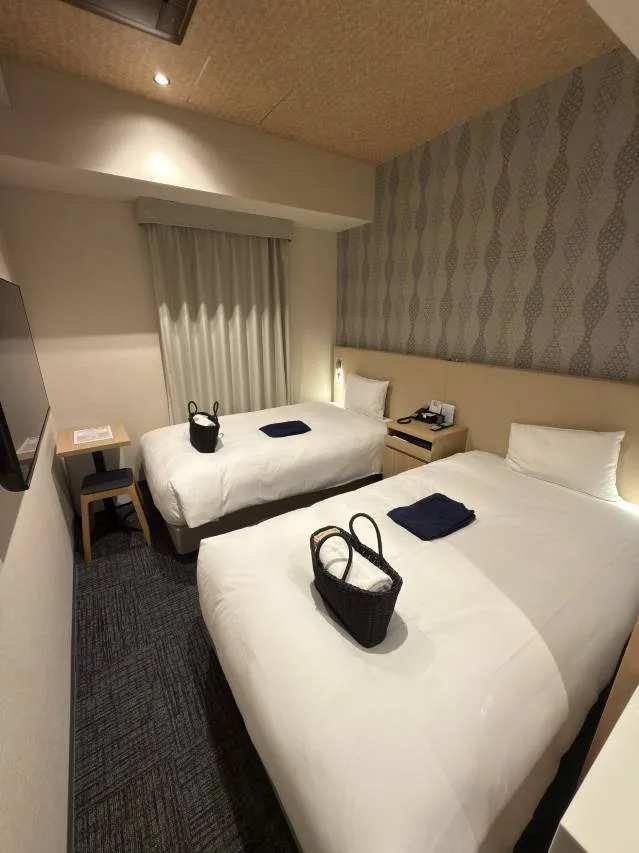
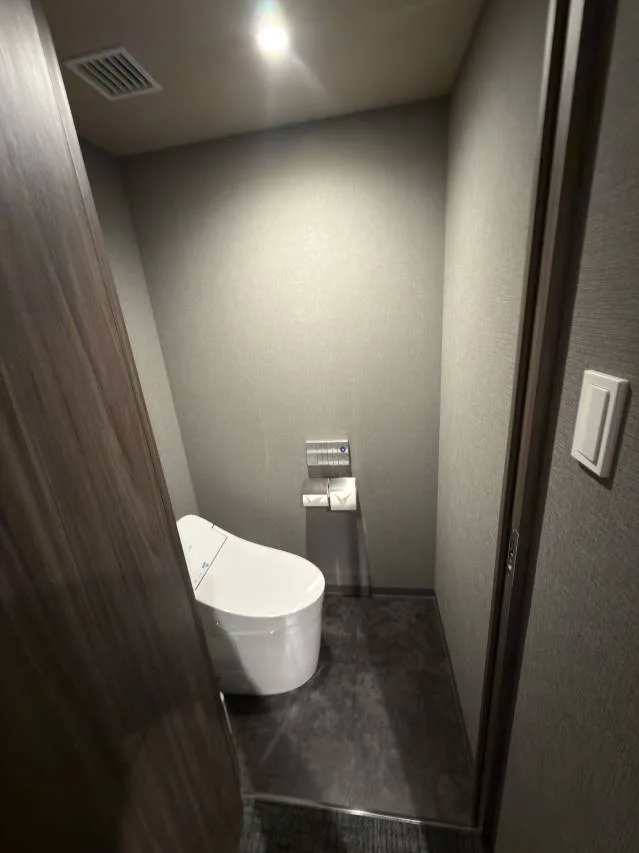
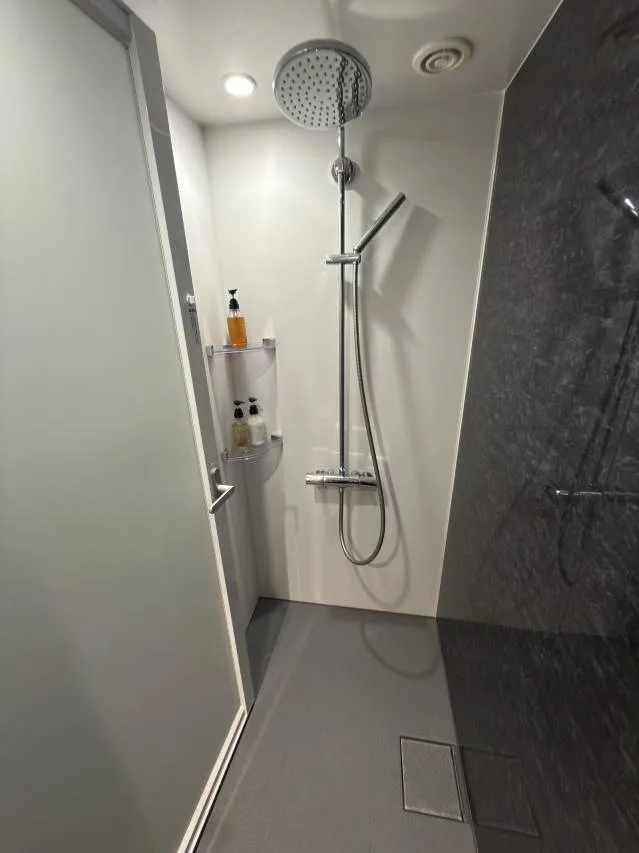
Guest photos show different bed counts as well as washbasins, showers and separate toilet areas. For two people, compare separate beds; for three or more, count every sleeping place and the passage at the foot of the beds.
Separate bathroom facilities are convenient when multiple people get ready in the morning, but bathtub and shower layouts may differ by room. If soaking in your own room matters, do not assume the public bath guarantees an in-room bathtub.
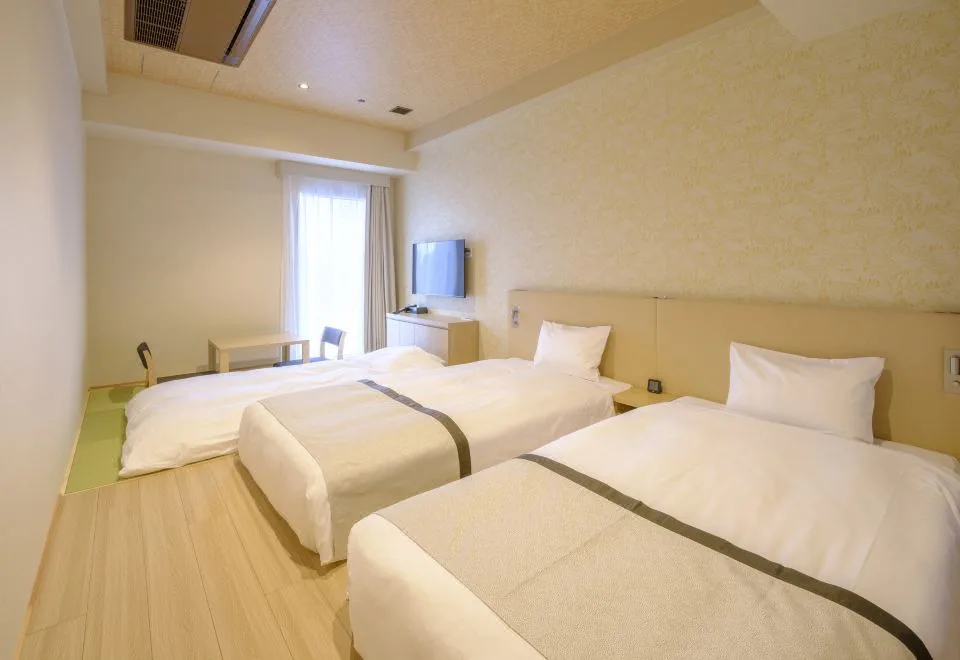
Of the 203 rooms, 96 include a raised Japanese-style area, and a futon there becomes the third or fourth sleeping place. Every room separates bath, toilet and washbasin, which helps when several people get ready at once. Note that no room type offers extra beds or cribs, so plan sleeping places for small children in advance. Some rooms have a bathtub and others a shower booth, so confirm the bathroom layout if soaking in your own room matters to you. Separated means the bath, toilet and washbasin each have their own space, so one person can shower while another brushes teeth and a third uses the toilet. That matters on a morning when everyone is rushing out.
Guest room photos: how the space works in daily use
Guest photos show everyday use, especially the space around beds, desks and bathrooms. Photos may show different room types; judge your booking by its actual layout.
In the photos I look at three things: whether the bed is 140 cm or 110 cm wide, where the washbasin and separate toilet sit, and how the shower area flows. The multi-bed photo shows a futon laid out in the Japanese-style area, and the dining-seat photo shows a corner for eating in the room. Photos come from different room types, so judge your booking by its own layout. I also check whether the desk fits a laptop. The official site lists a 120 cm desk in the Moderate Double, so remote workers should plan for a compact workspace, and once a suitcase is open on the floor, the passage gets tighter still.
Amenities and services you will actually use
The public bath, sauna, fitness centre and laundry are worth comparing, and the shared reading lounge suits a short rest. I checked the hours and charges on the official site, so you can plan around them below.
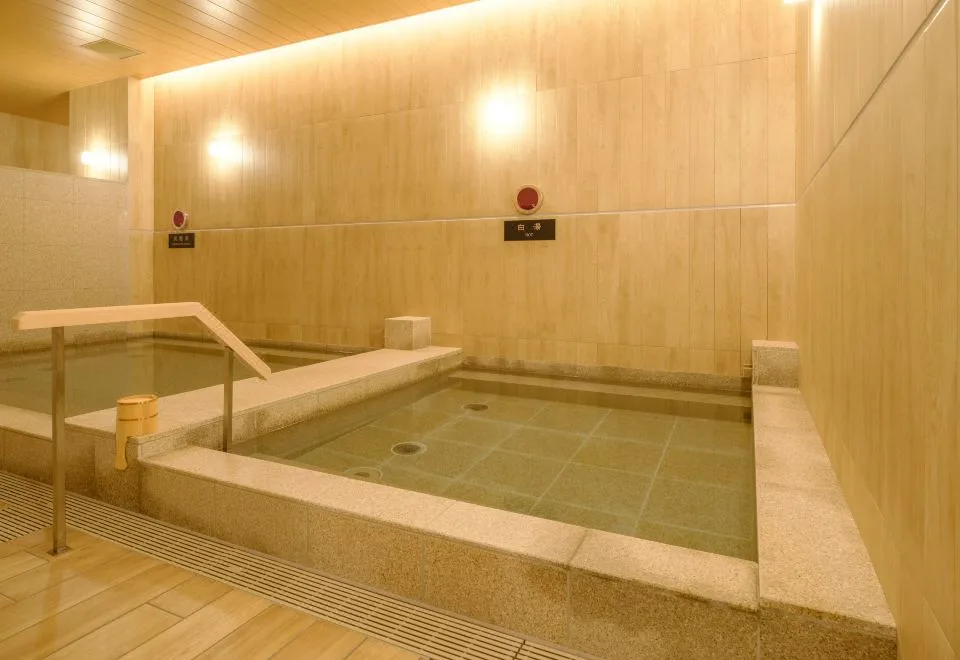
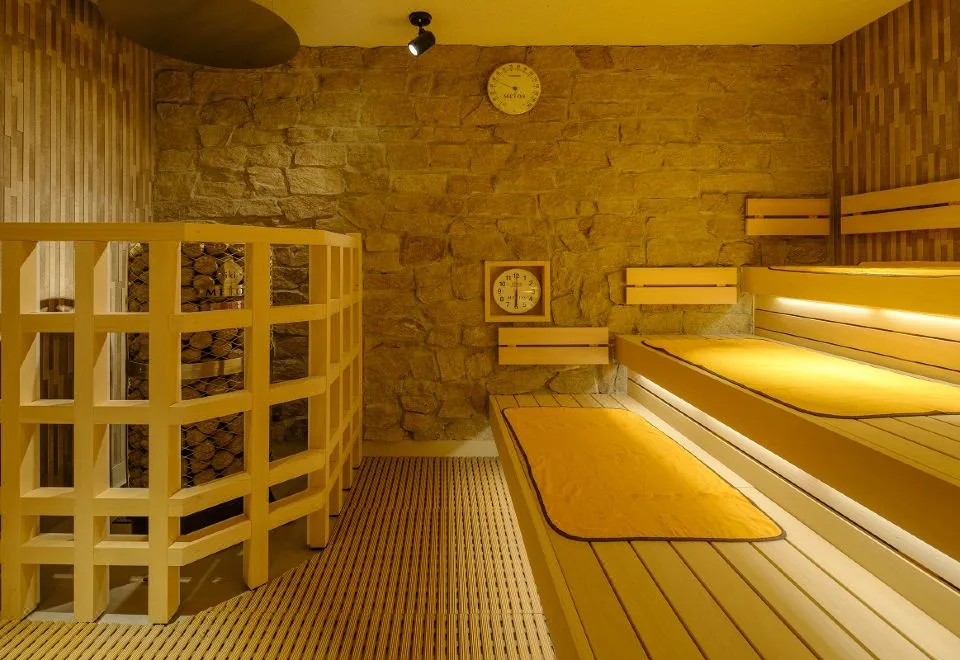
The baths are called Shishi no Yu and Tsuki no Yu, with plain hot water, a carbonated bath, a cold bath and a sauna. The sauna recreates a Finnish smoke sauna, and staff perform the löyly with seasonal aroma oil; guests must not pour water on the stones themselves. Guests have the baths to themselves from 6:00 to 10:00, and the baths stay open until midnight with last entry at 23:30. Guests bathe free. Guests under 18 must finish by 22:00 even with a guardian, and tattoos and children still in diapers are not allowed in the baths. The carbonated bath uses high-concentration carbon dioxide, so the warmth works from inside out. After the sauna, a dip in the cold bath and a rest on the chairs completes the cycle.
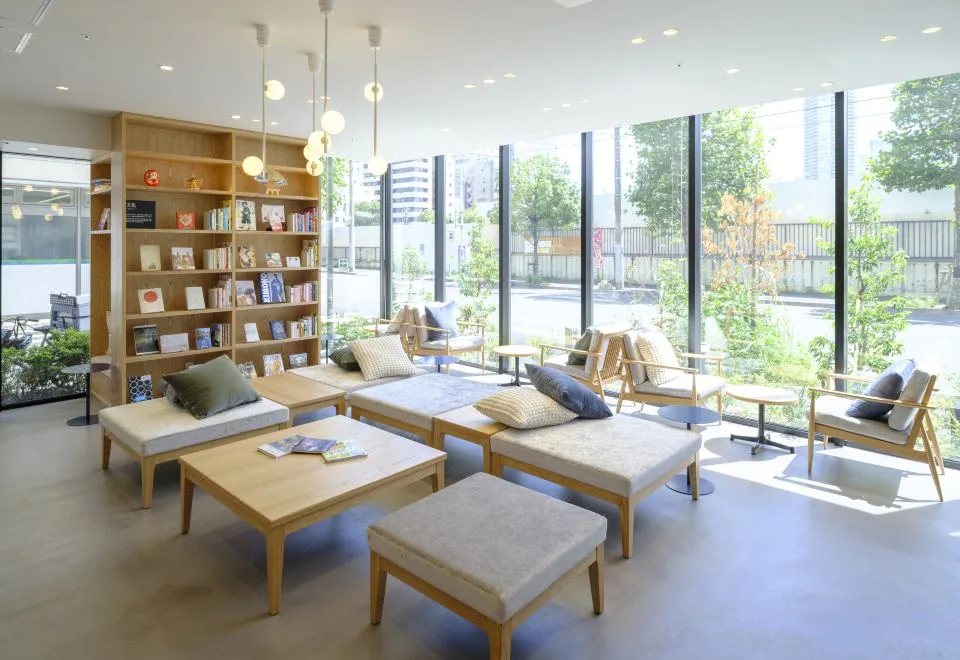
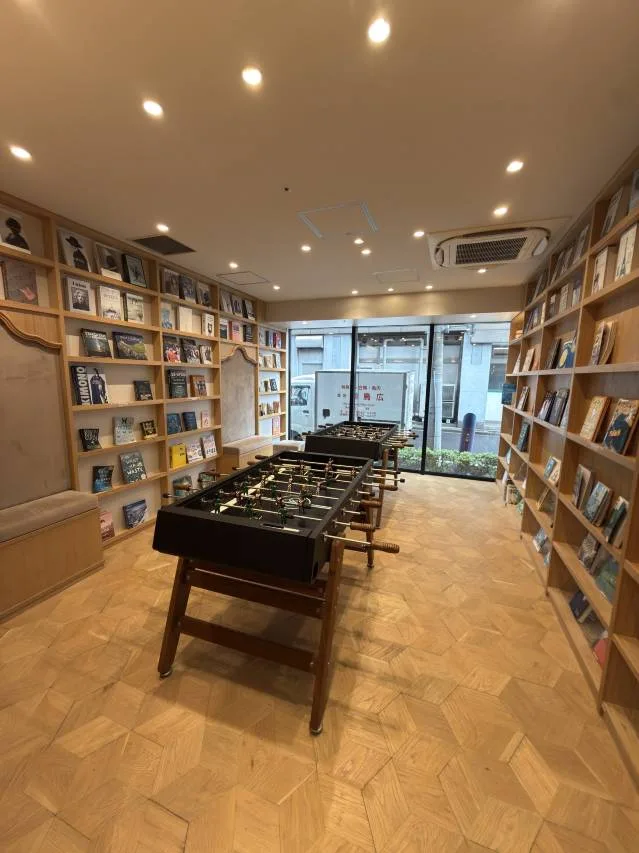
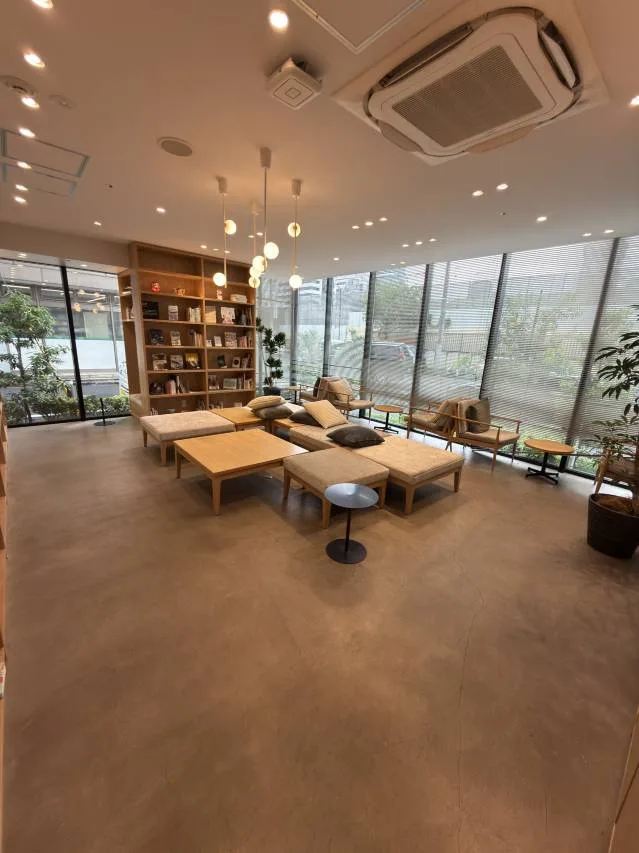
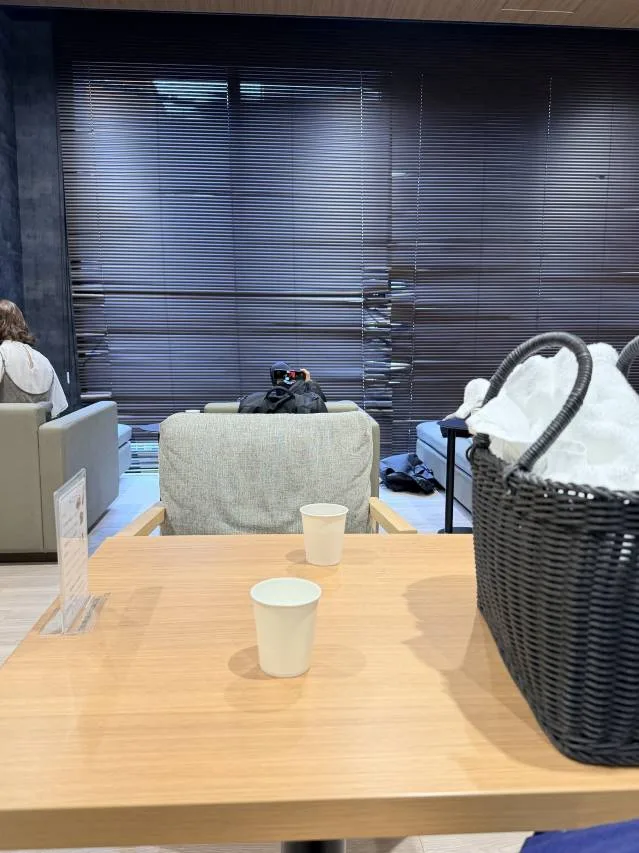
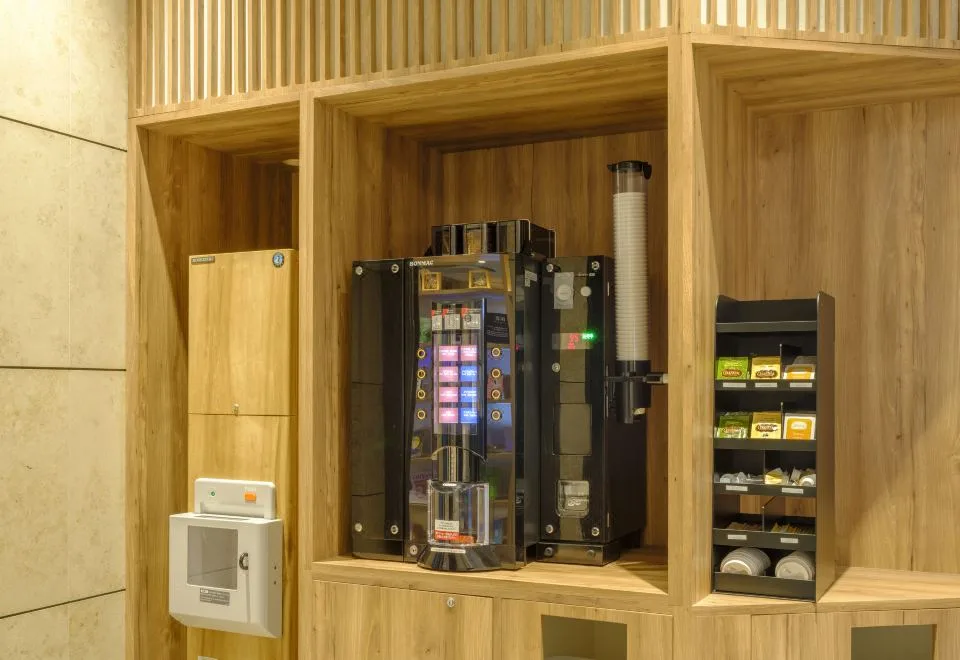
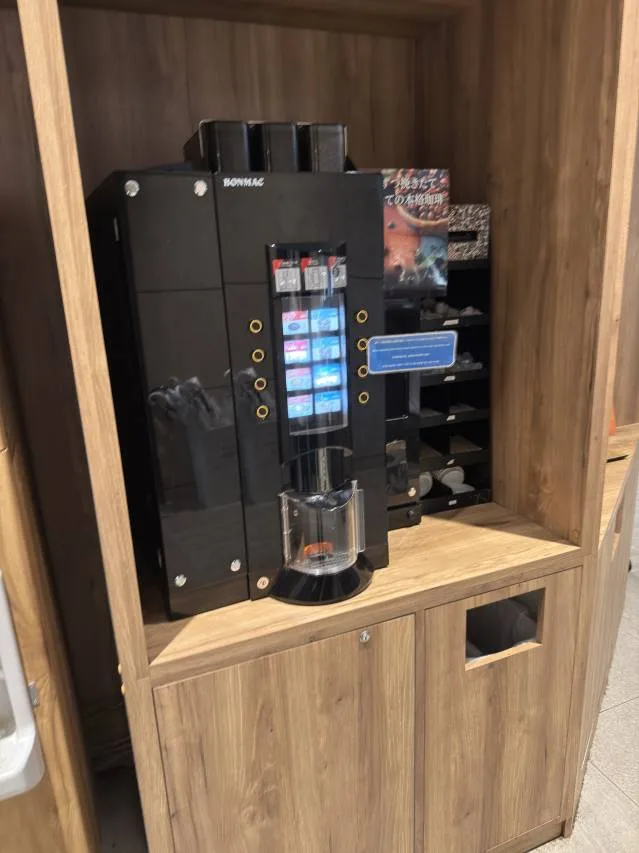
After a soak, the rest lounge has 1,000 manga volumes to read and a free soft-drink corner. The Hito Yasumi lounge on the first floor is for guests only, open 24 hours, with books, a large area map and a drink corner with an ice machine.
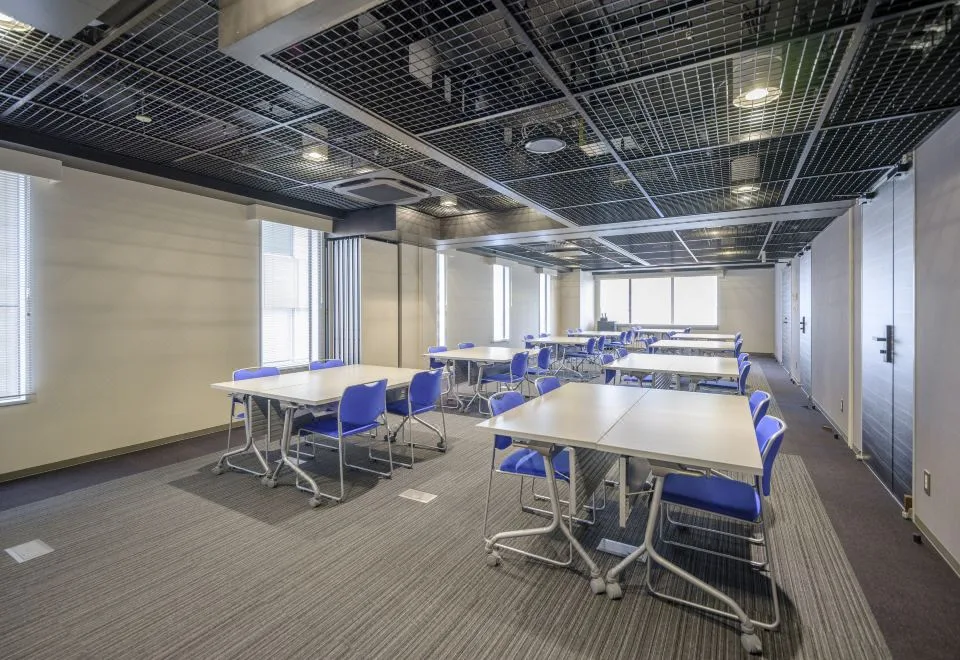
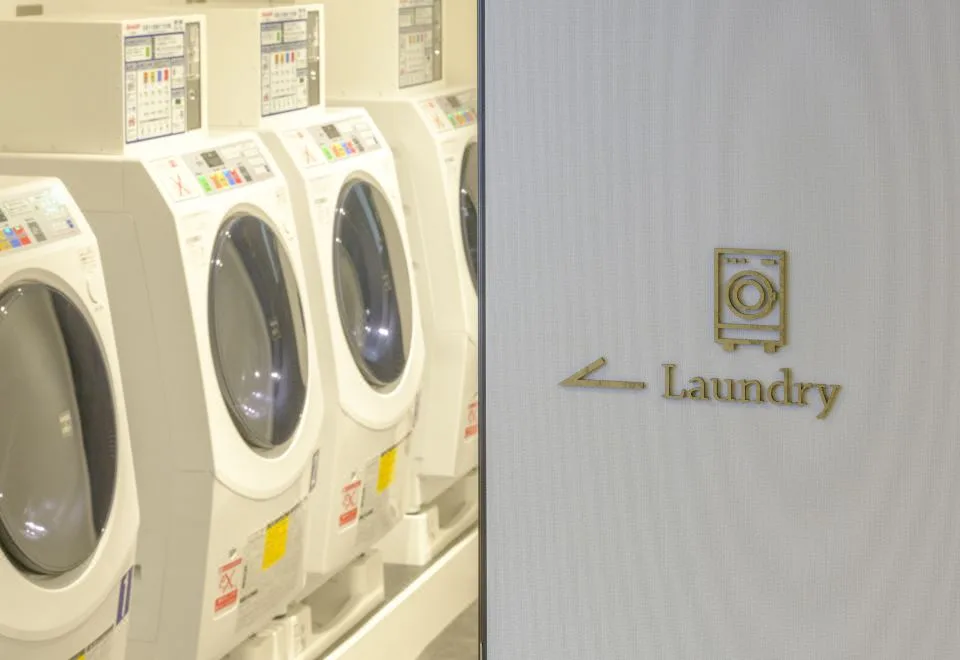
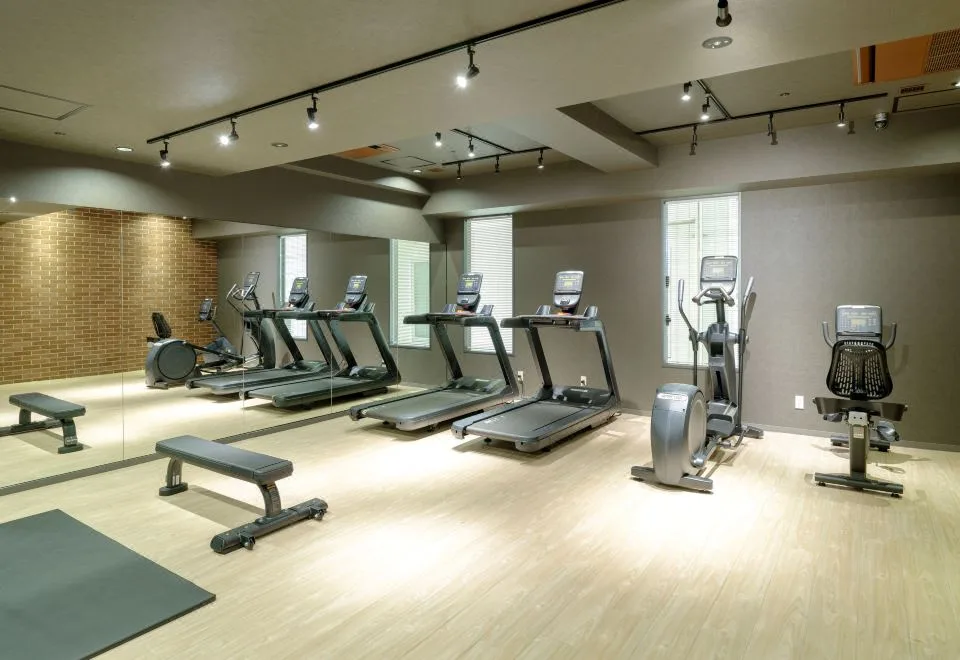
You can eat without leaving the building. Bistro Cocone serves lunch from 11:30 to 14:30 and dinner from 17:00 to 22:00, with course orders until 20:00 and à la carte until 21:00, then a bar menu after 21:00. The parfait bar VIGO runs 12:00 to 22:00. Drivers need to book private parking in advance at ¥3,300 a day. Laundry, a gym, meeting rooms and a banquet hall for up to 100 guests are also on site. Dinner is seafood Italian with Japanese touches, served as courses or à la carte. After 21:00 the room turns into a bar, so a nightcap needs no trip outside.
Should you add breakfast? Think about your morning
The hotel serves a Japanese and Western breakfast buffet, and I found it refined and tasty. I choose between hotel breakfast and the market by my companions: with children, older family members or rainy weather, an inclusive plan is easier; for Tsukiji street food, leave room in your appetite.
Breakfast runs 7:00 to 10:00 at Bistro Cocone, with last orders at 9:30. Adults pay ¥3,300, elementary school children ¥1,650, and children aged five and under eat free. Breakfast is for guests only, and the same prices apply if you add it at the hotel.
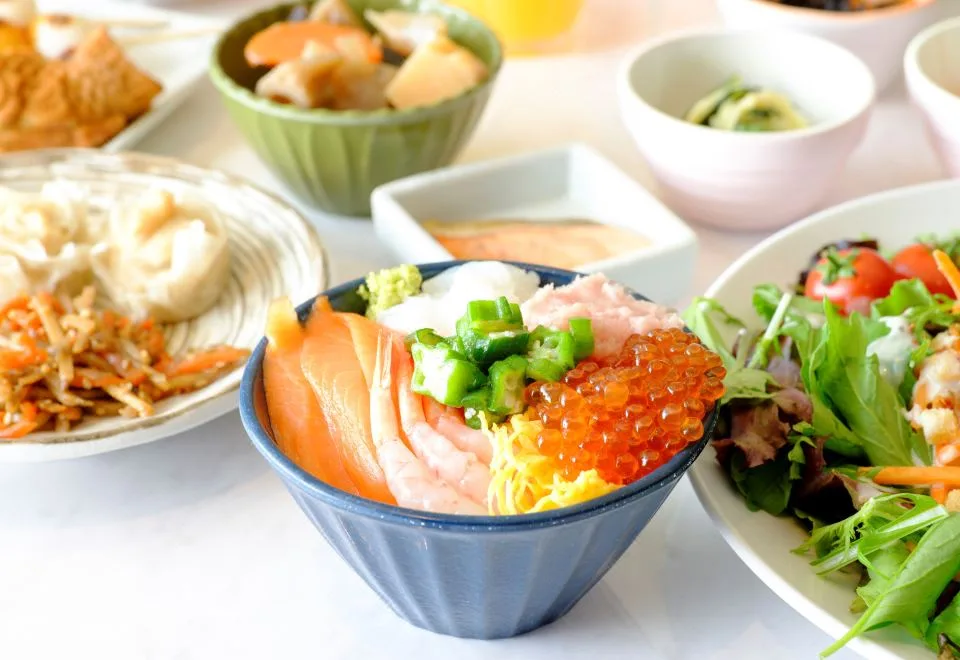
The seafood bowl is yours to build: hot rice topped with salmon, shrimp, salmon roe and okra, as much as you like. Grilled fish, rolled omelette, simmered vegetables, kinpira, scrambled eggs, quiche, bacon, sausage, curry and cereal line the buffet, and the small dishes change daily. My favourite corner is the seafood bowl: salmon, shrimp, salmon roe, okra and minced fish to add as you like, and the rice has to be hot. The small dishes change daily, so take what you like when you see it.
The photo below shows the breakfast seafood bowl with salmon, shrimp, salmon roe and okra, with small dishes and salad beside it. Menus and service formats may change by the date of your stay.
Nearby walks: make time for the neighbourhood
A morning in Tsukiji, afternoon shopping in Ginza and evening rest at the hotel flow together naturally. Account for the subway walk each day, and do not use an empty-handed strolling pace to estimate arrival time with suitcases.
By the numbers, Tsukiji Outer Market sits 150 metres away, Ginza 520 metres, the Ginza Art Aquarium 1.0 km, Tokyo International Forum 1.8 km, Nihonbashi 2.0 km, Hamamatsucho 2.2 km, Shiba Park 2.1 km and Tokyo Tower 3.0 km. A morning at the market, an afternoon walk to Ginza and an evening soak back at the hotel fit inside that radius. These are straight-line and walking distances, and traffic lights and crowds add time in practice. The market is busiest in the morning and Ginza in the afternoon, so the walk feels easier outside the peaks.
I keep the morning for the market: the stalls open early, so a walk over after breakfast lands you there at the right time. Buy souvenirs, drop them at the hotel, then head to Ginza. The route never doubles back. Some market stalls open only in the morning and close early. I walk a full loop first to see what is there, then come back to buy, and I leave souvenirs at the hotel before heading out again.
Keep the half day simple: market in the morning and Ginza in the afternoon is enough. Leave time to return for a soak instead of adding one more stop.
Short stays, longer stays and my recommendation
One or two nights are enough to pair Tsukiji with the public bath. Longer stays benefit more from laundry and lounge space. If you need reliable connectivity for remote work, test Wi-Fi and air conditioning soon after arrival and report problems early.
For a hotel near Tsukiji Market with a public bath, I put Tosei Hotel Cocone on my shortlist. Before booking, confirm the number of guests, exact room, breakfast arrangement and arrival time, especially room bathrooms and walking routes.
Pros and cons at a glance
Pros
- Tsukiji Outer Market is about 150 metres on foot, and Ginza is an easy afternoon walk from there.
- The baths Shishi no Yu and Tsuki no Yu offer plain hot water, a carbonated bath, a cold bath and a sauna, with a guest-only window from 6:00 to 10:00 at no charge.
- Twenty-one room types, with a Japanese-style area in 96 rooms and bath, toilet and washbasin separated.
- Breakfast lets you build your own seafood bowl, served 7:00 to 10:00 at ¥3,300 for adults.
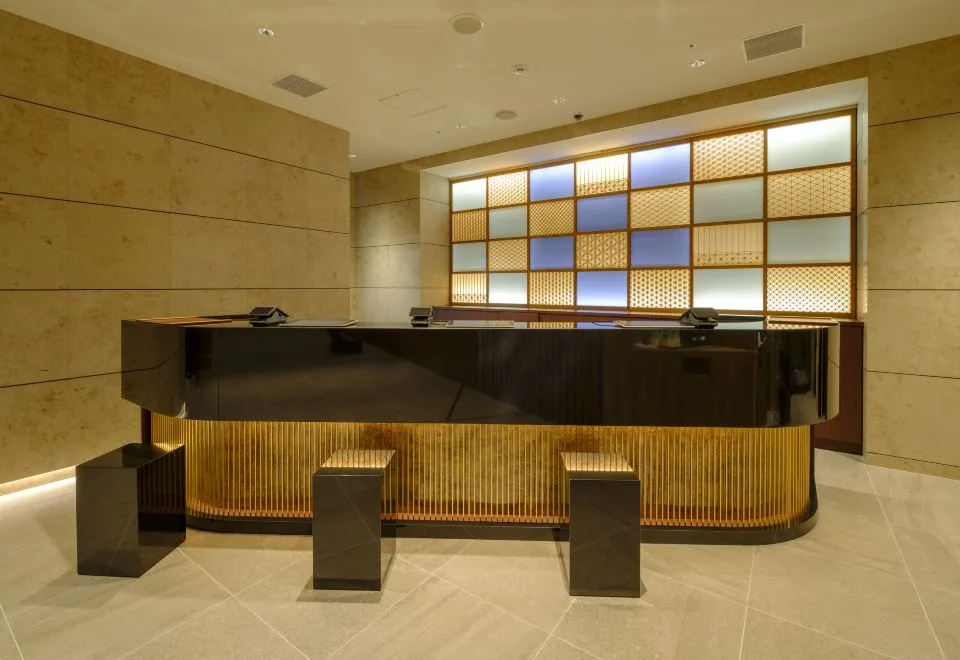
- A 24-hour front desk takes check-ins from 15:00 until 1:00 the next morning, which keeps the schedule flexible.
Cons
- The three nearest stations each need a five to eight minute walk, and luggage needs a lift exit, since Higashi-ginza Exit 6 has no elevator.
- No room type offers extra beds or cribs, so larger groups rely on futons in the Japanese-style area.
- Wi-Fi and air conditioning feel different from stay to stay, so remote work needs a test on arrival.
- Check-out at 10:00 is early, so longer stays need a plan for laundry and the day schedule.
Information last checked: 2026-11-23