
TOKYO / CHUO
TOMI. Ginza
Tomi. Ginza
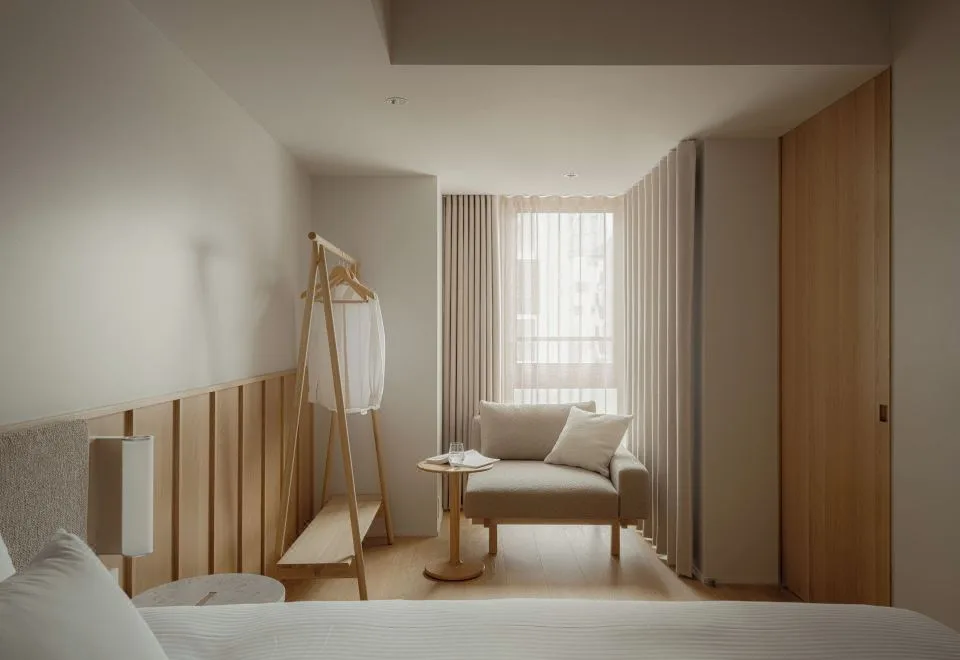
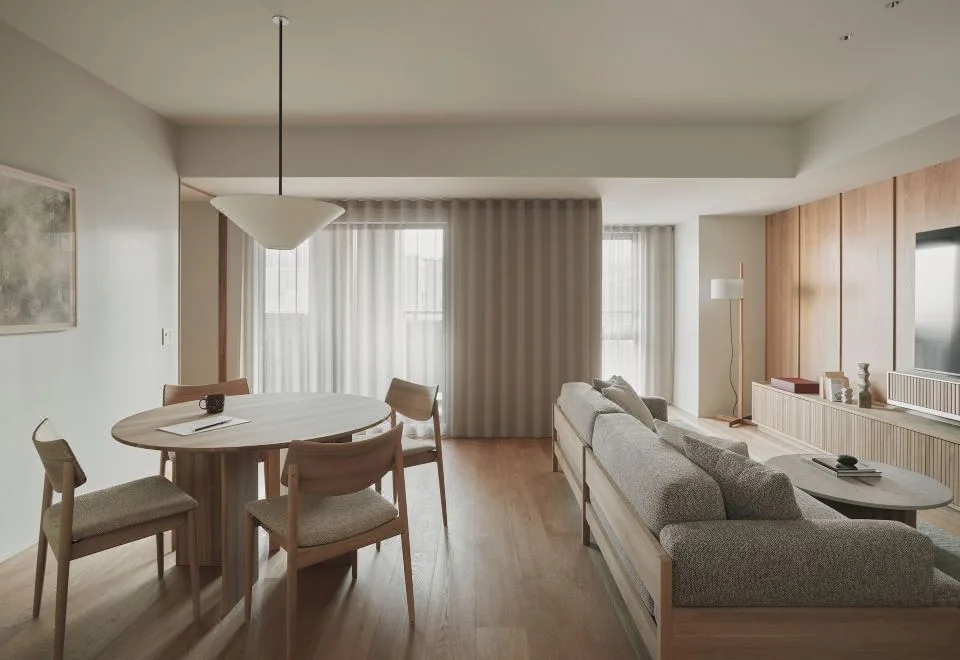
TOMI. Ginza suits families or friends who want to gather in one space while valuing privacy and thoughtful design. Wooden furniture, a dining table and sitting area make it easy to imagine bringing food back and spending an evening chatting. This is somewhere to spend time, not just sleep.One residence takes up a whole floor: 76.79 m² entirely yours, with the kitchen, washer-dryer and living area inside the apartment.
Who would enjoy staying here?
- Room choice: Assign beds for everyone first, then compare the bathrooms and floor space for luggage.
- Breakfast: Decide between a flexible meal in the apartment and eating in the neighborhood before heading out.
- For longer stays: Confirm laundry and cleaning routines and pack before your final morning.
Choose the bedrooms and bed layout before comparing floor area
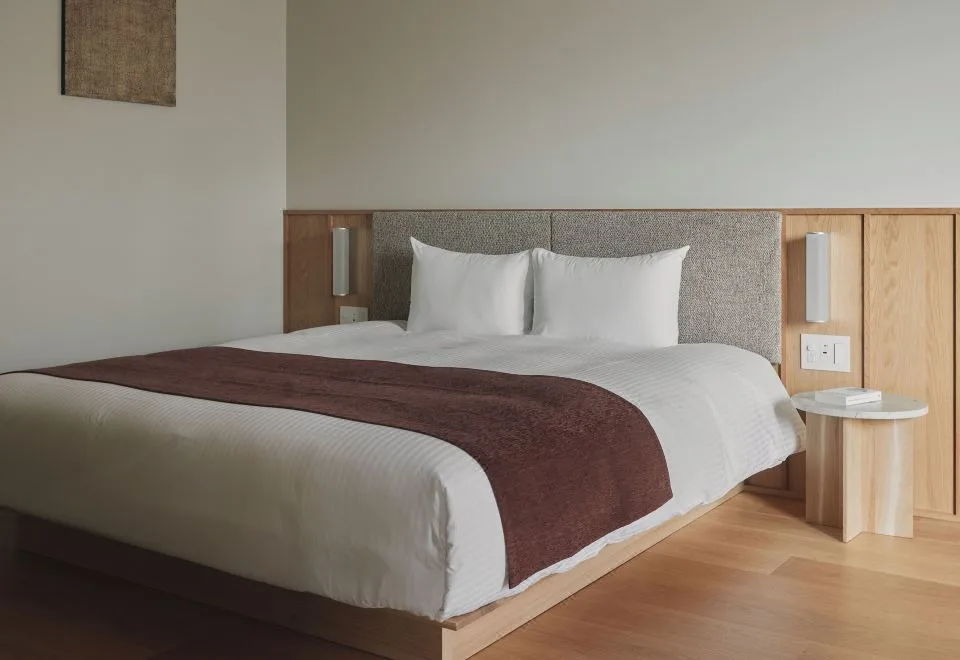
The official site currently shows two layouts of 76.79 m². The 2LDK sleeps up to six with one queen bed, two single beds and two sofa beds. The 1LDK sleeps up to two with one king bed. The difference is the number of bedrooms and sleeping positions, not total size alone. Two guests wanting more living room space can consider 1LDK; families and friends should compare the 2LDK.
One residence per floor reduces traffic in shared corridors. A kitchen and in-room washing machine also help with longer stays. If six people are sharing, work out who uses the fixed beds and sofa beds in advance. Separate bedrooms matter more when sleep schedules differ than a beautiful living-room photo.
Compare the hotel’s official room details with the exact apartment and amenities listed in your booking.
If six people are sharing, assign the beds first: give the queen bed to the lightest sleeper, split the two single beds and two sofa beds across the two bedrooms, and close the doors when one group sleeps early while the other still talks in the living room. Fold the sofa beds away during the day so six people can sit down to eat and talk; open them at night with the walkway kept clear of suitcases.
Both layouts are 76.79 m², so the difference is the partition, not the size: the 2LDK has two bedrooms for six people to sleep separately, while the 1LDK has one bedroom with a king bed and a much wider living area for two. Ask your group how the beds split before you book, then check the bathroom: six people sharing one bathroom need staggered mornings, half an hour apart, to stay smooth.
The in-room washer-dryer is what makes a longer stay work: wash one load a day and you have dry clothes the next morning, without packing six sets of changes or hunting for a coin laundry. Wooden furniture and the dining table make the room feel like a lived-in home, and the warm light with the Danish audio system sets the evening mood for music and conversation in the living room.
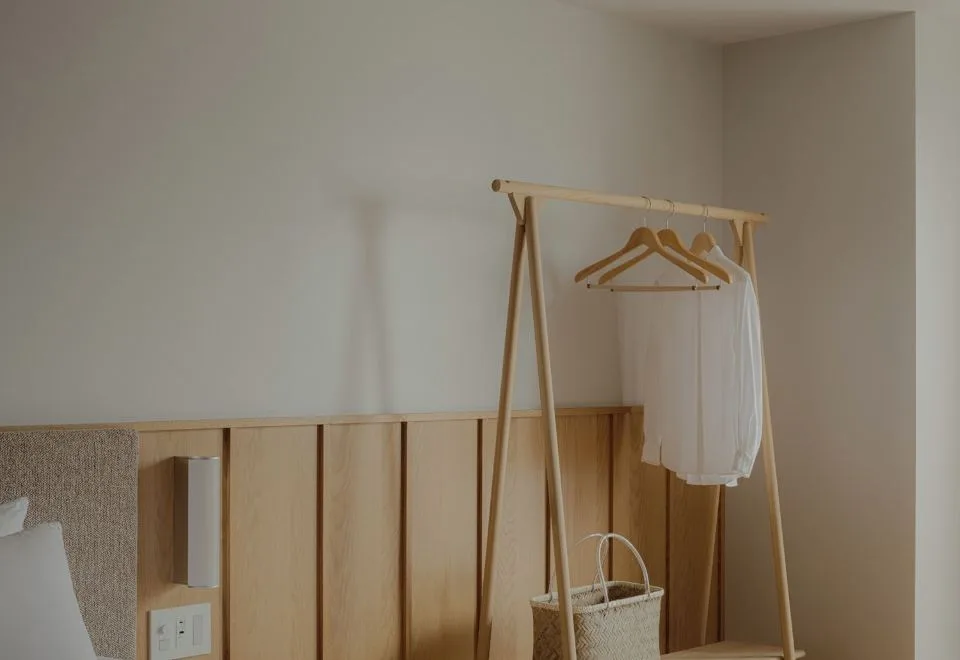
The clothes rack in the photos holds six coats, and the nightwear is for walking around the apartment in the evening, so you do not have to change back into day clothes the moment you return. Line the suitcases against the wall and keep a clear path beside the beds, so nobody trips over a case on the way to the bathroom at night. Leave six pairs of shoes by the door and slip them off as you come in, and the wooden floor stays clean.
Breakfast can be made in the apartment
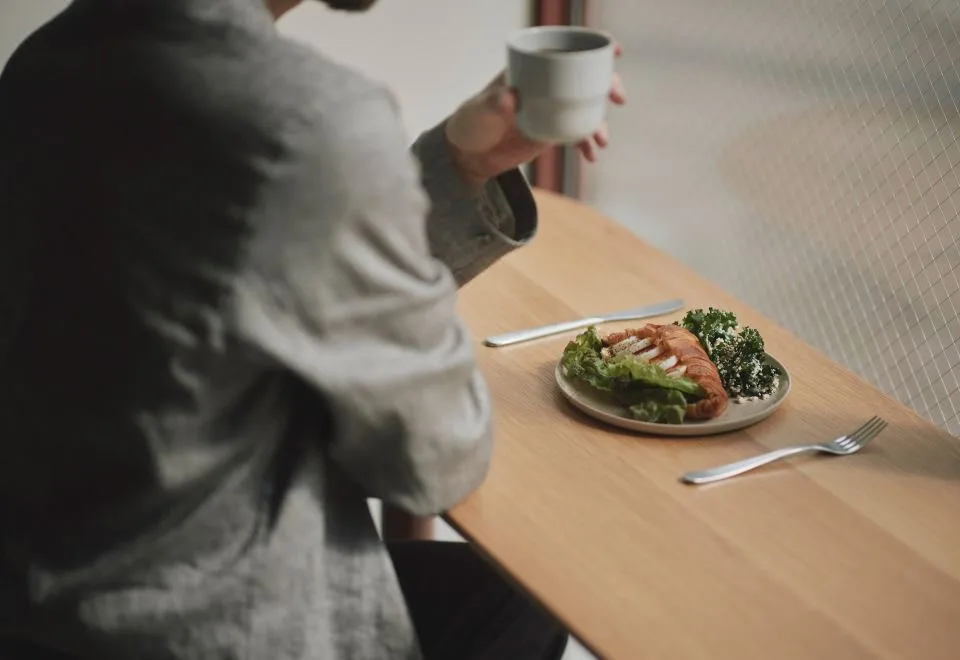
There is no breakfast service to count on, so I treat the kitchen as the breakfast table: buy bread, fruit and milk in Tsukiji or Ginza the evening before, then slice and warm them up in the morning without rushing out. The kitchen is useful for simple breakfasts, cutting fruit or reheating takeaway; you do not need to prepare a full dinner every night. Guests with food allergies may value preparing their own meals, but check that the cookware is clean.
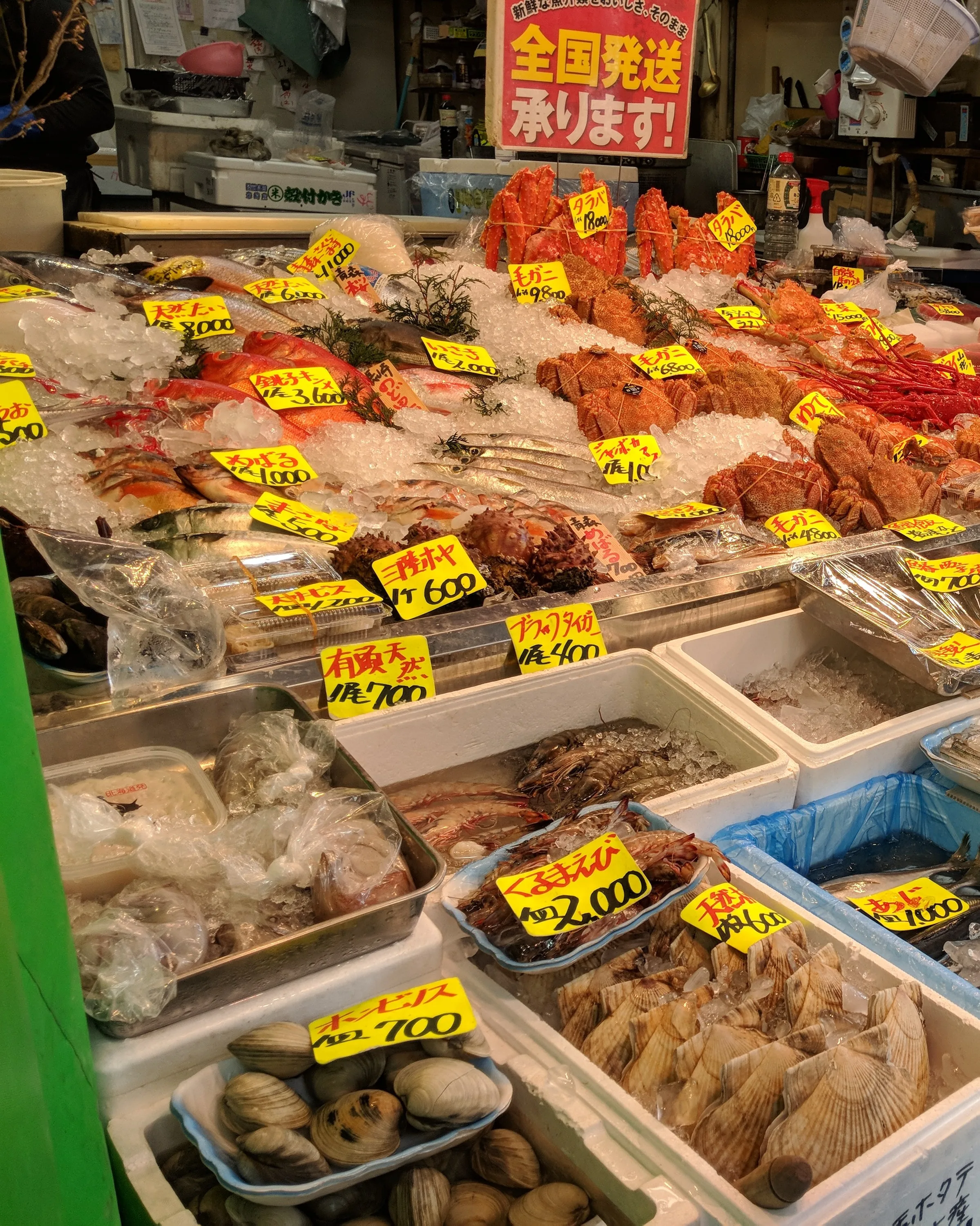
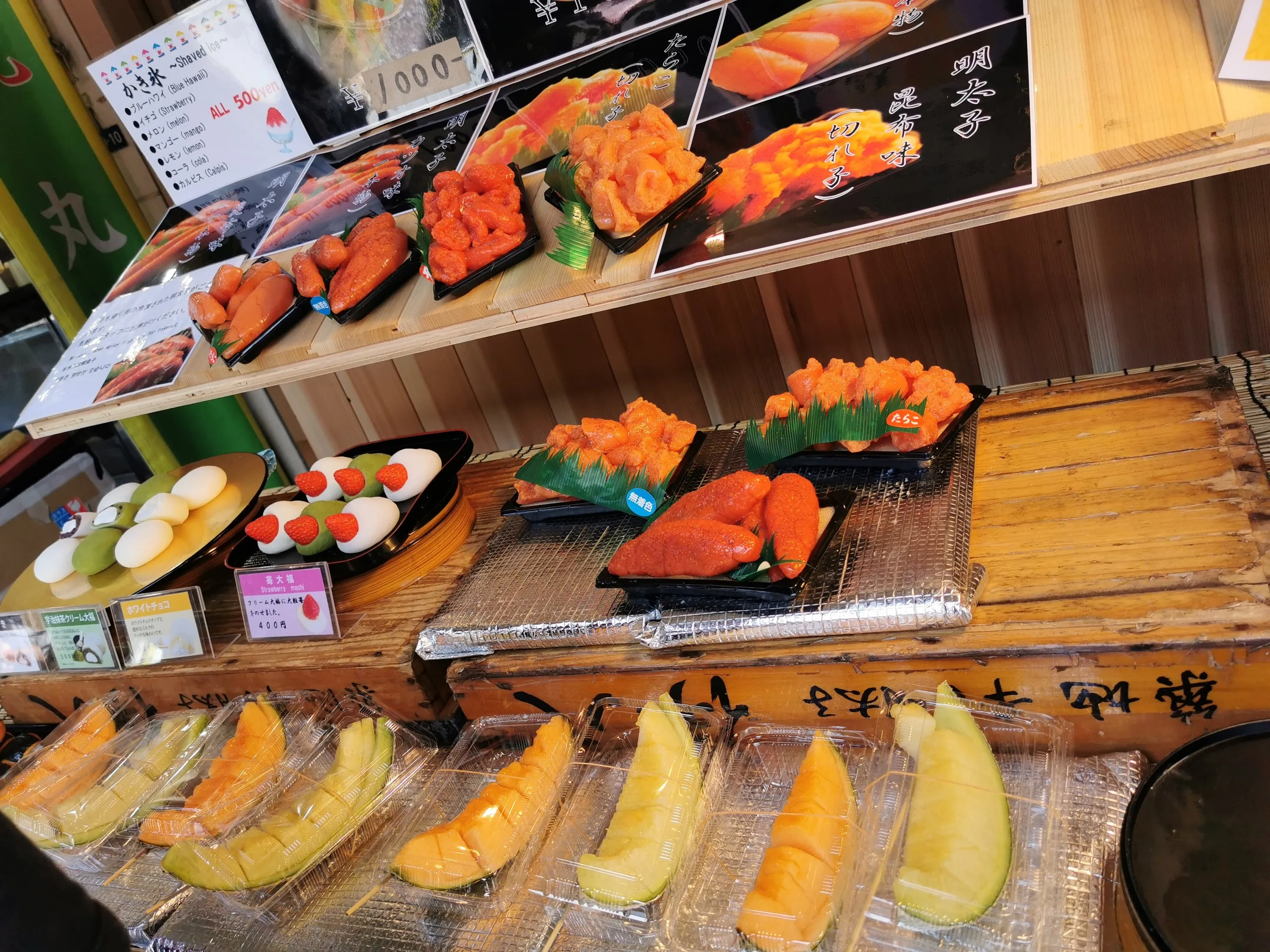
For a hot breakfast, walk to the Tsukiji Outer Market, 720 metres away: stalls are already open at six or seven in the morning, and sushi, tamagoyaki and miso soup all work as breakfast. Walk back slowly, pick up dinner ingredients in Ginza on the way, and the kitchen counter and stove become your prep area.
Cooking for yourself is the safest option with a food allergy: rinse the cookware before use, keep boards and knives separate, and pack away what you buy. Over several nights you can rotate — one evening in, one evening out in the neighbourhood — so the kitchen frees you from eating out every day without asking you to cook every day.
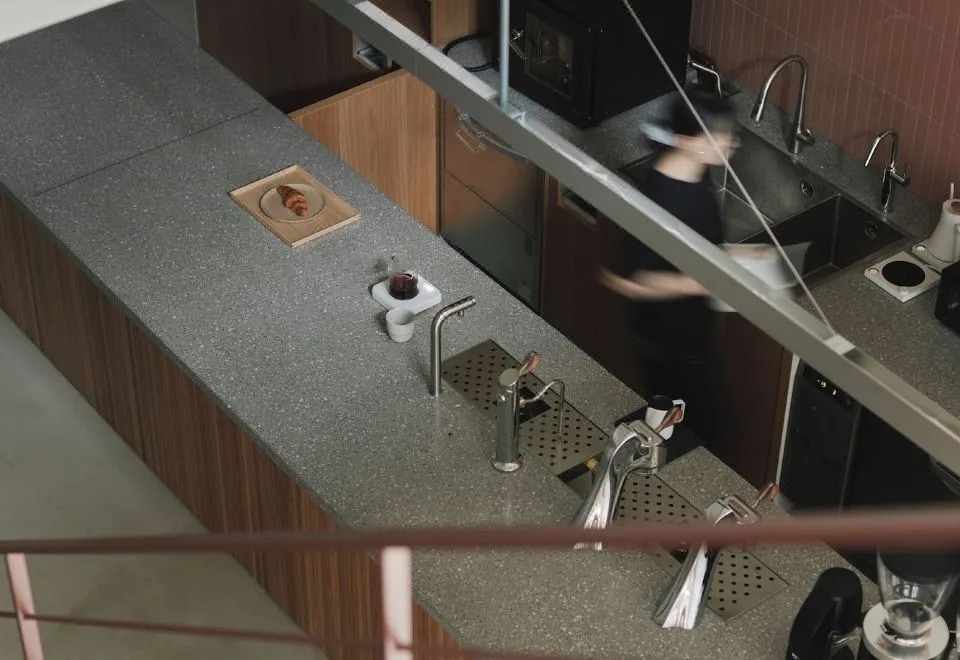
The kitchen counter is wide enough for cutting fruit and setting out plates, and the stove reheats takeaway and boils water. Breakfast does not need to be formal: bread with milk, fruit cut up, a pot of hot water for tea, and you are sitting down to eat in ten minutes. Rinse the cookware and put it back where it belongs, so the next person to cook can find everything.
Station access and luggage
Address: 1-5-10 Shintomi, Chuo City, Tokyo 104-0041, Japan.
Shintomicho Station is on the Yurakucho Line: an elevator in the middle of the platform goes up to the Chuo City Office-side ticket gate, and from that gate the elevator-only exit takes you straight to street level. With large luggage, a wheelchair or a stroller, take this route and skip the ordinary stair exits; from street level it is about 130 metres, two minutes, to Shintomi 1-5-10. There are many small streets east of Ginza, so save the complete address rather than searching only for ‘Ginza’.
Come back the same way: enter through the elevator-only exit, pass the Chuo City Office-side gate, then take the elevator in the middle of the platform down to your train. The upward escalators only reach exits 1, 2 and 3 in part, and there is no downward escalator, so the elevator is still the safest choice with large luggage. The closest stair exit is not always best for luggage.
The location sits on the eastern side of Ginza: Ginza high street is about 150 metres away, the Tsukiji Outer Market 720 metres, Nihonbashi 750 metres and the Tokyo International Forum about one kilometre. Ginza by day, Tsukiji in the morning and takeaway back in the apartment at night all work on foot; the Ginza Art Aquarium Museum is also within 900 metres for a rainy day indoors.
This is a 4-star stay on a quiet side street east of Ginza: no high-street noise reaches the rooms at night, and Shintomicho Station is two minutes away in the morning. Walk 150 metres west for Ginza high street, 720 metres south for Tsukiji food, and neither direction needs a train, so the days plan themselves freely.
Short breaks and multi-night stays
This apartment suits people who will enjoy meals and downtime indoors during a longer stay. If every day starts early and ends late, a full floor’s living facilities may be underused. Ask ahead about check-in, cleaning, luggage storage before arrival, and restocking of laundry supplies.
For a four- or five-night stay, sort laundry and cleaning first: run the washer-dryer daily, ask the front desk how laundry supplies are restocked and how often the room is cleaned, and leave luggage with the front desk on your last day so you can shop hands-free and collect it in the evening. A two-night stay is easier: you never need to unpack everything, and the living area stays free for meals and talk.
On a night you do not want to go out, the bar inside the building is a place to sit for a while, have a drink and then head back to the room, without walking to Ginza high street to find somewhere. After a long day on foot, stay in: warm up takeaway in the kitchen, put music on in the living room, change into nightwear after a shower — that is what a multi-night evening here should feel like.
The bathroom is all new, with a wide washbasin and a strong shower, so six people rotating through in the morning never wait long. Change into nightwear after a shower and walk straight to the living room — a home where the whole evening runs without leaving the apartment is an easy place to live in.
Photographs of the beds, kitchen and shared spaces
These views help assess passages beside the beds, bathroom amenities and space for suitcases. Different rooms or photo settings may be shown; confirm the exact unit on your reservation.
I look at the photos for three things: whether a suitcase fits beside the bed, whether two people can use the washbasin at once, and whether the kitchen counter is really usable for chopping and cooking. The wooden furniture and warm light make the room feel like a home, and the flowers and audio system in the room are small details you only notice once you are inside — waking up to flowers changes the morning.
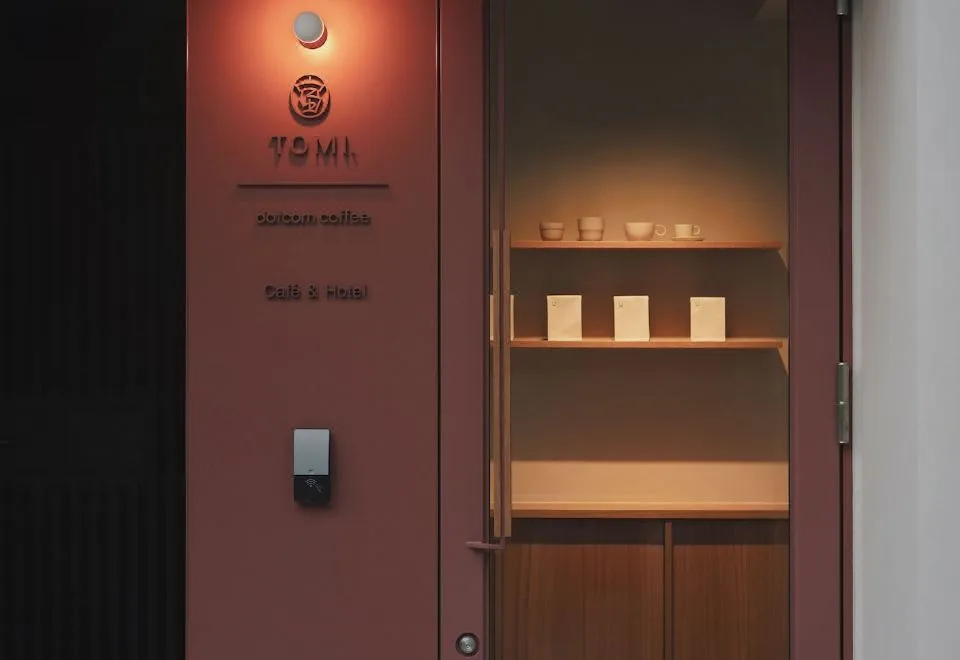
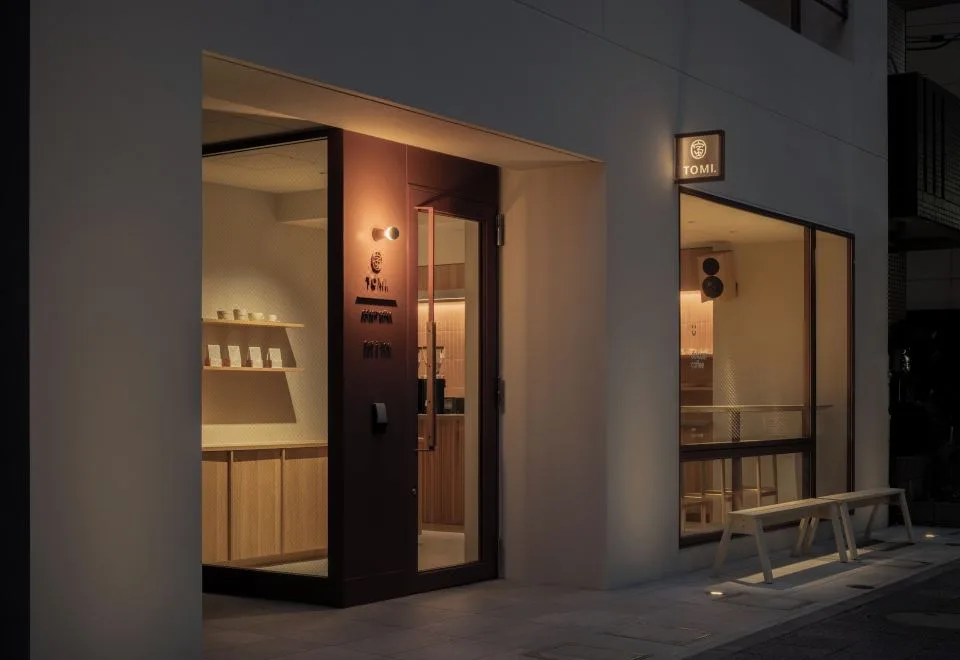
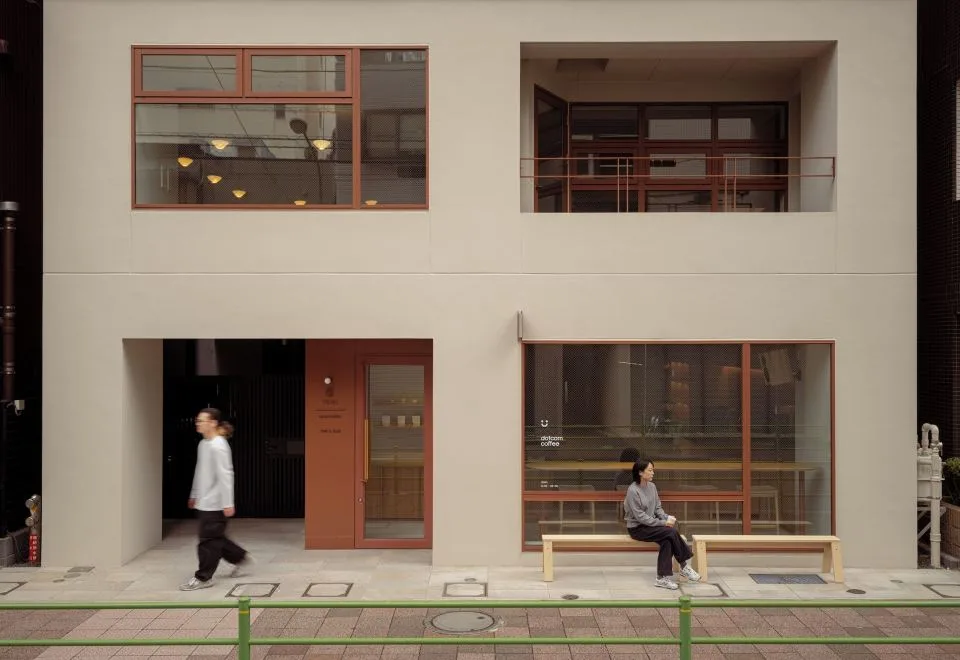
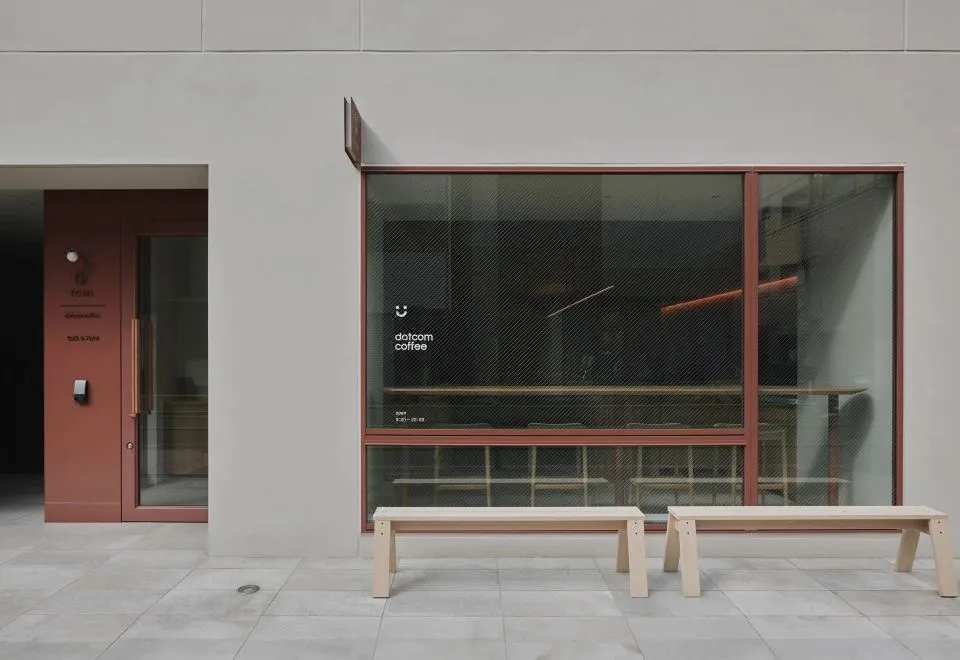
Look at the exterior and entrance photos together: the daytime entrance shows the lines of the building and the frontage, and the night entrance is lit, so in the evening you find your way home by that light; there is street seating beside the entrance, so you can sit down and sort your bags before going in. Take a good look at the front of the building before you go in and remember it, so you do not walk into the wrong building late at night.
Bedrooms and living spaces
Exterior and entrance
Check-in, check-out and hotel facilities
Check-in runs 15:00 to 24:00, check-out is by 10:00, and the front desk is staffed 24 hours. A late flight is no rush — someone is there even after midnight — but the morning is tight, so pack in stages the night before and walk out with your bags ready.
Travelling with children, remember two rules: children of all ages are welcome, and a crib is free for children aged two and under; but no room type allows an extra bed, and children over two may carry an extra charge, so enter the full party size when you book and the price will not jump at the front desk. The guest checking in must be at least 18.
The building has luggage storage, public Wi-Fi, an elevator and a bar, with public areas entirely non-smoking; a dryer and paid dry cleaning are available, the front desk keeps a safe, and the front desk serves guests in English and Japanese. For safety there are alarms, smoke detectors, fire extinguishers and public-area cameras, and the corridor back to your room is quiet at night.
There is an elevator in the building, so luggage never has to be carried upstairs — wheel the cases in and ride straight to your floor. Leave bags with the front desk, shop hands-free after check-out, collect them in the evening, and ask the front desk about the airport route while you are there, instead of working it out while dragging cases around.
How I would use this location
Start from Shintomicho and split Ginza shopping and Tsukiji food into separate half-days, with one evening reserved for takeaway in the apartment. With older relatives, check the routes between bedroom and bathroom rather than judging only by the attractive dining table.
This is how I would plan it: arrive at Shintomicho, drop the bags and walk to Ginza high street in the evening; start day two early at the Tsukiji Outer Market for breakfast, rest in the apartment at midday and head to Nihonbashi in the evening; keep half of day three in the apartment, eat what you bought in the kitchen, and pack before check-out. With older relatives, check the bedroom-to-bathroom route first; with six people, assign the beds first — both matter more than how pretty the dining table looks.
Rain does not change the plan: the Ginza Art Aquarium Museum is within 900 metres and the Tokyo International Forum about one kilometre, both indoors. Eat breakfast at Tsukiji in the morning, move indoors if the rain gets heavy, hang wet jackets on the rack back in the room, and walk to Ginza high street again once the rain stops in the evening.
Pros and cons
Pros
- One residence per floor at 76.79 m²: the 2LDK sleeps up to six, the 1LDK up to two, with a full kitchen and an in-room washer-dryer.
- Shintomicho Station is about 130 metres, two minutes away, on a quiet side street east of Ginza; Ginza by day and Tsukiji in the morning are both walkable.
- The front desk is staffed 24 hours and check-in runs 15:00 to 24:00, so a late flight is no rush.
- Wooden furniture, warm light and a full kitchen make the room feel like a home, good for eating and talking indoors.
- A crib is free for children aged two and under, luggage can be left with the front desk, and the front desk serves guests in English and Japanese.
Cons
- Only two layouts at a fixed 76.79 m², so a solo guest or a party of three has to work out the beds.
- Six guests must assign the fixed beds and sofa beds in advance and stagger bathroom use in the morning.
- No room type allows an extra bed, and children over two may carry an extra charge, so the party size must be entered fully when booking.
- Check-out is by 10:00, so late risers need to pack in the morning.
Information checked: November 22, 2026.