
TOKYO / CHUO
Section L Ginza East
Section L Ginza East
A homey feel near Hatchobori, keeping laundry and kitchen for longer stays
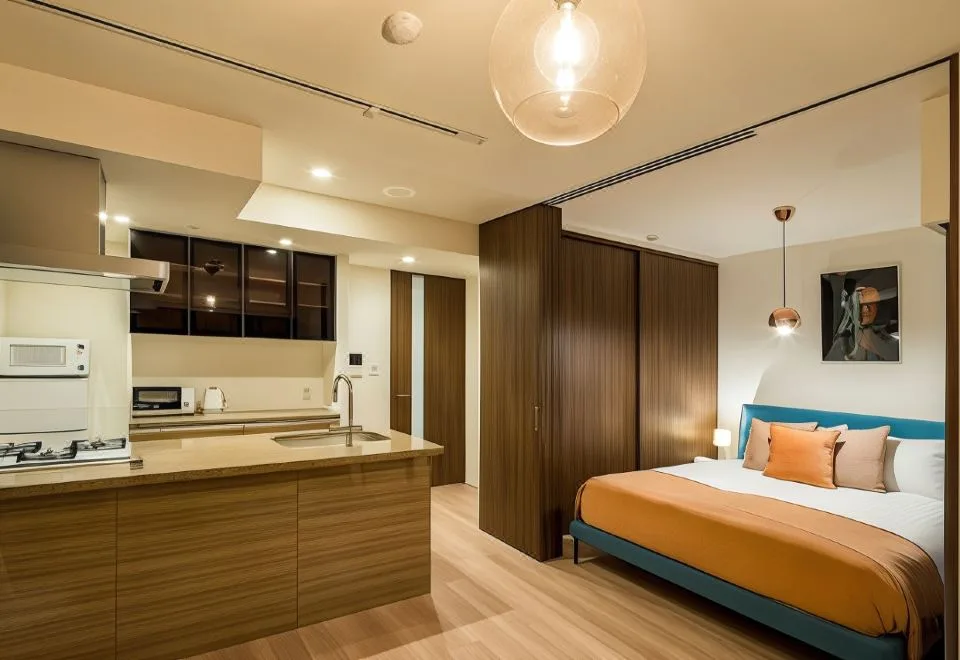
Section L Ginza East Hotel Apartment suits people who like having a kitchen, laundry, and a living/dining area and want to live in Tokyo as if it were everyday life. Its appeal is not packing every day full, but being able to come back, sort laundry, eat something, and sit down properly. If you use these facilities, longer stays usually make the difference felt even more.
First, Check If It Suits Your Stay
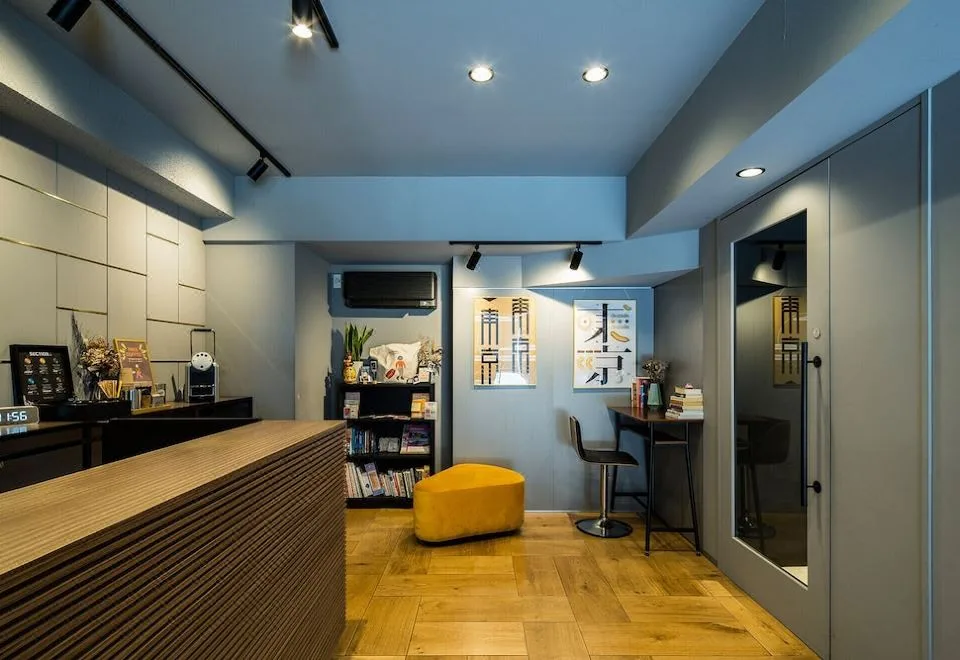
Section L Ginza East is not a smaller version of a standard business hotel. It is an apartment hotel you can live in like everyday life: four room types of 25 or 40 square metres, each with a full kitchen and in-suite laundry, and bilingual staff at the front desk around the clock. It sits between the Ginza shopping district and Tsukiji Market, and both are a short walk away.
I treat it as a base for longer stays: shop in Ginza or eat breakfast at Tsukiji during the day, then come back in the evening to do laundry, cook something simple, and sit down properly. The schedule does not need to be full; the stay itself slows the pace down.
The four room types are easy to split: the 40-square-metre Premier One-Bedroom Apartment sleeps up to 4, and the two 25-square-metre studio apartments sleep 2 each. When choosing a room, look at the number of people and the bed type first, then at how the kitchen and bathroom are divided; the floor area alone does not tell the whole story.
One thing to say clearly first: this hotel does not serve breakfast, and there is no hotel restaurant to rely on. The kitchen is for people who cook for themselves, so breakfast means cooking in the room or eating out. If that works for you, read on.
Location & Transport: How to Plan Regular Exits, Elevators, and Luggage
How to Walk from a Regular Exit
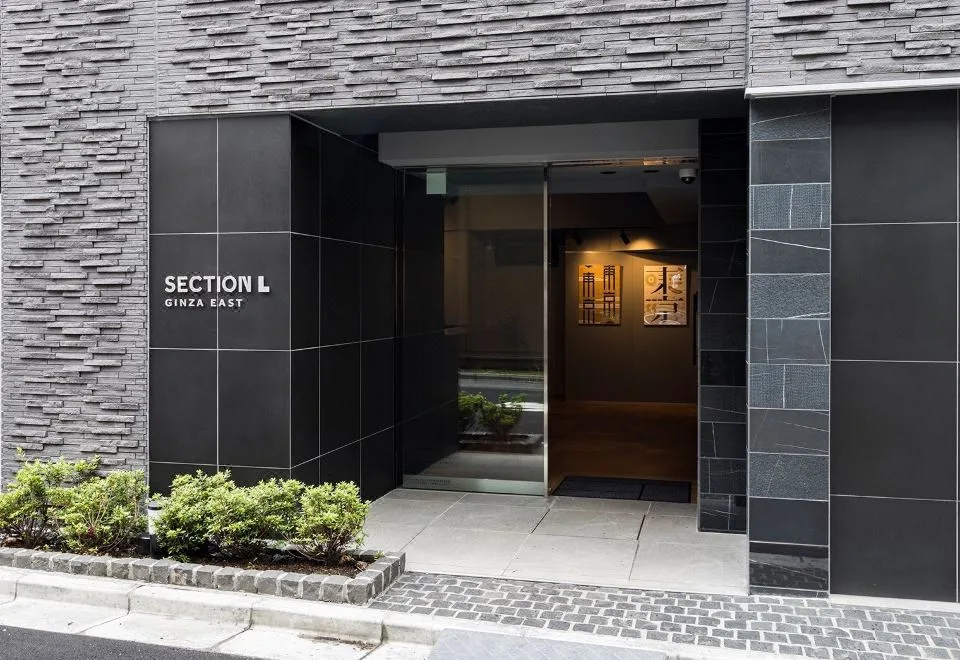
On arrival, first compare the train routes around Hatchobori and Shintomicho, and check the hotel against Shintomi 1-14-5. It is not a stay with the Ginza shopping district right at its door; if you bring suitcases or children, walk the arrival route first, then stroll lightly afterward — that will be far more comfortable.
Luggage and Elevator Routes
Arriving from Hatchobori on the Hibiya line, if you need a lift, take the ground-level route via gates A2 and A3 on the Sakuragawa Park side: the lifts sit outside the ticket gates and connect Exits A2 and A3 with the Tsukiji-side gate. If you take Shintomicho, look for the lift-only entrance by the Chuo Ward Office gate; the lift at Exit 1 reaches the gate level directly, but it runs only until 23:00. The two stations have their exits in different places, so choose by your line and allow extra walking time.
Hatchobori Station serves the Hibiya line and the JR Keiyo line, and the hotel is 230 metres away. For a step-free exit from the Hibiya line, take the lift route via Exits A2 and A3: the lifts sit outside the ticket gates and connect Exits A2 and A3 with the Tsukiji-side gate, so suitcases never need stairs.
The official site puts Hatchobori Station Exit A3 at a three-minute walk, which matches the crawl record of 230 metres and about four minutes. The walk back to the hotel runs along flat streets in the Shintomi area, so pulling a suitcase is easy.
Shintomicho Station on the Yurakucho line is another option, a five-minute walk on the official site. The lift at Exit 1 by the Chuo Ward Office reaches the gate level directly, but it runs only until 23:00, so a late-night arrival needs a different route.
The JR Keiyo line also stops at Hatchobori, with lifts and escalators between the platform and the ticket gates. From the JR platform you can still join the Hibiya line lift route via Exits A2 and A3 for a step-free way to street level.
Takaracho Station on the Asakusa line is about seven minutes away and Kyobashi Station on the Ginza line about ten, both useful as backup routes. Haneda Airport takes about 45 minutes on the Asakusa line, or 45 minutes by taxi; Narita Airport takes about 1 hour 30 minutes on the Asakusa line, or the same by taxi.
Check-in starts at 15:00 and check-out is by 11:00, the front desk is staffed around the clock all year, and luggage storage is free. Arrive early, leave the suitcases at the hotel, shop empty-handed, and sort things out after coming back; that is the smoothest way to use this hotel.
See the hotel’s arrival routes / See the station elevator layout
| Hotel Name | Section L Ginza East Hotel Apartment / Section L Ginza East |
| Address | 1-14-5 Shintomi, Chuo Ward, 104-0041 Tokyo, Japan |
| Check-in & Check-out | 15:00–24:00; check out before 11:00; front desk staffed 24/7 all year; the host or staff greet you on arrival; self check-in: contact the hotel in advance for the entry passcode; if you expect to arrive after 00:00 on the morning after your check-in day, contact the hotel in advance by email or phone. |
| Transport Location | 230 metres from JR Hatchobori (Tokyo) Station, about a 4-minute walk |
How to Choose a Room Type: First Look at Beds, Bathrooms, and Luggage
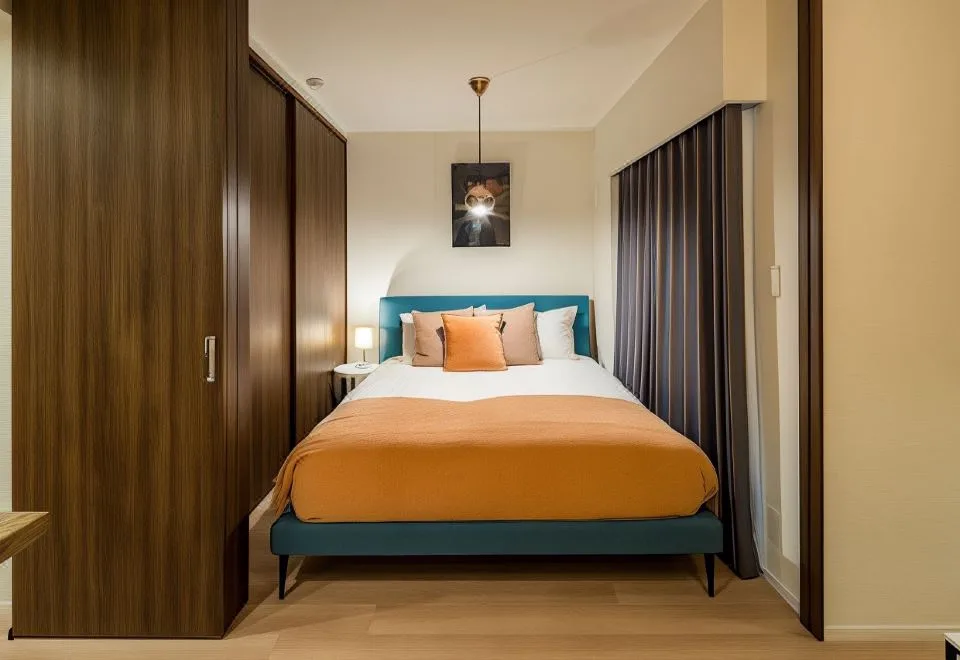
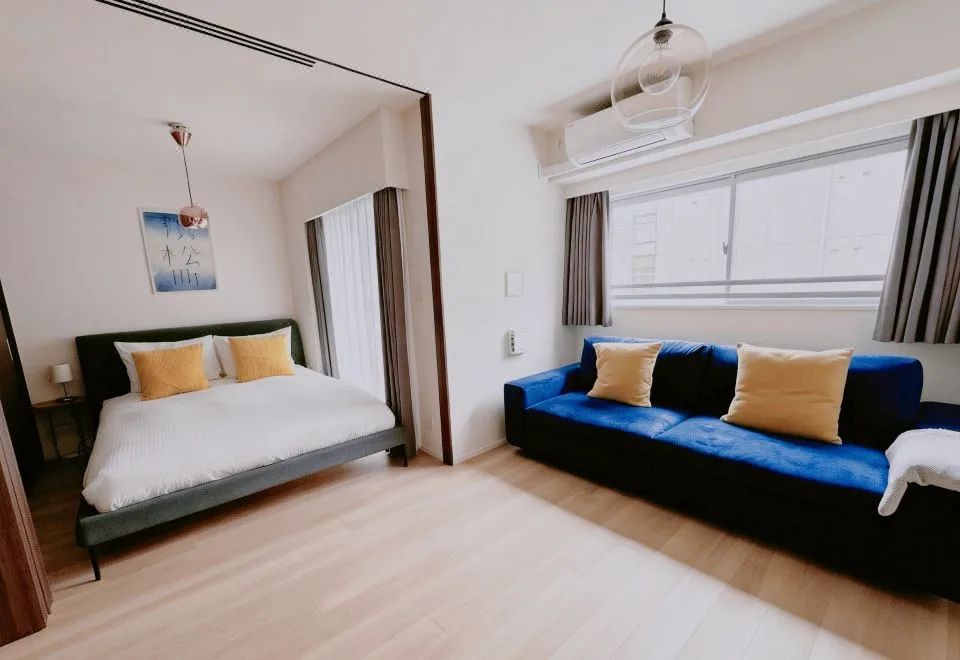
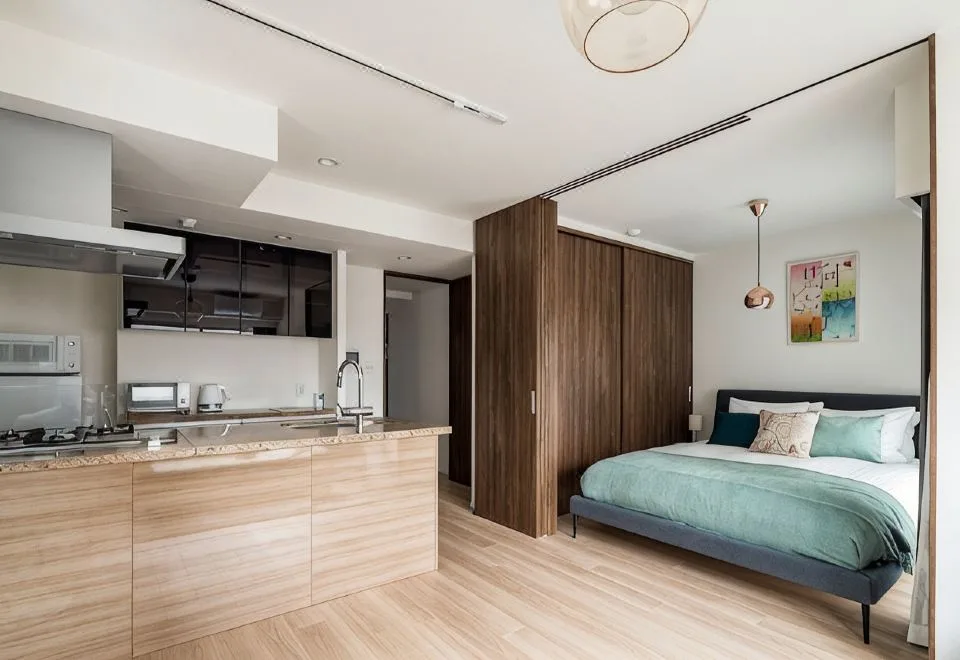
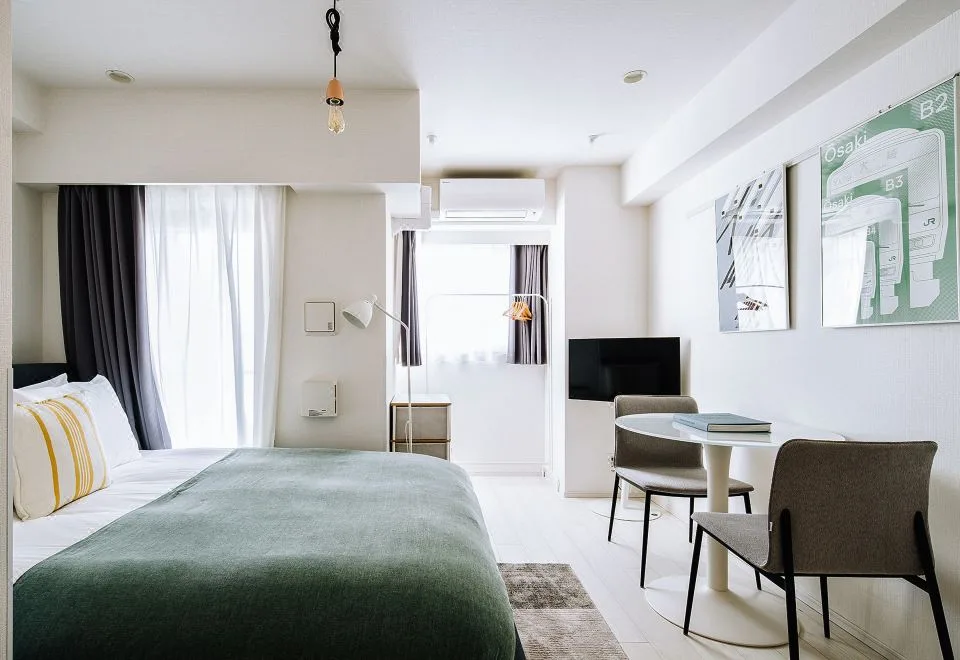
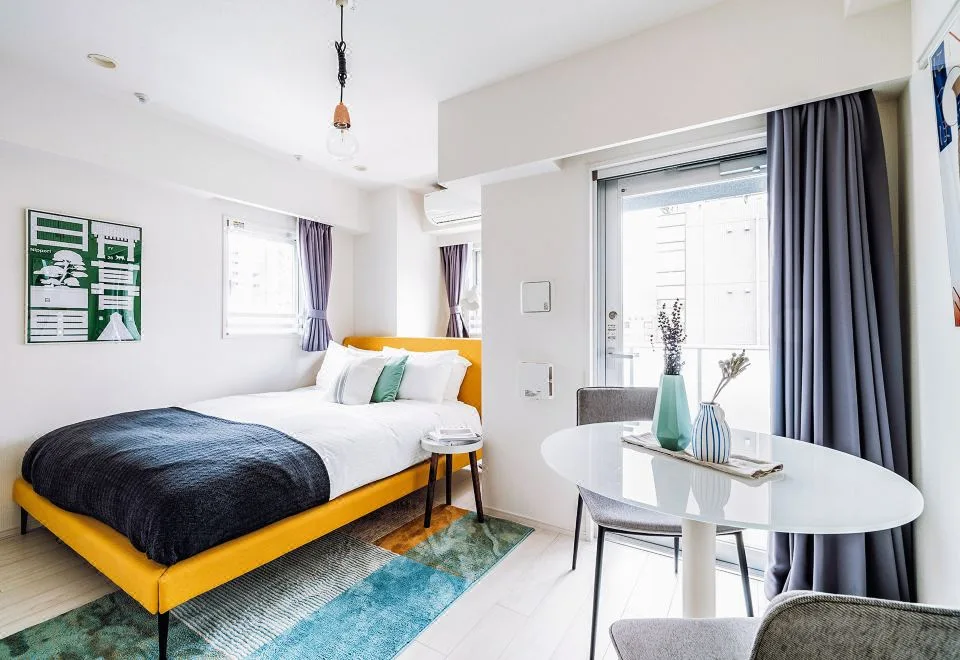
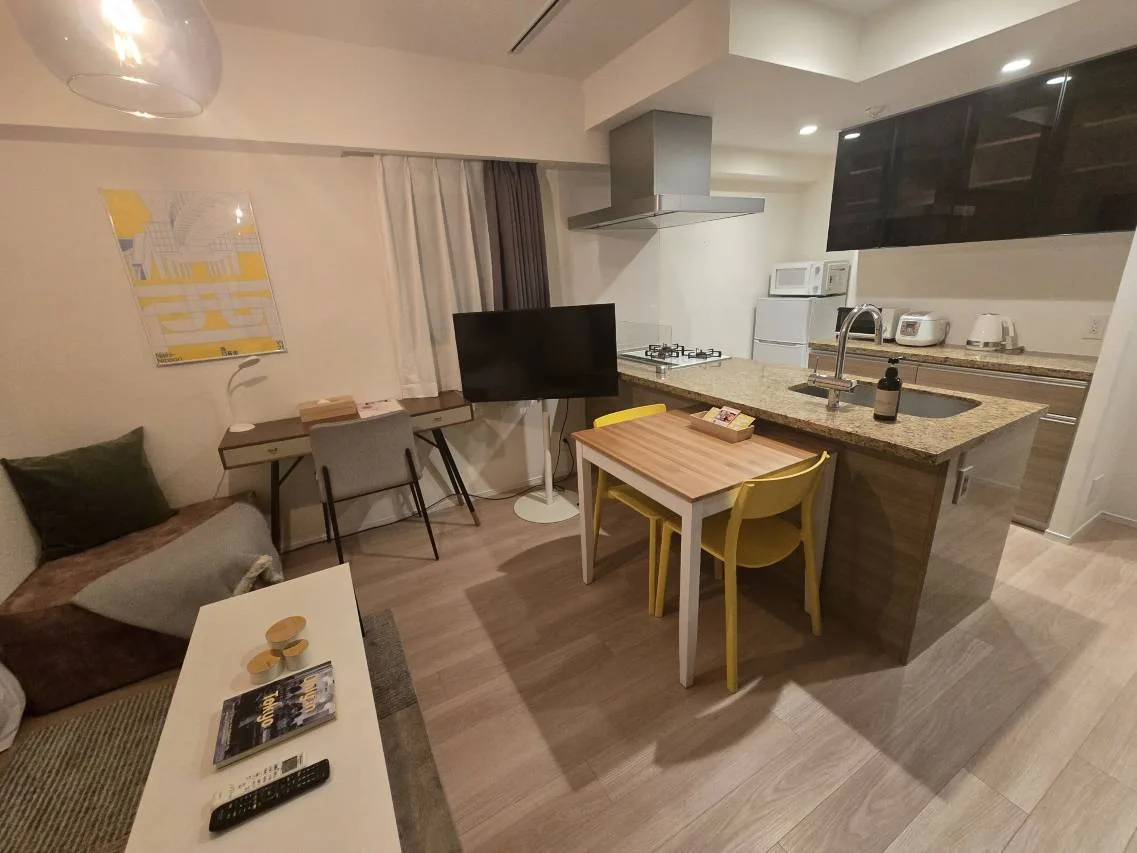
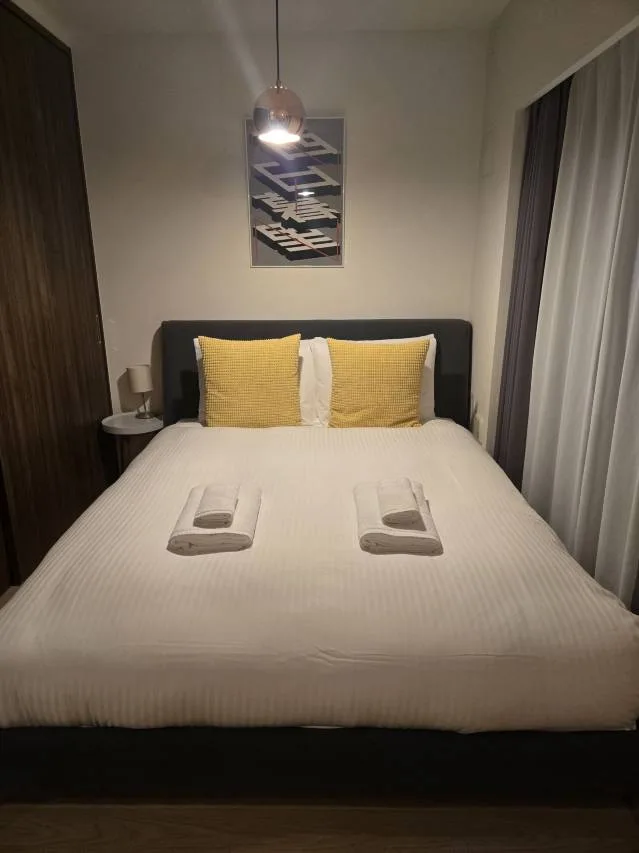
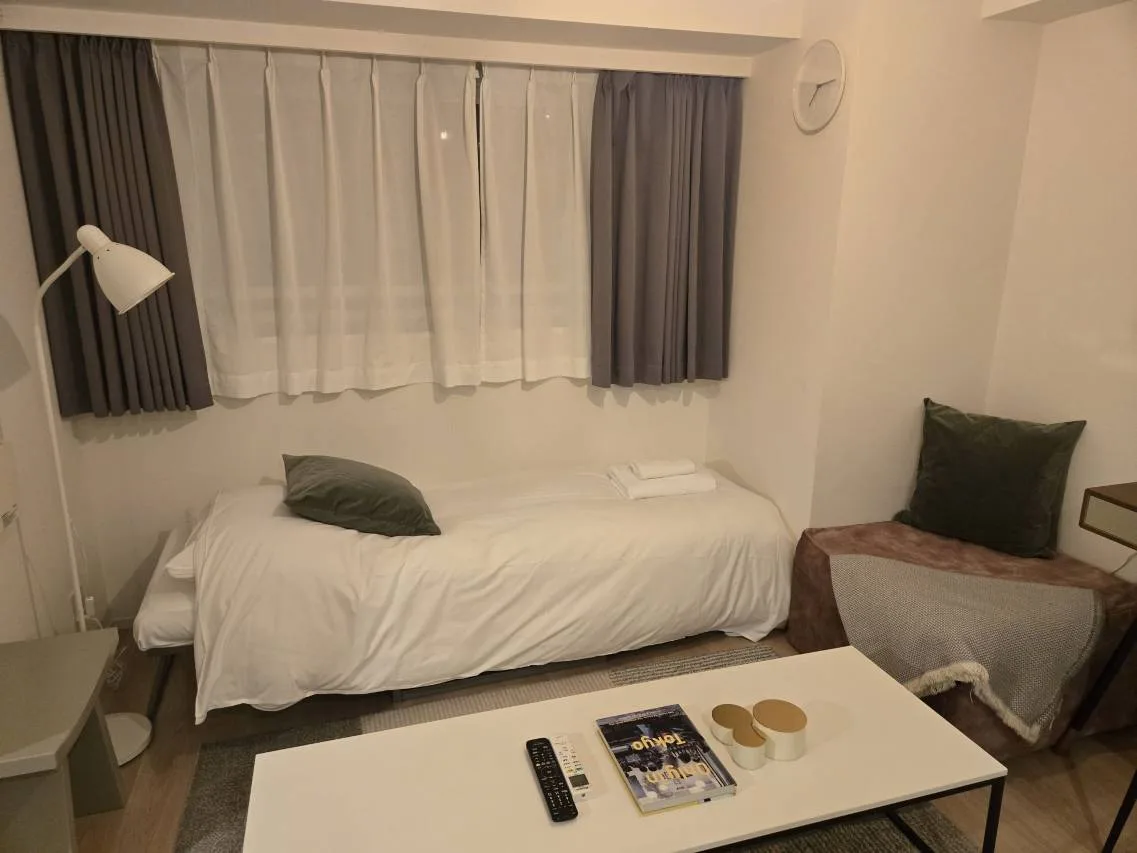
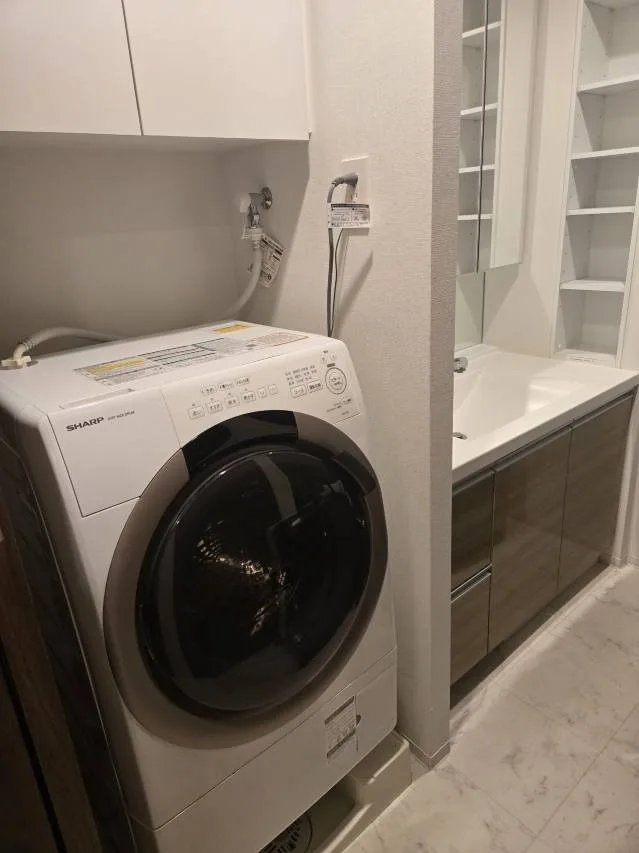
The gallery shows different bed layouts, sofas, dining tables and kitchen configurations, and the washing machine and stove are in the photos too. The layout and activity space differ by room type, so I check the bed type against the actual number of people, then check whether unpacking suitcases by the table interferes with kitchen use. Balcony conditions also depend on the room type.
| Room / layout | Size and amenities | How to choose |
|---|---|---|
| Premier One-Bedroom Apartment | 40 m²; one queen bed in the bedroom plus one double sofa bed in the living room; up to 4 guests; floors 2–10; full kitchen with dishwasher; floor heating; in-suite laundry | Four guests, or travellers who want a living room and a full kitchen |
| Premier One-Bedroom Apartment (Ground Floor) | 40 m²; same layout and equipment as the Premier One-Bedroom Apartment; 1st floor; step-free access | Heavy luggage or a stroller, and anyone who wants step-free access |
| Deluxe Studio Apartment | 25 m²; one queen bed; 2 guests; floors 2–10; kitchen, bathroom and toilet in separate areas | Two guests who want the kitchen, bathroom and toilet separated |
| Superior Studio Apartment | 25 m²; one queen bed; 2 guests; floors 2–10; privacy door between bedroom and hallway; split shower and bathtub; larger wardrobe | Two guests who want a privacy door and a larger wardrobe |
Split the four room types into two groups first: the 40-square-metre Premier One-Bedroom Apartment has a separate bedroom and living room, while the two 25-square-metre studios have an open layout. Both groups have a full kitchen and in-suite laundry; the differences are the number of people, the bed type, and how the space is divided.
The Premier One-Bedroom Apartment is the 40-square-metre flagship: one queen bed in the bedroom and one double sofa bed in the living room, for up to 4 guests. The furniture is by BoConcept, the floor has heating, the kitchen has a dishwasher, and sliding doors in front of the bedroom give privacy when needed.
The same room type also comes as a ground-floor version, with the same layout and equipment. The difference is the first floor: no lift and no steps to reach the room, so a stroller or heavy suitcases can go straight in.
The Deluxe Studio Apartment is 25 square metres for 2 guests, with one queen bed, and the kitchen, bathroom and toilet sit in three fully separated areas. If you want to cook, bathe and use the toilet without getting in the way of each other, this one runs more smoothly.
The Superior Studio Apartment is also 25 square metres for 2 guests, with one queen bed, a privacy door between the bedroom and the hallway, a split shower and bathtub area, and a larger wardrobe than a standard studio. It suits travellers who bring more clothes and want to unpack fully.
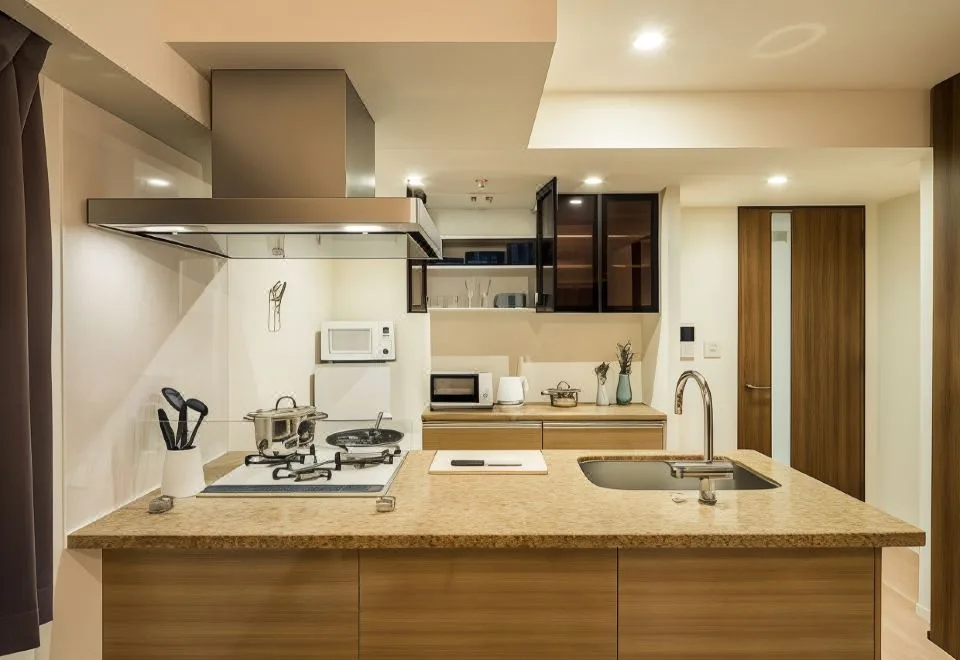
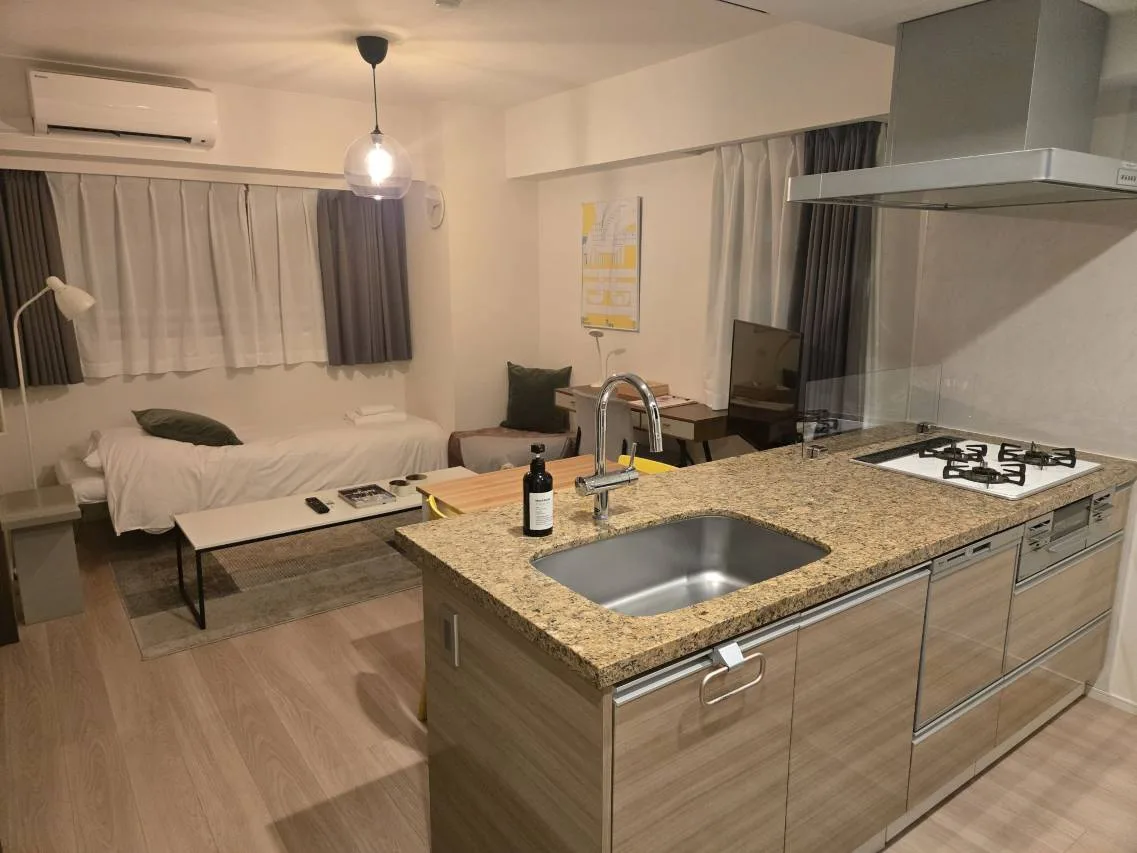
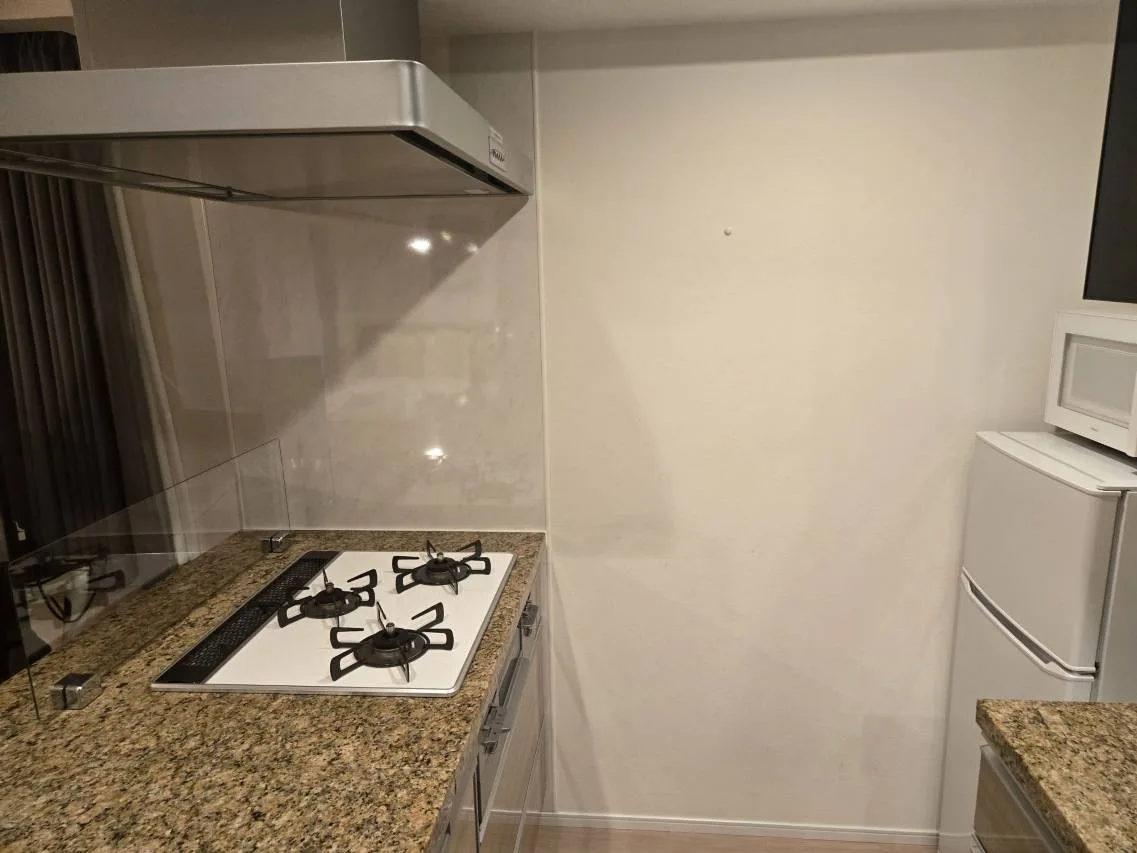
The kitchen equipment is the point of this hotel: a three-burner stove, fridge, microwave, toaster oven and a full set of cookware, plus an in-room water filter for drinking water. The TV takes Chromecast, so an evening film from your own device needs no extra equipment.
The in-room laundry is a washer-dryer in one, so a stay of several days needs no trip to an outside laundromat. Detergent and drying space differ by room type; look at them once on arrival, then a quick wash each day is enough.
An extra guest costs 4,000 yen per night, including an extra bed setup; whether a baby bed or an extra bed fits depends on the room type. When booking, check the bed type against the actual number of people, and do not automatically count the sofa as an extra bed.
Compare the hotel’s official room layouts
The 12 room photos cover all four room types: the living room and bedroom of the Premier One-Bedroom Apartment, and the beds and kitchens of the two studios, with the tables, chairs and storage positions easy to see. Compare the photos with the room table before booking, so the layout does not surprise you on arrival.
The kitchen photos show the stove, the counter and the dining table, and the washing machine is in the photos too. If you plan to cook, check how many burners the stove has and whether the counter fits a chopping board; on a longer stay, the washing machine position tells you whether the flow of the room works.
The window-side seats and desk are in the photos too, so an evening spent sorting luggage or eating a late snack in the room tells you in advance whether the desk space is enough. The bedside storage and sofa lounge photos show whether a suitcase opens fully.
Whether to Choose Breakfast: Match Your Morning Rhythm
This hotel does not serve breakfast; breakfast is not part of the stay. You can prepare something simple in the room kitchen, or find a shop around Hatchobori and Ginza. If you want to cook for yourself, first check tableware, pots and pans, and equipment, and ask about garbage sorting. If staying several days in a row, alternate eating out with simple breakfasts; just because there is a kitchen, there is no need to force yourself to cook every day.
To say it once more: this hotel does not serve breakfast, and the policy column in the crawl record states it plainly. Breakfast is not something an extra charge can fix, so do not book expecting breakfast to be there.
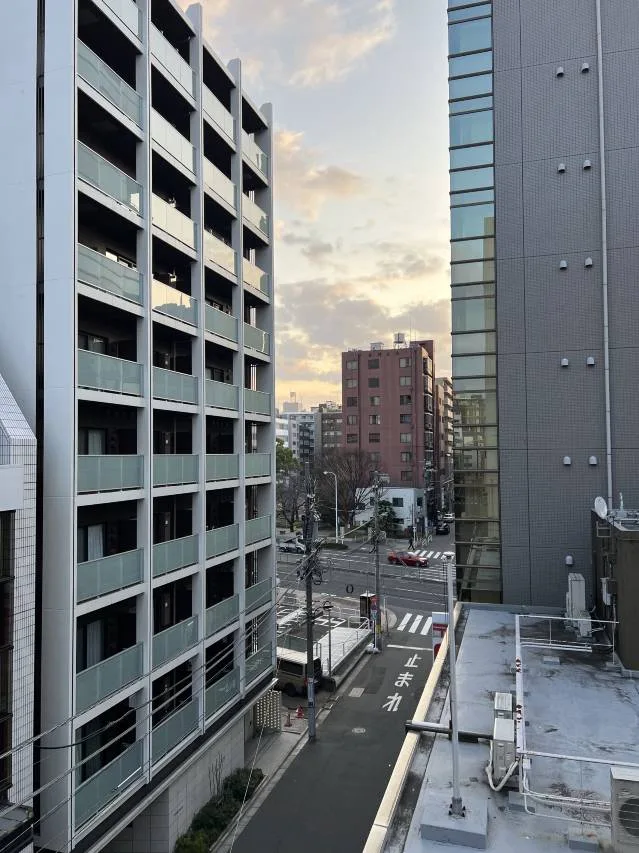
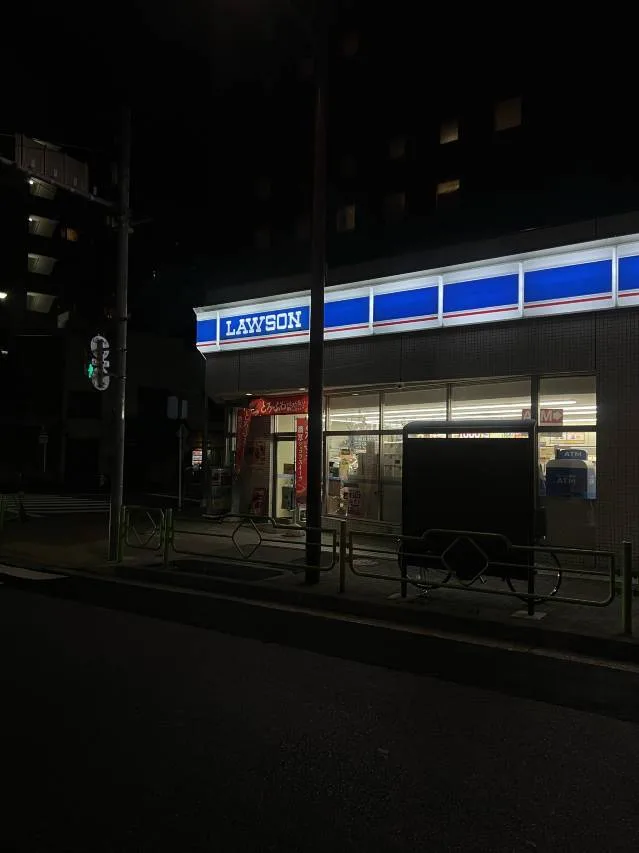
Cooking in the room is the most direct option: the three-burner stove, fridge, microwave and water filter are all in the room, and a convenience store is a short walk away; one is in the street photos too. Buy bread, fruit and milk, and breakfast takes ten minutes before going out.
To eat out, Tsukiji Outer Market is 930 metres away; go in the morning, eat your way round, and come back, and half a day is just right. Ginza, 200 metres away, has coffee shops and bakeries too. Breakfast is not inside the hotel; it is within walking distance.
Advantages of Staying Here and Things to Accept
On arrival I try the hot water, air conditioning and washing machine, and confirm whether the TV and internet support streaming. The apartment space feels very lived-in, but I ask in advance how cleaning and towel replacement work, so I know which daily tasks I handle myself.
Public spaces have free Wi-Fi, the building has a lift and a fresh-air system, and the rooms have a water purifier. On arrival I run the hot water and the air conditioning once, and if anything is wrong I tell the front desk right away instead of finding out at night.
Bilingual staff are on site at the front desk around the clock, in English and Japanese, with Chinese information also available. Free coffee and tea are listed on the official site, for the morning before going out or the evening after coming back.
The facilities list includes parking and a car-hailing service, with no further details published, so drivers and anyone calling a car should ask the front desk on arrival. Luggage storage is free, and check-in and check-out are listed as fast, so a tight schedule does not mean a long wait.
Public spaces are non-smoking, and all guest rooms are on non-smoking floors. The stairs have handrails, and the building keeps a first-aid kit, fire alarms, extinguishers, a safety alarm, smoke detectors, and CCTV in public areas.
The facilities list also names a restaurant, but with no additional information, so its opening hours and menu cannot be confirmed. Do not plan meals around it; the room kitchen or a restaurant outside is the practical choice.
Ask in advance how cleaning and towel replacement work; part of the daily upkeep in an apartment hotel is yours to handle. Ask on arrival how towels are changed and how garbage is sorted, and the rest of the stay needs no repeated checks.
Short Stays, Longer Stays, and Nearby Walks
A short stay lets you enjoy one night of homey feeling; three nights or more make it easier to use laundry, storage, and the kitchen. Plan Ginza, Tsukiji, and nearby walks into one day, then arrange cross-district activities on other days, and you will still come back to a comfortable tidying rhythm. Those travelling with several people should first check bed layouts and not automatically count a sofa as an extra bed.
Children of all ages are welcome, but an extra fee is possible even without an extra bed, and whether a baby bed or an extra bed fits depends on the room type. Families should ask before booking, instead of finding on arrival that the beds are not enough.
Pets are not allowed, and service animals are not allowed either. The guest who checks in must be at least 18 years old, and quiet hours run from 22:00 to 08:00, so evenings back in the room stay quiet.
Check-in is self-service: contact the hotel in advance for the entry passcode, and the host or staff greet you on arrival. If you expect to arrive after 00:00 on the morning after your check-in day, contact the hotel in advance by email or phone. The hotel registration number is 2中保生環き第37号.
Check-out is by 11:00, so breakfast, packing and leaving fits the morning well. If you need an early train, leave the luggage at the front desk, walk a last loop empty-handed, and pick it up on the way back.
Pros and cons at a glance
Pros
- Hatchobori Station is about 230 metres away, and Hibiya line Exits A2 and A3 have lifts, so suitcases never need stairs
- Four room types in 25 or 40 square metre apartment layouts, each with a full kitchen and in-suite laundry
- The Premier One-Bedroom Apartment is 40 square metres, with a queen bed plus a double sofa bed for up to 4 guests, floor heating and a dishwasher
- The front desk has bilingual staff around the clock, self check-in still finds someone there, and luggage storage is free
- Ginza is about 200 metres away and Tsukiji Outer Market 930 metres, in the quiet Shintomi neighbourhood
Cons
- The hotel does not serve breakfast; breakfast means cooking in the room or eating out
- Studio apartments are 25 square metres for up to 2 guests, so two people with large suitcases need to plan storage first
- An extra guest costs 4,000 yen per night, including an extra bed, so a four-guest stay needs its own cost check
- Quiet hours run from 22:00 to 08:00, and a late-night arrival needs advance contact with the hotel
- The facilities list includes a restaurant and parking, but no details are published, so neither can be relied on for dining or parking
Information last checked: 2026-11-23