
TOKYO / CHUO
OBI Hostel
Obi Hostel
A hostel with a gym: bunk privacy and shared facilities
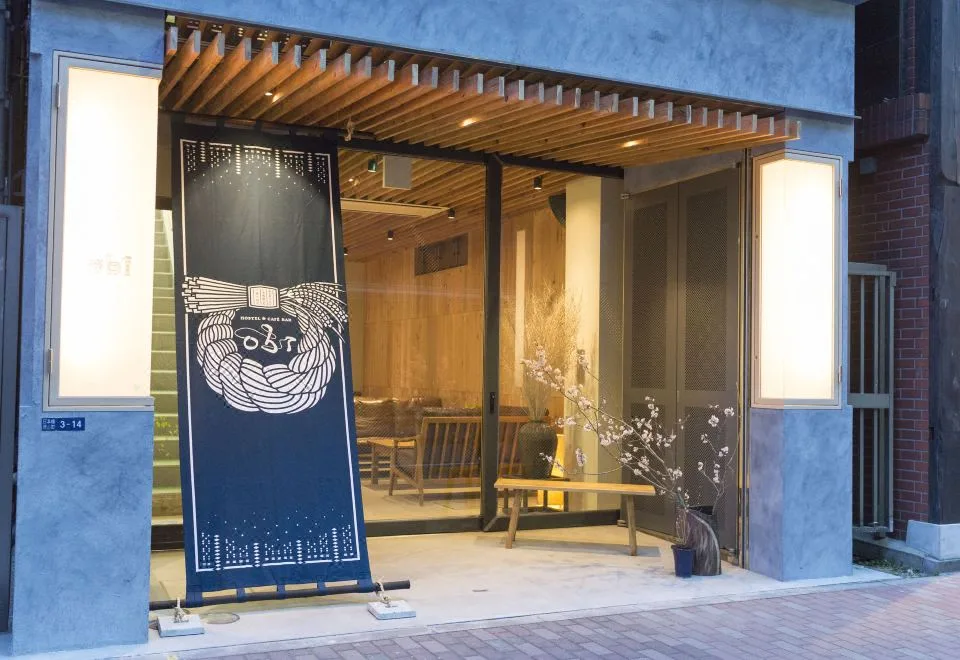
OBI Hostel suits travellers who are happy to share space and still want to keep working out on the road. Downstairs is a café bar open to the neighbourhood, the building has a 24-hour gym, and dormitory beds complete the mix. It reopened on 5 October 2026 after a renovation, so the interiors are fresh. Before booking, decide whether you can live with snoring, bunk beds and shared shower routes.
| At a glance | How I’d choose |
|---|---|
| At a glanceBest for | How I’d chooseSolo travellers, backpackers and people who enjoy working out and meeting others in shared spaces will find it appealing. Light sleepers, travellers with limited mobility and anyone who needs an en-suite bathroom should not book on price alone. |
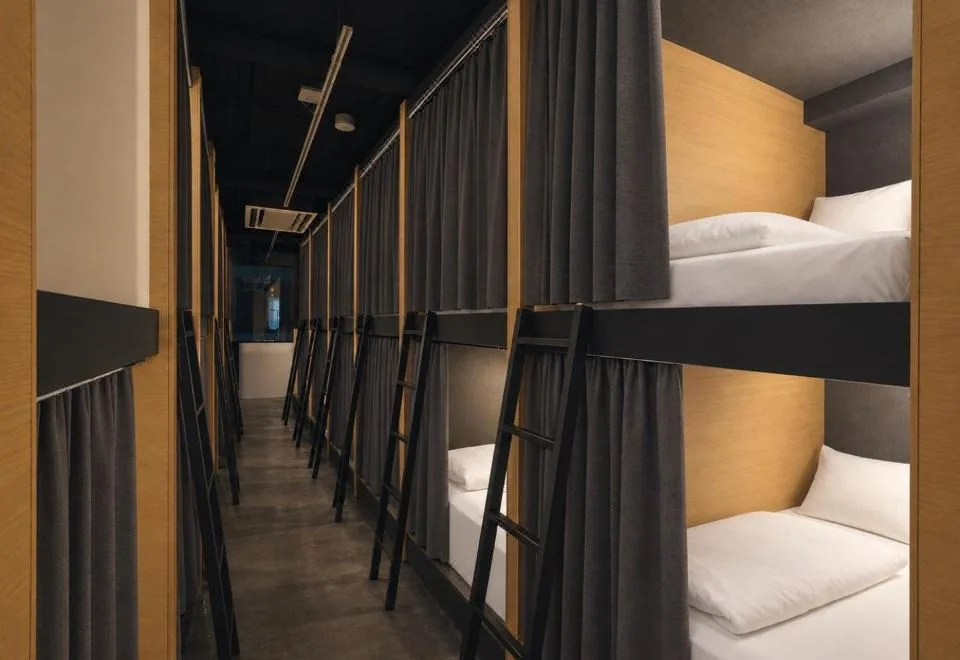
| At a glanceCheck before choosing a bed | How I’d chooseOfficially listed mixed-dormitory beds measure 100 × 220 cm and include a curtain, reading light, power outlet and USB port, and locker. The property explicitly states that it has no female-only dormitory. |
| At a glanceMain trade-off | How I’d chooseA privacy curtain does not block noise from the shared dorm. |
Beds and luggage / Gym and shared spaces / Access and map / Breakfast / Short and longer stays / Trade-offs to accept
Choosing a bed with enough luggage space
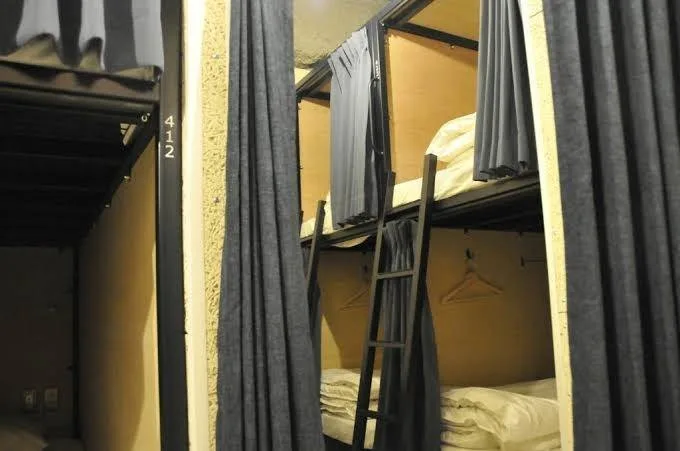
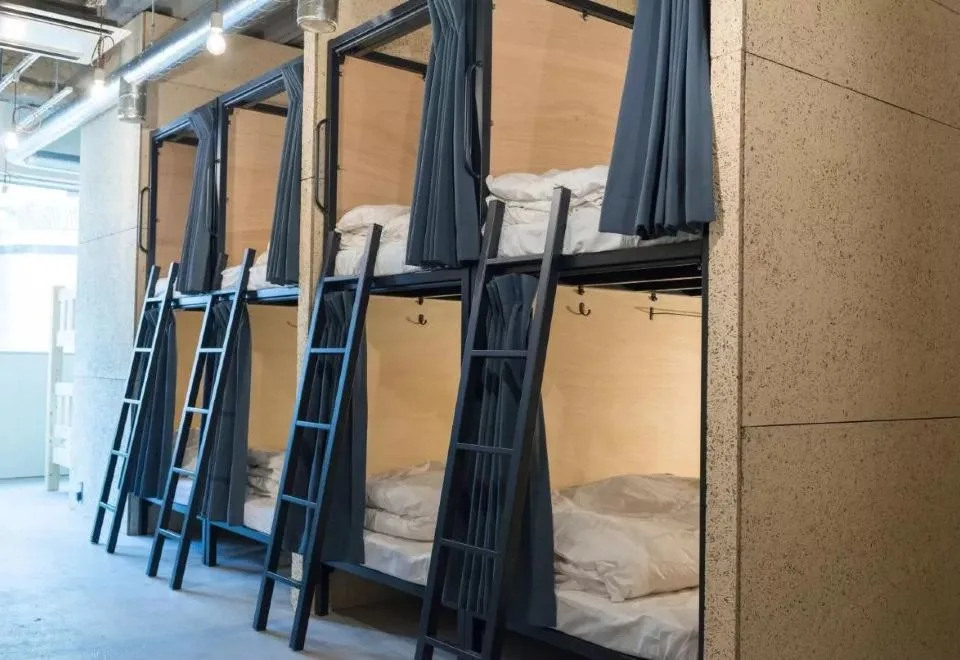
The official mixed dorm offers 100 × 220 cm beds with curtains, reading lights, outlets and USB ports, and lockers; it states clearly that there is no women-only dorm. The bunk position, the ladder and where your luggage goes matter more than the size of the whole dorm. If you want more privacy, check the actual layout of the semi-private option.
Two of you travelling together with a bit more privacy in mind can look at the semi-private pod: a curtained space for two inside the mixed dorm, from ¥8,000 a room, with the same 100 × 220 cm beds and far more room to spread out luggage than a single bunk. The curtain blocks the view, not the sound — the same as the mixed dorm, so think it through before you book.
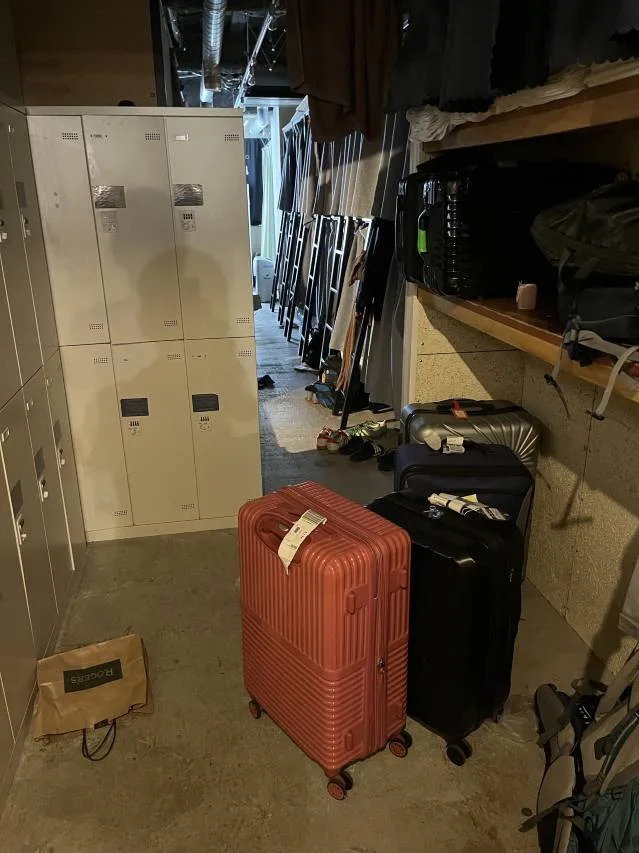
A mixed-dorm bed starts at ¥3,000 a person, and each bed has a locker with a dial lock, so valuables can be locked away while you sleep. Plan where the suitcase goes: luggage can be stored at the front desk during its opening hours, before check-in and after check-out. You can also ship luggage to the hostel — email ahead with your arrival date, name and check-in date; cash on delivery is not accepted, oversized cases may be refused, and nobody carries bags to your room.
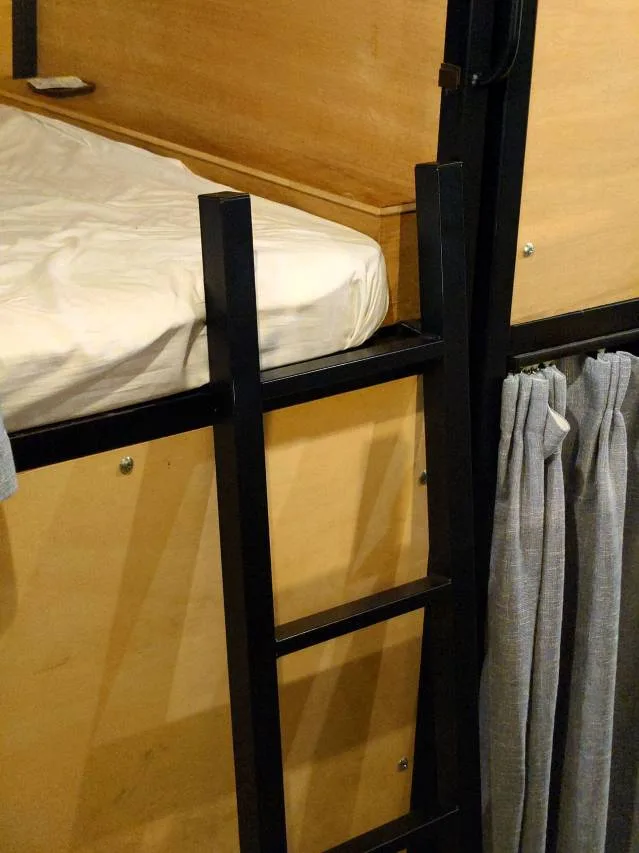
When you pick a bunk, the upper one means climbing a ladder and the lower one is easier to get in and out of, but catches more footsteps and light; light sleepers should take a lower bunk against the wall, and so should anyone who finds ladders awkward. Bunks are first come, first served, so the earlier you book, the better your chance of the spot you want. When you book, check whether the bunk is upper or lower; if the spot you want is gone, try another date.
| Room type | Space or setup | Best choice for |
|---|---|---|
| Room typeMixed dormitory | Space or setup100 × 220 cm bed | Best choice for¥3,000~/person; privacy curtain, locker and shared facilities |
| Room typeSemi-private pod | Space or setup2-person semi-private pod, curtained | Best choice for¥8,000~/room; check soundproofing and bathrooms arrangement |
| Room typeWomen-only dormitory | Space or setupNot offered, according to the hostel | Best choice forSolo female travellers should decide whether a mixed dorm is suitable |
For details, see theroom descriptions; check the exact bed arrangement and permitted occupancy in your booking.
Gym, café bar and shared spaces
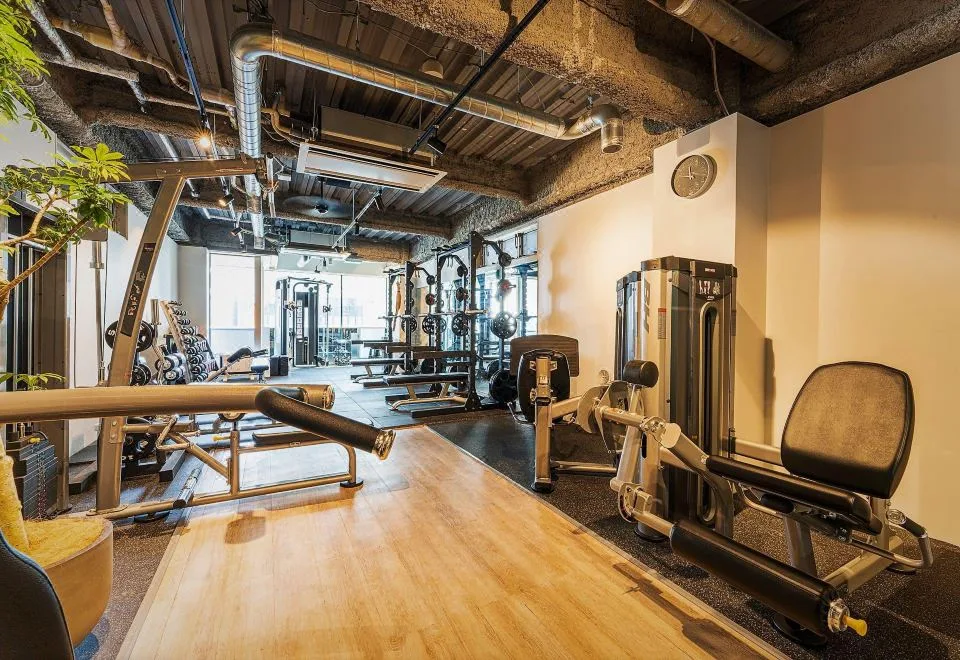
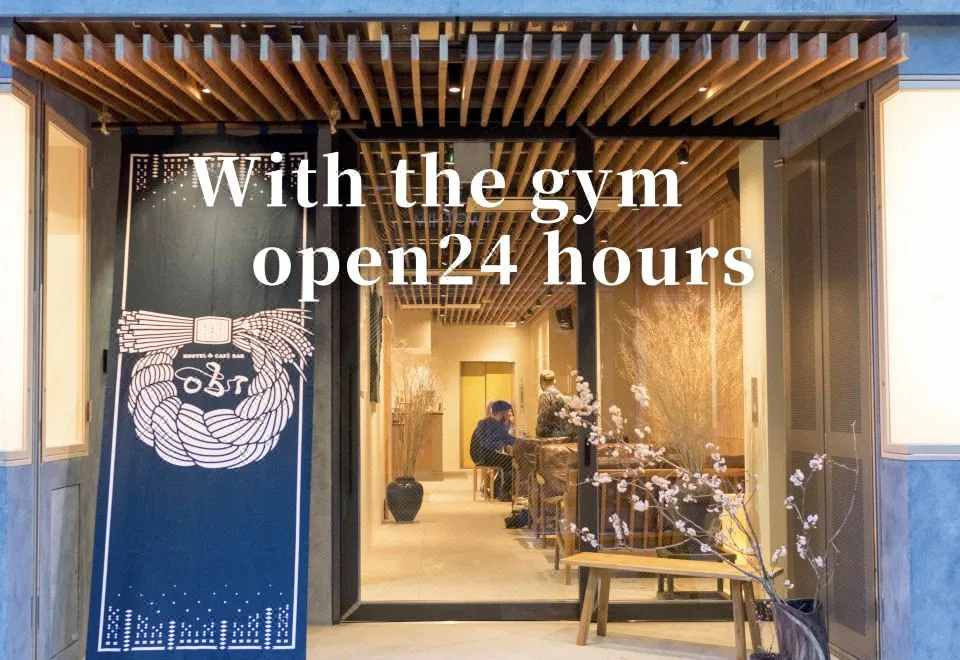
The gym sits in the same building and guests can use it 24 hours a day, with cardio machines, free weights and weight machines. It is included if you book a gym plan, or costs an extra ¥1,000 at reception; non-guests pay ¥2,800 per visit. Membership is for local residents only — travellers cannot join. I treat the gym as a bonus, not the main reason to stay, so check whether your plan includes it when you book.
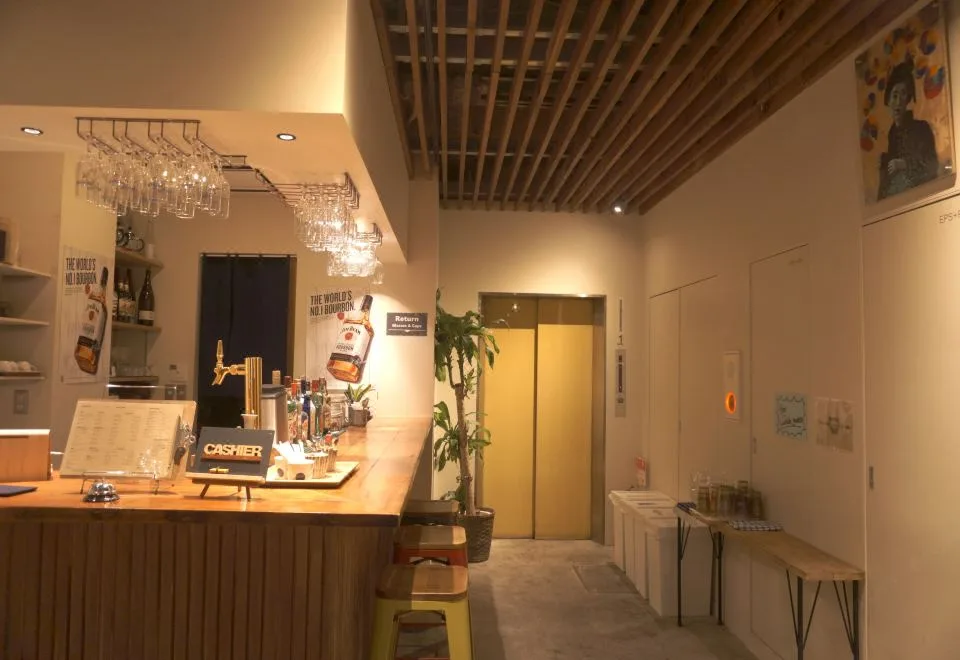
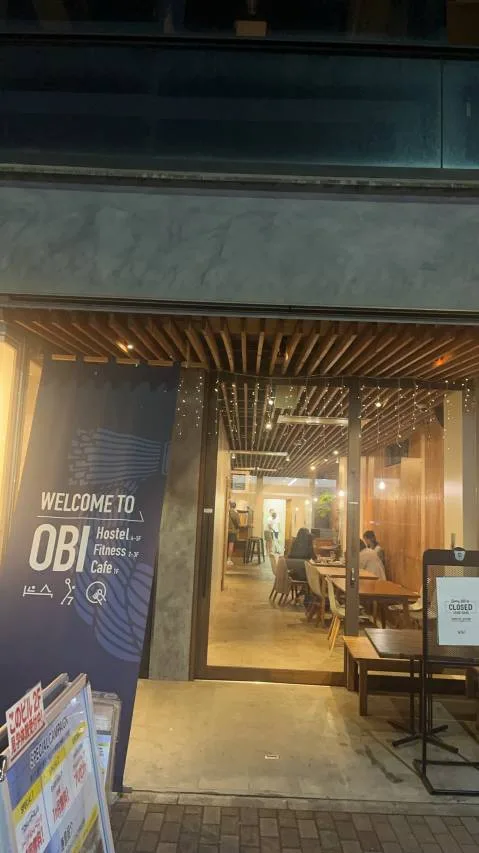
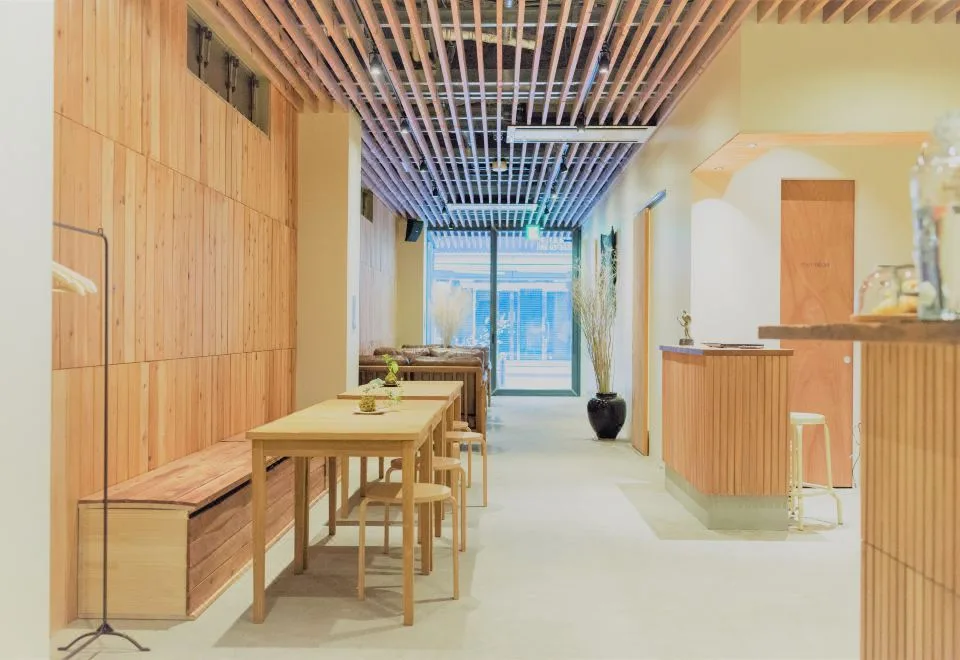
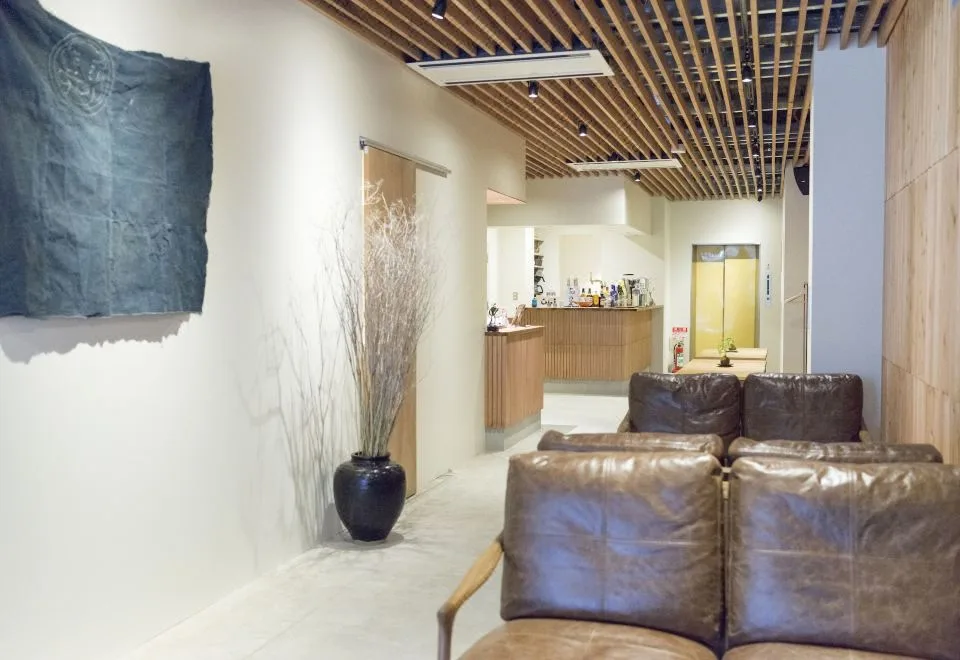
The ground-floor café bar serves coffee and soft drinks by day and draft beer and cocktails in the evening, and it is open to the neighbourhood too. While the café bar is open, outside food and drink are not allowed in the ground-floor lounge — eat your own food after it closes. The shared spaces have Wi-Fi, a long table and lounge sofas, with enough room to plan the next day or chat with other guests in the evening.
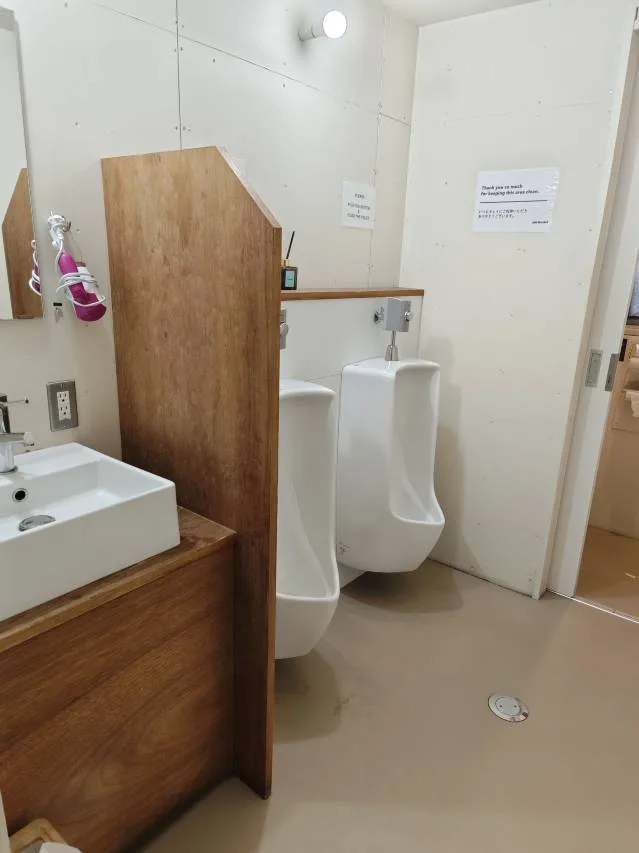
Showers and washbasins are on each floor, with shampoo, conditioner, body soap, makeup remover, face wash, toner, hair ties, cotton pads, cotton swabs and a hair iron all free; bath towels are free to borrow and hair dryers are on every floor. Washers and dryers are on the 5th floor, two of each — ¥200 per wash, ¥100 per 30 minutes of drying. On a longer stay with daily workouts, plan the shower and laundry routine into the day.
The listing also includes a wake-up service and car-hailing: if you have an early train, ask the front desk to wake you and call a car. The ground-floor shared space works as a lounge day to day and doubles as a multi-function hall. Faxing is handled at the front desk, so there is no need to look elsewhere if you have to send a document while travelling.
Getting here with luggage
The official directions put Bakuro-yokoyama Station’s A1 exit about a one-minute walk away. Cross the pedestrian crossing in front of the exit and continue roughly 40 metres; the hostel is on the right. A1 is a standard exit with stairs. With large luggage, a wheelchair or a stroller, I would take the A4 exit lift instead — the Toei accessibility record lists three lifts at Bakuro-yokoyama and names A4 as the street lift exit, so you can walk back to the hostel at street level in the same block without stairs. Higashi-Nihombashi is about 4 minutes away and JR Bakurocho about 3, so pick the station that fits your route.
Three subway lines plus JR are all within a five-minute walk, so changing lines is easy: Bakuro-yokoyama on the Toei Shinjuku Line in 1 minute, Higashi-Nihombashi on the Asakusa Line in 4, Kodemmacho on the Hibiya Line in 5, and JR Bakurocho in 3. The hostel’s own guide puts Shinjuku at 15 minutes, Shimbashi at 15, Ueno at 5 and Tokyo Station at 15 — most of central Tokyo is within half an hour from here.
| Hotel details | Details |
|---|---|
| Hotel detailsAddress | Details3-14 Nihonbashi Yokoyamacho, Chuo-ku, Tokyo 103-0003, Japan |
| Hotel detailsCheck-in / check-out | Details15:00–23:00 / by 11:00 (no check-out procedure) |
| Hotel detailsTypical walking time | DetailsLess than 100 m from Bakuro-yokoyama subway station; about a 2-minute walk. |
See the official access page for directions; the lift route at Bakuro-yokoyama follows the Toei accessibility record, with the street lift at exit A4. The Toei accessibility page lists three lifts, an accessible toilet and escalators at Bakuro-yokoyama, with eight exits in total.
The listing gives the distances as 220 metres to Higashi-Nihombashi and 200 metres to JR Bakurocho, with Bakuro-yokoyama under 100 metres, about a two-minute walk. From here, Akihabara, Ueno and Kanda are all close without a long transfer, and the morning walk to the station is short.
Should you add breakfast? Start with your departure time
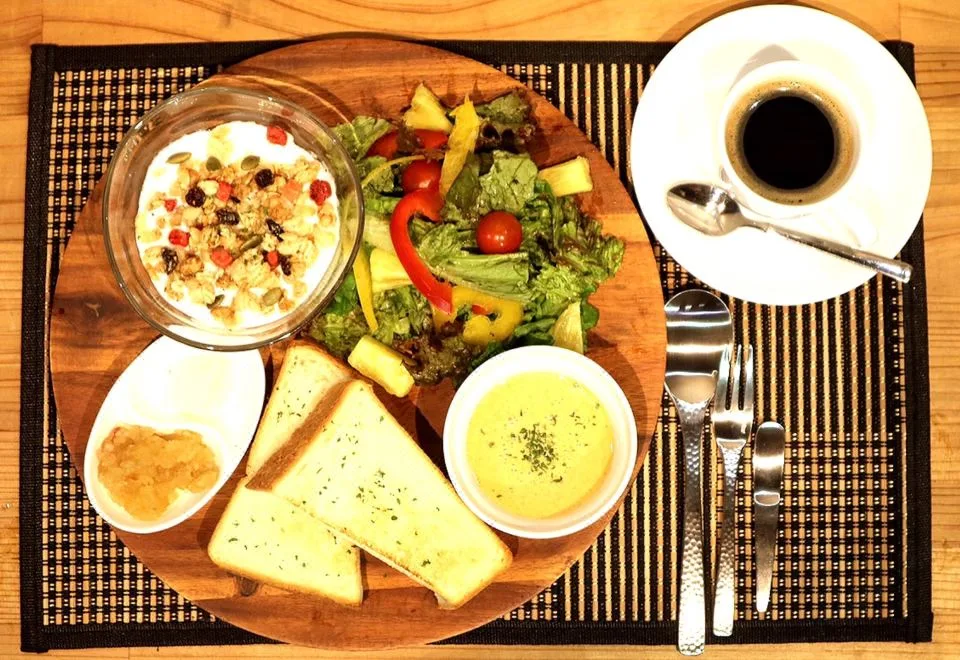
The listing describes a Western set breakfast served from 9:00 to 11:00, ¥1,500 per adult — one set meal, not a help-yourself buffet that keeps refilling. It is cooked to order and starts at 9, so it suits a slow morning; if you have an early train or an attraction queue to reach, do not tie yourself to a breakfast-included plan. Check separately whether breakfast and gym use are included in your own booking.
Whether to add breakfast depends on your plan: if it is not included, ask whether you can add it on the day and what it costs on site, rather than finding out at 9 in the morning. On a day you leave before 9, you will miss it entirely, so the money is better spent nearby; on a slow morning, a freshly made set at 9 fits neatly into the start of the day.
At ¥1,500 a set, two people pay ¥3,000; work breakfast into the booking total first, then decide whether a breakfast-included plan is worth it. It is worth adding on a slow morning and not worth tying yourself to on a day with an early start. Compare the total price of the breakfast-included plan against the room-only plan first.
One night or a longer stay?
A short visit suits a light-packing traveller who wants to experience hostel life. On a longer stay, the gym and shared laundry can be useful, but be ready to wait your turn. Sort out arrival and departure times first, then plan the days around them.
The hostel says arrivals after 23:00 need advance contact and carry a ¥1,000 late check-in fee. The front desk runs from 9:00 to 23:00, and after 23:00 the entrance locks — there is no curfew, but you open the door with your room card. Check-out is by 11:00 with no check-out procedure, and luggage can be left at the desk during its hours and picked up after check-out. If your flight lands late, email ahead to confirm the late-arrival arrangement instead of discovering the extra fee at the door.
On a longer stay with daily workouts and washing, plan for the shared facilities: the gym depends on whether it is included in your booking. A short stay suits a light-packing traveller who wants a taste of hostel life; a longer one works if you build workouts, laundry and showers into the day instead of competing with roommates for the same hour.
Two separate bunks start at ¥6,000, while a semi-private pod starts at ¥8,000 a room — the extra ¥2,000 buys a curtained space and room to spread out luggage, so whether it is worth it depends on how much luggage you carry. Pick separate bunks if budget comes first, and the pod if you want more of your own space.
Trade-offs to accept before booking
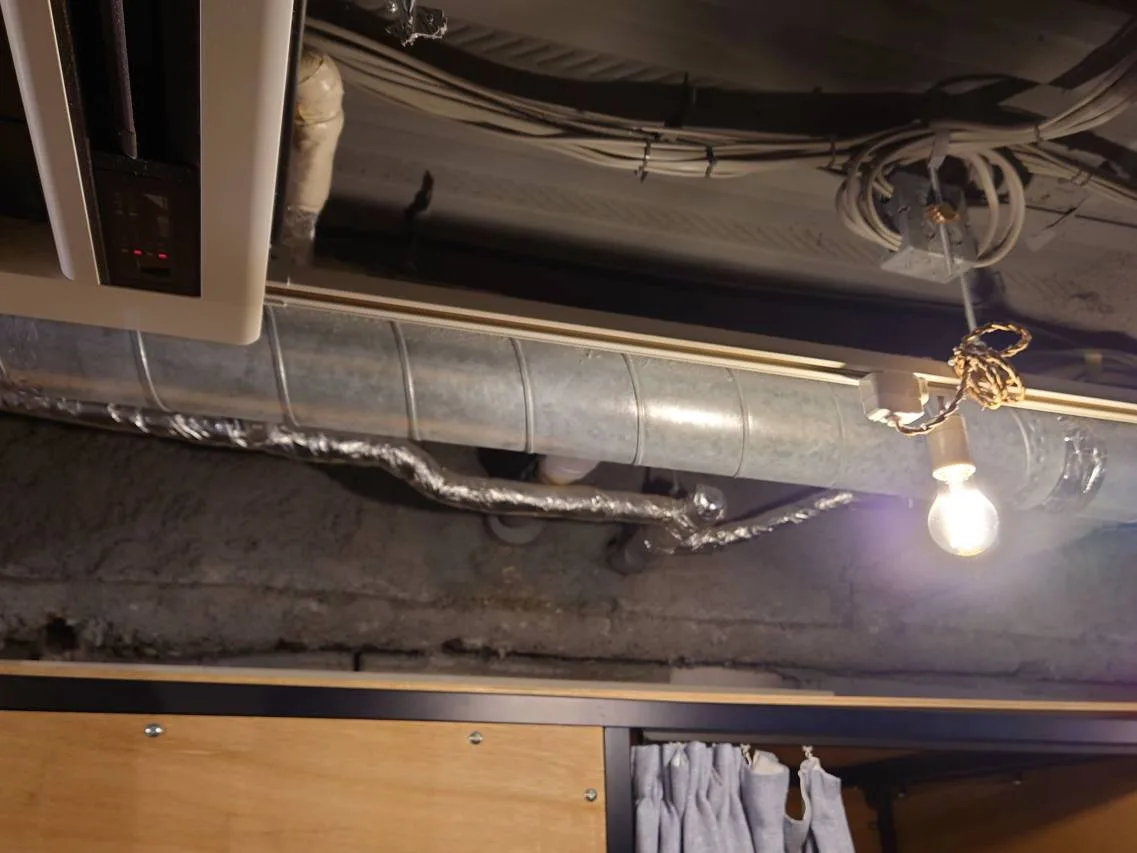
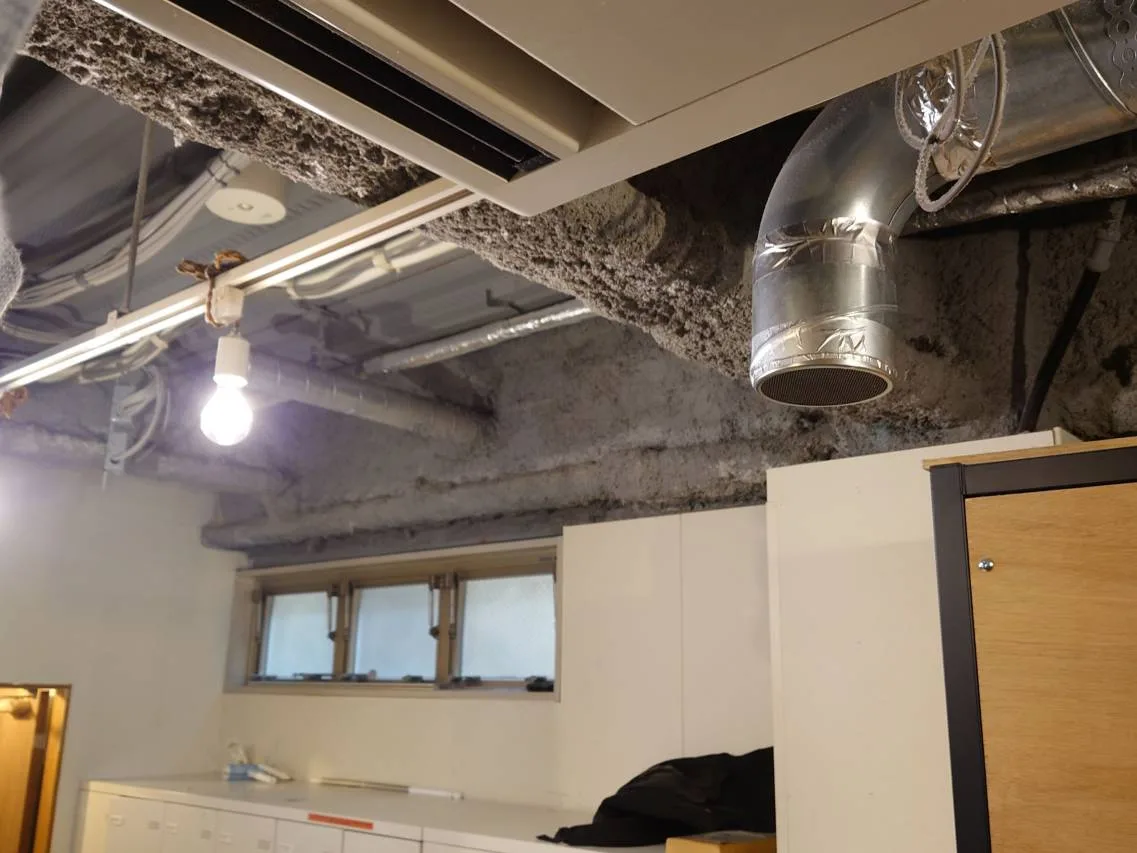
A curtain around a shared bed does not block noise. Snoring, turning over at night and the sound of packing in the morning all carry through, so light sleepers should think it through. The upper-bunk ladders are awkward to climb, and some floors mean a trip to another floor for a shower — I count both before booking. Toothbrushes and slippers are not safe to assume free: toothbrush, slippers and razor are ¥50 each. Pack what you need for the next morning before bed so you are not rummaging through luggage beside a sleeping roommate.
This hostel takes guests aged 18 to 65 only, no children and no pets, and no room takes an extra bed or a crib. Travelling with children or planning to squeeze in one more person rules it out from the start — do not book and find out later. The whole building is non-smoking with no smoking area, and breaking the rule costs a ¥10,000 penalty; copying is ¥10 a page for black-and-white A4 at the front desk.
If anything is unclear, email or call the hostel first: info@obi-hostel.com or 03-4405-5092; the front desk runs from 9:00 to 23:00. Ask about late arrival, luggage storage and adding breakfast before you book, so nothing is left to guess when you arrive.
Plan nearby outings with less backtracking
During a stay in Nihombashi, spend a day exploring Ningyocho or small museums in Nihombashi and make the neighbourhood part of your itinerary.
Staying in Nihonbashi puts the sights close: Nihonbashi itself is about 1 km, Koami Shrine about 1.2 km, Akihabara Electric Town about 1.6 km and Ueno about 1.7 km. The hostel’s own guide is blunter: Kanda and Akihabara are about a 15-minute walk. By day the Yokoyamacho streets are a wholesale quarter with shops open for business; in the evening they quieten down and the walk back to the hostel is easy to follow.
Ningyocho and the small Nihonbashi museums fit into one day, with the neighbourhood as part of the itinerary rather than a detour. Senso-ji is about 2.6 km — take the train rather than walking.
If the bed arrangement and shared-space lifestyle suit your trip, compare the total cost for the same dates, number of guests and cancellation conditions. Check breakfast and room upgrades separately to see which extras are worth paying for. For a solo traveller on a budget who wants to move every day, it fits; if you want quiet, a private bathroom or a stay with children, do not force it. Before booking, weigh bed privacy, shared routes and breakfast times together, then check whether the total price is worth it.
Pros and cons at a glance
Pros
- Bakuro-yokoyama Station’s A1 exit is a one-minute walk; Higashi-Nihombashi, JR Bakurocho and Kodemmacho are all within five minutes.
- A 24-hour gym in the building, with cardio machines, free weights and weight machines; the ground-floor café bar is open to the neighbourhood.
- Mixed-dorm beds from ¥3,000 a person, 100 × 220 cm, with a curtain, reading light, outlet and USB port, and a locker with a dial lock.
- Shower amenities are free, towels and bath towels can be borrowed, and the 5th floor has washers and dryers.
- Reopened on 5 October 2026 after a renovation, with fresh interiors; no curfew, and the door opens with a room card after 23:00.
Cons
- No women-only dorm — solo female travellers need to be comfortable with mixed dorms.
- A curtain does not block sound, the upper-bunk ladders are awkward, and some floors mean a trip to another floor for a shower.
- Guests must be 18 to 65, no children and no pets, and no room takes an extra bed or a crib.
- The gym is not included in every plan — ¥1,000 extra at reception if yours does not cover it.
- Breakfast is a set meal, not a buffet, from 9:00, ¥1,500 per adult — an early departure misses it entirely.
Information checked: 22 November 2026