
TOKYO / CHUO
Nishitetsu Inn Nihonbashi
Nishitetsu Inn Nihonbashi
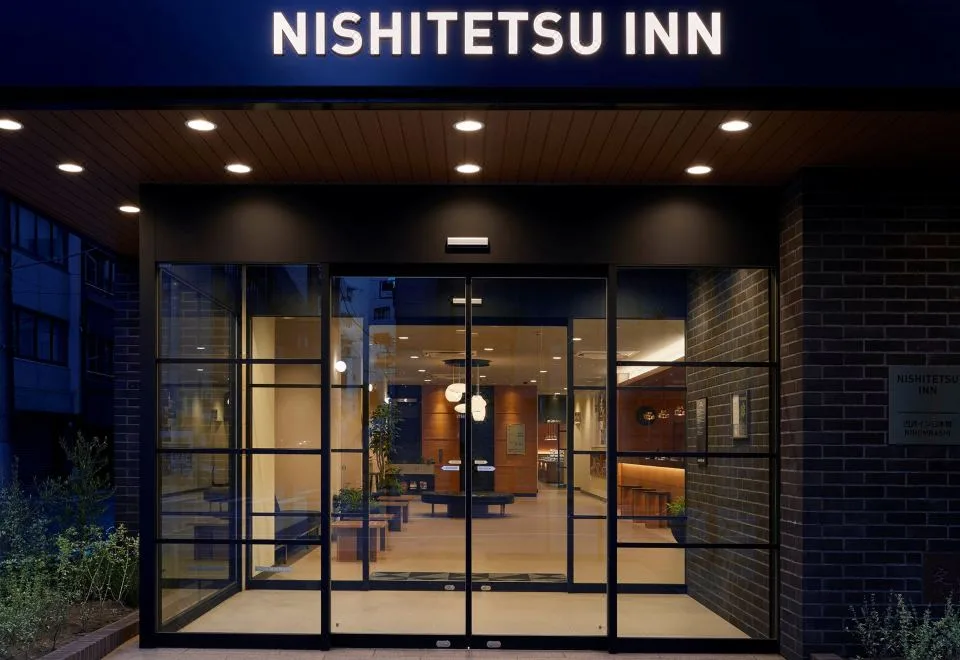
Nishitetsu Inn Nihonbashi is a good choice for a quieter neighborhood where food and convenience shops are available without staying in a busy shopping district. Ningyocho and Nihonbashi are easy to combine on foot and by subway. But if you shop late with bags in both hands, remember the final walk from the station. If you want a calm base where you head out in the morning and come back for dinner in Ningyocho, the rhythm here fits.
How to choose a room and luggage space
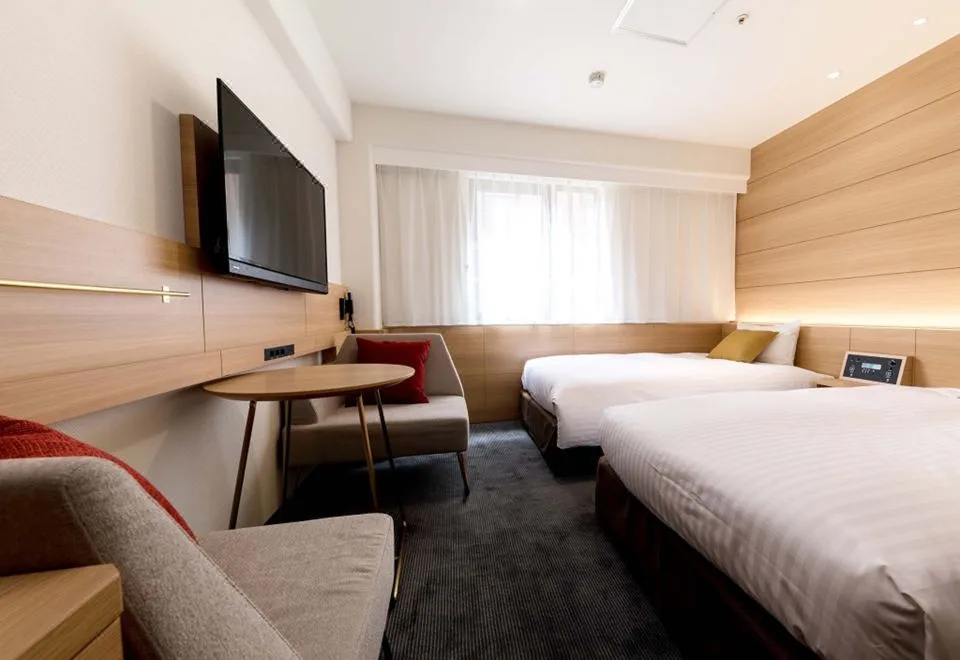
First, distinguish a single shared bed from two separate beds, then look at usable floor area. In the hotel’s official room list, the Double has a queen bed, while the Twin has one semi-double and one single bed: the two beds are not the same width. For two people on different sleep schedules, separate beds can matter more than decorative touches; but if two large cases both need to open on the floor, the room tightens fast, so plan how your luggage opens before you choose.
The Single is 12 m² with a semi-double bed; the Double is 14.4 m² with a queen bed. All 261 rooms have at least a semi-double bed, so even a solo stay never feels cramped. Every room has individual air conditioning and free Wi-Fi, and the front desk lends multi-type chargers for free if your cables do not match. Renovated in 2018, the rooms stay tidy and clean, with a 32-inch TV, an electric kettle and a small refrigerator. Blackout curtains and a down comforter come as standard, so light sleepers and cold sleepers need not pack extras.
Check-in runs 15:00 to 24:00 and check-out is before 10:00, with the front desk staffed around the clock. From Haneda Airport the Asakusa Line runs direct to Ningyocho in about 40 minutes, so even a late flight still makes check-in; but 10:00 is an early check-out, so if you like to sleep in, pack the night before and build the morning around it.
Breakfast to fit your morning
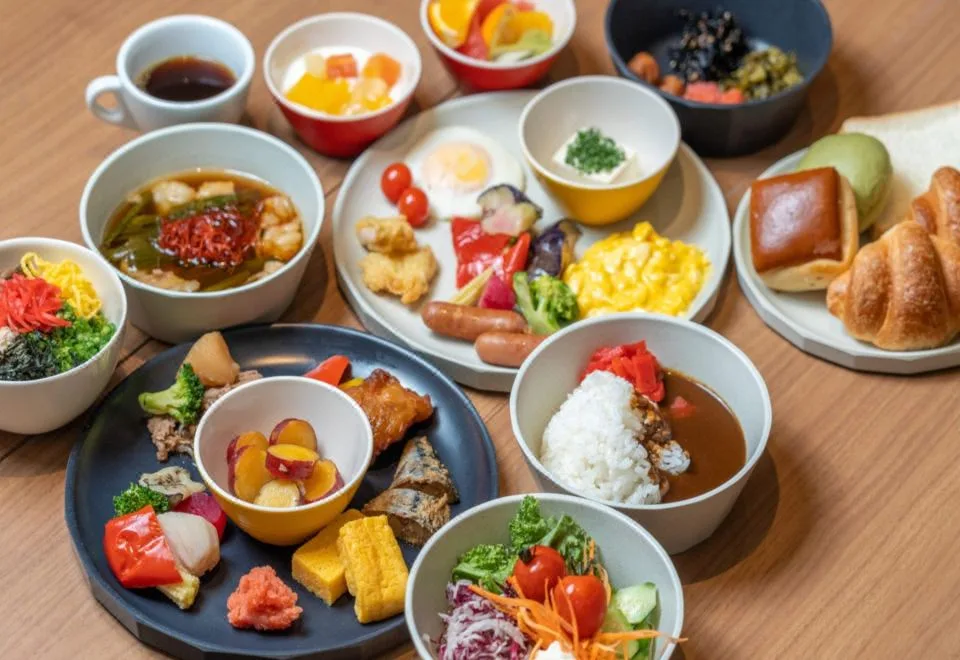
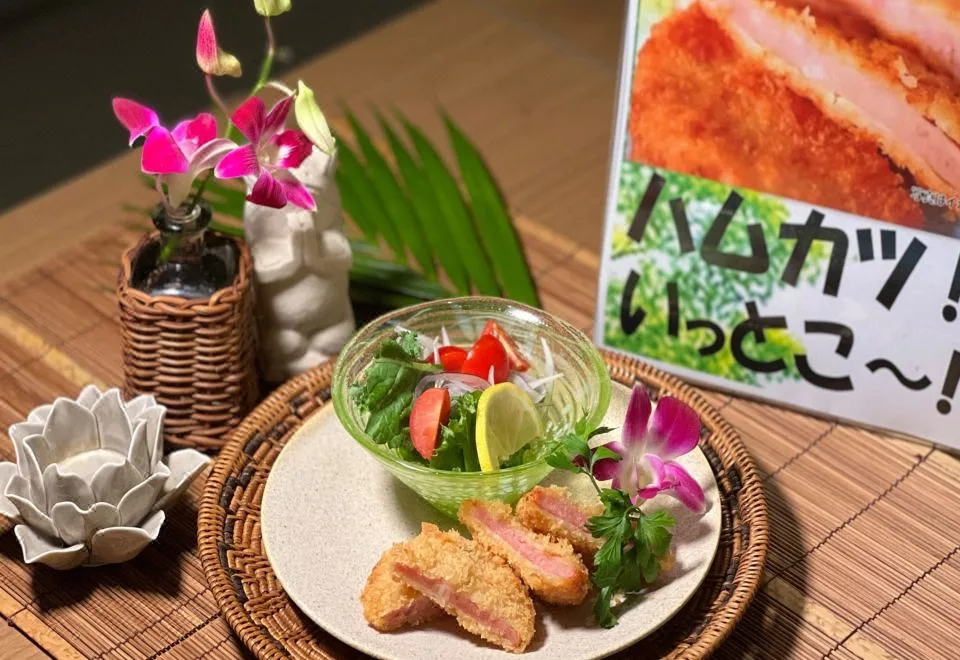
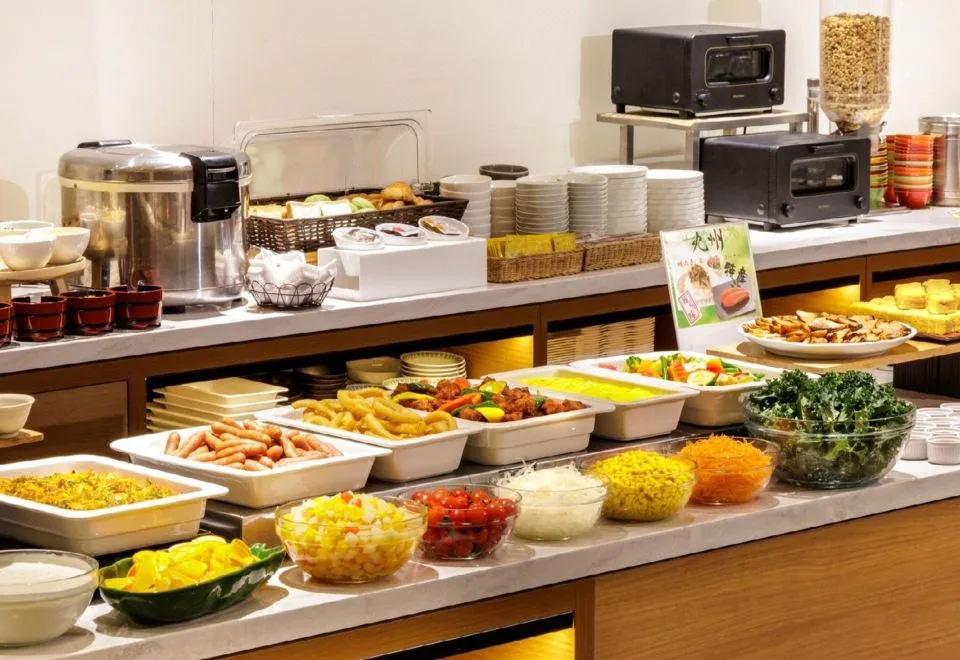
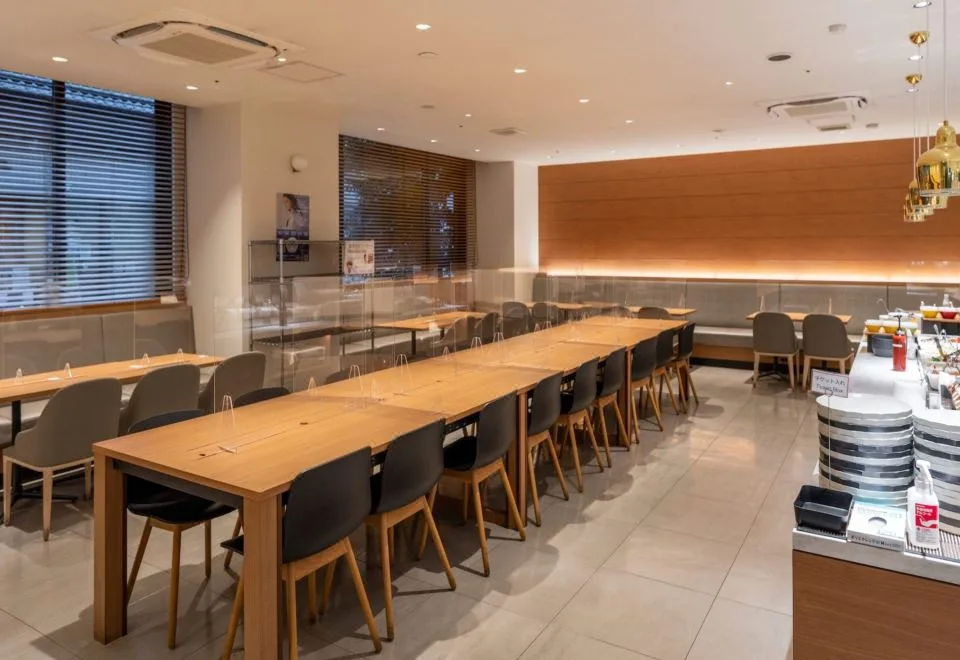
Breakfast is available in the hotel; photos show buffet counters and Japanese sides. My approach: if I need to leave on time without looking for a restaurant, compare the breakfast-inclusive rate. If exploring Ningyocho cafés is part of the trip, room-only is flexible. Whether breakfast is included or charged separately, the rate plan you choose spells it out.
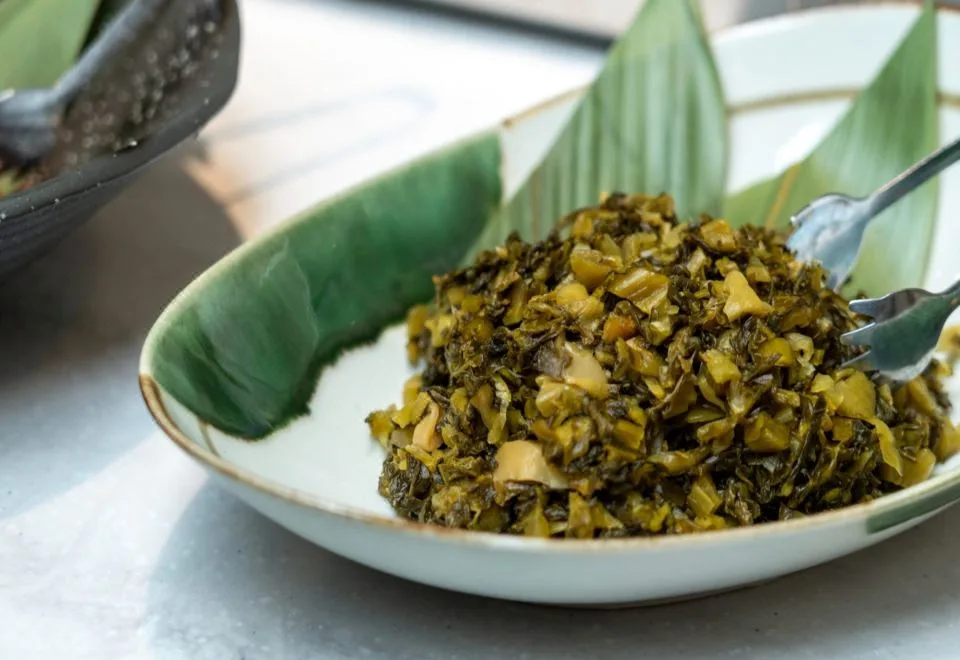
Breakfast is a buffet on the first floor, built around Kyushu specialties: Japanese, Western and Chinese dishes, plus mentaiko, takana pickles and Keihan, the chicken rice from Amami Oshima in Kagoshima that you assemble yourself. The daily Kyushu rotation includes chicken nanban and yaki udon, and the hot pot changes daily between motsu nabe, gyoza nabe and mizutaki. For a relaxed meal, go when it opens at 06:30; there are 50 seats, and a later arrival can mean a wait. The restaurant is on the first floor, so breakfast is downstairs, not a walk out into the street. The Japanese set-meal basics are there too — rice, miso soup and grilled fish — so anyone who wants something familiar has a safe choice.
Breakfast runs daily 06:30 to 09:30. Adults pay 1,800 yen per person and children 17 and under pay 900 yen, added on site and paid at the hotel. Note the hotel has announced a rise from 1 December 2026 to 2,000 yen for adults and 1,000 yen for children; stays before the end of November still use the old price, and bookings from December should use the new one. Compare the breakfast-inclusive rate against room-only when you book; when the package beats paying at the hotel, take the package.
Location, public transport and cases
Ningyocho Station is about a four-minute, 280-metre walk. On a first arrival, navigate straight to 15-18 Nihonbashi Kobunacho and allow for station exits and traffic lights. A fast walker makes it in four minutes; with cases, watching the route as you go, five to eight minutes is the safer allowance. The closest stairs and elevator exits are not the same, so sort out the elevator exit before you go with large luggage or a stroller.
With large luggage, a wheelchair, or a stroller, use the Ningyocho-intersection-side ticket gate and take the elevator to Exit A3 or A6: Tokyo Metro’s barrier-free information lists elevators outside the gates serving both exits. Exit A3 has stairs and an elevator; Exit A6 is elevator-only. From the exit, follow ground-level directions back to the hotel; a little extra walking is easier than carrying cases upstairs.
Address: 15-18 Nihonbashi Kobunacho, Chuo City, Tokyo 103-0024, Japan.
From Ningyocho, the Hibiya Line reaches Akihabara in 4 minutes, Ueno and Tsukiji in 7, and Ginza in 10; the Asakusa Line reaches Asakusa in 6 minutes, Oshiage (Tokyo Skytree) in 10, Shinagawa in 20, and Haneda Airport direct in about 40 minutes with no change. JR Shin-Nihonbashi Station is about 700 metres away and Hamacho Station 880 metres, so check the station name before you transfer and do not mix the three up. A taxi to Tokyo Station takes about 7 minutes; leave your bags at reception first if you are catching a Shinkansen. Tokyo Disneyland takes about 30 minutes, changing at Hatchobori for Maihama; Tokyo Dome is also about 30 minutes, via Ginza to Korakuen.
What to do and eat nearby
Combine Ningyocho restaurants, Koami Shrine and Nihonbashi department stores in a day rather than crisscross Tokyo. Convenience stores are useful for drinks and small meals even late, while full restaurant choices may close before midnight.
For a half-day route, see Nihonbashi museums and historic architecture (Chinese guide).
The Nihonbashi bridge landmark is only 170 metres away, with historic buildings and department stores in walking range; Koami Shrine is also within a walk, easy to pass on a morning stroll. Further out, Ginza is 830 metres, the Imperial Palace 3.1 km and Tokyo Dome 3.6 km, all fittable into the same day by subway or on foot. Ueno is 2.3 km away, Akihabara Electric Town 2.4 km and the Tokyo International Forum 2.4 km, all in the same circle; an electronics hunt or an exhibition is a few minutes by subway.
Amazake Yokocho shopping street sits right by Ningyocho Station, handy for daytime browsing and snacks; Suitengu Shrine is nearby too, an easy stop on a morning walk.
Facilities and useful services
Laundry and dryers, vending machines and luggage storage are services I actually use. There are three coin laundry machines, charged, so if you plan a mid-stay wash, put it on an evening when you return early; the machines can still have a queue. For parcels sent to the hotel, the name and delivery time matter, so confirm with reception before shipping.
Drivers should note the on-site public car park: 2,000 yen per night, no reservation, first come first served, usable 15:00 to 10:00 the next day. The hotel also has a massage room, a meeting room and a multifunction hall, so a short business meeting can stay in-house. There is an elevator to every floor, non-smoking floors are separate from the smoking area, so choose smoking or non-smoking when you book. A shared microwave and water dispenser are in the building too, so heating something late at night does not mean going out.
Families can book with confidence: children of all ages are welcome, though an extra charge may still apply even without an extra bed, so add children to the booking to get the exact price. No room type takes a crib, and extra-bed rules vary by room, so ask about bed arrangements before booking with a baby. Pets are not allowed. The building has 261 rooms over 12 floors, renovated in 2018.
Business travelers get two more useful services: dry cleaning, ironing and laundry pickup are all available, so shirts and suits go to reception instead of a laundromat hunt; and late at night or in rain, reception can call a taxi for you — just agree on the pickup spot and time first.
One or two nights versus several
For a short stay, this is a quiet base for sleeping. On longer visits, check desk space, clothing and how suitcases open. One traveler with one case and a separate bed finds it easier than two sharing a bed with two large cases. If most evenings are in Shinjuku or Shibuya, repeated late-night returns may matter more than room features.
For three nights or more, check whether the desk fits a laptop and chargers, whether clothes have somewhere to hang, whether the cases leave a walkway when open, and how long packing takes before the 10:00 check-out. For one or two nights none of that matters: treat it as a quiet sleeping base, take out what you need for the day before you leave, and a smaller room never gets in the way. On longer stays, keep a fixed return time each evening and do laundry, tidying and charging in one go, so the next morning never starts in a rush.
After check-out, leave your bags at reception, explore Nihonbashi hands-free and pick them up on the way back; on your last day, drop the luggage first, enjoy lunch unloaded and collect everything on the way to the airport. Shopping without a case means browsing Nihonbashi shop by shop with nothing to carry; when you collect your bags, confirm the next day’s plan once, and the next morning needs no trip back.
What to think about before booking
The most consistent positives are cleanliness, quiet and easy neighborhood supplies. The biggest practical trade-off is the final walk: a few minutes light-handed may feel long when hauling cases in rain. If sleep is essential, request a quieter room when you book, but do not assume every room is guaranteed silent.
For a solo business trip or solo travel, this fits well: a 12 m² Single with a semi-double bed is just right for one person, and cleanliness and quiet are its steadiest strengths. Families with small children should note the crib limit and sort bed arrangements before booking; travelers with heavy luggage who plan nightly trips to Shinjuku or Shibuya will feel the walk back accumulate first, so think about what time you return each evening. If you want a stay with an everyday feel, the rhythm here fits: subway out in the morning, dinner and a few purchases back in Ningyocho at night, with no daily trek to a big shopping district.
How I would decide
I would choose this for a local-feeling Tokyo stay, subway travel in the morning and dinner around Ningyocho in the evening. Confirm the unusual twin-bed combination, choose breakfast based on departure times, and plan an elevator exit when arriving with large bags.
Pros and cons at a glance
Pros
- Ningyocho Station is about a four-minute, 280-metre walk, the Nihonbashi bridge is only 170 metres away, and Akihabara, Ueno and Ginza are each one subway line away.
- All 261 rooms have at least a semi-double bed: the Single is 12 m² with a semi-double bed and the Double is 14.4 m² with a queen bed.
- Breakfast is a Kyushu-style buffet served 06:30–09:30, 1,800 yen for adults and 900 yen for children 17 and under, with Keihan chicken rice, mentaiko and takana to mix as you like.
- Cleanliness and quiet are its steadiest strengths, with a 24-hour front desk, three coin laundry machines, vending machines and luggage storage that make longer stays easy to manage.
- On-site parking costs 2,000 yen per night with no reservation needed, usable 15:00 to 10:00 the next day.
Cons
- The hotel is not right at the station exit, so the walk with several bags or in rain feels different from walking light.
- The Twin pairs one semi-double bed with one single bed, so the two beds differ in width; confirm the combination before two people share the room.
- Check-out is 10:00 in the morning, which is early; plan ahead if you want to sleep in.
- Late-night dining is quieter than in Shinjuku, so plan ahead if you want a new late-night restaurant every day.
- No room type takes a crib, so ask about bed arrangements before traveling with a baby.
Information checked: November 22, 2026.