
TOKYO / CHUO
Mitsui Garden Hotel Ginza Gochome
Mitsui Garden Hotel Ginza-Gochome
Near Higashi-ginza: relax at the public bath after shopping
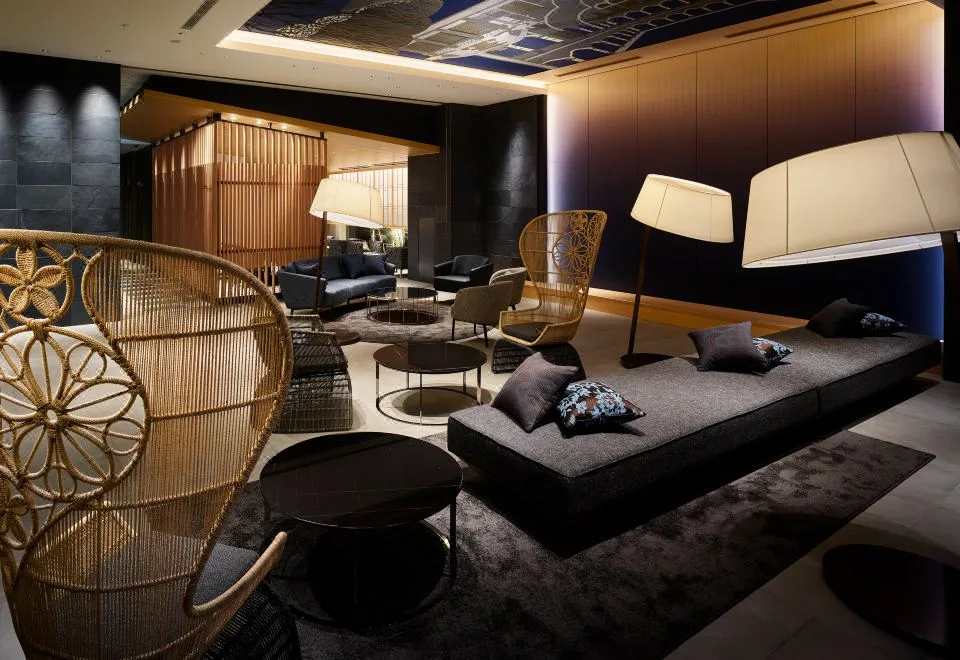
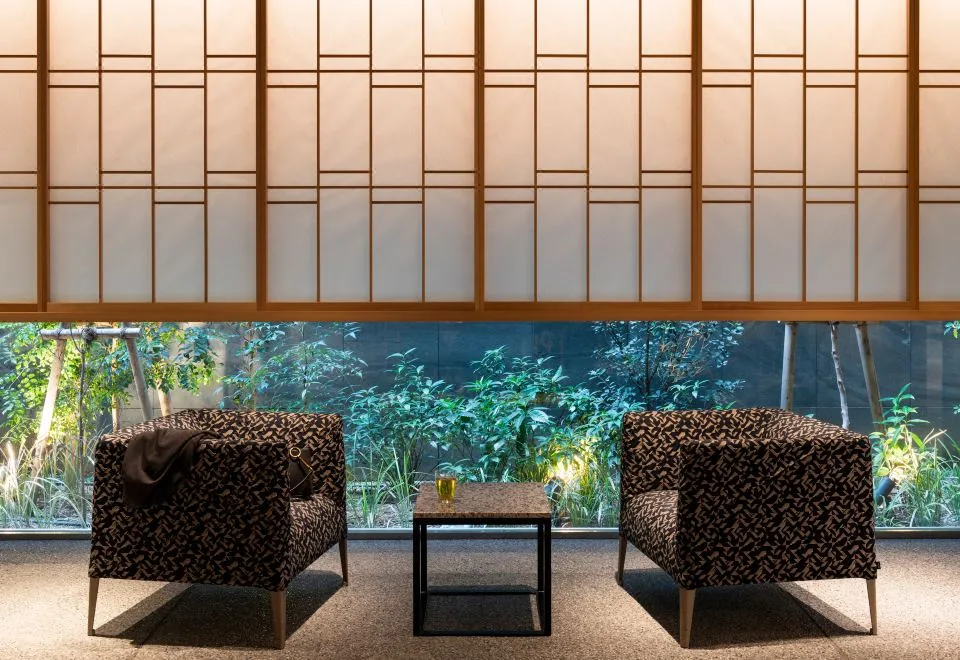
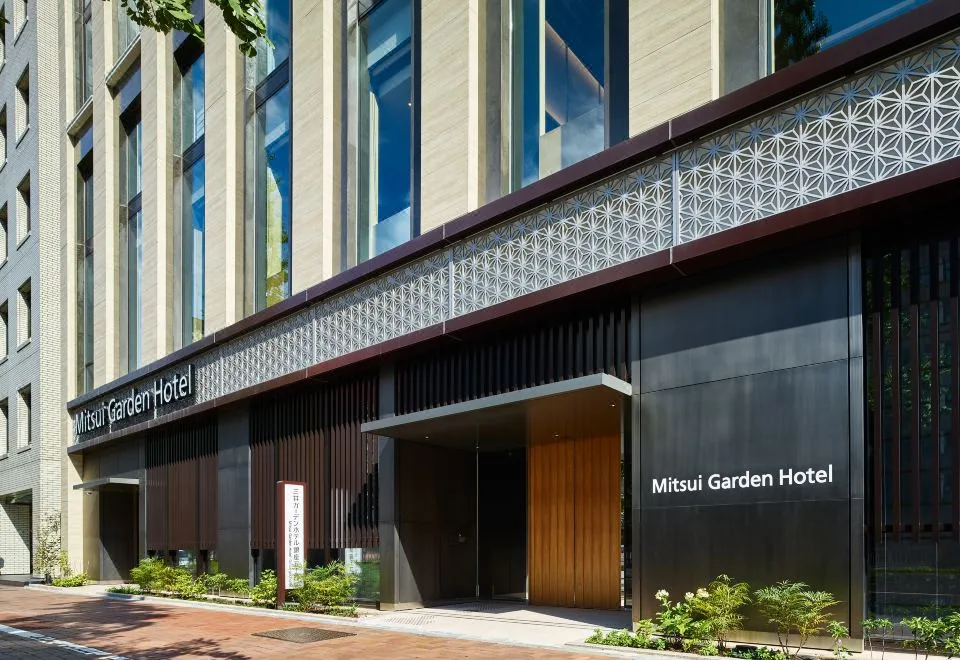
Mitsui Garden Hotel Ginza Gochome suits travellers planning around Ginza, Kabukiza and Tsukiji who also want to relax in a public bath at night. Japanese touches in the common areas and the location are central attractions. To stay comfortably, compare room orientation, noise and usable floor space rather than choosing on bathhouse photos alone.
Is this hotel right for your trip?
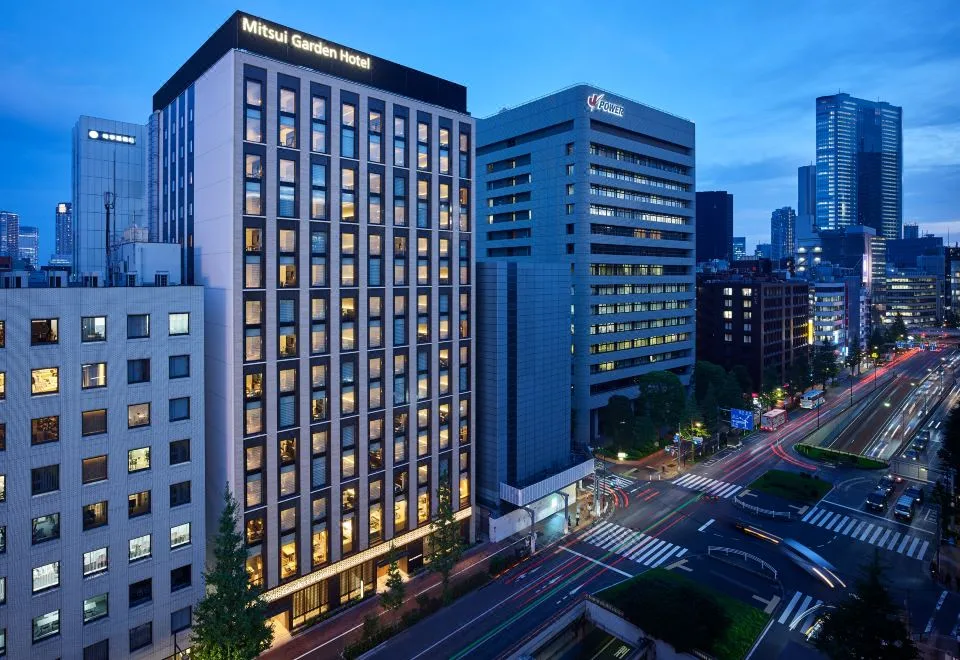
What won me over is the combination of location and bath: a minute on foot from Higashi-ginza station, and a soak waiting when I get back at night. Opened in 2019 with 338 rooms, the hotel carries Kabuki-inspired Japanese touches through its lobby and corridors, so the Ginza mood stays with you after a day out. If your trip centres on Ginza, Kabukiza and Tsukiji, this hotel shortens almost every walk.
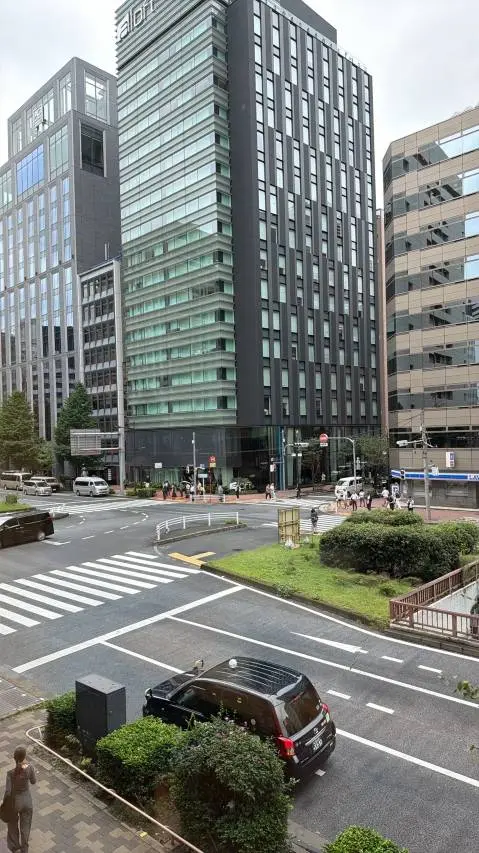
For a first visit to Ginza, this hotel makes orientation easy: Higashi-ginza station is right beside it, and the Ginza main street, Kabukiza and the Tsukiji market all sit in the same neighbourhood, so a day of shopping, an evening performance and a Tsukiji breakfast the next morning need no detours. I treat this hotel as a base for getting to know Ginza; after one stay, you know which part of the area you like best.
Reasons to choose it
- Higashi-ginza outings are easy to plan
- Public bath for unwinding
- Breakfast and well-equipped common areas
Trade-offs to consider
- Some room orientations face road noise
- Confirm where taxis can unload luggage
- Breakfast choices may feel repetitive on long stays
Access: station exits, lifts and luggage
Walking from regular exits
Higashi-ginza Exit 4 is around a one-minute walk and Ginza Exit A5 roughly four minutes. JR Yurakucho Ginza Exit or Shimbashi Ginza/Shiodome exits are about eleven minutes on foot. With light luggage, choose by itinerary; on arrival day, prioritise fewer transfers and stairs.
Luggage and lift routes
Higashi-ginza has street-level lifts from the central gates toward Exit 3 and the Miharabashi-side gates toward A1. With large luggage, follow your platform’s signs to a lift and walk above ground to the hotel; this may differ from the closest staircase.
From the hotel, the Ginza Art Aquarium is about 280 metres and the Tsukiji Outer Market about 400 metres, both an easy walk. Ginza-itchome station is about 600 metres and Nihonbashi about 1.4 kilometres. Kabukiza sits right by Higashi-ginza station Exit 3, so there is no rush before or after a performance. I put Tsukiji breakfast on the first morning, walk back through the market, and still have time before check-out.
With luggage, I take the lift route: Higashi-ginza station has street-level lifts from the central gates to Exit 3 and from the Miharabashi-side gates to Exit A1, both listed on Tokyo Metro’s official barrier-free page. From Ginza station, the street lift is at Exit A7, on the Mitsukoshi side. The hotel sits right by Higashi-ginza station with few turns, so pushing a suitcase is easy.
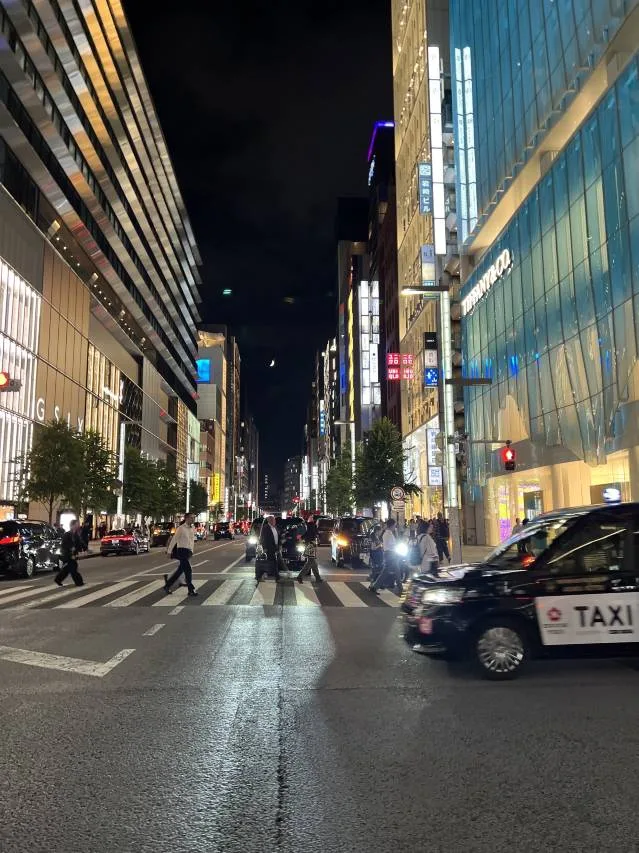
The walk from the hotel to Tsukiji passes Ginza shopfronts and side streets, and the market’s morning energy feels completely different from Ginza’s tidy daytime streets. In the evening, stepping out of the hotel puts you straight onto a lit shopping street; a stroll and then a soak back at the hotel closes the day nicely. I like staying somewhere that needs no rushing, where a looser schedule turns the hotel itself into part of the trip.
Another advantage of staying here is the choice of walks nearby: toward Ginza-itchome the streets feel different again, and toward Nihonbashi you see an older Tokyo. With time to spare, I keep one afternoon for walking alone, no shopping needed, looking at windows and side streets, and getting back to the hotel in time for a soak.
View hotel access directions / Check station lift facilities
| Hotel name | Mitsui Garden Hotel Ginza Gochome |
| Address | 5-13-15 Ginza, Chuo-ku, Tokyo 104-0061, Japan |
| Check-in and check-out | Check-in 15:00–24:00, check-out by 11:00, 24-hour reception; arrival instructions provided after booking. |
| Transit reference | Less than 100 m from Higashi-ginza subway station, about a two-minute walk. |
Choosing rooms: beds, bathrooms and luggage
| Room type | Room size and bed configuration | Best choice for |
|---|---|---|
| Standard Double | 17.3 m2 / 140 cm bed | Couples |
| Standard Queen | 18.5 m2 / 164 cm bed | Two people wanting a wider bed |
| Superior Twin | 24.7 m2 / two 123 cm beds | Two people sleeping separately |
| Superior Twin (3 beds) | 24.7 m2 / three 123 cm beds | Three people, one bed each |
| Superior Triple | 28.1 m2 / three 123 cm beds + sofa | Families or three friends |
| Superior Wide King | 24.7 m2 | One or two people wanting more space |
| Deluxe Twin | 34.6 m2 / two 123 cm beds + Japanese-style space | Two people valuing comfort |
| Deluxe Triple | 34.6 m2 / three 123 cm beds + sofa | Three people wanting more space |
| Accessible Double | 24.7 m2 / one double bed | Wheelchair users or guests with limited mobility |
Room sizes range from 17.3 to 34.6 m², a substantial difference. I would first decide how much time I plan to spend inside. For two travellers with separate beds and large luggage, the 24.7 m² Superior Twin deserves comparison over a basic Double. Groups can also check triple-bed options, selecting by the actual number of guests.
Every room has a private bathroom with a deep tub, a fridge, a safe and free bottled water, and Wi-Fi is free throughout. The Deluxe Twin adds a raised Japanese-style space with soft indirect lighting, which feels more relaxing than the floor area suggests. The Accessible Double puts its living zone in the centre of the room, so a wheelchair moves through it smoothly. When I choose, I look at bed width and suitcase space first: two large cases crowd a 17.3 m2 Standard Double, while 24.7 m2 and up feels comfortable.
Three travellers do not need two rooms: the Superior Twin (3 beds) at 24.7 m2, the Superior Triple at 28.1 m2 and the Deluxe Triple at 34.6 m2 all have three single beds, and the latter two add a sofa. There is also a 24.7 m2 Superior Wide King. Travelling with an older relative or a wheelchair user, the 24.7 m2 Accessible Double has a wide, clear layout for moving around. Extra beds and cribs vary by room type, so ask how the third bed is arranged before booking instead of hoping for one on arrival.
Storage and flow in the room matter too: once the suitcase is open, clothes have somewhere to hang and toiletries somewhere to sit, so mornings need no digging through luggage. The deep tub in the bathroom fits one person properly, and you change in the room after a bath without crossing a corridor. These small things add up to a stay that feels better than the floor area alone suggests.
Back in the room at night, dimming the lights changes the whole feeling: the soft indirect lighting and the Ginza lights coming through the window make sitting by the window for a while before a bath my favourite way to end the day here. Light sleepers need not worry either; with the curtains drawn the room gets properly dark.
Room photos show beds and seating; the public bath is separate from your private bathroom. Do not choose based on bathhouse photos alone. Confirm actual beds, guest count and suitcase placement. Couples who sleep separately should compare Twins, and families should confirm bedding for a third person before arrival.
Breakfast: match your morning routine
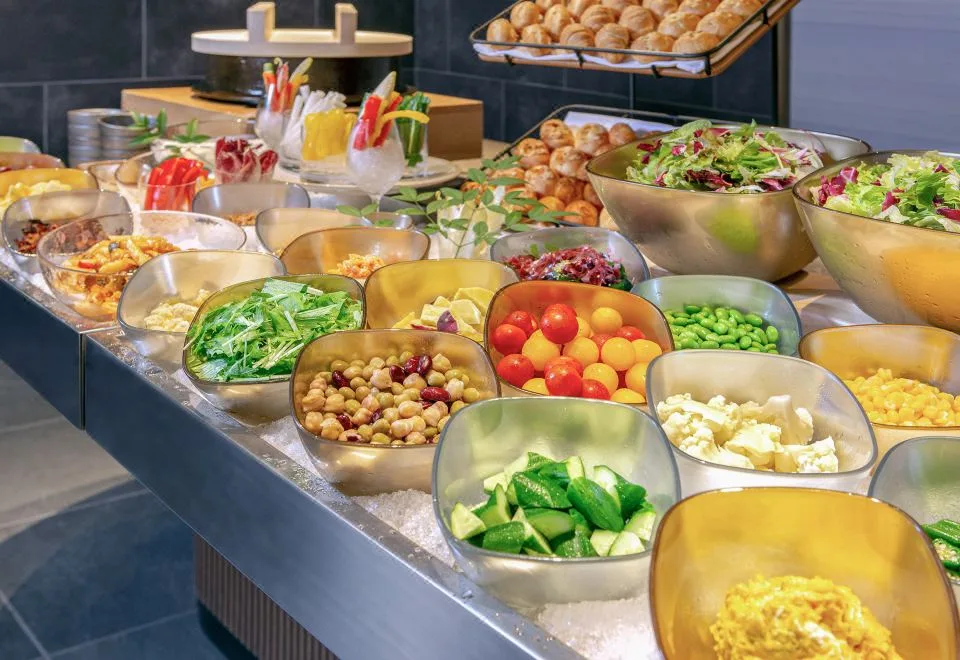
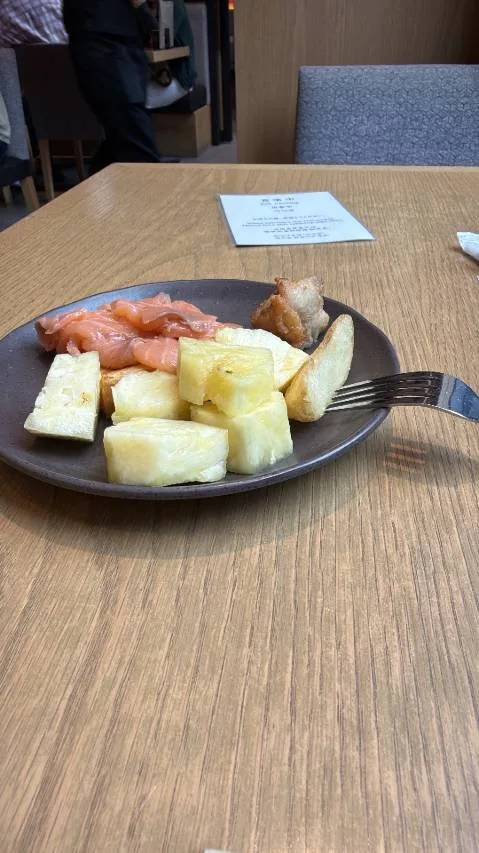
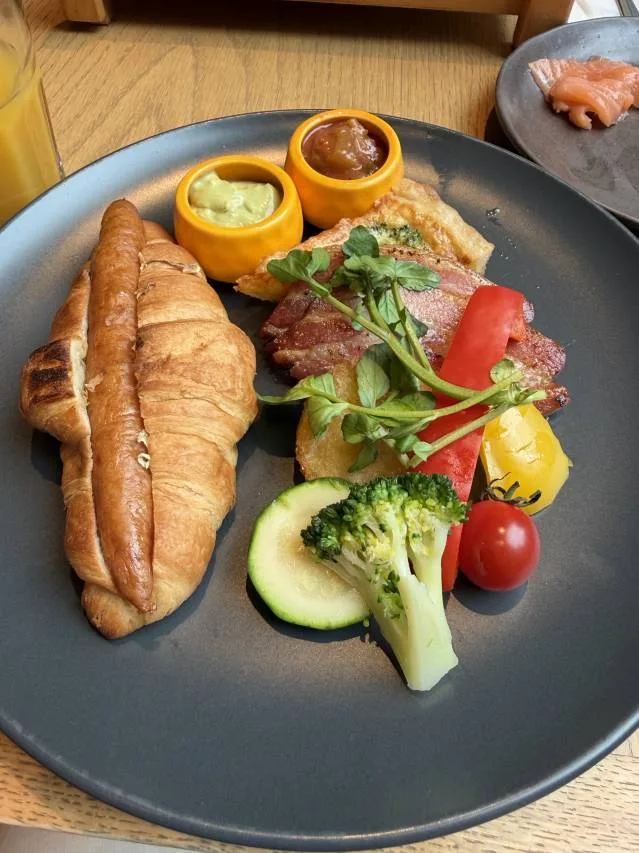
Breakfast is a Japanese and Western buffet, with photos of the food counter and guest plates. It suits travellers who want to eat then catch a train or shop without finding a cafe. I found the selection sufficient for a night or two, but over a longer stay the repetition shows. If you like variety, plan some mornings in Tsukiji.
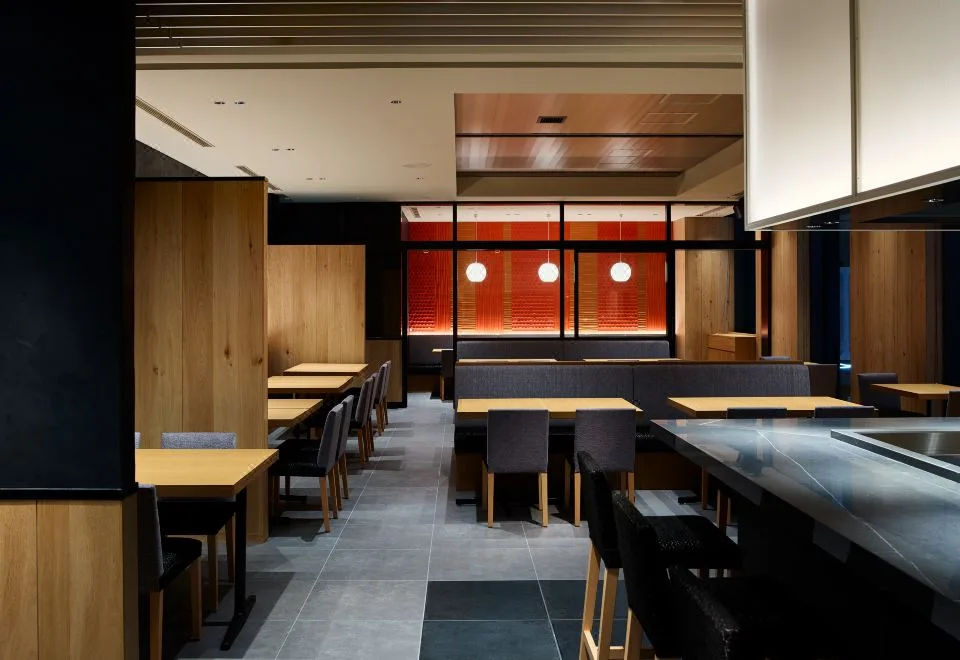
Breakfast is served at SHARI Higashi-Ginza on the 2nd floor, 6:30-10:30 with last entry at 10:00, JPY 3,300 per adult including tax. You choose one main set and add the half buffet: the Japanese set comes with nine side dishes, the Western set is a standard Western plate, and the half buffet adds nigiri sushi made in front of you, colourful roll sushi, a teppan live kitchen, salad, fruit, yogurt and homemade bread. On my Japanese-set morning, the nine side dishes lined up beside fresh nigiri, and I walked to Tsukiji afterwards without feeling heavy.
With children, breakfast is free for ages 5 and under, JPY 1,650 for ages 6-11, and JPY 3,300 for ages 12 and up, the same as adults. Lunch runs 11:30-15:00 and dinner 17:30-22:00 in the same restaurant; lunch and dinner close on Mondays while breakfast is served every day. Dinner carries a table charge of JPY 550 per person and a smart-casual dress code.
Choosing between the Japanese and Western sets depends on your mood and the day ahead: pick the Japanese set for something light when you plan a second round at Tsukiji, or the Western set when you want a fuller meal before a long morning of shopping. The made-to-order dishes at the half buffet come with either choice, so on a first stay I try both and learn which one I prefer.
What guests like and the trade-offs
Road noise, cleaning details and taxi unloading are the three trade-offs I weighed before booking. Light sleepers can ask for a quieter room orientation. If arriving by taxi, ask the driver or hotel where a lawful stop for unloading is possible, rather than assuming the entrance allows extended parking.
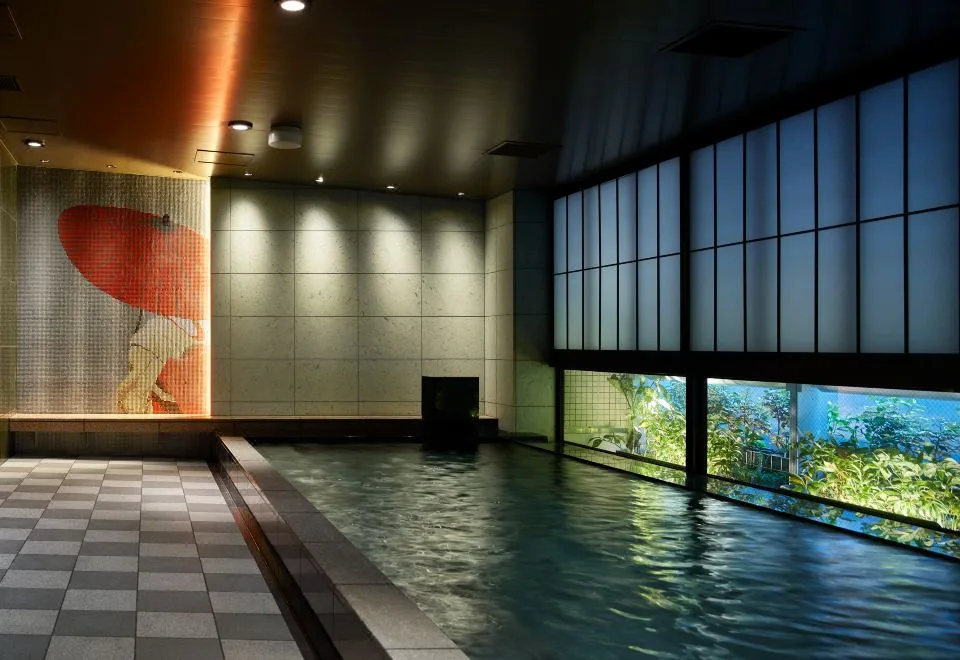
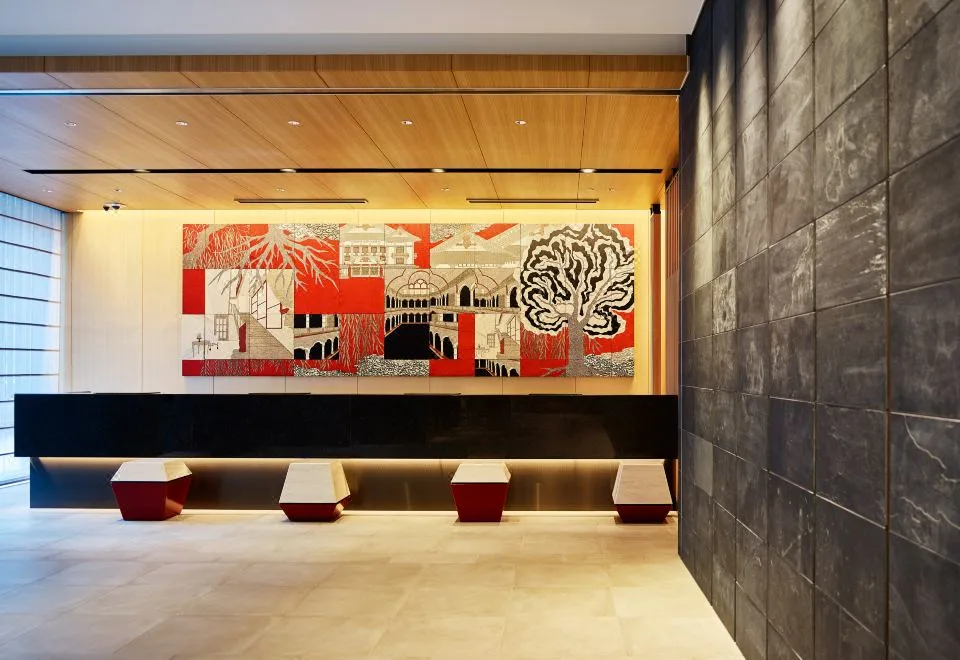
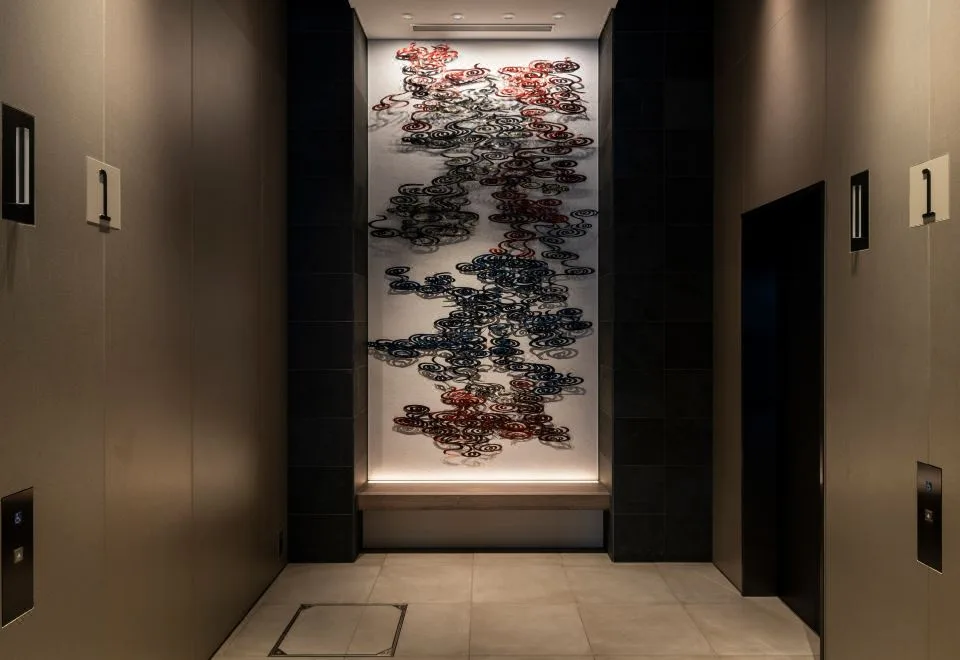
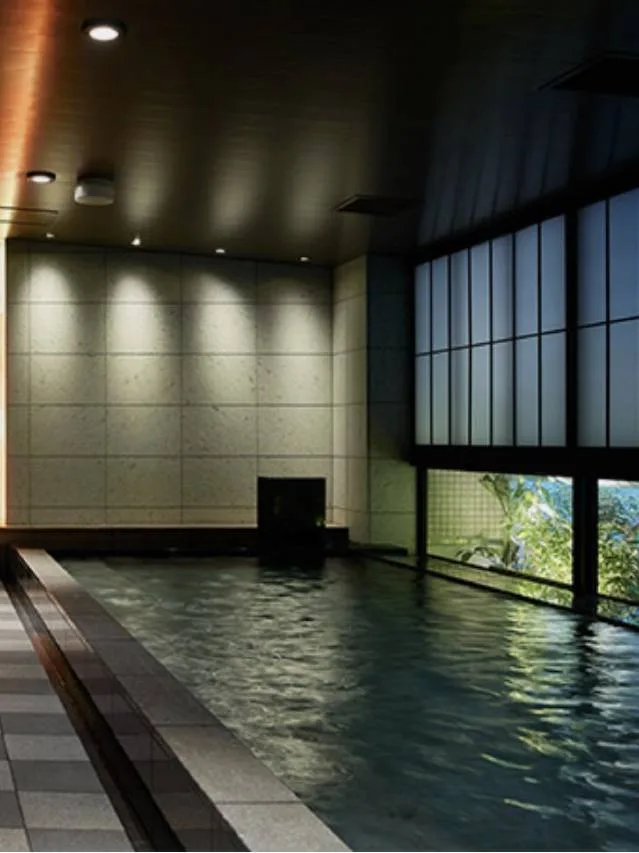
The public bath is on the 2nd floor, free for guests, open 15:00-25:00 and 6:00-9:00; you can walk there in your room nightwear and slippers. It is busiest 21:00-23:00, and the TV in your room shows how crowded it is, so I go in the morning or early afternoon instead. Bamboo artwork lines the elevator hall and maple leaves mark the bath entrance, so the mood follows you back to your room. At the front desk, a Kabukiza scene woven in Nishijin by kimono designer Shotaro Saito greets you at the entrance, unmistakably Ginza. The same floor has a gym, free 6:00-23:00, with treadmills, exercise bikes and cross trainers – bring your own training wear and shoes. Elsewhere in the hotel: free Wi-Fi in the lobby and corridors, free luggage storage, a wake-up call, currency exchange, and front-desk staff who speak Chinese, English and Japanese.
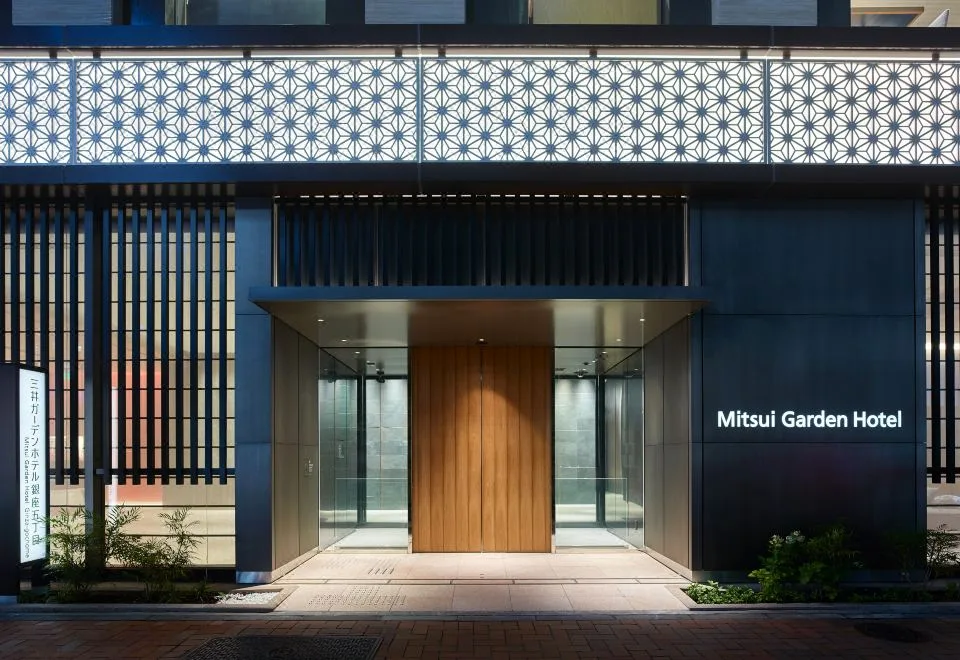
Beyond the front desk, the ground floor has a lounge where you can sit and rest after a day out before heading upstairs. The Japanese touches here start at the entrance and follow you all the way back to your room, rather than stopping at the lobby decoration.
Short and long stays, nearby outings
A short stay works best as one smooth day: Ginza shopping and a Tsukiji breakfast in the same loop, then back to the hotel to rest. For a longer stay, think about whether you will really use the bath and whether near-identical breakfasts will suit you. A soak is a bonus: I schedule it for the evening after a day out, or again in the morning to wake up.
Check-in runs 15:00-24:00 and check-out is by 11:00, with the front desk staffed around the clock, so a late arrival still gets a welcome. There is no deposit and no pets; the guest checking in must be at least 18, while children of all ages are welcome. Children may still cost extra even without an extra bed, so include them in the guest count when booking to get the right price. Extra beds and cribs vary by room type, so confirm before booking.
For the schedule, I keep the busiest day for Ginza: shopping by day, a soak back at the hotel in the evening, dinner out afterwards, and a slow morning at Tsukiji the next day. That pace needs no early trains or alarms, and the location supports exactly this kind of slow trip; packing the days too full would waste the advantage of staying in Higashi-ginza.
Pros and cons at a glance
Pros
- About a minute on foot from Higashi-ginza station Exit 4; Ginza, Kabukiza and Tsukiji are all within walking distance.
- The 2nd-floor public bath is free for guests, open 15:00-25:00 and 6:00-9:00, for a soak after a day out.
- Breakfast at SHARI Higashi-Ginza: a Japanese set with nine side dishes plus a half buffet with nigiri made in front of you, 6:30-10:30, JPY 3,300 per adult.
- Rooms run from 17.3 m2 to 34.6 m2, with three-bed rooms and an accessible room, so three travellers or a wheelchair user need no second room.
- Front desk open 24 hours, free luggage storage and free Wi-Fi, and no deposit at check-in.
Cons
- Some room orientations can catch road noise; light sleepers should ask for a quieter side.
- Breakfast starts to repeat over several days.
- Dinner carries a table charge of JPY 550 per person and a smart-casual dress code; lunch and dinner close on Mondays.
- The public bath is busiest 21:00-23:00.
- Taxi unloading needs a confirmed lawful stop; the entrance does not always allow extended parking.
Information last checked: 2026-11-23