
TOKYO / CHUO
MIMARU Tokyo Nihombashi Suitengumae
MIMARU Tokyo Nihombashi Suitengumae
A 35 m² family apartment with kitchen near the airport bus terminal: how I would choose a room.
MIMARU Tokyo Nihombashi Suitengumae is for families who want to share one apartment with a dining table and kitchen. Eating something together at night or laying out tomorrow’s things on the table is easier than juggling two separate small rooms. The Tokyo City Air Terminal nearby is another arrival option when traveling with children.
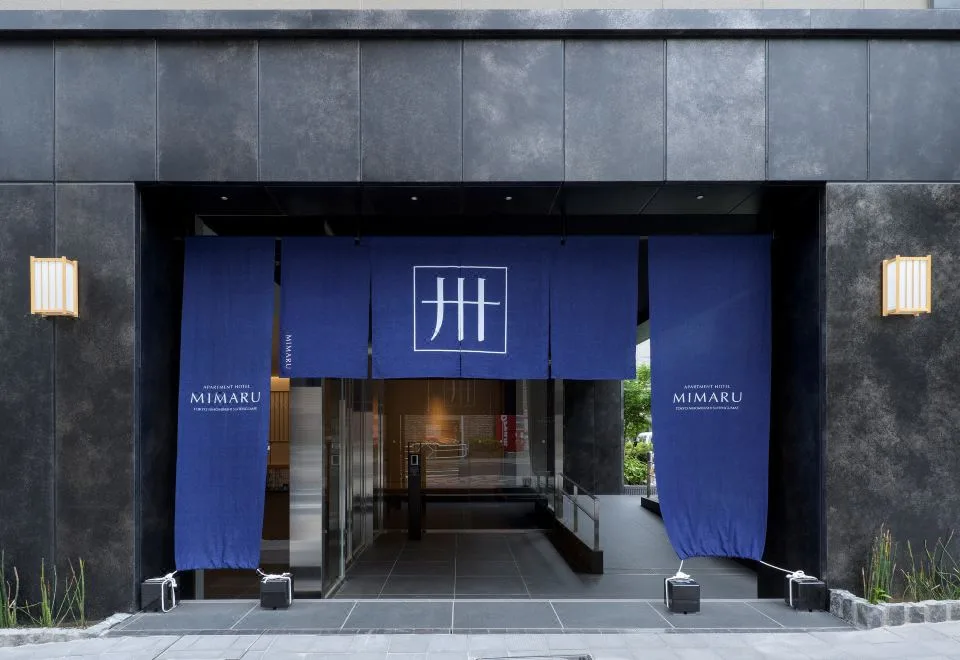
Choosing this apartment hotel
| Item | Accommodation details |
|---|---|
| Location | 17-6 Nihonbashihakozakicho, Chuo City, Tokyo 103-0015, Japan. |
| Check-in / Check-out | 3:00–10:00 p.m. / before 11:00 a.m. |
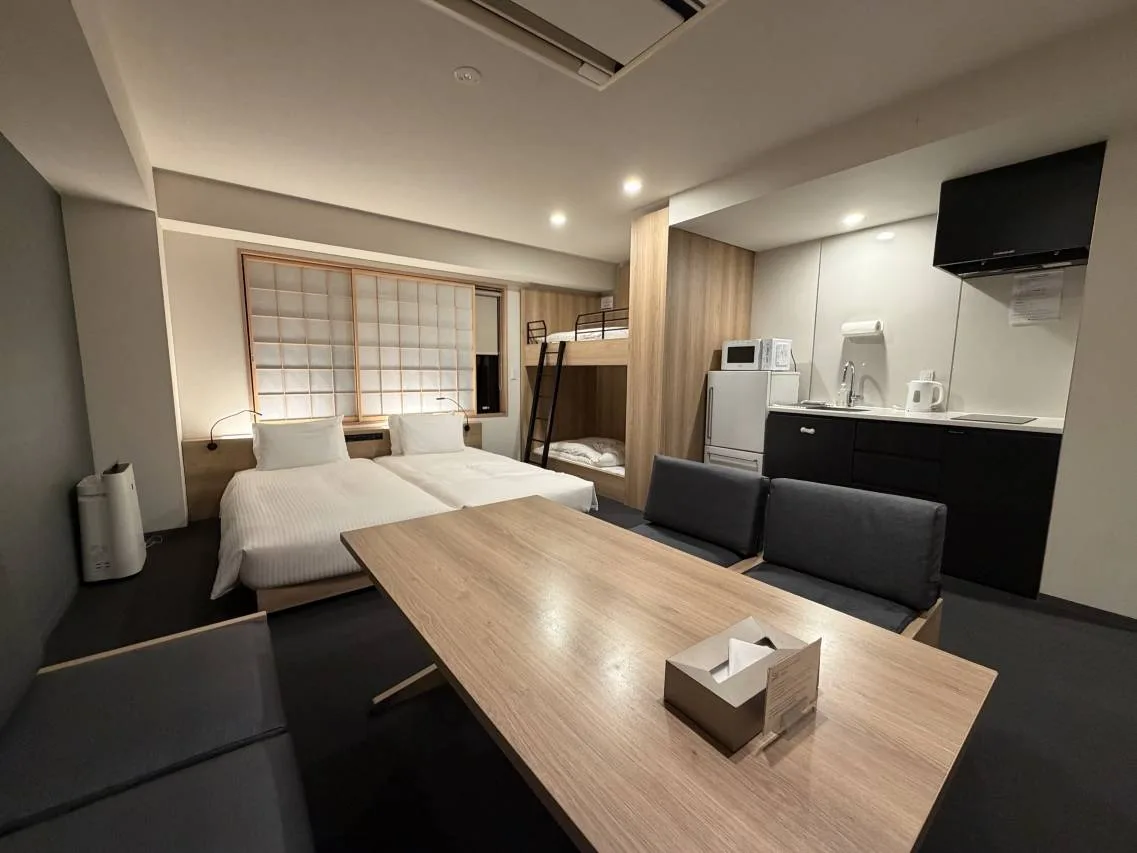
| Room choice | A 35 m² family apartment has two single beds and one bunk for four sleeping places; the five-person version of the same area adds a sofa bed. |
| Stay plan | Families staying three nights or more and using the kitchen or shared laundry get more out of the apartment. |
Rooms and space for luggage
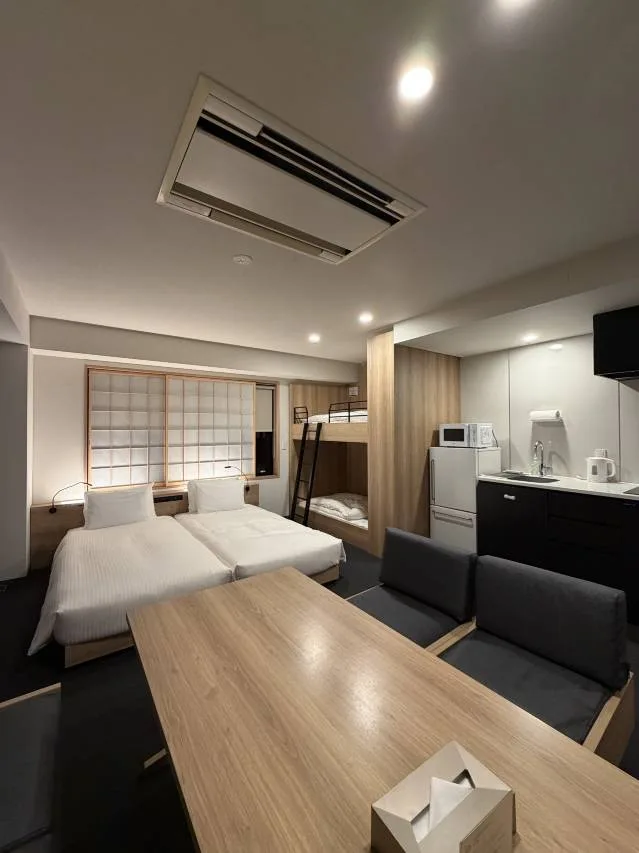
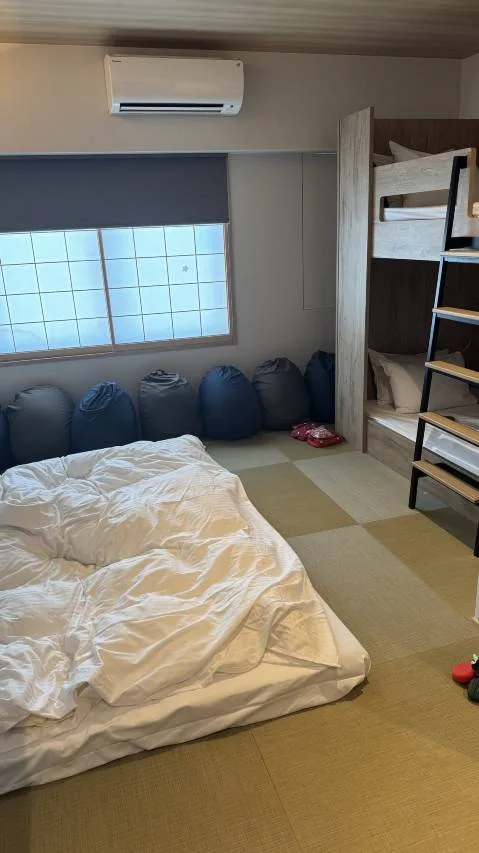
The 35 m² family apartment has two single beds and a bunk, providing four sleeping places. Another 35 m² category adds a sofa bed for a fifth guest. For a Japanese-style room, compare the 39 m² apartment with two singles and three futon sets. For a larger party, a 79 m² connecting arrangement provides both shared and private areas.
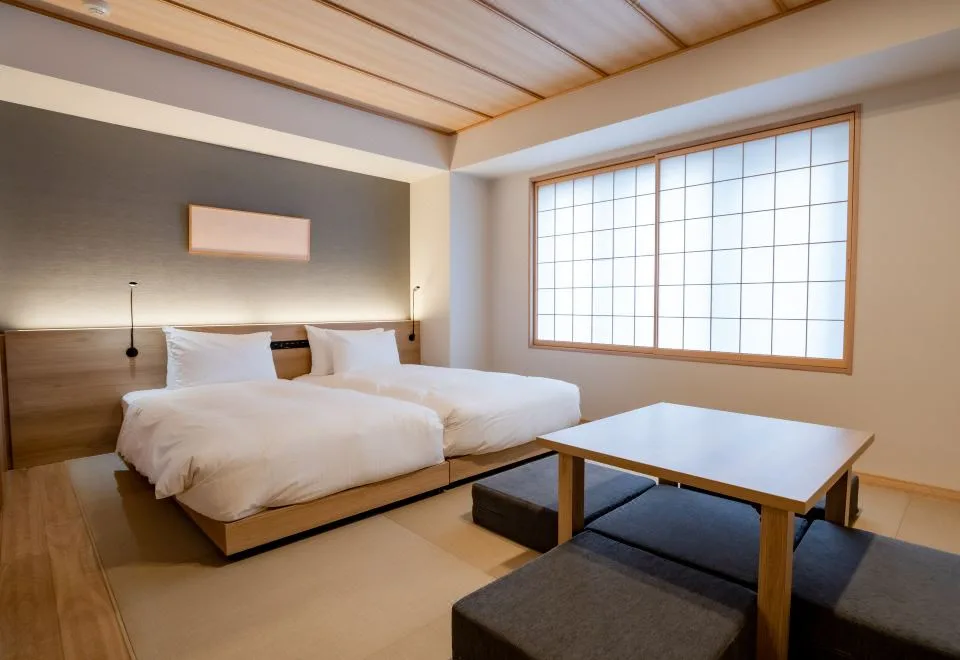
The Japanese-style apartment pairs two single beds with three futon sets: by day the futons fold away into living space, by night they open into sleeping places for five, and bags need a spot of their own. Choose it because you like tatami, not just because 39 m² is larger than 35 m².
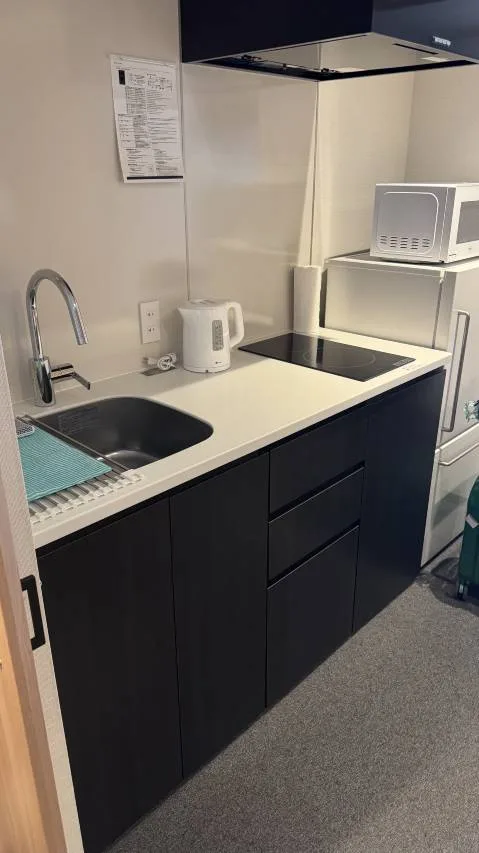
Don’t choose only by maximum occupancy. Decide who can climb to the upper bunk, who needs to get up at night and what floor space remains when the sofa bed is open. The kitchen and dining table are a feature; make a small packing list for cookware, utensils, groceries and condiments.
Decide one thing first for a party of five: no room type allows an extra bed or a crib, so the five-person version adds its fifth place with a sofa bed. Children of all ages are welcome, but a child without an extra bed may still cost extra, so enter the children’s ages when booking to see the true price; the guest checking in must be at least 18.
The 79 m² connecting arrangement suits two families booking together: open the connecting door to share one space, close it when each side wants quiet, so children asleep on one side do not keep the other side hushed. Ask which room types sit on each side of the connection before booking; do not judge it by total area alone.
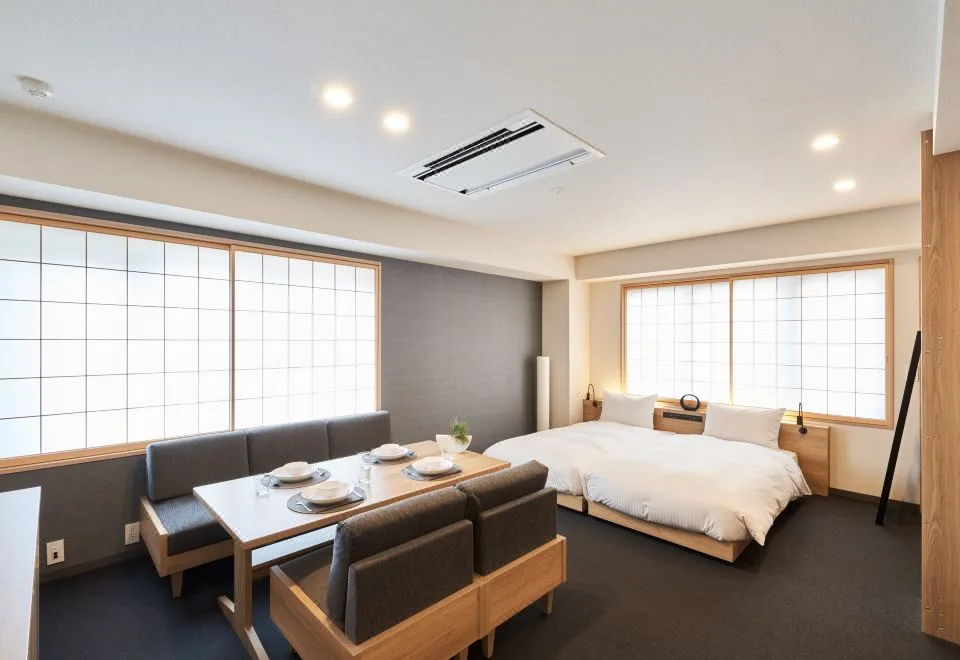
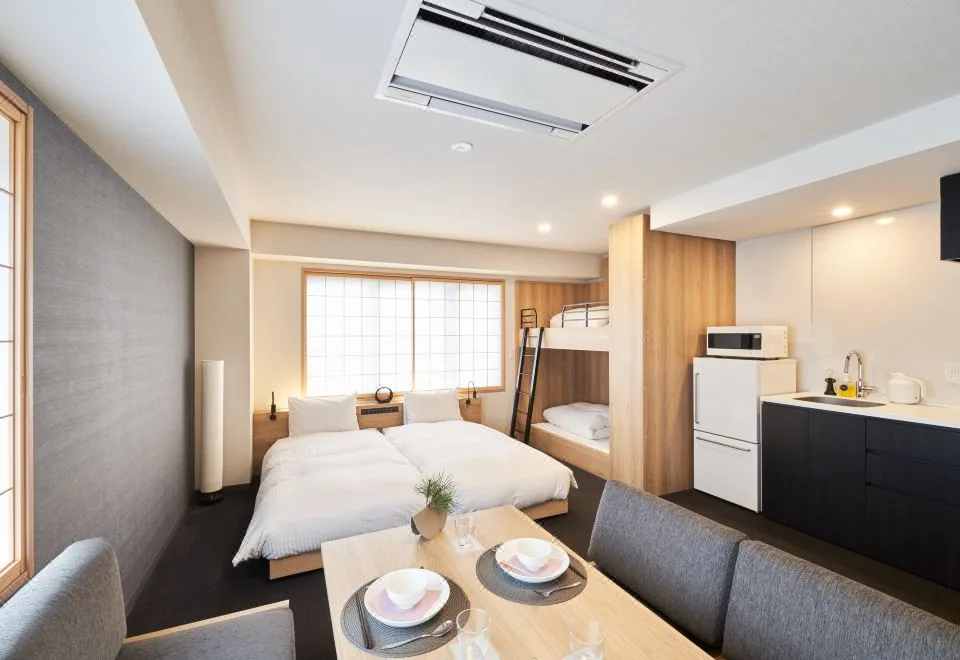
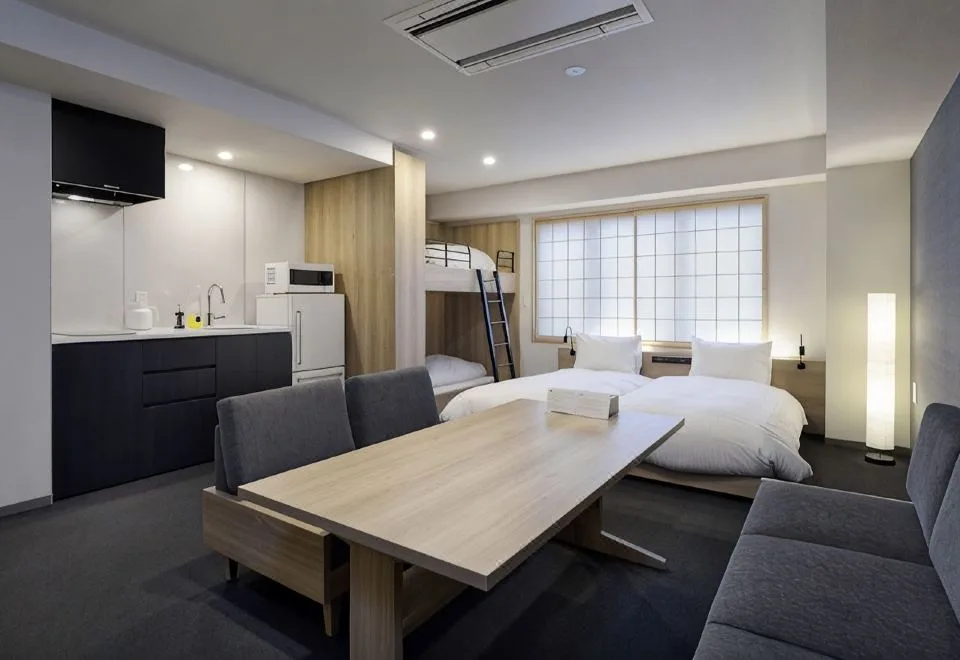
Room photographs
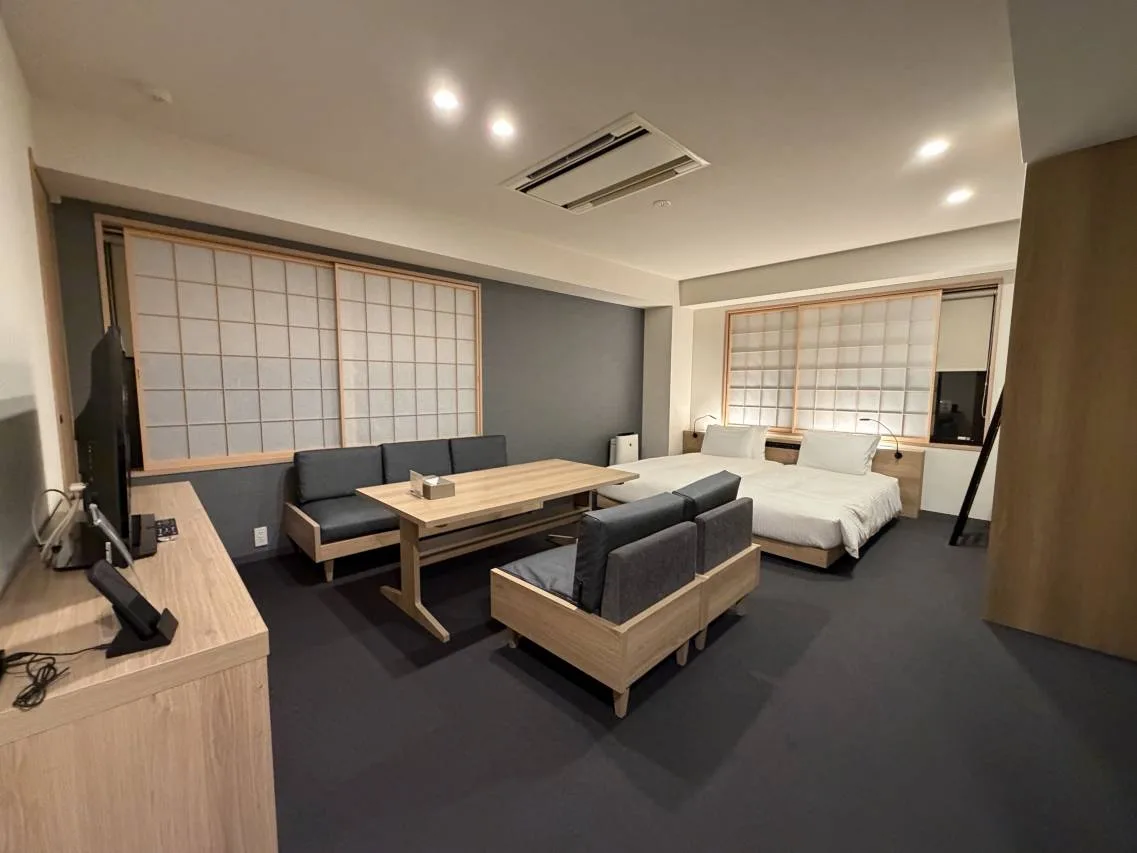
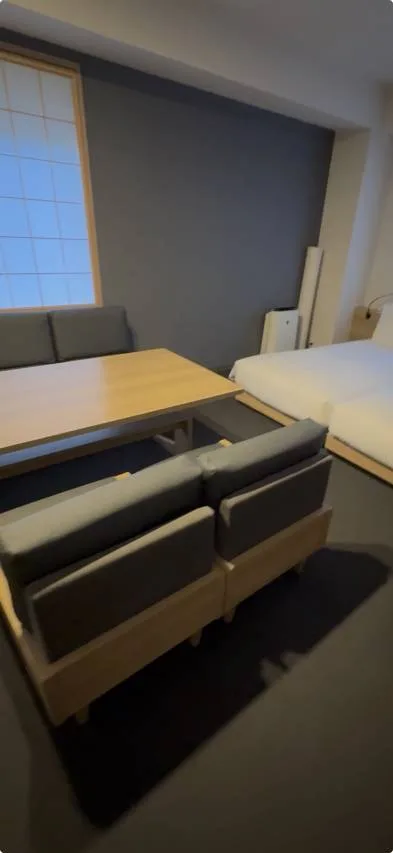
Look at how the beds, table and entryway relate to each other, then imagine your bags in the space. Furniture and bed layouts vary by the booked apartment category.
Decide where the bags go before unpacking: the relative positions of beds, table and entryway decide whether two large cases can open at once. The front desk stores luggage for 500 yen a day; ask how arrival-day and departure-day gaps work, and a light walk to Suitengu Shrine or Ningyocho is much easier without cases in hand.
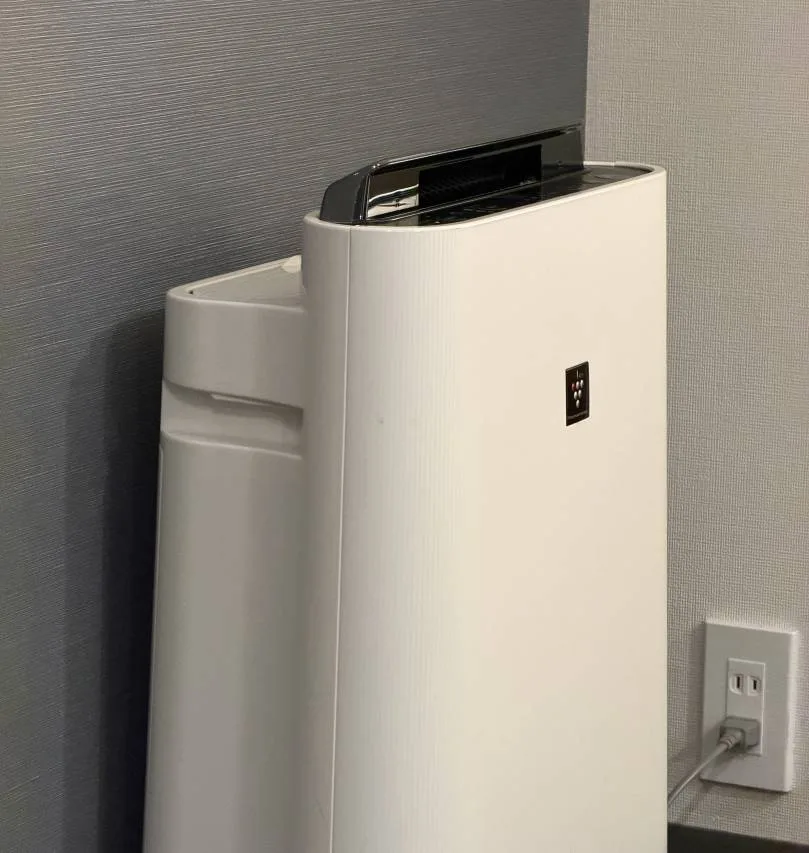
There is an air purifier in the room, standing beside the dining table where the photos show it. Anyone sensitive to smells or dust can ask the front desk how it works instead of figuring it out alone.
Bathrooms: allow for more than one person getting ready
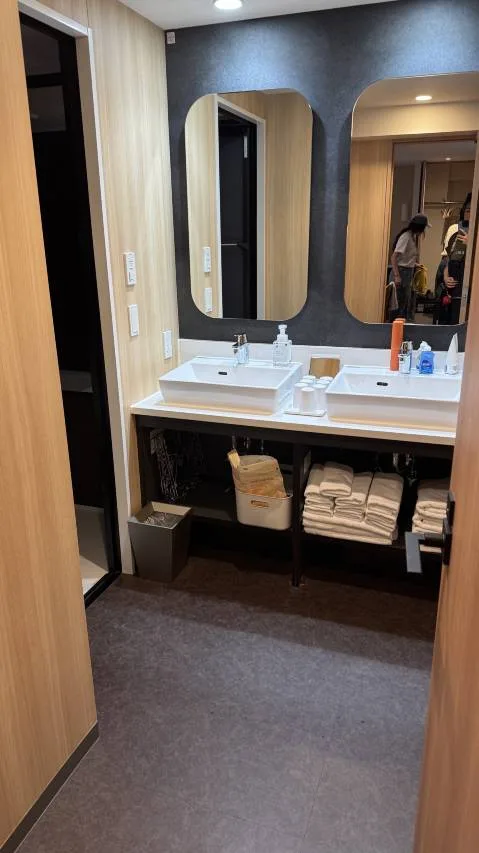
The arrangement of bath, shower and washbasins matters when several family members get ready together. Use photos to judge equipment and passage space, then confirm which bathroom type comes with your reserved apartment.
Double sinks are a real plus here: two people can brush teeth and wash up at the same time instead of taking turns, which speeds up the morning. Bath, shower and washbasin layouts differ by room type, so confirm the bathroom type together with your reservation rather than discovering the difference on arrival.
Towels sit beside the washbasins, and the double sinks in the photos come with towel rails, so two people using them at once are not crowded. Ask the front desk on arrival about supplies and towel changes rather than discovering something missing at night.
Breakfast: prepare your own or eat outside
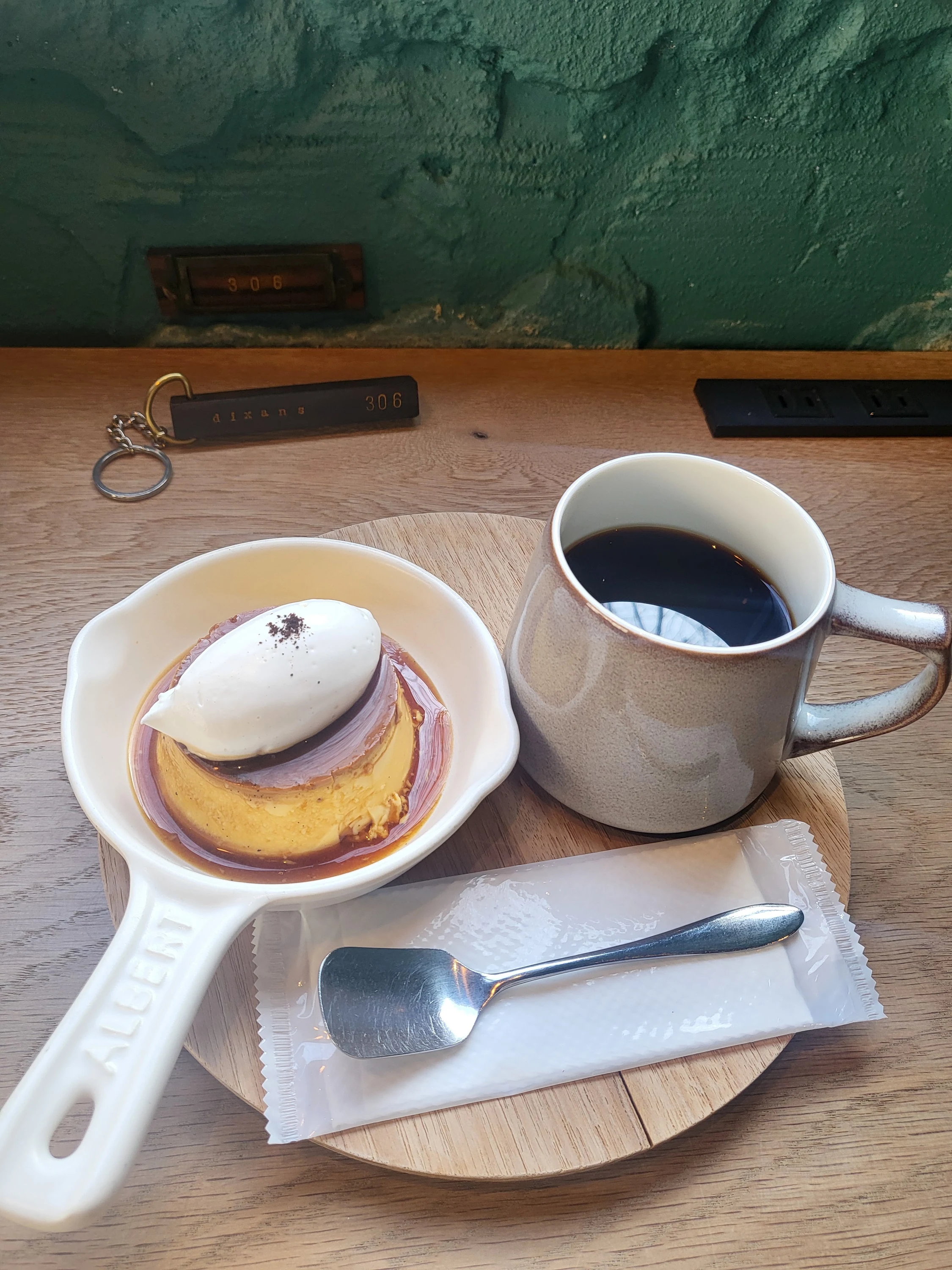
The hotel doesn’t provide breakfast, which can be convenient for families on different schedules. Buy bread, fruit or groceries the day before and eat around the dining table before getting ready to head out. You can also eat hot food nearby without requiring everyone to wake up at a set hotel breakfast time.
A kitchen doesn’t guarantee that every condiment or child-sized utensil is included. If you have dietary restrictions or allergies, ask which items are supplied. Over several nights I can vary breakfasts: cook something simple one morning, find hot food nearby the next, so the table frees you from a fixed hotel breakfast hour. The dining table in the photos shows space, not a provided meal.
Ningyocho is 350 metres away and Nihombashi about 880 metres, so hot food is a short walk, not a project; Ginza is about 1.4 km, better saved for a shopping day. Over several nights I can vary breakfasts instead of keeping to one hotel breakfast hour.
Transport, luggage and map
The hotel’s guide places Suitengumae Station Exit 2 about two minutes away, Kayabacho Exit 4B around seven minutes and T-CAT about four minutes on foot. With luggage arriving from an airport, compare bus times to the terminal. From the subway, take the elevator to the street, then navigate to 17-6 Nihonbashihakozakicho.
Suitengumae Station is only 230 metres from the hotel, a two-minute walk with cases, so use that route first on arrival day with children. Kayabacho Station Exit 4B is about seven minutes, a useful second way in and out.
Kayabacho Station Exit 4B is about seven minutes away, an easy walk when there is time to spare, with Nihombashi on the way.
With luggage at Suitengumae Station, use the Tokyo City Air Terminal-side ticket gate and the elevator at Exit 4. An elevator at the Oshiage end of the platform connects toward that gate. The regular walk via Exit 2 is not the same as the step-free route.
Coming from an airport, compare bus routes and last departures to the Tokyo City Air Terminal before choosing between bus and train-plus-Hanzomon Line; T-CAT is about four minutes on foot, easier with large luggage than changing trains twice. JR Shin-Nihombashi Station is about 1.5 km on foot, a backup for anyone riding JR lines.
Airport buses run directly to the Tokyo City Air Terminal, and the hotel is four minutes on foot from there, so arrival day with children and large luggage needs no further train change. The return works the same way: get to the terminal with time to spare rather than cutting the bus close.
Address: 17-6 Nihonbashihakozakicho, Chuo City, Tokyo 103-0015, Japan. Plan the route on Google Maps.
Exploring nearby
Take half a day for Suitengu Shrine and Ningyocho, separate from a Ginza shopping day so children are less tired. On the Hanzomon Line, group outings toward Shibuya or Oshiage by direction to reduce family transfers.
Koami Shrine is about 690 metres and Nihombashi about 880 metres, so the two fit into half a day on foot without a separate outing. Further out, Ginza is about 1.4 km and Marunouchi about 1.7 km, walkable or a short ride; Akihabara is about 2.9 km, better reached by train than walked with children.
Short or long stays
Check-in runs 15:00 to 22:00, checkout is before 11:00, and the front desk is staffed 07:00 to 22:00; anyone landing late should ask about check-in after 22:00 before booking. Cash is accepted at the hotel, no deposit is required; pets are not allowed, service animals are, so confirm both before booking rather than at the door.
Families staying three nights or longer, doing laundry or cooking a meal or two, get the most from an apartment-style room. Laundry uses shared machines, a dryer is available and laundry service is charged; ask on arrival about rubbish, towel changes and the full housekeeping rhythm instead of assuming someone tidies the room every day.
Checkout is before 11:00; ask the front desk how luggage storage works, at 500 yen a day, so bags can be picked up in the evening on the way to the station without rushing the day. Check-in starts at 15:00, so early arrivals can ask the front desk about storing bags and walk nearby until check-in time.
Exterior and shared spaces
The shared areas have free Wi-Fi, an elevator, a water purifier, a fresh-air system and a drinks vending machine, so an evening drink needs no trip outside. Shared areas are non-smoking, with a separate smoking area and non-smoking floors; pick the right floor type when booking.
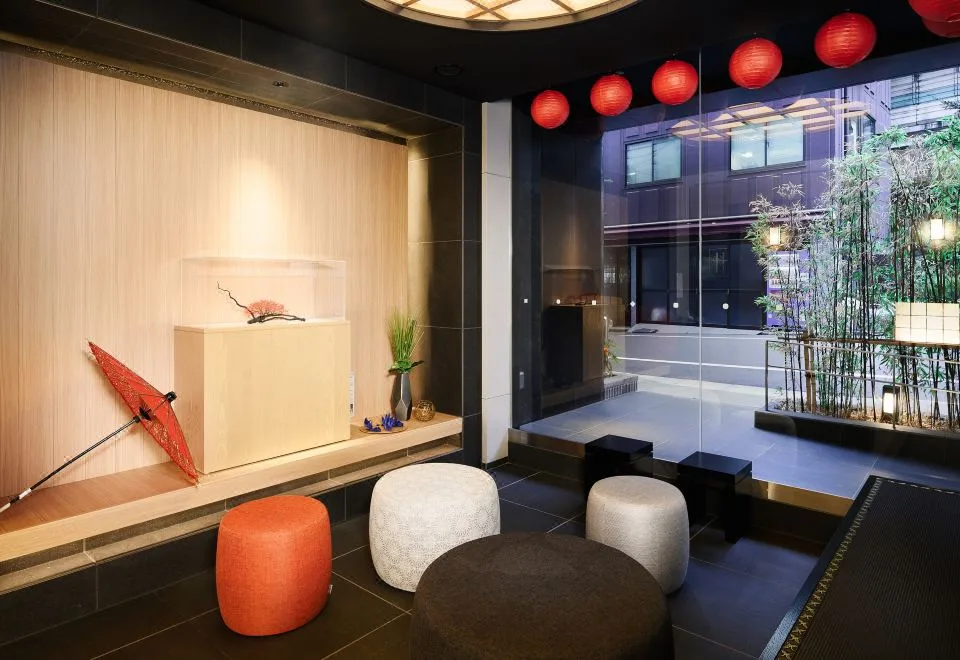
The front desk works in English and Japanese and has translation tools, so directions, laundry and rubbish questions get answered directly; luggage storage is 500 yen a day and currency exchange is handled at the desk. The lobby has Japanese-style seating, a good spot to sort bags and confirm the room location before heading up.
Safety fittings include a first-aid kit, fire alarms, extinguishers, security staff, safety alarms and smoke detectors, plus an elevator and a fresh-air system in the building, which helps when traveling with children. The facilities list also names a car park, but without details, so anyone driving should ask the front desk first.
What I like and what I would weigh
Advantages
Four separate sleeping places, a dining table and kitchen make family routines easier. Suitengumae and T-CAT are nearby for arrival and departure. I can ask the front desk in English about directions, laundry and rubbish, which helps when traveling with older family members.
Considerations
I weigh carpet and tatami dampness and nighttime noise before booking; cleanliness impressions differ from person to person, so I treat them as a caution, not a reason to rule it out. The location is not central Ginza; if I want shopping right outside every day, I accept walking or public transport.
For a family trip of four or five who want one apartment with a kitchen and a dining table, this place fits. For a solo business trip where the nearest station and the cheapest bed matter most, smaller rooms in the same district offer more choice.
Pros and cons at a glance
Pros
- The 35 m² family apartment sleeps four in separate beds; the five-person version adds a sofa bed, with a 39 m² Japanese-style apartment and a 79 m² connecting arrangement as well.
- A kitchen and dining table in the room make it easy to cook a meal or two on longer stays, with no fixed breakfast hour to keep.
- Suitengumae Station Exit 2 is about two minutes on foot and T-CAT about four minutes, so airport arrival and departure connect smoothly.
- The front desk works in English and Japanese and has translation tools.
- Luggage storage is 500 yen a day; public Wi-Fi is free and currency exchange is handled at the desk.
- Laundry service and a dryer are available, so families staying three nights or longer and doing laundry get more from the apartment.
Cons
- No room type allows an extra bed or a crib; a five-person stay relies on the sofa bed.
- The hotel serves no breakfast, so breakfast means cooking or eating nearby.
- Carpet and tatami dampness and nighttime noise are worth weighing before booking.
- It is not in central Ginza; daily shopping outside the door means walking or taking transport.
- Pets are not allowed, and the guest checking in must be at least 18.
Information checked: November 22, 2026.