
TOKYO / CHUO
MIMARU SUITES Tokyo Nihombashi
MIMARU SUITES Tokyo Nihombashi
Two bedrooms, shared living space and a kitchen for families
Is this hotel right for my trip?
The main appeal of MIMARU SUITES Tokyo Nihombashi is being together as a family while retaining separate places to sleep. Two bedrooms, a living area and kitchen give longer stays flexibility. I would prioritise it for groups that want a shared dining table without squeezing everyone into one standard twin room.
I think of it as a family apartment hotel: every room is a suite with two bedrooms or more, starting at 57 m², with a living room, dining table, kitchen and washer-dryer in one place. With children, parents, or three generations travelling together, everyone can retreat to their own bedroom at night and still gather at the same table in the day to eat and plan — a way of staying that an ordinary business hotel cannot copy.
If you are travelling with children, parents or three generations for three nights or more, this hotel belongs on your shortlist: two bedrooms, a kitchen and an in-room washer-dryer are things that only pay off over several nights. If you are staying a single night, want breakfast included, drive and need parking, or must settle the crib question first, I suggest asking about those points before booking — the strengths here are focused, and the trade-offs are clear. The kitchen and washer mean no eating out every day and no launderette hunt, so a longer stay can cost less than a business hotel plus laundry every night. The crib rules differ between sources, so email the hotel and book once you have the answer; drivers need parking elsewhere, as the hotel has no parking of its own.
Advantages and trade-offs
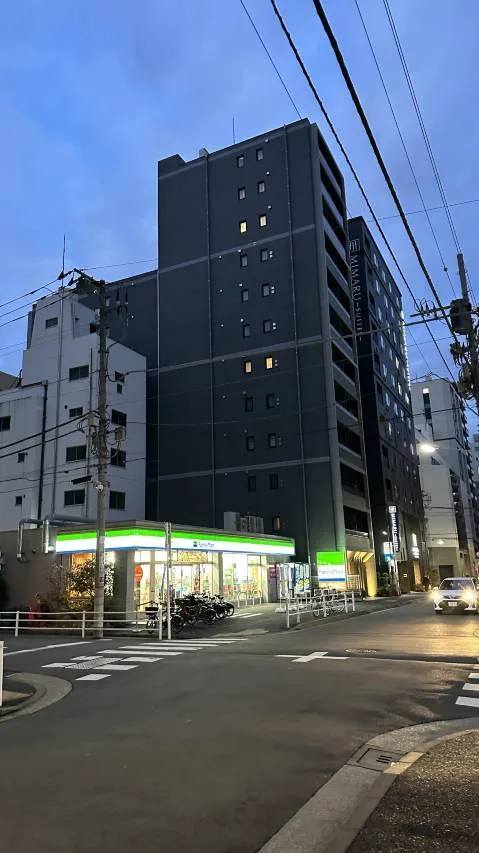
Worth considering: I like the separate bedrooms, the kitchen and the washer; a FamilyMart is a few steps downstairs, and Ningyocho dining makes family supplies easy.
Before booking: Compare the total stay cost, counting laundry and cooking over several nights, and check the bathroom layout for the suite you book. I cover check-in and contact details in the last section.
Price is the first thing I work out: this hotel is not cheap, and the suite only pays for itself over three nights or more, once laundry, cooking and a shared table are counted in. For a single night, it is not my first pick.
Access: walking light versus carrying luggage
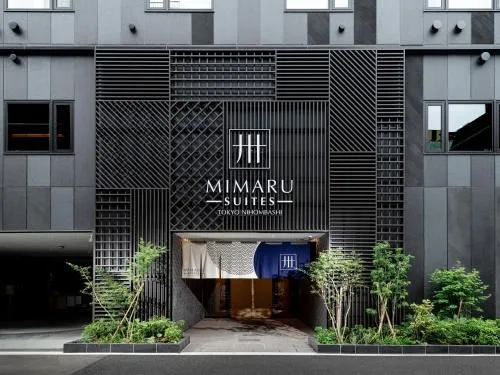
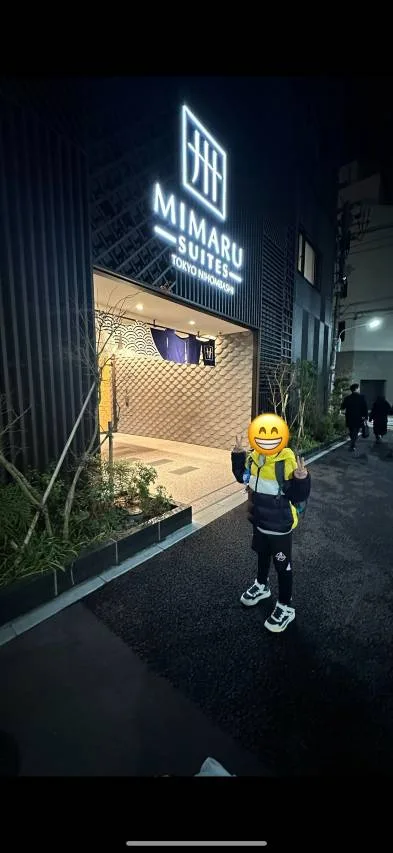
The official site lists about two minutes from Ningyocho Station; in practice it is about 160 metres. Navigate to 2-10-9 Horidomecho and the hotel sign; do not confuse it with MIMARU Nihombashi Suitengumae. With a stroller, use the station accessible lift route. The official access directions are worth checking against.
With luggage, a stroller or a wheelchair, take the street lift: Ningyocho Station exits A3 (Tokyo Metro) and A6 (Toei) both have lifts from the street to the ticket gates; use A3 for Kita-Senju-bound trains and A6 for Naka-Meguro-bound trains, then take the in-gate lift down to the Asakusa Line platform. Tokyo Metro publishes a monthly lift-outage list, so you can check whether the lift is running that day. Station accessibility facilities
From exit A3 or A6, walk toward Horidomecho for about two minutes to the hotel entrance, on flat pavements with no steps for a suitcase. Hamacho Station on the Toei Shinjuku Line is another option, about 640 metres away with a lift at exit A2; Ningyocho is still the closest, so I use it as the main route.
| Item | Hotel details |
|---|---|
| Address | 2-10-9 Nihonbashi Horidomecho, Chuo-ku, Tokyo 103-0012, Japan |
| Japanese name | MIMARU SUITES Tokyo Nihombashi |
| Check-in / check-out | Check-in 15:00–22:00 / check-out 07:00–11:00 |
Choosing a room: beds, living space and bathrooms
Compare beds, bathroom use and luggage space for everyone travelling together.room types and facilitiescan help interpret the table below. Room names on the booking platform may differ, so confirm the English room type when booking.
| Room / layout | Size and amenities | How to choose |
|---|---|---|
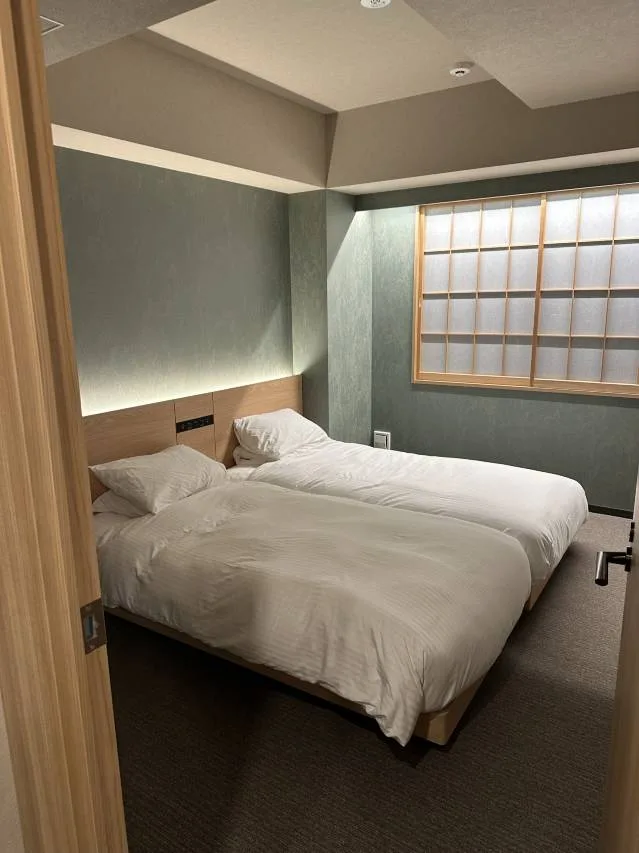
| Two-Bedroom Suite | 57 m²; four single beds, two toilets, a bathroom and separate shower room. Four adults + two children aged 6 or under share a bed free. | Four adults wanting separate bedrooms |
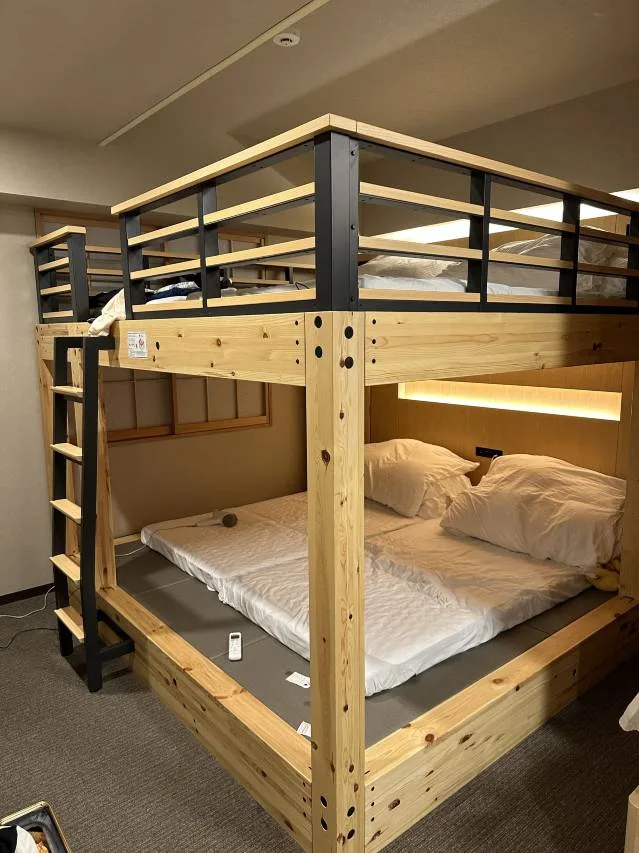
| Two-Bedroom Family Suite | 57–59 m²; two bedrooms including large bunk-bed arrangements; up to six adults + two children (two single beds + two loft beds + two futon sets). | Larger families; plan who sleeps in the bunks |
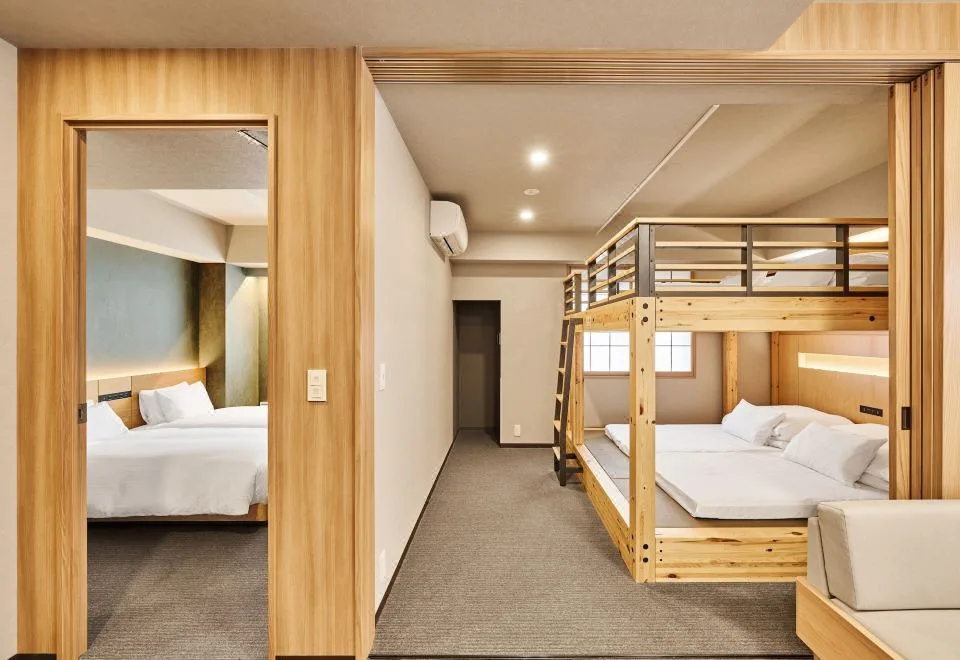
The bunk beds are a detail I pay attention to: they are generously sized, with USB charging ports on both sides, so a child on the upper bunk and an adult on the lower bunk both sleep well. The Family Suite futon sets need making up yourself, which takes a few minutes before bed. Towels are changed, rubbish is collected and supplies are topped up every day, so the room does not get messier over several nights.
The crib rules differ between sources, so I am writing both here for families with a baby: the booking page says no room takes an extra bed or a crib, while the official FAQ says cribs for children under two and bed guards are free to rent, in limited numbers, if you contact the hotel in advance. Extra beds are not available on either account, so I do not plan around one; for a crib, I email the hotel first and book once I have the answer.
Photos show separate bedrooms and bunk beds. How family members divide the rooms affects comfort considerably. Adults should choose acceptable bed types first and check that children are suited to upper bunks rather than booking on maximum occupancy alone.
I value two bedrooms and more than one bathroom area, especially helpful when the family gets ready together. Check the exact count of bathrooms, washrooms and toilets for the suite you book.
I divide the two room types this way: the Two-Bedroom Suite is 57 m², with four single beds across two bedrooms, two toilets, and a bathroom and shower room kept separate, so four people can get ready at the same time without queuing. The Two-Bedroom Family Suite is 57–59 m², with large bunk beds in addition to two bedrooms, sleeping up to six adults, and up to two children aged 6 or under share a bed free. The Family Suite futons come as two sets to make up yourself, so leave a few minutes before bed. The washbasin sits beside the laundry and toilet area, so washed clothes dry inside the room; the entry storage holds four pairs of shoes, so nobody crowds the doorway before going out. With two toilets and a separate bathroom and shower room, bathing and toilet use can happen at the same time, so mornings do not mean queuing.
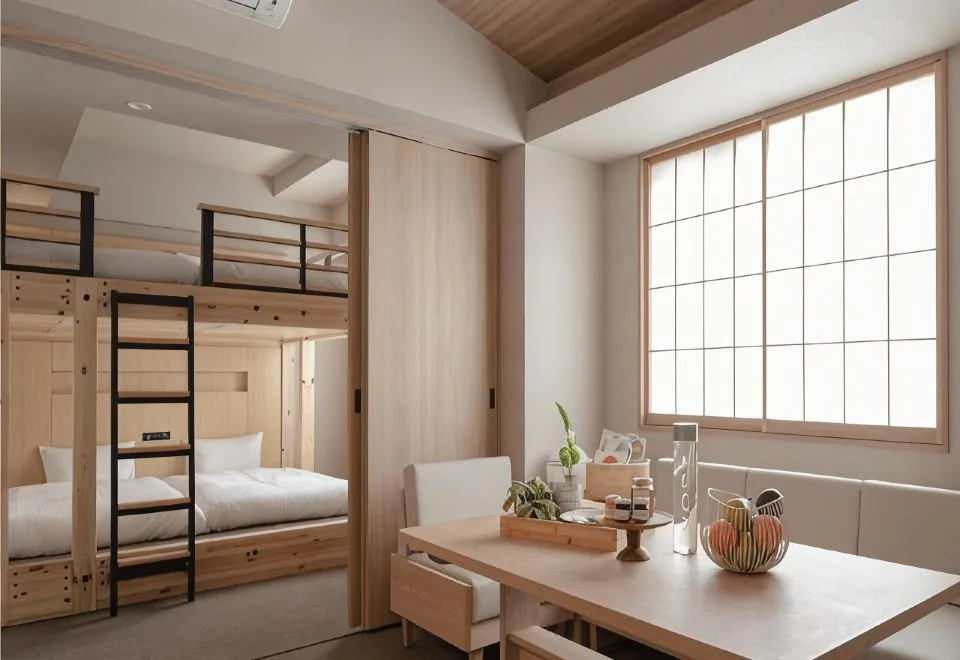
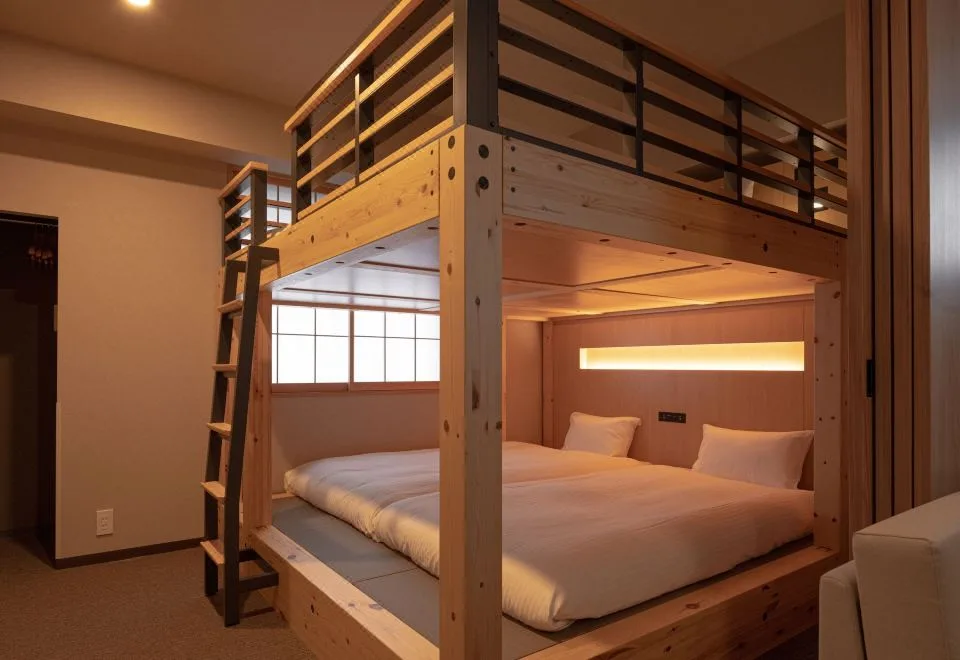
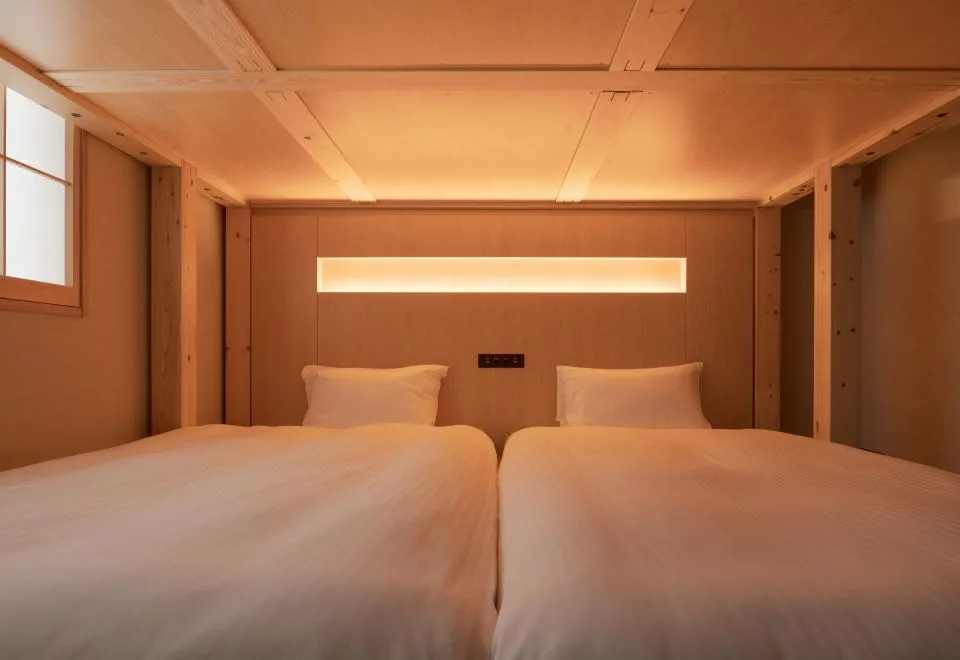
Guest room photos: how the space works in daily use
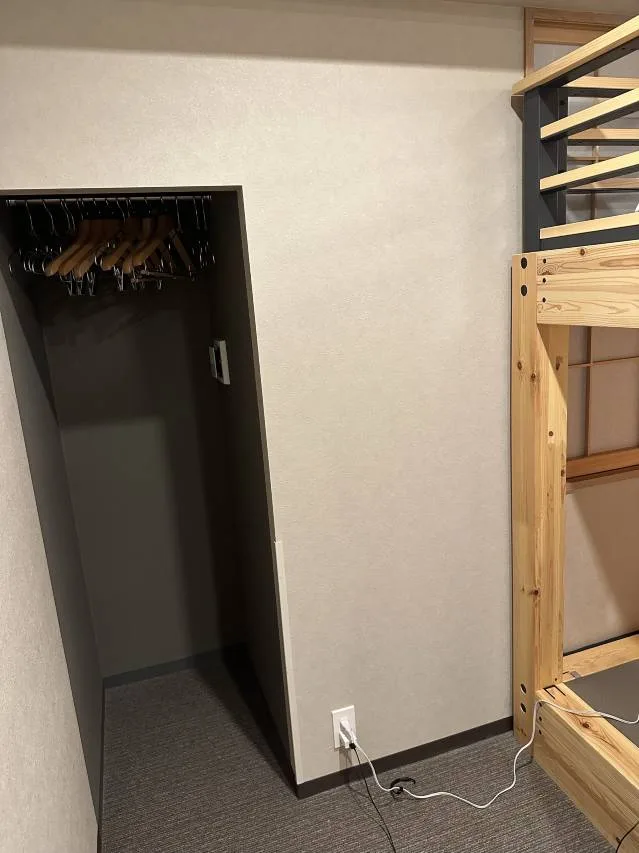
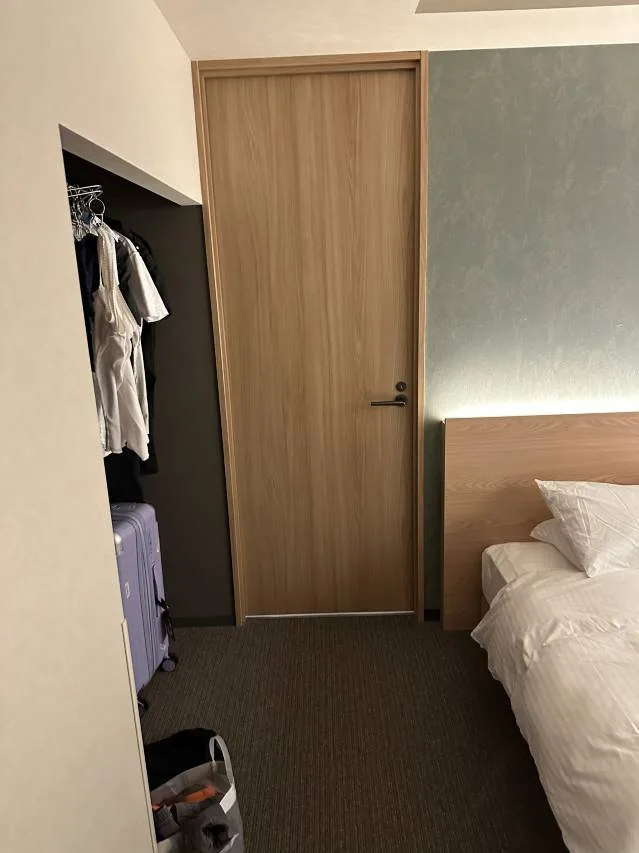
Guest photos show everyday use, especially the space around beds, desks and bathrooms. Photos may show different room types; judge your booking by its actual layout.
In the photos I look at three things: the laundry and toilet area beside the washbasin, whether the kitchen counter fits a family food, and whether the entry storage holds four people shoes. In the bunk-bed photo, check the height beside the bed — whether a child climbing down at night might bump into it.
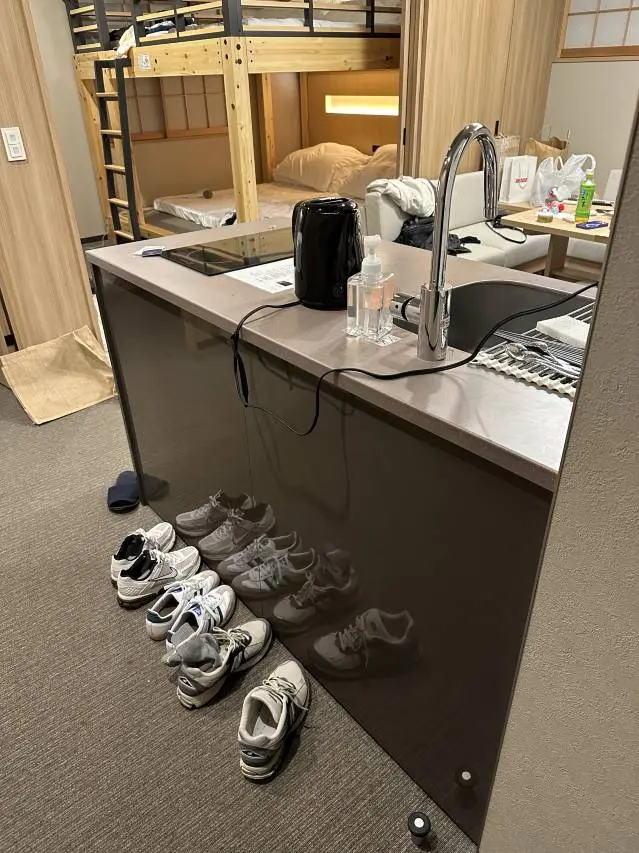
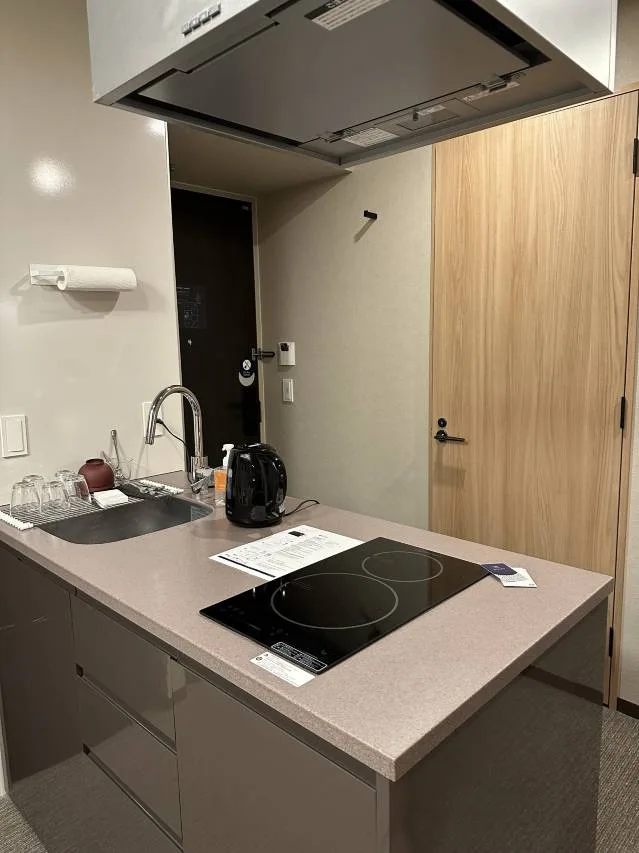
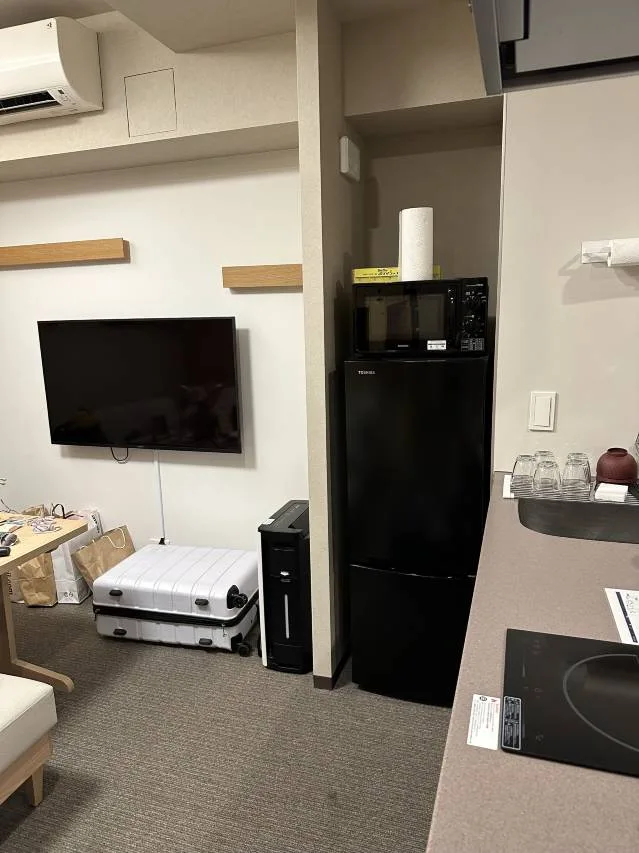
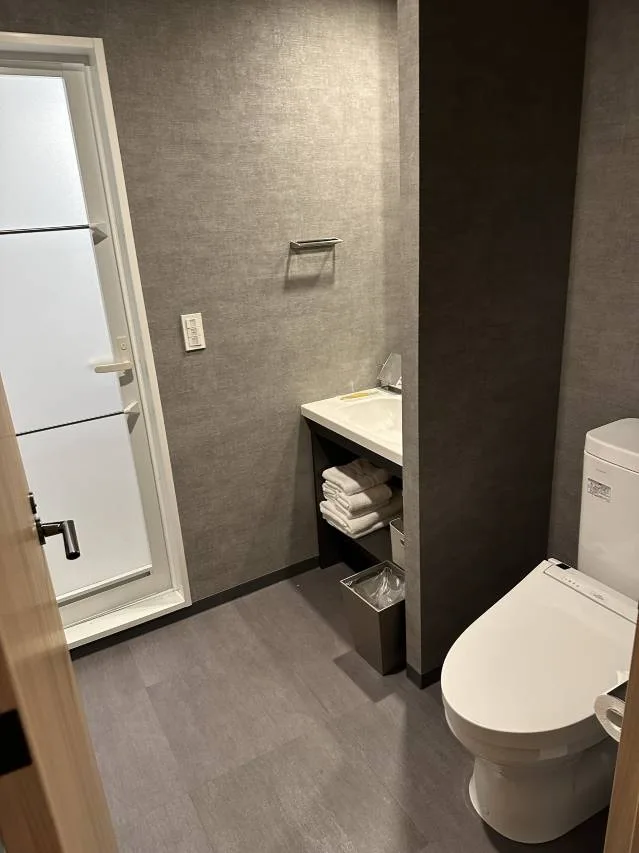
Amenities and services you will actually use
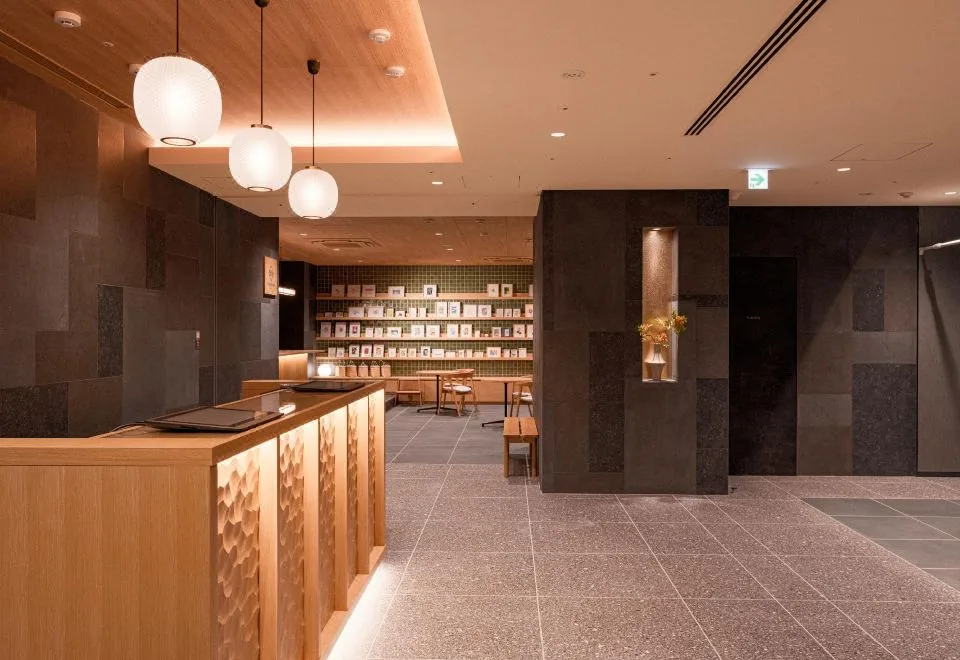
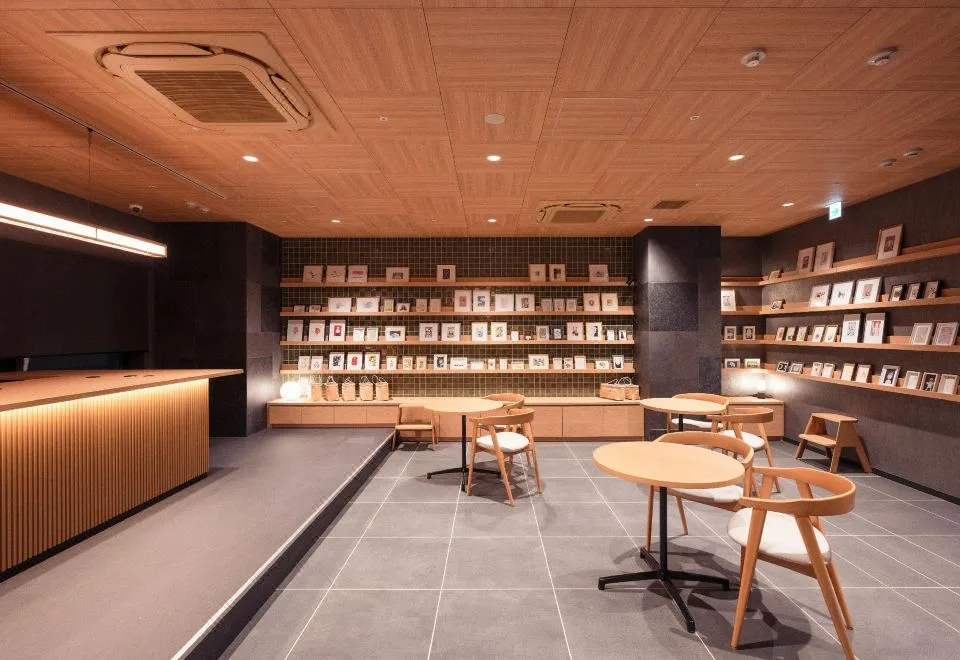
A kitchen, refrigerator, microwave and in-room washer-dryer make family routines easier. A crockery display in the common areas does not mean breakfast is served. Check which items are already provided and which can be borrowed when you arrive.
The kitchen is where I spend time every day: a refrigerator, microwave and tableware are provided, and the official site lists items to borrow — a rice cooker, toaster, extra tableware, pajamas and blankets — so ask the front desk instead of packing your own. The in-room washer-dryer means three nights without finding a launderette, and washed clothes dry inside the room.
Luggage storage is another point where the sources disagree: the booking page charges 500 yen per day, while the official FAQ says storage is free between 7:00 and 22:00 on check-in and check-out days, so ask before deciding. The hotel takes no deposit, does not allow pets (service animals excepted), and the guest checking in must be at least 18; public Wi-Fi is free, and translation tools can be borrowed from the front desk.
For the common areas, the guest floors are entirely non-smoking, with a separate smoking area; rooms have a water purifier and a fresh-air system, and the lift serves every floor. Taxis can also be arranged through the front desk, so leaving with large luggage does not mean flagging one down on the street.
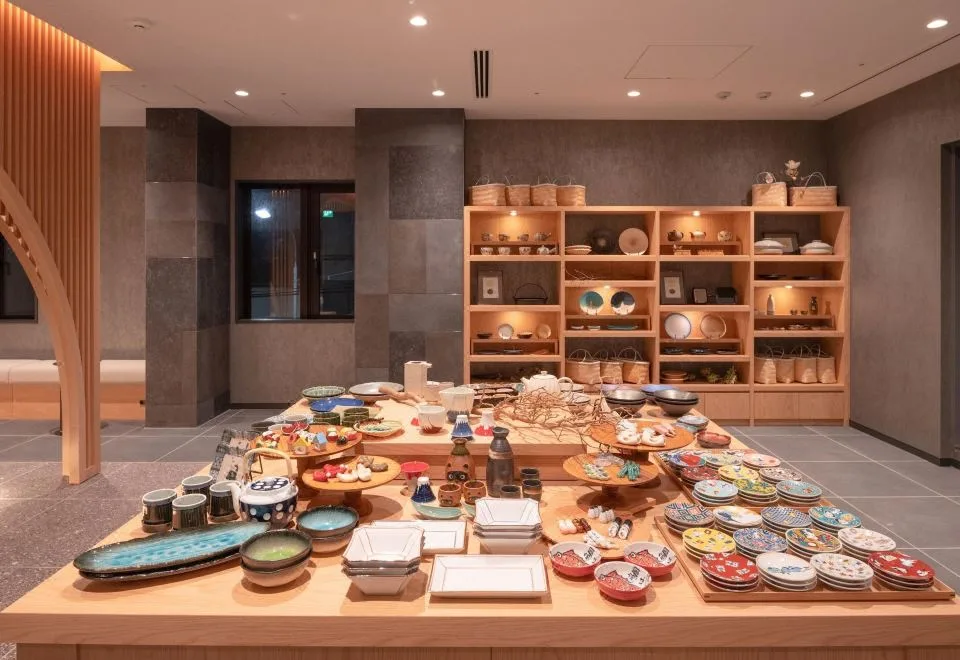
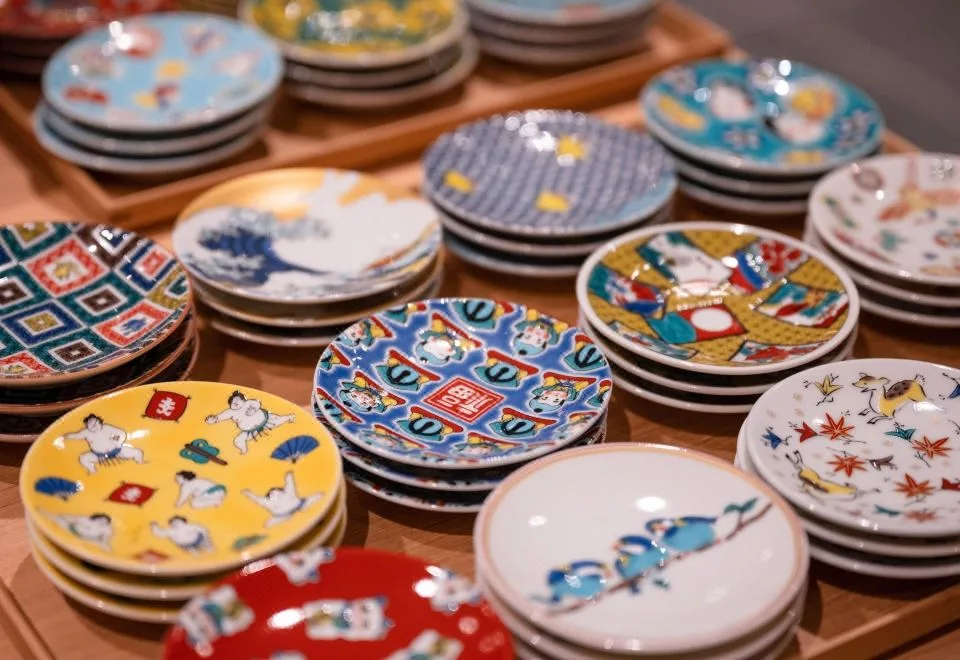
Should you add breakfast? Think about your morning
The hotel does not provide breakfast. I would buy ingredients the evening before so everyone can eat at their own wake-up time, then head out together. Families who want to try different Ningyocho cafés are not tied to hotel dining hours.
A FamilyMart is a few steps downstairs for the next morning breakfast, late-night snacks and supplies; Ningyocho also has cafés and a wagyu yakiniku restaurant, plus a large drugstore supermarket nearby. Eating somewhere different each day means no hotel breakfast hours to keep to.
For the morning, my approach is to buy the night before: a FamilyMart is right downstairs, about ten metres from the hotel, for onigiri, bread and drinks; to cook in the room, use the kitchen rice cooker with food bought the evening before. For something hot, cook rice in the rice cooker and toast bread, and eat together at the dining table instead of rushing outside. Onigiri and bread bought the night before can be eaten straight at the table, with no waiting for shops to open. To change things up, find a café out for breakfast and walk slowly back.
Nearby walks: make time for the neighbourhood
Explore Ningyocho and Nihombashi in shorter walks and return to rest when needed. For families, a morning in the old streets and an afternoon outing may use the suite better than rushing everyone on distant journeys each day.
Continue with a Ningyocho walking route and connect the neighbourhood with your stay.
Nihombashi is about 600 metres away, and Amazake-yokocho is also within walking distance — start with the old streets in the morning, rest in the room when tired, then head toward Nihombashi in the afternoon.
Nihombashi is about 600 metres from the hotel; start the morning in Amazake-yokocho, where the old shops are still quiet and the streets are easy to walk, then head toward Nihombashi in the afternoon and return to rest when tired. Both walks are short, with the suite in the middle, so coming and going several times a day costs little effort. Ningyocho is quiet in the evening too, so a walk back leads straight into the room with no train to catch.
Short stays, longer stays and my recommendation
On a single night it may be hard to use all the suite’s facilities. For stays of three nights or more, particularly with children or a larger group, separate bedrooms, laundry and a shared dining table become much more valuable.
For a family needing two bedrooms and shared living space, I would shortlist MIMARU SUITES. Before booking, verify guest count, exact suite, bedding, no-breakfast arrangement and arrival time.
Check-in runs 15:00–22:00, check-out 07:00–11:00, and the front desk is open 07:00–22:00, not 24 hours. Arriving after 22:00, or leaving before 7:00, needs a message to the hotel in advance; reaching the hotel before arrival is sometimes difficult, so I email early and state my arrival time clearly.
Check-out runs 07:00–11:00, so there is no need to rush out early; pack the night before, and on the last morning there is still time for a walk nearby before heading to the station.
Pros and cons at a glance
Pros
- Every room is a two-bedroom suite from 57 m², with a living room, dining table, kitchen and in-room washer-dryer in one place — a family can live together for several nights without crowding.
- Ningyocho Station is about a two-minute walk (about 160 metres), and exits A3 and A6 both have street lifts, so luggage, strollers and wheelchairs are easy.
- The bunk beds are generously sized with USB ports on both sides, and up to two children aged 6 or under share a bed free.
- A FamilyMart is a few steps downstairs, and Ningyocho dining is close, so breakfast is bought and cooked on your own schedule.
- Towels are changed, rubbish is collected and supplies are topped up every day; no deposit is taken.
Cons
- No breakfast is served; breakfast has to be bought and cooked by the family.
- The crib rules disagree: the booking page says no room takes a crib, while the official FAQ says cribs for children under two are free to rent — ask first.
- The front desk runs 07:00–22:00 only, check-in ends at 22:00, and reaching the hotel before arrival is sometimes difficult.
- No room takes an extra bed, so six or more people must plan the beds carefully; the Family Suite futons need making up yourself.
- No parking of its own, so drivers must find parking elsewhere; the price is not low, and a single night is poor value.
Information checked: 23 November 2026.