
TOKYO / CHUO
Millennium Mitsui Garden Hotel Tokyo / Ginza
Millennium Mitsui Garden Hotel Tokyo – Ginza
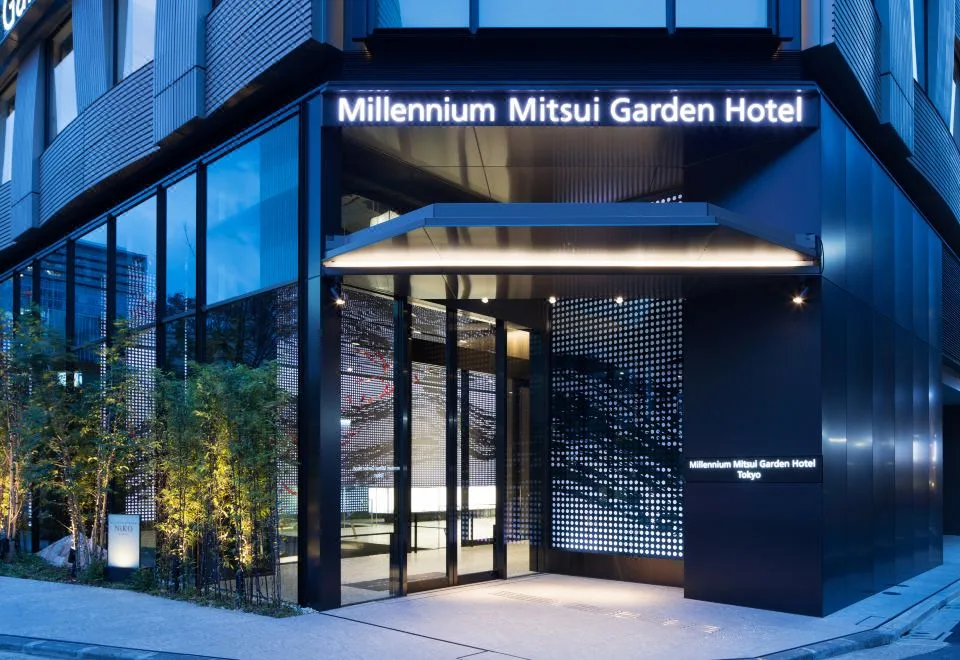
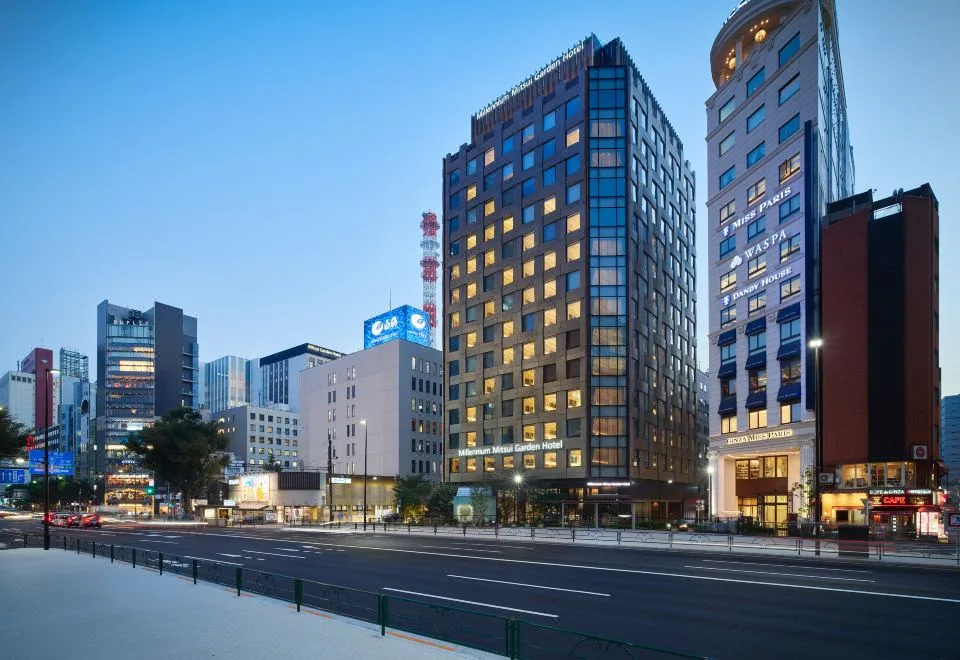
Millennium Mitsui Garden Hotel Tokyo is a strong choice if your trip revolves around Ginza shopping and you want your subway access and hotel to connect conveniently. What I like is how easily you can return to drop off bags, shower and rest. Still, room size for two suitcases and the breakfast schedule need a little more thought; a convenient location does not solve every detail.
Reasons to choose it and points to accept
Why it works
- Higashi-ginza is close to the heart of Ginza shopping, making it easy to return and leave bags.
- Standard rooms generally separate the bath, toilet and washbasin into three areas, helpful for two people getting ready.
- Breakfast combines a choice of main dish with a buffet section; compare breakfast-inclusive rates if you enjoy a complete morning meal.
What to consider
- Floor space varies substantially by bed type. Do not judge whether two large suitcases will fit from just one promotional photo.
- The hotel sits near lively streets, so request a quieter room if you are sensitive to noise.
- When traveling with children, select the room using their actual ages and the full party size; do not assume every double room permits extra guests.
Choosing a room and luggage space
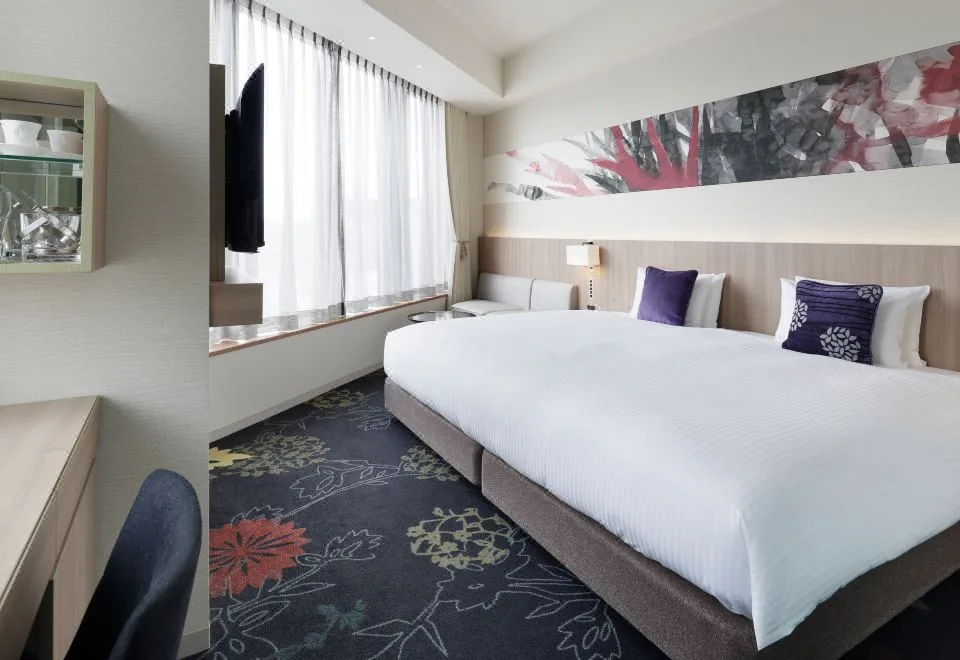
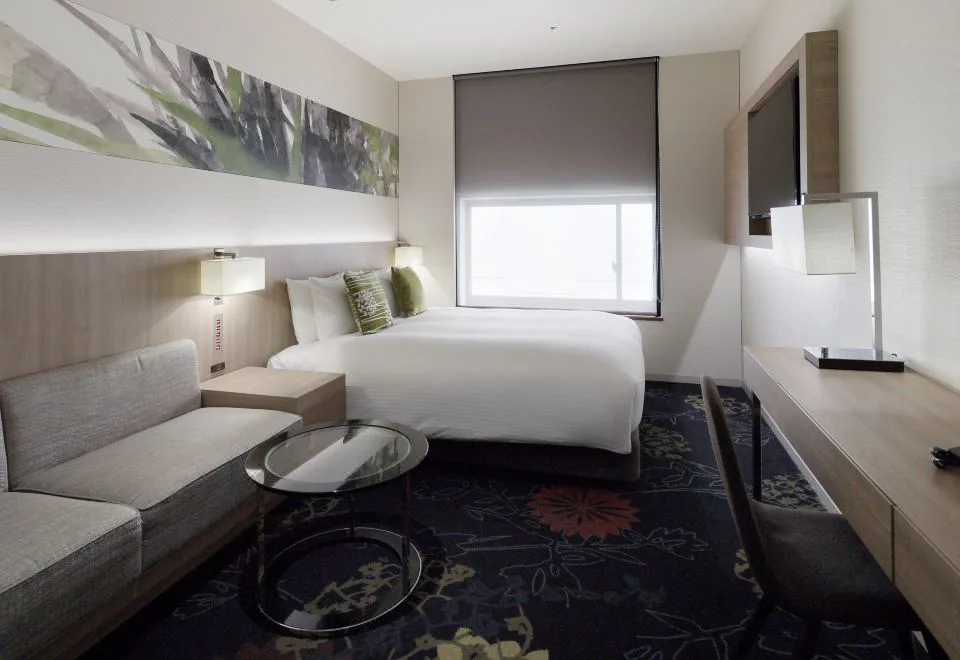
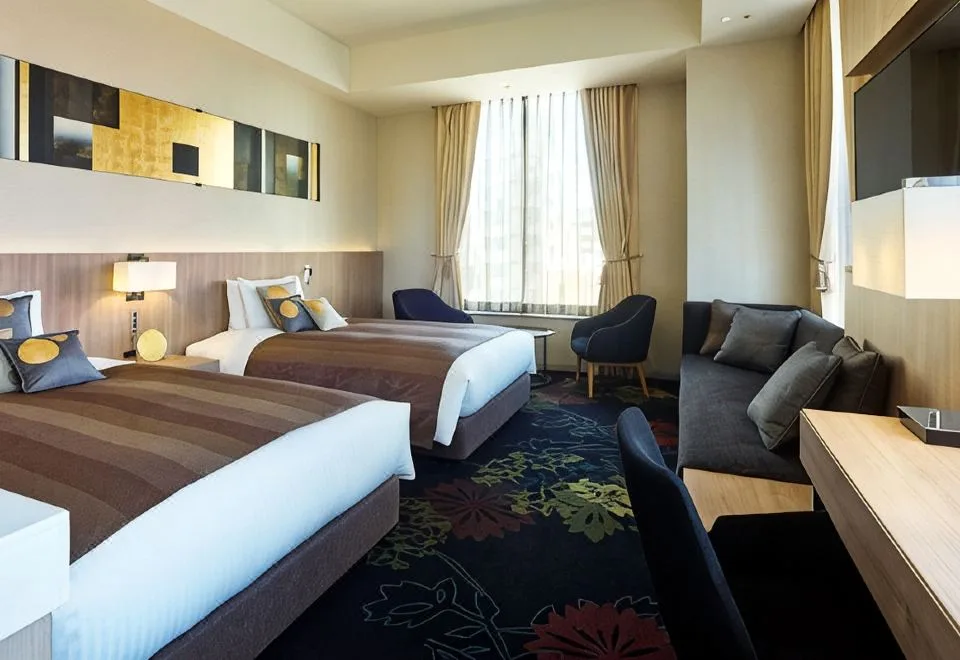
The hotel says regular rooms have a separate bath, toilet and basin, with Accessible Double an exception. This is very practical for two guests: one can shower while the other gets ready at the sink. Bed configuration still matters; doubles and twins leave different amounts of floor space. With a child or third person, enter the full ages and guest count and confirm a triple or third bed instead of asking after arrival whether everyone can squeeze in.
I checked the room sizes against the official site: Standard Queen with bathtub 20.0㎡ or with shower 21.5㎡, Superior Twin 26.0㎡, Superior WideKing 31.4㎡ for up to three guests, Deluxe Twin Corner 37.7㎡, Deluxe Triple 37.7㎡ with three beds, Accessible Double 21.8㎡. All 329 rooms are over 20㎡ with 3-metre ceilings and 1600 mm double beds, which feels roomier than the average Ginza business hotel.
For two large cases, look at the bed type before the floor area: the 31.4㎡ Superior WideKing sleeps three and opens two large cases comfortably, while three people should look at the 37.7㎡ Deluxe Triple with three separate beds. The Accessible Double is the exception to the three-point separation, so ask about its bathroom layout when booking.
I also checked what is in the room: a television, an air purifier with humidifier, a shower toilet, an ion dryer, an electric kettle, a safety box, an iron and a refrigerator; the amenities run to a toothbrush set, shaving kit, shampoo and conditioner, body soap, slippers, nightwear, basic cosmetics for women and mineral water, so there is little you need to bring yourself.
Breakfast: choose a plan that fits your morning
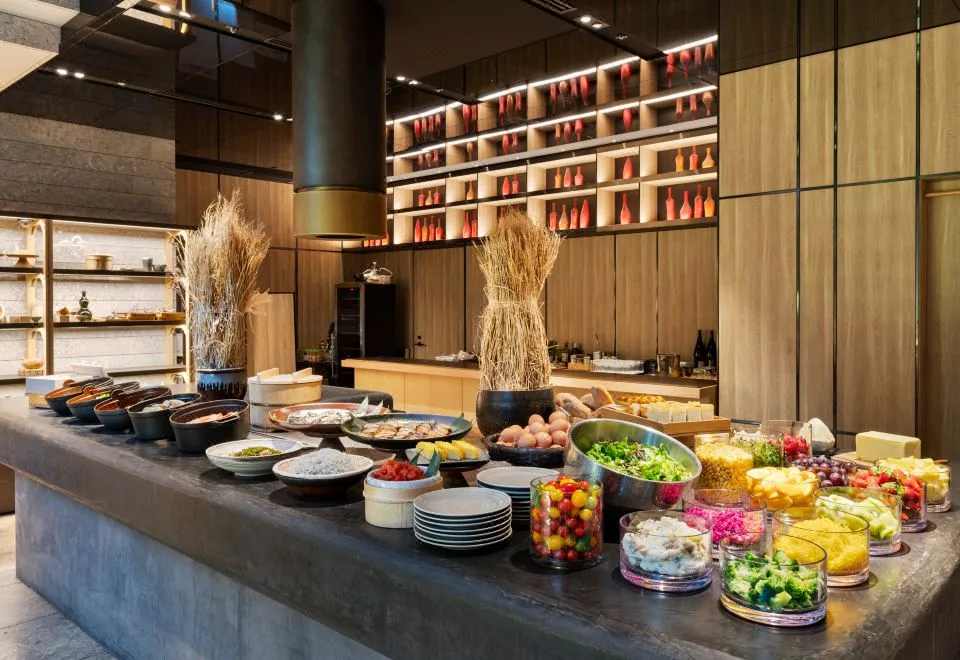
ZEN HOUSE offers six choices of main dish alongside a Japanese-and-Western buffet section, rather than an entirely self-service breakfast. If you enjoy a warm main course plus salad and bread, breakfast may be worth adding. If you prefer different dishes every morning, it can feel repetitive over several days. For mornings exploring Tsukiji, keep a room-only option and eat out.
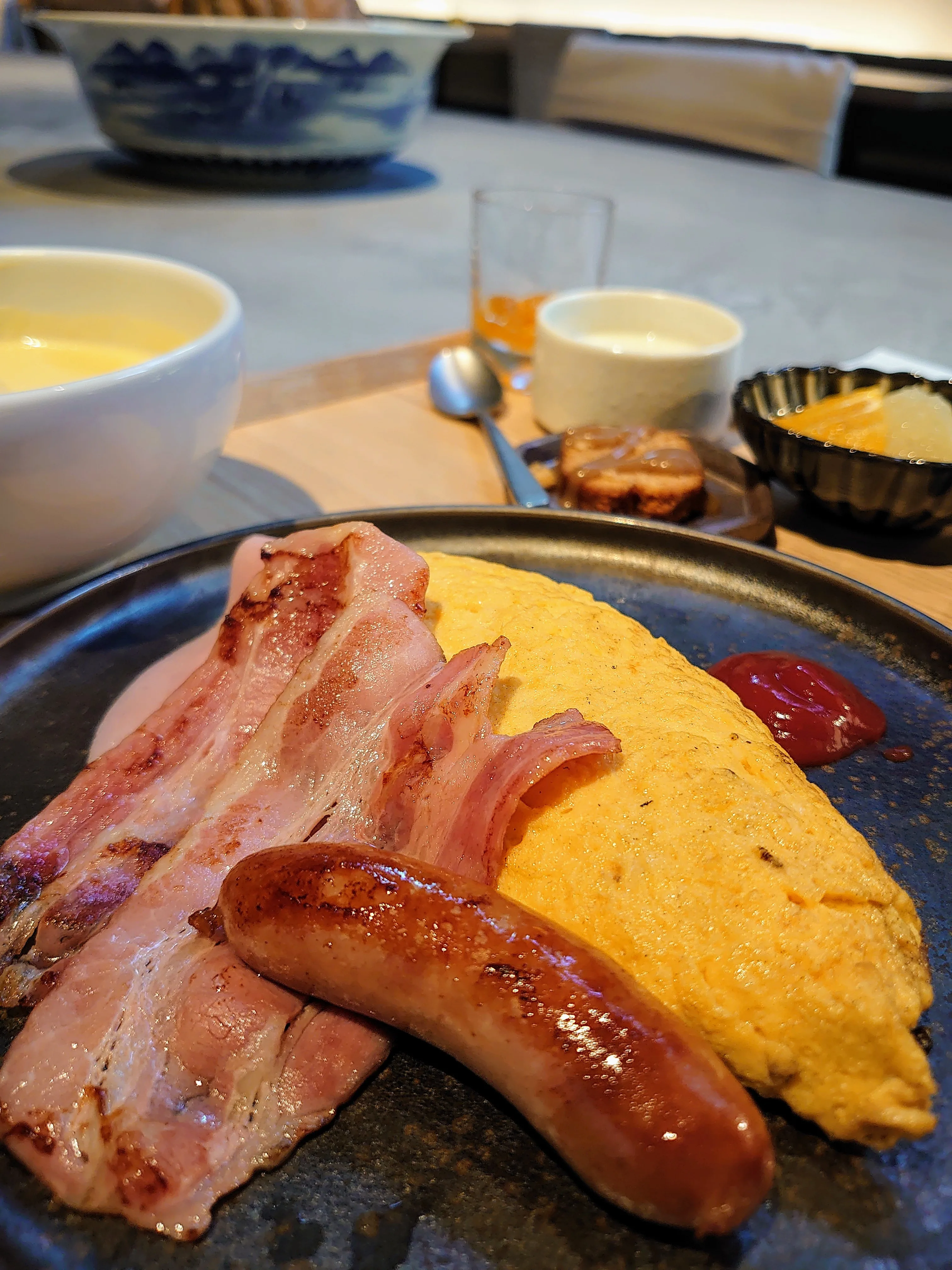
The six mains are what I look forward to most: Japanese beef sukiyaki, grilled eel with broth and stem wasabi, and Xian Dou Jiang, a Taiwanese savoury soy milk soup that works for vegans; the egg dishes come three ways — omelet, scrambled and fried — made with Hitachi Farm Eggs from Ibaraki. Beyond the mains, the buffet runs to about 50 varieties.
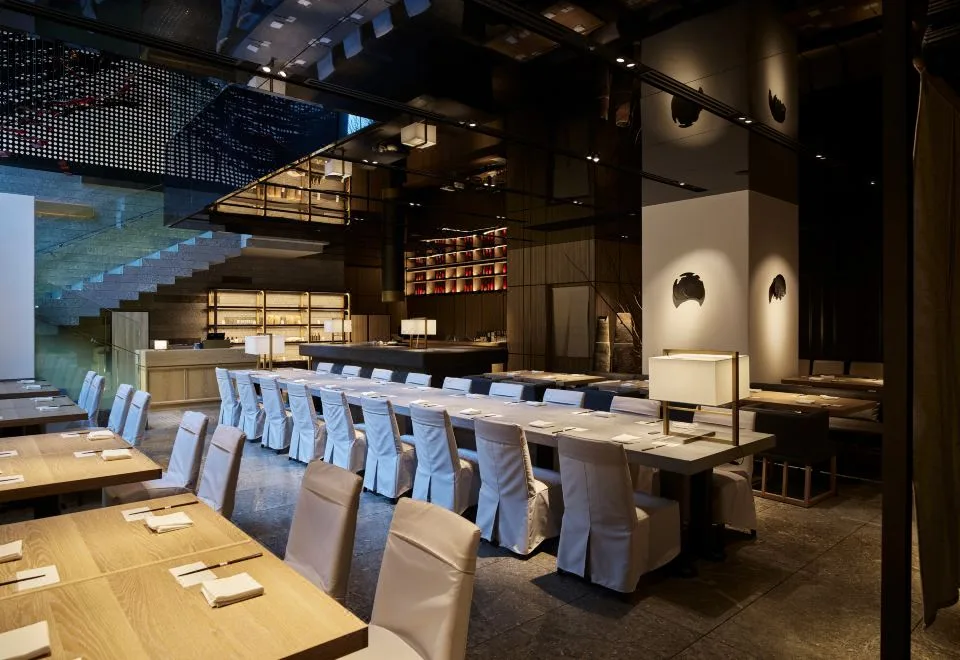
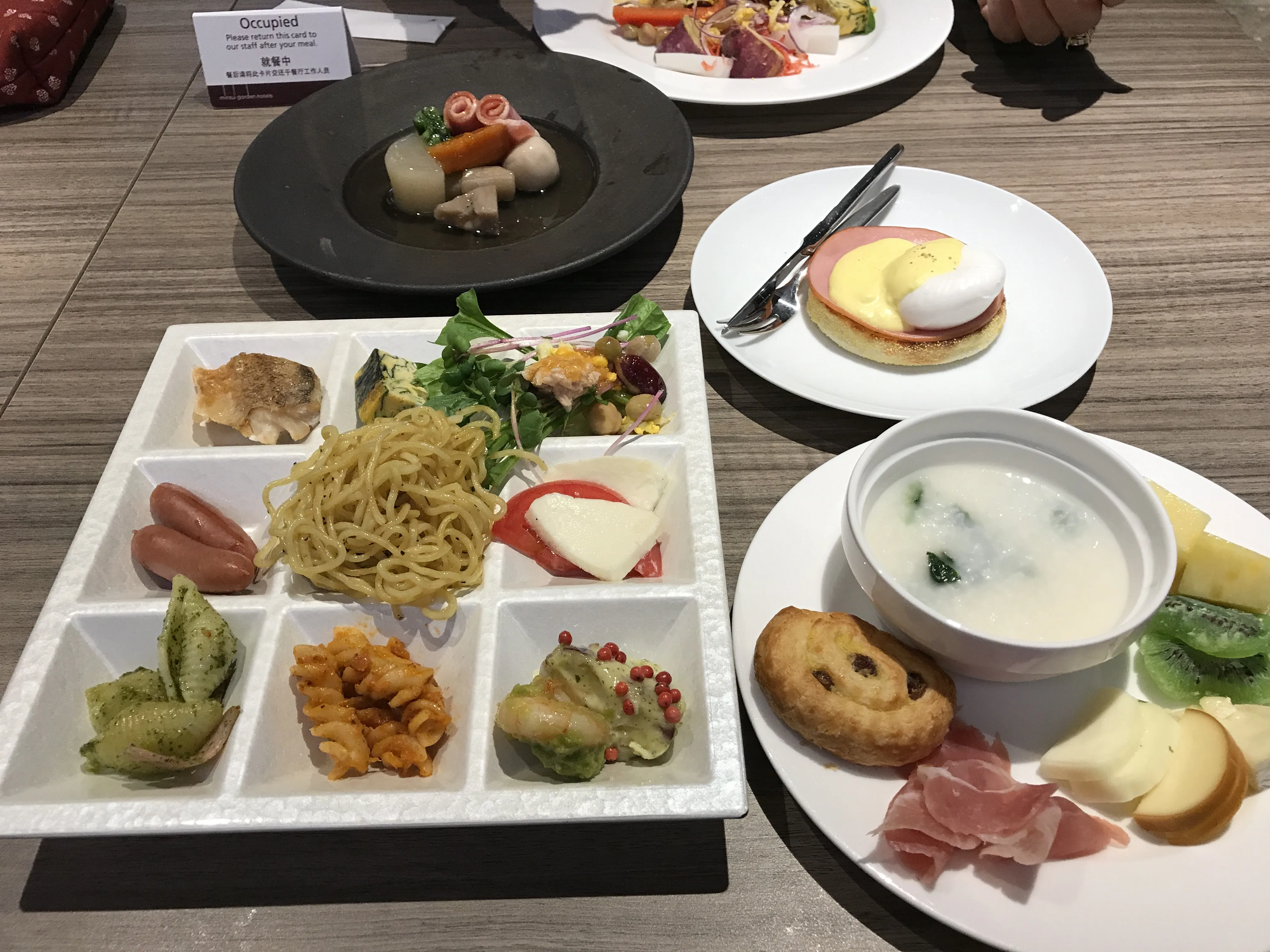
The buffet covers Western deli, noodles and steamed dishes, and Japanese grilled fish, rolled eggs, kelp-seasoned white fish, Shizuoka boiled whitebait, spicy pollack roe, ochazuke with warm broth and Sendai miso soup. Bread is baked the same day — croissants and herb focaccia, wheat and rye loaves, butter you cut yourself and whipped browned butter — and the salad uses Miura outdoor vegetables and Inca-no-mezame potato salad, with seasonal fruit to finish. Breakfast runs 06:30–10:30 in ZEN HOUSE on B1F, last entry 10:00, at ¥3,630 for hotel guests and ¥3,850 for general visitors, with 68 seats; the same restaurant serves lunch 11:30–15:00, café 15:00–17:00 and dinner 17:00–22:00.
ZEN HOUSE sits on B1F with 68 seats, all non-smoking, and semi-private seating if you want a quieter meal — ask in advance. The chef is Nobutoyo Nakajima, and the menu leans on seasonal ingredients; lunch and dinner run in the same restaurant, so three meals a day are possible without leaving the building.
Location, transit and rolling luggage
The hotel lists Higashi-ginza Station as about a one-minute walk (under 100 metres), and Ginza Station works too; Ginza-itchome Station is about 550 metres. With luggage, check the elevator and street-level direction for the specific line you use — a shared station name does not mean a shared platform entrance. For Haneda, check the train destination and through service; the return platform may differ from the arrival one, so check again before you leave.
At Higashi-ginza, the Miharabashi-side gates lead to the A1 elevator, in place since 2010, which runs straight to street level. The station has two elevators and a secured barrier-free route, so a rolling suitcase does not have to rely on stairs. The two routes reach the street at different places, so choose by your platform and the hotel position rather than the shortest stairway.
Ginza-itchome Station is about 550 metres, so the Yurakucho Line is an option for the return trip too; Nihonbashi is about 1.4 km and JR Hamamatsucho Station about 2.3 km, an easy walk or a short ride. Ginza Station works as well, and walking back from Ginza-dori after shopping is straightforward.
Higashi-ginza Station also has escalators, from the central ticket gate to Exit 3 and from the platform to the central gate; the Toei official page lists two elevators, two escalators and a barrier-free toilet. The two Asakusa-line directions use separate platforms with no connection inside the gates, so changing direction means exiting and re-entering — check the platform before you travel.
Address: 5-11-1 Ginza, Chuo City, Tokyo 104-0061, Japan
Shopping and eating in the neighborhood
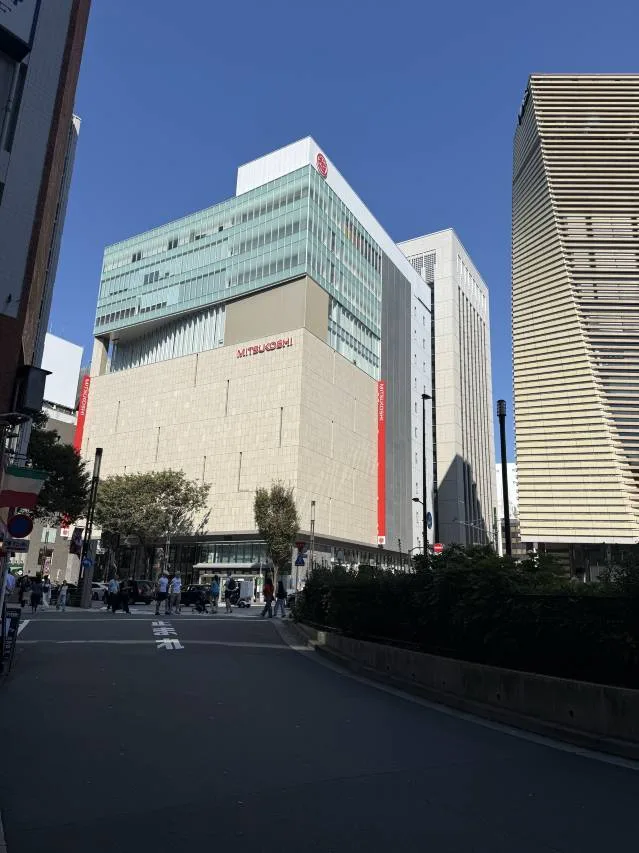
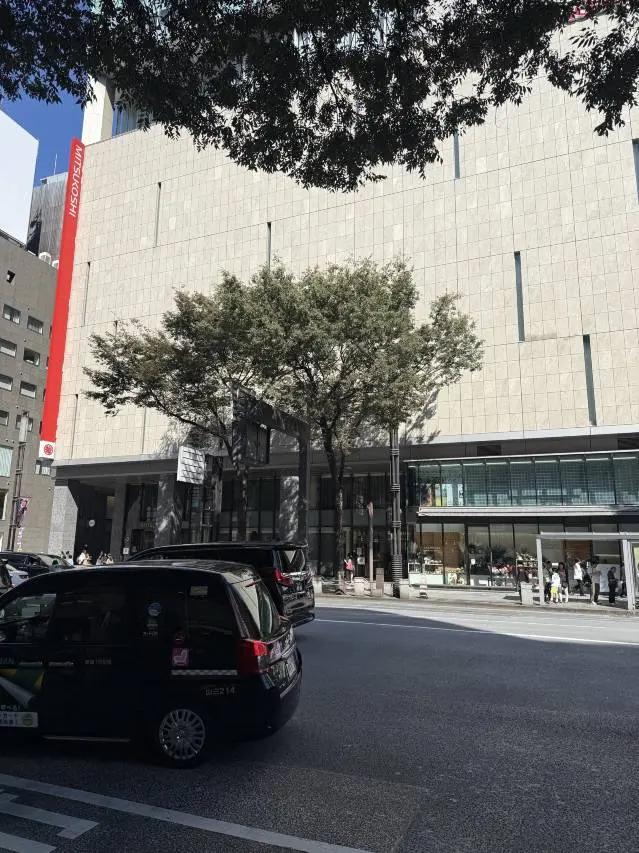
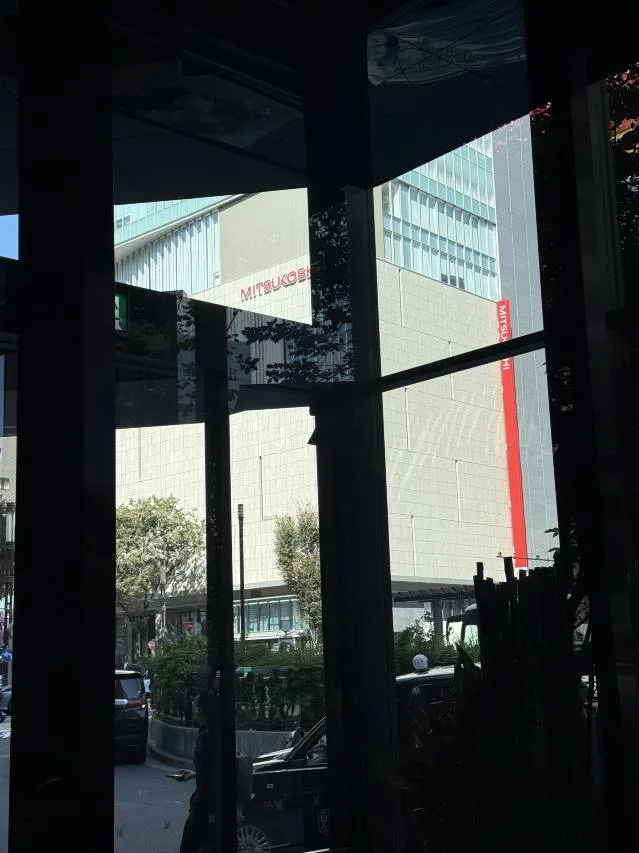
I split Mitsukoshi, GINZA SIX and Ginza main shopping streets into two outings, return to the hotel to drop off bags, then head out for dinner. Give Tsukiji Outer Market a separate half-day to browse and eat rather than repeating the same rushed route daily. This location really helps on long stays, when traveling with older relatives, or whenever you do not want to carry heavy bags all day.
For a nearby half-day outing, see the Ginza walking guide.
The Art Aquarium Ginza is about 210 metres and the Tsukiji Outer Market 470 metres, so a morning walk there for breakfast and back to the room works well; Hibiya Park is about 1.0 km and the Imperial Palace about 1.5 km, both walkable. Tokyo Tower is about 3.3 km and Shiba Park about 1.8 km — a short ride beats walking for those.
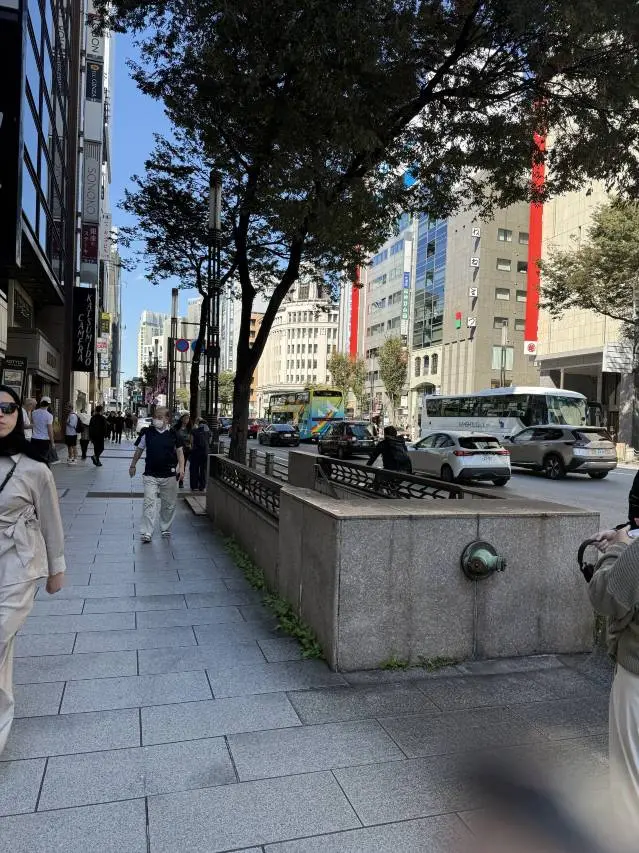
Kabuki-za Theatre is close by, and the walk back to the hotel after an evening show needs no train; Ginza-dori and Namiki-dori are both within walking distance, so switching from department stores to a quieter street is easy.
Mitsukoshi Ginza and GINZA SIX are both within walking distance, and dropping bags in the room between outings is the practical benefit of staying in Ginza. The Wako clock tower on Ginza-dori is an easy landmark; for a quieter street, Namiki-dori is calmer than Ginza-dori and good for a stroll.
Facilities and services you may actually use
The separated bathroom arrangement is one of the most practical everyday features, alongside the lobby, restaurant and amenities. The hotel says beds are made, towels replaced, rooms cleaned and rubbish removed daily; sheets are changed every three days by default, with daily replacement available on request. Knowing this schedule makes it easier to plan your rest on a longer stay.
The practical extras: ZEN HOUSE restaurant on B1F, the lobby, free public Wi-Fi, luggage storage, currency exchange, a wake-up call, elevators, laundry service, step-free access with a wheelchair on site, non-smoking floors with a separate smoking area, and a fresh-air system. The front desk works in English and Japanese, and Chinese guidance is available in the building, so asking for directions is easy.
Check-in starts at 15:00 and check-out is before 12:00, with the front desk staffed around the clock, so a late arrival is no problem. Luggage storage is free, so an early arrival or a late departure still leaves the day open for Ginza. Pets are not allowed, and check-in requires guests to be at least 18.
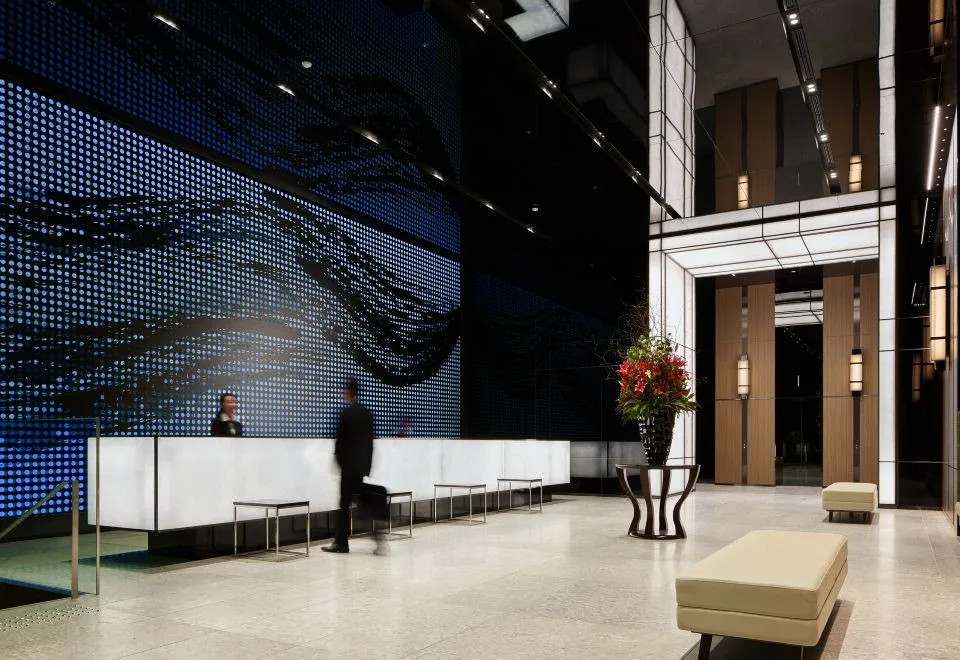
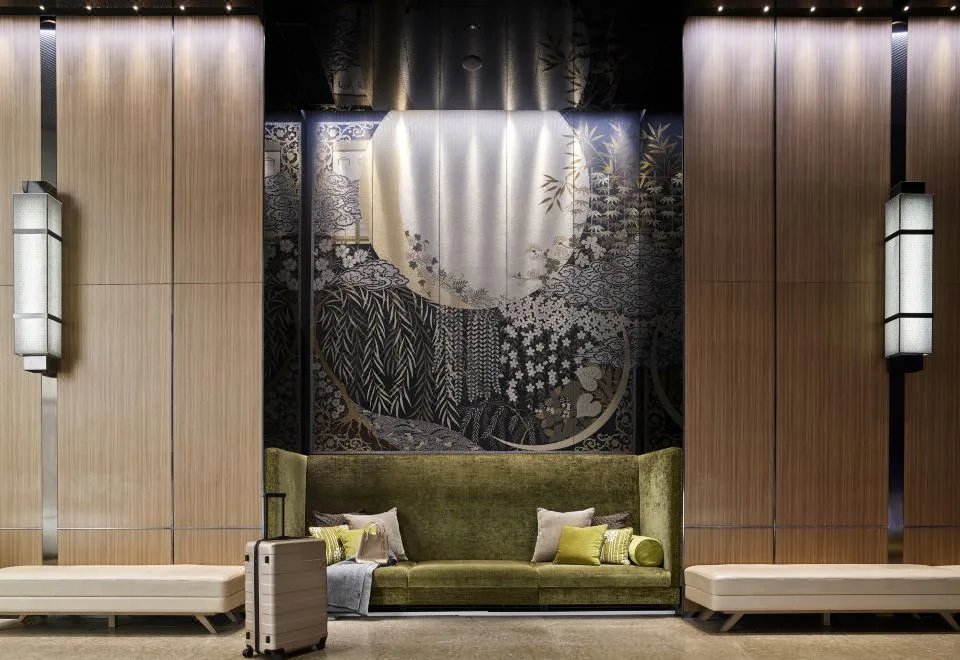
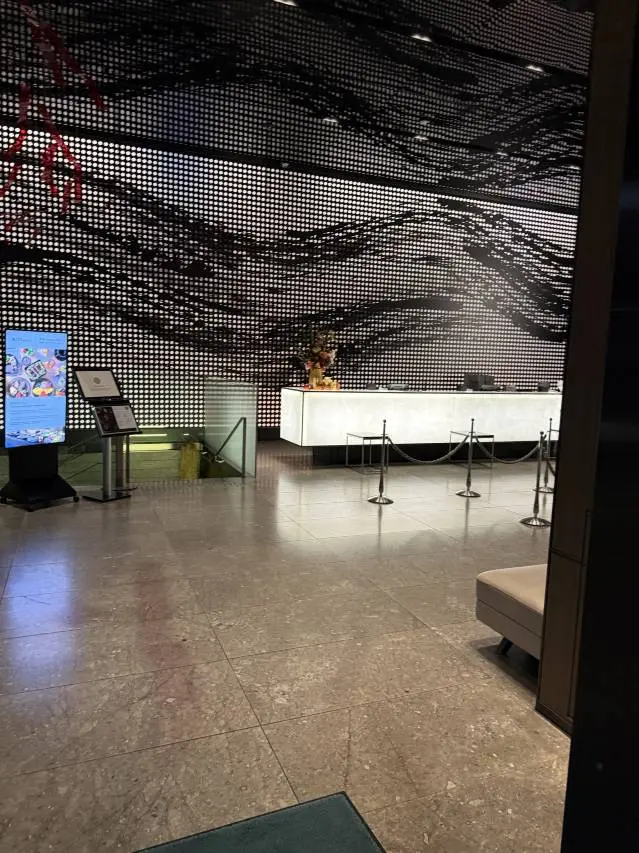
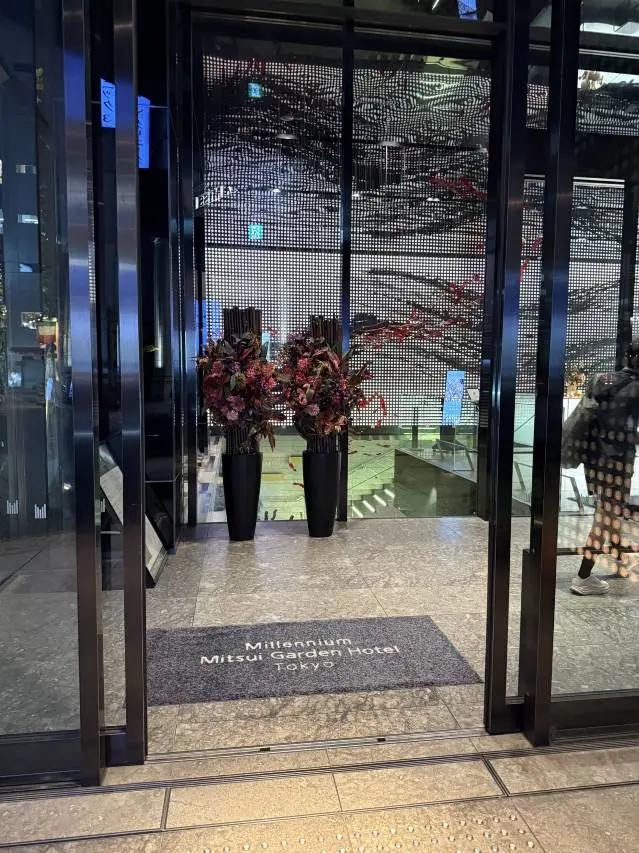
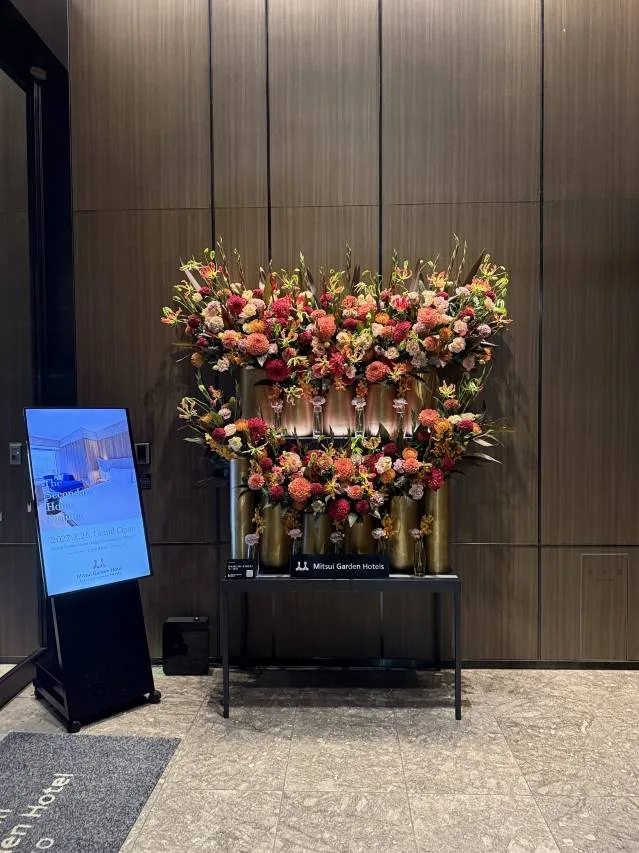
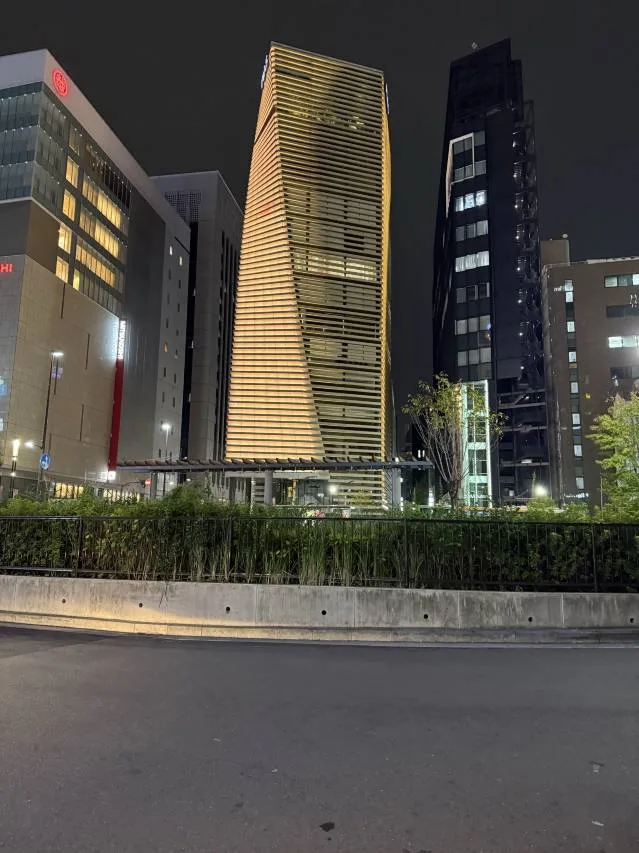
I looked at the lobby photographs too: the art wall, the flowers and the glass entrance doors make coming back in the evening feel pleasant. After a day of shopping, the lobby seating is a good place to wait for a companion or plan the next outing.
One or two nights versus several nights
For a short visit, the location alone is a benefit. For longer stays, I choose the bed type that lets me open my luggage comfortably. A twin room holds two large cases with room to spare, while a basic double may fit only one opened case — check your own cases against the room type before booking. On a seven-night shopping trip, extra walking space and storage may be more valuable than breakfast every day.
For a seven-night stay, I split the breakfast rhythm: some mornings in the hotel, some mornings in Tsukiji — ¥3,630 a head for seven mornings adds up. Laundry service takes care of the washing, and free luggage storage means the departure day still has half a day of shopping in it. With children, remember that all ages are welcome but a child without an extra bed can still be charged, so add the child count when booking for an exact price. Tokyo accommodation tax is collected separately at check-in: ¥100 per person per night for room rates of ¥10,000–¥14,999, and ¥200 for ¥15,000 and above.
Three people should confirm the occupancy limit first: the 37.7㎡ Deluxe Triple with three beds is the most direct choice, while the 31.4㎡ Superior WideKing sleeps three on one wide king bed, so think through the sleeping arrangement first. Extra-bed and crib policies vary by room type, so check the room details when booking rather than assuming every room can add a bed.
Accommodation details worth thinking about before booking
Location and cleanliness work well for me, while room size and street noise need a decision up front. With children, I select the room by actual ages and the full party size rather than guessing child rules from the name double room; specifying the full party, room needs and wake-up time early is easier than sorting it out after arrival.
Street noise is the first thing I think through — the hotel sits near lively streets, so if you are sensitive to sound, ask for a quieter room when booking. Whether breakfast at ¥3,630 is worth it every day depends on the headcount and the number of mornings; and floor space varies a lot by bed type, so two large cases belong in a twin or a room of 31.4㎡ or more, while a basic double may fit only one.
In one sentence: location and room space are the strengths here, while breakfast price and street noise are the two things to think through before booking. If Ginza shopping is your main purpose and you are happy to pay more for breakfast, this hotel belongs near the top of the list; if you need an early start every day, work out whether breakfast is worth including first.
How to decide
If Ginza shopping is my main purpose, Millennium Mitsui Garden would be high on the list. Two guests should check bed arrangement and luggage clearance; three guests should confirm the occupancy limit first. Choose breakfast according to whether you enjoy the main-course-plus-buffet format, and save some mornings for Tsukiji.
Pros and cons at a glance
Pros
- Higashi-ginza Station is about a one-minute walk (under 100 metres) and Ginza-itchome Station about 550 metres, so shopping bags are back in the room within minutes.
- All 329 rooms are over 20㎡ with 3-metre ceilings and separated bathrooms; the 31.4㎡ Superior WideKing sleeps three, and the 37.7㎡ Deluxe Triple has three beds.
- ZEN HOUSE breakfast on B1F offers six mains and about 50 buffet varieties, 06:30–10:30, at ¥3,630 for hotel guests.
- A 24-hour front desk, free luggage storage and a wake-up call; the front desk works in English and Japanese, with Chinese guidance in the building.
- Step-free access with a wheelchair on site, elevators and non-smoking floors; the A1 exit at Higashi-ginza Station has an elevator to street level.
Cons
- Breakfast is ¥3,630 per hotel guest, which adds up over seven mornings; leave before 7:00 and there is no breakfast.
- The hotel sits near lively streets, so ask for a quieter room if you are sensitive to noise.
- A child without an extra bed can still be charged, and extra-bed and crib policies vary by room type — three people must check the bed count of the room itself.
- Floor space varies a lot by bed type: a basic double may fit only one opened case, so two large cases need a twin or a room of 31.4㎡ or more.
Information last checked: 2026-11-22