
TOKYO / CHUO
KOKO Hotel Premier Nihonbashi Hamacho
Koko Hotel Premier Nihonbashi Hamacho
Near Hamacho Park: twins and Toei Shinjuku Line access
Is this hotel right for my trip?
KOKO Hotel Premier Nihonbashi Hamacho suits travellers who want quieter Tokyo streets without being too far from the subway. Hamacho Park, Meijiza Theatre and residential blocks feel different from Ginza. The key choices are which line you use each day and whether two people need the extra room of a Twin.
I treat this hotel as a base beside Hamacho Park, with 223 rooms in a quiet residential street. Walk to Ningyocho and Meijiza in the daytime, then come back at night — a slower rhythm than staying in the middle of Ginza.
Before you choose this hotel, settle two things: whether your daily travel runs on the Toei Shinjuku Line or the Asakusa Line, and whether a 16.9 m² Double is wide enough for two people. I go through transport, rooms, breakfast and facilities one section at a time below, so you can match each part to your own trip.
Advantages and trade-offs
Worth considering: Hamacho Station is close by, the park and Meijiza Theatre are right beside the hotel, and the streets are pleasant to walk. The beds sleep well, the rooms feel new, and the monochrome design helps me relax the moment I walk in.
Before booking: Some rooms feel small for two people, and the front desk experience varies from stay to stay. I also keep in mind the case of a loose sink fitting and a slow follow-up — if you find faulty equipment after check-in, tell the front desk at once instead of taking parts apart yourself.
Two limits to accept first: no room type allows an extra bed or a crib, so plan sleeping arrangements for children before you book; and the hotel has no parking of its own, so drivers use a nearby coin parking lot. If both are fine, read on for rooms and breakfast.
Access: walking light versus carrying luggage
Hamacho Station Exit A2 is about a one-minute walk, and it is the most direct route: take the elevator from the platform up to the concourse, pass the ticket gate, turn left for Exit A2, and ride the elevator straight to street level. You come out on the Meijiza-dori greenway, and the hotel is within a minute. Exit A1 is stairs only, so do not take it with luggage.
View access directions. For the Asakusa Line, leave Ningyocho Station from Exit A3 or A4 and walk about 7 minutes along Kiyosubashi-dori; JR Bakurocho Station is about 850 metres away, and Higashi-Nihonbashi and Bakuroyokoyama also need a longer walk. Do not treat every route as one minute — with heavy luggage, use Hamacho Station Exit A2.
For the airport and Tokyo Station, here is how I would go: from Narita Airport, take the Keisei Access Express to Higashi-Nihonbashi, walk to Bakuroyokoyama, ride the Toei Shinjuku Line one stop to Hamacho — about 1 hour 10 minutes. From Haneda Airport, take the limousine bus to T-CAT and walk about 11 minutes to the hotel. From Tokyo Station, take the JR Sobu Rapid to Bakurocho, walk to Bakuroyokoyama and ride to Hamacho, about 15 minutes. The free Metro Link Nihonbashi E-line loop bus also leaves Tokyo Station Yaesu Exit and stops at Hamacho 2-chome Meijiza-mae, right by the hotel.
Taxis and buses work like this: about 10 minutes by taxi from Tokyo Station Yaesu Exit, about 20 minutes from Ueno; the limousine bus from Narita Airport stops at T-CAT, an 11-minute walk away, and the Haneda bus takes about 40 minutes to T-CAT. T-CAT is the Tokyo City Air Terminal, with limousine buses to Narita and Haneda — check the timetable for the day before you go. The free loop bus runs weekdays 8:00–18:00 and weekends and holidays 10:00–20:00, and does not run on 1 January. Take the train to save money, or the bus or a taxi to save effort — both routes are written above.
| Item | Hotel details |
|---|---|
| Address | 2-30-4 Nihonbashi Hamacho, Chuo-ku, Tokyo 103-0007, Japan |
| Japanese name | KOKO Hotel Premier Nihonbashi Hamacho (KOKO HOTEL Premier 日本橋浜町) |
| Check-in / check-out | Check-in from 15:00 / check-out by 11:00 |
Choosing a room: beds, living space and bathrooms
Compare sleeping places, bathroom use and luggage space for everyone travelling together before you choose. The table below follows the official room list of the hotel, with areas and bed widths written out; confirm the English room name when you book, since the Chinese names on booking platforms may differ.
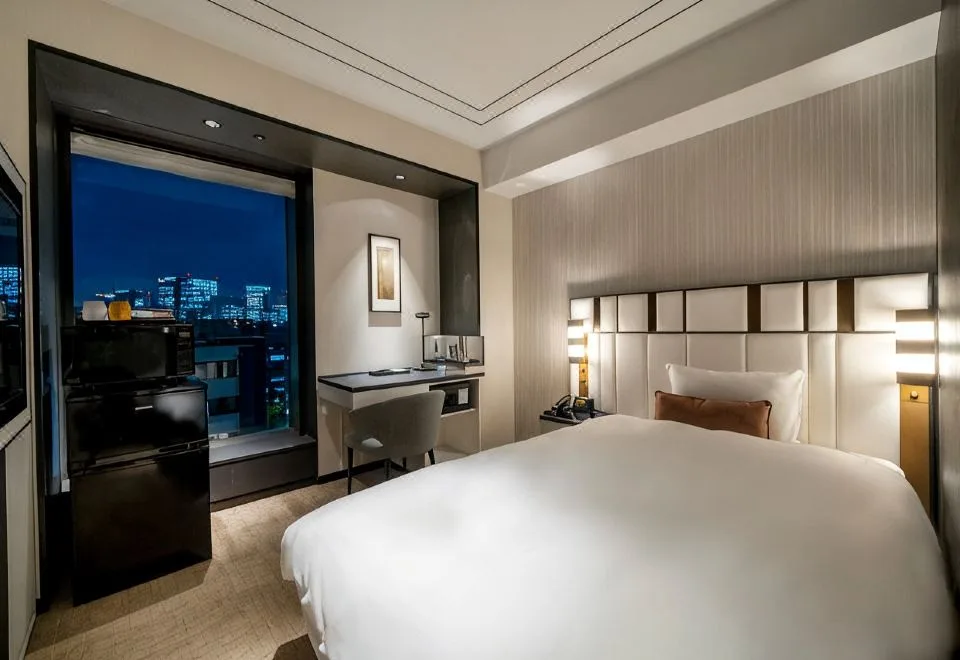
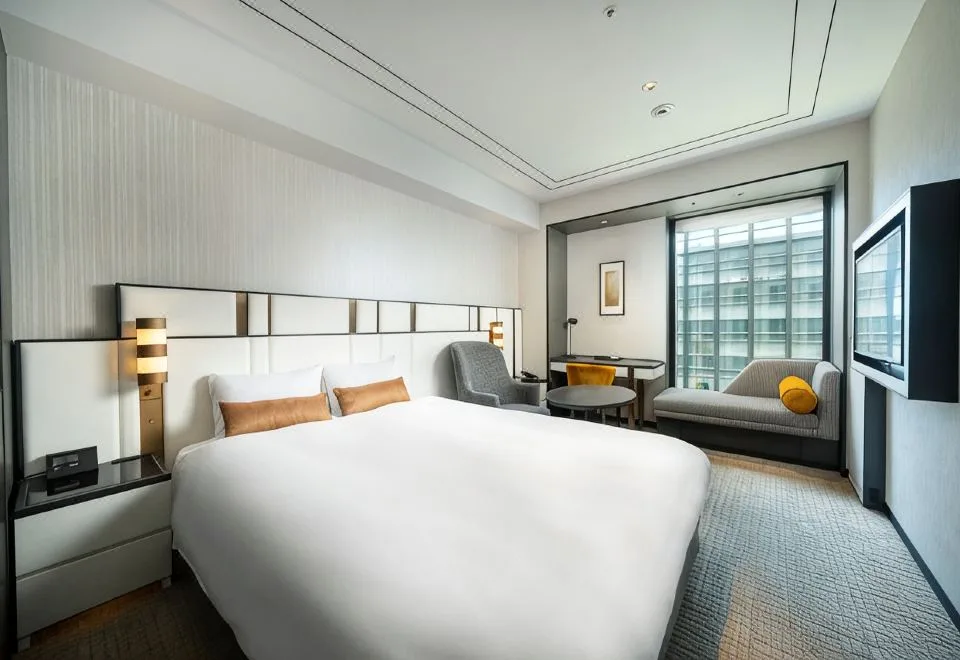
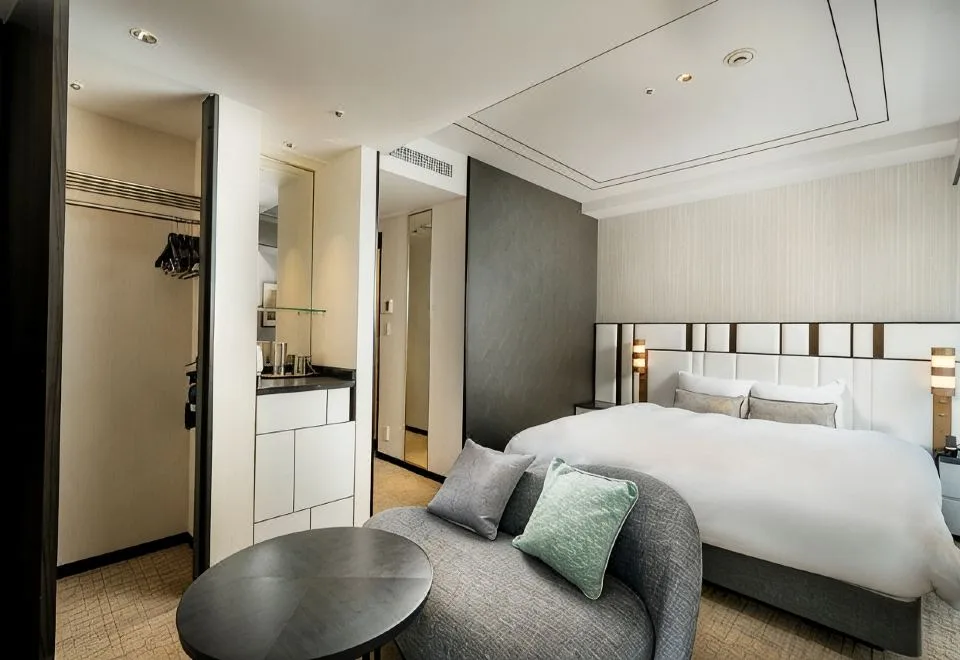
The monochrome design with indirect lighting feels calm when I come back at night. The in-room equipment surprised me: a washing machine, a microwave, an electric kettle, USB outlets, a humidifier air purifier, nightwear and a trouser presser are all there, so a longer stay does not mean daily trips to a shared laundry. The bathroom is a unit bath with a tub and a washlet toilet.
| Room type / layout | Size and equipment | How to choose |
|---|---|---|
| Moderate Double | 16.9 m², Simmons double bed 150×200 cm | One person or two on a short stay |
| Semi-Double (fridge and microwave) | 16.9 m², Simmons semi-double bed 120×200 cm, fridge and microwave in the room | One person staying longer, heating your own food |
| Superior Double | 23.2 m², Simmons double bed 150×200 cm | Two people wanting more space |
| Superior Double (fridge and microwave) | 23.3 m², Simmons double bed 150×200 cm, fridge and microwave in the room | Two people staying longer |
| Superior Twin | 23.9 m², two Simmons semi-double beds 120×200 cm | Two people sleeping separately |
| Superior Twin with sofa bed | 23.9 m², two beds plus a sofa bed; three guests use two regular beds and one sofa bed | Three guests |
| Deluxe King | 25.9 m², Simmons king bed 180×200 cm | The widest double room |
The difference between a Double and a Twin is practical when two people travel. A 16.9 m² Double gets cramped once two suitcases are open; for more space, the 23.9 m² Superior Twin gives you two 120 cm beds and room for luggage. The widest choice is the 36.6 m² Deluxe Twin, with two beds and a larger bathroom — worth it if the budget allows.
Photos show bedside seating and window passages; if space matters to the two of you, I suggest putting a Twin on the shortlist as well.
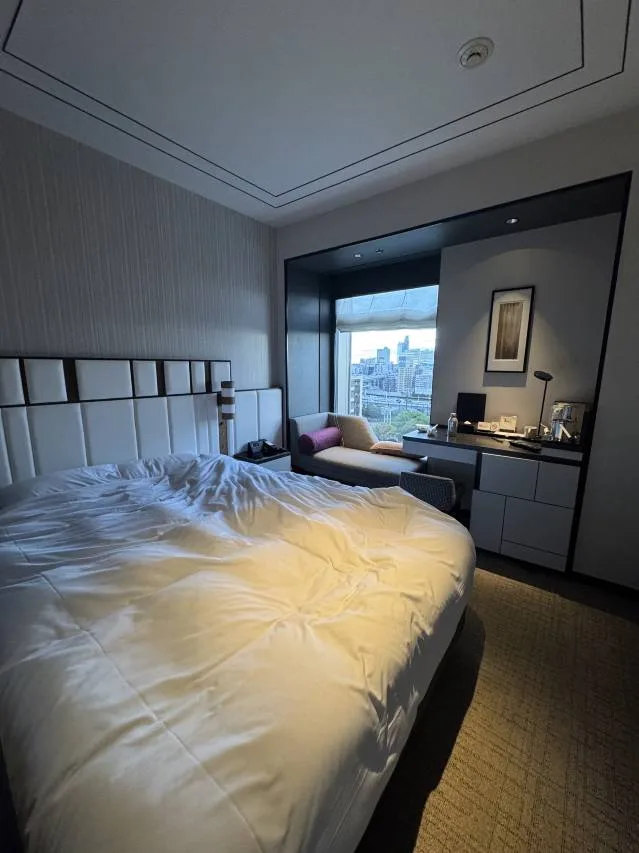
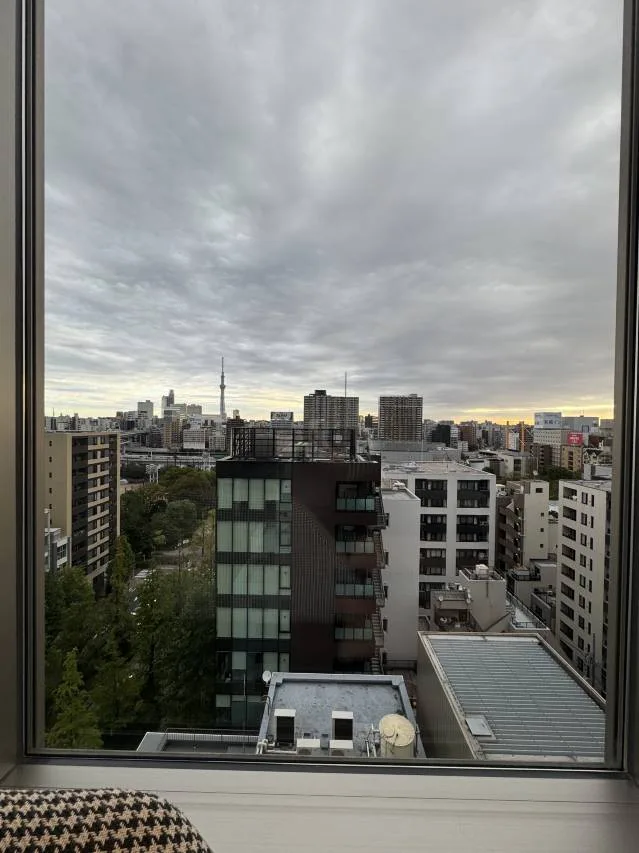
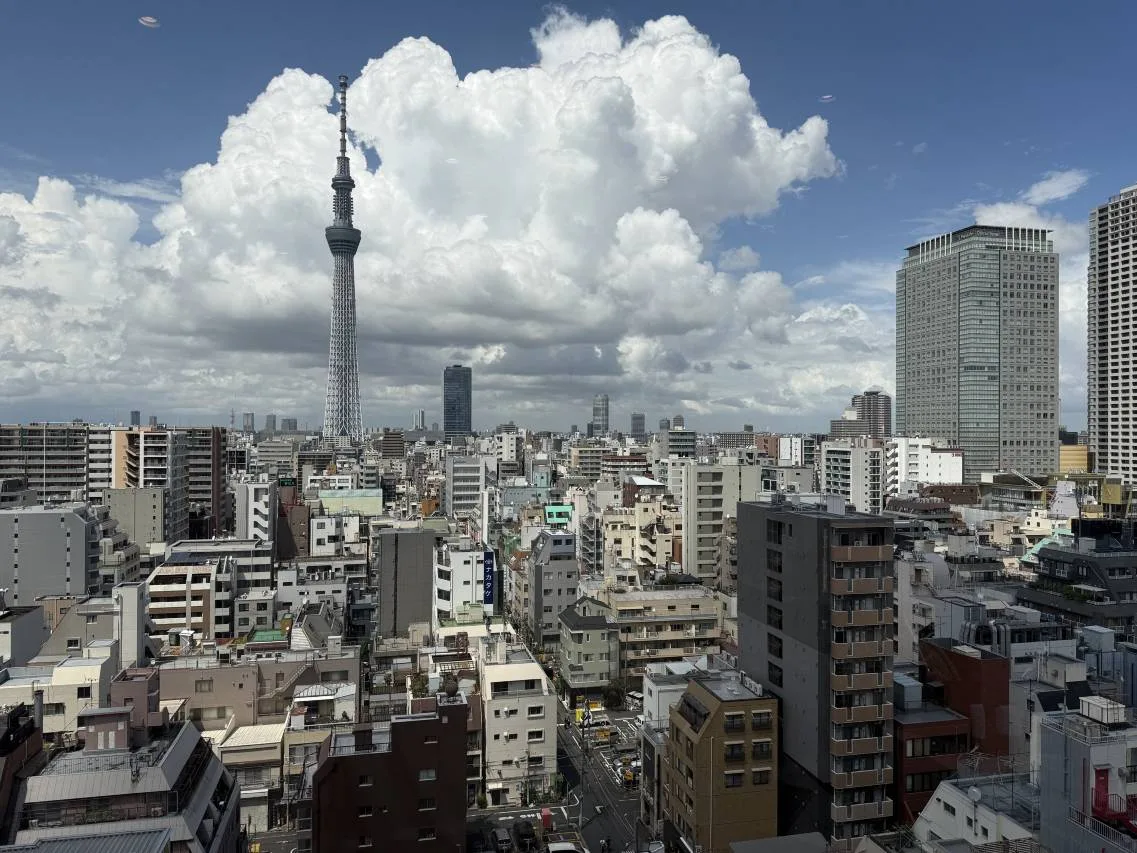
Higher rooms may show the city skyline, but Tokyo Skytree visibility depends on orientation and room type. Choose enough space and the right beds first, then treat views as a bonus.
Guest room photos: how the space works in daily use
I use guest photos to see how rooms look in everyday use, especially the space around beds, desks and bathrooms. Photos may show different room types; judge your booking by its actual layout.
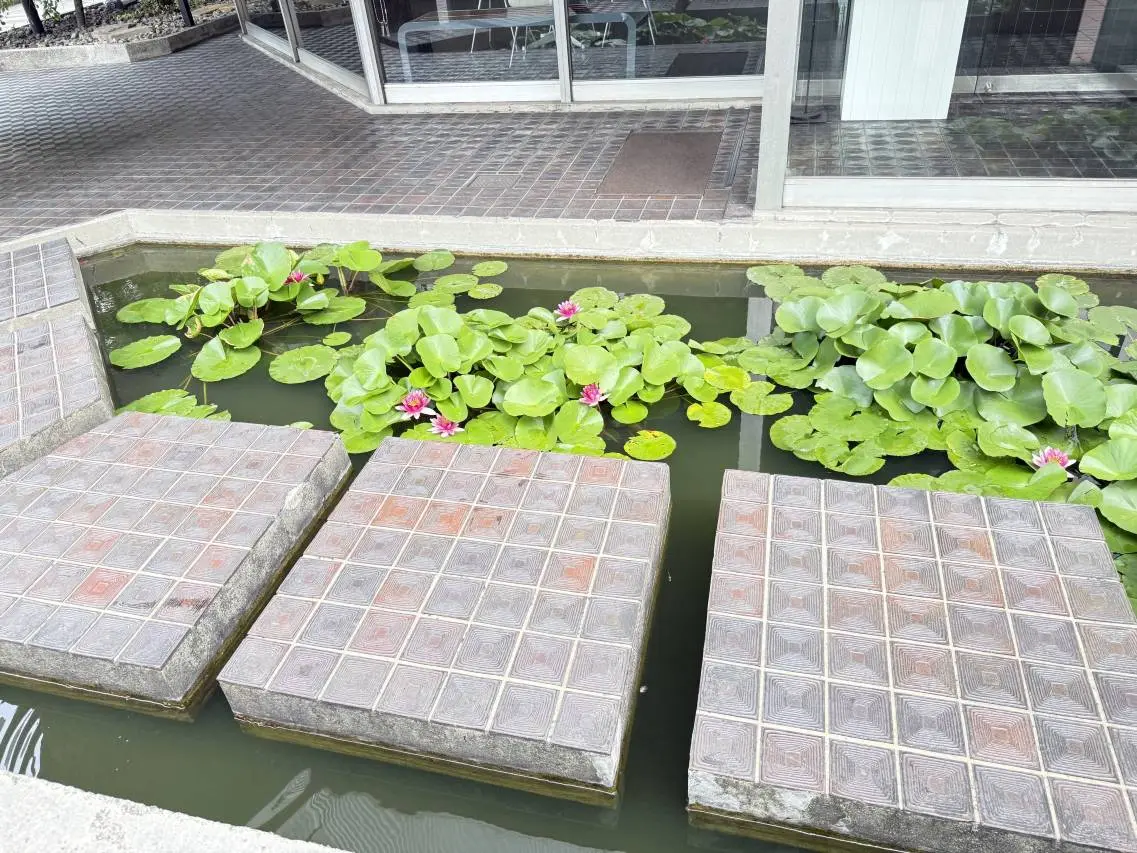
The photo of the foot of the bed shows me that a walkway stays open even with luggage spread out; the window photo shows the city skyline, while the Skytree-direction photo reminds me that the view really depends on the room and its direction. The green path and waterside walkway photos are my reference for how a morning walk around here looks.
Amenities and services you will actually use
Amenities can be picked up in the lobby, and I stop there first after check-in. The in-room bath amenities are the FIESTA line with natural ingredients, and makeup remover and skincare items are available for women. A washing machine is inside the room, so laundry on a longer stay does not mean waiting for shared machines; the building also has a laundry room — ask the front desk where it is.
Do not rush back to your room after check-in: the lobby serves a welcome drink — Mighty Leaf organic iced tea or the caffeine-free fruit herbal tea called Red Berry — so sit down and catch your breath first. The front desk is staffed 24 hours, and luggage storage is free, which makes it easy to leave bags after checkout, walk around, and collect them later.
The other practical facilities, all in one place: free Wi-Fi throughout the building, an elevator, a front-desk safe, currency exchange, a wake-up call, fax and copy service (charged), a drinks vending machine, an iron and a steamer, and accessible rooms. Pets are not allowed, and the guest who checks in must be at least 18 years old.
A few more laundry details: the in-room washing machine is ready to use, and detergent comes from the lobby amenity bar; the shared laundry room is in the building, so ask the front desk where it is — useful if you stay several nights and change clothes often. The drinks vending machine is in the building, and fax and copy service is charged; ask the front desk if you need a boarding pass or itinerary printed. The accessible room is the Deluxe Twin Universal Design, 34.9 m² with two 120 cm beds and a sofa bed, laid out for wheelchair access and bathroom movement — request that room type directly when you book. Valuables you do not want to leave in the room can go in the front-desk safe.
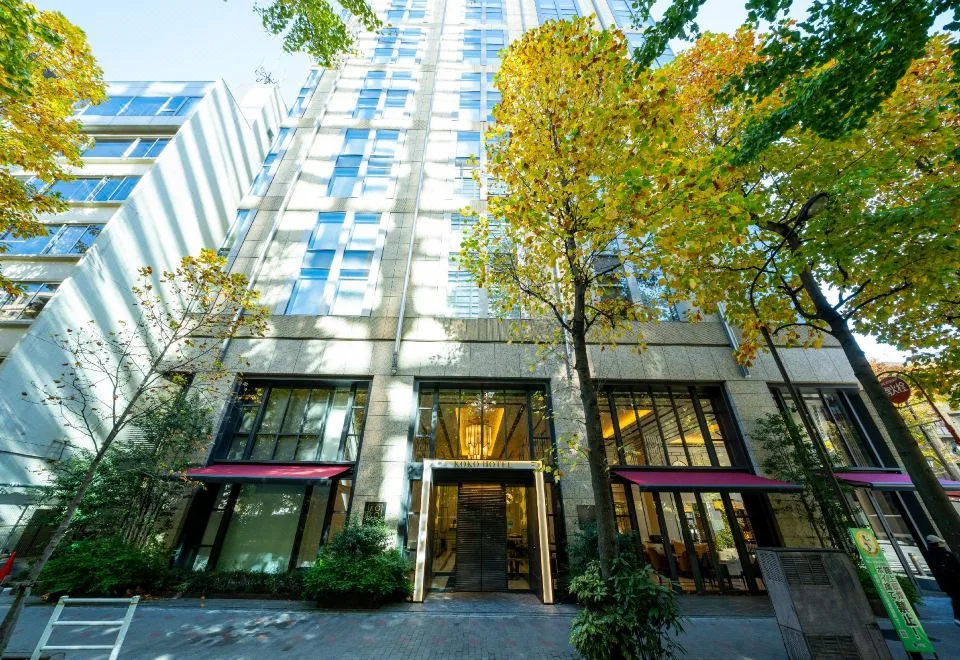
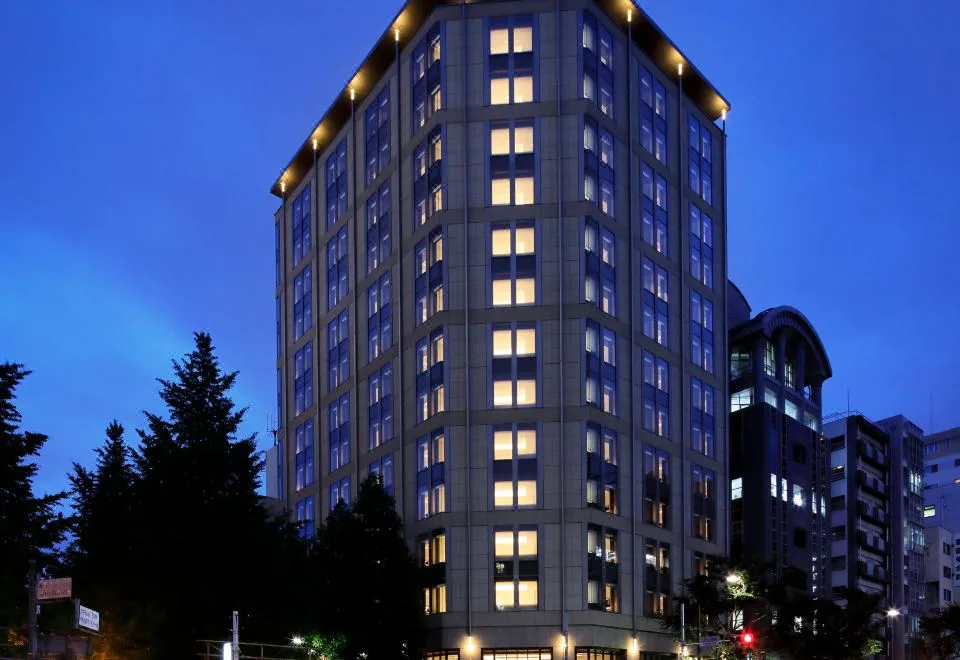
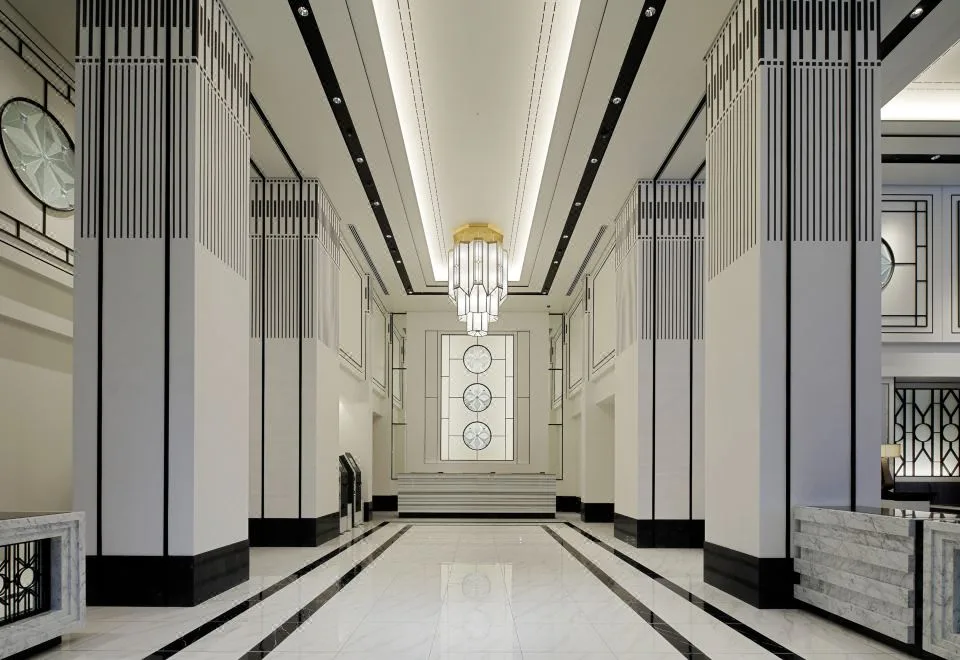
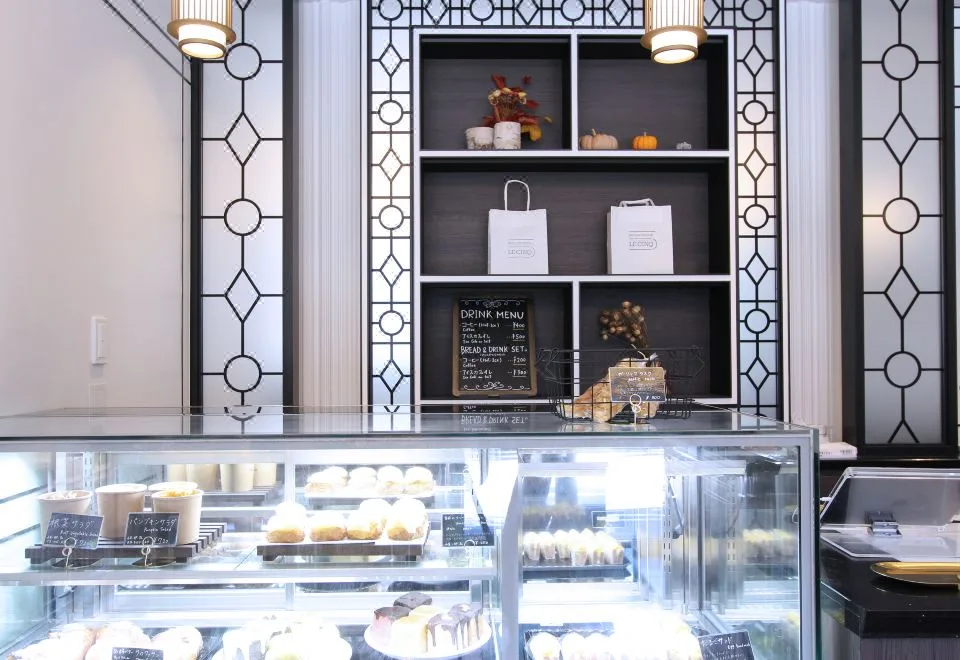
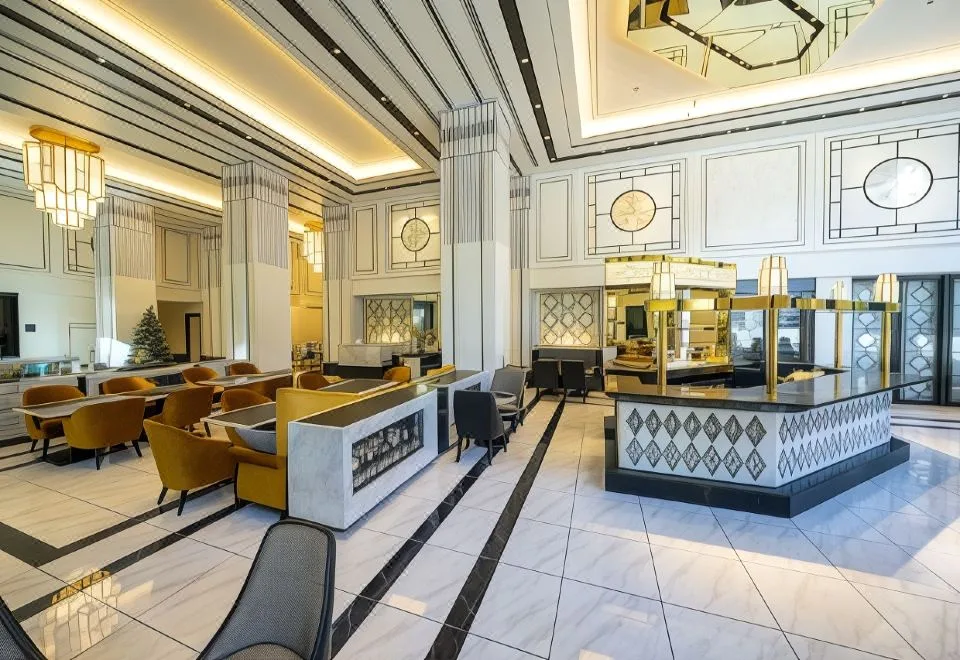
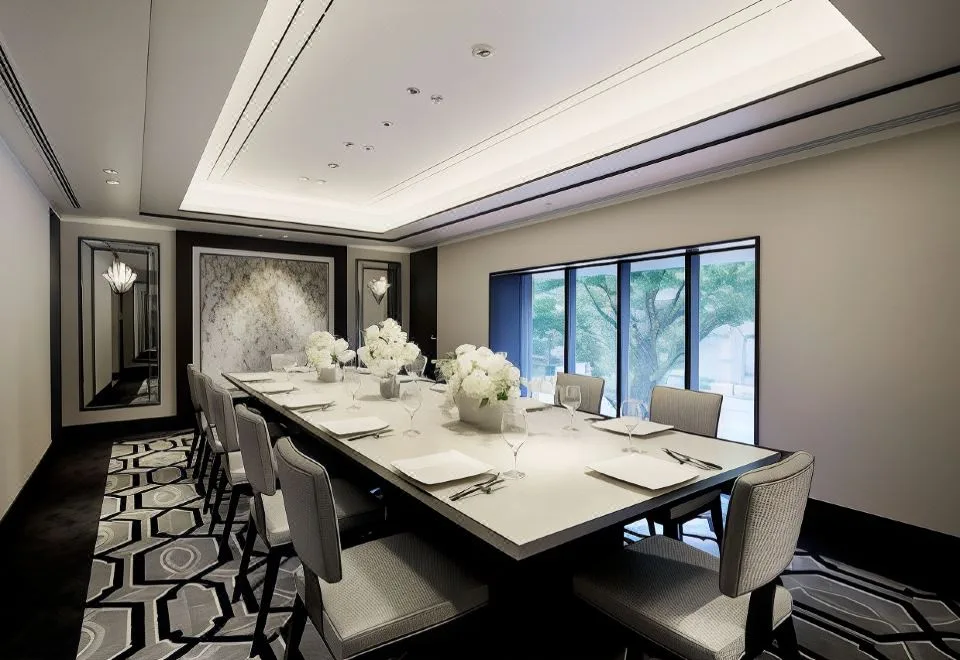
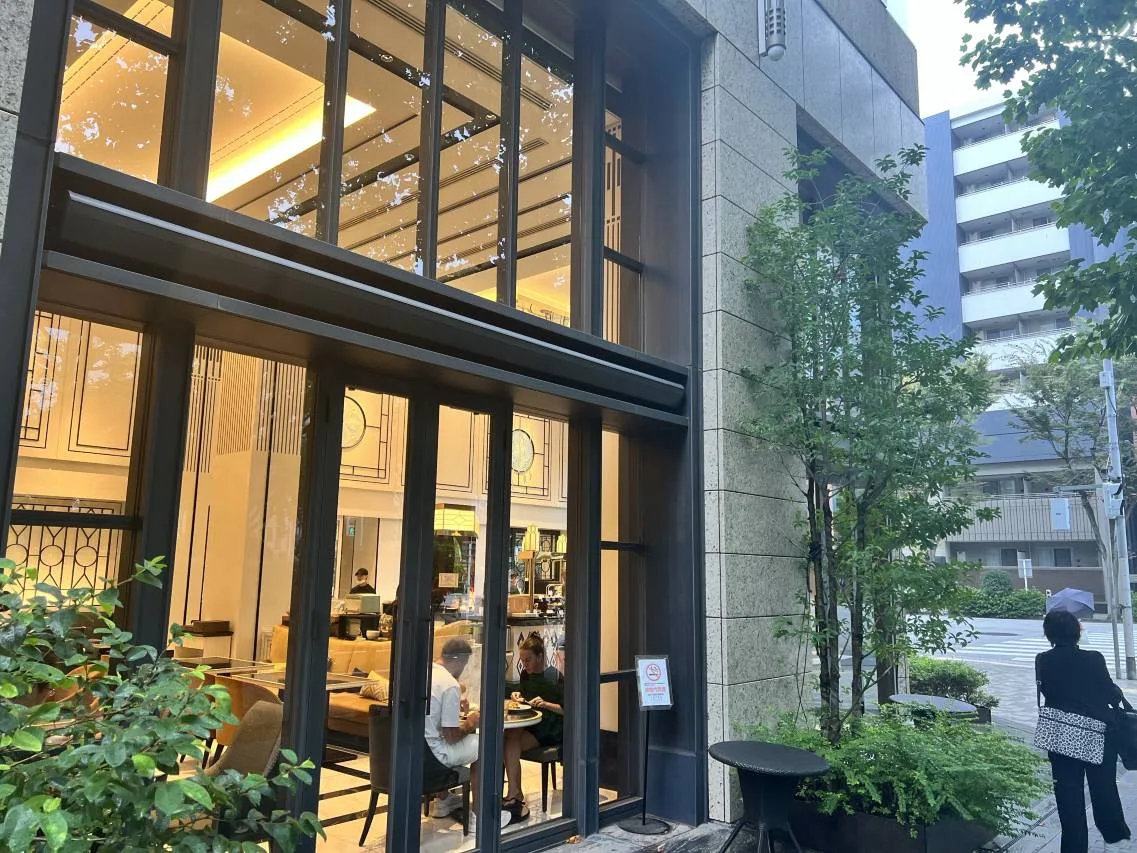
I have also looked at the lobby and coffee-counter photos: the entrance with trees, the building at night, the lobby passage, the coffee and dessert counter, the seating area, and the dining and meeting space. There are seats by the coffee counter to wait for friends or check your plans. If you want to linger in the building, the lobby seats are more comfortable than going back to the room — sit in the lobby a while, then head out for a walk.
Should you add breakfast? Think about your morning
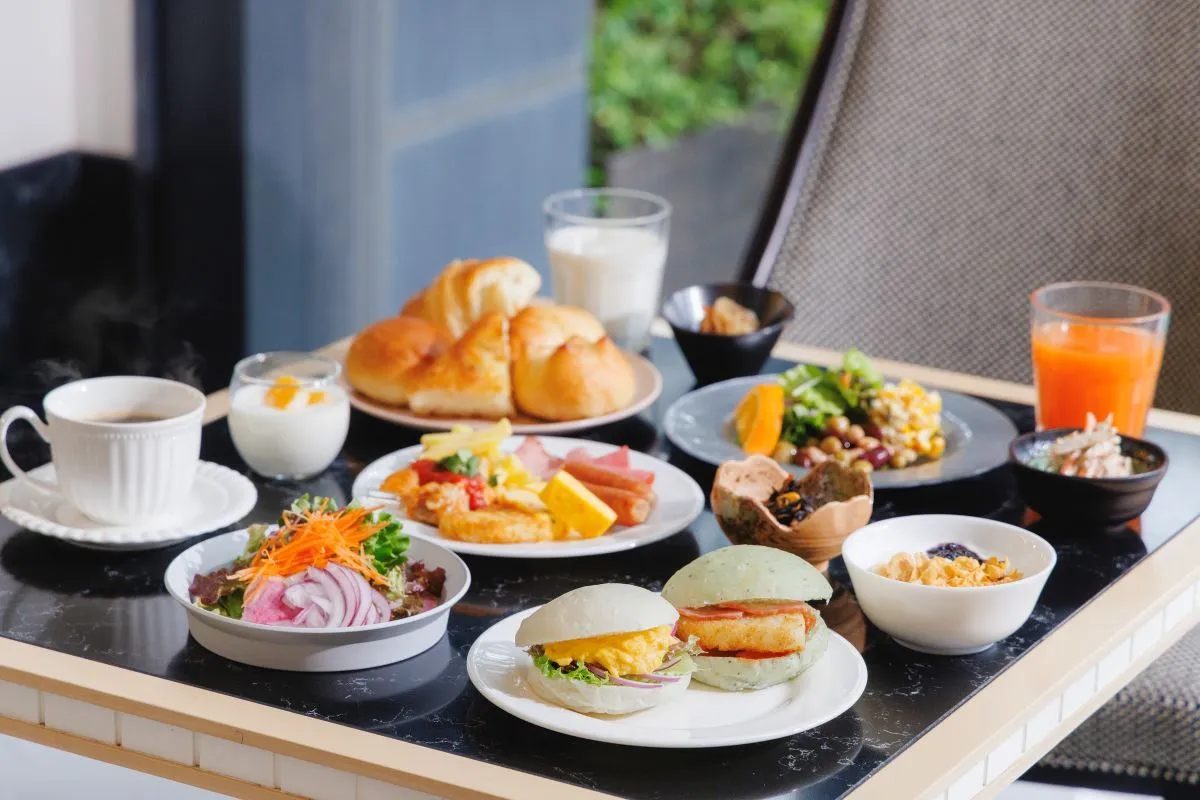
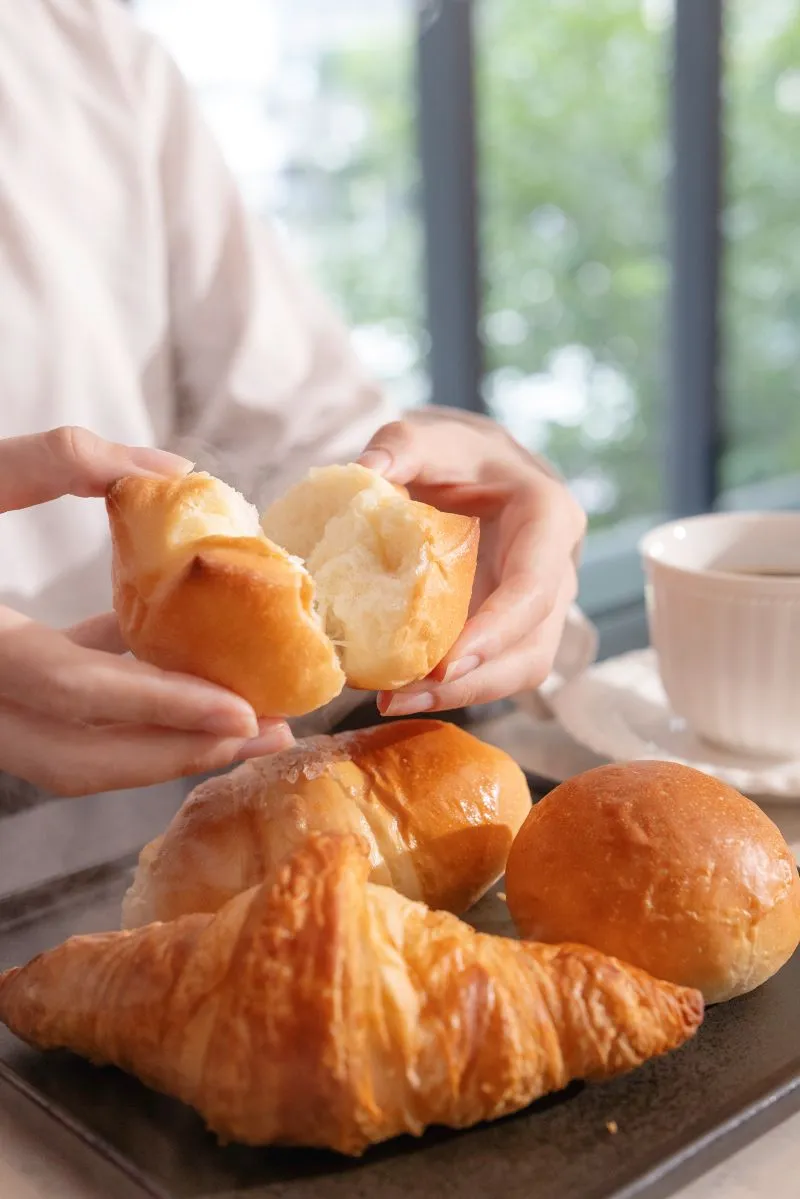
The first-floor Le Bonheur restaurant serves a Japanese and Western buffet breakfast, and the fresh bread from the in-house LE CINQ bakery is the signature. It is useful if you want to eat before a park walk. If catching early trains or seeking breakfast in Ningyocho, booking room-only leaves more flexibility.
Breakfast runs 07:00–09:30. Adults and children aged 6–17 pay ¥2,200 each, and children aged 5 and under eat free. The restaurant has a high ceiling and big windows, so I eat the fresh bread with Japanese side dishes and Western hot dishes, then walk to Hamacho Park. No reservation is needed for breakfast — just go to the restaurant.
If you do not want to walk far at noon, stay in the building: Le Bonheur lunch is all-you-can-eat bread with a salad buffet, ¥1,700 on weekdays and ¥1,800 on weekends and holidays, 11:30–15:00. The LE CINQ bakery stays open until 17:00, so pick up a few rolls to keep in the room. The teppanyaki restaurant Kei needs a reservation by 17:00 the day before — lunch 11:00–16:00, dinner 18:00–22:00 — so plan ahead if you want it.
Dinner is worth spelling out too: the teppanyaki restaurant Kei is in the building, lunch 11:00–16:00 and dinner 18:00–22:00, with dinner reservations by 17:00 the day before; you watch the chef cook at the iron plate, and can ask about the wagyu or seafood menu for the day. Lunch bread is all-you-can-eat, last entry 14:30. The LE CINQ bakery stays open until 17:00, so fresh bread can come back to the room for the next morning; if you do not want to eat in the building, Ningyocho has plenty of restaurants, an easy evening walk away.
Nearby walks: make time for the neighbourhood
Meijiza Theatre, Hamacho Park and Ningyocho make an easy half-day walk. Travellers who enjoy older streets and quiet residential areas may appreciate this base more than those focused on department-store shopping.
The distances, worked out for you: Meijiza Theatre stands beside Hamacho Station Exit A2, under a minute from the exit; Hamacho Park sits next to the hotel, so a morning walk needs no planning; Konami Shrine is about 750 metres away, Nihonbashi about 900 metres, and JR Bakurocho Station about 850 metres. For the airport bus, T-CAT is about an 11-minute walk, with limousine buses to Narita and Haneda.
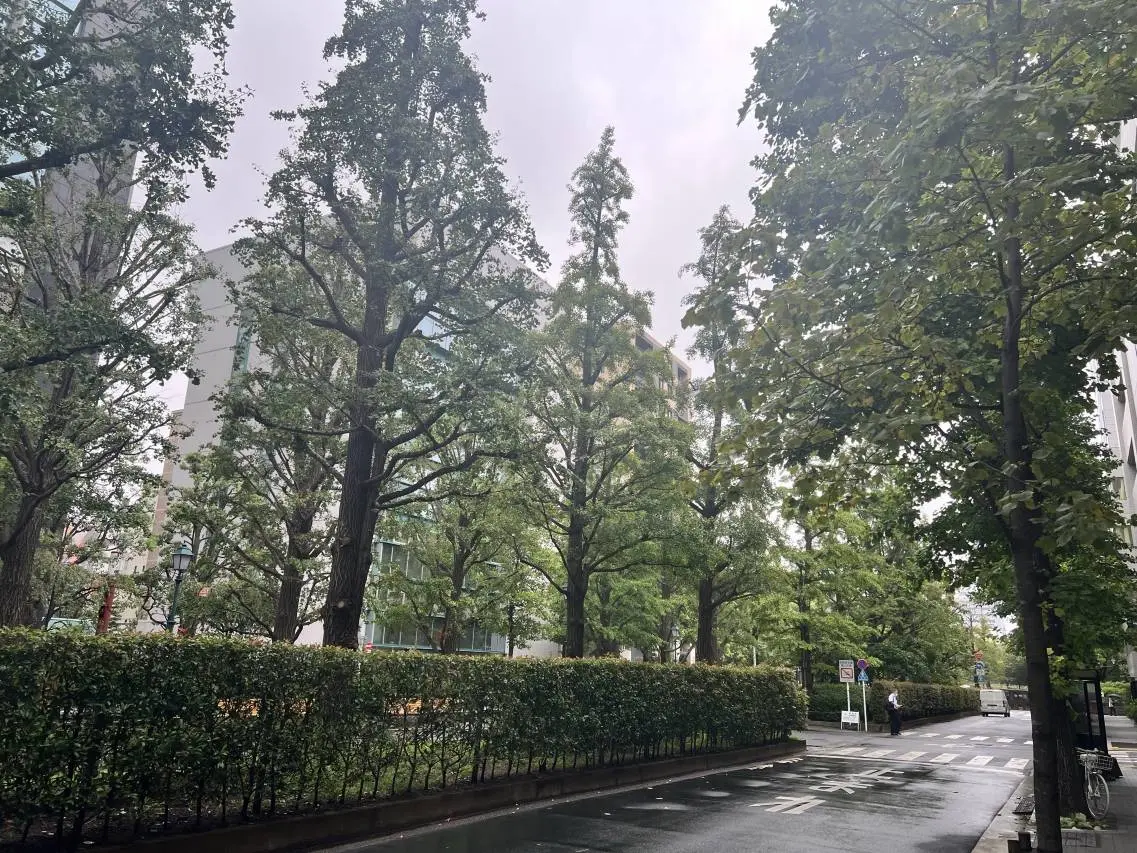
You can continue with a walk through Ningyocho and connect the neighbourhood with your stay.
Short stays, longer stays and my recommendation
One night gives you a taste of the park neighbourhood. On longer stays, shared laundry and nearby supplies become more useful. If most trips use the Toei Shinjuku Line, transport is particularly convenient; if you rely on the Asakusa Line or other routes, expect additional walks.
For a stay near Hamacho Park, I would shortlist KOKO Hotel Premier. Before booking, check guest count, room type, breakfast plan and arrival time, with special attention to bed layout and the line you use daily.
Check-in runs 15:00–24:00 and checkout is before 11:00, with the front desk staffed around the clock, so a late arrival is no problem. Children of all ages are welcome, and children share the bed with adults — work that out before you book.
Pros and cons at a glance
Pros
- Hamacho Station Exit A2 is about a one-minute walk, with an elevator straight to street level, so luggage never needs stairs.
- Every room has a Simmons bed, plus a washing machine, a microwave and USB outlets inside the room — handy for longer stays.
- Breakfast at Le Bonheur on the first floor is a Japanese and Western buffet, with fresh bread from the in-house LE CINQ bakery, ¥2,200 for adults.
- The front desk is staffed 24 hours, luggage storage is free, and the lobby offers a welcome drink and self-serve amenities.
- Meijiza Theatre, Hamacho Park and Ningyocho are all within walking distance, in a quiet neighbourhood made for slow walks.
Cons
- A 16.9 m² Double feels small for two people, with no walkway left once luggage is open.
- No room type allows an extra bed or a crib, so plan sleeping arrangements for children first.
- The hotel has no parking of its own — drivers use a nearby coin parking lot.
- Front desk service varies from stay to stay, and a loose sink fitting with slow follow-up has happened.
- The Asakusa Line needs about a 7-minute walk from Ningyocho Station, and JR Bakurocho Station is about 850 metres away — not every line is one minute.
Information last checked: 2026-11-23