
TOKYO / CHUO
Hotel Villa Fontaine Tokyo-Kayabacho
Hotel Villa Fontaine Tokyo-Kayabacho
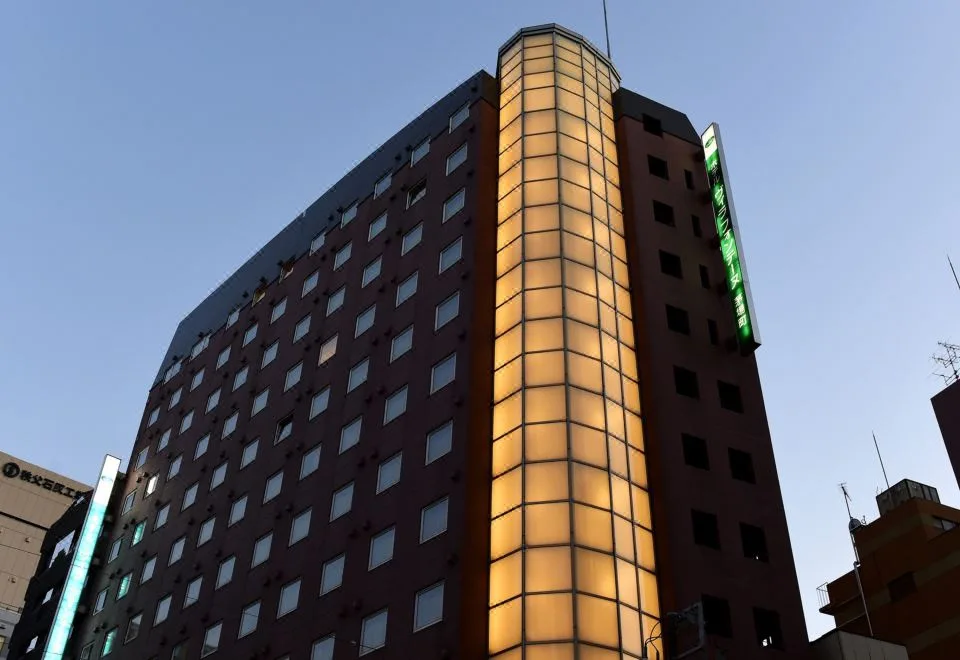
Villa Fontaine Kayabacho suits travelers using the subway by day and local dining or convenience stores at night. Confirm whether the booking is in the main building or annex before choosing a room. Rooms and the arrival experience can differ between the two even when sold under one hotel name.
Reasons to stay and things to accept
Reasons to consider
- Kayabacho Station is within walking distance, handy for downtown travel and Nihonbashi itineraries.
- The main building has 17 m² single and double categories, with twin options to compare.
- Nearby food, shops and supplies suit people who are out most of the day.
Trade-offs
- The main building, annex and room categories require separate comparisons; one attractive photo does not represent them all.
- Small rooms, bathroom cleaning and air-conditioning are worth weighing before a longer stay.
- Breakfast is relatively simple, not a lavish buffet to plan a trip around.
Room types and suitcase space
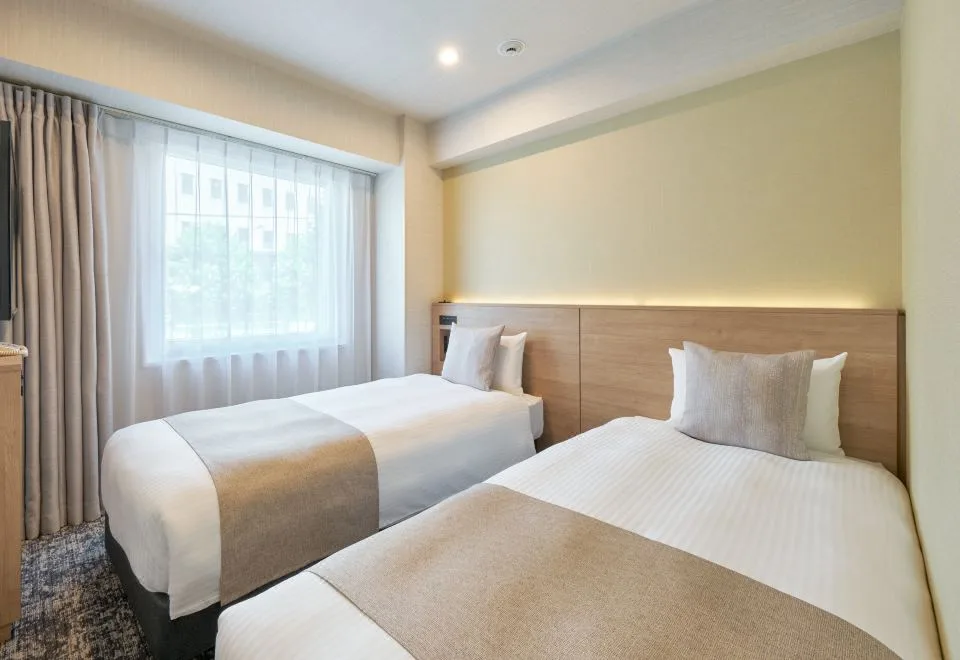
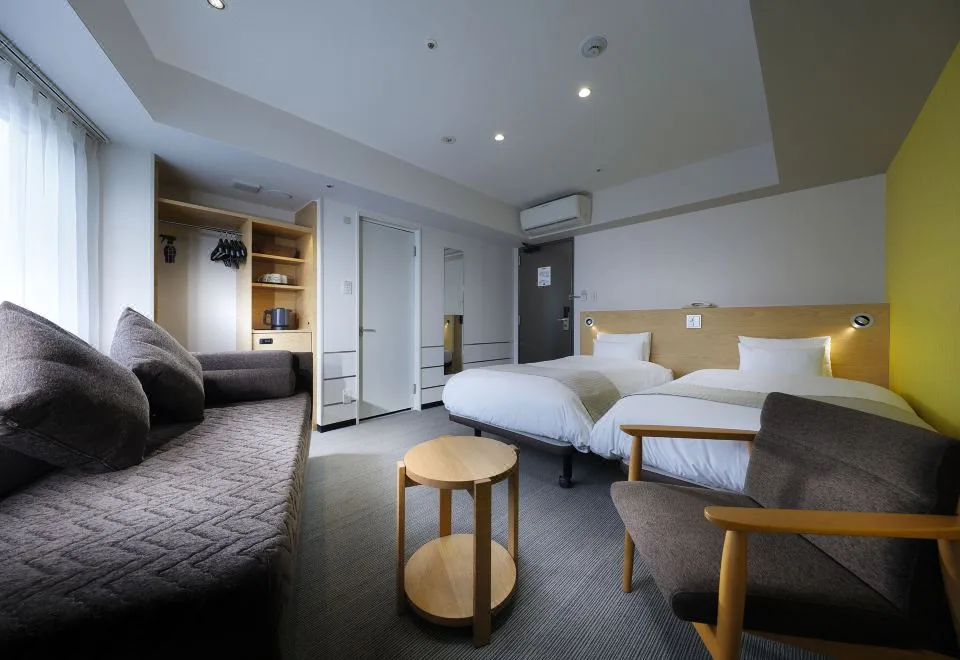
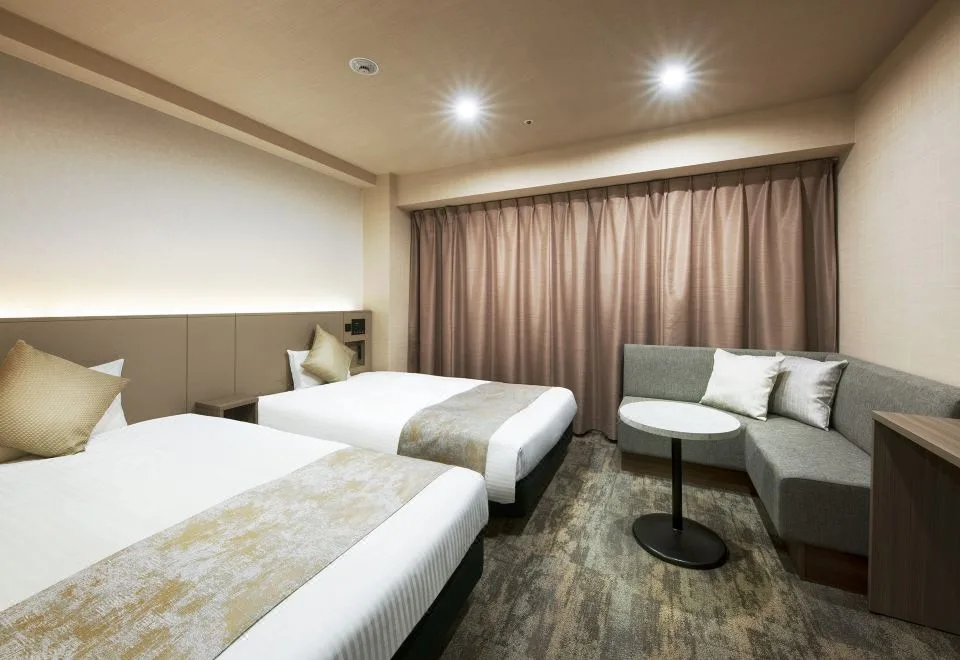
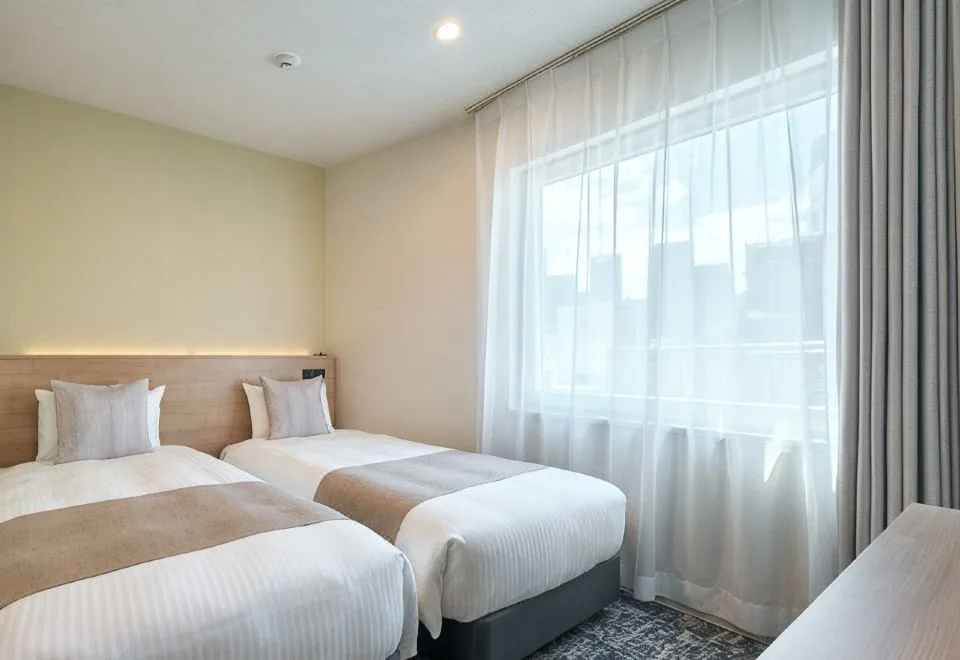
The official main-building Single is 17 m² with a 120 cm bed, and the main-building Double is also 17 m² with a 140 cm bed. Identical floor areas do not make two people as comfortable as one: where two suitcases open is key. For annex or twin rooms, verify the precise room name, building and photos rather than assuming the main building’s layout applies.
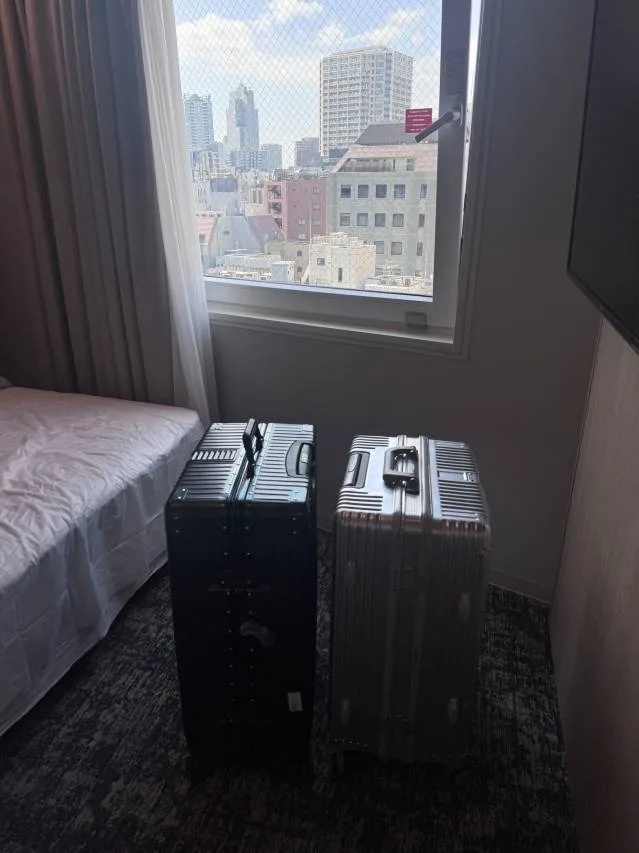
When two large cases come into the room, look first at the gap between the bed and the wall: twin-room photos show two beds side by side with a chair by the window, but they do not show how much walkway is left between the beds. With two people and two cases to open, that gap is the number that matters every day. Check the annex room name, building and photos separately — the feel of a 17 m² main-building room does not transfer. A 140 cm bed shared by two people means taking turns when rolling over; a 120 cm bed is a bed for one person, and two people squeezing in will not sleep well. One more thing to know first: no room type takes an extra bed or a crib, so a child sharing the room sleeps in the existing beds, and a child without an extra bed may still be charged — put the headcount in the booking before comparing prices.
Before booking, match the room name, building and photos — do not book on a pretty photo alone. Booking the wrong building and finding out on arrival is the mistake to avoid. If the booking-page room name says twin but not the building, ask which building it is before paying, so you do not arrive and find yourself in the wrong block. Two people in a twin room should count the gap beside the bed first, so cases do not block the way to the bathroom. The building has an elevator, so no carrying cases up the stairs; there are non-smoking floors, so ask for a non-smoking room if cigarette smell bothers you. The facility list also shows a humidifier and a fresh-air system — ask reception how to use them if winter heating dries the air. Smokers should use the smoking area in the building, not the room.
Breakfast to fit your morning
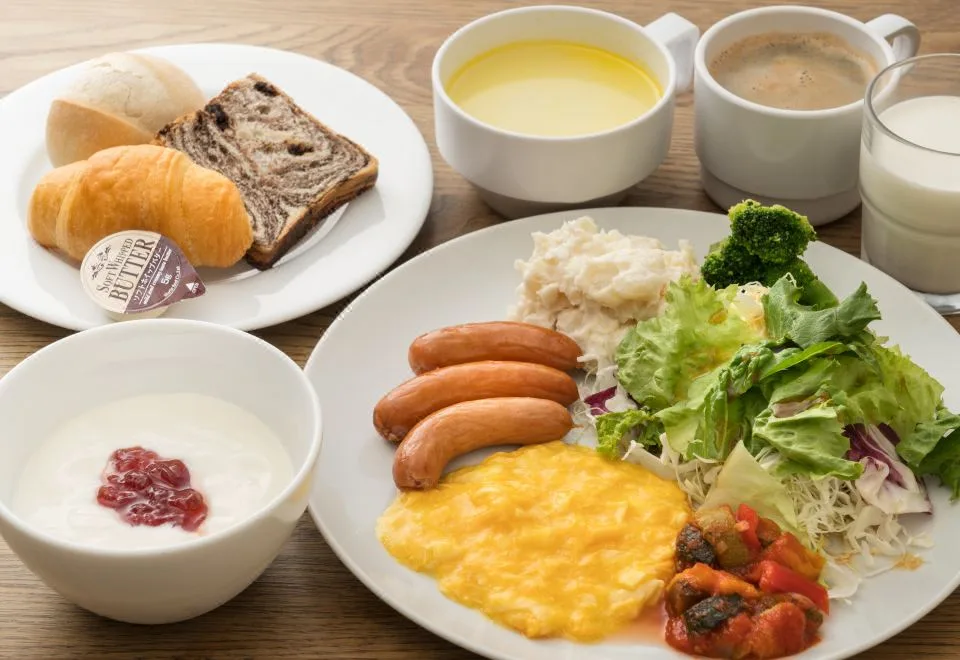
Breakfast works best as a quick meal before heading out. The hotel serves breakfast, and photos show bread, eggs and salad; the coffee and croissants suit a quick morning, but the choice is genuinely limited. For coffee shops around Nihonbashi or varied meals during longer stays, room-only offers freedom.
Breakfast is a Western buffet, served Monday to Sunday from 06:30 to 09:30, ¥1,540 per adult, ¥1,540 for children aged 6 to 17, and free for children aged 5 and under. If you leave early every day, a breakfast-inclusive rate is the easiest option — eat and go. Service starts at 06:30 and ends at 09:30, so a late riser needs to reach the restaurant before closing. To add breakfast on the day, ask reception first whether it can be added and how to pay; do not find out at the restaurant door that there is no seat.
There is only one restaurant in the hotel, and the breakfast buffet is served there, with seating and serving in a single space; go early for a relaxed meal, before everyone comes down at once. Look at the restaurant photos first — the bread, eggs and salad are all visible — so you know what to expect before eating.

Transport and bringing luggage
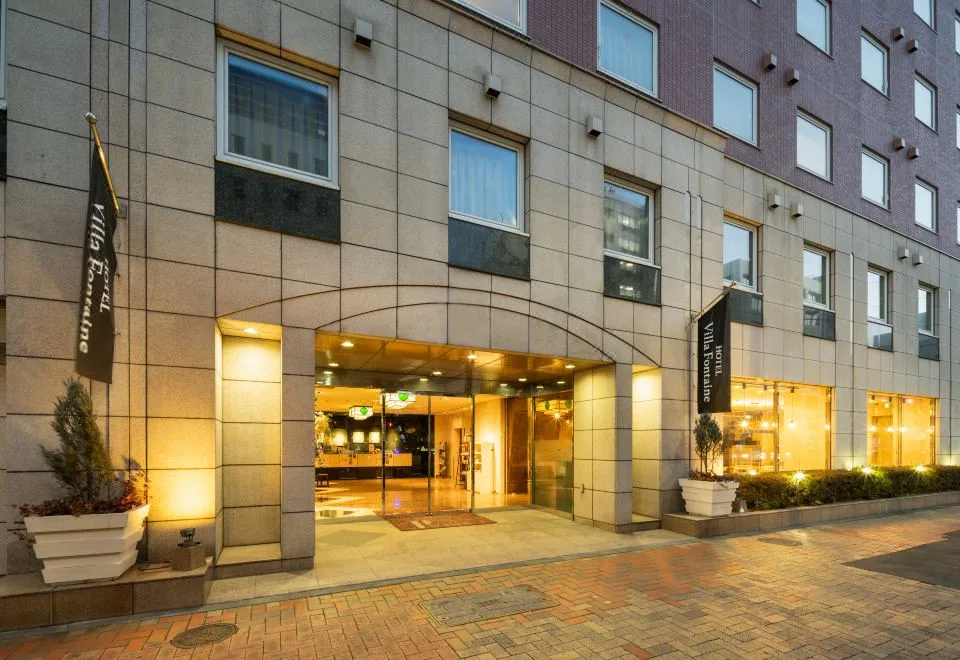
The official English access page gives about three minutes from Kayabacho Exit 3. That is a normal walking route, not necessarily an elevator route, and you need to locate your specific building. If comparing the T-CAT airport bus, include the street walk from the terminal to the hotel, especially in rain or with two cases.
With luggage, use the elevator from the east ticket gate by Hibiya Line platform 1 or the Kayabacho 2-chome-side gate toward the Exit 1a elevator. These differ from the usual Exit 3 route; allow time to walk from street level to the correct building. Arriving on the Tozai Line, the East Gate has an elevator to Exits 3, 4a and 4b, so Exit 3 works directly.
Kayabacho Station serves the Hibiya and Tozai lines, about 250 metres and a four-minute walk from the hotel. The Hibiya Line runs direct toward Ginza, Roppongi and Ueno, and the Tozai Line toward Nihonbashi and Otemachi, so the eastern half of the city is easy to reach. Suitengumae is about 540 metres away and Nihonbashi about 650 metres, both walkable; JR Shin-Nihonbashi is about 1.5 km and Ginza about 1.2 km — walkable if you like, but one stop on the subway is easier with luggage.
Exit 3 is the most direct way out — without large luggage it is the fastest, about three minutes on foot to the hotel from the exit. With large luggage, take the elevator route instead and allow extra time for the street walk after surfacing. The Tozai and Hibiya lines meet at Kayabacho, so transfers stay inside the station and the same station serves both directions, which keeps navigation simple. After leaving the station walk toward Shinkawa — the hotel is at 1-8-2 Shinkawa, so the street number keeps you from going wrong even on a first visit.
Address: 1-8-2 Shinkawa, Chuo City, Tokyo 104-0033, Japan.
Neighborhood food and activities
Use this base for Nihonbashi shopping and subway trips, with dinner near the hotel. Convenience shops, drugstores and restaurants nearby make longer stays easy to supply.
Nihonbashi is 650 metres away, a ten-minute walk to the old streets and department stores — a half-day walk can start at the hotel, loop through Nihonbashi and come back for dinner nearby. Suitengumae is about 540 metres away, with small shops toward Ningyocho; on a night when you do not want to go far, eat somewhere that looks good around Shinkawa and walk back. For Disney, Kayabacho itself is not a Keiyo Line station — ride to Hatchobori first and change to the Keiyo Line, and build the transfer time into the morning.
For a half-day route, see Nihonbashi museums and historic architecture (Chinese guide).
Facilities and practical services
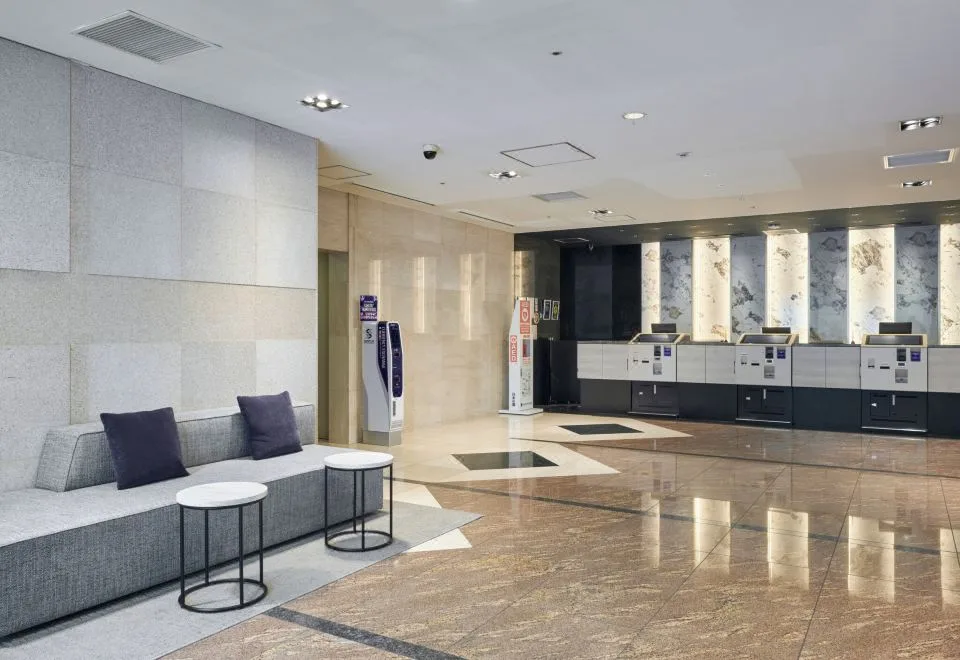
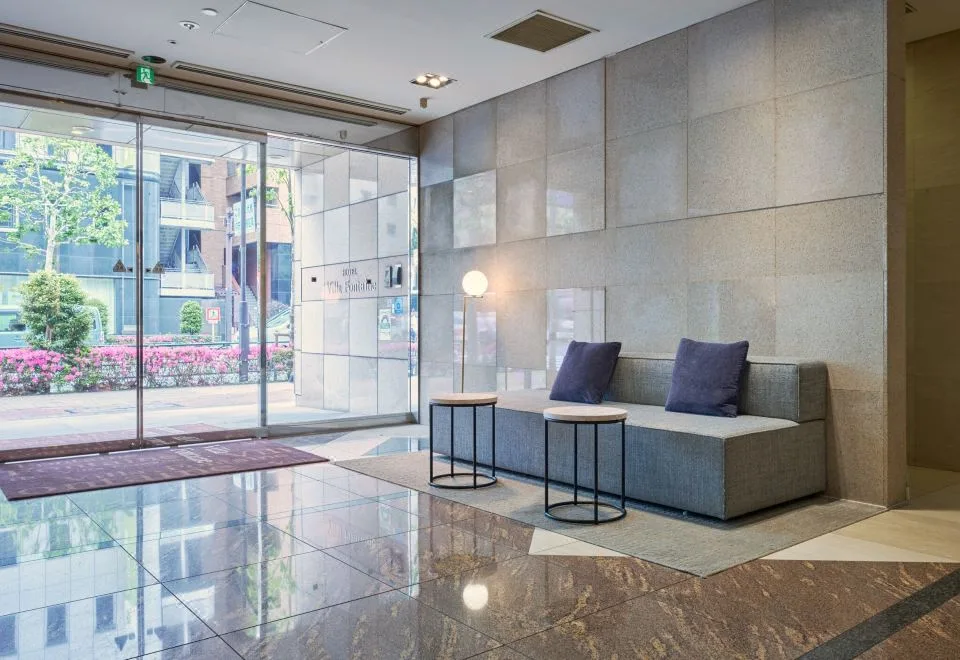
Ask reception about basic supplies, luggage storage and laundry. Don’t assume laundry is included in the room rate. Shared spaces are useful for relaxing and reorganizing bags, but if you will eat or work inside the room daily, look closely at desk and storage space rather than the bright lobby.
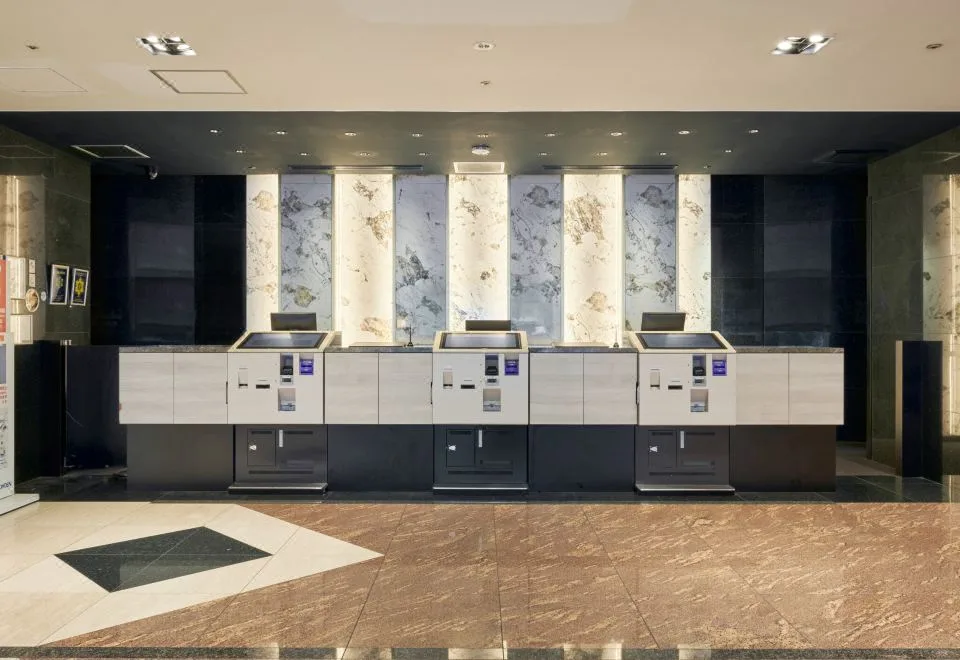
Drivers can use the private car park inside the hotel, ¥2,310 a day with no advance booking — park and walk straight in. Reception is staffed around the clock, so a late arrival still finds someone there; currency exchange and business services are also handled at reception, and luggage storage and the laundry room are in the building. If you need to print documents or sort out work, ask reception first how the business services work rather than finding out when you need them.
Reception is staffed all day and there is a dedicated porter to carry bags; drivers can use valet parking instead of finding a space themselves. Reception works in English and Japanese, so asking directions, breakfast questions or laundry questions does not get stuck on language. Fax and photocopy services cover printing needs; for clothes, besides the laundry room there is a laundry service and a delivery laundry service — ask reception about charges and turnaround. Assistive listening devices are listed for accessibility; tell the hotel first if you need one. On arrival day you can leave large cases at reception first, walk around Nihonbashi empty-handed, and pick them up in the evening instead of dragging cases all day.
Short stay versus several nights
For one or two nights, prioritize transport and beds. Over four or five, how smoothly you move in, unpack and wash each day decides how tiring the stay feels. Two guests sharing for longer may prefer fewer decorative features and easier suitcase access.
Check-in is from 15:00 and check-out is before 11:00, with reception staffed 24 hours — a late arrival or an early departure still finds someone there. If you expect to arrive outside check-in hours, contact the hotel first. The guest checking in must be at least 18 years old. Children of all ages are welcome, but a child without an extra bed may still be charged, so put the headcount in the booking before comparing prices. Check the booking-page photos one by one against the room name — do not book on the prettiest one alone, because the best-looking photo may not be the room you get. Pets are not allowed; service animals are. After check-out, bags can be left at reception while you walk around Nihonbashi and come back for them, instead of dragging cases along.
Details worth considering
Convenience and quiet are the immediate draws, but bathtub cleaning, limited space and stiff air-conditioning controls are the details to weigh for a longer stay. Those may not affect every room. If a description clearly covers the annex, keep it in the annex context; do not use it to judge the main building.
Small rooms show up most with two people sharing: 17 m² is right for one person, but two people plus two large cases means taking turns to unpack, walk past and set out toiletries. Bathroom cleaning and air conditioning work the same way — tolerable for one night, a daily matter over four or five. Check the bathtub and the air conditioning on arrival, try the heating and cooling, and speak up the same day if something feels off, before all the luggage is spread out.
My final choice
I consider it a practical Kayabacho base for local supplies, but check the building before booking. Solo travelers can compare 17 m² rooms; two with large cases should examine layouts. Add breakfast for convenience, not for an elaborate buffet.
Travelling solo, a 17 m² single or double is plenty — pick the cheaper rate. Two people with large cases should confirm the twin or double layout before booking. Once the building is clear and the room name matches the photos, this works as a steady base around Nihonbashi. Before booking, check the three things — building, room name, and whether breakfast is included — then confirm, so there is nothing to re-check in the order on arrival.
Pros and cons at a glance
Pros
- Kayabacho Station is about 250 metres and a four-minute walk, on the Hibiya and Tozai lines, so Nihonbashi and Ginza are easy to reach.
- Main-building singles and doubles are both 17 m², with 120 cm and 140 cm beds — roomy for one person.
- Reception is staffed around the clock, with check-in from 15:00 and check-out before 11:00, so a late arrival still finds someone there.
- Breakfast is a Western buffet from 06:30 to 09:30, free for children aged 5 and under — a proper meal before an early start.
- Convenience shops, drugstores and restaurants nearby make longer stays easy to supply.
Cons
- The main building, annex and room categories differ a lot — check the building and room name before booking, and do not judge them from one photo.
- No room type takes an extra bed or a crib, so a child sharing the room needs the bed plan worked out first.
- Small rooms, bathroom cleaning and air-conditioning are worth weighing before a longer stay.
- Breakfast is relatively simple at ¥1,540 per adult — not a lavish buffet to plan a trip around.
Information checked: November 22, 2026.