
TOKYO / CHUO
Hotel Sunroute Ginza
Hotel Sunroute Ginza
Ginza-itchome access: check space at the foot of the bed before packing big bags
Hotel Sunroute Ginza combines shopping in Ginza with subway access. If you are out all day and just want to shower and sleep, it is convenient. But the passages around beds and luggage storage should be high on your room-selection list.
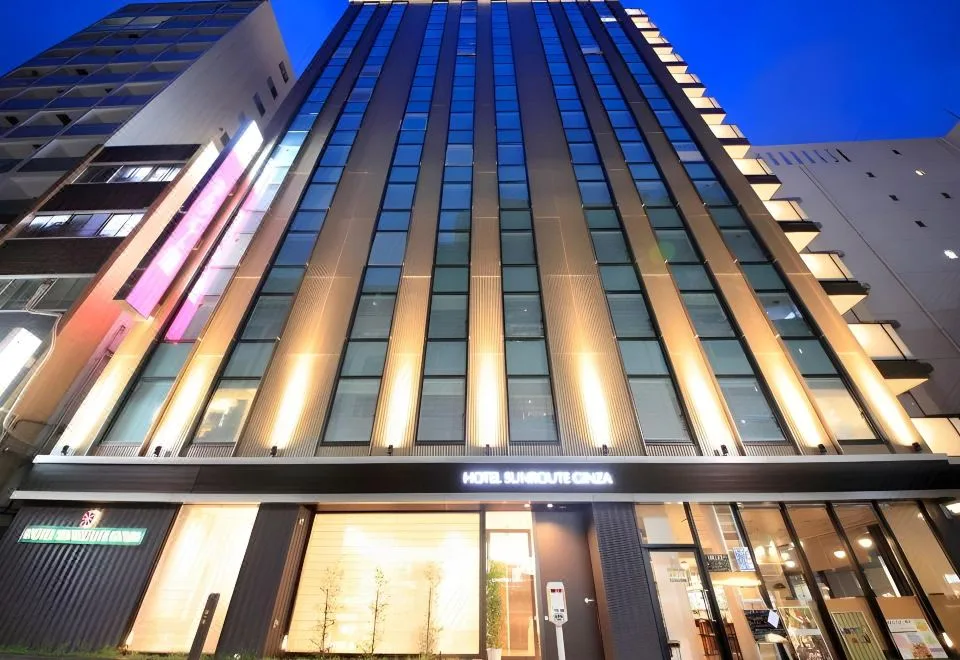
| First consideration | How to choose |
|---|---|
| Suitable stay | One to three nights of sightseeing, solo travel or two people shopping light. If you plan to unpack two large suitcases and shopping bags every day, compare larger rooms first. |
| Compare rooms | The official room descriptions give single-bed categories of 14.0–14.2 m²: both a 140 cm bed and the 160 cm Double occupy similar floor area. The Standard Twin measures 21.6 m² with two 110 cm beds. |
| Main trade-off | Space is the limitation to accept first. |
Rooms / Access / Breakfast / Facilities / Longer Stays / Trade-offs
Choose a room that fits the luggage
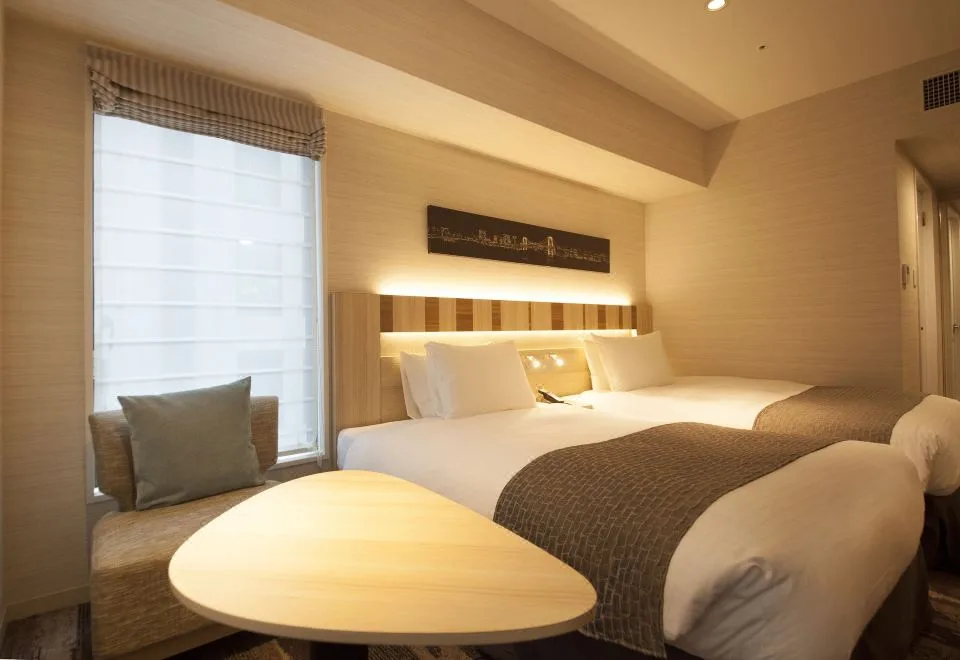
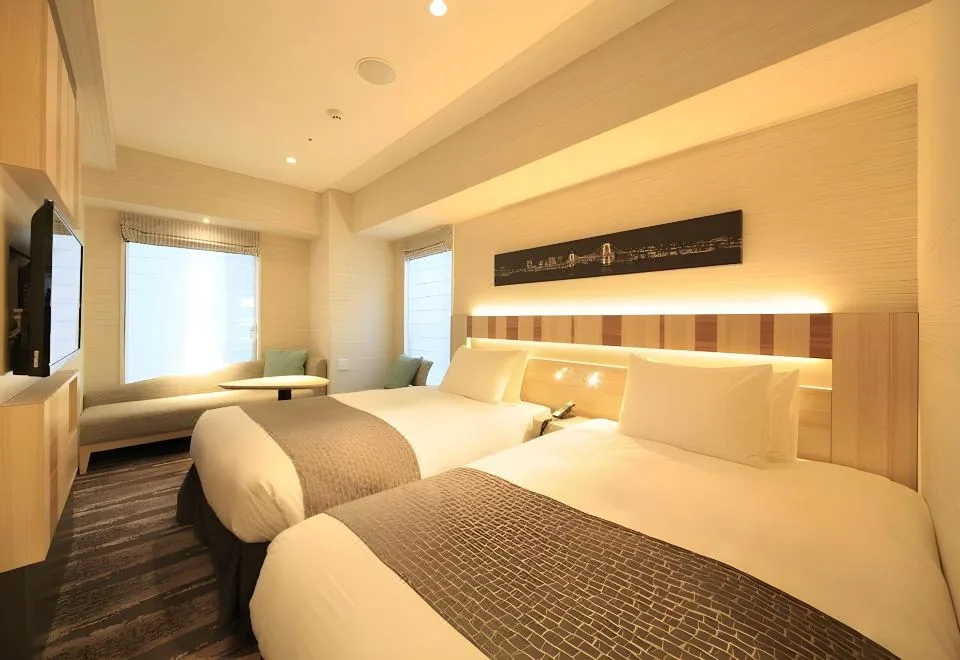
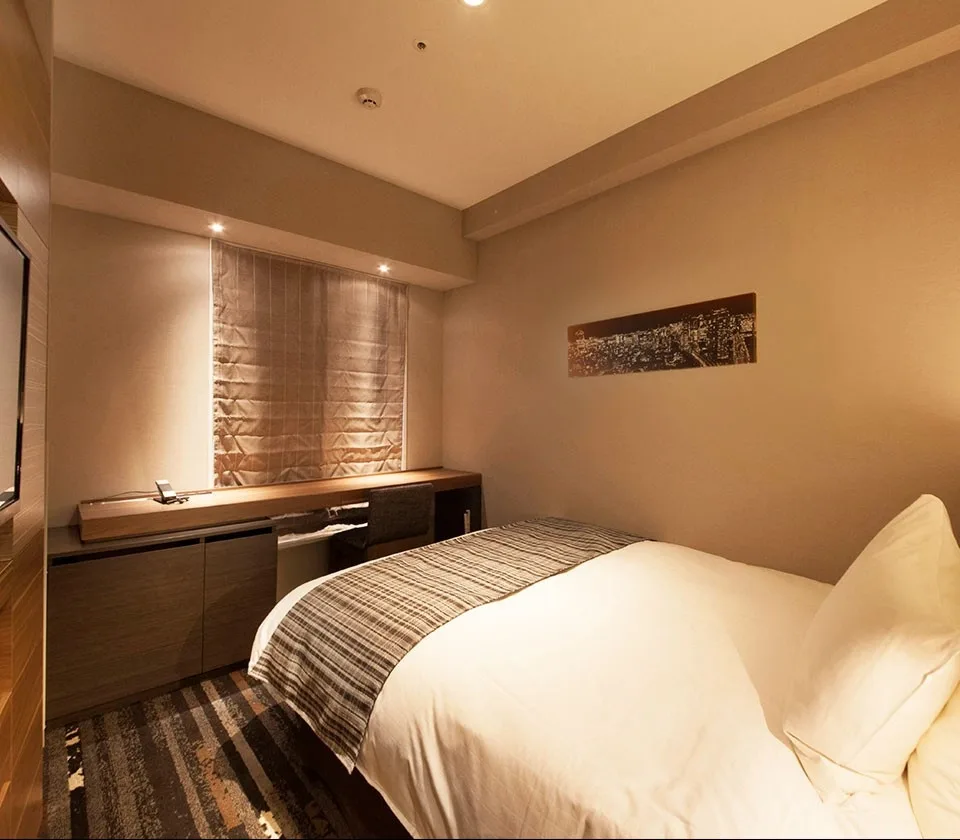
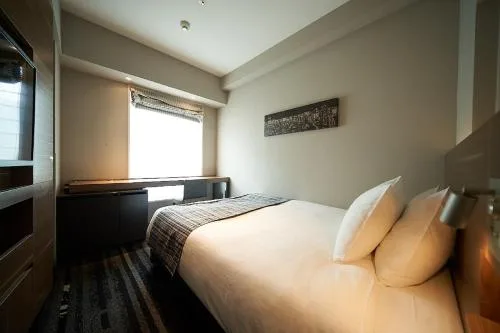
Single-bed rooms measure 14.0–14.2 m², with either a 140 cm bed or a 160 cm Double. Standard Twin is 21.6 m² with two 110 cm beds. To share a wider bed, compare the 160 cm Double. To sleep separately with more usable floor area, choose the Twin. A wider bed in a small room may reduce the passage at its foot or beside the desk.
| Room type | Space or bedding | How to choose |
|---|---|---|
| Single-bed room | 14.0–14.2 m² / 140 cm bed | Solo or light packers |
| Double | 14.0–14.2 m² / 160 cm bed | Two people sharing a wider bed |
| Standard Twin | 21.6 m² / two 110 cm beds | Separate beds and more floor space |
Decide where two large suitcases go before choosing a room: in a single-bed room, open one case and stand the other against the wall, keeping a path at the foot of the bed clear enough to turn around; only the Twin has enough floor for two cases open at once, with the desk still usable. Travelling solo with one cabin bag, a single-bed room is enough; two people with a large case each who want to unpack shopping in the room will use the Twin’s extra floor.
Bed width matters for two people sharing: if you move around in your sleep, pick the wider bed; if you sleep separately, do not worry about bed width and look at the Twin instead — you get more room to move as well.
The room has a long desk — good for spreading a map to plan the day or sorting shopping in the evening. Once it is piled up, though, there is nowhere left to write or eat a late snack, so put the bags away first and keep half the desk clear.
The hotel has 165 rooms, each with a flat-screen television. In the bathroom, the tub is oval and wider than a typical business-hotel tub, so a soak is comfortable; the beds are on the firm side, while the pillows and duvet are light and soft. The rooms are small but clean and tidy — fine for washing up and sleeping, though not for spending long hours inside.
The booking pages also list room types such as the Moderate Twin, with 110 cm beds; when booking, read the room name first and match the beds and occupancy before looking at the price.
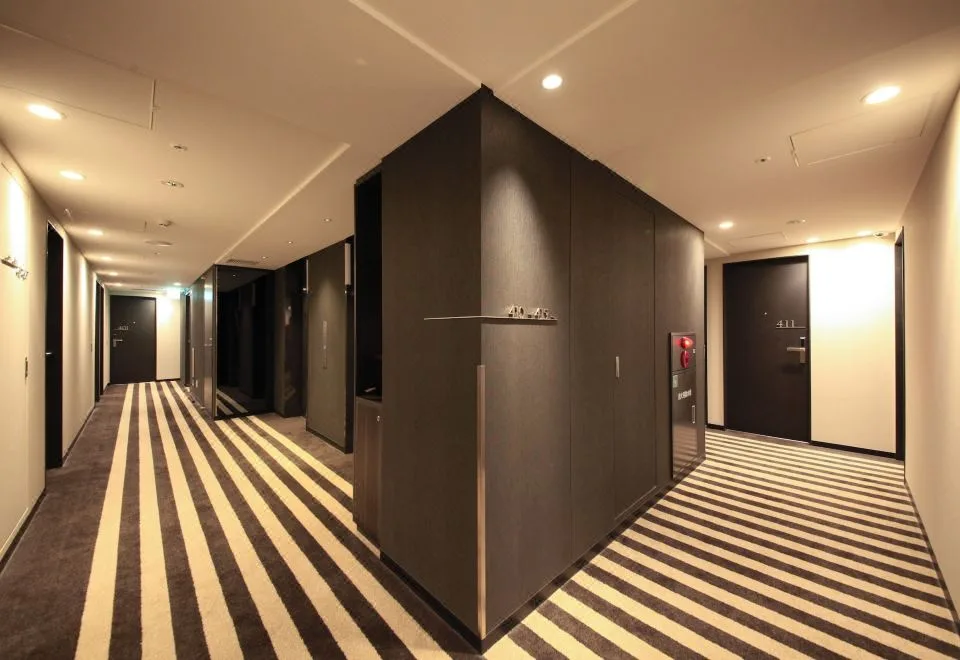
The corridor outside the rooms is narrow, so a large case can only be opened right by the door; take out what you need before stepping inside, or you will be digging through the case in the hallway.
Rooms come in smoking and non-smoking versions, so check which one the room name shows when booking.
See the official room descriptions for the exact category, beds and occupancy.
Arriving with suitcases
The listing puts Ginza-itchome Station around 150 m or a three-minute walk away. Tokyo Station and Yurakucho may also suit your route, but distances and station exits differ. With luggage, find an elevator rather than dragging cases up the nearest stairs.
With large luggage, a wheelchair, or a stroller, use Exit 6: since 29 August 2025, the elevator inside the new building at Exit 6 runs from the first to the last train and takes you from the platform to street level by elevator alone, with no escalator change. The Shinkiba end of the platform also has an elevator to the Ginza-dori-side ticket gates, then a connecting level to the street. With light luggage, just use whichever exit is nearest — there is no need to detour to Exit 6.
Tokyo Station is also an option, but it is a large station and its exits and walking distances differ; unless you are changing trains there, Ginza-itchome is the simplest stop for a first visit.
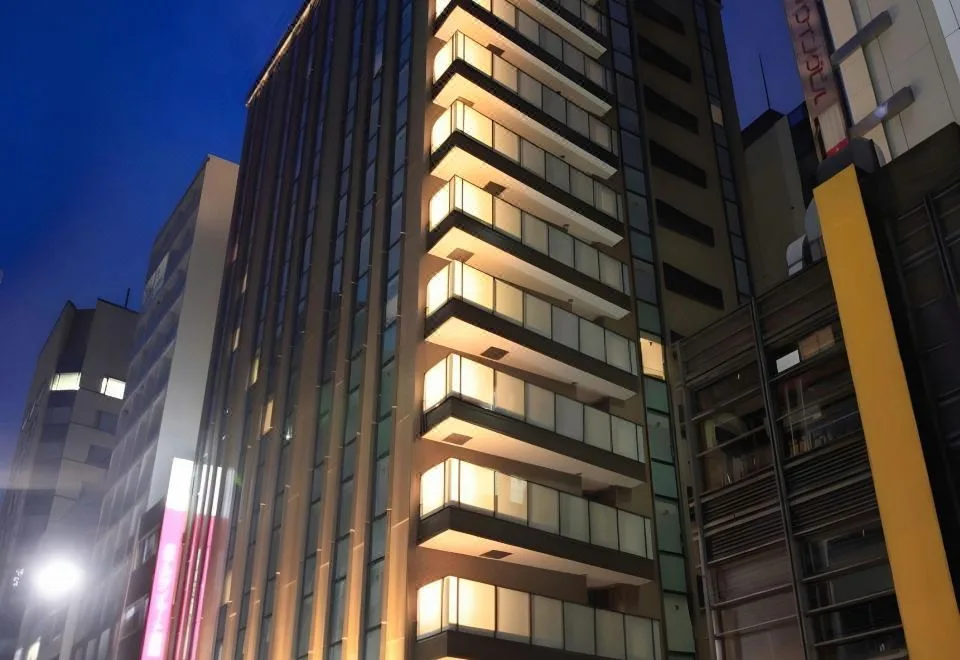
The street in front of the hotel carries little traffic and is quiet at night, so even a street-facing room hears little road noise; after a day out in Ginza, closing the door leaves a quiet room to sleep in.
Coming by JR, Yurakucho Station is about 700 m away; walking from there takes a few minutes longer than from Ginza-itchome, so with heavy luggage do not detour that way — take the subway to Ginza-itchome instead.
The new elevator at Exit 6 sits inside the Hulic Ginza Building at Ginza 1-7-10, so you ride up into the building and leave at ground level from inside; on a rainy day there is no open-air platform to cross.
Ginza-itchome serves the Yurakucho Line only; for the Ginza, Marunouchi or Hibiya lines or JR, walk to Ginza Station or Yurakucho Station and allow extra time for the transfer.
| Accommodation details | Details |
|---|---|
| Address | 1-15-11 Ginza, Chuo City, Tokyo 104-0061, Japan |
| Check-in / Check-out | 2 p.m.–midnight / before 11 a.m. |
| Ordinary walking reference | 150 m / about three minutes from Ginza-itchome Station |
Breakfast: weigh price and convenience
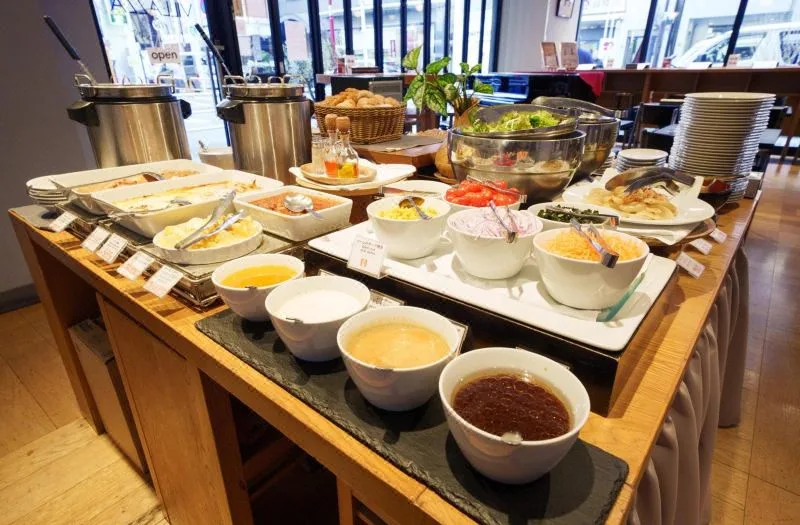
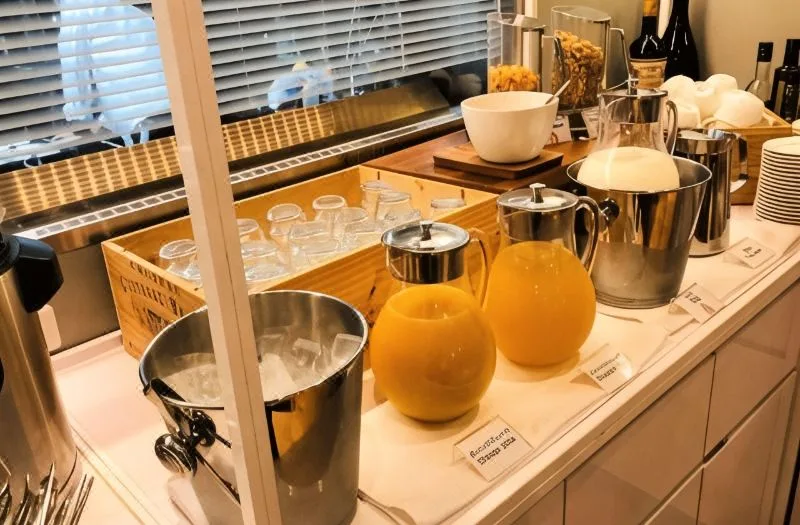
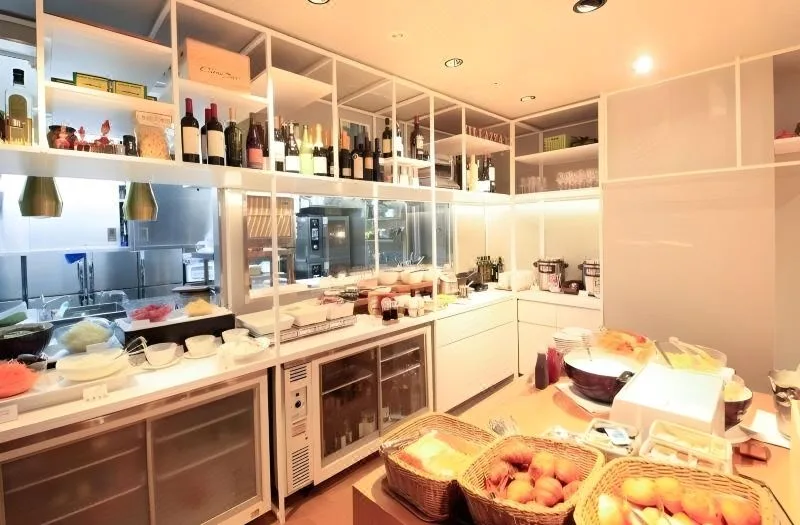
Breakfast is a buffet served 7:00–10:00 a.m. The dining room is small and seats fill up at peak times, and the food is simple rather than a lavish spread — but you can eat downstairs and head straight out, which saves a busy morning. For a more relaxed breakfast, come down a little later, after the busiest period, when seats are easier to find.
Whether to add breakfast comes down to the price difference: ¥2,000 per adult booked on site (¥1,400 if booked in advance) and ¥1,000 per child aged 17 and under, payable at the hotel. If you plan to eat breakfast out every day, keep the difference for Ginza’s cafes; but on the first day, when you do not know the area yet, adding one breakfast lets you eat downstairs and leave without hunting for a breakfast spot.
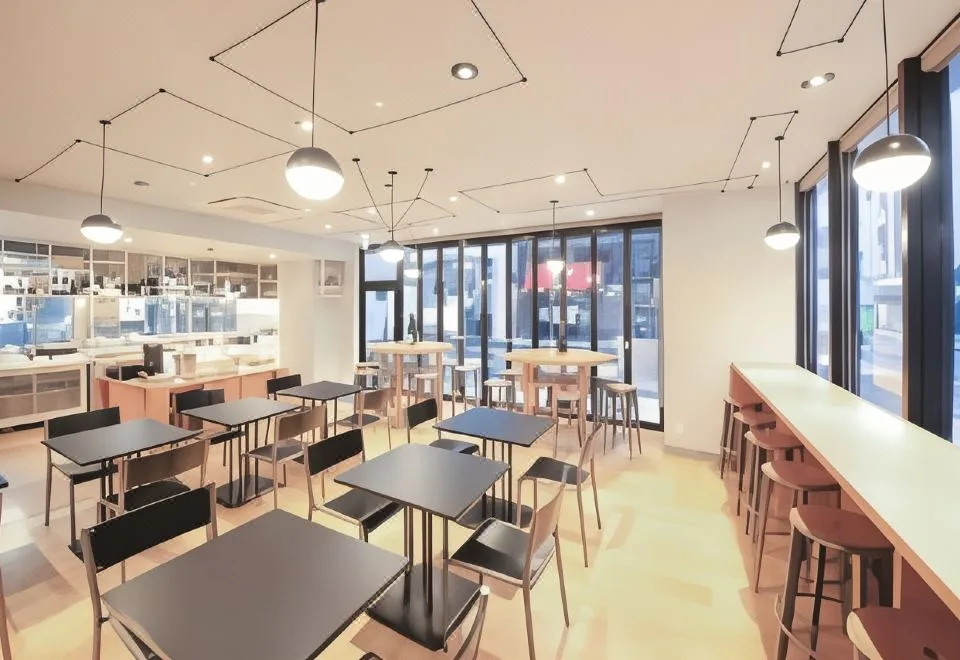
The same restaurant serves lunch 11:30 a.m.–2:30 p.m. and dinner 5:30–9:00 p.m., Monday to Saturday; on Sundays it serves breakfast only. If you do not want to walk far in the evening, eating in the hotel is an option. The room has wooden tables and chairs and large windows, bright in the daytime; you can take what you want and sit down without waiting for food to be cooked.
An early departure means missing breakfast; if you have an early train or flight, decide the night before where breakfast will come from.
The buffet covers both Western and Japanese dishes, with more Western choices than Japanese: bread, fruit, miso soup, curry with rice, natto, yogurt with granola and coffee are all there. The restaurant on the ground floor is Italian, and it has terrace seating for eating outside when the weather is good.
The coffee is good — have a cup first thing to wake up; juice is on the buffet counter too, so you can pick it up and go without waiting to be served.
Facilities: what is actually there
There is no large bath, pool or gym here — the facilities cover the basics: a massage room, a business centre, and fax and copying services (charged) are all in the building; public Wi-Fi is free, and there are elevators, a dryer, dry cleaning (charged) and an iron. Staying several nights, you can plan laundry around the dryer and dry cleaning instead of looking for a laundromat outside.
Drivers should plan parking first: the hotel uses a public car park nearby, ¥2,400 a day with no reservation needed, a short walk from the hotel rather than inside the building. The front desk has a safe for valuables; there are accessible rooms, and staff speak English and Japanese, so questions about directions and facilities get answered directly.
To print documents or send a fax, the business centre and fax and copying services are in the building, with copying charged; staying here on business, there is no need to find a convenience store to print.
The building has a first-aid kit, safety alarms, smoke detectors, fire extinguishers and CCTV in public areas, plus security staff on site; on a first stay, learn the escape route before unpacking.
The second floor has an ice machine, a microwave, drink vending machines and a free water dispenser, so a drink or something heated late at night does not mean going down to the ground floor; there is no safe inside the rooms.
There is no lounge or bar in the hotel, so an evening drink means going out; that is no hardship here, with Ginza bars and restaurants a short walk away.
A short stay or multiple nights
For a short visit, the location adds convenience. Over several nights, unpacking big suitcases morning and night may feel increasingly restrictive. Put some shopping money into a larger room rather than moving bags around every evening.
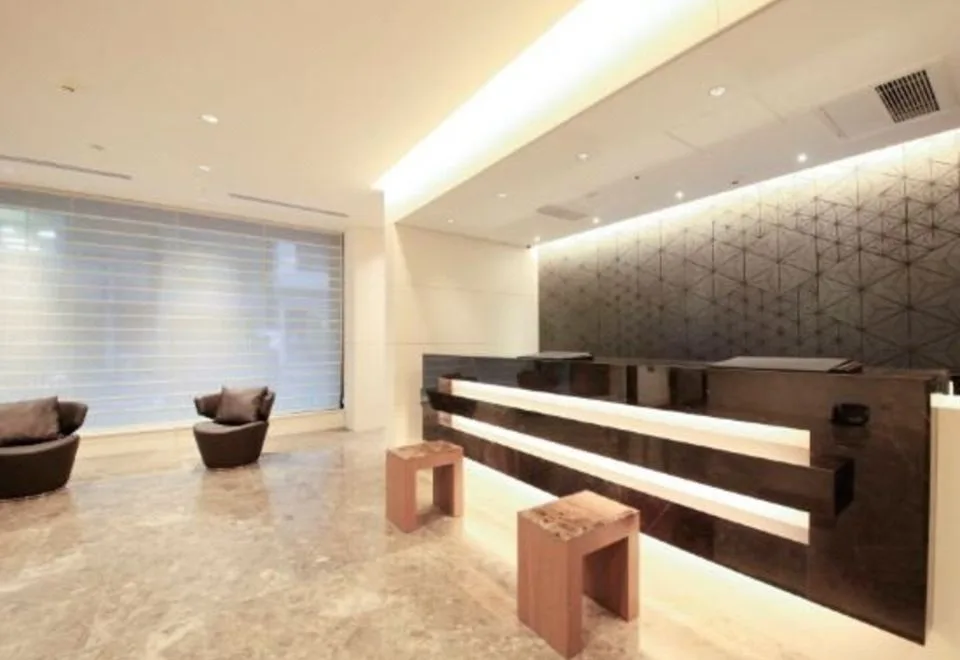
Check-in runs 2 p.m.–midnight and check-out is before 11 a.m., with the front desk staffed around the clock, so a late arrival still finds someone there. Arrive early and your bags can be left at the desk until the room is ready; after check-out you can leave them there too, explore Ginza hands-free, and collect them on the way back. No deposit is required. Children of all ages are welcome, but a child without an extra bed may still incur a charge, so list everyone when booking; extra beds and cribs depend on the room type, so ask when booking. Pets are not allowed, and the guest checking in must be at least 18.
Arrive early and, if the room is already cleaned, a small fee gets you in before 2 p.m. instead of waiting nearby; whether early check-in works depends on how the rooms are running that day, so it is not guaranteed.
The front desk is efficient and friendly; check-in is quick, and questions about breakfast get straight answers. If something comes up during the stay, asking the desk beats searching online. Before the trip, you can also call the hotel at 03-5579-9733.
Compromises before booking
Space is the key limitation. Noise, cleaning and service vary from stay to stay, so one night does not predict every night. After arrival, keep cases away from the bathroom door and emergency routes, then organize the desk.
Reduce unnecessary travel
Combine Ginza walks (Chinese guide) and Tsukiji Outer Market (Chinese guide) in the same direction.
From the hotel, the Ginza Art Aquarium is about 580 m away, Tsukiji Outer Market about 910 m and Nihonbashi about 740 m — all walkable; the Imperial Palace is about 1.7 km and Hibiya Park about 1.2 km, reachable on foot or by subway. Breakfast at Tsukiji in the morning, then back to Ginza to shop, runs in one direction with no doubling back.
Staying in Ginza means unhurried evenings: walk back to drop off shopping, then head out for dinner, all within walking distance; the next morning go to Tsukiji first, then take the subway elsewhere, without carrying bags around.
A FamilyMart sits on the corner, a few steps away for water or a late-night snack; Matsuya and Mitsukoshi department stores are also a short walk away, so shopping needs no long trip. A reasonably priced cafe is one or two minutes on foot for a light lunch.
Once the room fits your plans, compare total rates for identical dates, guests and cancellation terms. Consider breakfast and room-size upgrade costs separately.
Pros and cons at a glance
Pros
- Ginza-itchome Station is about 150 m away, a three-minute walk, putting Ginza shopping and subway travel in the same area.
- The Standard Twin is 21.6 m² with two 110 cm beds, so two people sleeping separately still have space to spread out luggage.
- The front desk is staffed around the clock and check-in runs until midnight, so a late arrival still finds someone there.
- Breakfast is a buffet from 7:00–10:00 a.m., ¥2,000 per adult and ¥1,000 per child aged 17 and under, addable on site.
- Luggage storage, a massage room and a business centre are in the building, with free Wi-Fi in public areas.
Cons
- Single-bed rooms are only 14.0–14.2 m², so two large suitcases open at once will feel cramped — plan the passage and the space at the foot of the bed first.
- The restaurant is small and seats fill up at peak times; breakfast is practical rather than a lavish spread.
- The public car park is nearby, not in the building, at ¥2,400 a day — drivers should budget for it separately.
- Pets are not allowed; extra beds and cribs depend on the room type, so ask when booking.
Information checked: November 22, 2026.