
TOKYO / CHUO
Hotel SUI Ginza Kyobashi by ABEST
Hotel SUI Ginza Kyobashi by ABEST
A compact stop beside Takaracho Station: check bathtub versus shower rooms
For a single night between Tokyo journeys, I would consider Hotel SUI Ginza Kyobashi: Takaracho Station is close and shopping in Ginza does not require changing hotels. The stonework, wood bar and intimate shared areas add character. Room selection matters more for bed width, a bathtub and how two guests use limited space.
How to choose
| Item | Stay details |
|---|---|
| Location | 3-9-1 Kyobashi, Chuo City, Tokyo 104-0031, Japan |
| Check-in / Check-out | From 3 p.m. / before 10 a.m. |
| Room choice | Room names may look alike, but single and double categories differ in bathroom type and area. |
| Itinerary | Transport convenience is strongest for one or two nights when you are out most of the day. |
Rooms and luggage space
The single with a combined bathroom is 10.6 m² and has a 120 cm bed; the shower-only single is 13.6 m² with the same bed width. A double with combined bathroom is 14.7 m² and has a 140 cm bed, while a shower-only double is 11.5 m². For two separate beds, there is a 16.1 m² Twin. Verify the bathroom even when the room name sounds similar.
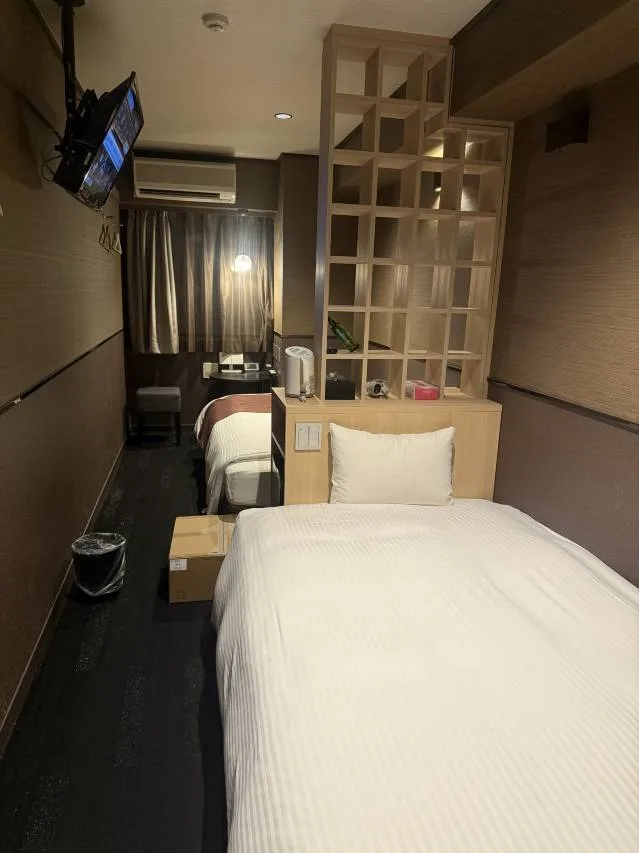
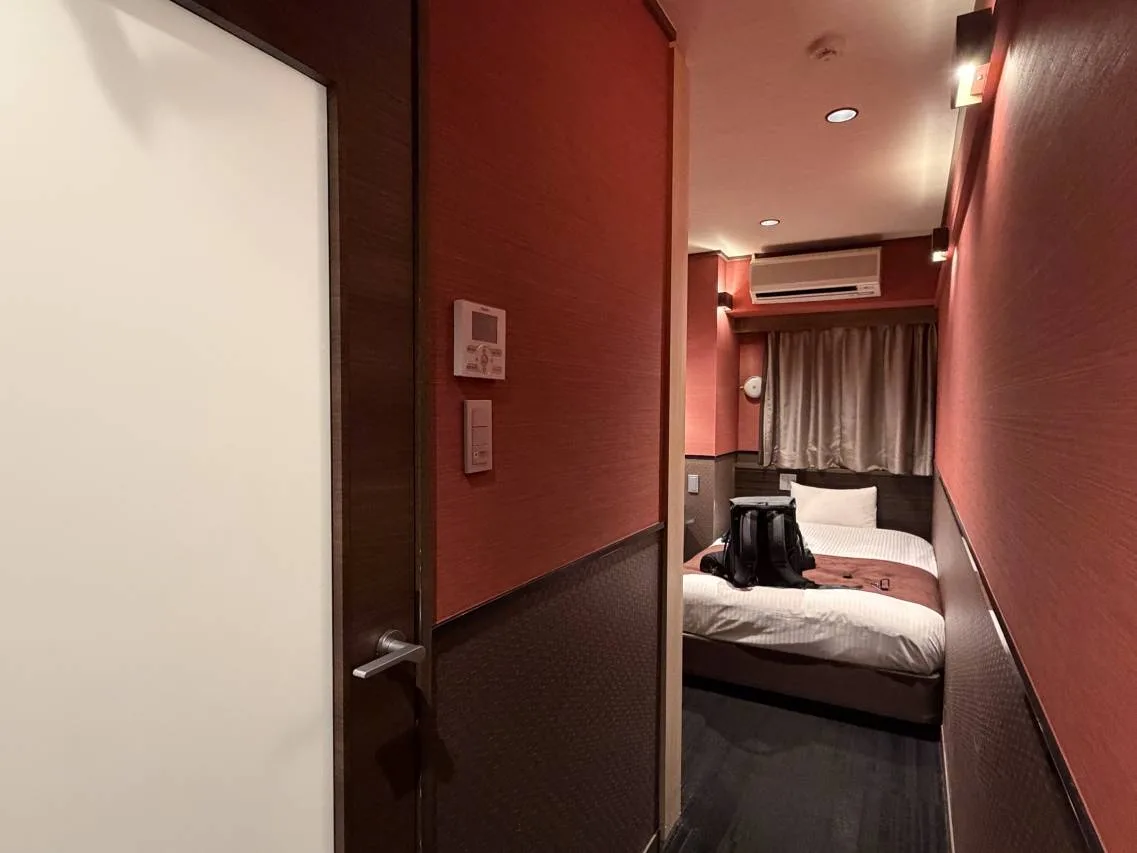
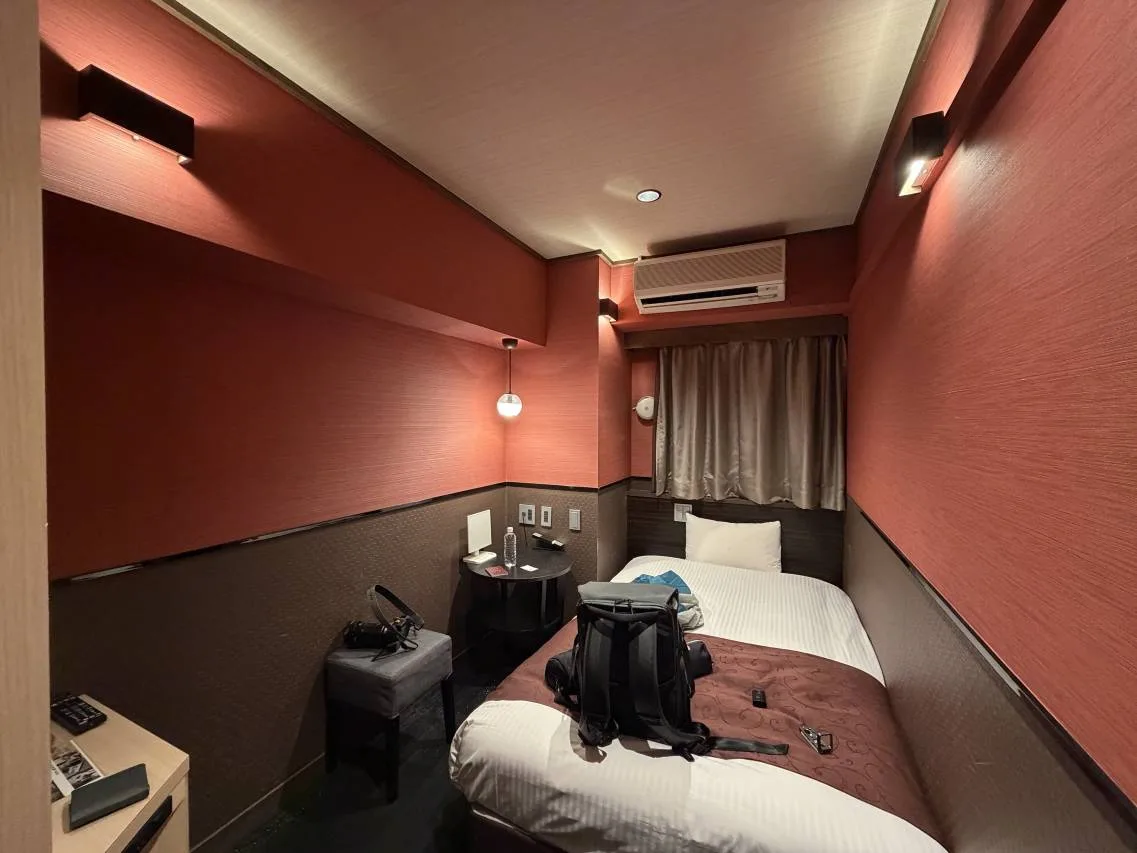
If you want a bath, don’t rely just on the word Double. And two large suitcases will not magically fit because a single is allowed for two guests. Photos show the bed and entryway dominate usable space; taking turns unpacking is easier than opening cases together.
The hotel has just 37 rooms and opened in 2017, and the whole building is non-smoking. Every room has a window, air conditioning, a private bathroom and a refrigerator, and an LCD TV comes as standard; complimentary toiletries include a toothbrush and toothpaste, so you do not need to bring your own. The beds are made with down comforters and premium bedding. Put your suitcase against the wall before bed and keep the entryway side clear, so you are not tripping over luggage in the morning.
One thing to settle before booking with children: children of all ages are welcome, but no room type allows an extra bed or a crib. A child has to share your bed, and two adults in one bed is already tight, let alone three. Travelling with a child, choose the Twin Room so everyone gets their own bed. When booking, remember to include the number of children: children sharing a bed may still incur an extra charge, with the amount shown at booking.
The room is small, but it is clean and the palette feels modern, so one night here never feels cramped. The one thing to know is the chair has no backrest: I tried working on my laptop in the room and my back tired quickly, so I keep work for the daytime and treat the room as a place to sleep.
Room photos
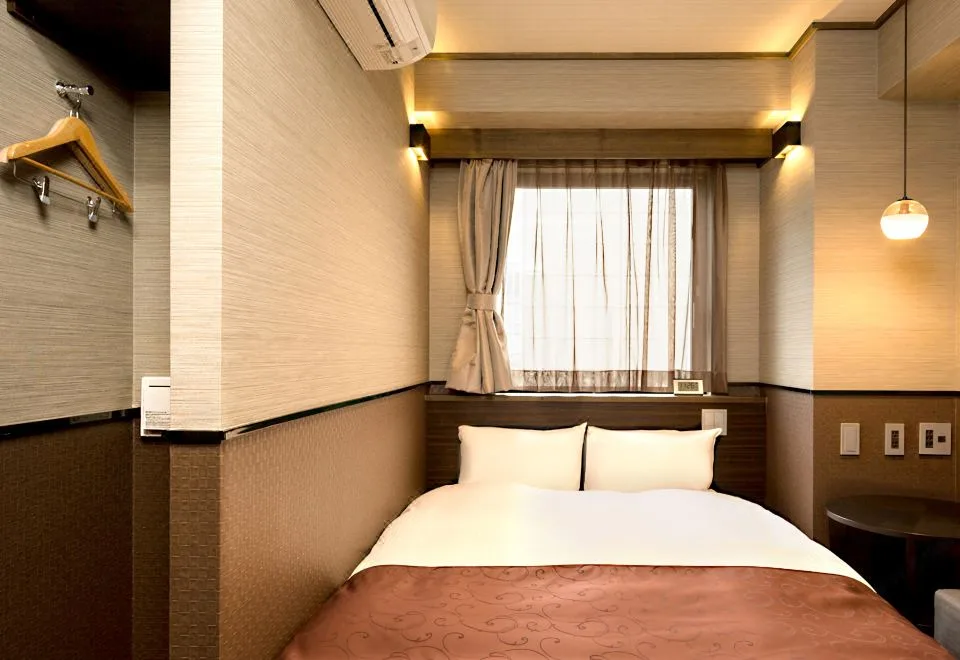
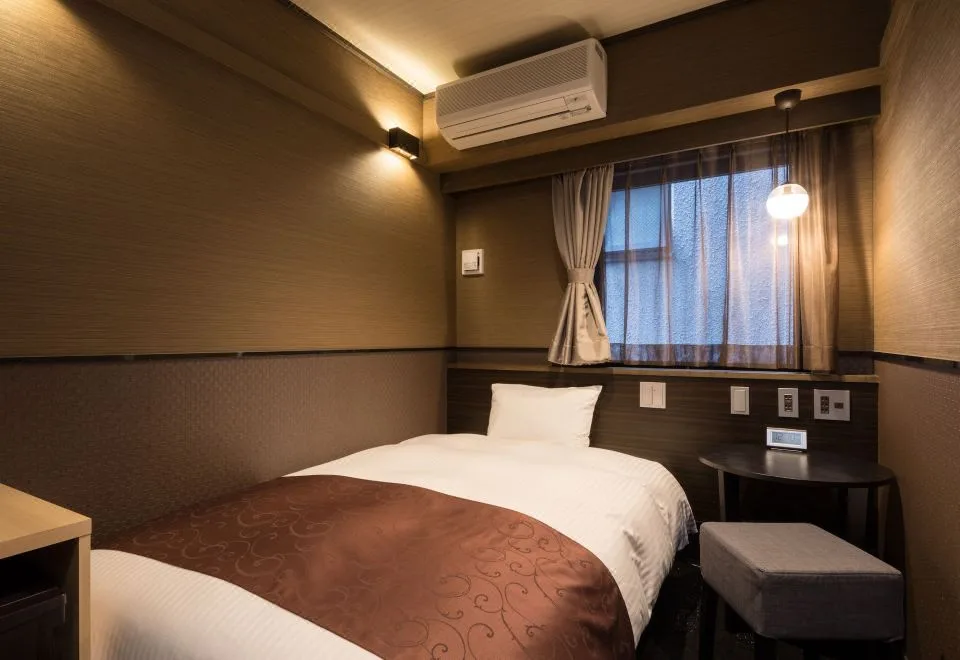
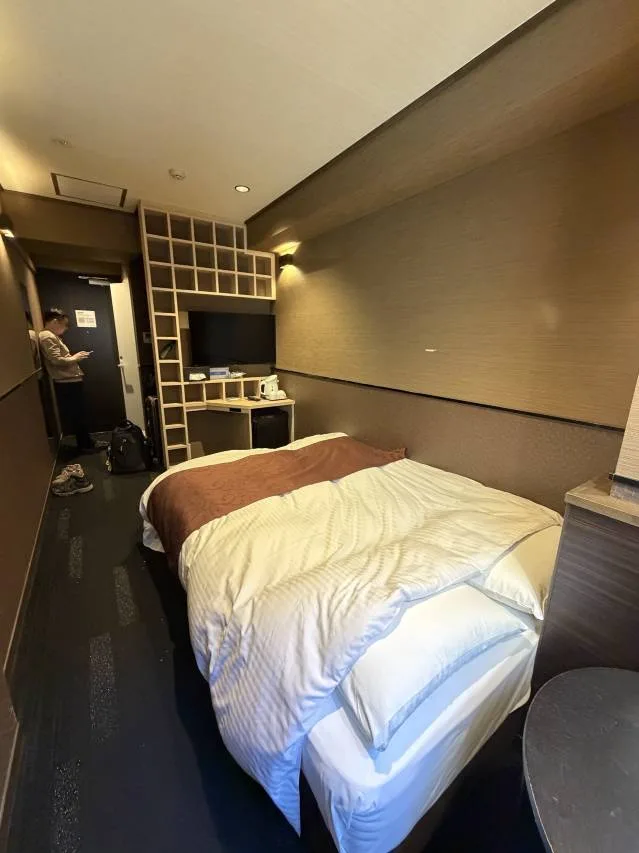
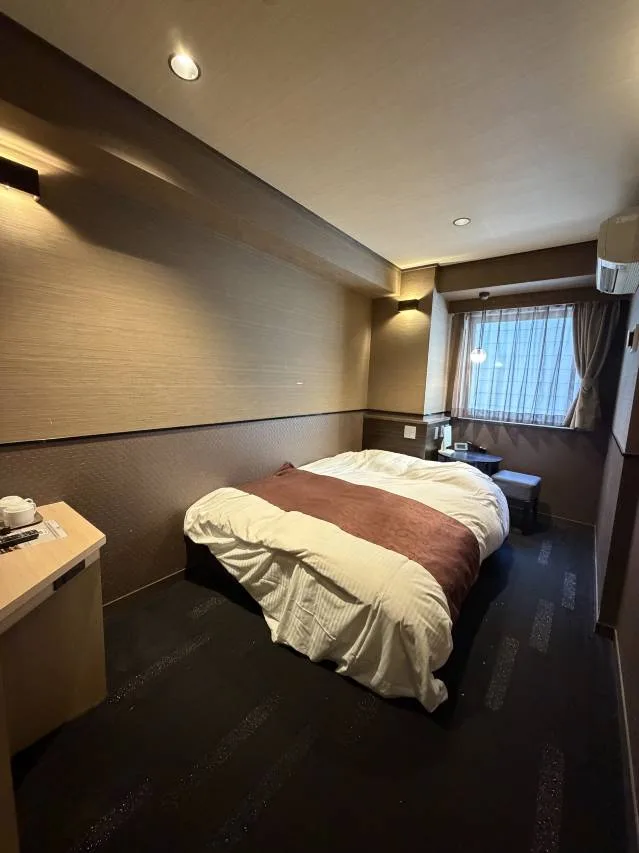
Compare the bed, desk and entrance with your luggage in mind. Photos can show different categories; use the exact booked room as your reference.
Start with the photo taken from the foot of the bed: check whether the desk fits a laptop and how much floor is left once a suitcase is open. A desk sits by the window, and you can see the whole stretch from the bed to the entrance at a glance; the Double and Twin rooms look out onto the street, worth noting when you book. The bedding in the photos is white and the rooms look clean and bright. Furniture differs by room type, so judge by the photos of the exact type you booked.
Do not worry about the old shell of the building: the interior has been redone, the tones are gentle and the light is bright, so the first impression is a modern little room rather than a makeshift conversion. Once you unpack and put the case away, the layout works.
Bathroom setup
Shower, bathtub and sink positions affect two people getting ready at once. Look at the photos and verify whether your category has a bathtub or shower-only arrangement.
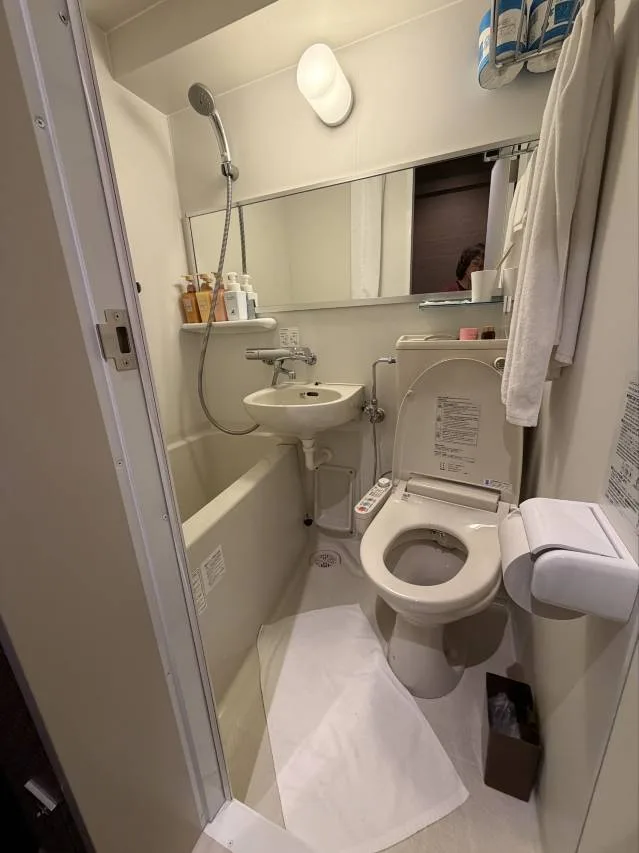
The bathroom has a bidet, with the sink, toilet and shower all in one compact space, and no partition between the shower and the toilet, so leave your slippers by the door and a wet floor is no trouble. If you want a bath, book a room type with a bathtub: the shower-only versions have no tub no matter how large they are. When two people get ready in the morning, one can shower while the other uses the sink, and nobody has to wait by the door.
One thing to warn you about: the toilet sometimes carries a drain smell in the morning, though I never noticed it at night. I open the window and let it clear before brushing my teeth, rather than stepping in first thing and breathing it in.
Breakfast: warm dashi rice and light options
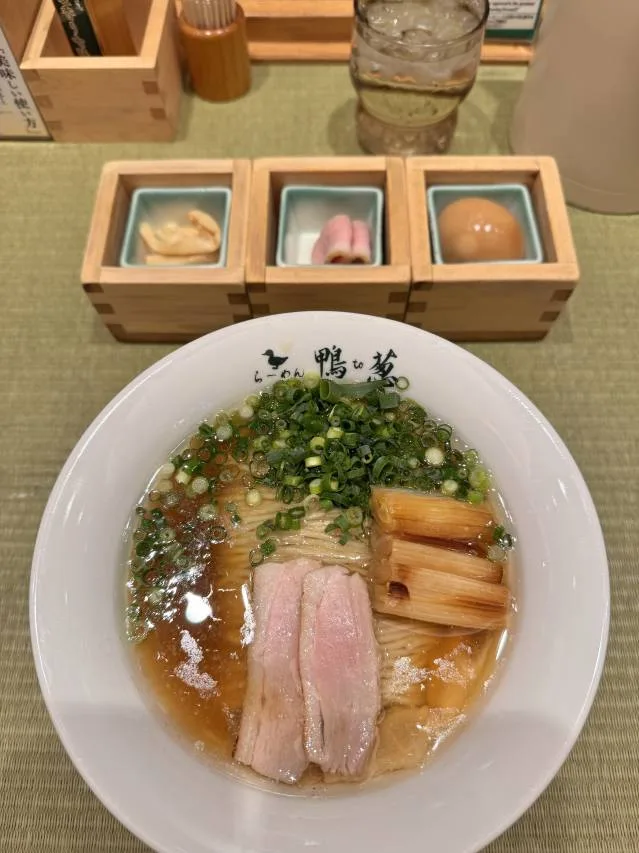
The ground-floor hotel breakfast includes warm dashi chazuke (rice with stock), bread and cereal. If you enjoy a light hot meal before catching trains, eat at the hotel; if heading to Tsukiji early, a room-only rate is more flexible.
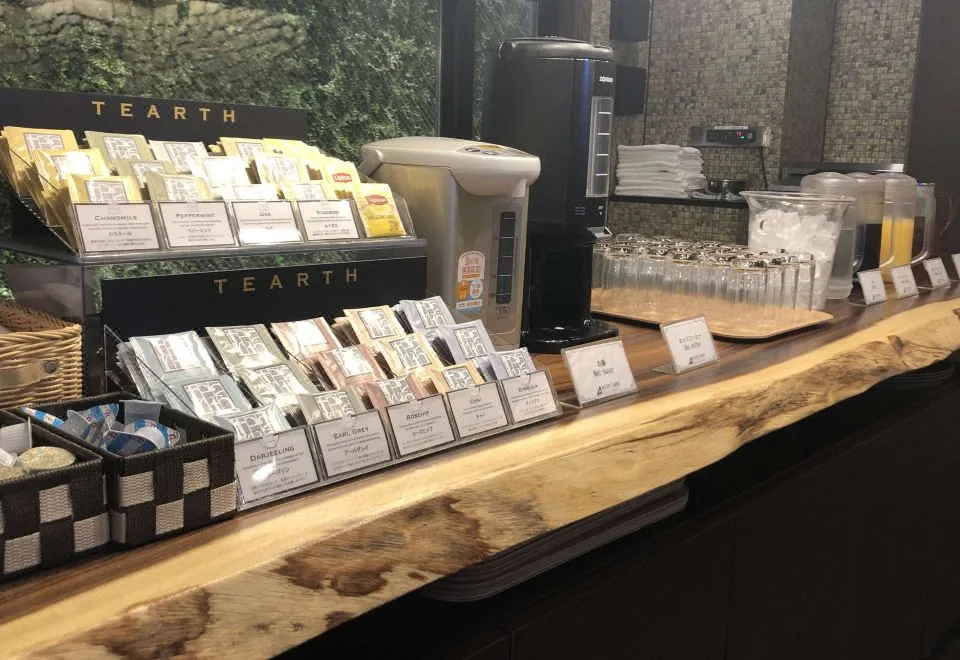
In the evening, the ground floor offers complimentary coffee, evening drinks and udon noodles, a small pleasure on returning to the hotel. The evening drinks include wine, good with a bowl of udon as a late snack. The menu and hours follow the day’s reception notice, so do not count on a late-night snack as a full meal.
Breakfast is served on the ground floor from 6:30 to 9:00 a.m., Japanese style: dashi chazuke is the main dish, with bread and cereal alongside. Dashi chazuke is white rice with hot stock poured over it, simple and light, just right for the morning. Children aged 17 and under pay 1,300 yen each, and the adult price is available on request from the hotel. Check whether breakfast is included when you book; you can also add it on the day and pay at the hotel.
The chazuke arrives hot, and you can head straight to the train when you finish. If you want breakfast in Tsukiji, book a room-only rate: the Tsukiji Outer Market is an easy morning trip, with sushi, tamagoyaki and seafood bowls inside. Many shops in the Tsukiji Outer Market close on Sundays, so plan a food trip for another day. Catching an early flight, allow time to pack after breakfast and do not leave it to the last minute.
The dashi chazuke is the signature breakfast, but it does not arrive on its own: you order it, and the sides, plates and milk are not refilled endlessly without asking. I ask what comes with the chazuke when I sit down and have the sides brought all at once, which makes the meal run smoothly. Once I was handed a spoon that was not clean, so I asked the desk for a fresh one instead of using it. In earlier years the breakfast also included two free pieces of bread.
The free drinks start at five in the evening, and the alcohol is included: I loved the umeshu, though I forgot to ask which brand it was. The red wine did not suit my taste, so I left it unfinished. The coffee machine is sometimes left switched off, so I check the power switch myself before waiting in front of it.
Transport, cases and map
The closest regular walk is from Toei Asakusa Line Takaracho Exit A3, officially about 30 seconds. Ginza Line Kyobashi Exit 2 takes about three minutes. Walking from JR Tokyo Station is listed at around 15 minutes; with big cases, don’t treat it as an effortless stroll.
With cases at Kyobashi Station, use the street elevators at Ginza Line Exits 2 and 3; Exit 2 is on the Dai-ichi Life Mutual Building side. Come through the Ginza-side ticket gate, then navigate to the hotel from street level and allow extra walking time. Exit 8 also has a street elevator, one more option.
Address: 3-9-1 Kyobashi, Chuo City, Tokyo 104-0031, Japan. Google Maps directions
There is no need to go back to Tokyo Station for the airport: from Takaracho, Asakusa Line station A12, trains run through to the Keikyu Line for Haneda and to the Keisei Line for Narita. Some Asakusa Line trains terminate midway, so check the destination display before boarding and make sure your train is a through service. You can also take the Ginza Line from Kyobashi and change at Nihombashi, but that adds a transfer; with heavy luggage, I take the through train from Takaracho.
Ginza-itchome Station is a 370 m walk away and Yurakucho Station 800 m, both within easy reach. Yurakucho Station serves the JR Yamanote and Keihin-Tohoku lines, so Ueno and Shinjuku are direct with no transfer. The Keihin-Tohoku Line also runs direct to Yokohama. Yurakucho Station also serves the Yurakucho subway line, direct to Ikebukuro and Toyosu. From Ginza-itchome Station, the Hibiya Line reaches Ginza Station in one stop. Kyobashi Station is Ginza Line station G10, one stop from Ginza and one stop from Nihombashi, handy when you need either in a hurry.
Nearby Ginza and Nihonbashi
Shop in Ginza in the afternoon and return to leave bags before dinner. Another day, visit Nihonbashi’s old buildings or have breakfast in Tsukiji; there is no need to restart each day at Tokyo Station.
The hotel sits between three good directions: Nihombashi is a 530 m walk, the Tsukiji Outer Market about 1.2 km, and Ginza under 100 m away. Walk to Nihombashi for the old buildings: the Nihombashi bridge itself is a sight, free to walk across, with historic buildings along the street. Head to Ginza for shopping, where Mitsukoshi, Matsuya and Ginza Six can fill a whole day; the rooftop garden on the top floor of Ginza Six is free to visit, and go to Tsukiji in the morning for breakfast. None of the three needs a train, so plan the day by mood.
The museums around Kyobashi Station are close too: the National Film Archive is about 140 m from the station exits, the Artizon Museum about 290 m, so a rainy day still has somewhere to go. The National Film Archive screens films regularly, so check the programme if you like old films. The Artizon Museum sits in Museum Tower Kyobashi, right by the station; use Kyobashi Station Exits 6 and 7 for the museum. The Police Museum moved to Gotanda in April 2026 for redevelopment, so there is no exhibition at its old Kyobashi site. The Ginza Art Aquarium is 790 m away, the Imperial Palace 1.7 km, and the Imperial Palace East Gardens are free to enter, a good stop for a walk; both the Tokyo International Forum and Ginza Six are within a 15-minute walk, and the Forum hosts regular markets and exhibitions. Kyobashi Edogrand and Tokyo Square Garden are also in walking range, about 300 m and 900 m away, so lunch or shopping needs no detour.
Short stays and longer visits
For one or two nights mostly spent outside, location is the main advantage. Over three nights with shopping, compare the larger Double or Twin. If you want to rest in the room, more living space may be more worthwhile than one extra complimentary drink.
Check-in is from 3:00 p.m. and check-out is before 10:00 a.m., and the front desk is staffed around the clock, so a late arrival is no problem. The desk staff speak English and Japanese, and you can call ahead with questions (03-3563-9933). Leave your luggage at the desk on the last day and pick it up after shopping in Ginza instead of carrying cases around. Foreign guests should bring their passport, as the front desk needs it for registration. One more thing to note: Tokyo charges an accommodation tax that varies with the room rate, from 100 to 10,000 yen per person per night, payable at the hotel.
The staff are warm, and they walked me to the door at check-out. One of the front-desk staff studied Chinese in Taiwan and explained things to me in Chinese, which put me at ease. After check-out you can leave your luggage at the desk and explore the neighbourhood hands-free, then come back for it. I arrived back out of breath once and was handed a cold glass of water at check-in; on my last day, the staff struck flint stones at the door to send me off, a small closing note to the trip.
Exterior and shared spaces
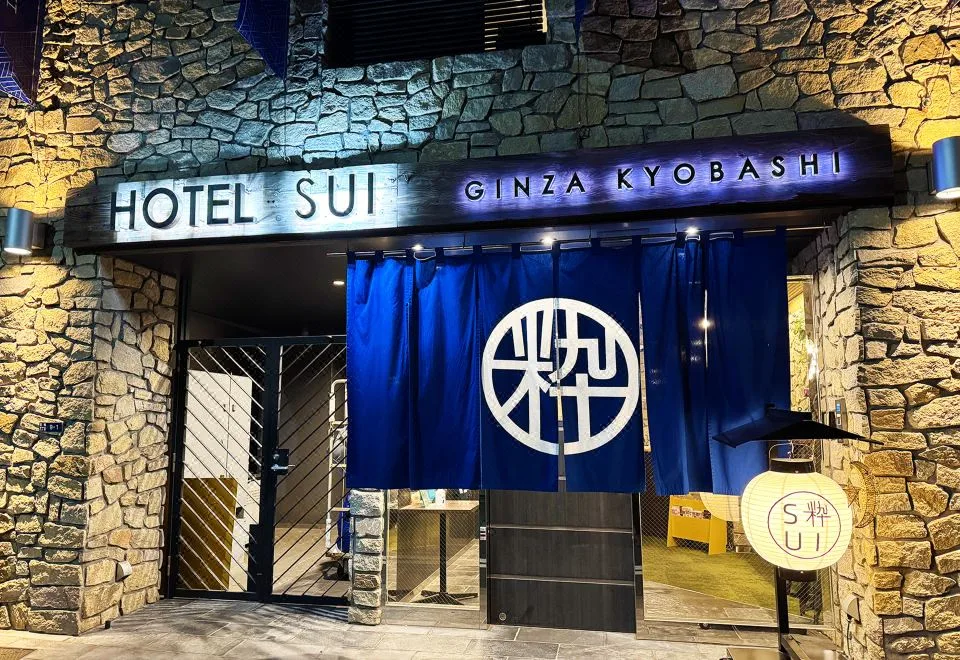
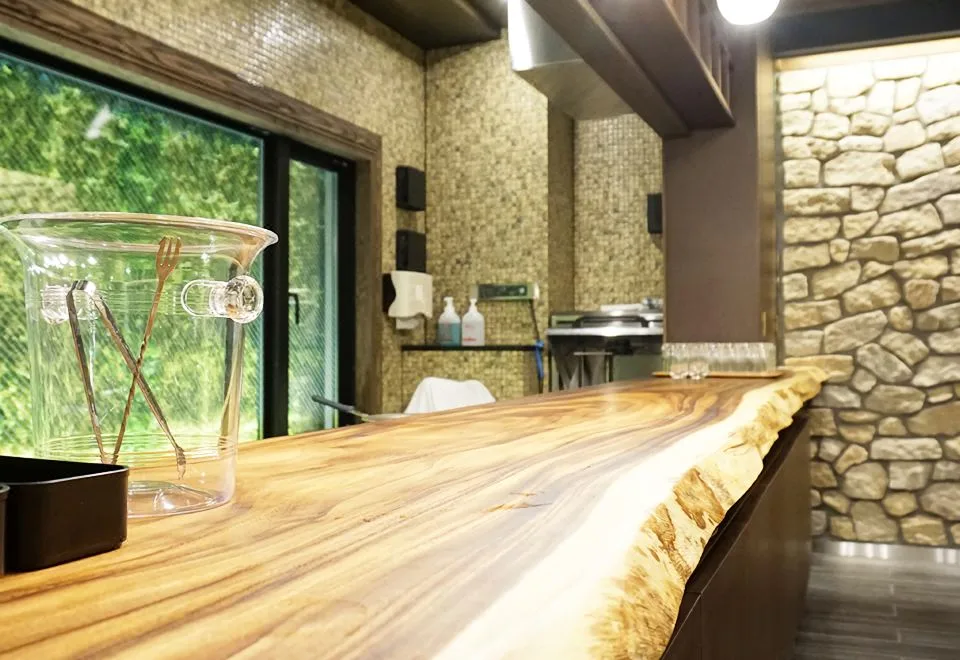
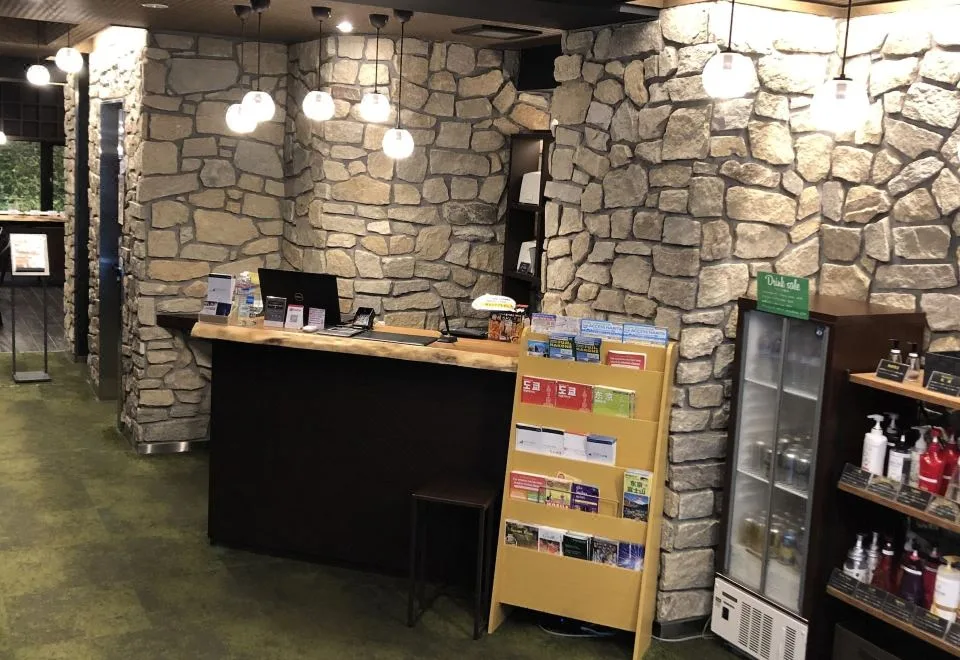
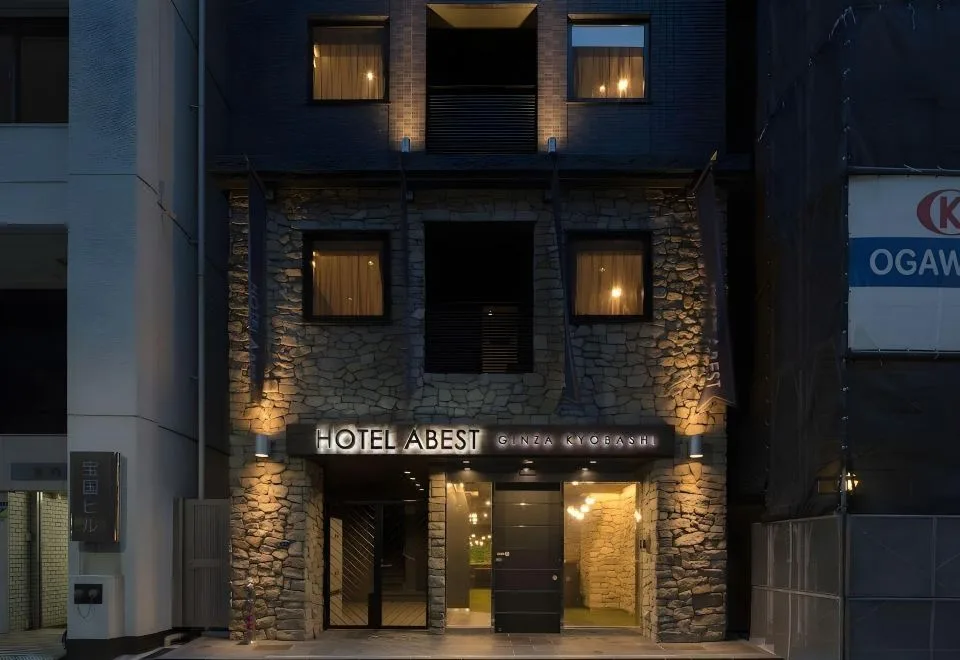
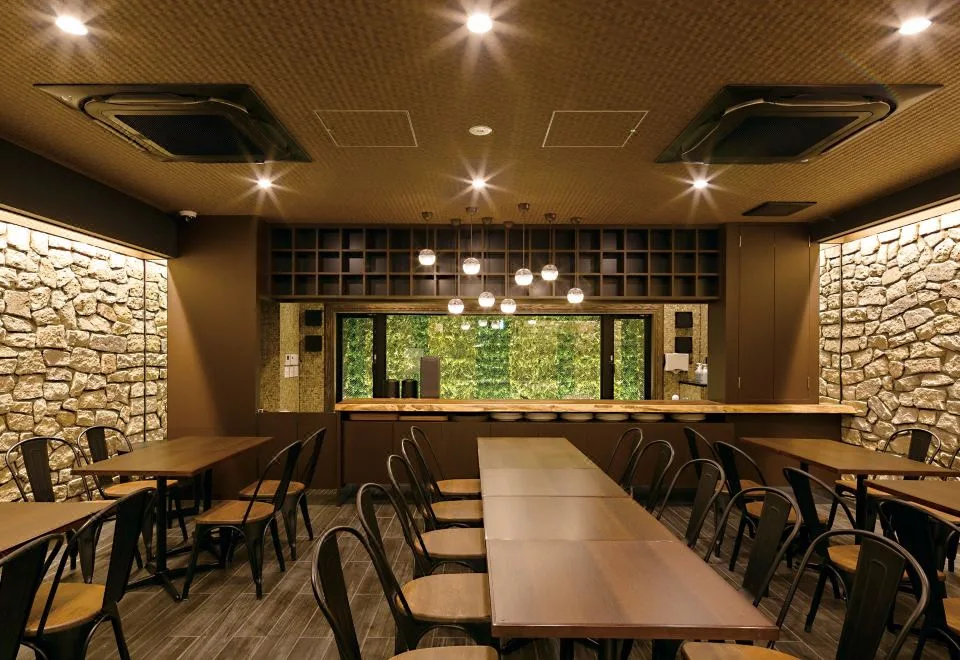
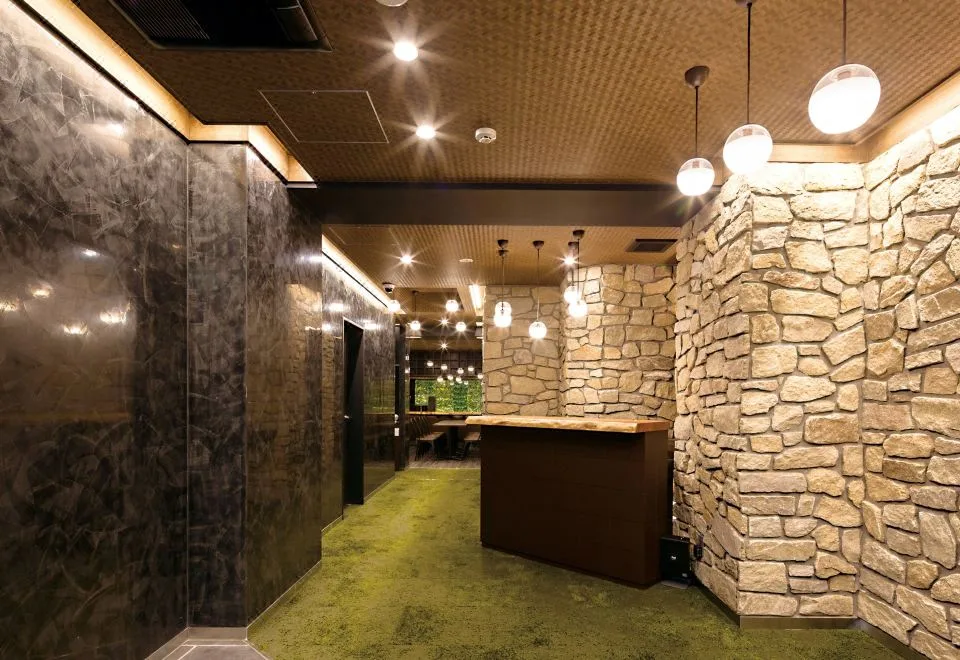
The ground floor is the liveliest part of the hotel: the stone wall, wooden bar, window-side seats and shared seating are all here, a good place to sit with a drink before heading upstairs. The window-side bar seats face the street, good for watching the street over a coffee in the daytime. The lobby is compact, with check-in and luggage in one short walk, and the amenities station is in the shared space too, so pick up what you need without asking at the desk each time.
Wi-Fi is free throughout the building, there is an elevator and a car park; drivers should confirm a space before setting out. Public areas are non-smoking, the front desk offers VIP check-in, plus dry cleaning and a morning wake-up call. Safety equipment includes alarms, smoke detectors, surveillance in public areas and fire extinguishers.
The ground-floor restaurant and lounge are free to use and genuinely comfortable; I often sit there a while in the evening before going upstairs, and in the daytime a coffee by the window beats sitting in a small room. The in-room Wi-Fi is slow, so sending photos takes a while — save files on your phone first if you are in a hurry.
Pros and cons at a glance
Pros
- Takaracho Station Exit A3 is about a 30-second walk, with Kyobashi and Ginza-itchome stations also in walking range, so Ginza, Nihombashi and Tsukiji are all easy to reach.
- Breakfast on the ground floor centres on dashi chazuke, served from 6:30 a.m., early enough for a morning train.
- In the evening, the ground floor offers complimentary coffee, evening drinks and udon noodles.
- The front desk is staffed around the clock and luggage can be stored; Wi-Fi is free throughout, and the hotel has an elevator and a car park.
- The whole building is non-smoking and the rooms are clean; the front desk staff speak English and Japanese.
Cons
- Compact rooms are the main trade-off: a 120 cm bed is tight for two adults, and even the Twin Room is only 16.1 m².
- Some room types are shower-only with no bathtub, so check the room name when booking.
- No room type allows an extra bed or a crib, so plan sleeping arrangements for small children in advance.
- Check-out is before 10:00 a.m., so plan the morning with time to spare.
- Cleaning and service vary, so ask about rubbish, towels and housekeeping before a longer stay.
Information last checked: 2026-11-22