
TOKYO / CHUO
Hotel Musse Ginza Meitetsu
Hotel Musse Ginza Meitetsu
Ginza 7-chome: small-dish breakfast and connecting rooms for a shopping trip
Hotel Musse Ginza Meitetsu brings shopping, a convenience store and a breakfast of Japanese small dishes together — if you enjoy the rhythm of Ginza, staying here feels right. It is not directly beside a station, and the walk takes you through side streets. In return, eating and shopping are easy, and you can stop by the room to leave your bags.
How to choose this hotel
| Item | Stay details |
|---|---|
| Location | 7-12-9 Ginza, Chuo City, Tokyo 104-0061, Japan |
| Check-in / check-out | 15:00–24:00 / before 11:00 |
| What to look for in rooms | Room photos show bright rooms with large windows, standard twins and more compact bed layouts. |
| Planning your stay | If you plan to explore Ginza for several days, staying here is simpler than changing hotels every day. |
Room types and luggage space
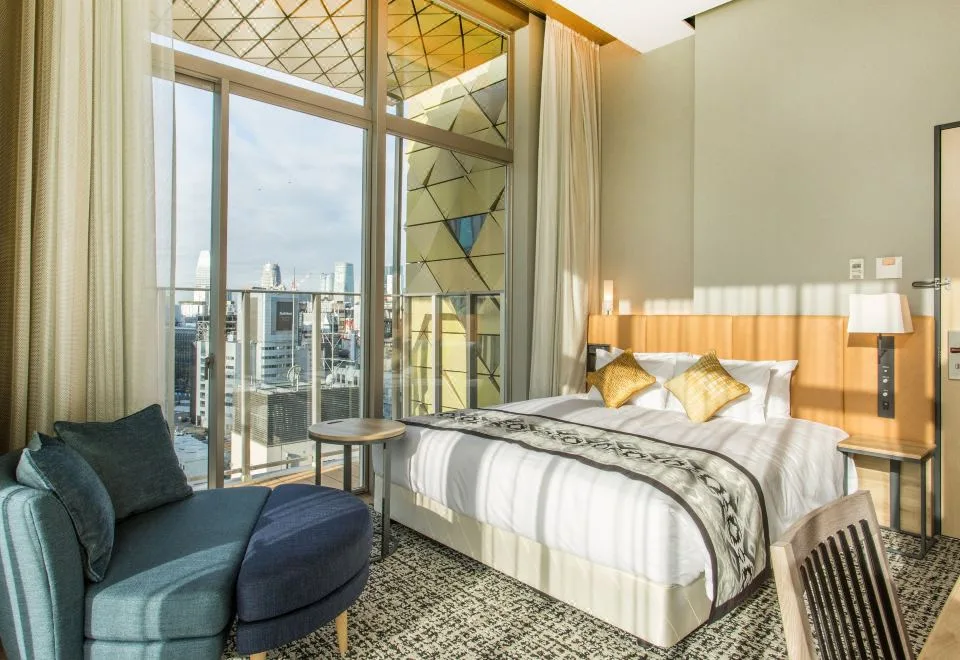
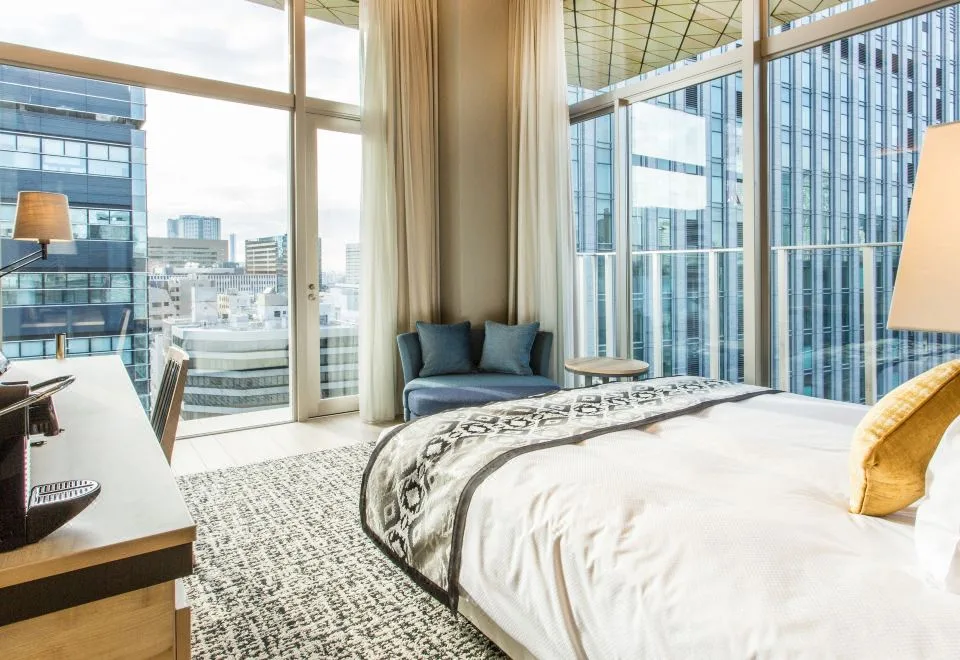
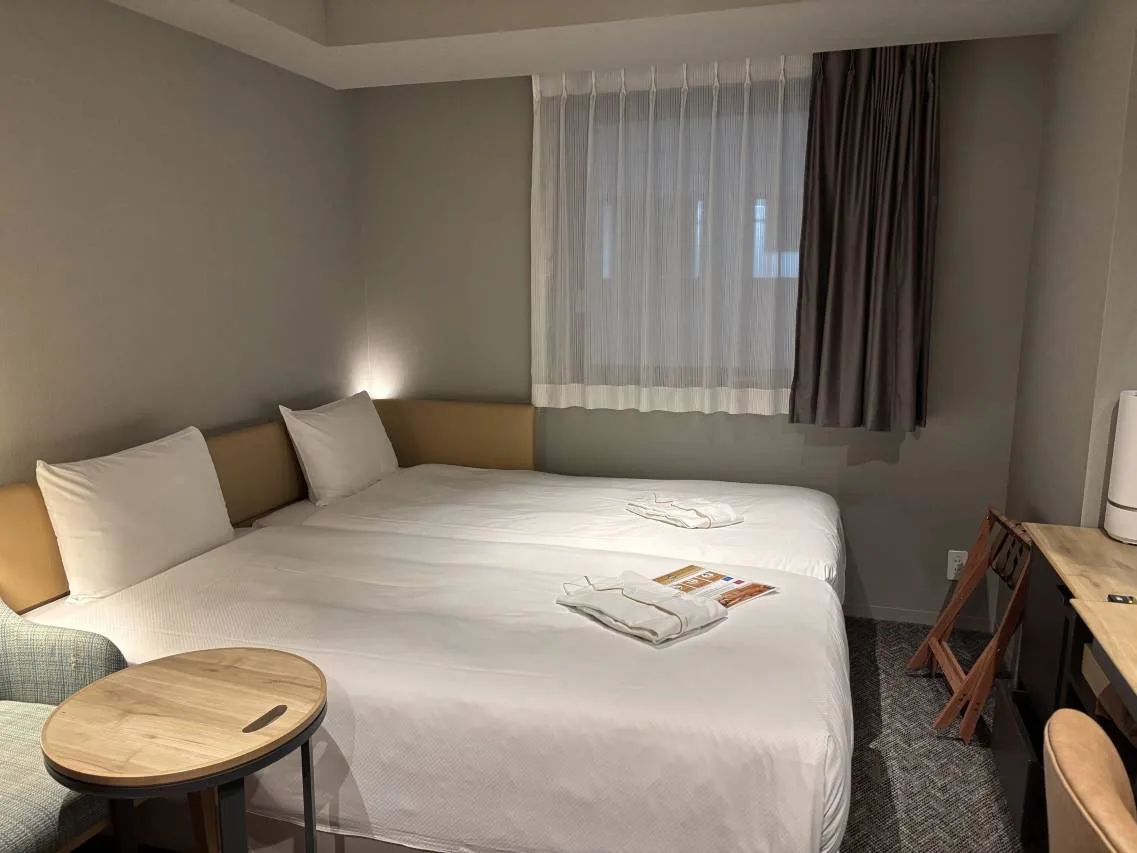
Room photos show bright rooms with large windows, standard twins and more compact bed layouts. Look at standard rooms, larger rooms and connecting rooms separately; do not take the photo of the window-side sofa to mean every room looks the same. For a family that wants both contact and privacy, ask before booking whether connecting rooms can be confirmed together in one reservation.
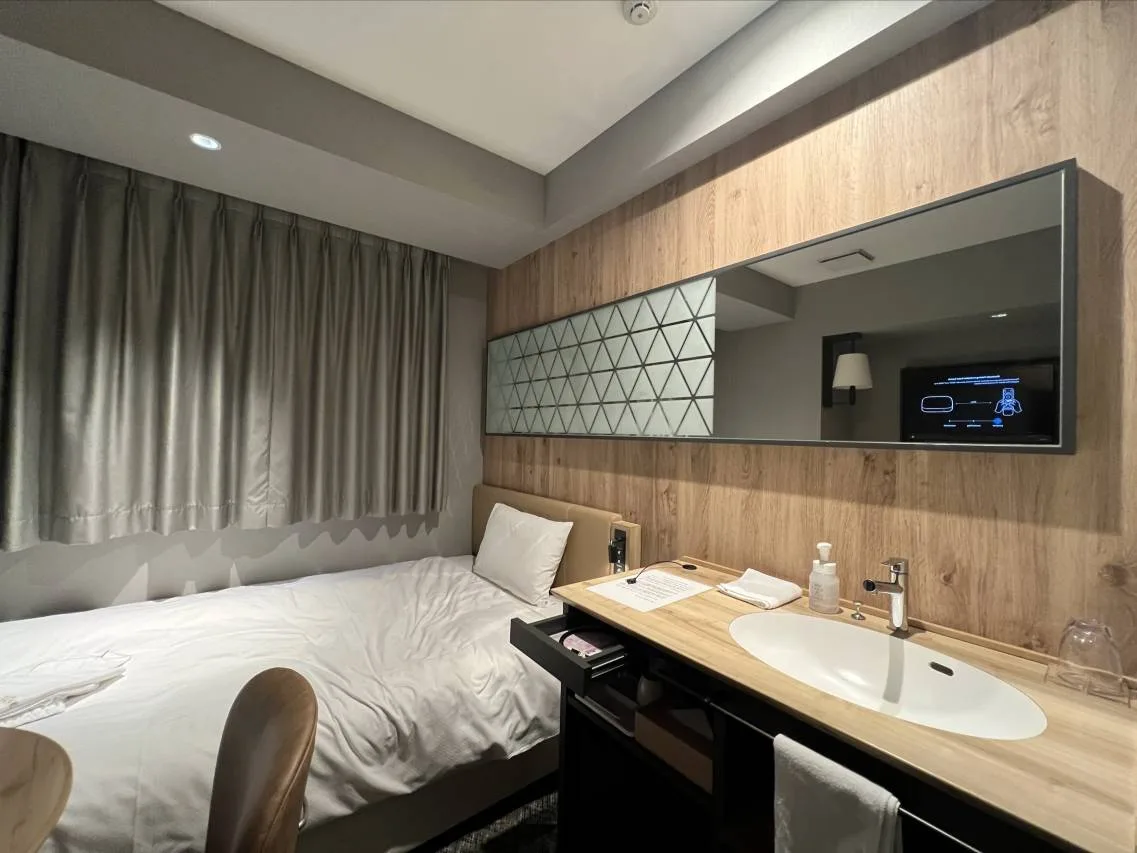
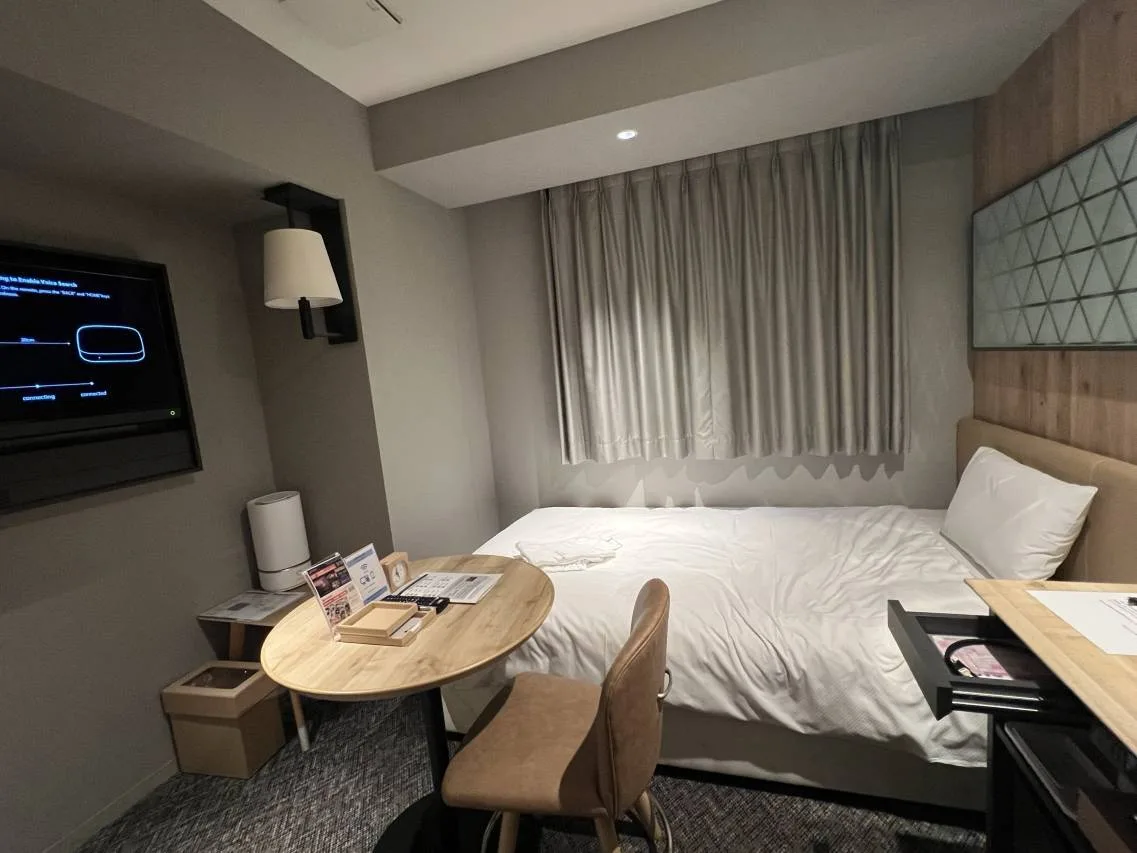
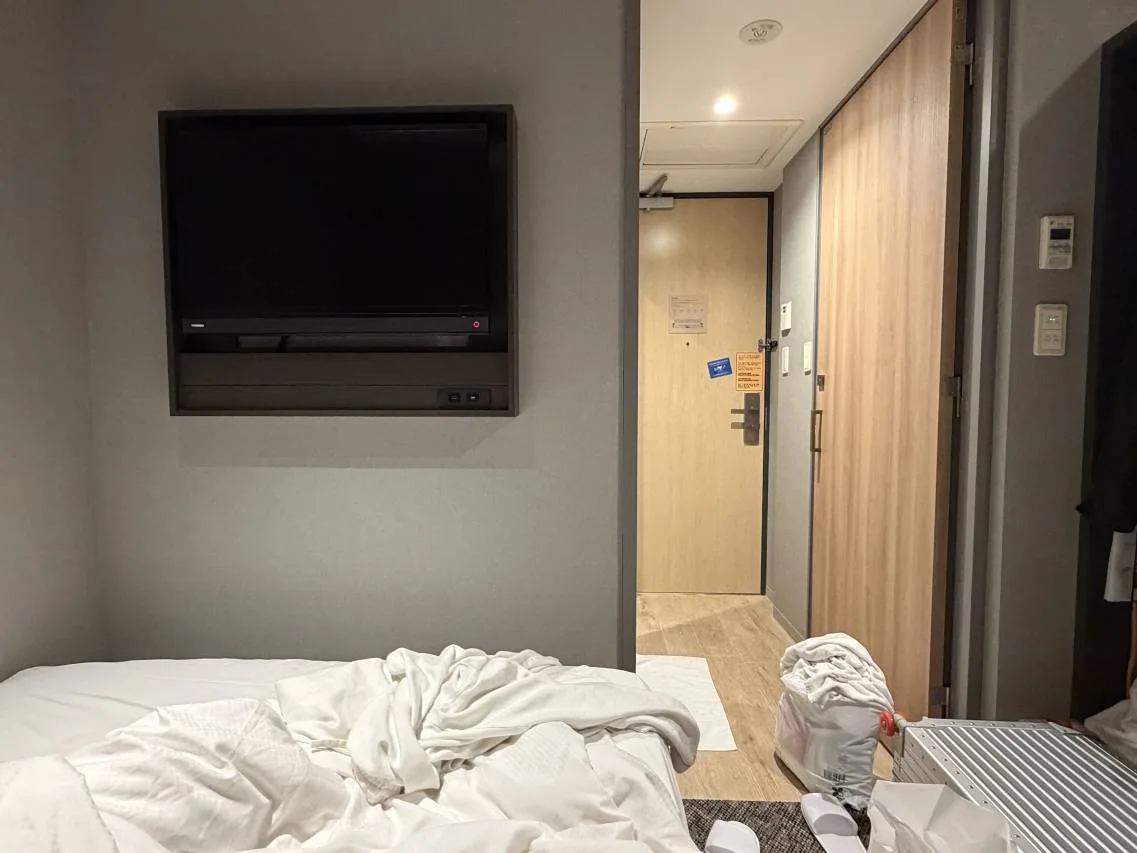
In the room photos I can see that some rooms have a washbasin right beside the bed, with luggage placed at the foot of the bed or near a small round table. If daylight, views or large suitcases matter to you, state these three needs clearly when booking rather than relying only on a high-floor request.
The Superior Twin is 20.9 square metres, with the bath and toilet in separate spaces, a washbasin inside the room, two beds and a lounge chair besides. For two people, I look at this room first: there is space to open two suitcases, and one person can brush their teeth while the other showers without getting in each other’s way.
The Musse Balcony Double on the top 13th floor has a 3.5-metre ceiling, a full wall of glass and a balcony; on a clear day you can see Tokyo Tower from it. If you want something special, I put this room first on my list — but balcony rooms are few, so ask while one is still available instead of waiting until the trip.
No room type allows an extra bed or a crib, so let me say this clearly: travelling with a small child, choose a room with enough beds, or connecting rooms, instead of counting on an extra bed at check-in. Children of all ages are welcome, and connecting rooms are made for families — a door between the two rooms, so you sleep separately at night and walk through in the daytime.
Some windows face the building next door and stay dim even in the daytime. If you want a bright room with a large window, ask about the window direction when you book and name the room type with big windows; writing only “high floor” will not get you there.
For two people I decide first between a twin and a double: the Superior Twin has two separate beds, so nobody disturbs the other turning over at night, and it works just as well for two friends travelling together, each keeping their own rhythm; the Musse Balcony Double is one large bed with a balcony, better for two people who want to watch the night view together. Families with children should look at connecting rooms instead of squeezing into one large room — separate beds at night, one shared space by day.
Guest photographs inside the rooms
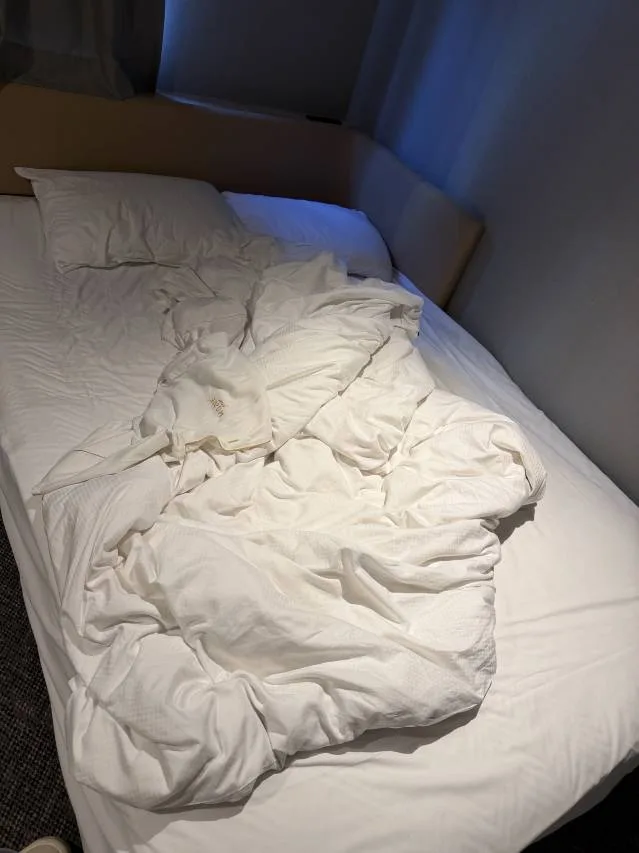
I look first at the relative positions of the bed, tabletop and entrance, then picture where my bags would go. Furniture and bed arrangements vary by room type, so I trust only the photos of the room I booked, not the look of another room.
How the bathroom works
The positions of the bathtub, shower and basin decide whether two guests can get ready at the same time. I study the photos for the fixtures and the flow, and when I choose a room I ask about the bathing setup too: in a room with the bath and toilet separated, two people can each use their own space in the morning and save time.
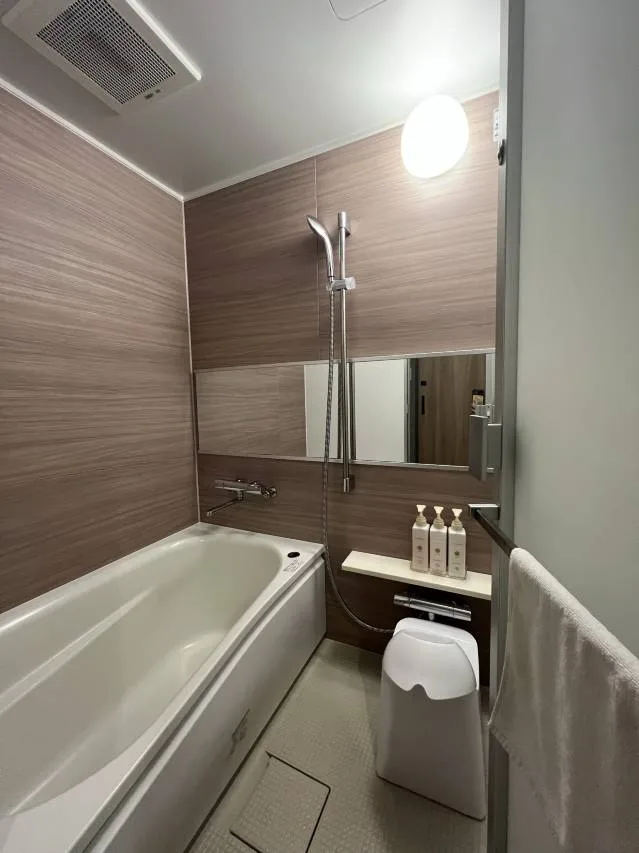
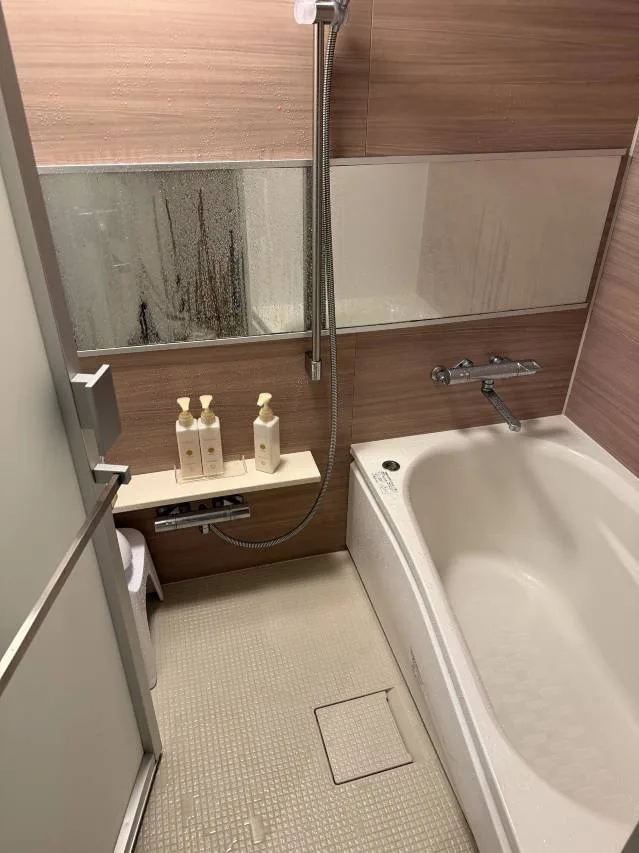
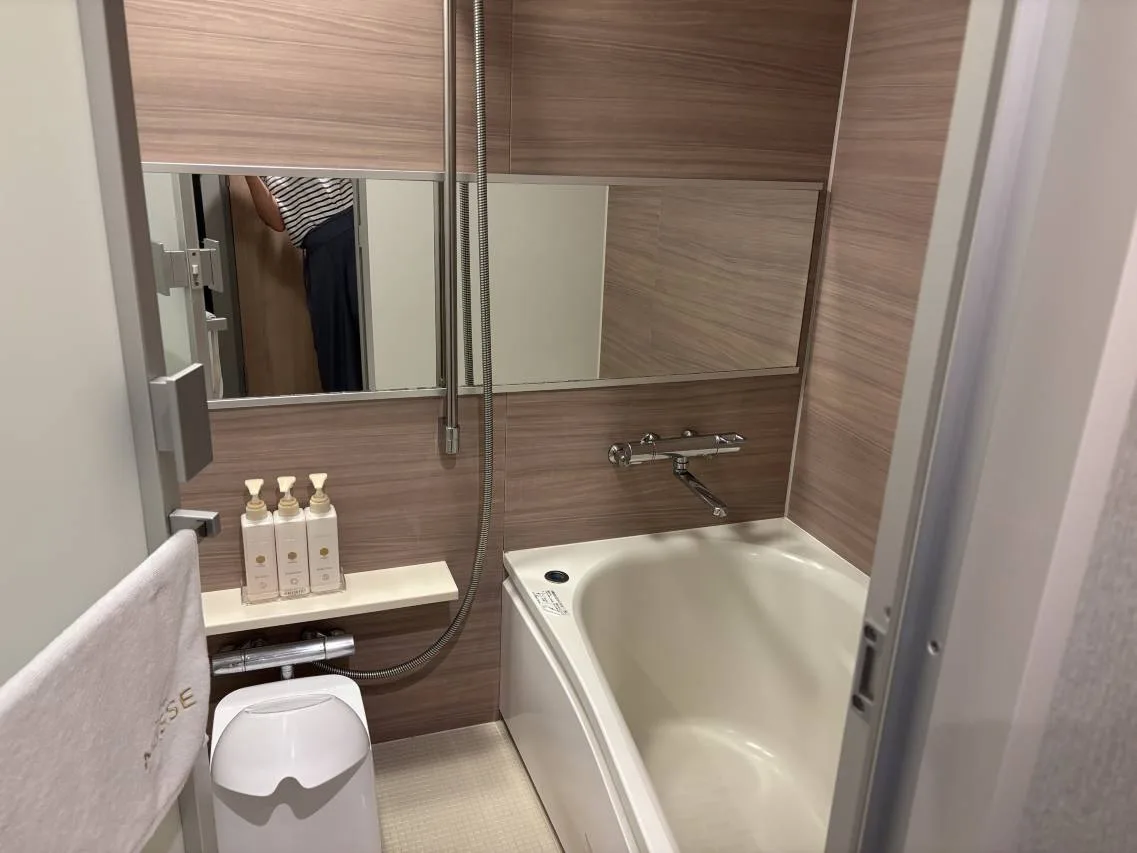
Choosing breakfast
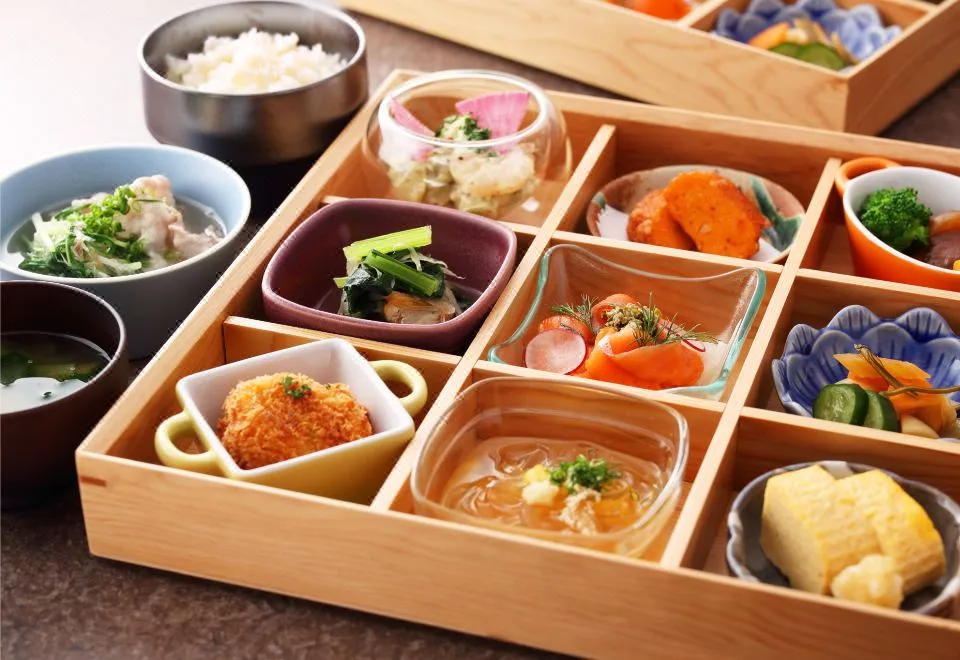
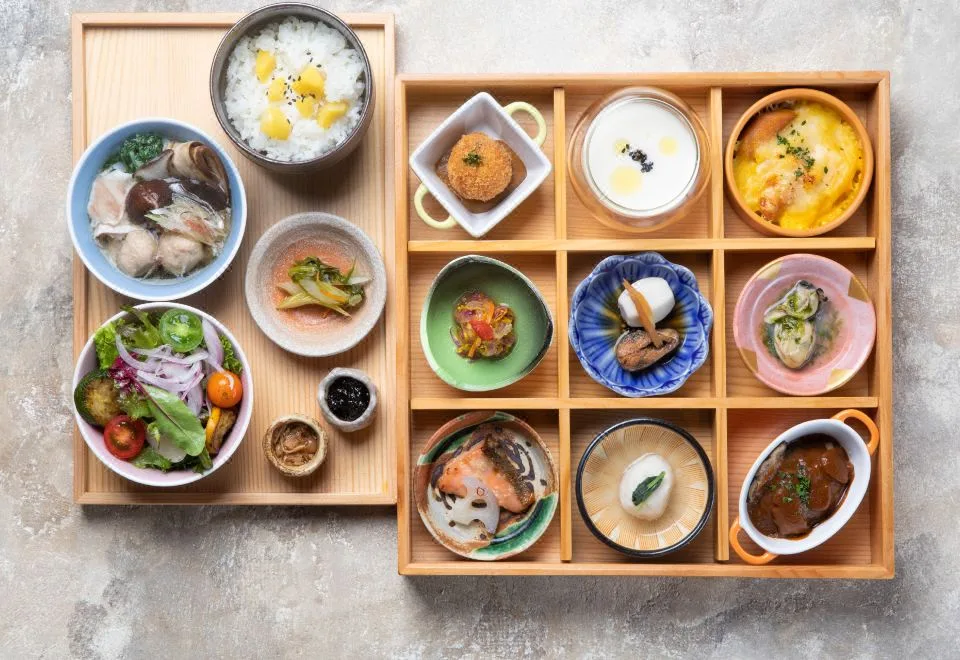
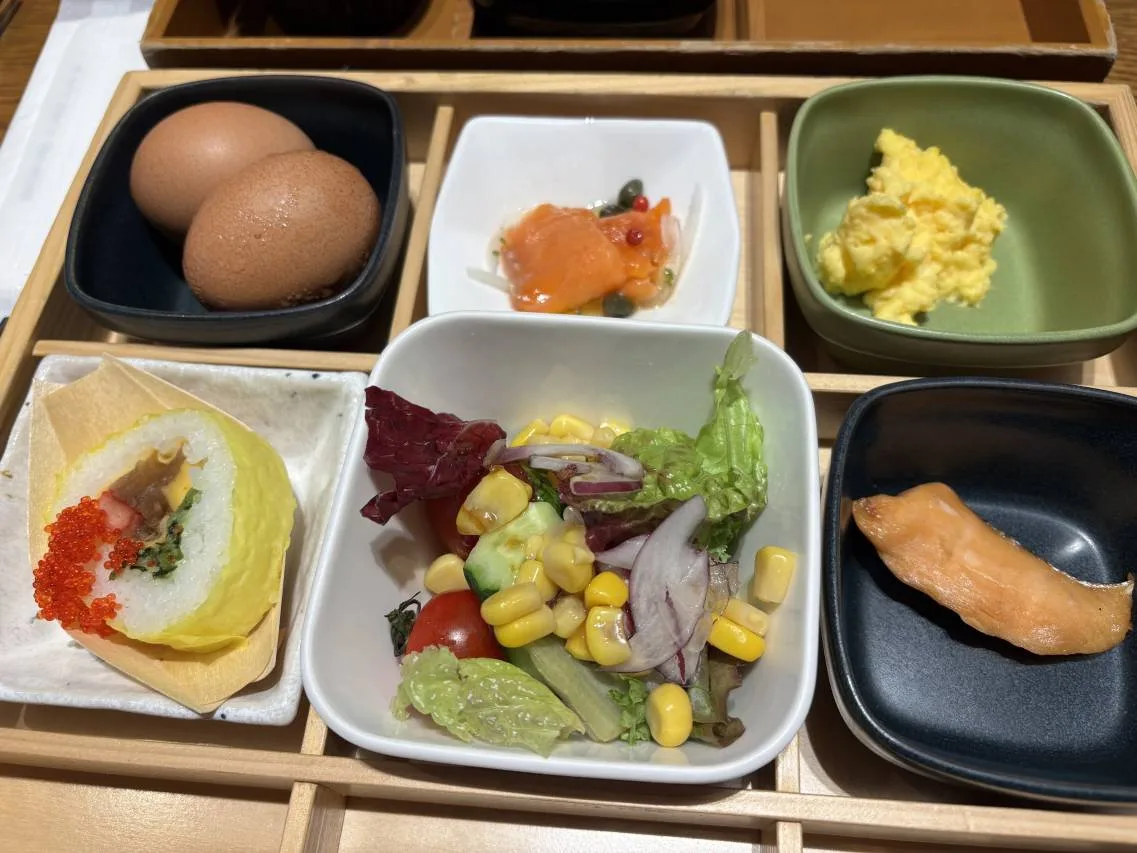
The second-floor Ginza Choshoku Labo is known for its buffet of small Japanese dishes. It suits anyone who enjoys sampling many little portions and making breakfast part of the trip. I like the careful presentation and the range of choices, but the flavours strike me as solid rather than surprising. Whether to add breakfast comes back to how much you like Japanese side dishes and unhurried meals.
If I leave very early, the convenience store downstairs is quicker. However neat the nine-compartment trays look in photos, I never assume every dish is served every day. The hours I have confirmed for you: breakfast runs 7:00–11:00, last entry 10:00, with a 50-minute limit — set an alarm if you sleep in.
Breakfast is a buffet, ¥2,750 for guests. I start by filling the made-to-order nine-compartment tray with small dishes: salad delivered fresh from the Ota Market, shabu-shabu of TOKYO X pork, then the live kitchen where chefs cook in front of you. The theme is Edo-Tokyo ingredients and local specialties — one tray holds Tokyo in miniature.
The same second floor also has Ginza Wagyu Labo, serving Japanese à la carte dinners Tuesday to Saturday, 17:00–22:00. After a long day of walking, I stay in the building for dinner instead of hunting for a restaurant. Lunch is also a buffet here, 11:30–15:00, ¥2,500 on weekdays and ¥2,800 on weekends and holidays.
Breakfast runs until 11:00, so a late start still leaves me fed, and arriving before 11:00 works as brunch. But the 50-minute limit is real: take your time with photos and you will run short, so I pick up what I want first and then sit down.
The buffet has Western choices as well as the Japanese small dishes, so on a morning when I want a change I do not need to find a café; the small dishes are still the signature here, so I take those first and add a little Western food after. A full breakfast lets me eat lunch later, so the day is not ruled by meal times.
Transport, luggage and map
You can walk here from Higashi-ginza, Shimbashi or Ginza to 7-12-9 Ginza. I have walked it a few times, and every station involves some walking — the hotel is about 350 metres from Higashi-ginza station, a 5-minute walk. With large bags, I choose a route with fewer transfers first, then an elevator exit; saving a short stretch on the map is not worthwhile if it means hauling luggage up a full staircase.
With a suitcase from the Hibiya Line at Higashi-ginza, I take the central gates and the elevator at Exit 3 up to street level — the step-free route confirmed on Tokyo Metro’s official barrier-free page. To head toward Ginza 7-chome, you can also use the elevator at Exit A1 from the Miharabashi-side gates; Exit A1 comes out at the Miharabashi intersection, a few minutes’ walk from the hotel along Harumi-dori. On the Toei Asakusa Line, there is also an elevator beside Exit A1 straight to the street; but the two Asakusa Line platforms do not connect inside the gates — use the Miharabashi-side gates for Haneda-bound trains and the Kabukiza-side gates for Nishi-magome-bound trains, or you will have to go around outside the gates.
In the morning I often walk to the Tsukiji Outer Market, 650 metres away, pick up something to eat on the way and come back; in the afternoon, when I want quiet, I go to Hamarikyu Gardens, 620 metres away, where the tea house looks over the water — more relaxing than another round of shopping. Both are on foot, so the day needs no extra transport. Tsukiji Market station is 450 metres away too, and the Asakusa line from there runs to Asakusa and Oshiage.
Address: 7-12-9 Ginza, Chuo City, Tokyo 104-0061, Japan. Open Google Maps for directions
Planning the neighborhood
Combine Ginza Chuo-dori and GINZA SIX in one outing, then head toward Shimbashi for dinner. If Tsukiji breakfast is planned the next morning, skipping the hotel breakfast leaves more appetite for the market.
I note the distances first so I can plan the day: Tsukiji Market 450 metres, the Ginza Art Aquarium 550 metres, Hamarikyu Gardens 620 metres, the Tsukiji Outer Market 650 metres, Hibiya Park 920 metres, and the Tokyo International Forum 1.2 kilometres. Tokyo Tower is about 2.3 kilometres away — allow about an hour with time for photos.
The Tsukiji Outer Market is 650 metres away, so I put the Tsukiji breakfast on the second morning: hotel breakfast on day one, then skip it on day two and arrive at the market hungry, choosing slowly among sushi, tamagoyaki and seafood bowls.
Short visits and longer stays
For several days of exploring Ginza, staying in one place is easier than changing hotels daily. With two or more travelers, consider suitcase volume alongside room upgrades. Families should check the connecting door and bed layout in each room. On arrival, ask once about cleaning, bottled water and towel replacement for longer stays.
Check-in is 15:00–24:00 and check-out before 11:00, with staff at the front desk around the clock, so a late arrival is no worry. Luggage storage, a laundry room, currency exchange, wake-up calls and free Wi-Fi in public areas are all available. Children of all ages are welcome, check-in guests must be 18 or older, and pets are not allowed. There is a safe in the room, and families can ask for children’s slippers and toothbrushes.
Staying several days, I ask once at check-in about cleaning, water refills and towel changes, so I do not have to confirm them every day. The laundry room is in the building, so a long stay never runs short of clothes; for parcels or printing, the front desk can help with courier service and photocopying.
Check-in starts at 15:00, so I usually leave my luggage at the front desk and go out, and collect it when I return — the desk is staffed around the clock. Check-out is before 11:00, so on the last morning I pack first, leave the bags after check-out, spend the day out, and pick them up on the way to the station. I also book the wake-up service in advance when I have an early flight or an early market morning — one more safeguard beside the alarm.
Hotel exterior and shared spaces
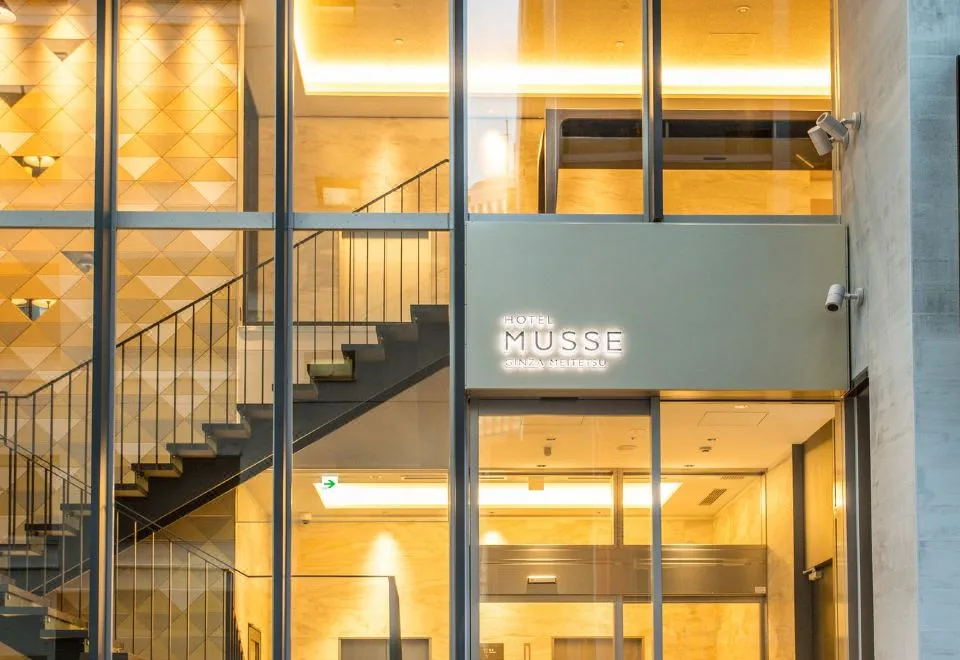
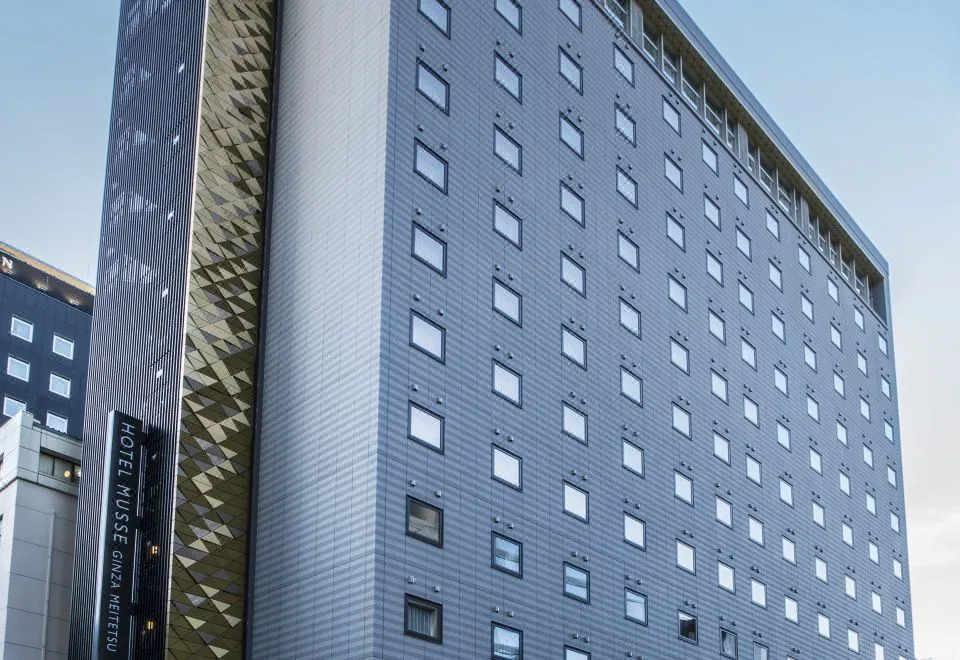
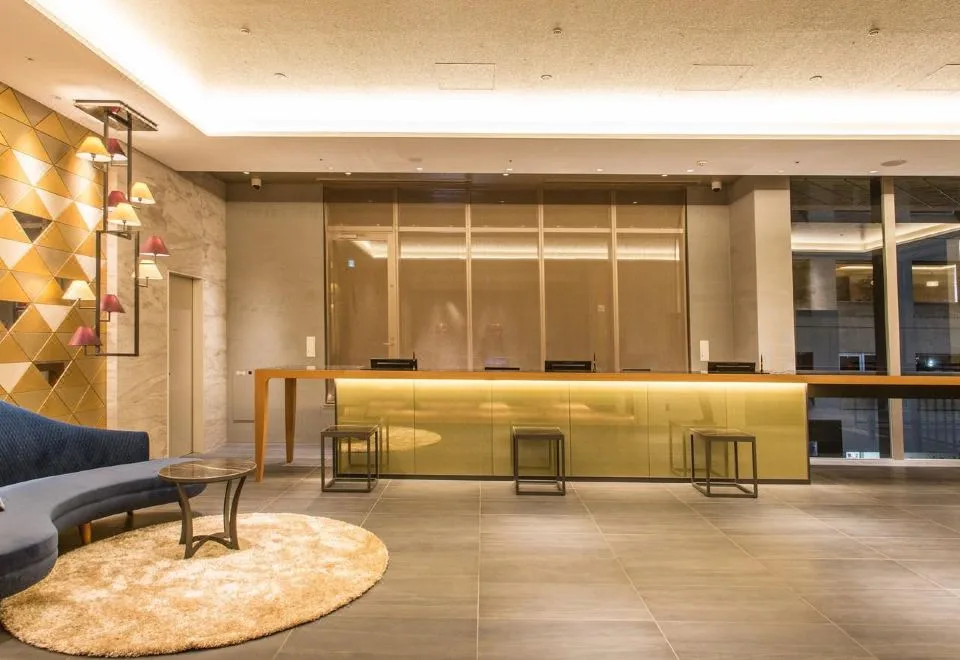
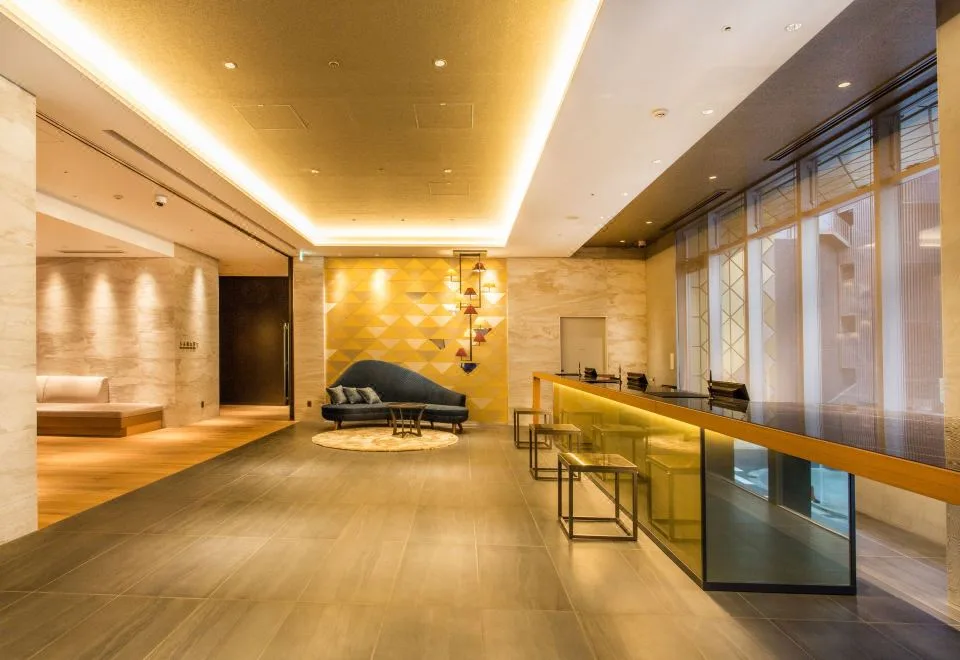
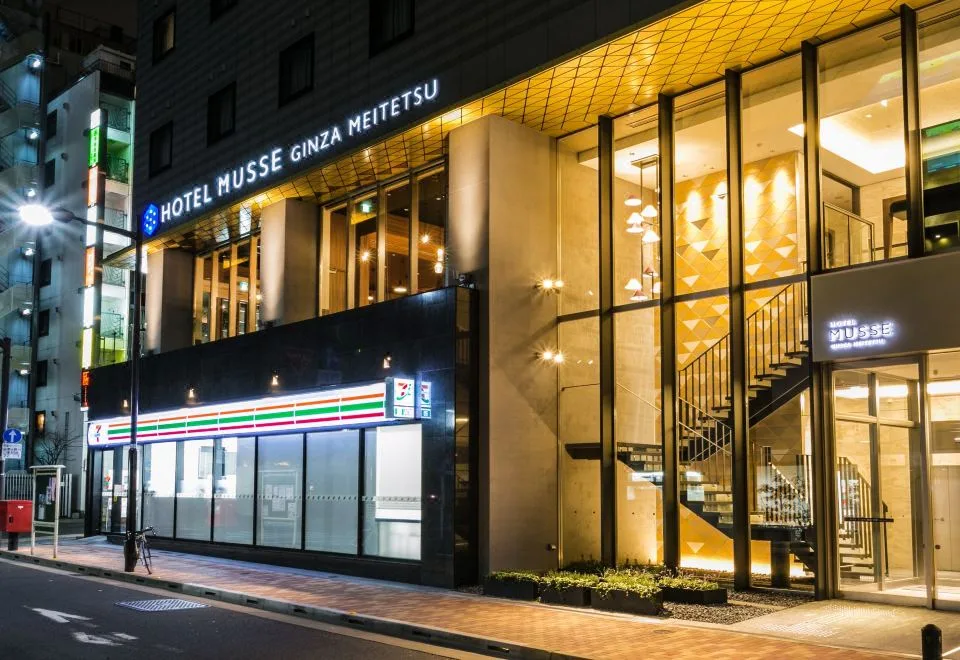
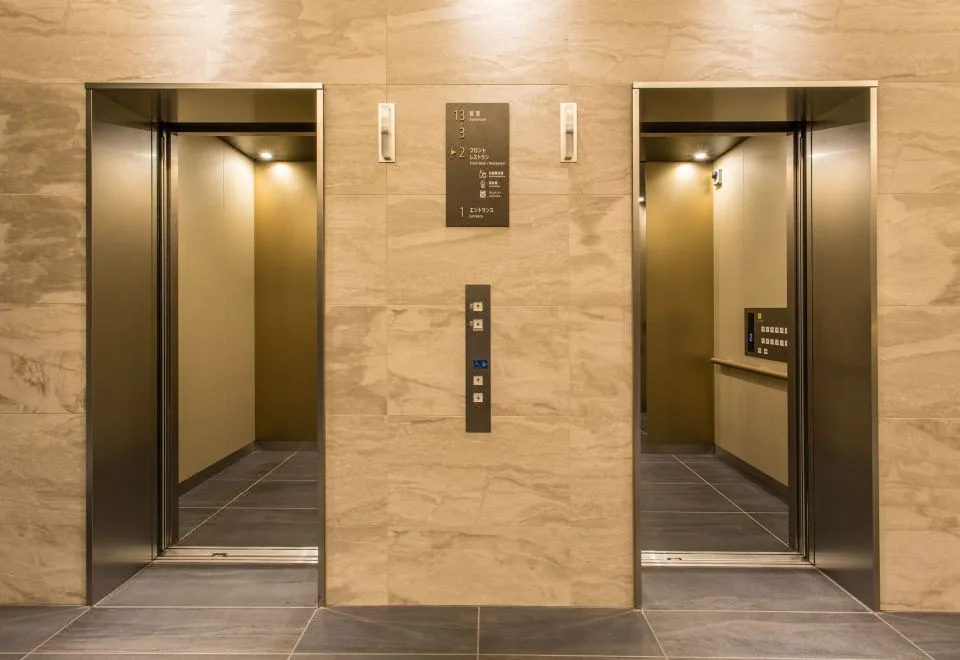
The photos show you the lobby, the front desk and the elevator hall: the front desk sits just up the entrance stairs, with the convenience store beside it, so a late-night snack needs no trip outside. The building has elevators, non-smoking floors and accessible rooms, plus laundry service, courier service and fax and photocopying — handy if you are staying several days and need to work or send something home.
The two second-floor restaurants are the main shared spaces: Ginza Choshoku Labo for the small-dish breakfast in the morning, Ginza Wagyu Labo for wagyu in the evening. Staying on Ginza 7-chome, I can sort out breakfast and dinner without leaving the building, which is especially handy on rainy days or when I am tired. Both restaurants are on the second floor, a lift ride down; even from a high floor I do not need an extra trip, and after breakfast I go back to the room to pack before heading out. Beyond the restaurants, the lobby and the elevator lobby have seats to wait in, so I am not standing around while waiting for someone or for a car.
Why I like it—and what to consider
Reasons to choose it
I choose this hotel because Ginza shopping and dining are close, the convenience store downstairs is genuinely useful, the small-dish breakfast has its own character, and connecting rooms give a family one more way to stay.
Before booking
Several stations are reachable, but none is right on the doorstep. Standard rooms are still compact, and some views are blocked by the building next door. At busy times the elevator takes a while, and I keep an eye on the small housekeeping details too.
Pros and cons
Pros
- About a 5-minute walk (350 metres) from Higashi-ginza station, with Ginza Chuo-dori, GINZA SIX and Shimbashi all within walking distance.
- Second-floor small-dish buffet breakfast, 7:00-11:00, ¥2,750 for guests, with a nine-compartment tray, Ota Market salad and TOKYO X shabu-shabu.
- Superior Twin at 20.9 square metres with separated bath and toilet and an in-room washbasin; the 13th-floor balcony room looks toward Tokyo Tower.
- Connecting rooms suit families, and children of all ages are welcome.
- A convenience store right downstairs, a 24-hour front desk, luggage storage, a laundry room and free Wi-Fi.
Cons
- Every station involves some walking, with no exit right at the door; standard rooms are compact and some windows face the building next door.
- No room type allows an extra bed or a crib, so travelling with a small child means choosing a room with enough beds from the start.
- Breakfast is limited to 50 minutes with last entry at 10:00, so late risers miss it.
- The elevator takes a while at busy times, and there is no large bath, pool or gym in the building.
Information checked: 2026-11-22