
TOKYO / CHUO
Hotel Monte Hermana Tokyo
Hotel Monte Hermana Tokyo
Tokyo Station Yaesu access, twin rooms and breakfast planning
Is this hotel right for my trip?
Hotel Monte Hermana Tokyo is especially convenient if your stay connects with Shinkansen journeys and you also want to explore Nihombashi. I see it as a practical base on the east side of Tokyo Station: travel connections are straightforward, and returning to rest is simple. If you plan to work or eat in the room for hours, bear in mind that desk space is limited and views are not its main selling point.
This is the first Tokyo hotel of the Monte Hermana brand, part of the Hotel Monterey Group. It opened in July 2022 and has 150 rooms. The brand takes its concept from Edo-period ‘iki’ and ‘Edo-konomi’ taste — clean, modern Japanese-Western style, quite different from the Monterey brand’s medieval European look — and it is positioned as an affordable business hotel. The hotel stands in Nihombashi 3-chome, with both stations about three minutes away on foot, so Shinkansen transfers, Ginza and Nihombashi walks all work smoothly.
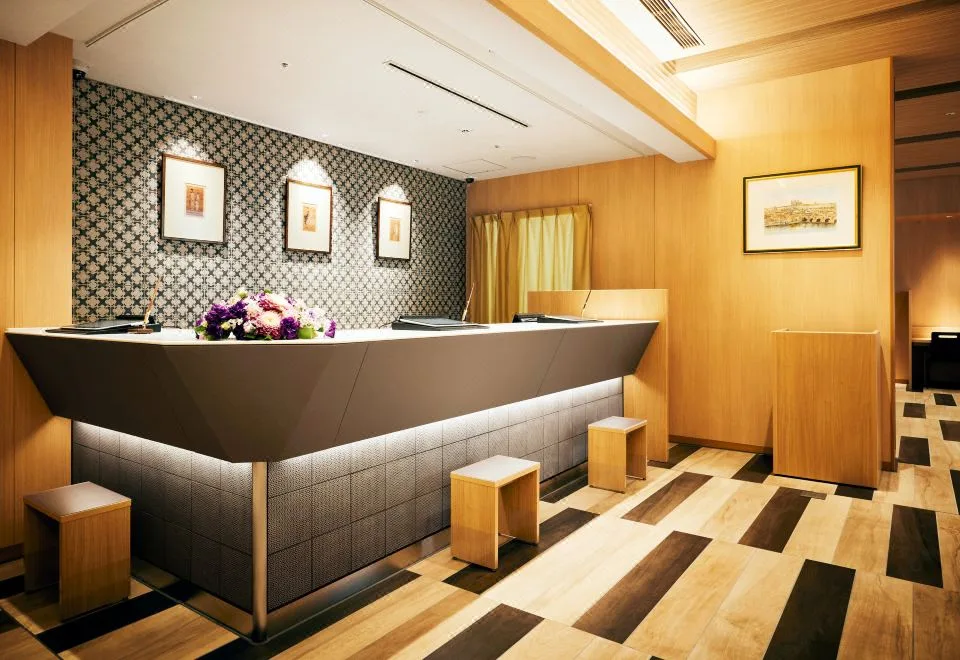
The building has 12 floors, with rooms on floors 3 to 12; the entrance is on the first floor, and the front desk and breakfast space are on the second floor, so breakfast and rest happen on the same level.
Access: walking light versus carrying luggage
The JR Tokyo Station Yaesu Central Exit is at ground level, about a three-minute walk from the hotel. Do not take the stairs at Exit 21 of the Yaesu underground shopping street — that is the shortcut on the hotel’s own map, but it means carrying luggage up stairs. Nihombashi Station’s A7 exit is about three minutes away; the station has three lifts and a secured step-free route, so with luggage, take the station lift to street level first, then walk from Exit A7.
View access directions; the hotel website is the reference for on-site details.
From Nihombashi Station, the Toei Asakusa Line (through to the Keikyu Line) reaches Haneda Airport in about 40 minutes with no change of train. Shibuya, Shinjuku, Roppongi, Ueno, Asakusa, the Imperial Palace, Tokyo Skytree, Tokyo Dome and Roppongi Hills are also reachable without a change, so the hotel works well as a base for Tokyo. The return trip to Haneda uses the same line, so heavy luggage never needs a platform change.
Besides Exit A7, Nihombashi Station’s Exit B3 is also about three minutes away on foot, so either exit works; head toward Yaesu-dori after leaving the station and the hotel is nearby.
Tokyo Station is large and the Yaesu side is easy to get lost in on a first visit; follow the signs to the Yaesu Central Exit before leaving the gates, then walk straight along Yaesu-dori for about three minutes at ground level. Station signs include Chinese, so a first visit is nothing to worry about.
| Item | Hotel details |
|---|---|
| Address | 3-3-15 Nihonbashi, Chuo-ku, Tokyo 103-0027, Japan |
| Japanese name | Hotel Monte Hermana Tokyo (ホテル モンテ エルマーナ東京) |
| Check-in / check-out | Check-in from 15:00 / check-out by 11:00 |
Choosing a room: beds, living space and bathrooms
Compare beds, bathroom use and luggage space for everyone travelling together.room types and facilitiescan help interpret the table below. Room names on the booking platform may differ, so confirm the English room type when booking.
| Room / layout | Size and amenities | How to choose |
|---|---|---|
| Single | 15 m²; one 120 × 203 cm bed | Solo business trips and short stays |
| Twin | 17 m²; two 105 × 195 cm beds | Two travellers wanting separate beds |
| Double | 17㎡; one queen bed | Two travellers sharing a larger bed |
| Superior Twin | 21㎡; two single beds plus one single bed, sleeps 3 | Three travellers wanting separate beds |
| Triple | 21㎡; two beds | Three travellers |
| Accessible | 23㎡; one queen bed, 2nd floor | Travellers needing an accessible room |
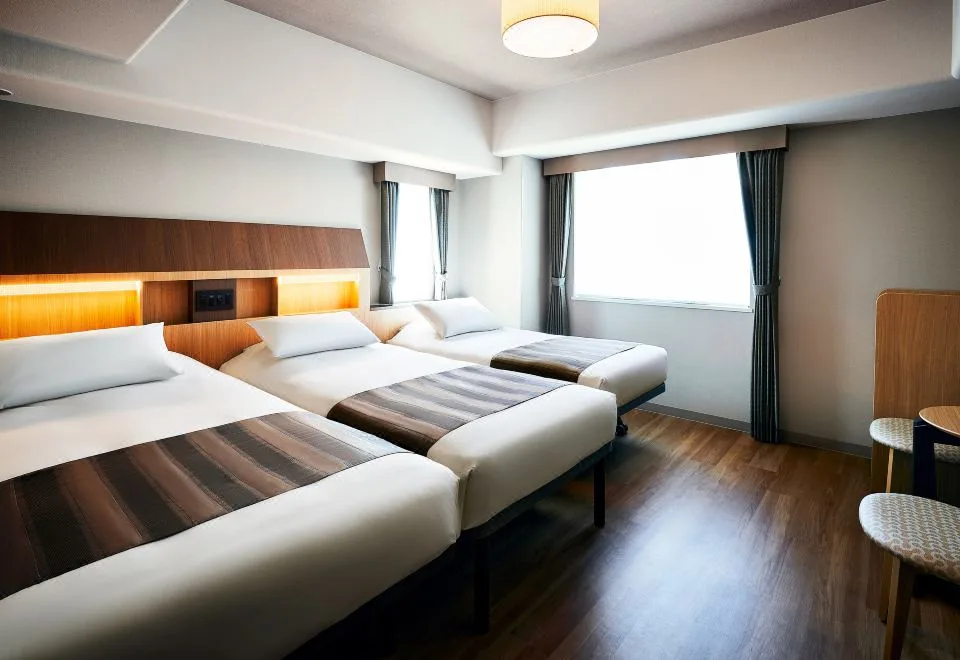
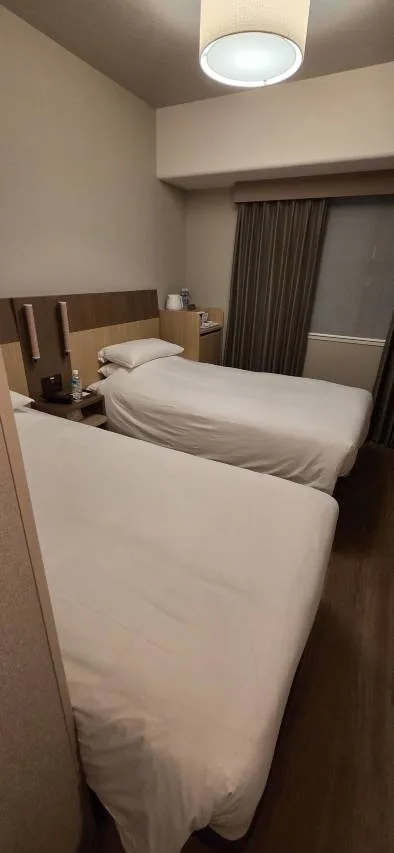
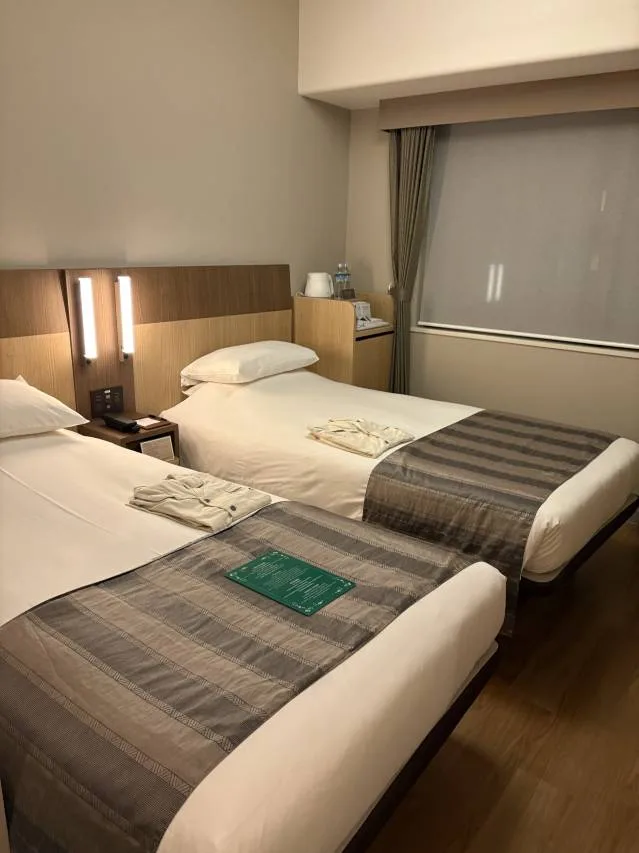
The twin-room photographs show furnishings focused on sleeping, with limited space for a large work area beside the beds or windows. Two travelling companions who want separate beds should compare the Twin first; solo travellers should check whether the desk and luggage storage meet their needs.
Beyond the two types above, the hotel website also lists a Double (17 square metres, one queen bed), a Superior Twin (21 square metres, two single beds plus one more single bed, sleeps three), a Triple (21 square metres, two beds) and an Accessible room (23 square metres, one queen bed, second floor). The hotel has 150 rooms in total and opened in July 2022; rooms come with a smart TV and free Wi-Fi, and bathrooms have a shower-over-bath with a rain shower. Every room has its own Wi-Fi and a smart TV, and a humidifier air purifier and trouser press come as standard.
The two beds in a Twin room are both 105 cm single beds, while the Single has a 120 cm semi-double bed; for two people sharing one large bed, the Double’s queen bed is the better fit.
I can open two suitcases without trouble, but a laptop plus a meal and documents crowds the desk. A room can hold your luggage without being suitable for spreading things out and working for hours — think first about what you will actually do in the room.
The person checking in must be 18 or older, and children of all ages are welcome to stay. Guests aged 15 to 17 without a guardian must present a guardian’s consent form at check-in. No room type allows an extra bed or a baby cot, so count the beds before booking when travelling with children. Pets are not accepted, except for service animals.
Guest room photos: how the space works in daily use
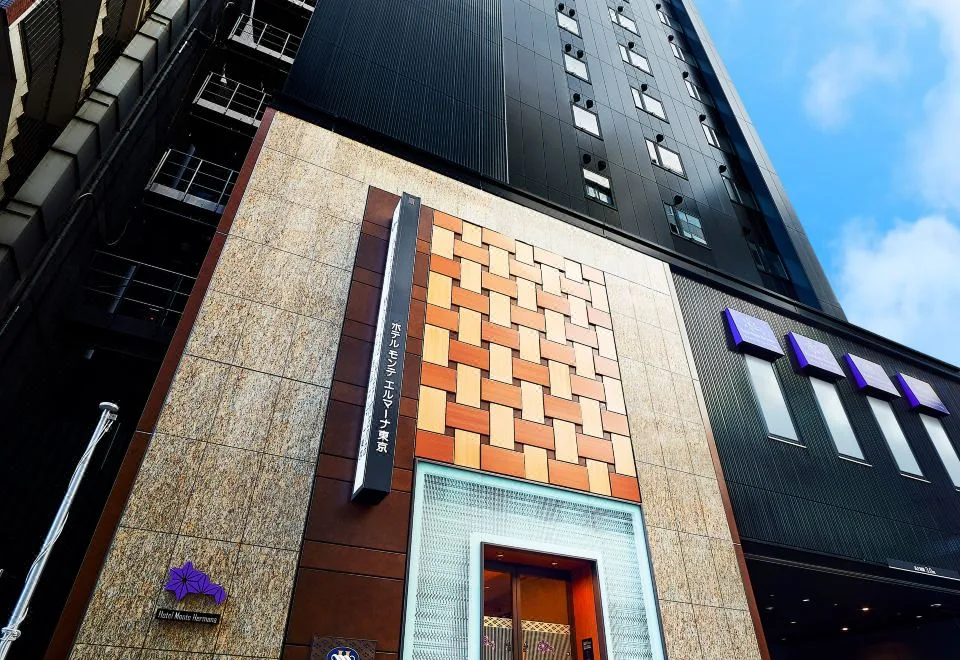
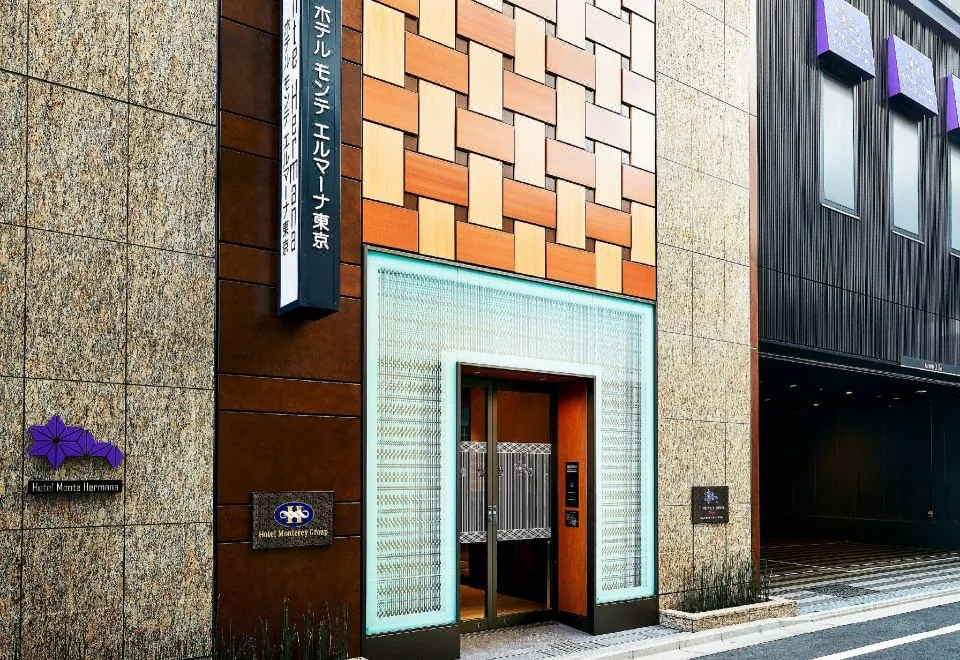
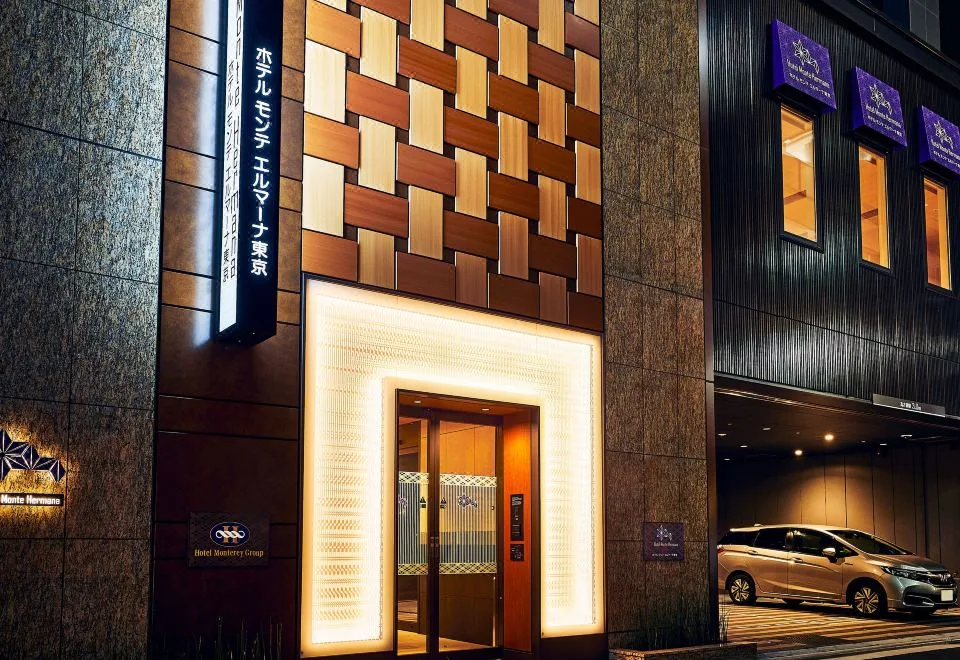
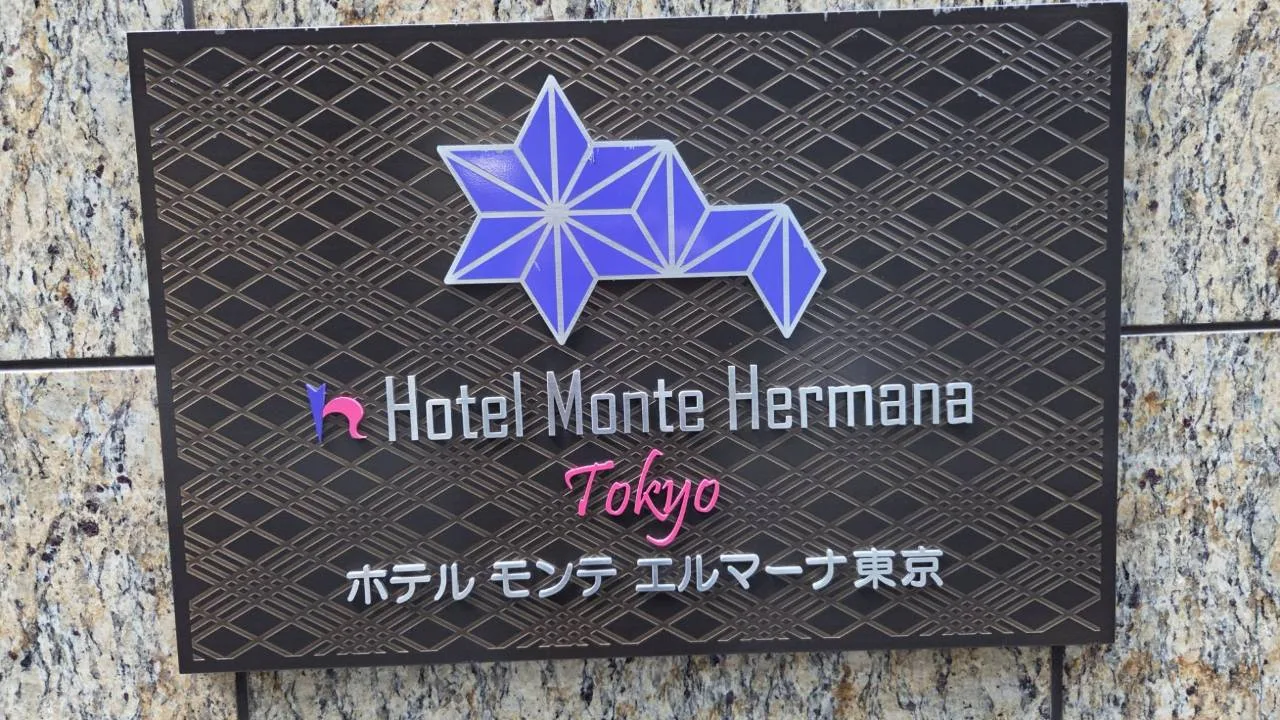
These three are guest photographs: the hotel sign, the bedside in a room, and the twin beds by the window. The bedside table and curtains are easy to see; match the room type in each photo to the one you booked, as the bedside and window layout differs between Single and Twin rooms.
The twin room’s window and curtains are visible in the photos, which gives a better sense of light and blackout than words alone. If you want a quieter room, ask the front desk about a higher floor when booking. There is a charging point beside the bedside table, so plug the phone in before bed.
Amenities and services you will actually use
Reception is on the second floor beside a drinks and dining lounge. Shared-space hours or rules apply, so if you like to refill water before bed, do it before returning to your room.
Luggage storage is free, as is Wi-Fi in public areas, and the front desk serves guests in Chinese, English and Japanese. There is a laundry room, dryers, dry cleaning and free ironing, so a multi-night stay does not need an outside laundry. A massage room is also in the building; rooms and public areas are non-smoking, with a separate smoking area, and the accessible room is on the second floor. The multi-purpose space ‘Spazio’ on the second floor also works as a shared work area outside breakfast hours.
Other services include a taxi service, wake-up calls, quick check-in and check-out, a water purifier and humidifiers; delivery laundry and fax/photocopy services are charged, and cash payment is accepted. Parking is available but fully by reservation at 3,000 yen per night, with entry and exit only between 8:00–11:00 and 15:00–19:00, so drivers should call the hotel to book a space in advance. The coin laundry is also on the second floor, so a longer stay never needs an outside laundry.
The building also has a microwave and an ice machine, and the free coffee machine is on the second floor — handy for a hot drink late at night or a coffee before an early train.
There is no large public bath, pool or gym in the building, so plan elsewhere if you want a soak or a workout.
Should you add breakfast? Think about your morning
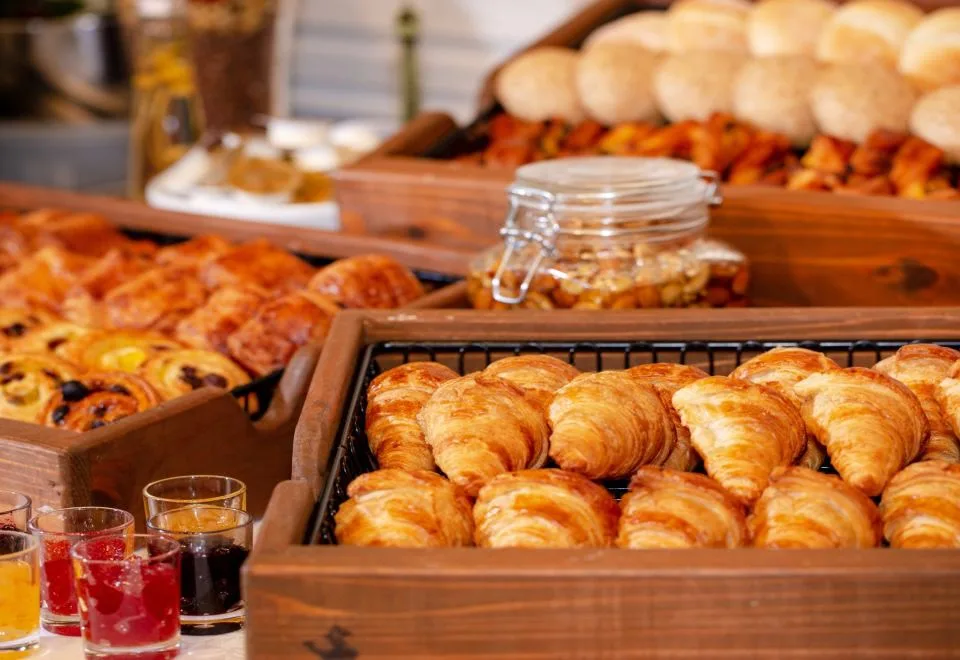
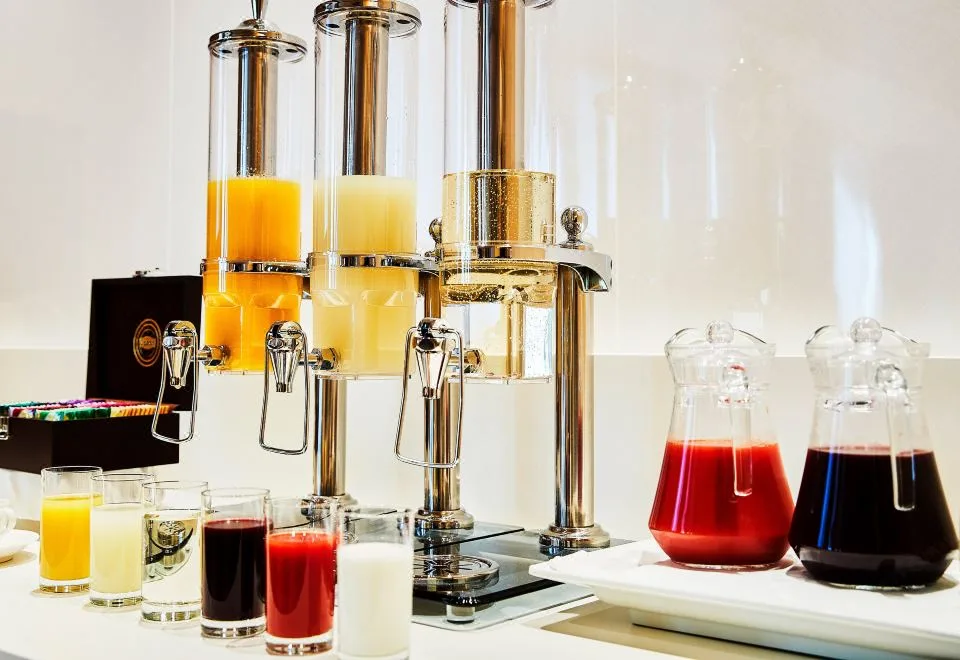
Breakfast is Western-style, and the hotel gallery shows bread, drinks and a dining area. If you need to catch a train, check that service times work with your departure; on a relaxed morning, it is convenient to eat here before heading to Tokyo Station or Nihombashi.
The hotel website currently lists four 45-minute breakfast slots starting at 6:30, 7:15, 8:00 and 8:45. The final admission is at 9:00 and service ends at 9:30. Choose a slot at check-in; if you have an early Shinkansen the next day, I would book one of the earlier times.
Breakfast is served in ‘Spazio’, the multi-purpose space on the second floor, and can also be taken to your room. It is a continental breakfast; the bread display and drinks area in the photos are the ones you will see. Breakfast is an extra charge — confirm the price with the hotel. If you would rather not wait for a seat in the dining area, take breakfast back to the room and eat at your own pace.
The food photos below show dishes and dining areas from the hotel gallery; menus and service formats may change by the date of your stay.
All 150 rooms share the four breakfast slots, and popular times can fill up, so pick a slot when you book. If you have an early Shinkansen the next morning, the 6:30 or 7:15 slot is the safer choice. Arrive a few minutes before your slot starts and there is no long wait to collect food.
Breakfast is an extra charge; you can choose a breakfast-inclusive plan when booking, or confirm the price and slots with the front desk on arrival. A room-only plan costs less, so skip breakfast if you plan to eat out in the morning. Once a slot is chosen there is no need to change it, unless the day’s plans change.
Nearby walks: make time for the neighbourhood
I would split shopping around Tokyo Station, a Marunouchi architecture walk and Nihombashi into two half-days. On Shinkansen departure day, allow time inside the station: reaching the station entrance is not the same as reaching the platform.
Nihombashi Bridge is only 190 metres from the hotel, the Tokyo International Forum is 890 metres away, and the Imperial Palace Outer Gardens are 1.2 km with the Imperial Palace itself at 1.4 km — an easy morning or evening walk. The SKY HOP Bus stop is 1.0 km away for sightseeing rides. Nihombashi has been a commercial centre since the Edo period, and the old shops and department stores near the bridge are still there — look out for the old shop signs as you walk.
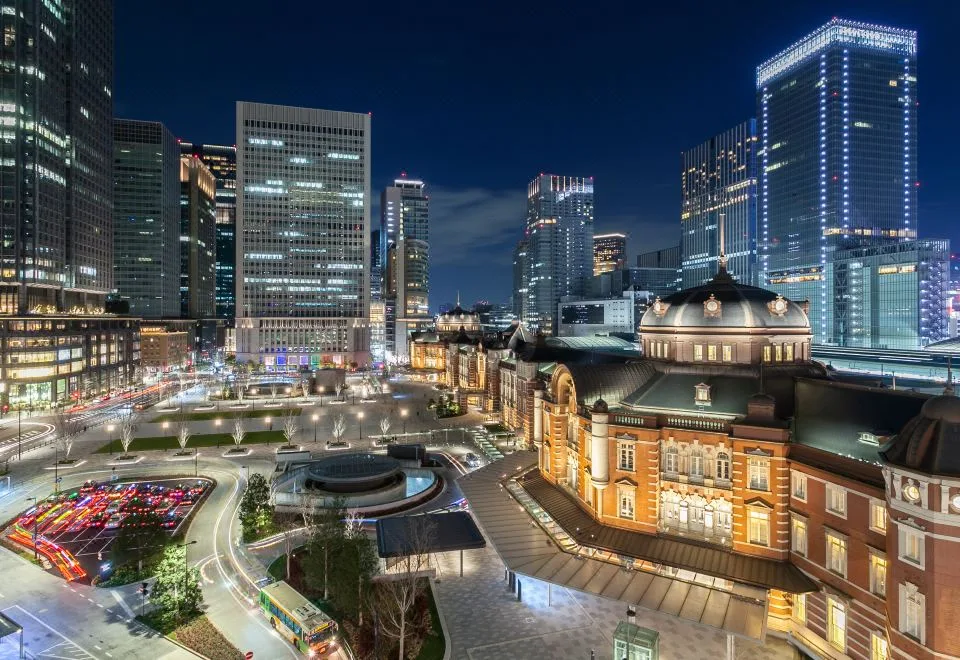
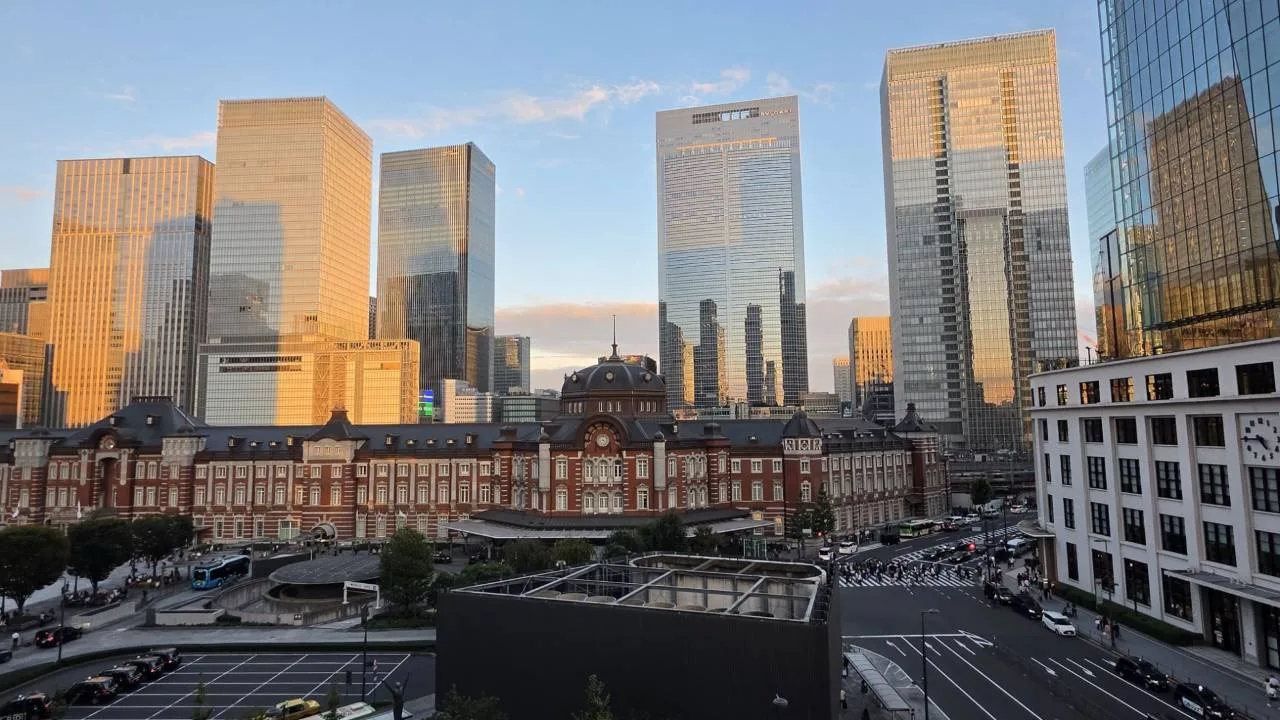
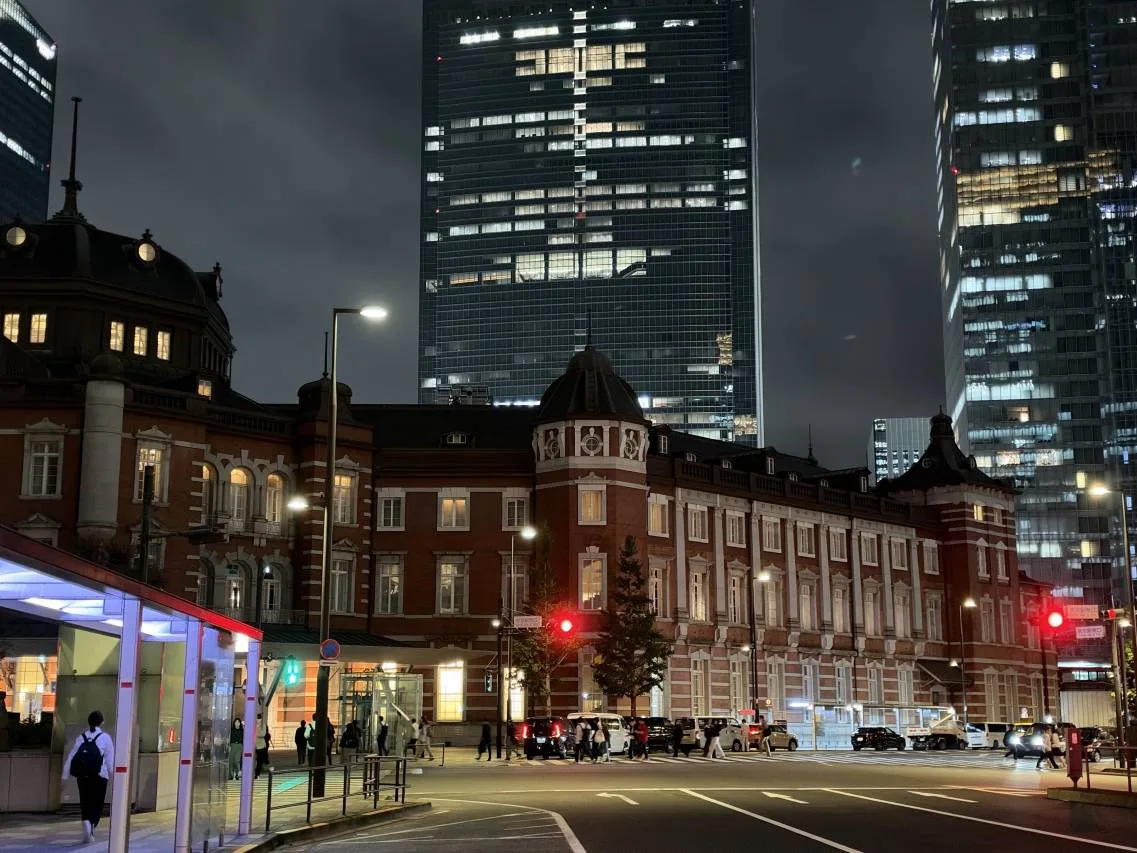
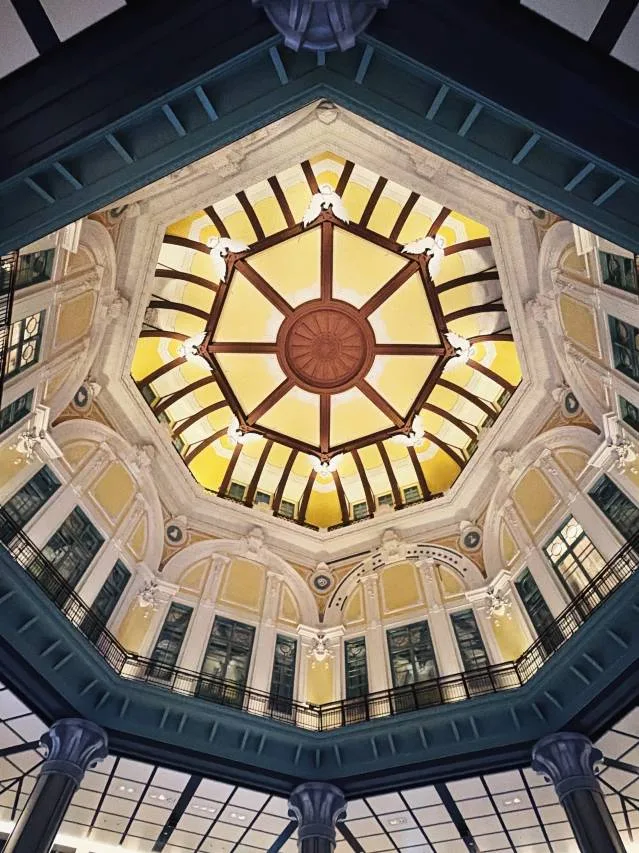
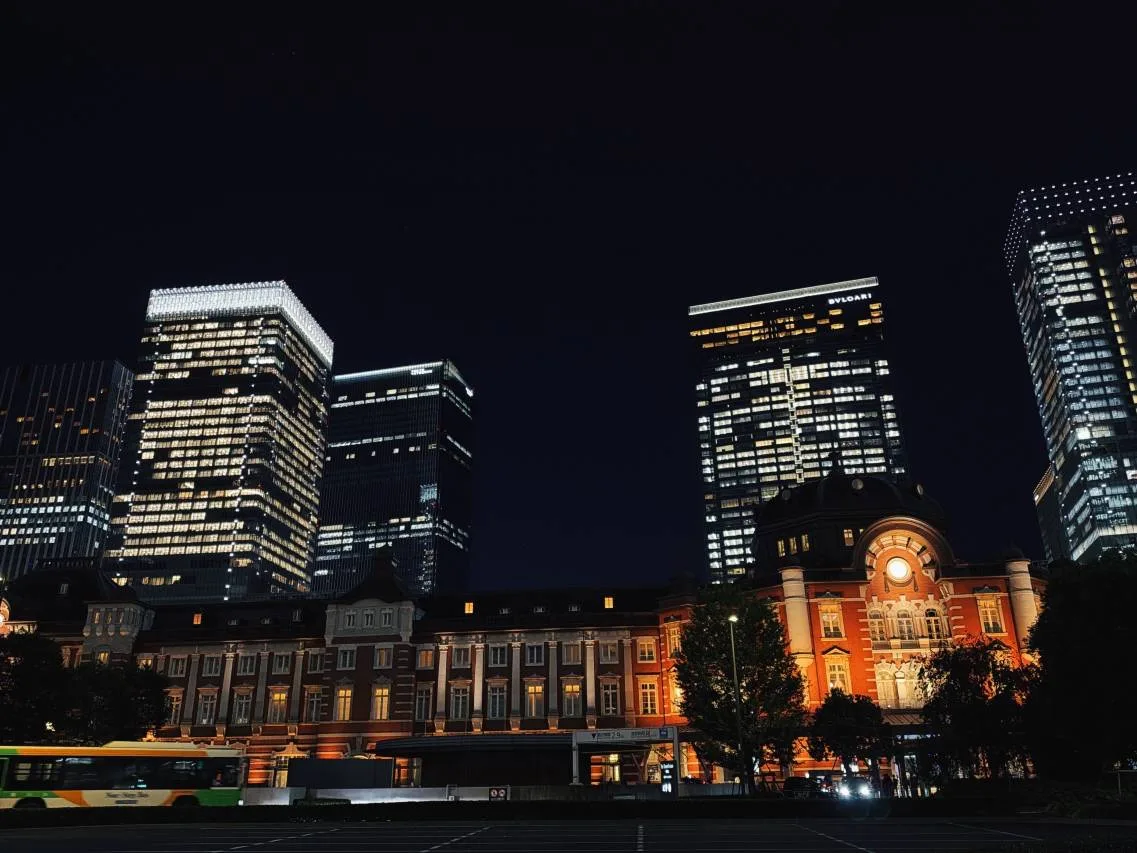
Ginza-itchome Station is within 800 metres, an easy walk toward Ginza, and the shops of Tokyo Station Ichibangai and the Yaesu underground mall make souvenir shopping part of the walk rather than a separate trip. Marunouchi is worth a look in the daytime for its architecture and at night for the lights; the Tokyo Station dome and Marunouchi street scenes in the photos are from this area.
The Mitsukoshi Nihombashi main store and COREDO Muromachi are both within walking distance, handy for shopping or a meal on the way. Nihombashi has many long-established shops, so souvenirs can be found here too.
Short stays, longer stays and my recommendation
One or two nights around a rail transfer are an excellent fit. It also works for longer stays focused on going out, but if you need to work in the room every day or value open views, check desk size and room orientation before booking.
The hotel has posted a notice: demolition and new construction for the Nihombashi 3-chome project is under way nearby, from 24 November 2026 to 31 October 2032, roughly 8:00 to 18:30 each day, with possible construction noise and partial limits on walking space. If you plan to spend daytime hours in the room or are sensitive to noise, factor this into your booking. The work site is at 3-4-12 Nihombashi, outside the hotel itself.
If easy transfers through Tokyo Station’s Yaesu side are a priority, I would shortlist Hotel Monte Hermana Tokyo. Before booking, confirm the number of guests, exact room type, breakfast slot and arrival time.
Check-in is from 15:00 and check-out is before 11:00; the front desk is staffed around the clock and luggage storage is free, so early arrivals and late departures can leave bags at the hotel instead of carrying them around. Lifts can be busy at peak times, so allow a little extra time before a Shinkansen departure. On a longer stay you generally keep the same room, so luggage can stay put.
Check in at the second-floor front desk, where the room key and breakfast slot are sorted in one go; check out on the same floor, returning the key before 11:00.
Summary of pros and cons
Pros
- About three minutes on foot from the JR Tokyo Station Yaesu Central Exit and from Nihombashi Station A7 exit — easy for transfers and shopping.
- The twin beds are comfortable, and two people sleeping separately do not disturb each other.
- Four breakfast slots to choose from, and breakfast can be taken to the room — flexible on a morning when you need to catch a train.
- The front desk is staffed around the clock and luggage storage is free, so early arrivals and late departures travel light.
- A new hotel opened in 2022 with 150 rooms, modern in-room facilities and free Wi-Fi.
Cons
- The desk is small, so working in the room for hours or spreading out documents is awkward.
- The Nihombashi 3-chome construction project beside the hotel runs from 24 November 2026 to 31 October 2032, with possible daytime construction noise.
- Breakfast is an extra charge with the price to confirm with the hotel, and popular slots can fill up.
- No room type allows an extra bed or a baby cot, so groups of three or more must count the beds first.
- Parking is fully by reservation at 3,000 yen per night, with entry and exit only between 8:00–11:00 and 15:00–19:00 — drivers must call ahead to book.
Information checked: 22 November 2026