
TOKYO / CHUO
Hotel Gracery Ginza
Hotel Gracery Ginza
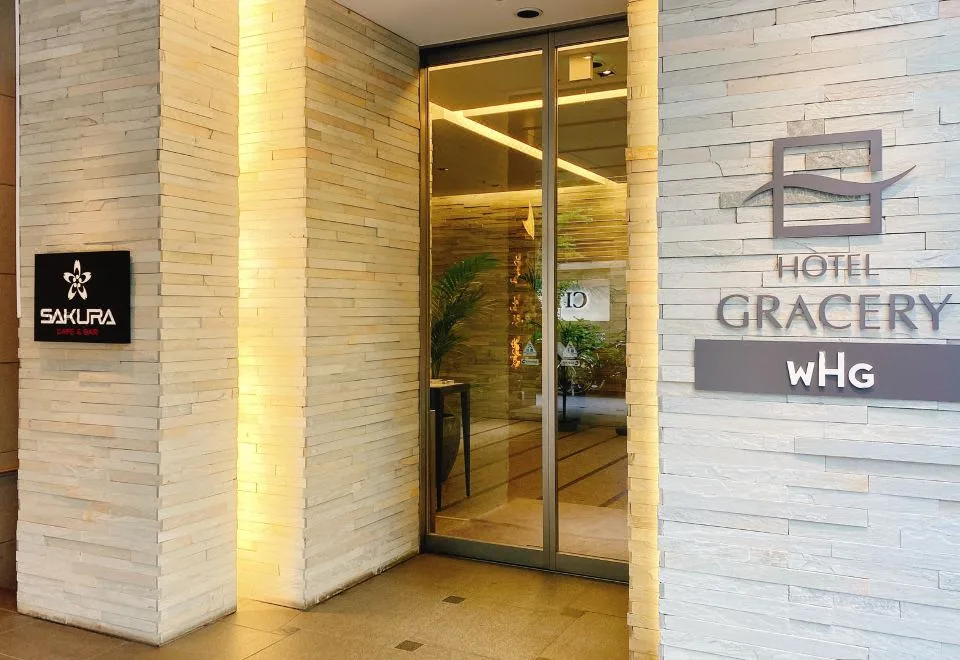
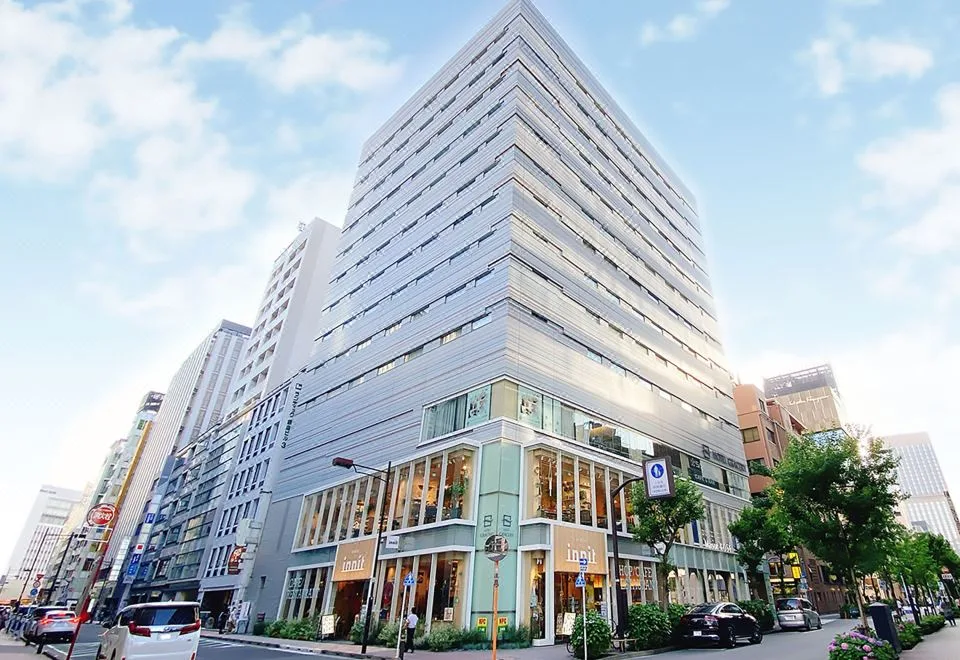
If Ginza is the heart of your Tokyo trip, Hotel Gracery’s location beside GINZA SIX is easy to appreciate. Return with shopping bags, put them down and head out for dinner without crossing town. I would accept that this is a compact urban hotel first, then choose the right room instead of expecting spacious views everywhere.
Reasons to stay and compromises
Good reasons
- Beside GINZA SIX, ideal for shopping over several consecutive days.
- Official room options include 15, 21 and 23 m², so two people need not squeeze into a basic double.
- The hotel serves Japanese and Western breakfast if you prefer not to search outside.
Things to accept
- A 15 m² standard double has much less floor space than a twin; two large cases call for an upgrade.
- Blackout curtains, smells and equipment operation vary by room; light sleepers should check the details.
Choosing rooms for luggage
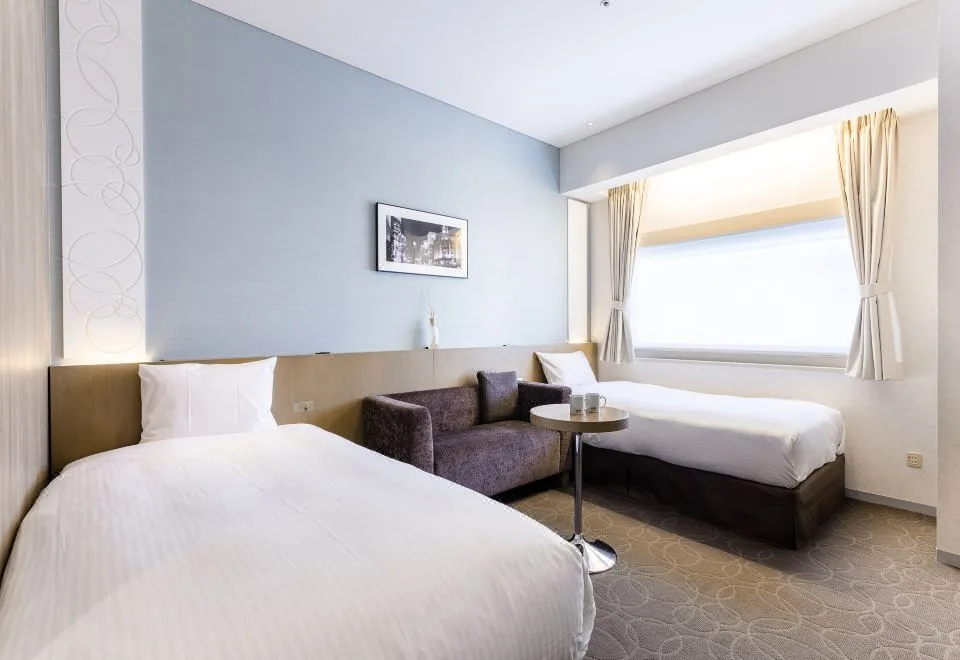
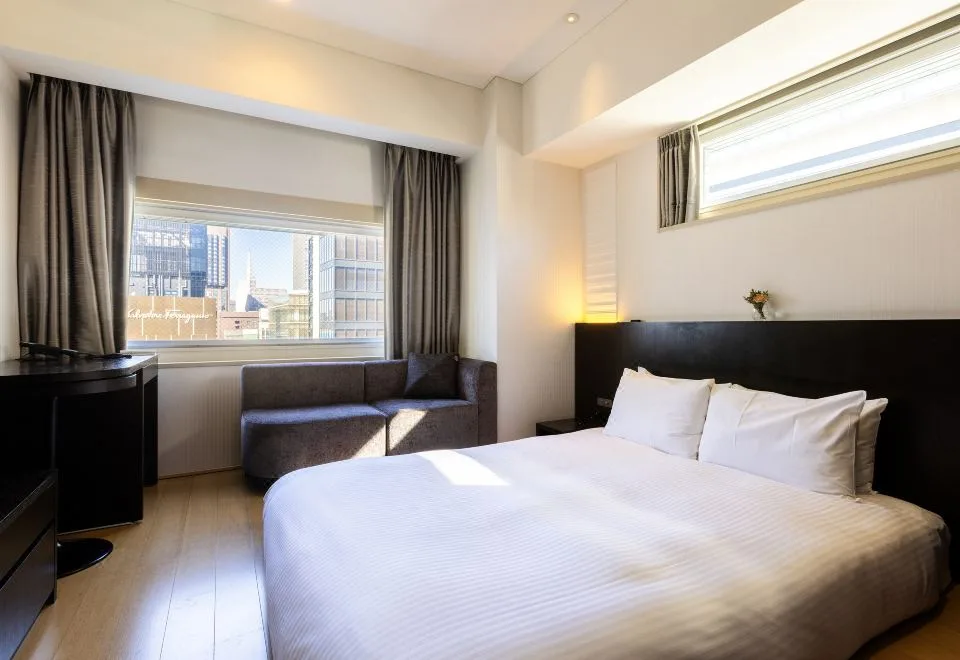
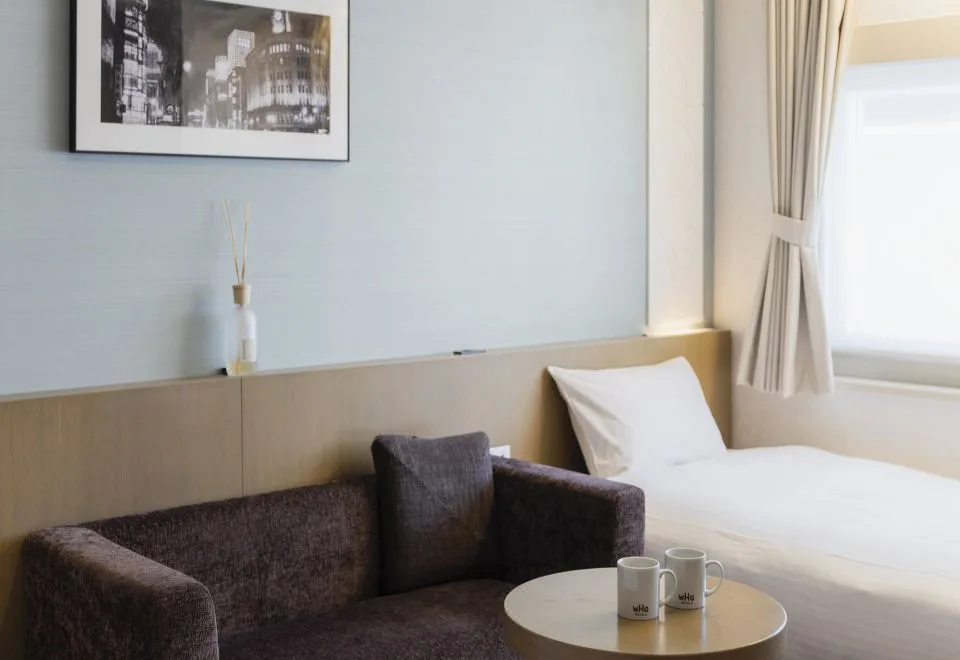
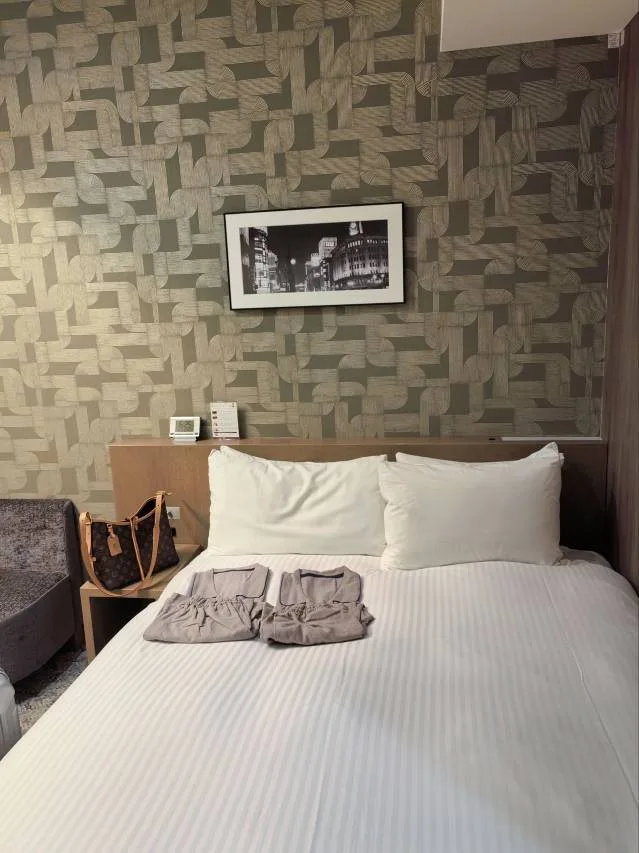
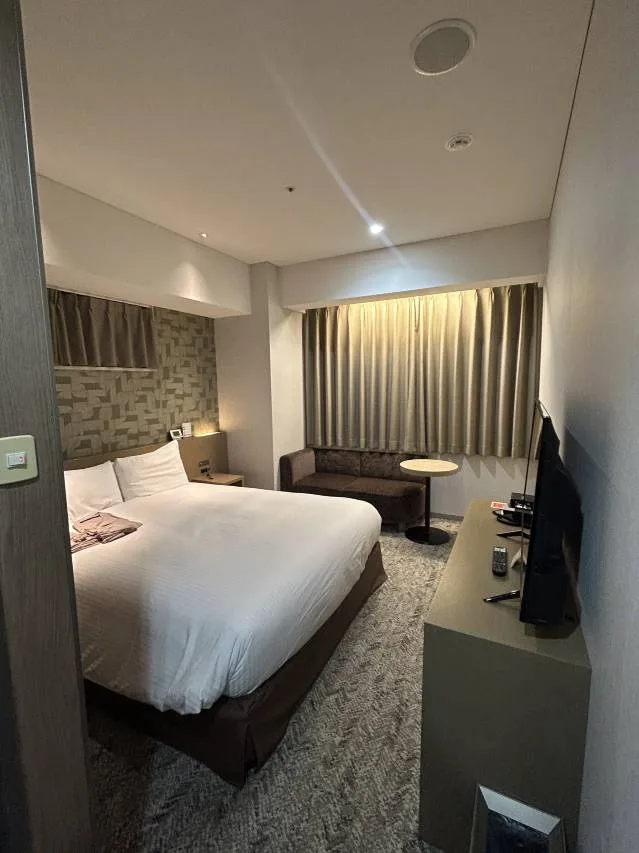
Official Standard Double is 15 m² with a 140 cm bed, Comfort Double 21 m² with a 160 cm bed and Standard Twin 23 m² with two 110 cm beds. This is a practical difference for couples: choose 21 m² to share a bed with more unpacking space, or 23 m² to sleep separately or stay longer.
There are also executive-floor Smart categories with different beds and equipment. Don’t assume that an executive label always means more square meters.
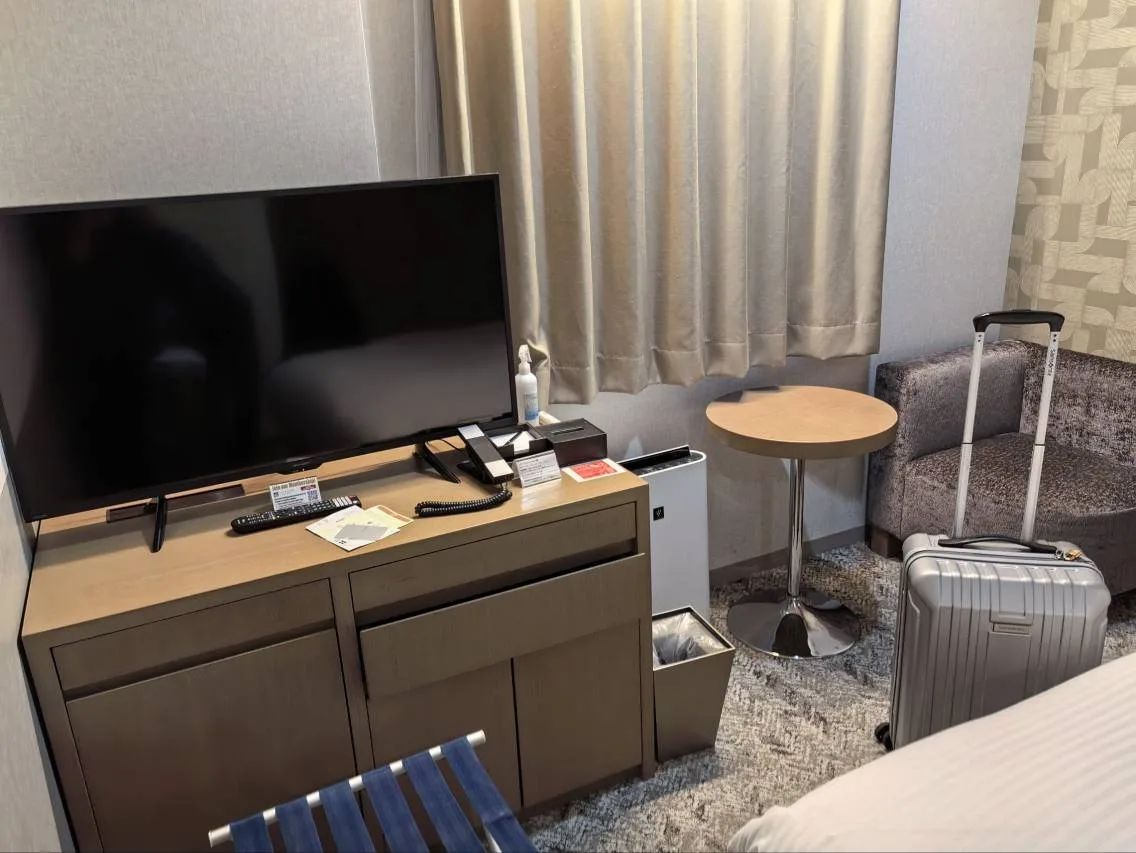
For a solo stay, the 15 m² Single works well: one person, one case, with a sofa and desk in the room. Beds are by Slumberland, and every room has a humidifying air purifier, pajamas, a negative-ion hair dryer and a washlet toilet. Wi-Fi is free throughout the hotel, and the TV carries NHK and CNN, so an evening in the room needs no extra device.
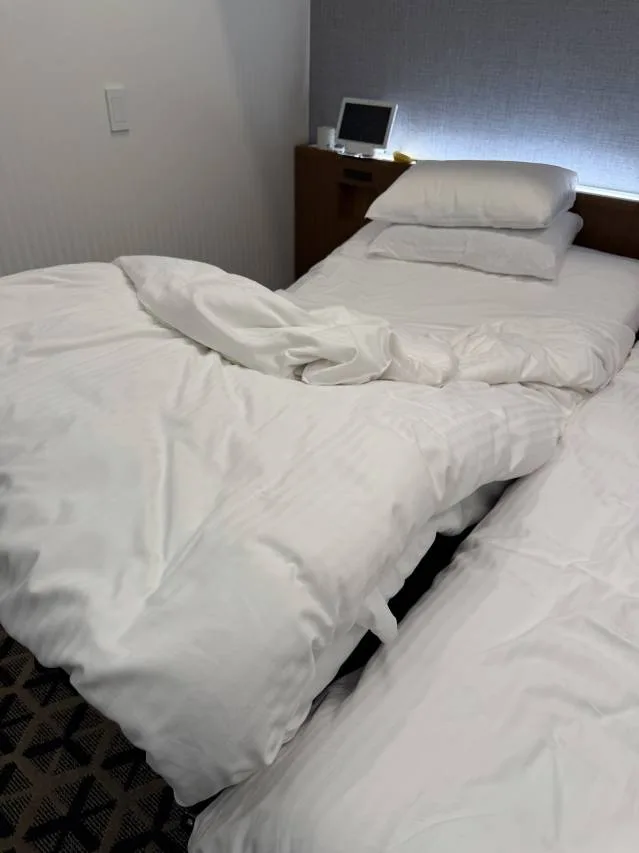
Traveling with children, look at the flooring rooms: shoes off at the door, low beds that make co-sleeping easier, and check-out extended to noon. The executive-floor Smart rooms and ReFa rooms go the other way: ReFa shower heads and hair dryers are the draw, with more equipment in the room than a standard room, so read the instructions on arrival and ask the front desk if anything feels unfamiliar.
The Double is 15.2 m² with a 140 cm bed: a little more floor than the Single for two sharing a bed, but cases still open in turns. The Comfort Double is 21 m² with a 160 cm bed, and the extra 6 m² mostly shows up in walkway and desk space, which feels very different when unpacking over several nights. Count your cases first, then match them against these three numbers; that beats choosing by price alone.
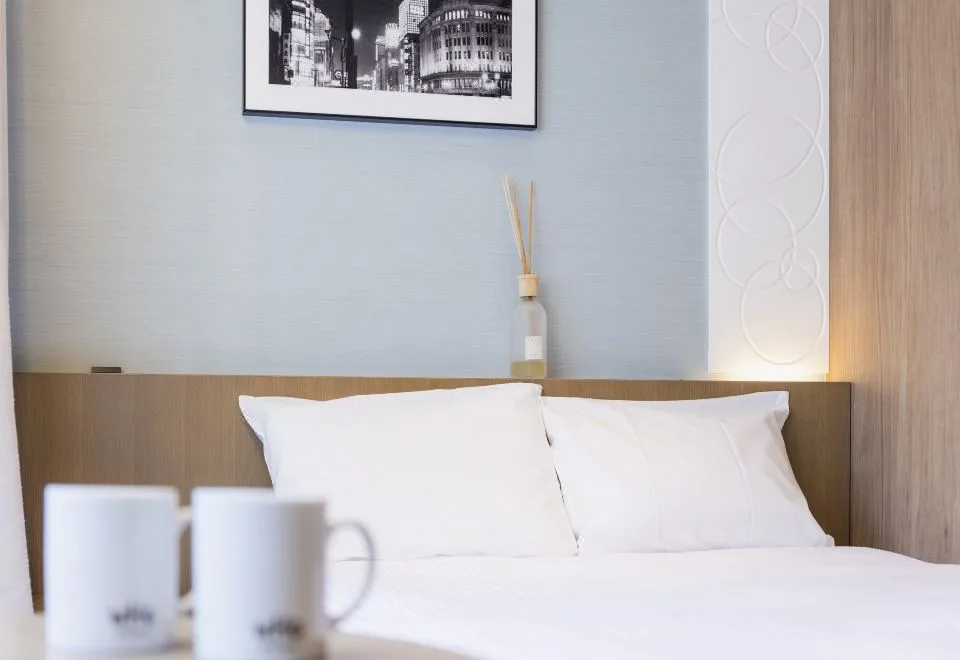
Rooms come well equipped: a refrigerator and an electric kettle, so drinks and late-night snacks stay cold and hot tea needs no trip downstairs. The humidifying air purifier runs overnight, so heated winter air feels less dry; pajamas are in every room, ready to change into after a shower.
Breakfast to suit your morning
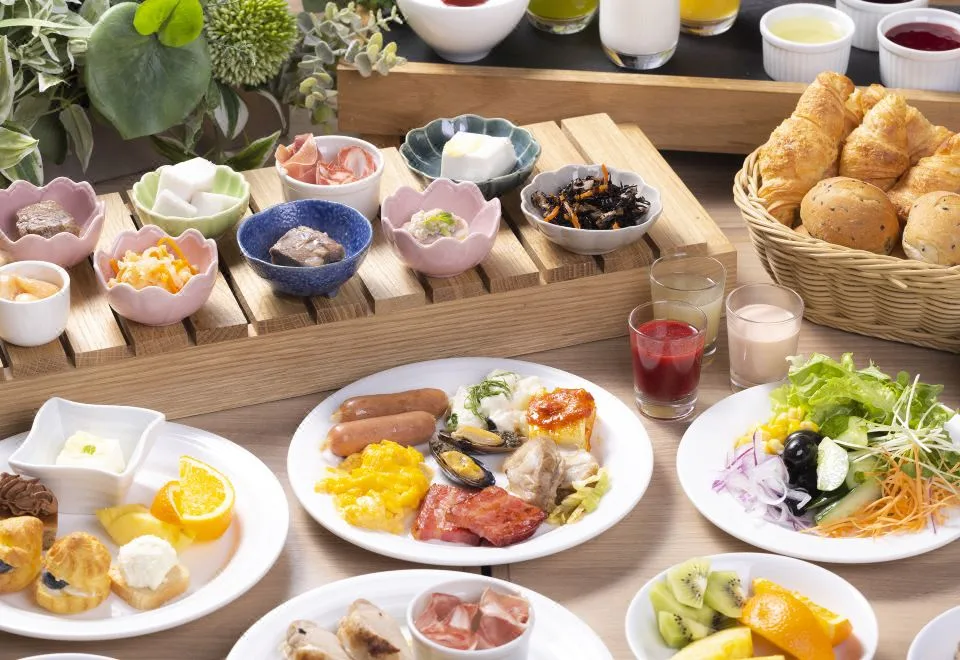
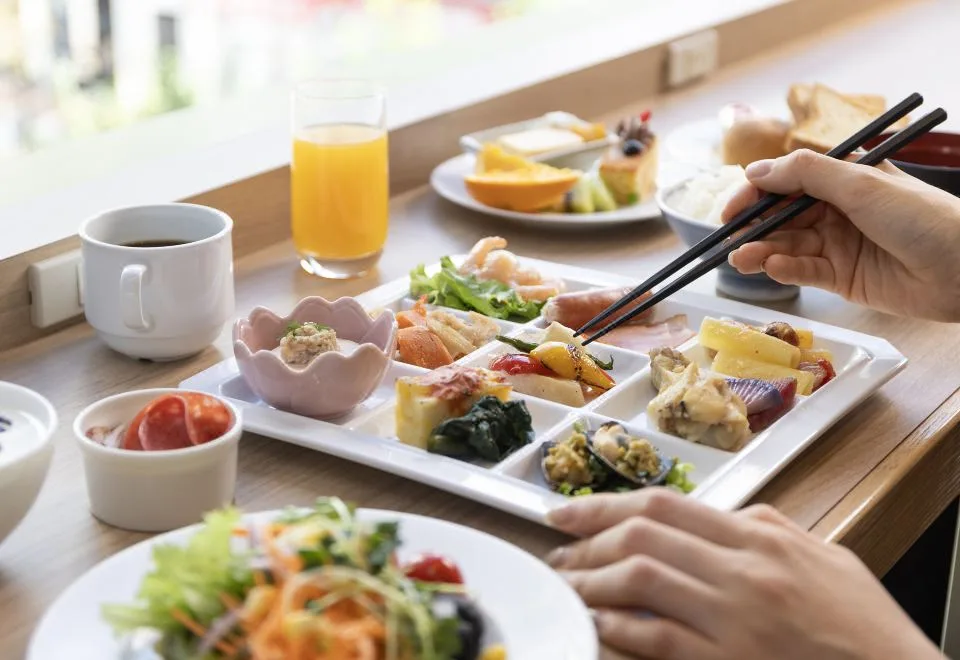
Breakfast is served at third-floor SAKURA. The official guide describes mainly Western dishes plus Japanese options with rice and desserts. If you want to eat before shopping, this saves looking for a place in Ginza early. For brunch in Tsukiji, you don’t need a breakfast-inclusive rate every day. Decide based on the number of mornings you’ll actually eat there and the time available.
Breakfast runs 7:00–10:00 at SAKURA on the third floor, last entry 9:30. It is a buffet built around Italian dishes, with Japanese sides to go with rice and desserts, in a bright room with large windows. Adults pay 2,420 yen; children 2 and under eat free, ages 3–5 pay 550 yen, ages 6–12 pay 990 yen, and ages 13–17 pay 2,420 yen. Book a breakfast-inclusive rate or pay on the day, after counting how many mornings you will actually eat here.
For a relaxed morning, come down early; after 9:00 the room fills up. On a day planned around a Tsukiji brunch, skip the breakfast rate and save the money for the outer market. After breakfast, the third floor leads straight out to Ginza, with no need to go back to the room for anything.
Leaving before 7:00 means missing breakfast, so buy something at a convenience store the night before, or pick up a drink in the third-floor lounge; the lounge stops serving drinks between midnight and 5:00 a.m., so very early departures need their own supplies. Buy breakfast for the number of early-start days only, rather than for the whole stay and wasting days.
Location, transit and luggage
Exit A3 of Ginza Station has no elevator. With large luggage, a wheelchair or a stroller, use Exit A7 instead: its elevator runs to street level beside Mitsukoshi, and from there walk south along Chuo-dori past Ginza 5-chome and 6-chome to 7-chome, about five to six minutes to the hotel. Exits B2 and B8 also have elevators, but with time limits. Without heavy luggage, Exit A3 is the fastest way in, about three minutes. Higashi-Ginza Station is another option, 320 meters away, about five minutes on foot.
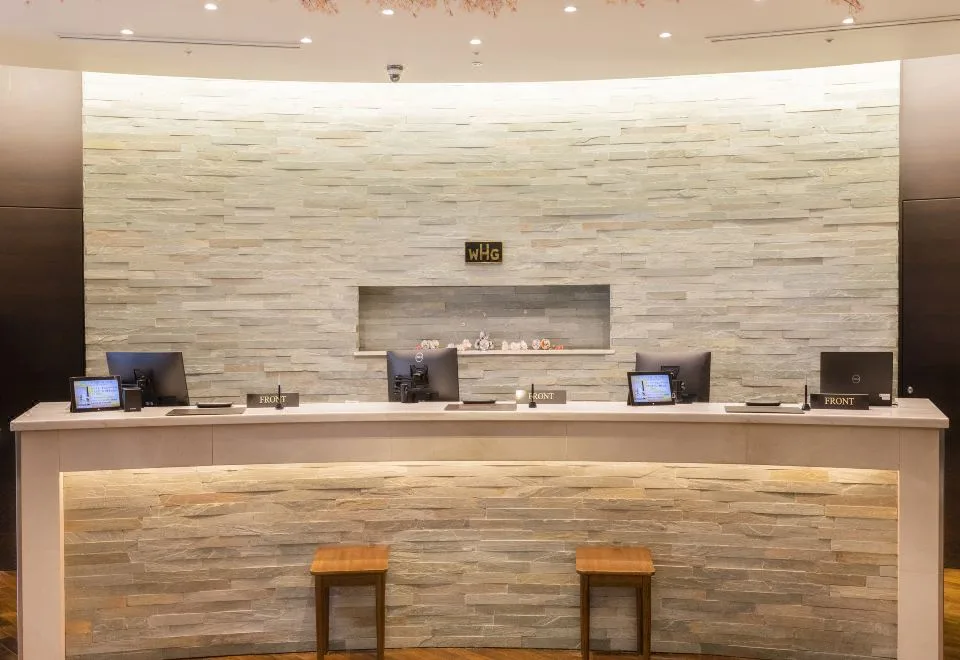
Check-in is 14:00 and check-out 11:00. Reception sits on the third floor and stays open around the clock, and luggage can be left there before heading out. Late check-out runs to 14:00 at the latest, 1,500 yen per person per hour, depending on availability that day. Room charges are paid at check-in, by cash, card or electronic payment.
Shimbashi Station is about eight minutes away, with the JR Yamanote and Keihin-Tohoku lines for Tokyo Station and Ueno. From Haneda Airport, the Keikyu Line runs through to the Asakusa Line and Higashi-Ginza Station, a five-minute walk from there, with no detour through central Tokyo.
Address: 7-10-1 Ginza, Chuo City, Tokyo 104-0061, Japan.
Nearby dining and shopping
Visit GINZA SIX, Ginza’s main avenues and department stores in shorter outings, returning at midday for a break. Shimbashi also offers dinner options, while Tsukiji can be a separate half-day. The chief benefit of staying here is being able to drop purchases off quickly rather than carrying them all evening.
For a half-day plan, see Ginza walking guide (Chinese).
GINZA SIX stands right beside the hotel, and the Kabuki-za Theatre is within a five-minute walk, an easy return after an evening performance. The Ginza Art Aquarium is 430 meters away and the Tsukiji Outer Market 640 meters, so a morning brunch run and an afternoon rest in the room fit together naturally.
Further out, Hibiya Park is 930 meters, the Imperial Palace 1.5 kilometers, Nihonbashi 1.6 kilometers and Tokyo Tower 2.4 kilometers, all within a half-day walk. Shimbashi Station is about eight minutes away, with plenty of dinner options in that direction when Ginza feels too familiar.
Shopping works best in stages: GINZA SIX in the morning, the main street and department stores in the afternoon, with a midday return to drop bags and rest. Not carrying purchases all day is the most practical benefit of this location.
Ginza-itchome Station is also within 670 meters, with the Yurakucho Line toward Ikebukuro and Iidabashi; heading to the Imperial Palace East Gardens or the Tokyo Station area, walking from this side is smoother than circling from Ginza Station. Three Metro lines plus the Yurakucho Line put every direction within reach from Ginza.
Facilities and services
The amenities area and lobby are useful for urban travelers; ask on arrival where drinking water and ice are kept. If staying longer, ask where the water and supplies are so you don’t search every night. Some Smart-category equipment differs from ordinary rooms; read instructions and report malfunctions promptly.
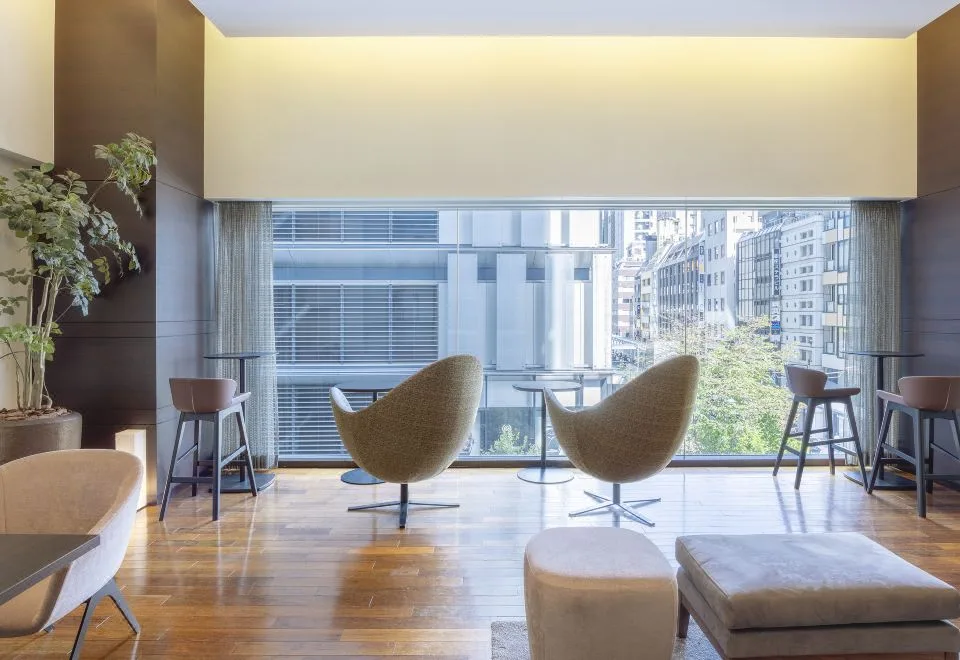
The third floor holds a guest-only lounge, open 24 hours, with coffee and other drinks available at any time except between midnight and 5:00 a.m. An amenity bar stands beside reception: toothbrushes, hairbrushes and skincare sets are self-serve, while rooms carry only bath products and a tea set, a plastic-reduction choice. Wi-Fi is free throughout the hotel, with no setup needed in the room.
Drivers can use the NPC24H Strata Ginza car park at 2,500 yen per 24 hours, with no advance booking, so arrive early on weekends. Luggage storage, wake-up calls, currency exchange and a car service are all available, with reception staffed around the clock. Children of all ages are welcome, with one child aged 0–12 sharing a bed free of charge per bed, and children’s amenities provided. Pets are not allowed, and check-in requires guests to be at least 18 years old.
Moving through the hotel is simple: the entrance is on the ground floor, reception is on the third floor, and each guestroom floor needs a room key card to enter, an extra layer of comfort at night. Luggage can be left at reception on check-out day, so the last half day needs no cases in tow.
One night or several
For a single shopping night, 15 m² may be enough. For two adults with two large cases staying several nights, 21 or 23 m² is a more comfortable option. If you work or nap in the room during the day, window orientation, blackout curtains and desk space matter, not just the Ginza address.
For a longer stay, a flooring room with noon check-out makes life easier; ask about amenity and drinking-water locations on arrival so the rest of the stay needs no searching. Rooms carry no complimentary bottled water, so buy some at a nearby convenience store if you like water by the bed. One night of shopping and sleeping fits in 15 m², but two large cases over several nights call for 21 m² or 23 m².
One night and five nights call for different room logic: one night needs good sleep and a place to drop a case, while five nights add storage, desk space and daylight. Fifteen square meters over five nights always feels short of places to put things; the difference between 21 m² and 23 m² shows up most clearly after the third day.
Before booking: sleep and equipment
Location is the clear strength, while space, odors and blackout effectiveness vary by room. Smart-room equipment takes some getting used to, so read the instructions on arrival; early-morning light can also disturb sleep, so light sleepers should ask about blackout and window direction when choosing a room. None of this affects every room, but for high sleep needs, asking first beats changing rooms later.
Space is the point to think through first for the 15 m² rooms: fine for one person, but two people with two large cases end up opening cases in turns. Treat the number of cases as the first room-selection condition, ahead of price: a small price difference buys days without moving cases out of the way, and over several nights that matters a lot.
If noise worries you, ask about window direction and whether the room faces the street before booking. Blackout works the same way: room type matters more than floor, since curtain blackout varies by room, so ask about room type and window direction directly rather than asking about the floor.
My final choice
For a Ginza shopping trip, this hotel is worth considering; two travelers should compare the 21 m² Comfort Double and the 23 m² Twin first, then decide on breakfast. With children, look at the flooring rooms, where co-sleeping and noon check-out both help. If a spacious room with a view matters most, or light sleep is a strict requirement, filter by specific room conditions rather than by address alone.
One last check before booking: settle three things first — how many cases, how sensitive your sleep is, and how many breakfasts. Those three answers point straight to 15, 21 or 23 m², and to how many days of breakfast to buy.
With day trips outside the city on the plan, three Metro lines at Ginza Station make transfers easy, and luggage left at reception means day returns need no cases in tow. Using Ginza as a base puts every direction within reach, and that is the real value of this location.
Pros and cons at a glance
Pros
- Beside GINZA SIX, so several days of Ginza shopping and dropping bags in the room stay easy.
- Room options cover 15 m² standard double, 21 m² comfort double and 23 m² twin, so two people need not squeeze into a basic room.
- Third-floor SAKURA serves a breakfast buffet 7:00–10:00, built around Italian dishes with Japanese options to go with rice.
- Third-floor guest lounge serves coffee and other drinks 24 hours a day.
- Every room has a Slumberland bed, a humidifying air purifier and free Wi-Fi.
- One child aged 0–12 shares a bed free of charge per bed, and flooring rooms suit families with children.
Cons
- A 15 m² standard room feels tight for two people with two large cases; an upgrade to 21 m² or 23 m² is needed.
- Blackout curtains and smells vary by room, so light sleepers should ask about room conditions first.
- Executive Smart-room equipment takes some getting used to; read the instructions first.
- Parking costs 2,500 yen per 24 hours and cannot be booked in advance.
Information checked: November 22, 2026.