
TOKYO / CHUO
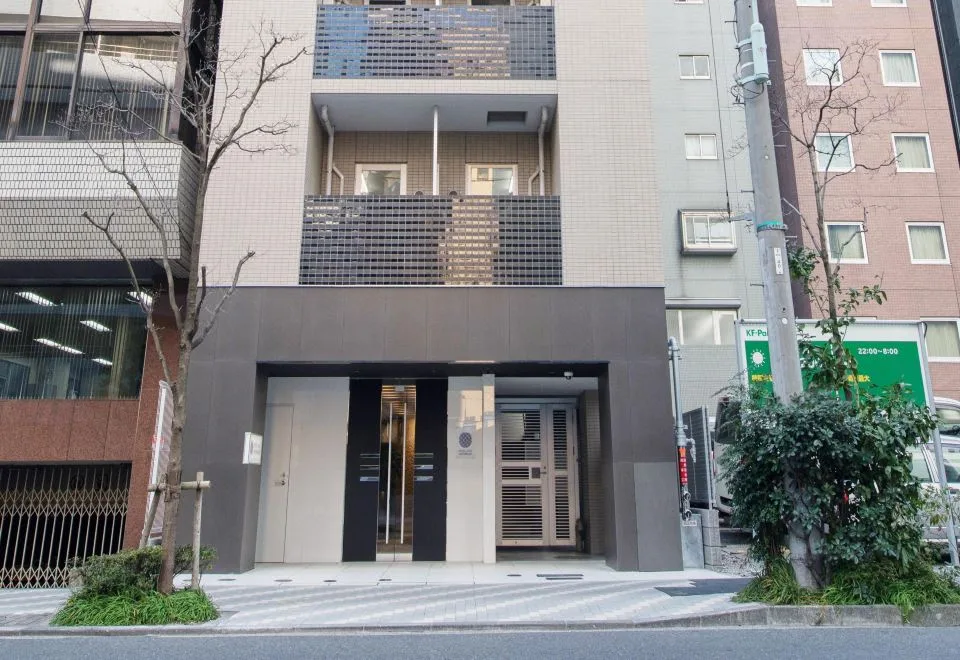
Hotel Axas Nihonbashi
Hotel Axas Nihonbashi
Kitchenette and in-room laundry: make Nihonbashi a daily base
Hotel Axas Nihonbashi suits travelers who want a small home base in Tokyo. You can warm food, wash clothes, then sit together and plan tomorrow’s itinerary. This is especially useful for families or several-night visits.
The hotel has only 19 rooms, and every one comes with a kitchenette, a fridge and a washer-dryer; a balcony and wood flooring are standard in all rooms too. What sells it to me is practical: staying several nights without eating out every day and without bringing a suitcase of dirty laundry home.
| First considerations | My choice |
|---|---|
| Suitable travel | Longer stays, families or friends and travelers needing kitchen and washing facilities. For one night without using these, compare beds, location and total price instead. |
| Room selection | Official Standard Twin A is 25.58 m² with two 120 × 195 cm beds, kitchen, washer-dryer and separated bathroom. Layer Twin B is also 25.58 m² but uses custom stacked beds. |
| Main compromise | For stacked or loft beds, consider climbing up and nighttime visits to the bathroom. |
Rooms / Transport / Breakfast / Long Stays / Trade-offs
Compare rooms and suitcase space
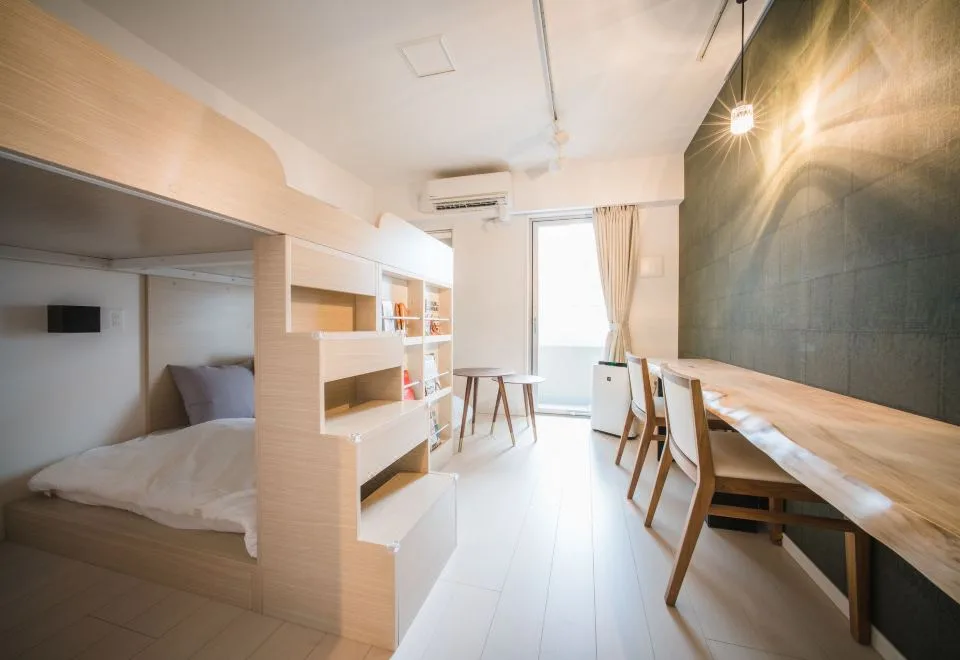
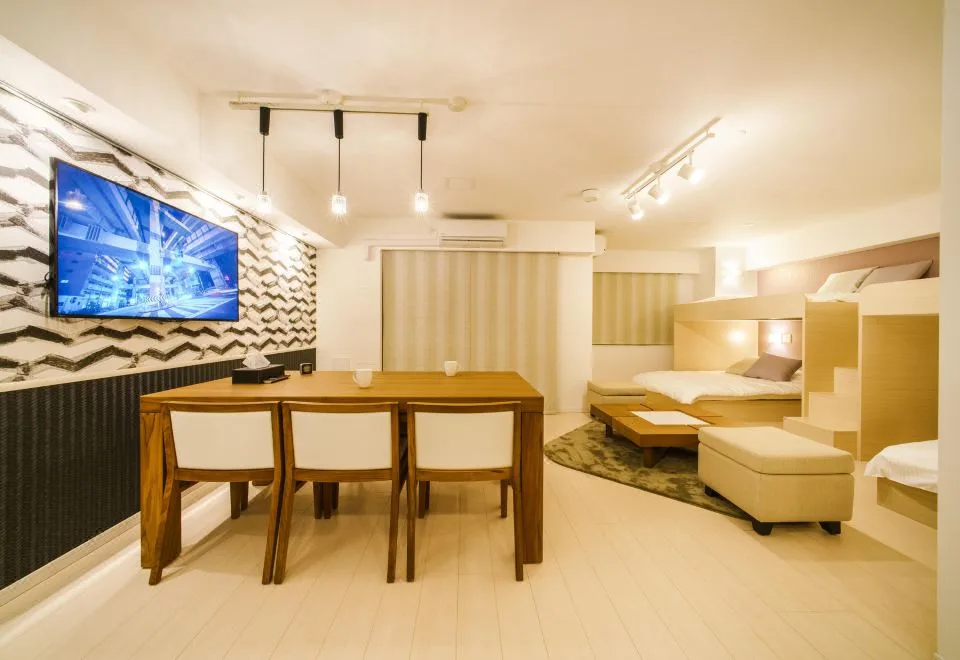
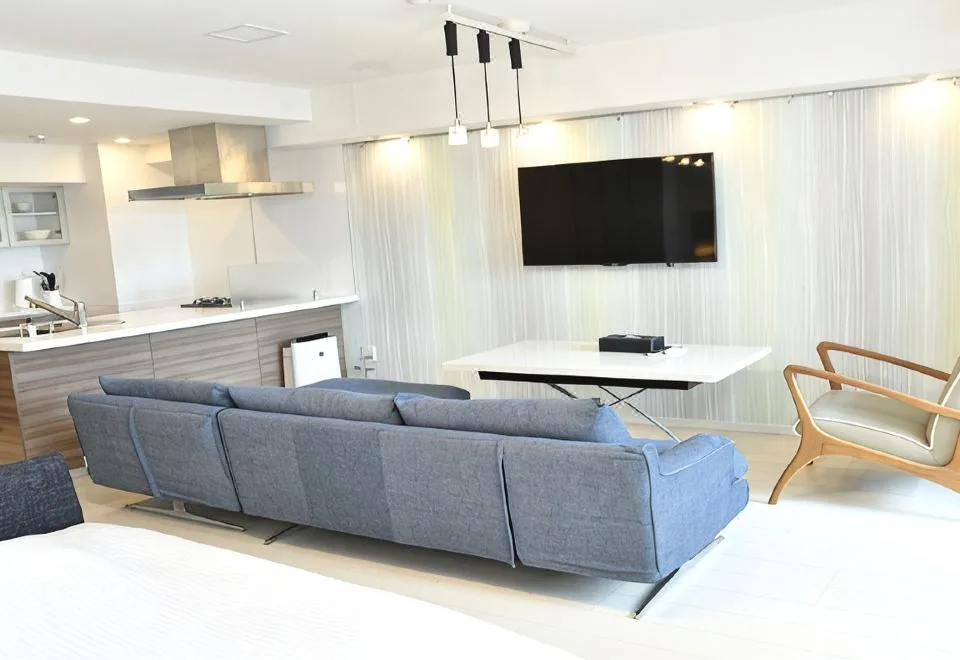
Official Standard Twin A measures 25.58 m² with two 120 × 195 cm beds, a kitchen, washer-dryer and separated bathing facilities. Layer Twin B is also 25.58 m², with custom staggered beds. For families or friends wanting to eat together, compare 52.39 m² Precious Dining D1, which has four 120 cm beds and a large dining table. Capacity and actual bed count may differ, especially for a fifth guest or shared-bed arrangement.
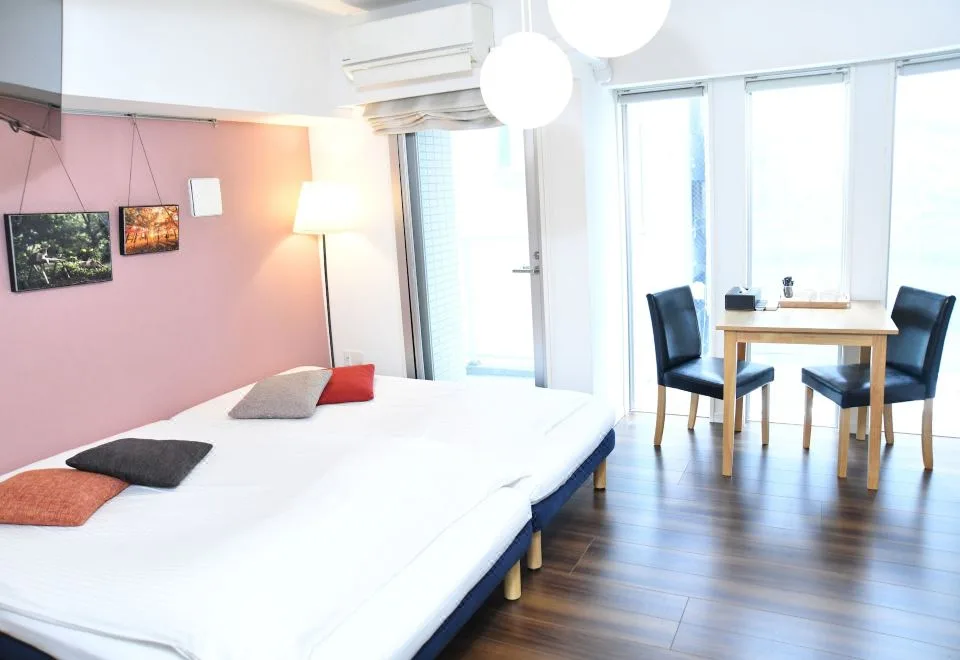
The official site lists five room types. Besides the standard twin, there is the 25.35 m² Atelier Twin, with one wider and one narrower bed (120 cm and 100 cm) — right for three people. At 52.39 m² there are two four-person rooms, Precious Dining D1 and Comfort Couch, both with four 120 cm beds; they differ in the dining table and sofa layout, and the room name tells them apart. All five types are non-smoking, all have a balcony, wood flooring, a separate bath and toilet, and a separate washbasin.
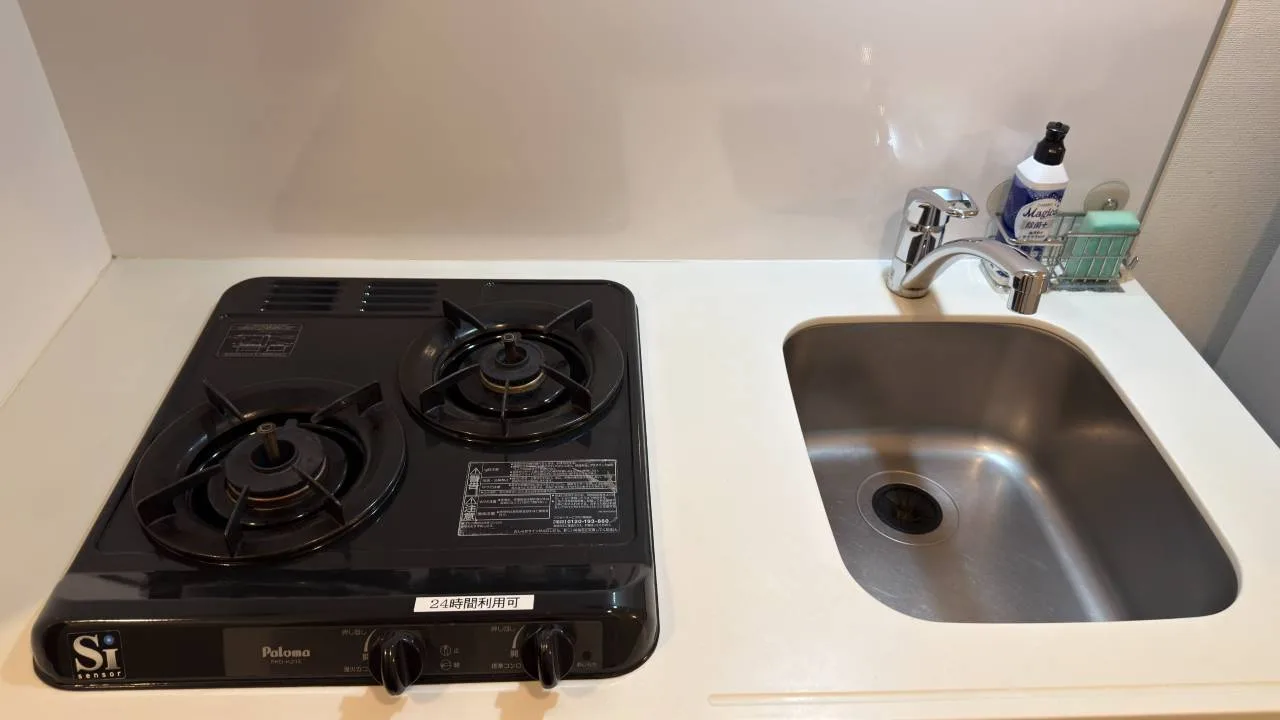
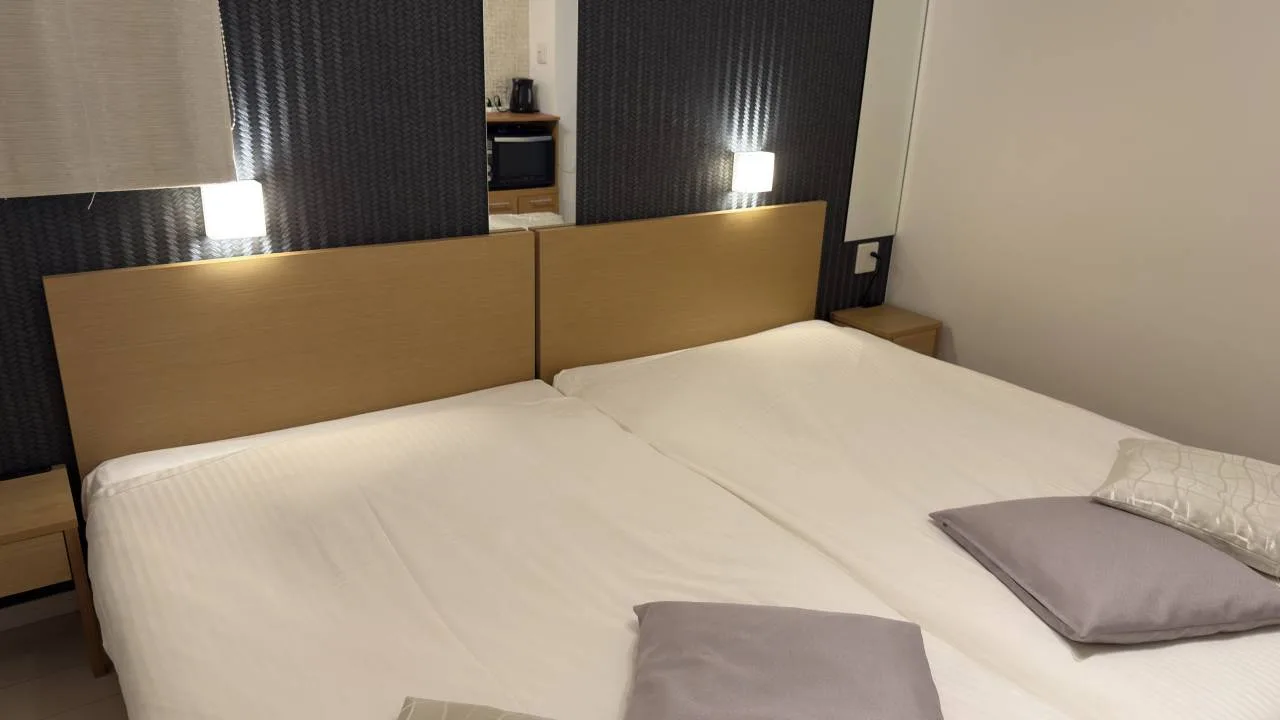
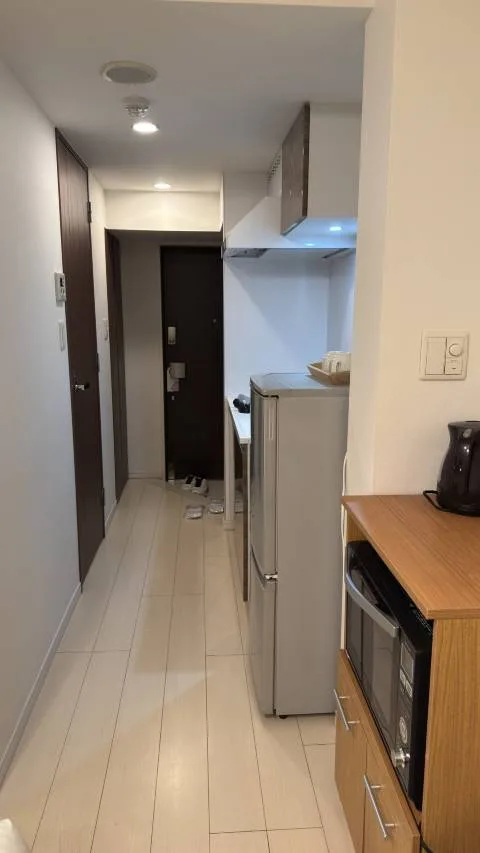
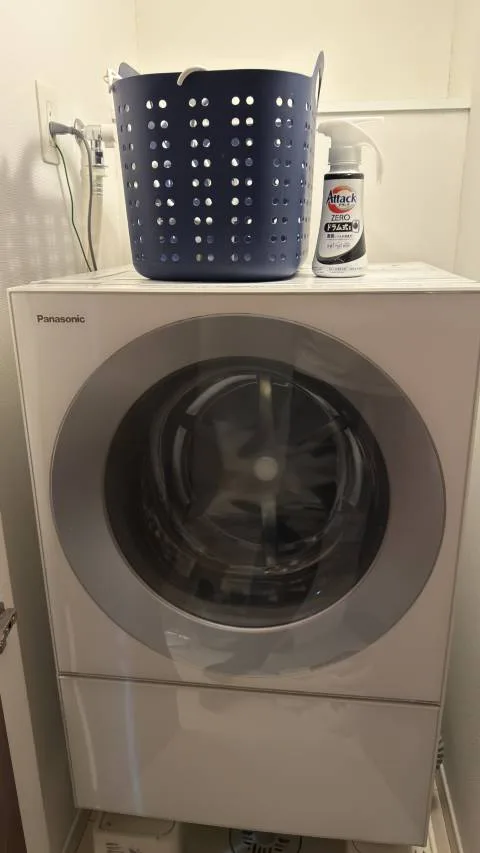
Standard Twin A uses airweave mattresses on both 120 × 195 cm semi-double beds. The room has a 40-inch 4K TV with Netflix, and Apple TV to cast a phone screen to the big display. The kitchen is genuinely usable: a 28 cm frying pan, a 22 cm two-handled pot, a 3.5-cup rice cooker, an oven microwave, an electric kettle and a 137-litre fridge are all provided, and towels, bathrobes, toothbrushes and razors are set out per guest. The washer-dryer sits in the room, and detergent is free.
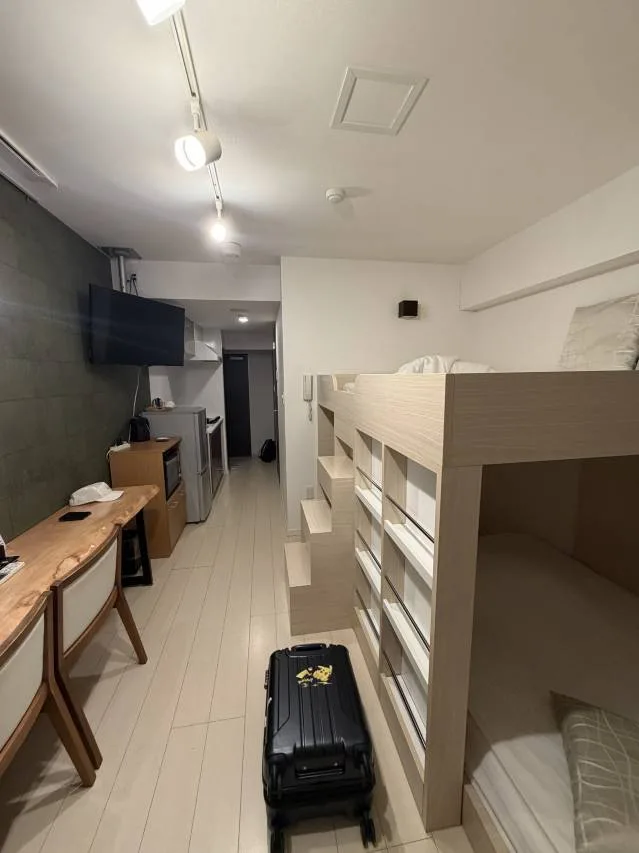
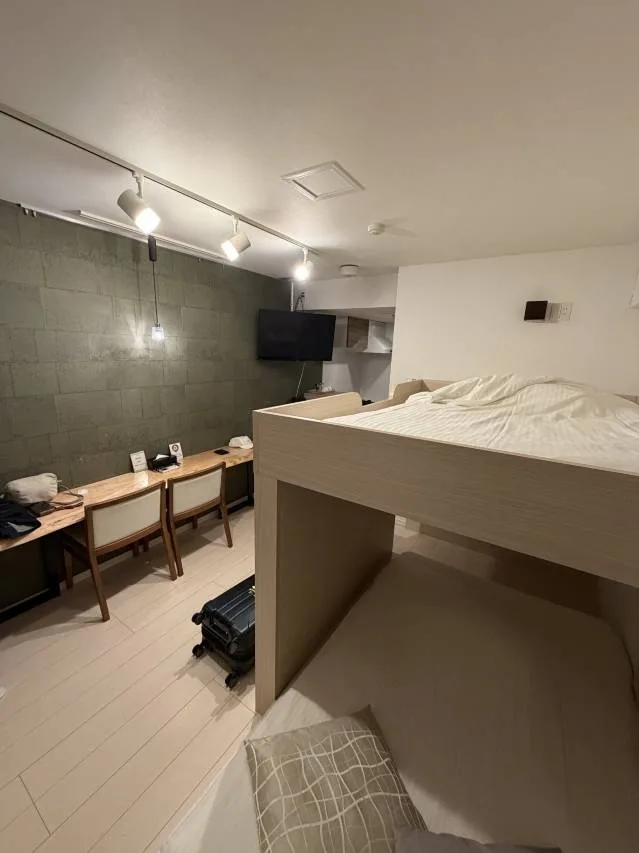
Layer Twin B has a custom-built stacked bed frame. The upper bunk has a good view, but a nighttime trip to the bathroom is awkward, so think it through before choosing it. Precious Dining D1 and Comfort Couch need an extra bed for a fifth guest, so count heads when booking. Children below elementary school age can share a bed without taking a bed of their own, with limits by room type: two in Standard Twin and Layer Twin, one in Atelier Twin, and four in Precious Dining and Comfort Couch.
The official site positions the hotel as living in a hotel: just 19 rooms in the whole building, each an apartment-style room with a kitchen, fridge and washer-dryer. The fridge is three-door or two-door depending on the room type, and rooms with a ReFa shower are available if you want to unwind in the bath. If you have allergies, ask the front desk in advance what measures they offer — sorting it out before arrival is easier than finding alternatives on the spot. A third person can share the bed in Standard Twin A, and Comfort Couch sleeps up to six, so just confirm the headcount when you reserve.
Choosing among the five room types comes down to group size and how you want to eat: two people take a standard twin or a bunk-style room, three take the twin with one wide and one narrow bed, and four or more take one of the two large rooms over fifty square metres; pick a large dining table if you want to sit down for proper meals, or a smaller room with a small table if the budget is tight.Two people who want a wider bed can simply pick a room with 120 cm beds.
| Room type | Area / configuration | My selection |
|---|---|---|
| Standard Twin A | 25.58 m² / two 120 cm beds | Kitchen, washer-dryer and separate bathroom |
| Layer Twin B | 25.58 m² / stacked beds | For guests happy climbing to the upper bed |
| Atelier Twin | 25.35 m² / 120 cm + 100 cm beds | A middle choice for three guests |
| Comfort Couch | 52.39 m² / four 120 cm beds | Four-person room with a sofa layout |
| Precious Dining D1 | 52.39 m² / four 120 cm beds | Large dining table for groups |
Compare the official room descriptions with the actual beds and occupancy of your rate.
What struck me most once I moved in is how much room there really is: in the four-person room each bunk feels like its own little corner, and the family can sit around the big dining table to eat and plan the next day without crowding each other. The Atelier Twin is bright, and over a five-night stay it only gets easier to live in — with the washing machine, microwave and large fridge in the room I do not need to eat out every day, and I can soak in the bathtub before bed while the street outside stays quiet at night.
Getting here with luggage
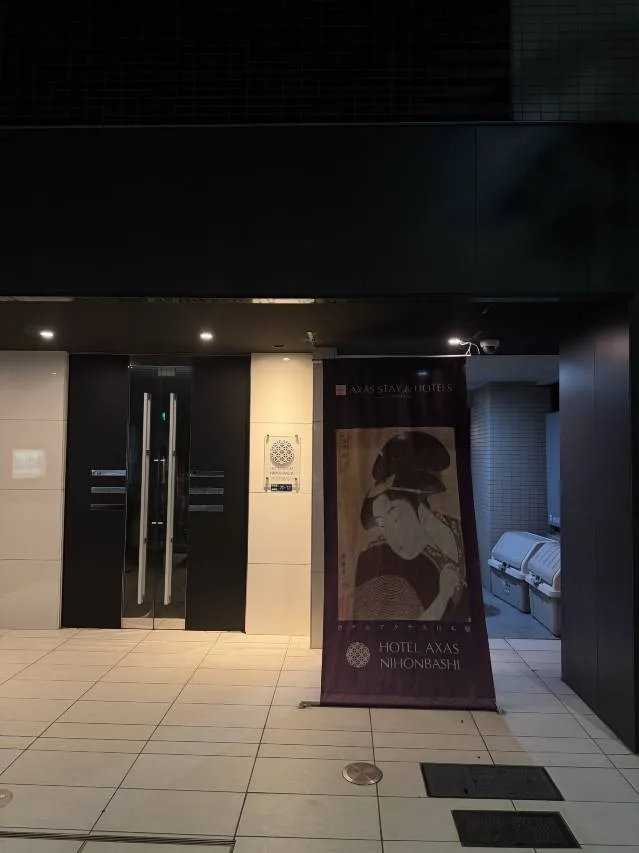
The hotel lists Suitengumae Exit 2 at 150 m or about two minutes, Kayabacho Exit 4b around eight minutes and Ningyocho Exit A2 about nine. With large luggage, a wheelchair or a stroller, do not use Exit 2: it is the closest to the hotel, but the elevator is not on that side. Take the elevator at the Oshiage end of the platform up to the Tokyo City Air Terminal-side gates, then a second elevator to Exit 4, which opens on the first floor of the Royal Park Hotel. From street level, walk toward Hakozakicho; it takes a few minutes longer than Exit 2, but there are no stairs to carry luggage up.
For airport trips there is no need to go to Tokyo Station first: T-CAT sits right beside Suitengumae Station, about a two-minute walk, and airport buses for both Haneda and Narita leave from there. The terminal has elevators, so the arrival floor connects to the street without carrying bags up stairs. Ningyocho Station is nearby too, about 300 m away, for the Hibiya Line and the Toei Asakusa Line; Tokyo Station is within 2 km, easy by taxi or a transfer.
| Stay details | Details |
|---|---|
| Address | 20-12 Nihonbashi Hakozakicho, Chuo City, Tokyo 103-0015, Japan |
| Check-in / Check-out | 3 p.m.–midnight / 6–10 a.m. checkout |
| Ordinary walk reference | 180 m or around three minutes from Suitengumae |
| Airport bus | T-CAT about a 2-minute walk; buses for Haneda and Narita |
Breakfast: a self-catering apartment base
To be clear: this hotel serves no breakfast, and every stay plan is room-only, with no buffet to go down to in the morning. That is part of why I choose it: the kitchen in the room is genuinely usable, and mornings do not need a rush downstairs — take it slow in the room instead.
Buy bread, fruit or ready food the night before, then put it together in the morning with the rice cooker, oven microwave and frying pan; the large fridge holds several days of groceries. The dining table in the 52.39 m² rooms seats the whole family for the whole family to sit down together, and the 25 m² twin rooms have a small table that suits two people. Clean up cookware as the rules ask, and ask on day one how consumables are topped up and how rubbish is sorted.
The kitchen is not just for breakfast: the 28 cm frypan, 22 cm pot and microwave are all usable, so if you do not feel like going out for dinner, a simple meal in the room works. The 3.5-go rice cooker makes enough rice for the family, and bowls, plates and cups are set out per person, so you can eat slowly at the in-room dining table instead of queuing at a restaurant. Buy the ingredients the night before, keep them in the large fridge, and there is no need to shop again in the morning.
One night or longer
The longer you stay, the more it pays to pack fewer clothes, wash them and eat simple meals in the room. The washer-dryer sits in the room and detergent is free, so three days of clothes can cover five nights; pack one fewer bag and leave the space for what you buy on the way home.
The room is set up for living in, not just sleeping in: a 40-inch 4K TV with Netflix, Apple TV to cast a phone screen, a humidifier air purifier and a hair dryer. A DVD player, an iron and a trouser presser can be borrowed free from the front desk, in limited numbers, so ask early. Wood flooring means walking barefoot indoors, and every room has a balcony for fresh air, so several days inside never feel stuffy.
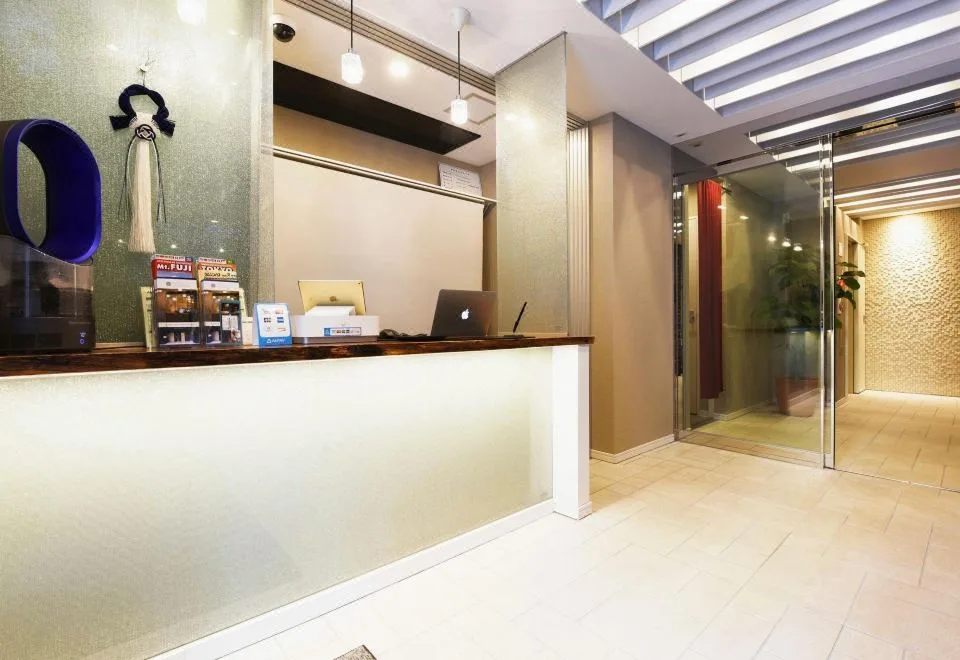
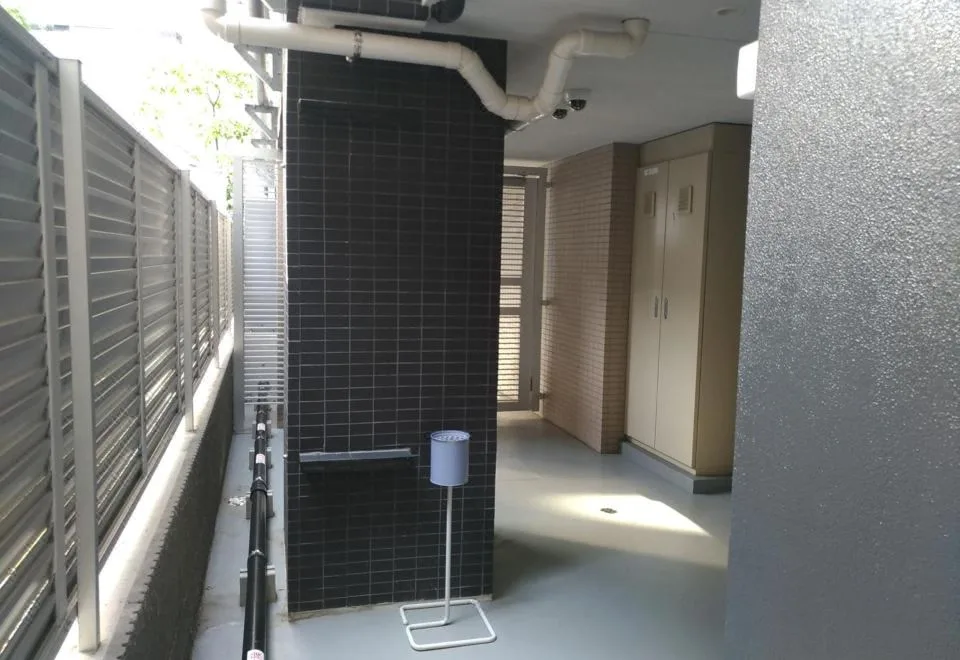
The front desk runs from 5 a.m. to 2 a.m., check-in is 3 p.m. to midnight and check-out is 6 to 10 a.m., so a late flight home still finds someone on duty. Luggage storage is free, Wi-Fi in public areas is free, and the desk speaks Chinese, English, Korean, Hindi, Vietnamese and Japanese. The building has an elevator and a smoking area, and ironing, fax and copying can be arranged at the desk.
The hotel has won Rakuten Travel awards: Gold in 2020 and Bronze in 2021, 2023 and 2024. Its place is clear: a base for living in Nihonbashi for a few days.
Arriving early is fine too: leave your luggage at the front desk, go out and explore, and come back to check in after 15:00. Check-out runs until 10:00 in the morning, so there is no need to rush out of bed to pack; if you have an early flight, you can check out from 06:00, which makes the timing easy to plan.
Over a few nights, a routine settles in: breakfast in the room in the morning, out during the day, back in the evening to do laundry and plan the next day, then out again the next morning.
The front desk helped more than I expected: when my plans changed and my booking was split across two orders, they joined it into one continuous stay without making me check in again. They collect rubbish every evening on request, and clothes washed in the evening and hung in the bathroom are dry by the next morning, so I can pack fewer outfits. If you want an extra shelf for dishes in the kitchen, ask the front desk when you book.
What to accept before booking
Stacked beds mean climbing a ladder, and a nighttime trip to the bathroom is awkward, so anyone on the upper bunk should be ready for that. The curtains do not block light fully — morning light comes through the gaps — so if light bothers you, ask when booking whether a room change is possible, or bring an eye mask. Kitchen and laundry work well if you are happy to use them by the rules and tidy up after; ask on day one how consumables are topped up and how rubbish is sorted.
Count heads before booking: a fifth guest needs an extra bed or a shared bed, and the arrangement differs by room type, so confirm it when booking. Children staying with you depend on age and the room-type limit: children below elementary school age can share without taking a bed, up to two in Standard Twin and Layer Twin, one in Atelier Twin, and four in the four-person rooms. Check-in requires guests to be at least 18, and pets are not allowed. If you arrive after midnight, contact the hotel in advance.
A few more front-desk services are worth knowing in advance: valuables can be left in the front-desk safe, and you can call the hotel directly (03-5640-8066) if you need help. Children of all ages are welcome, though extra guests may carry additional fees, so ask before you pay. The building has safety equipment, and the front desk can also help with VIP check-in; if this is your first time in Nihonbashi, you can ask about routes and the neighbourhood at the same time.Asking before you pay beats finding an extra charge at the front desk.
A few more things you should be ready for: traffic noise from the freeway sometimes reaches the room, and there is construction noise from the vacant lot next door during the day. One more unpleasant thing: the bathroom sometimes smells of drains, and spending long in the washbasin or bath area gets uncomfortable — I did not run into it in my own room, but check the bathroom when you arrive and tell the front desk straight away if it smells off. Small faults like weak air conditioning or a hole in the shower hose are worth checking at check-in too.
Nihonbashi outings without repeated travel
Explore Ningyocho streets (Chinese guide) or Nihonbashi small museums (Chinese guide) on a day based near the hotel.
Staying here, Nihonbashi itself is the itinerary. The hotel site suggests a few ways to enjoy it: an Edo Kiriko glass-cutting workshop, long-established Japanese sweets shops, and the Nihonbashi Seven Lucky Gods walk, which takes about an hour and is the shortest such course in Japan. Ningyocho is 470 m away, Koami Shrine 830 m, Ginza 1.5 km and Marunouchi 1.7 km — close enough for a morning walk or an evening meal without a train.
For farther places, the Hanzomon Line from Suitengumae runs south to Kiyosumi-shirakawa and north to Mitsukoshimae and Otemachi, and the Hibiya and Asakusa lines connect at Ningyocho. Over several nights, keep one day for Nihonbashi and Ningyocho and spend another in Ginza or Marunouchi, with the hotel as the base to come back to each evening.
Going further afield is easy too: Akihabara is about 2.9 km away, JR Shin-Nihonbashi Station about 1.6 km, and the Nihonbashi area about 1.0 km, all within a walk or a single train stop. For the airport, Haneda buses leave from the 1st floor of T-CAT and Narita buses from the 3rd floor, about a two-minute walk from the hotel.
I keep the first day for the neighbourhood around the hotel — bags put away, routes learned — and head further out on the second day.
Before reserving, compare total prices on the same dates, guest count and cancellation terms, and weigh the kitchen and larger-room premiums against how much you will use them. Before reserving, match the headcount against the beds once more, and ask first about arrangements for a fifth guest or bed-sharing.
Pros and cons at a glance
Pros
- Every room has a kitchenette, a 137-litre fridge and a washer-dryer, so longer stays need no daily eating out and no heavy packing.
- Suitengumae Exit 2 is about a two-minute walk and T-CAT is the same, with airport buses direct to Haneda and Narita.
- The 25.58 m² twin rooms and the 52.39 m² four-person rooms all have a large dining table, so a family can sit down to eat and plan together.
- Every room has a balcony and wood flooring, with a separate bath and toilet and a separate washbasin.
- The front desk speaks six languages including Chinese, English and Korean, and luggage storage and public Wi-Fi are free.
Cons
- No breakfast is served; a ready-made breakfast means cooking it yourself or going out to find one.
- Stacked beds need a ladder climb and awkward nighttime trips; curtains do not block light fully, so light-sensitive sleepers should take note.
- The elevator route uses Exit 4, and the walk from street level to the hotel takes a few minutes longer than from Exit 2.
- Kitchen and laundry are do-it-yourself, including tidying up; ask on day one how consumables are topped up and rubbish is sorted.
- Arrival after midnight needs advance contact; check-in requires guests to be at least 18, and pets are not allowed.
- The bathroom sometimes smells of drains, and spending long in the washbasin or bath area gets uncomfortable.
Information checked: November 22, 2026.