
TOKYO / CHUO
ENT TERRACE GINZA PREMIUM
ENT TERRACE GINZA PREMIUM
ENT TERRACE GINZA PREMIUM is a good fit for families who want to travel together and still have a dining table and full everyday facilities in the room. Around 40 m² of apartment space, a kitchen and laundry machines are its main appeal east of central Ginza. Leave time to enjoy the apartment rather than filling every hour with sightseeing.
Is this apartment hotel right for you?
- Choose beds: Decide who uses fixed beds and sofa beds, then check bathrooms and floor space for luggage.
- Breakfast: Make something simple at home or eat in the neighborhood for a flexible start.
- For longer stays: Plan laundry, cleaning and packing before your final morning.
Beds, sofa beds and actual living space
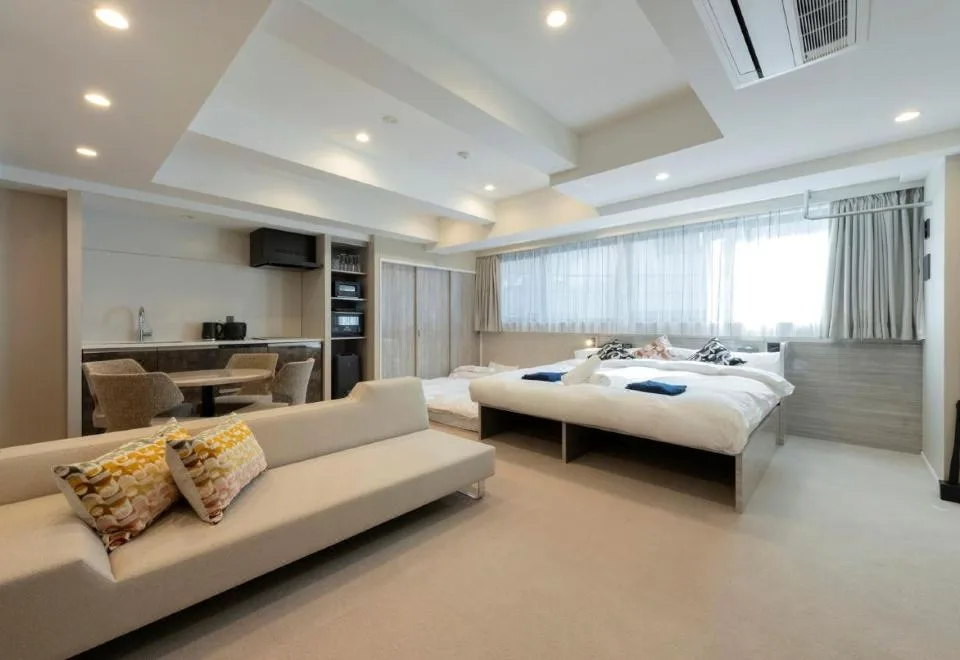
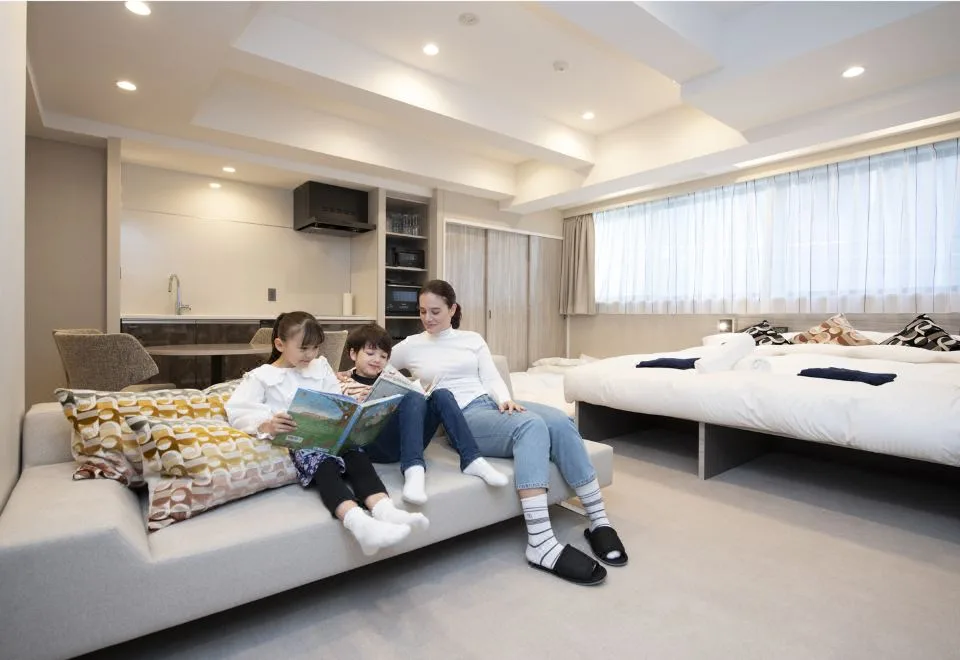
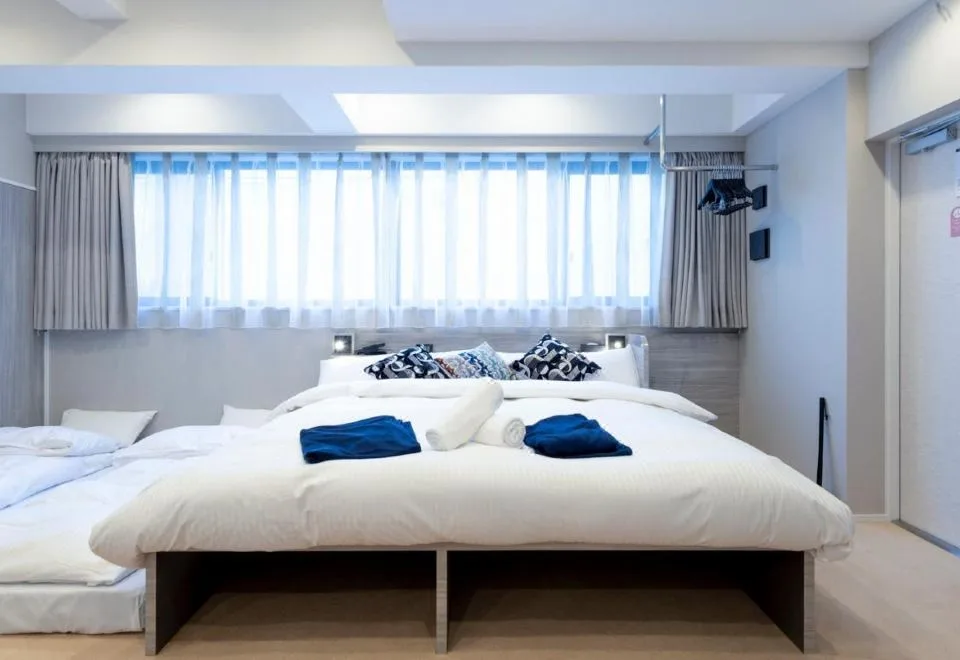
The hotel emphasizes apartment rooms of roughly 40 m² suitable for medium or longer stays. The gallery shows beds, sofa beds and a round dining table. When more people share a room, unfolding the sofa bed reduces sitting space. Before booking, assign fixed beds and sofa beds to each person. Even for four or five guests, total area alone does not tell you whether all suitcases can remain open.
Compare the hotel’s official room descriptions with the exact room category and facilities on your reservation.
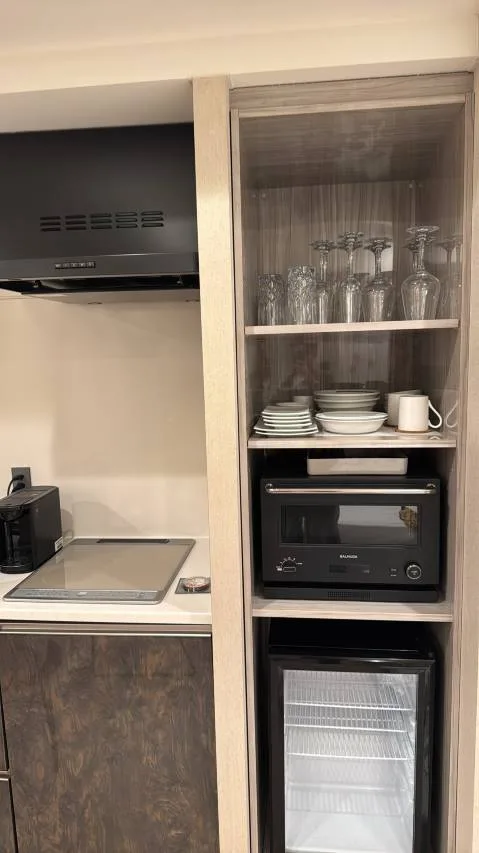
There are only six rooms in the whole building, one per floor. The rooms mix Japanese and Western styles, tatami mats with colorful interiors, and sleep four to five people. Every room has a dining area and kitchen, fully stocked with cookware and tableware, and most rooms add a workspace. Traveling with kids, parents or friends, one room per floor feels more private than connecting rooms, and everyone can head back to their own room at night without disturbing each other.
Check-in runs from 16:00 to 01:00 the next morning, and check-out is before 10:00. The front desk is staffed around the clock, staff greet you on arrival, and check-in details arrive after booking. A late arrival is no problem, but I put my expected arrival time in the booking notes so nobody is left waiting at the door in the middle of the night.
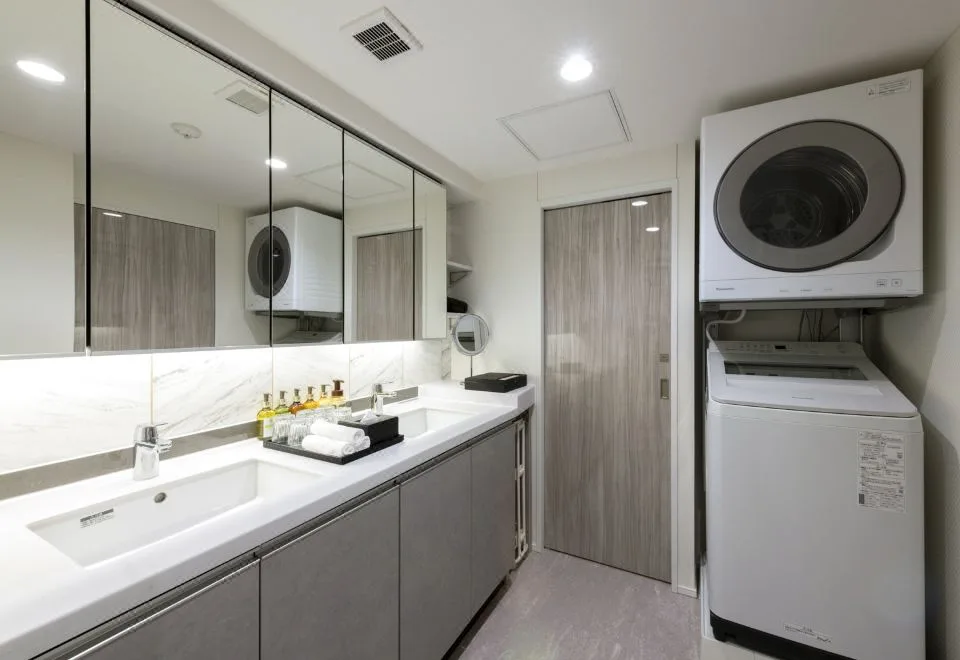
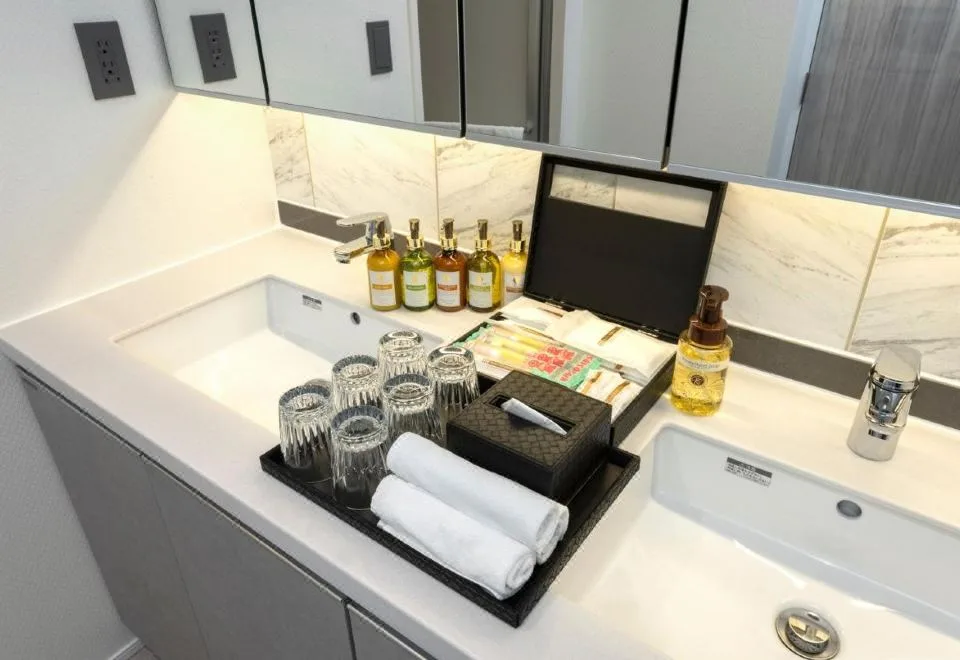
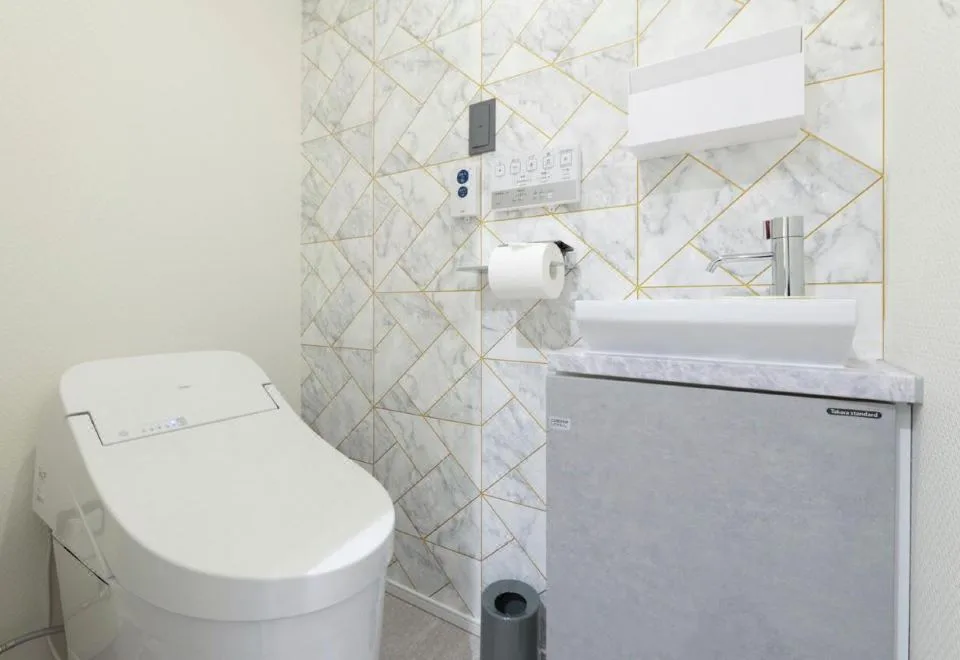
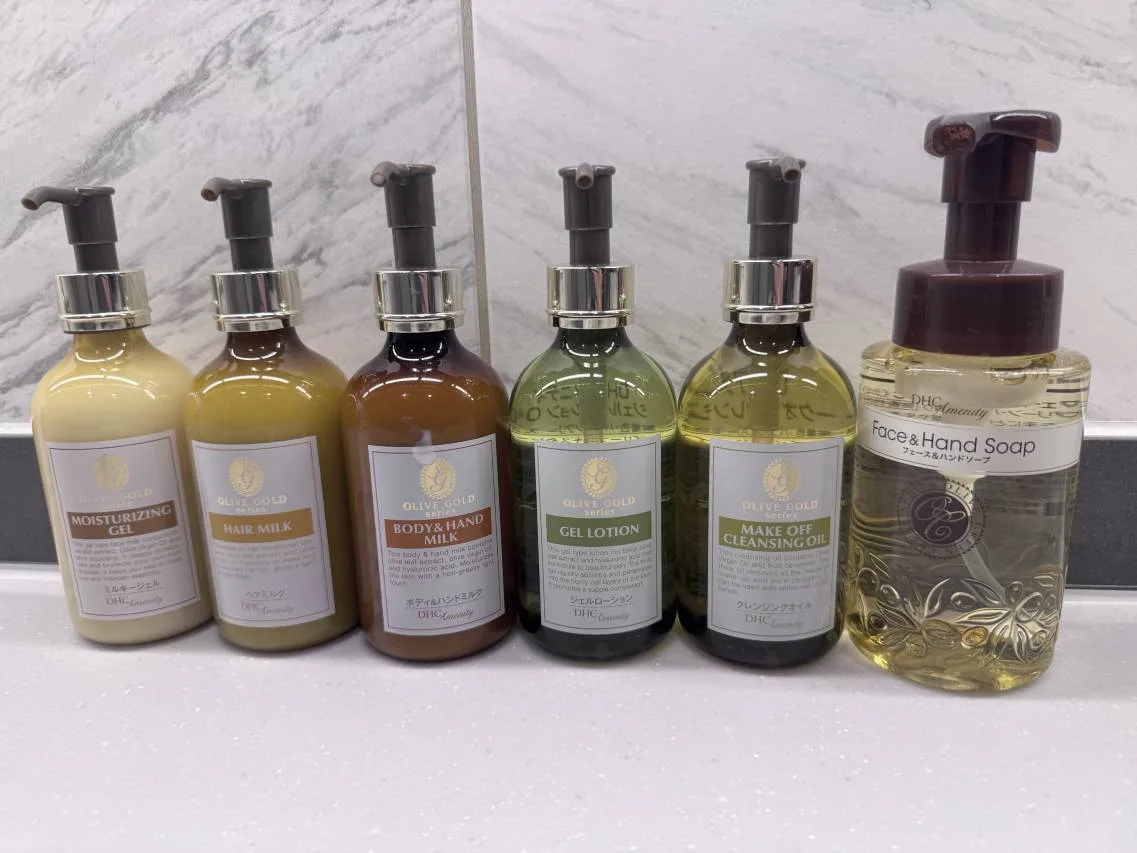
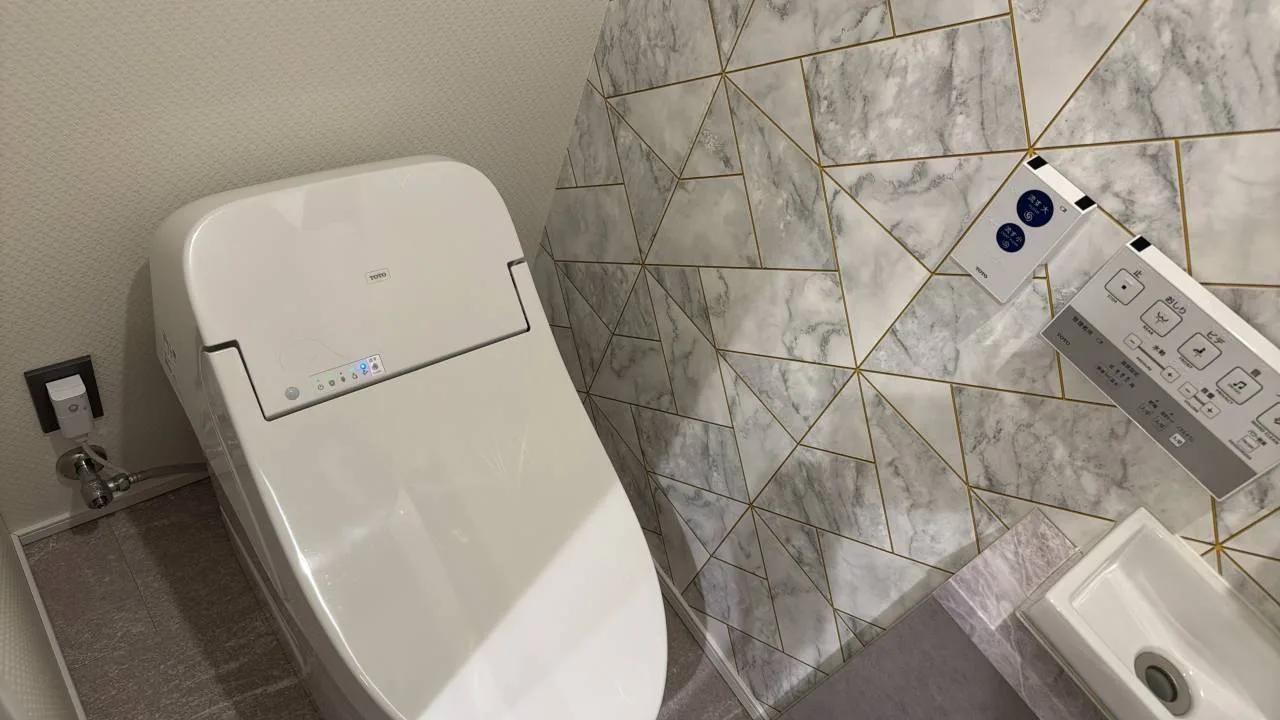
Bathrooms and storage: the photos show a separate bathtub and shower, double washbasins and a separate toilet, so several people can wash up at once in the morning without queuing. Tableware and kitchen storage are clearly pictured too — bowls, plates and cups each have their place. Amenities sit beside the washbasin, visible in the photos, and if you stay several nights you can ask the front desk for refills when they run out. The double washbasin lets two people brush teeth and wash up at the same time in the morning, which matters on days with an early start.
One room per floor also means quiet: with no neighbours on your floor, there is no hallway traffic past your door, and evenings back in the room stay calm. Families with kids do not need to worry about little feet bothering the next room, and older relatives napping in the afternoon will not be woken by footsteps in the corridor.
No hotel breakfast: the kitchen gives you options
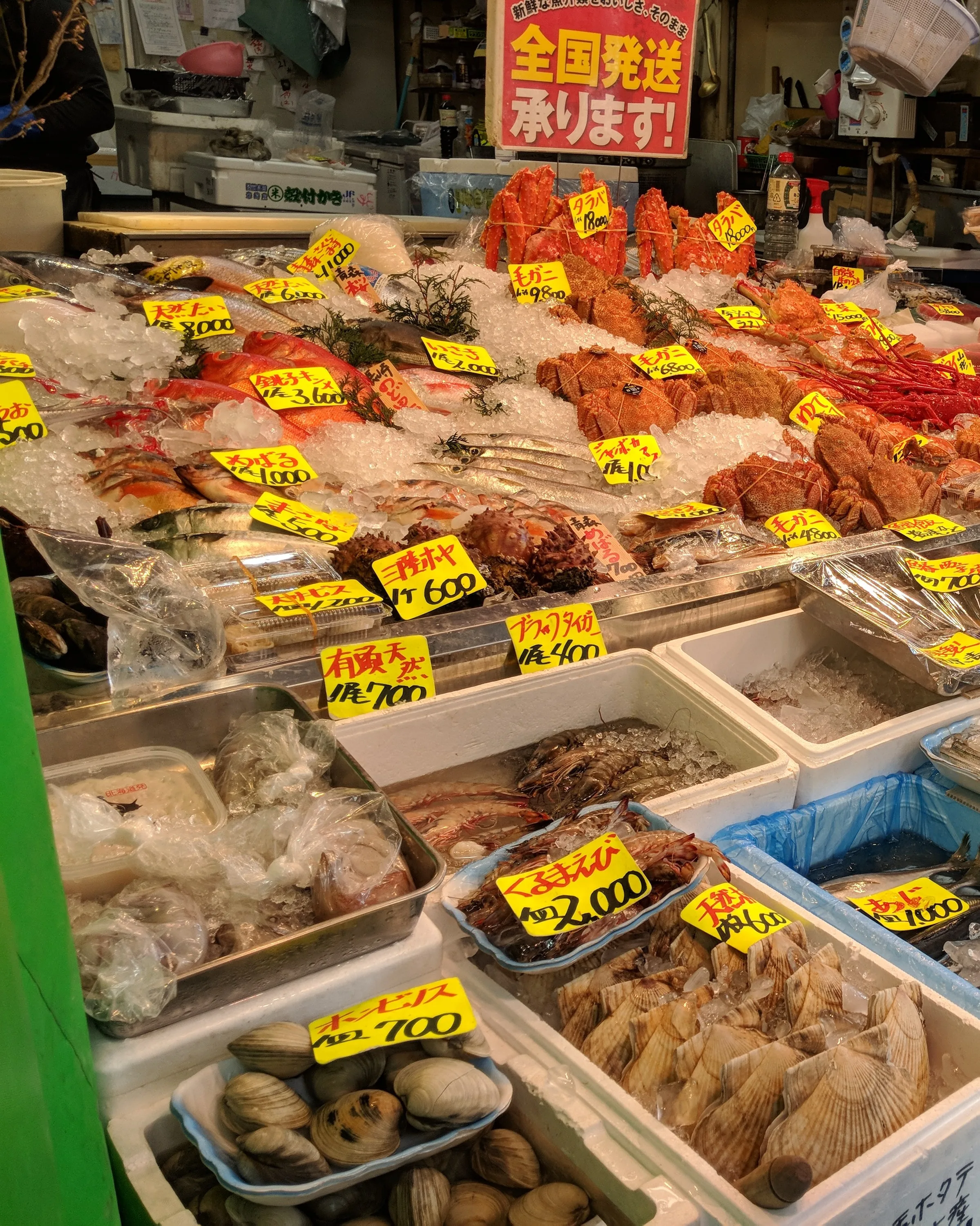
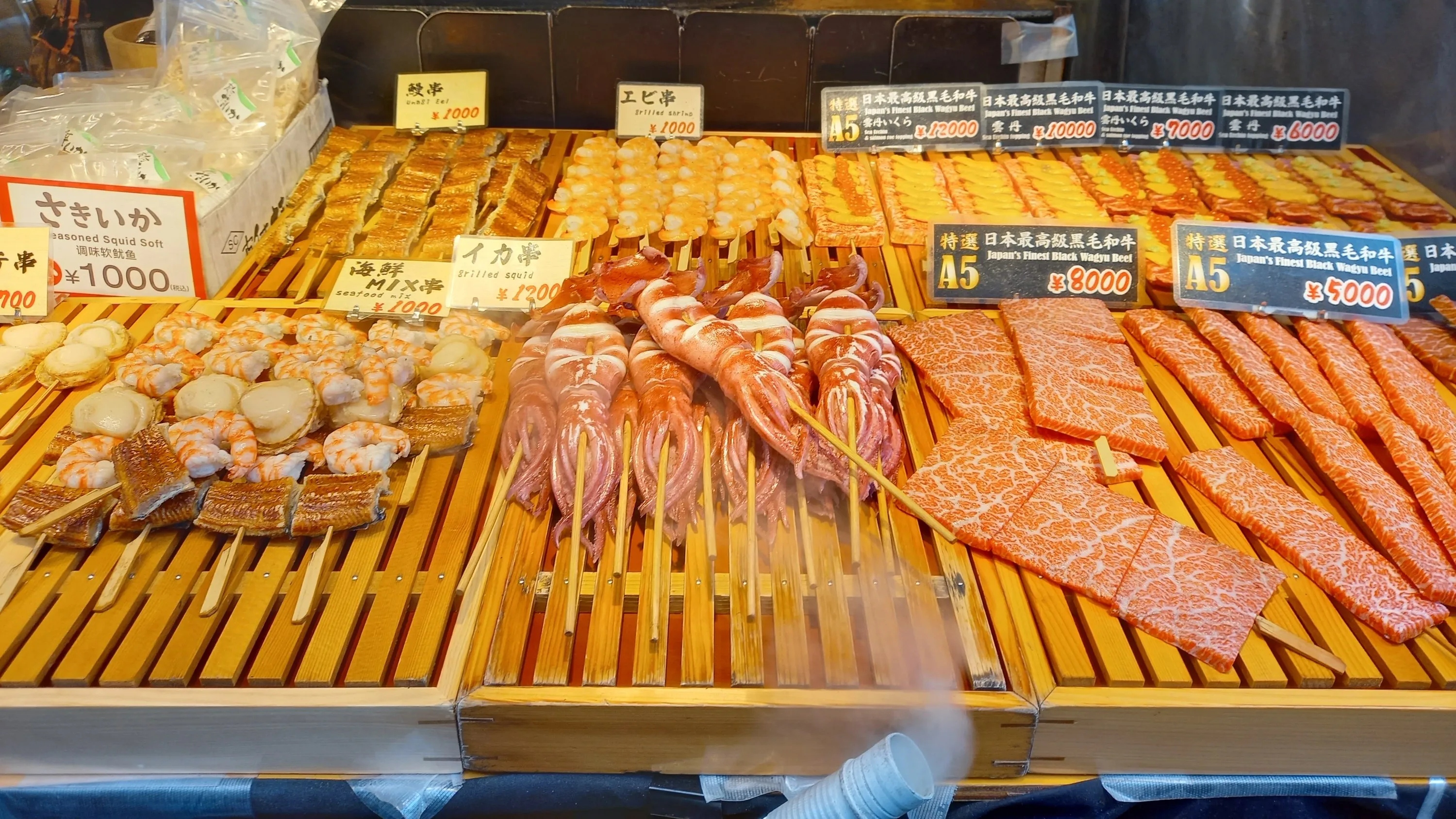
Breakfast is not provided at the hotel. With a kitchen and dining table, simple food preparation is easier. Reserve one morning for eating at Tsukiji, and on slower mornings buy food the night before. The kitchen is well equipped, but you should plan to provide your own groceries and seasonings.
No breakfast is served here, so plan for it: mornings mean cooking for yourself or eating out, not a buffet downstairs. The kitchen comes with cookware and tableware, so buy bread, fruit and drinks at a nearby supermarket the night before and eat slowly at the table. For something hot, keep one morning for Tsukiji Outer Market, about a 470-metre walk, where food is made to order.
Dinner has a ready-made option: Kamada in the basement is a traditional Edomae sushi restaurant serving seasonal fish with sake, worth saving one evening for. It serves dinner only, so breakfast still needs its own plan — do not mix the two meals up.
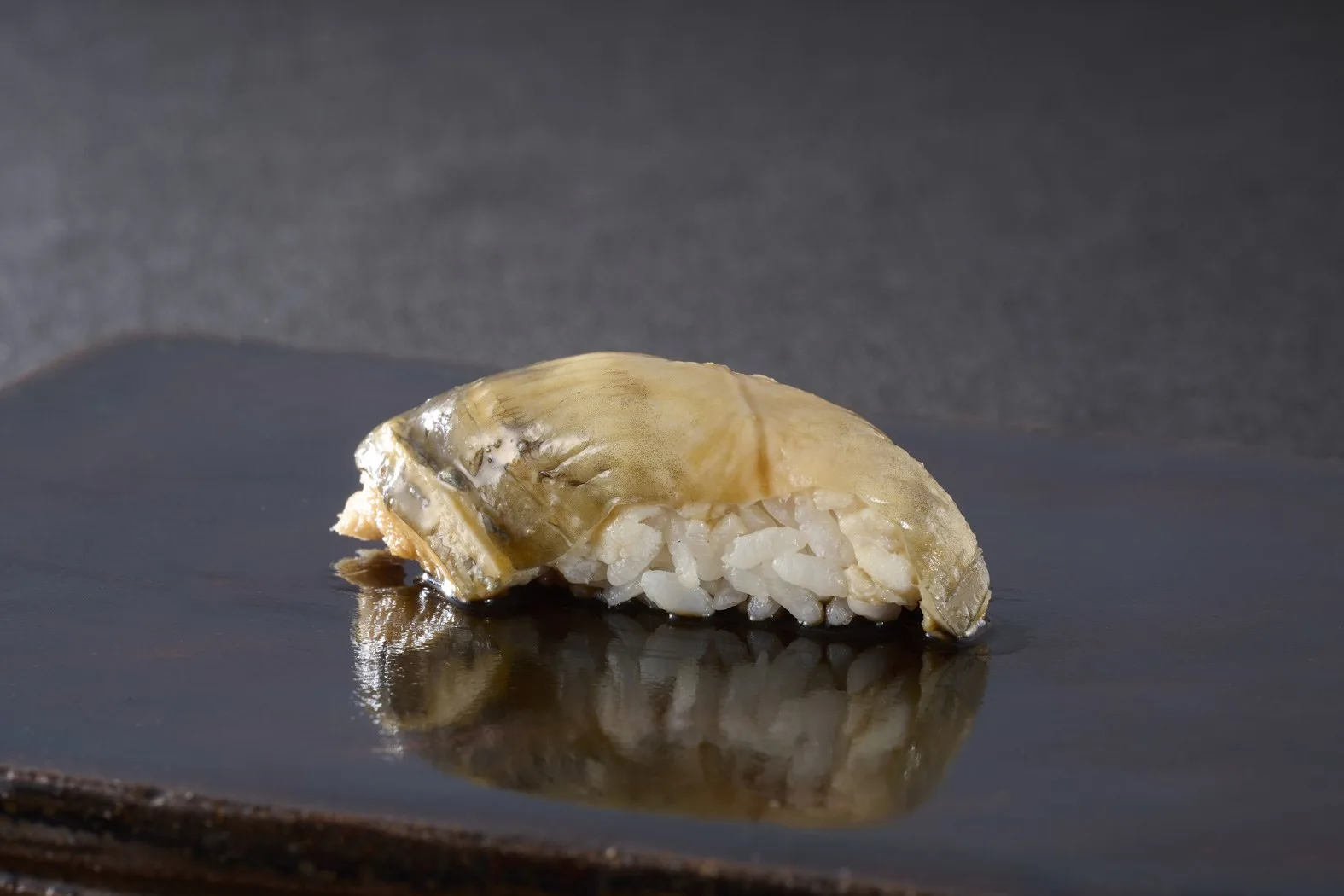
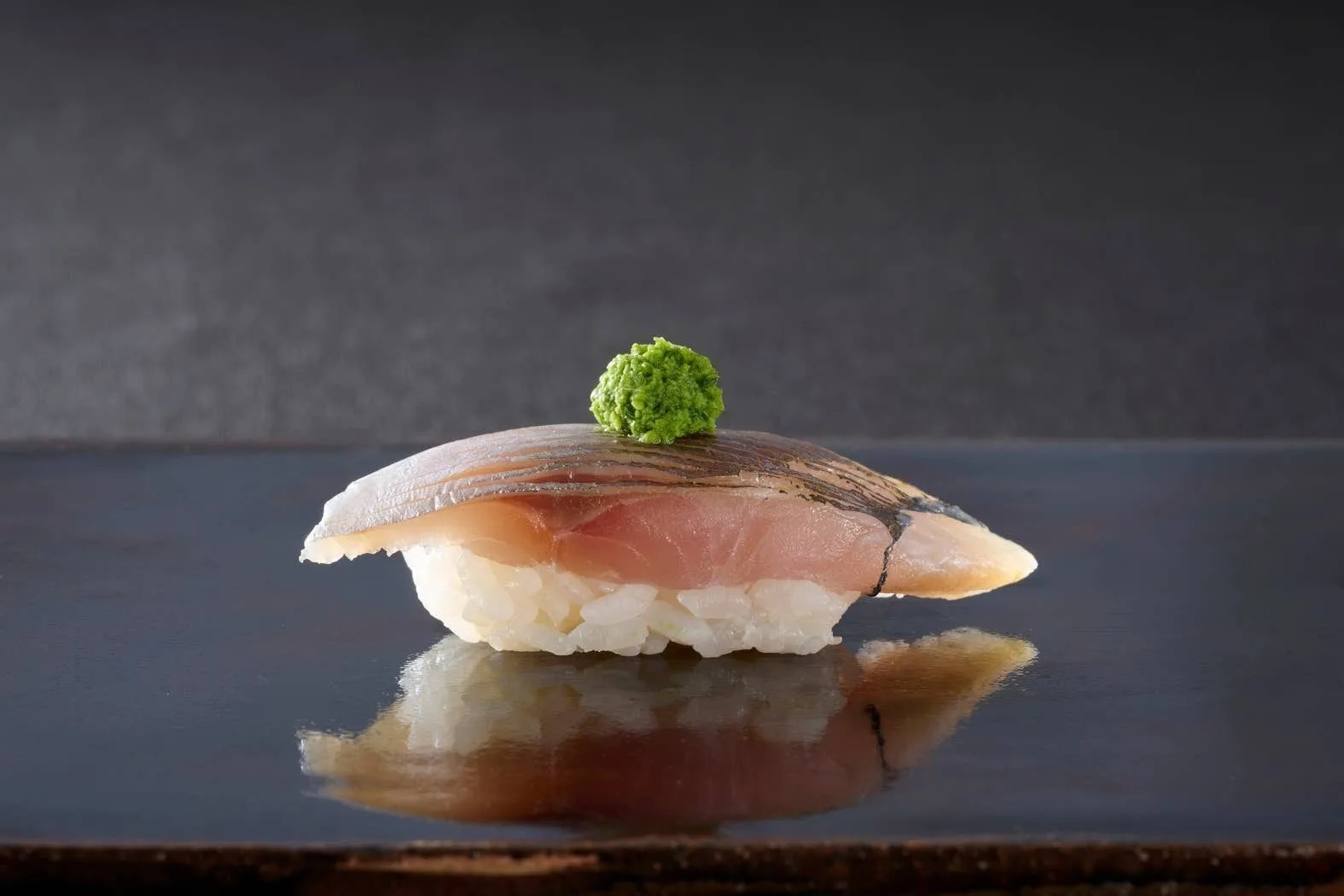
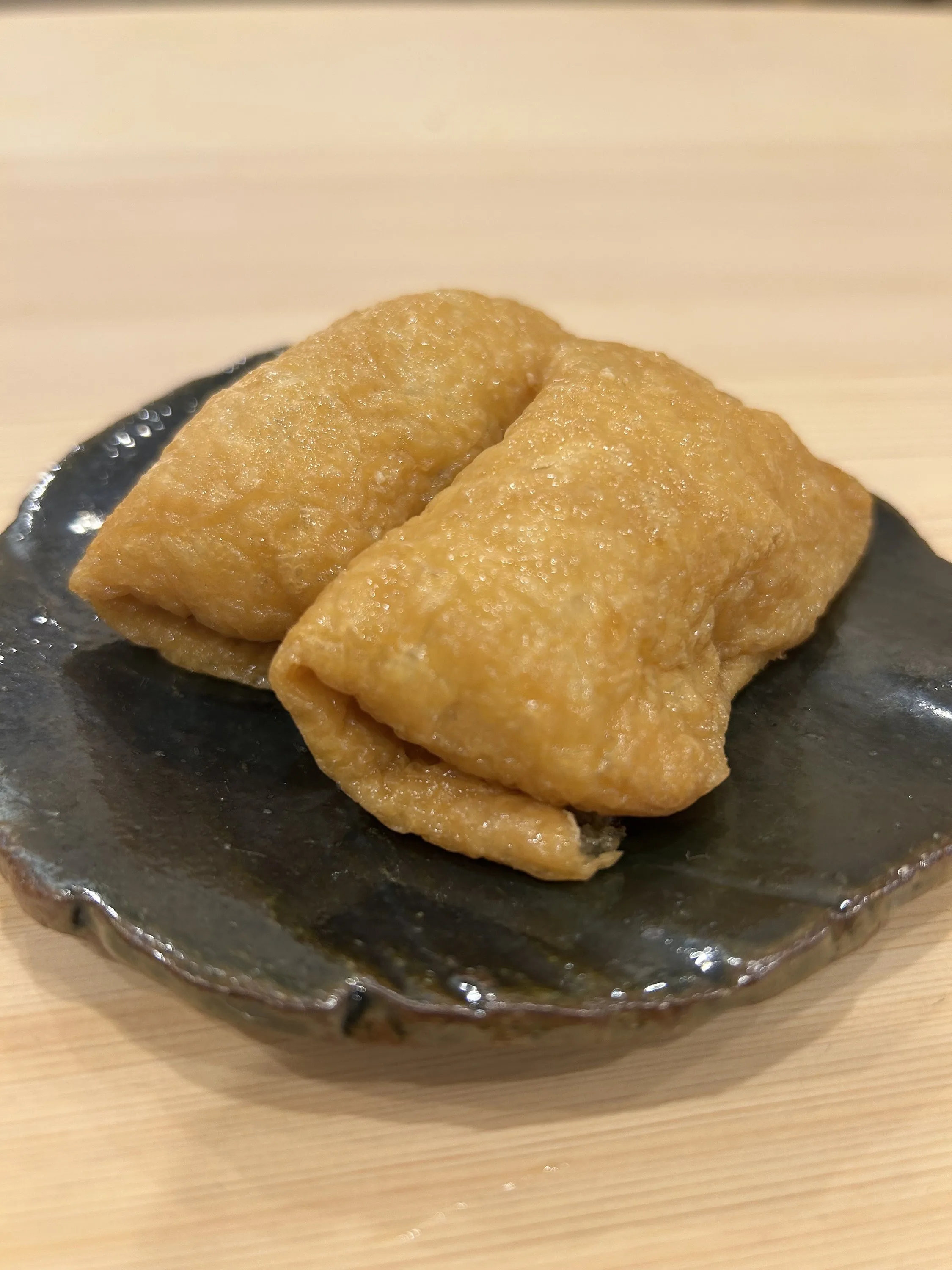
Eating nearby is easy too: Ginza-itchome Station is about 460 metres away and Tsukiji Outer Market about 470 metres, so walk toward Tsukiji in the morning for freshly made breakfast. In the evening, besides the basement sushi restaurant, Ginza’s main street is lined with restaurants — eat before heading back upstairs and keep the dining table for late-night snacks and next morning’s prep.
Some evenings I skip sitting in a restaurant: buy takeaway nearby, bring it back, and the dining table becomes the restaurant. Wash the dishes and put them away in the kitchen, and the same table is ready for breakfast in the morning — that is how the days cycle when you stay a while.

Station exits and arriving with luggage
Address: 3-14-6 Ginza, Chuo City, Tokyo 104-0061, Japan.
The usual walks are around three minutes from Higashi-ginza A7, seven from Ginza A13 or four from Shintomicho Exit 1. With a large suitcase, locate a lift exit first, then walk at street level to Ginza 3-14-6.
From the Hibiya Line with large luggage, compare elevators from Higashi-ginza’s central ticket gate toward Exit 3 or the Miharabashi-side gate toward A1. From Shintomicho, look for the elevator exit on the Chuo City Office side. Once above ground, navigate using Ginza 3-14-6 rather than assuming the A7 walking time still applies.
With a large suitcase or stroller, check platform-to-gate and gate-to-street routes separately. Confirm your return elevator reaches the platform you need. The closest exit may not be the easiest with bags.
With large luggage, my answer on exits is: do not take the nearest one, A7. On the Hibiya Line to Higashi-ginza, take the elevator from the central ticket gate toward Exit 3, or from the Miharabashi-side gate toward A1, up to street level. From Shintomicho, use the elevator exit on the Chuo City Office side. Once above ground, walk along Ginza’s main street to 3-14-6 and navigate to the hotel address itself — do not apply the A7 three-minute walk. Traveling light, take A7 directly; it is three minutes away.
Plenty is within walking distance: Tsukiji Outer Market about 470 metres, Ginza Art Aquarium Museum about 500 metres, Ginza-itchome Station 460 metres, Nihonbashi about 1.0 km, Tokyo International Forum about 980 metres, and the Imperial Palace about 1.8 km. Staying here puts Ginza, Tsukiji and Nihonbashi all in the same walking circle, so the itinerary never has to loop back to the room.
Getting here from the airport: from Haneda, Asakusa Line through-trains run toward Higashi-ginza, so a heavy-luggage day costs one less transfer and one less round of hauling suitcases. From Narita, come via Tokyo Station or the Nihonbashi area and allow extra time. I keep the airport-to-hotel ride inside the first day’s plan and never pack the arrival day too full.
Short stays versus longer stays
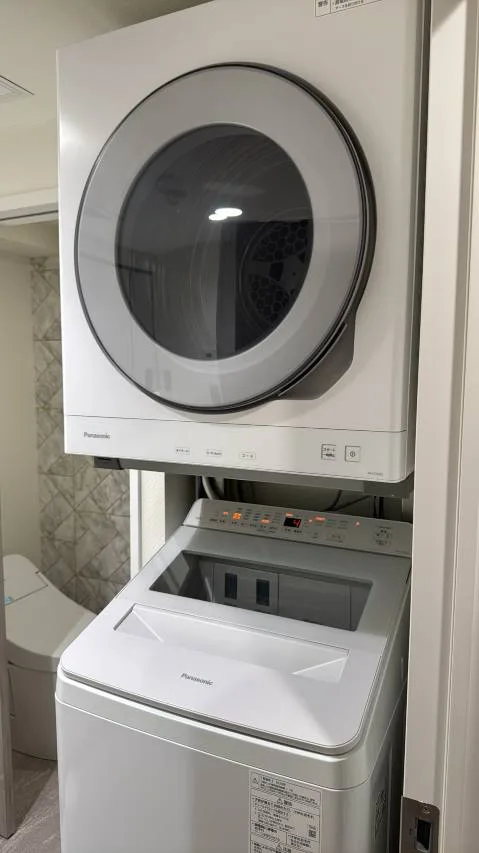
What works for me is the space, the equipment and the staff support. Having a separate washing machine and dryer is helpful for multiple nights. If staying only one night with no cooking or laundry plans, you may not get full value from the apartment. For longer visits, ask about rubbish collection and how often cleaning is provided.
For a single night with no cooking or laundry plans, you may not use what this place does best: this much space, a kitchen and laundry machines are built for longer stays. From three nights on, the separate washer and dryer really earn their keep — wash clothes daily and keep suitcases closed. For a short stay, I focus on location and room size rather than the kitchen.
For a longer stay, ask about rubbish and cleaning frequency at check-in: how often towels change, whether rubbish needs sorting to a set spot, and whether room cleaning is daily or every other day. Ask once at arrival and you will not need to chase the front desk every day after.
Check-out day: check-out is before 10:00, so pack the night before, leave luggage at the front desk in the morning and explore, then pick it up in the evening and head straight to the station. The concierge will also hold your bags, so arriving early or leaving late still works — drop bags first, explore, and time it right.
Good to know before you check in
No room type allows an extra bed or a crib, so match people to beds before booking: with four or five guests, decide who takes the fixed beds and who takes the sofa bed, and do not discover a missing bed after arrival. Children of all ages are welcome, but an extra charge may still apply without an extra bed, so include children in the booking to get the exact price.
Guests checking in must be at least 18 years old. Pets are not allowed, and service animals are not allowed either. Public areas and floors are fully non-smoking, the building has an elevator and accessible rooms. The front desk offers luggage storage, concierge service, a safe and translation tools, and you can communicate in Chinese or Japanese, with Chinese signage and free Wi-Fi in public areas. Families with kids can look for children’s toys, toothbrushes, board games and books, so several nights in a row will not bore them.
The building has a car park and a car-hailing service. Arriving from the airport with large luggage, I book a car to the front door in advance rather than dragging suitcases through two transfers. Fax and copy services are available at the front desk for printing itineraries or tickets, and a vending machine in the public area covers late-night drinks without going out.
My laundry rhythm on a longer stay: wash the day’s clothes after returning in the evening, dry them overnight, and they are ready to wear in the morning. Suitcases stay closed, clean clothes go straight into the wardrobe, the room stays tidy, and on the last night I pack everything so the before-10:00 check-out is unhurried.
Photos of beds, bathrooms and apartment facilities
The photos show room circulation, washbasins and where suitcases may go. They include different rooms or shooting situations, so compare with the actual category you book.
Read the photos this way: first check whether the space beside the bed fits two suitcases passing each other, then whether the washbasin is single or double, whether the kitchen counter holds breakfast for two at once, and finally whether the toilet is a separate room. The photos span different rooms and shooting situations, so the actual layout follows the room type you book — match the room name on your reservation to the photos.
Beds and living room
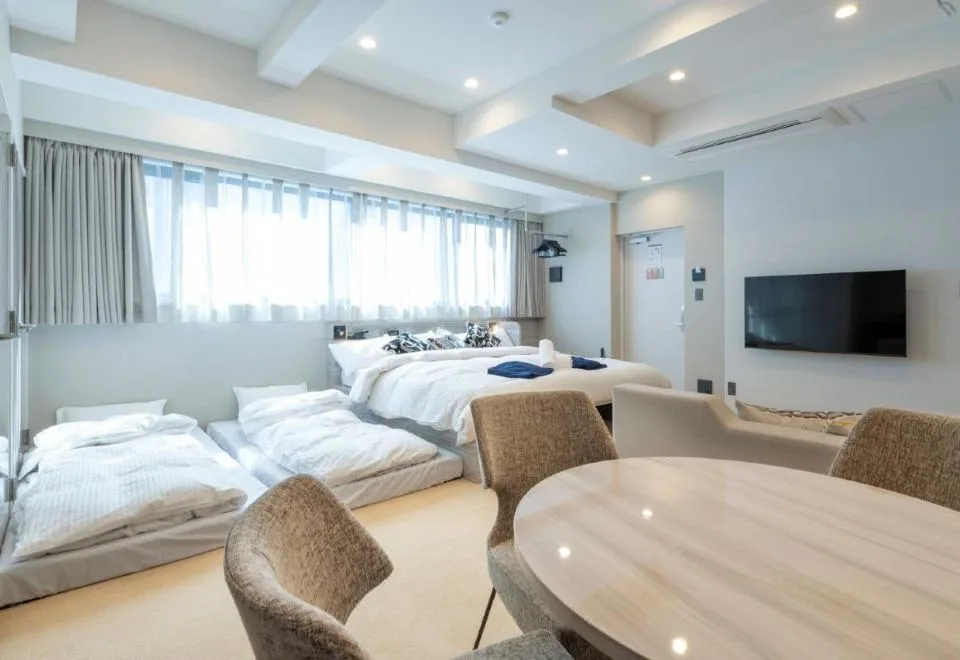
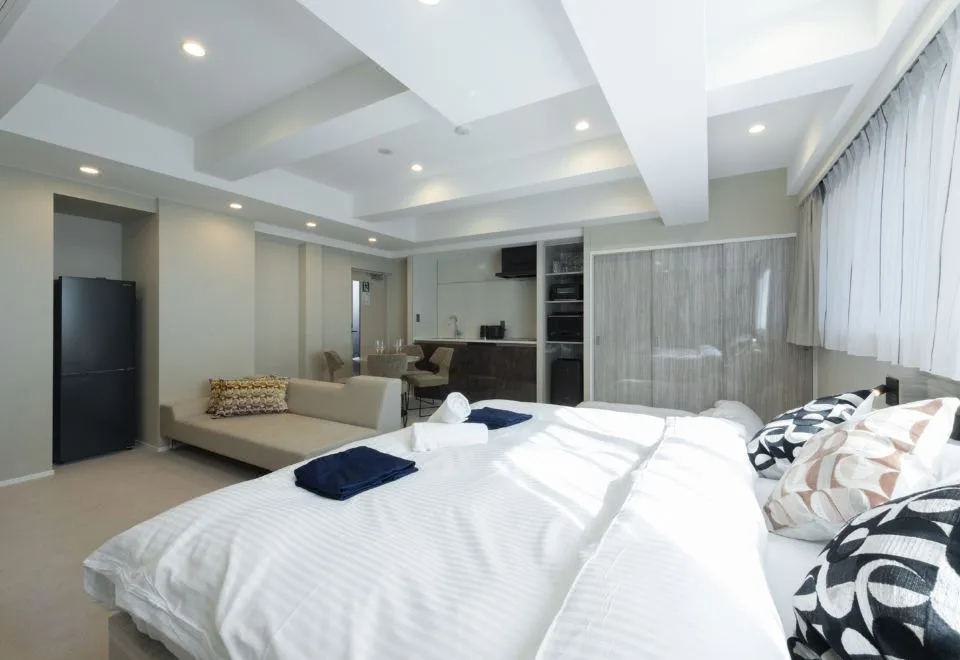
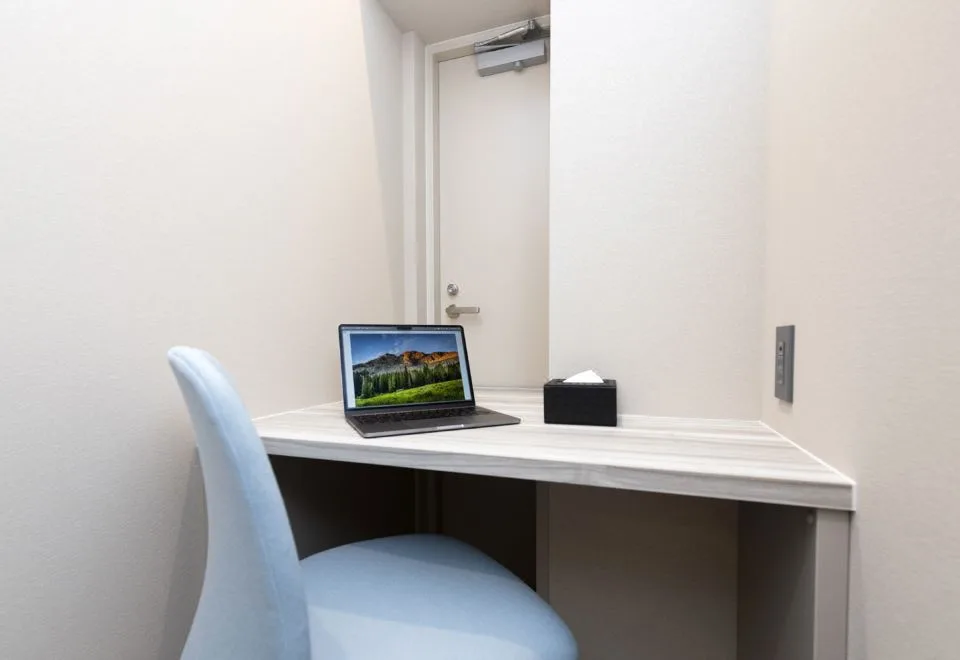
Kitchen, washer and bathroom
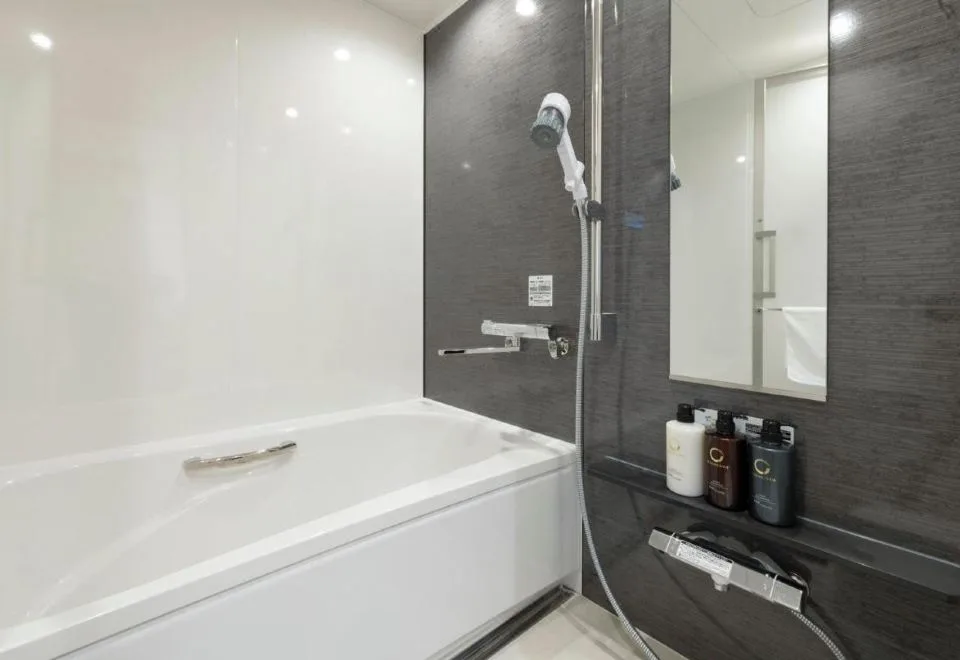
Lobby
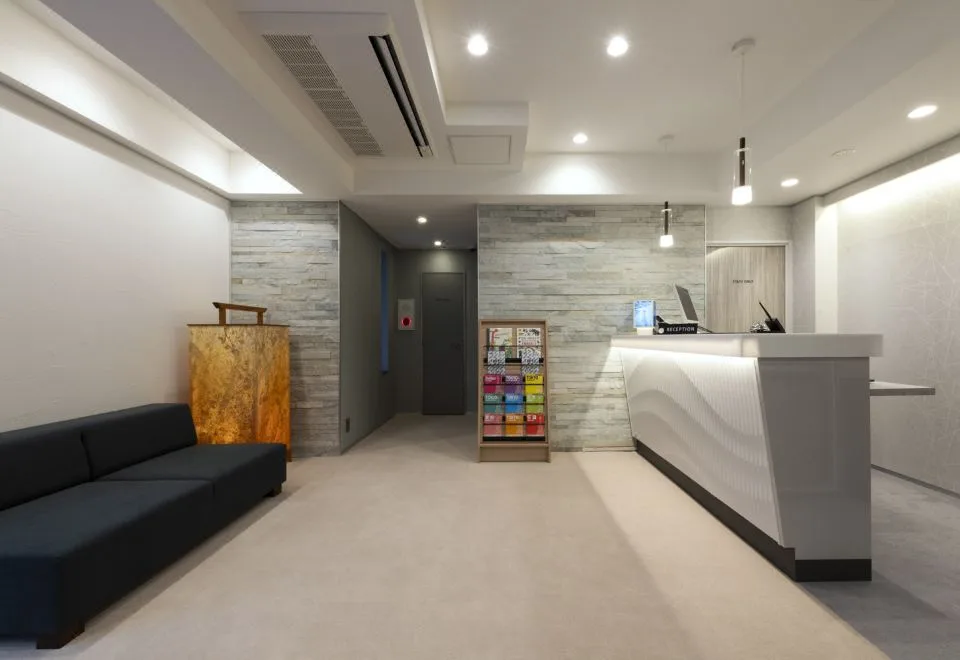
How to plan the neighborhood
Split Ginza shopping, the Kabukiza area and Tsukiji into separate half-days. Bring purchases back to the room, then go out again with lighter bags. With children or older relatives, the dining table makes takeaway a genuine break during the day.
My bottom line for you: four or five people traveling together, wanting to cook and stay several nights — this place fits. One person for a single night just looking for a bed, all that space and the kitchen will mostly go unused, and a smaller room makes more sense. Before booking, confirm three things: how fixed beds and the sofa bed are split, whether you need a crib (none can be added here), and whether your arrival falls between 16:00 and 01:00 the next morning.
Pros and cons
Pros
- Around 40 m² apartment rooms, only six in the building, one per floor, with a dining table, kitchen and separate washer and dryer — built for four to five people staying several nights.
- About three minutes on foot from Higashi-ginza A7, seven from Ginza A13 and four from Shintomicho Exit 1, across three stations.
- Front desk staffed 24 hours, check-in from 16:00 to 01:00 the next morning, staff greet you on arrival, with luggage storage and concierge service.
- An Edomae sushi restaurant in the basement (dinner), and Tsukiji Outer Market about a 470-metre walk away, so eating out for breakfast is easy.
- Free Wi-Fi in public areas, Chinese signage and Chinese-speaking staff, accessible rooms, and children’s amenities.
Cons
- No breakfast is served; make your own or eat out in the morning.
- No room type allows an extra bed or a crib, so people and beds must be matched before booking.
- Check-out is before 10:00, so late risers need to watch the time.
- Pets are not allowed, service animals are not allowed either, and large luggage needs the elevator exits rather than the nearest A7.
Information checked: November 22, 2026.