
TOKYO / CHUO
APA Hotel Ginza Shintomicho Ekimae Kita
APA Hotel Ginza Shintomicho Ekimae Kita
Between Shintomicho and Hatchobori: check which APA branch serves your breakfast.
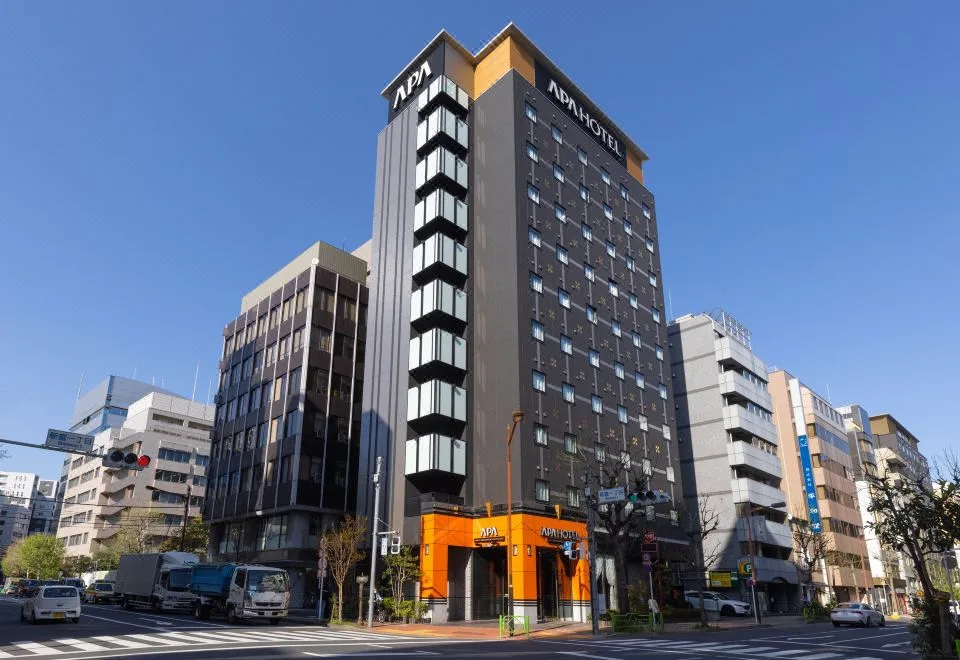
APA Hotel Ginza Shintomicho Ekimae Kita is convenient for travelers using the Yurakucho Line and Hatchobori. The full name matters: several nearby APA hotels have similar names, and breakfast might be served at a different branch. Save the entire name and address before arriving.
If this is your first stay in Chuo, I see this hotel as a base on the edge of Ginza: Ginza is under 100 metres away, and Tsukiji and Nihombashi are both walkable, so daytime outings in any direction start on foot. The trade-off is the room itself — a standard 11 m² room fits one person comfortably, and two people need to plan carefully. Accept that trade-off first, and the transport and breakfast decisions get quicker.
How to choose this hotel
| Item | Stay details |
|---|---|
| Address | 1-12-11 Shintomi, Chuo City, Tokyo 104-0041, Japan. |
| Check-in / Checkout | From 3 p.m. / before 10 a.m. |
| Rooms to check | Singles and doubles are both 11 m² with one 140 cm bed; the deluxe twin is 21 m² with two 120 cm beds. |
| Stay plan | For one night, identifying the branch and breakfast venue makes things easier. Over three nights, laundry can help, but machines may be busy. |
Room sizes and luggage
The single and double rooms both measure 11 m² with a 140 cm bed. The deluxe twin is 21 m² with two 120 cm beds. A standard room suits a solo light packer. For two people, desks and luggage compete for floor space. If each person wants a bed, compare the deluxe twin directly.
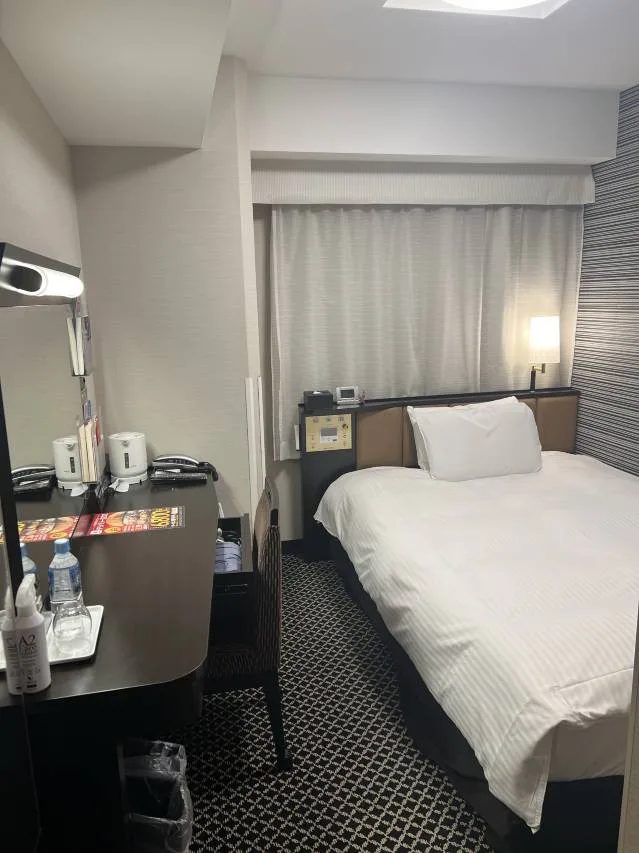
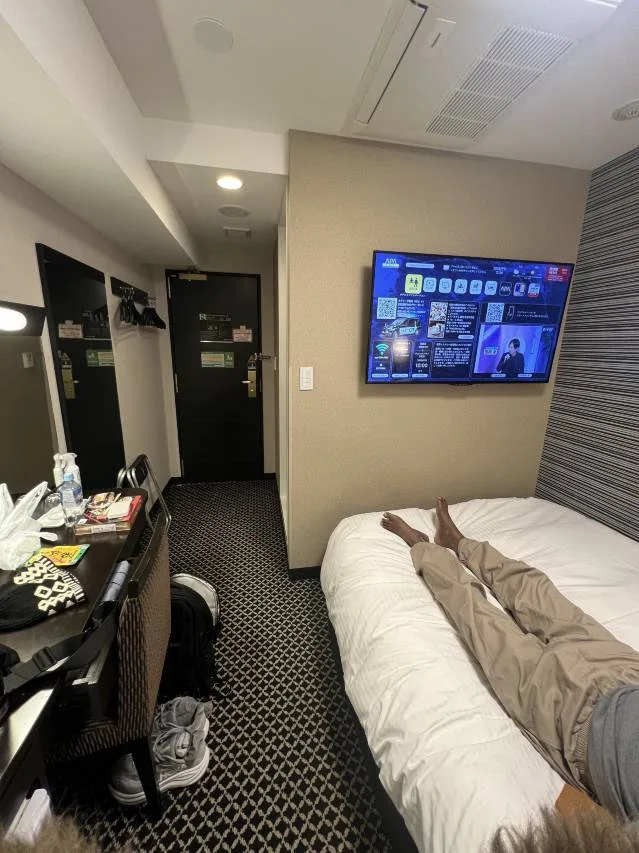
Photos show beds right beside desks; when opening suitcases, keep the route to the door clear. Don’t assume that a window in a photo guarantees a bright view. Ask about daylight, floor and direction if those are important.
Think of 11 m² in concrete terms: a single room has one 140 cm bed, and one person with a large suitcase can still turn around; with two people, bed, desk and suitcases take turns for floor space, so decide where the bags go and who sleeps on which side before you book, not after you arrive.
The 21 m² deluxe twin has two 120 cm beds and is the option I compare on price first: each person gets a bed, mornings do not start with waiting for the other to move, and bags can go on separate sides. The price gap buys freedom from packing and moving cases every day, and for two people staying three nights or more, that money is better spent than on a breakfast upgrade.
A 140 cm bed shared by two people gives each person 70 cm, so turning over means minding each other; at 120 cm each, each person gains 50 cm, and that is what the twin room costs extra for. Children count in the same arithmetic: children of all ages are welcome, ages 0 to 5 stay free without an extra bed, and extra-bed rules depend on the room type, so ask the front desk before you book.
One last tip before you book: ask which room type you are getting. Single, double and deluxe twin look like they differ by one bed, but the real difference is daily living space. The room in the photos is not necessarily yours, so confirm your booked room’s layout before you commit, and you will not need to change rooms on arrival.
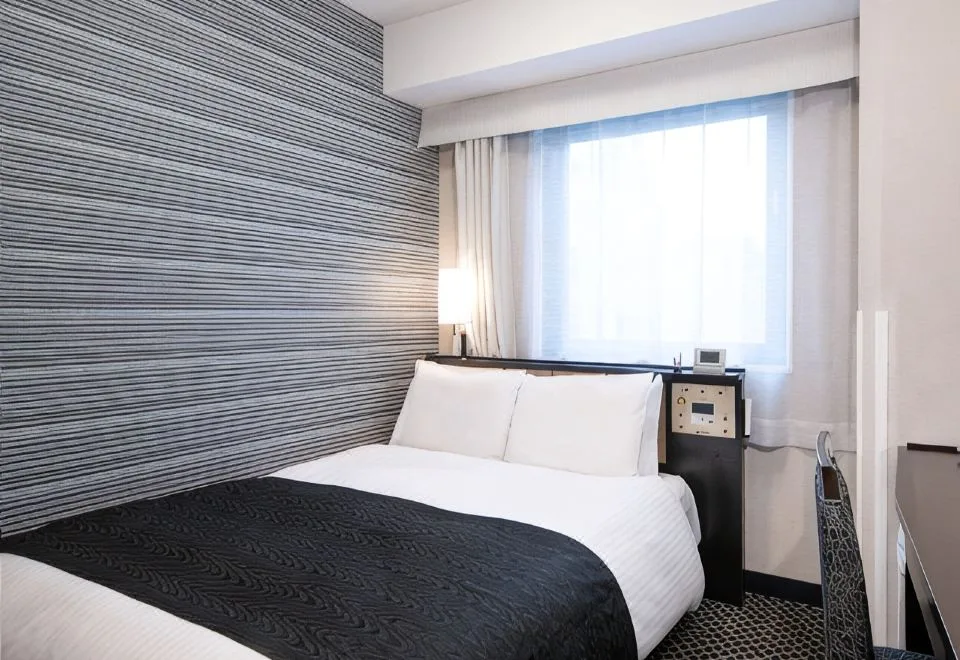
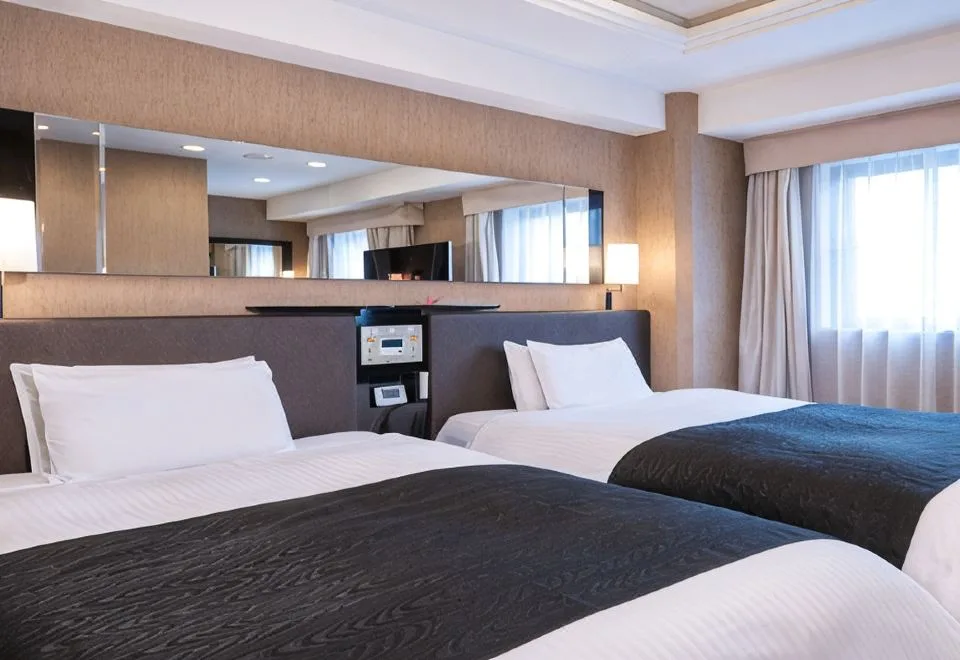
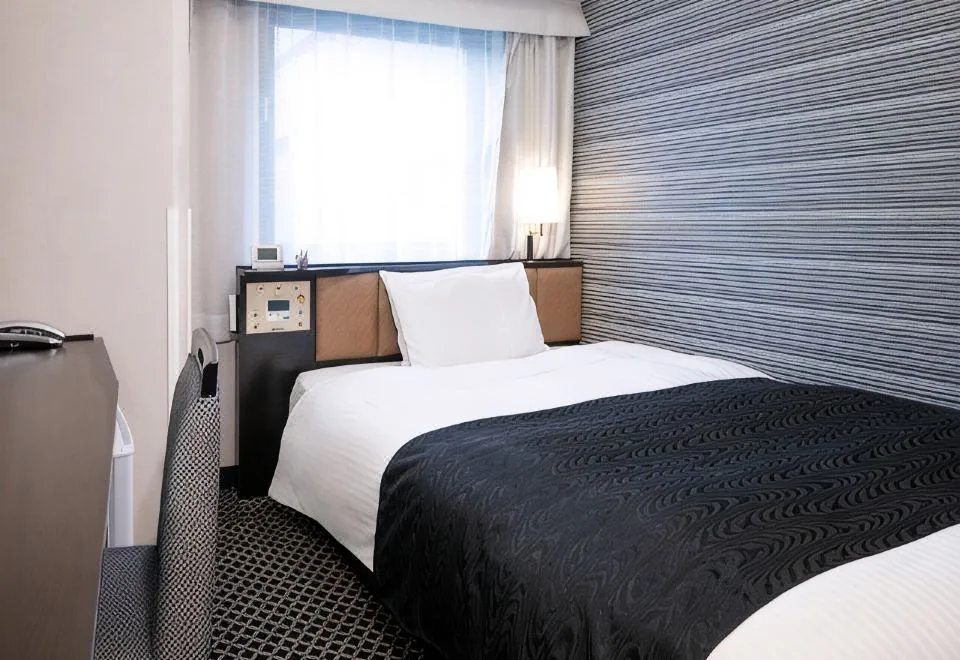
Room photos
Check where the bed, desk and entrance sit relative to each other, and imagine your own suitcase in that layout. Furnishings differ by booked room category.
How the bathrooms are arranged
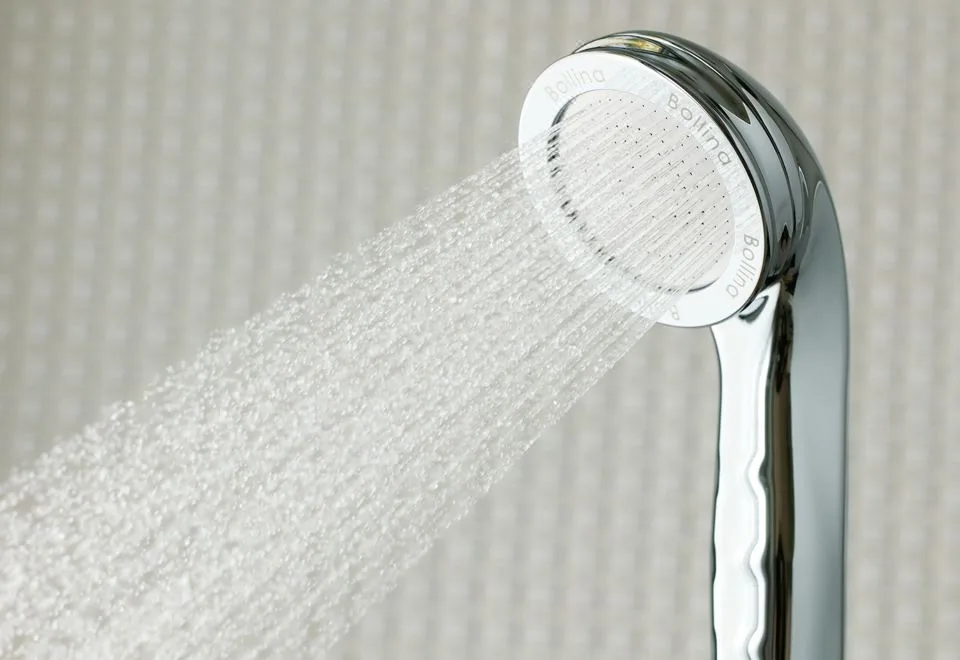
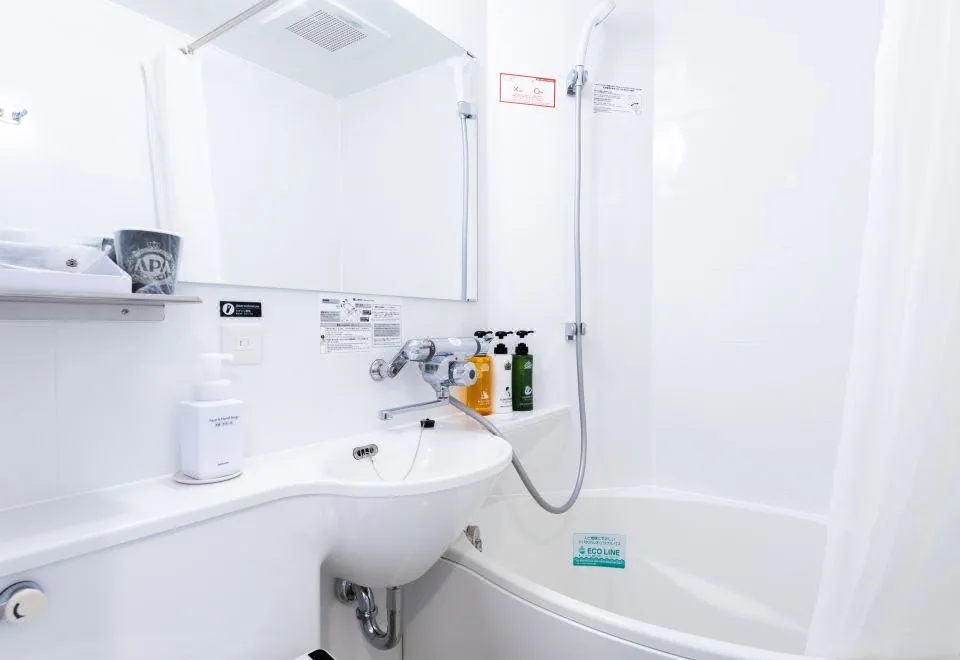
The bathtub, shower and sink layout matters when two people get ready at once. Use the photos below to understand the space and then verify what your reserved room actually provides.
When two people get ready at the same time, whether the bathtub, shower and sink can be used separately decides whether you need to get up half an hour earlier. A combined bathroom keeps the whole washing routine in one zone, so you step out of the shower and sort yourself at the mirror instead of running between rooms; still check what your booked room actually provides, because the fittings in the photos are not necessarily yours.
Breakfast is at another APA hotel
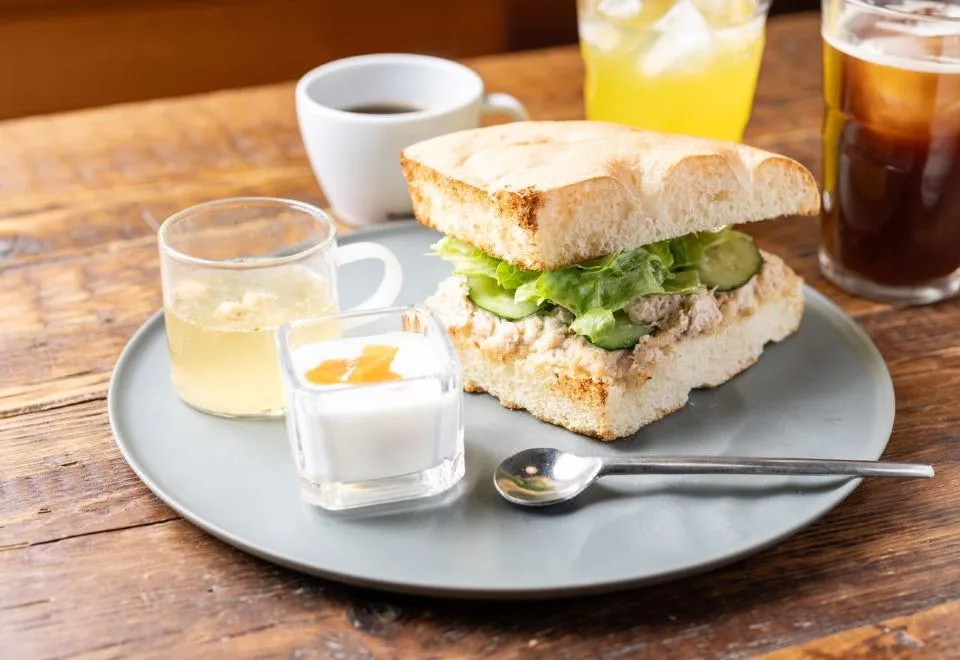
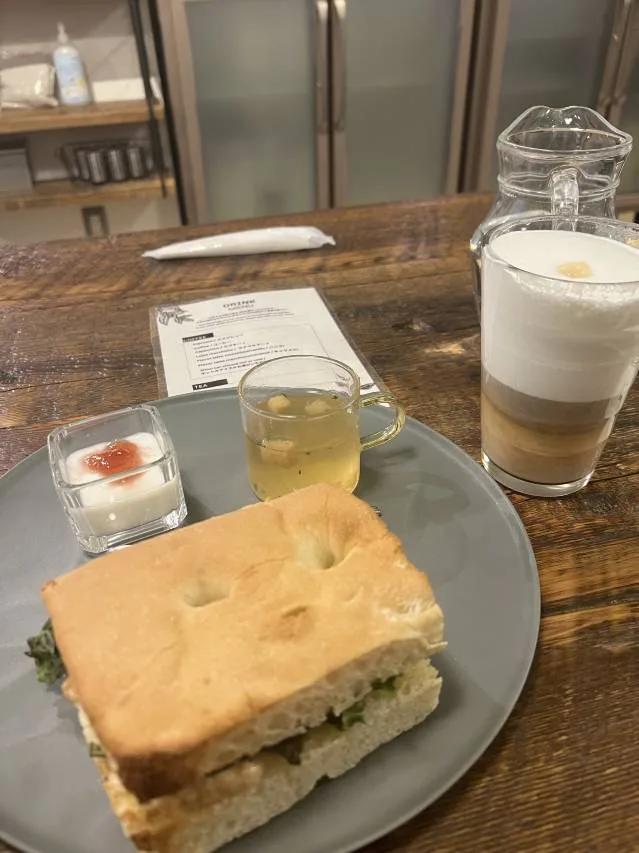
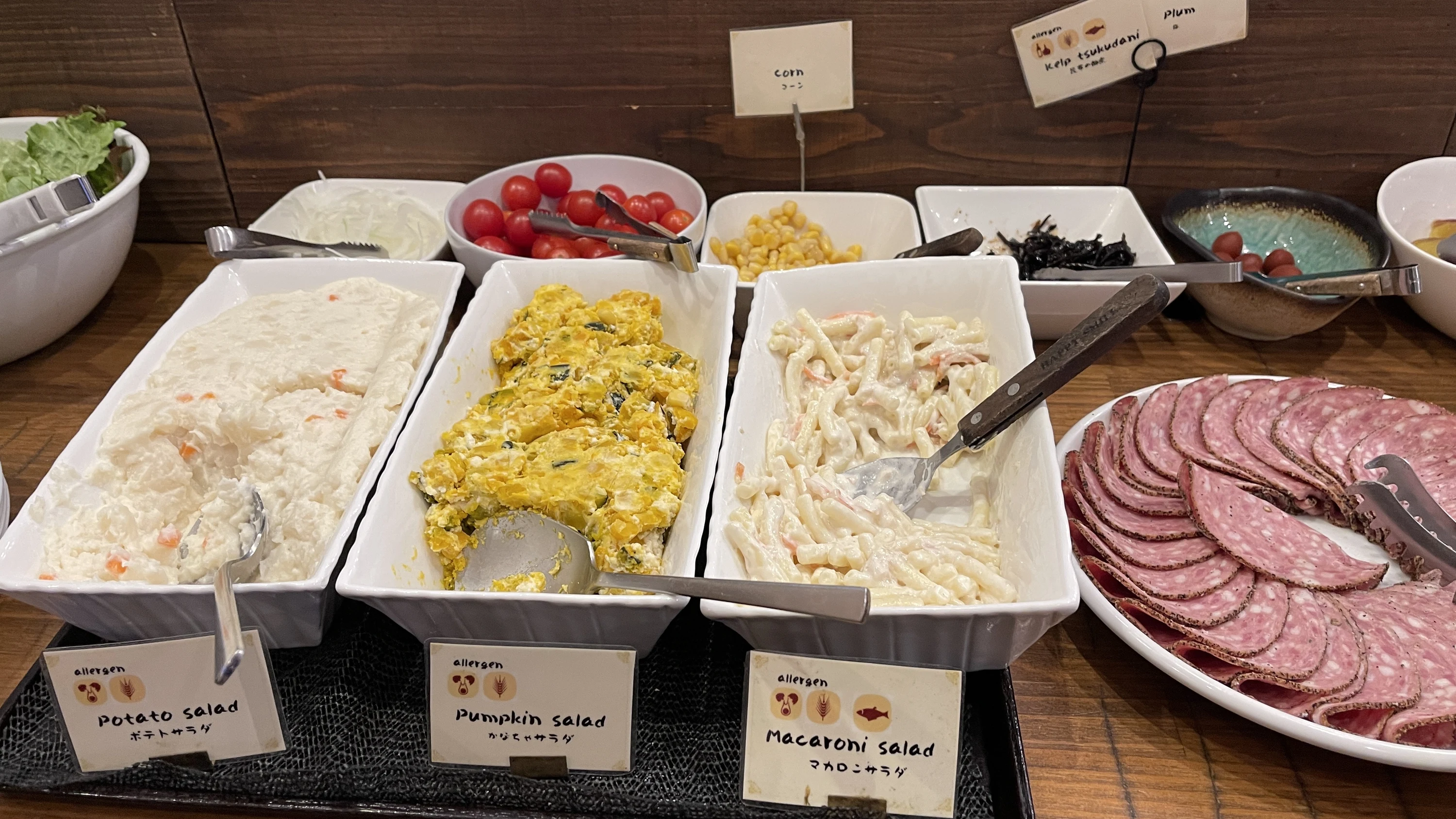
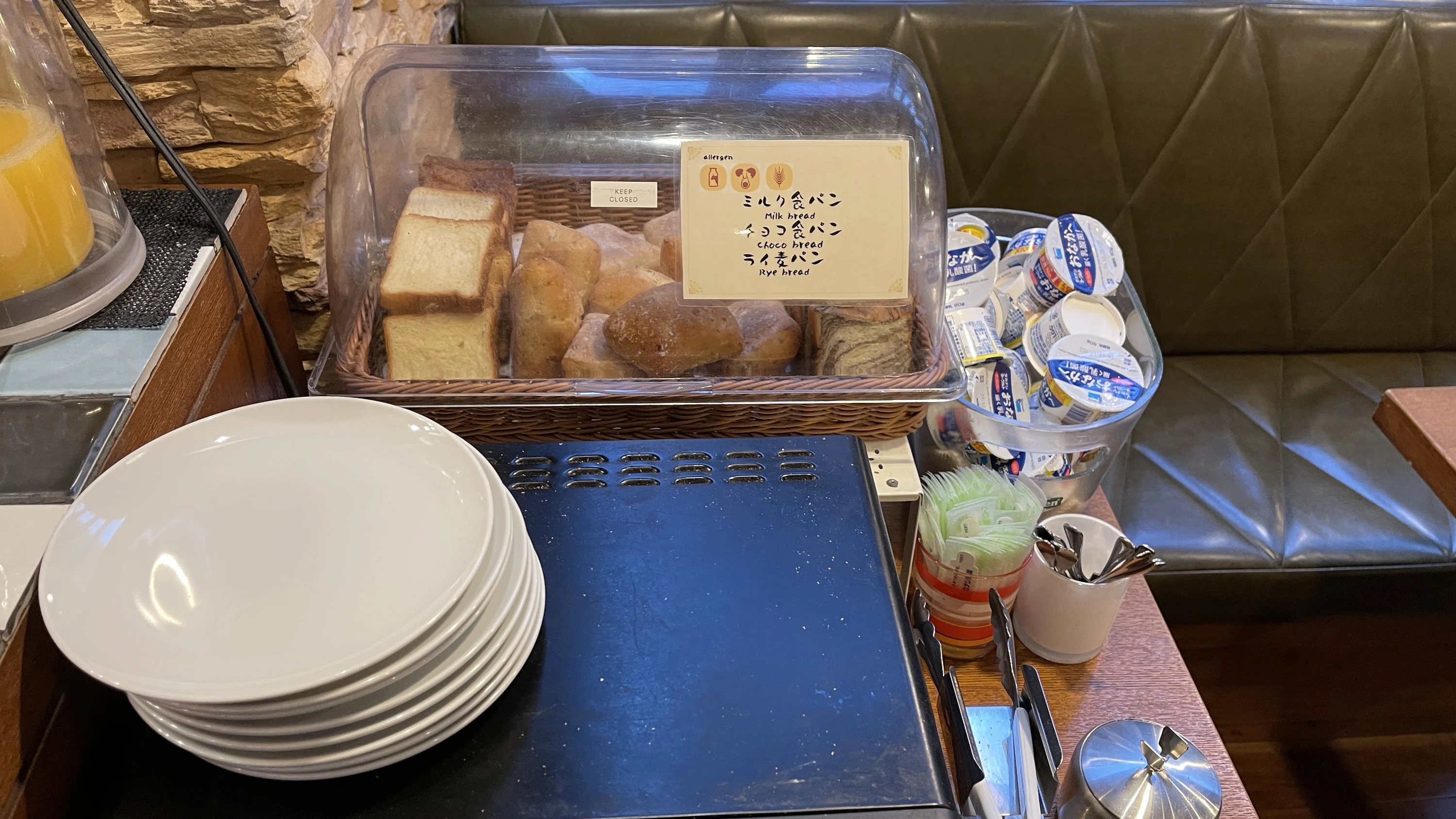
The official listing offers two breakfast venues at other branches: an Italian sandwich set at L+ in APA Hotel Ginza Shintomicho Ekimae, or a Japanese and Western buffet at PIZZERIA Lucia in APA Hotel Hatchobori Ekiminami — both restaurants sit on the ground floor of their hotels. They are not the same breakfast. Before purchasing, confirm which venue your rate specifies; do not assume you can switch on arrival.
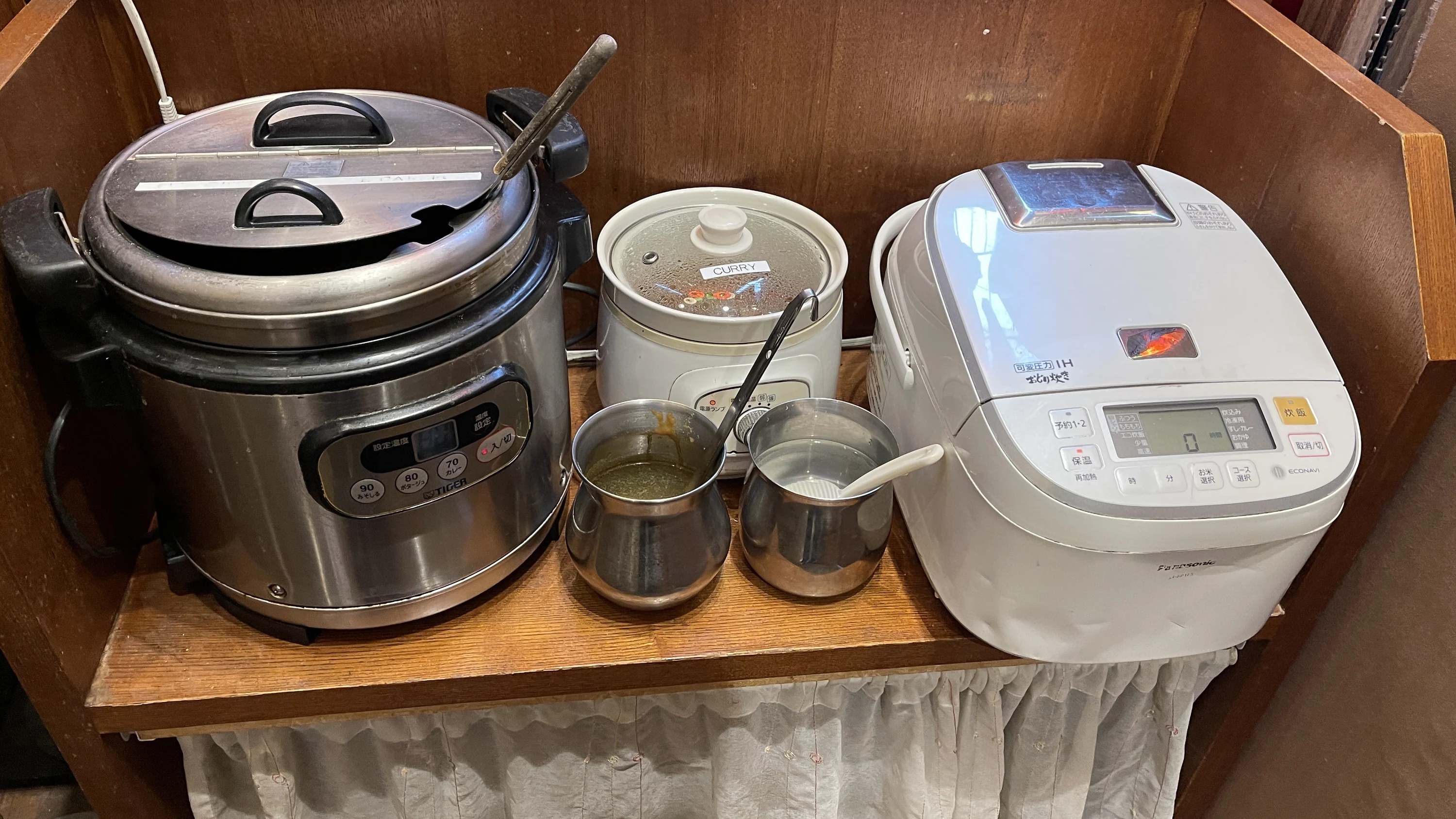
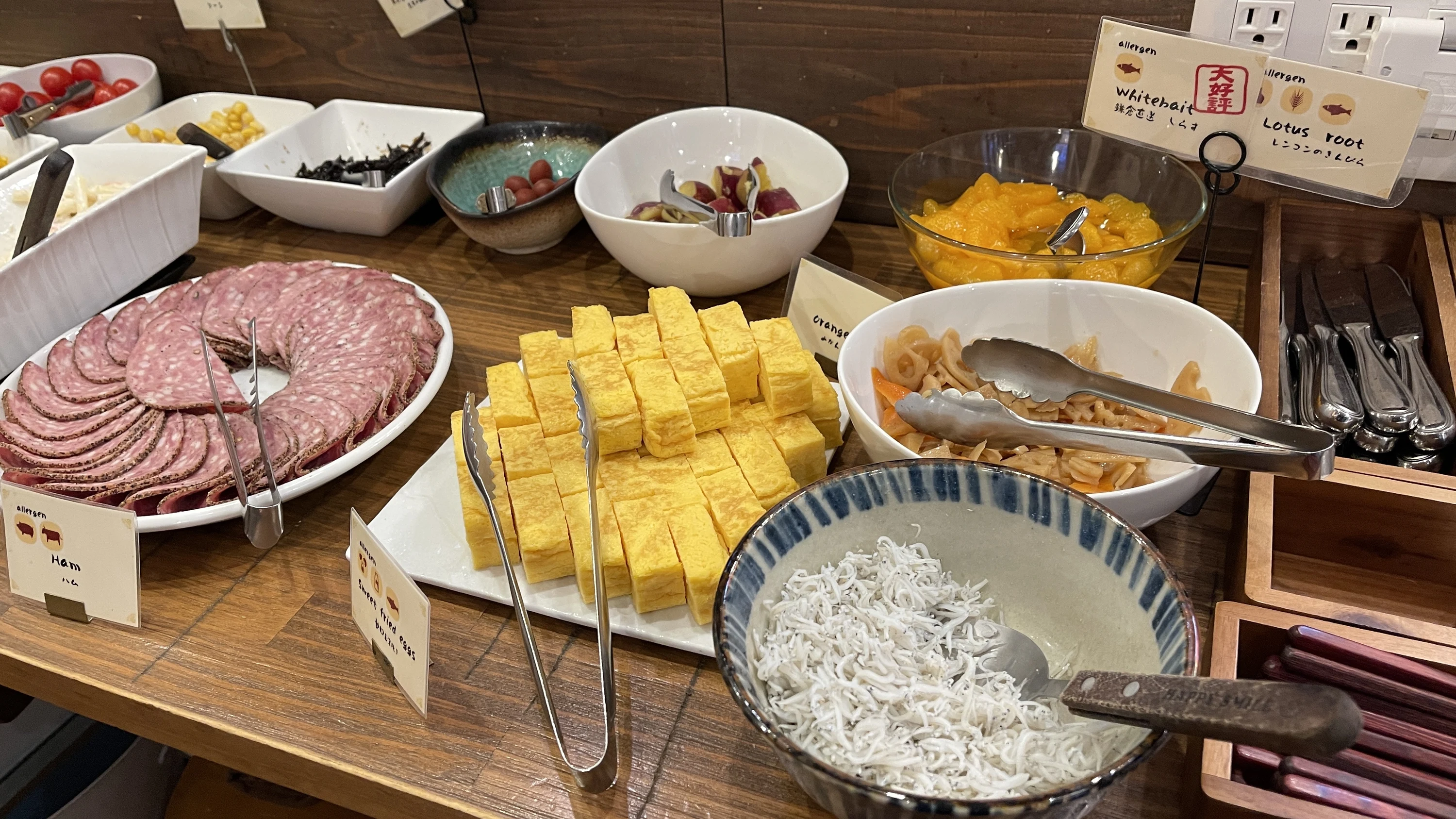
An Italian sandwich is good for a quick start; a buffet is more suitable if you want rice, hot dishes and options. On rainy days or before an early train, count the walk to the other hotel. A room-only rate may be more convenient.
The buffet numbers are worth noting: served 7:00–9:30, ¥1,540 per adult, free for ages 2 and under, ¥880 for ages 3 to 6, and ¥1,540 for ages 7 to 17, the same as adults. The menu is Western and Japanese: head for the buffet if you want rice and hot dishes, and pick the sandwich set if you want to eat quickly and catch a train.
Before you buy a breakfast plan, confirm which restaurant your rate covers: the sandwich set is served at L+ in APA Hotel Ginza Shintomicho Ekimae, and the Japanese-Western buffet is served at PIZZERIA Lucia in APA Hotel Hatchobori Ekiminami — both on the ground floor of their buildings. The two restaurants are in different buildings, and realising you walked to the wrong one eats half your breakfast window.
If you did not buy breakfast and want to add it on the day, ask the front desk first whether you can pay on site — do not just walk to the restaurant door. Breakfast runs only two and a half hours, so anyone leaving before 7:00 misses it anyway, and on an early-train day a room-only rate is simpler.
The breakfast venues sit in other buildings, and it bears saying twice: this hotel has no breakfast restaurant of its own: L+ and PIZZERIA Lucia are both in other branches. When you write breakfast into your itinerary, write the venue name and address, not just “breakfast included” — one glance before you leave tells you which way to walk.
Station access and luggage
Shintomicho Exit 3 is about three minutes on foot, and Hatchobori Exit A3 about four minutes. You can also arrive from Takaracho Exit A1 or Kyobashi Exit 2. Use the address 1-12-11 Shintomi and check for the ‘Kita’ (‘North’) label among nearby APA buildings.
With large luggage, a wheelchair or a stroller, use the dedicated elevator exit from the Chuo City Office-side ticket gate at Shintomicho: Tokyo Metro’s barrier-free guide shows an elevator inside the gate connecting the centre of the platform with the ticket gate, and another elevator outside the gate leading to the dedicated elevator exit, so the platform, gate and street can be covered without stairs. Don’t head straight for Exit 3 or 5 — those exits have no lift.
Distances help you plan the area: Ginza is under 100 metres away, Ginza-itchome Station 600 metres, Nihombashi 670 metres, Tsukiji Outer Market 810 metres, and the Tokyo International Forum and JR Yurakucho Station about 1.0 km each. Ginza, Tsukiji and Nihombashi all sit inside walking range, so pick up tomorrow’s water and snacks on the way back and the small room never forces an extra trip out.
Takaracho Exit A1 and Kyobashi Exit 2 work too, but they are not my first choice: the two shortest routes are already Shintomicho Exit 3 and Hatchobori A3. Take those on a first visit, when finding the way and the sign matters most, and try the other exits once you know the area.
Address: 1-12-11 Shintomi, Chuo City, Tokyo 104-0041, Japan. Plan directions on Google Maps.
Nearby walks
Tsukiji and Ginza make good short outings; Hatchobori is useful for connecting to the Keiyo Line. Pick up water and snacks on the way back so the small room remains a straightforward evening base.
Walk toward Tsukiji and the outer market is 810 metres away — eat your way around it in the morning and still make the 10:00 checkout. Toward Ginza it is closer still, under 100 metres into the shopping streets, with no train needed for an evening out; Nihombashi is a 670-metre stroll, a good moment to sort out the rest of the day.
Hatchobori earns its keep on transfers: the Keiyo Line runs from here, so Tokyo Station and Maihama are reachable without looping back through a big terminal. On a day with a Tokyo Station transfer in the plan, staying on the Hatchobori side runs smoother than staying by Ginza Station.
Short stays and longer stays
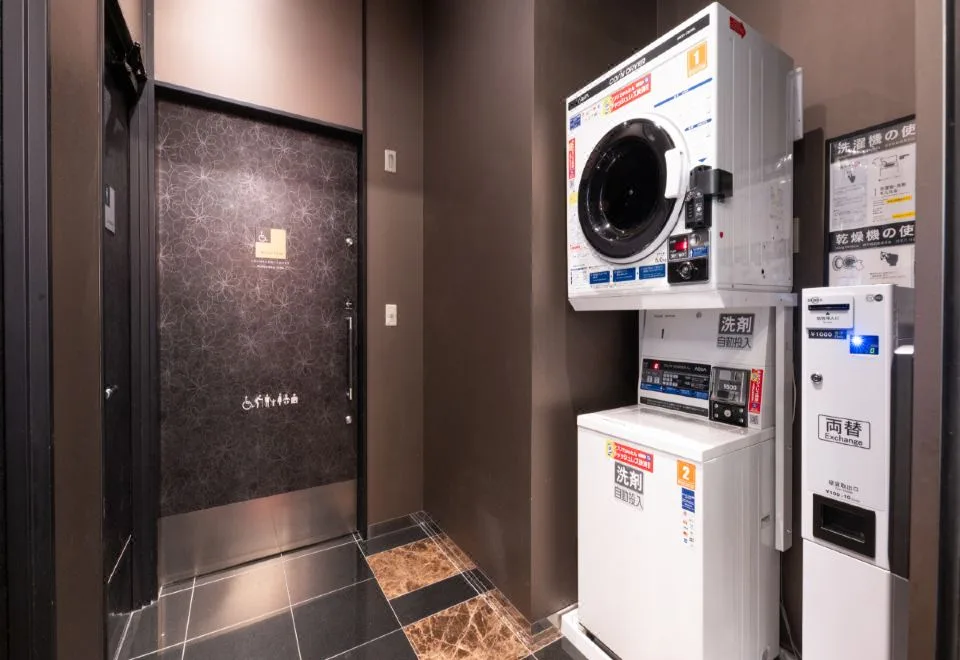
For a one-night stay, getting the branch and breakfast right removes hassle. Over three nights, laundry is useful but waits may occur at peak times. If both guests bring big suitcases, compare the price difference for a 21 m² twin with daily convenience.
For three nights or more, I make laundry part of the daily rhythm: the laundry room is charged, with a dryer, washing supplies and free ironing, so clothes go in at night and come back in the morning. At busy times there is a wait, so make laundry the first thing you do when you get back, not the last thing before bed.A laundry pick-up service is also available if you would rather skip the machines.
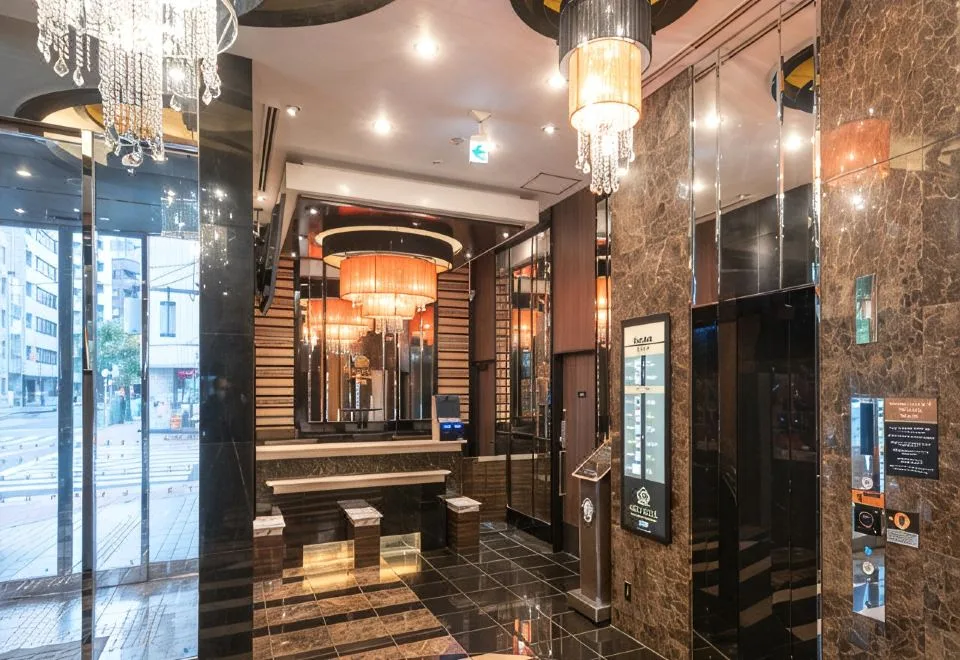
Check-in is from 15:00 and checkout before 10:00, with the front desk staffed 24 hours a day, all year, so a late arrival or an early departure never leaves you facing a closed counter. Express check-in and checkout, a front-desk safe and translation tools are all handled at the desk, so a language gap can be bridged on the spot.
Exterior and shared areas
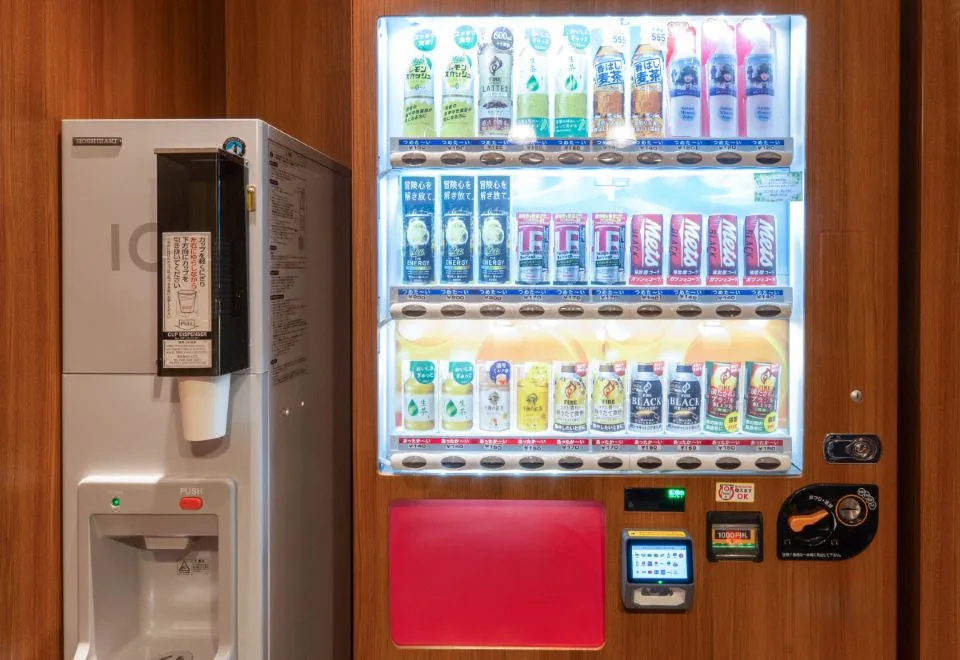
The things you will actually use: free luggage storage and free Wi-Fi in public areas, with car hire, currency exchange and wake-up calls all arranged at the front desk; elevators and vending machines in the public areas, separate non-smoking floors, and a humidifier and fresh-air system in the room, so winter heating does not leave you waking up dry.The front desk can help in English, and the public areas have CCTV, fire extinguishers and fire alarms, with a first-aid kit kept on site.
For children or anyone with limited mobility, I checked the same list: accessible rooms, step-free routes, a wheelchair kept on site and braille signage are all in place. Pets are not allowed, and check-in requires guests to be at least 18 — two rules to know before you book.Children’s toothbrushes and children’s books or videos are also provided.
Reasons to consider it and compromises
Advantages
What I like is that two subway lines and JR connections are within reach, and public laundry machines make longer stays easier. Convenience stores nearby make supplies easy, and breakfast comes in two styles for travelers willing to plan the walk.
Things to consider
Standard rooms are small — I would not gloss over that. I treat service, noise and elevator waiting as things to allow for before you book, not guarantees. Walking to a different APA for breakfast is a practical inconvenience. If you are a light sleeper, ask for a quiet room rather than assuming every room in this business neighborhood is silent.
Pros and cons at a glance
Pros
- Shintomicho Exit 3 is about three minutes on foot and Hatchobori Exit A3 about four, so two subway directions are within reach.
- Shintomicho Station has a dedicated elevator exit at the City Office side, so large luggage never has to use stairs out of the station.
- Check-in from 15:00, checkout before 10:00, with the front desk staffed 24 hours a day, all year, so even a late arrival is met at the counter.
- Free luggage storage and free public Wi-Fi, plus a charged laundry room, dryer and free ironing, so a longer stay does not mean carrying dirty clothes around.
- Two breakfast choices: a sandwich set, or a Japanese-Western buffet served 7:00–9:30 at ¥1,540 per adult.
- Ginza is steps away and Tsukiji Outer Market 810 metres, so short walks fill the day.
Cons
- Single and double rooms are both 11 m² with one 140 cm bed, so two people take turns unpacking and using the desk.
- Breakfast is not in this building — it means a walk to another APA restaurant, which costs time on rainy mornings or early-train days.
- Several same-name APA hotels stand nearby, so mistaking the building means walking the wrong way; save the “Kita” in the name and the address before you arrive.
- Pets are not allowed, and check-in requires guests to be at least 18; families should check the child and extra-bed rules first.
- No large bath, pool or gym on site, so a soak has to be arranged elsewhere.
Information last checked: 2026-11-22