
TOKYO / CHIYODA
Otemachi Kamon Hotel: Men-Only Dorm Beds, Private Pods and Luggage Limits
OTEMACHI KAMON HOTEL
Information checked November 18, 2026.
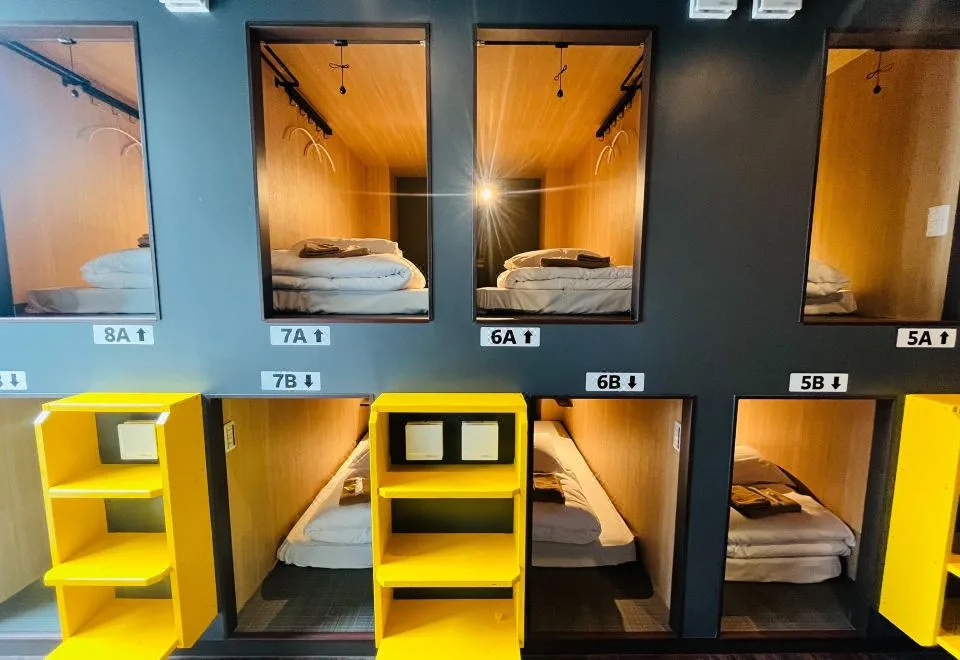
If you are a man travelling light and just need somewhere to sleep near Otemachi, this one can go on your shortlist — but know what it is first. Despite the word ‘hotel’ in the name, what is bookable here is men’s dormitory beds and single sleeping pods with shared bathrooms, not private business-hotel rooms. Do not expect full-service comfort next to Tokyo Station.
Who should consider it and who should look elsewhere first
- Advantage: a useful base around Otemachi and Takebashi for travelers comfortable with self-service check-in and shared bathrooms.
- Advantage: a 20-inch suitcase and an additional bag fit beneath a single pod’s bed, relevant for light luggage.
- Trade-off: the property has no elevator; reaching a third-floor pod with heavy bags can be difficult.
- Trade-off: road traffic and neighbours reorganizing luggage are audible. A slightly larger pod does not automatically solve noise.
- Trade-off: guests must be 18 or older; check-in is 15:00–23:00, and arriving after 23:00 is not possible.
The English street spelling on Trip includes an error. Chiyoda ward’s licensed lodging list through September 2026 identifies Otemachi Kamon Hotel at 2-11-16 Kanda-Nishikicho, Kamon Building, Tokyo; the phone number matches Trip. The authority classifies it as simple lodging — dormitory beds and pods, not private business rooms. Source 1
Otemachi has many exits; do not average unrelated walking times
Honestly, the walk is about five minutes from one exit and ten from another — it really depends on the exit, and from either Otemachi or Takebashi it is a proper walk either way. Do not plan on a flat five minutes.
Travelers with luggage face two separate problems: finding an elevator from the train to street level and then carrying bags inside a building with no lift. At Otemachi Station, use Exit A5 with heavy bags, a wheelchair or a stroller: from the Marunouchi Line gates, an elevator runs directly to street level at Exit A5. From Exit A5, walk north along Sotobori-dori, cross Kamakura Bridge and continue north to the Kanda-Nishikicho crossing, about 10 minutes to the hotel — the longer end of the reported 5–10 minutes. Even a step-free station route does not create a step-free path to the third floor, because the hotel itself has no elevator. If I booked a third-floor pod with heavy bags, I would ask about help carrying them and whether storage is on a lower floor, and pack lighter if not.
I would also count Tokyo Station as walkable — about 15 minutes on foot — and the Imperial Palace is close by, so a morning lap around the palace, exactly 5 km, works as a run. At night, though, this is mostly office buildings and the streets go quiet; for somewhere livelier I would head toward Jimbocho or Akihabara.
Open the property location in Google Maps. Source 1
2 m² dormitory beds and 3 m² pods are not private en-suite rooms
| Trip listing | Area and floor | Important condition |
|---|---|---|
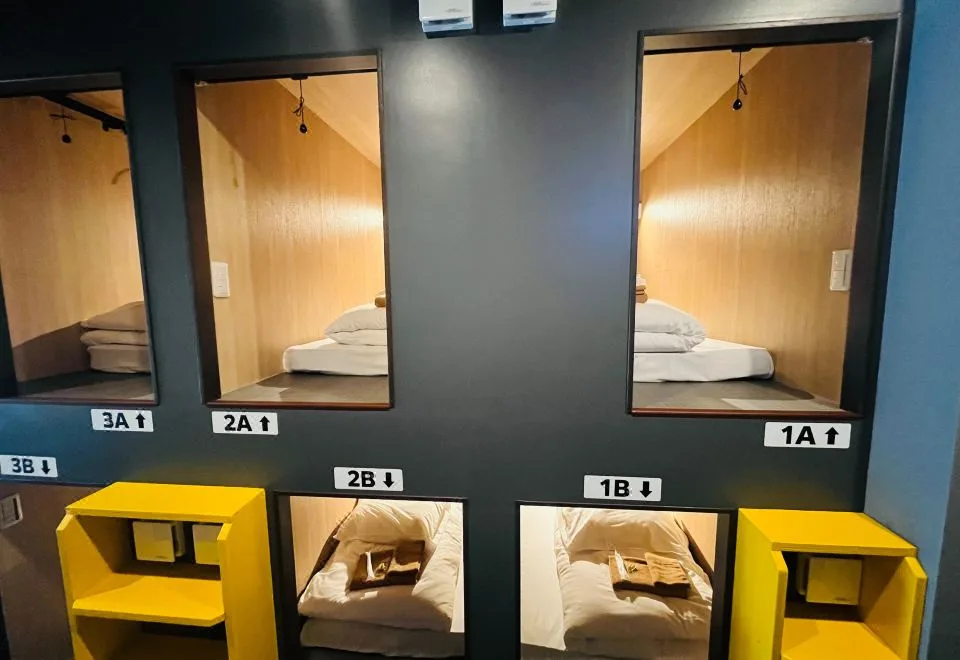
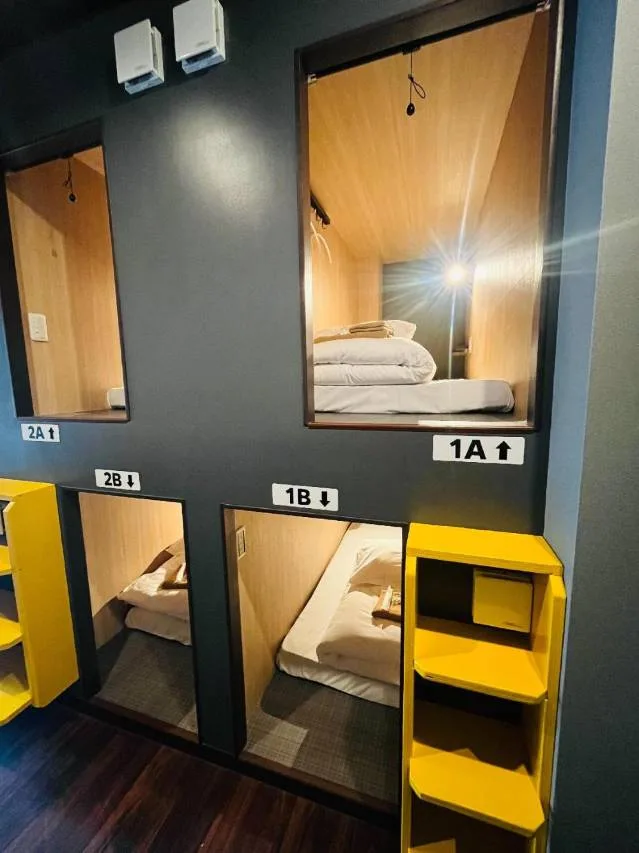
| Men-only dormitory bed | 2 m² bed allocation, floors 1–2, bunk arrangement | Shared living space; upper or lower bunk depends on actual assignment. |
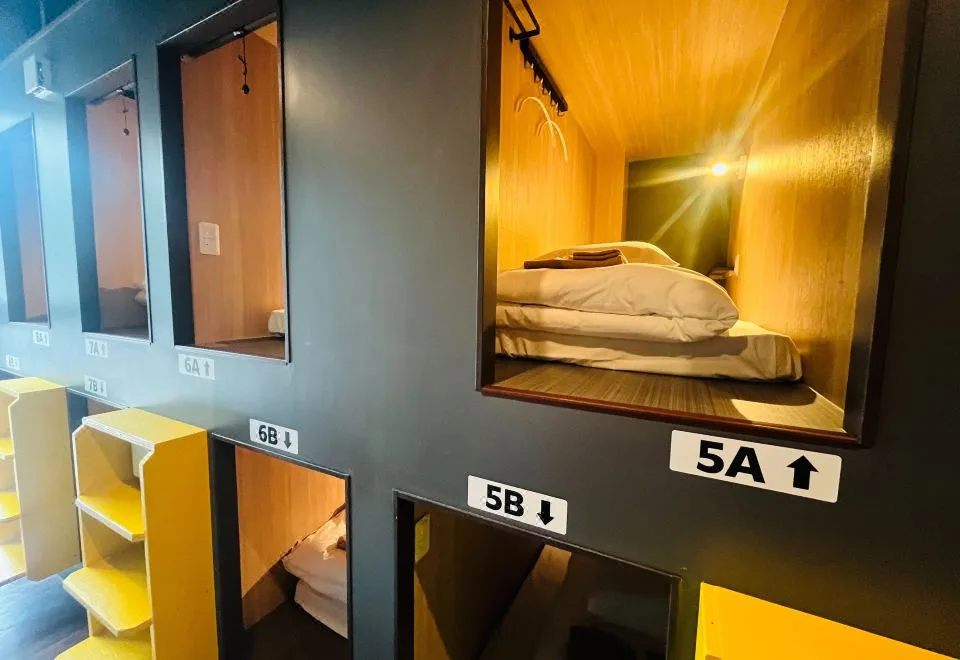
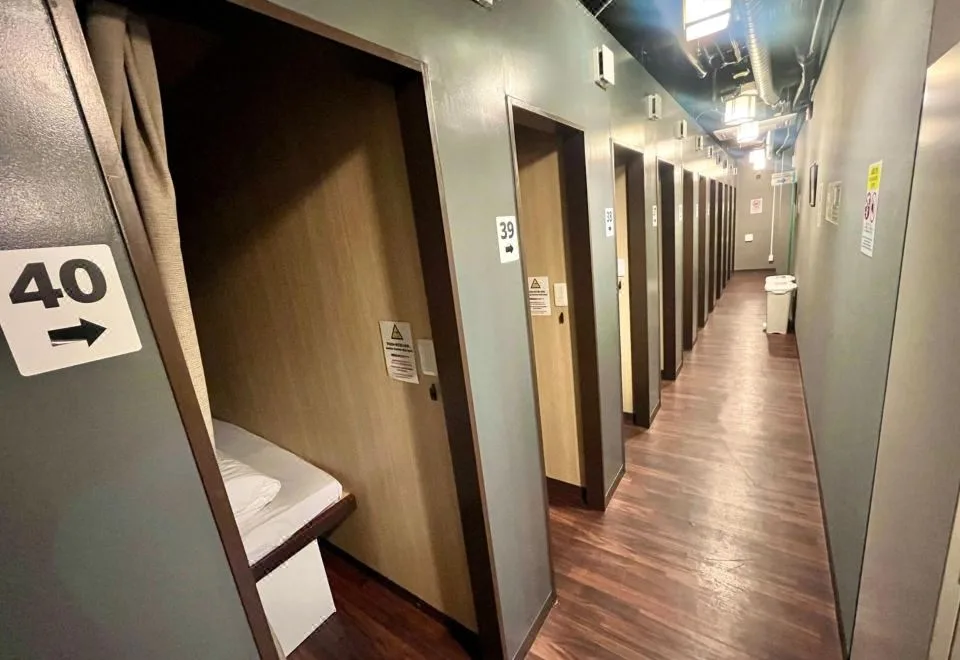
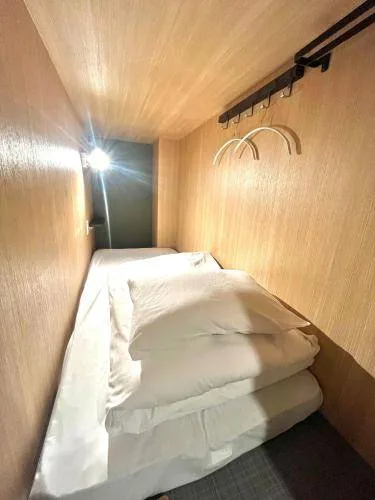
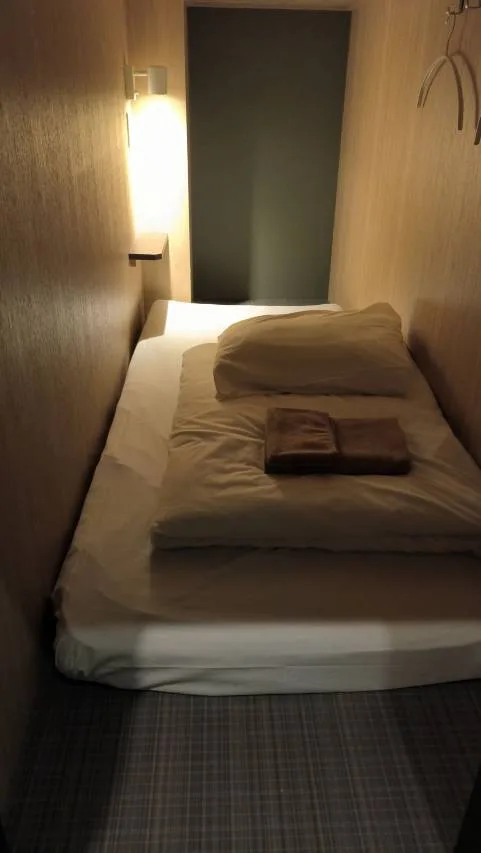
| Men-only single pod | 3 m² pod, third floor, single bed | Window faces the hallway rather than necessarily providing outside light. |
Trip describes shared bathrooms, so ‘single pod’ must not be interpreted as a private bathroom. One first-floor upper bunk has its own fan switch — that is one bunk’s setup, not every pod’s.
A dorm bed can suit an overnight stop with minimal belongings. A 3 m² pod may offer more personal space for dressing or organizing items; I would choose it when I need to stand and change inside, since the bedside strip leaves room to organize a bag.
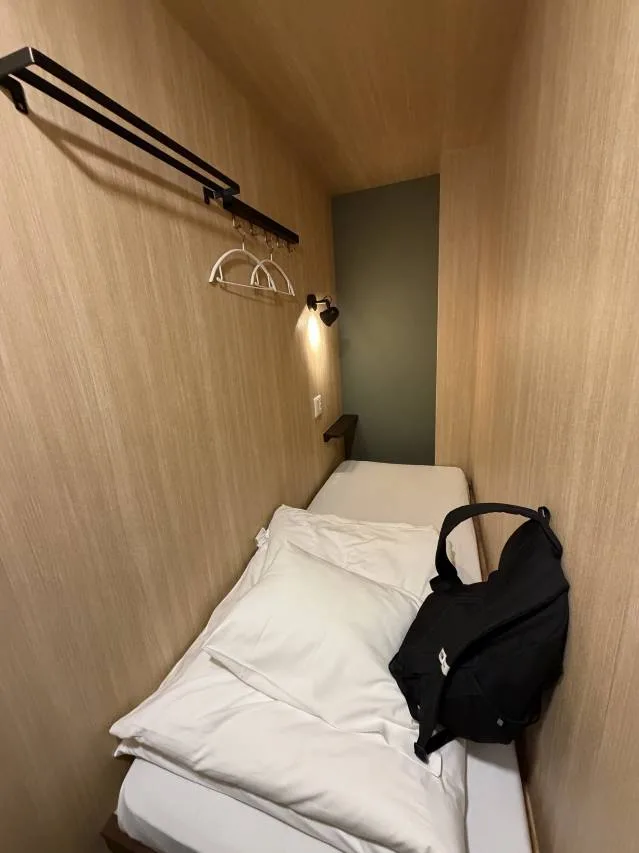
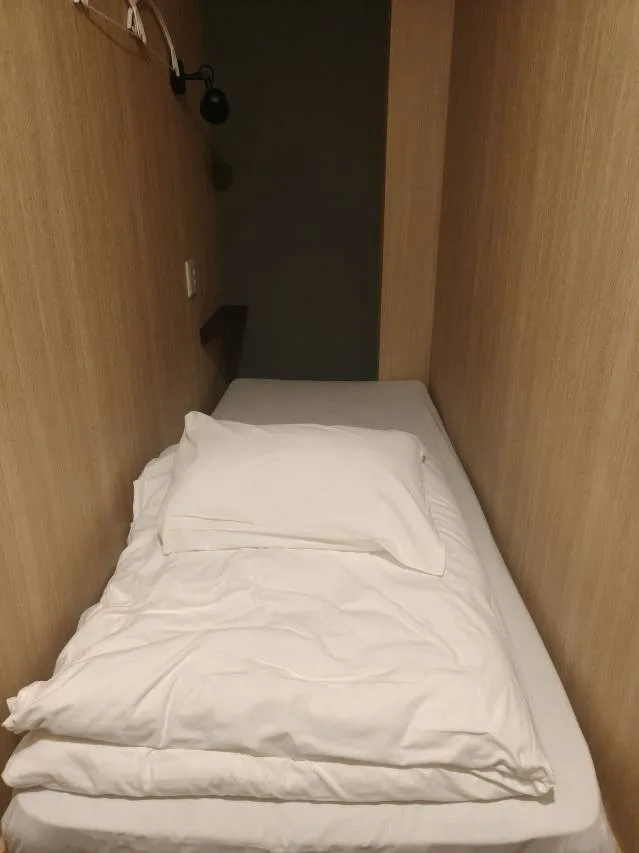
I would decide on ladders and bag space first: the pod has a long narrow strip beside the bed with a hanging rail, so a bag can rest by the bed; the dorm berths are stacked with external ladders, so an upper berth means climbing every time.
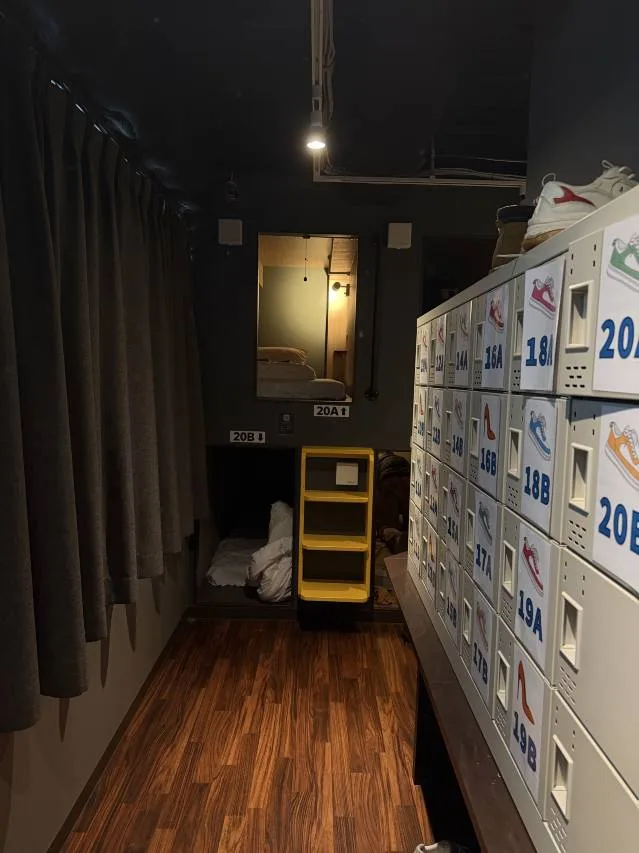
On sleep, I would look at the mattress first: the single pod mattress has pocket-spring support, though the pillow is a bit flat, so I would bring my own if a flat pillow bothers me. An upper bunk is made of three soft cushion sections, which sleep fine, and the bedside has two switches — one for the reading light, one for a small fan — so if it feels stuffy when I first lie down, I would switch the fan on. For toiletries I would check the list first: large towel, face towel, toothbrush, earplugs and slippers are provided, and the shower rooms have body and face towels too; small items go in the bedside locker and shoes in the shoe box.
Beds and shared bathroom pictures
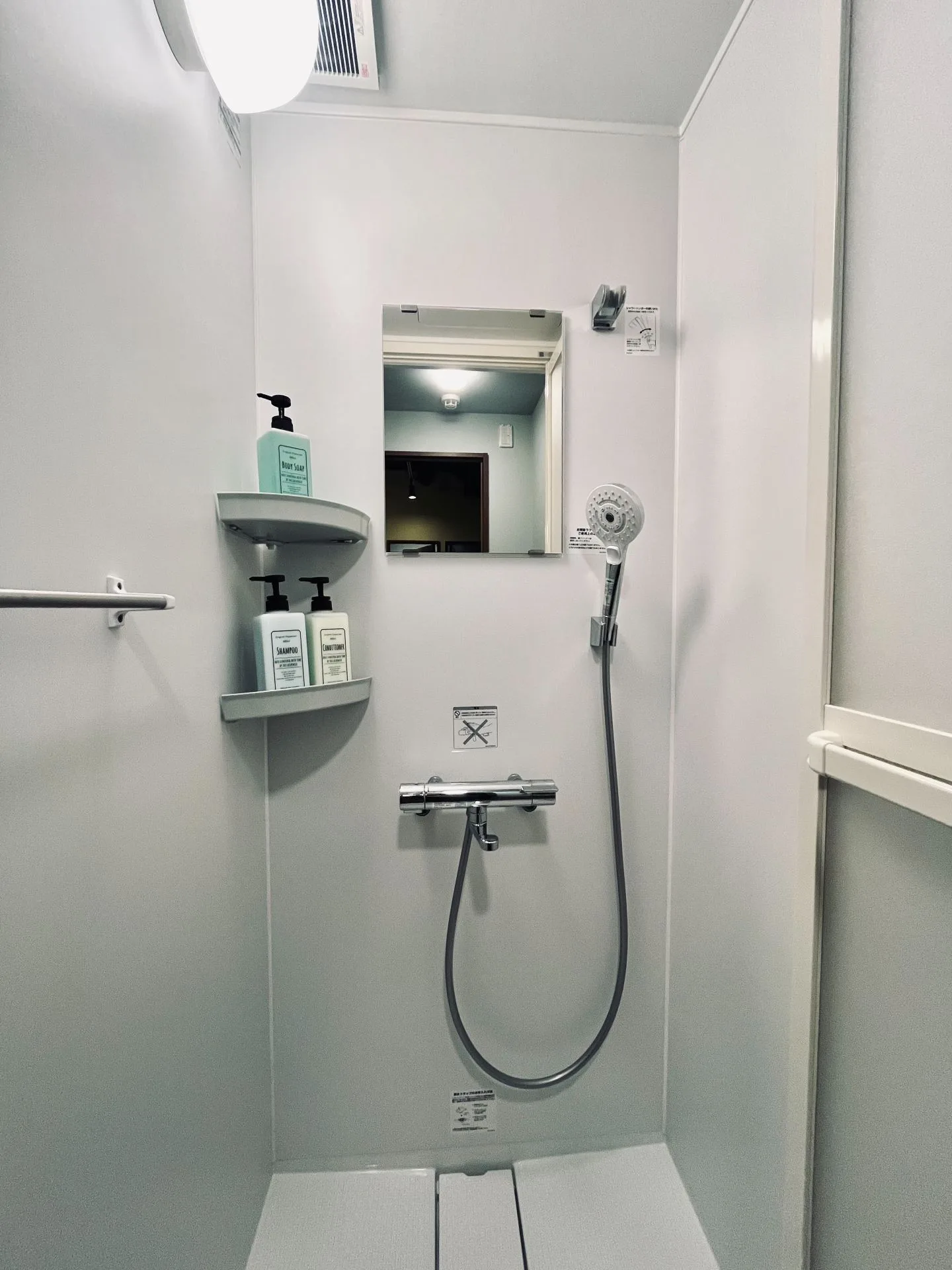
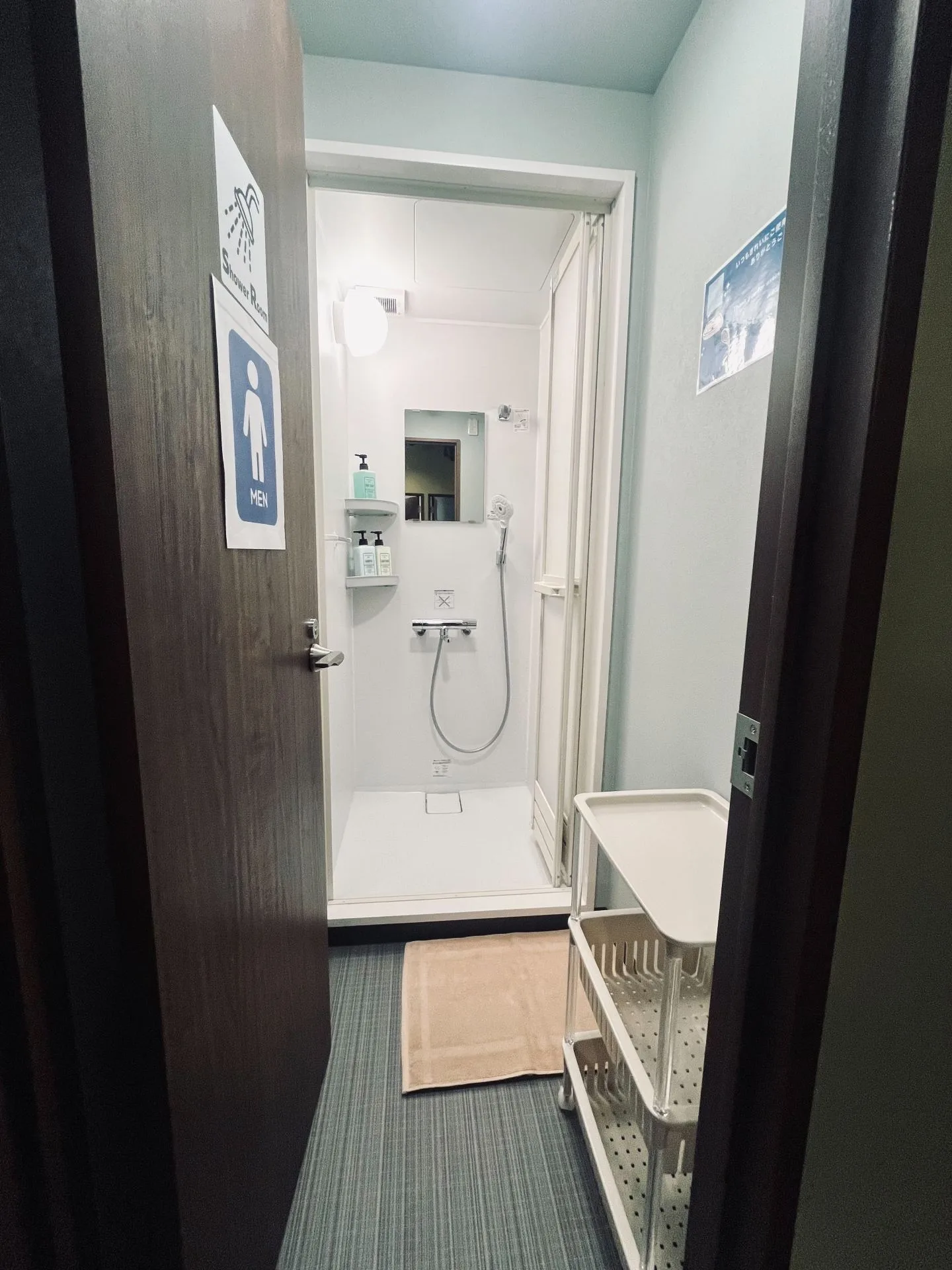
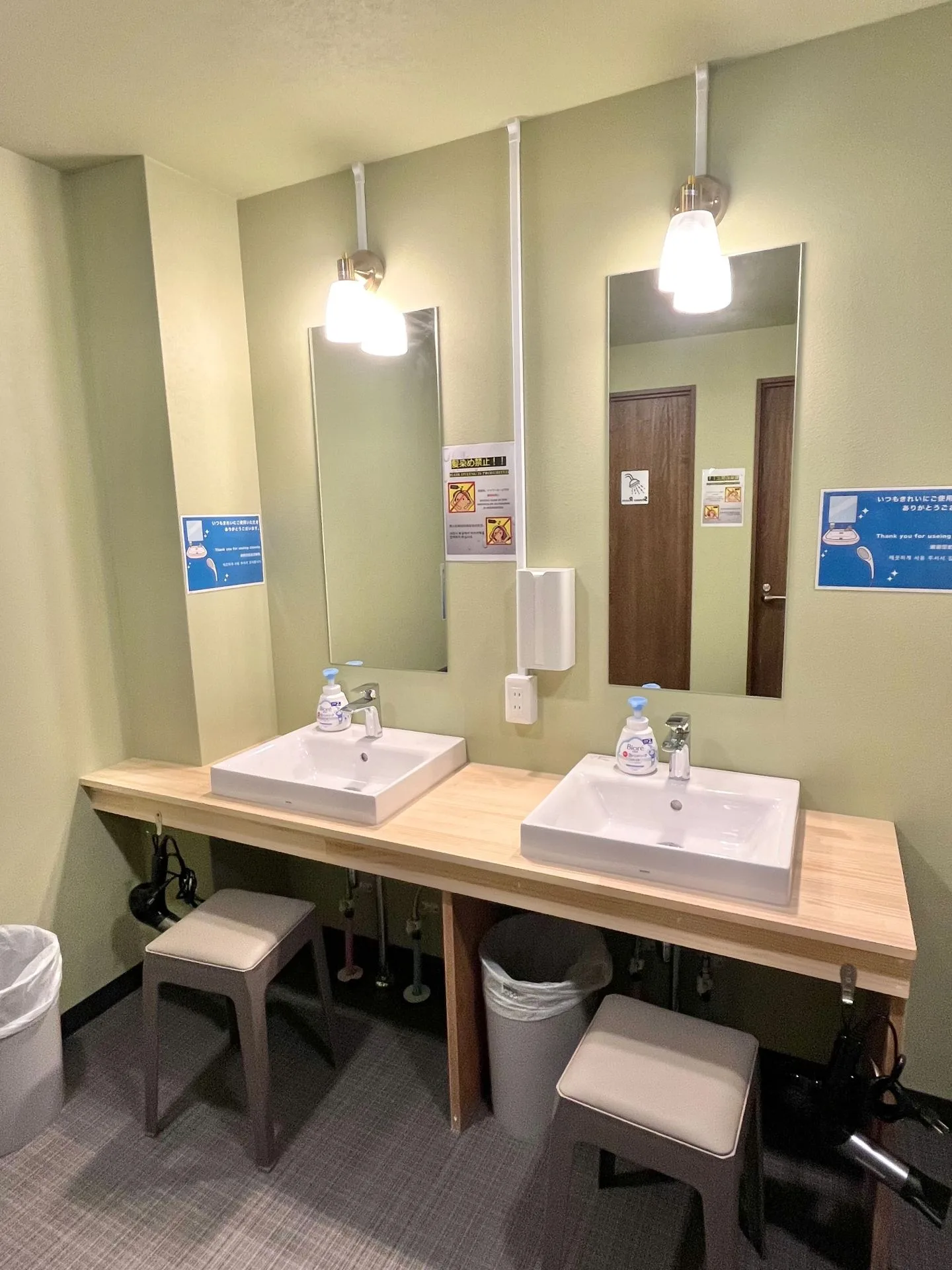
Sleeping spaces
Breakfast is not provided, so plan an independent meal
Breakfast is not offered. Convenience stores are not right outside, and the nearest one closes at night. Buy simple breakfast supplies on the return journey rather than assuming food is available at the door early in the morning.
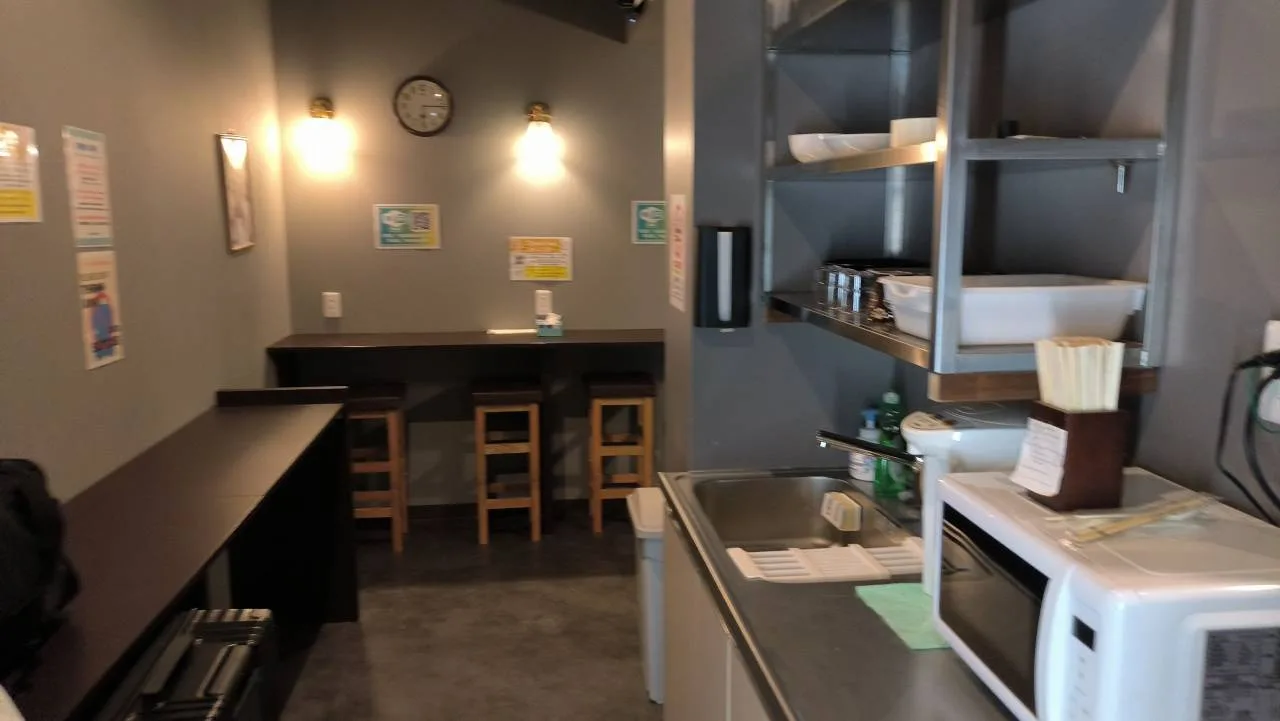
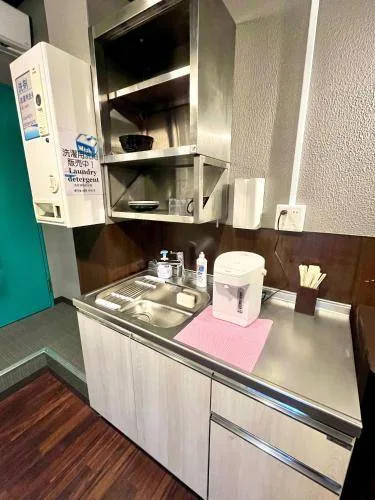
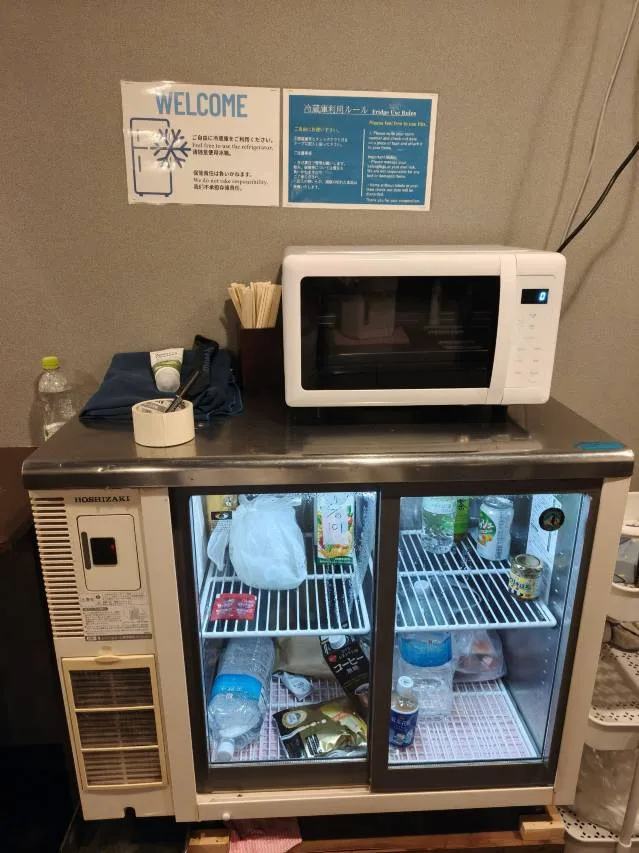
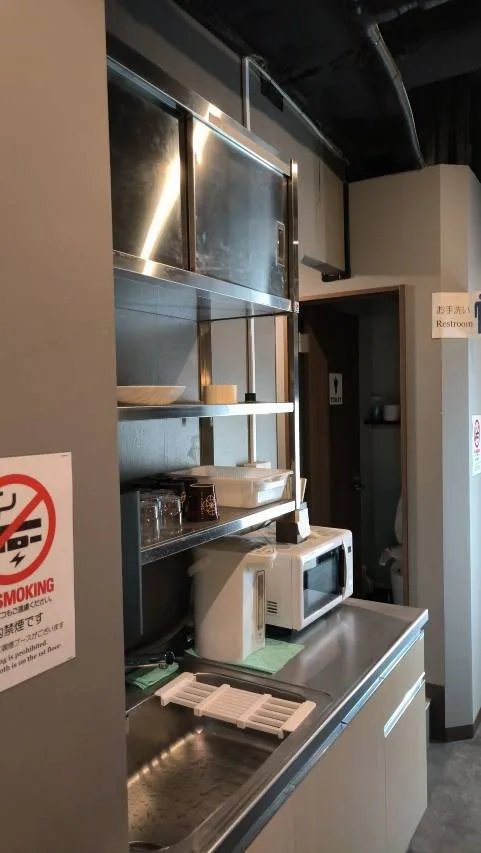
The shared area has a microwave and a kettle, so food bought outside can be heated up, and there is a vending machine on the first floor for a drink in the middle of the night.
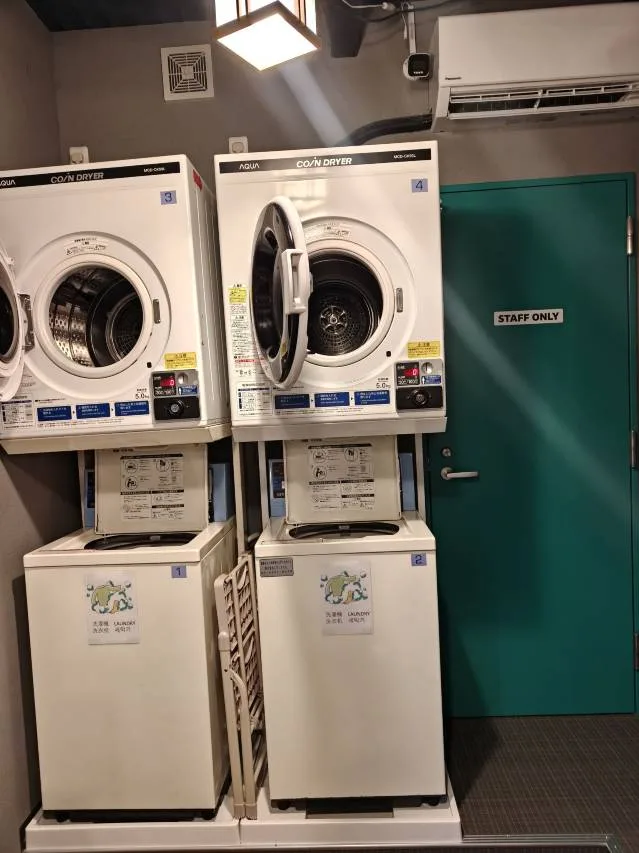
For a one-night stopover after arriving in Tokyo, shared facilities are easier to live with. For longer stays I would plan washing, drying, unpacking and shared-table time in advance, because the washers are shared and stacked and the tables need turn-taking. The location helps most when your days are spent around Otemachi, Takebashi or Jimbocho.
Cleanliness reports differ; noise complaints deserve attention
On cleanliness, I would read by room type: single pods got praise, while a male dormitory bed drew an odour and hygiene complaint. Read the reviews for the type you are actually booking.
For the bathrooms I would expect this: the first-floor shared area has two shower rooms and three toilets, the showers are roomy with strong water pressure, and towels are self-serve and free. But there are only two showers, so at full occupancy I would shower outside the evening peak. Rooms are cleaned once a day; whether it feels clean still depends on the room type, and the single pods earn more praise than the dormitory.
Window-side berths pick up road traffic and the sound of neighbours handling luggage, so if it were me I would treat how quiet it is as coming down to berth position and who is sleeping nearby, and pick a berth away from the window and the busy walkways. No elevator is certain.
Here is how I would put it to a friend: compare the sleeping format first, price second. If you are travelling light, fine with shared bathrooms and happy to check yourself in, it is worth comparing. If you are travelling with family, need a lift, or sleep lightly, I would point you somewhere else.
One night versus several nights
For a longer stay I would ask about laundry hours first — the washer and dryer are stacked, and the shared tables, microwave and fridge sit in one common area, so plan on taking turns. Laundry is a matter of coins: detergent ¥100, a wash ¥300, and drying ¥100 per 30 minutes, with detergent sold on site. The corridor runs cold while the pod stays a little warm, so I would keep a light layer for sleeping. Check-in is 15:00–23:00 and check-out is before 11:00; I would complete online check-in the day before and scan the QR code at the door, and I would plan to arrive before 23:00, since arriving after that is not possible. Luggage storage sits under an outdoor counter with no lock, so I would only leave things I can afford to lose and keep valuables with me.
Exterior and communal facilities
Property exterior and shared lounge
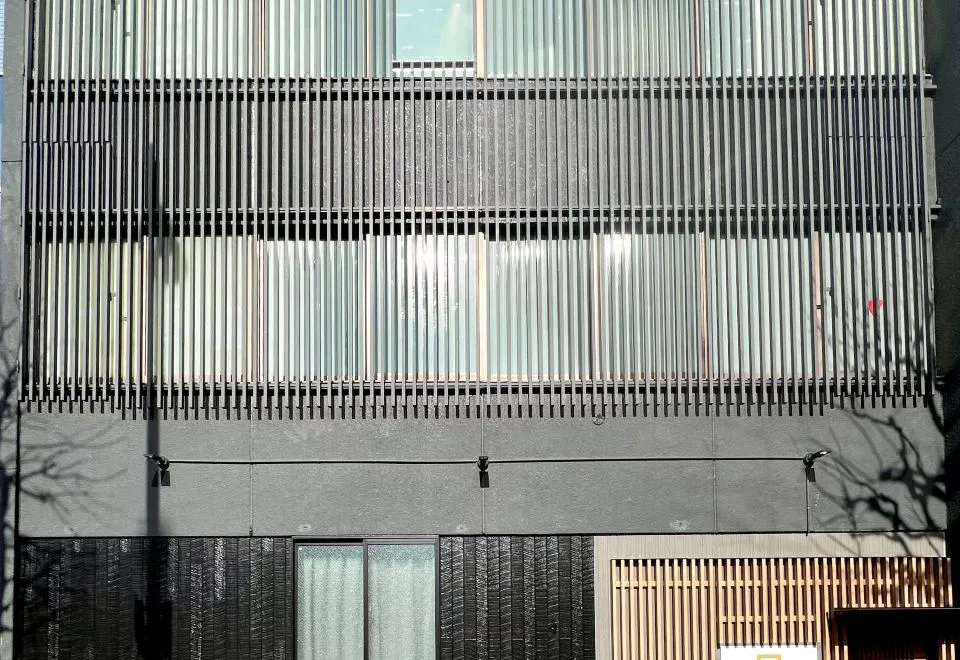
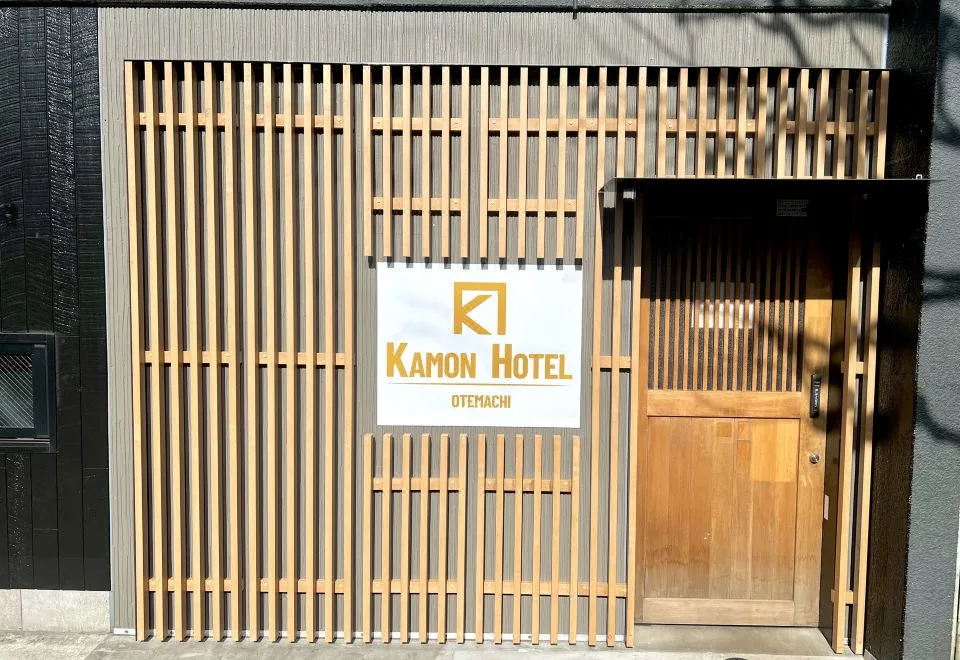
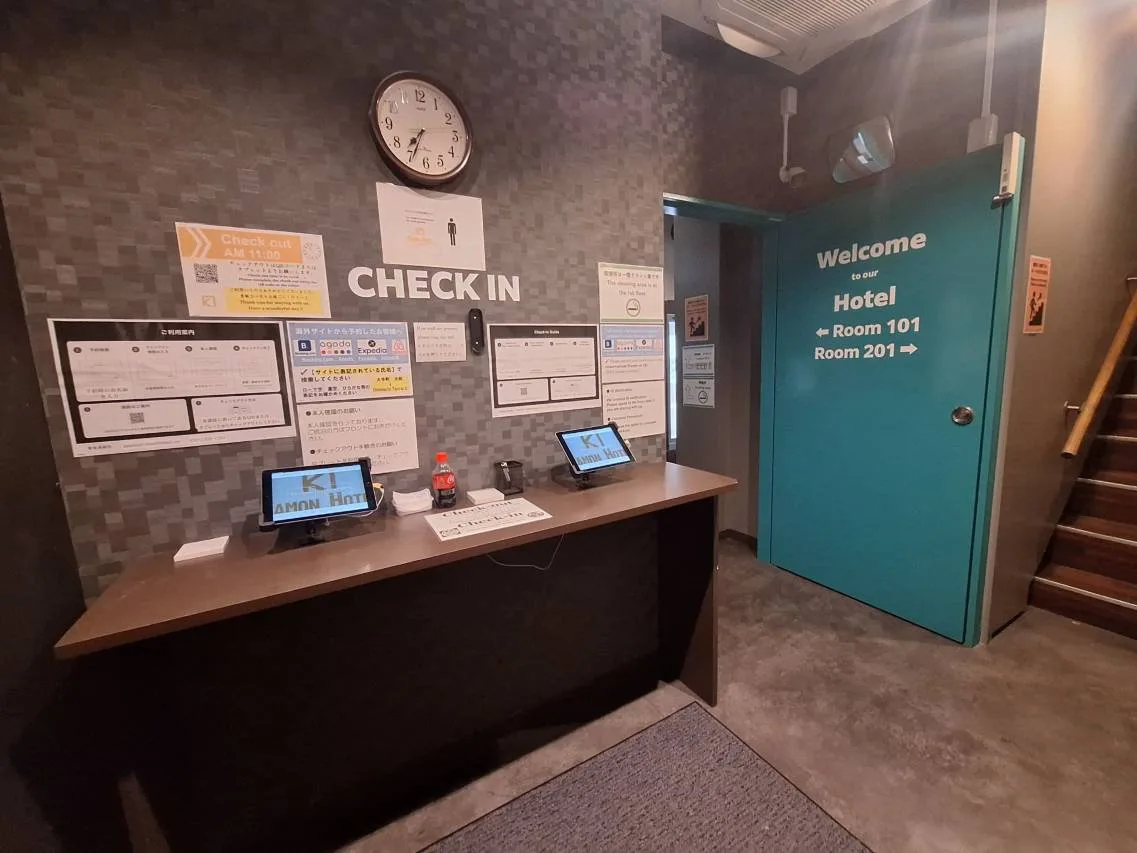
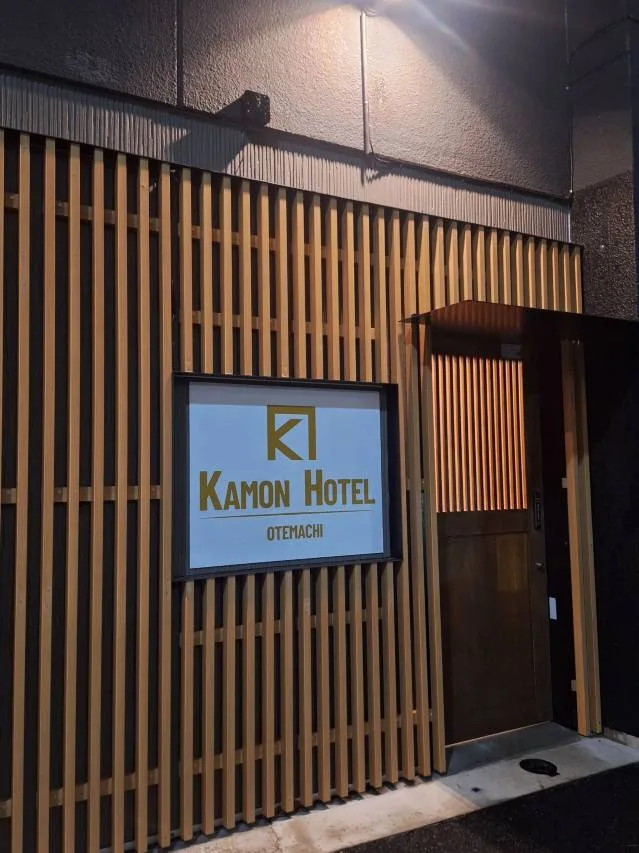
On-site facilities
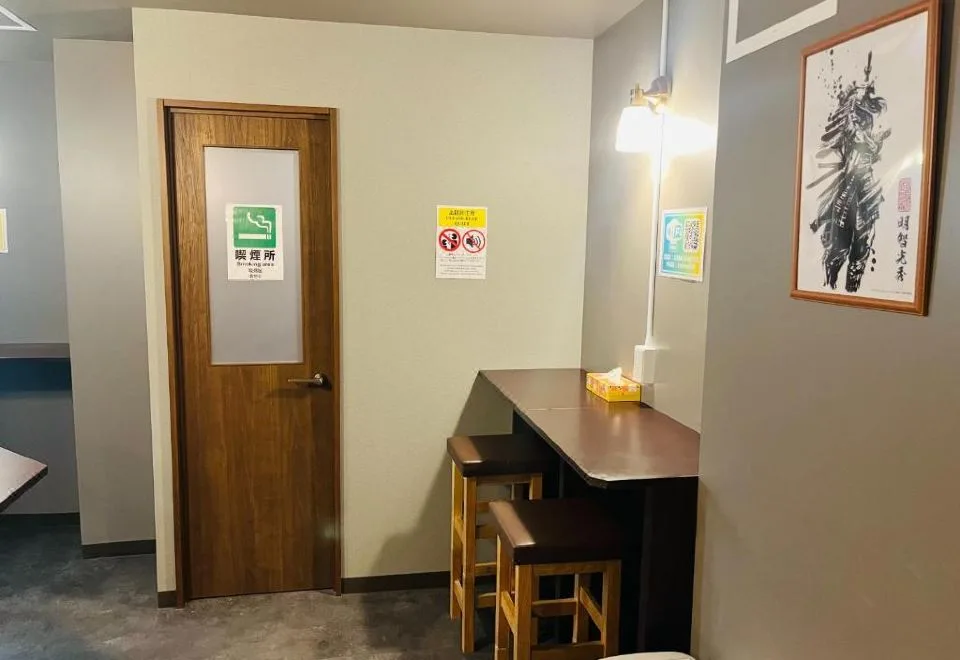
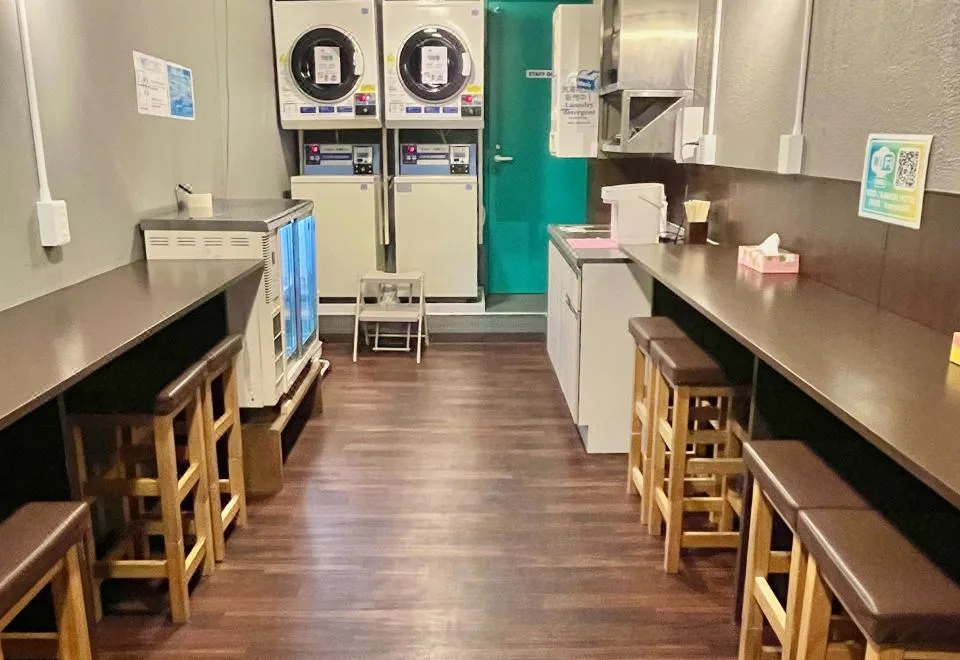
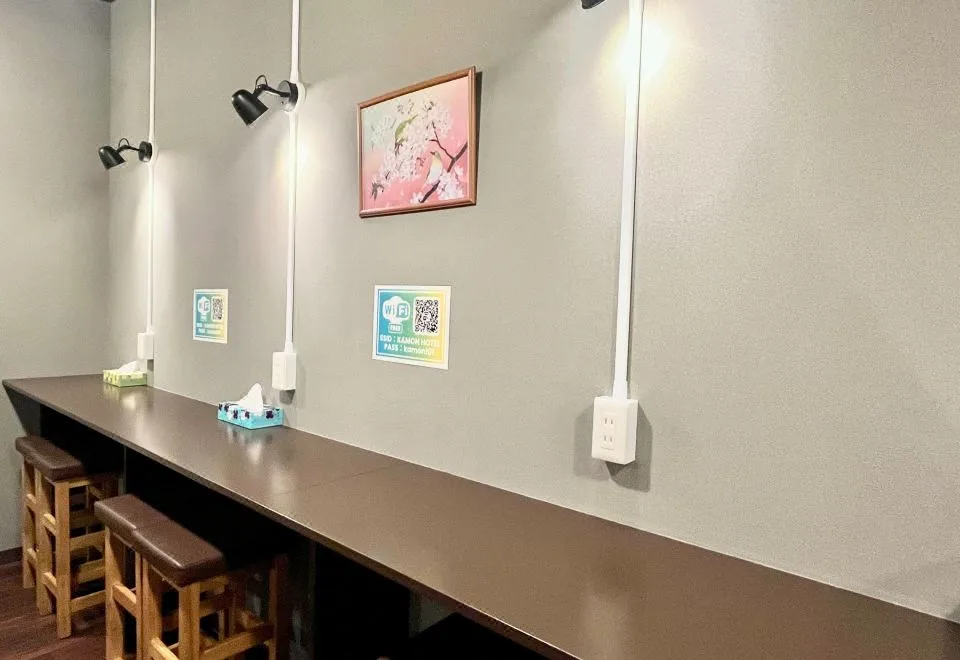
Pros and cons at a glance
Pros
- Otemachi Station Exit A5 has a lift to street level, so heavy bags, wheelchairs and strollers can exit step-free, and the hotel is about a 10-minute walk from there.
- Opened in 2025, so the facilities are new; the single pods earn praise for cleanliness, with clean bathrooms and good shampoo.
- A 20-inch suitcase plus a duffel bag fit under the bed of a single pod, the mattress has spring support, and toiletries are complete — large towel, face towel, toothbrush, earplugs and slippers.
- Self check-in is easy: complete it online the day before and scan a QR code at the door; the shared area has a microwave, kettle, fridge and laundry equipment.
- Close to the Imperial Palace and Tokyo Station — about 15 minutes on foot to Tokyo Station, and a lap around the palace is exactly 5 km for a run.
Cons
- The hotel itself has no elevator; third-floor pods and the third-floor laundry both mean carrying bags upstairs.
- Dormitory beds are only 2 m² and single pods 3 m²; hallways and shared spaces are narrow, and upper bunks need an external ladder.
- The men’s dormitory has drawn hygiene and odour complaints, there are only two showers, so a full house means queuing, and the Wi-Fi has been called very unstable.
- No breakfast is provided, the nearest convenience store is three blocks away and closes at night, and check-in is 15:00–23:00, so arriving after 23:00 is not possible.
- Window-side berths pick up road traffic, neighbours handling luggage are audible, and luggage storage sits under an outdoor counter with no lock.
Information last checked: 2026-11-18