
TOKYO / CHUO
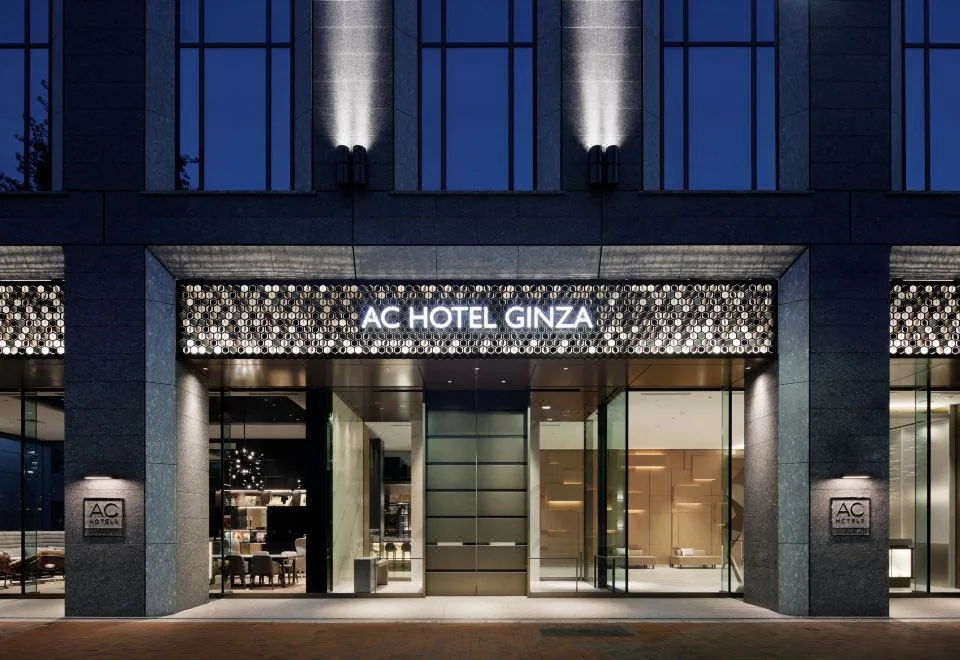
AC Hotel Tokyo Ginza
AC Hotel Tokyo Ginza
Modern shared spaces and easy Ginza access for a more relaxed stay
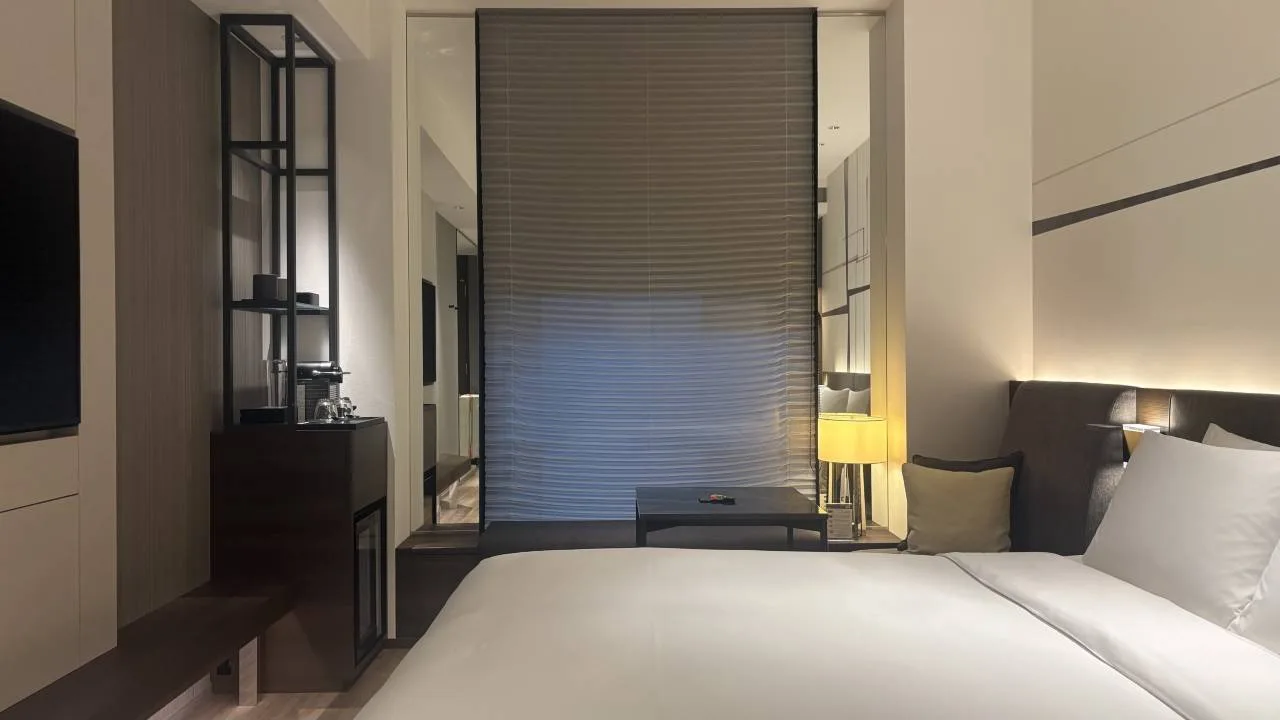
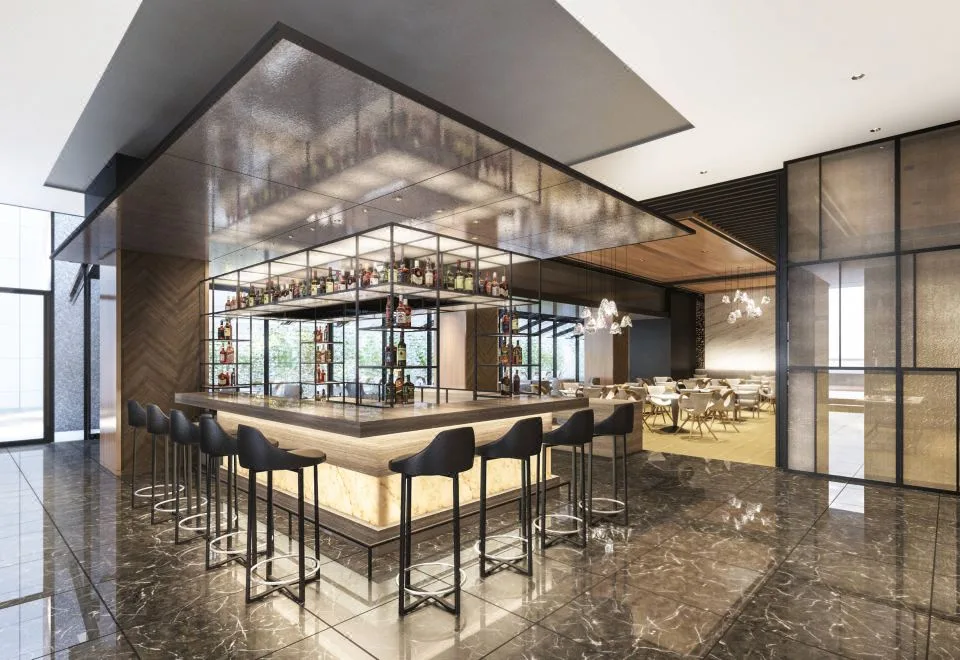
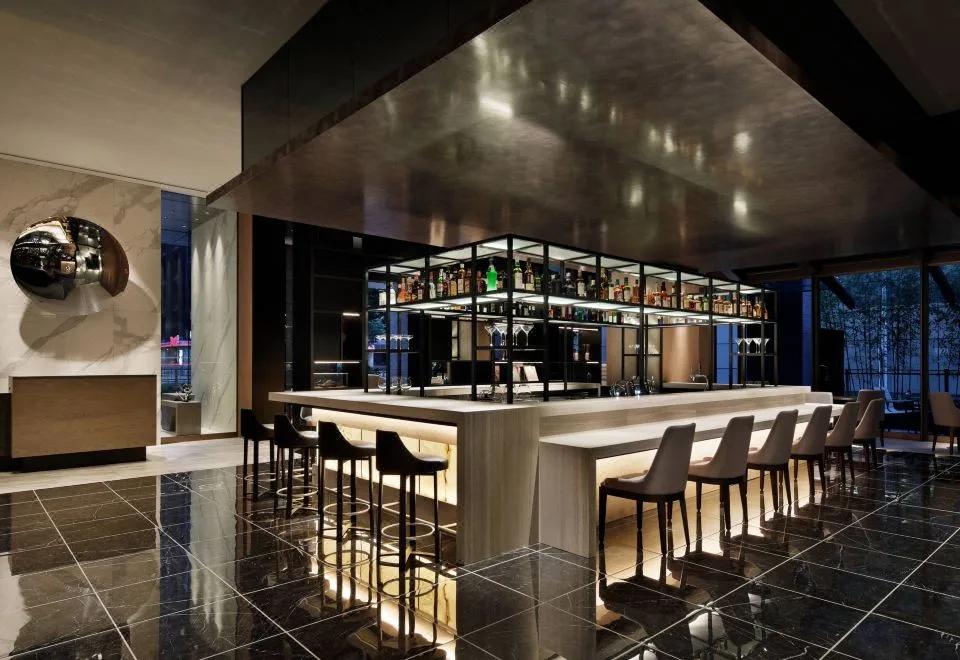
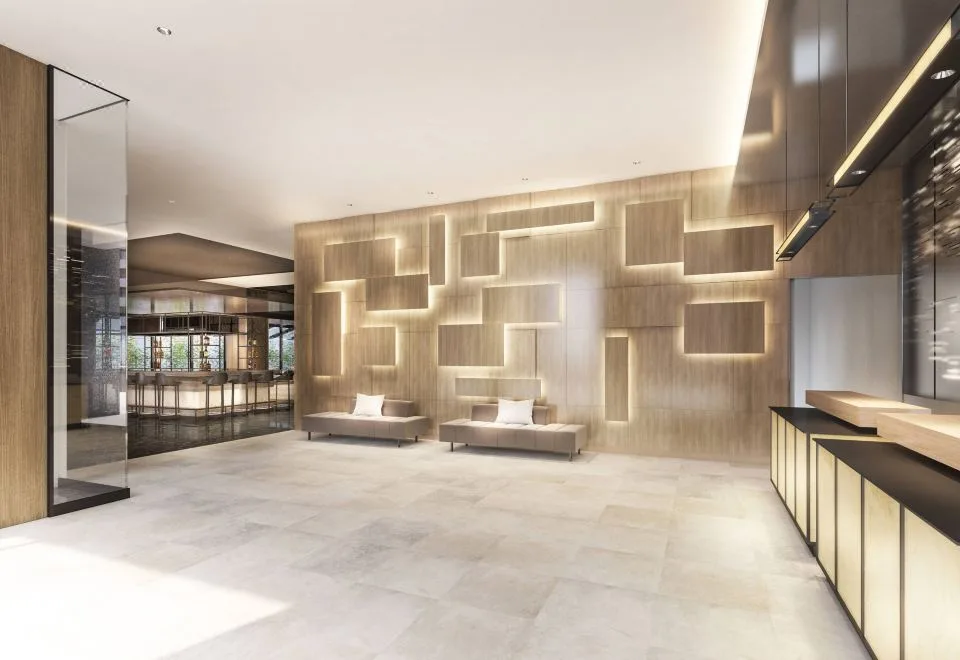
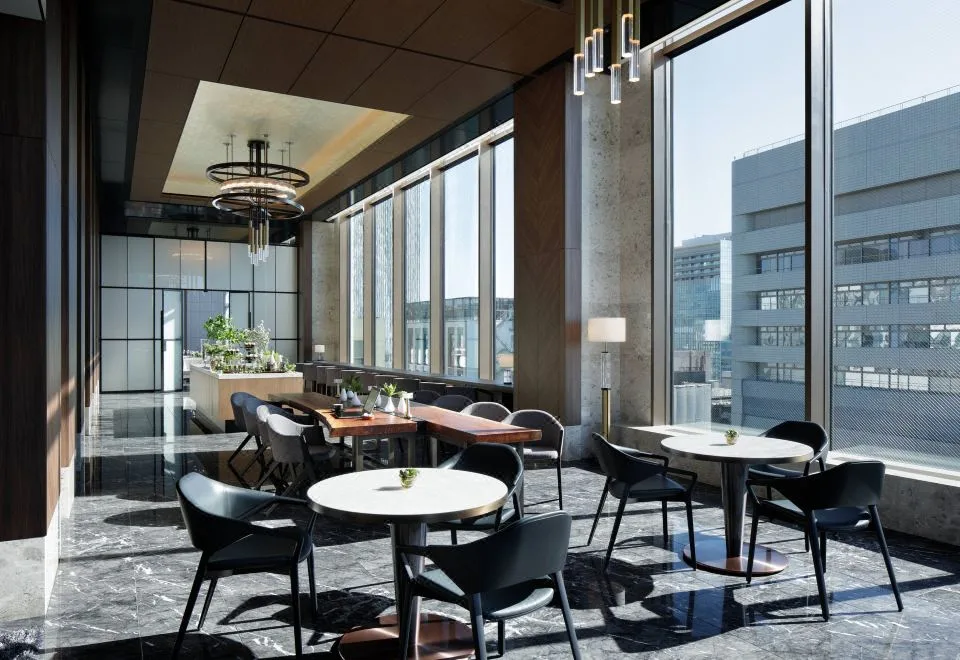
AC Hotel Tokyo Ginza suits travellers who appreciate clean modern design and want Ginza’s shopping and dining within walking distance. Its restaurant, bar and shared spaces set it apart from hotels designed simply for sleeping. If you leave time to relax at the property, you can make better use of these facilities than on an itinerary that keeps you out all day.With the gym, bar and restaurant in the same building, a multi-night stay does not mean going out every time I want somewhere to sit, and several nights here never feel dull.
Is this hotel right for your trip?
This hotel fits a trip that mixes slow Ginza wandering with time inside the hotel: shop in the day, drop purchases in the room in the late afternoon, then sit downstairs in the bar or restaurant in the evening. The restaurant, bar and gym are all in the same building, so the day does not need to be packed to feel full. If the plan is only to sleep here and leave at dawn, the shared spaces get little use, so I first decide where the budget should go.
Two trade-offs to settle first. First, no room type allows an extra bed or a crib, so a family with a small child needs to settle the headcount and the cost in advance. Second, breakfast is not cheap, so whether the buffet pays for itself depends on sitting down for a full morning meal; on a morning bound for Tsukiji, a room-only rate leaves more freedom.
The smoothest way to use this hotel is to treat Ginza as the base and the hotel as the living room: out in the day, back in the evening to sit somewhere different, with no need to plan a new route every day. Payment at the hotel can be made in cash, so there is no need to decide in advance which card to use. On the other hand, if the schedule is packed and the room is only for sleeping, the restaurant, bar and gym will see little use, so the budget is better spent on the room type or the location. For a first trip to Tokyo with Ginza as the first stop, the location and the shared spaces are enough; for a repeat trip centred elsewhere, check the transport first. A slow shopper and a slow eater will find the shared spaces and the dining a good match; a traveller in a hurry should look at the rate and the location first.
How to split the budget depends on what matters most: a traveller who values the location and the shared spaces gets the value from the dining and the gym inside the rate; a traveller who values the room itself should look at the bed type and the bathroom first, then at the price difference. Both ways of counting are right; decide which kind of traveller you are before booking.
Reasons to choose it
- Modern design and well-equipped dining and common areas
- Convenient for shopping and dining around Ginza
- Ideal when your itinerary includes time to relax at the hotel
Trade-offs to consider
- Do not assume every room has an open view
- Choose the bathroom and bathtub configuration by room type
- Consider whether you will use the shared facilities if only sleeping here
Location and access: station exits, lifts and luggage
Walking from standard exits
Official directions for the hotel’s AC Kitchen list around three minutes on foot from Higashi-ginza Exit A1 and five from Ginza Exit A3. If your plans are mainly in Ginza, there is little need to take a train back and forth for one stop; after shopping, drop purchases at the room and continue exploring.
Luggage and elevator routes
With large luggage, a wheelchair or a stroller, the elevator route depends on the line: on the Hibiya Line to Higashi-ginza, take the Central Gate elevator to Exit 3; on the Asakusa Line (including airport through-services) to Higashi-ginza, take the Miharabashi-side gate elevator to Exit A1. From the exit, follow the map to the hotel; the elevator route may take a different walk from the nearest staircase.
The area around the hotel works on foot: the Ginza Art Aquarium is 360 metres away and Tsukiji Outer Market 420 metres, so a morning in Tsukiji before returning works well; Ginza-itchome Station is 690 metres, Tokyo International Forum 1.1 km and Nihonbashi 1.5 km; the Imperial Palace and Shiba Park are each about 1.7 km, and Tokyo Tower about 2.8 km, worth half a day at a slow pace.
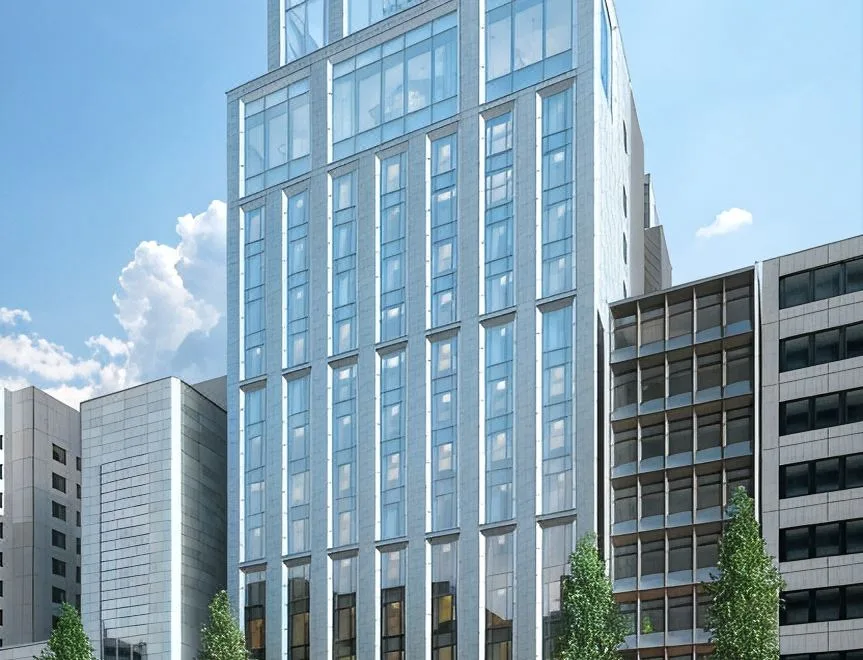
The hotel sits where Ginza meets Tsukiji: Ginza shops and restaurants on one side, Tsukiji markets and small shops on the other, both within walking distance. Ginza in the day and Tsukiji in the morning works best from the middle, and the Ginza lights are still on for the walk back at night. Coming from Ginza Station, the street is full of shops, so the walk never feels long. Staying here, Ginza and Tsukiji never need a choice: one direction in the morning, the other in the afternoon, and the plan falls into place.
View hotel access directions / Check station lift facilities
| Hotel name | AC Hotel Tokyo Ginza |
| Address | 6-14-7 Ginza, Chuo-ku, Tokyo 104-0061, Japan |
| Check-in and check-out | Check-in after 15:00; check-out by 12:00; 24-hour reception. |
| Transit reference | Around 220 m from Higashi-ginza subway station, a four-minute walk. |
Choosing rooms: beds, bathrooms and luggage
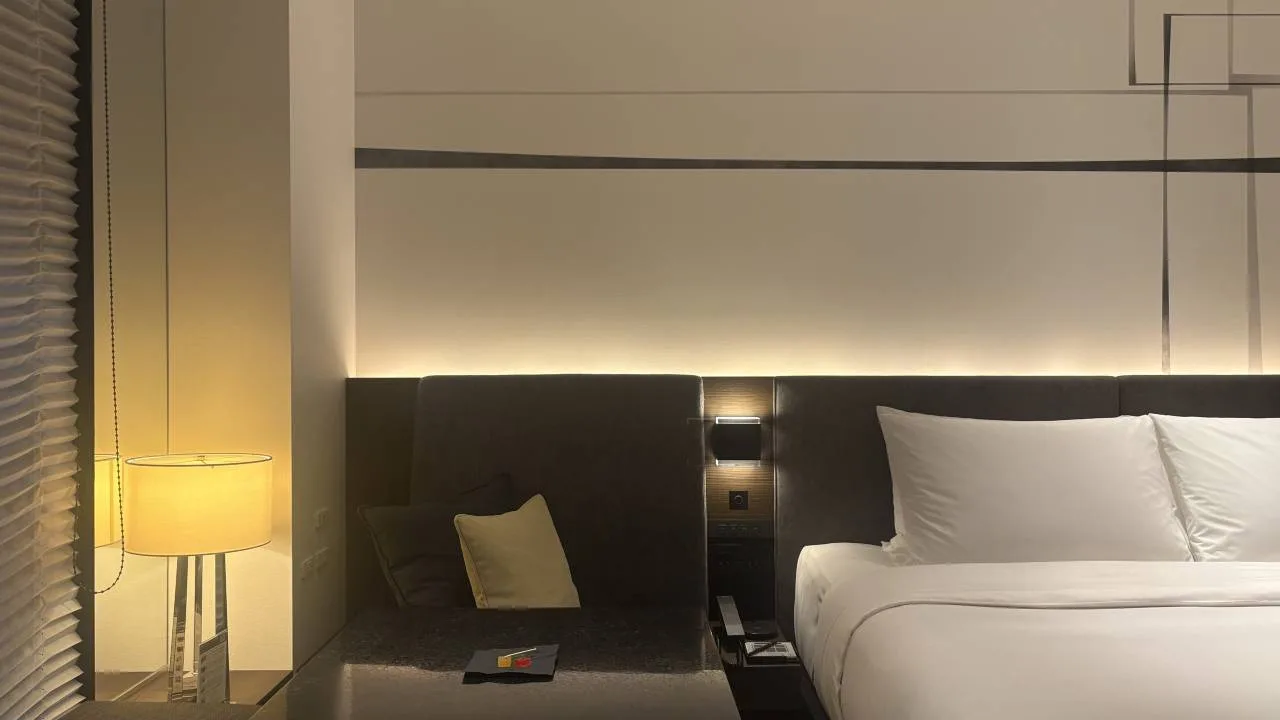
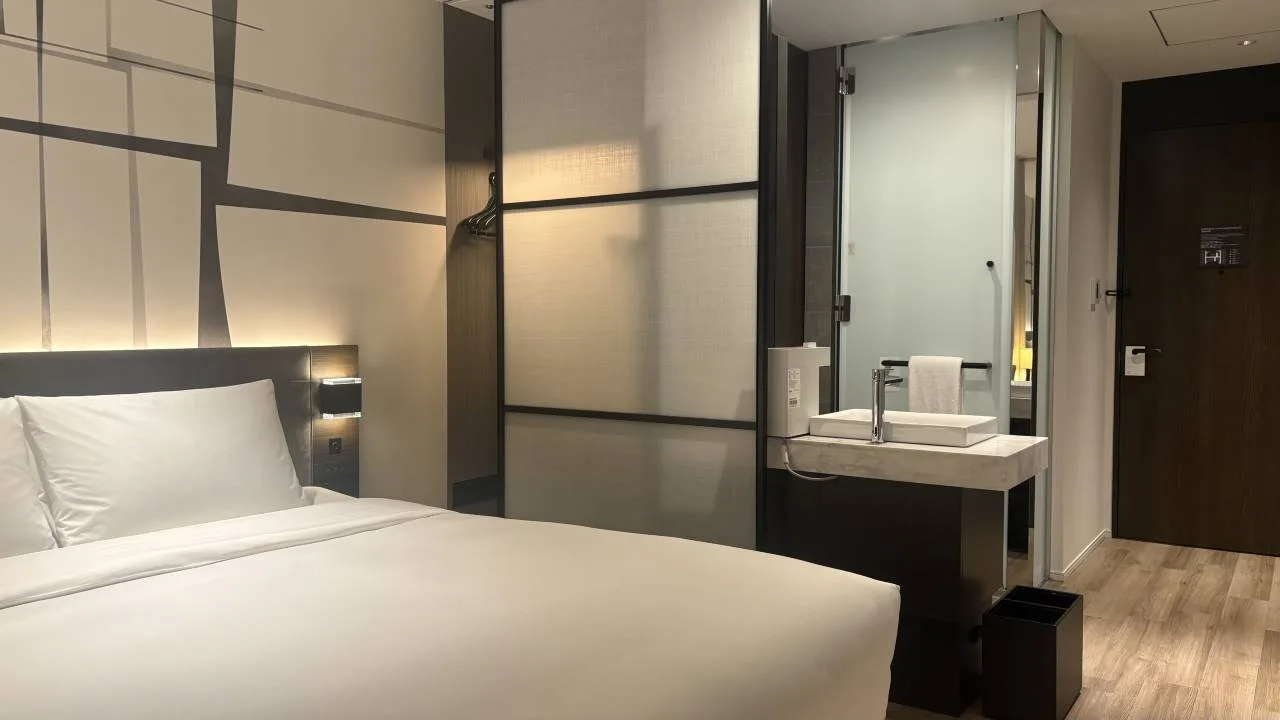
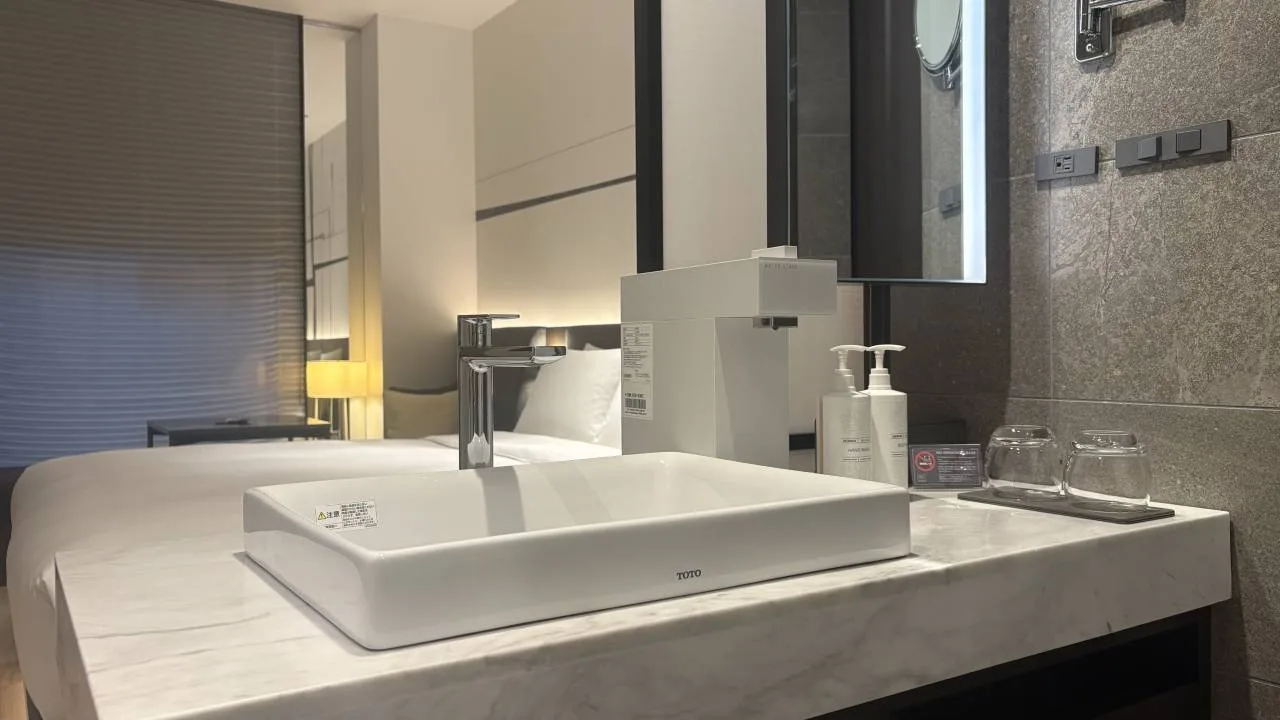
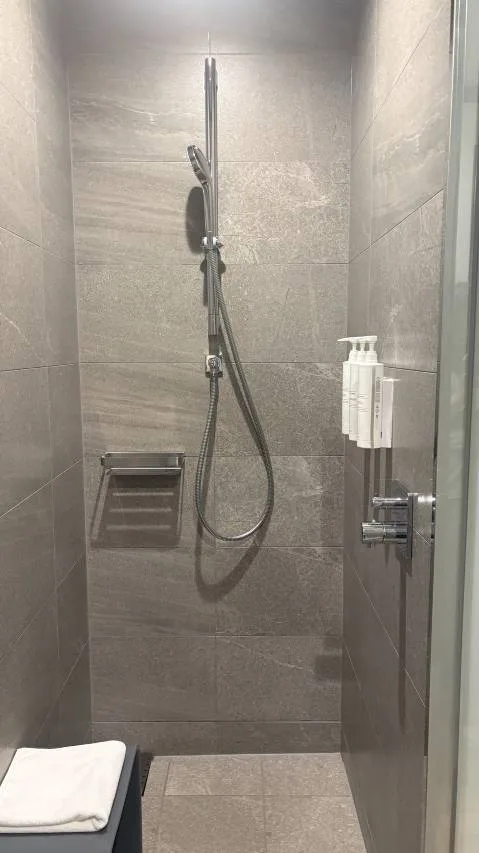
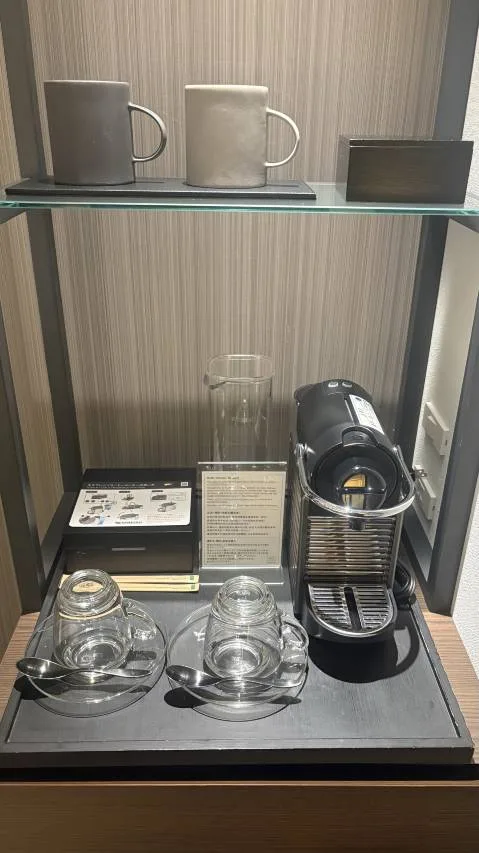
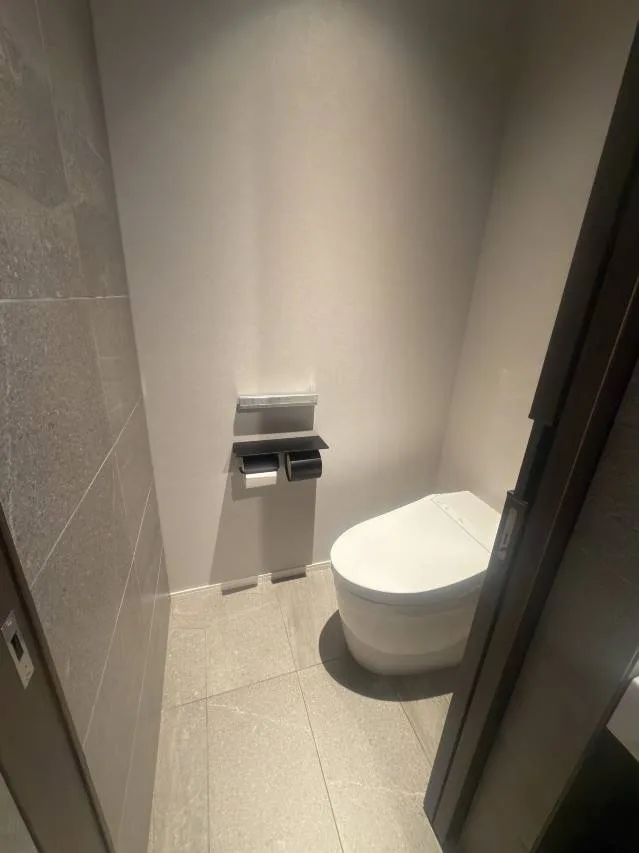
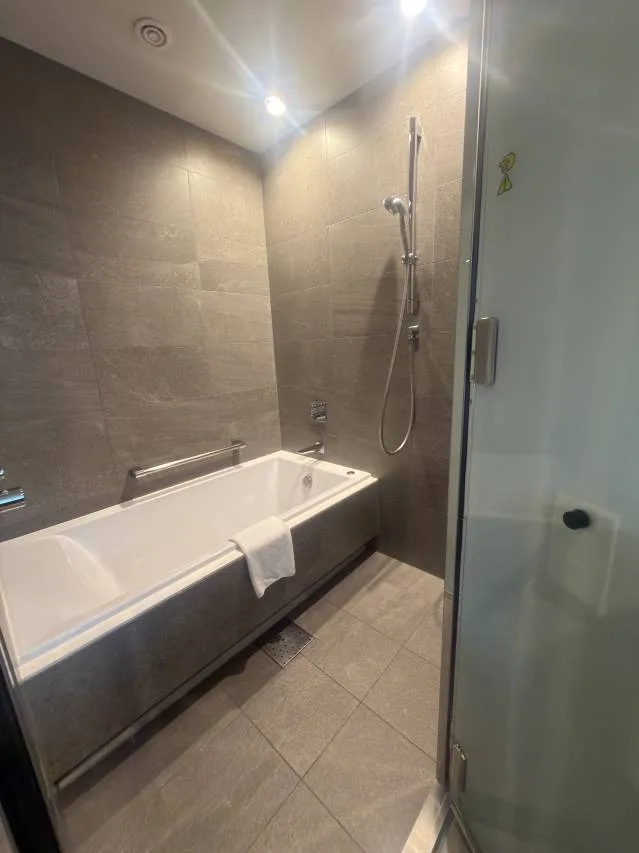
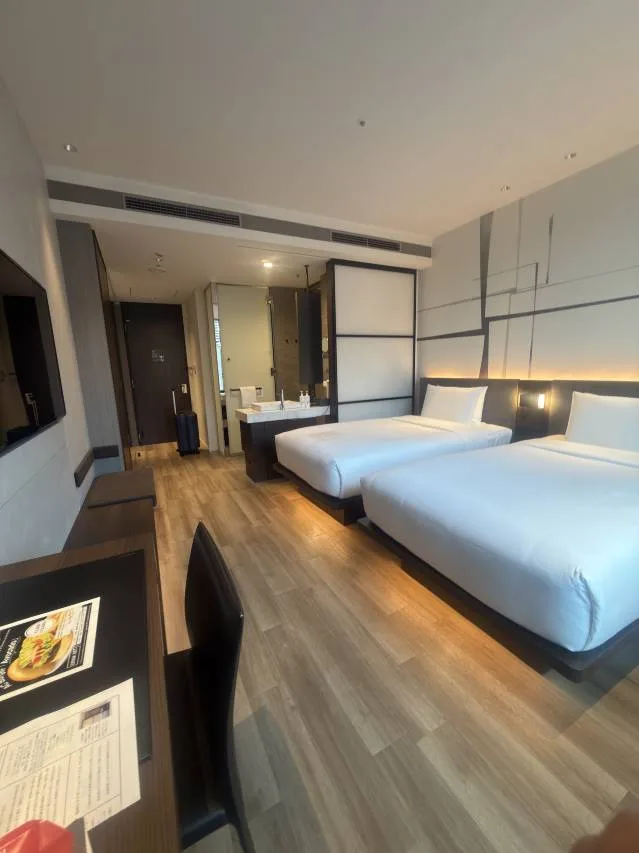
The photos show details from different room types – a single bed, a bedside washbasin, a shower, a bathtub, a separate toilet – and they do not all belong to the same room. To soak, book a category that explicitly includes a bathtub; for two people wanting separate beds, confirm a Twin rather than booking a double and hoping.
Settle the headcount first: the rate covers the guests named on the booking, children of all ages are welcome, but an extra charge may apply even without an extra bed, so add children to the booking to see the correct price. Guests checking in must be at least 18, and a child staying here needs an adult to check in.
The bathroom layout is another point to choose on: the bedside washbasin and separate toilet sit differently in each room type, so photos are a reference, not a picture of your exact room. If bathroom privacy matters, look at the bed-to-washbasin relationship before booking, then decide whether to change room type.
Travelling with children, ask first about the children meals and children slippers; the hotel prepares more for children than a hotel built only for adults. A humidifier is also available; Tokyo winters are dry and cold, and sleeping with it on is more comfortable, and on summer nights with the air conditioning on, whether the room feels dry depends on the humidifier too. Room amenities and hotel facilities are worth separating: look at the bed and bathroom inside the room, and at the gym and restaurant in the building, then decide before booking which side matters more.
Book in the right order: headcount first, then bed type, then bathroom. Settle how many people are staying, then a single or a Twin, then the bathtub, shower and separate toilet combination; when all three line up, there is no reason to change rooms after arrival. When headcount, bed type and bathroom all line up, the room stops being something to think about, and the trip takes over. The booking page is the authority on the configuration; photos are only a first look. A traveller hoping for a view should ask about room orientation at the same time, so the room does not end up facing the next building.
Compare official room categories
Breakfast: match it to your morning routine
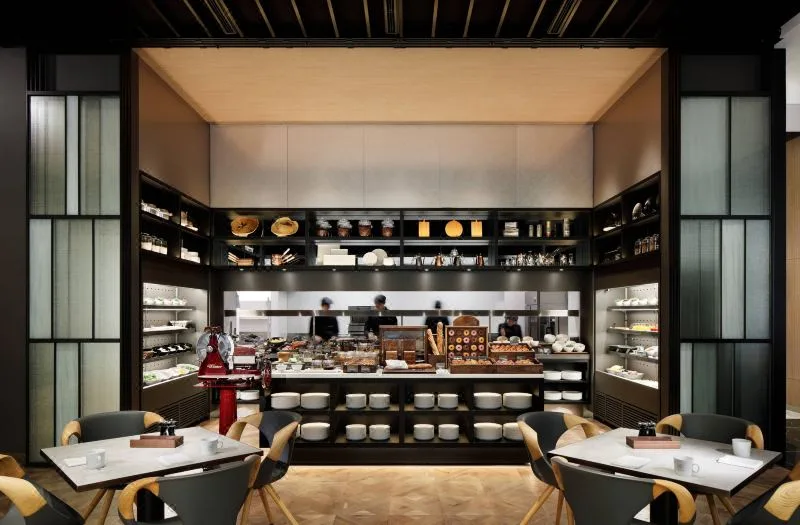
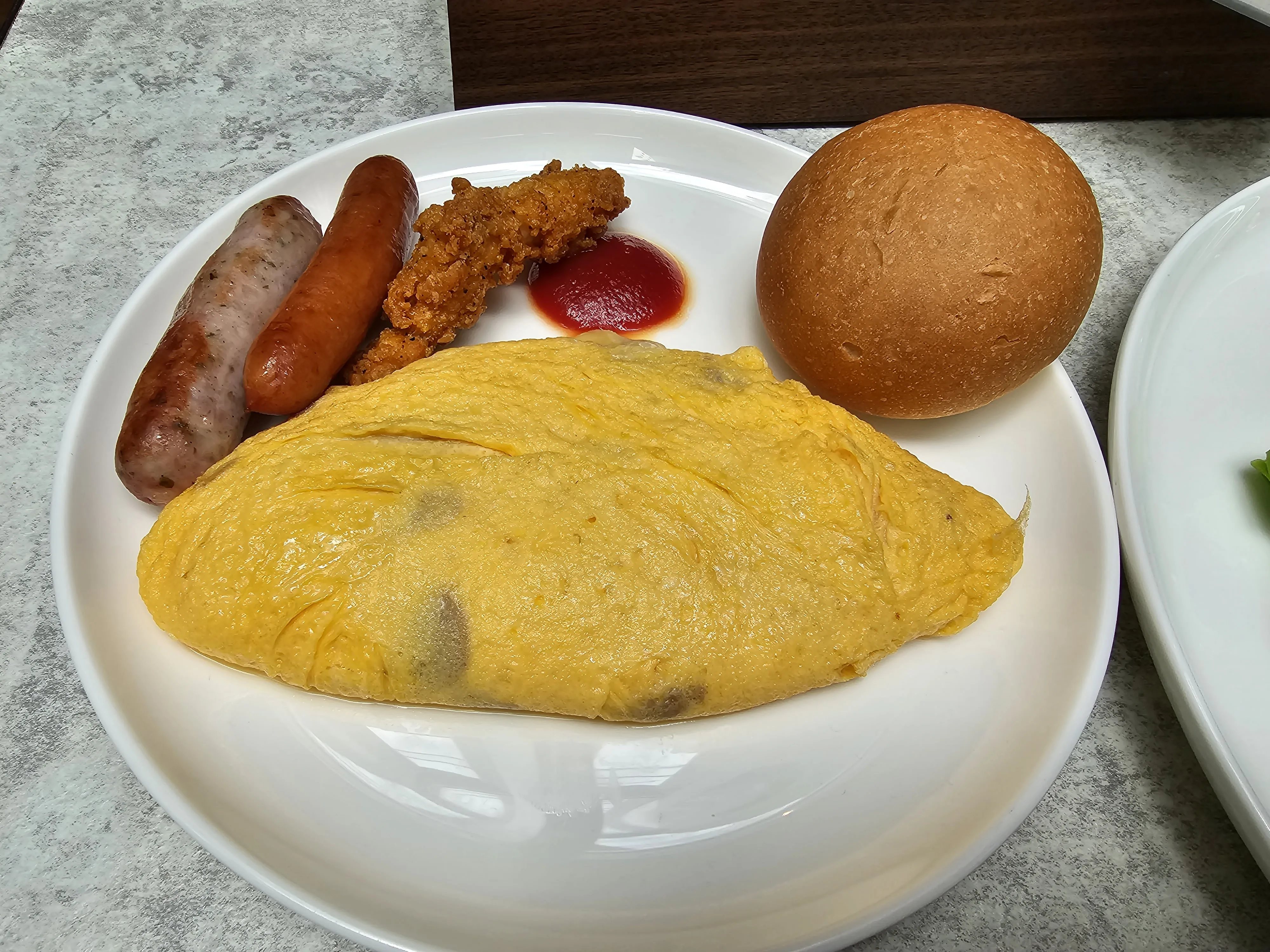
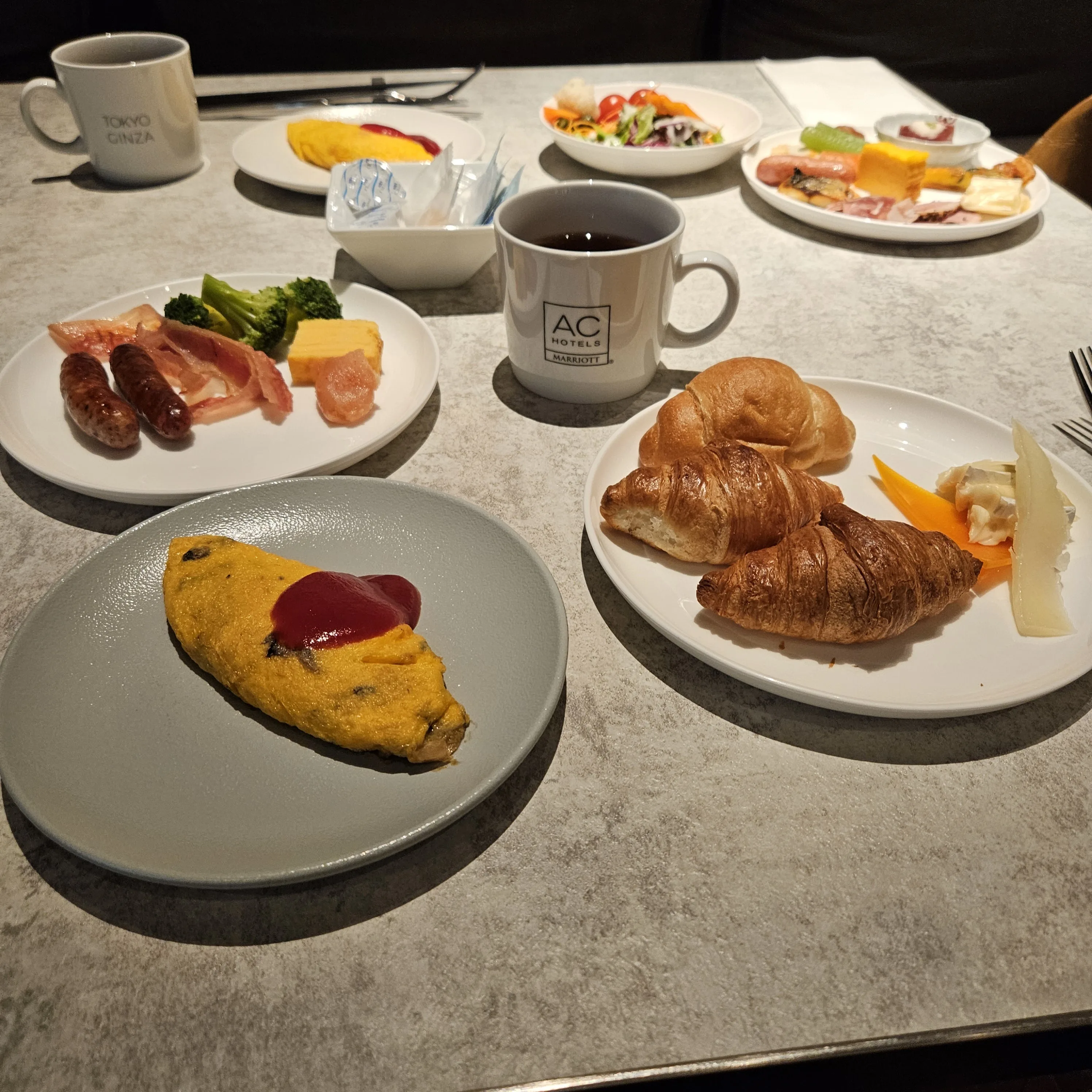
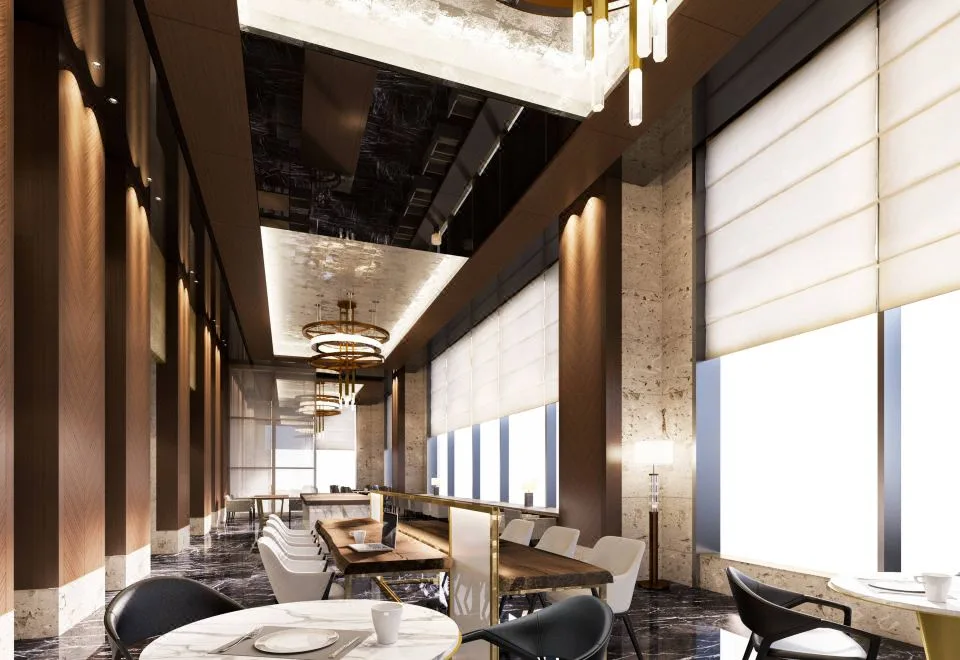
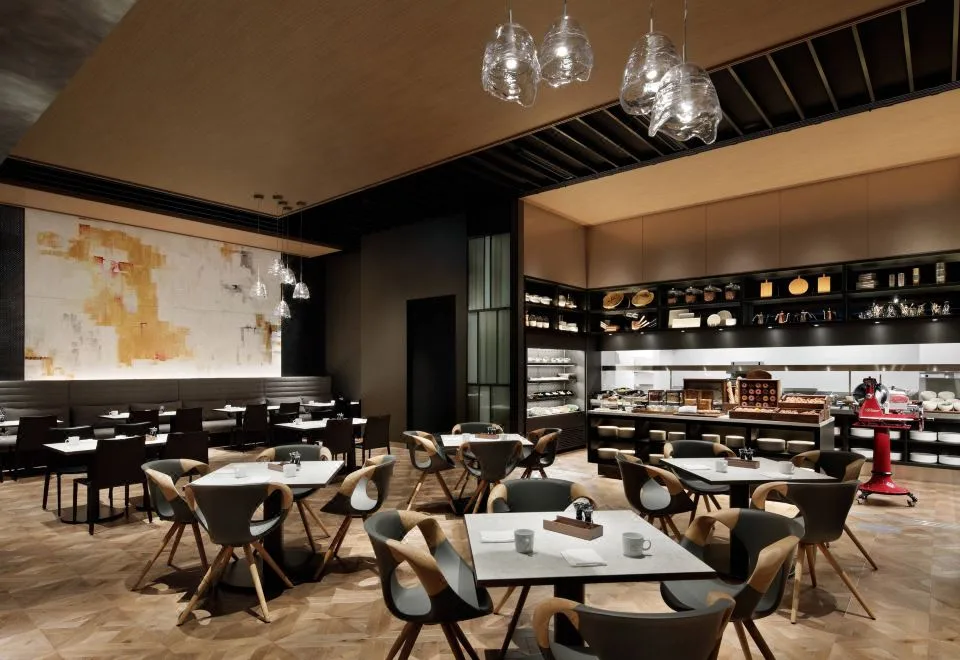
Breakfast is served at AC Kitchen inside the hotel: a European buffet at 5,060 yen per adult. The restaurant is Spanish in flavour, with buffet and a la carte, open Monday to Sunday 06:30-23:00, and also serves brunch, lunch, afternoon tea, dinner and cocktails, so a meal inside the hotel needs no extra trip out.
Whether to add breakfast depends on the morning: a slow sit-down meal before Ginza suits a full buffet, while a morning bound for Tsukiji Outer Market works better with a room-only rate. Breakfast is not a small cost, so I decide first whether I will really sit down and eat before adding it to the rate.
If breakfast runs short or you decide to add it at the last minute, you can pay on site, but ask the hotel first whether there is space. The restaurant does more than breakfast: brunch, lunch, afternoon tea, dinner and cocktails are all served, so a meal inside the hotel needs no trip out. A slow eater can keep one evening for dinner here instead of going out every night; the room is just upstairs, so a drink does not mean rushing for a train. A slow European buffet is fine too, with lunch and afternoon tea to follow, so a whole day inside the hotel works. Eat, rest upstairs, and start late without rushing.
What works well and the trade-offs
A convenient Ginza location does not guarantee an open view from every window. Do not skip bed width, bathtub and occupancy just because the brand feels familiar – settle those items before booking.
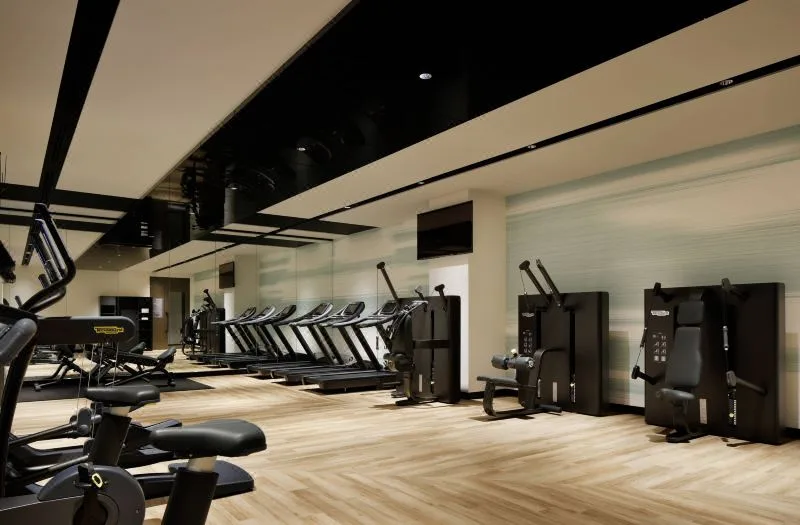
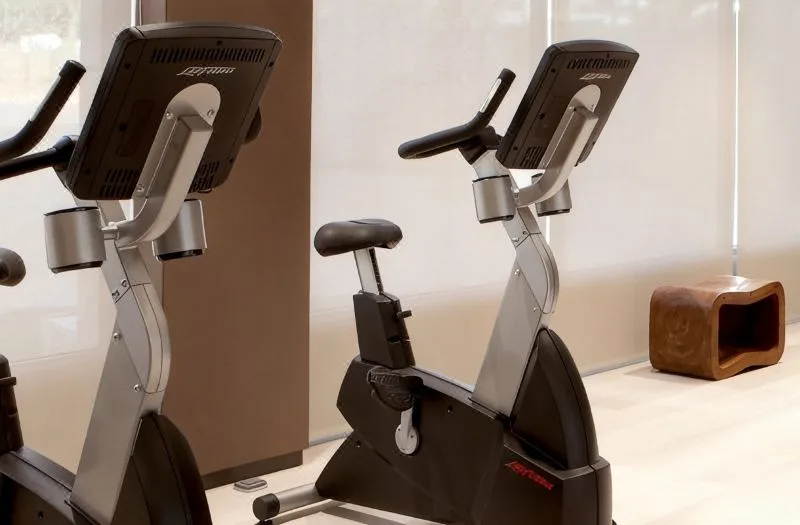
The facilities go one layer beyond a sleep-only hotel: the gym has treadmills, exercise bikes and weight machines, so a multi-night stay does not need an outside gym; the bar works for an evening sit-down, and free luggage storage, currency exchange, public Wi-Fi and a 24-hour front desk are all in the building. The meeting rooms charge a fee and the front desk can arrange a car service; pets are not allowed, while laundry service, a dryer and an iron are available, so a longer stay can ask the front desk about washing.
The front desk can do more than expected: the concierge answers directions and restaurant questions, the front-desk safe holds valuables, public spaces are non-smoking, and the building has a lift, so heavy luggage never goes up the stairs. Barrier-free access starts at the entrance, so a wheelchair or a stroller never needs a detour. These services are not listed at booking time; ask the front desk directly when you need them, with no need to search online, and the answer is one question away.
Short stays, longer stays and nearby outings
For a short stay, put Ginza’s shops and restaurants on the same day so you can drop purchases at the hotel instead of crossing town. Over several nights, the lounges and dining areas become more worthwhile; alternate days of shopping with trips to other Tokyo neighbourhoods. If you leave early every morning, be realistic about whether you will use those communal spaces before paying for them.
Check-in is from 15:00 and check-out is by 12:00. A morning in Tsukiji is under ten minutes on foot from the hotel; the day can run through Ginza shopping, an evening walk toward Nihonbashi or Tokyo International Forum, and a drink at the bar – a rhythm that holds up over several nights.
Three nights or more work best split by day: one day for Ginza shopping and restaurants, one toward Nihonbashi and the Imperial Palace, one toward Shiba Park and Tokyo Tower; further out, take a train from JR Hamamatsucho Station. Every evening comes back along the same Ginza street, so the plan never needs rethinking; rest in the room when tired, then eat downstairs. Evenings in Ginza stay lively: after the shops close, the restaurants and bar are still open, and the walk back is lit, so there is no need to hurry home.
Pros and cons at a glance
Pros
- About three minutes on foot from Higashi-ginza Exit A1 and five from Ginza Exit A3, with Ginza shopping and dining all in walking range.
- Restaurant, bar and gym all on site, with AC Kitchen open Monday to Sunday 06:30 to 23:00, Spanish in flavour, buffet and a la carte.
- A 24-hour front desk, free luggage storage, check-in from 15:00 and check-out by 12:00, so the schedule stays flexible.
- A European buffet breakfast at 5,060 yen per adult, a good fit for a slow sit-down meal before Ginza.
- The gym has treadmills, exercise bikes and weight machines, so a longer stay needs no outside gym.
- Tsukiji Outer Market 420 metres away and the Ginza Art Aquarium 360 metres away, giving the morning and the evening somewhere to walk.
Cons
- No room type allows an extra bed or a crib, so a family with a small child must settle the headcount and the cost in advance.
- Breakfast at 5,060 yen per adult is not cheap, so days without the buffet need another plan.
- The window outlook varies by room, and some rooms face neighbouring building equipment, so a view-sensitive stay should ask about room orientation first.
- A bathtub depends on the room type, and some rooms have only a shower, so a soak needs a category that explicitly includes a bathtub.
- Meeting rooms charge a fee and pets are not allowed, so a pet stay or a meeting needs another plan.
Information checked: 23 November 2026.