
TOKYO / CHUO
Section L Tsukiji
Section L Tsukiji
Longer apartment stays in Tsukiji: dining tables, kitchens and laundry
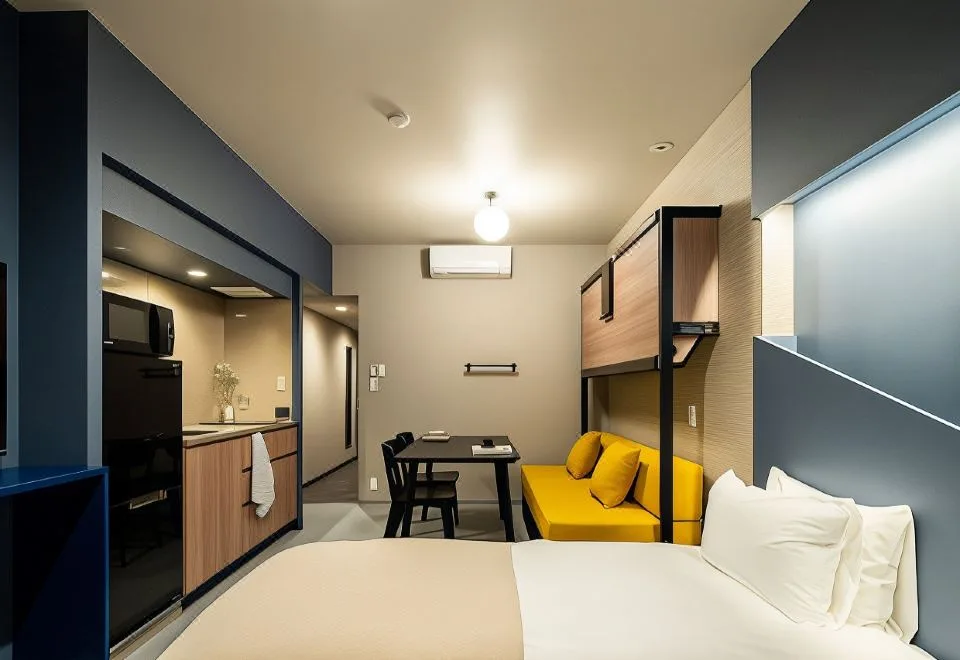
Is this hotel right for my trip?
Section L Tsukiji suits friends and families who want a more home-like stay. A dining table, kitchen and washer-dryer make it easy to handle groceries and clothes during the trip. If you expect full daily housekeeping and hotel breakfast, however, you should first understand how serviced apartments work.
There are only 25 apartments here, from 30 to 55 square metres, with sleeping space for one to six guests. I treat it as a base for living in Tsukiji: eat at the market during the day, cook in the apartment at night, and wear freshly washed clothes the next morning — easier than changing hotels and hunting for a launderette every day.
The biggest difference from a hotel is that the day runs on my own schedule: buy food at the market in the morning, walk Ginza at midday, cook in the apartment in the evening, and wash clothes every two days instead of stuffing the case full. With a kitchen, washer and dryer in the room, five or seven nights feel comfortable, and a family with children can keep its own rhythm.
Access: walking light versus carrying luggage
The official guide lists about six minutes from Tsukiji Station, ten from Higashi-ginza and thirteen from Shintomicho, and six minutes from Tsukiji-shijo on the Oedo Line. With large cases, choose a station that matches your train, take a lift exit to street level and then walk to 6-26-5 Tsukiji. Save a market visit until after you have dropped off your bags.
With luggage I use Higashi-ginza: the Hibiya Line lift route runs from the Central Gate to Exit 3, and Exit A1 also has a street lift. At Shintomicho, the Exit 1 lift runs only until 11 pm, so I keep that in mind if I arrive late at night. Walking times for all four stations are on the official access page.
At Tsukiji Station, lifts run from the Tsukiji Honganji-side gates toward exits 1 and 2, and from the Irifunebashi-side gates toward Exit 3b.Station accessibility facilities
From Narita Airport I take the Keisei Narita Skyaccess to Higashi-ginza, about one hour and twenty-four minutes, or a taxi in about an hour. From Haneda Airport the Keikyu Airport Line reaches Higashi-ginza in about forty-two minutes, or a taxi in about twenty-five. The airport trains run straight to Higashi-ginza with no change, so I stay on until there and walk the last ten minutes with my cases.
The four stations sit on four lines: Tsukiji is on the Hibiya Line, Higashi-ginza on the Hibiya and Asakusa lines, Shintomicho on the Yurakucho Line, and Tsukiji-shijo on the Oedo Line. Coming from Ginza or Hibiya, Tsukiji or Higashi-ginza is the natural stop; from Shinjuku the Oedo Line to Tsukiji-shijo works, and with luggage I get off at whichever station has a lift exit.
| Item | Hotel details |
|---|---|
| Address | 6-26-5 Tsukiji, Chuo-ku, Tokyo 104-0045, Japan |
| Japanese name | Section L Tsukiji (セクションL 築地) |
| Check-in / check-out | Check-in 15:00–24:00 / check-out by 11:00 |
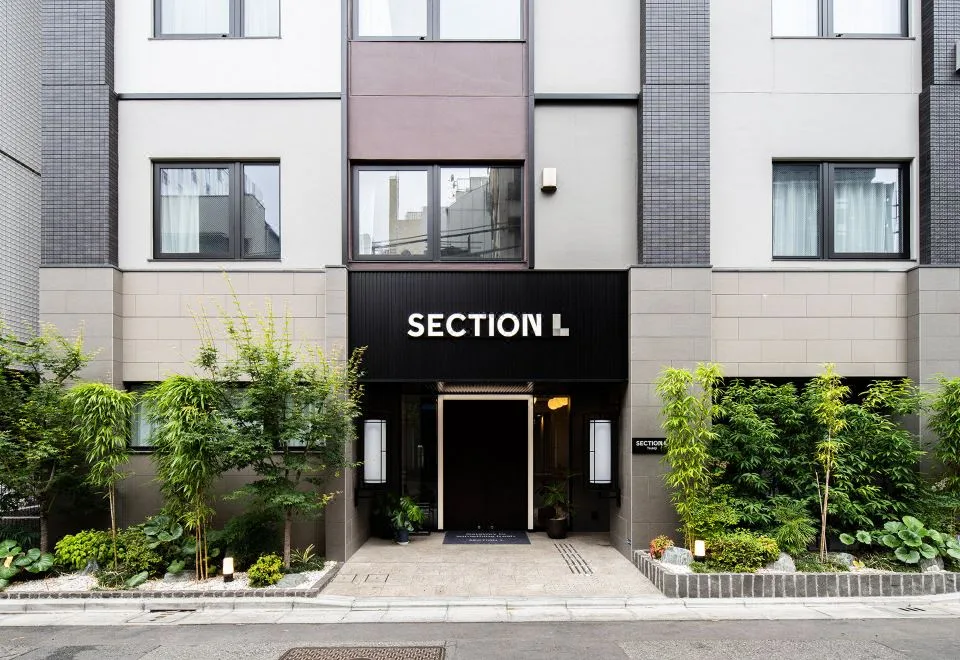
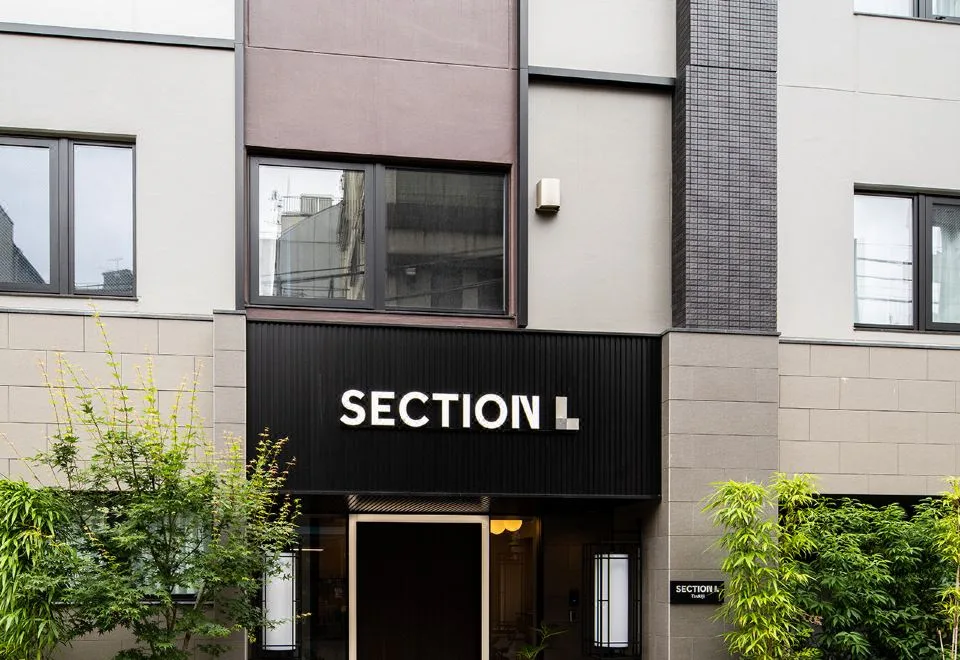
Choosing a room: beds, living space and bathrooms
Compare beds, bathroom use and luggage space for everyone travelling together.room types and facilitiescan help interpret the table below. Room names on the booking platform may differ, so confirm the English room type when booking.
| Room / layout | Size and amenities | How to choose |
|---|---|---|
| Premier One-Bedroom Apartment | 55 sqm; 2 single beds, 2 futons, 2 sofa beds; up to 6 guests | Separate sleeping areas and a dining table for six |
| Sauna Suite | 55 sqm; private sauna and cold-water setup, double-sink bathroom and bathtub; up to 4 guests | Want the sauna in the evening plan |
| Premier Family Studio Apartment | 46 sqm; 2 single beds, 2 futons, 1 sofa bed; up to 5 guests | A family of five on an upper floor with a market view |
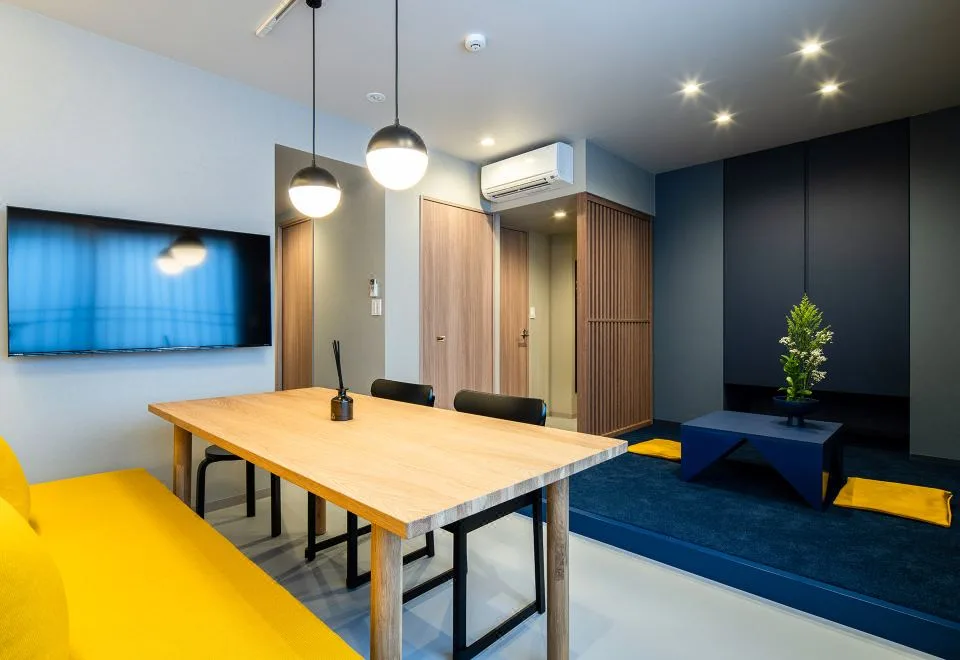
| Executive Studio Apartment | 37 sqm; 2 single beds, 2 futons; up to 4 guests | Four guests who want a dining table and a floor-seating area by the television |
| Deluxe Studio Apartment – Quadruple | 32 sqm; 2 single beds, 1 convertible bunk sofa bed, 4-person dining table; up to 4 guests | Want a street-view room over Tsukiji Outer Market |
| Deluxe Studio Apartment – Triple | 30 sqm; 2 single beds, 1 sofa bed; up to 3 guests | A small family of three who want a simple stay |
| Deluxe Studio Apartment – Ground Floor | 31 sqm; 2 single beds, 1 convertible bunk sofa bed; up to 4 guests | Want step-free access with the market at the doorstep |
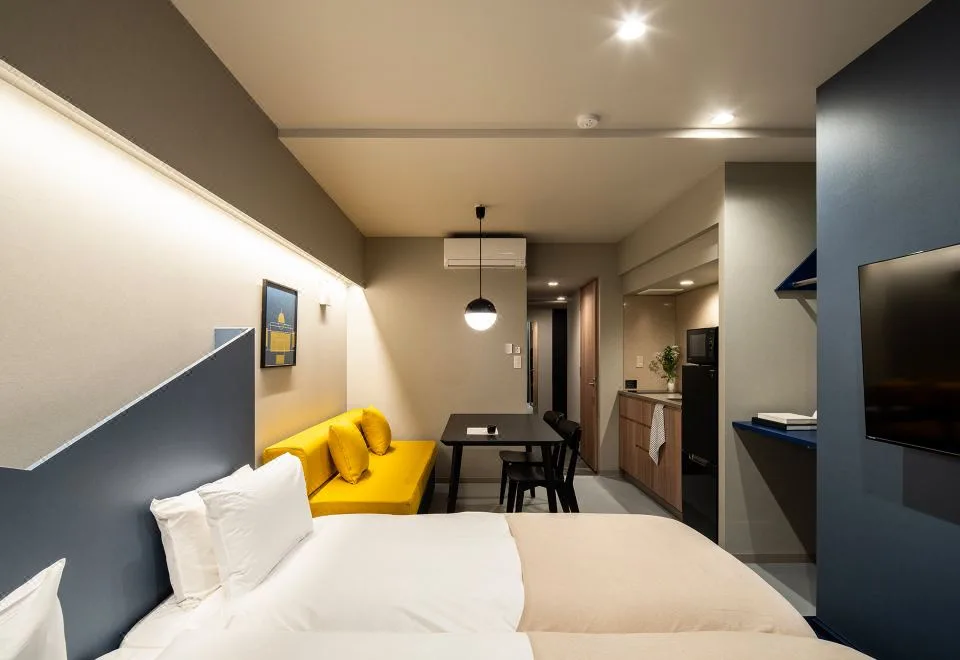
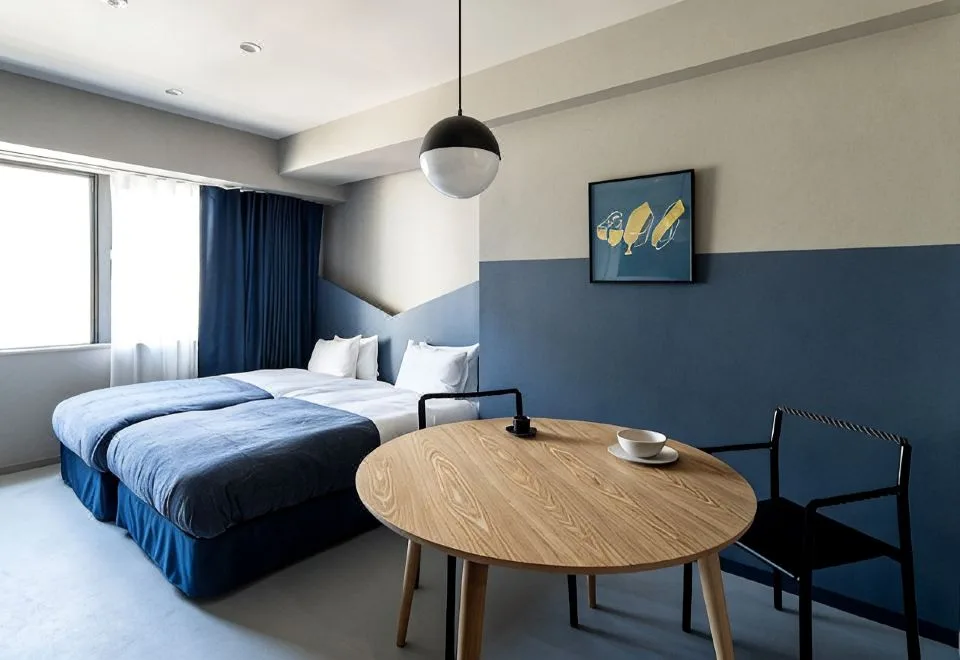
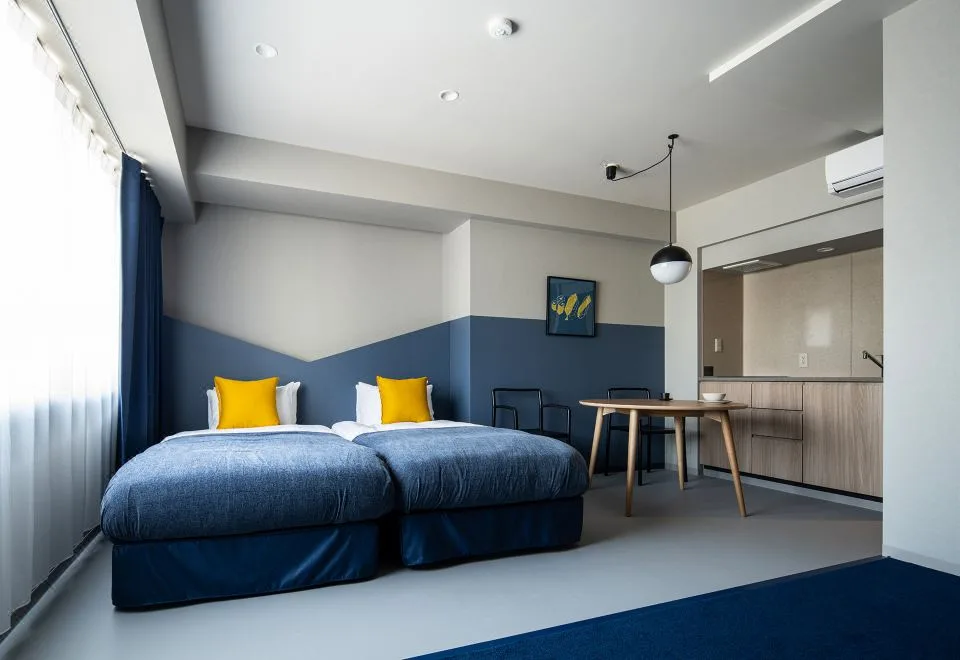
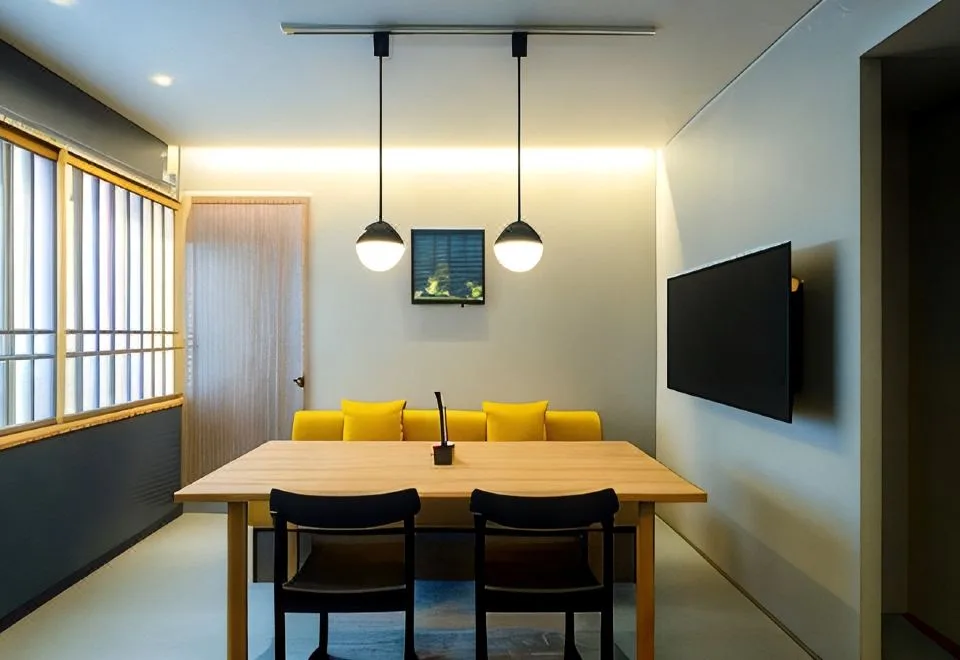
Photos show various beds, sofas and dining arrangements. For two travellers, decide whether separate beds matter; with three or more, confirm how much floor space remains for the table and luggage after extra beds are opened.
Three large suitcases fit in the room I stayed in, but that does not hold for every apartment type. I compare furniture positions in photographs and factor in the actual group size, cases and beds.
The building holds 25 apartments in seven layouts from 30 to 55 square metres. The Sauna Suite is 55 square metres for four guests, with a private sauna and cold-water setup. The Premier One-Bedroom Apartment is also 55 square metres and sleeps six from an upper floor with a partial view over Tsukiji Outer Market. The Premier Family Studio is 46 square metres for five, the Executive Studio 37 square metres for four, and the Deluxe studios run from 30 to 32 square metres for three or four guests, including a ground-floor apartment with step-free access.
If I want the sauna in my evenings I choose the Sauna Suite, with a double-sink bathroom and a bathtub to soak in after steaming. For a larger group I choose the Premier One-Bedroom: two single beds in a separate bedroom, two sofa beds and two futons, and a dining table big enough for six to eat together. The 30-square-metre triple and 32-square-metre quadruple suit a small family, with the television set right in front of the bedding for a quiet night in.
When I choose a room I count sleeping places first, then floor area: single beds, sofa beds and futons together must cover the group, with room to walk past the table once the extra beds are open. The Premier apartments have a large dining table and a carpeted area where children can play, and the Executive Studio has a floor-seating zone in front of the television for evenings together.
Sofa beds and futons are part of the room, so the maximum occupancy on each layout tells me whether the group fits, with no extra bed to request. In the twin rooms the two single beds sit in a separate bedroom or bed area, while the sofa beds and futons go in the living area and open up at night. The ground-floor apartment opens straight from street level, so large cases never go up or down stairs.
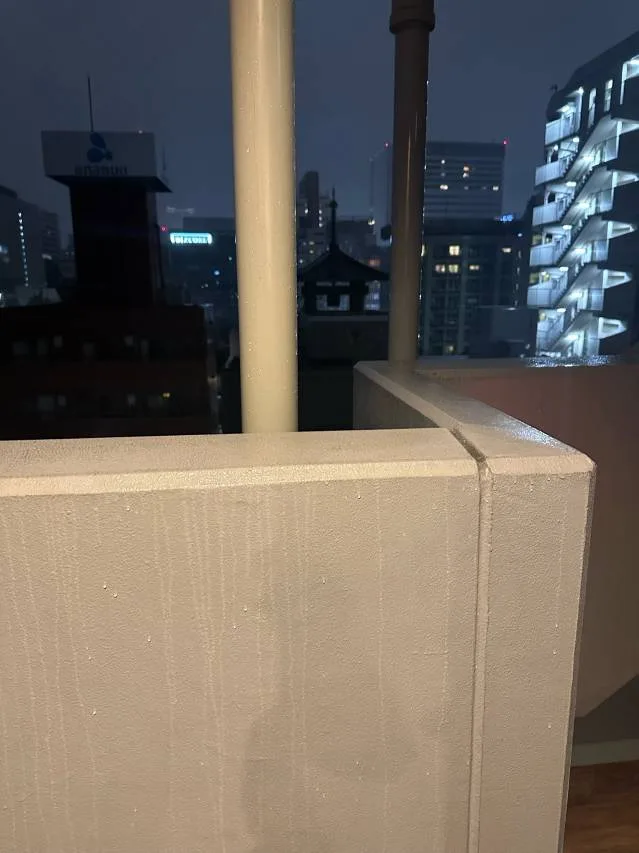
The Premier apartments on the upper floors look out over part of Tsukiji Outer Market, so the market is the first thing I see in the morning, while the Deluxe quadruple is a street-view room with the market outside the door. For a quieter stay I take an upper floor; for stepping straight into the market I take the ground floor or a street-view room — each has its own advantage.
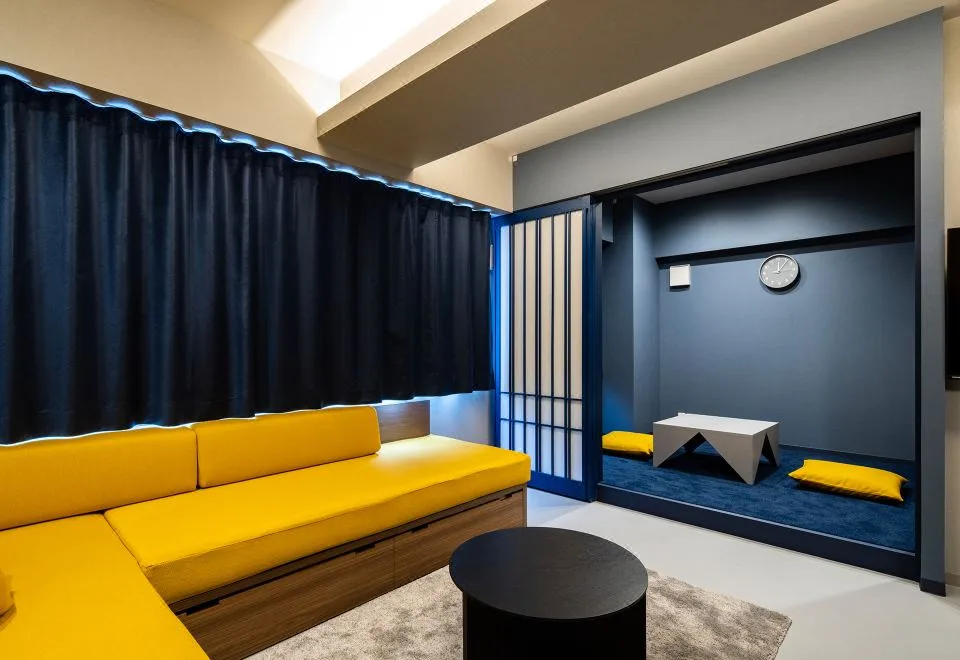
Room photos: how the space works in daily use
Guest photos show everyday use, especially the space around beds, desks and bathrooms. Photos may show different room types; judge your booking by its actual layout.
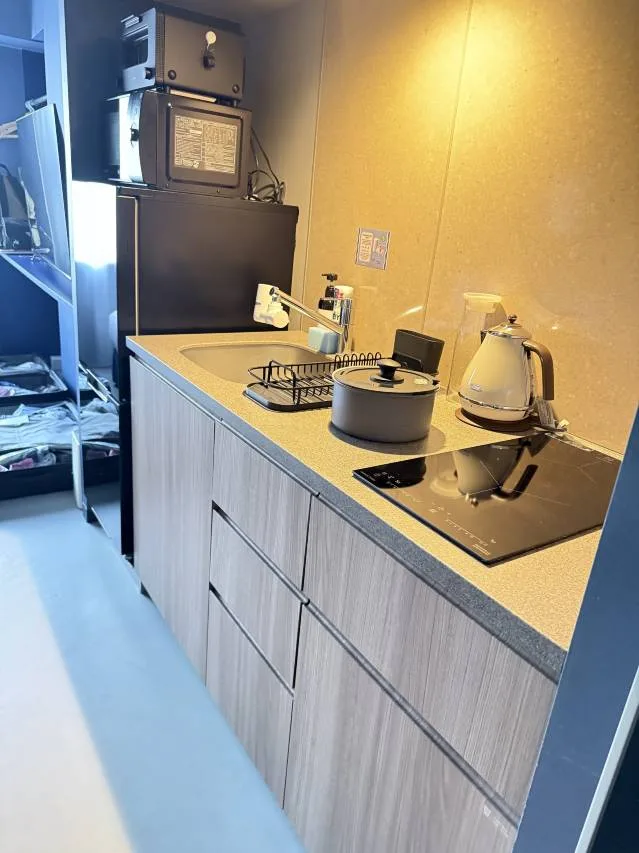
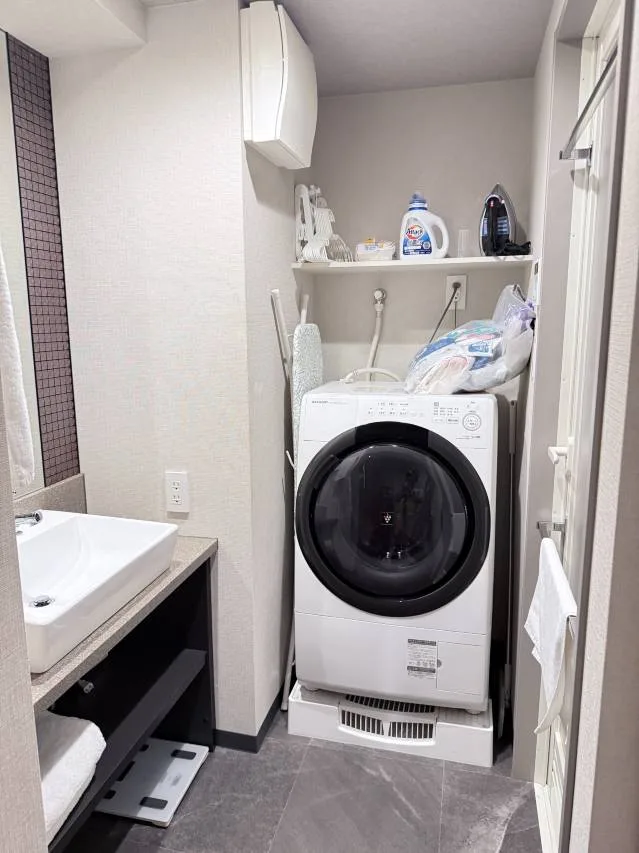
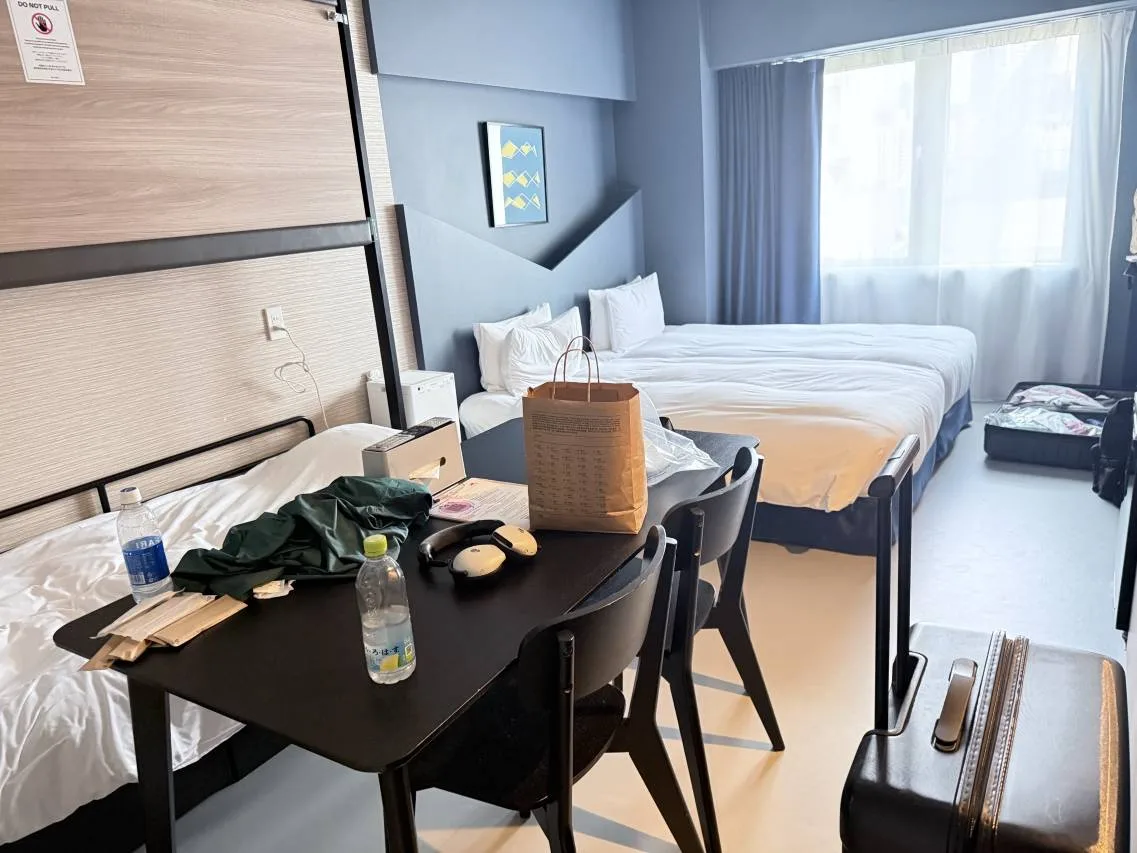
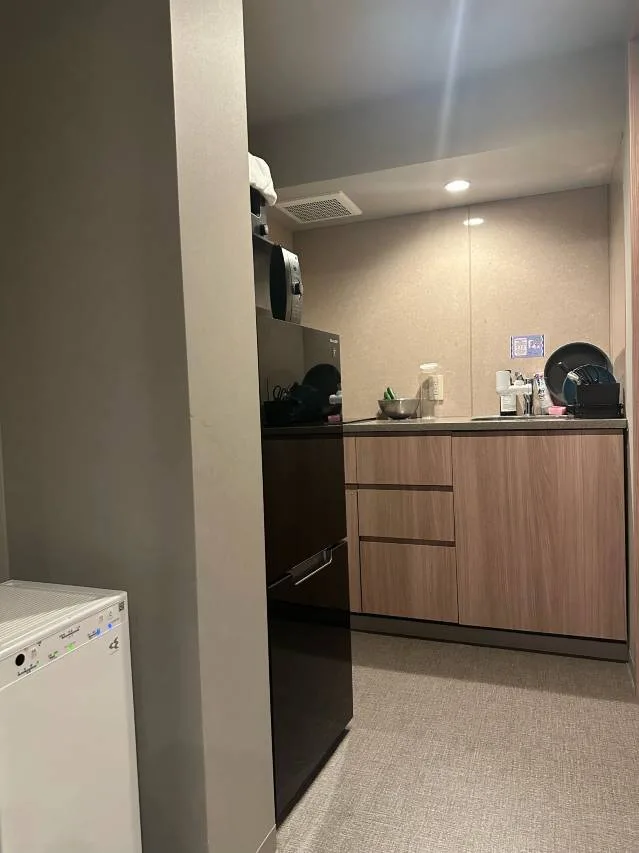
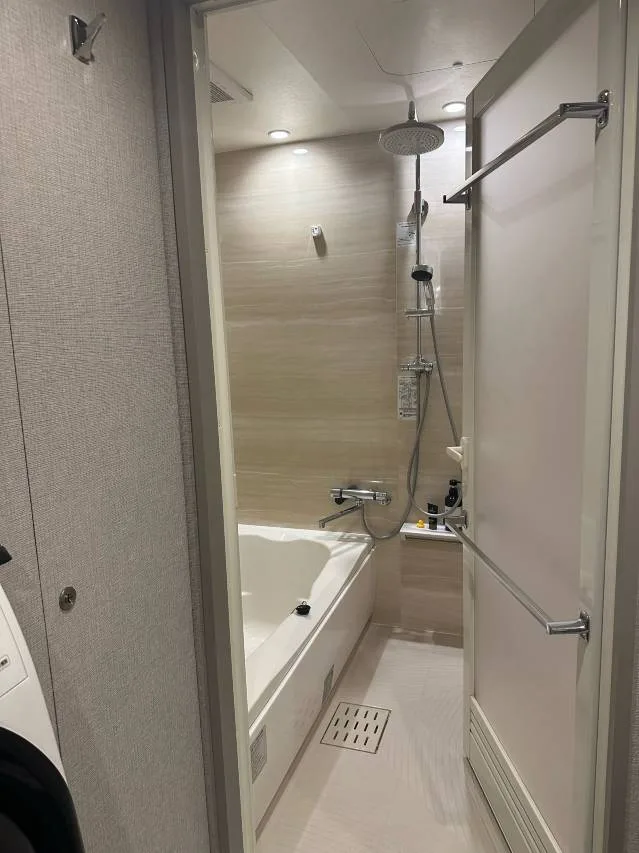
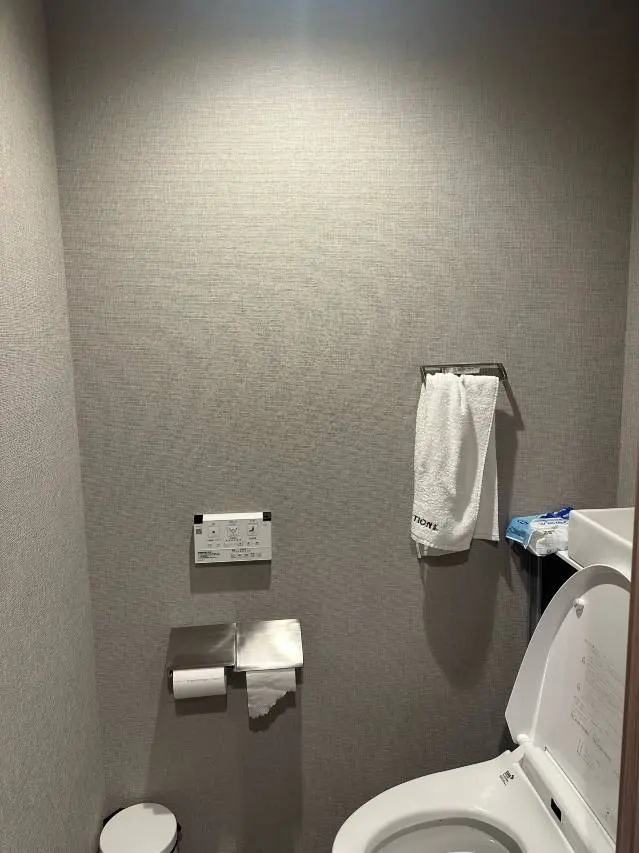
The photographs show the kitchen, washer, shower room and separate toilet as they are actually used: a preparation area with room for a chopping board and pans, the washer next to the washbasin, and the dining table beside the bedroom, so breakfast is only a few steps away in the morning. On my first day I learn where the kitchen and the washer-dryer are, and after that shopping, cooking and laundry fall into place.
The dining table is the most-used place in the apartment: breakfast in the morning, bags dropped off at midday, a home-cooked dinner in the evening, all at the same table. The bedroom sits apart from the living area, so one person can sleep early while another watches television without disturbing them, and the separate toilet and shower room mean nobody queues in the morning rush.
Amenities and services you will actually use
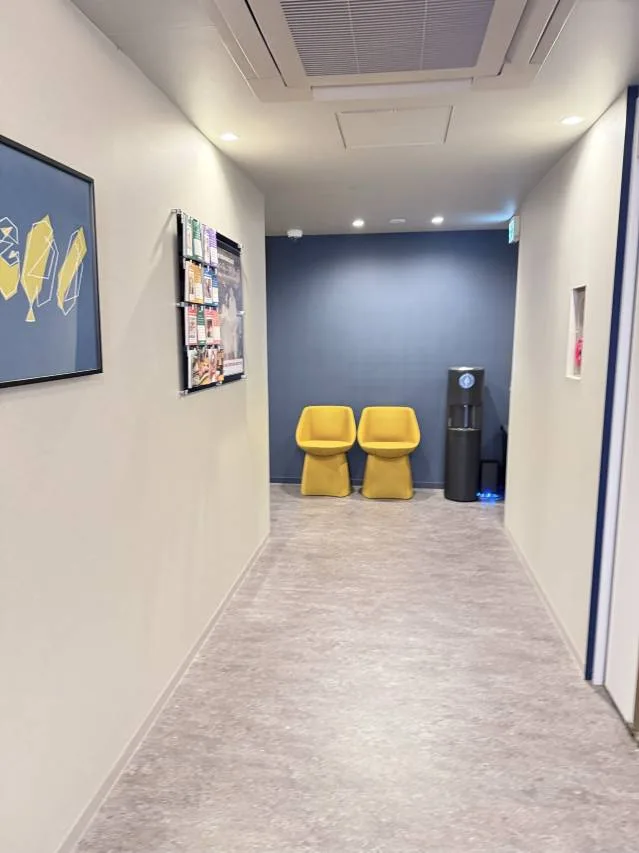
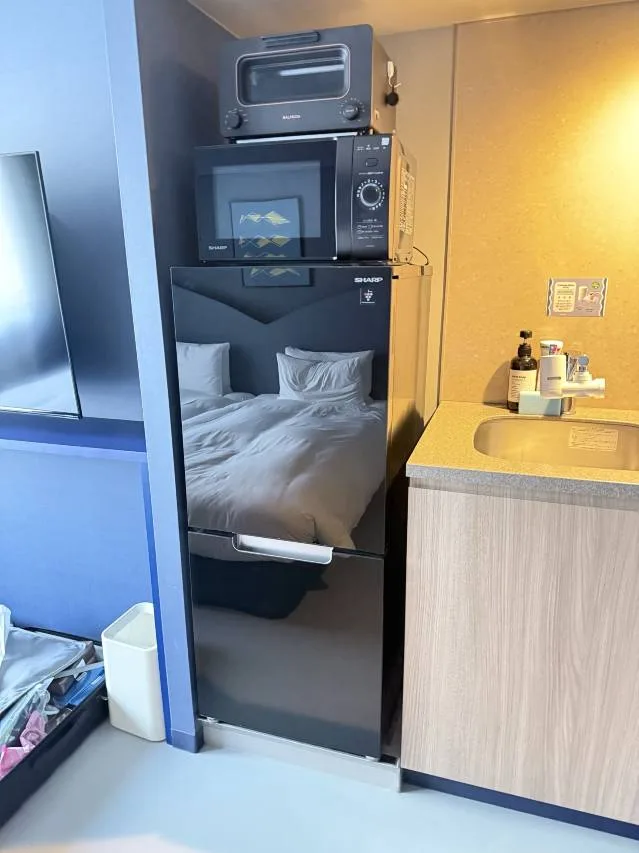
The kitchen and washer-dryer make it easier to pack less clothing and cook simple meals on longer stays. Complete required registration before arrival and confirm waste sorting, housekeeping and entry instructions so you can relax once you get there.
The in-room washer and dryer are what make a longer stay work: I wash clothes every couple of days instead of packing a whole case of outfits, with laundry supplies provided and the dryer in the same area. The kitchen has a water purifier, free coffee and tea are mine to make, the bathtub is there for the evening, and the building has free Wi-Fi in public areas, a lift and a fresh-air system.
Check-in runs from 15:00 to 24:00 and check-out is by 11:00, with the front desk staffed around the clock and bilingual staff on site. Self check-in needs a door code from the hotel first, and if I expect to arrive after midnight on the morning after check-in day I contact the hotel at least a day ahead with identification. Quiet hours run from 22:00 to 08:00, no deposit is required, pets are not allowed, and the guest checking in must be at least 18.
Safety equipment includes fire alarms, smoke detectors, extinguishers and CCTV in public areas, with a first-aid kit on hand, and public areas are non-smoking with non-smoking floors. Luggage storage is free and the front desk can call a car, so I drop bags before check-in and collect them after check-out instead of dragging cases through the market.
Should you add breakfast? Think about your morning
The property does not provide breakfast. Eating out in Tsukiji or preparing food in the room both work well. Early risers can visit the market; for children who sleep longer, buy breakfast the evening before and eat together at the dining table.
In the morning I either head out early to the market, a few minutes on foot, for sushi, tamagoyaki and coffee, or sleep in and eat what I bought the evening before at the dining table. The kitchen lets me cook simply with market fish and vegetables, and the fridge holds snacks from the market.
The free coffee and tea in the room are ready in the morning, with bread or market snacks bought the night before, eaten slowly at the dining table. For something hot I cook simply in the kitchen, with market fish and eggs eaten fresh, which beats queueing for a table outside, and over several nights I stop worrying about where breakfast comes from each morning.
Nearby walks: make time for the neighbourhood
Tsukiji Outer Market, Tsukiji Honganji Temple and Ginza can make a half-day walk. Bringing market purchases back to the fridge or enjoying snacks at the apartment is a practical advantage over a very small hotel room.
Tsukiji Honganji Temple stands beside the market, so I walk there after the morning market, and Ginza is only 540 metres away — market, temple and Ginza make a half-day walk. Nihonbashi is about 1.8 kilometres, an easy walk or one stop by subway.
I put the market first on my opening morning: breakfast first, then a slow look around, purchases carried back to the fridge, Ginza after lunch, and a simple dinner cooked in the apartment in the evening. That is the point of staying in an apartment here.
Ginza is 540 metres away, under ten minutes on foot to department stores and cafes, so I eat lunch in Ginza, return to the market in the afternoon and cook in the apartment in the evening, with no train rides in between. Nihonbashi is 1.8 kilometres, past the Nihonbashi River, and a morning there works for the old merchant quarter, with one subway stop back.
Short stays, longer stays and my recommendation
You can enjoy the space in one night, but a longer stay better rewards the apartment facilities. Confirm daily tidying and replenishment arrangements with staff at check-in rather than discovering a mismatch after a full day out.
If a longer Tsukiji apartment stay is my priority, Section L goes on my shortlist. Before booking, confirm guest count, the exact suite, extra beds, no-breakfast arrangement and check-in procedure.
Travelling with children, I confirm guest numbers and extra-bed charges first: children of all ages are welcome, every room type can take an extra bed or a crib, children aged two and under cost ¥4,000 per night with a free crib, children aged three and over cost ¥4,000 per night, and extra-bed charges are paid at the hotel. Check-in runs to 24:00 with the front desk staffed around the clock, so a late arrival still finds someone there.
After booking, the hotel gets in touch, and before arrival I complete registration and receive the door code, then let myself in with the code on the day while the front desk is there if I need help. I have identification ready for registration, and for a late-night arrival I write ahead instead of leaving it to the day.
Pros and cons at a glance
Pros
- Large apartments from 55 square metres, with a full kitchen and an in-room washer and dryer, so a longer stay needs no launderette trips.
- The Sauna Suite has a private sauna and cold-water setup, with a double-sink bathroom and a bathtub to soak in after steaming.
- Six minutes on foot from Tsukiji Station and 470 metres from Tsukiji Outer Market, so the morning market is right outside.
- The front desk is staffed around the clock with bilingual staff on site, and self check-in works with a door code from the hotel.
- Free luggage storage, free Wi-Fi in public areas, and children of all ages are welcome.
Cons
- No breakfast is served, so mornings mean going out to buy food or buying it the night before.
- Housekeeping and amenity top-ups do not work like a conventional hotel, so I ask how they work at check-in.
- Self check-in needs a door code from the hotel first, and without the code I cannot get in.
- The Shintomicho Exit 1 lift runs only until 11 pm, so a late-night arrival needs a different plan.
- All four stations are a six- to thirteen-minute walk, so with luggage I pick a lift exit first.
Information checked: 23 November 2026