
Home / Japan / Tokyo / Chuo Ward hotels
TOKYO / CHUO
Ginza Capital Hotel Akane
Ginza Capital Hotel Akane
Ginza Capital Hotel Akane suits travellers who want to combine early mornings in Tsukiji, subway sightseeing and straightforward accommodation. Despite ‘Ginza’ in the name, everyday journeys centre more on Tsukiji and Shintomicho. If I expected to carry shopping bags back from Ginza each day, I would check that walking distance carefully before deciding.
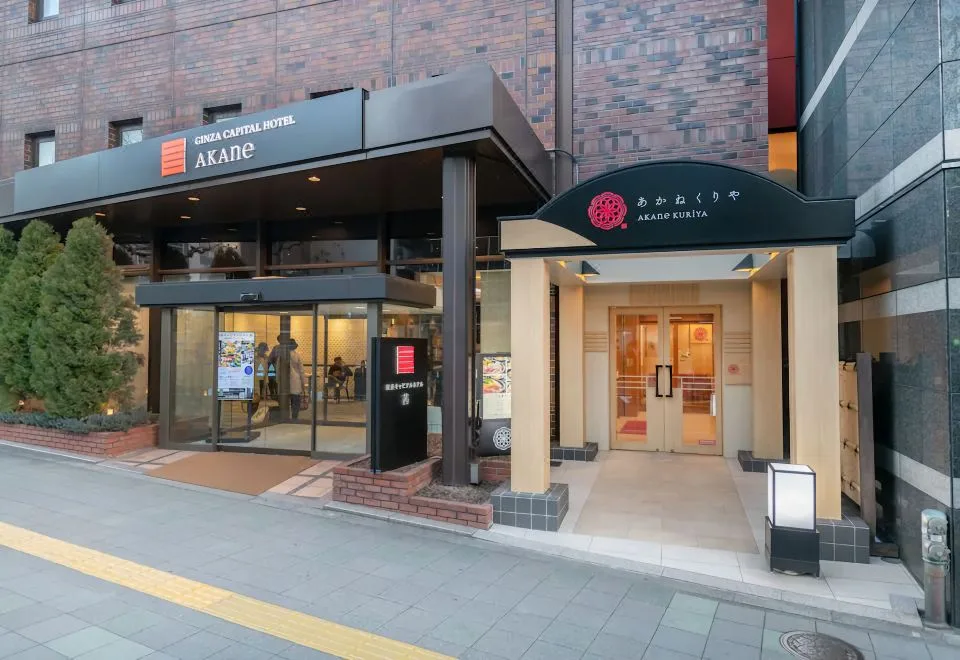
Reasons to stay and trade-offs to consider
Reasons to choose it
- Tsukiji and Shintomicho stations offer both Hibiya and Yurakucho Line options for different itineraries.
- Tsukiji Market and Tsukiji Honganji fit easily into a morning walk.
- The hotel serves Japanese and Western breakfast, with seafood dishes as the highlight.
Trade-offs
- Rooms are compact; check the exact layout for two large suitcases or three guests.
- Ginza’s main shopping street still requires a walk, especially noticeable when returning with bags in the rain.
- The laundry arrangement is not immediately obvious; ask reception before a longer stay.
Rooms and luggage space: what to choose
The official Twin measures 15.4 m² and has 97 × 195 cm beds for one or two guests; the Triple is 20 m², with beds of the same dimensions, for up to three. A Twin works for two people who want separate beds, but those beds still take up floor space. For three, look at the Triple instead of treating a 15.4 m² room as adequate for everyone.
Unpack large cases one at a time, keeping the route from the door to the bathroom clear. If you need wider beds, compare other room categories.
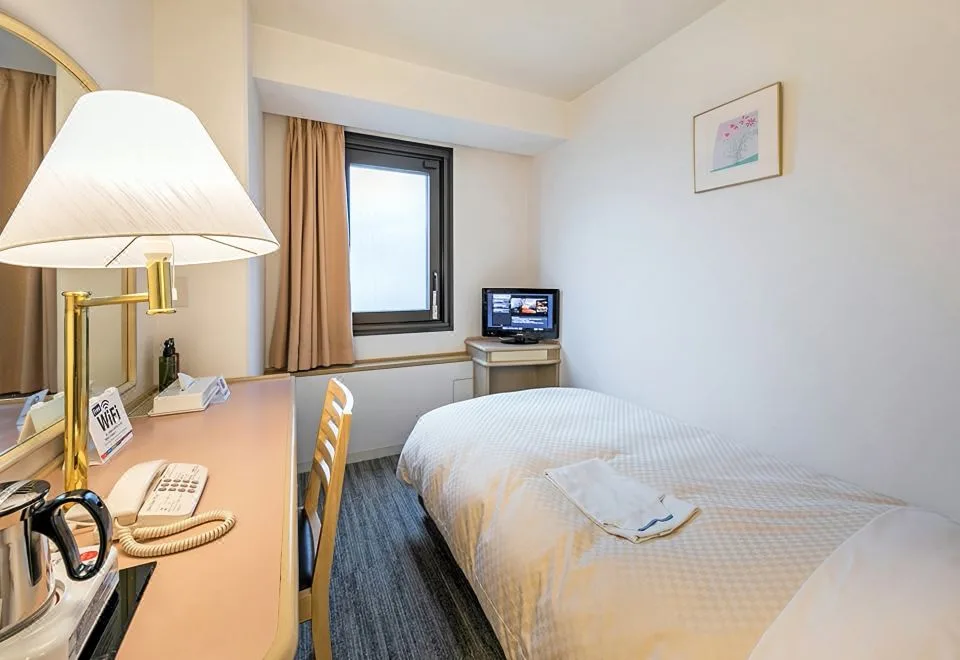
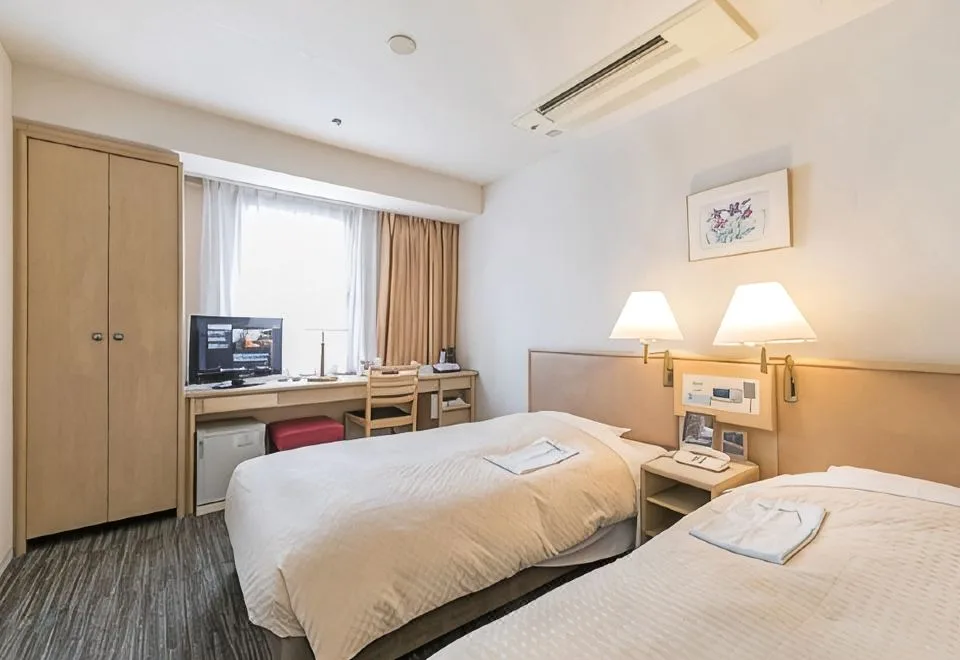
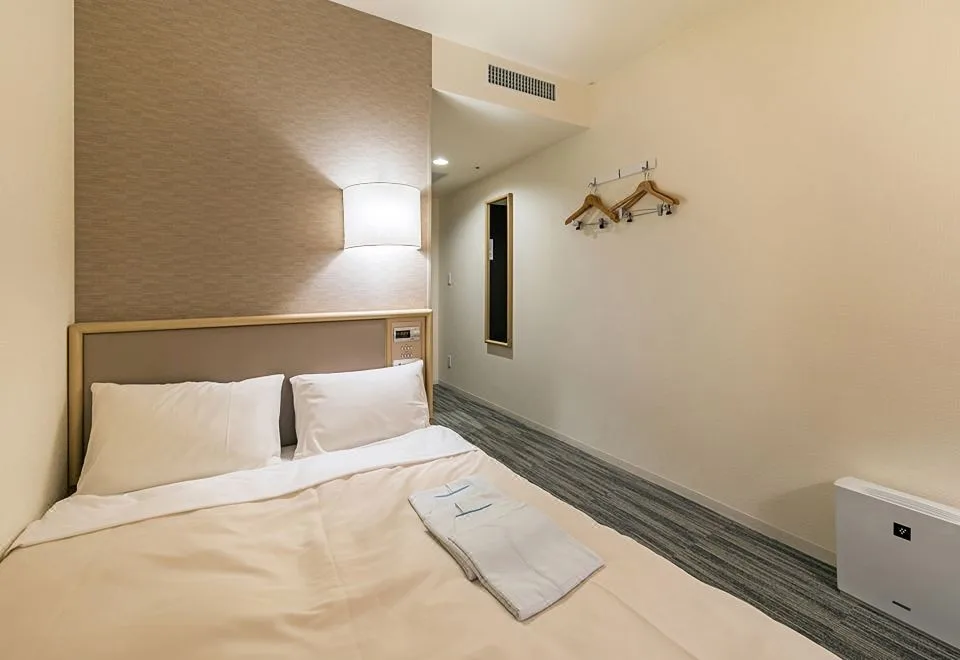
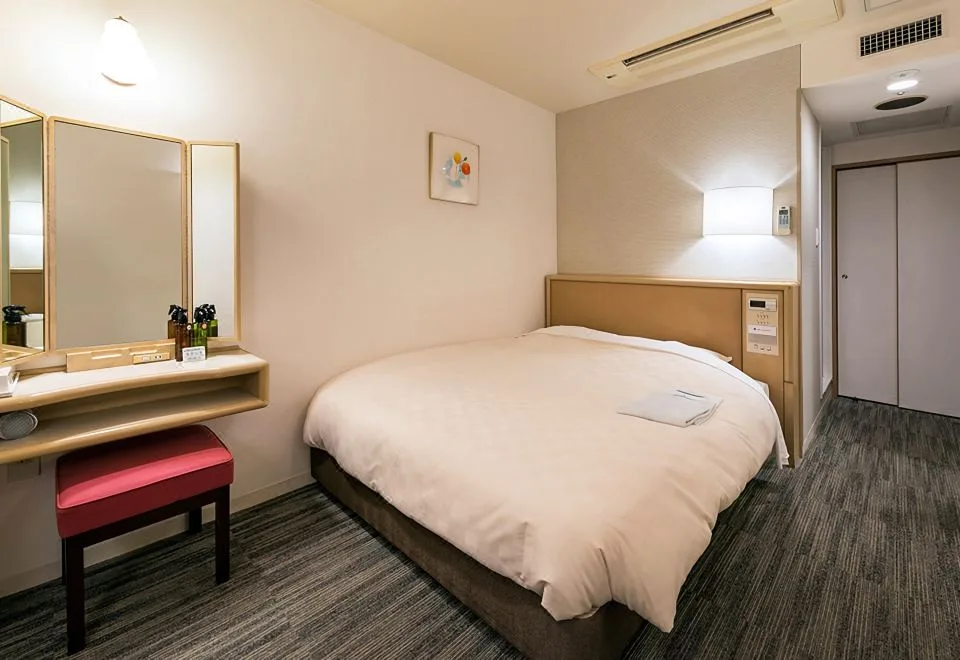
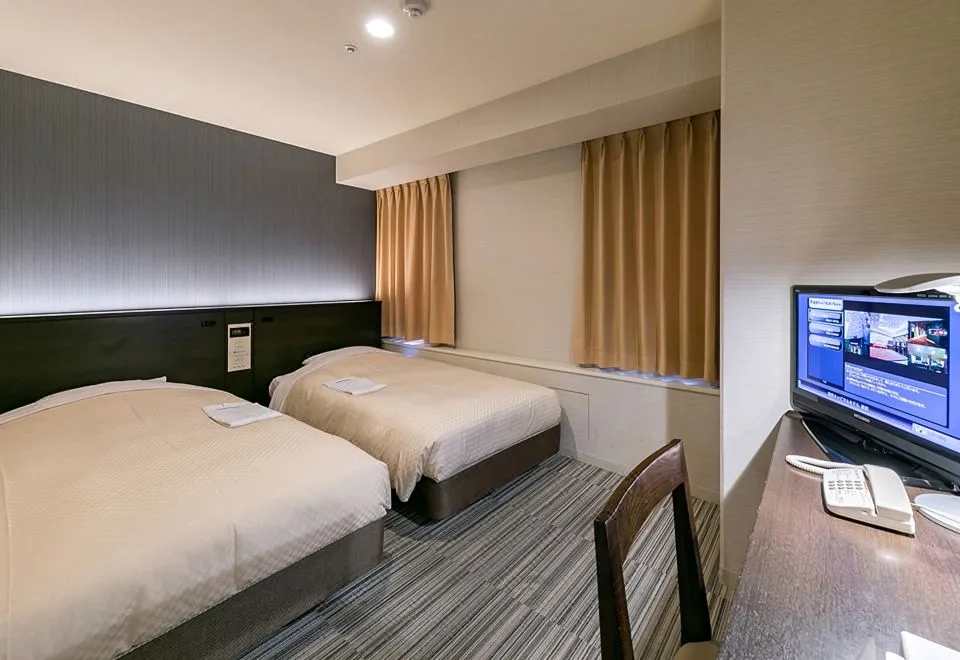
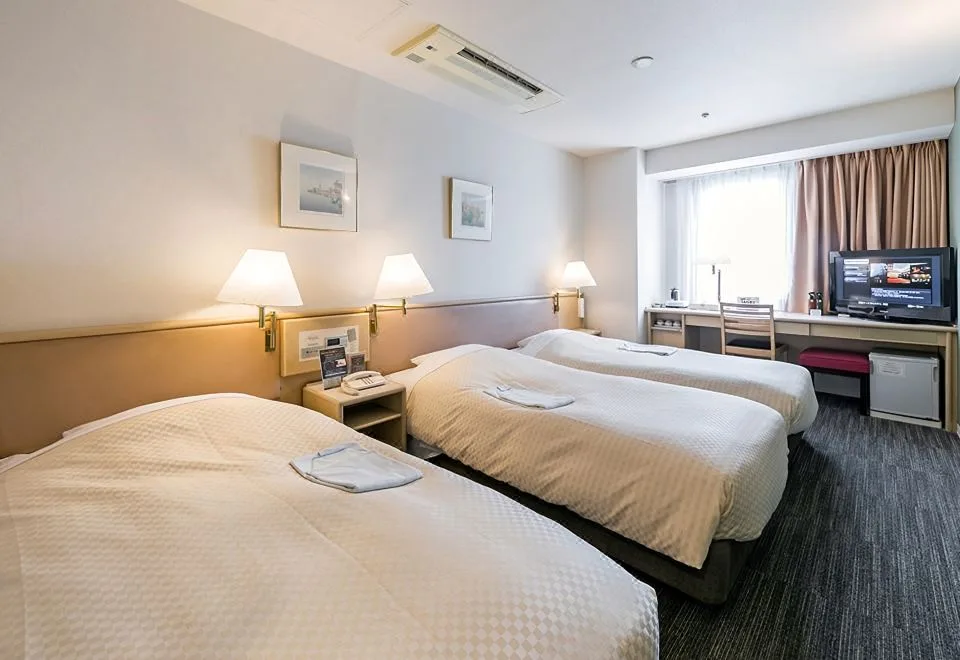
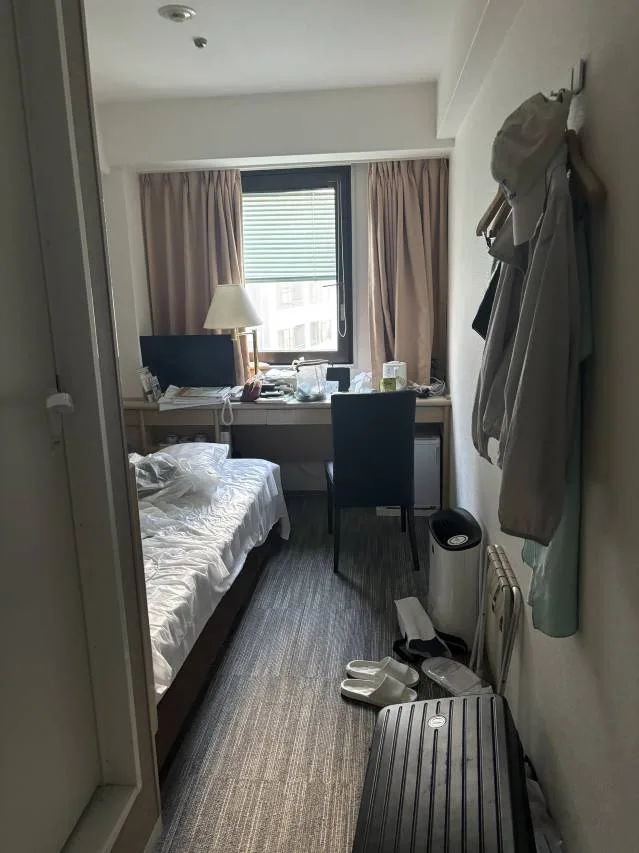
Beyond the Twin and Triple, the room list is wider than I first expected. The Single is 10.8 m² with a 110 cm bed, and there are 160 of them; the Semi-double is 13.3 m² with a 130 cm bed, with 50 rooms. For a wider bed, look at the Superior Twin: the same 15.4 m² as the standard Twin, but the bed stretches to 206 cm. There are only 10 Double rooms, and one barrier-free room for up to four guests — ask reception first if you need it.
Before choosing, check the bed rules with reception: no room takes an extra bed, and no room takes a crib. Children of all ages are welcome, but a child without an extra bed may still cost extra, so count every person when you book. The guest checking in must be at least 18. Two people with a large case each will be more comfortable in a Twin; choose the room by the number of people, and do not try to squeeze a third bed into a Twin.
The floor plan is worth knowing before you arrive: the first floor has reception, the lobby and the restaurant, the second floor has banquet rooms and guest rooms, and floors three to eleven are guest rooms; the fourth floor has a vending machine, so a late-night drink does not mean going downstairs. There are four banquet rooms — Cattleya at 117 m², Rose at 70 m², Cosmos at 37 m² and Pansy at 25 m² — so there is a room for any group size; ask reception if you are planning a small gathering. Of the 301 rooms, 160 are Singles, more than half, so a solo stay is easy to book.
Breakfast: plan around your mornings
The hotel’s breakfast restaurant offers a Japanese-Western buffet with Tsukiji-inspired dishes; the photos show seafood rice bowls and various small sides. If you plan to explore the market in the morning, leave a day or two to eat out. When taking an early train to another area, having breakfast at the hotel before leaving may be easier. Seafood options and dishes change, so the photographed selection is not guaranteed each day.
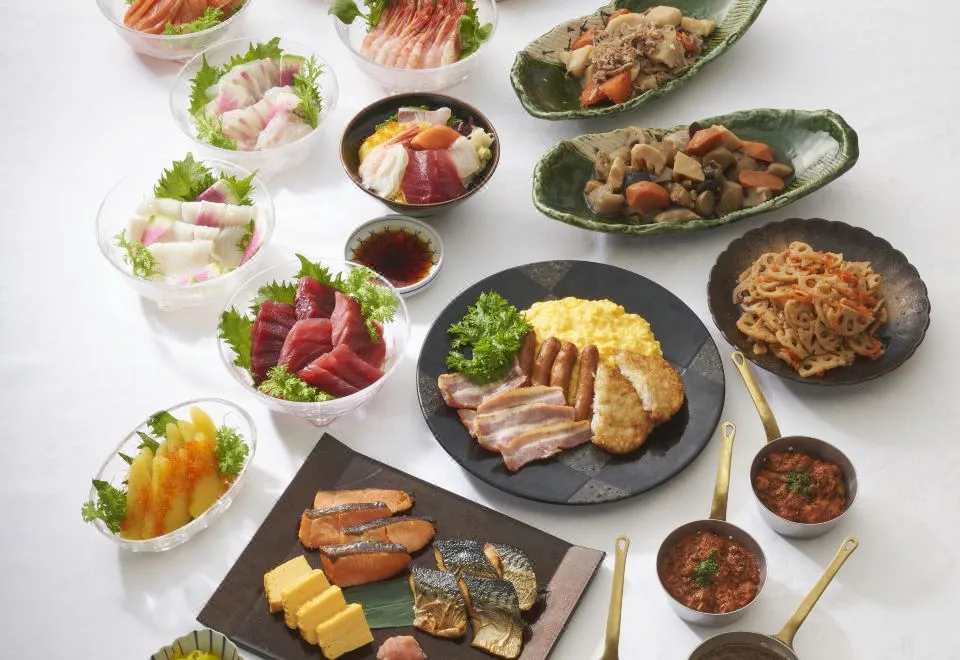
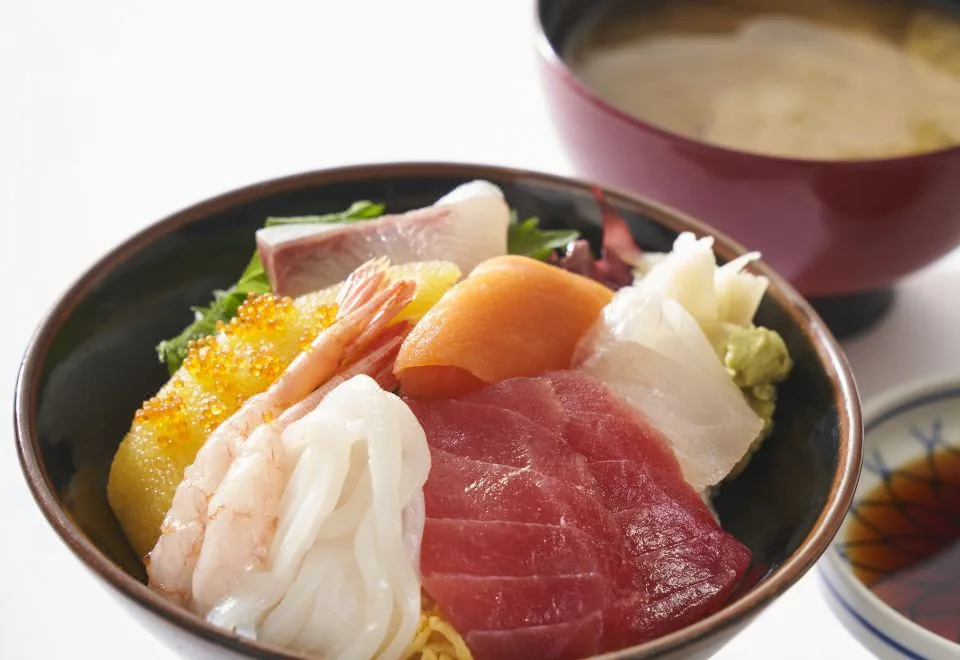
Breakfast is served on the first floor at Akane Kuriya, a Japanese-Western buffet from 6:30, last entry 9:30, closing at 10:00. Adults and guests aged 17 and under both pay 2,200 yen per person. The seafood rice bowl in the photo is a real dish — tuna, salmon, sweet shrimp, squid and fish roe, with a bowl of miso soup beside it — and the overhead spread shows sashimi, grilled salmon, rolled omelette, scrambled eggs, sausages and small sides, with Japanese dishes taking the larger share.
The same breakfast ticket also works at the main building, a one- or two-minute walk away, where breakfast is a set Japanese or Western meal instead of a buffet. On weekdays Akane Kuriya also serves lunch from 11:30, last order 14:00; lunch is closed on Saturdays, Sundays and public holidays. If you came for Tsukiji mornings, I keep breakfast in the hotel and save the market meal for the walk itself, so you get both.
Akane Kuriya is on the first floor with only 56 seats, which is not many for a 301-room hotel; I avoid the busiest stretch around 8 o’clock and eat a little earlier or later instead. Breakfast starts at 6:30, so come early to beat the crowd and take your time.
Location, transport and luggage
The source lists Shintomicho Station about 100 metres away, roughly a two-minute walk; Tsukiji Station is another option. The two stations serve different routes, so choose according to where you are going. With suitcases, check the appropriate lift exits; a regular exit and an accessible lift route are not automatically the same, and reaching street level from the platform also takes time.
At Shintomicho, the Chuo Ward Office-side gates provide access to a dedicated lift exit. At Tsukiji, the official route uses the Irifunebashi-side gates toward lift exit 3b. Choose based on your train line rather than carrying luggage up the closest staircase shown on a map.
Address:3-1-5 Tsukiji, Chuo-ku, Tokyo 104-0045, Japan
With suitcases, I do not use exit 4 at Shintomicho — it has no lift; exit 1 has a street lift. From Tsukiji, the Honganji-side gates also have lifts to exits 1 and 2, in addition to exit 3b. The Outer Market is 510 metres away, the Ginza area 470 metres, and Nihonbashi 1.2 km — all within walking distance.
Ginza Station is another option: the A7 exit on the Mitsukoshi side has a lift, while B2 closes at 22:00, so a late return should use A7.
The hotel is in Tsukiji 3-chome, between Shintomicho and Tsukiji stations; Ginza is to the north and the Tsukiji market to the south, so either direction works well for a day out. Shintomicho is on the Yurakucho Line and Tsukiji on the Hibiya Line, and the two lines split by itinerary.
Where to go and eat nearby
A natural half-day outing starts at Tsukiji Honganji and the Outer Market before walking toward Ginza. Food and convenience-store supplies are easy to find, but if you shop in department stores every day, allow for the walk back of more than ten minutes. In the rain, being near Ginza feels different from staying on its main street.
For a half-day nearby, keep walking toward Ginza at an easy pace.
My favourite morning starts at Tsukiji Honganji, then into the Outer Market — 510 metres from the hotel — for a round of tasting. The Ginza area is 470 metres away, Nihonbashi 1.2 km and the Tokyo International Forum 1.4 km, so a confident walker can keep going on foot; Tsukijigawa Park is only 120 metres away when you want a quiet place to sit.
Eating is easy here, with the market and the Ginza area full of options, and convenience stores nearby — Lawson and FamilyMart are both close by. I put the big shopping in the daytime, drop the bags at the hotel, then go out again, so I never carry bags all the way back in the rain. JR Hamamatsucho Station is 2.6 km away, a drive rather than a walk.
Useful amenities and services
The laundry requires collecting a key from reception and using designated machines. For longer stays, ask about location, hours and payment on arrival so you are not searching with laundry late at night. Luggage storage is useful if you want to visit Tsukiji after check-out; confirm how and when to collect your bags.
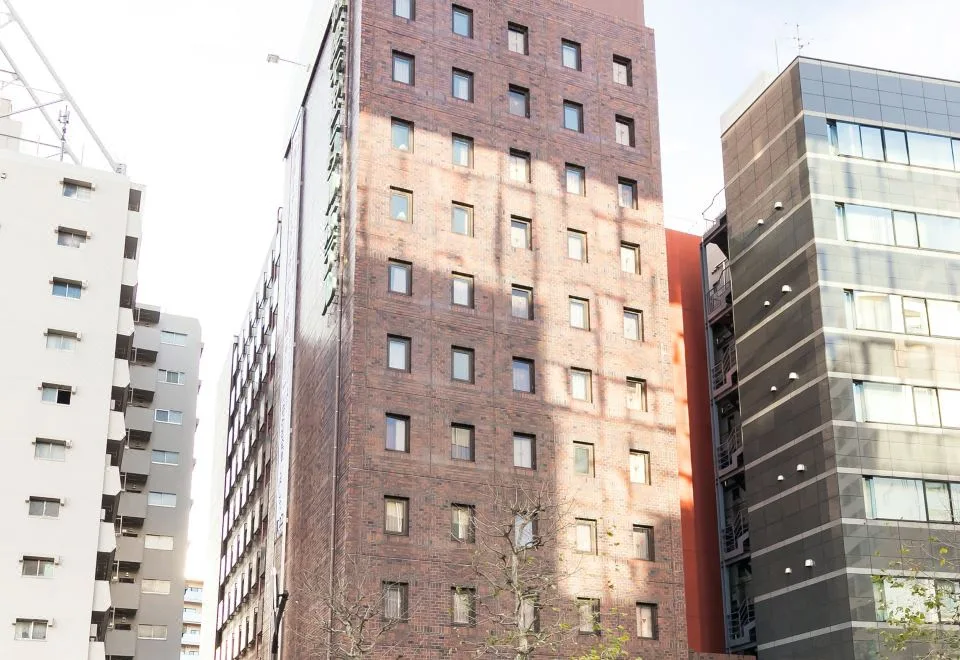
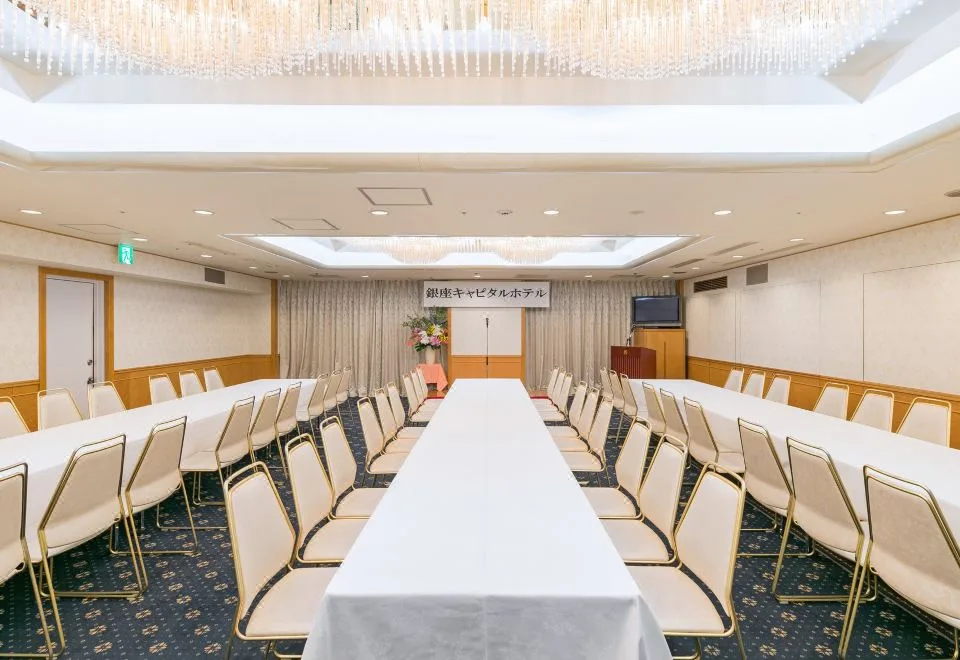
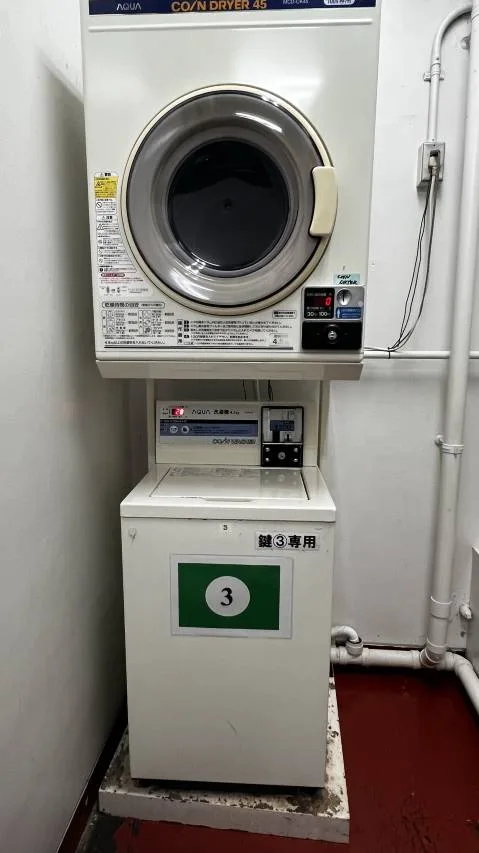
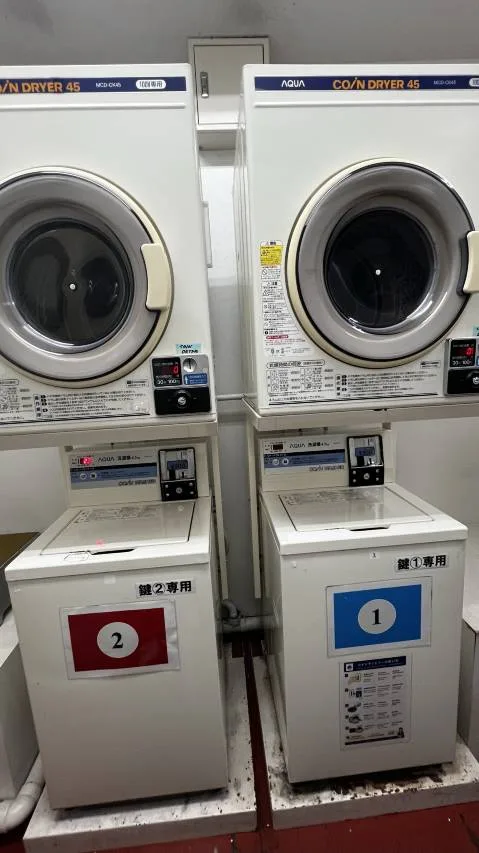
The laundry room also has a dryer and washing supplies, and a charged laundry service and a delivery laundry service are available if you would rather not do it yourself. Reception is open 24 hours, wake-up calls are available, public Wi-Fi is free, reception keeps a safe, and fax and copying are charged.
For step-free access, the hotel has a lift, a barrier-free route and a barrier-free room, and a wheelchair is kept on site. Reception speaks English and Japanese, and Chinese instructions are available; public areas are non-smoking with a separate smoking area, and the meeting room is charged. Parking is a tower car park — ask reception before driving in.
The building also has non-smoking floors, so whole floors are smoke-free, and a fresh-air system keeps the rooms ventilated. Body care services are available as well.
One or two nights versus a longer stay
On a one- or two-night stay, the location and breakfast stand out. Over five or six nights, small-room storage and laundry routines become more important. I would choose a Twin or larger room based on luggage rather than lobby photos. If shopping is a daily priority, compare properties closer to central Ginza.
Check-in is from 15:00 and check-out is before 10:00, with reception open 24 hours, so a late arrival is no problem. No deposit is required, and pets are not allowed, including service animals.
Check-out is before 10:00, so leave time to pack in the morning; if you sleep in, pack the night before and walk straight out.
On a stay of three nights or more, the small room shows more; my habit is to pack the case away each morning before going out and keep only the day’s things on the bed, which makes the room feel wider and the stay easier.
Accommodation details worth checking
Cleanliness and transport access stand out for me; small rooms and door noise are the drawbacks. Two suitcases leave little room to move, and doors opening and closing carry in the morning. That matters little on an active short visit, but more if you sleep in or spend long hours in the room.
My own trade-off is this: the transport is genuinely good — 100 metres out of the station to the hotel, with a lift route at Tsukiji Station too — and the cleanliness has never let me down. I solve the small room by choosing the right size: a Single for one person, a Twin for two, so the cases have somewhere to go; for door noise I keep earplugs by the bed. For me these are points to know first, not reasons to stay away.
My ranking is simple: location and breakfast first, room size second; if yours is the opposite, this is not the hotel for you. If this is your first time in Tsukiji, the location will make you want to get up early every day and head to the market.
My recommendation
I would recommend it for travellers who want mornings in Tsukiji, easy subway sightseeing and can accept a compact room. If shopping in Ginza is the priority, consider the walk back. Choose beds and luggage space first, then decide which mornings to eat at the market or leave early.
I will also say who should look elsewhere: if every day is a Ginza shopping day and your cases never close, staying closer to central Ginza will feel easier; families should count every person and the cost first, since no room takes an extra bed. When booking, ask about the room first — a 10.8 m² Single is tight for two people, so do not squeeze luggage in to save a little.
Before booking, check three things: first, choose the room by the number of people — a 10.8 m² Single suits one person only; second, breakfast is 2,200 yen per person, so price the breakfast-included plan in full; third, take the lift exit with suitcases, not exit 4. With those three settled, this hotel is easy to stay in. Breakfast at 2,200 yen per person is 13,200 yen for two people over three nights — count it before choosing the breakfast plan.
Pros and cons at a glance
Pros
- Shintomicho Station is about 100 metres away, a two-minute walk, and Tsukiji Station has a lift route too, with the Hibiya and Yurakucho Lines splitting by itinerary.
- Rooms run from 10.8 to 20 m² — Single, Semi-double, Twin, Superior Twin and Triple — plus one barrier-free room for up to four guests.
- Breakfast at Akane Kuriya on the first floor is a Japanese-Western buffet from 6:30 to 10:00, with a real seafood rice bowl, at 2,200 yen for adults and guests aged 17 and under.
- Reception is open 24 hours, with luggage storage and wake-up calls, free public Wi-Fi and full laundry facilities.
- The Outer Market is 510 metres away and the Ginza area 470 metres, with Tsukiji Honganji and Tsukijigawa Park within walking distance.
Cons
- Rooms are compact; two large cases leave little room to move, so two people staying several nights should choose a Twin or larger.
- No room takes an extra bed or a crib, so families should count every person and the cost first.
- Door sounds carry in the morning, which matters if you sleep in.
- The nearest exit 4 has no lift; with suitcases use the dedicated lift exit outside the Chuo Ward Office-side gates.
- Laundry needs a key from reception and designated machines, so ask about location and hours on arrival.
Information checked: 23 November 2026