
Home / Japan / Tokyo / Chuo Ward hotels
TOKYO / CHUO
Hotel Kazusaya
Hotel Kazusaya
Hotel Kazusaya is a good choice if you want a touch of Japanese rhythm in Nihonbashi: visit Muromachi and the department stores during the day, return for a soak in the public bath, then enjoy a Japanese-style breakfast. That is more meaningful than simply being a few minutes from the station. Still, think carefully about compact rooms and how you will reach the hotel with luggage.
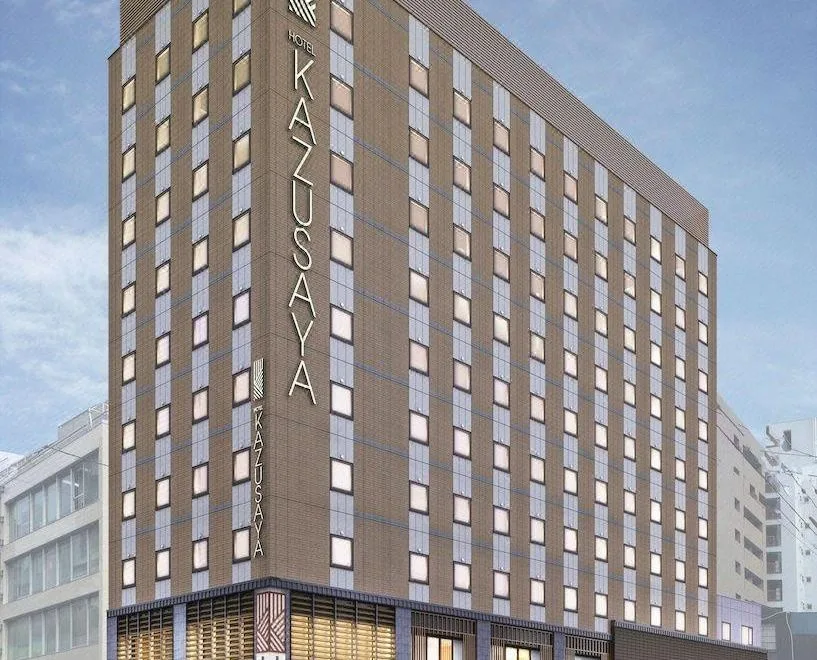
Reasons to stay and trade-offs to consider
Reasons to choose it
- The Shin-nihombashi location works well for Muromachi, Nihonbashi and Kanda outings.
- There is a public bath, which you will appreciate if you enjoy soaking every day.
- Japanese set breakfasts are a feature, ideal if you like sitting down for a proper morning meal.
Trade-offs
- The closest station exit may not be suitable for large suitcases; do not follow the map’s shortest route without checking.
- Some rooms are tight; in a triple room, check bed placement and suitcase space.
- Breakfast ends at 08:30, so late risers need a plan; luggage can be left at the front desk, including after check-out.
Rooms and luggage space: what to choose
Start with size and bed layout, then decide how many people fit. The official room list is clear: Single rooms run 12 to 14 m2 with one single bed; Semi-double rooms are 13 m2 for two; Double rooms are 18 m2; Twin rooms are 16 to 19 m2 with two single beds; Triple rooms are 19 m2 with two single beds plus one extra bed; Deluxe Twin rooms are 27 m2 with two large single beds plus one sofa bed, the most comfortable choice for three. With three people and a large case each, book the Triple or Deluxe Twin rather than gambling on a Semi-double. The twin beds and desk in the photos work for sorting small things in the evening; for long hours working in the room, check that the desk fits a laptop and papers.
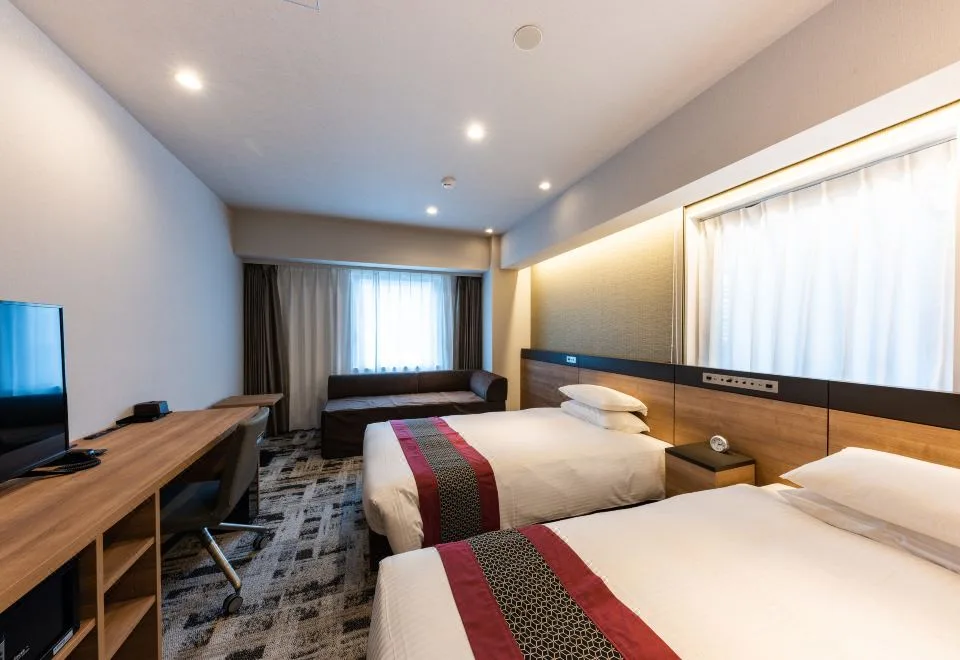
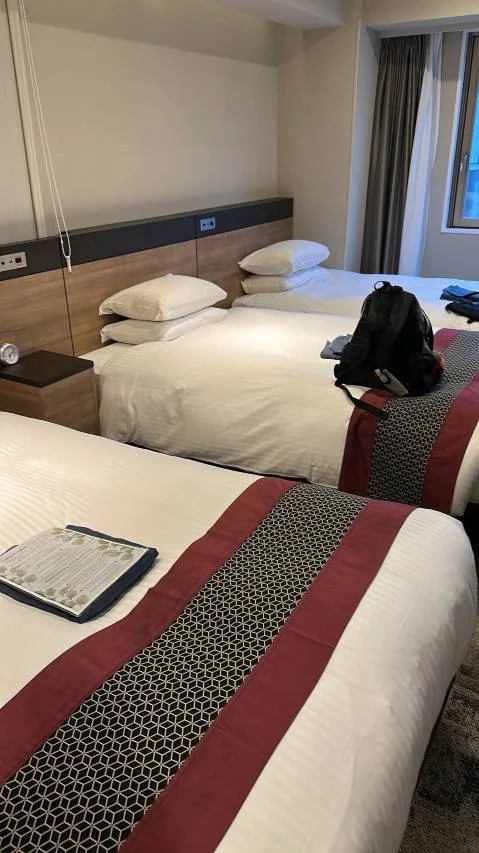
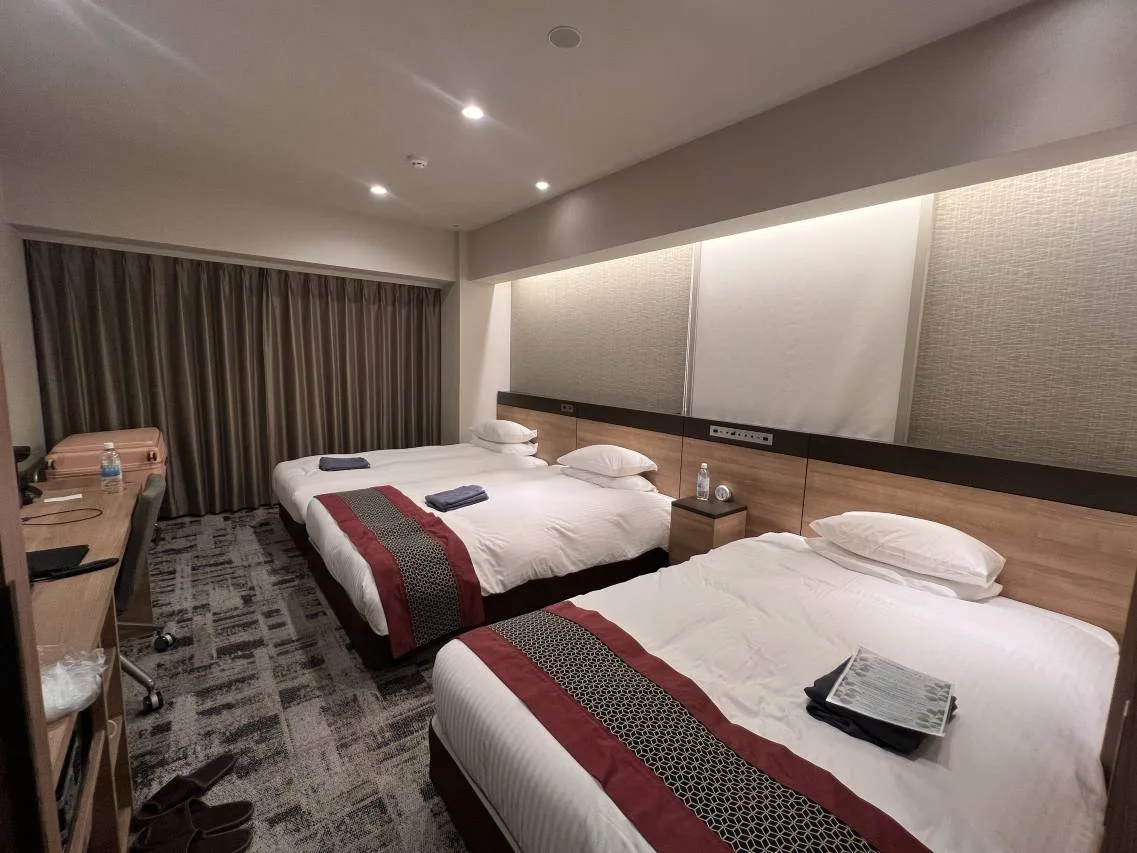
Bed widths are listed too: single beds run 97 to 120 cm wide and 203 cm long; twin beds are 97 to 110 cm wide and 195 cm long; the Triple extra bed is 97 by 195 cm; the Deluxe Twin beds are 120 by 195 cm with a 92 by 198 cm sofa bed. Each room has its own air conditioning, a desk, TV, fridge, kettle, humidifier air purifier and Wi-Fi, with shampoo, conditioner, body soap, toothbrush, razor, slippers and samue robes provided.
Single rooms come in two versions: with a bathtub at 12 to 14 m2, or with a shower booth at 12 to 13 m2. Semi-double and Twin rooms also split into bathtub and shower-booth versions, so read the booking page carefully. If you want a bath in the room, do not book the shower-booth version by mistake.
With two large cases, plan the unpacking order first: the Deluxe Twin and Twin leave a little more floor space, while the smaller rooms mean taking turns. Leave luggage at the front desk on arrival, and again after check-out, instead of dragging cases around town.
Travelling alone, a Single room at 12 to 14 m2 fits one large case plus a day bag, with a desk, humidifier air purifier and Wi-Fi already in the room, enough for sorting out plans in the evening. Only a group of three needs to step up a room type. A front-opening case works better in a small room: it opens from the front instead of spreading flat, so the passage beside the bed stays clear.
Breakfast: plan around your mornings
Breakfast is served at Shokudo Shusai Toki no Kane, the restaurant on the first floor: a Japanese set meal of grilled fish, rice and Nihonbashi ingredients, one complete tray for people who like to sit down and eat properly. It runs from 07:00 to 08:30, at 1,650 yen for adults and 825 yen for guests aged 17 and under; tell the hotel in advance if you want a Western option. If you like choosing many different dishes each morning, this is a set meal, not a large buffet, so do not expect an all-you-can-eat spread.
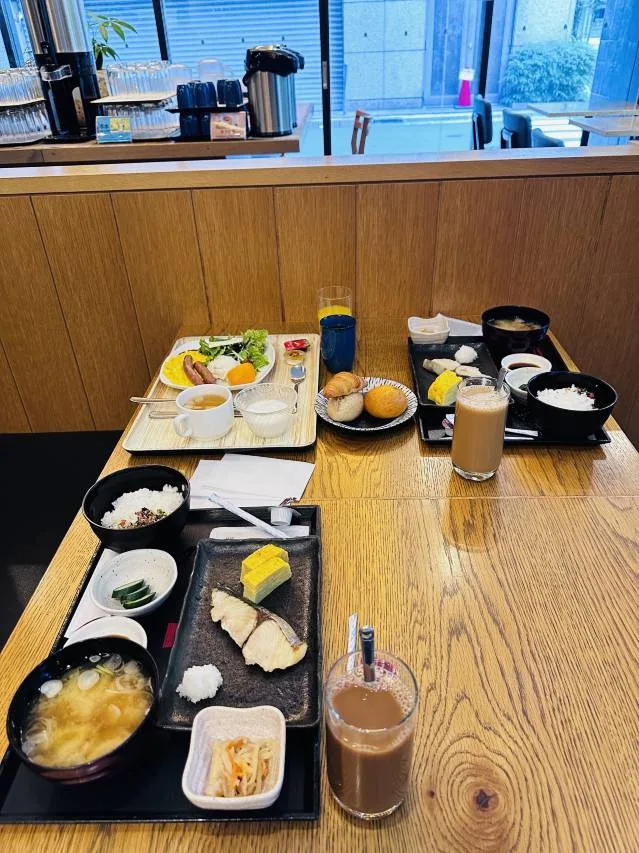
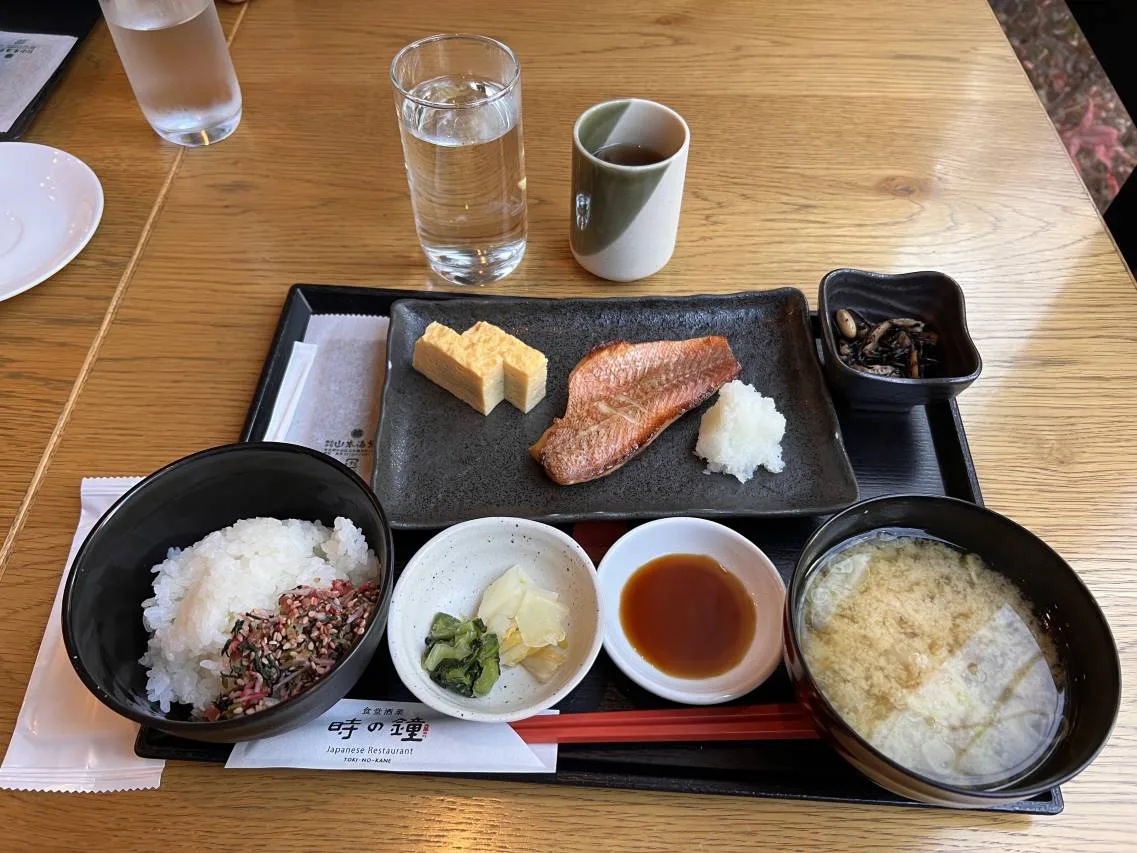
If you want a Western breakfast, say so when you book; asking on the morning itself may be too late for the kitchen to change. Breakfast ends at 08:30, so late risers should either wake early to eat or sleep in and find a coffee shop after. Do not try to have both.
The first-floor restaurant also serves dinner in the evening, with shabu-shabu and set meals enough for two people to eat slowly. After a long day on foot, eating downstairs and then heading up to the baths suits me better than going out to search for food again.
Location, transport and luggage
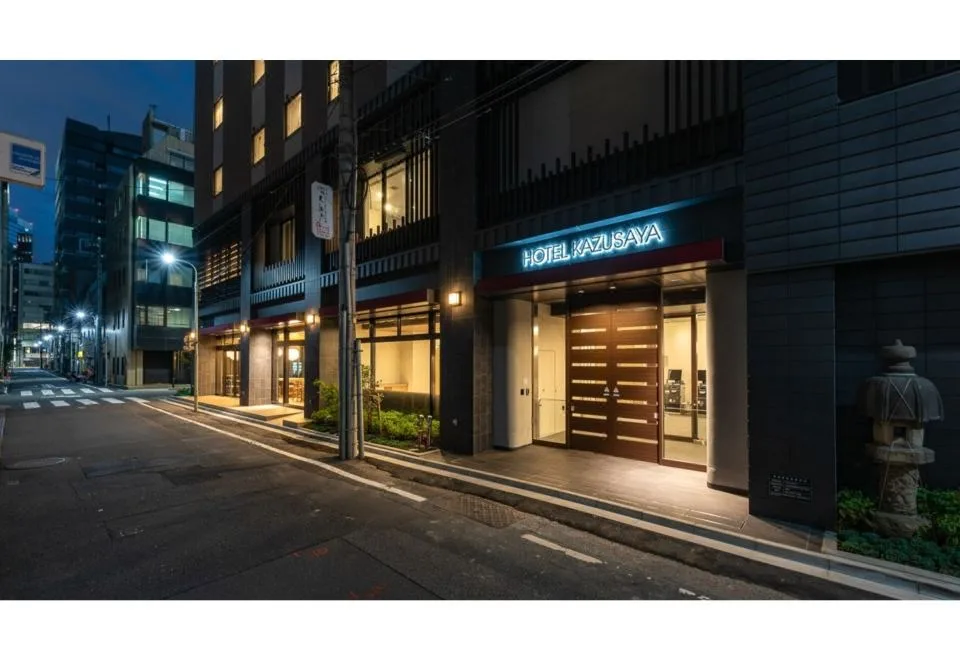
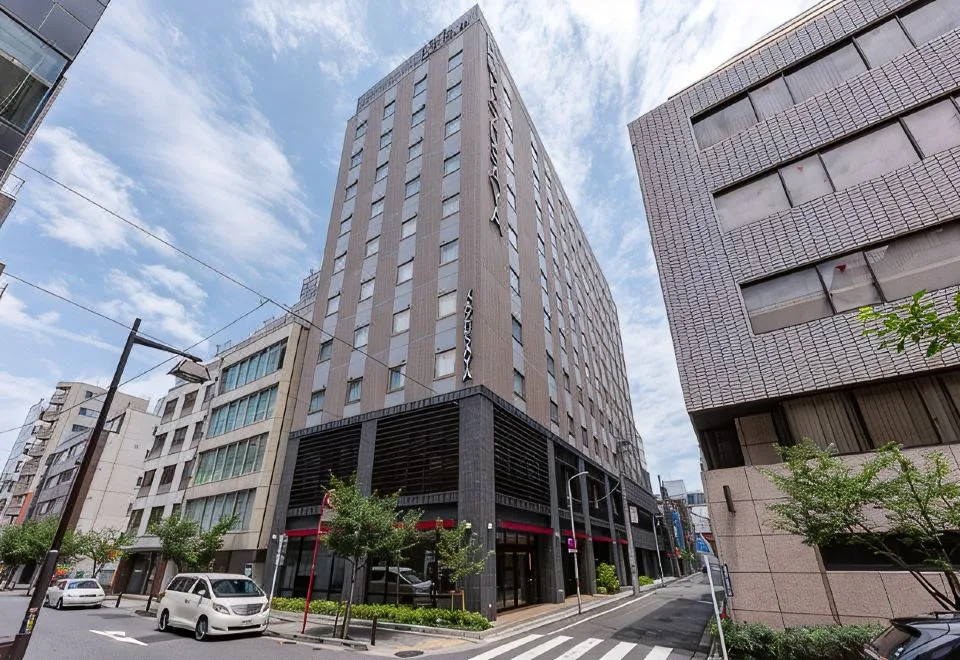
The hotel is about 140 metres from Shin-nihombashi Station, a two-minute walk, but getting out with suitcases needs a plan first: the station has an elevator between the platform and the ticket gates, but no elevator from the gates to street level, and every station exit is stairs. With large luggage, do not carry cases up the Shin-nihombashi exits. Take the underground passage to Mitsukoshimae Station instead, then use the elevator outside the Mitsukoshi-side gates to the A7 exit (07:00 to 23:00) or the A5 exit, and walk north along Chuo-dori before turning into Honcho-dori to reach the hotel. On the Hanzomon Line, use the elevator outside the Nihonbashi-side gates to the B4 exit. Kanda Station is also about five minutes on foot, with the Yamanote, Keihin-Tohoku and Chuo lines; from Mitsukoshimae, the Ginza Line runs to Ginza and Shibuya with no change.
Address:4-7-15 Nihonbashihoncho, Chuo-ku, Tokyo 103-0023, Japan
Nihonbashi is about 820 metres away, Higashi-nihombashi Station about 1 km, and the Akihabara electronics district about 1.4 km, all within walking range. Tokyo Station is one stop away on the Keiyo Line, handy for the Shinkansen or the Narita Express. When you navigate, search for Kazusaya by name. The Chinese transliterated name does not search well.
From Narita Airport, take the Narita Express to Tokyo Station, then one stop on the Keiyo Line to Shin-nihombashi. From Haneda Airport, take the Keikyu Line or the monorail to Hamamatsucho, then the Yamanote Line to Kanda or Shin-nihombashi. On both routes, decide the elevator exit before you set off, since the last stretch with luggage is the part that needs a plan.
Where to go and eat nearby
COREDO Muromachi, Nihonbashi department stores and historic shops make a pleasant walking day, with Kanda offering more dinner options. This is largely a business and local neighbourhood, so check restaurant opening hours on weekends or late evenings. If you expect the dense nightlife of Shinjuku, the rhythm here is different.
For a half-day nearby, the Nihonbashi museums and historic buildings make a good follow-on walk; the Mitsukoshi main store, COREDO Muromachi and the Nihonbashi Mitsui Tower are all in the same area, so you can walk back to the hotel for dinner afterwards.
The Imperial Palace is about 1.8 km away and Ueno about 1.5 km, reachable on foot or with a short train ride; the Tokyo International Forum is about 2 km, worth adding on a day you go to an exhibition or a concert.
Kanda has plenty of restaurants, so an evening meal or a drink is a short walk away. This is an office and residential area, so on weekends or late at night, check opening hours before you go out for a specific place, or the walk is wasted.
Useful amenities and services
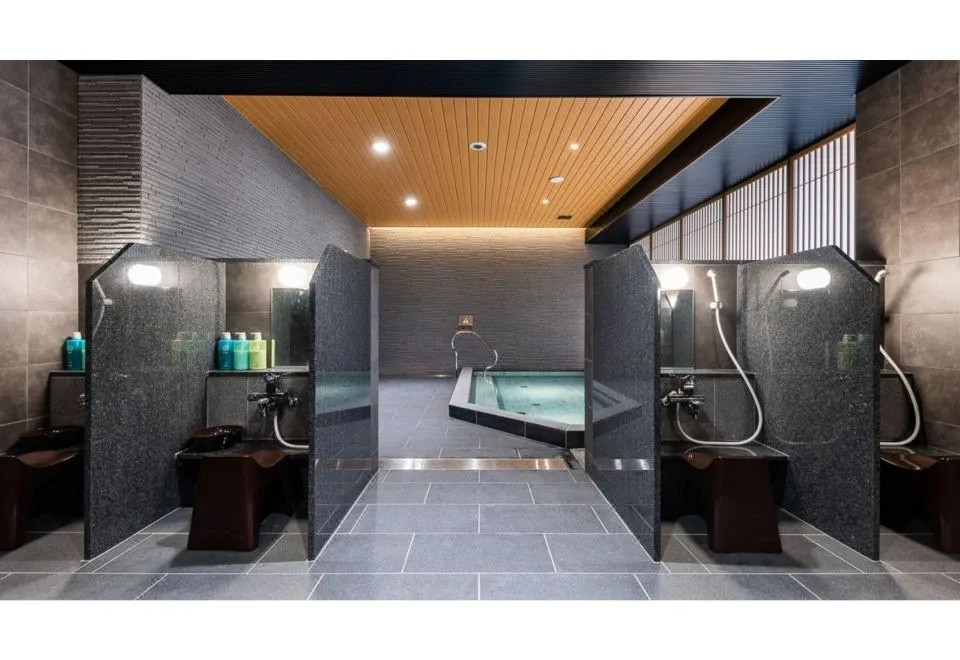
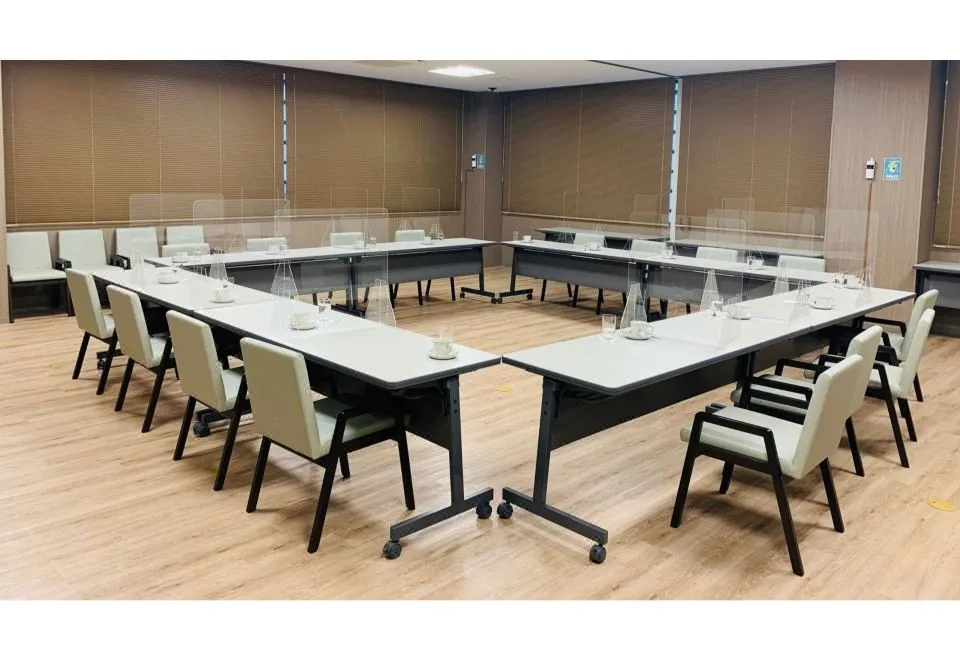
The public bath is the clearest reason to choose this hotel: two separate baths for men and women, open from 05:00 to 09:00 in the morning and from 16:00 to 01:00 the next day, with washing and changing areas you can see in the photos. The bath for women has security, which matters if you bathe alone. The hotel also has a laundry room, dryer, iron and laundry service, so a longer stay needs fewer changes of clothes; the car park is inside the hotel, private, at 2,500 yen a day, and must be booked in advance. Meeting rooms and a multi-function hall, currency exchange and a front-desk safe are all available, and the desk speaks English and Japanese. Ask first about luggage storage, borrowed items and phone help, and do not assume the concierge support of a large hotel.
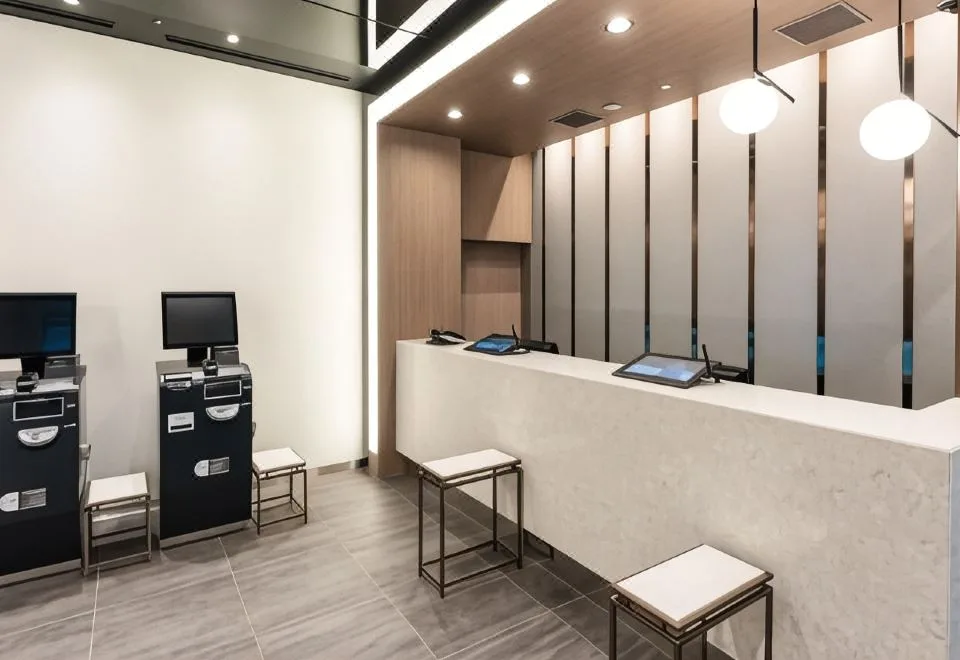
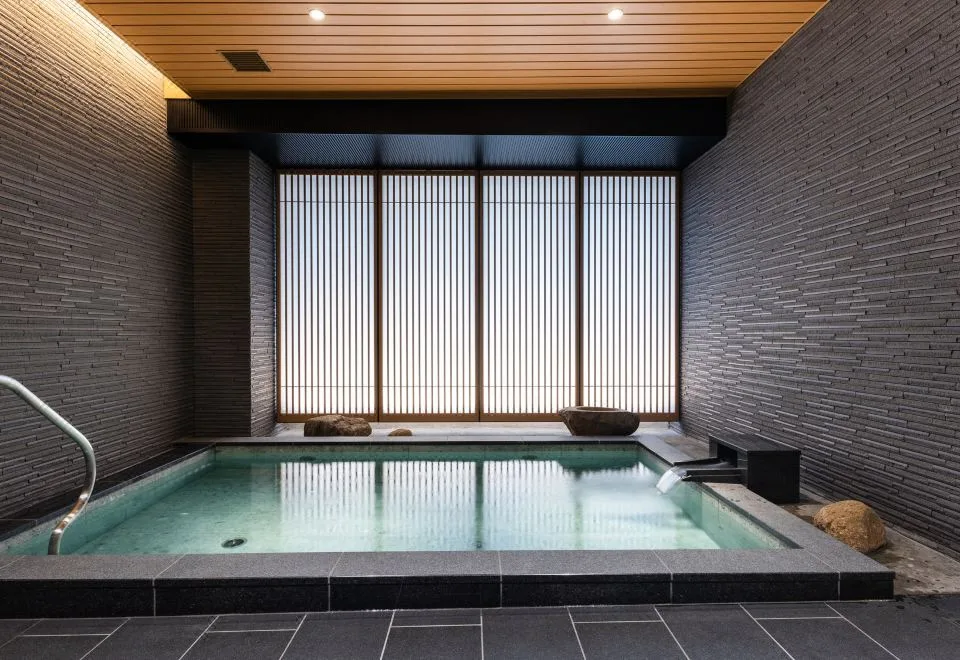
Room supplies include shampoo, conditioner, body soap, towels, a toothbrush set, comb, hair dryer, razor, yukata robes, slippers, deodorising spray, fridge, kettle and a free tea set, plus a TV and a safe. There is no minibar, no scales and no trousers presser, and face wash and skin care are not provided, so bring your own.
The building has an elevator and vending machines; public areas are non-smoking with a separate smoking area, and a medical room, fire extinguishers, security staff and cameras are in place. An exhibition space and meeting rooms sit inside the hotel, so anyone here for a meeting or an event can use them without finding another venue.
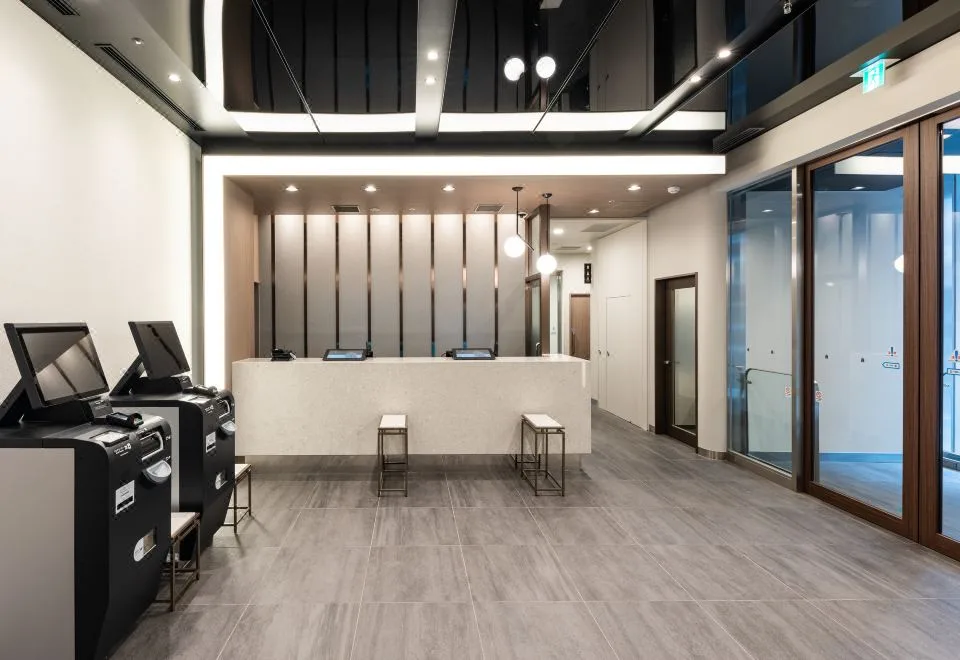
The front desk handles currency exchange and keeps valuables in the safe, and borrowed items and phone help can be asked for there. Say what you need first; the desk speaks English and Japanese, so communication is not a worry. The building has a medical room, a first-aid kit and fire extinguishers, with security staff and cameras, so help is available late at night.
One or two nights versus a longer stay
For one or two nights, the baths and set breakfast create the feel of a satisfying little trip. Over a longer stay, repetition at breakfast, room size and the station route matter more. Check-in runs from 15:00 to 23:30, check-out is before 10:00, the front desk runs 24 hours, and no deposit is required. Children of all ages are welcome, though a fee may still apply even without an extra bed, so include children when you book. Pets are not allowed, and guests checking in must be at least 18; cash is accepted at the hotel. Early risers get more from the breakfast-included rate; if you like to sleep in and find a coffee shop instead, the room-only rate feels freer.
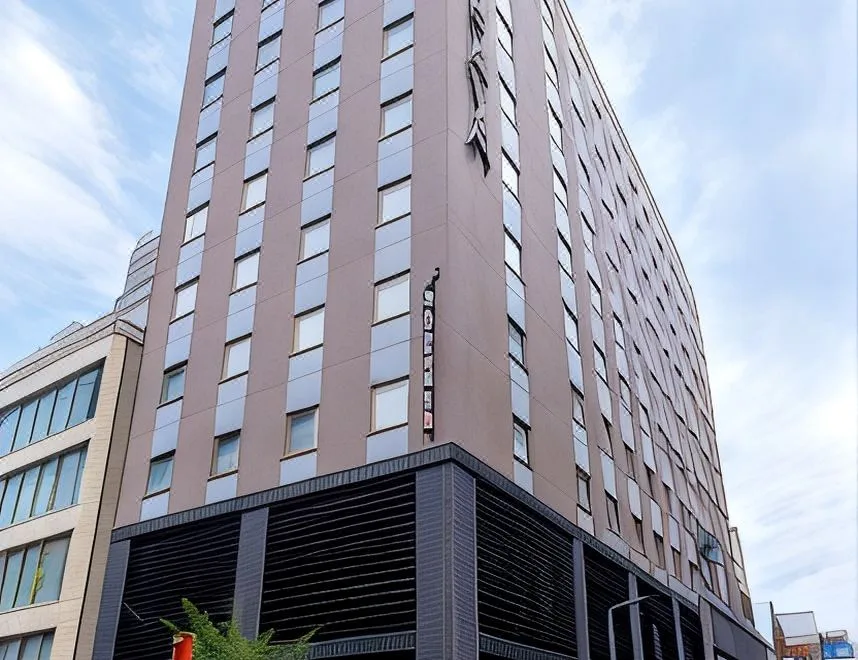
The building next door is being demolished from mid-August 2026 to the end of May 2027, so daytime construction noise is possible. If you sleep lightly or need to rest in the room during the day, ask about construction hours and a quiet room when you book. The hotel moved into its new ten-storey building in July 2020, so the rooms and baths are still fresh. That part needs no worry.
Accommodation details worth checking
Staff support, room size and the baths are the three things I think through first when I choose this hotel. I like clean rooms and the public bath; whether the water temperature suits you and whether the front-desk help is enough, you only find out by staying. If you need a lot of help, ask one or two specific questions before you book and check whether it fits your way of travelling, rather than finding out after you arrive.
Children aged three and under cannot use the public baths, so families with toddlers should plan who watches them. The baths use regular heated water, not spring water from a hot-spring source, so do not expect onsen water. Anyone who wants a real onsen should plan that separately.
Before you book, ask three things: which elevator exit to use with large luggage, the opening hours of the public baths, and how the extra bed in a Triple room is charged. Asking first beats finding out after you arrive, and the speed and tone of the reply tell you something about whether the service fits you.
My recommendation
I would recommend Hotel Kazusaya to travellers who enjoy Nihonbashi, intend to use the public bath and like Japanese set breakfasts. With large luggage, plan the lift route before arriving; for three travellers, check bed placement and usable floor space. If you prefer sleeping late and a lavish buffet, do not let the bathhouse distract from your everyday needs.
If you like the public baths but want a bigger room, step the budget up one level to the Deluxe Twin. If you want a large buffet breakfast or a sleep-in until midday, the set meal and the 08:30 finish may not suit you, and another hotel fits better.
Pros and cons at a glance
Pros
- Shin-nihombashi Station is about a two-minute walk, with Mitsukoshimae and Kanda also in walking range, handy for Muromachi, Nihonbashi and Akihabara.
- Separate baths for men and women, open from 05:00 to 09:00 in the morning and from 16:00 to 01:00 the next day, with security at the bath for women.
- Breakfast is a Japanese set meal at the first-floor restaurant, with grilled fish, rice and Nihonbashi ingredients, at 1,650 yen for adults.
- Rooms run from a 12 m2 Single to a 27 m2 Deluxe Twin; the Triple is 19 m2 with two single beds plus one extra bed.
- A hotel founded in 1891, moved into a ten-storey new building in 2020; the front desk runs 24 hours, with check-in from 15:00 to 23:30.
Cons
- Single rooms are only 12 to 14 m2 and Twin rooms 16 to 19 m2, so large cases have to be opened in turns and storage is tight.
- There is no elevator from the Shin-nihombashi ticket gates to street level, so large luggage means using the Mitsukoshimae A7 or A5 elevator exits instead.
- Breakfast is served only until 08:30, so late risers miss it; a Western option must be requested in advance.
- Children aged three and under cannot use the public baths; pets are not allowed; guests checking in must be at least 18.
- The building next door is being demolished from mid-August 2026 to the end of May 2027, so daytime construction noise is possible.
Information checked: 23 November 2026