
TOKYO / CHUO
Dormy Inn Tokyo Hatchobori Natural Hot Spring
Dormy Inn Tokyo Hatchobori Natural Hot Spring
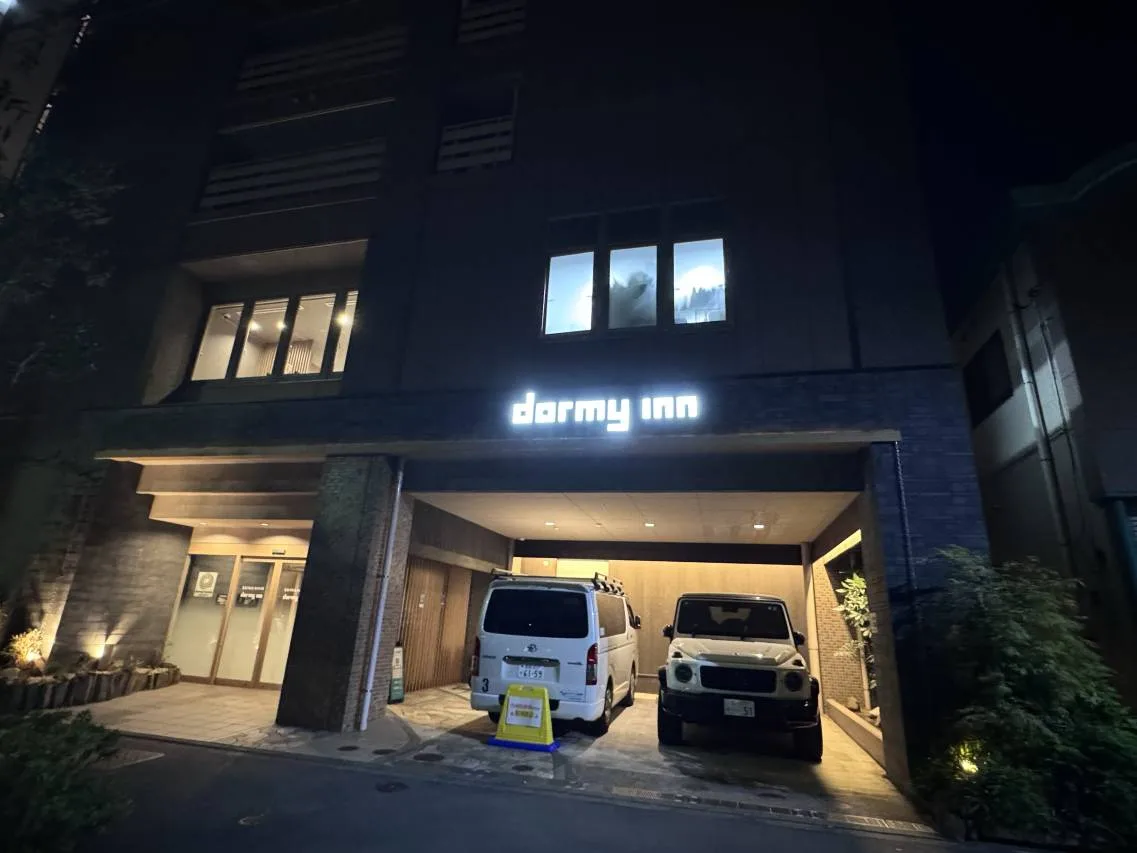
If I wanted to spend my days exploring Tokyo or Disney and return to a hot spring bath at night, Dormy Inn Tokyo Hatchobori would be appealing. Its natural hot spring, late-night noodles and breakfast create a pleasant routine after a full day out. Rooms are compact, making it a better fit for travellers happy to spend some downtime in the shared facilities.
Reasons to stay and trade-offs to consider
Reasons to choose it
- The natural hot spring baths are a welcome reward after a long day of walking around Tokyo.
- Hatchobori offers access to both the Keiyo and Hibiya lines, handy for Maihama or Ginza.
- The late-night noodles and Japanese breakfast give you something to look forward to when you return.
Trade-offs
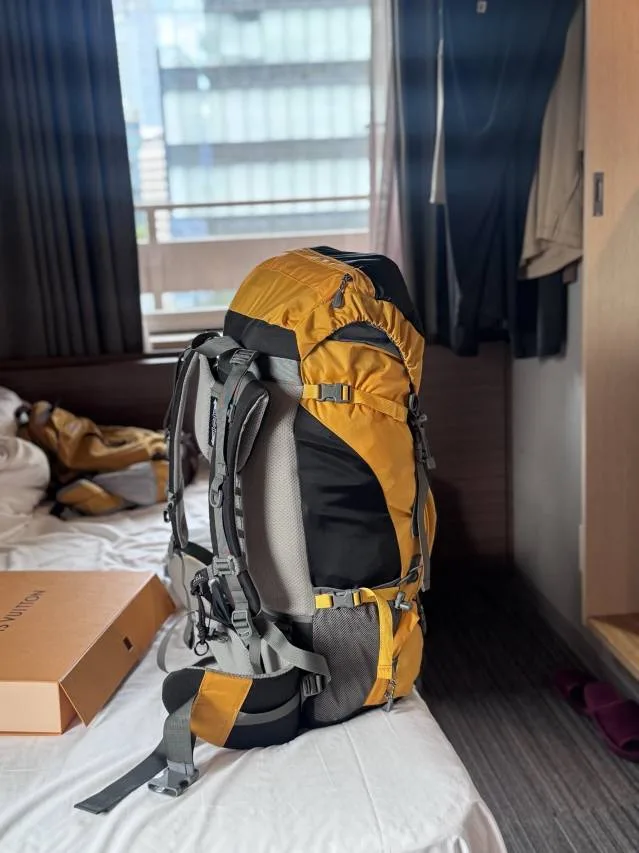
- Rooms and luggage space are tight; there may not be room to keep two large suitcases open.
- Road-facing rooms may pick up traffic noise; light sleepers should ask about a quieter room.
- Allow for the long walk inside Tokyo Station between the Keiyo Line and Shinkansen platforms; the one-stop train ride is only part of the journey.
Rooms and luggage space: what to choose
According to the official room list, Semi Double is 13 m² and limited to one guest; Double is 13.5 m² for two; Queen is 15.5 m²; and Japanese-style Twin is 16.3 m² for two. Choose the Japanese-style Twin if you want separate beds. If you prefer sharing a bed with a little more floor space, compare the Queen.
The room dimensions remain compact, so do not assume you can leave two large cases open. A spacious bathhouse does not make the guest room’s storage any larger.
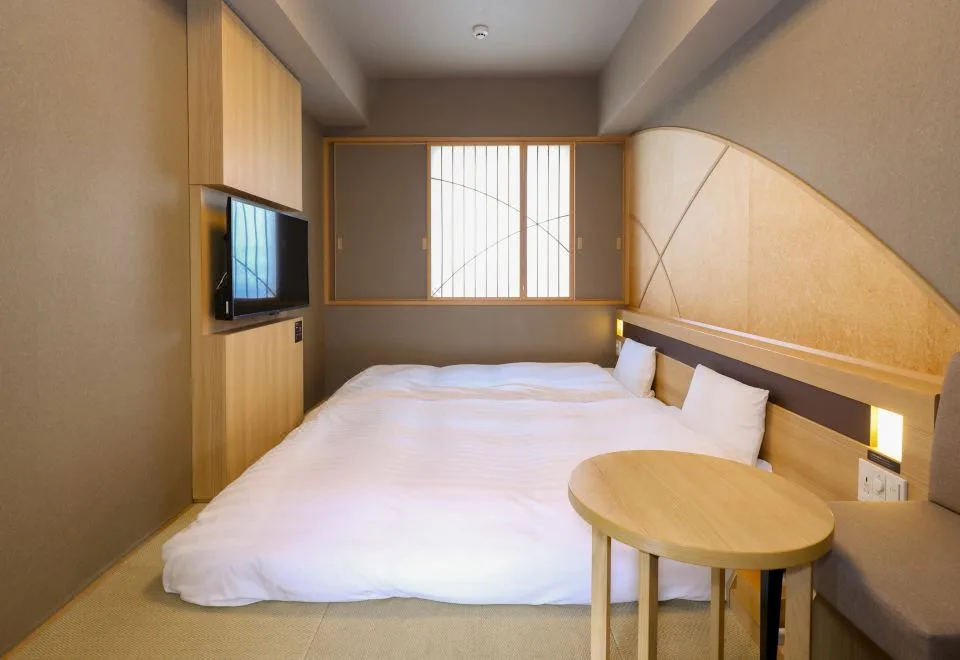
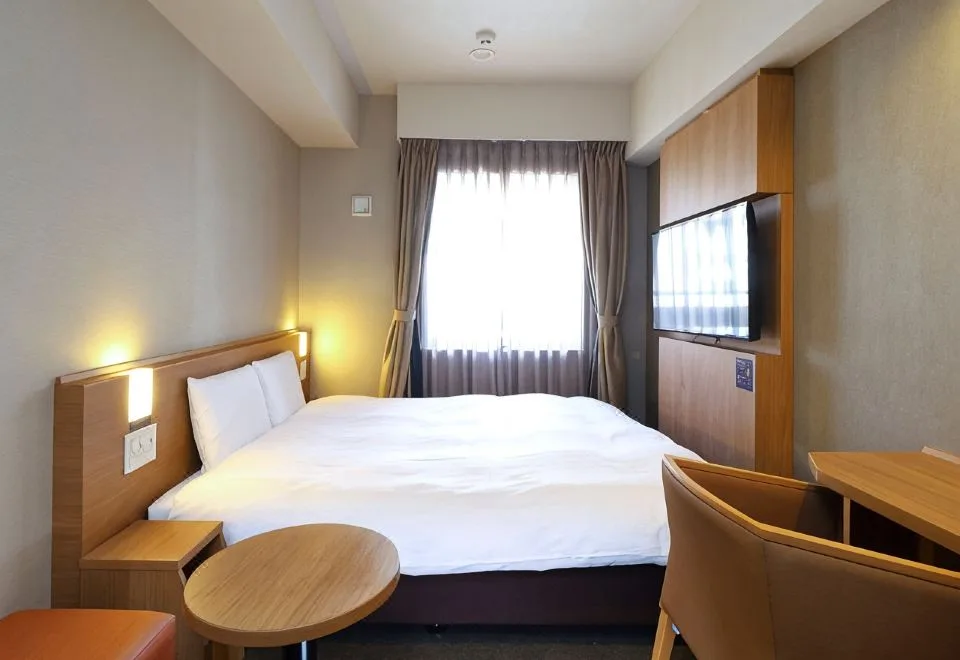
The hotel has 143 rooms. It opened in 2005 and reopened on 8 August 2025 after a renovation; corridors are open-air, and rooms run from 13 to 16.3 m². Check-in starts at 15:00, check-out is before 11:00, the front desk runs 24 hours, and no deposit is required — a late arrival is no problem.
Each room has its own shower booth, bidet toilet, TV, fridge, kettle and air conditioning, with yukata robes and towels provided. The in-room shower is not spring water — for that, head to the second-floor bathhouse. The Semi Double is strictly for one guest, so do not book it for two, and Queen rooms are few, so book early if you want one.
With a pair of large cases, plan your unpacking order first: the Queen and Japanese-style Twin give you a little more floor space, while the Semi Double and Double mean taking turns. Leave luggage at the desk on arrival, and again after check-out, instead of dragging cases around town.
Check-in runs from 15:00 until 24:00. If you arrive on a late flight or night train, work out your arrival time first — tell the hotel in advance if you will be later than 24:00, so you are not stuck outside at night. The same applies to an early flight: if you arrive before 15:00, leave your luggage at the desk and explore nearby first, then come back to unpack. Tell the hotel your arrival time when you book, so they know when to expect you.
Wearing the yukata robe down to the baths is the easiest option — change back into your own clothes afterwards. Towels are provided too, so packing one fewer change of clothes is fine. Come back in the evening, take a shower and sleep; for a night or two, that is enough.
The corridors are open-air, so stepping out of your room means stepping outside — bring an extra layer for the evening walk back in winter. By day the airflow keeps rooms fresh instead of stuffy.
Breakfast: plan around your mornings
Breakfast is worth comparing carefully against the room-only rate. The official description highlights a small-dish selection and local dishes, and I like the completeness of the Japanese-style spread. If you can sit down to eat before catching the train, the morning feels different from grabbing bread on the go; for an early Disney arrival, work backwards from your entry time through travel and breakfast instead of buying breakfast and rushing out. Dishes change, so do not treat every dish in the photos as served daily.
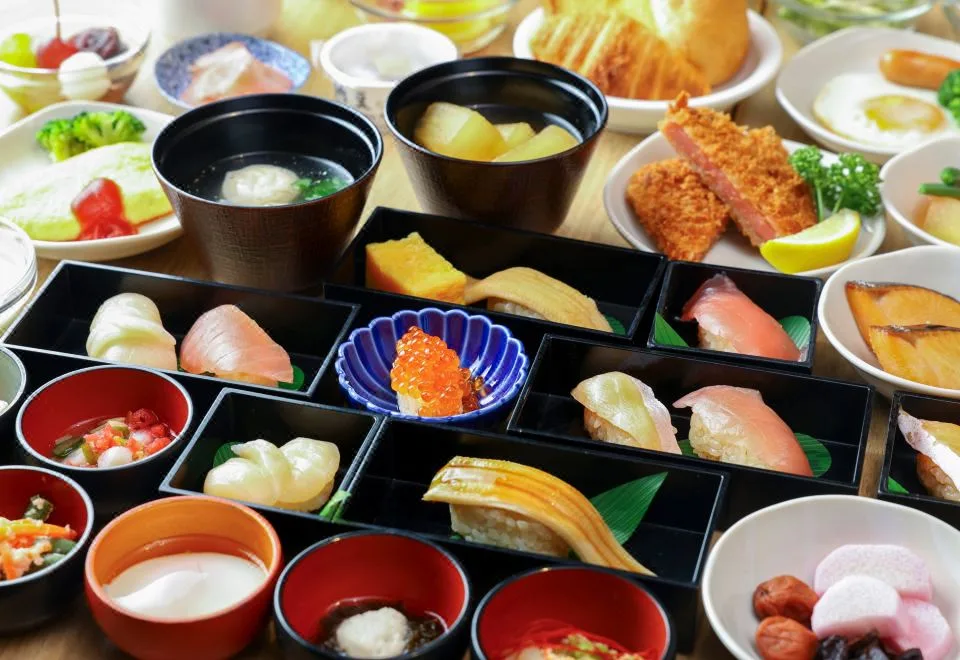
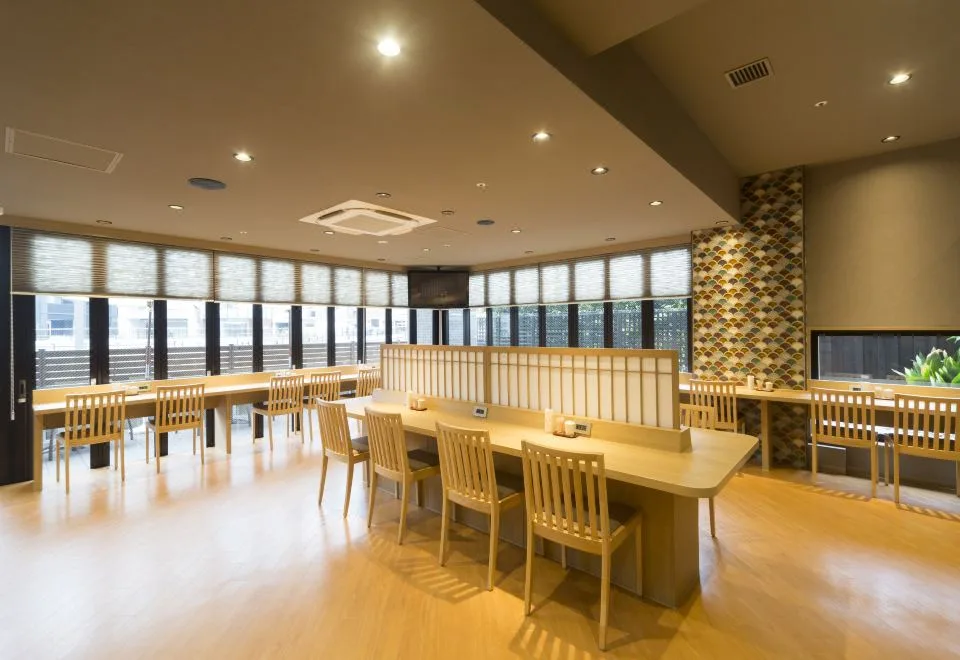
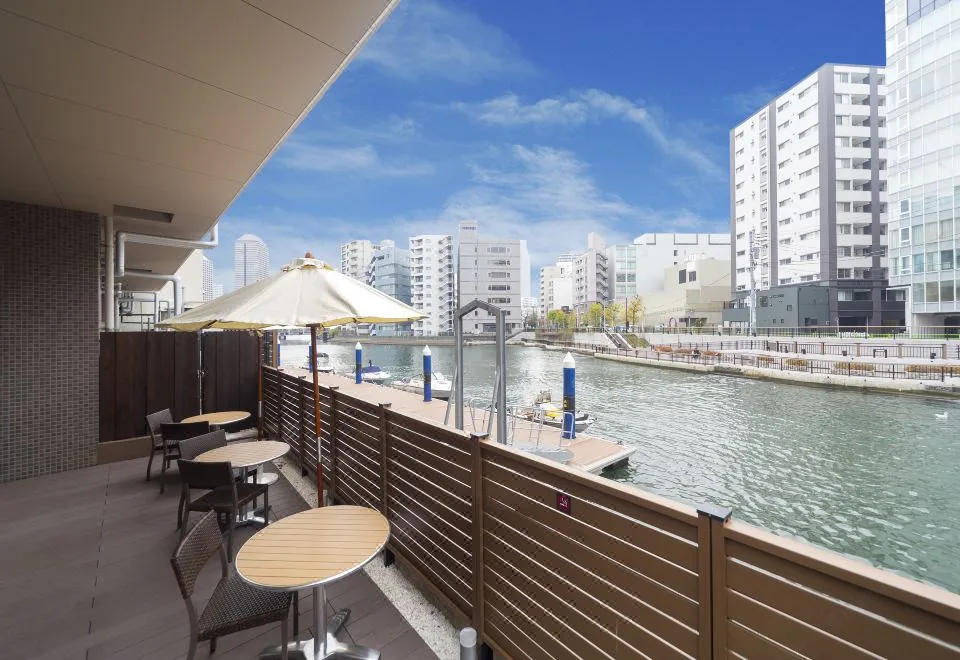
Breakfast is served at HATAGO on the first floor, beside the Kamejima River, from 06:30 to 09:30 with last entry at 09:00, for guests only. Adults pay ¥2,000, children aged 3 to 12 pay ¥1,000, and children aged 2 and under eat free; from 1 December 2026 the adult price rises to ¥2,500, so check the breakfast-included rate difference when you book.
The signature dish is a colourful sushi rice bowl topped with salmon roe, tuna, salmon and seasonal seafood, alongside freshly fried seasonal tempura, thick fried ham cutlets and a small-dish alley. Arrive early for the seafood bowl — 07:30 to 08:30 is the busiest window, and the in-room TV shows how crowded the restaurant is before you head down.
For an early Disney opening, save breakfast for the morning you come back, or finish by 08:00 before leaving; a heavy breakfast followed by a rushed train ride is uncomfortable, so I keep the first morning’s breakfast for a day with no early start.
Dessert includes anmitsu, and the tempura is fried live in the kitchen, so it arrives still hot. The seafood bowl toppings change daily — the dish you want may not be there every day, so come early.
For two people over several nights, breakfast adds up to a real sum, so compare the breakfast-included rate before deciding whether to include it. If your stay crosses into December, work out the price day by day rather than from a single day. The difference also changes between one guest and two, so do not decide from the single-guest price alone.
Location, transport and luggage
JR Hatchobori Station is about 130 metres away, roughly a two-minute walk, but the Keiyo Line and Hibiya Line exits are very different. With large luggage, pick your exit first: the Keiyo Line B4 exit is the closest, about two minutes on foot, but it has no elevator; for a lift, use the B2 exit instead, which has an elevator and takes about five minutes. Transferring from Tokyo Station to the Keiyo Line, the walk inside the station takes longer than one stop on the train, so allow extra time.
On the Hibiya Line, use the Tsukiji-side gates, where the A2 or A3 exits have street-level lifts; from there it is about a seven-minute walk. The passage between the two lines is stairs only, so with large cases, do not force the transfer inside the station — exit to street level first and enter the other line from outside.
Address: 2-20-4 Shinkawa, Chuo-ku, Tokyo 104-0033, Japan
From the hotel, Nihonbashi is about 770 metres, Ginza-itchome Station about 1.3 km, the Tsukiji Outer Market about 1.5 km and the Tokyo International Forum about 1.6 km; the Imperial Palace is about 2.5 km, reachable on the Hibiya Line or on foot.
JR Yurakucho Station is about 1.8 km away, and the area around it has plenty of restaurants and shops — if you do not want to walk far in the evening, eat there and head back. The walk from the hotel is not far, and it works as a post-dinner stroll. Pick up anything you need for the next morning on the way home, so a late-night hunger pang is covered.
From the hotel, the Keiyo Line reaches Tokyo Station in one stop, handy for the Shinkansen or the Narita Express; the airport trip uses the same line change, so there is no need to drag luggage through several transfers.
Where to go and eat nearby
From Hatchobori, I would dedicate a full day to Maihama and use the Hibiya Line on other days for Tsukiji, Ginza or Akihabara. The riverside location makes the return walk feel different from a shopping district. There are no major malls right outside the door, so have dinner before returning and decide whether to save room for the late-night noodles.
For a half-day nearby, see Nihombashi museum and historic architecture walk。
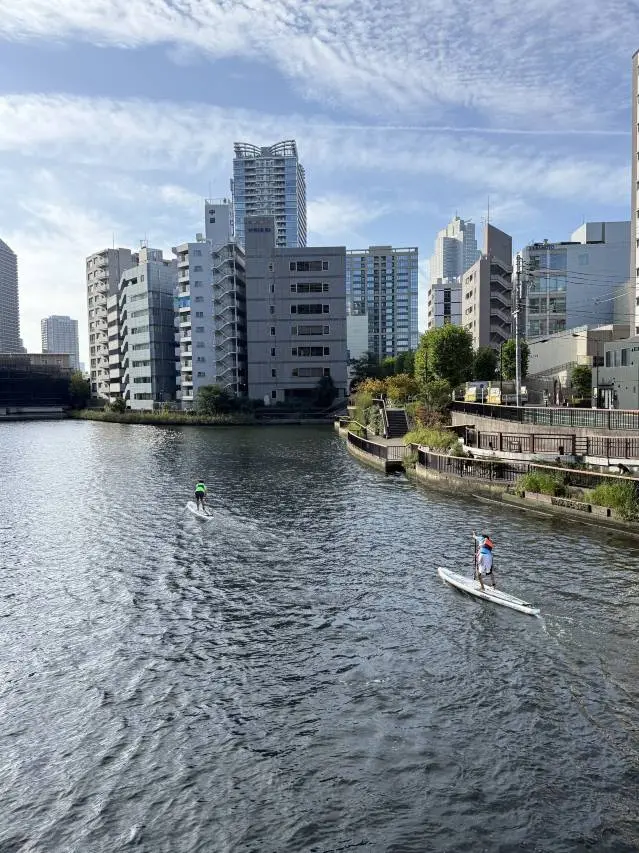
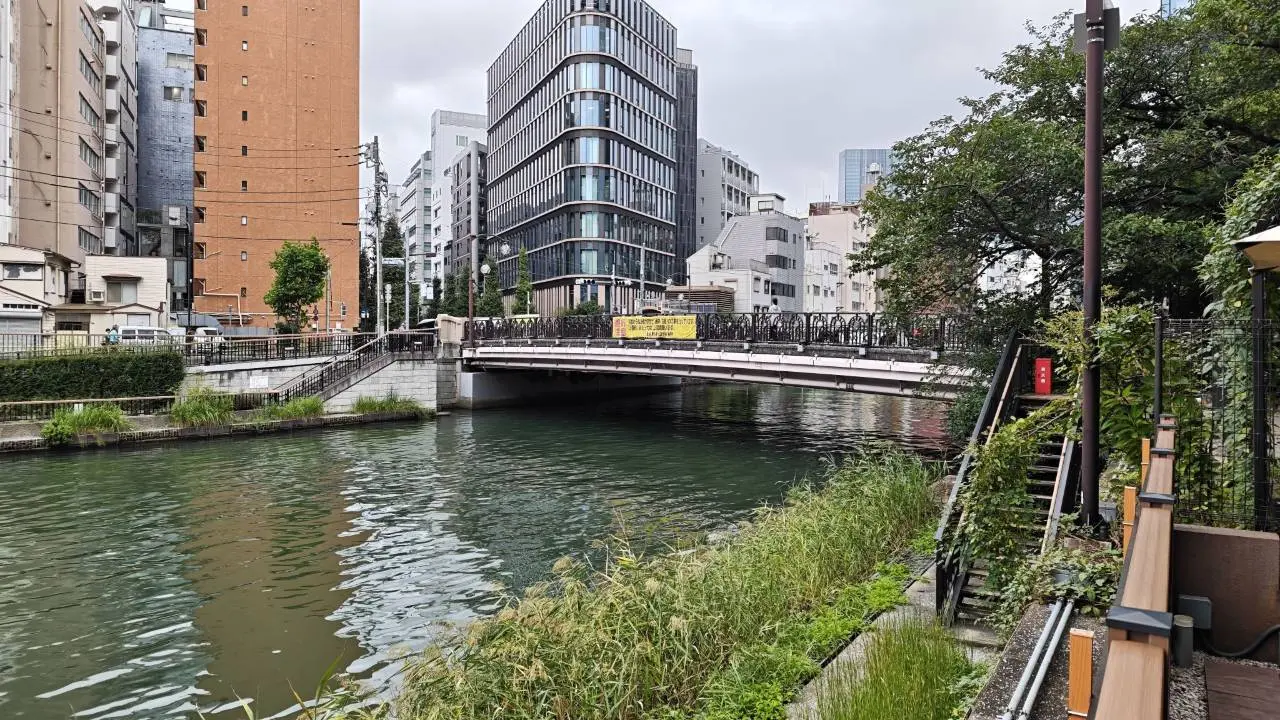
For Disney, take the Keiyo Line straight to Maihama with no change, then come back for a soak and late-night noodles — the timing works out. On another day, use the Hibiya Line for the Tsukiji morning market, Ginza shopping or Akihabara; one line covers them all.
The hotel sits along the Kamejima River, so the walk home in the evening can follow the river toward the Sumida River and Tsukudajima. There is no large shopping mall downstairs, so eat dinner out first and leave a little room for the late-night noodles.
The Tsukiji Outer Market is lively in the morning — walk over for breakfast and come back to check out, which fills half a day nicely. Market stalls open early and some close early too, so check the opening time of the shop you want. There are seafood bowls and tamagoyaki to eat while you walk, so you do not have to sit down at every stall.
The evening you come back from Disney is the most tiring one — soak, eat a bowl of noodles and go straight to sleep, then take breakfast slowly the next morning before checking out, with no rush to pack.
Useful amenities and services
The natural hot spring bathhouse is the star, alongside the hotel’s late-night noodles. Check bathing rules and opening hours before planning around it. If your companions do not use communal baths, this advantage will matter less to them; choose based on how everyone will spend the evenings.
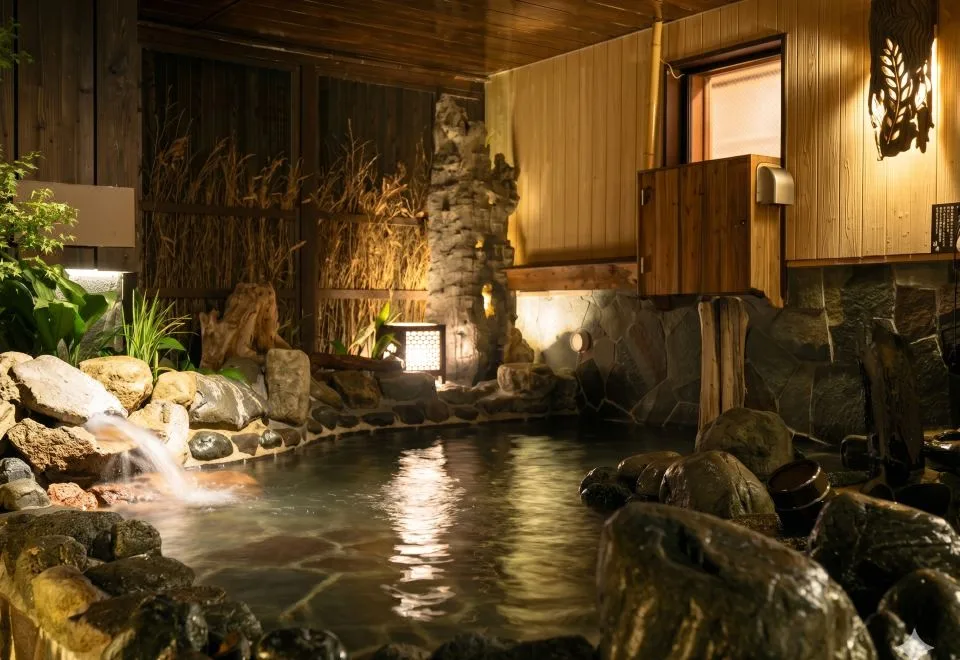
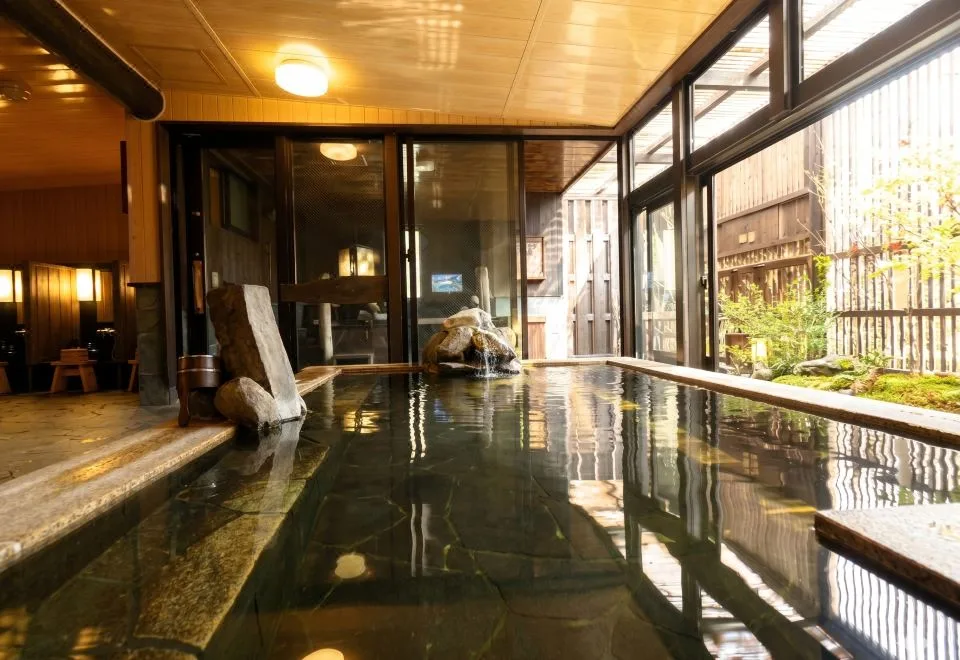
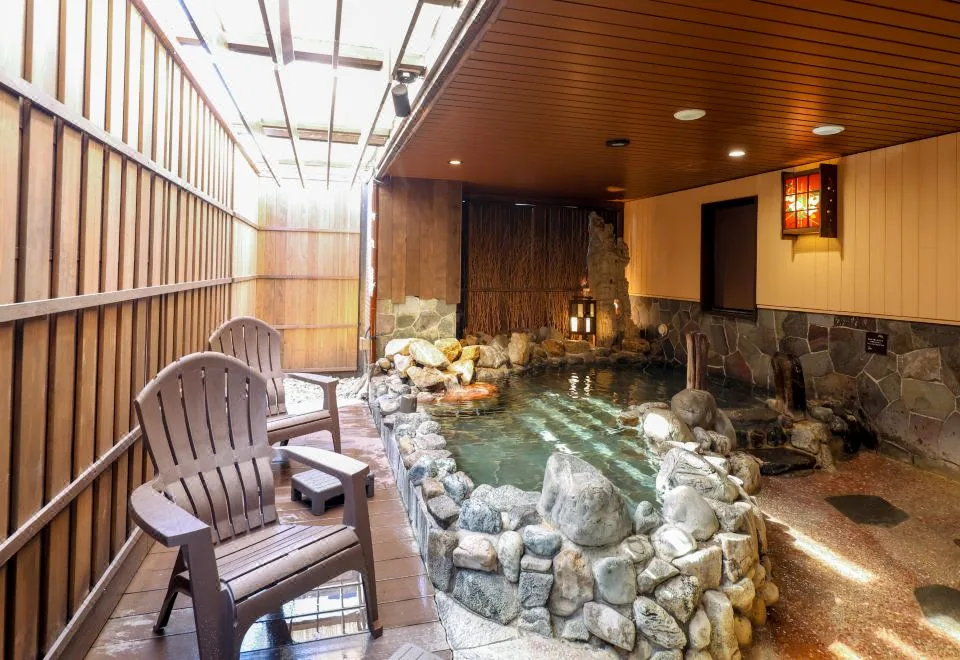
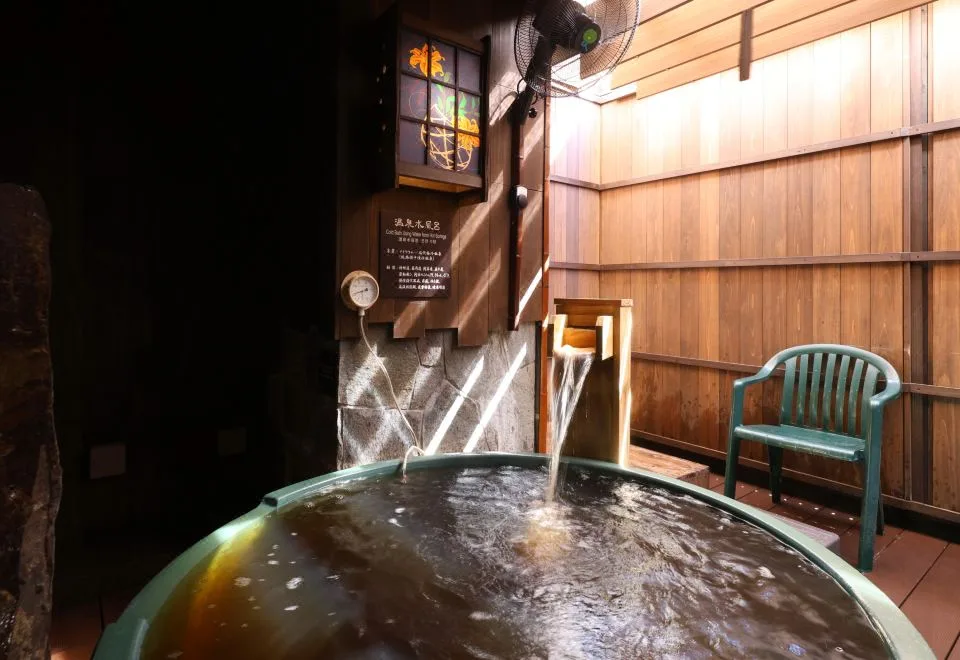
The bathhouse on the second floor is called Shinkawa no Yu and uses the hotel’s own Kamejima River spring, mildly alkaline water. It has indoor baths, a partly open-air bath, a rock bath for men and a fine-bubble bath for women, open from 15:00 until 10:00 the next morning; the sauna closes from 01:00 to 05:00. Tattoos are not allowed in the baths, and there is no private bath in the rooms.
The sauna has automatic water pouring and a TV, and the cold bath uses spring water too. After a soak, pick up free ice cream on the second floor from 15:00 to 01:00, lactic drinks from 05:00 to 10:00, and a welcome drink on the first floor from 15:00 to 23:00.
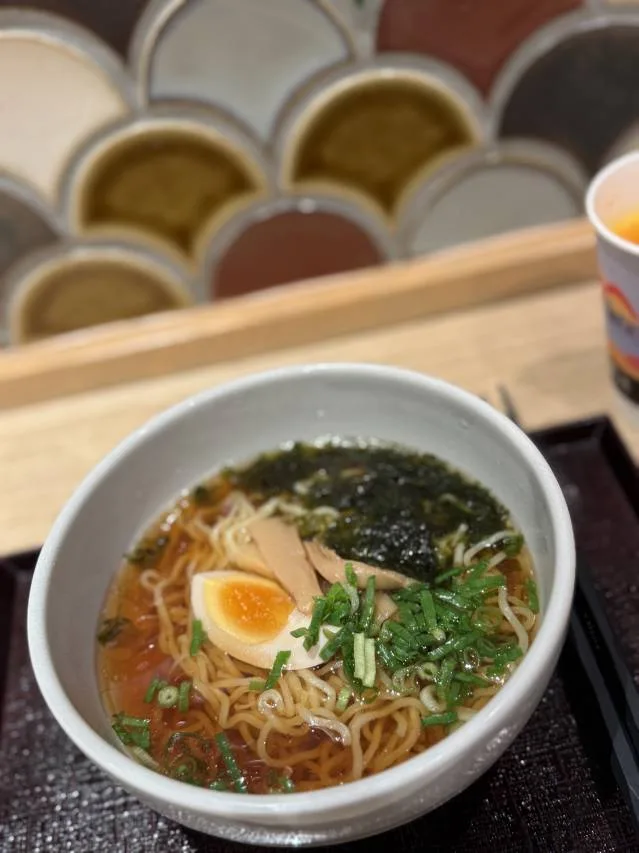
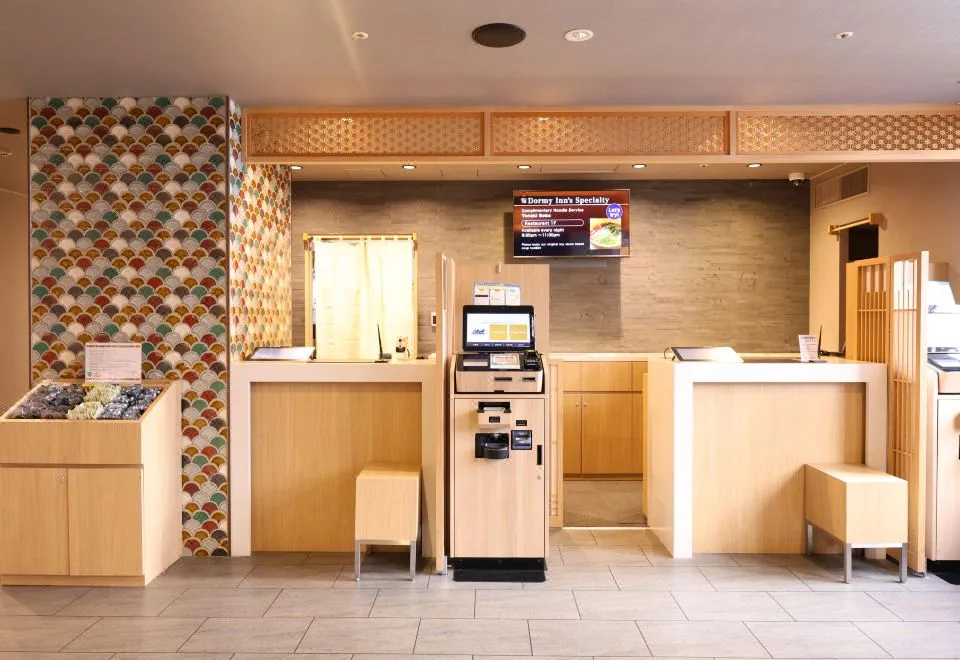
The late-night ramen is free every night from 21:30 to 23:00 — a light soy-sauce ramen, just one bowl. Eat before or after your bath, but do not take two bowls and then rush breakfast. A laundry room, luggage storage and a car service are all available, which helps on a longer stay.
This hotel uses its own Kamejima River spring, not water trucked in from elsewhere. Other hotels in the same group in Ginza and Ikebukuro use trucked water, while this one draws directly from its own spring.
The partly open-air bath is on the second floor, so you feel the outside air while you soak — cooler in winter, just right in summer. Soak for a while, climb out to rest, then go back in; do not stay in too long at once.
One or two nights versus a longer stay
For one night, the hot spring and breakfast can be a refreshing break. Over several nights, compact storage and the chosen cleaning plan matter more. On no-cleaning plans, towels and rubbish are your own job, so check housekeeping terms at booking rather than after the first night.
Children of all ages are welcome, though a fee may still apply even without an extra bed, so include children when you book; no deposit is required. Rooms are compact, so plan luggage storage for a longer stay and take turns opening both cases.
Over several nights, the laundry room is in the building — wash clothes in the evening and they are ready by morning, so there is no need to pack many changes.
Accommodation details worth checking
The baths, late-night noodles and location are why I chose this hotel, and the compact room is the trade-off I accepted first. Road-facing rooms can carry traffic noise, so if you sleep lightly, ask for a quiet room when you book; if something is wrong after check-in, raise it with the front desk before you have fully unpacked, not in the evening. A room change is not always available, so stating your preference early beats hoping on the day.
If your travel companion does not use the baths, ask them first — without the bathhouse, half of this hotel’s appeal disappears, and a more spacious room elsewhere may matter more.
My recommendation
If you walk a lot by day and want a proper soak in the baths at night, put this hotel near the top of your list. For Disney trips, check beds and luggage space first, then whether your schedule leaves time for breakfast. If your companion does not use the baths and values a spacious room, compare larger rooms nearby as well.
Pros and cons at a glance
Pros
- Natural hot spring baths from an on-site spring, with a partly open-air bath, a rock bath for men and a fine-bubble bath for women, open from 15:00 until 10:00 the next morning.
- Hatchobori serves both the Keiyo and Hibiya lines, and the Keiyo Line runs straight to Maihama for Disney with no change.
- Breakfast is a buffet of seafood rice bowls, freshly fried tempura and a small-dish alley, served from 06:30 for early starts.
- Late-night noodles are free every night from 21:30 to 23:00, right after an evening soak.
- Renovated and reopened in August 2025, with fresh rooms and baths and 24-hour staffing, so late arrivals are fine.
Cons
- Rooms are only 13 to 16.3 m², so two large cases have to be opened in turns.
- Road-facing rooms can carry traffic noise; light sleepers should ask for a quiet room first.
- The Keiyo Line B4 exit has no elevator — with large luggage, use the B2 exit instead, about three minutes further on foot.
- The passage between the two lines is stairs only, so transferring with large cases means exiting to street level first.
- Tattoos are not allowed in the baths; if your companion does not use them, half of this hotel’s appeal disappears.
Information checked: 22 November 2026