
TOKYO / CHUO
Mitsui Garden Hotel Nihonbashi Premier
Mitsui Garden Hotel Nihonbashi Premier / Tokyo
Nihonbashi upper-floor public bath and Japanese breakfast: a quiet base for longer stays?
Mitsui Garden Hotel Nihonbashi Premier suits travelers who enjoy Nihonbashi’s historic buildings, department stores and calmer atmosphere while still wanting a soak at night. The lobby is on an upper floor, which helps the mood shift from shopping to relaxation. Mitsukoshimae and Shin-Nihombashi can be reached via underground passages.
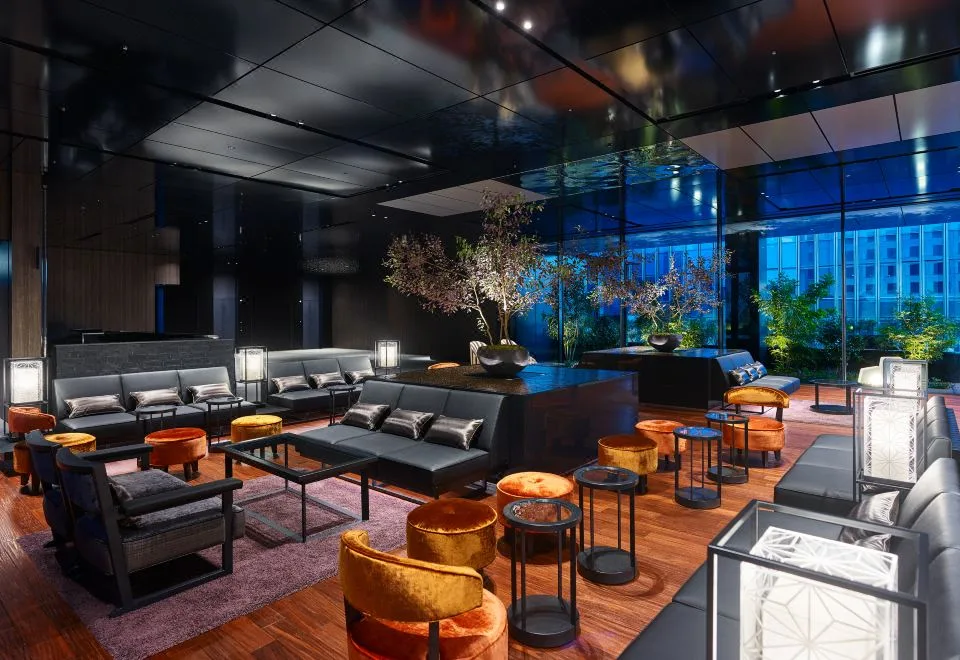
How to choose this hotel
| Item | Stay details |
|---|---|
| Location | 3-4-4 Nihonbashimuromachi, Chuo City, Tokyo 103-0022, Japan |
| Check-in / Check-out | 3 p.m.–midnight / by noon |
| Room choice | Start with bed count and size: Standard Double 20.0 m², Superior Twin and Triple 26.4 m², Superior Corner Twin 29.5 m², Junior Suite Twin 55.9 m²; no room type takes an extra bed. |
| Itinerary | Use Nihonbashi as a base for Ginza, Akihabara and the Imperial Palace, and come back for a soak and dinner. |
Room types and suitcase space
Most rooms separate the bath, toilet and washbasin, helping two guests get ready without waiting; accessible-room layouts differ. When choosing, compare double, twin, triple and corner categories. For daylight or seating near windows, confirm orientation and the specific type rather than merely requesting a high floor.
I like the room design and the cleanliness, but a standard room floor still has to make way for two suitcases — open them both and there is little walkway left. Standard rooms suit travelers who spend most of the day in the city; if you will read, work or sort through shopping during a longer stay, compare the larger twins or a corner room.
Start with the numbers: the Standard Double is 20.0 m² with a 151 cm bed; the Superior Queen is 23.5 m² with a 164 cm bed; the Superior Twin is 26.4 m²; the Superior Triple is 26.4 m² with three beds; the Superior Corner Twin is 29.5 m² with a wider window view; the Junior Suite Twin is 55.9 m² with a separate bedroom and living room plus a double washbasin. Two people with two large suitcases should look at a twin or corner room of 26.4 m² or more.
Rooms come with Wi-Fi, a casting TV, a fridge, an electric kettle, an iron and a safe, plus nightwear and slippers; humidifiers, laundry service and wheelchairs are available in the building — just ask at the front desk. The Accessible Queen is 24.7 m², with the bath, washbasin and toilet in one spacious layout with handrails, so its layout differs from other rooms; confirm the layout when booking. Families can ask at the front desk for child-sized slippers and toothbrushes; rooms also have a water purifier.
Book by headcount first, then by size: one person fits in the 20.0 m² Standard Double; two people with two large suitcases should look at a twin or corner room of 26.4 m² or more; three people should take the triple room and count the beds first; the suite suits anyone who wants to host friends or work in the room. The accessible room comes only as a queen, so ask about its layout before booking.
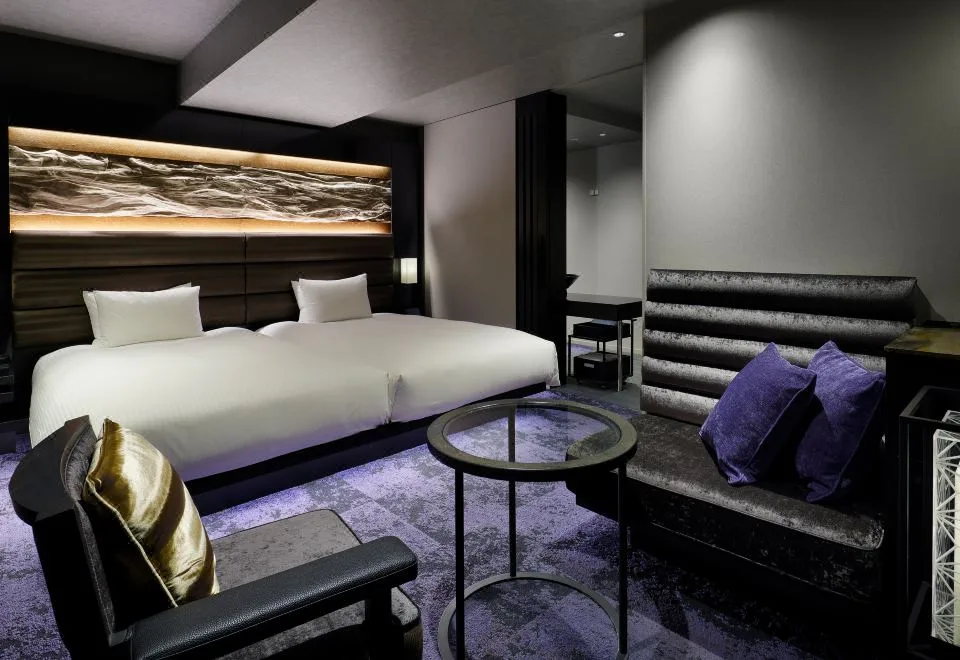
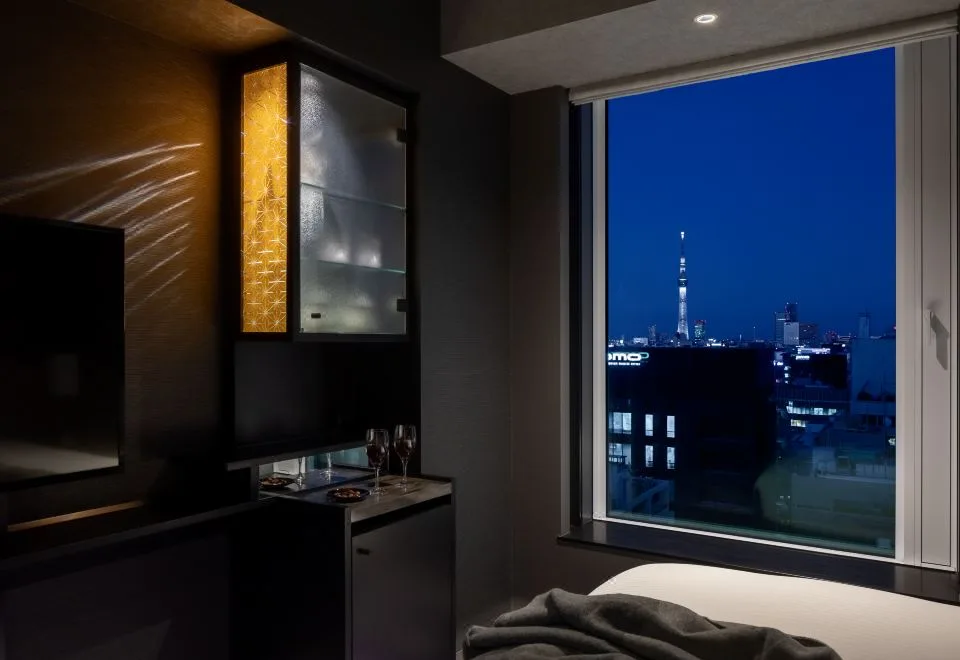
Guest room photos
Compare the bed, desk and entrance to imagine where luggage fits; furniture varies by the category booked.
The photos show Edo kiriko patterns and ceramic washbasins — Japanese details in the places you touch every day — and river-themed art on the walls.
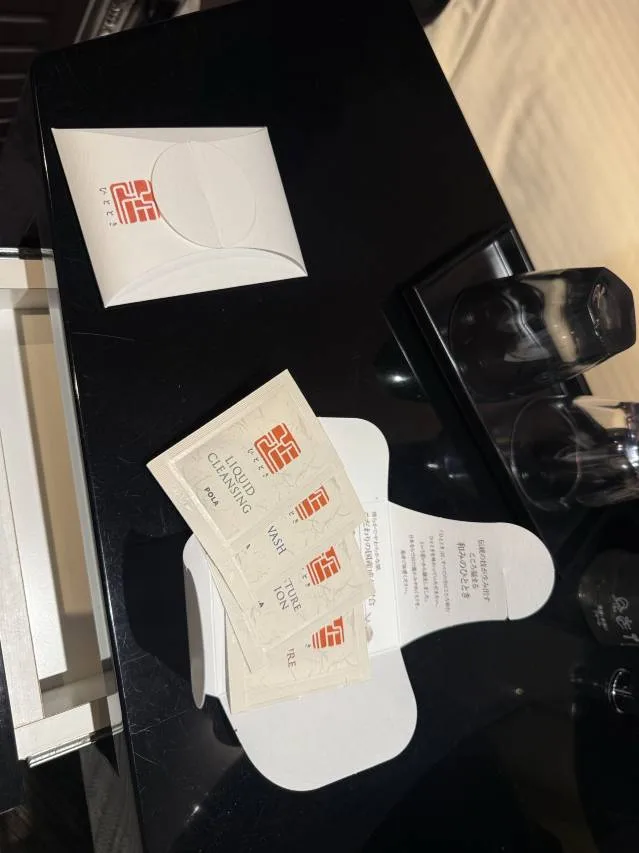
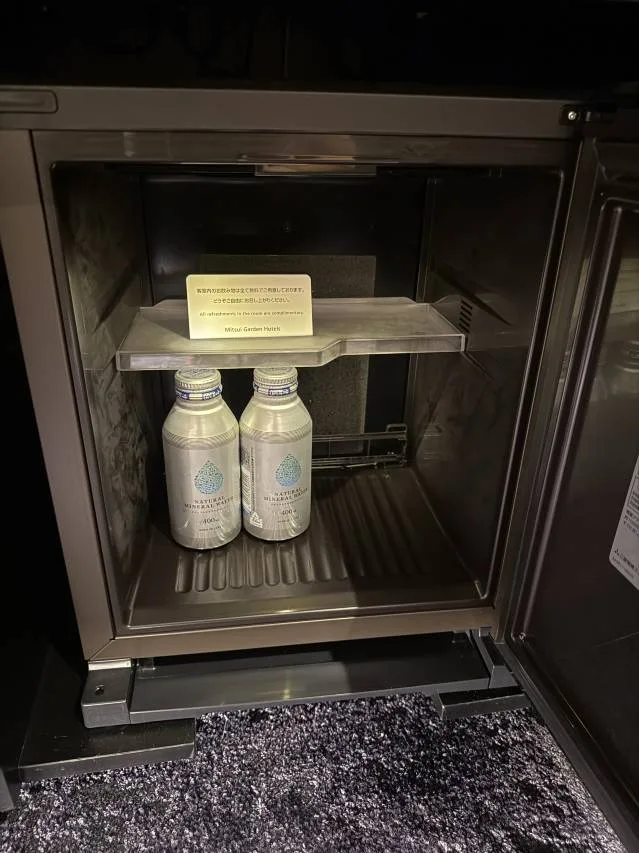
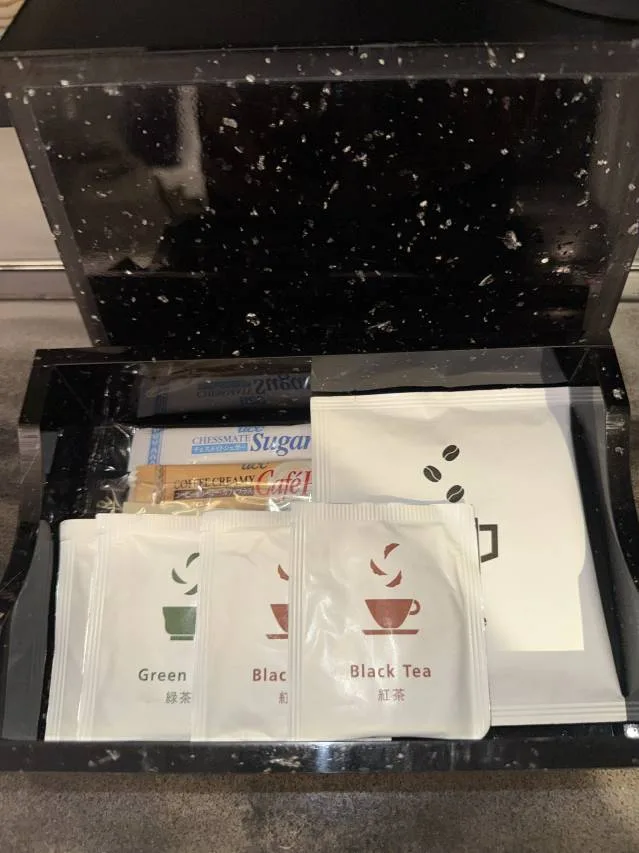
The amenity box, cups and skincare items in the photos are already in the room — no need to ask at the front desk; nightwear and slippers are in the room too, ready to change into when you come back in the evening.
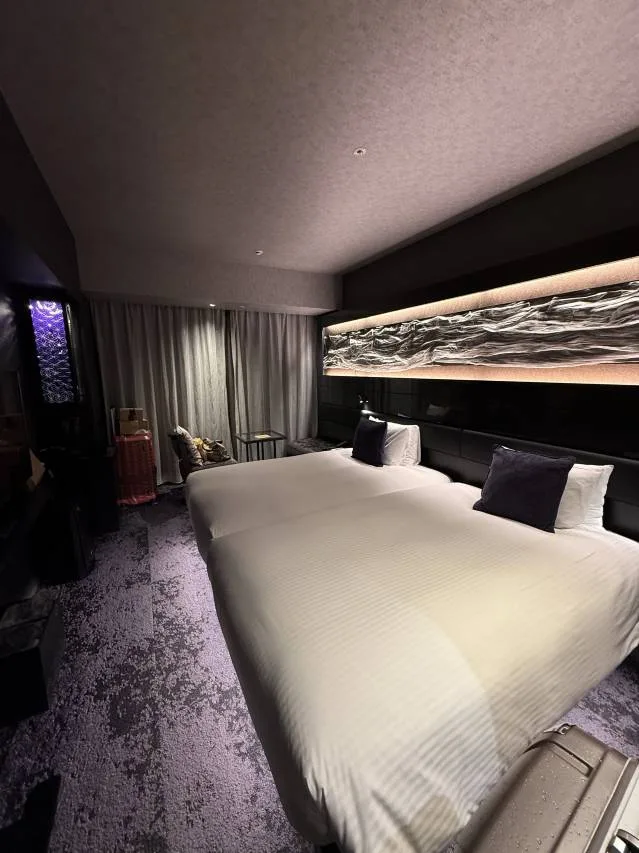
Bathrooms and shared bathing
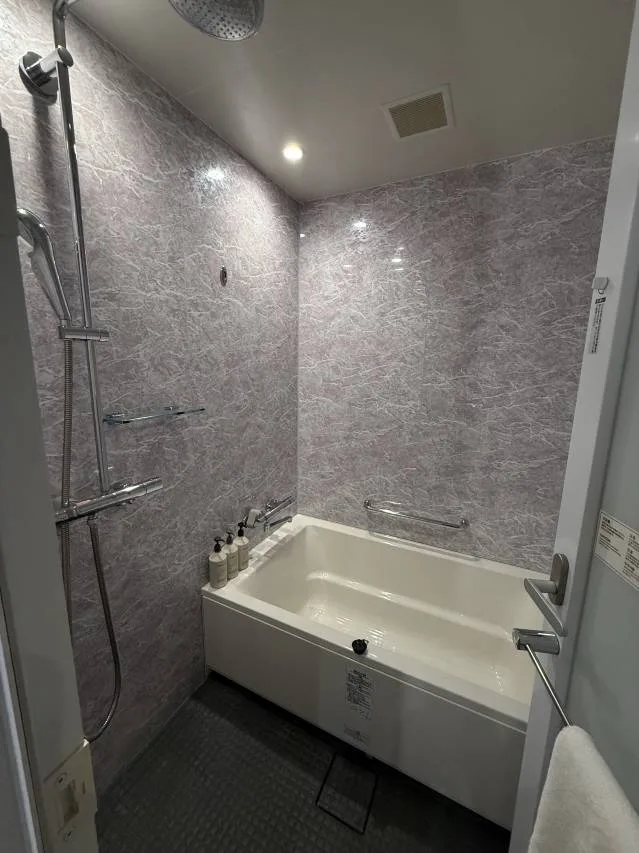
Bath, shower and basin positions affect two guests getting ready. Look at the photos and check the bath layout of your booked room; the hotel’s public bath is separate from a private bathtub.
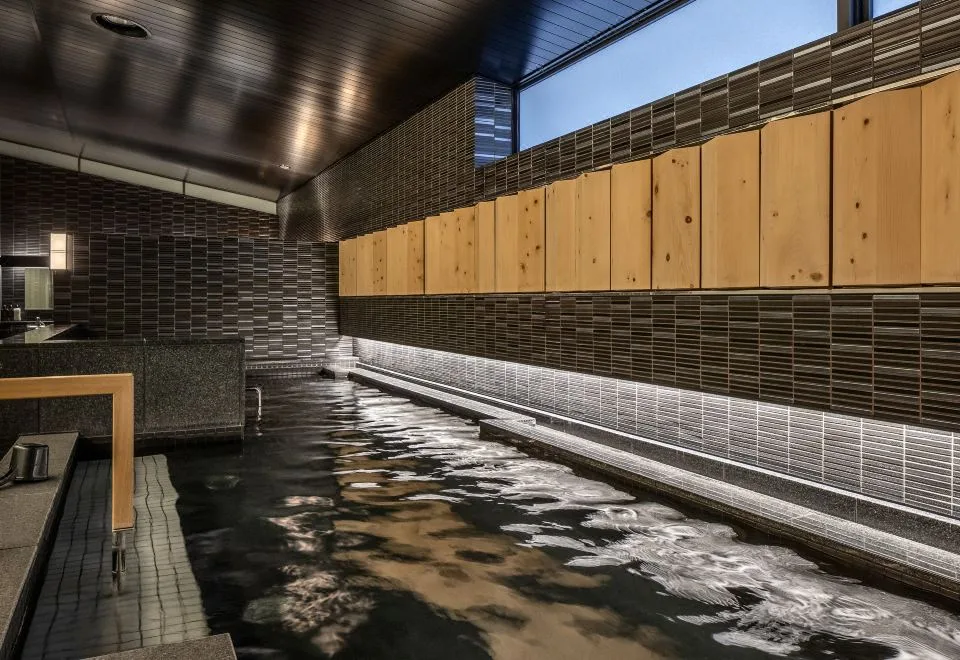
The ninth-floor public bath is for staying guests only, free of charge, with separate men and women baths, open 6:00–9:00 and 15:00–25:00. Bring your room key and your room towel; the sleeping bath has a hinoki-wood pillow, and the TV in your room shows how crowded the bath is, so you can pick a quieter time. The bath provides shampoo, conditioner and body wash, and hair dryers are in the bathing area.
The bathtub in your room is yours; the public bath is shared — keep the two apart in your head. Soak after dinner, or once more before checkout in the morning; the public bath is not a private onsen attached to every room, and it is not an open-air bath.
Guests with tattoos can use the public bath: the hotel group lifted its tattoo restriction in March 2026, as long as normal bathing rules are followed.
Breakfast at Nihonbashi Asada
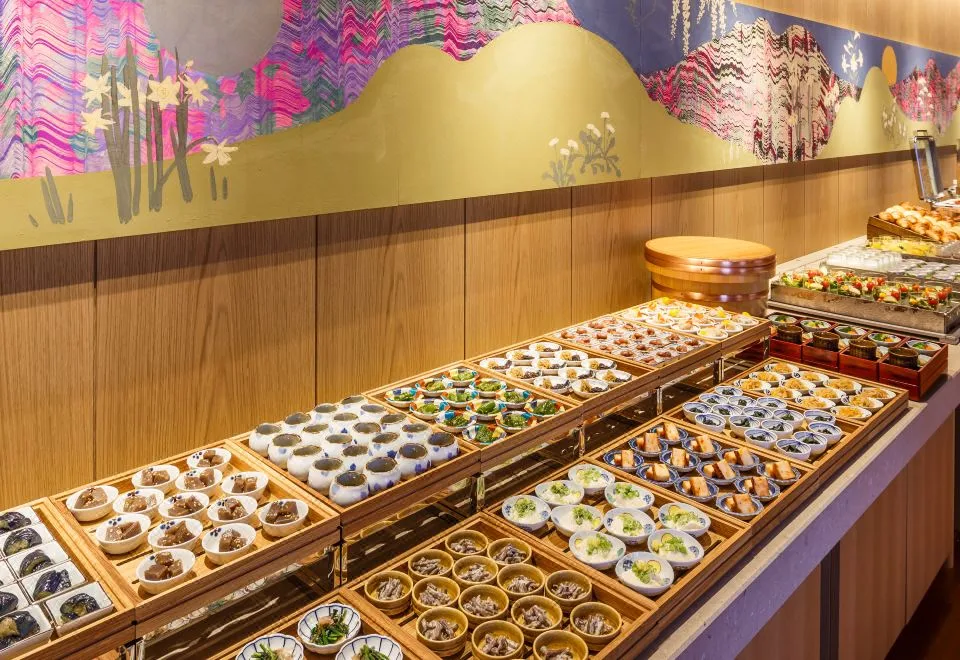
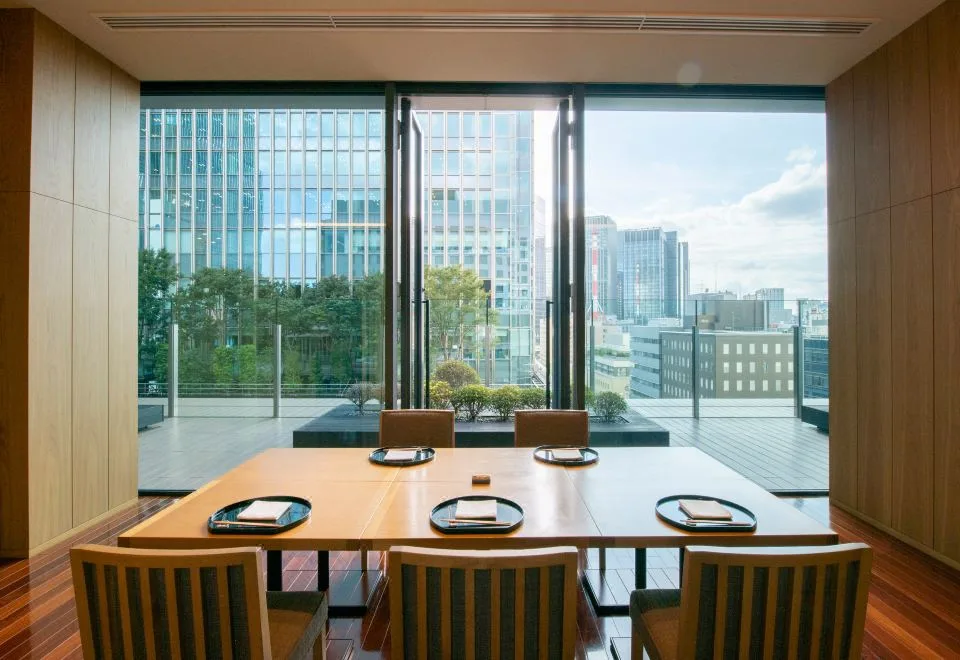
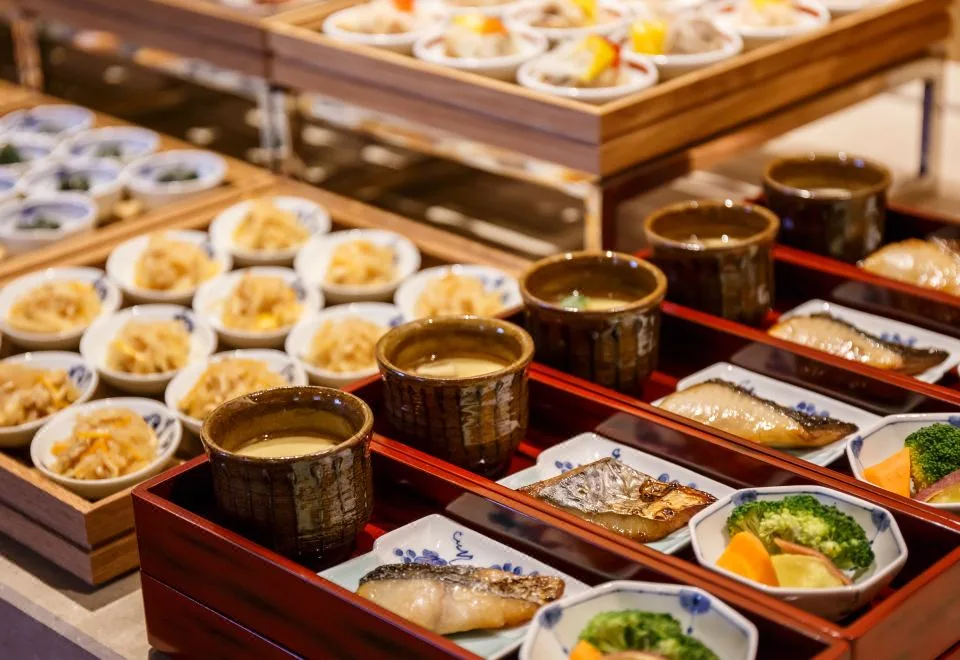
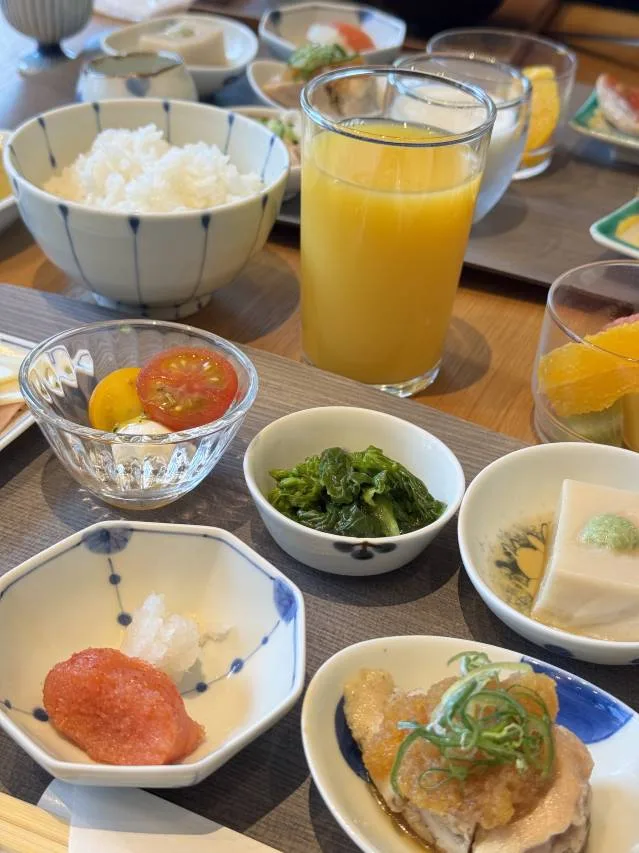
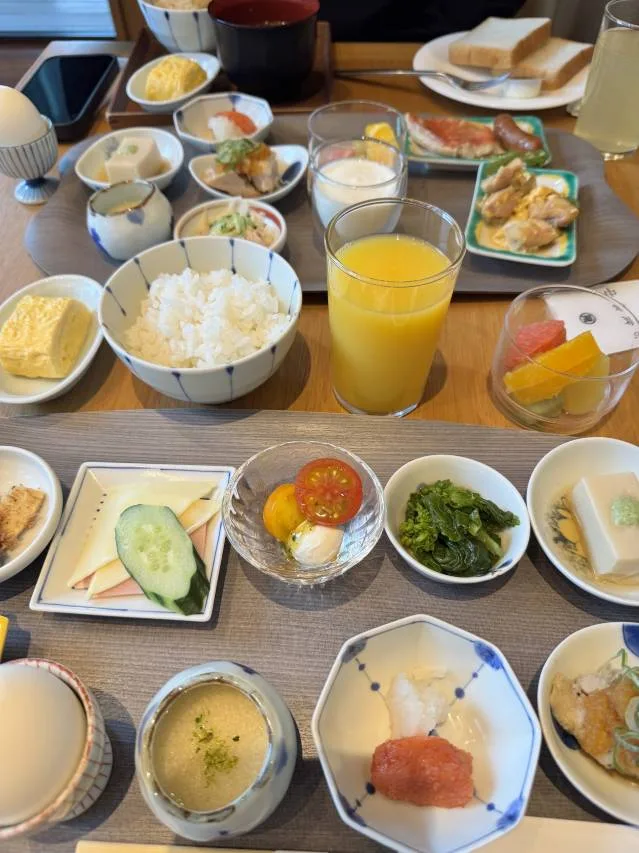
On floor nine, Nihonbashi Asada provides a Japanese-Western breakfast buffet known for Japanese small side dishes and a refined dining space. If you like rice and little sides to start a calm morning, try it at least once; if you prefer a bustling Western buffet, you need not include breakfast every day.
I enjoy the atmosphere here; whether the flavor and price feel right depends on what you actually eat that day. Compare breakfast by the number of days you will really eat it, and leave a morning free for a café in Ningyocho or Nihonbashi.
Breakfast runs 6:30–10:00, last entry 9:30, in the ninth-floor restaurant with 65 seats. The Japanese buffet leads with small side dishes — Kaga vegetables, freshly grilled tamagoyaki and rice from Ishikawa, laid out dish by dish, with Western choices as well. Adults pay JPY 3,850 per person, children aged 5 and under eat free; whether breakfast is included depends on your booking plan, and extra breakfasts can be paid for at the hotel. Children aged 6–17 pay the same JPY 3,850 as adults.
The same restaurant serves lunch 11:30–14:00 and dinner 17:00–22:30 — Kaga cuisine from Nihonbashi Asada, a restaurant founded in 1867, opening its first hotel branch here. Next door, Bar Matsu opens at 17:00 until late — stop in for a drink before heading back to your room. If you do not want breakfast in the hotel every day, leave one morning for a café in Ningyocho or Nihonbashi and keep the day loose.
Transport, luggage and map
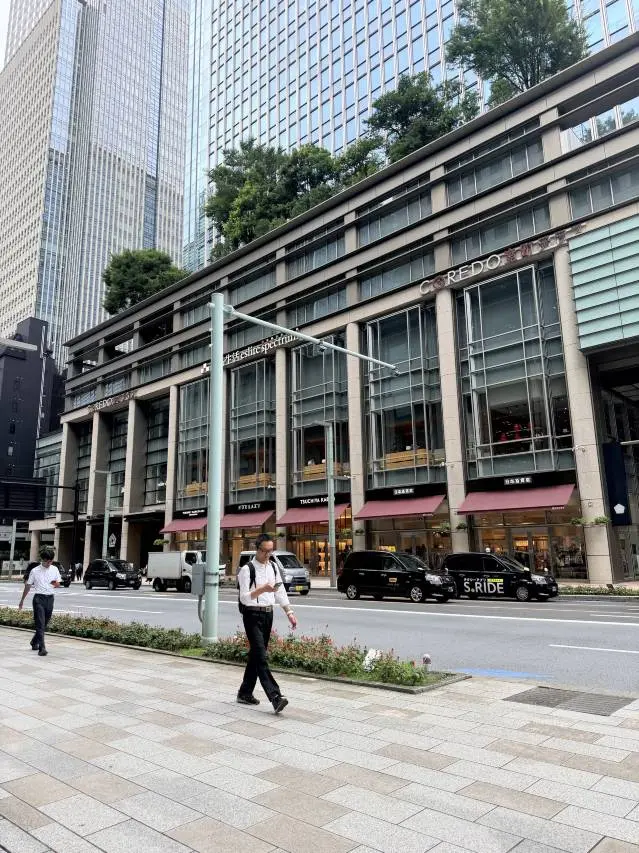
The official guide puts Mitsukoshimae Exit A10 about one minute away on the Ginza and Hanzomon lines, the closest exit; JR Shin-Nihombashi Station is 150 metres away, connected by an underground passage toward its Exit 1. With large luggage, a stroller or a wheelchair, skip the stair exits: follow the underground passage to COREDO Muromachi, take the building lift to the street, then walk over. Shin-Nihombashi has no lift of its own to the street, so its step-free route runs through the passage to the Mitsukoshimae Metro lift.
From Mitsukoshimae, the Ginza Line reaches Ginza in three stops and runs straight to Asakusa and Shibuya the other way; the Hanzomon Line runs to Oshiage and Shibuya with no change.
From JR Shin-Nihombashi, the Sobu Rapid Line reaches Tokyo Station in one stop, where you change for Narita Airport. The hotel is not directly connected underground — the last stretch is on the street, so in the rain use the COREDO Muromachi underground passage and come up to the surface there.
Address: 3-4-4 Nihonbashimuromachi, Chuo City, Tokyo 103-0022, Japan. Google Maps directions
Nearby Nihonbashi
Spend a day in Nihonbashi Muromachi, Mitsukoshi and historic buildings, or follow a route through small local museums. Take the train to Ginza on another day; a calm base need not feel like a busy shopping street every evening.
The hotel sits in Nihonbashi Muromachi, with Mitsukoshi, COREDO Muromachi and the old Nihonbashi streets in walking range; the Nihonbashi Bridge itself is 530 metres away. Spend a day on foot among the department store and the historic buildings, then come back for a soak — you do not need to head out every day.
Ginza is 1.0 km away, the Imperial Palace 1.6 km, Akihabara 1.7 km and Ueno 1.9 km, all within a half-hour trip. Take the Ginza Line three stops for Ginza, head to Akihabara for the electronics streets, and save the Imperial Palace East Gardens walk for a fine day — staying in Nihonbashi means none of these need a change of hotel.
Short and longer stays
For three or four nights, this is a comfortable base: go out in the morning, return for the bath and dine around Nihonbashi. Cleaning, sheets and towels follow the current hotel policy, so request daily changes in advance if essential. The public bath is shared, not a private hot spring inside every room.
Check-in is 15:00–24:00 and check-out is by 12:00, with the front desk staffed around the clock and a self check-in kiosk as well. Luggage can be stored before check-in and after check-out for same-day pickup; valuables, food and items needing refrigeration are not accepted. No deposit is required, and check-in requires guests to be at least 18.
Children of all ages are welcome; a child sharing a bed may still incur a fee, so add the number of children when booking to get the exact amount. No room type takes an extra bed or a crib, so parties of three or more should count beds first. Pets are not allowed, while service animals are. For longer stays, laundry service, vending machines and humidifiers are all in the building — settle into the rhythm and you will not need to rearrange each day. A courier service is also available through the front desk.
Exterior and shared areas
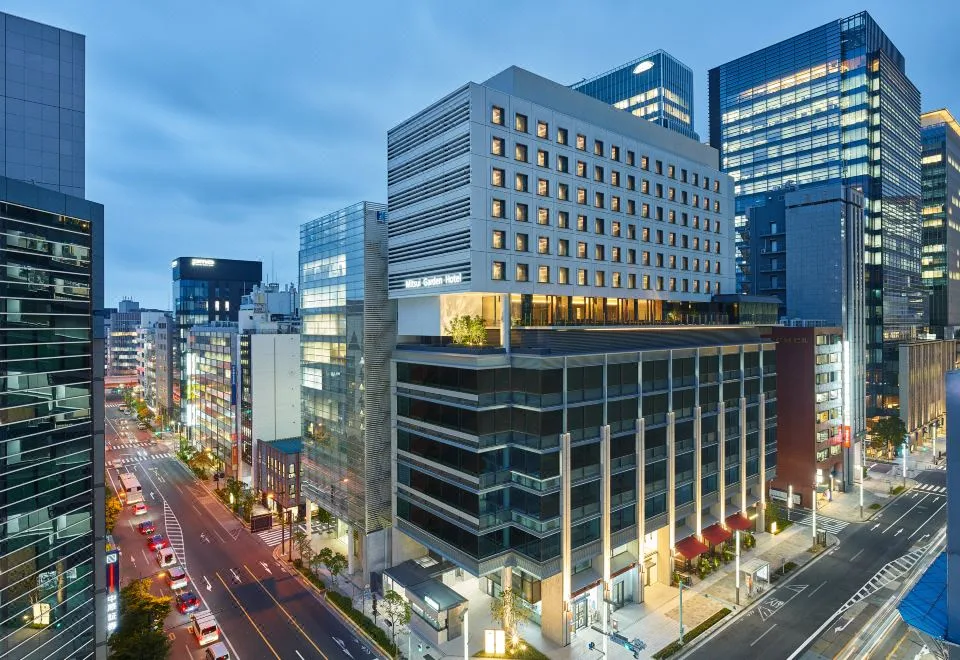
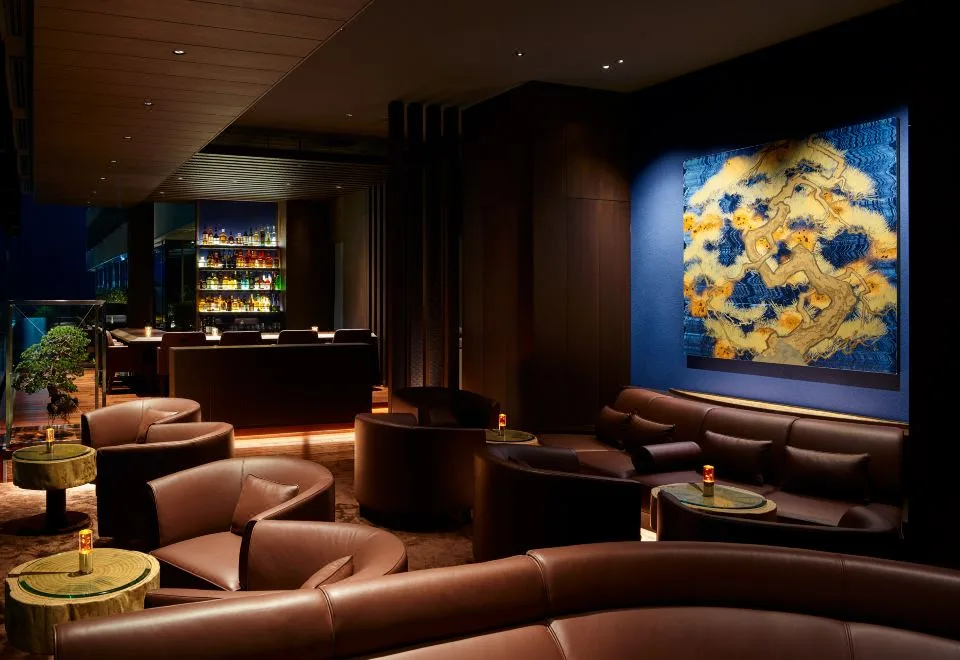
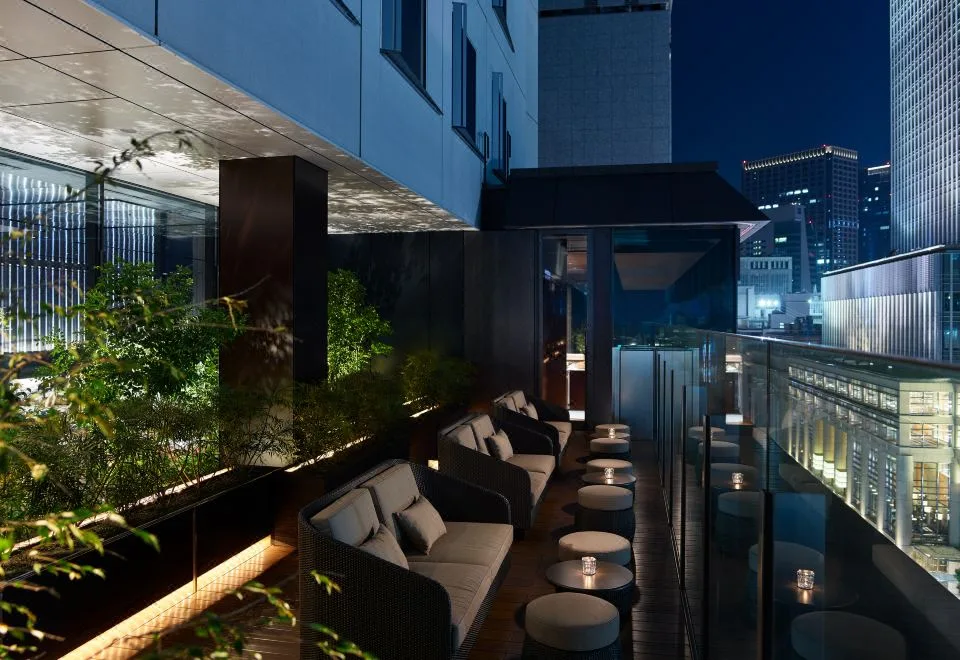
Floor 9 is the busiest floor in the hotel: the lobby, restaurant, bar and public bath are all there, so one lift ride brings you to everything. Bar Matsu has 24 seats — 7 at the counter and 17 at tables and sofas — with terrace seats looking over the Nihonbashi streets and a 10% service charge at night; the whole building is non-smoking, with smoking areas on floors 9 and 14.
The practical things are all covered: free public Wi-Fi, luggage storage, currency exchange, a car service, wake-up calls, translation tools, a lift, vending machines, humidifiers and laundry service, plus wheelchairs and accessible rooms on site. The guests-only public bath is free — bring your room key. These are services in the building, ready to ask for at the front desk. Public areas are also monitored. The building also has a security system, security staff, smoke and carbon monoxide detectors, fire extinguishers and a first-aid kit.
Reasons to stay and trade-offs
Advantages
Mitsukoshimae and Shin-Nihombashi transport, local department stores and restaurants are convenient. Upper-floor common areas, the public bath and Japanese breakfast add relaxation to longer stays. The staff care, the room design and the tidy streets are reasons I would come back.
Considerations
Transport convenience does not guarantee huge rooms, and at night I could occasionally hear traffic. An underground connection is not necessarily a fully accessible one; travelers with wheelchairs, strollers or two large suitcases should confirm the route first, and if you are sensitive to noise, ask for a quiet room when booking.
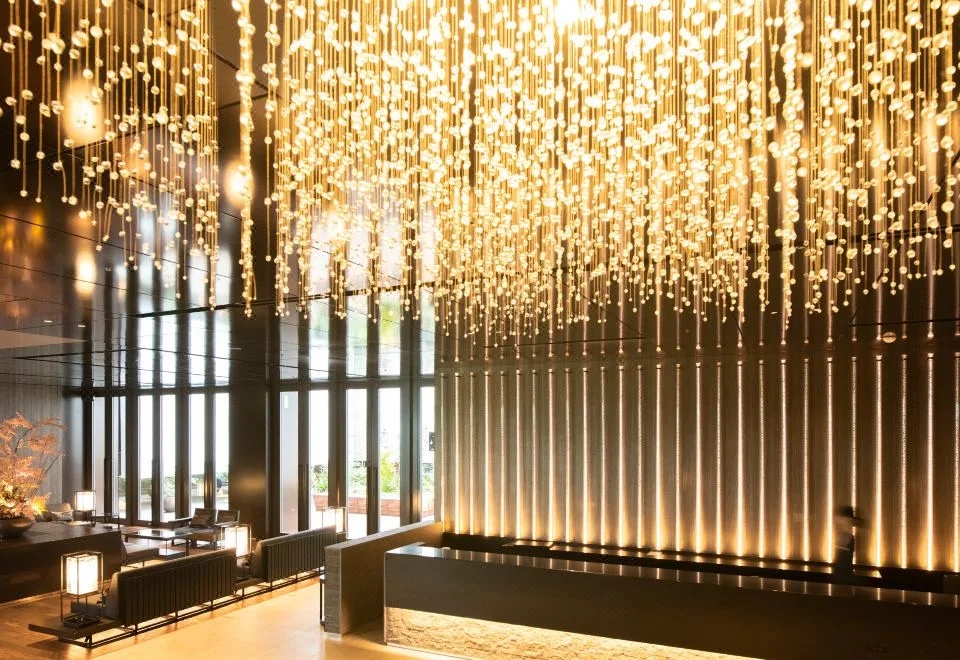
This hotel suits travelers who want Nihonbashi as a base and a soak to come back to every day; if you plan to stay in the room all day, or the breakfast price bothers you, think it over first. Count the beds, the breakfast days and the luggage route — get those three right and the stay works well. The public bath and breakfast are both on floor nine, so there is no running up and down once you are in. The lobby is on floor nine, so after check-in you can go straight to the public bath or the restaurant.
Pros and cons at a glance
Pros
- Mitsukoshimae Exit A10 is about a one-minute walk, served by the Ginza and Hanzomon lines; JR Shin-Nihombashi Station is 150 metres away, and Tokyo Station is one stop from there.
- The ninth-floor public bath is free for staying guests, open 6:00–9:00 and 15:00–25:00, with separate men and women baths, and the room TV shows how crowded it is.
- Nihonbashi Asada on floor nine serves a Japanese buffet breakfast 6:30–10:00 for JPY 3,850 per adult, free for children aged 5 and under; lunch and dinner are in the same restaurant.
- Room sizes and bed widths are stated clearly: Standard Double 20.0 m², Superior Twin 26.4 m², Superior Corner Twin 29.5 m² and Junior Suite Twin 55.9 m²; most rooms separate the bath, toilet and washbasin.
- The front desk is staffed around the clock, luggage can be stored, public Wi-Fi is free, and the lobby, restaurant, bar and public bath are all on floor nine.
Cons
- Standard rooms are 20.0 m², so two large suitcases open at once will squeeze the floor; no room type takes an extra bed or a crib.
- Traffic can occasionally be heard at night, so light sleepers should ask for a quiet room first.
- Shin-Nihombashi Station has no lift of its own to the street, so large luggage and wheelchairs must use the Mitsukoshimae Metro lift through the underground passage.
- Breakfast costs JPY 3,850 per person, so if you will only eat it once or twice, count the days before choosing a breakfast-included plan.
Information checked: November 22, 2026.