
TOKYO / CHUO
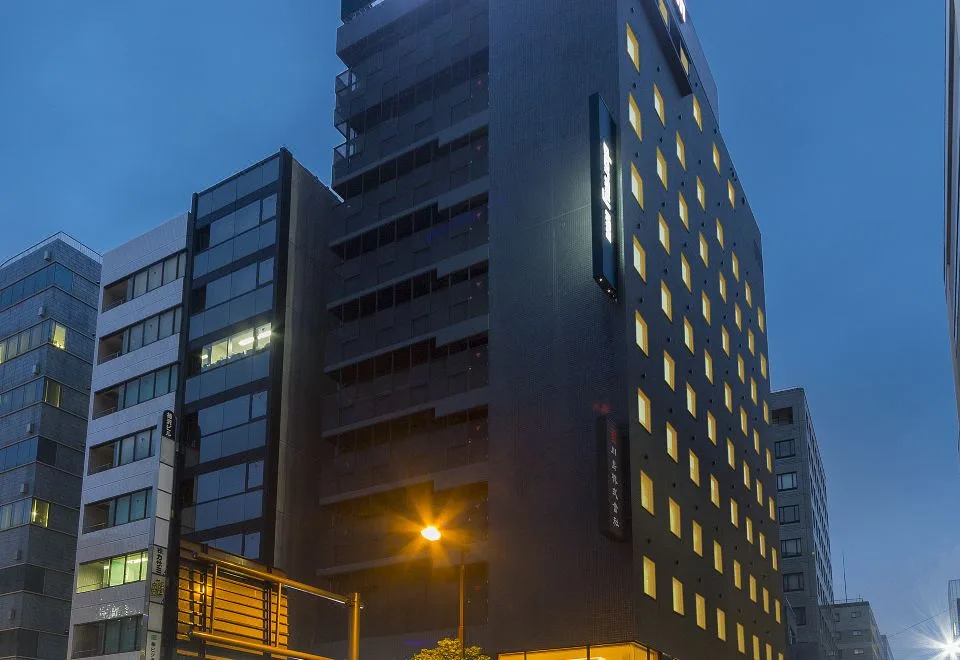
Dormy Inn Premium Tokyo Kodenmacho
Dormy Inn Premium Tokyo Kodenmacho Hot Spring
Kodemmacho public bath and seafood breakfast: check multi-night cleaning
Dormy Inn Premium Tokyo Kodenmacho appeals to travelers who enjoy bathing and a Japanese breakfast as small pleasures. After sightseeing, you can relax in a top-floor public bath and enjoy a Japanese meal the next morning. That combination may matter more than the raw room size.
My reason for choosing this hotel is simple: the station exit is right outside, the evening brings a public bath and free noodles, and the morning brings a Japanese breakfast. I accept the small rooms — a smooth itinerary and somewhere to unwind every evening matter more to me than a few extra square metres.
| First considerations | My choice |
|---|---|
| Suitable stays | Solo or two-person travel that values public baths and Japanese breakfast and accepts compact rooms. If daily full cleaning, views or suitcase area are essential, check the room and rate carefully. |
| Room choice | Official Semi-double is 13.9 m² for one person; Double is 13.4–14.6 m² for two; Twin is 18.8 m², with Japanese-style twin types too. |
| Trade-off | The bath, evening noodles and little treats after bathing are why I would come back; the small bath and peak-time crowds are the trade-off I accept first. |
Rooms / Top-floor bath / Transport / Breakfast / Longer Stays / Trade-offs
Choosing beds and luggage space
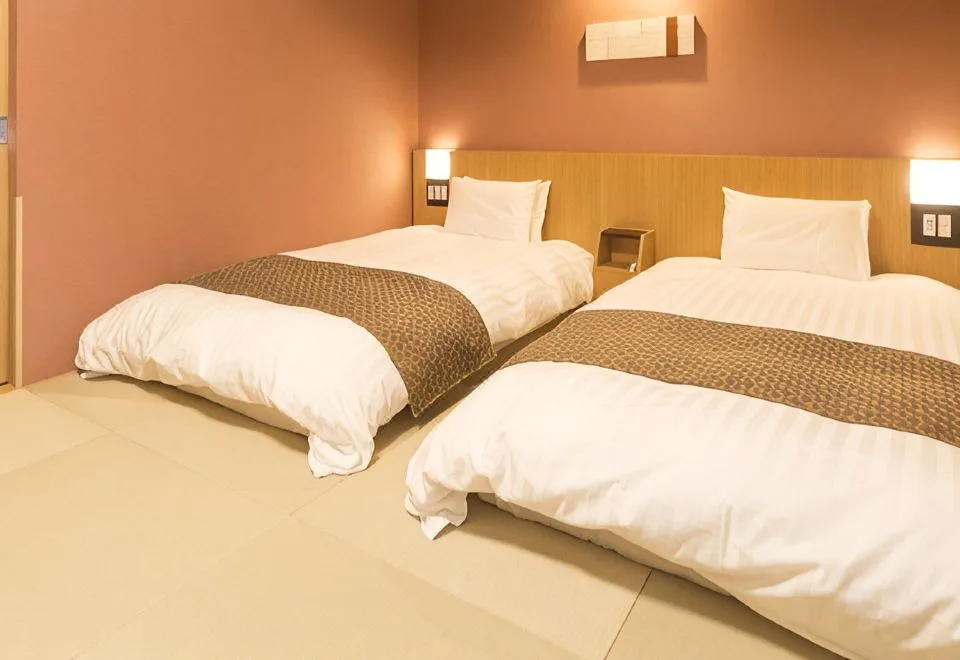
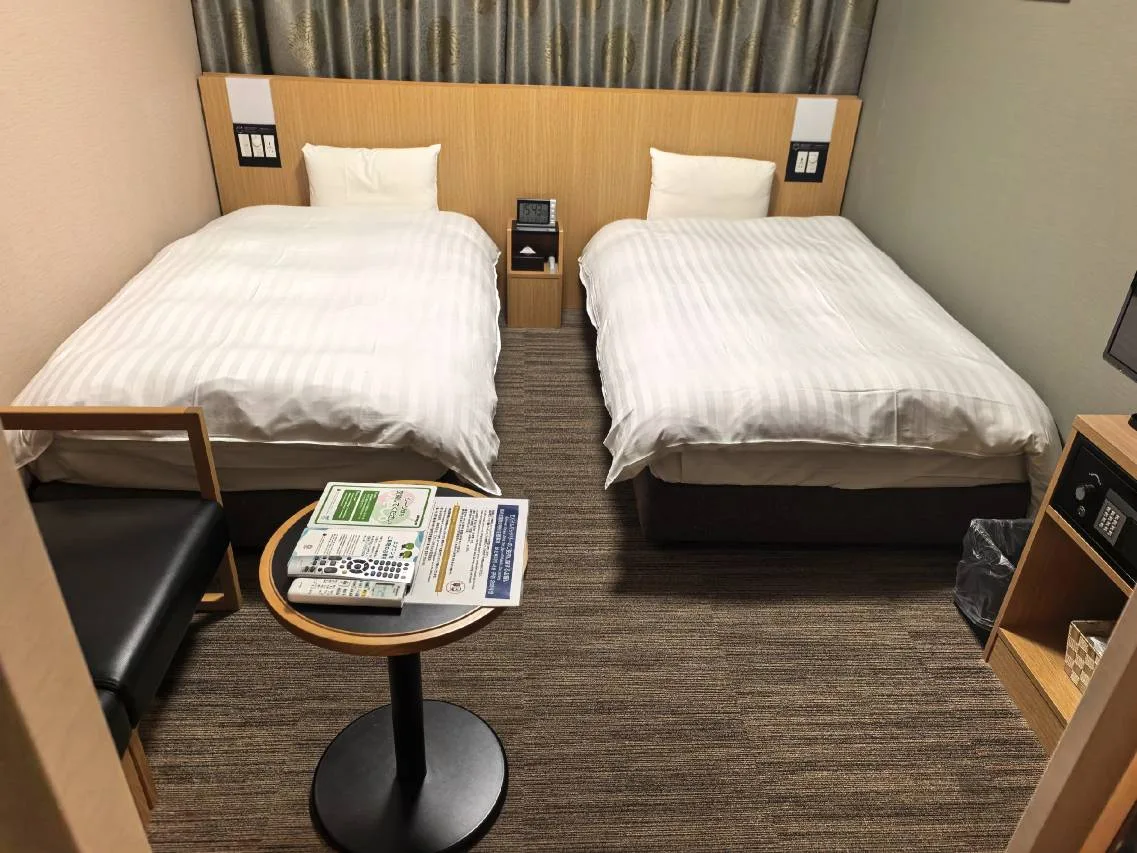
Semi-double is 13.9 m² for a solo guest; Double ranges from 13.4 to 14.6 m² for two; Twin is 18.8 m², with Japanese-style twin options. Two people can quickly use up the passage by the bed when opening cases. Choose a Twin for separate beds and don’t treat a roughly 13 m² double as a roomy room for two. For daylight, ask the window direction; not every window faces open views.
The hotel has 134 rooms, with more types than first meet the eye: besides Semi-double, Double and Twin, there are Japanese-Western Twin rooms of 22 m², Deluxe Twins and Airweave Double rooms. A free yukata waits in the room, so you can wear it straight to the bath and back. Wi-Fi, a refrigerator, an electric kettle, a tea set and a safe come as standard, and the bed firmness is just right for a sound night’s sleep.
Travelling with children? The hotel welcomes children of all ages: children aged two and under stay free without an extra bed, children aged three to twelve sharing a bed cost 3,000 yen each, and guests aged thirteen and over pay the adult rate. No room type takes a crib, and extra beds depend on the room type, so confirm beds and guest numbers when you book. Pets are not allowed, check-in guests must be at least eighteen, and no deposit is required.
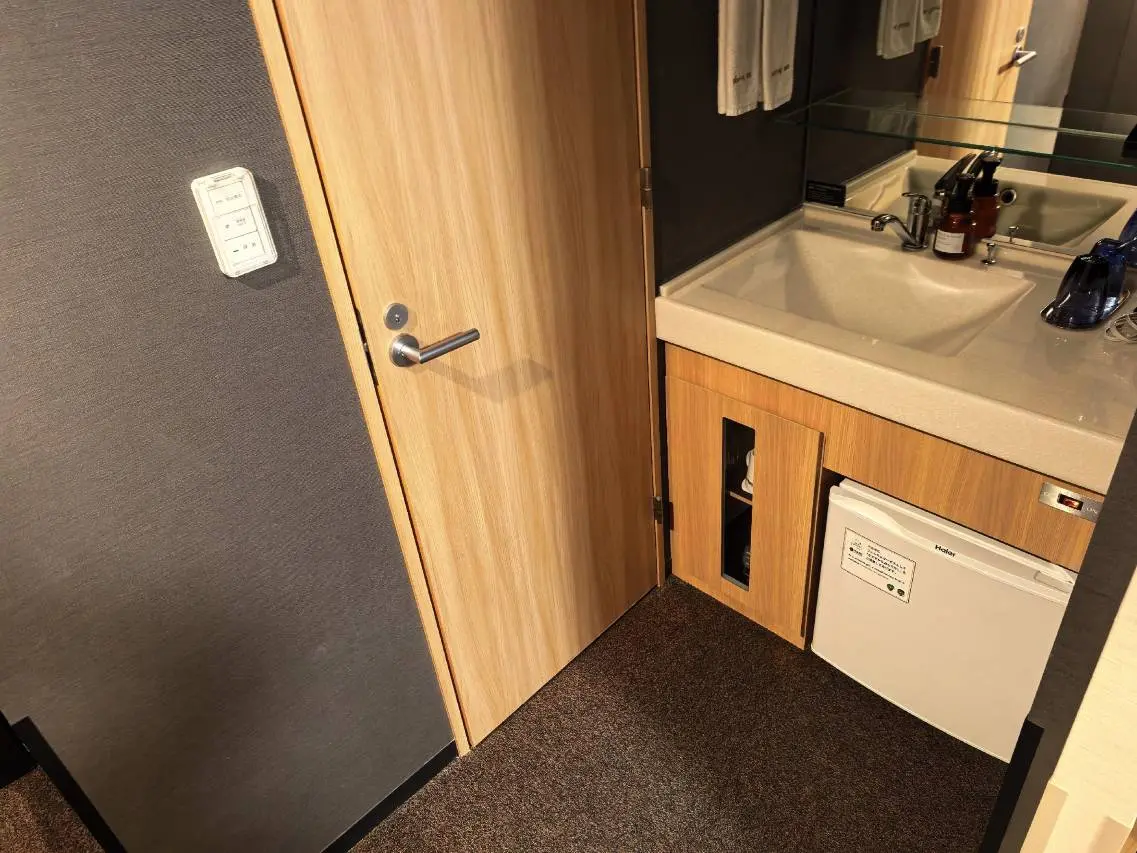
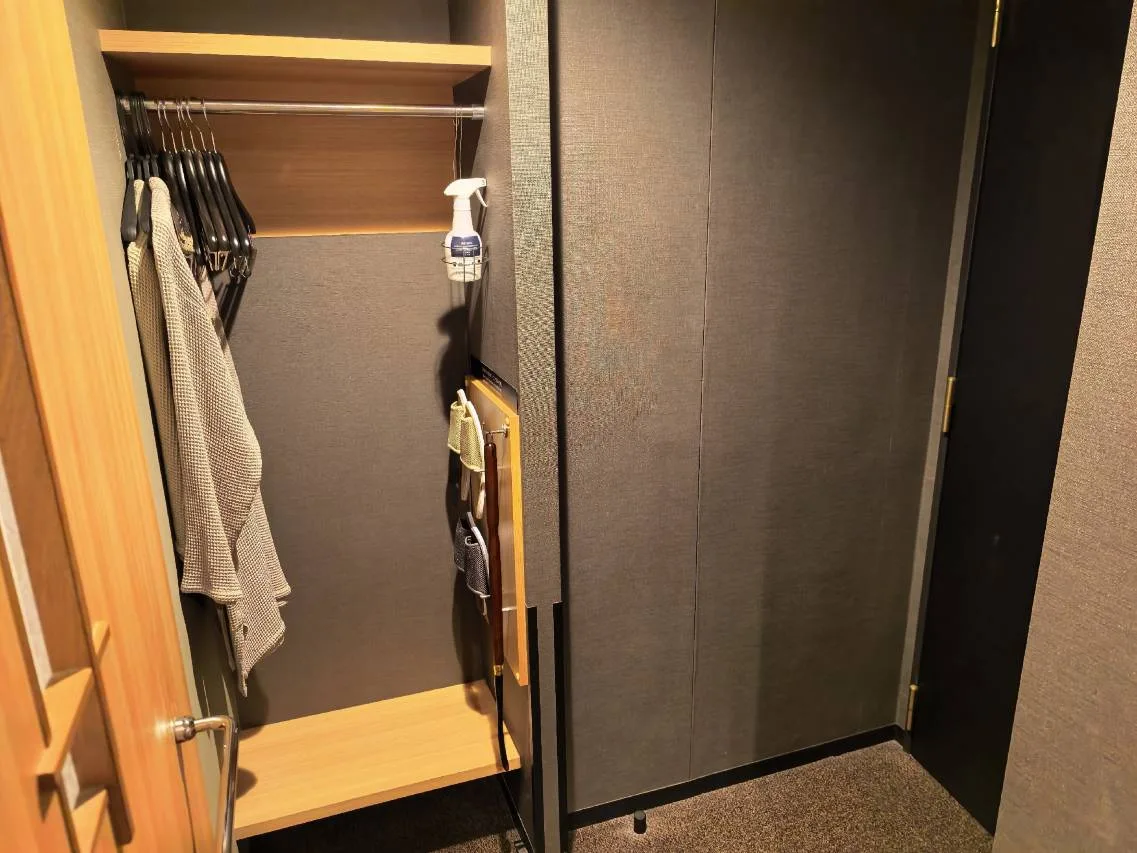
You do not need to pack toiletries: shampoo, conditioner, body wash, towels, bath towels, a toothbrush set, a comb, a hair dryer, a razor, a yukata and slippers are all in the room, along with a refrigerator, an electric kettle, a tea set, a television and a safe. The passage narrows once a suitcase is open, so sort your things before spreading them out rather than emptying everything at once.
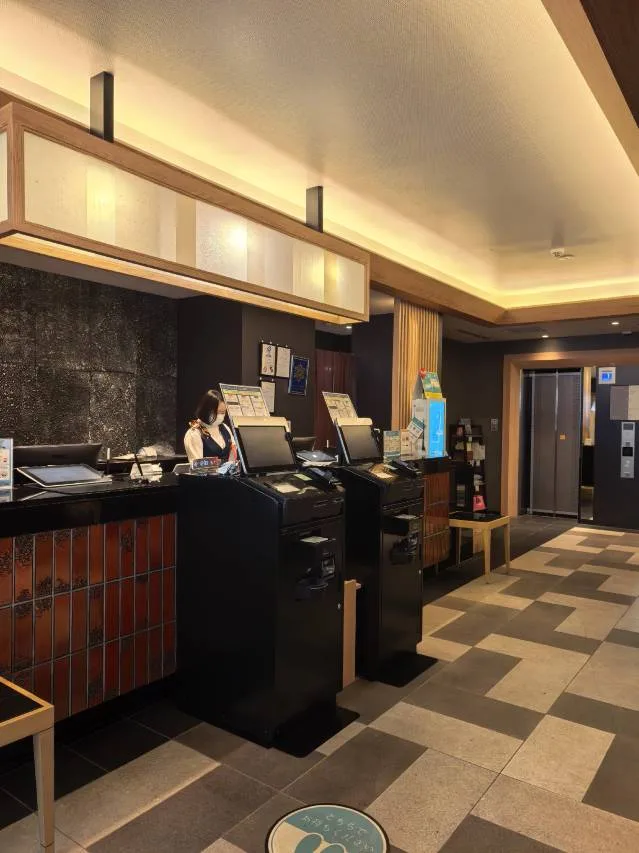
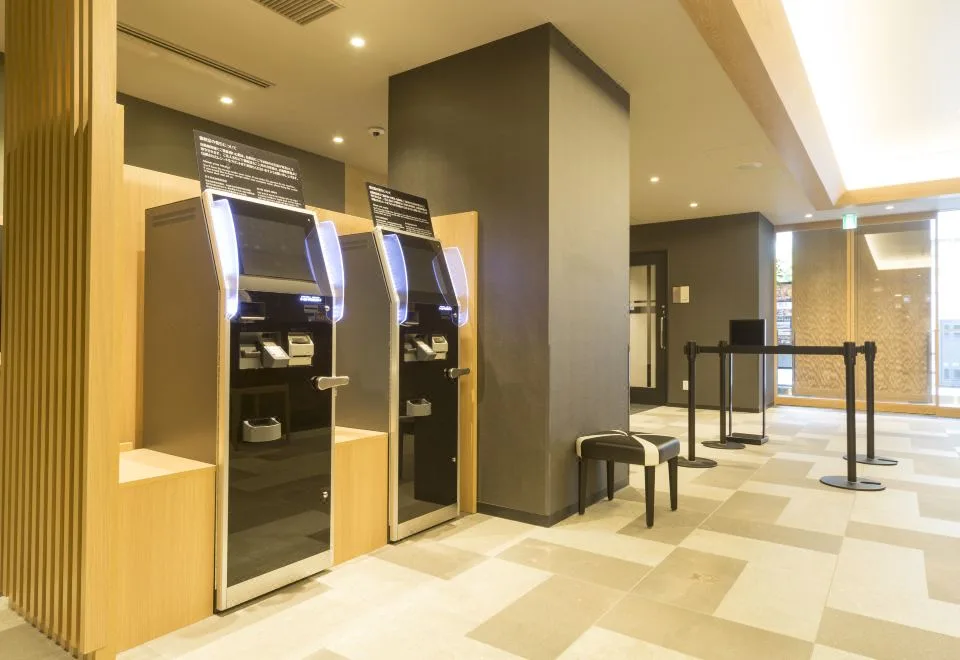
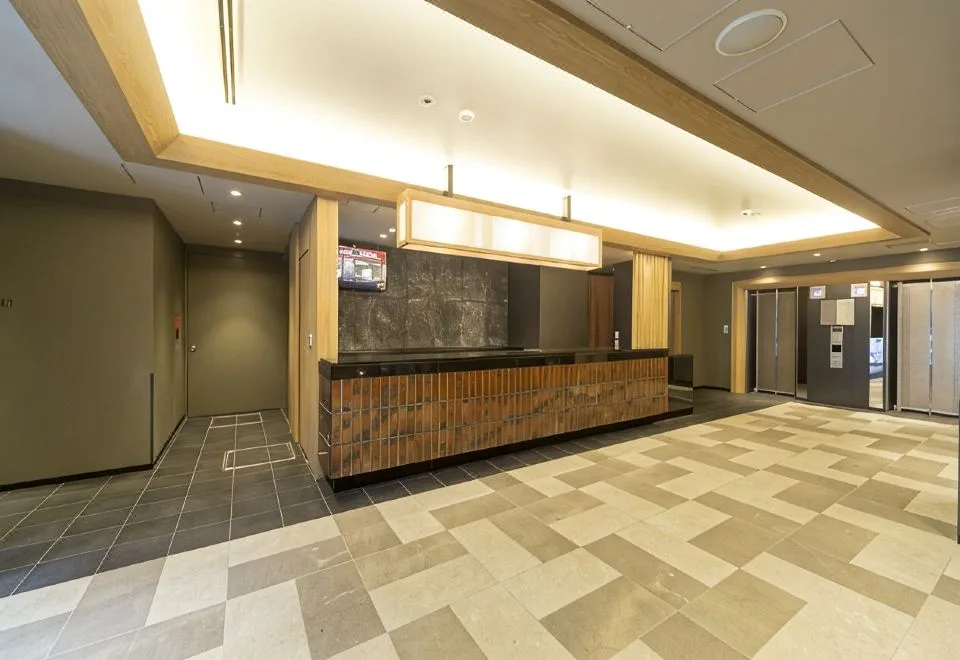
If you want a longer sleep, the 22-hour plan runs from 3 p.m. check-in to 1 p.m. check-out, two hours later than the usual 11 a.m. check-out. The lobby has self check-in machines, and the front desk is staffed around the clock, so a late arrival is no problem.
| Room type | Size / occupants | Best for |
|---|---|---|
| Semi-double | 13.9 m² / one guest | Solo travel |
| Double | 13.4–14.6 m² / two guests | One shared bed, light luggage |
| Twin | 18.8 m² / two guests | Separate beds |
Compare official room information with your booked category, beds and permitted guests.
Top-floor bath: save your evening for Tenma no Yu
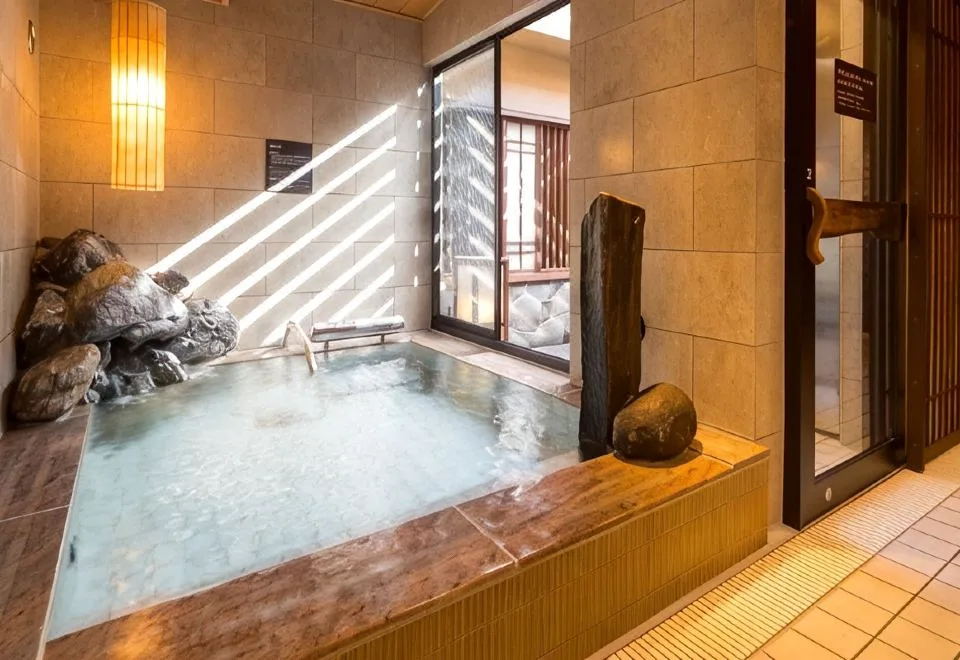
On the 11th floor, the top floor, the men-only and women-only public bath ‘Tenma no Yu’ runs from 3 p.m. to 10 a.m. the next morning, with an indoor bath, an open-air bath, a high-temperature sauna and a cold bath; the sauna pauses from 1 a.m. to 5 a.m. After a full day out, soak once before bed and again in the morning — the bath hours deserve a slot in your plan as much as any room. The bath is free for guests, with no extra charge.
After bathing, take your time: popsicles are free after a soak and a lactic-acid drink is served in the morning, and the massage chairs are free to use. Women’s bath amenities are by Pola, the showerheads are ReFa, soothing music plays in the bath, and the open-air area has cooling chairs for sitting in the breeze. These small touches are what make a Dormy Inn stay memorable.
The bath is genuinely small, and it gets crowded just after guests return in the evening, so I avoid that window and soak later at night or in the morning instead. The changing-room smell is something I keep in mind — if that bothers you, know it in advance before building a bath into every day of your stay.
This is the sauna order I follow: sit in the high-temperature sauna until you sweat, rinse in the cold bath, then sit on a cooling chair in the open-air area and let the breeze cool you down before another soak indoors. Do not soak too long in one go — two shorter rounds feel better than forcing one long one.
Getting here with luggage
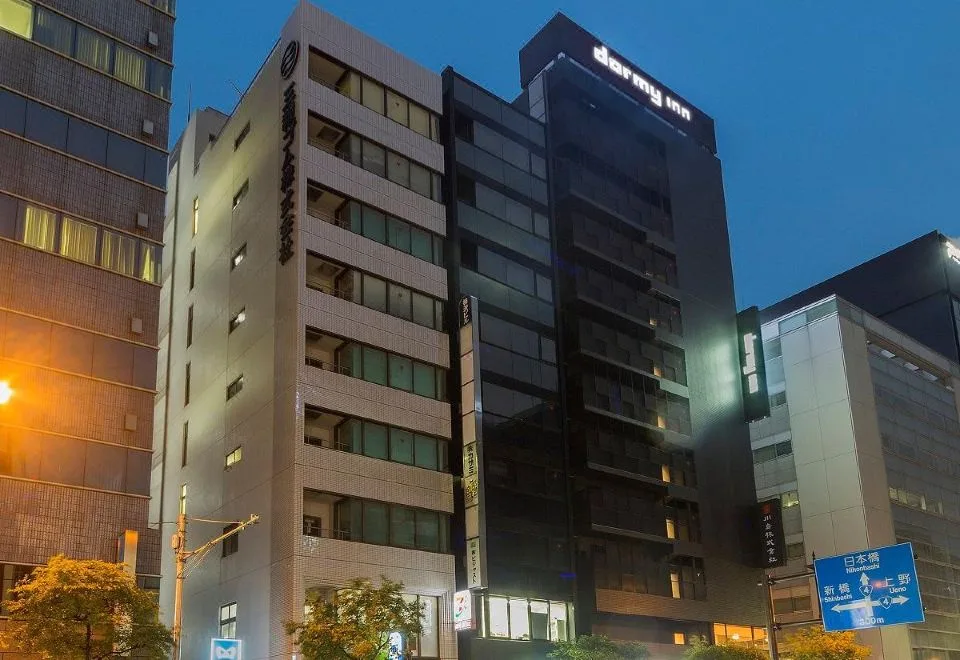
Exit 3 has stairs only and no elevator, so do not follow the crowd to the closest exit with heavy luggage. Use the elevator-only entrance inside Jisshi Park: it is Kodemmacho Station’s only step-free entrance, opened in 2010, and its elevator runs straight to a dedicated ticket gate serving both platforms. From street level, walk toward Exit 3 — the hotel stands beside it, about a 20-second walk according to the hotel.
The Hibiya Line runs direct to Ueno, Akihabara, Ginza and Roppongi with no change, which makes day trips simple. JR Shin-Nihombashi Station, Exit 5, is about a five-minute walk, and the Sobu Rapid Line reaches Tokyo Station in one stop, about two minutes. JR Bakurocho Station is 440 metres away and Bakuro-Yokoyama Station, Exit A2 on the Toei Shinjuku Line, is about eight minutes, so you have backup routes for a late return.
| Stay information | Details |
|---|---|
| Address | 2-3 Nihonbashi Kodemmacho, Chuo City, Tokyo 103-0001, Japan |
| Check-in / Check-out | From 3 p.m. / by 11 a.m. |
| Walking reference | Less than 100 m / around one minute from Kodemmacho Station |
See the hotel’s access information. If you need help, call the front desk on 03-5614-5489.
Kodemmacho Station is Hibiya Line station H15, with two side platforms, one for each direction. Check the direction signs on the platform before boarding rather than following a feeling — the two directions leave from opposite sides.
Breakfast: seafood rice bowls and Japanese dishes
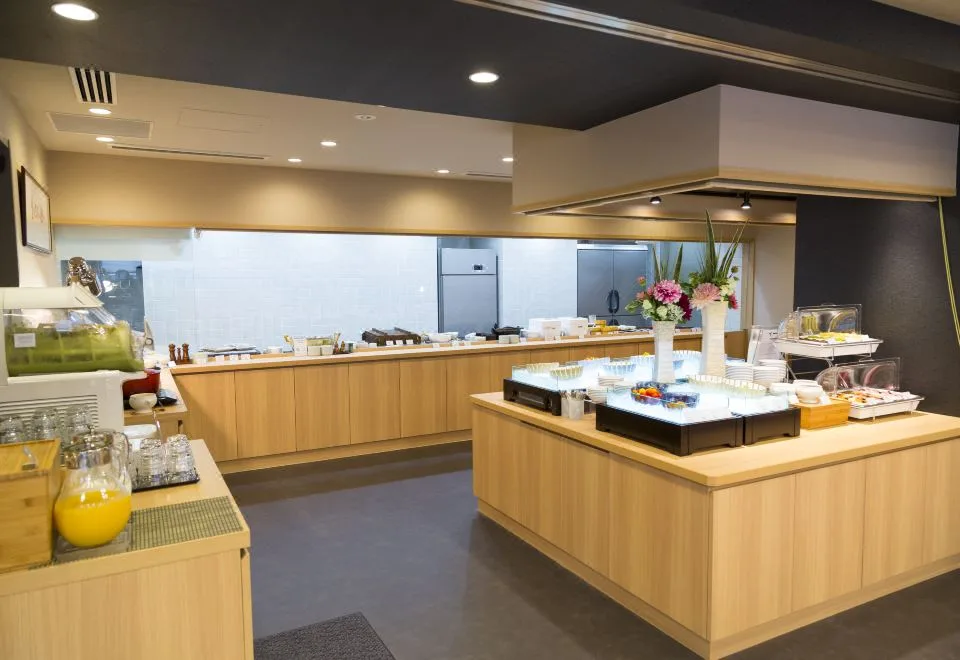
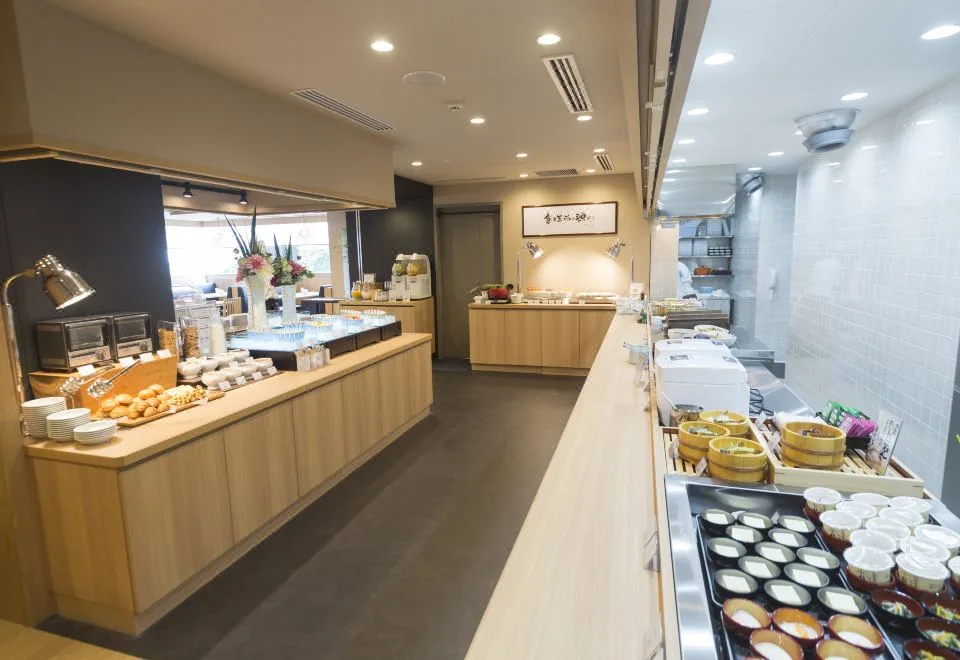
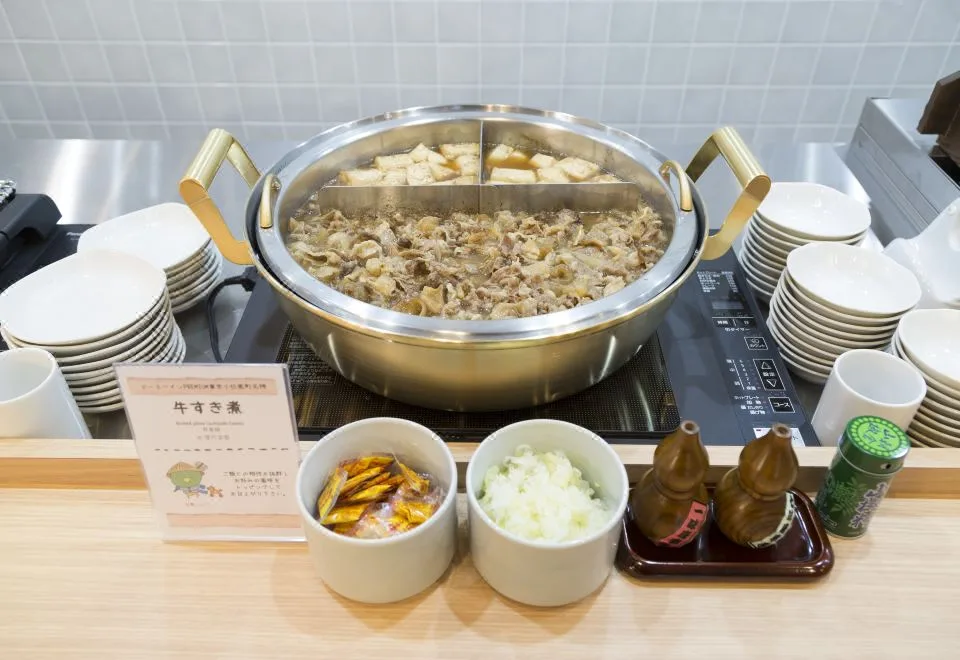
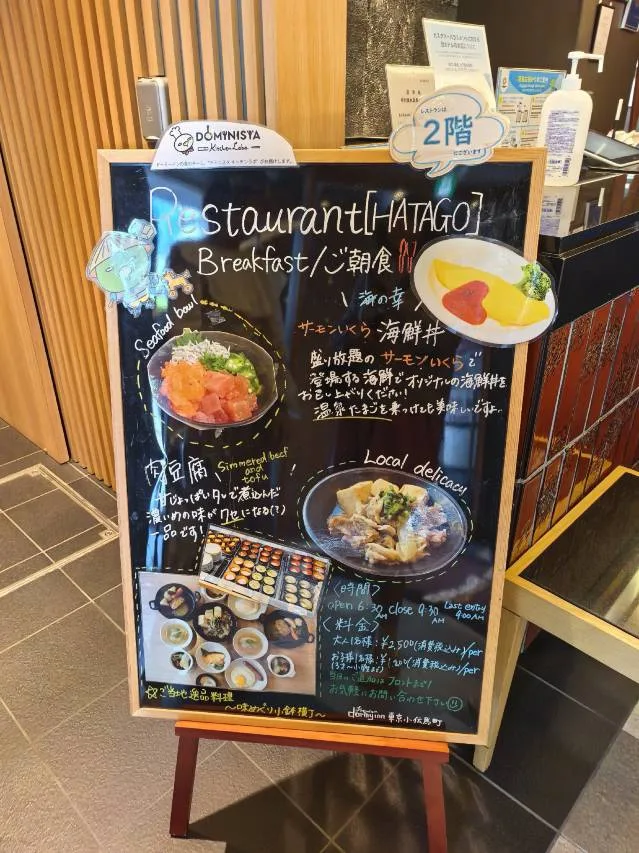
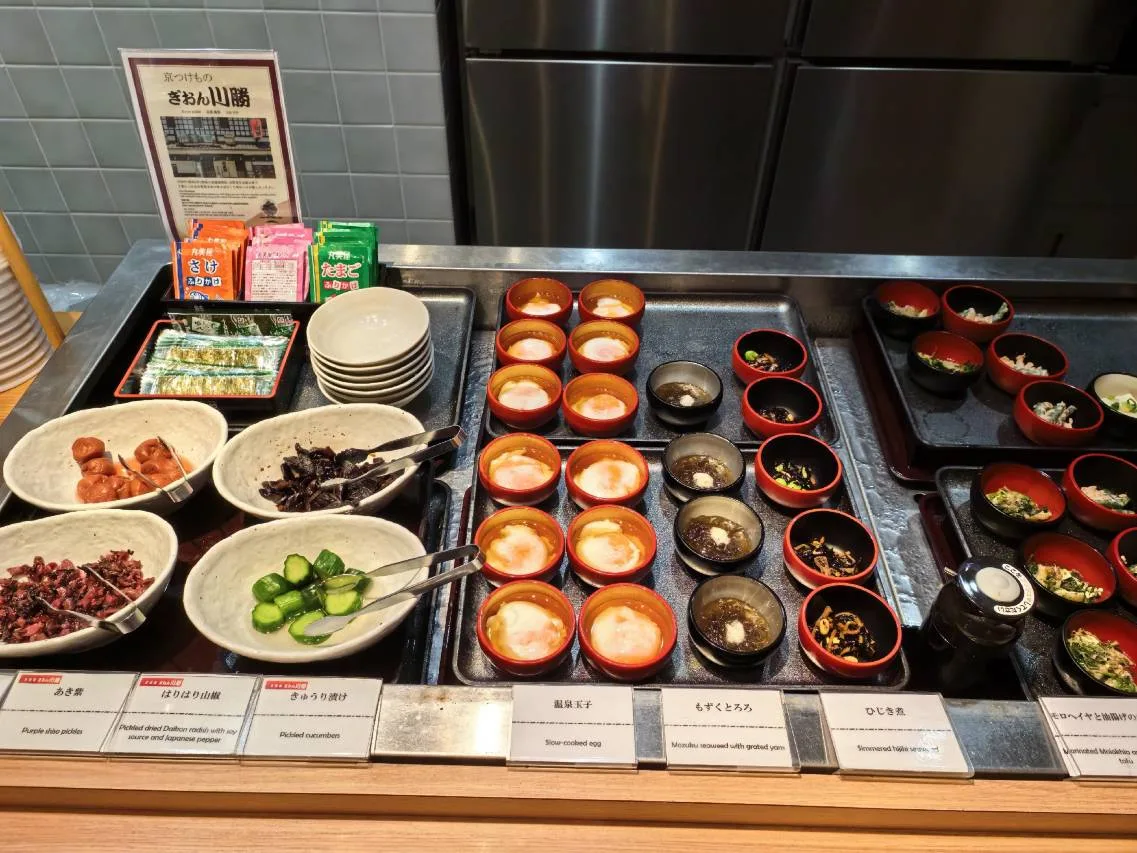
The official breakfast includes seafood rice bowls, simmered beef and tofu, small side dishes and a Japanese/Western buffet. It is served 6:30–9:30 a.m. with last entry at 9:00. If you enjoy Japanese breakfast, compare the included rate; if you rush out or need only coffee, you may not need it every day.
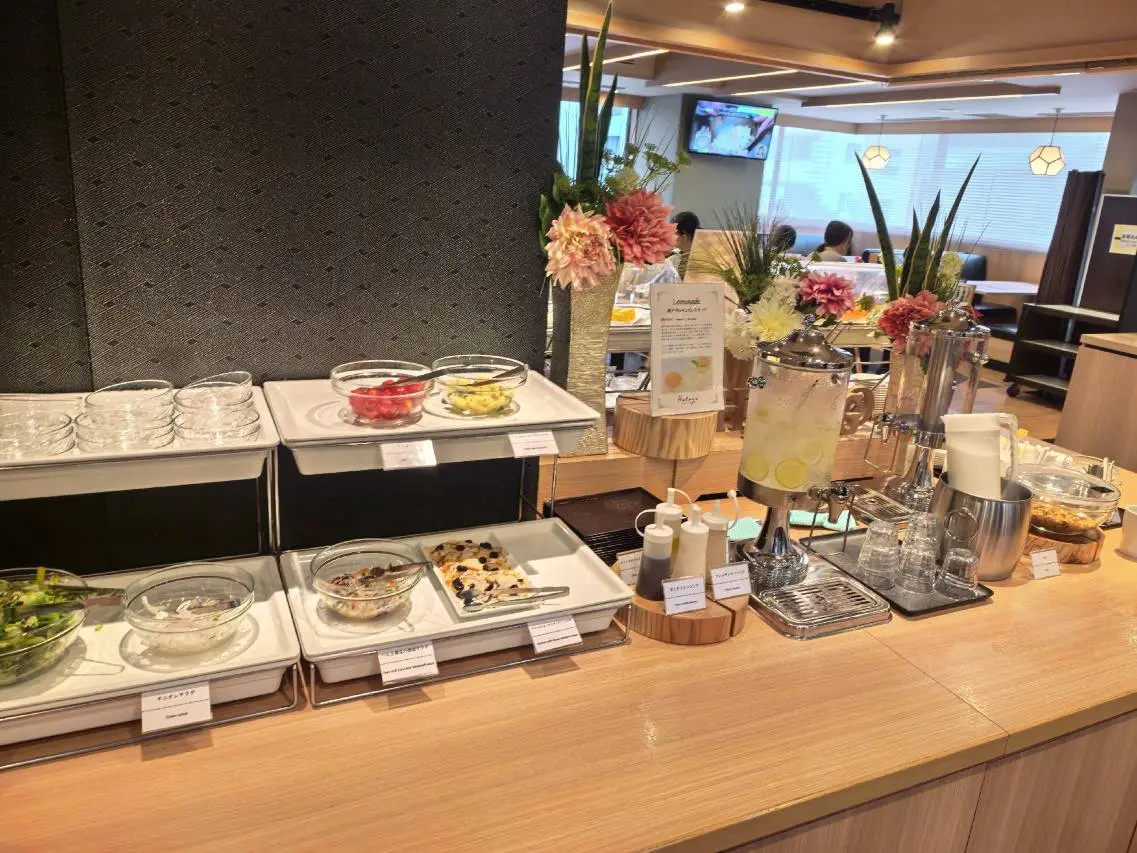
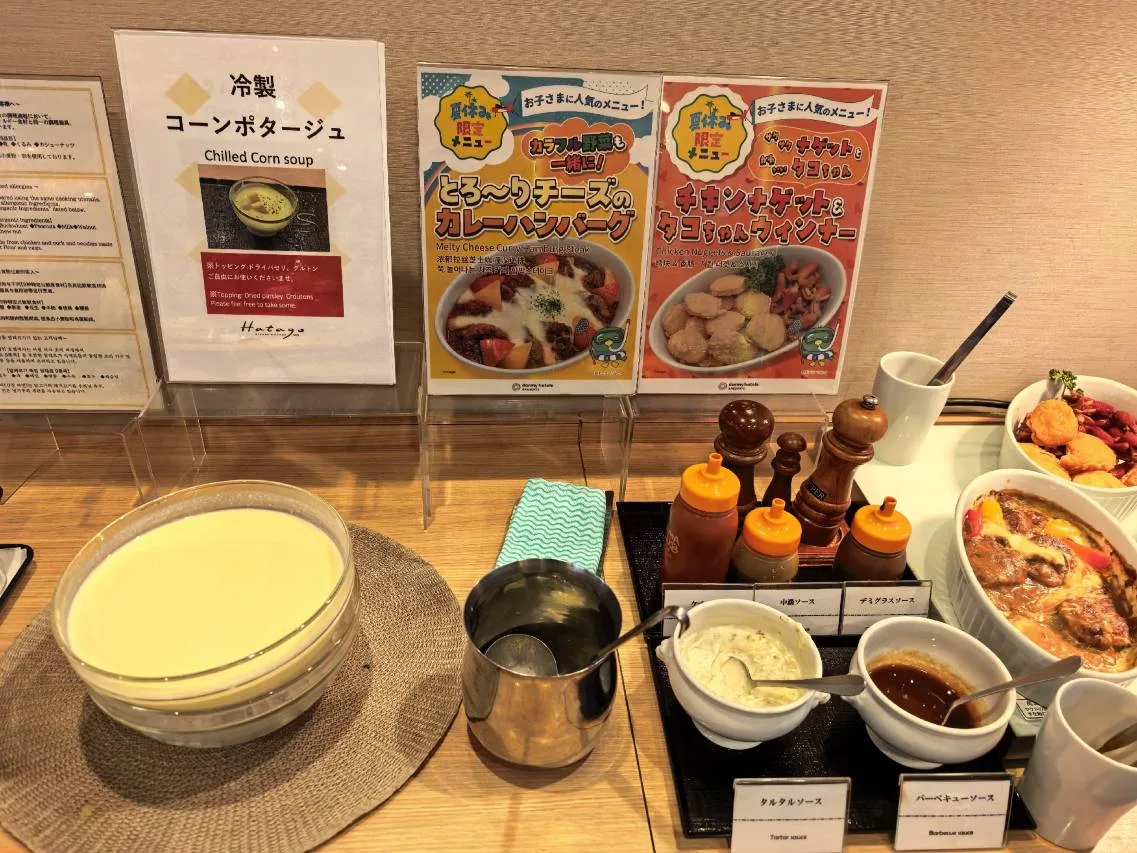
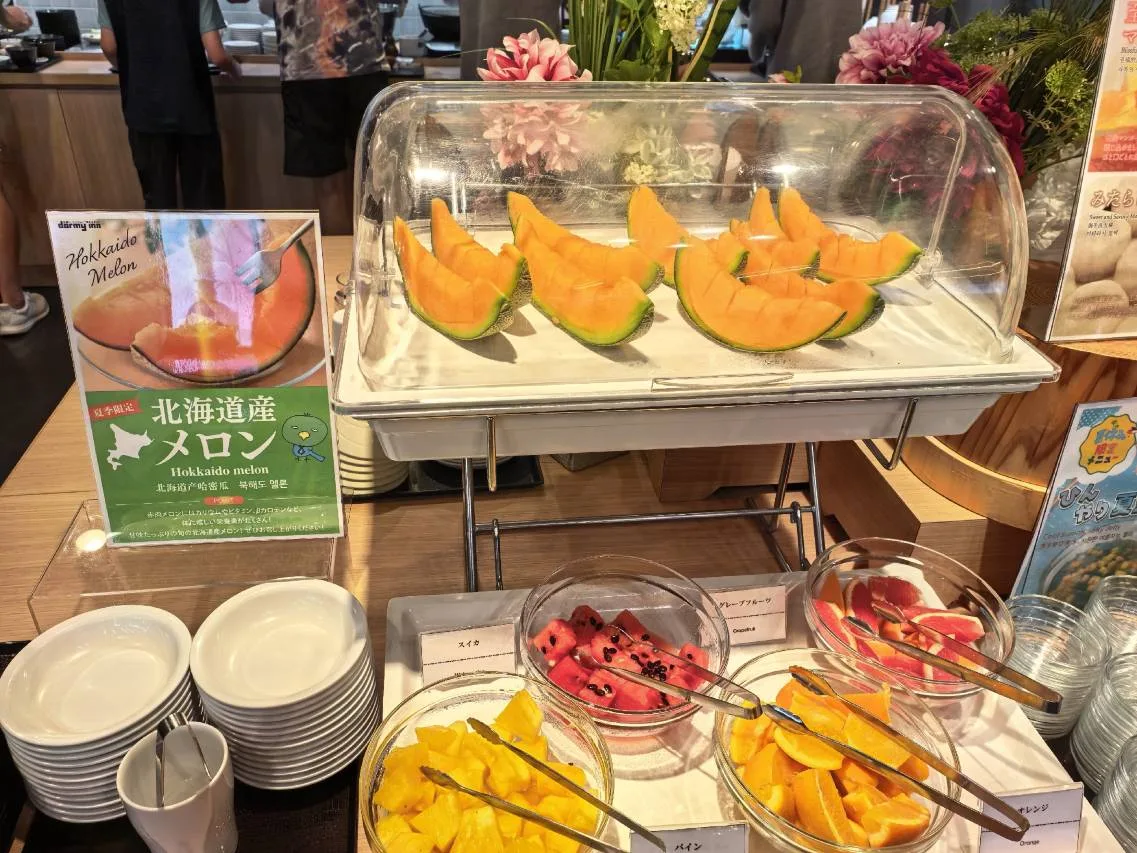
Breakfast is served in HATAGO, the second-floor restaurant, from 6:30 to 9:30 a.m., with last entry at 9:00. Around fifty Japanese and Western dishes fill the buffet, led by Edomae chirashi sushi and simmered beef and tofu, with small side dishes lined up like a ‘small-bowl alley’ and freshly fried tempura and teppanyaki on the serving line. Adults pay 2,500 yen, children aged three to twelve pay 1,200 yen, children two and under eat free, and guests aged thirteen to seventeen pay 2,500 yen. If your rate excludes breakfast, you can add it on site and pay at the hotel.
The same menu is served every day, so adding breakfast every morning of a multi-night stay gets repetitive. I book breakfast for the first and last mornings and eat out in between. Between 8 and 9 a.m. the dining room is at its busiest, with waits for seats and for the serving line, so come down early if you want an unhurried meal.
The serving line needs no backtracking: salad, the drinks counter, fruit and the curry and soup area are all in one stretch, so one loop brings you back to your seat. Seats are limited, so find a table before collecting food at peak times — hunting for a seat with a plate in hand is the worst way to start the morning.
If you want the seafood rice bowl, head for the chirashi sushi counter first, then pick up the simmered beef and tofu and small dishes. Hot food tastes best fresh, so take hot dishes first and cold ones after.
One night or multiple nights
Longer visits let you use the bath and food services more often, but housekeeping and rubbish collection must be clear. Make your return time fit the facilities’ hours. Even for one night, leave some evening time for a soak.
From 9:30 to 11 p.m., HATAGO serves free yonaki soba on the second floor — a half bowl of soy-sauce ramen. Coming back late, eat a bowl first and then head up to the bath; the order works perfectly. Even on a one-night stay, keep this window free instead of letting the day’s sightseeing run over it.
Check the cleaning plan when you book: under the no-cleaning WECO plan, towels have not been hung on the door handle every day since March 1, 2026 — they are provided on request instead. Cleaning frequency and towel supply differ by plan, so do not assume one plan’s service applies to every room. Ask how rubbish collection and towel pick-up work too, so a multi-night stay does not snag on the details. Since towels moved to on-request supply, multi-night guests should ask the front desk for fresh ones.
The 24-hour front desk, luggage storage, laundry room, free public Wi-Fi, currency exchange, wake-up calls and a taxi service are all available, and a convenience store sits downstairs for anything you need at short notice. There is no car park, so drivers should find parking elsewhere before arriving rather than discovering it at the door.
After check-out you can leave luggage at the front desk, go shopping or out for a meal, and collect it on your way back instead of dragging cases around. The laundry room is in the building too, so on a multi-night stay you can wash clothes mid-trip and travel light in both directions.
On a one-night stay you can pack the schedule tight: check in at 3 p.m. and drop your bags, soak and eat yonaki soba in the evening, soak again and eat breakfast in the morning, then walk Nihonbashi before the 11 a.m. check-out. The timing works out just right.
Trade-offs before booking
Before you book, decide what matters most to you: if the bath and breakfast come first, this hotel fits you well; if luggage space, daily full cleaning and a quiet bath come first, think again.
Ask four things before you pay: the room name and bed count, whether breakfast is included, the cleaning plan, and the guest numbers and child charges. Asking first is far easier than sorting out a different plan after check-in.
If you are travelling with heavy luggage, with children, or staying at a Dormy Inn for the first time, remember three things before you book: take the Jisshi Park elevator entrance, check the cleaning plan, and compare breakfast inclusion. With those three settled, check-in day runs smoothly.
Explore around Nihonbashi
Visit Ningyocho streets (Chinese guide) or Nihonbashi museums (Chinese guide) during a longer stay instead of repeating long trips.
You can plan without constant backtracking: Nihonbashi is 780 metres away, Akihabara Electric Town is 1.3 kilometres, Ueno is 1.5 kilometres and the Imperial Palace is 2.6 kilometres, all direct on the Hibiya Line. JR Shin-Nihombashi Station reaches Tokyo Station in one stop, about two minutes, which is handy for the Shinkansen or airport buses.
Stay a few nights and treat Ningyocho as a walking route: old shops and Amazake Yokocho are nearby, and Nihonbashi’s small museums fill a slow afternoon, so you do not need to head for a big station every day.
Amazake Yokocho is a short walk away in Ningyocho, an easy stop for old shops and small souvenirs. Nihonbashi’s old shops and small museums are dense enough that staying here means you do not need a dedicated day for them — one slow afternoon on foot is enough.
If this room type and travel style suit you, compare total prices for identical dates, party size and cancellation terms. Evaluate breakfast and room upgrades separately.
Pros and cons at a glance
Pros
- Kodemmacho Station Exit 3 is about a 20-second walk (official guidance), and the Hibiya Line runs direct to Ueno, Akihabara, Ginza and Roppongi.
- The 11th-floor Tenma no Yu bath is separate for men and women, with an indoor bath, open-air bath, high-temperature sauna and cold bath, open 3 p.m. to 10 a.m.
- Breakfast is a buffet of around fifty Japanese and Western dishes, led by Edomae chirashi sushi and simmered beef and tofu, at 2,500 yen per adult.
- Yonaki soba is free from 9:30 to 11 p.m., with free popsicles after bathing, a lactic-acid drink in the morning and free massage chairs.
- A 24-hour front desk, luggage storage, a laundry room and free public Wi-Fi, with 134 rooms to choose from.
Cons
- Semi-double rooms are 13.9 m² and Double rooms 13.4–14.6 m², so two large suitcases are hard to open at once.
- The public bath is small and crowded at peak times, and the changing-room smell is worth noting.
- Multi-night cleaning plans differ by rate, and since March 2026 towels are provided on request rather than hung on the door daily.
- Breakfast serves the same menu every day, so it repeats on a multi-night stay; pets are not allowed and no room type takes a crib.
Information checked: November 22, 2026.