
TOKYO / CHUO
MONday Apart Premium Ginza Shintomicho
MONday Apart Premium Ginza Shintomicho
If you are coming to Tokyo with family and want to live like you have a home of your own, start here: every apartment-style room, 30 to 45 m², comes with a kitchen and a washing machine, and Exit 7 of Shintomicho Station is about a one-minute walk away, so groceries, cooking and laundry can all happen inside your room. Plan your suitcase route before you leave, because the wrong exit with a big case costs real effort.
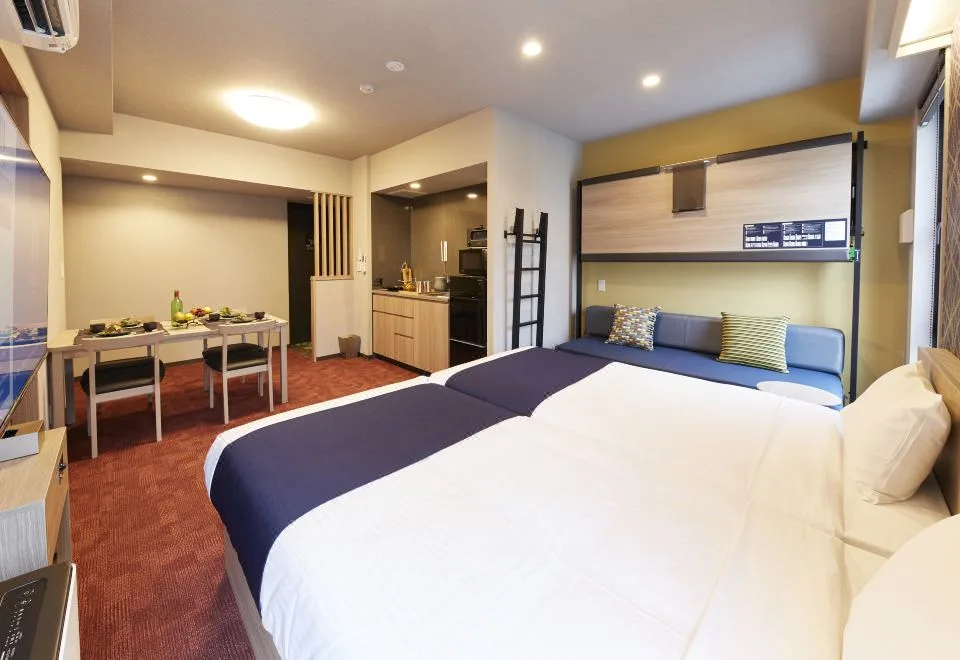
Is it right for my trip?
I would put this on a family-stay shortlist, on one condition: you like doing things yourself. A dining table, a kitchen area and an in-room washing machine let you keep groceries, breakfast and laundry inside the room. All 40 rooms are non-smoking, the building opened in 2021, and the whole place runs as an apartment hotel, not a conventional hotel.
The real trade-off is the service style: check-in runs through a self-service machine, amenities are self-serve, and housekeeping during a longer stay is not a full daily clean, so if you like someone tidying your room every day, set your expectations first. The front desk is staffed around the clock, luggage can be stored, and a late arrival still gets a welcome.
Location is the part I worry about least: Shintomicho Station is right beside the hotel, Ginza is about a 480-metre walk, and Tsukiji Outer Market is about 760 metres, so a Tsukiji morning and a Ginza afternoon fit into one day. A convenience store sits across the street, and a supermarket and a public bath are nearby, so groceries and daily supplies need no detour.
Travelling alone on business for one night, a room from 30 m² up may be more than you need, and the kitchen and laundry will go unused; this place fits best for families or friends in groups of three to five, where the numbers make the kitchen and laundry pay off. Count heads and sleeping places before you book: no room type takes an extra bed, so the sleeping places are exactly the ones in the room table.
Good points and compromises
What I like: The small kitchen, tableware and washer-dryer are the parts I use most; buying ingredients across the street is easy, and Tsukiji and Ginza fit into one day. Every room has a BALMUDA toaster, so toast and coffee at the dining table in the morning beats rushing out to find breakfast.
Before booking: Cleaning details, small insects in the bathroom and duvet comfort are things I treat as checks to make: if a full daily clean or a thicker duvet matters to you, raise it when you book. Housekeeping on longer stays runs on a limited schedule, and towels can be changed at the front desk, so ask first if that matters to you.
Location: walking unencumbered is different from pulling cases
Exit 7 of the Yurakucho Line’s Shintomicho Station is about a one-minute walk, one of the shortest station-to-hotel walks I know; with a large case or a stroller, use the elevator at Exit 1 instead — Tokyo Metro’s barrier-free route confirms lifts run all the way from platform to street — then walk at ground level to the hotel. Hibiya Line Tsukiji Exit 3a is about five minutes, Hatchobori Exit A2 about six, and street lifts serve Hatchobori exits A2 and A3.
With large luggage, a wheelchair or a stroller, my advice is one thing: take Exit 1. Exit 7 is closest, but its stairs will make you regret it; from Exit 1, walk back at street level and the hotel is nearby, on flat ground that is easy to push along. Coming from Hatchobori, use the street lift at A2 or A3; inside Hatchobori Station, the Hibiya Line platform-to-gate link is a staff-assisted stair lift, not a lift, so allow extra time.
Before you leave, check the official access guide for lift and construction notices on the day. Drivers should note this first: the hotel’s private car park charges ¥3,500 a day, spaces are few, and booking ahead is required — asking on arrival will very likely leave you without a space.
| Item | Stay information |
|---|---|
| Address | 3-4-1 Irifune, Chuo City, Tokyo 104-0042, Japan. |
| Japanese hotel name | MONday Apart Premium 銀座新富町 |
| Check-in / Check-out | From 3 p.m. / by 10 a.m. |
| Parking | Private car park inside the hotel, ¥3,500 a day, few spaces, advance booking required. |
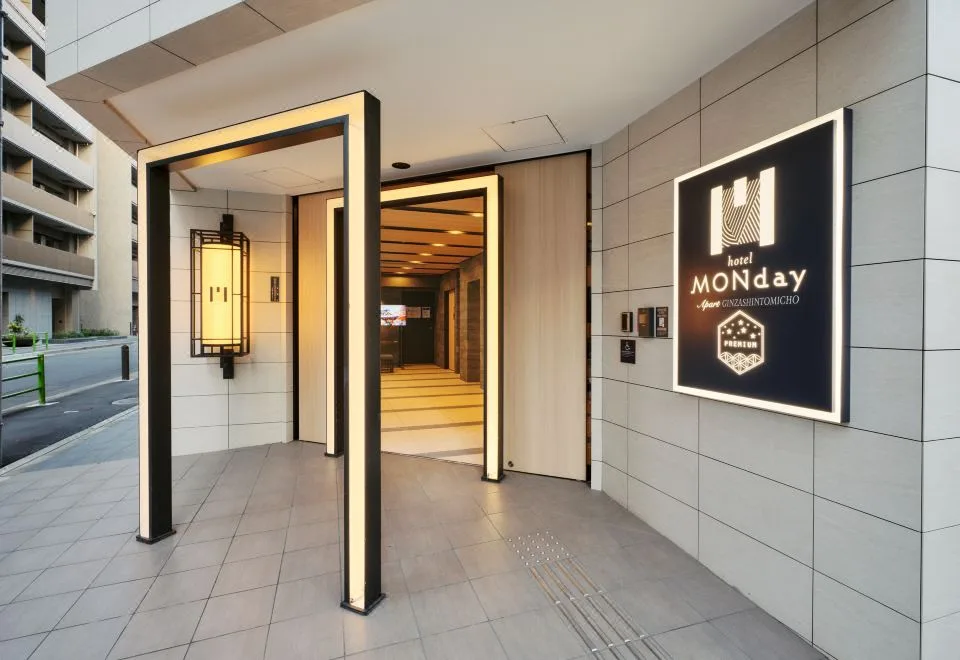
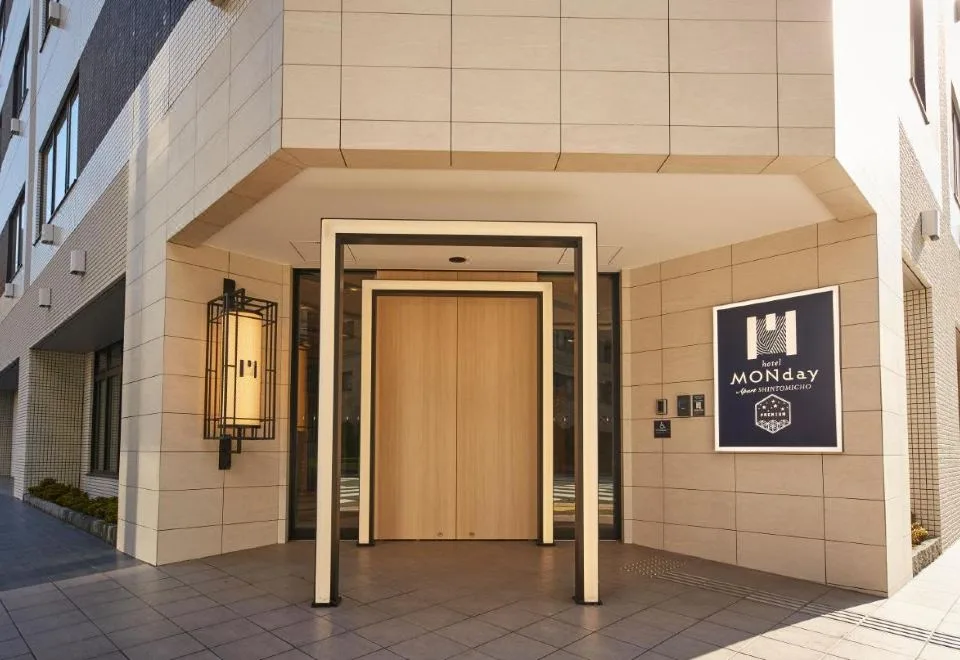
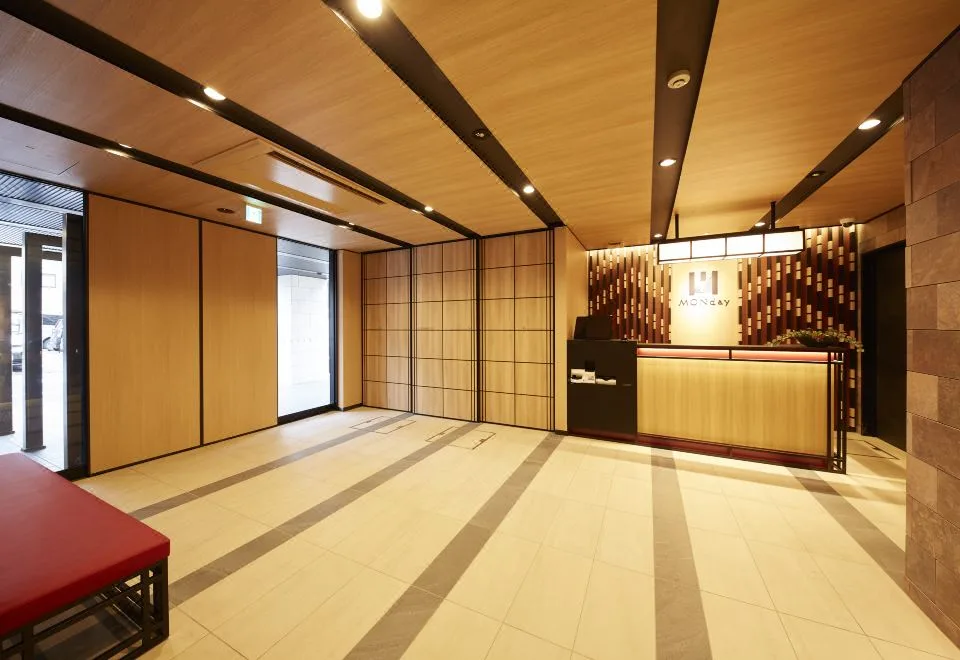
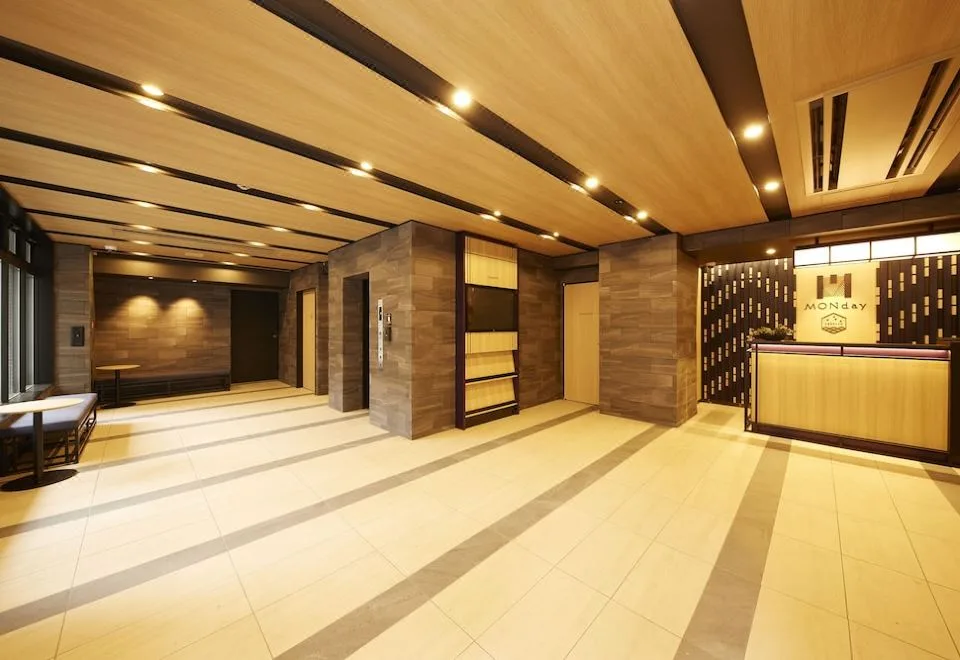
Room types: compare beds, living space and bathrooms
Assign sleeping places for each guest and plan bathroom and luggage use first. Official room and equipment details can help you check the table. Booking sites may translate category names differently, so also match the English names.
| Room type / layout | Area and equipment | My selection |
|---|---|---|
| Standard Family | 30.11 m²; two 90 cm beds, additional sofa-bed and bunk sleeping places | For four guests, allocate each person’s sleeping place first. |
| Superior Family | 32.98 or 33.76 m²; two 100 cm beds, plus sofa-bed and bunk sleeping places | For four who prefer slightly wider regular beds. |
| Superior Japanese / Grand Japanese | 37.38 / 45.25 m²; two 100 cm beds and Japanese-style futons | For five guests happy using futons. |
| Standard King / Superior King | One king bed; no bunk sleeping places | For two guests who do not need bunks or a sofa bed. |
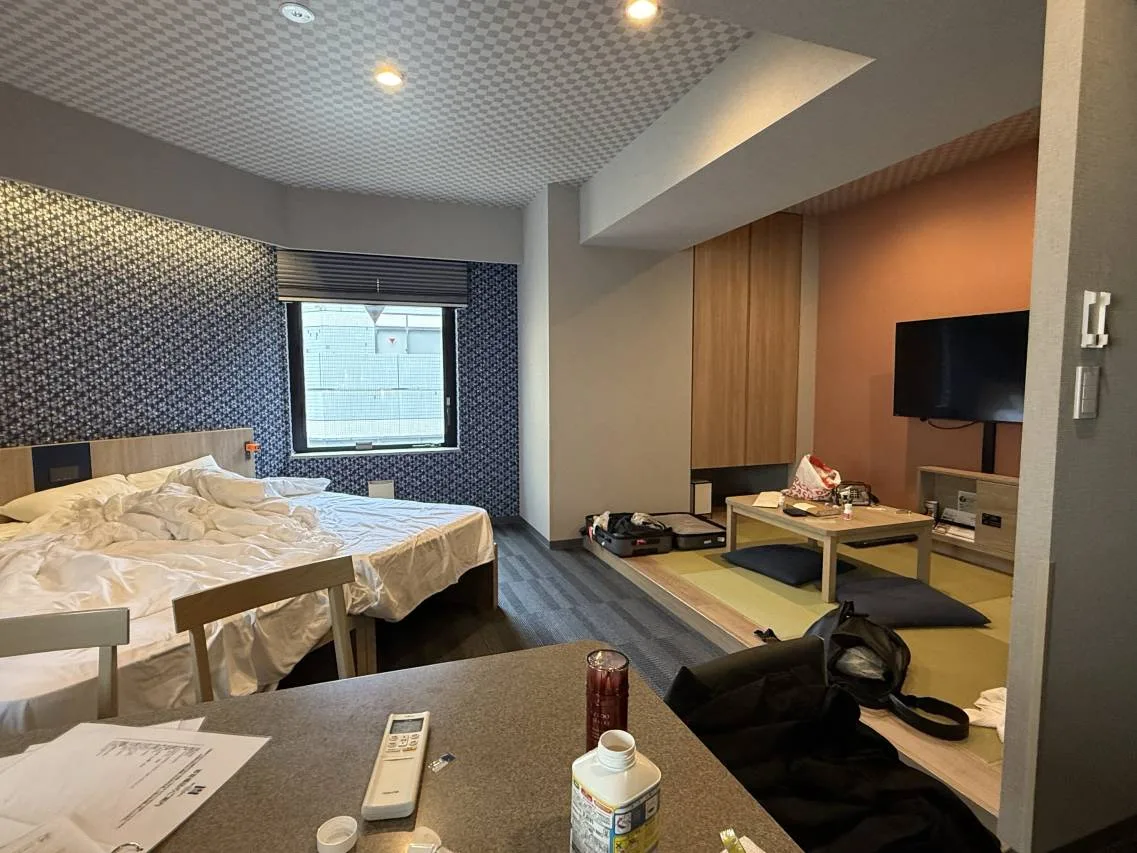
Photos show regular beds with a dining table and, in other categories, Japanese-style seating. For two guests check passages around twin beds. With children, consider where futons and extra beds extend. Even rooms with the same maximum occupancy may have different free floor space.
The bunk beds deserve a specific warning from me: the lower bunk works as a sofa by day and a bed at night, and the ladder comes off, so it never blocks the table at mealtimes. Five travelling together should look at the Japanese rooms — two 100 cm beds plus futons give enough sleeping places, but accept the rhythm of laying futons out at night and putting them away in the morning.
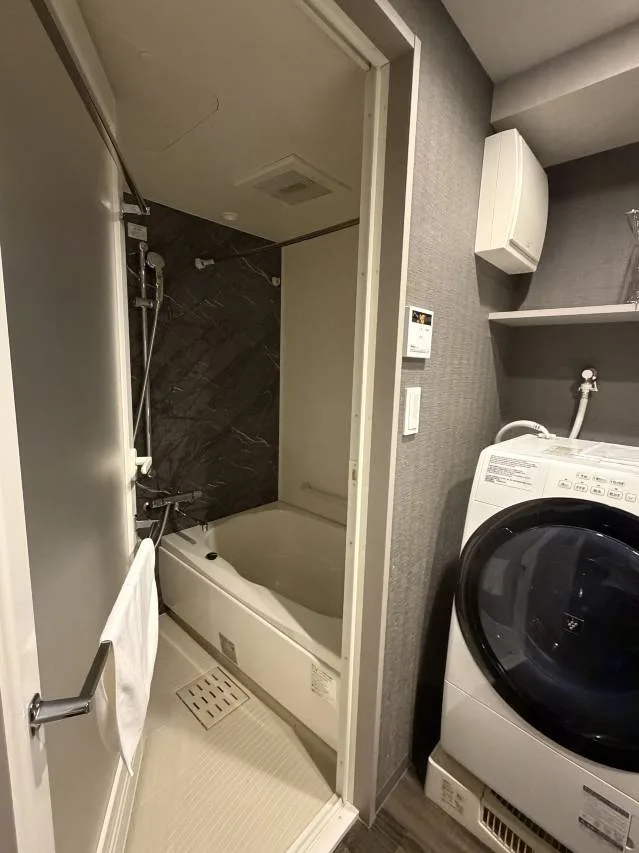
The bathroom is another place to check: separate shower and toilet layouts are common in the family rooms, and the photo shows the shower and laundry equipment in the same area, so laundry goes straight in after a shower. Bathrooms have a bidet toilet and a hair dryer with full amenities, but layouts differ by room type, so check the equipment list on the official room page.
The kitchen and laundry are why I chose this place: the small kitchen has a stovetop, microwave, fridge and rice cooker with full tableware, and the washer-dryer handles dirty clothes in one go, with detergent provided. The 50-inch TV plays YouTube and Netflix with your own account; the room also has an air purifier, a safe and an electric kettle. Two travelling together, with no need for bunks, should look straight at the king rooms — a bigger bed and a simpler layout.
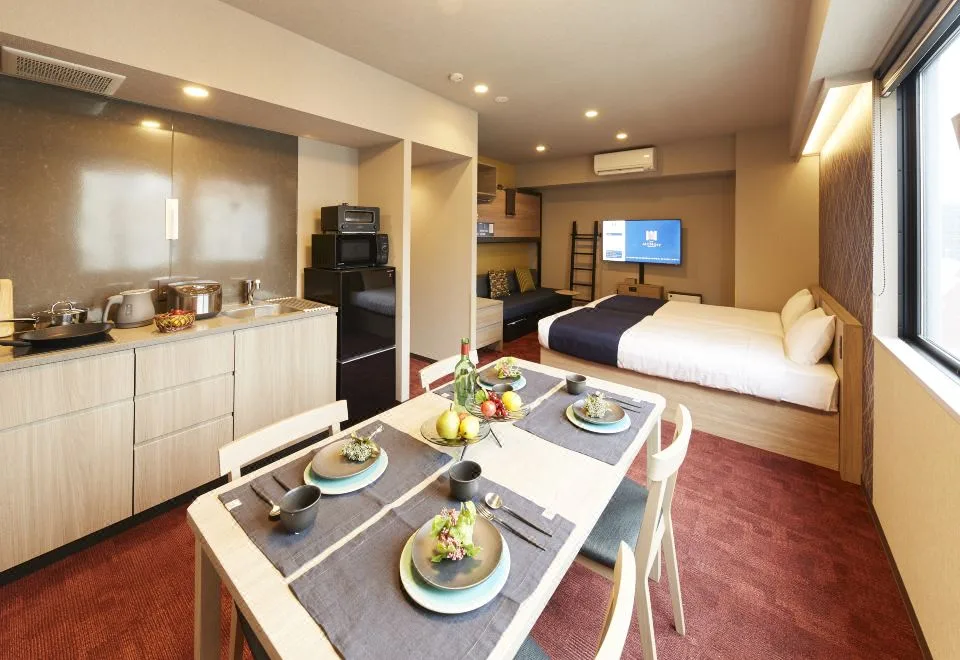
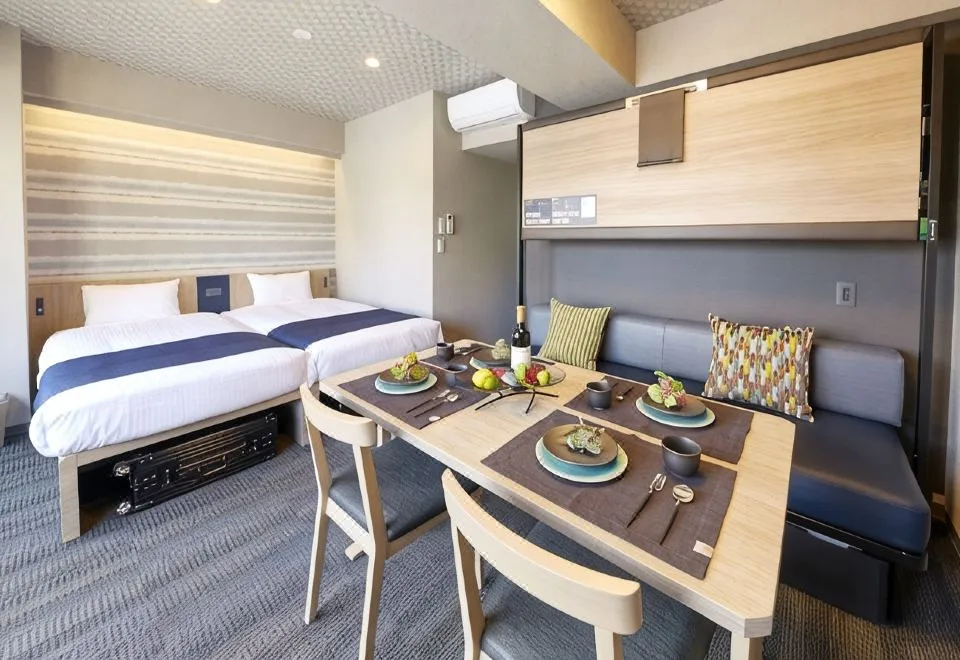
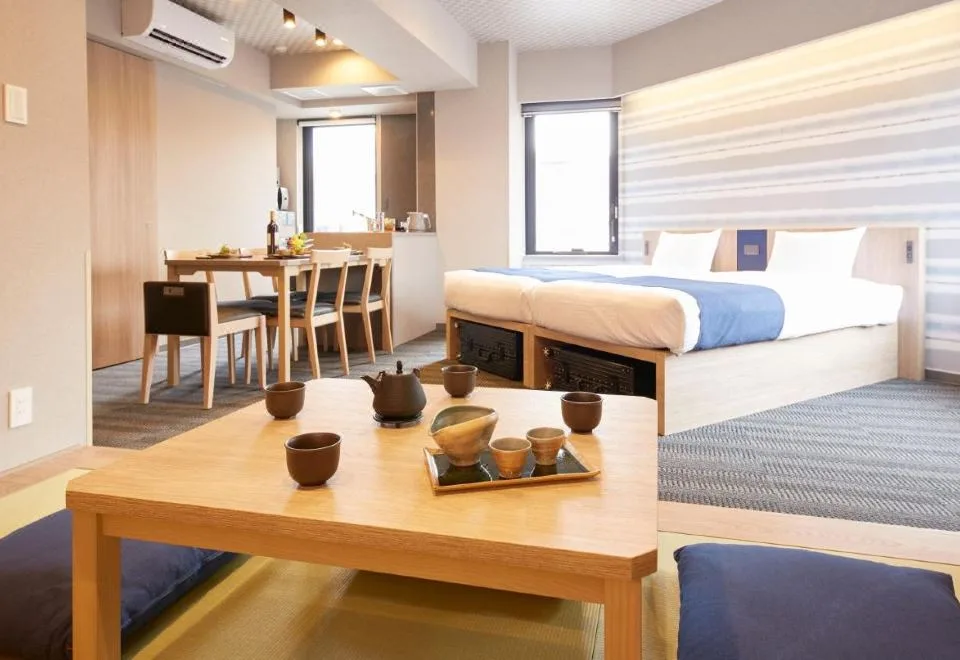
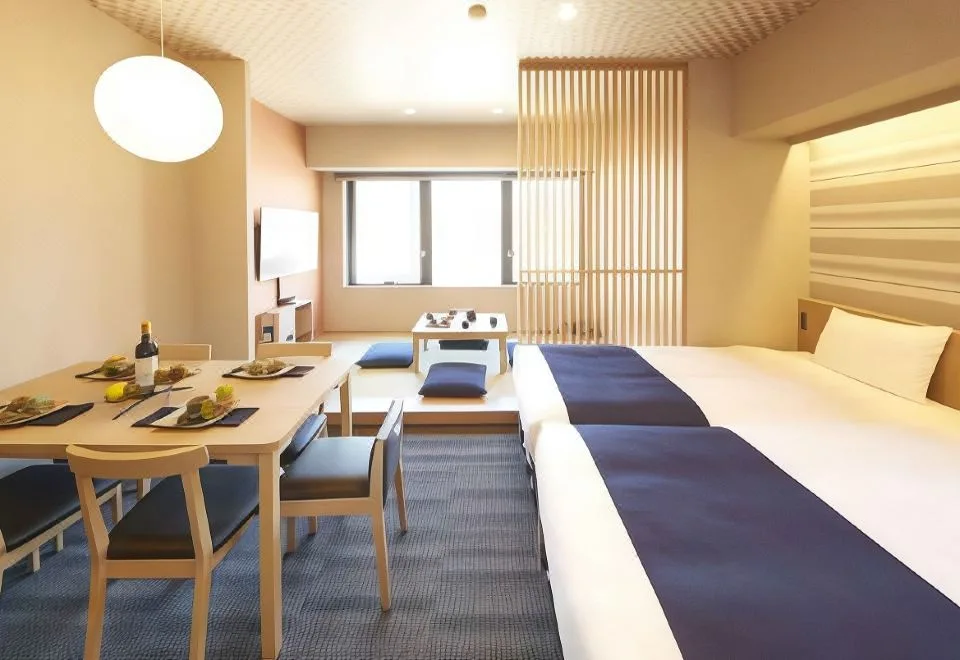
Inside the rooms: daily life in photos
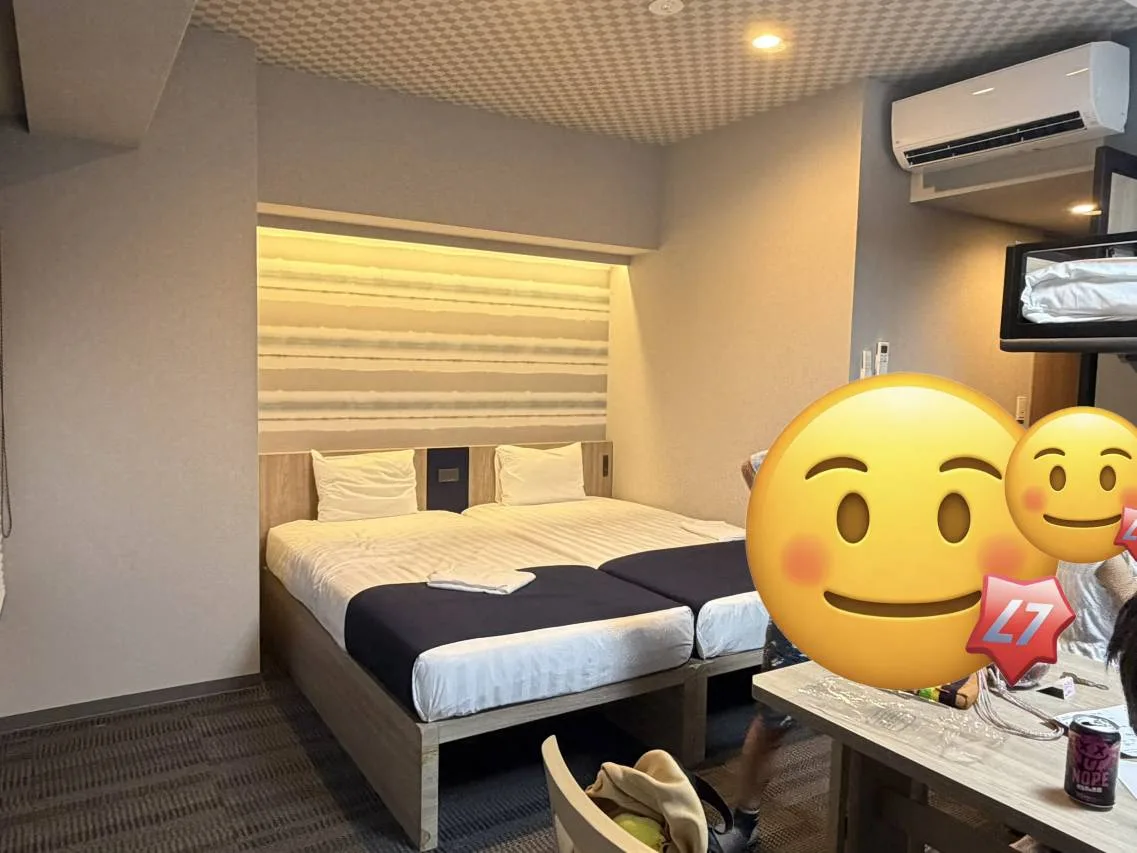
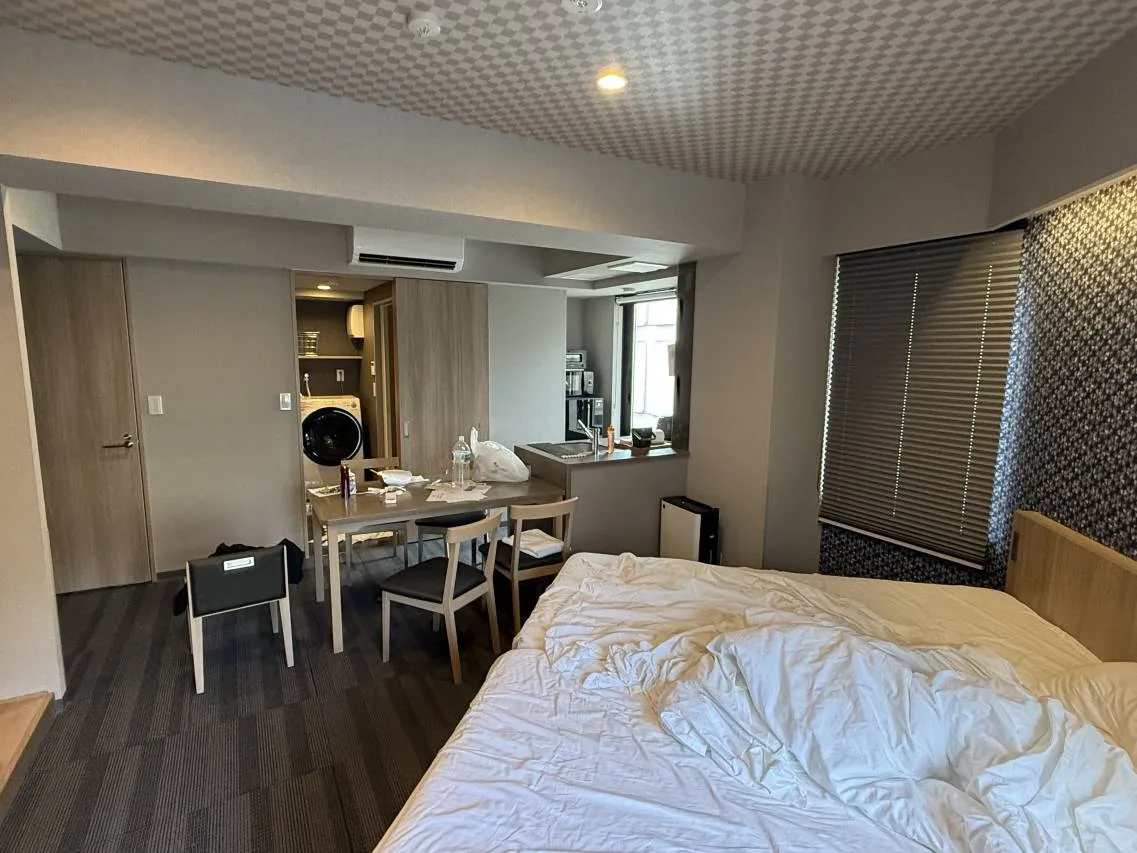
I use these photos to check how the room looks in everyday use, especially the bedside, the table and the bathroom route. They may cover different room types, so compare with your own reservation.
When I look at the photos I check three things first: how much aisle is left between the bed end and the table, whether there is room for a basket beside the washing machine, and whether the shower and toilet are separate. Those three decide whether your family will be queuing for space every morning.
Facilities: plan around what you actually use
In-room meal preparation and laundry are the main advantages. Doing check-in yourself and collecting your own amenities means you handle more of the everyday tasks. This is a good fit for families happy with an independent apartment routine.
Check-in runs through a self-service machine: scan your passport and the formalities and payment are done, between 15:00 and 24:00, and arrivals after 24:00 should contact the hotel first. Amenities sit at the front desk for self-service — toothbrush, towels, bath towels, shampoo and a hair dryer are all there, take what you need; children sharing existing bedding do not get their own amenities, slippers, towels or sleepwear, so bring those yourself.
The building has a lift, free Wi-Fi in public areas, and non-smoking public areas. Luggage can be stored, and the front desk works mainly in Japanese. Parking needs advance booking, ¥3,500 a day. There is no room service, so meals come from the in-room kitchen or outside — the shop across the street, a nearby sushi restaurant and the supermarket are all close.
For clean clothes on the road, the in-room washer-dryer is the easiest option: detergent is provided, wash and dry in one machine, with no trip to a laundromat. On a three- or four-night stay, one wash on day three halves the suitcase; drying takes time, though, so wash in the evening and collect in the morning, not just before you leave.
Breakfast: hotel meals aren’t provided
The property does not serve breakfast. I buy bread, fruit or groceries the evening before and eat around the dining table. If I wanted breakfast at Tsukiji Market, I could go there without worrying about a hotel meal.
Two good places to shop the night before: the convenience store across the street and the supermarket nearby, both with bread, fruit, milk and ready food. In the morning I toast bread in the room’s BALMUDA toaster and eat at the table with coffee — my favourite way to start the day; for something hot, Tsukiji is 760 metres away and busiest around seven in the morning.
For a Tsukiji breakfast I plan like this: arrive at the outer market before seven, eat a seafood bowl or tamagoyaki, then buy fruit to keep in the room fridge; if I do not feel like an early start, I eat bread and coffee slowly in the room and pack before the 10:00 check-out. Either way works without rushing — the key is deciding the night before, so the whole family is not debating at the door in the morning.
Nearby itineraries: give the neighborhood time
Spend one morning at Tsukiji Outer Market, then shop around Ginza in the afternoon. Return to organize purchases and eat near Shintomicho. This saves repeatedly crossing town.
Plenty is within walking distance: Ginza about 480 metres, Tsukiji Outer Market about 760 metres, Nihonbashi about 1.1 km, Tsukijigawa Park about 280 metres. The Ginza Art Aquarium is about 1.2 km and Tokyo International Forum about 1.5 km; the Imperial Palace, about 3.2 km, is better reached by train.
Dinner needs no long walk: a sushi restaurant nearby suits a family table, and for something simple the shop across the street and the supermarket cover it. The advantage of staying here is that evenings never feel rushed — walk back from Ginza, wash clothes, sort luggage, and head out again the next day.
I put Ginza in the afternoon: most shops open from ten, so Tsukiji in the morning and Ginza after lunch keeps the route smooth, with dinner back near Shintomicho. Nihonbashi, about 1.1 km away, deserves half a day if you like old shops and department stores; Tokyo International Forum, about 1.5 km, fits in when an exhibition or a performance is on.
Short stays, longer visits and my choice
Even for one night, the apartment has more everyday functions than a basic room; kitchen and laundry become most useful over three or four nights. For specific cleaning or bedding requirements, ask as soon as you arrive rather than discovering a problem at midnight.
Check-in runs 15:00 to 24:00, check-out is by 10:00, and the front desk is staffed 24 hours. Children of all ages are welcome, but no room type takes an extra bed or a crib, and a child sharing a bed may still cost extra, so add children to the booking to see the true price. Pets are not allowed, service animals are allowed, and the main guest checking in must be at least 20 years old.
If cooking for yourself and doing your own laundry matter most on this trip, I would rank this among the first choices for a family stay. Before confirming, check guest count, the exact room and arrival time.
Luggage storage is the service I use first after arriving: arrive early, leave the cases at the desk, and wait for the room without dragging them around; for an extra half-day after check-out, ask the desk whether storage is possible. Late arrivals should contact the hotel first.
Pros and cons at a glance
Pros
- Exit 7 of Shintomicho Station is about a one-minute walk; Tsukiji Exit 3a about five minutes, Hatchobori Exit A2 about six.
- Street lifts serve Shintomicho Exit 1 and Hatchobori exits A2 and A3, so large luggage, wheelchairs and strollers can travel by lift.
- Every 30–45 m² apartment-style room has a kitchen and a washer-dryer, plus a BALMUDA toaster, a rice cooker and a 50-inch TV.
- The lower bunk works as a sofa by day, Japanese rooms sleep five, and family sleeping arrangements stay flexible.
- A convenience store sits across the street, with a supermarket, a public bath and a sushi restaurant nearby, and Tsukiji Outer Market is about a 760-metre walk.
- The front desk is staffed 24 hours, luggage can be stored, and a self-service machine scans passports at check-in.
Cons
- The hotel serves no breakfast and offers no room service, so breakfast means buying food yourself or going to Tsukiji.
- Housekeeping on longer stays is not a full daily clean, so ask first if a daily clean matters to you.
- No room type takes an extra bed or a crib, and a child sharing a bed may still cost extra.
- Cleaning details, small insects in the bathroom and duvet comfort need checking first — ask when you book if a full daily clean or a thicker duvet matters to you.
Information last checked: 2026-11-22