
TOKYO / CHUO
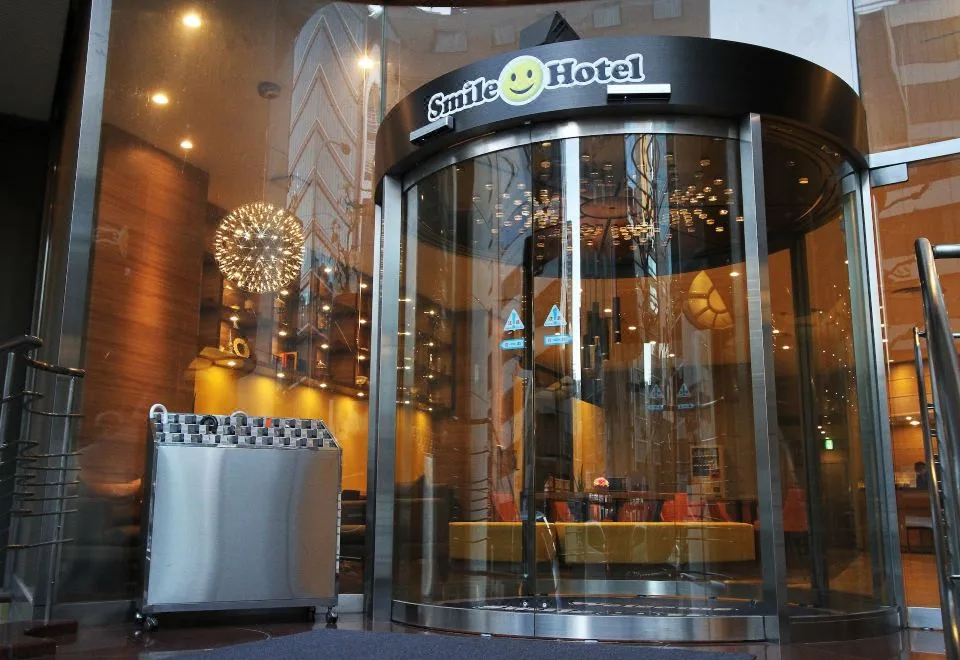
Smile Hotel Tokyo Nihonbashi
Smile Hotel Tokyo Nihonbashi
The clearest benefit of Smile Hotel Tokyo Nihonbashi is its location beside Kayabacho Station. Getting onto the subway in the morning without a long walk, then warming a takeaway meal on your return, is practical. The hotel has 171 rooms across 9 floors, from 11-square-metre singles to twin and triple rooms. I judge small single rooms and twins separately: praise for one room type cannot be applied to all others.
What appeals and what to accept
The short version: this hotel sells its Kayabacho location and the practical space of its twin rooms, not large rooms or guaranteed quiet. These five points are the trade-offs I check before choosing a room.
Reasons to consider
- The hotel lists roughly one minute on foot from Kayabacho exits 1 and 5; subway trips are easy to plan.
- A twin room opens two suitcases of different sizes with walking space left over.
- Coin laundry and a microwave help with longer stays and simple meals.
Trade-offs
- Compact rooms have limited space; a single is 11 square metres, and sharing a bed is a different experience from sleeping in a twin.
- Sound insulation and mattress comfort are the two points I weigh most carefully here; light sleepers should compare carefully.
Choosing rooms and luggage space
Traveling alone with little luggage, a compact room may be enough. For two people with big suitcases, I compare twins first. A twin opens two suitcases of different sizes with walking space left over, but that space belongs to the twin category and cannot be generalized to every room. Check area, bed count and width together: a Semi Double bed is 120 centimetres wide, so do not treat Semi Double and Double as the same space.
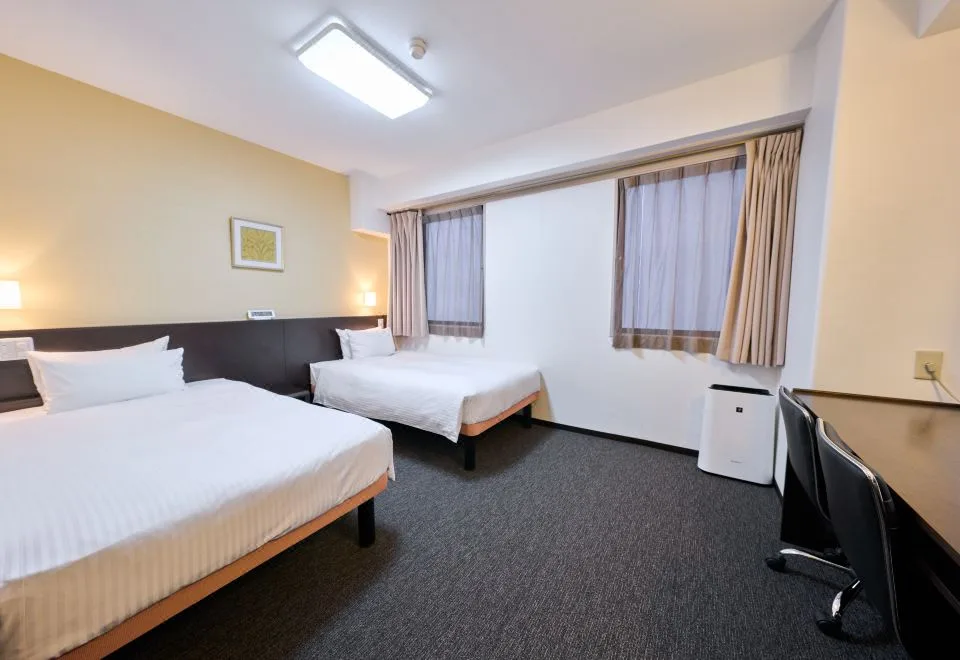
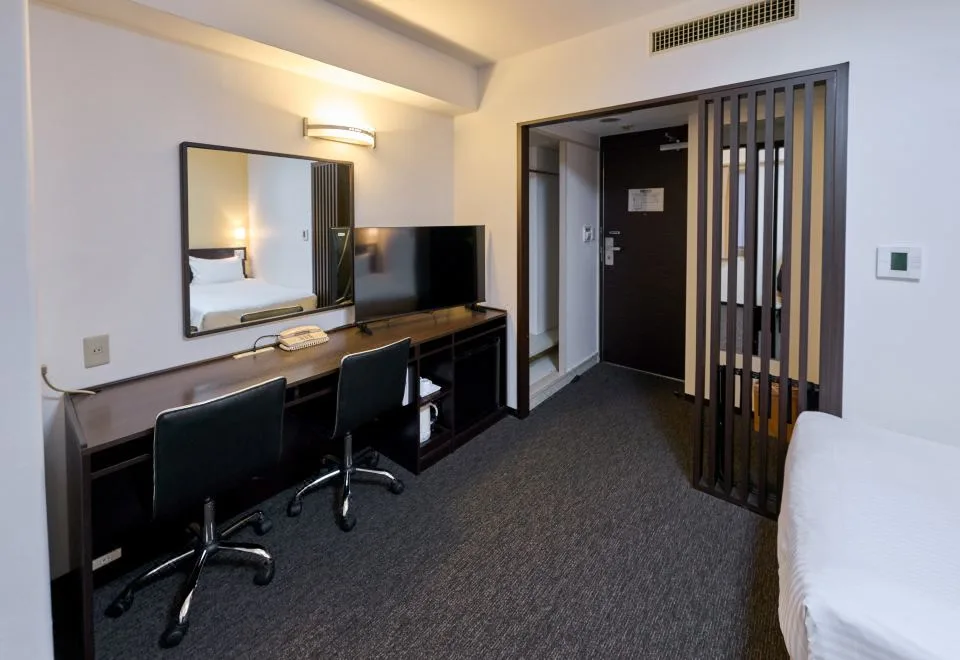
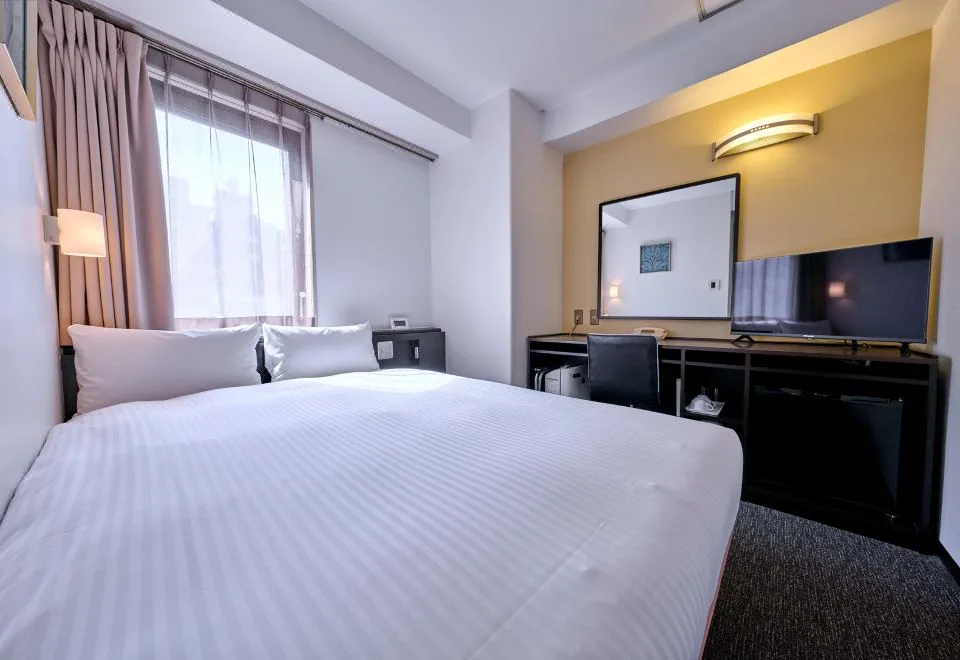
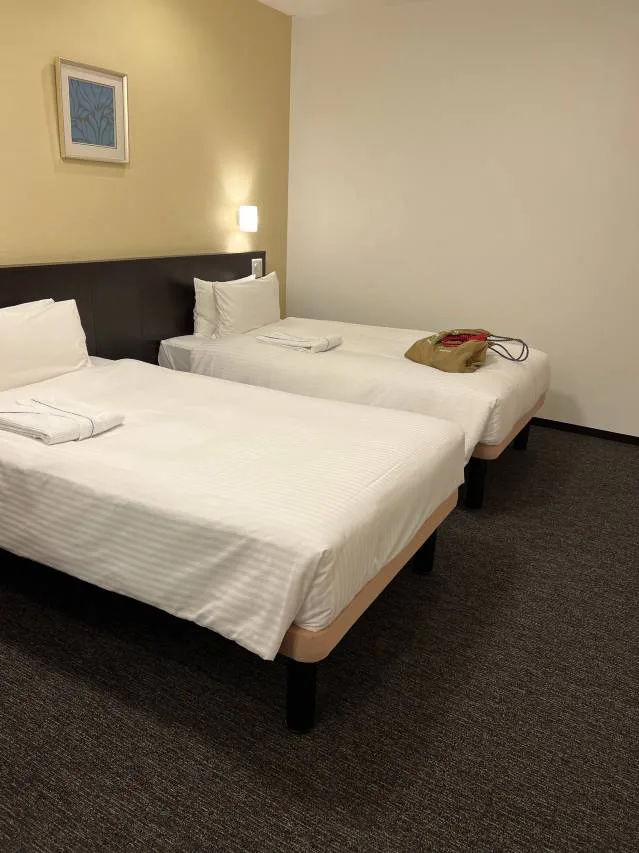
Room types run from an 11-square-metre single and a 12-square-metre double to twin rooms and a triple with three single beds, in smoking and non-smoking versions. Rooms have a refrigerator, electric kettle, desk and chair, and some twins add a sofa; every room has a humidifying air purifier, which helps when the heating dries the air in winter. With extra luggage, ask how a third bed is arranged before booking instead of judging by the room name alone.
The hotel has 171 rooms across 9 floors, and the front desk is staffed around the clock, so a late arrival still gets checked in. Check-in runs 15:00 to 24:00 and check-out is by 11:00; for an early arrival, ask the front desk about the day’s arrangements instead of assuming an early room is possible.
Smoking and non-smoking rooms are separate choices, so pick at booking instead of planning to switch on arrival — non-smoking rooms fill first on busy days, and a switch may not be possible. Rooms come with shampoo, conditioner, body soap, towels, a toothbrush set and a hair dryer, with more at the amenities area; every room has an electric kettle and a refrigerator, so chill a drink in the evening and take a bottle with you in the morning.
Breakfast to suit your morning
Breakfast is served at Gusto on basement floor 1, a Japanese and Western buffet of about 60 dishes with rice, soup, salad, bread, desserts and a drink bar, from 6:30 to 9:30. Adults pay 1,200 yen and children 11 and under pay 700 yen, payable on site. On mornings when I need to leave on time, I eat here and walk out, which beats finding a shop; on days for Nihonbashi restaurants, I leave breakfast to eating out.
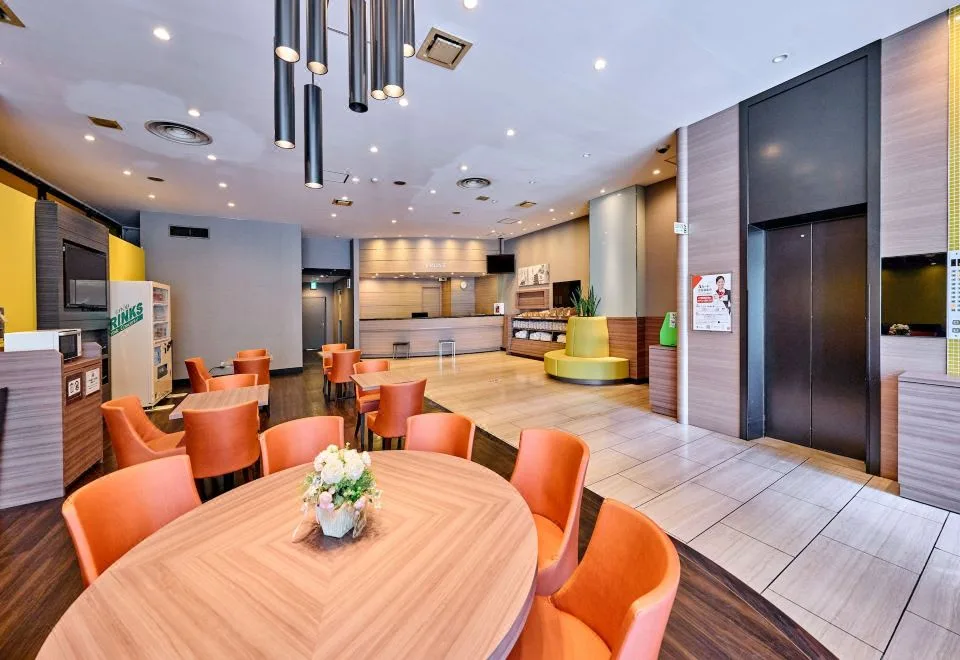
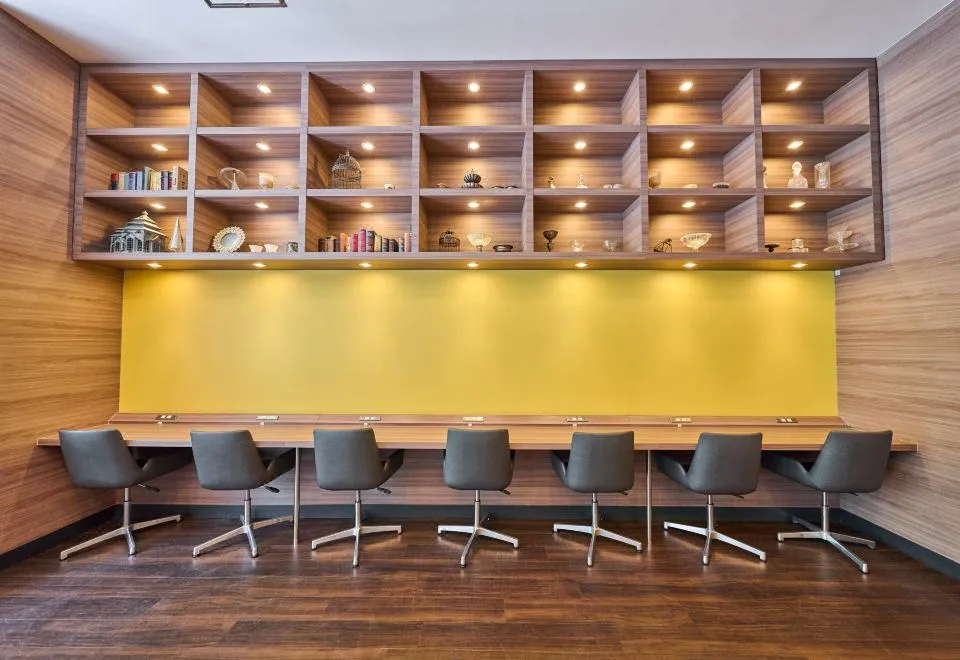
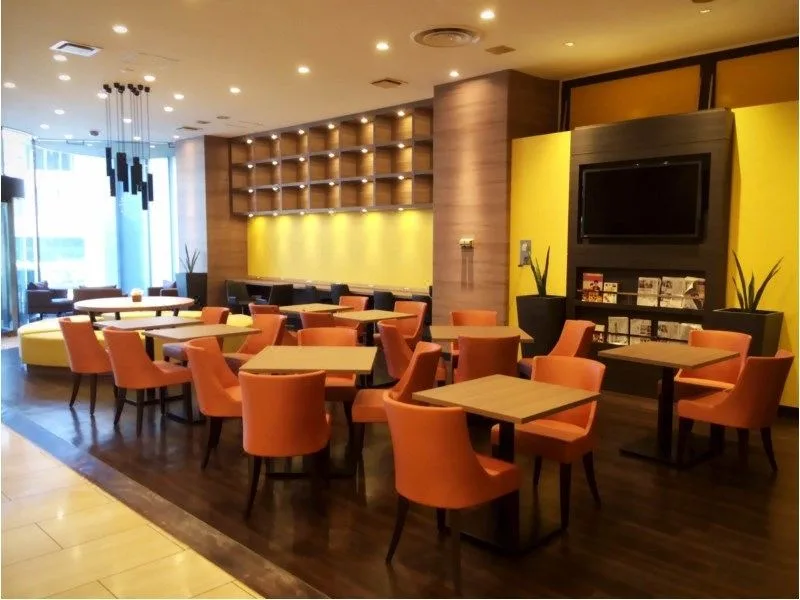
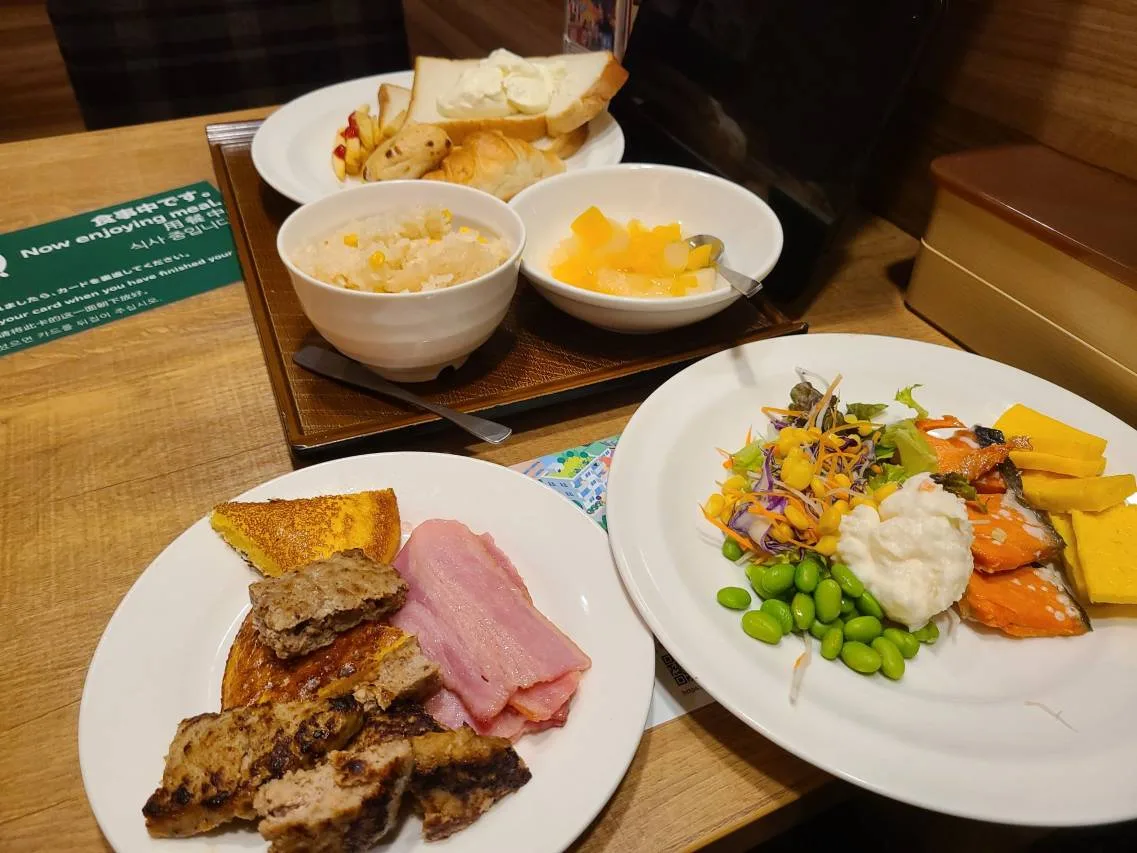
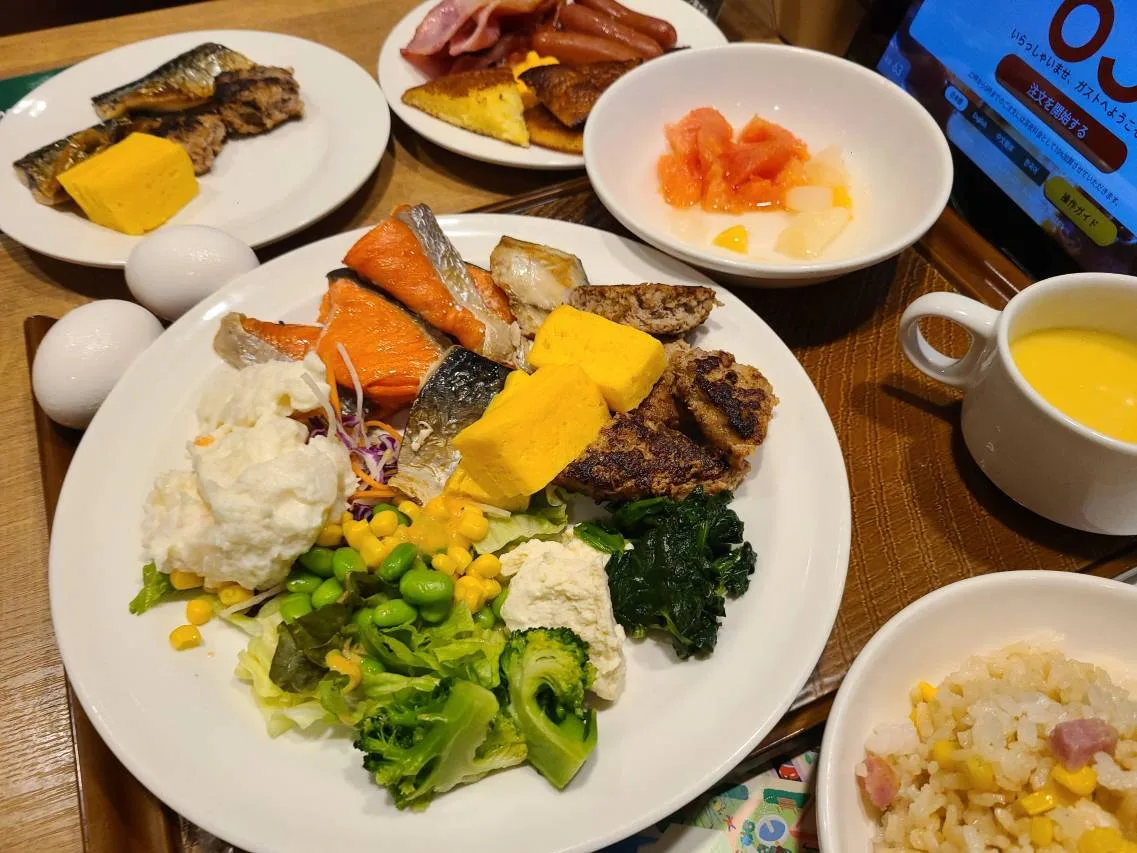
Gusto serves more than breakfast: lunch and dinner run until 22:30, so a late return still ends with a proper meal in the building. The seating is family-restaurant style, comfortable even with children along. For a relaxed breakfast, arrive before 7:00 when it is quietest; after 9:00 it fills up and the buffet line slows, so late risers should plan the timing in advance.
The drink bar is self-service with coffee, juice and milk, and desserts and salads sit in the same row, so a light morning has options too. For Japanese food, take the rice, soup and side-dish route; for Western food, take bread and salad. At 1,200 yen for this spread, it reads as fair value around Nihonbashi.
Location, rail access and suitcases
Kayabacho exits 1 and 5 are listed at around one minute, but proximity to an exit does not mean a step-free journey. For large luggage, find an elevator route to the street instead of lifting bags on the nearest stairs. If coming via Tokyo Station on a rainy day, compare a subway change with a short taxi ride.
With large luggage, a wheelchair or a stroller, do not use exits 1 or 5: the two nearest exits have no elevator straight to the street. Use exit 1a instead — a street elevator stands at exit 1a, and from the Hibiya Line platform you reach the ground by the Tozai Line elevator; from exit 1a, turn right and walk a short stretch to the hotel door. The hotel entrance has steps, so allow an extra step with big suitcases, and plan the entry with a wheelchair or stroller before you set out.
Address: 2-13-5 Nihonbashi Kayabacho, Chuo City, Tokyo 103-0025, Japan.
Allow transfer time from the airports: Haneda to Kayabacho needs one change, and Narita means reaching Tokyo Station or Nihonbashi first, then changing to the subway — do not cut the timing fine with heavy luggage. For Disney, changing at Hatchobori onto the JR Keiyo Line runs smoothest; check the times before heading out in the morning, and do not forget the last train home.
What to do and eat nearby
From Kayabacho, combine Nihonbashi dining or shopping with a Ginza outing: Nihonbashi is 550 metres away, Ginza 990 metres, and JR Shin-Nihonbashi Station 1.3 kilometres. A 24-hour Lawson sits below the hotel and a 7-Eleven stands across the street, so a bento heated in the lobby microwave makes an easy evening meal. For Disney, check the transfer via Hatchobori or another route instead of assuming direct trains from this hotel.
A half-day nearby works well on foot: the small museums and historic buildings around Nihonbashi suit a slow walk, and lunch and dinner options are plentiful without going far.
Nihonbashi itself is 550 metres away — walk over for the bridge and the old streets, with plenty of dining and shopping around. Souvenirs and a proper dinner both sit within walking range, easy to fold into the evening on the way back. Tired midday, the hotel sits close enough to rest and head out again; the station beside it makes splitting the day in two easy.
Facilities you will actually use
The hotel lists coin laundry, a microwave, ice machine, vending machines and a self-service amenities area. They help with washing clothes and meals, but shared machines may have queues. Confirm luggage storage hours, especially when you won’t stay another night.
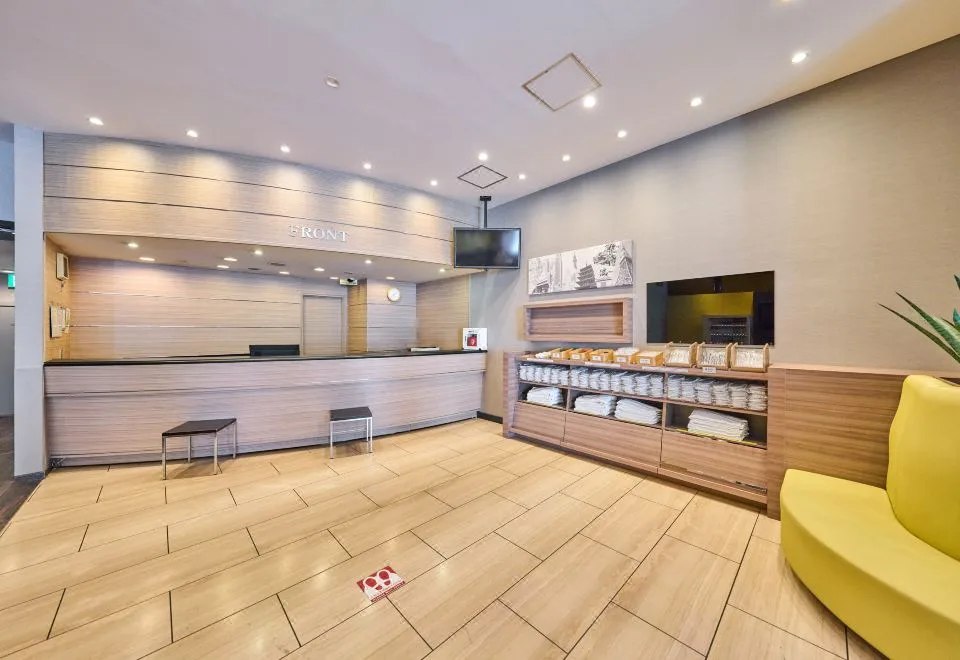
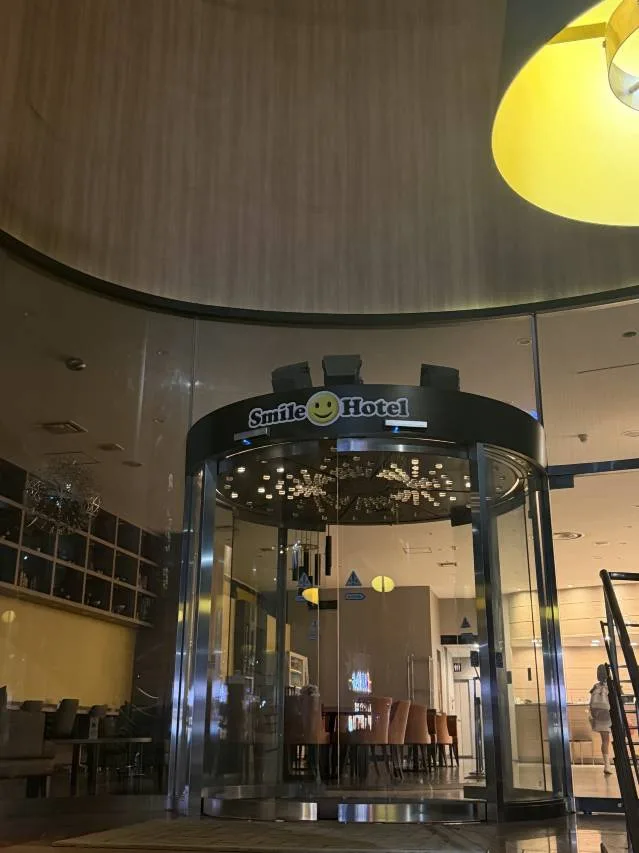
The front desk is staffed around the clock and can help in English, Korean and Japanese, with translation tools, a safe and a wake-up call. Rooms come with shampoo, conditioner, body soap, towels, a toothbrush set and a hair dryer; hair irons, trouser presses and irons can be borrowed in limited numbers, so ask early. There is no large public bath, pool or fitness room, so plan bathing elsewhere, and no room service — late-night hunger falls to the convenience store and vending machines.
Check-in guests must be 18 or older, and children of all ages are welcome, though a child sharing a bed may still incur a fee; extra beds and cribs depend on the room type, so enter the number of children when booking for the most accurate price. No deposit is required, and pets are not allowed. Public areas have free Wi-Fi, rooms have internet access, and the front desk can arrange a taxi — book it ahead on an early-flight morning.
Coin laundry sits in the building, worth one run on stays of three nights or more — reserve the time in advance and do not leave it for check-out morning. The microwave is in the lobby, so heat a bento and carry it back to the room; a late-night craving falls to the vending machines.
One or two nights versus a longer visit
A short stay benefits most from the subway proximity. Over several nights, room choice matters more: with two suitcases to unpack daily, twin and larger categories beat a bed that’s merely wider. Light sleepers should request a quieter location and raise noise concerns promptly after arriving.
Over several nights my rhythm is simple: breakfast at Gusto before heading out, a heated bento in the evening, laundry every second day, and suitcases left open along the twin room’s walkway. The hotel earns its keep in that repetition — station close, food close, laundry close — and every day saves walking and waiting time.
Solo, a single room is the best value: light luggage, early starts and late returns, and 11 square metres is enough. For two people, do not save the small price difference — take the twin outright, where unpacking and sleeping both feel easier, and the gap only grows over several nights. A Semi Double bed is 120 centimetres wide, so two people sleep close together; restless sleepers should take the twin instead of saving a little money and sleeping badly.
What to consider before booking
Convenient transport is not the only factor. The spacious feel of a twin and the tightness of a small room need to be judged separately, and so does sound: television from next door, footsteps in the corridor and closing doors have all come up at different times. If you put sleep first, treat this as a real risk to accept, not something earplugs fix for everyone.
Mattress firmness is a matter of personal taste, and I will not promise you any one bed sleeps well; what I can say is this — if noise and beds worry you, ask at booking for a room away from the elevator and corridor, test the soundproofing on the first night, and speak to the front desk at once rather than enduring it for three nights.
At booking, ask about floor and position: higher floors sit further from the street, and rooms away from the elevator and corridor run quieter. Ask before you book — leaving it to check-in day means a switch may not be possible on busy dates. Non-smoking floors can be requested too; if cigarette smoke bothers you, a non-smoking floor protects better than a non-smoking room alone.
How I would decide
I recommend it to travelers using Kayabacho’s subway lines who are willing to select a room carefully. For two people, compare actual twin area and beds, then breakfast based on morning timing. If you are sensitive to noise from next door, compare other hotels nearby before deciding whether the location is worth it.
It is equally clear who should skip it: anyone wanting a large room, absolute quiet, or a step-free arrival without detouring to exit 1a will find themselves compromising at every turn. The other way around, with light luggage, early starts and late returns, and only a clean bed and a convenient breakfast on the list, few spots around Kayabacho run smoother than this one.
The smoothest trip built around this hotel runs days through Ginza, Nihonbashi and Tokyo Station, then sleeps in Kayabacho. Do not pack the schedule tight — keep one evening free for a slow dinner in Nihonbashi. Tokyo Station and the T-CAT airport bus terminal both sit about 10 minutes away by taxi, so on a bullet-train or airport-bus day, leave luggage at the desk and head out — the timing barely differs from staying beside Tokyo Station.
Pros and cons at a glance
Pros
- Kayabacho exits 1 and 5 are about a minute on foot, so subway trips start fast.
- A twin room opens two suitcases of different sizes with walking space left over.
- The basement Gusto serves a Japanese and Western buffet of about 60 dishes, 6:30 to 9:30, at 1,200 yen for adults.
- Coin laundry and a microwave cover multi-night stays without laundry or reheating worries.
- The front desk is staffed around the clock, helps in English, Korean and Japanese, and stores luggage.
- 171 rooms, each with a refrigerator, electric kettle and humidifying air purifier.
Cons
- A single room is only 11 square metres; two people take turns opening suitcases and using the desk.
- Soundproofing is the weak point: television from next door, corridor footsteps and closing doors can carry into the room.
- Mattress firmness is a matter of taste, and light sleepers should test it on the first night.
- The nearest exits 1 and 5 have no elevator straight to the street; big luggage means detouring to exit 1a.
- No large public bath, pool, fitness room or room service — late-night hunger falls to the convenience store.
Information checked: November 22, 2026.