
TOKYO / CHUO
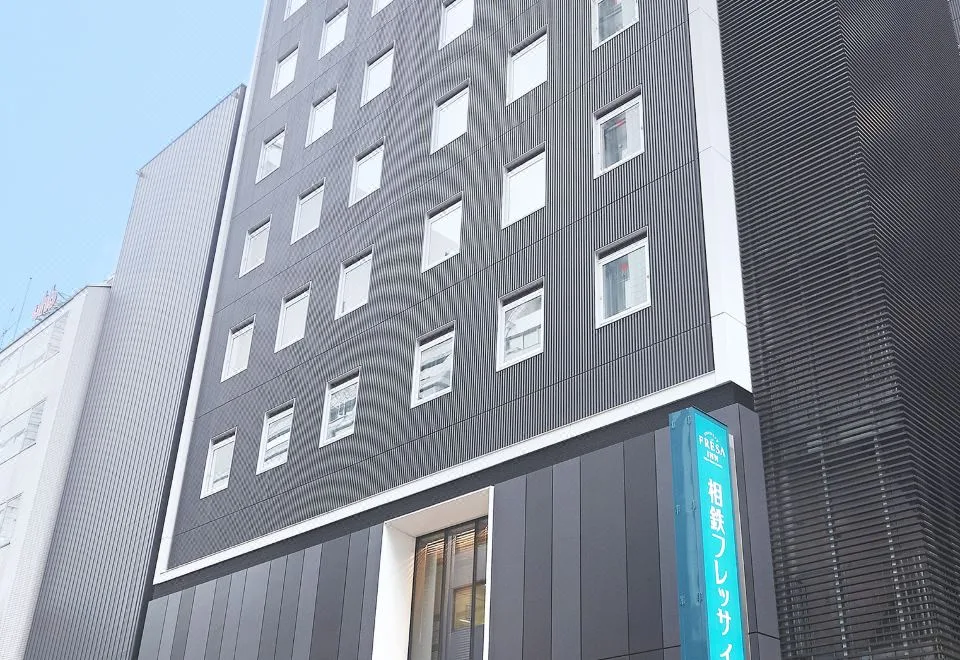
Sotetsu Fresa Inn Ginza-Nanachome
Sotetsu Fresa Inn Ginza-Nanachome
Ginza shopping convenience, but singles and two people’s luggage need different plans
Sotetsu Fresa Inn Ginza-Nanachome suits guests who link shopping, dinner and rest in Ginza. Its neighborhood facilities make daily life easy, but the more purchases you bring home, the more important it is to choose a room with luggage space.
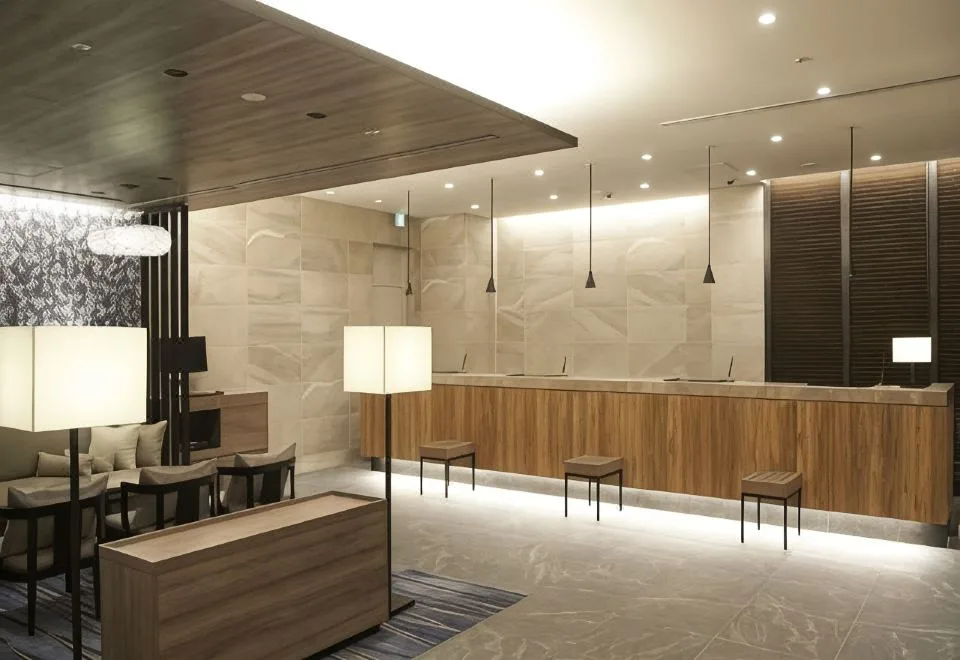
I think of this hotel as a Ginza base: daytime shopping, dinner in the evening, and dropping off bags late at night are all within walking distance. The trade-off is that the rooms are small — accept the compact layout first, then decide whether to stay here.
Ginza 7-chome suits a packed schedule: Tsukiji in the morning, Ginza in the afternoon, theatre in the evening — all three within walking distance, with the room close enough to drop off bags or change clothes in between. The longer you stay, the more time this location saves.
| First look at | My recommendation |
|---|---|
| Suitable trip | Solo travel, a lightly packed couple on a short visit, or people dining out in Ginza. For two large cases and daily shopping, compare bigger twin categories. |
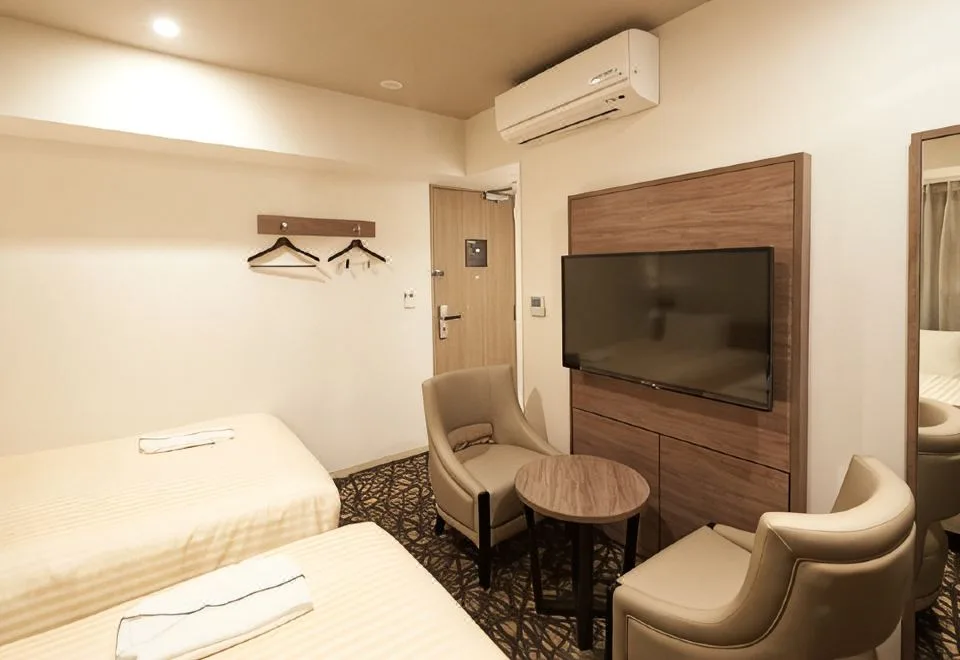
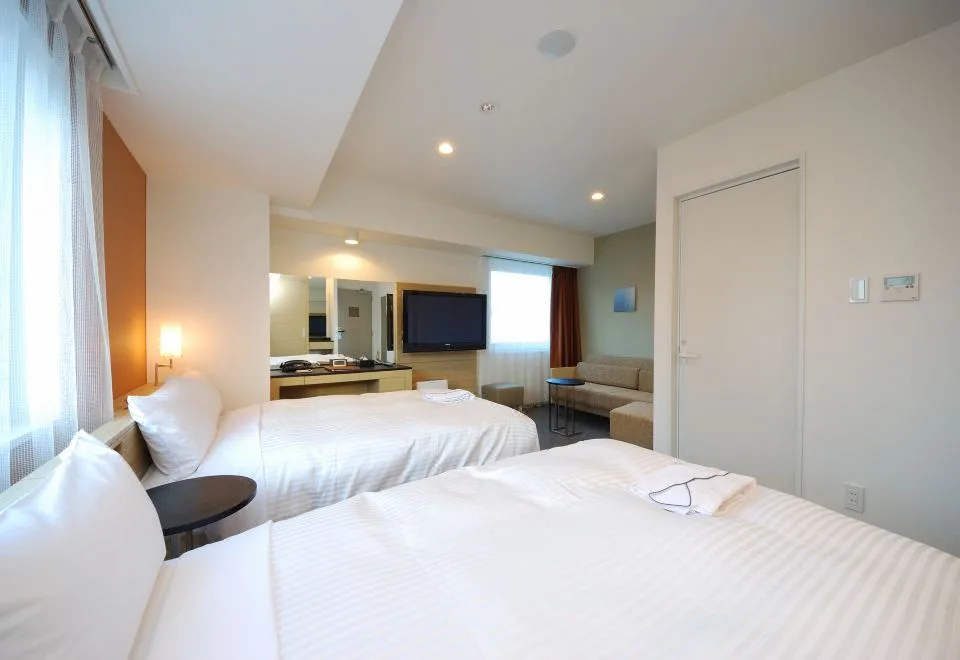
| Room choice | Official rooms include regular Twins and larger superior Twin categories. Photos show doubles, small tables and different passages. |
| Main compromise | Compact categories limit movement; I also check air-conditioning sound and cleaning details on the first night. |
Rooms / Transport / Breakfast / Longer Stays / Trade-offs
Choose a room for actual luggage space
There are regular and larger twin types. A single room could not fit an open 28-inch case and a 22-inch case at once — I treat that as my room-selection warning: confirm the number of beds and floor area before comparing the cheapest rates, and don’t assume a solo stay proves two people will be comfortable.
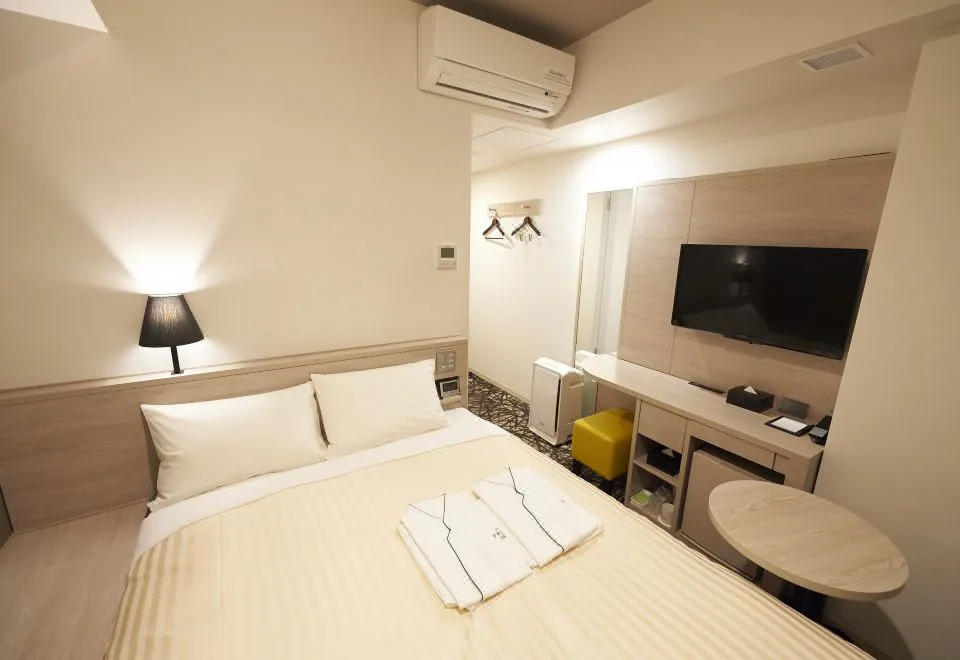
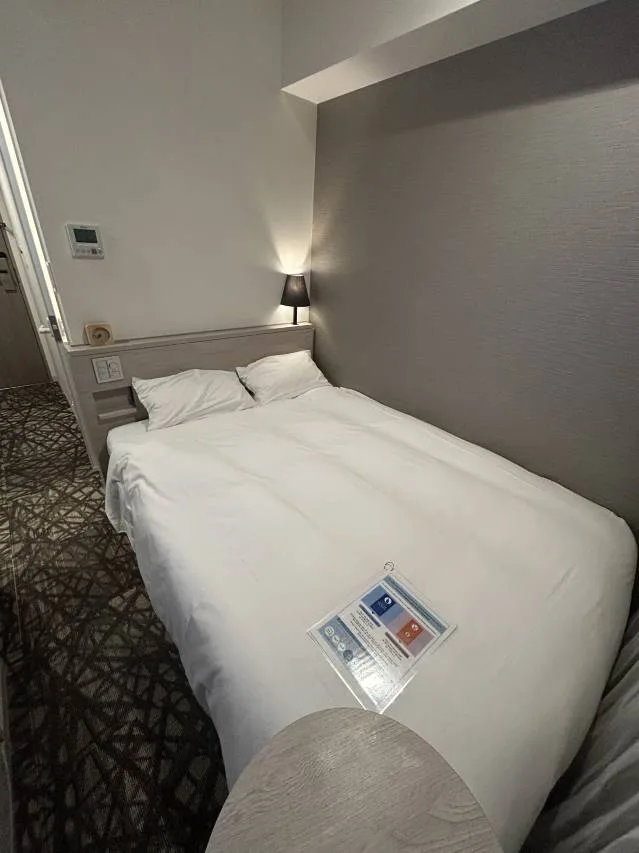
My room-selection order is people first, luggage second, price last. One person is fine in the 11.9 m² Double with its 140 cm bed. Two light packers can take the 14.8 m² Twin, each in a 120 cm bed, without disturbing each other when getting up at night. If the shopping bags keep multiplying, jump straight to the 18.4 m² Deluxe Twin and count the open-suitcase space first. Want more breathing room? The 23.5 m² Premium Twin adds nearly 5 m² — the difference between two large cases and a walkway.
One thing to settle before booking: this hotel does not accept children, guests must be 18 or older, and no room type allows an extra bed or a crib. So the 23.5 m² Premium Twin is not a bed for a third person — it is extra space for two adults. Families travelling with children need another hotel; do not find out at check-in that you cannot stay.
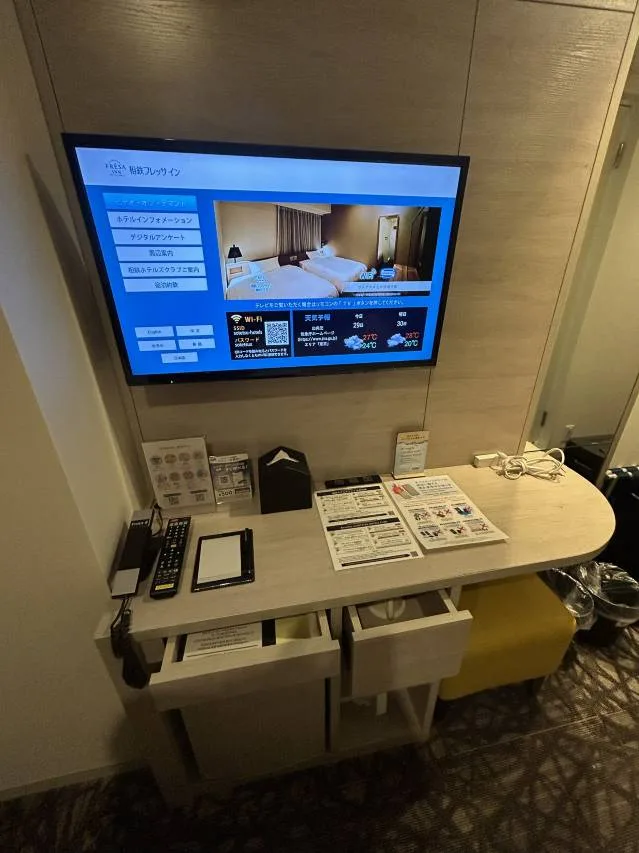
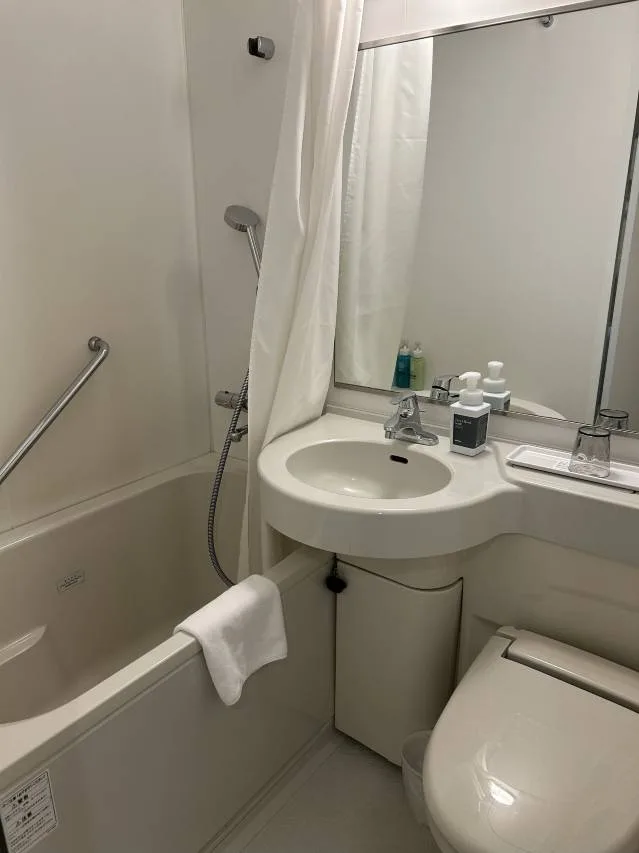
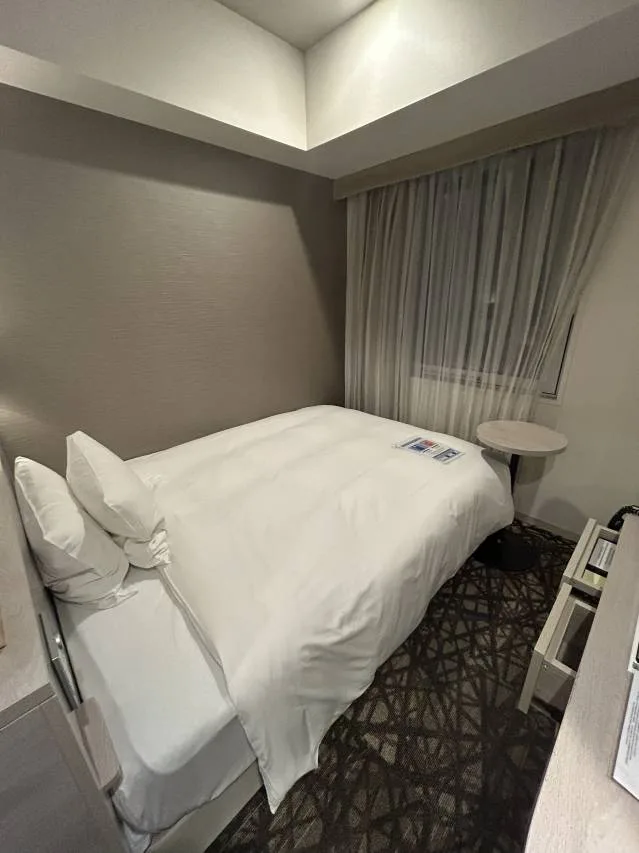
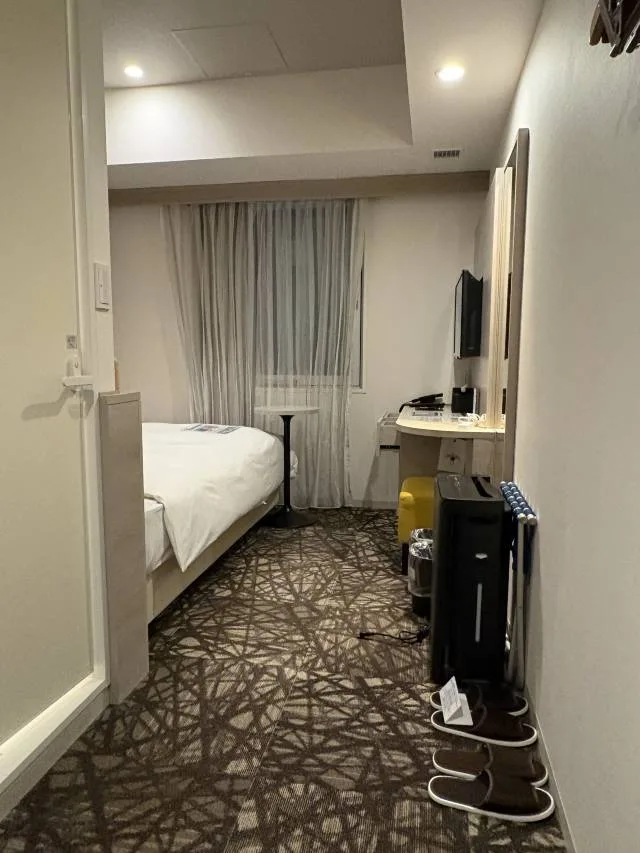
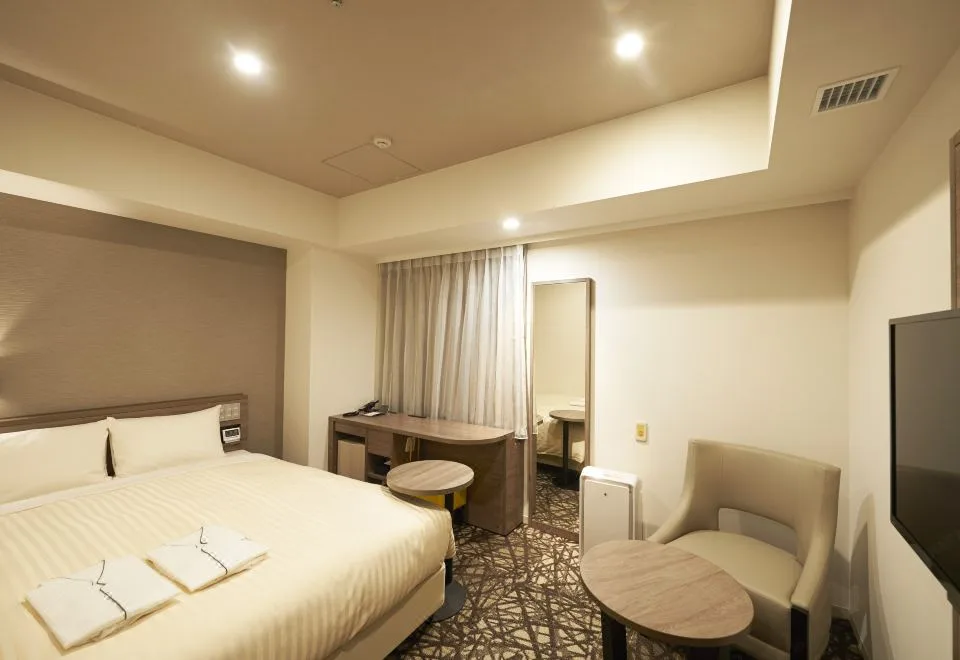
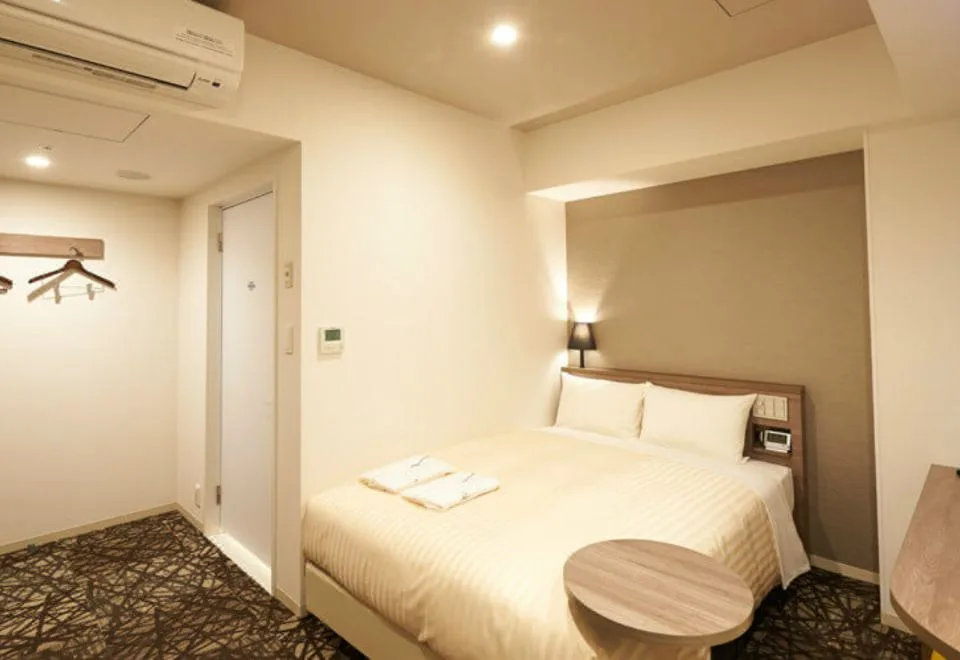
The room photos in the gallery are worth a look before you book: a small table and chair sit beside the double bed, the television faces the bed from the opposite wall, and the bathroom is a single unit bath. Once a suitcase is open, the walkway at the foot of the bed is the main route through the room — with two people inside, one sits down first and the other opens the case, and the space works.
Bed width matters too: the Double’s 140 cm bed is shared by two people, so turning over is felt on the other side; the Twin gives each person a 120 cm bed of their own, so sleep is undisturbed. If you are used to sleeping apart, a twin room is the more practical choice than a bigger double bed.
| Room type | Area / bedding | My choice |
|---|---|---|
| Double | 11.9 m² / 140 cm bed | Two guests packing light |
| Twin | 14.8 m² / two 120 cm beds | Separate sleeping places |
| Deluxe Twin | 18.4 m² / two 120 cm beds | More luggage room |
| Premium Twin | 23.5 m² / no extra bed | Two adults wanting more space |
The official room information shows the full layout, but still check three things when you book: the room name, the bed count and the number of guests. Twin and Double differ by one word, yet the beds and floor area are completely different; book the wrong category and you may find the luggage does not fit, with no larger room free to switch to.
Getting here with luggage
Higashi-ginza Station is about 390 m or six minutes away, with Shimbashi also a possibility on JR. Walking a few minutes farther to use an elevator may be easier than carrying bags up the closest stairs. There is a sister hotel in Ginza 3-chome nearby, so check that you have the Nanachome (7-chome) branch.
If your route passes through Ginza Station, I take Exit A3. The hotel’s photo directions go like this: come up at Exit A3, Ginza Core is on your left, walk straight along Chuo-dori, pass GINZA SIX, turn left at the Lion Beer Hall intersection, then turn right at the intersection beside the fire station — the hotel sign is ahead, with the B-Flat Ginza-Nanachome car park on the ground floor. The whole walk is about five minutes, past Ginza’s busiest shopfronts, well lit even at night.
JR Shimbashi is just as handy, about seven minutes from the Ginza Exit. The hotel’s route: leave the Ginza Exit, cross the road and walk along Sotobori-dori towards Tsukiji, go straight through the Shimbashi 1-chome intersection, turn onto Chuo-dori at the crossing of Gaien-higashi-dori and Dai-Ichi Keihin, then turn right at the Ginza 7-chome intersection into Hanatsubaki-dori — the hotel is on the left at the third block. By train it is about three minutes from Tokyo Station, about 22 minutes from Haneda Airport and about 68 minutes from Narita Airport, so staying here on an airport day adds no detour.
Ginza Station is a transfer hub in itself: the Ginza, Marunouchi and Hibiya lines meet there, Tokyo Station is one stop away, and Shinjuku, Shibuya, Ikebukuro, Ueno and Asakusa are all reachable without changing trains. Staying in 7-chome does not limit you to Ginza — any district is a daytime trip away, and the same line brings you back at night with no complicated transfer to remember.
Coming from Haneda Airport is the smoothest part: the Keikyu Line runs straight through onto the Asakusa Line, so you ride to Higashi-ginza without changing trains and without hauling cases between platforms. From Narita it is about 68 minutes; with heavy luggage, decide before you arrive which exit you will use.
With large luggage, a wheelchair, or a stroller, take the elevator route at Higashi-ginza: from the central ticket gate on the Hibiya Line, leave by Exit 3; from the Miharabashi-side ticket gate on the Asakusa Line, leave by Exit A1. The Toei station guide lists two elevators and two escalators at Higashi-ginza, with one barrier-free route secured. From Exit A1 you are already on Ginza’s streets — about five minutes to 7-chome, with no more stairs on the way.
Drivers, take note: the hotel has no car park of its own. The B-Flat Ginza-Nanachome car park on the ground floor takes hotel guests — the stay rate is 1,700 yen for the first night, 3 p.m. to 11 a.m. the next day. It opens 7:30 a.m. to 11 p.m., and you cannot take the car out after 11 p.m., so plan a late return accordingly.
| Stay information | Details |
|---|---|
| Address | 7-11-12 Ginza, Chuo City, Tokyo 104-0061, Japan |
| Check-in / Check-out | 3 p.m.–midnight / before 11 a.m. |
| Ordinary walk reference | 390 m or about six minutes from Higashi-ginza subway station |
See the official access information: the hotel has photo directions for Shimbashi and Ginza stations, and reading them once before you leave beats searching on arrival.
Breakfast: compare the included rate
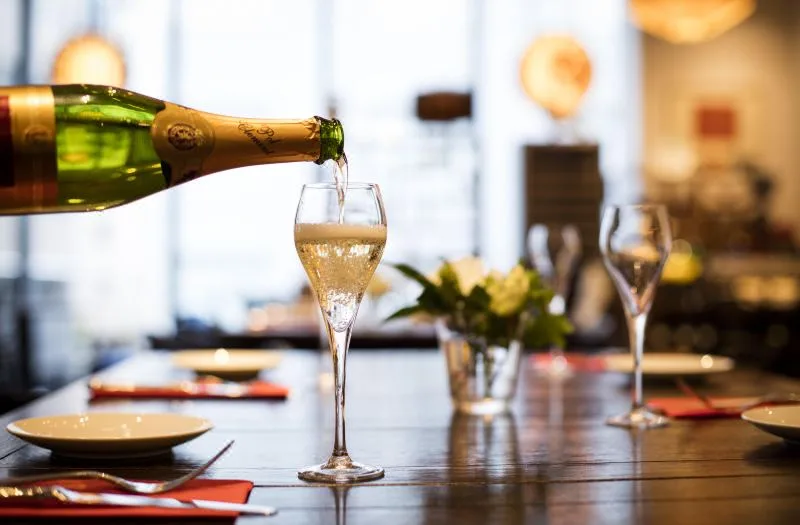
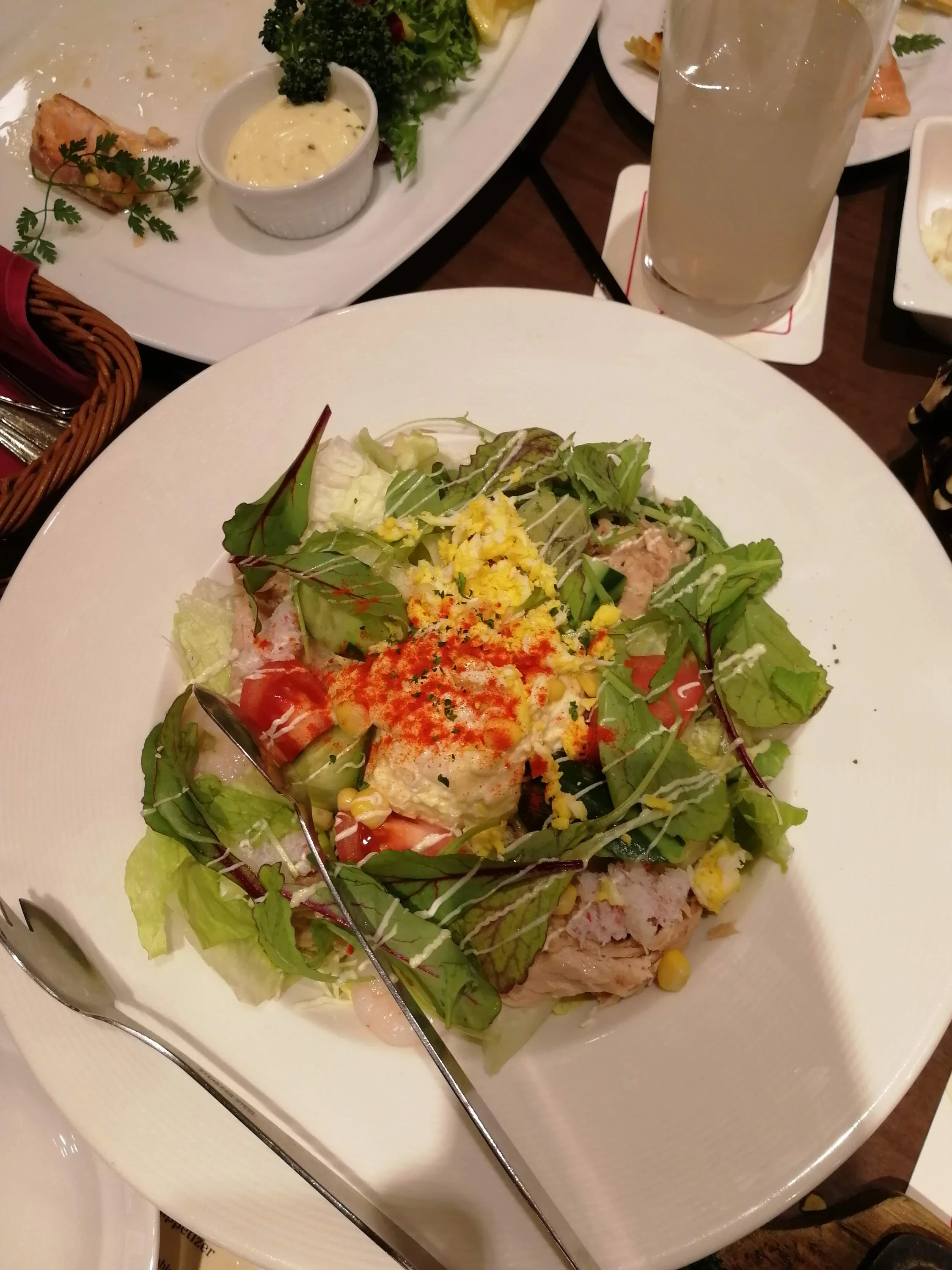
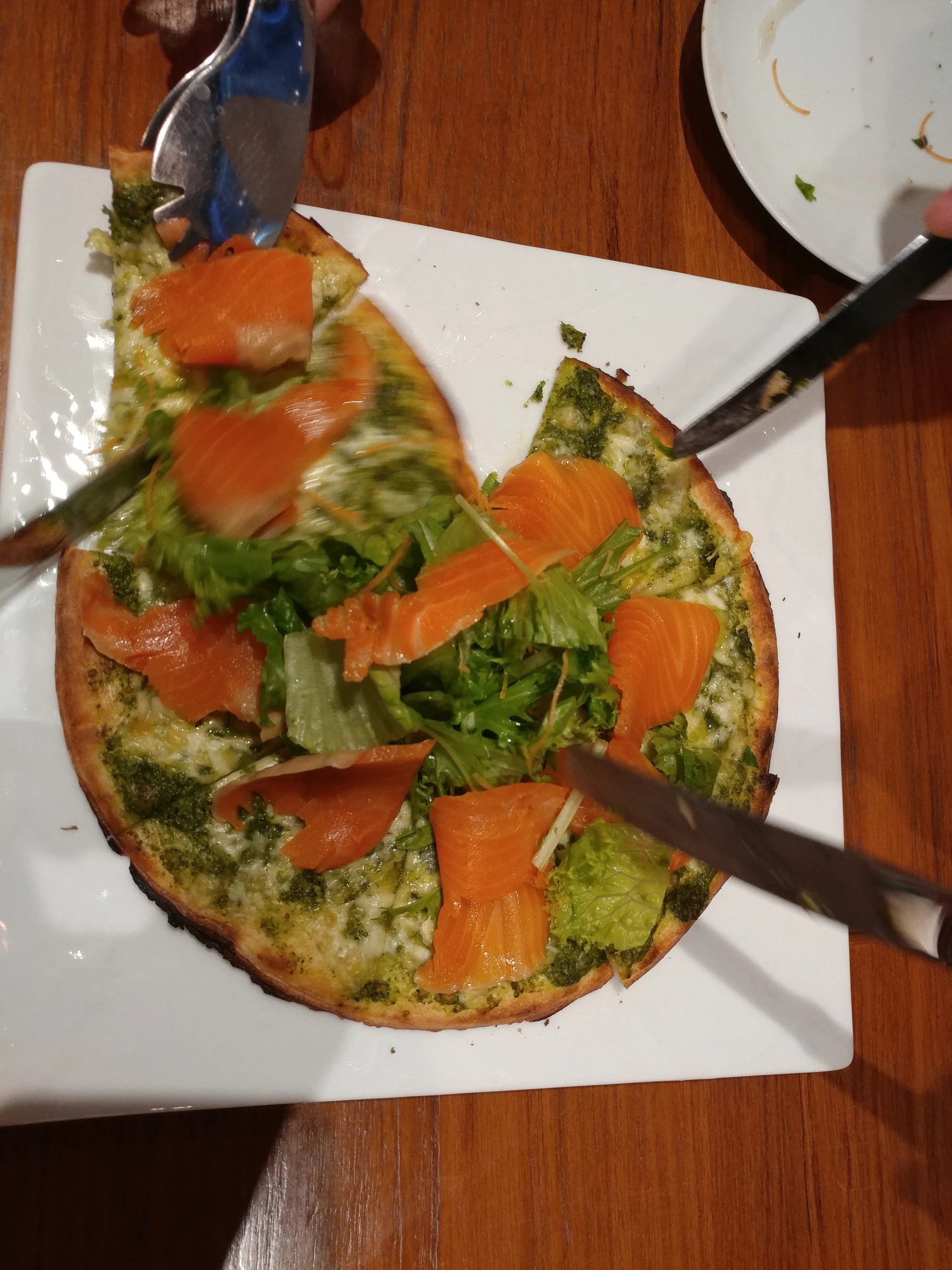
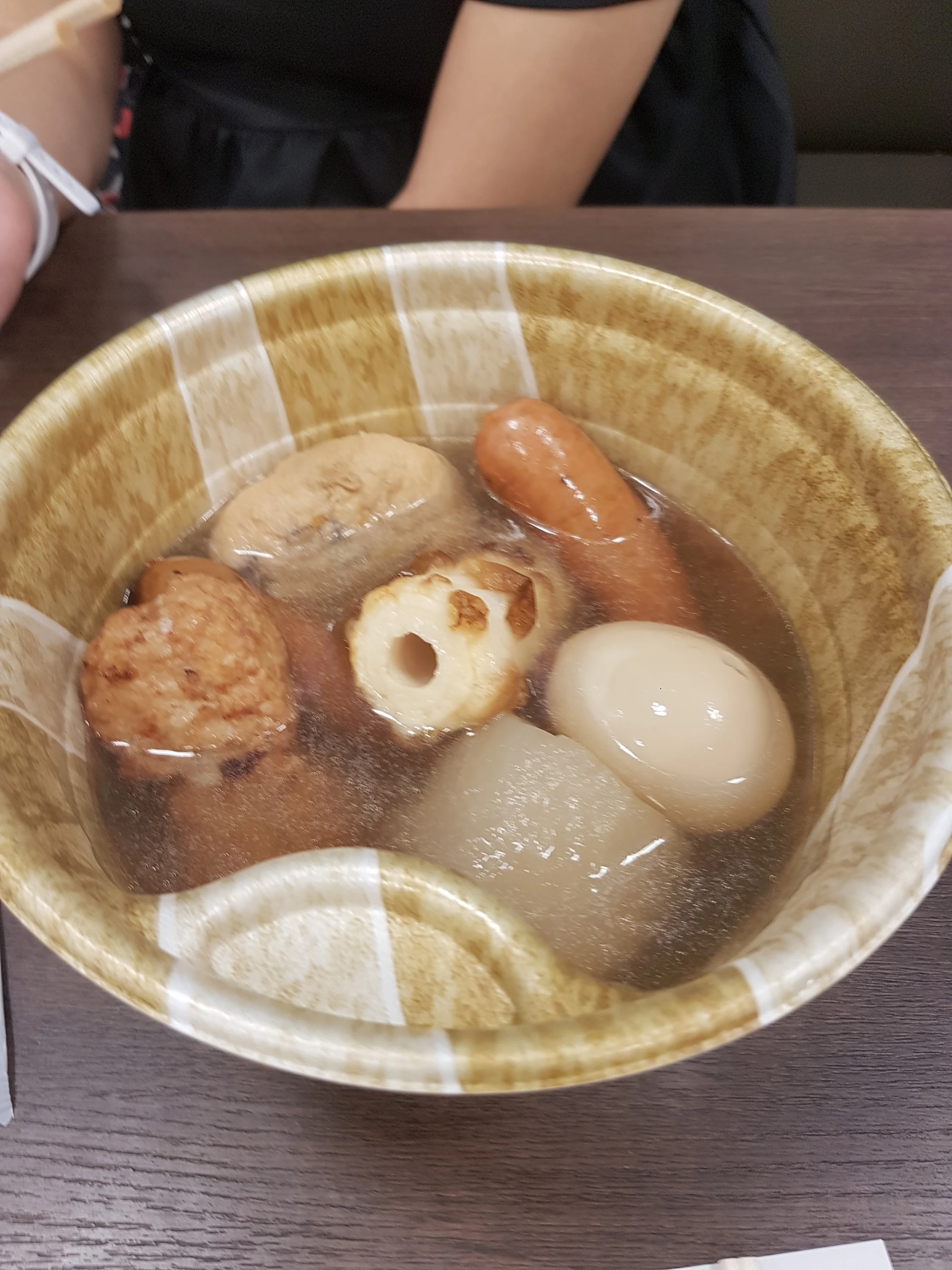
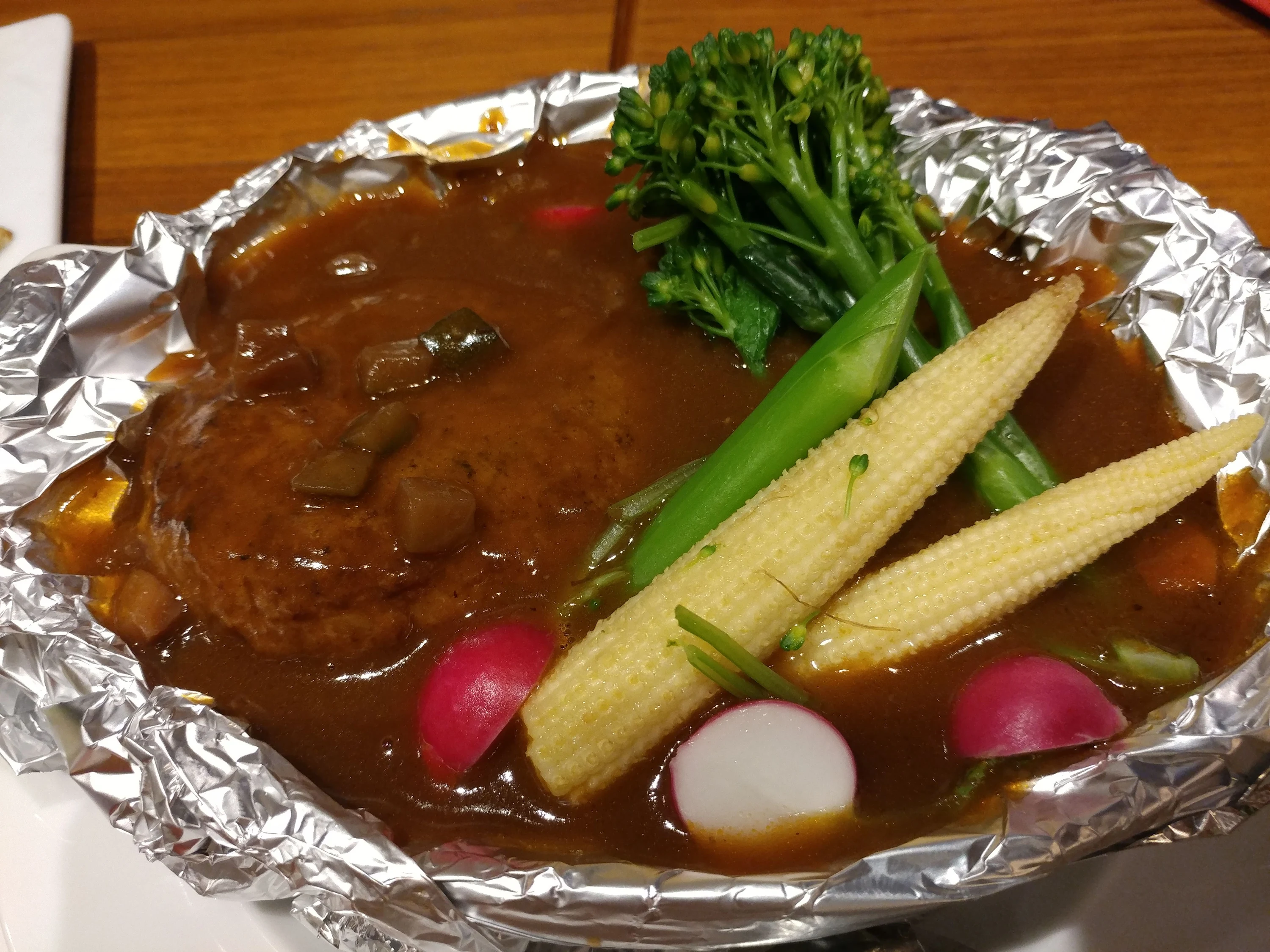
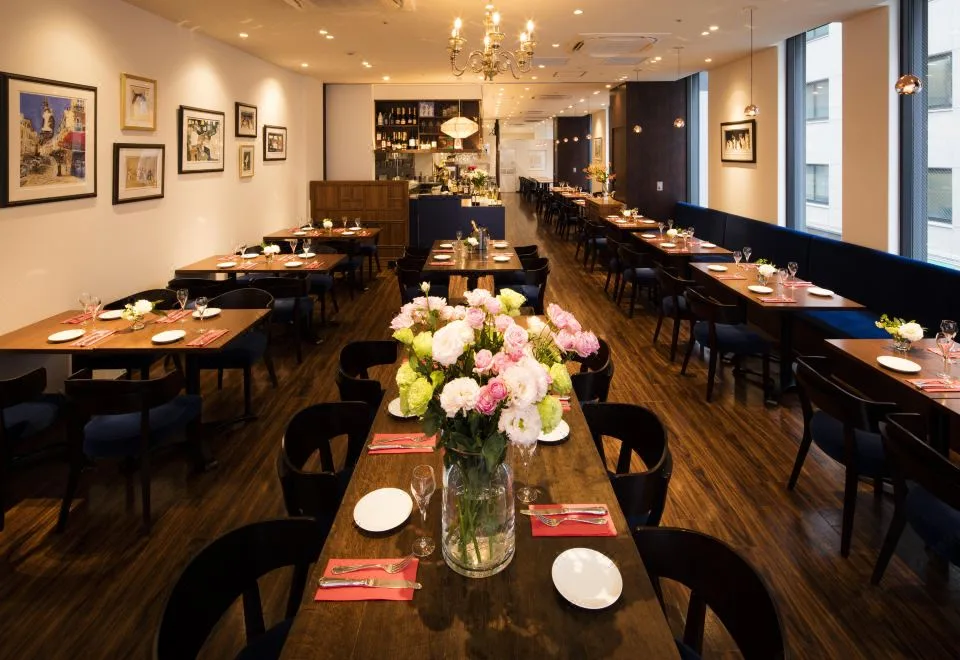
Breakfast is a buffet, and its range and flavour are good. If you leave at a fixed time and want to eat before going out, compare included rates. If the trip starts leisurely with Ginza shopping, leaving breakfast flexible may be better. Restaurant images show the setting; the actual menu changes.
Breakfast is a buffet, 1,530 yen per adult, and you can add it on site. My maths is simple: if you leave at a fixed time and want to eat downstairs and go, book the breakfast-included rate. If you would rather sleep in and wander into Ginza slowly, skip it and eat nearby — no need to let one breakfast pin down the day. The restaurant photos show the seating and the setting; what is served on the day is whatever the kitchen puts out.
The restaurant is inside the hotel, so breakfast needs no search for a cafe — go downstairs and you are in the dining area. Seating is buffet-style: take a tray, find a table and eat. Nobody waits to be served, which suits a fixed departure; if you want a slower morning, come down after the opening rush.
One night or several nights
For one or two nights shopping in Ginza, it is easy to return and drop off bags. On longer stays, learn how cleaning request signs, towel changes and laundry work on day one, rather than filling the desk and then finding nowhere for suitcases.
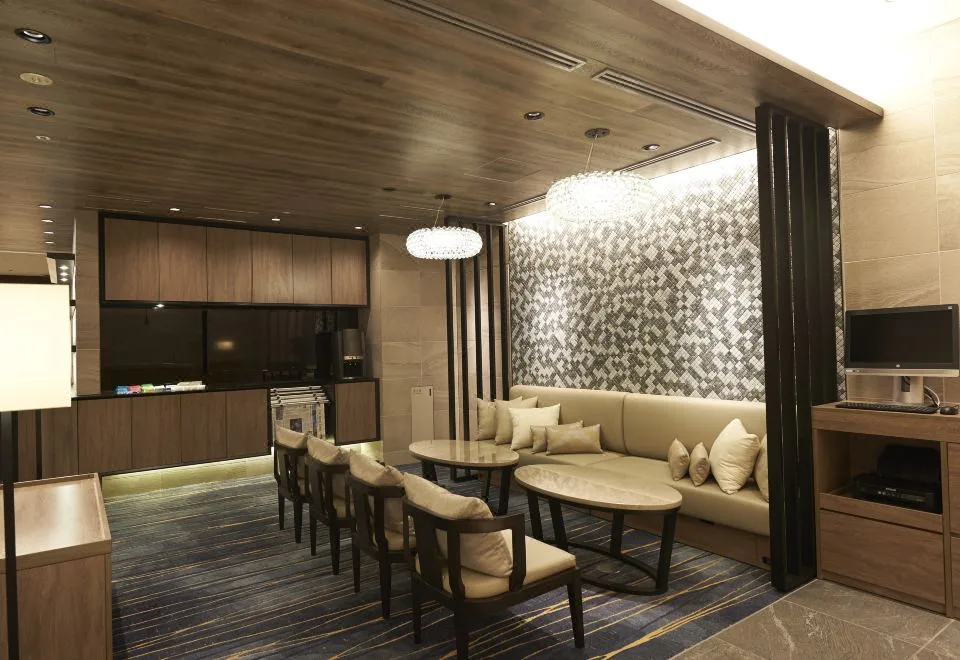
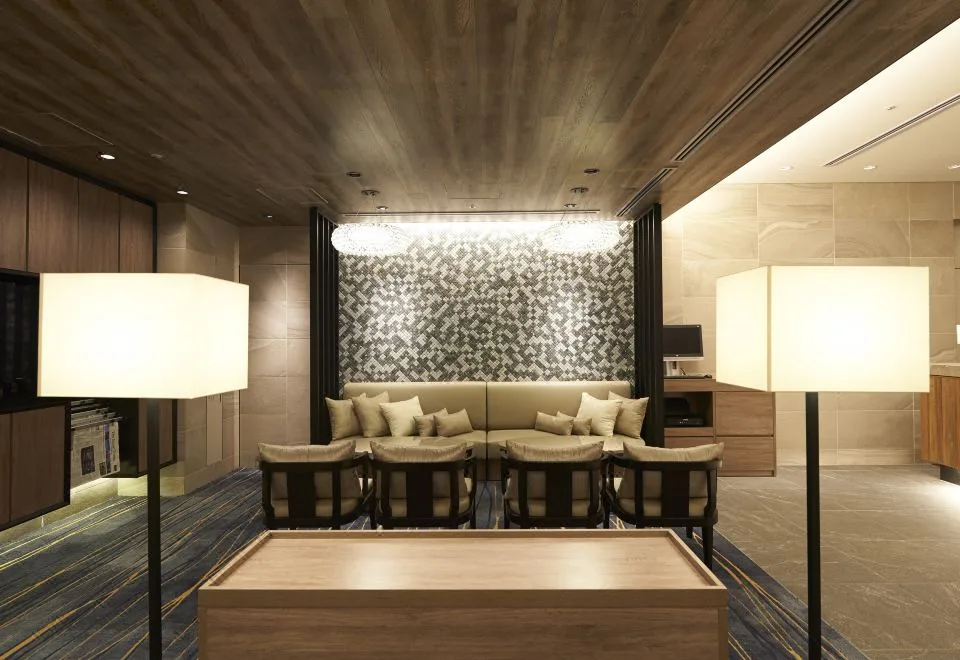
For a stay of several nights, learn the free facilities first: luggage storage is free, public-area Wi-Fi is free, and there is a laundry room, so you can pack fewer changes of clothes. The front desk is staffed 24 hours; check-in runs 3 p.m. to midnight and check-out is by 11 a.m., so a late arrival still finds someone at the desk. The hotel takes no deposit and does not allow pets — both are worth confirming when you book, not at the desk.
You do not have to wait until 3 p.m. to start the day: luggage storage is free, so leave your cases at the desk, explore Ginza light, and come back to check in. Check-out day works the same way — leave by 11 a.m., leave the bags behind, keep shopping until the evening, and pick them up on the way back. The day is not cut in half by the check-out time.
Trade-offs before booking
The main issue is usable space in small categories. Air-conditioning noise and cleaning details are what I check on the first night; contact the desk that evening if anything is wrong.
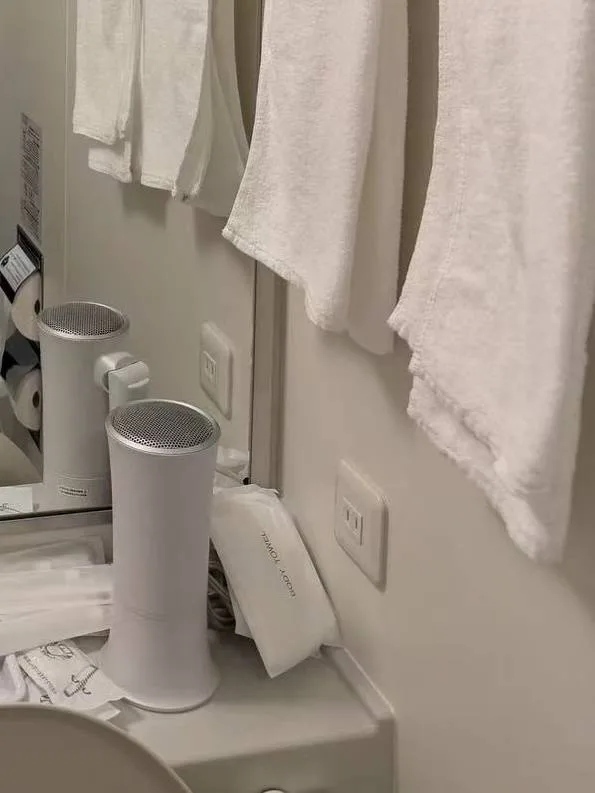
Space at the foot of the bed and in the bathroom is tight: once a suitcase is open, only a single walkway is left, and two people moving around the room have to take turns. I check the hot water, air conditioning and socket positions on the first night, so a small annoyance does not follow me through the whole stay.
Make nearby outings efficient
Combine Ginza walks (Chinese guide) and Tsukiji Outer Market (Chinese guide) on nearby days.
The location has one more advantage: Kabukiza, the Shinbashi Enbujo, the Tokyo Takarazuka Theatre and the Nissay Theatre are all within walking distance, so a theatre night ends without a rush for the train. Ginza-itchome Station is 790 metres away too, adding another subway line to choose from. Nihonbashi is about 1.7 km — a walk there doubles as a look at the old merchant quarter, and the day can stay unhurried.
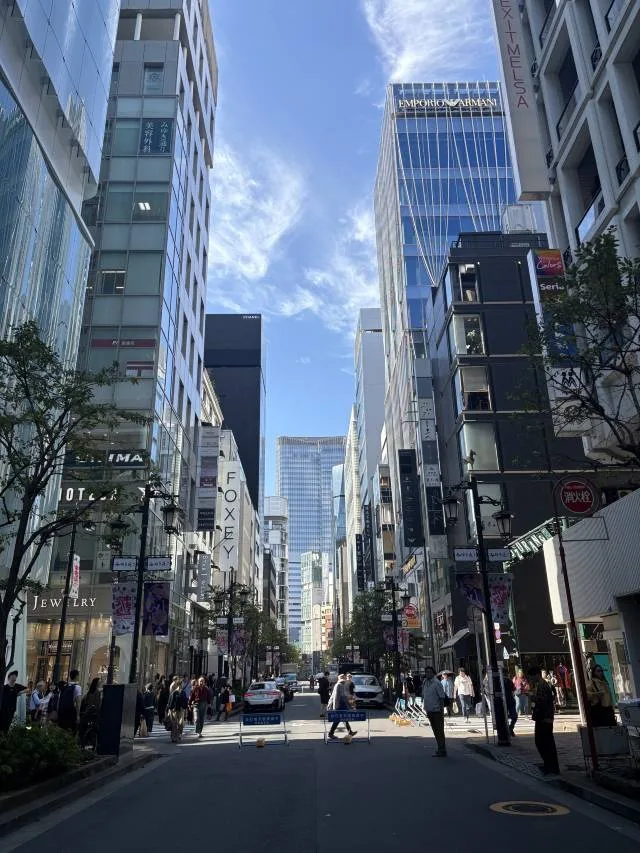
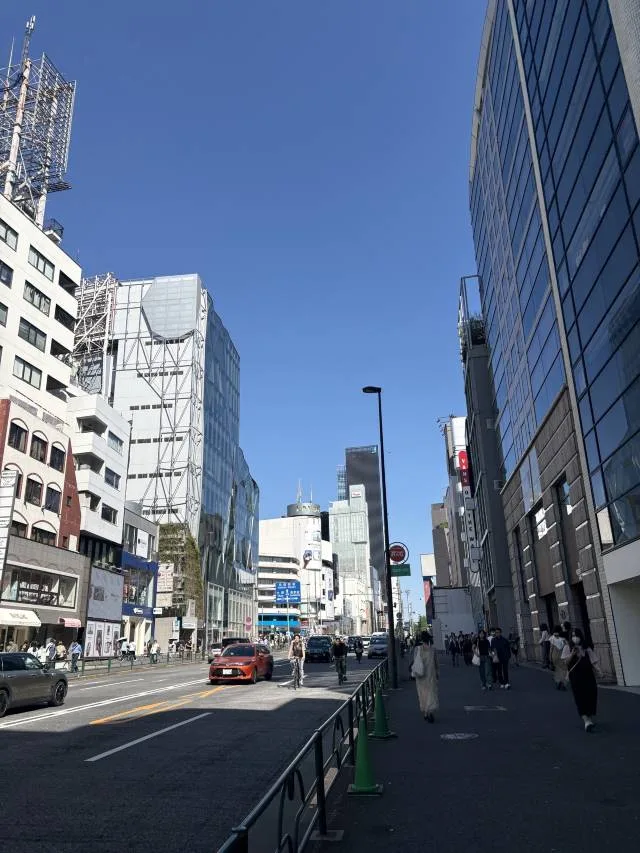
Tsukiji Outer Market is in the same direction: eat your way through it in the morning, then come back to Ginza to shop, with no backtracking. Chuo-dori and Hanatsubaki-dori are the two streets at the hotel’s door — drugstores, department stores and restaurants all sit along them — so dropping off bags and heading out again is what staying in 7-chome does best.
Chuo-dori is the main street at the hotel’s door, lined with long-established shops, international luxury brands and department stores, and it looks its best once the lights come on in the evening. It is a turn away from the hotel — shop by day and eat on the same street at night, with no separate trip to plan.
If the room and trip work, compare total rates for identical dates, guests and cancellation rules. Look at breakfast and larger-room supplements separately.
If you are travelling light for a short stay, with your plans centred on Ginza and Tsukiji, this hotel’s location fits. If you carry a lot of luggage and shop heavily, settle the room size before you book: however good the location, a room you cannot turn around in will not feel comfortable.
Pros and cons
Pros
- Higashi-ginza Exit A1 is a five-minute walk, and Ginza Station Exit A3 is five minutes too — Ginza shopping and dinner are all on foot.
- Room choice is clear: 11.9 m² Doubles up to 23.5 m² Premium Twins, with room to upgrade when two people carry luggage.
- Free luggage storage and free public-area Wi-Fi make it easy to drop bags before and after shopping.
- The front desk is staffed 24 hours; check-in runs 3 p.m. to midnight, so a late arrival still finds someone at the desk.
- The breakfast buffet is 1,530 yen per adult, served downstairs — handy when you leave at a fixed time.
- A laundry room lets you wash clothes mid-stay, so a multi-night trip needs fewer changes.
Cons
- A single room cannot fit an open 28-inch case and a 22-inch case at once; small categories leave little room to move.
- Children are not accepted and guests must be 18 or older; no room type allows an extra bed or a crib.
- The hotel has no car park of its own — drivers use a nearby paid car park.
- Air-conditioning sound and cleaning details are worth checking on the first night.
- Breakfast dishes follow the day’s supply; restaurant photos show the setting, not the menu.
Information checked: November 22, 2026.