
TOKYO / CHUO
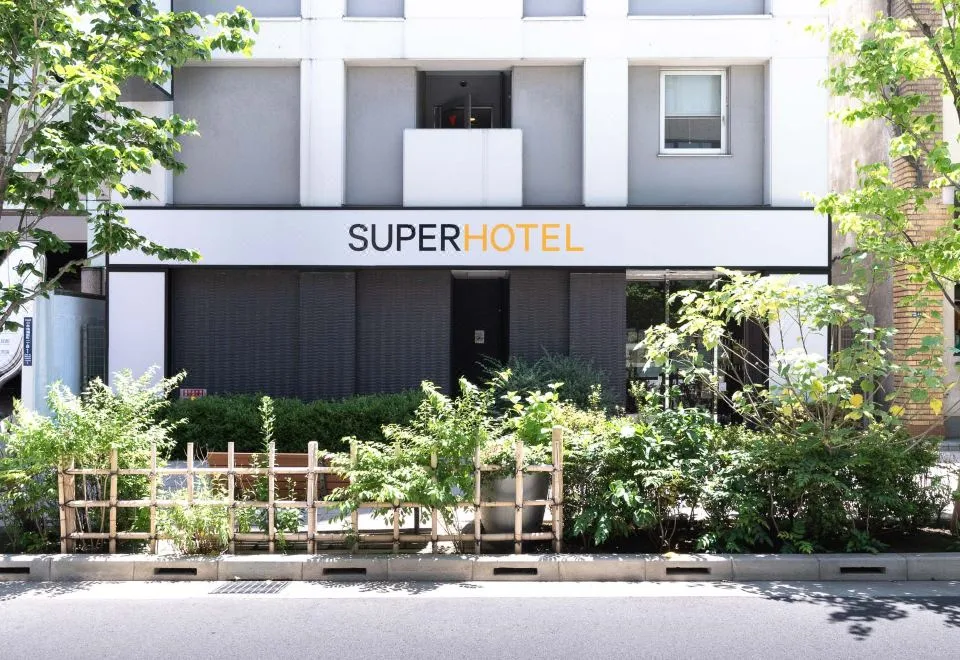
Super Hotel Tokyo Nihombashi Mitsukoshimae
Super Hotel Tokyo Nihombashi Mitsukoshimae
Free breakfast and Ningyocho walks on a practical travel budget
Super Hotel Tokyo Nihombashi Mitsukoshimae is for travelers who want a straightforward stay: breakfast before sightseeing and a comfortable place to rest in the evening, without paying for central Ginza’s bustle. Despite its Mitsukoshimae name, compare routes from Ningyocho too.
The positioning here is clear: the rooms are small and the decor plain, and the trade is a proper breakfast in the morning and a good night’s sleep; Super Hotel puts its effort into the bed, the pillows and the amenities, and the stay feels practical. For a tight budget and a base in the Nihonbashi area, the conditions line up.
This is not the hotel for a large room and slow afternoons in the facilities; it suits travellers who treat the hotel as a place to sleep and eat breakfast, and spend the days outside.
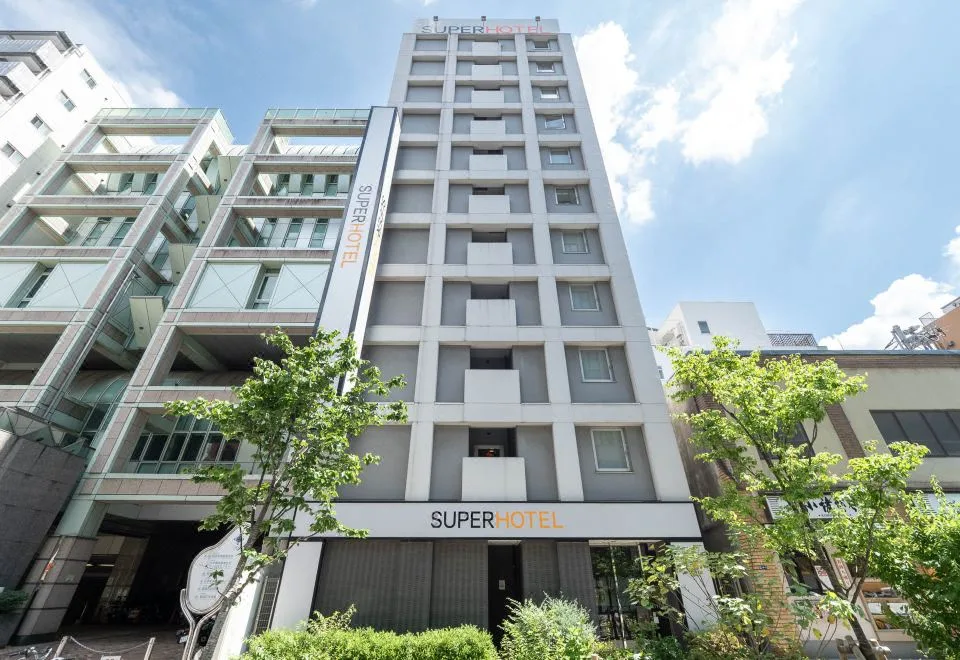
| Check before booking | My choice |
|---|---|
| Suitable trip | Solo travel, business or a quiet Nihonbashi neighborhood. If you demand a station-doorstep hotel or two large cases with wide corridors, select the room carefully. |
| Rooms to compare | Standard is 12 m² with a 150 × 200 cm bed; Super Room is also 12 m² but adds a raised loft bed. A connecting room combines two 12 m² rooms. |
| Main trade-off | Rooms are practical rather than spacious; pillows, bathroom drainage and laundry equipment are things to test yourself on arrival. |
Rooms / Access / Breakfast / Longer Stays / Facilities / Trade-offs
Choose the room and luggage space
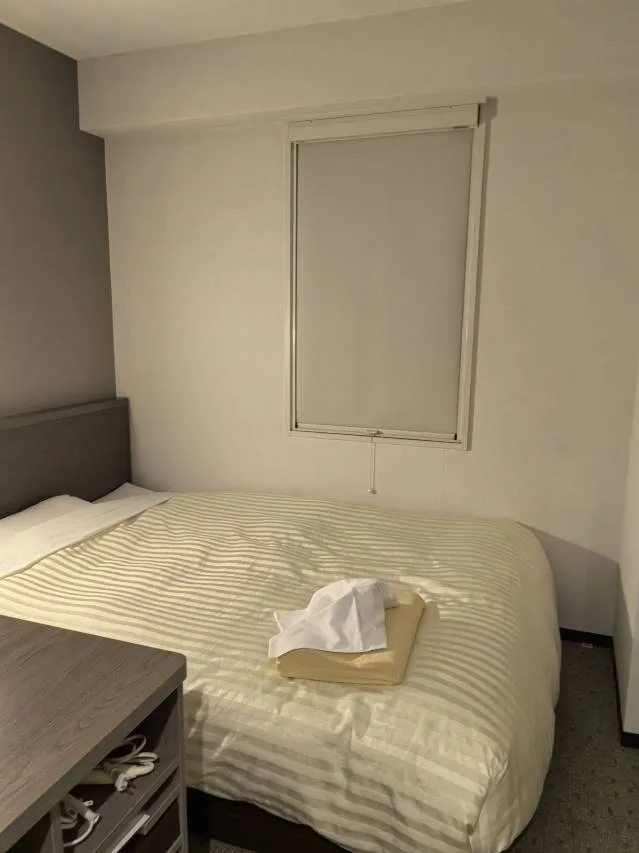
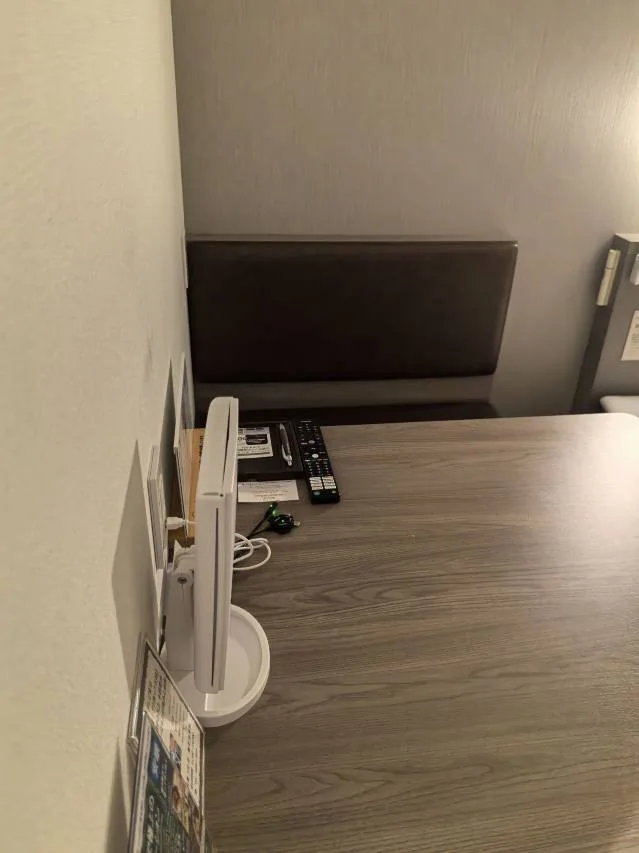
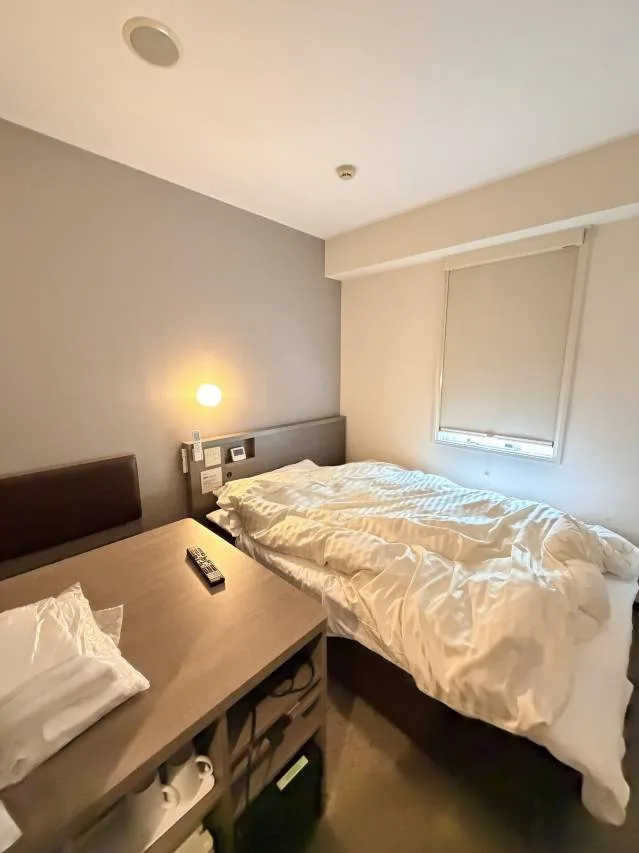
The Standard is 12 m² with a 150 × 200 cm bed; the Super Room has the same area plus a raised bed. Connecting rooms join two 12 m² units for 2 to 4 guests. A bunk adds a sleeping spot, not floor area. Travelling alone is the easiest fit: the bed is wide, the case opens flat, and the desk stays usable. Two people sharing a 150 cm bed will touch while turning, and only one case can lie open at a time. For families, two connecting bathrooms and extra space may be more practical than squeezing everyone into one small room.
| Room type | Space / configuration | What to choose |
|---|---|---|
| Standard | 12 m² / 150 cm bed | One or two light packers |
| Super Room | 12 m² / 150 cm bed plus loft | More sleeping spots, same floor area |
| Connecting Room | Two connected 12 m² rooms | Family members in separate rooms with a connecting door |
See the official room information and verify the exact category, bed count and occupancy.
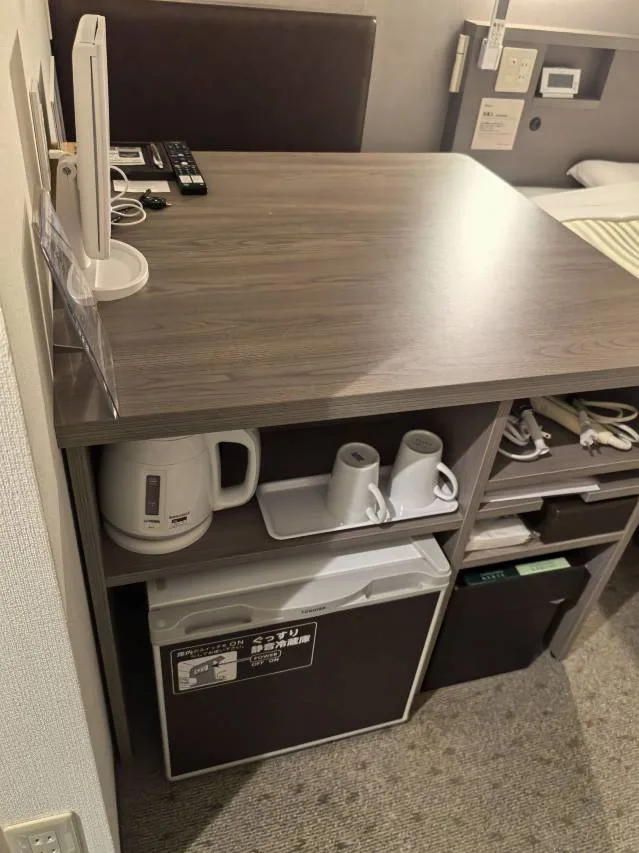
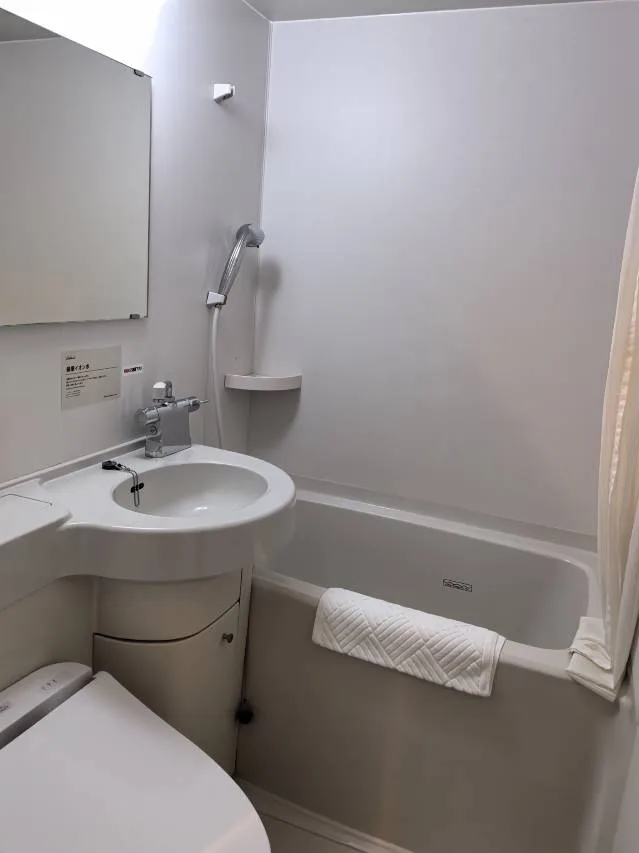
The Super Room loft bed adds a sleeping spot, not a room: the floor area stays 12 square metres, with one more bed up top, which suits a group that wants one extra sleeper without paying for a larger room; climbing a ladder is part of it, so think first about who sleeps up there when small children or older relatives travel along. Room equipment is complete: fridge, electric kettle, hair dryer, free wired internet and Wi-Fi, an LCD TV, and a unit bath with the toilet in the same space.
Travelling with children, put the child count into the booking: children of all ages are welcome, and a preschool child sharing the bed sleeps free but still counts toward the headcount; the crib and extra-bed arrangements vary by room type, so check the room page before booking.
A 12 square metre room needs a clear plan: one large case opens flat, two large cases take turns, and the walkway beside the bed fits one person at a time. Travellers with more luggage should measure both cases before booking; the Super Room loft adds a bed, not a place to store luggage.
Travellers with limited mobility can ask about the barrier-free room first: the official gallery shows photos of it, but lists no bed width or bathroom dimensions, so call the front desk at 03-5847-9000 and confirm the door width and bathroom layout before booking.
Getting here with luggage
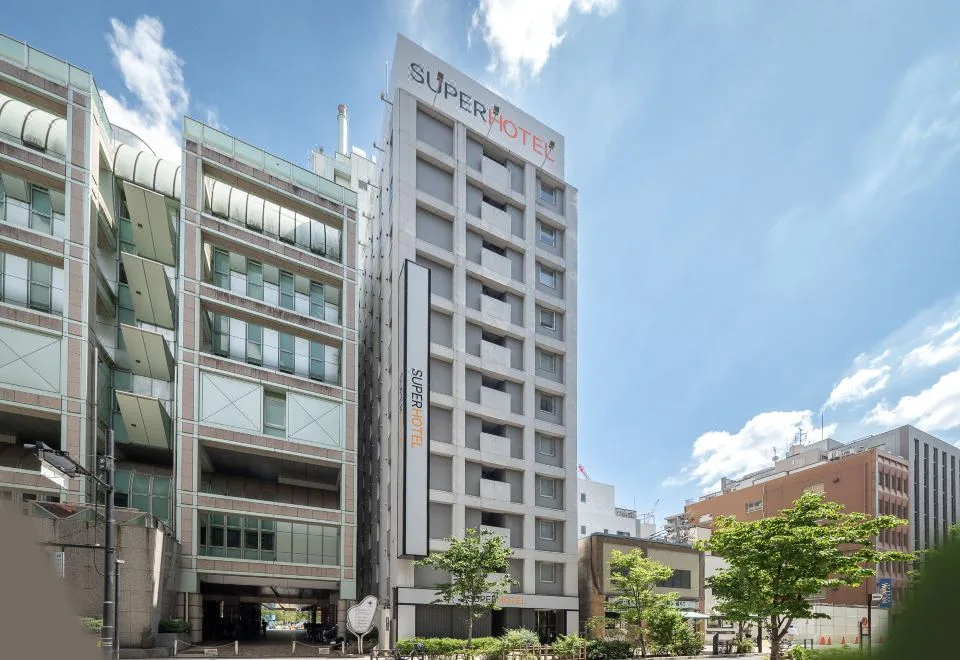
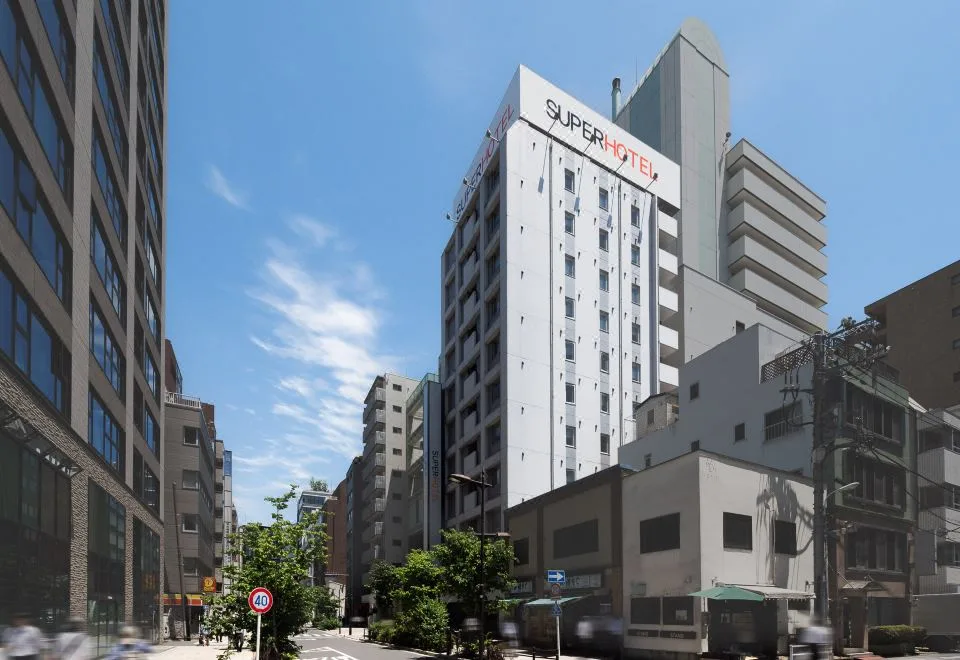
The hotel puts Ningyocho Station about five minutes away; JR Shin-Nihombashi is about 420 m or seven minutes. Pick a station based on your line, then allow extra walking from elevator exits with large luggage.
From Ningyocho, take the street elevator at exit A3 or A6 to reach street level: the Hibiya Line toward Kita-Senju uses A3, toward Naka-Meguro uses A6, and an elevator runs between the platform and the gate level, so strollers and wheelchairs need no stairs. From street level, walk to Nihonbashikobunacho rather than carrying a case up stairs to save the last few hundred metres.
| Accommodation details | Details |
|---|---|
| Address | 14-13 Nihonbashi Kobunacho, Chuo City, Tokyo 103-0024, Japan |
| Check-in / Check-out | 3 p.m.–midnight / by 10 a.m. |
| Ordinary walk reference | 420 m / about 7 minutes from JR Shin-Nihombashi |
See the hotel’s official access guide.
Other stations work too: Kodemmacho on the Hibiya Line is about 7 minutes, Mitsukoshimae on the Ginza Line about 8 minutes, and JR Sobu Line Shin-Nihombashi about 7 minutes; decide by where you are going and which line you ride. Haneda Airport is about 40 minutes by train to Ningyocho, about 30 minutes by car; on a morning flight, walk to Ningyocho first rather than waiting for a car at the hotel door.
The area walks well: Mitsukoshi main store is about 4 minutes, COREDO Muromachi about 3 minutes, and Nihonbashi Bridge about 450 m. Put all three into one day and there is no need to ride anywhere.
JR Shin-Nihombashi is another option: the Sobu Line runs through Akihabara toward Chiba, 420 m and 7 minutes from the hotel, the smoothest entry for anyone riding that line.
Ningyocho serves two lines: the Toei Asakusa Line and the Hibiya Line. Take the Asakusa Line direct toward Asakusa and Oshiage, or the Hibiya Line toward Roppongi and Naka-Meguro; transfers happen inside the same station, so check the platform direction before walking with luggage.
Hamacho Station works too: Hamacho on the Toei Shinjuku Line is about 1.0 km from the hotel, roughly a fifteen-minute walk; it suits trips toward Shinjuku and Jimbocho, but not with heavy luggage, so ride to Ningyocho and walk from there instead.
Free buffet breakfast
The hotel offers a free breakfast buffet with bread and salads, served 7:00 to 9:00 a.m. for adults and children 17 and under at no charge. This is a practical plus if you want to eat and leave. I expect a convenient breakfast, not a luxury brunch.
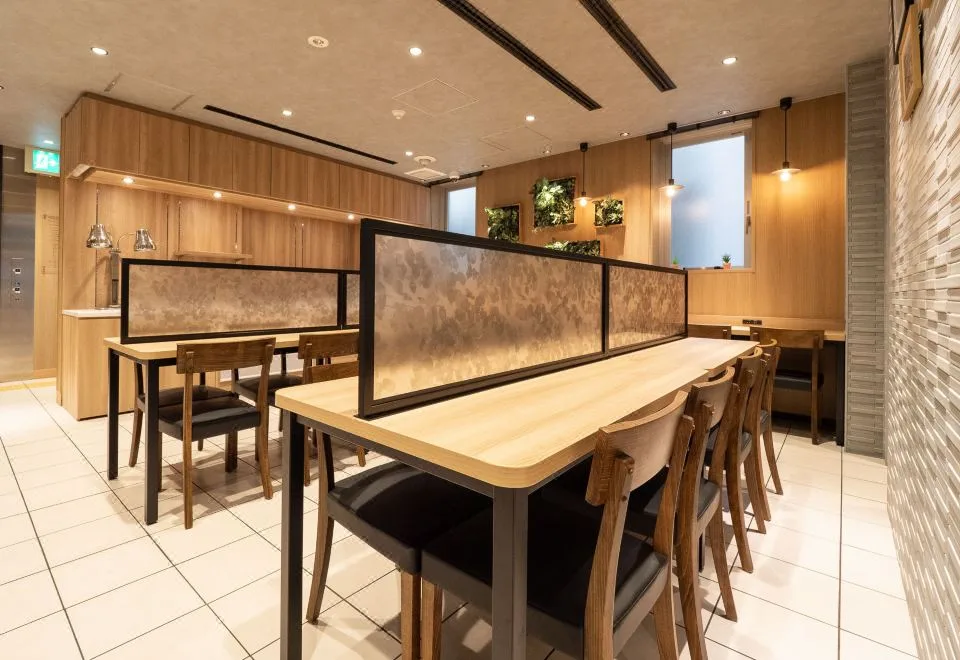
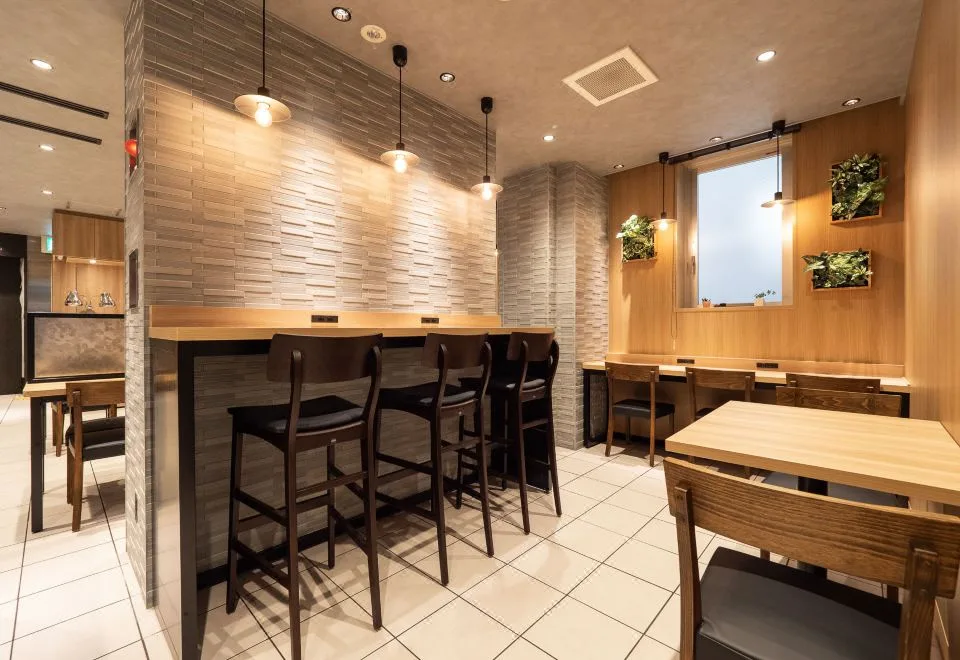
Breakfast is served buffet-style in the hotel dining room: take what you want, then find a seat. Travellers in a hurry can go down early and beat the rush. On a multi-night stay, walk into Ningyocho for breakfast on the days you want a change; the old shops and cafes are close by.
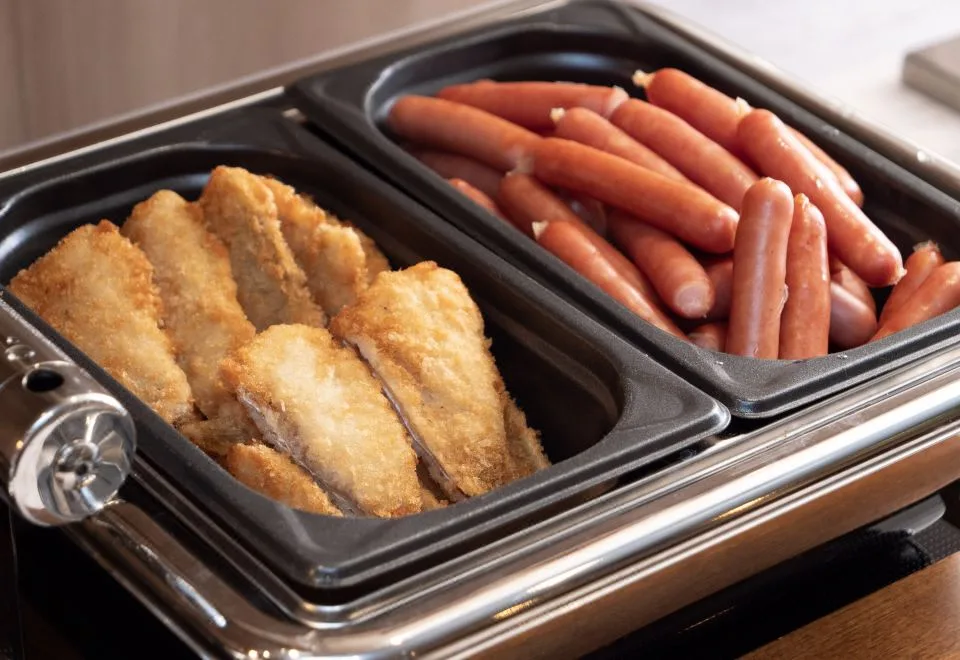
Breakfast is split between a seating area and a hot food area: take what you want from the hot food area, then sit down; bread and salads are the staples, hot dishes depend on the day, and going down early finds a seat more easily when it is busy.
A short stay or several nights
For one business night, the free breakfast and basic facilities cover the essentials: eat breakfast and head out in the morning, come back, shower and sleep; the room is small but has what you need. A longer stay works well split between Ningyocho, Nihonbashi and COREDO Muromachi; if your days are mostly in other districts, weigh the walking and transfers.
On a multi-night stay, the 24-hour coin laundry is genuinely useful: wash and dry in one run, detergent free, so fewer changes need to be packed and one bag can stay home. Luggage storage is for the same day only: leave bags at the front desk on arrival day, and after checkout you can walk the area for half a day, as long as you pick them up the same day.
On a one-night stay, there is no need to unpack everything: come back, shower and sleep, then eat breakfast, pack and leave in the morning; the trip needs no extra half day for the hotel.
Facilities and practical information
The facilities are few but practical: the coin laundry runs 24 hours, wash and dry in one run, detergent free; vending machines, an elevator, free public-space Wi-Fi and parking are all on site, and in-room Wi-Fi and wired internet are free too.
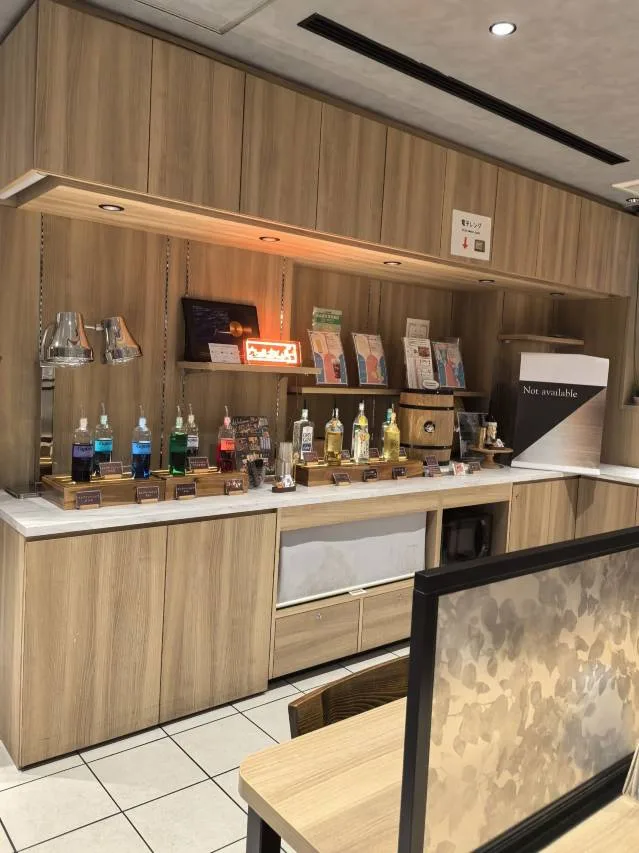
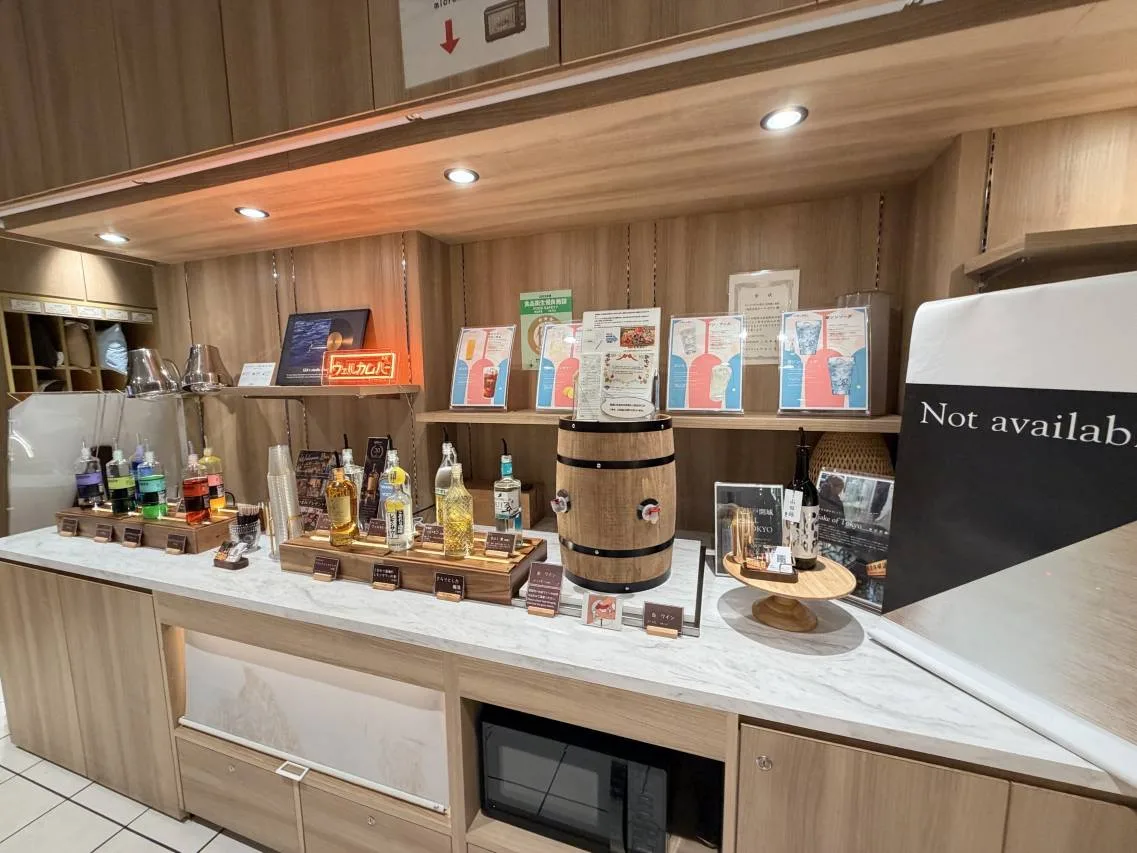
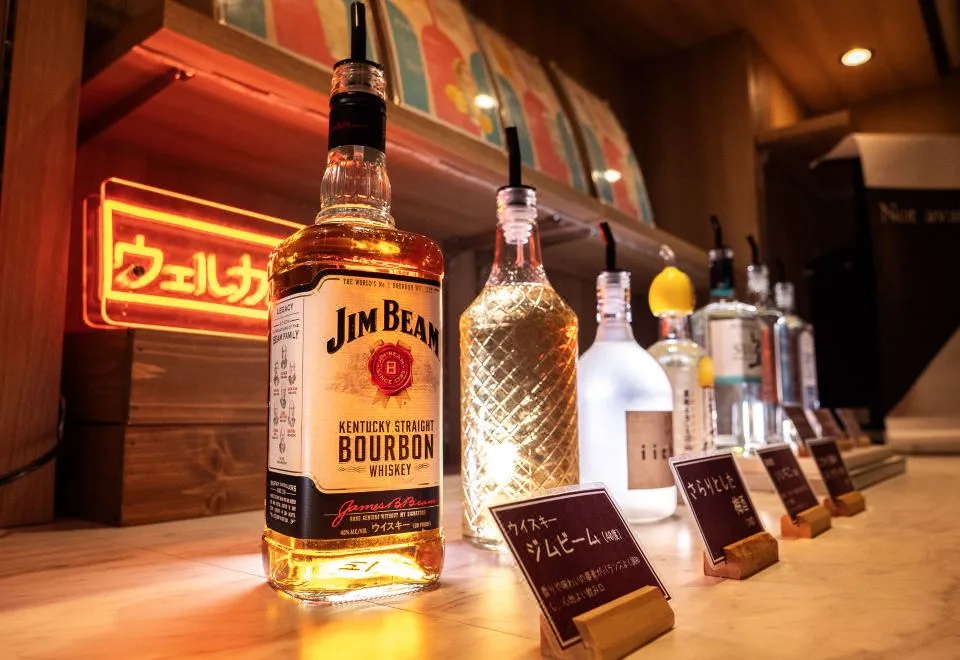
The lobby amenity corner is self-serve: pick from eight pillow types by shoulder and neck height, borrow pajamas free in one size only, and choose five original organic amenities per night, while stocks last. The welcome bar drinks are worth a stop on the way up.
Check-in is 3:00 p.m. to midnight, checkout by 10:00 a.m., and the front desk is staffed 7:00 a.m. to midnight; the guest checking in must be 18 or older, and cash is accepted at the hotel. Children of all ages are welcome; put the child count into the booking so the price is right, and pets cannot stay.
Business travellers can use the fax and copy service in the hotel; an iron and a garment steamer are available, and the laundry room has dryers, so a shirt for the next day can be sorted the night before.
Public areas are non-smoking, and the hotel has public-area CCTV, smoke detectors, fire extinguishers and a first-aid kit, with handrails on the stairs; the front desk serves guests in English and Japanese.
Trade-offs to accept
Rooms are practical, and pillows, bathroom drainage and laundry equipment are things I test myself: if the pillow does not suit, swap it at the front desk from the eight types on offer. Check equipment before using it and ask how cleaning works on consecutive nights. Some nearby restaurants close on weekends, so have more than one dinner option.
Check the room page photos and details before booking: the bed size and bathroom layout are listed there, and finding out they do not fit after arrival is too late.

Explore nearby without backtracking
Try Ningyocho streets (Chinese guide) or small Nihonbashi museums (Chinese guide) for a local day. The old shops and department stores around Nihonbashi Bridge are worth a stop, and an evening walk toward Ginza for dinner and back is easy.
Ningyocho also lets you walk to Suitengumae and take the Hanzomon Line toward Shibuya and Omotesando without riding back to a major hub; for Asakusa and Oshiage, the Asakusa Line runs direct from Ningyocho, saving one transfer.
Nihonbashi Bridge is about 450 m away: walk over to see the kirin statues, browse Mitsukoshi main store, and half a day is enough; the wholesale streets toward Kodemmacho fit into the same day.
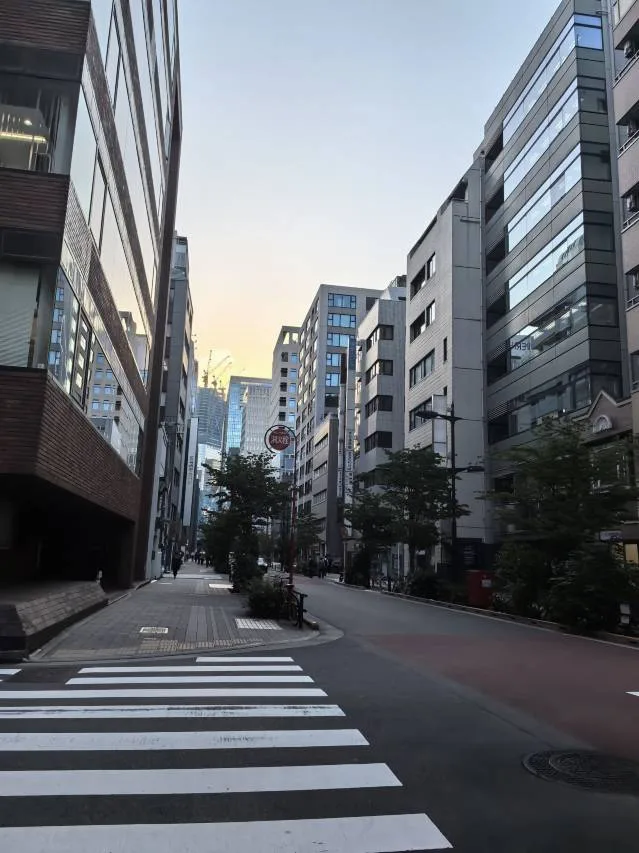
If the room types and the daily routine fit the trip, compare total prices for the same dates, occupancy and cancellation terms. Breakfast is free and the rooms are practical, so the money goes to the things you use every day. If you want a larger room, a lavish breakfast or a Ginza street-front location, look elsewhere first.
The budget math is simple: the room rate buys the bed, the breakfast and the location, and everything else is arranged separately; if the money is meant for eating and shopping, the math lines up.
Pros and cons at a glance
Pros
- Free breakfast buffet 7:00 to 9:00 a.m., bread and salads included, free for adults and children 17 and under.
- Ningyocho Station about 5 minutes away, street elevators at exits A3 and A6.
- Every room 12 square metres with a 150 by 200 cm bed; connecting rooms sleep 2 to 4 guests.
- 24-hour coin laundry, detergent free, same-day luggage storage at the front desk.
- Eight pillow types to choose from, free pajama rental, five original organic amenities per night.
- Free in-room Wi-Fi and wired internet, welcome bar in the lobby.
Cons
- Rooms are only 12 square metres; two large cases cannot both lie open.
- The Super Room loft bed adds a sleeping spot, not space, and needs a ladder.
- Checkout is by 10:00 a.m. and the front desk closes at midnight.
- Pillows, bathroom drainage and laundry equipment vary by room; test them on arrival.
- Some nearby restaurants close on weekends, so dinner needs a backup.
Information checked: November 22, 2026.