
TOKYO / CHUO
S-Peria-Inn Nihombashi Hakozaki
S-Peria-Inn Nihombashi Hakozaki
A Nihonbashi stay near T-CAT: planning a solo visit and airport transfers
S-Peria-Inn Nihombashi Hakozaki suits people who want an airport bus option and a quieter local neighborhood. It is not on Ginza’s busiest streets and still requires a walk to the subway. On arrival or departure, however, a T-CAT bus can reduce luggage transfers.
How to choose
| Item | Accommodation details |
|---|---|
| Location | 4-9 Nihonbashi Nakasu, Chuo City, Tokyo 103-0008, Japan |
| Check-in / Check-out | 3 p.m.–5 a.m. next day / before 11 a.m. |
| Room comparison | Official Singles A and B measure 12 m² with a 120 cm bed; Single C and regular Doubles A/B are also 12 m² but with 140 cm beds. Queen Double measures 16 m² and has a 160 cm bed. |
| Stay planning | One night before or after a flight works well; over multiple nights, arrange shared laundry, housekeeping and food options in advance. |
Rooms and luggage space
The official room list reads like this: Single A/B is 12 m² with a 120 cm bed; Single C and Double A/B are also 12 m² but with a 140 cm bed; Queen Double gives you 16 m² and a 160 cm bed. For separate sleeping, compare the 17 m² Hollywood Twin with two 90 cm beds or the 19 m² Twin with two 120 cm beds. Two separate beds also work well for friends sharing or a child. With two large suitcases, the 19 m² Twin is a better starting point than a 12 m² double. When booking, check the bed width before the room name — at the same 12 m², a 120 cm bed and a 140 cm bed sleep very differently; one large suitcase still fits, but two need a plan for where they go.
If you are travelling with children, check the occupancy rules first: children of all ages are welcome, but an extra charge may apply even without an extra bed, so enter the number of children when you book to see the correct price. No room type allows an extra bed or a baby cot, so a family that needs one should choose a room that already sleeps everyone. Guests checking in must be at least 18, pets are not allowed, and no deposit is required — settle these points before you book. You can pay the room rate in cash. Guests under 18 cannot check in alone.
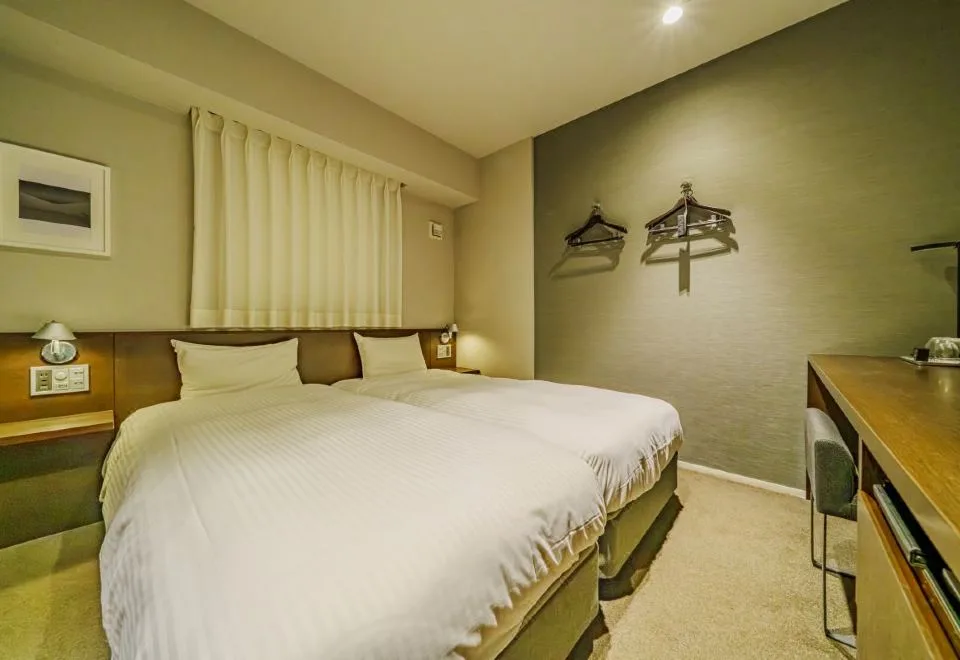
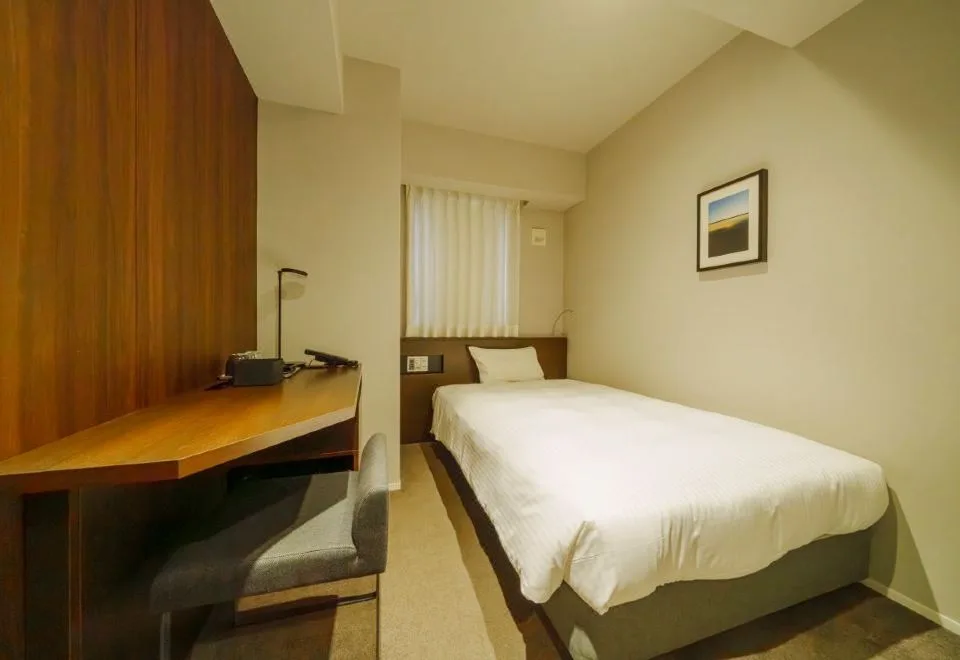
Photos show different single- and double-bed layouts. Solo guests can use desks and beds more freely, whereas two people need to plan suitcase space and door access. Beyond bed widths, compare whether baths or showers are separate and how the toilet and basin are positioned.
The hotel has 114 rooms: 75 singles, 18 twins and 21 other Western-style rooms, opened in November 2018. Beds are Simmons, and rooms come with a 32-inch TV with free CNNj, free Wi-Fi and an air purifier with a humidifier, plus a wired internet connection; toothbrush sets, bath towels, hand towels, a fridge, a washlet toilet, yukata, a hair dryer, trousers pressers, shampoo, conditioner and razors are standard in the room, so light packers need not bring their own. Single B is a corner room, and Double B was formerly listed as a single category, so do not be confused if you see the old room name.
For one person the space feels right; for two it feels small, and windows may face nearby buildings. If daylight, distance from traffic or a larger area matter, tell the hotel exactly what you need before booking; merely asking for a high floor may not solve them.
Guest room photos
Look at the bed, desk, entry and space for suitcases. Furniture and bed layouts depend on the exact booked category.
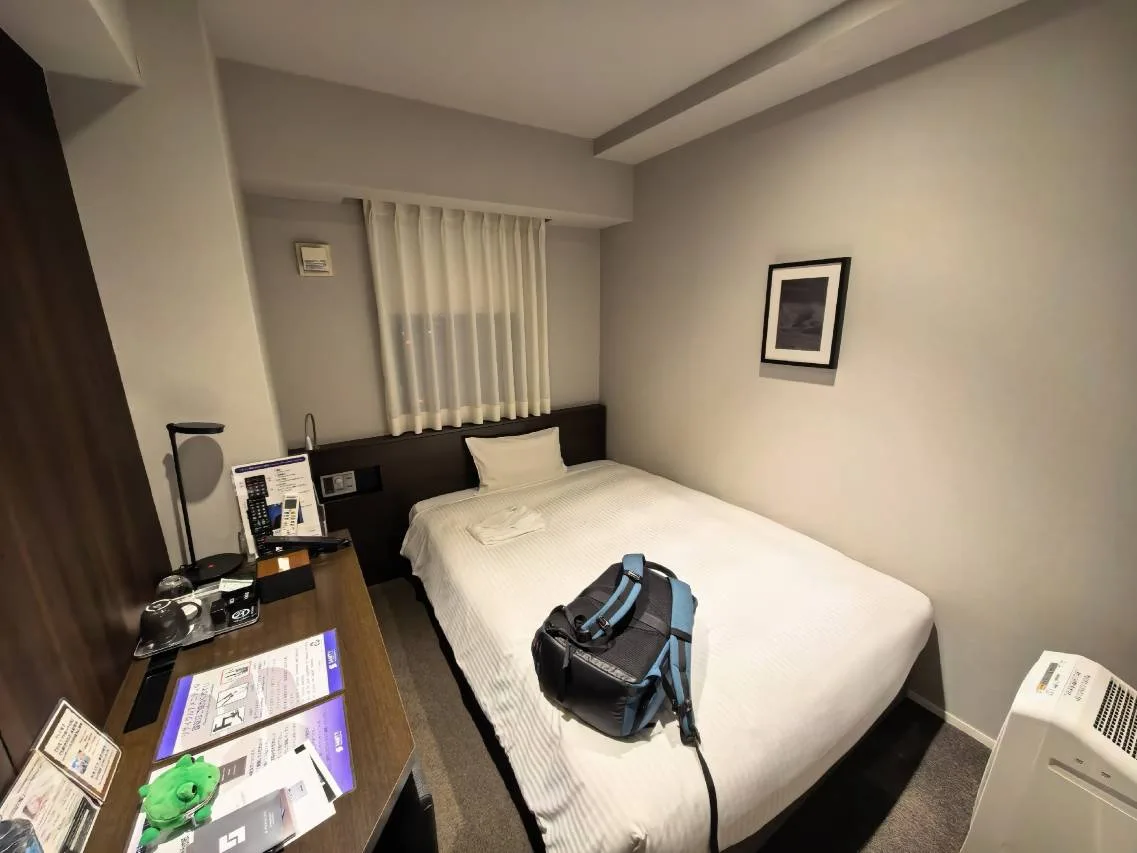
The first thing I check when I walk into a room is where the suitcase goes by the entrance: whether I can still reach the bathroom after opening it. The bed-to-desk layout matters the same way, and for two people sharing a room it is worth working out before you unpack.
The guest-room photos show the bed, the desk and where the luggage goes — check them before booking rather than judging by floor area alone; the suitcase in the photos is shown opened, so you can picture whether your bags will fit. The bed in the photos is made up, and where the suitcase goes is easy to see.
Breakfast arrangements
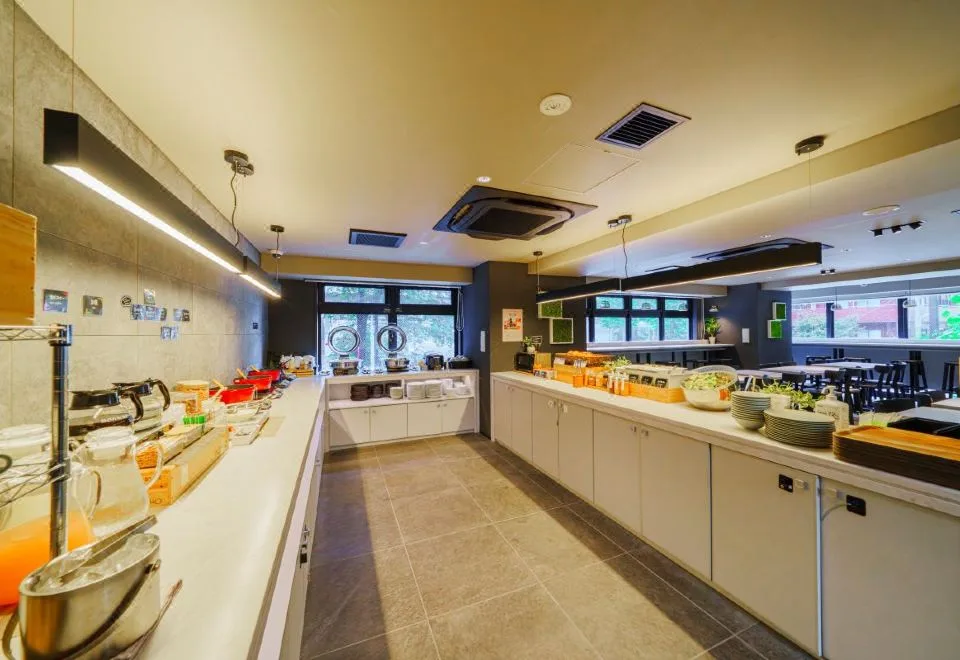
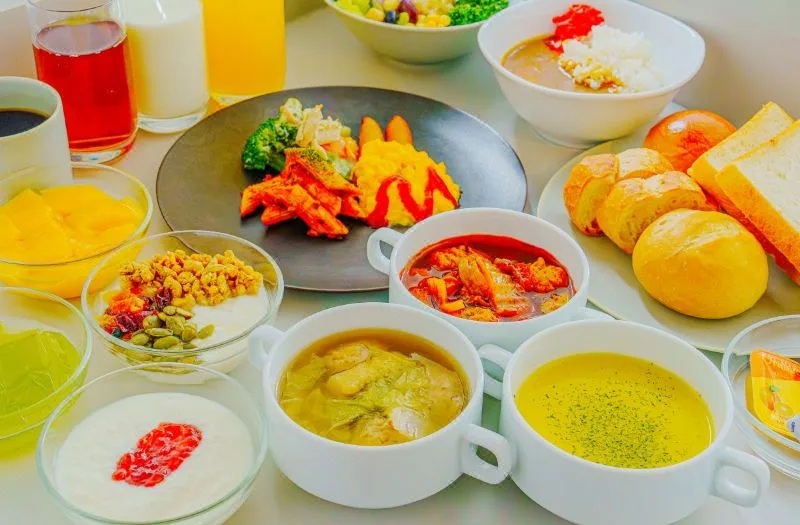
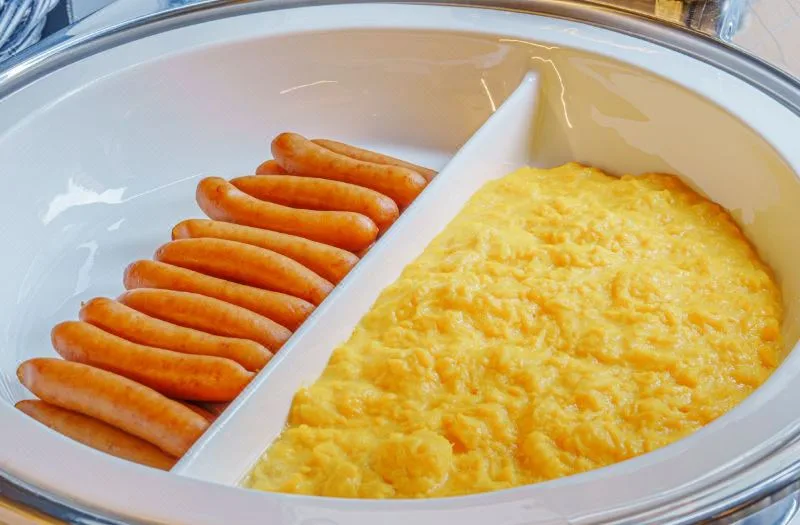
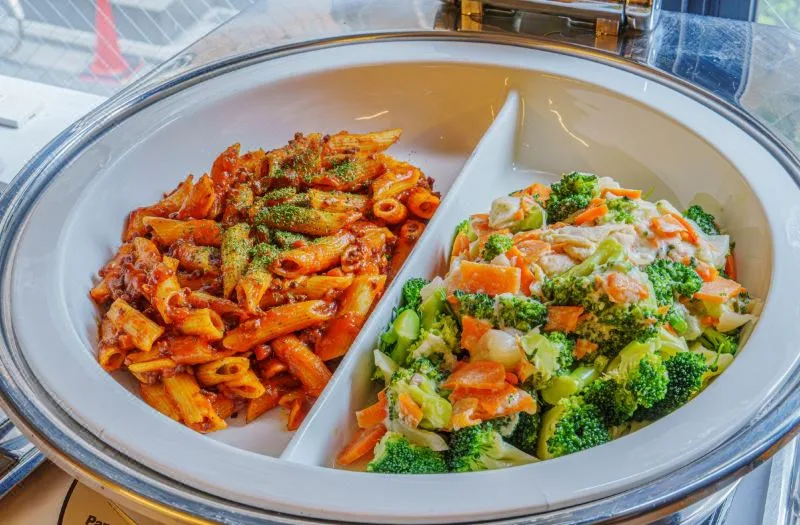
Breakfast on the second floor features a Western buffet and three seasonal soups. Service is 7:00–10:00 a.m., with last orders at 9:30. It suits those wanting hot soup with bread or rice before heading out. The official information says breakfast vouchers can also be bought at the front desk.
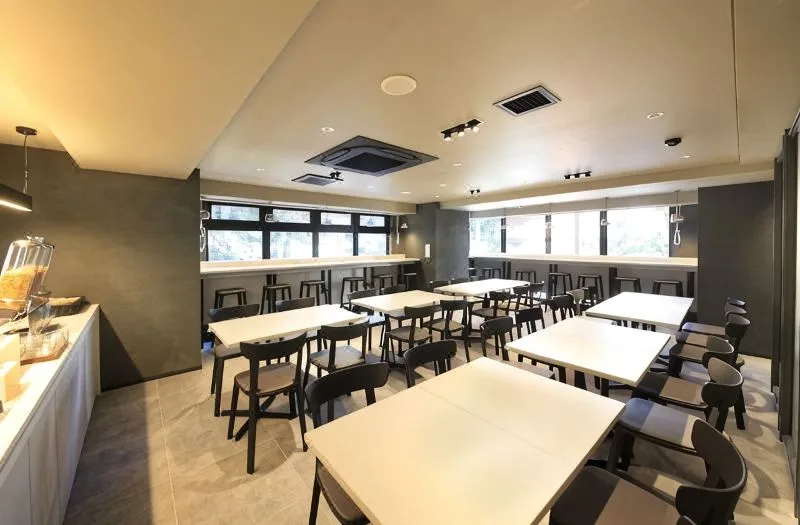
Breakfast bought separately costs 1,710 yen per adult, the same for children aged 6 to 17, and free for children aged 5 and under. If your plan includes breakfast, pick up the voucher at check-in; if it does not, you can buy one at reception. Arrive early if you want a relaxed meal — the restaurant has only 40 seats, and late arrivals wait for a table. Last orders are at 9:30.
If catching an early flight, check airport-bus check-in and schedules before adding breakfast. Over several nights you can eat outside on some mornings for variety.
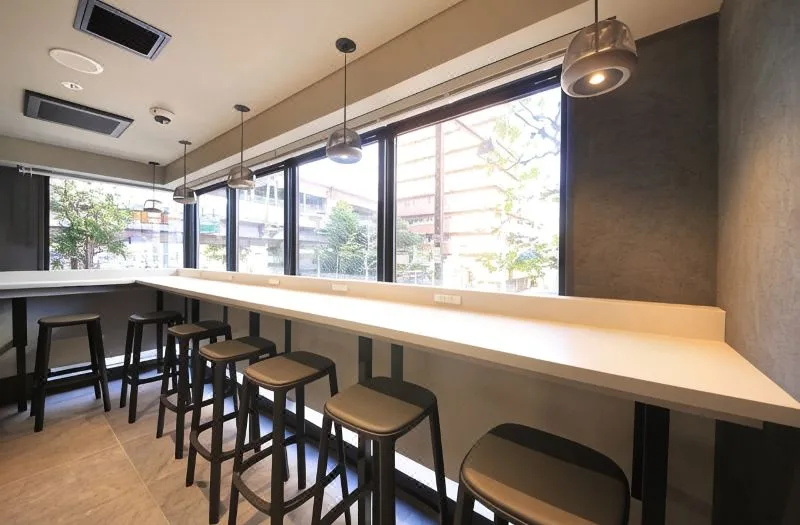
This is how I build my plate: start with a bowl of the seasonal soup, then the curry of the day, which changes daily, scrambled eggs, sausages and bacon. The bread is freshly baked, and yogurt with granola and dried fruit goes down easily; the penne pasta and broccoli salad in the photos are dishes that appear on the buffet as well. Soup goes with rice or with bread dipped in it. Eating alone, take a window-side counter seat; the square tables suit two people eating slowly, with no waiter service to wait for — take your food and sit down.
The restaurant is on the second floor, with a row of counter seats by the window for a quiet breakfast; the square tables in the middle seat two comfortably, and you just pick up a tray and sit down.
Station access and luggage
Suitengumae Station is a practical everyday option; the official site says around five minutes on foot, and station data gives 460 metres, about seven minutes — keep both figures in mind. From the airport with heavy bags, look into T-CAT buses first.
With large luggage, a wheelchair, or a stroller, do not use Exit 2: it is an ordinary walking exit with no elevator. Use the Tokyo City Air Terminal-side ticket gate instead — an elevator at the Oshiage end of the platform goes straight to that gate, and from the gate an elevator serves Exit 4 to street level. From Exit 4, walk toward Nihonbashi Nakasu to reach the hotel, with no more stairs to climb.
T-CAT, the Tokyo City Air Terminal, is about a three-minute walk from the hotel, with airport limousine buses to Haneda in about 25 minutes and to Narita in about 55 minutes, depending on traffic. On arrival day, get off at T-CAT, sort out your bags and walk to the hotel rather than dragging suitcases through subway transfers — no need to drag bags into the subway. Hamacho Station is another option 660 metres away; compare the two stations’ exits and routes before you set out. Suitengumae is on the Hanzomon Line, about 20 minutes to Shibuya.
Address: 4-9 Nihonbashi Nakasu, Chuo City, Tokyo 103-0008, Japan. Google Maps directions
Planning the neighborhood
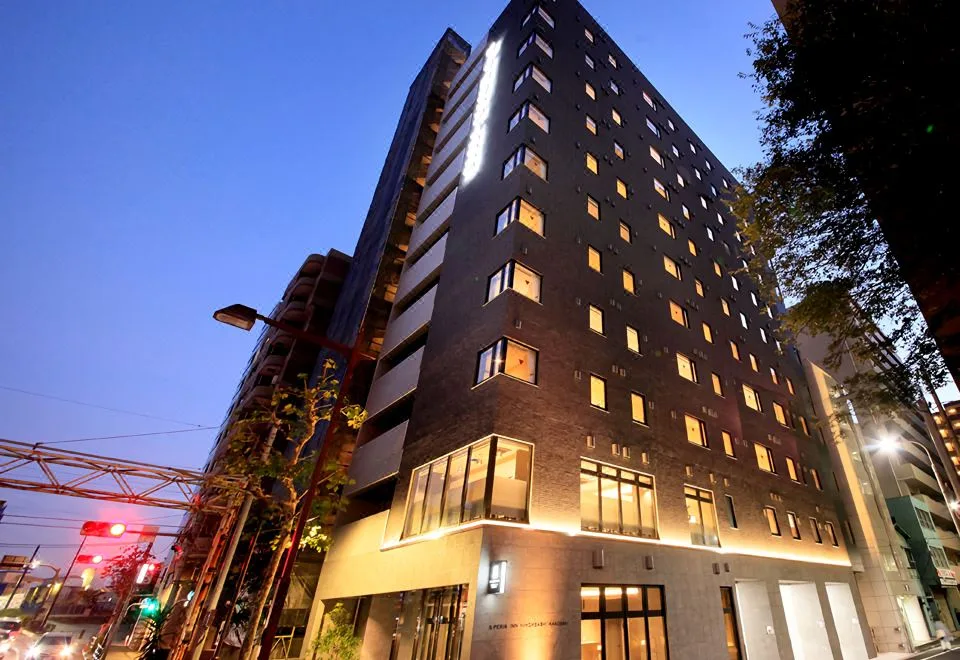
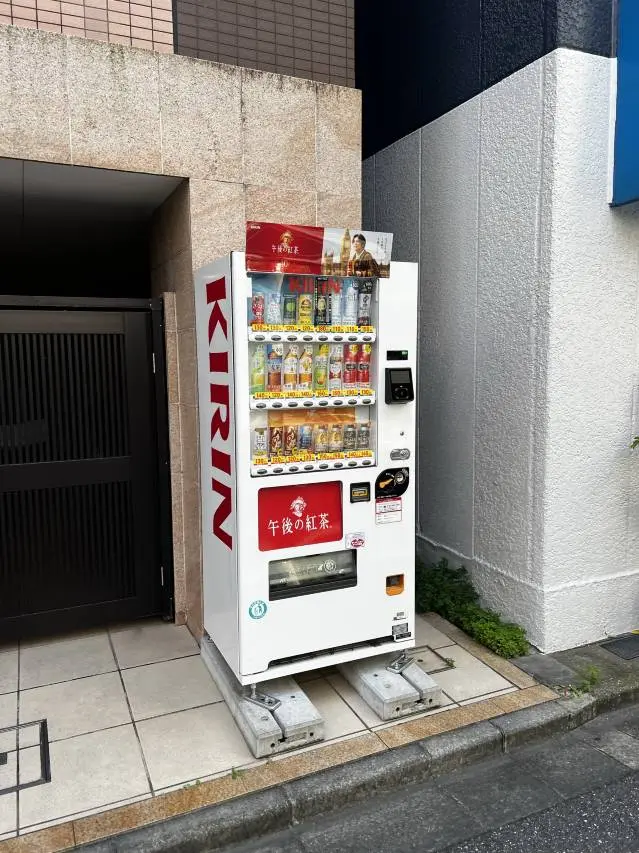
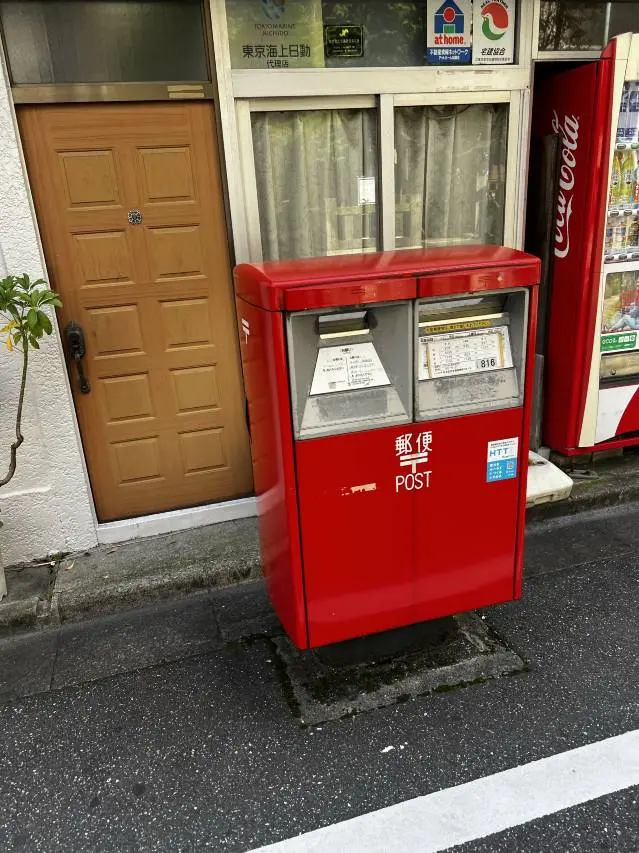
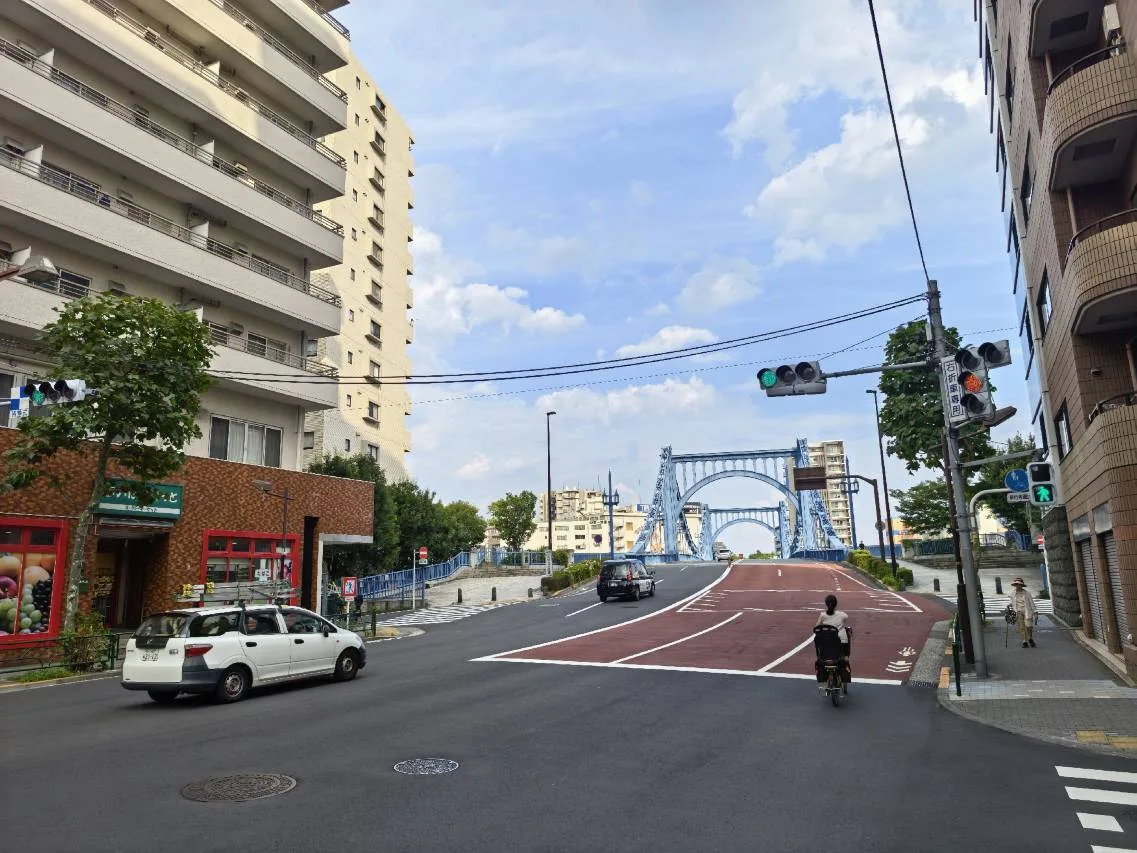
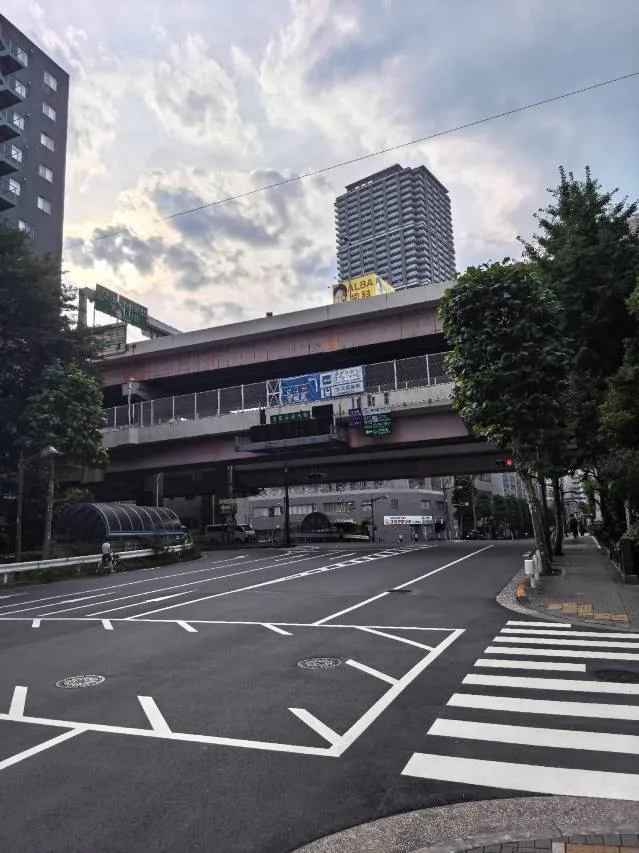
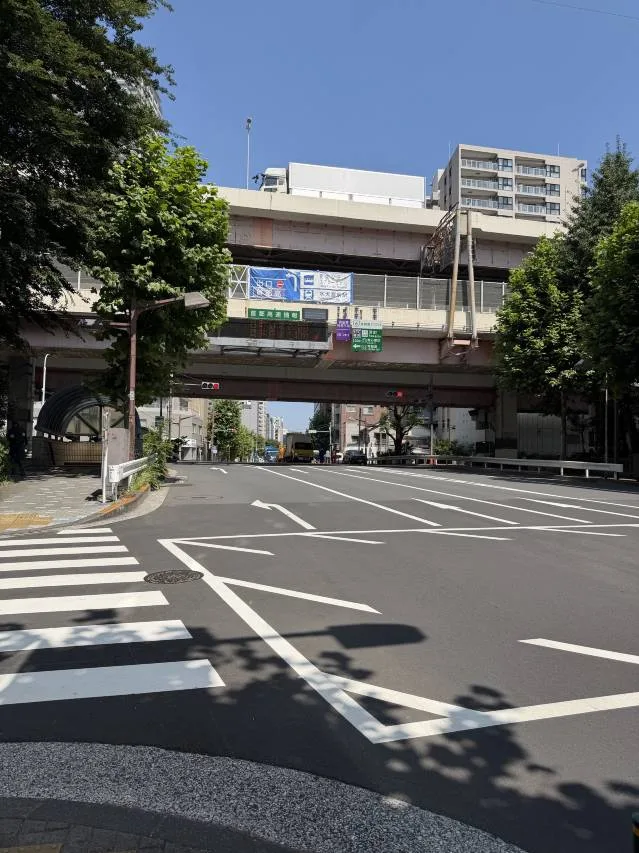
Spend a relaxed half-day in Ningyocho, Suitengu and beside the Sumida River. The streets and elevated roads in the photos are the neighborhood as it is: a lived-in city area, more suited to walking than expecting resort scenery from every window.
For reference, here are the distances to places you will actually go: Ningyocho 440 metres, Suitengu Shrine 580 metres, Nihonbashi 1.3 km, Ginza 1.0 km and Koami Shrine 1.2 km. For a relaxed half-day, pair the old streets of Ningyocho with a visit to Suitengu Shrine on the same route, and save the Sumida River side for the evening. After visiting Suitengu Shrine, a wander through Ningyocho on the way back is easy.
Ginza is an easy walk; JR Bakurocho Station is 1.4 km. Akihabara Electric Town at 3.2 km and Marunouchi at 3.0 km are too far to walk comfortably, so take the train instead. Before you set out, group the day’s stops in one direction, or a base chosen for the airport bus will cost you extra travel time every day.
Short trips and longer stays
One night around an airport transfer is convenient. For several nights, plan housekeeping and places to eat. If most daily attractions are in western Tokyo, compare a base with fewer transfers rather than choosing solely for the airport bus.
The front desk is open 24 hours all year, and check-in runs until 5 a.m. the next day, so a late arrival is no problem. A late check-out plan to noon exists but only for a limited number of rooms — ask when you book if you like sleeping in. Apart from the room rate, Tokyo’s accommodation tax applies separately, 100 yen per person per night for room rates from 10,000 to under 15,000 yen, and 200 yen at 15,000 yen and above, calculated on the tax-exclusive rate since 1 April 2025.
Check-in runs from 3 p.m. until 5 a.m. the next morning, so a late flight still gets a staffed front desk; check-out is by 11 a.m., with no rush to pack in the morning.
Exterior and shared facilities
Here are the in-house services I checked for you: luggage storage, wake-up calls, business services, fax and photocopying, a car-hailing service, and free Wi-Fi in public areas. Luggage forwarding and massage services are also available — ask reception instead of carrying bags around to find a courier yourself. If you have too much luggage for the trip home, the front desk can also arrange parcel delivery, and a last-minute print job can be handled at the front desk too.
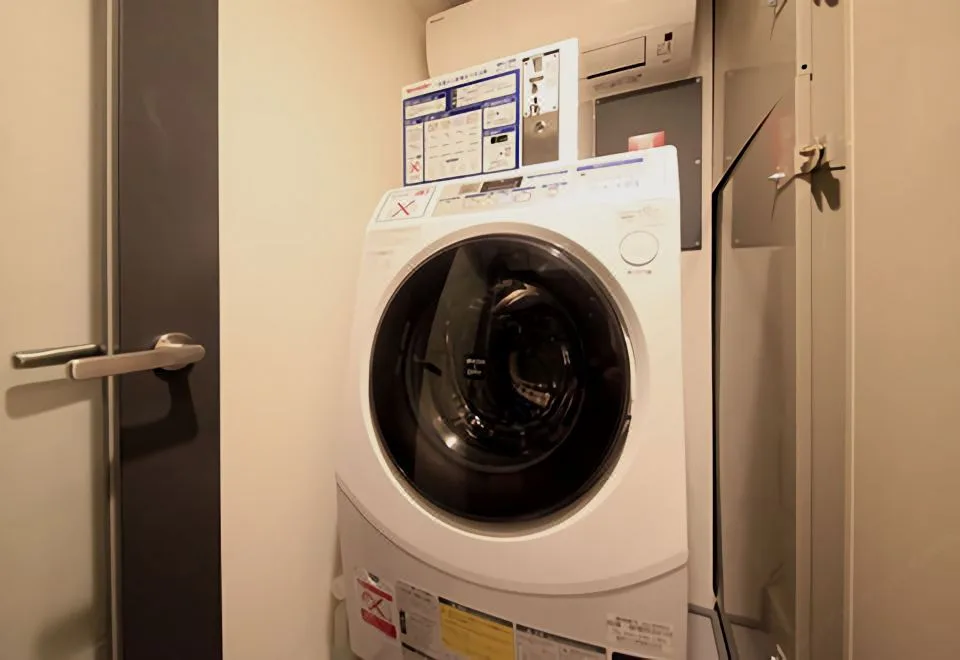
The laundry room and dryers are in the building, so several nights of washing need no trip to a laundromat. The building has an elevator, a ramp at the entrance, accessible rooms, an accessible bathroom and toilet, and elevators with low-position buttons — ask the front desk about an accessible room when travelling with an older relative or a wheelchair. Parking is limited to three cars, by phone reservation only, at 2,500 yen per night; the whole building is non-smoking with no smoking area inside. Public areas have CCTV and security staff, rooms have smoke detectors and fire extinguishers, and the stairs have handrails.
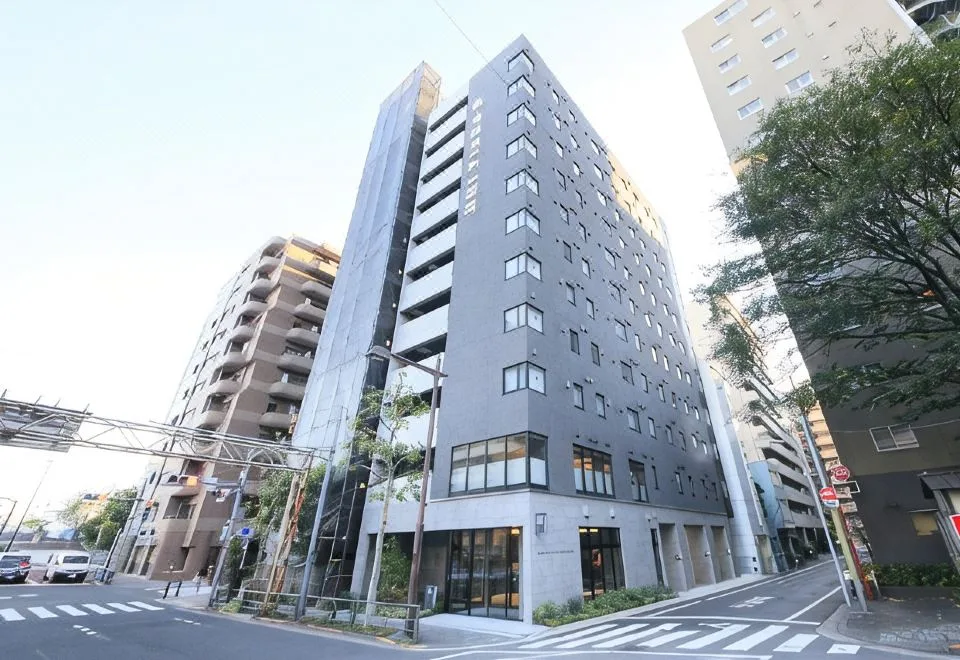
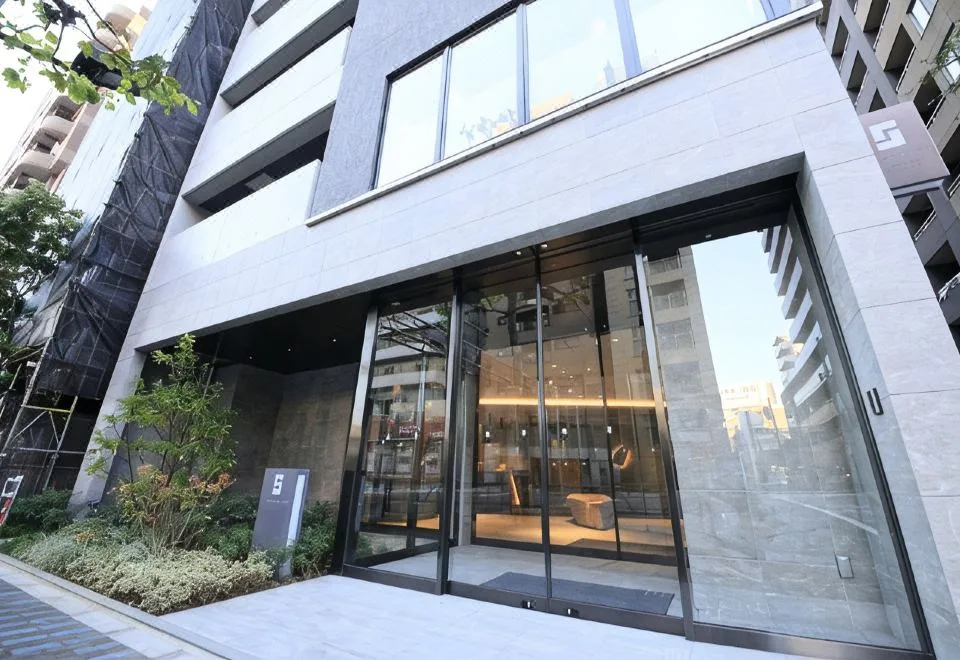
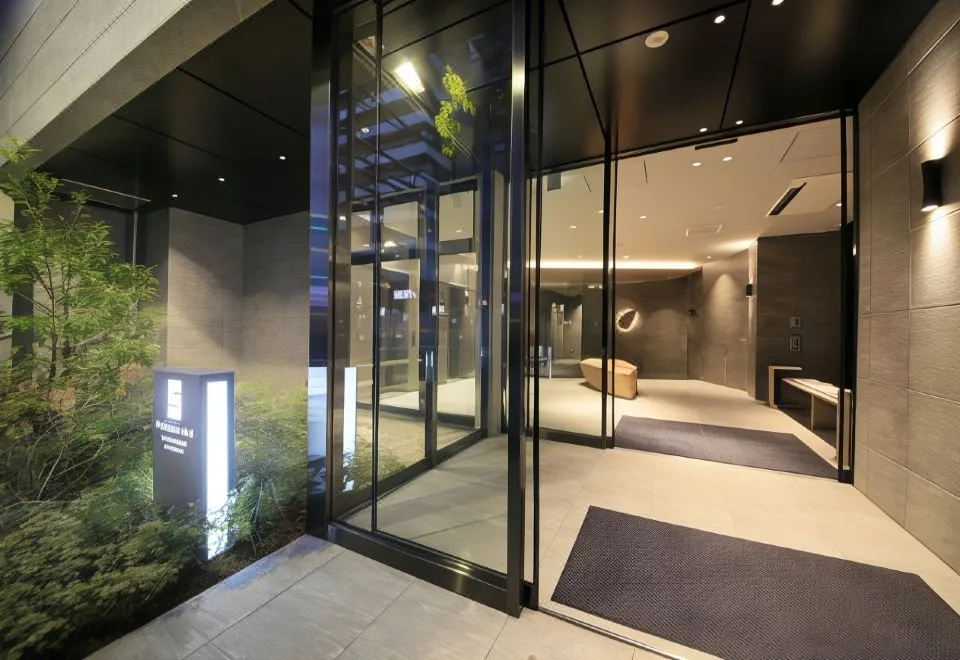
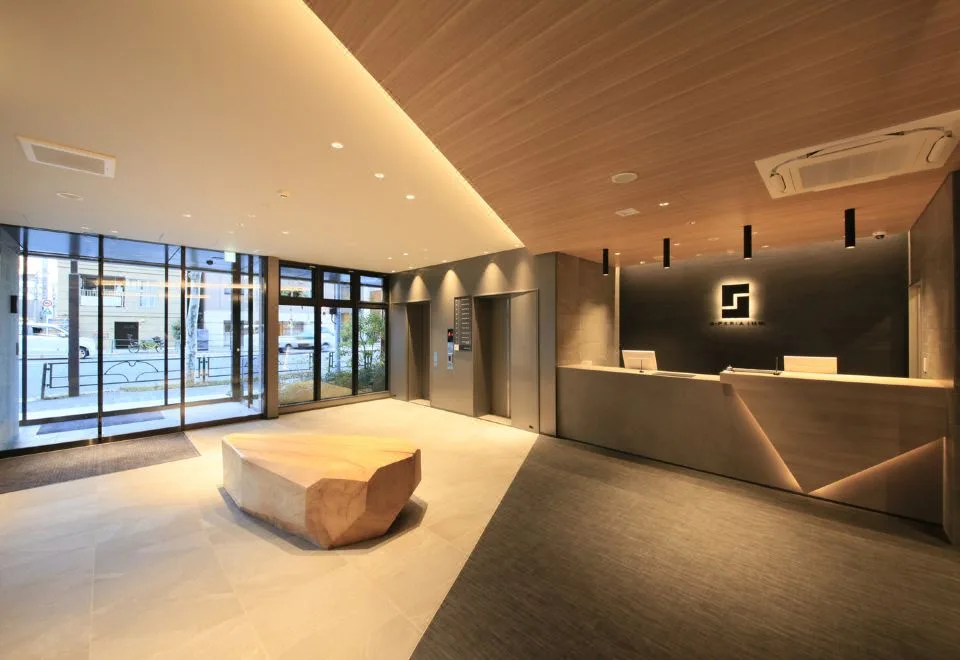
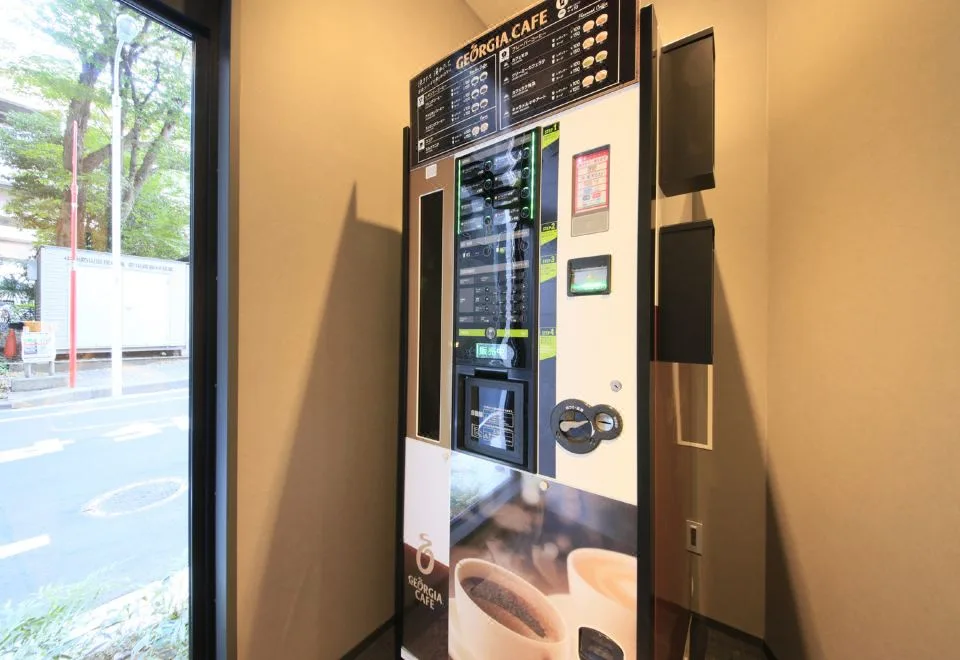
The photos show the reception and lounge seats, the drinks machine, and the laundry machines — the places you will use first after walking in; the daytime exterior, street-side entrance and entrance lobby are photographed too, so finding the door the first time is easy. The welcome drink comes from a Georgia Cafe vending machine — have one before you check in. The lounge seats sit right by the reception, so you can sit down for a moment after checking in.
Why I would consider it and trade-offs
Advantages
T-CAT is close by, so airport travel needs no detour, and cleanliness and a helpful front desk are why I would keep this as a steady base. If you prefer a quieter everyday Nihonbashi area, this fits.
Considerations
The subway walk still takes effort with heavy bags. Rooms near elevated roads may hear nighttime traffic, and neighboring doors and laundry waits are worth watching for. Light sleepers should request a room away from the road rather than assume a quieter neighborhood means every room is silent.
Pros and cons
Pros
- T-CAT is about a three-minute walk, with Haneda about 25 minutes and Narita about 55 minutes away by bus — no detour for airport travel.
- Second-floor breakfast buffet with Western dishes and three seasonal soups; 1,710 yen per adult, free for children aged 5 and under.
- Opened in November 2018 with 114 rooms; Simmons beds, 32-inch TV and an air purifier with a humidifier in the room.
- Front desk open 24 hours all year, check-in until 5 a.m.; luggage storage, wake-up calls, laundry room and dryers available.
- Suitengumae Station Exit 4 has an elevator, so heavy luggage can follow a step-free route to street level.
- Entire building non-smoking; accessible rooms, entrance ramp and low-position elevator buttons provided.
Cons
- Single rooms are 12 m², small for two; room names differ while size and 140 cm bed are the same, so compare bed widths before booking.
- Rooms facing the elevated road may hear nighttime traffic; neighboring doors can also be heard.
- The ordinary walking route from Suitengumae uses Exit 2, which has no elevator; the step-free route detours to Exit 4.
- Parking is limited to three cars, by phone reservation only, at 2,500 yen per night.
- No room type allows an extra bed or a baby cot; guests checking in must be at least 18.
Information checked: November 22, 2026.