
TOKYO / CHUO
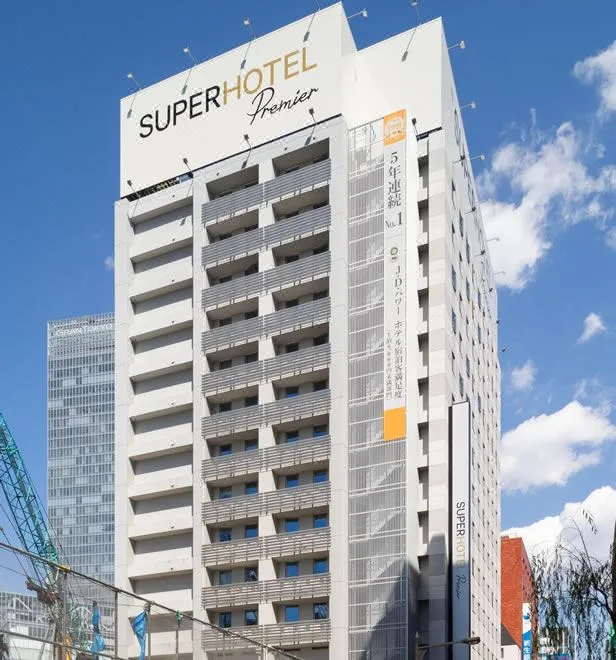
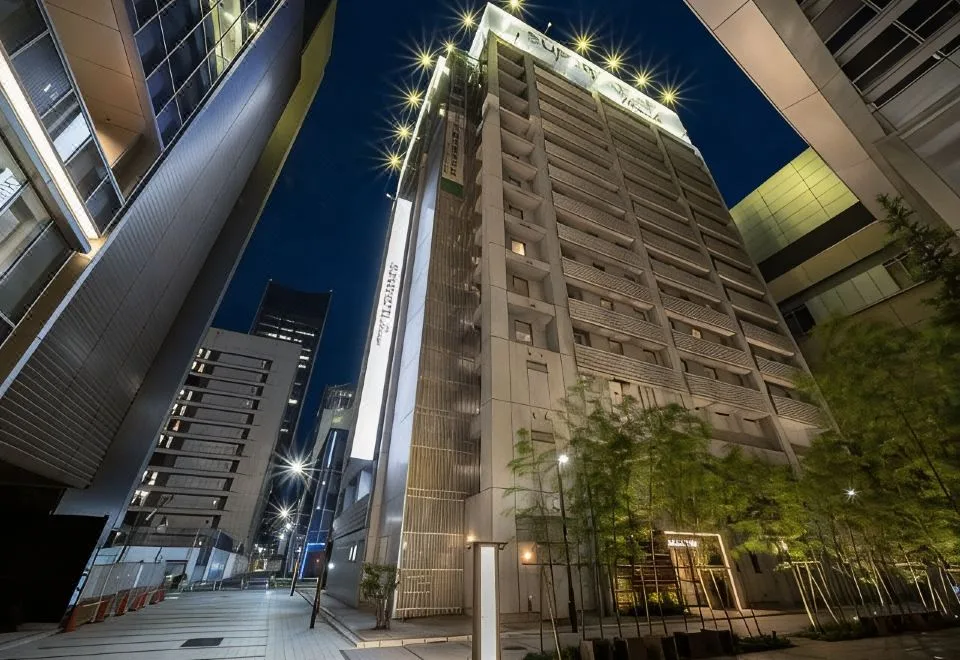
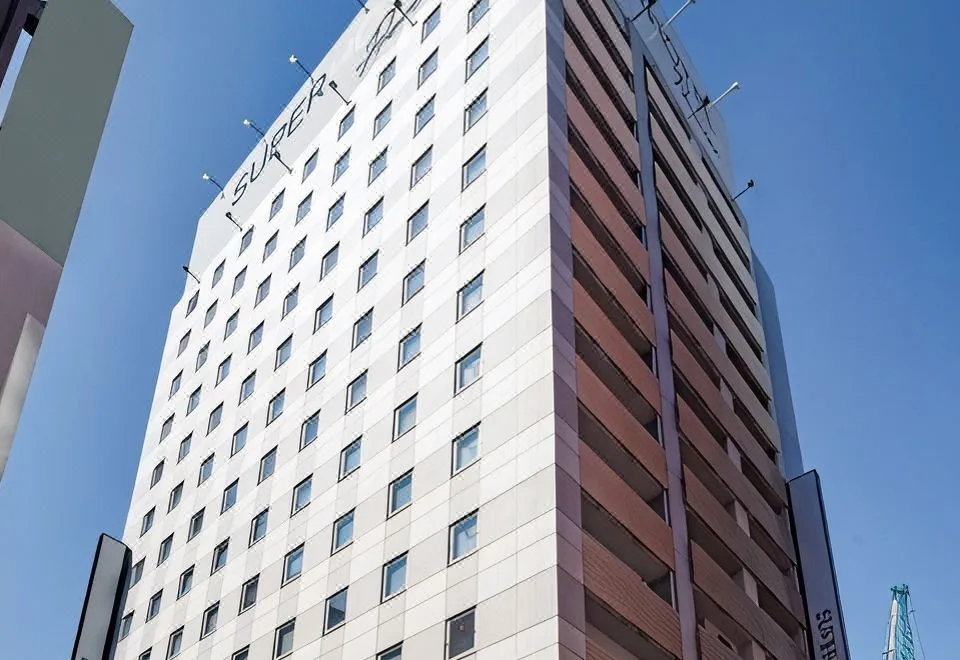
Super Hotel Premier Tokyo-eki Yaesu Chuo-guchi
Super Hotel Premier Tokyo-eki Yaesu Chuo-guchi
Tokyo Station connections and a large public bath for late arrivals or early departures.
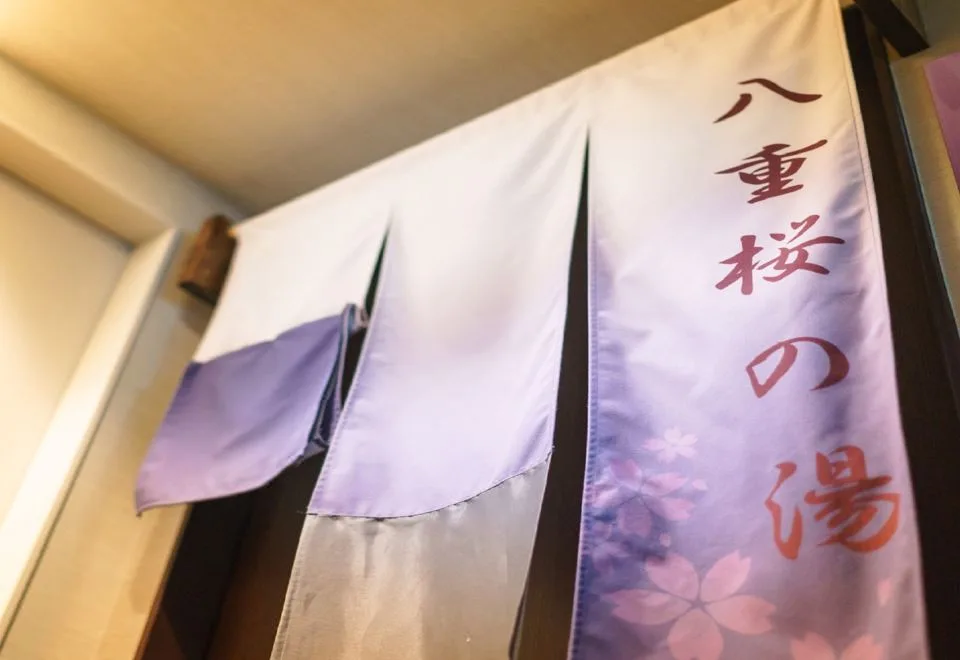
The appeal of Super Hotel Premier near Tokyo Station’s Yaesu Central Exit is the combination of station convenience and the Yaezakura-no-Yu bath. If I had a Shinkansen the next morning or wanted to soak after dinner, those advantages explain it better than room photographs alone.
I judge this hotel by time: check-in runs until 1 a.m. the next day and the front desk is staffed from 6:30 a.m. to 1 a.m., so a late Shinkansen or a red-eye into Tokyo Station still leaves you able to check in on foot without racing the clock. Checkout is before 11 a.m., so on an early departure I pack the night before and check the breakfast hours first, then walk straight out in the morning.
If you ask me who this suits best, I would say short stays and business trips through Tokyo Station: the rooms are small, but the location saves commuting time and the bath gives the evening back to you. Two people with heavy shopping should look at the 18 m² or 23 m² rooms first instead of comparing only the lowest price.
If you travel like I do — late in, early out — remember three times: check-in until 1 a.m., checkout before 11 a.m., and breakfast last entry 9:30. Fix those before you arrive and you can drop your bags and head for the bath without digging out the confirmation email.
| First check | How to choose |
|---|---|
| Best trips | Short stays around Tokyo Station, business trips and guests happy with compact rooms who relax in the bath instead. With lots of shopping bags or a need to spend time in the room, compare larger layouts. |
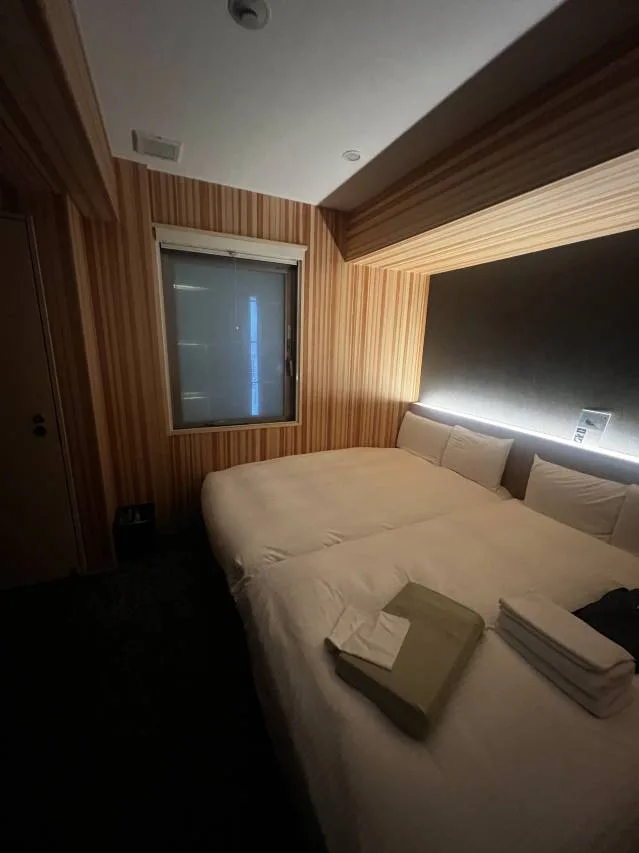
| Room choice | Standard is 12 m² with a 150 cm bed; Deluxe is 13 m² with the same width; Super Room is 13 m² with a 90 cm loft bed above a 150 cm bed. |
| Important distinction | Yaezakura-no-Yu is an artificially carbonated bath, not a guaranteed natural hot spring. |
Choose the right bed arrangement and floor area
The Standard is 12 m² with a 150 cm bed, Deluxe is 13 m² with the same 150 cm bed, and Super Room is 13 m² with an additional 90 cm loft bed over the regular bed. To sleep separately, compare the 18 m² Hollywood Twin with two 120 cm beds or the 23 m² Deluxe Twin. An extra upper bunk adds sleeping capacity, not space to spread luggage. With large bags, upgrade area rather than occupancy alone.
| Room category | Area / bedding | How to choose |
|---|---|---|
| Standard | 12 m² / 150 cm bed | A short stay with light luggage. |
| Super Room | 13 m² / 150 cm bed plus 90 cm raised bed | For guests comfortable with a loft bed. |
| Hollywood Twin | 18 m² / two 120 cm beds | Two travelers who want separate beds. |
| Deluxe Twin | 23 m² / two 120 cm beds | For more room around suitcases. |
Check the official room gallery and confirm the exact category, beds and occupancy on your booking.
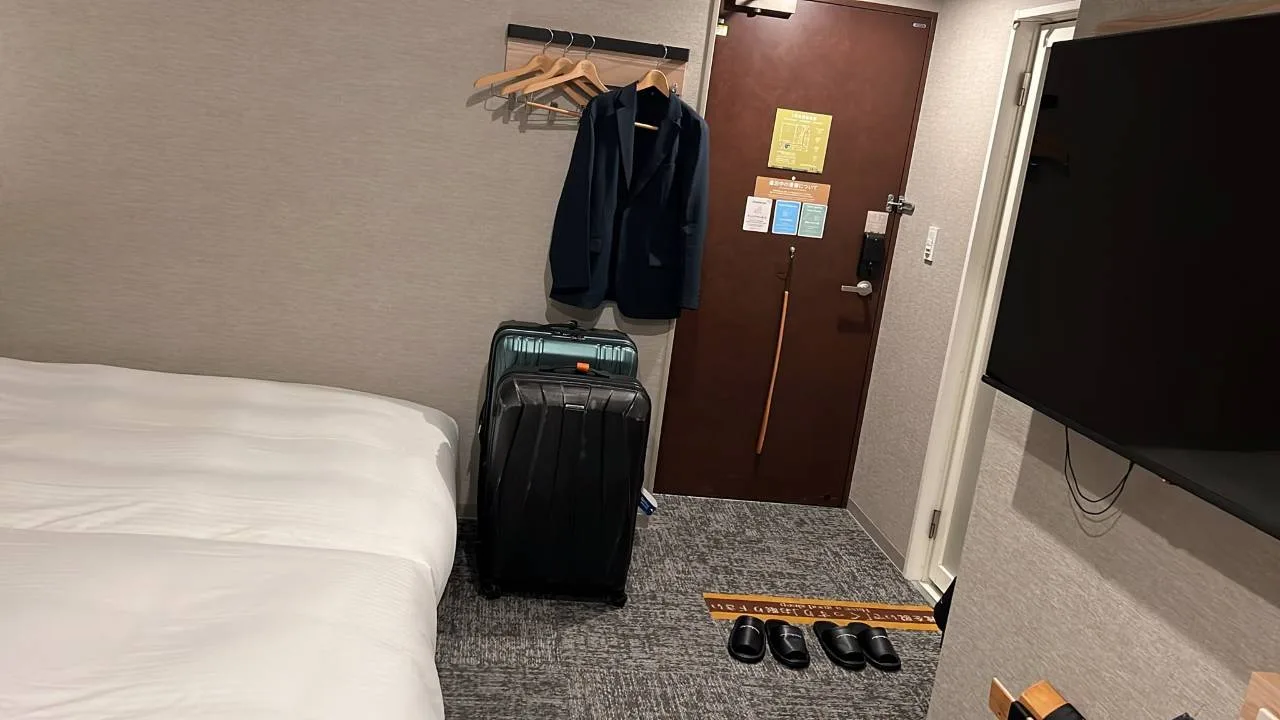
Travelling alone, I go straight for the Standard: 12 m² with a 150 cm bed leaves room for one cabin case and a backpack, and it costs the least. The Deluxe is 13 m² with the same 150 cm bed — the extra square metre is mostly walkway, fine for two light packers for a night, but cases still take turns opening.
The Super Room is also 13 m², with a 90 cm loft bed over the 150 cm bed. It sleeps three, but the loft is a bed, not luggage space — if you are afraid of heights, get up at night, or travel with a small child, think through the climb first. With lots of luggage, I upgrade floor area first rather than picking the room that sleeps the most people.
Two people who want separate beds should compare the 18 m² Hollywood Twin with two 120 cm beds against the 23 m² Deluxe Twin: the first sleeps separately in comfort, the second adds 5 m² for cases, so heavy shoppers take the 23 m². When you book, go by the room name, bed count and occupancy on that booking page, not an older room list.
If you work in the room, check the desk and seating first: a 12 m² room with a desk and two chairs is full, so for long working sessions look at the 23 m² room or use the lobby instead of picking the cheapest room and regretting it.
I choose in this order: party size and sleeping arrangement first, then how much luggage, then price. One light packer takes 12 m², two people sleeping separately take 18 m², two heavy shoppers take 23 m², and three people take the Super Room loft. Get the order right and the room picks itself.
When I book, I also check the cancellation terms and the occupancy: the room list states the maximum number of guests, and the price you actually pay follows the party size you enter, including any crib or child surcharge. The Super Room sleeps three and the Hollywood Twin two — entering the wrong party size and discovering an extra charge at the desk is money wasted.
Arriving with suitcases
With large luggage, a wheelchair or a stroller, I take the elevator route: JR East’s barrier-free information confirms Tokyo Station has elevators, with step-free routes from the ticket gates to every platform. Take the elevator from the platform to the first-floor concourse, leave through the Yaesu Central Exit, and the hotel is about three minutes on foot; in rain or with heavy bags I stay underground through the Yaesu shopping arcade, whose exit is about one minute from the hotel.
Kyobashi Station works too: an elevator in the middle of the platform leads to a dedicated elevator ticket gate, and outside the Ginza-side gates, elevators serve Exits 2 and 3. From there it is a longer walk at street level to Yaesu, so I would not take this route when I am catching a train.
| Stay information | Details |
|---|---|
| Address | 2-2-7 Yaesu, Chuo City, Tokyo 104-0028, Japan. |
| Check-in / Check-out | 3 p.m. to 1 a.m. the following day / before 11 a.m. |
| Ordinary walking reference | About 310 m or five minutes from JR Tokyo Station. |
Consult the official hotel access directions.
I remember three distances around the hotel: Nihonbashi is under 100 metres, right outside; Ginza is 440 metres, an easy walk; Ginza-itchome Station is 740 metres and Yurakucho Station 930 metres, so changing lines is never a long walk. The Imperial Palace is 1.4 km and its Outer Garden 1.2 km — one stop in the morning and a walk there fills the morning nicely.
For Haneda and Narita, I check the trains before the buses: Tokyo Station connects to every line, the Keiyo Line toward Maihama and the Sobu Line toward Narita need one change at most, while buses depend on the timetable — do not gamble a tight schedule on a single bus.
Let me put the time saving in numbers: three minutes into Tokyo Station, one minute from the Yaesu underground arcade, under 100 metres to Nihonbashi — staying here squeezes daily commuting time to the minimum. I spend the saved time soaking in the bath, eating breakfast and walking Ginza slowly, and that is what the room rate actually buys. If your itinerary is packed, staying further out costs half an hour a day on the road, and three days costs half a day; staying here gives that half day back to you. The rate may not look cheap, but the time and fares saved make a late-in, early-out trip genuinely good value.
Breakfast: add it only when the timing works
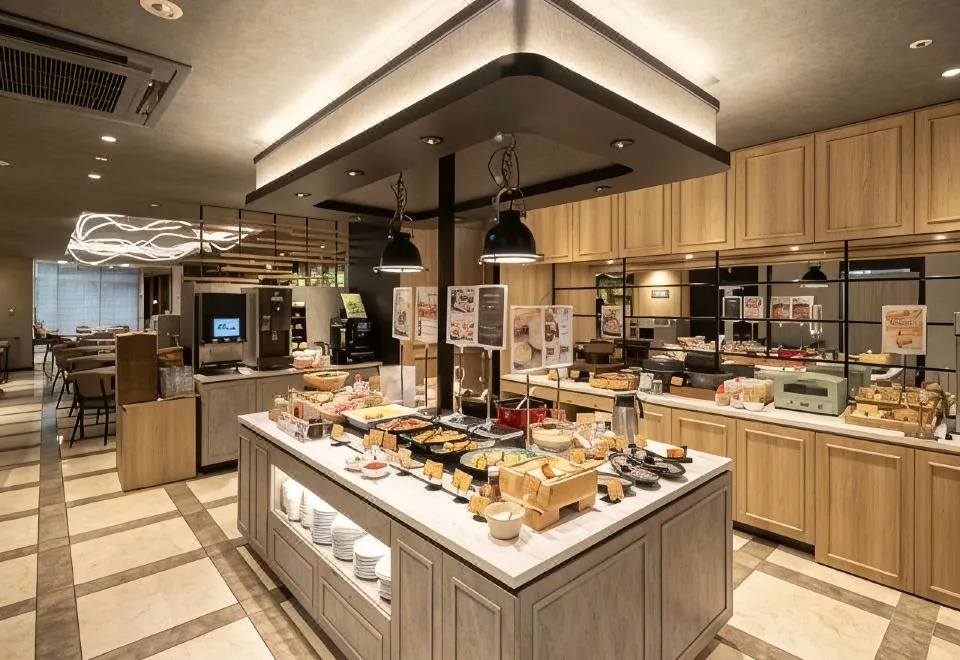
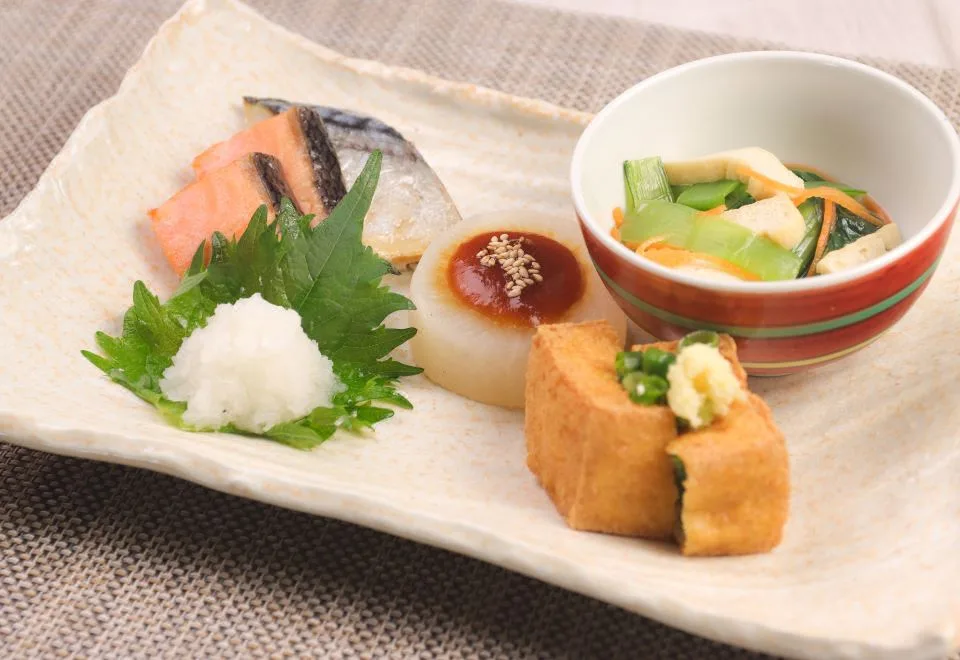
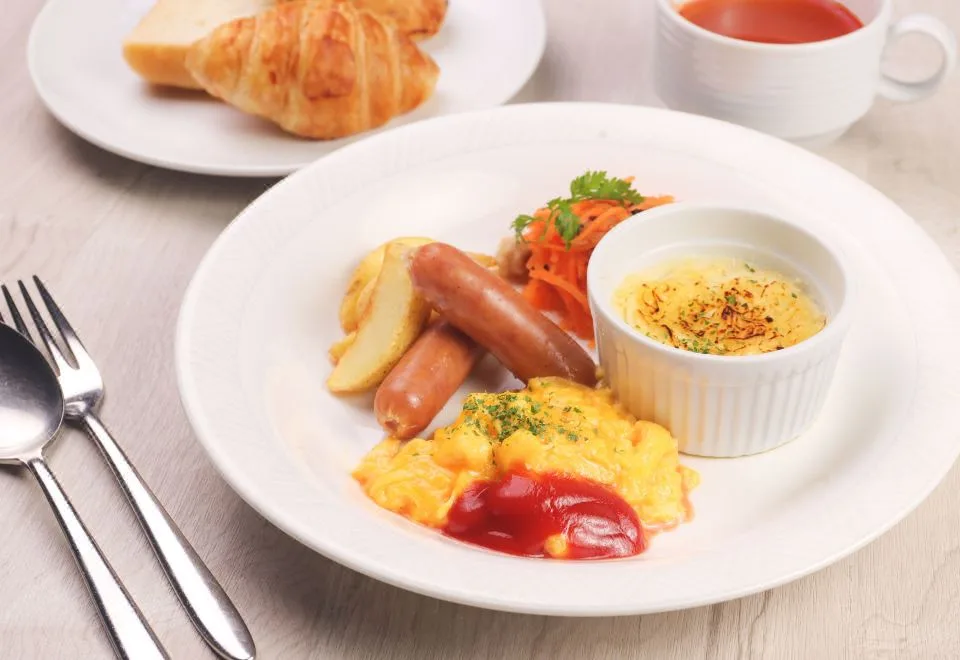
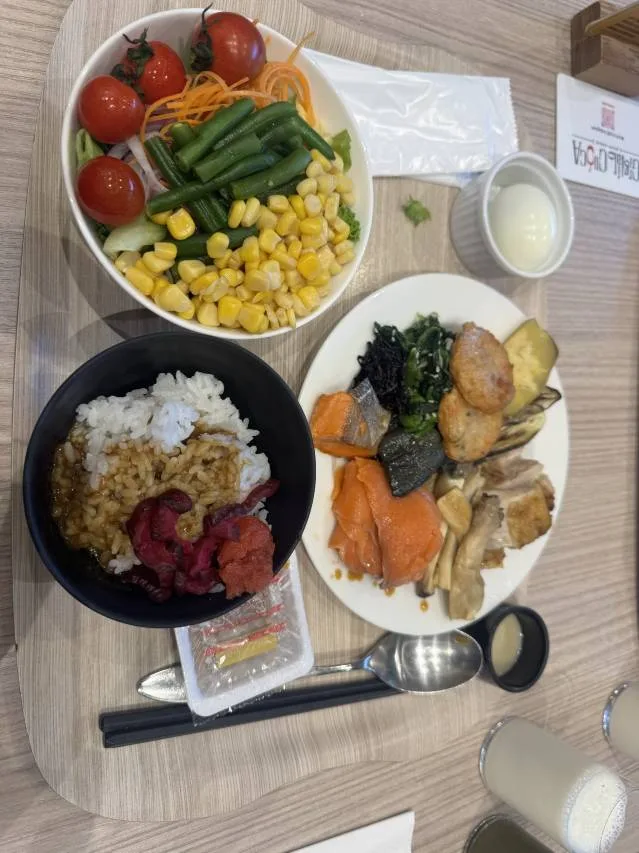
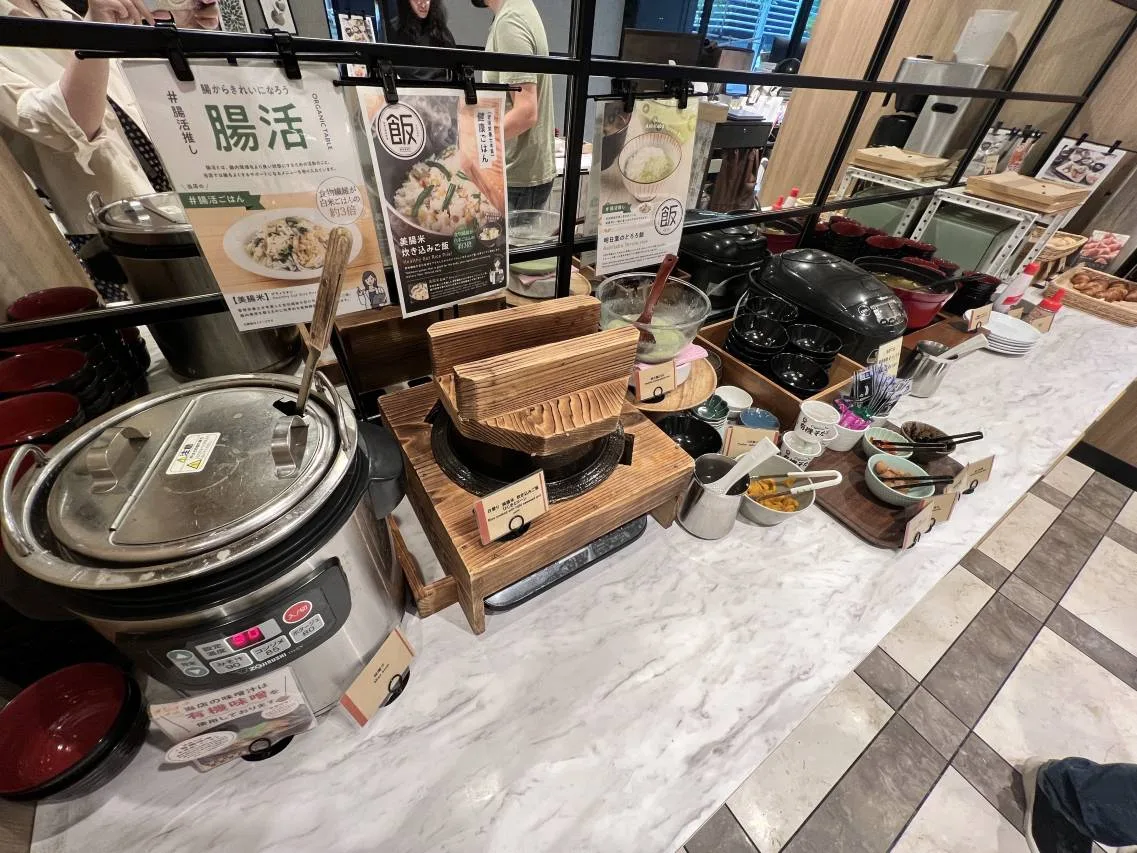
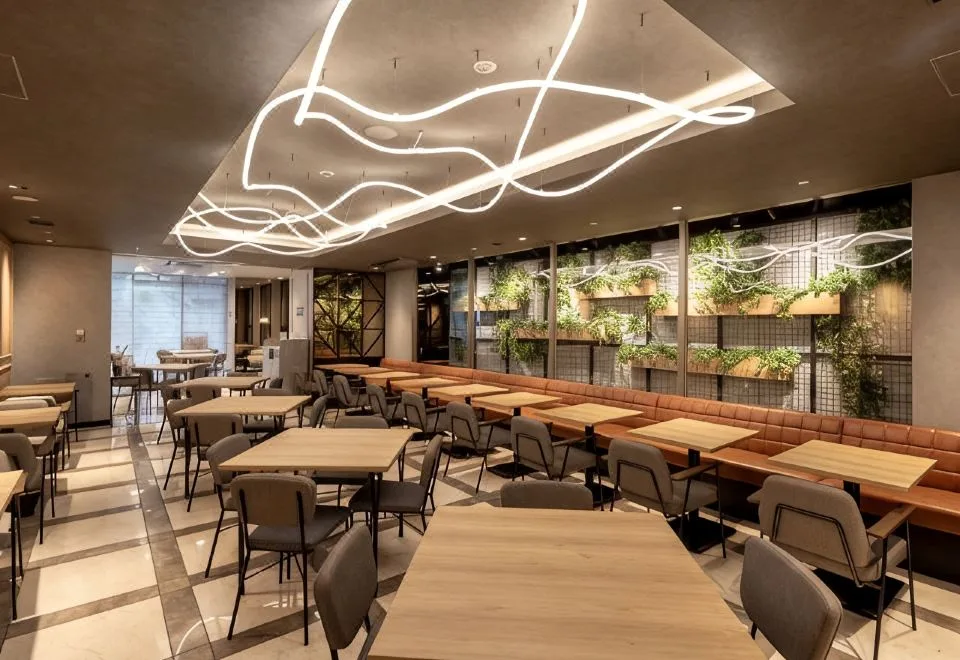
Breakfast is served at ORGANIC TABLE on the first floor, paid, from 6:30 to 10:00 with last entry at 9:30, Japanese and Western dishes, charged à la carte by what you order. If those hours fit, a breakfast-inclusive rate saves finding a cafe; for an earlier train, keep the breakfast budget for the station. If breakfast is not on your booking, ask the hotel whether you can add it on site and pay there.
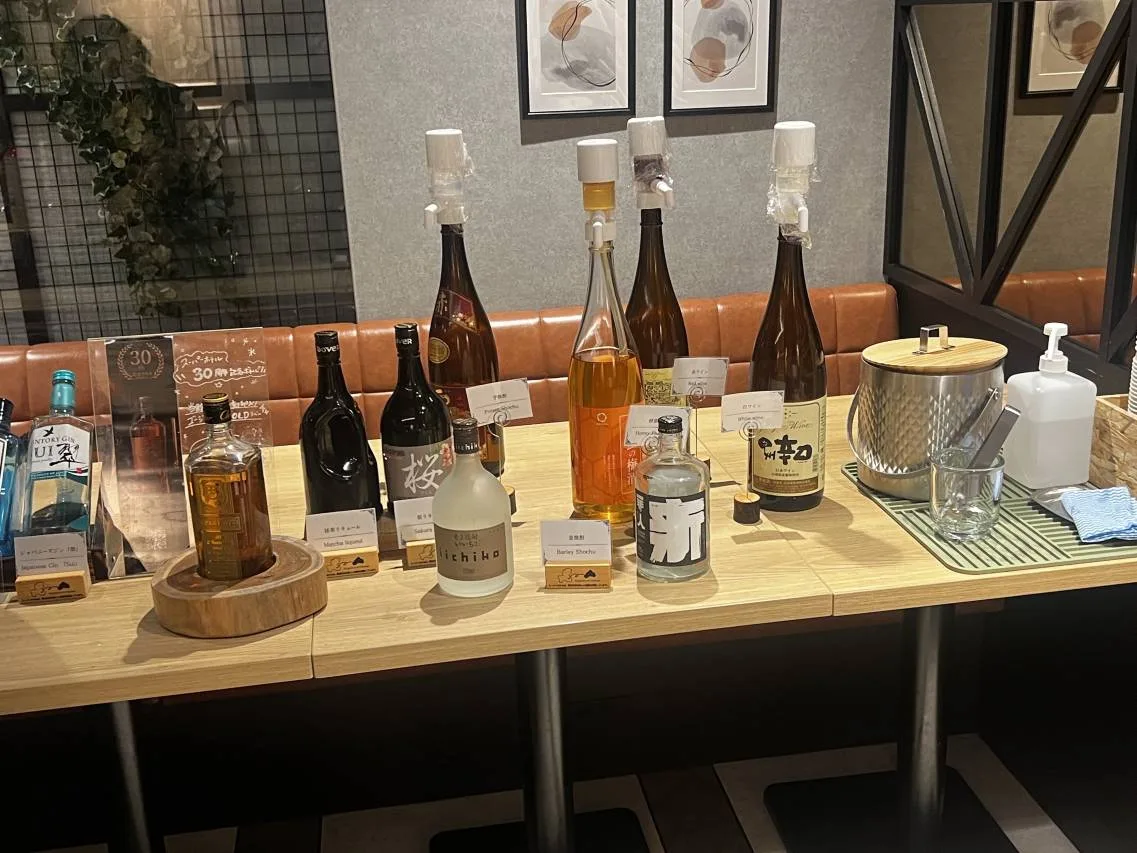
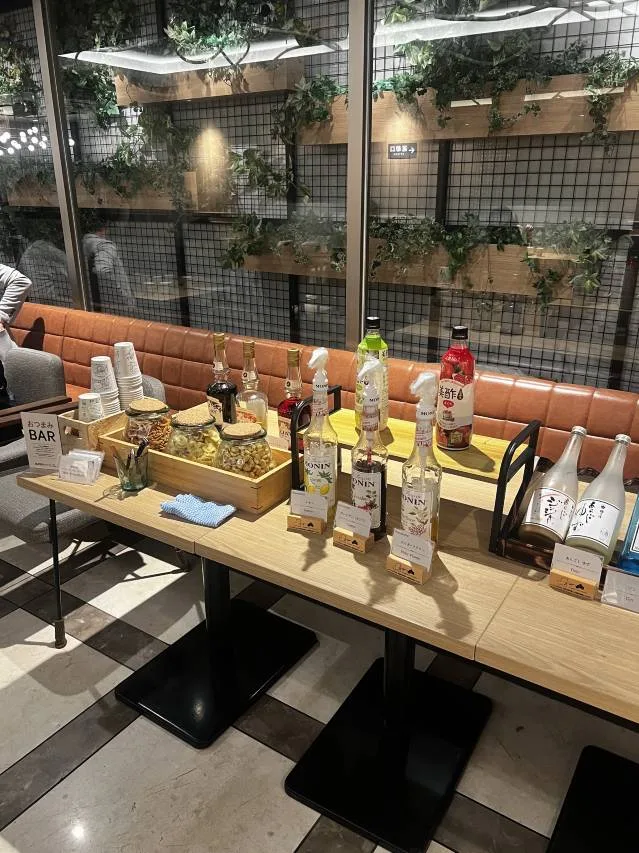
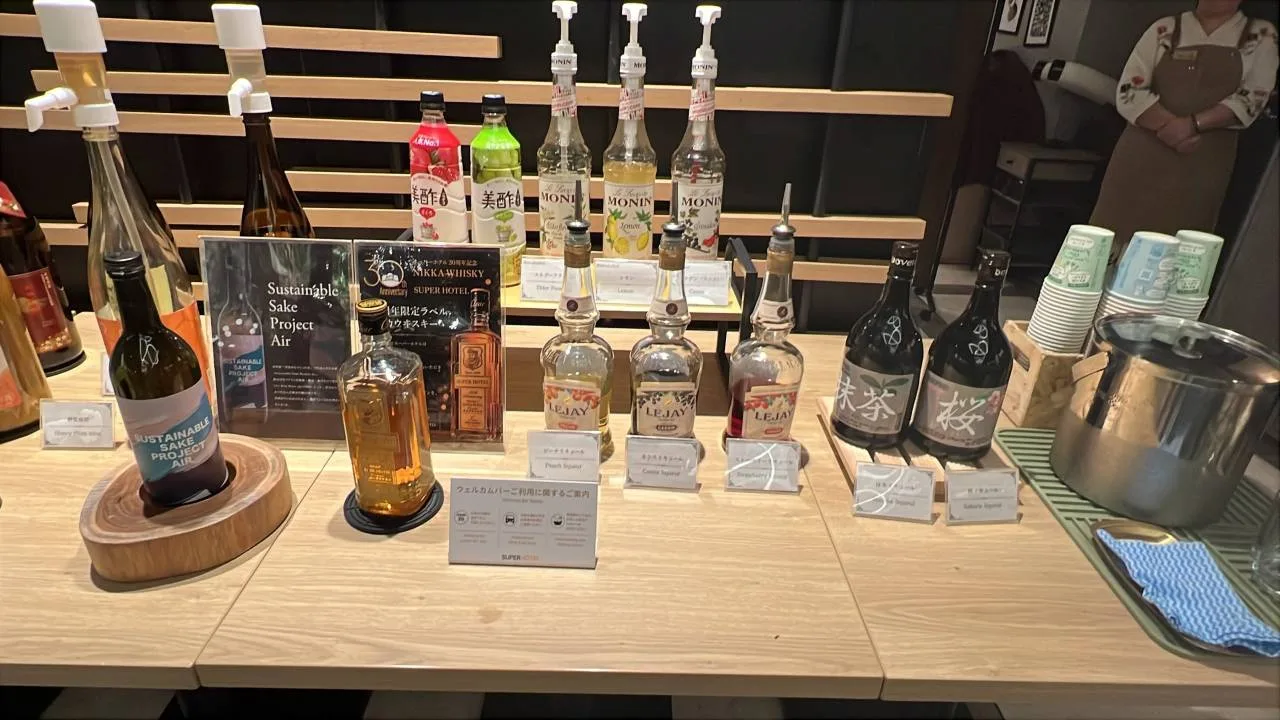
The drinks counter in the photos is the welcome bar, not breakfast: in the evening you can sit in the welcome drinks area, but do not go there in the morning looking for breakfast. The breakfast buffet counter, Japanese plate and Western plate photos are in this section, so you can see roughly what breakfast looks like before you decide.
Facilities and house rules
The front desk is staffed from 6:30 a.m. to 1 a.m., luggage storage is free, Wi-Fi in public areas is free, and the building has an elevator and a humidifier, with vending machines in the public areas. The whole building is non-smoking, including public areas, so the air stays clean.
Drivers should sort out parking first: private parking is inside the hotel at 1,000 yen a day and must be booked in advance — without a reservation there is no guarantee of a space. Pets are not allowed, and guests must be at least 18 to check in. Children of all ages are welcome, but a child without an extra bed may still cost extra, so add children to the booking to get an accurate price.
I keep the facilities list in one place: laundry room, dryer, laundry service and delivery laundry, bath amenities and washing supplies, and a humidifier in the room so winter heating does not dry the air out. For photocopying, fax or ironing, ask at the front desk.
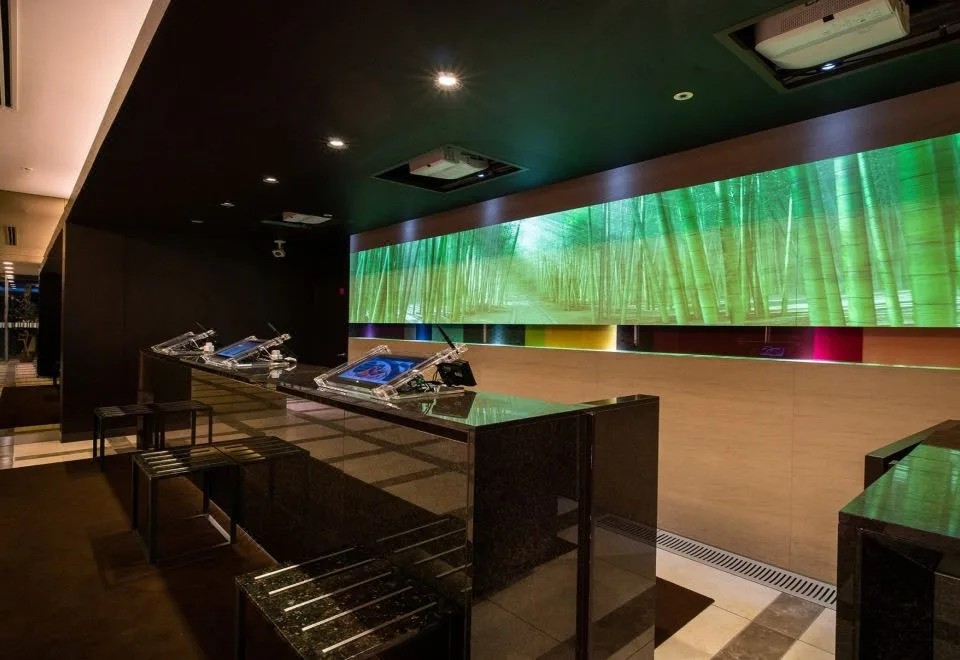
In the evening I go to the bath before returning to the room: after a soak I am warm, the small room hardly matters, and I do not need the television to fill the evening. The welcome drinks area sits near the lobby, so a drink there after the bath is my favourite way to end the day here.
One night or several?
On a one-night connection the location pays off immediately: arrive late, walk over, soak in the bath before bed, and step into Tokyo Station the next morning. Staying several nights works the same way — come back, bathe, use the welcome drinks area, and there is no need to change hotels mid-trip.
For a longer stay, factor in laundry: the hotel has a laundry room and dryer, plus a laundry service and a delivery laundry service, so one mid-stay wash means packing one fewer change of clothes. Luggage storage is free — leave your bags at the desk after checkout, walk Ginza or Nihonbashi, and collect them on the way back instead of dragging cases around.
One last thing: the rooms are small, so when you arrive, decide first where the cases go and where the chargers plug in. Get the layout sorted in five minutes and the rest of the stay is easy; leave things scattered and 12 m² runs out of walkway fast.
For an early Shinkansen, do not wait for breakfast: service starts at 6:30, so for a train before six, buy food at the station instead. Tokyo Station is three minutes from the hotel and full of places to eat — buy something and eat it on the train rather than waiting for the restaurant to open.
Trade-offs before booking
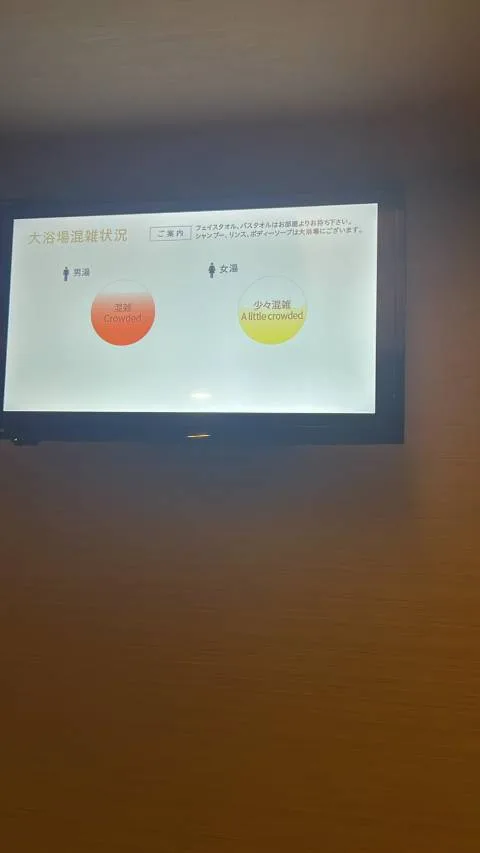
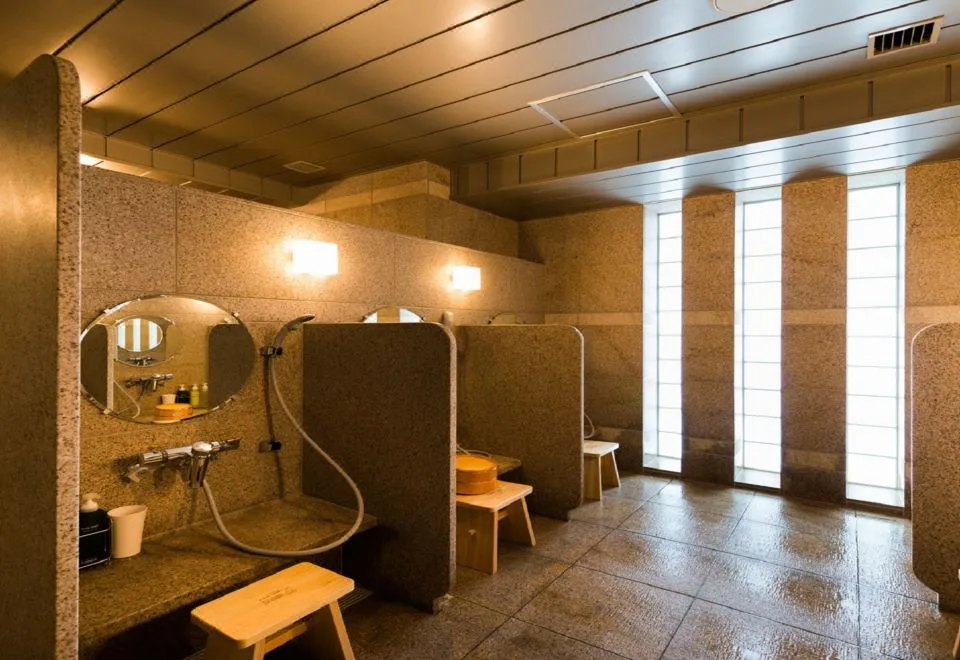
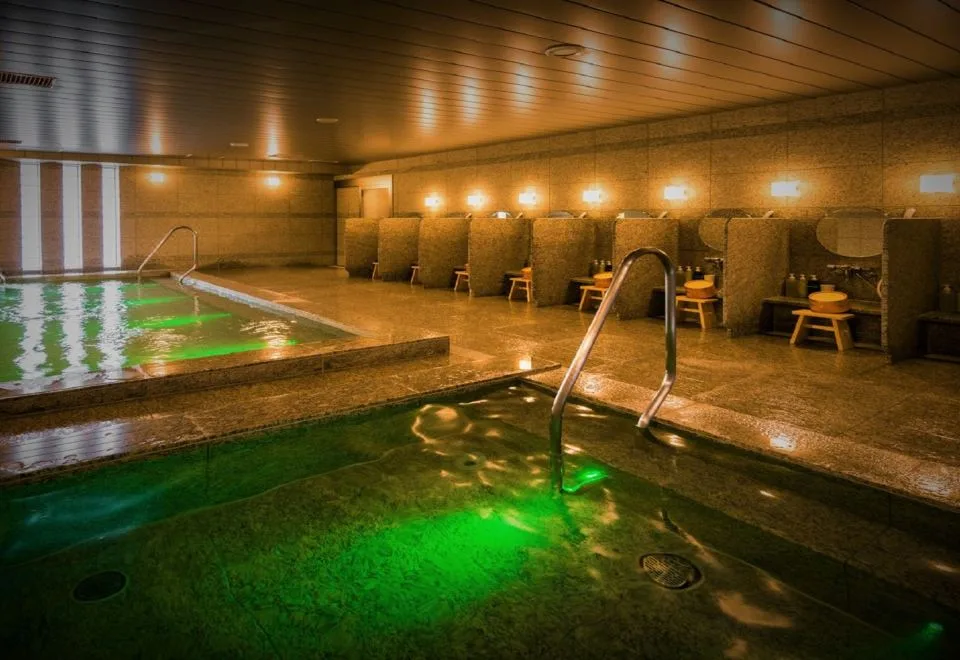
Yaezakura-no-Yu is an artificially carbonated spring, and I treat it as a large public bath, not a natural hot spring. It works as a wind-down before bed — the wash area and the pool are in the photos here, so you can see the space before you go — but it cannot add floor space to your room, so sort out where the cases go as soon as you walk in.
I note the safety and amenity details too: the front desk has a safe, the hotel offers fax and photocopying, an ironing service and a first-aid kit, and public areas have security cameras and security staff, with fire extinguishers, fire alarms and smoke detectors throughout. Accessible rooms, children’s slippers and children’s toothbrushes are available on request, and staff speak Japanese and English.
If this is your first stay with this hotel brand, remember how it works: the rooms are compact, and the public areas and the large bath are the point. Do not compare the room size with a resort hotel — compare the location, the cleanliness and whether there is somewhere to soak in the evening, and this hotel delivers on all three.
Plan your nearby trips in one direction
When I build the hotel into an itinerary, I group places in the same direction: a Ginza walk and the Tsukiji Outer Market sit on the same side, so doing them together saves a return trip. The Tokyo Lights festival site is 450 metres away, worth an evening walk in season, and the Tokyo SKY HOP hop-on hop-off bus stop is about 1.0 km — a handy start if you want to tour Tokyo by bus from here.
After choosing the room, compare total rates for identical dates, party sizes and cancellation rules. Calculate breakfast and the price of a room upgrade separately.
Pros and cons at a glance
Pros
- About three minutes on foot from Tokyo Station’s Yaesu Central Exit, about one minute from a Yaesu underground shopping arcade exit, and 310 metres from JR Tokyo Station.
- Check-in until 1 a.m. the next day, so late arrivals can still check in.
- Yaezakura-no-Yu is an artificial high-concentration carbonated bath, with a wash area and pool in the large public bath.
- Room sizes are clearly separated: Standard 12 m², Super Room 13 m² with a loft bed, Hollywood Twin 18 m², and Deluxe Twin 23 m².
- Breakfast at ORGANIC TABLE on the first floor, 6:30–10:00, last entry 9:30.
- Laundry room, dryer, free luggage storage and free public Wi-Fi, so longer stays do not mean carrying dirty clothes home.
Cons
- The Standard is only 12 m² with a 150 cm bed — two people with two large cases will feel cramped.
- The Super Room loft bed is 90 cm wide and reached by climbing; it adds a bed, not floor space.
- Yaezakura-no-Yu is an artificially carbonated bath, not a natural hot spring.
- Private parking is 1,000 yen a day and must be booked in advance.
- Pets are not allowed, and guests must be at least 18 to check in.
Information checked: November 22, 2026.