
TOKYO / CHUO
GRAND MONday GINZA
GRAND MONday GINZA
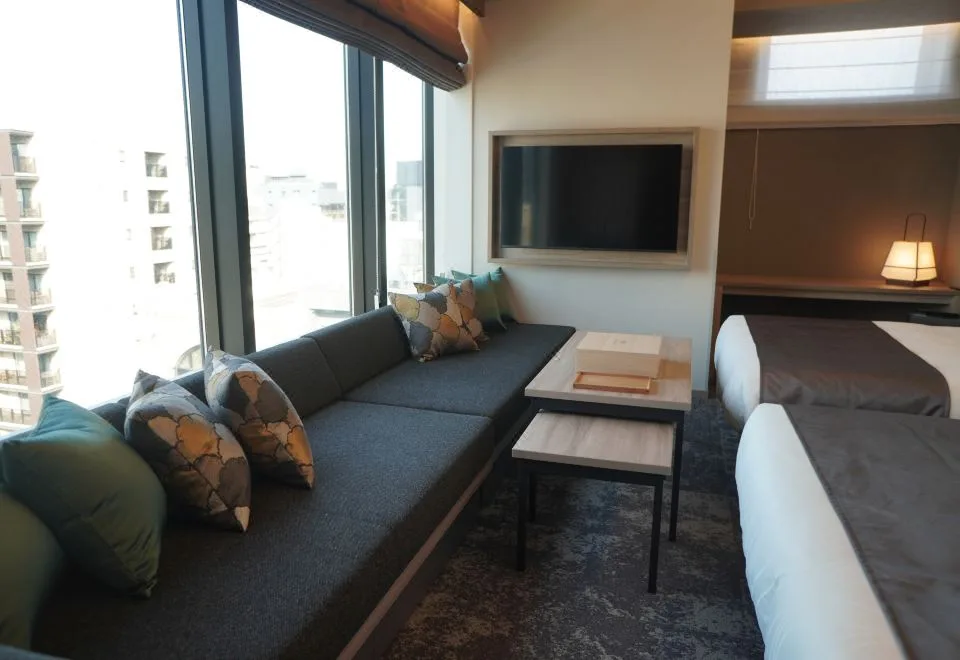
GRAND MONday GINZA suits families who want their room to be a small base for the trip: somewhere to organize takeaway, wash clothes and sit together after sightseeing. The address is in Hatchobori, so judge it by that neighborhood’s transport and facilities rather than expecting a door in central Ginza.
Is this a good fit?
- Room choice: Allocate the beds first, then compare bathrooms and usable space for luggage.
- Breakfast: Prepare a simple meal inside or eat nearby, leaving departure times flexible.
- Longer stays: Confirm laundry and housekeeping, and pack before the final morning.
Start with sleeping spaces, then check living area
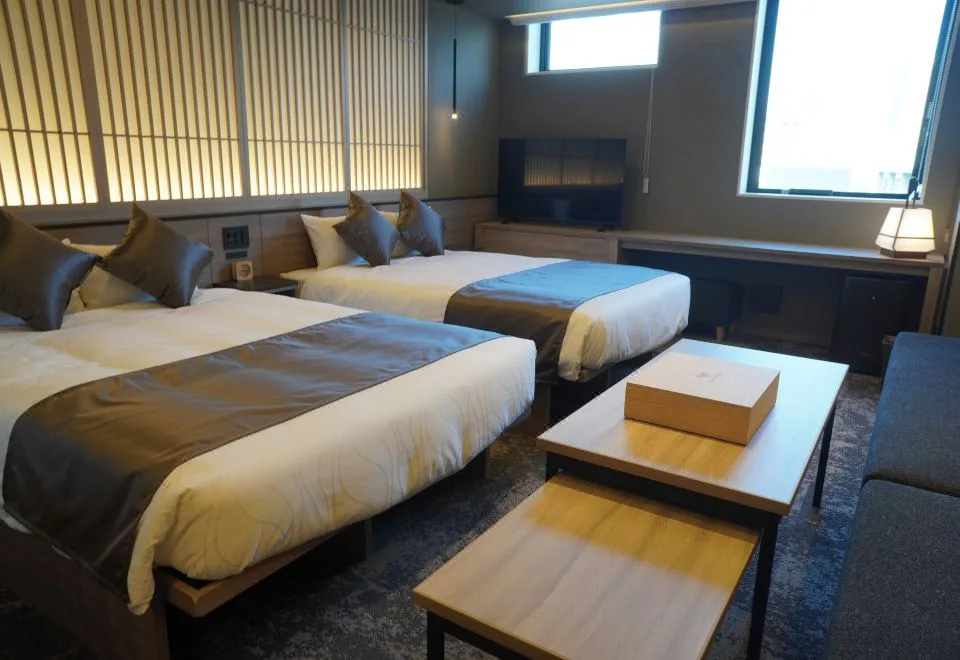
The Junior Suite measures 37.72 or 39.81 m² and accommodates five people in two 140 cm beds plus one 90 cm sofa bed. A Suite is 41.57 or 41.58 m², with two 140 cm beds plus two 90 cm sofa beds for six. To gain room to move, consider the 48.28 m² Grand Suite or 48.79 m² Grand Corner Suite, also arranged for six.
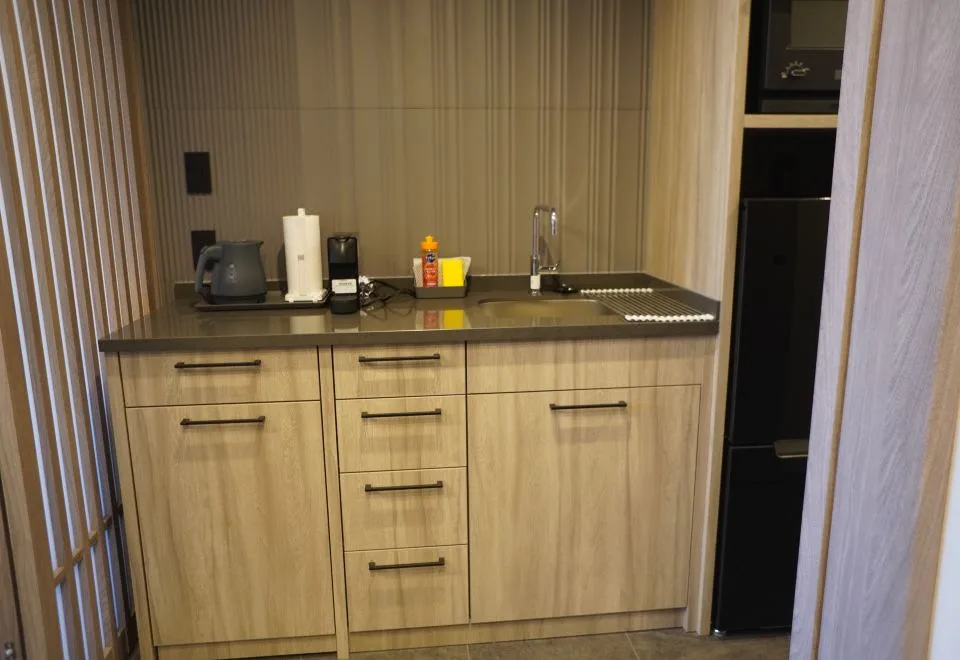
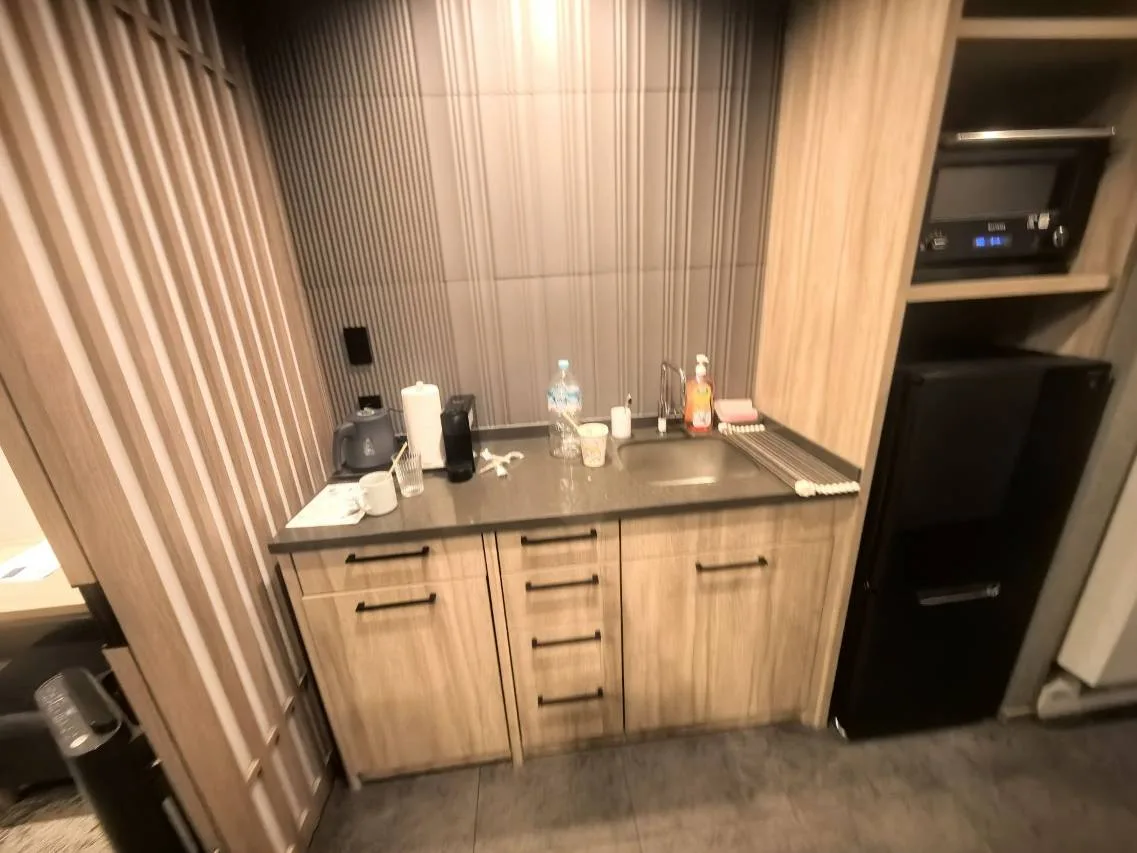
The official site currently describes the kitchen as having a sink; confirm the heating or cooking equipment before planning meals, rather than assuming that a sink means a working stovetop. With four or more guests, consider the walkway when sofa beds are opened. A few extra square meters are particularly helpful when everyone needs to wash or repack at once.
Five or six people sharing a suite should settle the beds first: the Junior Suite sleeps five, and the Suite adds one more sofa bed for six, so everyone has a place. An opened sofa bed is a single-bed width, fine for the night and folded away in the morning to give the walkway back. Check the floor area after the room name when booking: 37.72 m² and 39.81 m² are two sizes of the same Junior Suite, and the larger one leaves more room for suitcases and passing through.
No room type allows an extra bed or a crib, and that is written into the policy. Families with small children should count beds first: six guests means six bed spaces, and one more person needs a second room, not a bed added on arrival. Children of any age are welcome, but an extra charge may apply even without an extra bed, so include children in the booking to get an exact price. Guests under 18 cannot check in alone; check-in must be handled by someone 18 or older.
The 48.28 m² Grand Suite and the 48.79 m² Grand Corner Suite are also arranged for six, about 7 m² larger than the Suite. The difference sits in the living space and where suitcases open: with six people moving around at once, the extra area becomes walkway and table space. The two largest room types suit families who want the living room as a gathering point, with everyone eating takeaway together in the evening without crowding.
For exactly five guests, the Junior Suite is enough; the sixth guest is what calls for the Suite or a larger room type. The sofa beds follow the headcount: one for five, two for six, so no bed space is spare and none is short. Fix the headcount first when booking, then pick the room type, with the floor area as a second step.
Compare official room descriptions with the exact category and equipment on the reservation.
Breakfast: enjoy a flexible start
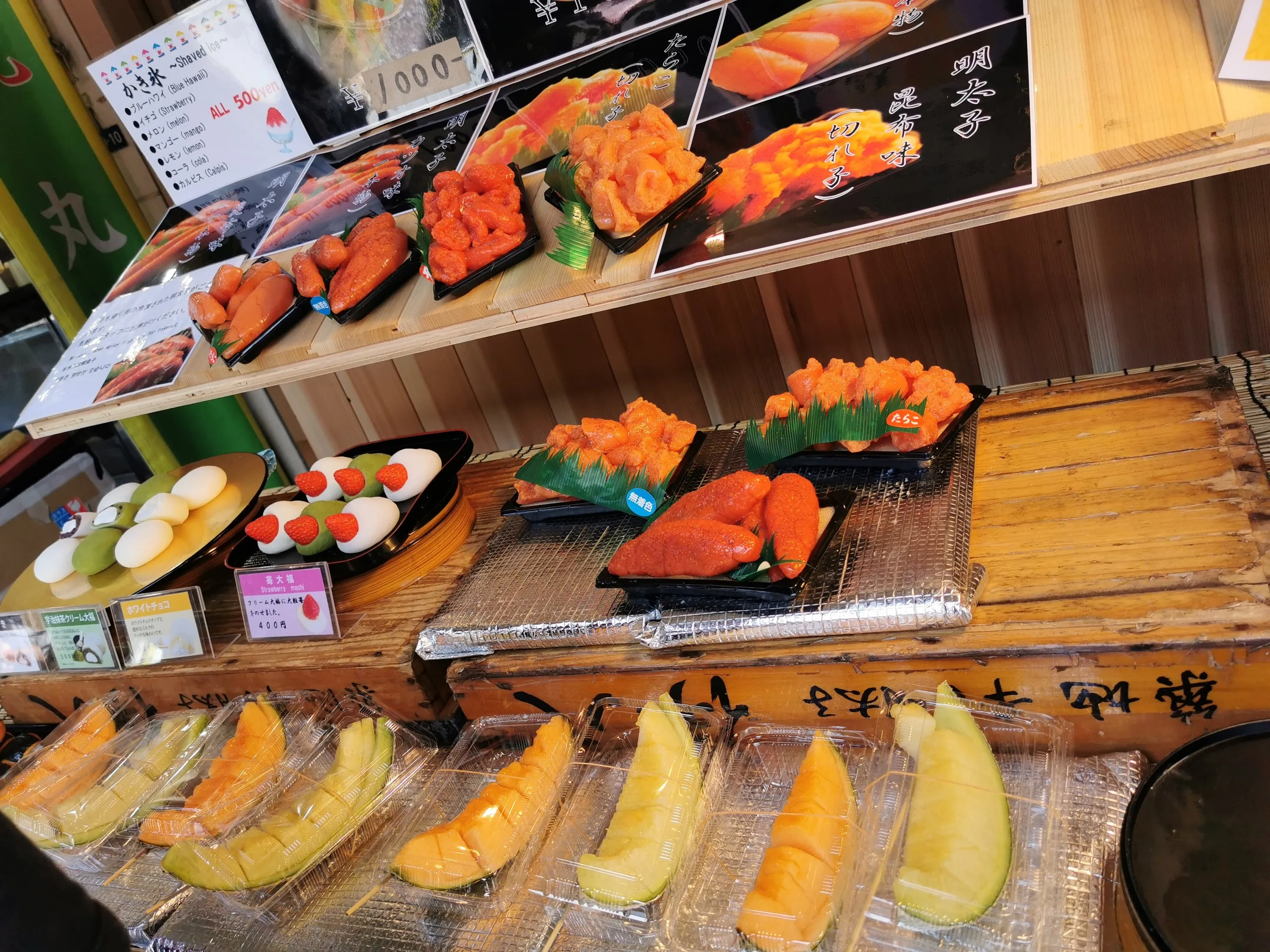
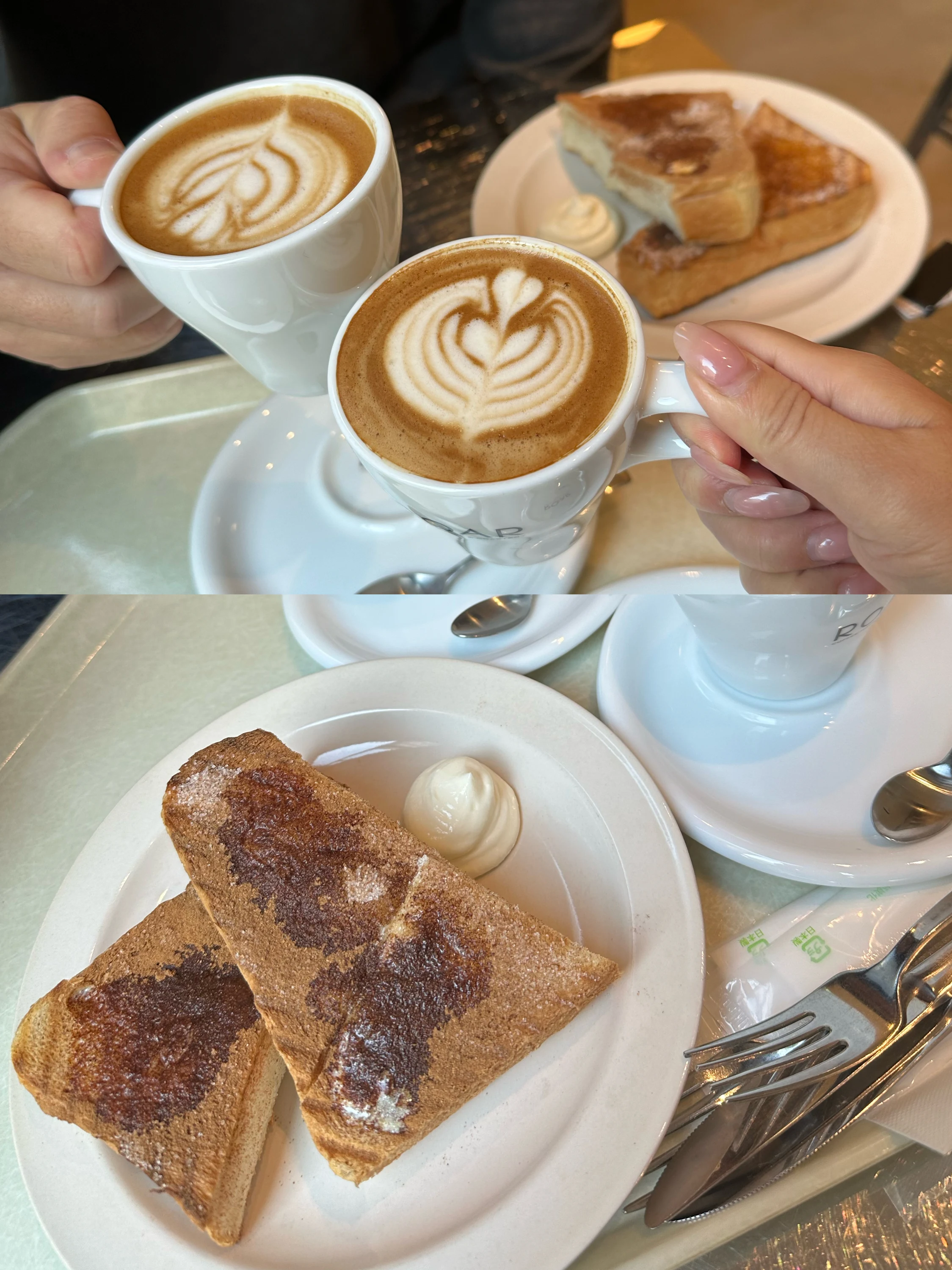
No breakfast is supplied by the hotel, which can suit families unwilling to be tied to meal times. Buy bread, fruit or groceries the evening before, prepare something simple and head out to Tsukiji or Ginza for a later meal. A kitchen does not mean breakfast ingredients are provided.
The room has a sink, so bread and fruit bought the night before can be sorted out inside, and there is no rush to find breakfast in the morning. For something hot, Tsukiji Outer Market is about 980 metres away and busy from early morning; for a slow morning, Ginza cafes open later and the day does not need to bend around breakfast hours.
For several mornings in a row, there is no need to solve breakfast from scratch each day: buy two days of supplies the night before, eat in the room, and leave without fitting the morning around restaurant hours. On the day a change of pace sounds good, head to Tsukiji or Ginza instead, and let the two kinds of morning take turns.

Getting here with luggage
Address: 3-10-5 Hatchobori, Chuo City, Tokyo 104-0032, Japan.
The nearest station is Hatchobori, served by the Hibiya Line and the JR Keiyo Line. On the Hibiya Line, leave through the Sakuragawa Park-side ticket gate, where lifts outside the gate run directly to exits A2 and A3; from street level, walk to Hatchobori 3-10-5 and the hotel is nearby. On the JR Keiyo Line, use exit B2, which has a lift, and lifts also connect the gate to the platforms, so large luggage never needs stairs.
Take the same route back: from the hotel, walk to exit A2 or A3, ride the lift down to the ticket gate, and board the Hibiya Line; for the JR Keiyo Line, enter through exit B2. Takaracho Station is also nearby for Hibiya Line travel, but with heavy luggage Hatchobori is the clearer choice because the lift exits are exactly marked.
Platform to gate and gate to street are both step-free on the Hibiya Line: an upward escalator runs from the Kita-Senju end of the platform to the Hatchobori Intersection-side gate, and the lifts outside the Sakuragawa Park-side gate serve exits A2 and A3. Neither leg needs a suitcase carried up stairs.
Hatchobori is not the only option: Takaracho Station is also on the Hibiya Line, and Ginza-itchome Station is 690 metres away. After an evening in Ginza, walking straight back to the hotel is shorter than detouring to a station, and anyone who would rather not ride one more stop can simply walk. For Tokyo Station connections, ride one stop from Hatchobori instead of walking to Tokyo Station to catch the subway.
Short stays versus several nights
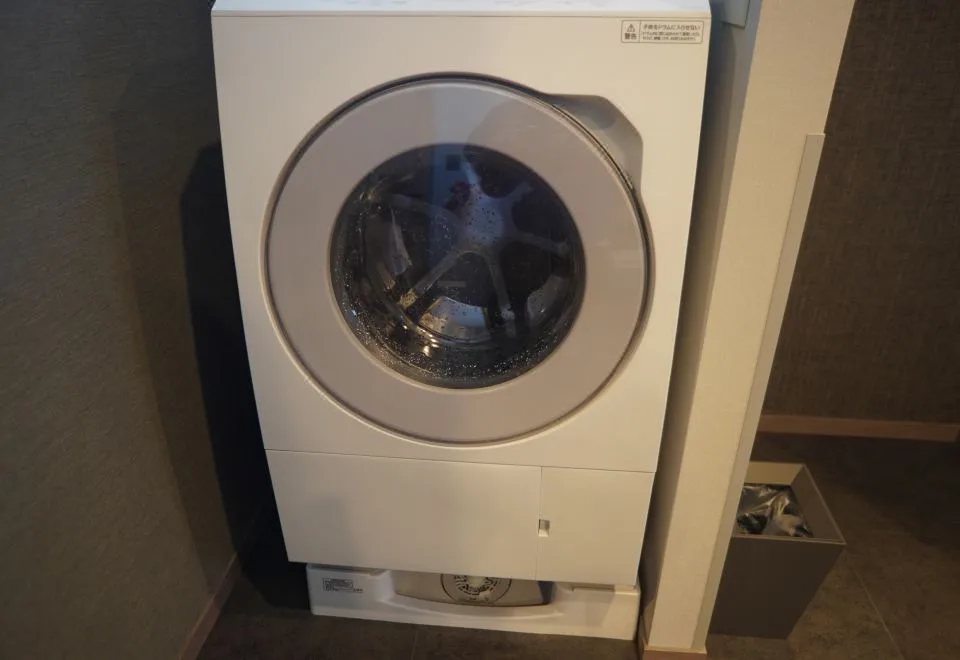
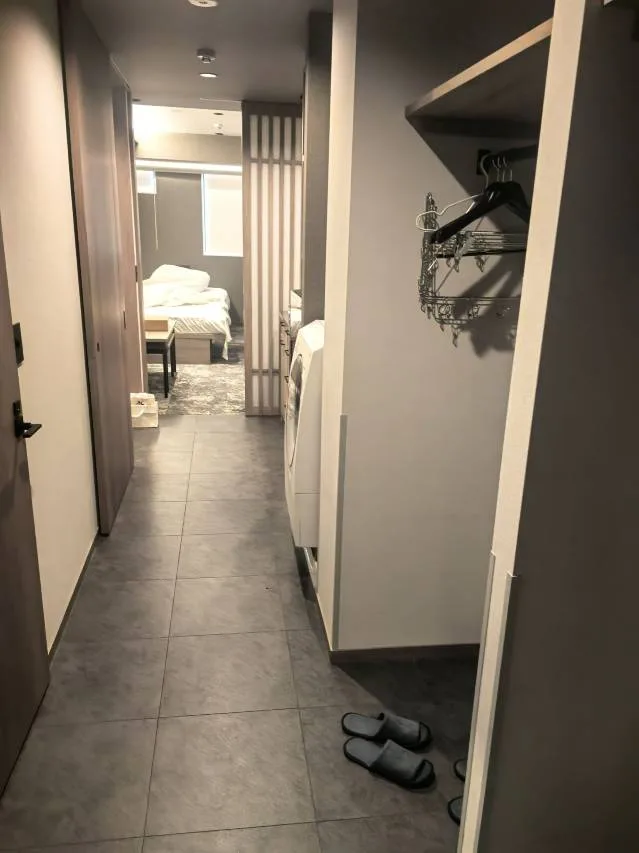
The washer-dryer sits inside the room, so several nights in a row need no coin laundry: clothes go in at night and are ready in the morning. Ask at check-in how often housekeeping comes and how laundry supplies are topped up; the longer the stay, the more it pays to ask once. Daylight depends on the room itself: some rooms face a neighboring building, and drainage smells or direct air-conditioning drafts vary by room, so check the window direction and floor before booking instead of trusting the bright rooms in the photo gallery.
Check-in starts at 15:00 and check-out is by 11:00, with the front desk staffed around the clock and a self check-in kiosk beside it. If arrival will be after 23:00, email the hotel at least one day ahead. No deposit is required, and cash is accepted at the hotel. On the last morning, pack first, leave bags at the front desk, and explore unencumbered.
For a single night, there is no need to unpack everything or run the washer-dryer; what matters is whether the beds sleep everyone and whether the 11:00 check-out leaves enough time to pack calmly. For three nights or more, the washer-dryer and sink earn their keep every day, luggage can be sorted in stages, and the room stays tidy more easily.
Facilities and check-in notes
Drivers should sort out parking first: the hotel has a private car park for guests at JPY 4,000 per day, with few spaces and advance booking required. Without a booking there is no space, so reserve parking before the room on driving days. Luggage can be stored at the front desk, so check out, leave the bags, and come back for them after exploring.
Public Wi-Fi is free, the building has a lift, and there is a vending machine. Floors are non-smoking, public areas are non-smoking, and a smoking area is provided. Each room has a dryer, so laundry stays in the room on longer stays. Fire alarms, extinguishers and smoke detectors are listed among the safety facilities.
The front desk works in English and Japanese, so check-in runs in either language. Pets are not allowed, and service animals are not allowed either. The desk is staffed 24 hours a day, so late arrivals still find someone there; the self check-in kiosk beside the desk suits guests who prefer to handle it themselves.
After booking, the hotel provides check-in information, so read the booking confirmation once before departure. Check-in opens at 15:00, and anyone arriving early can drop luggage with the front desk and walk to Ginza or Tsukiji first, then come back to the room.
Places within walking distance
JR Hatchobori Station is 230 metres away, about a 4-minute walk; Ginza is 240 metres, Nihombashi 440 metres, and Ginza-itchome Station 690 metres. Ginza is a walk in the daytime, and the station is close on the way back at night. Tokyo Station is one stop from Hatchobori, an easy change for the Shinkansen or the Narita Express.
Tsukiji Outer Market is 980 metres away, a good morning walk for breakfast; Tokyo International Forum is 990 metres, the Ginza Art Aquarium 1.1 km, Yurakucho Station 1.2 km, and the Imperial Palace 1.9 km. A day can run Tsukiji in the morning, Ginza in the afternoon, an evening back at the hotel, and a walk around Nihombashi after dark.
Tsukijigawa Park is also 730 metres away, a place to sit outside in the daytime, and one more open space for families with children.
Photos of beds, bathrooms and shared areas
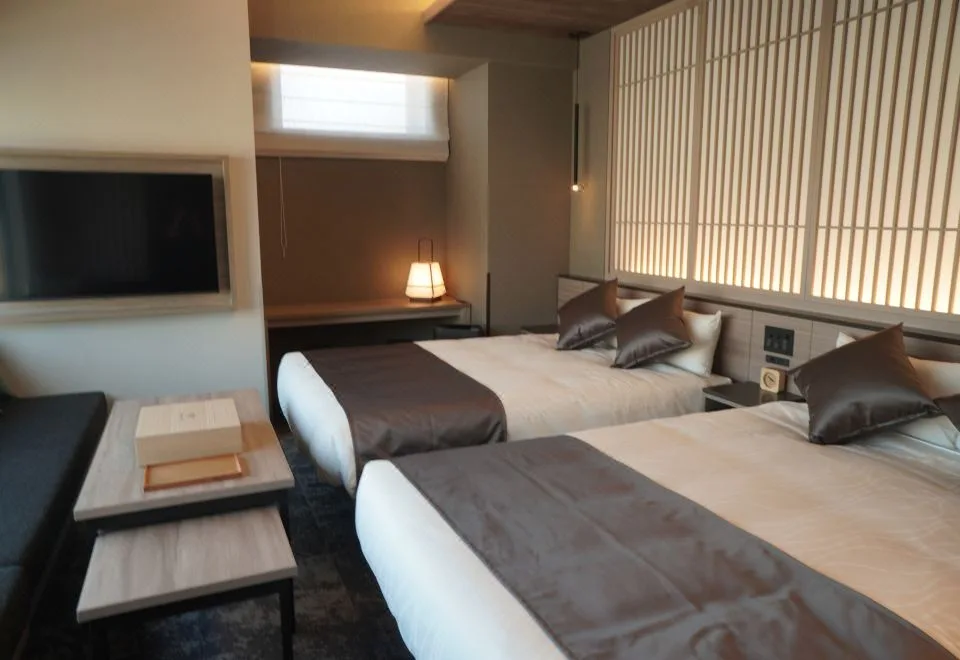
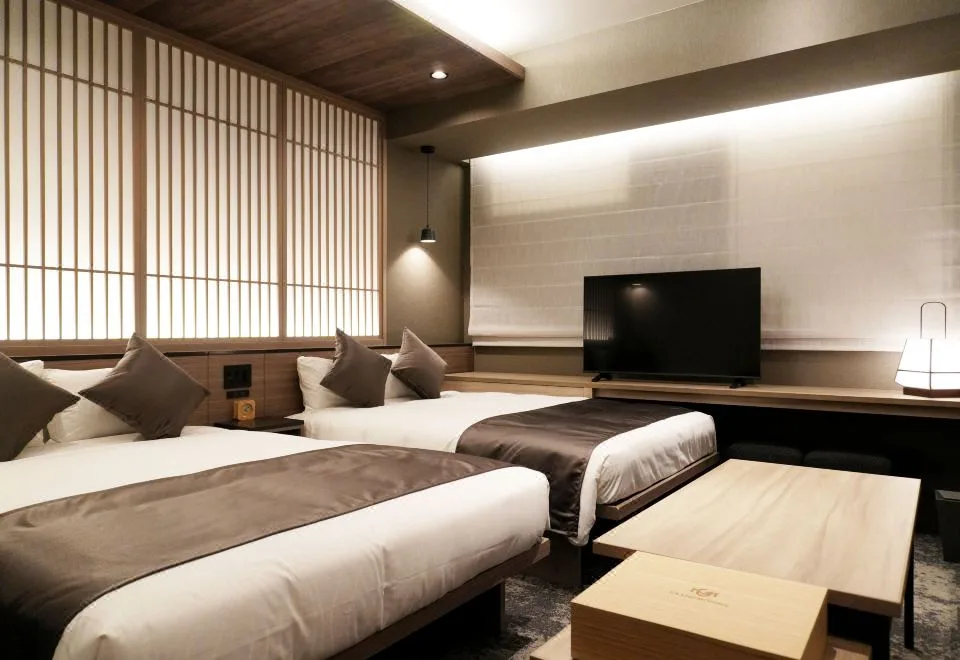
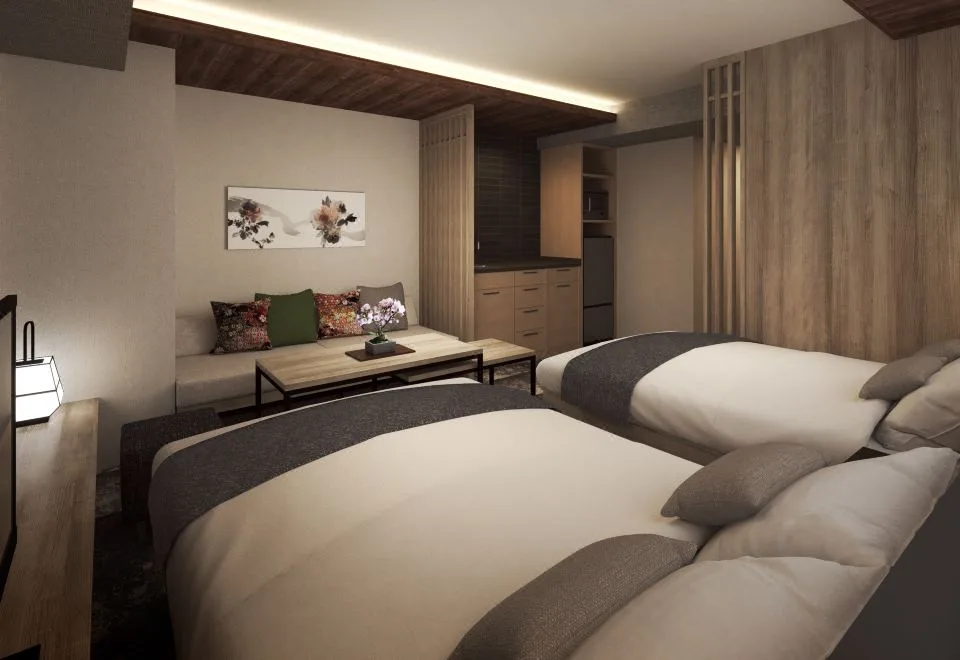
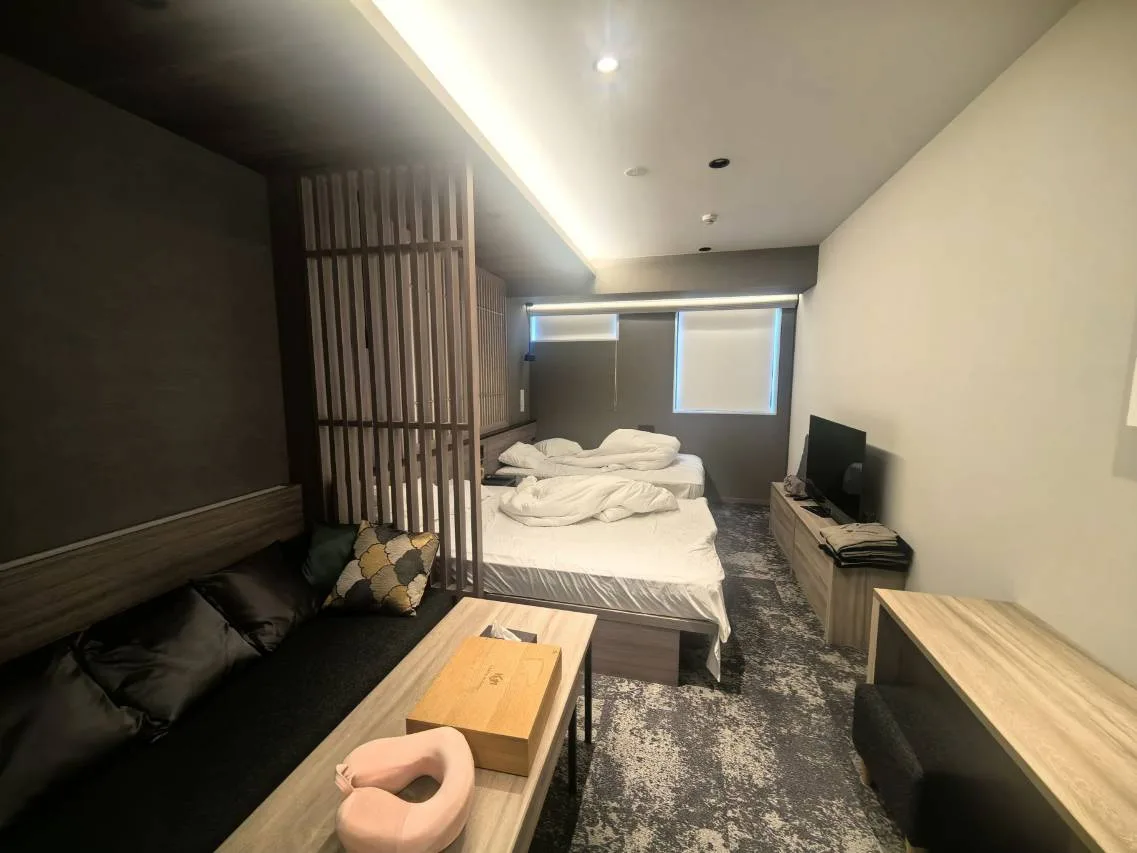
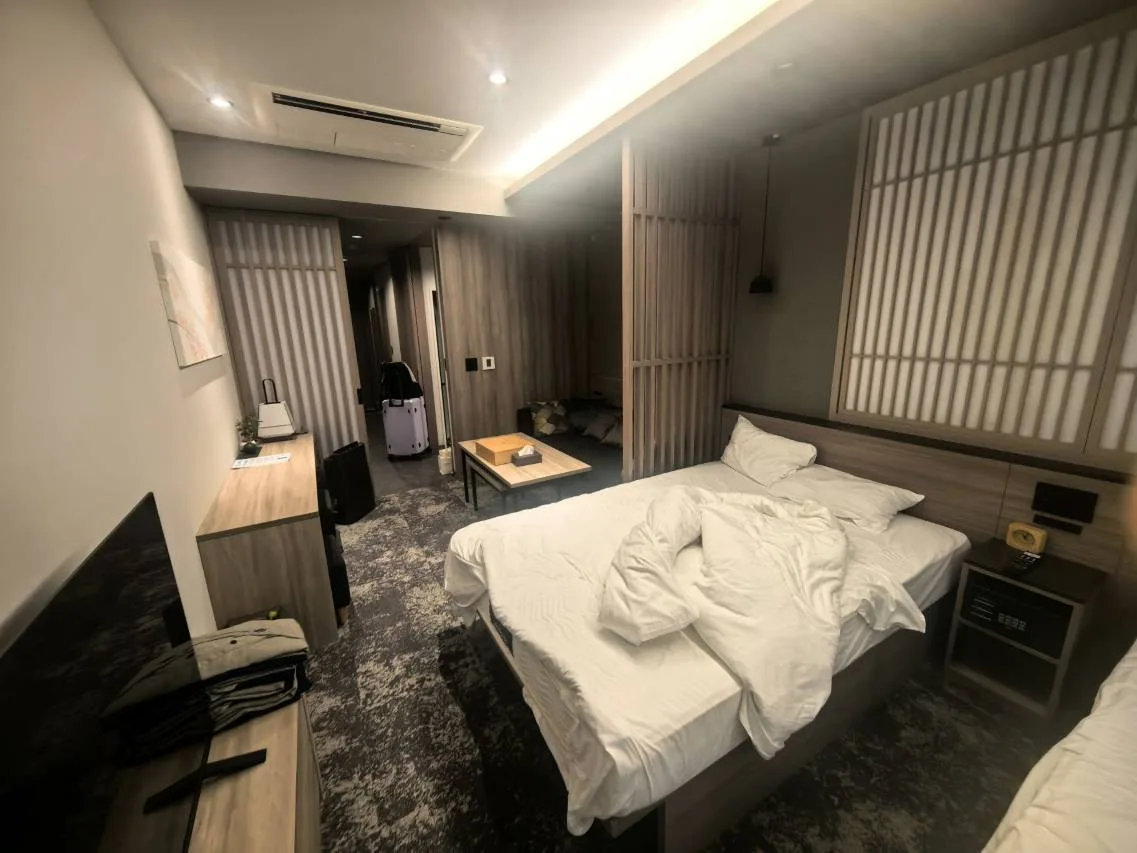
Check the passages by beds, basin and suitcase space in photos from different angles. Actual furniture and layouts depend on the booked room, and the gallery may show multiple types.
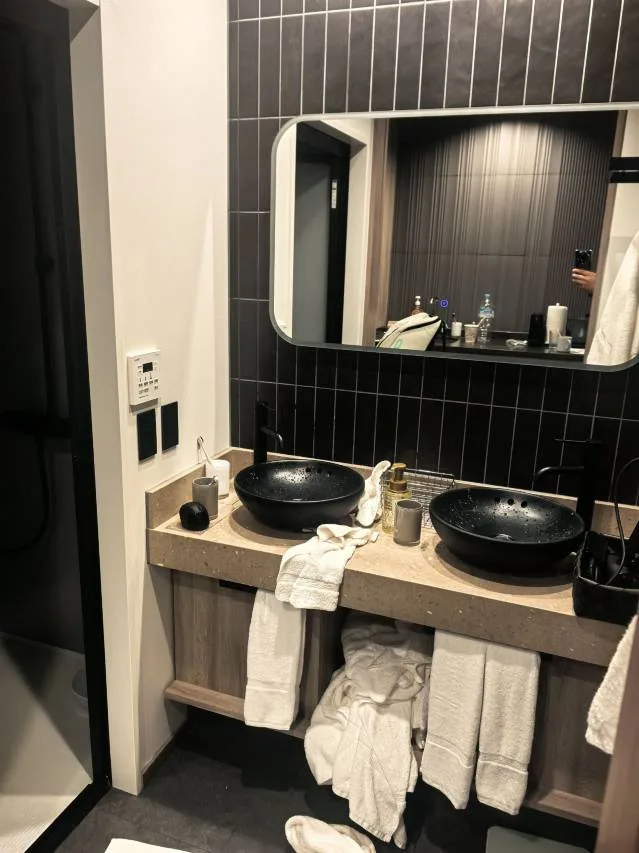
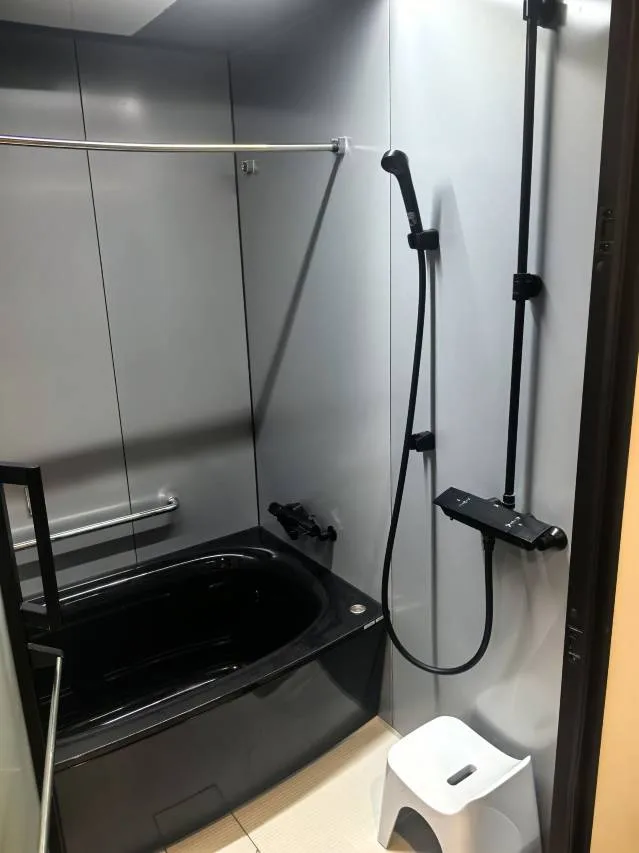
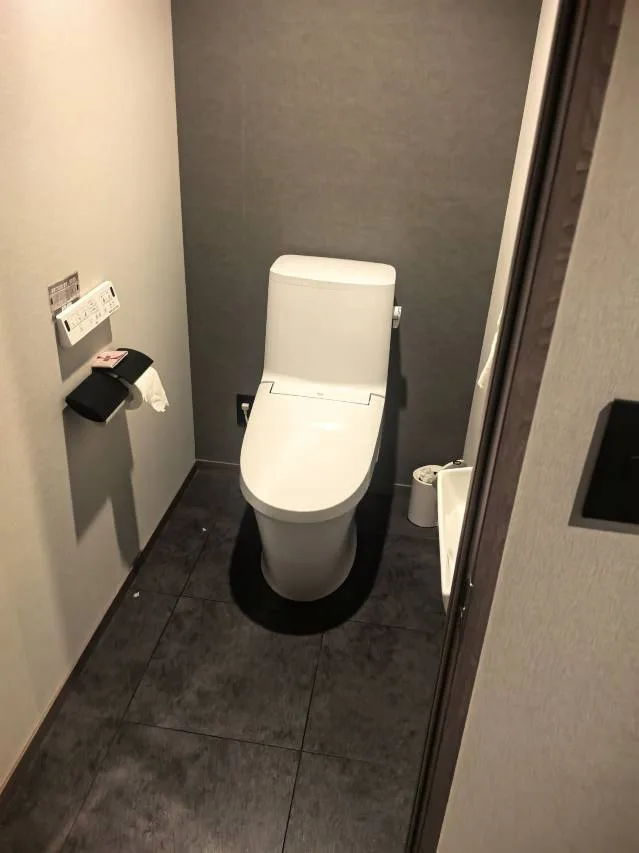
The photos cover more than one room type, so read the bedside walkway, the basin and the luggage space separately: how much passage the twin room leaves by the beds, whether there is open floor by the sink for suitcases, and how the shower and toilet sit apart. One gallery can mix room types, so judge by the room name on the booking, not by the brightest photo.
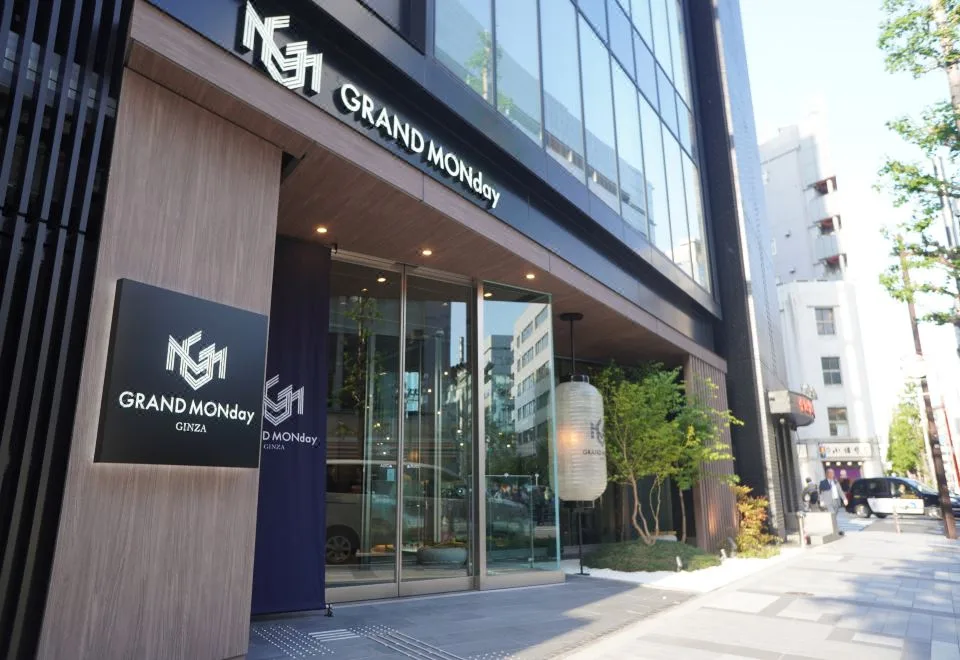
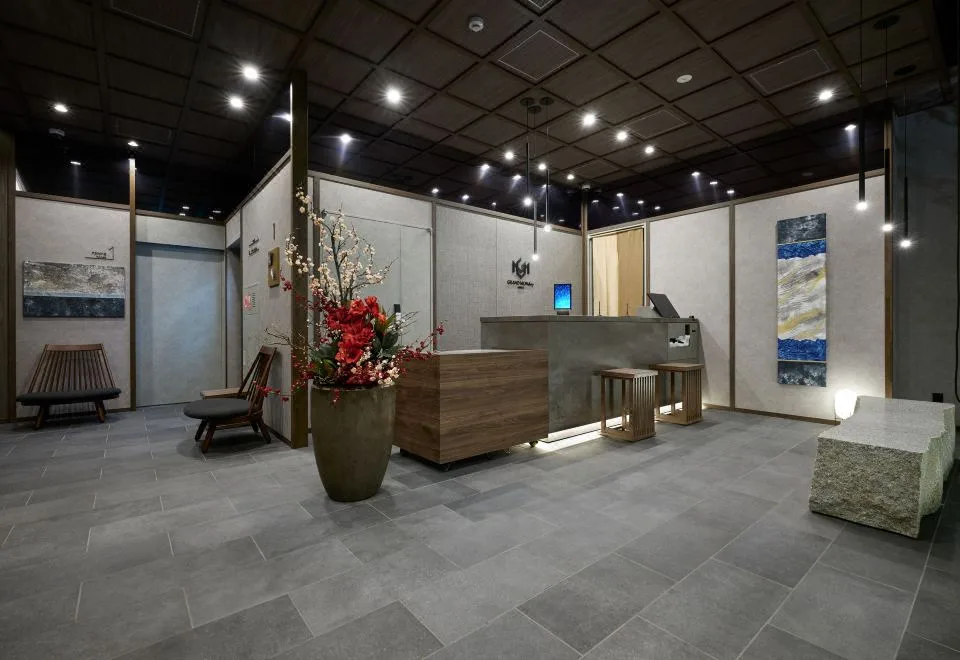
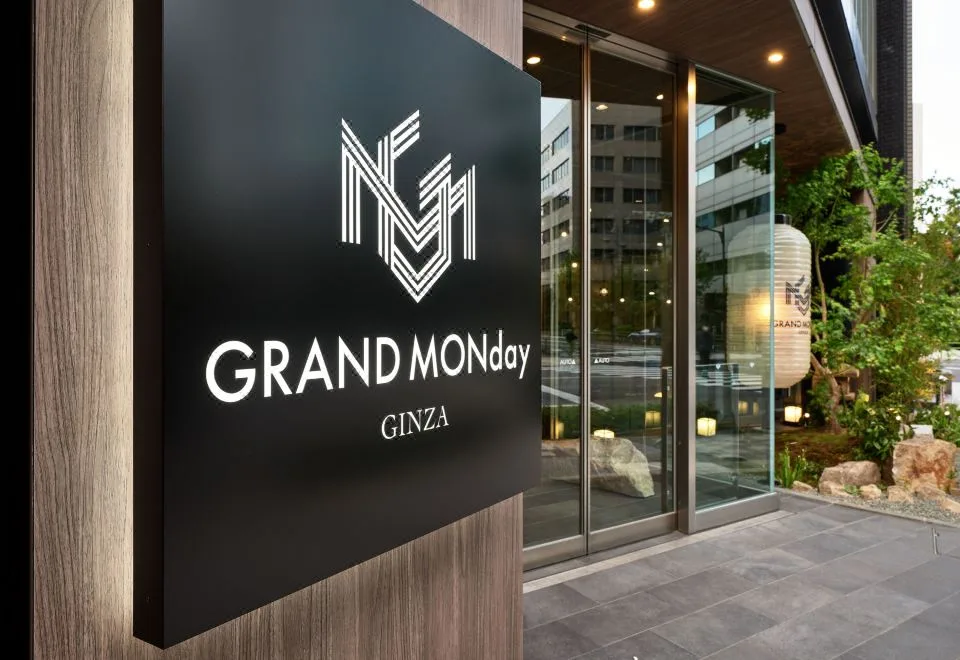
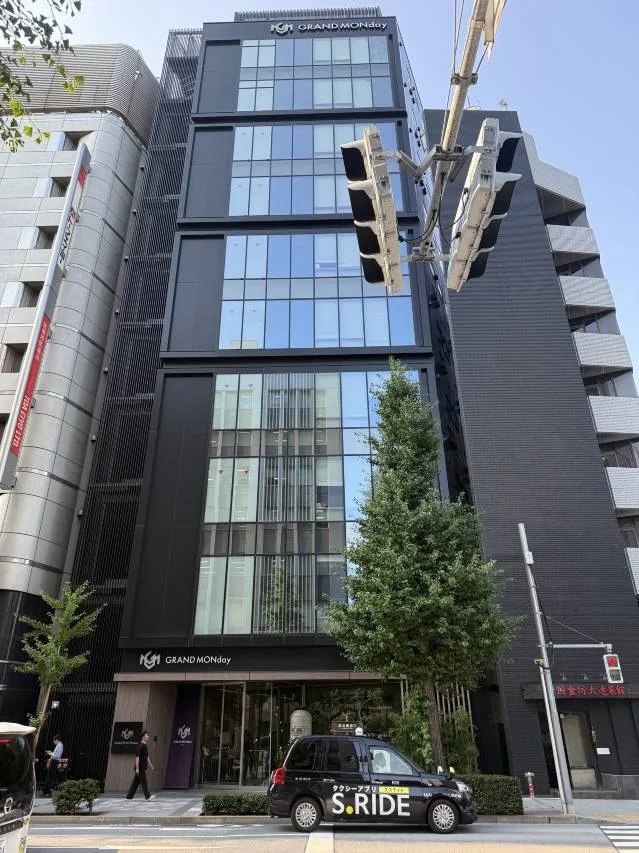
Look at the hotel sign and entrance photos once before arrival, so the frontage is familiar; the lobby counter photo shows what the entrance looks like inside, so even a late-night arrival finds the right door.
The bathroom photos show a separate shower and a separate toilet, with the basin and mirror outside, so several people can wash up at the same time without waiting on one room.
Room layouts and seating
Kitchen, laundry and bathroom
Exterior and public areas
How I would plan this stay
Use Hatchobori for transport to Tokyo Station and Ginza, and reserve one evening for takeaway in the room. If you want dozens of restaurants immediately at the door each night, this quieter business neighborhood may not be ideal; eat out before heading back.
The room earns its keep on stays of three nights or more: clothes washed daily, food sorted in the room, and no daily repacking. One night works too, but a single night uses little of the washer-dryer and sink, amounting to a large bed and a quiet night.
On day one, leave luggage at the hotel after reaching Tokyo Station, one stop away; on day two, Tsukiji in the morning and Ginza in the afternoon; on day three, the Nihombashi and Imperial Palace area. Every evening back in the room means laundry done and the next day packed, without fitting the trip around a laundry room schedule.
Pros and cons at a glance
Pros
- Every room type runs 37–49 m² for five or six guests, with two 140 cm beds plus sofa beds, so a family stays together in one room.
- Each room has a sink and a washer-dryer, so takeaway can be sorted out and clothes washed the same evening.
- JR Hatchobori Station is about 230 metres away, a 4-minute walk, and the Hibiya Line exits A2 and A3 have lifts.
- The front desk is staffed 24 hours a day with a self check-in kiosk, and arrivals after 23:00 can email ahead.
- A private car park on site can be booked in advance at JPY 4,000 per day.
- Free public Wi-Fi, luggage storage, a lift and a vending machine are all provided.
Cons
- No breakfast is served at the hotel, so mornings mean preparing food in the room or eating out.
- No room type allows an extra bed or a crib, so more than six guests need a second room.
- The kitchen is listed only as a sink setup, so check the heating equipment first and do not treat it as a full cooking kitchen.
- Some rooms face a neighboring building, and drainage smells or air-conditioning drafts vary by room, so check the window direction and floor first.
- Parking spaces are few, must be booked in advance, and cost JPY 4,000 per day, so driving needs planning.
Information checked: November 22, 2026.