
TOKYO / CHUO
Ginza Capital Hotel Moegi
Ginza Capital Hotel Moegi
Convenient Tsukiji and Shintomicho stations, 22 m² twins and freshly made eggs at breakfast.
Ginza Capital Hotel Moegi is worth considering for travelers staying between Tsukiji and Shintomicho who want a more comfortable twin-bed layout. The neighboring Akane building is part of the same Ginza Capital Hotel group, but its rooms and breakfast should not be confused with Moegi’s. Save the name Moegi before arrival.
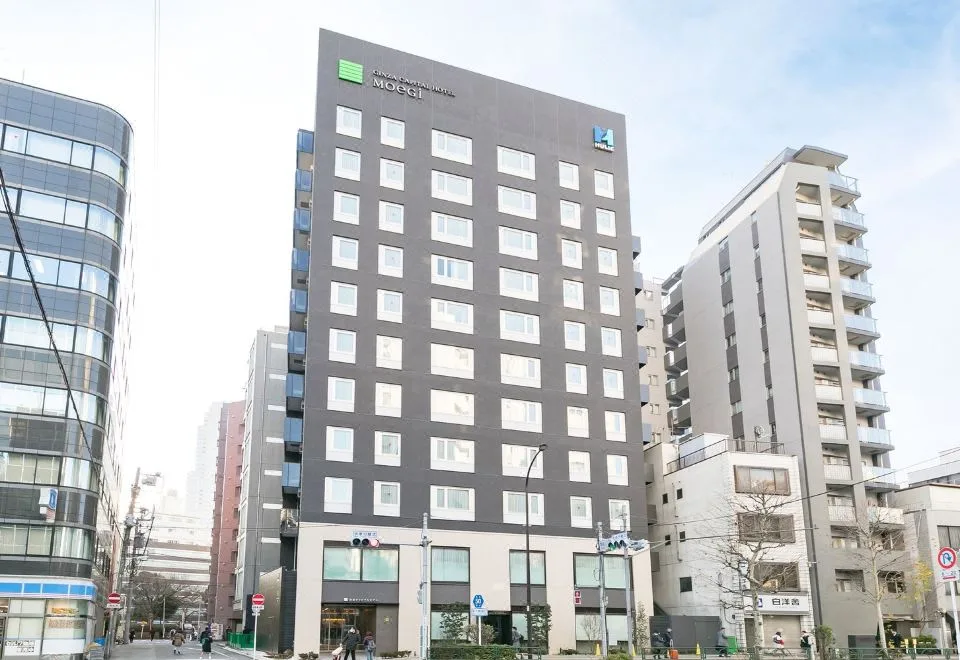
Shintomicho Station is under 100 metres from the door, and Tsukiji Exit 3 is about a one-minute walk, so a morning at Tsukiji Outer Market and an afternoon in Ginza both work from here. The front desk is staffed around the clock, so a late arrival is no problem, and you can leave your luggage before heading out light on checkout day. In the morning you can walk to Tsukiji Outer Market for breakfast in a few minutes, and convenience stores nearby cover supplies when you come back at night. Coming from the airport, ride to a major station in the city first and transfer to the metro from there rather than waiting at a small station.
Choosing the hotel
| Item | Stay details |
|---|---|
| Location | 3-3-1 Tsukiji, Chuo City, Tokyo 104-0045, Japan. |
| Check-in / checkout | 3 p.m.–midnight / before 10 a.m. |
| Room choice | The 22 m² Moderate Twin has two 122 cm beds; a third traveler uses a 92 cm extra bed. |
| Breakfast | Western buffet, ¥2,200 per person for adults and children aged 17 and under; served from 7:00, last admission 9:30. |
| Suggested stay | Two or three nights allow separate Tsukiji and Ginza days; families staying longer should confirm connecting rooms, cleaning and laundry. |
Room choices and luggage
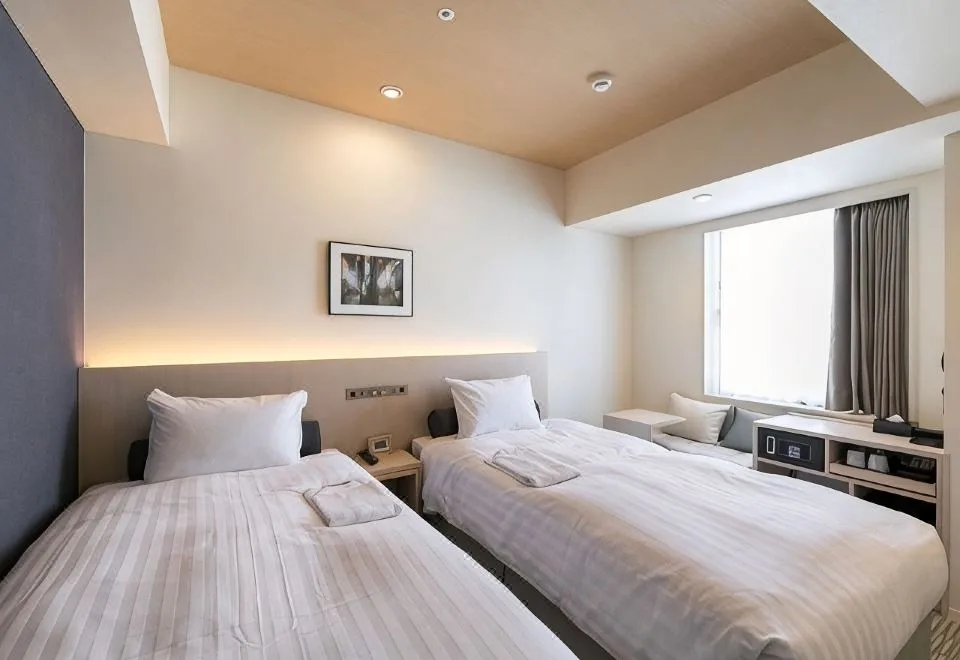
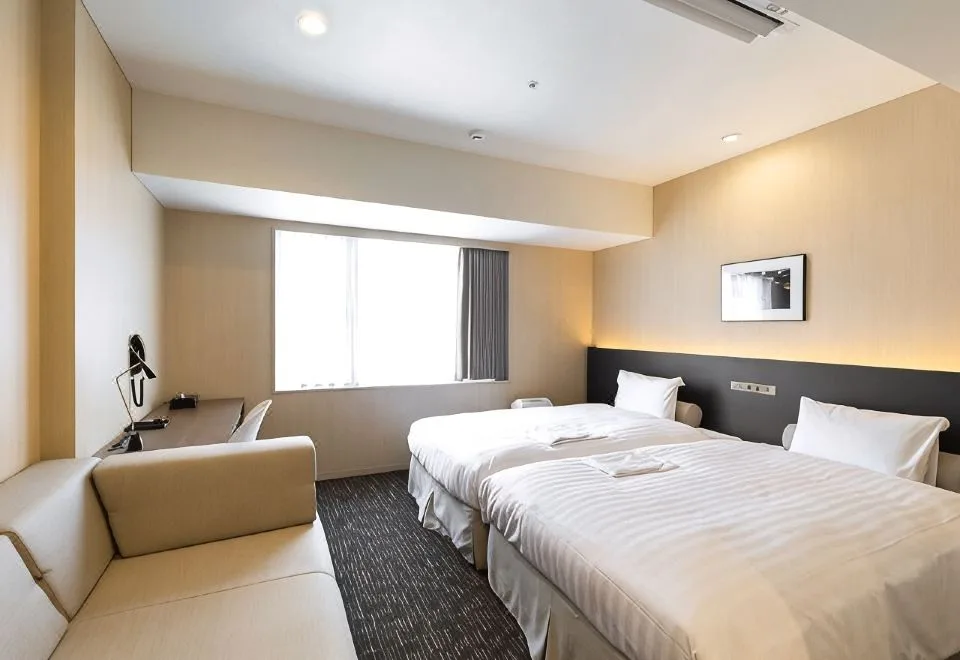
The Moderate Twin is 22 m² with two 122 cm beds. For three guests a 92 cm extra bed is added. Two people have reasonably open passages, but adding the third bed changes where luggage and sofas can be used. Ask about the space at the foot of the beds if three people share.
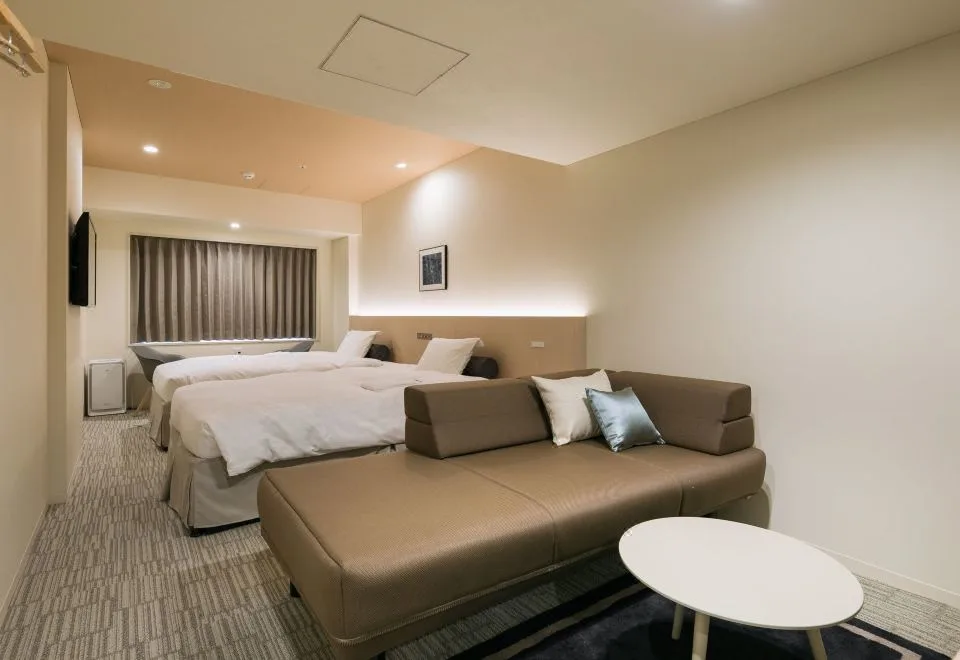
Other multi-person and connecting-room layouts exist. Families should compare actual beds rather than occupancy alone. Photos show ordinary twin beds, sofas and larger arrangements. Check the booked room for a bathtub, bed placement or wheelchair access.
The 22 m² Moderate Twin holds two 122 cm beds, so two people each get their own bed and a midnight trip to the bathroom does not mean kicking the other bed. The 92 cm extra bed for a third guest is a real single bed rather than a sofa bed, but once it is made up only a narrow passage is left, so suitcases have to be opened one at a time. If you travel with two large suitcases, ask how much space is left between the foot of the beds and the wall before you book.
Check-in runs 3 p.m. to midnight and the front desk is staffed 24 hours, so arriving late is fine. Checkout is before 10 a.m., so plan the morning if you want a slow breakfast. There is a laundry room on site, so a longer stay does not mean packing a full suitcase of clothes, and free Wi-Fi in the public areas lets you check the next day’s plans before going to bed.
Children of all ages are welcome; add the number of children when you book so the price is calculated correctly, and note that a child without an extra bed may still be charged, so ask first. The guest who checks in must be at least 18 years old, and pets are not allowed, so plan other lodging if you travel with one.
Other multi-person rooms and connecting rooms suit a family of four or two families travelling together — ask about the bed count and whether the doors connect, and confirm cleaning and laundry arrangements before a longer stay.
Before booking, look at the photos to tell the room types apart rather than judging by the room name alone: the twin room’s beds and window-side sofa, the family room’s sofa layout, and the bathroom sink and amenities are all visible in the pictures. If bathroom size or bedside outlets matter to you, check the photos first so there are no surprises at check-in.
For three people travelling together, ask how the third bed is arranged before booking, so no one ends up squeezed; the 92 cm extra bed is a single size with less room to turn than a double bed, so a family of two adults and a child should decide in advance who takes it.
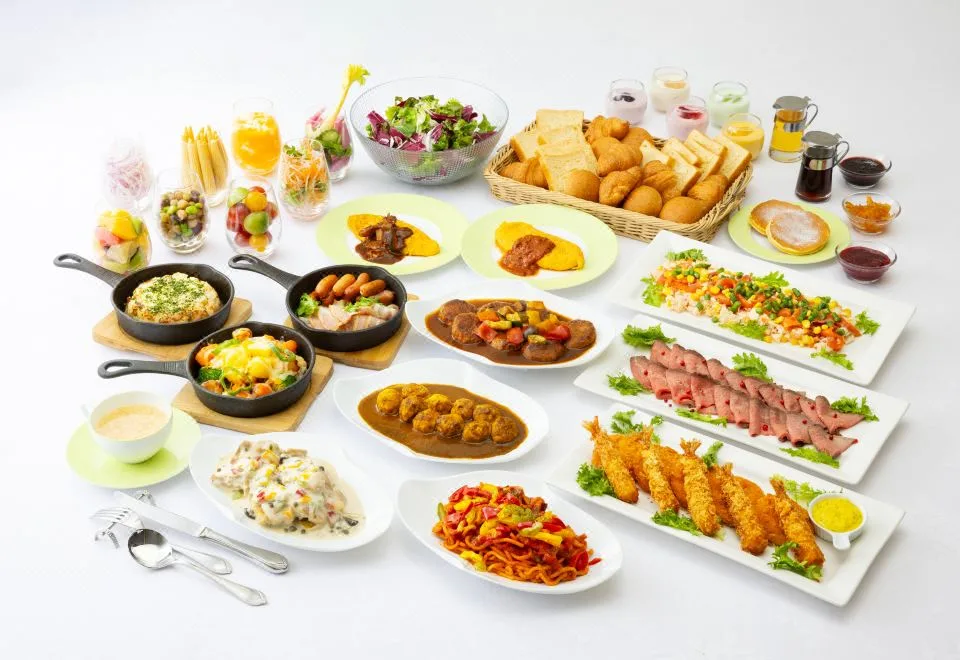
Breakfast is served at Moegi’s own restaurant
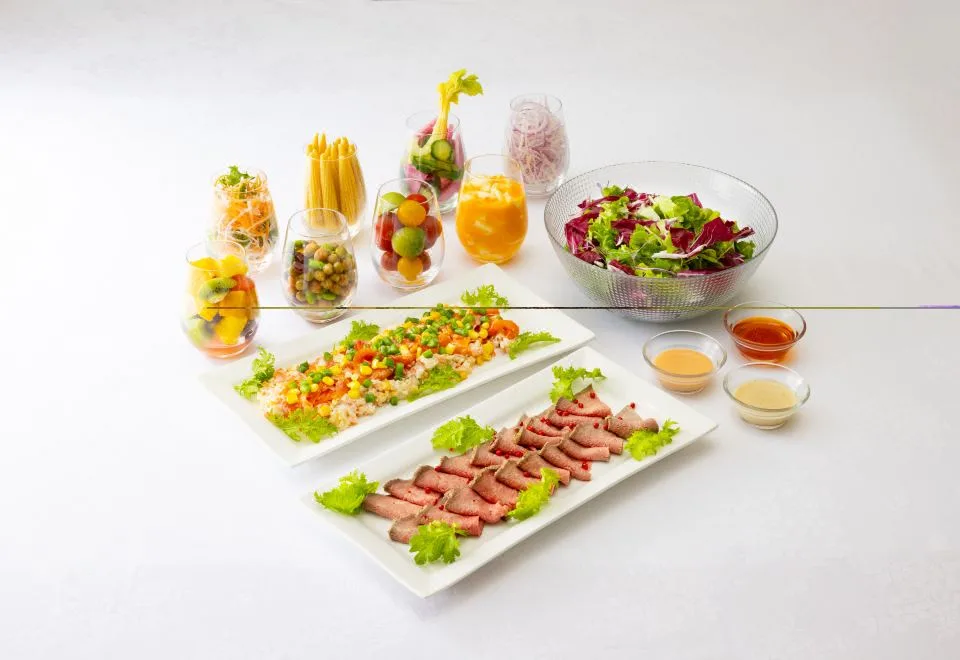
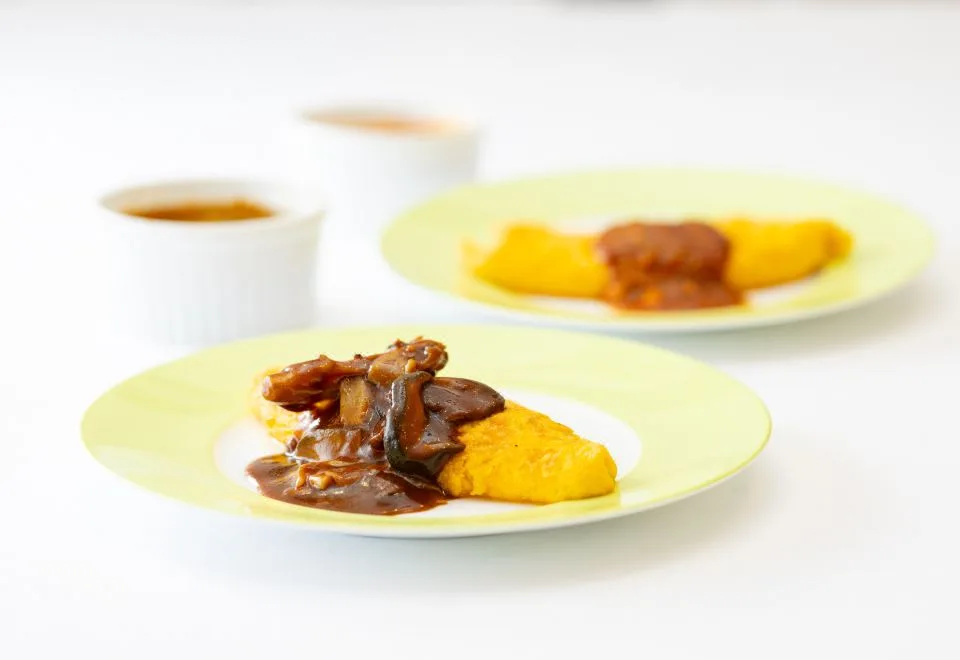
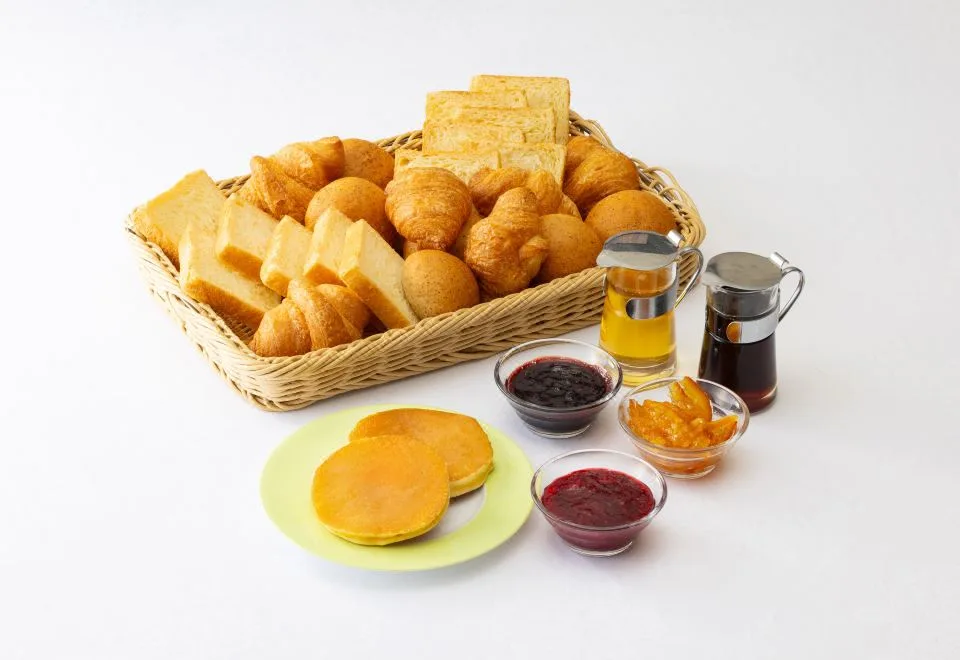
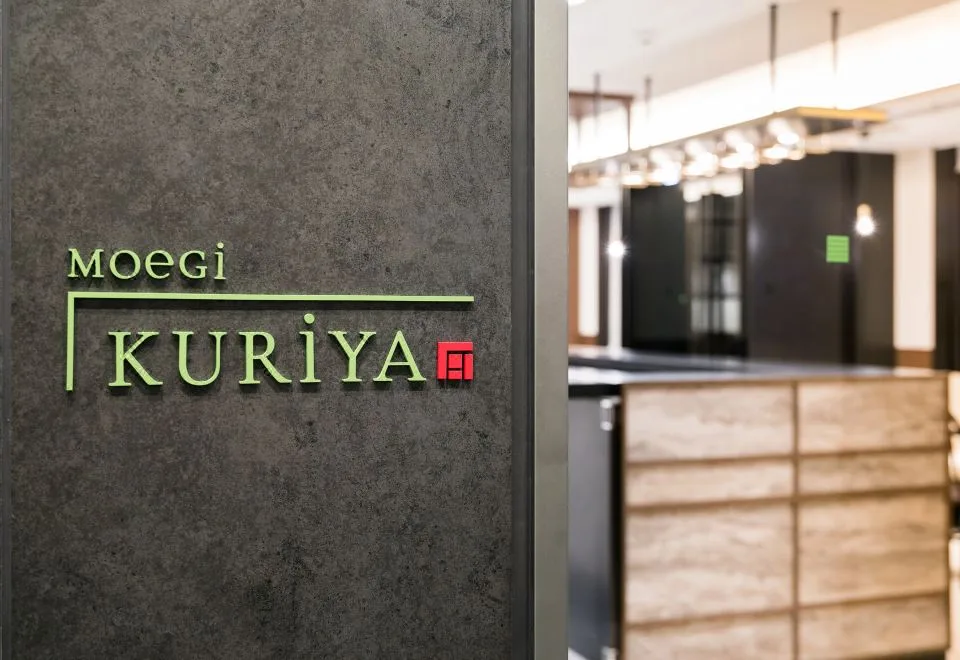
The ground-floor MoeGiKURiYA highlights a Western-style breakfast buffet including omelets made to order, baked bread and pancakes. The official hours are 7:00–10:00 with last admission at 9:30. This suits families who prefer eating before heading out.
The seafood rice bowls and Japanese-Western buffet associated with the Akane building belong to another venue. Do not assume a breakfast package at Moegi includes it. If you want seafood, set aside a morning at Tsukiji Market instead and check your breakfast ticket and venue beforehand.
Breakfast is ¥2,200 per person, the same price for adults and children aged 17 and under, and you can ask the front desk about adding it on the day. The Western buffet includes omelets made to order, baked bread, pancakes, salads and side dishes, served from 7:00 with last admission at 9:30 — after that no one else is let in, so come down early if you want a slow meal. If you have an early train the next morning, there is no need to force breakfast in; convenience stores and Tsukiji Market offer plenty of morning options nearby.
The ground-floor restaurant MoeGiKURiYA also serves lunch from 11:30 to 2 p.m. and dinner Tuesday to Saturday from 5 p.m. to 10 p.m. (Saturdays until 9 p.m.); there is no dinner on Mondays or Sundays. On days when you do not want to go far, you can eat in the building. The seafood rice bowls at the Akane building belong to a different venue and are not part of Moegi breakfast, so do not walk to the wrong building.
If you did not book a breakfast plan, you can still ask at check-in whether breakfast can be added on the day, at the same ¥2,200 per person. Children aged 17 and under pay the same price, so include it in your budget; if you would rather skip it, Tsukiji Market is a few minutes away with many morning stalls.
MoeGiKURiYA is on the ground floor, so you can eat right after check-in; the restaurant entrance photo shows the dining area, and on busy mornings it helps to find a seat before heading to the buffet.
Station access and luggage
The closest exit is Tsukiji Exit 3, about a one-minute walk; Shintomicho Station is within 100 metres, about a two-minute walk. With large luggage, a wheelchair or a stroller, do not use the stairs at Exit 3 — use the elevators at Tsukiji Exits 1 or 2 (Honganji-side gates) or the Exit 3b elevator (Irifunebashi-side gate), then walk back to the hotel; Shintomicho Exit 1 also has an elevator nearby, and the hotel is under 100 metres from that exit. The elevator at Shintomicho Exit 1 only runs until 11 pm, so I keep that in mind if I arrive late at night.
Tsukiji Station has two gate areas: the Honganji-side gates lead to the elevators for Exits 1 and 2, and the Irifunebashi-side gate leads to the Exit 3b elevator, so both gates offer a step-free way out. Tsukiji is on the Hibiya Line and Shintomicho on the Yurakucho Line, and the two stations are a two- or three-minute walk apart, so transferring is easy. Ginza is 440 metres away and Tsukiji Outer Market 470 metres, both walkable; Nihonbashi is about 1.2 km, an easy stroll or one stop by train.
From Tsukiji Exit 3, walk toward Shintomicho for about a minute and you reach the hotel; from Shintomicho Station it is also within 100 metres, and neither station needs a transfer after you exit.
Address: 3-3-1 Tsukiji, Chuo City, Tokyo 104-0045, Japan. Open directions in Google Maps.
Plan Tsukiji and Ginza in separate parts of the day
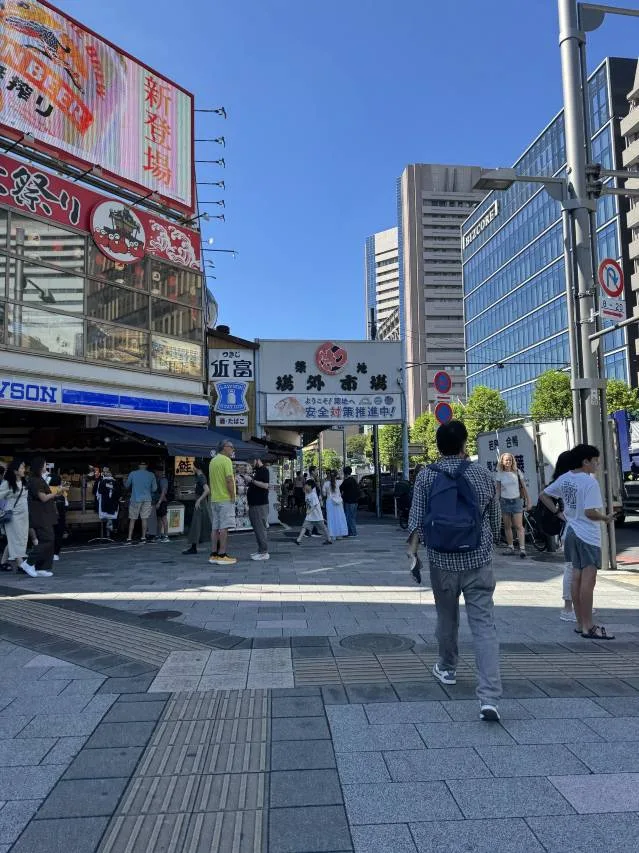
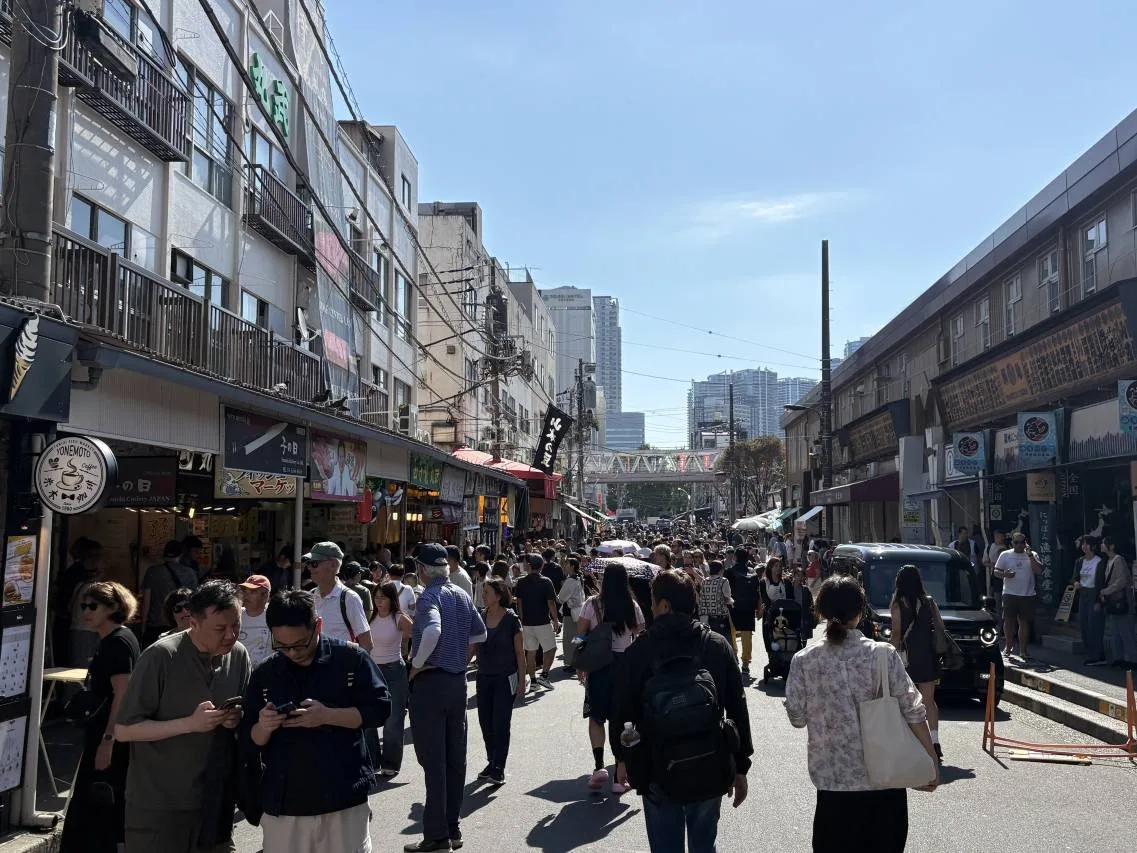
Visit Tsukiji Outer Market in the morning and shop around Ginza in the afternoon. Walking to Ginza while carrying luggage is different from a relaxed stroll; on checkout day ask about storage before heading out.
Tsukiji Outer Market is liveliest in the morning — go early for the widest choice of sashimi breakfasts and souvenirs — and leave Ginza for the afternoon, when shopping and dinner can be done in one trip before a slow walk back. If you want to split Tsukiji and Ginza across two days, staying here means no changing hotels and no moving luggage. Tsukiji Honganji Temple is right by the station, and convenience stores nearby cover late-night supplies.
The Ginza Art Aquarium is about 1.0 km away and Tokyo International Forum about 1.4 km, both easy to add to an afternoon in Ginza; Tsukijigawa Park is about 120 metres away in a straight line if you want a quiet place to sit. The Imperial Palace is about 2.8 km away, better reached by train than on foot.
Short stays and longer stays
For two or three nights, split Tsukiji and Ginza comfortably. Longer family stays should confirm adjoining rooms, cleaning and laundry. With children, alternate hotel breakfast with a market morning to avoid rushing every day.
Checkout is before 10 a.m., so ask in advance if you want a later checkout. Leave your luggage at the front desk and explore Ginza hands-free, then pick it up on the way to the station. A wake-up call from the front desk covers an early departure. Two or three nights split Tsukiji and Ginza nicely; for a longer stay the laundry room means packing lighter and moving lighter.
If you travel with older relatives, ask about the space inside the room first — whether there is enough room beside the bed and in the bathroom for a wheelchair to turn — since it is better to confirm before booking than to discover it after check-in.
Checkout is before 10:00, so keep an eye on the clock if you want a slow morning on your last day; leave your bags at the desk, have breakfast at Tsukiji Market, then come back for your luggage and head to the train. If your flight is in the afternoon, that morning window is the perfect time for one more lap of the market instead of waiting around at the hotel, and your bags are already at the front desk when you return.
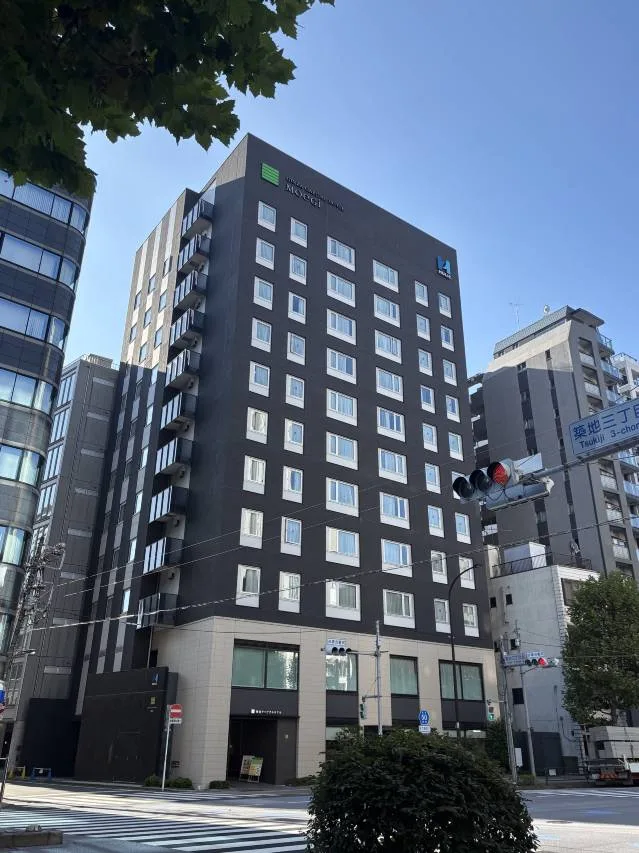
Exterior and interior spaces
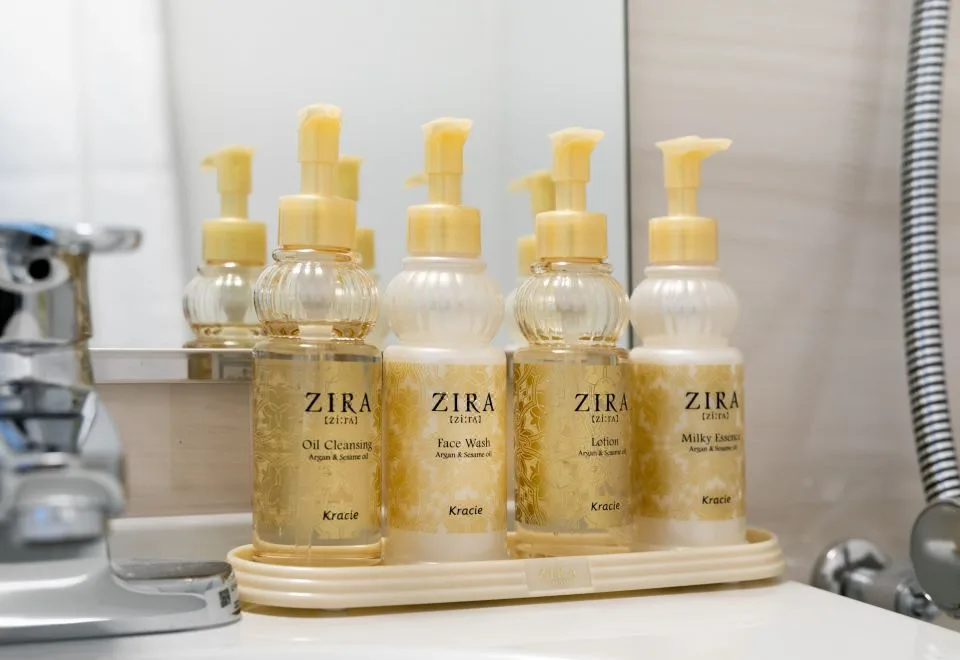
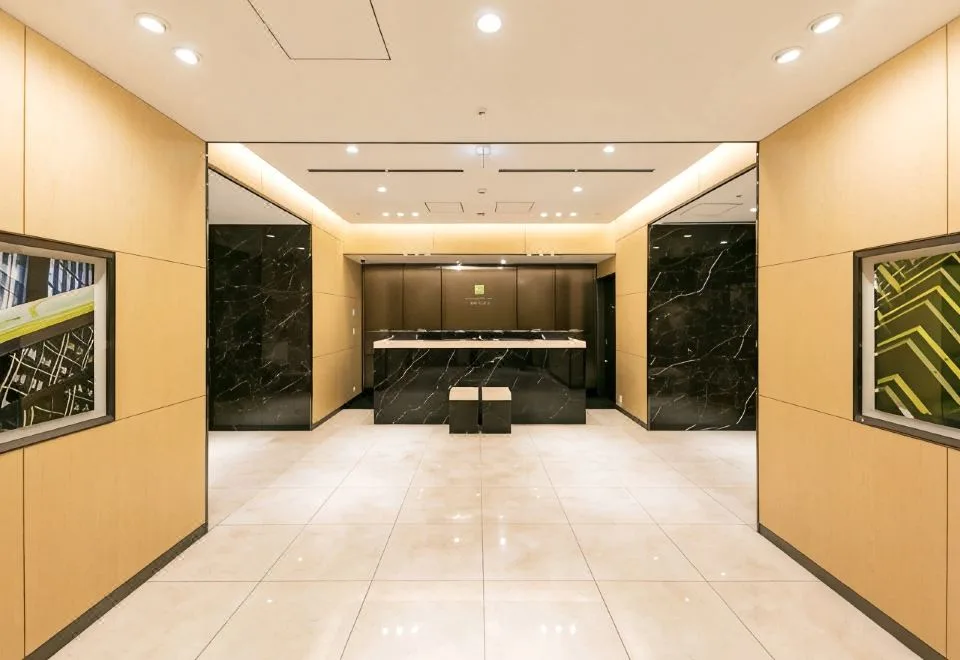
The lobby and the ground-floor restaurant MoeGiKURiYA are the public spaces you will use most — check in, then head straight downstairs for a meal. Public areas have free Wi-Fi, and the front desk offers wake-up calls and a safe for passports and valuables. Luggage storage and extra amenities are available on request at the front desk, so ask before you head out with your bags.
The lobby photo shows the entrance and front desk, so first-time visitors can find check-in, luggage storage and directions all in one place.
Pros and cons at a glance
Pros
- Shintomicho Station is under 100 metres away and Tsukiji Exit 3 is a one-minute walk, with Tsukiji Market and Ginza both walkable.
- The 22 m² Moderate Twin has two 122 cm beds, leaving comfortable passages for two people staying several nights.
- Breakfast is a Western buffet with omelets made to order, bread and pancakes, ¥2,200 per person for adults and children aged 17 and under.
- The front desk is staffed 24 hours, check-in runs to midnight, and luggage storage and amenities are available on request.
- A laundry room and free Wi-Fi in the public areas make longer stays easy.
- The ground-floor restaurant MoeGiKURiYA also serves lunch and dinner, so you can eat in the building when you do not want to go far.
Cons
- With a third bed added, only a narrow passage is left and suitcases have to be opened one at a time.
- Breakfast last admission is 9:30, so late risers miss it, and the Akane building seafood rice bowls are not part of Moegi breakfast.
- With large luggage you need an elevator exit (Tsukiji 1, 2 or 3b, or near Shintomicho Exit 1); the closest exit, Tsukiji Exit 3, is stairs.
- Toilets, duvet covers and air-conditioning temperatures vary by room, so check them when you arrive.
- The similar Akane name means breakfast venue and check-in location need checking, so you do not walk to the wrong building.
Information last checked: 2026-11-22