
TOKYO / CHUO
remm Tokyo Kyobashi
remm Tokyo Kyobashi
A sleep-focused hotel at Kyobashi Exit 6: choosing massage chairs, twins and bathrooms.
remm Tokyo Kyobashi is for travelers who want simple transport and a restful return each evening. Kyobashi Exit 6 is directly in front of it. Massage chairs, bedding and shower facilities are signature features, but the chair occupies floor space; whether you welcome it depends on how you balance relaxation and luggage.
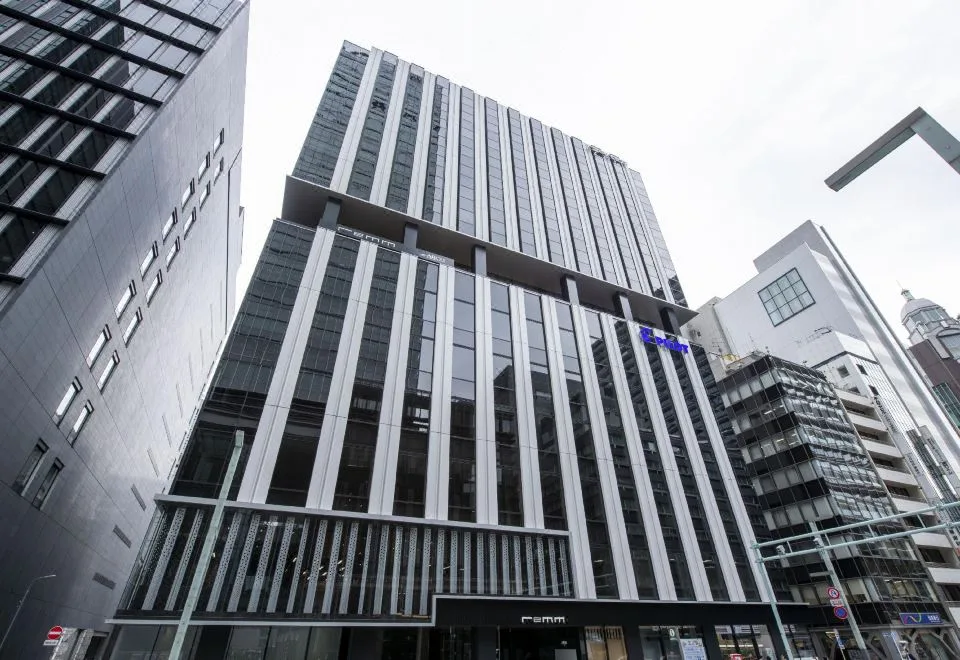
Choosing this hotel
| Item | Stay details |
|---|---|
| Location | 2-6-21 Kyobashi, Chuo City, Tokyo 104-0031, Japan. |
| Check-in / checkout | 2 p.m. / noon. |
| Room comparison | The 18 m² double has a 160 cm bed and shower only; the 18.4 m² Economy Twin has two 110 cm beds and no bathtub. |
| Itinerary | Good for one or two nights of transfers; for longer shopping stays compare twin and corner rooms. |
Rooms and suitcases
Free luggage storage, wake-up calls and currency exchange are available, public Wi-Fi is free, and the front desk can help in Chinese, English and Japanese. The laundry room, dryer and iron are there to use, while dry cleaning, laundry and ironing services cost extra; vending machines sell drinks, public areas are non-smoking, and there is a smoking area and non-smoking floors.
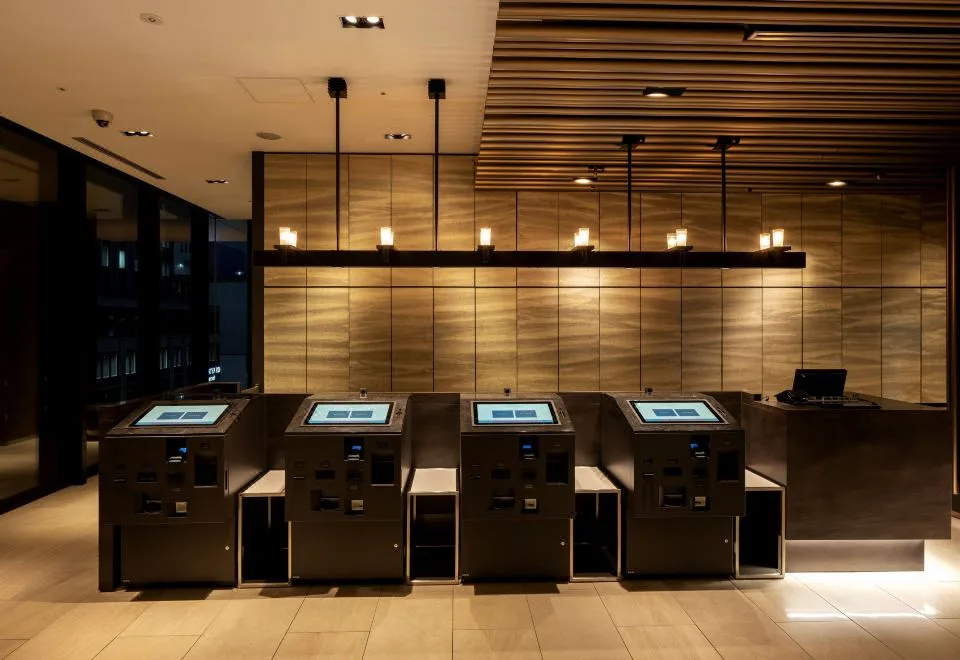
Check-in runs 14:00 to 24:00 and check-out is before 12:00, the front desk is staffed 24 hours, and the self check-in kiosk is on the same floor. No deposit is required and guests must be at least 18 to check in; pets and service animals are not allowed, so confirm who is travelling before booking.
Storing your cases is free, so after check-out you can leave them at the hotel, spend half a day more in Ginza, and pick them up on the way back instead of dragging them through the shops.
The elevator, vending machines and front-desk safe are all in the building, so a drink at night does not mean going outside; smokers use the smoking area and non-smokers stay on non-smoking floors, so neither side disturbs the other.
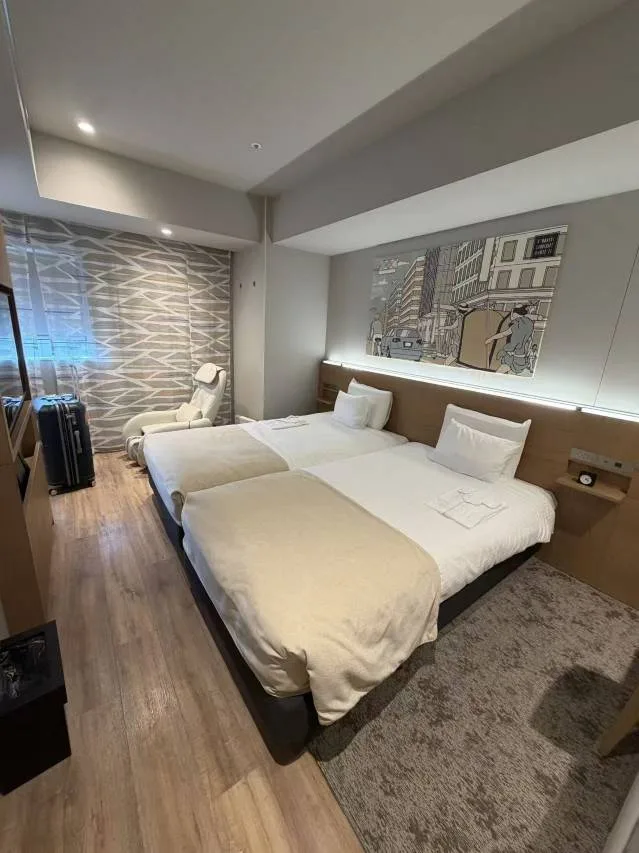
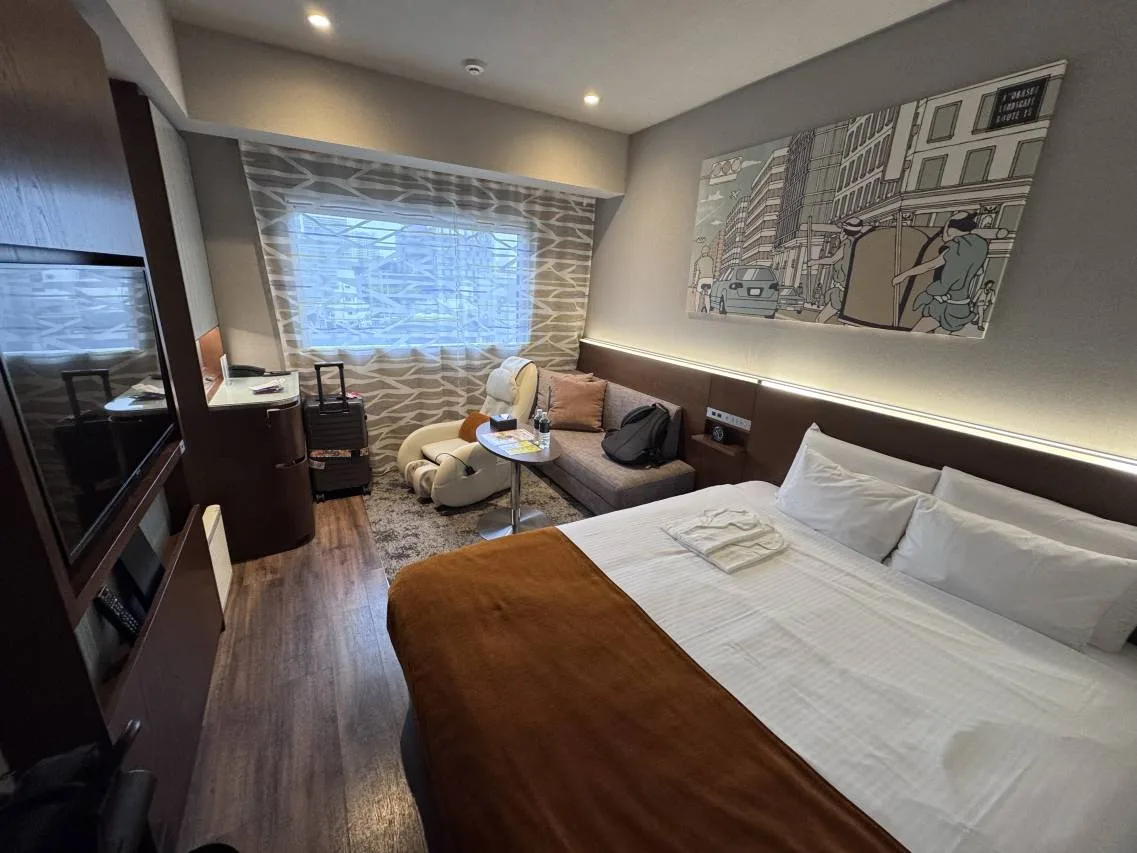
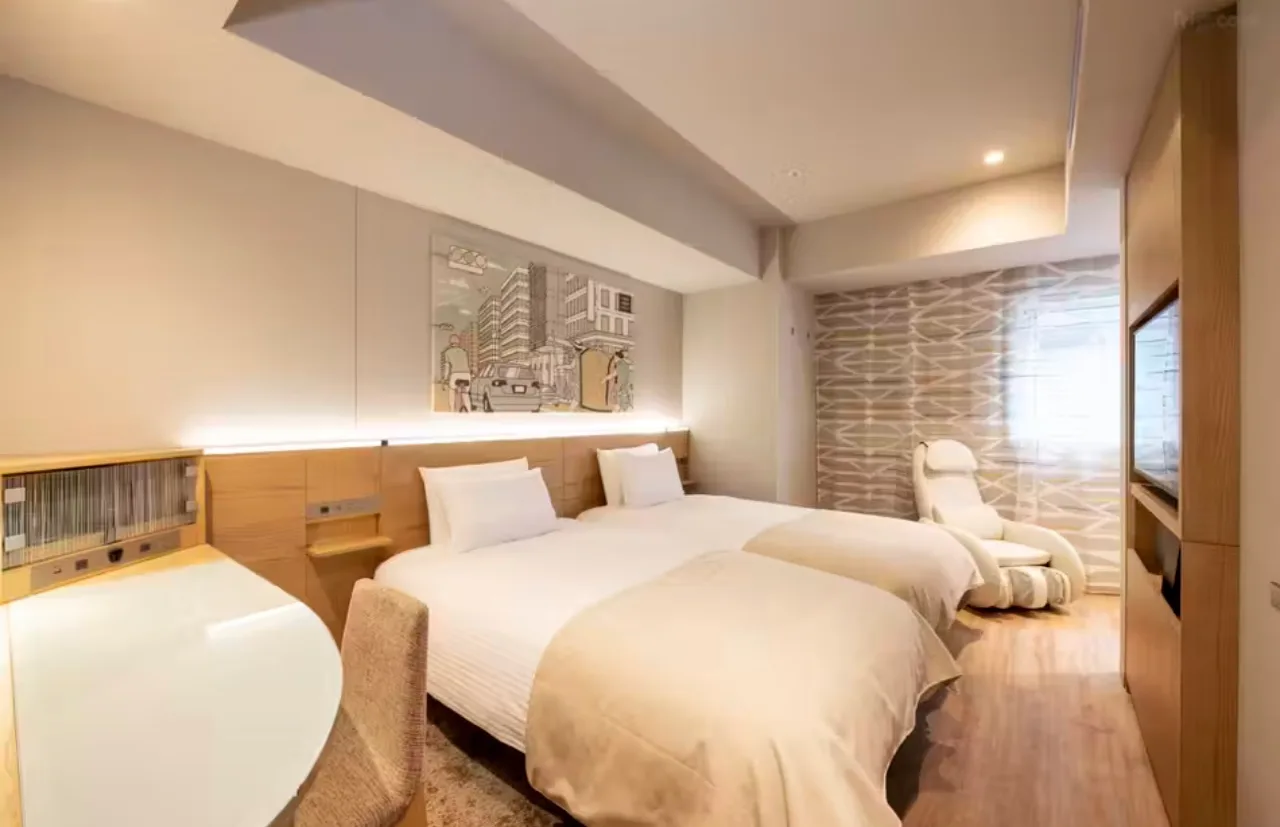
The double measures 18 m² with a 160 cm bed and shower only. The 18.4 m² Economy Twin has two 110 cm beds, also without a tub. A standard 23 m² twin has two 110 cm beds, a bathtub and a more separate bathroom layout. Another 21.8 m² twin also includes a bathtub. If soaking in the room matters, do not book simply because the word Twin appears.
A semi-double uses a 140 cm bed, versus 160 cm for the double. Twin types have two 110 cm beds, with corner twins and accessible twins also available. Decide on separate beds first, then compare corner-window space and the exact shower/bathtub configuration.
Children of all ages are welcome, but an extra charge may still apply even without an extra bed, and whether a crib or extra bed fits depends on the room type. I put the number of children into the booking from the start, so the price does not change at the front desk.
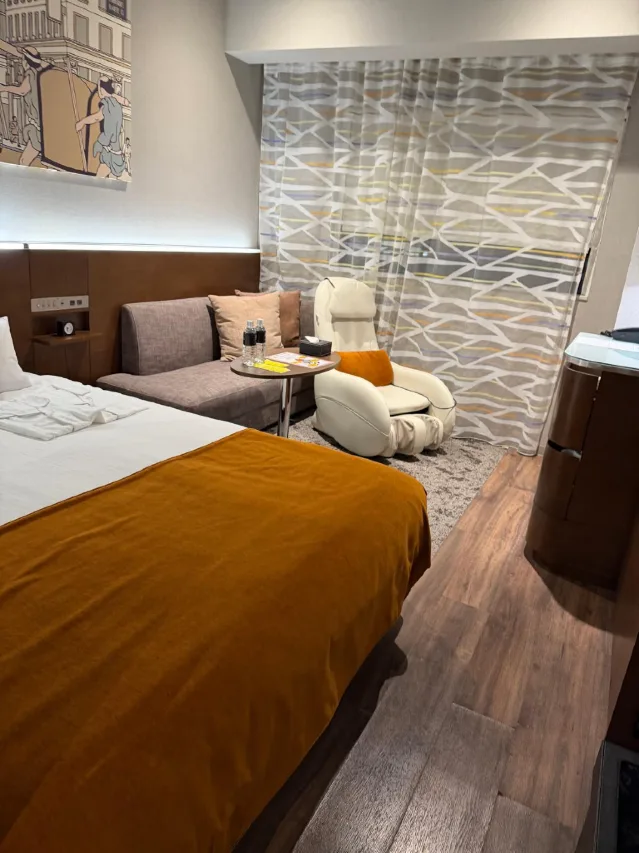
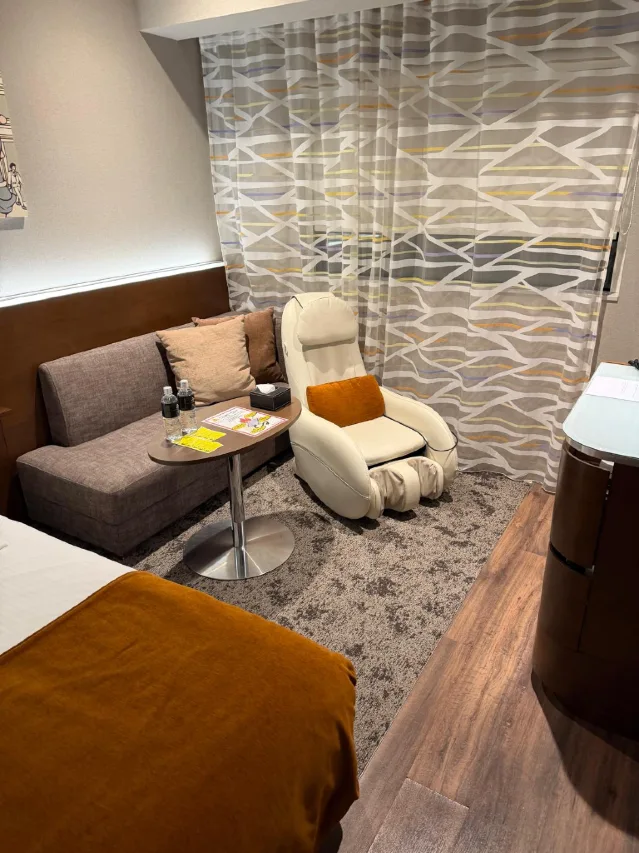
I treat the massage chair as a trade-off to decide for yourself: after a full day on foot, it feels great on tired calves, but it takes up floor space, so two large suitcases have to be opened one at a time. Some standard rooms face a neighbouring building, so do not expect every room to have the big corner window in the photos.
When I choose a room I ask myself three things: do I want a bath every day, do I want separate beds, and do I want both suitcases open at once? For a daily bath, I lock in the 23 m² or 21.8 m² twin with a bathtub; for separate beds, I look at the twin rooms; for two large cases open at once, the corner room’s window-side space is worth comparing.
The 140 cm semi-double suits one person sleeping wide; two people will feel squeezed. The 160 cm double is the widest single bed here, so restless sleepers should think first. Twin rooms with two 110 cm beds suit people who want to sleep apart, and the accessible twin is the option when step-free movement inside the room matters — ask about the layout before booking.
The corner room has extra window-side space, so the walkway stays clear even with a suitcase open; the accessible twin is the option when movement matters, so ask about the room layout and bathroom setup before booking instead of judging by the room name alone.
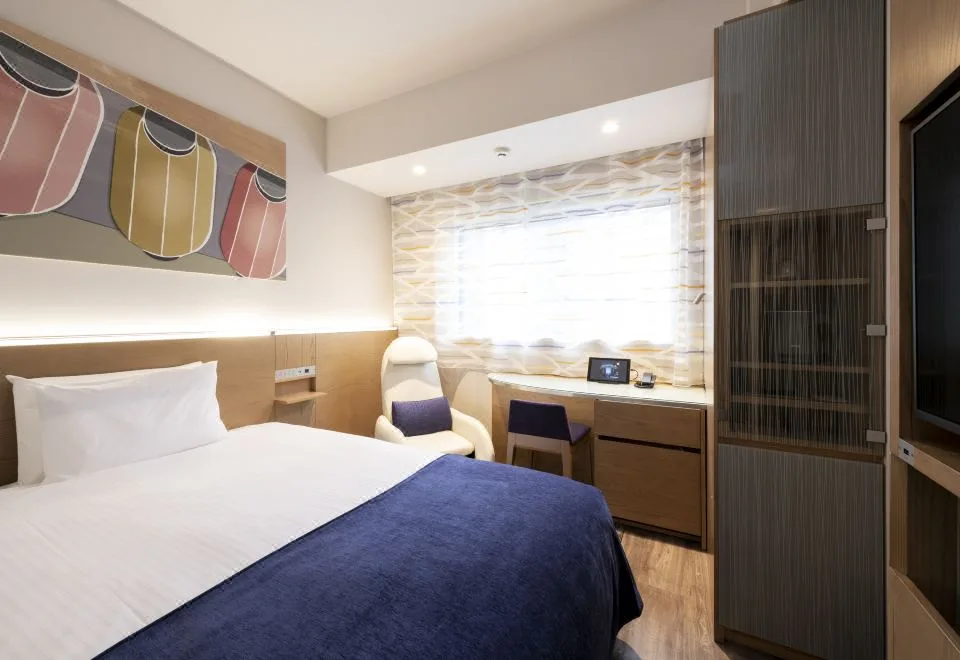
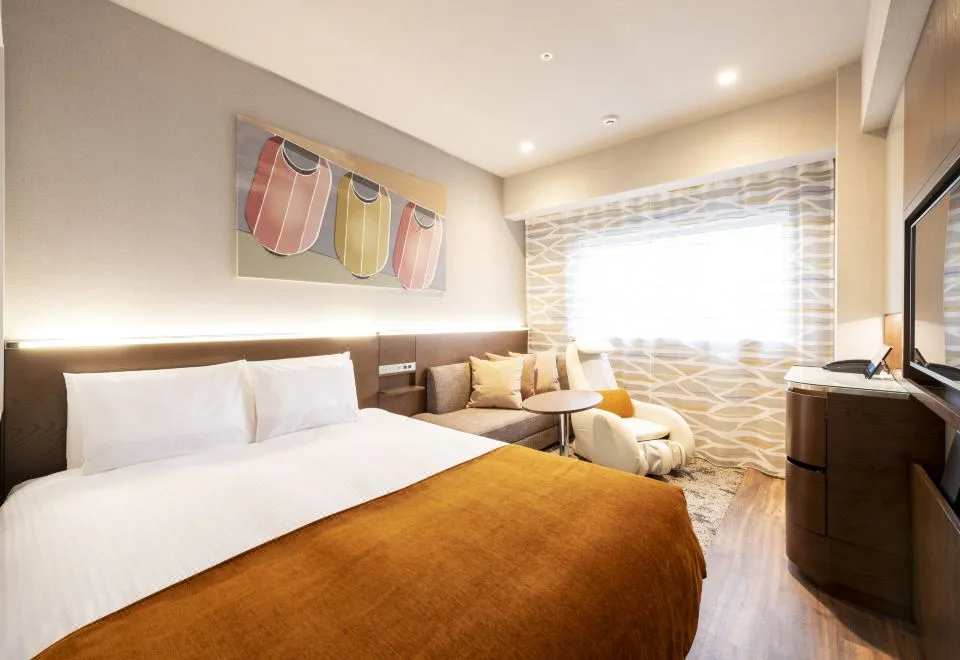
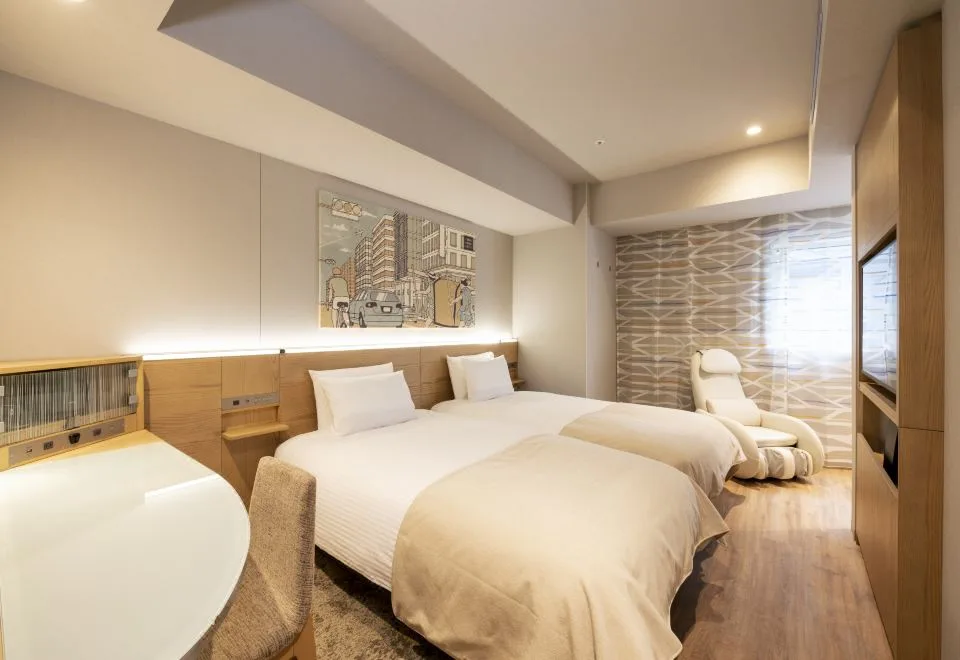
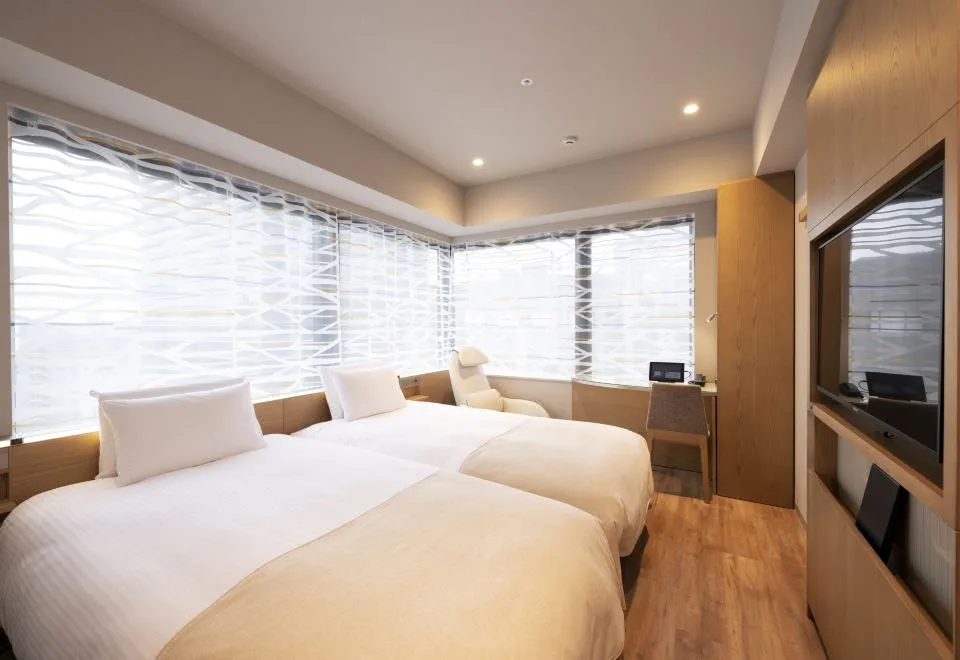
Guest room photographs
Compare beds, desks and entrance positions to visualize your cases. Furniture and sleep layout depend on the exact room you book.
Bathroom styles
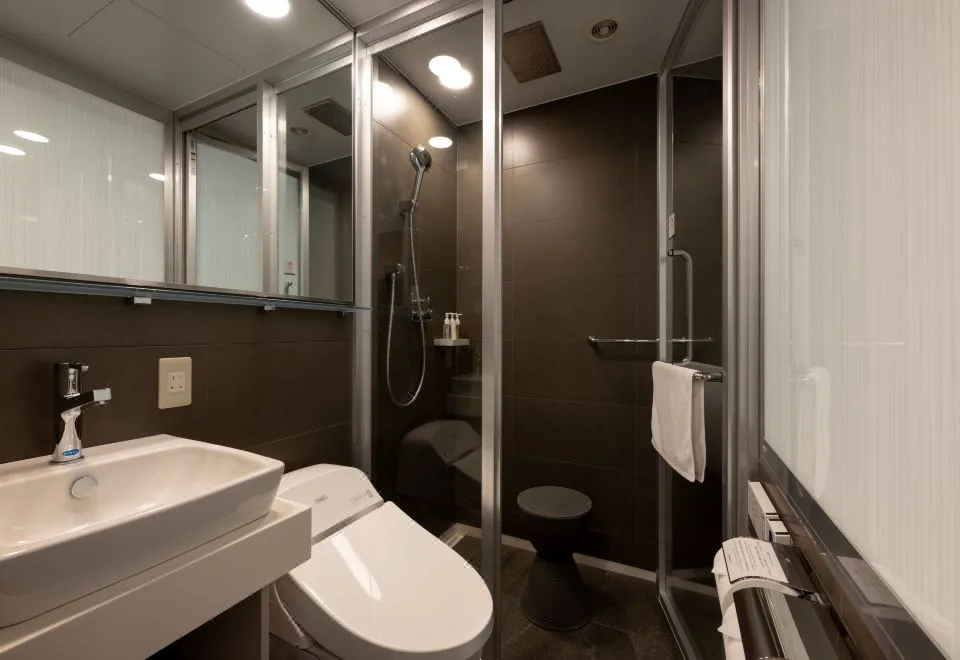
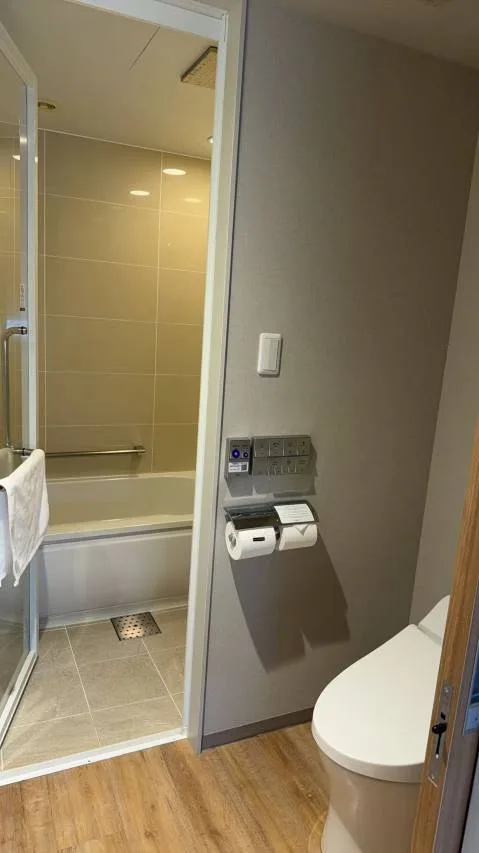
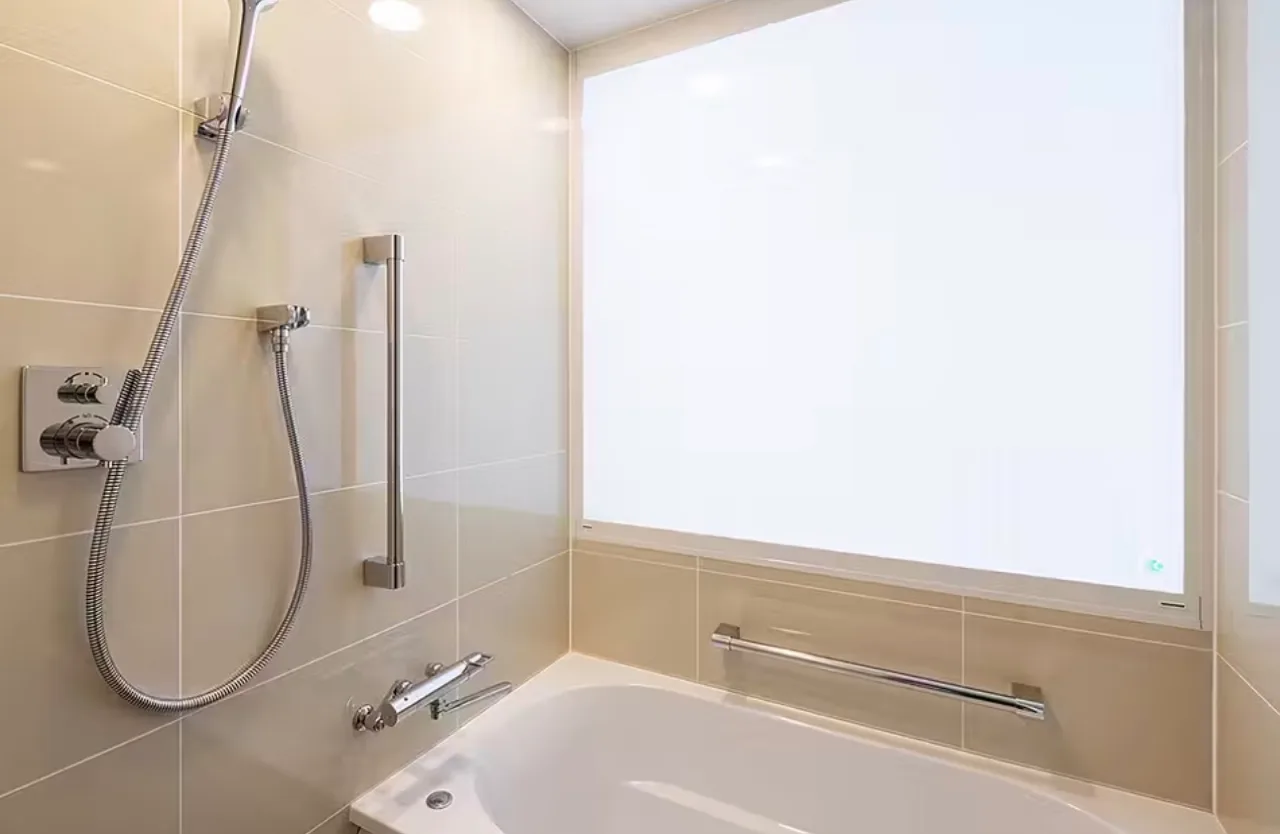
Bathtubs, showers and washbasins vary by room, affecting how easily two people can get ready together. Use the photos as a guide and verify the bathroom in your booked category.
In a room with a separate bathroom, two people can get ready at the same time — one brushing teeth while the other showers — instead of queuing for one bathroom. In a shower-only room, you step out of the shower right beside the bed, so I turn the heating on first in winter.
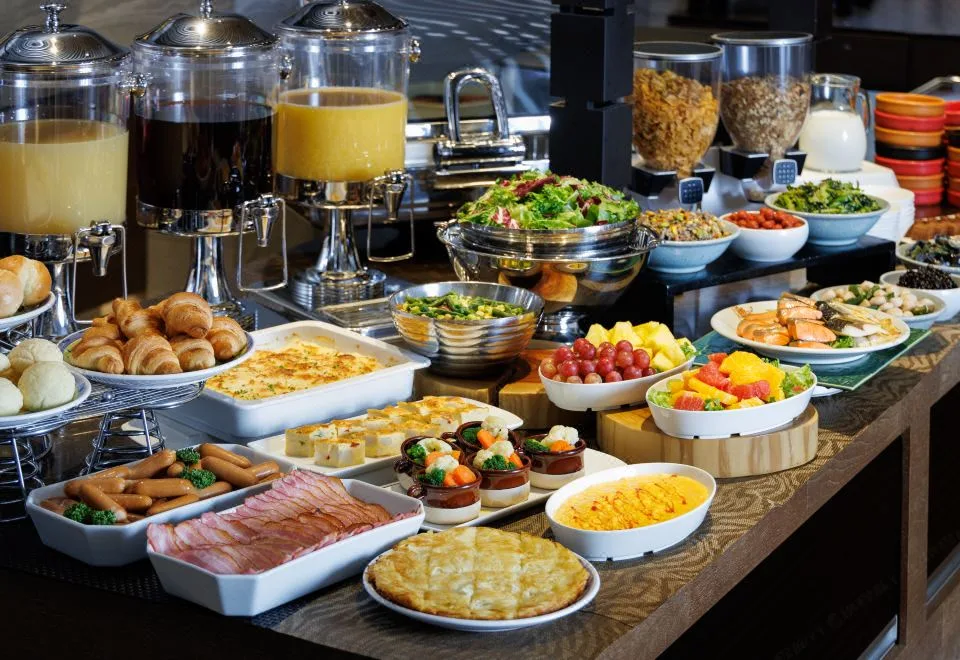
Breakfast at DINING STAGE ARCH
DINING STAGE ARCH serves a Japanese-Western breakfast buffet. Official hours are 7:00–10:30 with last orders at 10:00. It suits someone who wants a slower breakfast before taking the Ginza Line, but early Shinkansen departures may happen before you can eat.
I do not assume you will love the Japanese-Western buffet every day. On a longer stay I pay for breakfast on the first morning, try it, and then decide whether to keep adding it. Nearby coffee shops, simple restaurants and convenience stores also work around different wake-up times, so the schedule stays flexible.
The buffet costs 2,500 yen per person, the same for adults and children aged 17 and under, with Japanese and Western dishes, served in DINING STAGE ARCH. I compare that price against the coffee shops nearby before deciding how many mornings to add it.
Skipping the hotel breakfast is fine too. Kyobashi has coffee shops and simple restaurants in the morning, and convenience stores toward Ginza-itchome; I treat breakfast as an option to add or skip, not a fixed part of every day.
On a longer stay I spread the breakfast days out: the hotel buffet on the first day, a nearby coffee shop on the second, then back to the hotel on the third, so each morning feels a little different instead of three days of the same spread.
Train access and luggage
The hotel is in front of Kyobashi Exit 6 on the Ginza Line, approximately seven minutes from Tokyo Station’s Yaesu South Exit, and about three minutes from Takaracho Exit A7 on the Toei Asakusa Line. Walking from a Tokyo Station platform to Yaesu South itself takes time, so use elevator routes if carrying luggage.
For big suitcases, elevators at Kyobashi serve Exit 2 (Dai-ichi Life Sogo-kan) or Exit 3 from the Ginza-side ticket gate. These are not the closest stairs. Navigate above ground to the hotel and do not assume the normal exit’s one-minute walk applies.
From the platform, take the elevator in the middle of the platform to the elevator-only ticket gate, then use the Ginza-side gate: Exit 2 leads into the Dai-ichi Life Sogo-kan building and Exit 3 also has an elevator, and both are listed by Tokyo Metro as step-free routes. Exit 6 is closest to the hotel but has stairs only, so do not use it with a large suitcase; navigate back to the hotel once you are above ground instead of carrying luggage down the stairs.
From the JR Tokyo Station Yaesu South Exit it is about a seven-minute walk, but the walk from the platform to the Yaesu South Exit itself still takes time, so count that in with a suitcase. My route is to take the elevator inside the station to street level first, then walk along Chuo-dori toward Kyobashi; once you see Exit 6, you are almost there.
For a Shinkansen or Narita Express from Tokyo Station, leaving early matters more than counting minutes: the platform to the Yaesu South Exit plus the walk back to Kyobashi adds up to more than the seven minutes on the map, so I leave fifteen minutes extra on a morning I have a train to catch.
Address: 2-6-21 Kyobashi, Chuo City, Tokyo 104-0031, Japan. Open a map route.
Walking around Kyobashi
Kyobashi is convenient for meals, small galleries and short walks, with Ginza one stop or a walk away. On a morning catching a train from Tokyo Station, allow time for station navigation and breakfast rather than relying only on street-level walking estimates.
Ginza is within 100 metres, Nihonbashi 340 metres, Ginza-itchome Station 350 metres, Tokyo International Forum 630 metres, JR Yurakucho Station 790 metres, the Ginza Art Aquarium Museum 890 metres, and the Imperial Palace about 1.5 kilometres. My plan is to walk Ginza and Nihonbashi on the first evening, then put Tokyo Station and the Imperial Palace on the same route the next day, using the hotel as a base to drop things off in between.
Before heading back in the evening, Ginza’s restaurants and department stores are still open, and you can walk back with your shopping without changing trains; toward Nihonbashi suits a morning walk, 340 metres and under ten minutes on foot.
Kyobashi is an office district by day and quiets down early at night; for a late snack or shopping, Ginza has more choice than toward Nihonbashi, and there are convenience stores on the way back to the hotel if you forgot toiletries.
Tokyo International Forum is 630 metres away and JR Yurakucho Station 790 metres, so walking back after an evening exhibition or show is easy; the Ginza Art Aquarium Museum is 890 metres and the Imperial Palace about 1.5 kilometres, so a morning walk can reach the palace outer gardens and still get back for breakfast.
Short and multi-night stays
For a short stay I care most about transfers and getting back to a restful room, and Kyobashi, Tokyo and Takaracho stations are all within walking distance, so one or two nights run smoothly with light luggage. For a longer stay I count the laundry room, dryer and nearby coffee shops into the plan, and compare twin and corner rooms for storage once the shopping bags pile up.
On a longer stay I put the day’s shopping away as soon as I get back; the laundry room and dryer are in the building, so I do not have to carry all the laundry home. If you want a bath, pick a twin with a bathtub — after a few nights in a shower-only room you will want a change.
Exterior and shared spaces
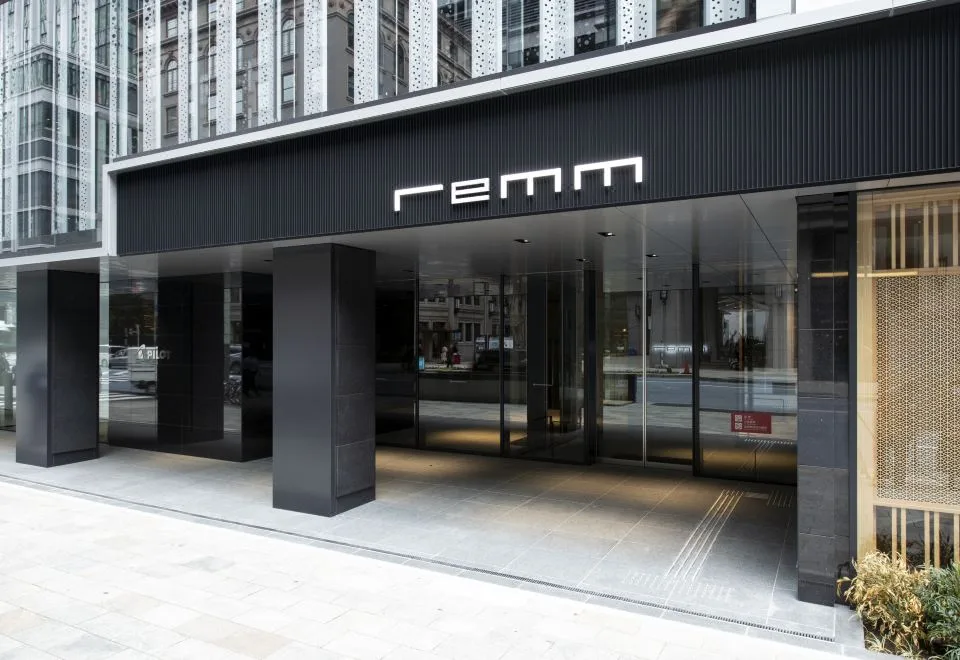
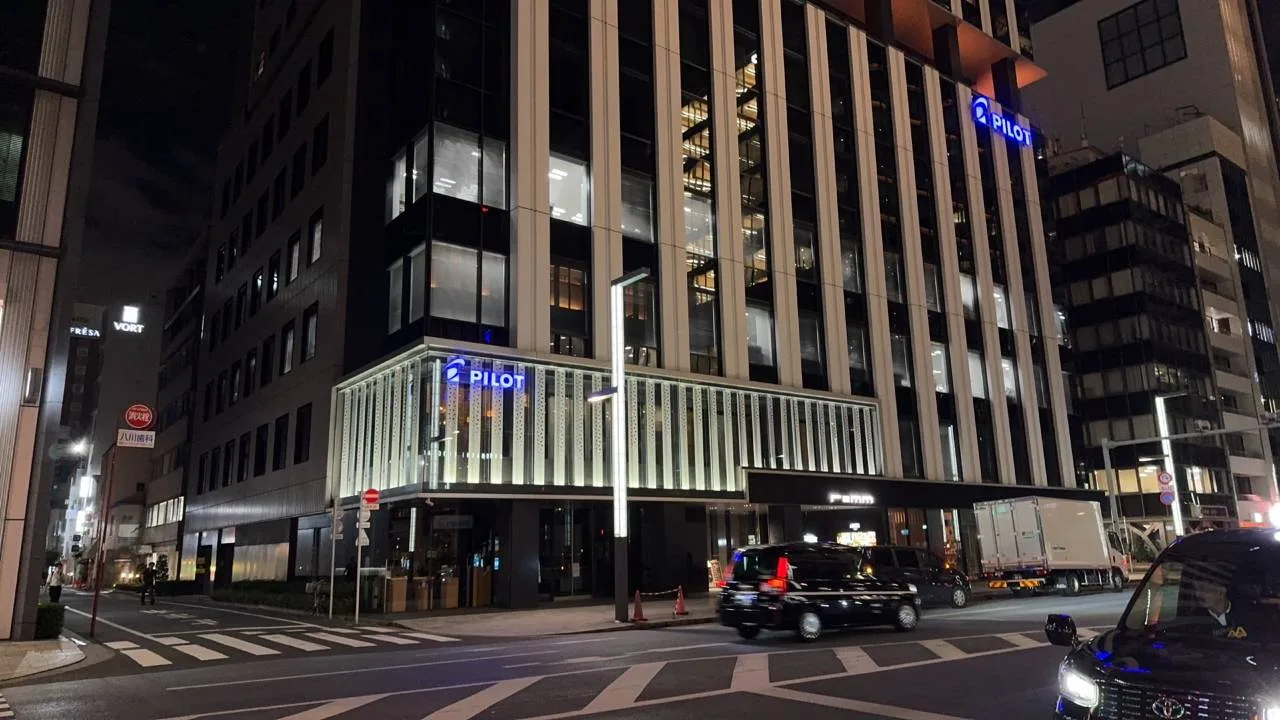
Reasons to choose and trade-offs
Advantages
Kyobashi Station is right there, and Tokyo Station and Ginza connect easily; the massage chair is a clear plus after a long day on foot. What I value is steady help from the staff, cleanliness and transport, which suits anyone using the room mainly as a place to rest.
Consider before booking
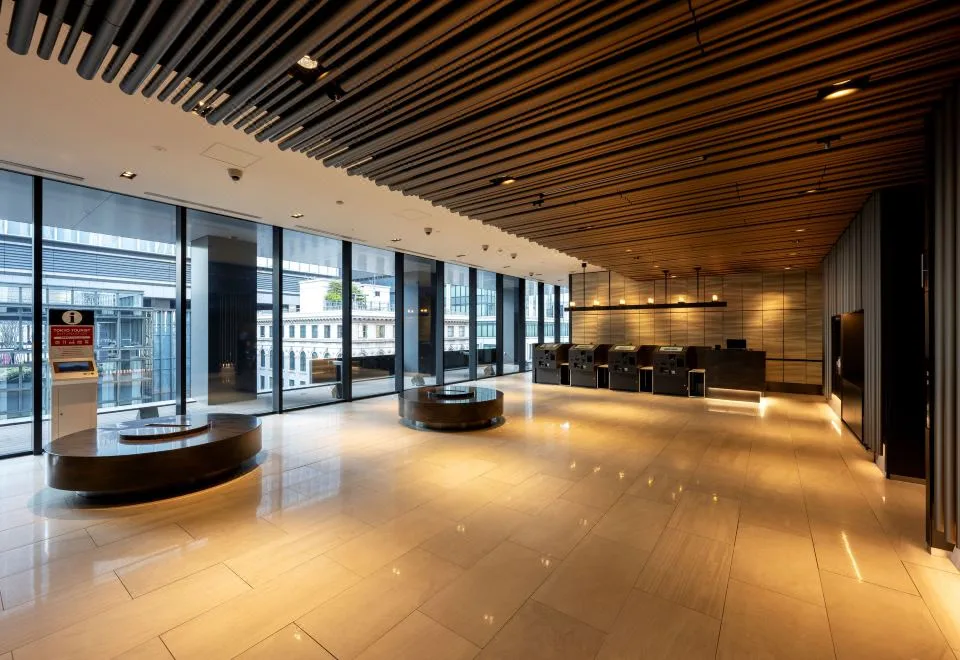
Storage inside the room is tight and some windows face nearby buildings; I check mattress firmness and cleanliness myself after check-in before judging. The lobby is on a high floor, so have your booking details ready for self check-in and allow elevator time when leaving luggage.
Who I would recommend it to: anyone basing themselves around Tokyo Station and Ginza, walking a lot each day and wanting to sleep well back at the room. The massage chair and the transport links are its two strongest cards; the small rooms and tight storage are the trade-off to accept first, so weigh both sides before booking.
One last thing to check before booking: whether the room has a bathtub, and whether the beds are separate or joined. Get either of those wrong and you will feel it for the whole stay.
Pros and Cons Summary
Pros
- Kyobashi Exit 6 is right in front, with the Ginza Line, Tokyo Station and Takaracho Station all within reach.
- The massage chair is a clear plus after a long day on foot.
- The 23 m² standard twin has a bathtub and a separate bathroom, and there is also a 21.8 m² twin with a bathtub.
- Japanese-Western breakfast buffet, 7:00–10:30 with last orders at 10:00, 2,500 yen per person.
- Free luggage storage, 24-hour front desk and self-service check-in; check-in 14:00–24:00, check-out before 12:00.
- Free public Wi-Fi, a laundry room and dryer, and a front desk that helps in Chinese, English and Japanese.
Cons
- The 18 m² double and 18.4 m² economy twin are shower-only, with no bathtub.
- The massage chair takes up floor space, so two large suitcases may need to be opened one at a time.
- Some standard rooms face a neighbouring building, so the view is limited.
- Mattress firmness and cleanliness vary by person — check them yourself after check-in.
- The lobby is on a high floor, so allow elevator time when checking in and leaving luggage; pets are not allowed and check-in requires age 18 or older.
Information checked: November 22, 2026.