
TOKYO / CHUO
APA Hotel Ningyocho Ekikita
APA Hotel Ningyocho Ekikita
APA Hotel Ningyocho Ekikita suits travelers who like the Nihonbashi area and want to include a stroll through historic Ningyocho. It works well for days out and returning to rest in the evening. Two people with large suitcases should compare the deluxe twin rather than focusing only on occupancy.
Is this the right hotel for you?
- Choosing a room: Decide whether you share a bed, then look at the bathroom and luggage space.
- Breakfast: An included meal can be easy on early mornings, but allow other days to enjoy Ningyocho eateries.
- Longer stays: Plan laundry, housekeeping and packing before the final night.
Choose bed widths and room area before the room name
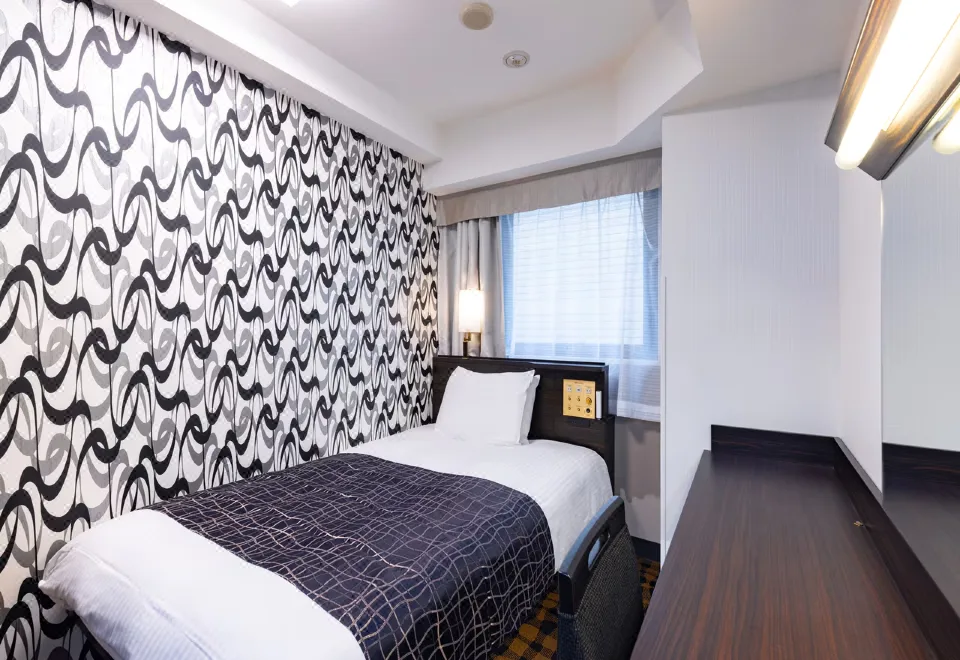
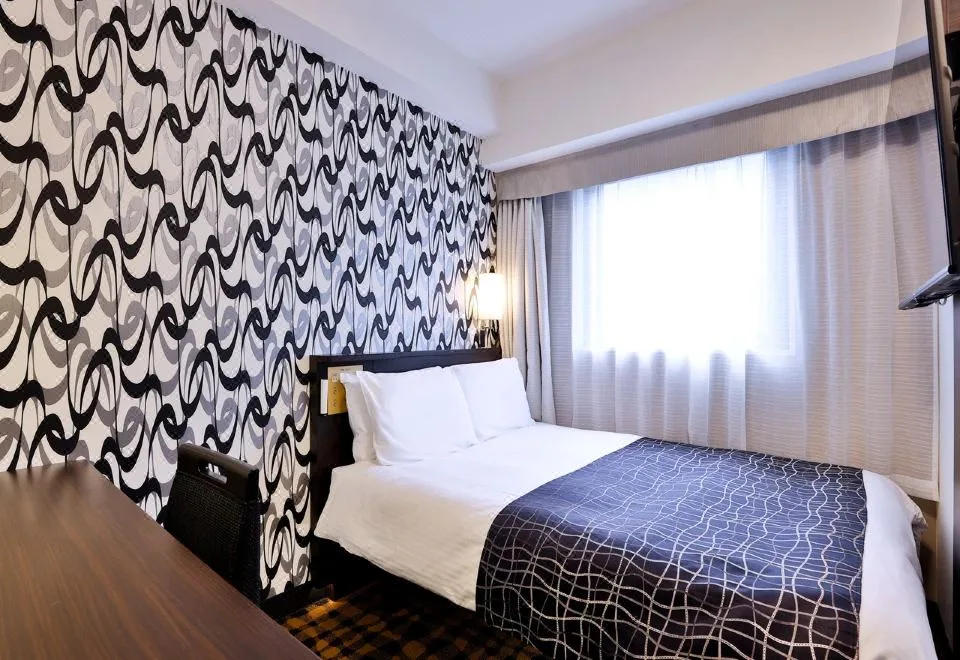
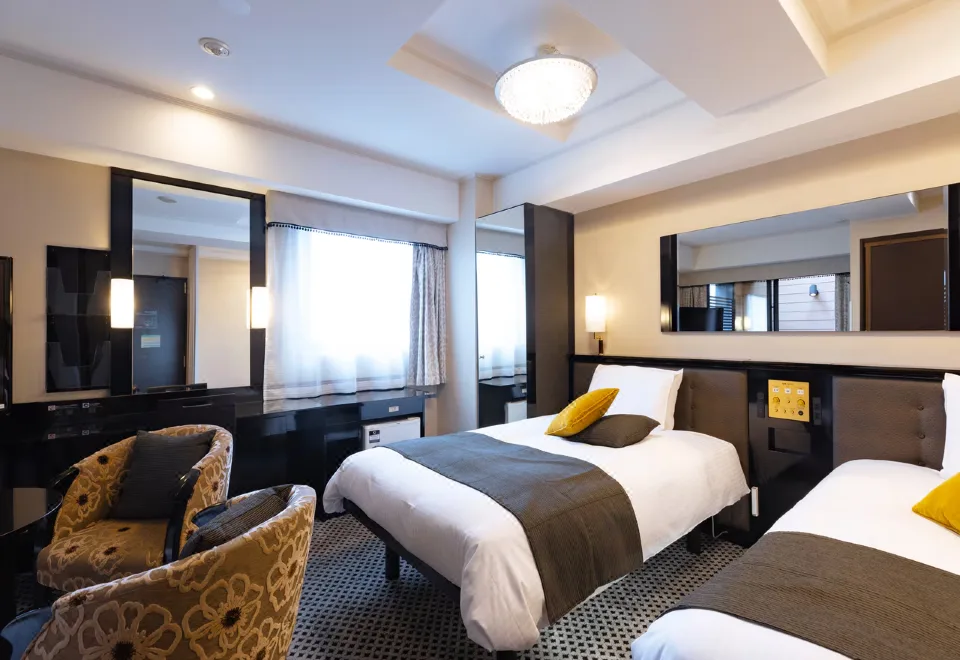
Single rooms are all 11 m², with bed widths of 122, 132 or 142 cm. The double is also 11 m² and has a 142 cm bed. A deluxe twin is 26 m² with two 122 cm beds. For two travelers carrying luggage or wanting separate beds, the extra space is significant. Do not assume ‘single’ and ‘double’ mean different floor areas, or use a deluxe twin photo to judge a small room.
Book the right branch first: APA Hotel Ningyocho Ekihigashi stands just around the corner, and the two names differ by only a couple of words. Check the branch name and the address, 2-9-4 Nihonbashi Horidomecho, on your booking before you pay. Opened in 2011, this hotel has 206 rooms and a three-star business-hotel setup, and the rooms are well kept.
For two people sharing, the choice is bed versus luggage space: the double is also 11 m² with one 142 cm bed, so two large suitcases can hardly open side by side. If you want to sleep apart and still have floor space, take the 26 m² deluxe twin with two 122 cm beds and a clear passage beside them. Travelling alone, pick from single beds of 122, 132 or 142 cm — take the 142 cm if you like extra width.
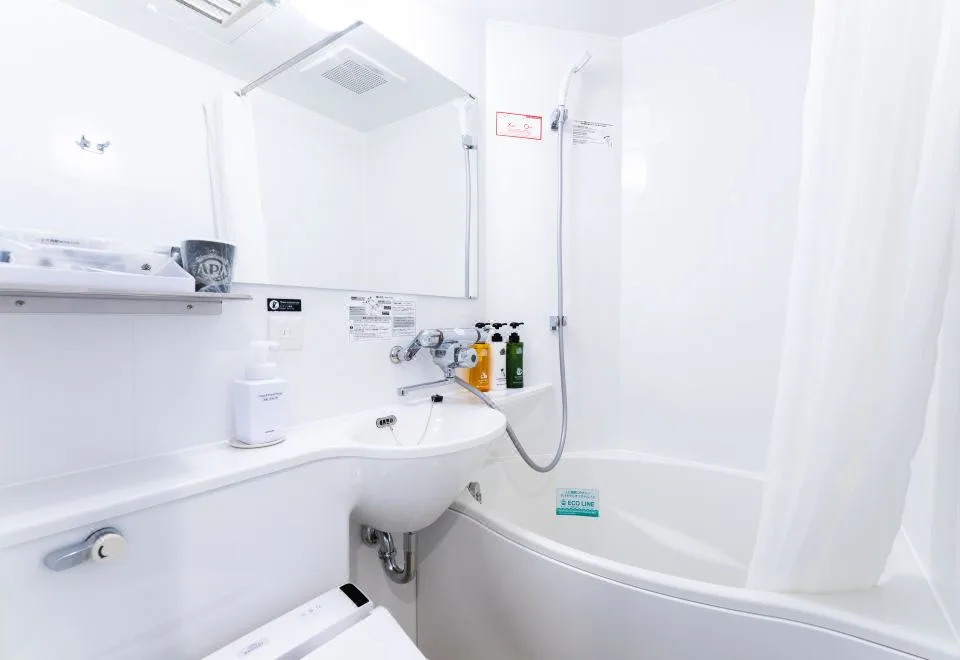
The small details matter to me: bedside light controls and a USB charging port, so you never fumble for a switch in the dark and the phone charges without taking the desk socket. The shower is small but the water pressure is strong. The TV shows the cleaning days and the check-out day, so on a longer stay you never have to remember when housekeeping comes.
Travelling with children, note this first: children of all ages are welcome, and children aged 0 to 5 stay free without an extra bed. Ask the hotel first about cribs and extra beds, and add the number of children to your booking so the price is right. Guests checking in must be at least 18 years old.
Arriving early is easy too: early check-in costs about ¥2,000 per hour, and luggage storage is free, so leave your bags at the desk and walk Ningyocho first. Check-in runs 15:00 to 03:00 the next day, check-out is by 10:00, and the front desk is staffed 24 hours, so even a late-night arrival is covered.
The bathroom is worth a look first: the bathtub and washbasin in the main photo have decent space, so if you like a soak you can properly relax after a day out. The shower is small but the water pressure is strong. Check the bathroom in the photos, then match it against the room-type name.
With 206 rooms, the hotel is a fair size, and the front desk is staffed 24 hours. The rooms are a three-star business-hotel setup with no extra decoration — the focus is the bed, the bathroom and the transit. If you want a large room or a view, this is not the first choice.
Compare the hotel’s official room descriptions with the precise room name and amenities on your booking.
Breakfast: a main dish plus semi-buffet
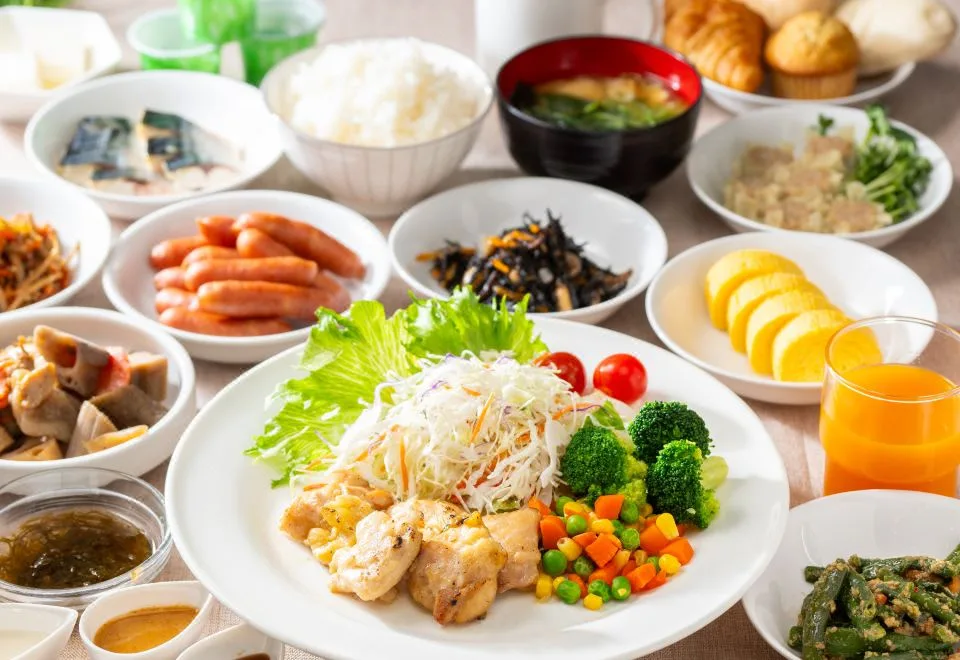
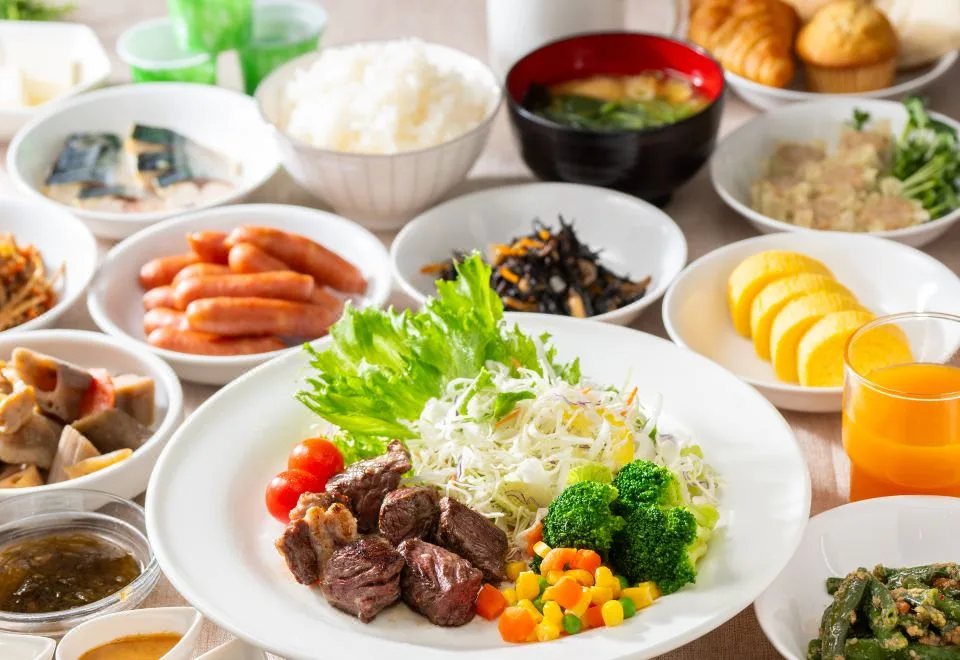
According to the hotel, breakfast combines a main dish and semi-buffet service from 7:00 to 10:00 a.m., with last orders at 9:30. Choose breakfast-inclusive rates for a simple start; leave some mornings open if you want to eat in Ningyocho. Food photos show examples, not a fixed daily menu.
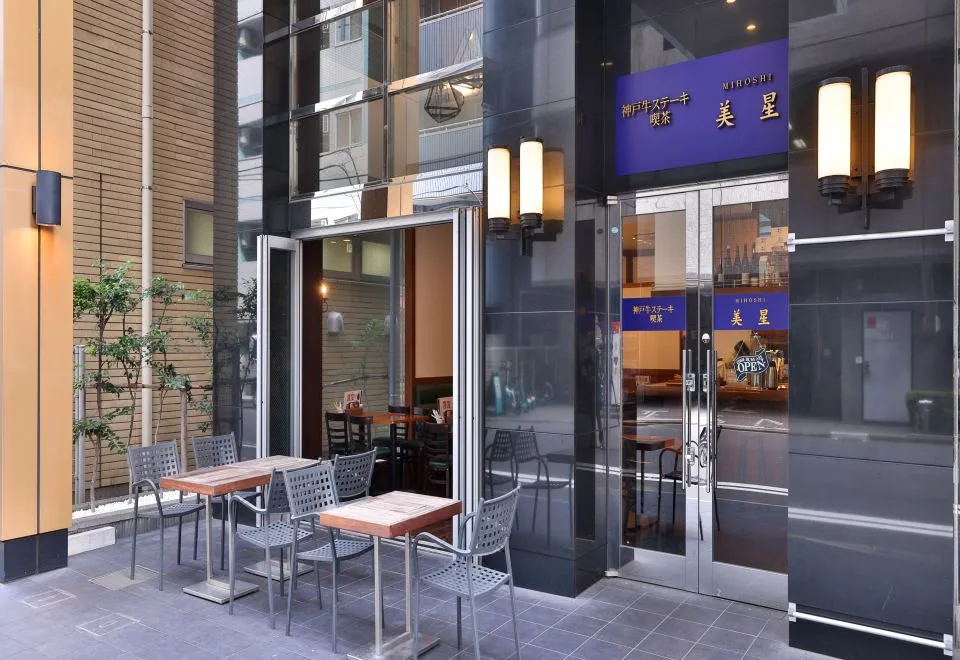
Breakfast offers Western, Japanese and Asian dishes, served 07:00–10:00 with last orders at 9:30, ¥1,800 per adult. The restaurant is the hotel’s 「神戸牛ステーキ喫茶美星」, so you can eat here and head straight out without hunting for breakfast first.
What I ate was fresh, with both Japanese and Western dishes to choose from — but the hot dishes are sometimes lukewarm, so go early if you like your food hot, when the freshest choices are out. Take breakfast on mornings when you want a simple start, and leave it off on days when you want to eat at a Ningyocho old-timer instead.
Breakfast only starts at 07:00, so on a day with a train before 07:00 you cannot eat here. If you have an early flight or a morning at Tokyo Disney Resort, buy breakfast at a convenience store the night before and head straight out. For trains after 07:00, a slow breakfast works fine.
Station access and luggage
Address: 2-9-4 Nihonbashi Horidomecho, Chuo City, Tokyo 103-0012, Japan.
Getting around from here is easy: Ningyocho Station is 210 metres away, Nihonbashi 670 metres, JR Bakurocho Station 700 metres and Hamacho Station 780 metres. Trains run direct to Asakusa, Haneda Airport and Narita Airport with no change, and Tokyo Station, Tokyo Dome and Nippon Budokan are all within easy reach. Akihabara is 1.8 km and Ueno 1.9 km — one stop, or a walk, away.
The neighbourhood is quiet and safe at night, with a convenience store, a coffee shop and small restaurants within walking distance, so the walk back after dinner is pleasant. Amazake Yokocho is close by, and its old street of sweets and small shops suits a slow wander. Staying here, you never have to push through the tourist crowds every day — coming back to Ningyocho is the relaxing part.
The Imperial Palace is 2.5 km and Asakusa-dera Temple 3.1 km, one stop away in the morning; Nihonbashi, Ningyocho and Asakusa fit in a single day without long rides. The return to the airport runs on the same direct line, so there is no change with luggage.
Suitengumae Station is also within walking distance, about 7 minutes from Exit 7, and it serves the Hanzomon Line — toward Oshiage and Shibuya without going back through Ningyocho. On a Skytree day, the train from Suitengumae is the smoother choice.
Amazake Yokocho needs no special slot in your day: the old street is a short walk from the hotel, with sweet shops and small stores along it. Pick up a snack for breakfast in the morning or wander through after dinner — staying here, the old street is your daily walk.
On foot, Ningyocho Exit A4 is about 2 minutes to 2-9-4 Nihonbashi Horidomecho; Suitengumae Exit 7 is about 7 minutes. Exit A4 has no elevator, so it is the fastest choice only when you travel light.
With large luggage, a wheelchair, or a stroller, use an elevator exit: on the Hibiya Line, take the Exit A3 elevator for Kita-Senju-bound trains and the Exit A6 elevator for Naka-Meguro-bound trains. On the Asakusa Line, take the A3 or A6 elevator to the ticket-gate level, then the in-station elevator down to the platform. From Exit A3, walk toward the Ningyocho intersection for about 3 minutes to reach the hotel; Exit A6 leads the same way.
On the way back, check which elevator exit serves your direction before entering the station. The nearest exit, A4, has no elevator, so do not use it with large luggage.
Short stays and longer stays
I like the station access, the comfortable beds and the cleanliness, but the rooms are genuinely compact business-hotel rooms. On short visits, the bed and transit matter most. Over several nights, consider laundry, housekeeping frequency and suitcase storage. A photo of the 26 m² twin does not represent the 11 m² rooms.
Laundry on a longer stay is simple: the hotel has a laundry room (paid) and a dryer, ironing is free, and there is a laundry delivery service. Room Wi-Fi is free, and the rooms have a humidifier, the building has an elevator and a vending machine, and the public areas and floors are non-smoking.
Rooms are not cleaned every day unless you ask; a pack of fresh towels is left daily for you to change yourself, and bottled water is not topped up daily, so buy your own from the vending machine or a convenience store. The TV shows the cleaning days, so check which day housekeeping comes and plan your packing around it. Cleaning starts in the corridor at around 7:30 in the morning, so light sleepers should know.
Driving in needs a plan first: the private car park costs ¥3,000 a day, spaces are few and cannot be booked in advance, so you only find out on arrival. Pets are not allowed, while service animals are allowed with a prior application. The front desk serves guests in English, and there are translation tools, a car service and currency exchange. Accessible rooms and a wheelchair are kept on site, so ask the front desk if anyone in your party needs them.
Check-out is by 10:00 and luggage storage is free. Leave your bags at the desk after check-out, spend a round in Nihonbashi or Amazake Yokocho, and pick them up in the evening on the way to the airport — the check-out time does not have to cut your day short.
Packing for a short stay works best this way: one large suitcase fits an 11 m² room comfortably, but two need a plan — one beside the bed, one by the door. On a longer stay, the laundry room and dryer let you pack two fewer outfits, so the suitcase stays light.
Photographs of rooms, bathrooms and common spaces
The images are organized to help you judge floor space beside the bed, washbasin layout and luggage position. Different room types and photo settings are shown; check the layout of the exact category you book.
When you look at the photos, start with the passage beside the bed: whether a suitcase can open there decides whether two people sharing the room will get in each other’s way. Then look at the shower size and the washbasin, and finally the lobby and the entrance. The photos come from different rooms, so the actual layout depends on the room type you book — match the room name and bed width against the paragraphs above.
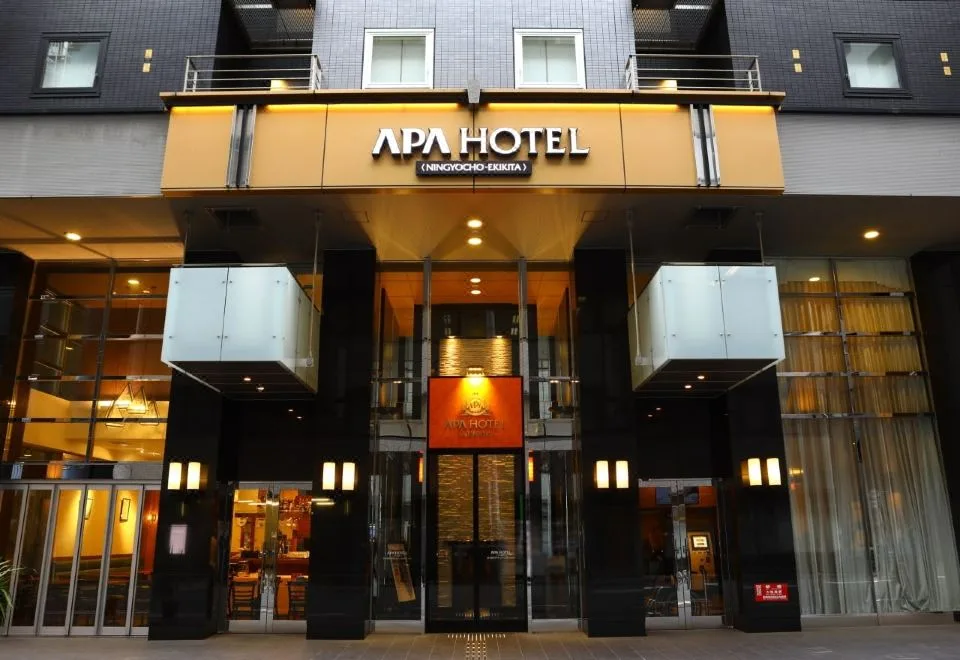
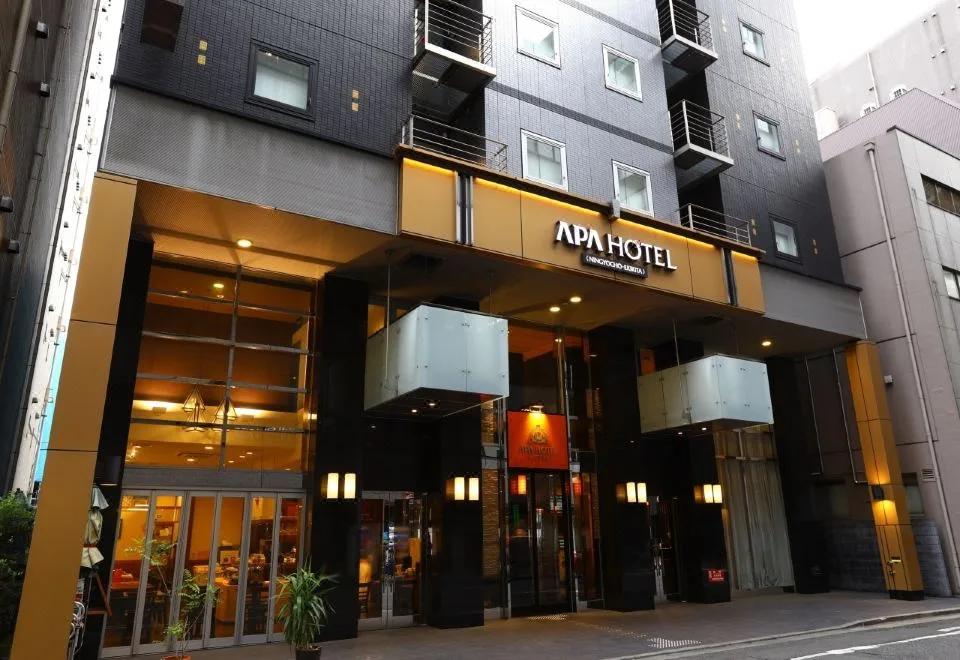
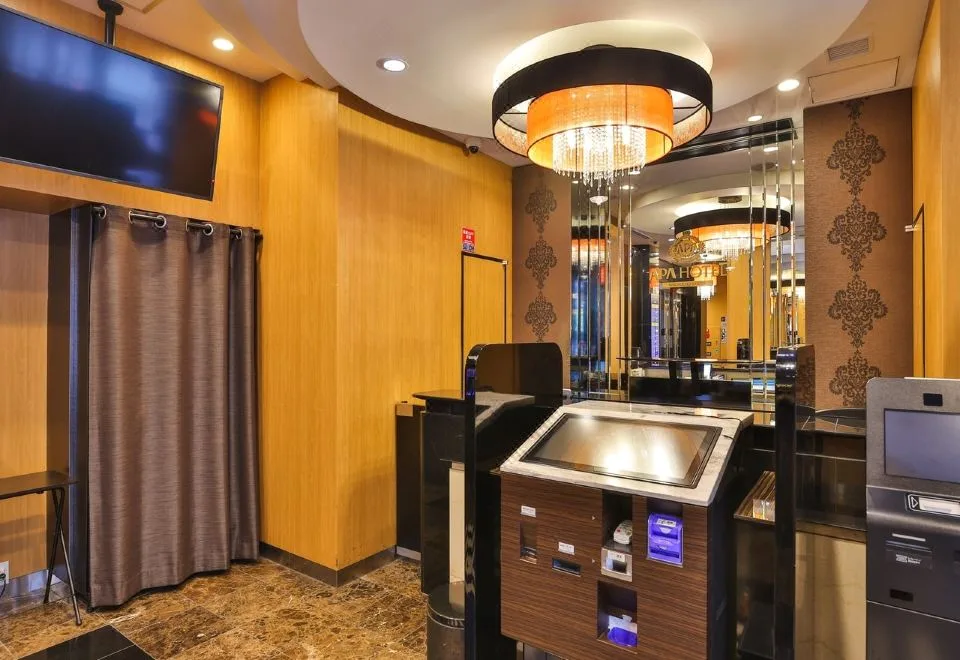
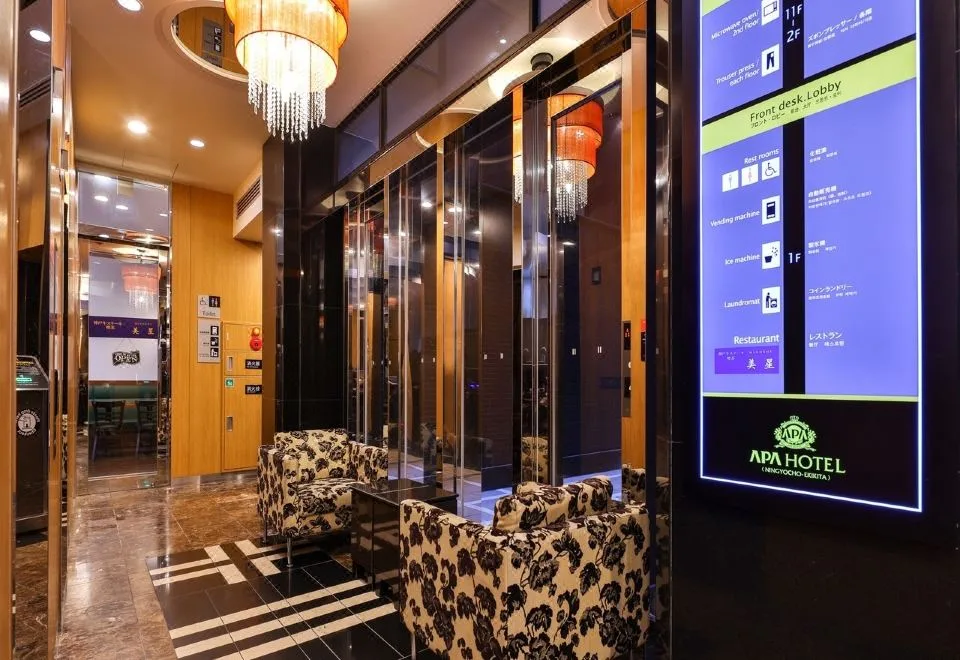
The lobby and entrance photos come in daytime and night versions: the daytime shot shows where the entrance and the reception counter are, and the night shot shows the entrance lit up, so finding your way back late is easy. The elevator and lobby photos also show how big the public space is — check where the elevator is if you carry heavy luggage.
Guest rooms and bathrooms
Breakfast photos
Lobby and entrance
How I would plan this stay
Leave a full day to wander Amazake Yokocho, Ningyocho and Nihonbashi. An evening walk back after dinner is another reason to stay in the area. If taking an early train the next day, pack the night before rather than sorting luggage in a small room in the morning.
If you travel with children, stay several nights and want to do laundry every day, this hotel suits you: Ningyocho in the morning, Nihonbashi in the afternoon, laundry and an early night, without travelling far. But if your days are mainly in Shinjuku and Shibuya, or you want to stay out late and find food at night, the location is less convenient — transfers and late-night food both need extra planning.
What you get here is a stroll through old Ningyocho, a direct train to the airport and a quiet, safe night. For a single night with light luggage, an 11 m² room is plenty; for two nights or more, consider the 26 m² twin.
If this is your first trip to Tokyo and you want to stay in an old neighbourhood, this hotel is a good starting point: the old streets of Ningyocho, a direct train to the airport and a quiet, safe night, all three at once. But if you go to Tokyo Disney Resort or Shinjuku every day, factor the ride in before you decide.
Pros and cons at a glance
Pros
- Ningyocho Exit A4 is about a 2-minute walk, 210 metres away, with direct trains to Asakusa, Haneda Airport and Narita Airport.
- The deluxe twin is 26 m² with two 122 cm beds, so two people with large suitcases have room; single beds come in 122, 132 and 142 cm widths.
- Breakfast offers Western, Japanese and Asian dishes, served 07:00–10:00, ¥1,800 per adult.
- A laundry room, a dryer, free luggage storage and free in-room Wi-Fi are all here, so a longer stay never needs a laundromat.
- The front desk is staffed 24 hours, and check-in runs 15:00 to 03:00 the next day.
- The neighbourhood is quiet and safe, with a convenience store, a coffee shop and small restaurants within walking distance.
Cons
- The nearest exit, A4, has no elevator — with large luggage, use the A3 or A6 elevator exits instead.
- An 11 m² room is genuinely compact: two large suitcases can hardly open at once, so two people sharing should pick the twin first.
- Rooms are not cleaned daily unless you ask, and bottled water is not topped up daily.
- Breakfast hot dishes are sometimes lukewarm — go early if you like your food hot.
- The private car park costs ¥3,000 a day, spaces are few and cannot be booked in advance.
Information checked: November 22, 2026.