
TOKYO / CHUO
Hatchobori
Hatchobori
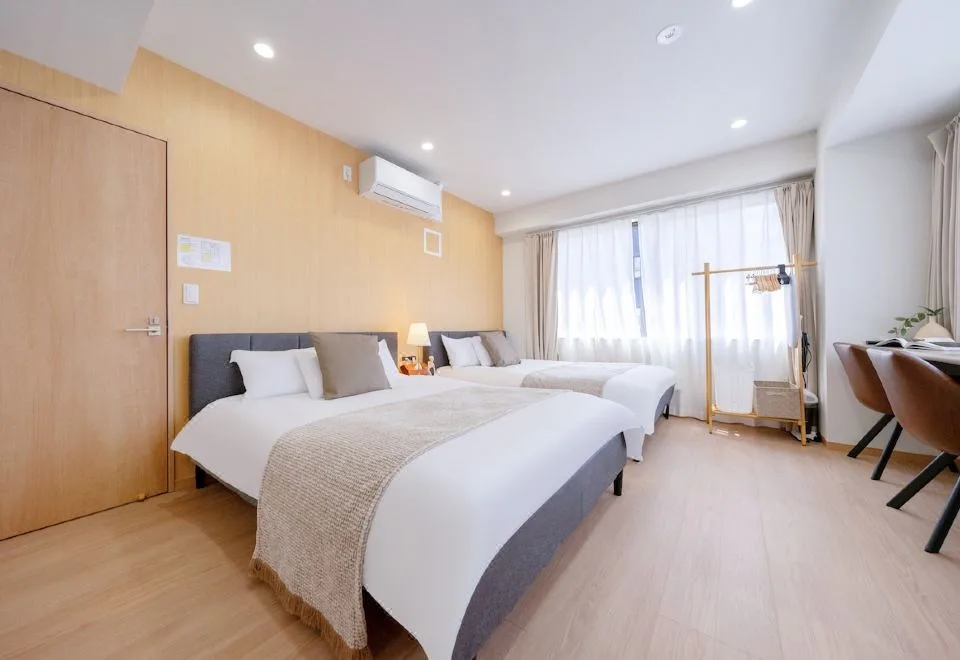
This accommodation listed simply as ‘Hatchobori’ suits guests comfortable with self check-in and using the room mainly for rest. Photos show a bright twin-bed layout and a desk. Before booking, verifying the complete address, exact unit and entry instructions is more important than relying only on the station name.
Is this accommodation right for you?
- Choosing a room: Confirm where each guest sleeps, then compare the bathroom and space for luggage.
- Breakfast: Keep mornings flexible with a simple meal in the room or breakfast nearby.
- Longer stays: Ask about laundry and cleaning arrangements, and pack before the final morning.
Start with the beds, then check space for bags
Look at the two beds and the place for suitcases. If more than two people plan to stay, check with the host first. With two guests, compare the passage between beds and desk and where cases can be stored. The fridge and clothes hangers in photos suggest how to use the room for a short stay. If a bathtub, separate shower or extra bed matters, ask the host to verify the exact setup.
If you are travelling with children, work out the numbers first: children of all ages are welcome, and a child aged 0 to 2 stays free when no extra bed is needed. No room type allows an extra bed or a crib, so for three or more people, ask the host how many guests the unit actually sleeps before you book a second unit. The two beds are for two people sleeping separately; there is no spare bed to add for a third person.
In the photos the two beds leave a walkway between them, the desk sits by the window, and there is a small table at the window too. Open a suitcase on the empty floor by the bed first, to check that two people can get up and reach for things without blocking each other. The fridge and hangers are in the photos as well: for a stay of a few days, hanging each day’s clothes beats stuffing them back into a suitcase, and the window desk gets enough light to sit and plan the next day on a laptop in the evening.
This listing carries a single name and no separate room types to compare, so the choice is not which room type to pick but whether the unit you book matches the twin-bed layout in the photos. Check the passage from the beds to the desk and whether there is room to store cases for two people. For more than two guests, confirm the sleeping capacity with the host first rather than booking from the bed photos alone.
Sleeping separately is the upside of travelling as two: no sharing one bed, and different sleep schedules do not disturb each other. Friends or colleagues travelling together each get a bed, so one can sleep early while the other sits at the desk a while longer. One can read while the other sleeps first, and neither gets in the other’s way. Bookings are based on two adults, so settle the headcount first and the beds will not be a problem.
Breakfast is not included; plan around your departure
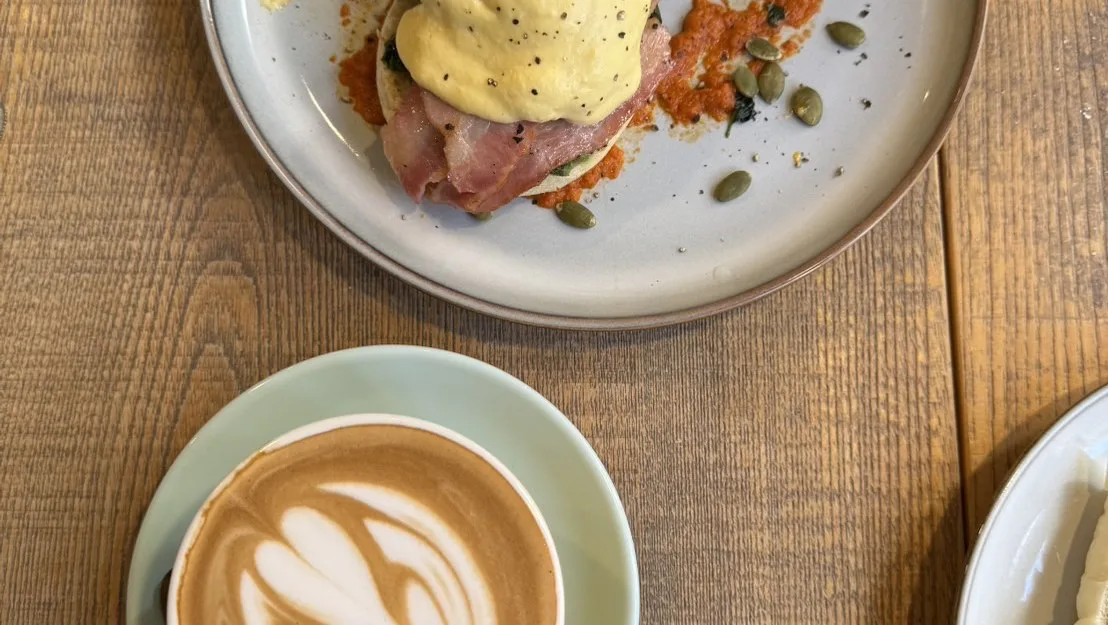
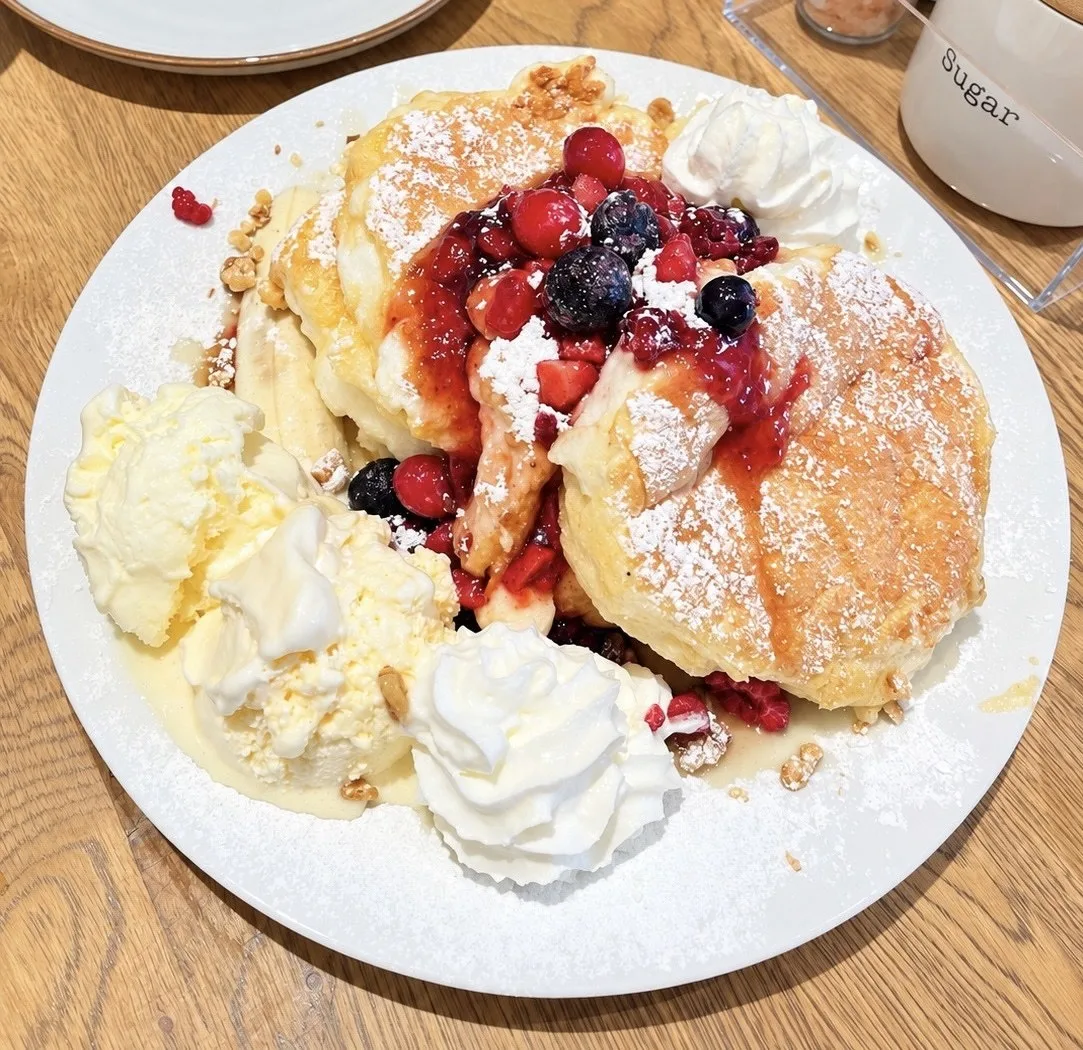
No breakfast is provided. Buy something simple the night before or eat out after leaving. A refrigerator is shown in photos, but do not assume there is a microwave, tableware or a fully equipped kitchen; confirm these separately.
Breakfast is not provided, and the property has no restaurant of its own, so arrange your mornings yourself: buy bread and fruit the night before and keep them in the in-room fridge, and you can eat as soon as you wake up. If you want something hot, walk 700 metres toward Ginza or 1.0 kilometre toward Nihonbashi and sit down somewhere along the way. The fridge is only for storage, not a kitchen: there is no confirmed microwave, tableware, or cooking, so ask the host before you book.
When you shop the night before, buy the next morning’s share as well and put drinks in the fridge with it. With no tableware or microwave confirmed, ready-to-eat food that needs no heating is the easiest choice.
Getting here with luggage
Address: 1-6-1 Minato, Chuo City, Tokyo, Japan.
With large luggage, a wheelchair, or a stroller, use the Sakuragawa Park-side ticket gate on the Hibiya Line: outside the gate, elevators run to street level at both exits A2 and A3. Exit A2 is the closest to Minato 1-chome, so leave by A2 and follow the full address, 1-6-1 Minato, to the entrance. Exit A3 also has an elevator, but it means a longer walk. Do not take the nearest staircase exit; it has no elevator.
From the Hibiya Line, a traveler with heavy luggage can use the elevators toward exits A2 or A3 from Hatchobori’s Sakuragawa Park-side ticket gate. Once outside, navigate to the property. Follow separate JR signage for the Keiyo Line; the nearest staircase is not necessarily the elevator route.
With a large suitcase or stroller, verify both the platform-to-ticket-gate and gate-to-street parts. Make sure the elevator on the return route reaches the right platform. The closest exit is not always best for luggage.
On the JR Keiyo Line, Hatchobori Station is 270 metres away, about a 4-minute walk; follow JR signs inside the JR station, then use the full address to find the entrance. On the way back, check first that the elevator reaches the platform you need, rather than finding out at the gate that it serves a different one.
From here the daytime map is generous: Shintomicho Station is 600 metres away, Ginza 700 metres, Nihonbashi 1.0 kilometre, the Tsukiji Outer Market 1.2 kilometres, Kabukiza 1.4 kilometres, the Tokyo International Forum and JR Yurakucho Station 1.5 kilometres each, Koami Shrine 1.5 kilometres, and the Tsukijigawa Park day camp ground 630 metres. Walk toward Ginza or Nihonbashi in the morning and come back to Hatchobori at night, without changing stations every day.
The address is 1-6-1 Minato, Chuo City, Tokyo, in the Tokyo Station and Nihonbashi area. Save the address together with your check-in messages before you arrive, so you can find the way offline. Once outside, follow the street number to the entrance rather than navigating by the station name alone.
Short stays versus longer stays
This property uses self check-in, with a door code obtained by contacting the host in advance. The supplied information says to get in touch two days before arrival. Save the contact method, entry instructions and an offline copy of the address before coming; do not wait until standing outside to look for the code. Confirm separately if you need an on-site desk, daily housekeeping or luggage storage.
Check-in is from 16:00 and check-out is by 11:00, so note both times first. This is a self check-in stay with no front desk on site, and entry information is only provided after booking. Two days before arrival, contact the host by email or phone yourself to receive the door code. Save the contact details, entry instructions, and an offline copy of the address on your phone before you arrive, and do not wait until you are standing outside to look for the code.
Guests must be aged 18 to 99, and neither pets nor service animals are allowed, so check that everyone travelling with you fits the rules before you book. The registration number is 6中保生環き第161号. If you need an on-site desk, daily housekeeping, or luggage storage, ask the host whether they can provide it. For a stay of several nights, ask about laundry and rubbish handling in advance, pack your cases the night before the last night, and leave by 11:00 without rushing.
For several nights in a row, plan laundry and cleaning first: hang the clothes you change into each day and keep the cases packed, or the room gets more crowded as the stay goes on. Pack everything the night before the last night so the 11:00 check-out is unhurried. One or two nights with light luggage fits the twin room well; a full week needs the storage and laundry plan thought through first.
Here is how I would lay out arrival day: arrive after 16:00, open the door with the entry code, drop the bags, then walk a loop through Ginza or Nihonbashi; back in the evening, and out early the next morning. On check-out day, leave by 11:00: pack the cases the night before, eat the food you bought in the morning, and go. Keep the entry code and contact details on your phone, readable offline, so there is nothing to dig up at the door.
Photos of the beds and room layout
Photos from several angles show the passage beside the beds, desk and potential luggage space. They illustrate particular rooms or situations; rely on the specific unit booked for the actual layout.
Twin beds and room space
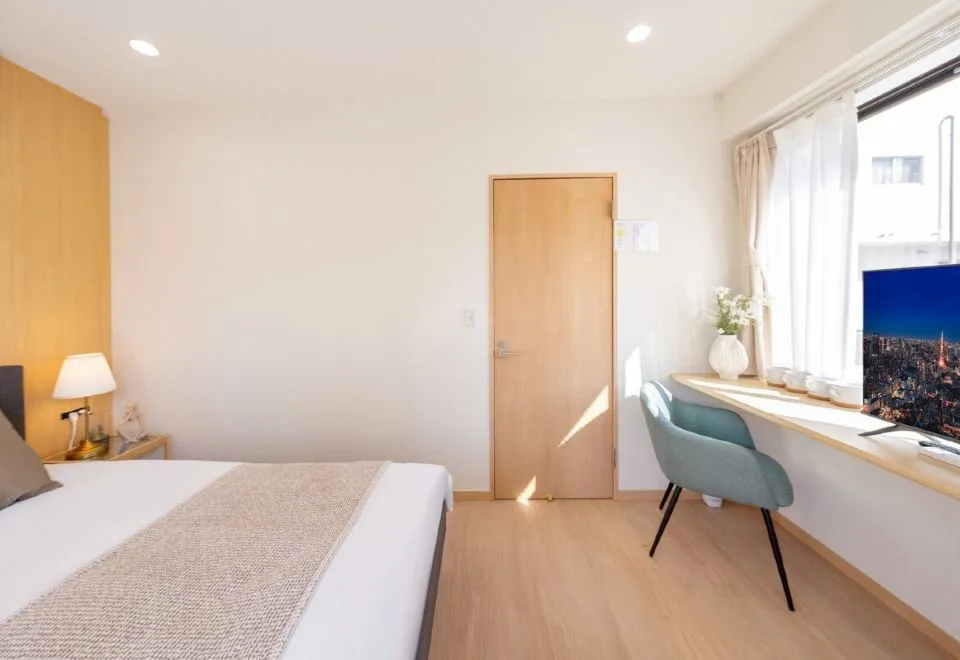
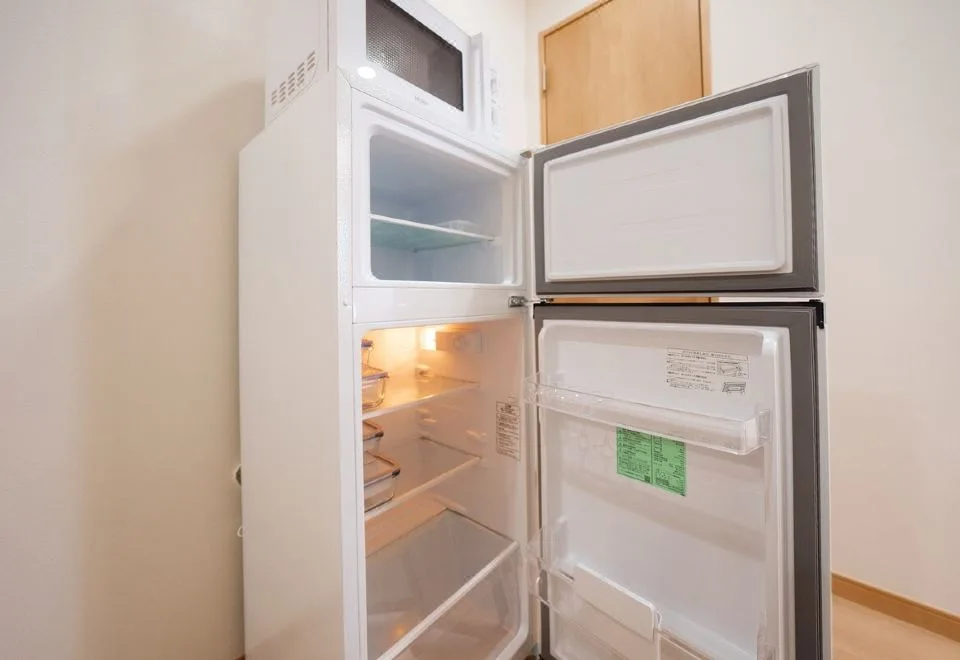
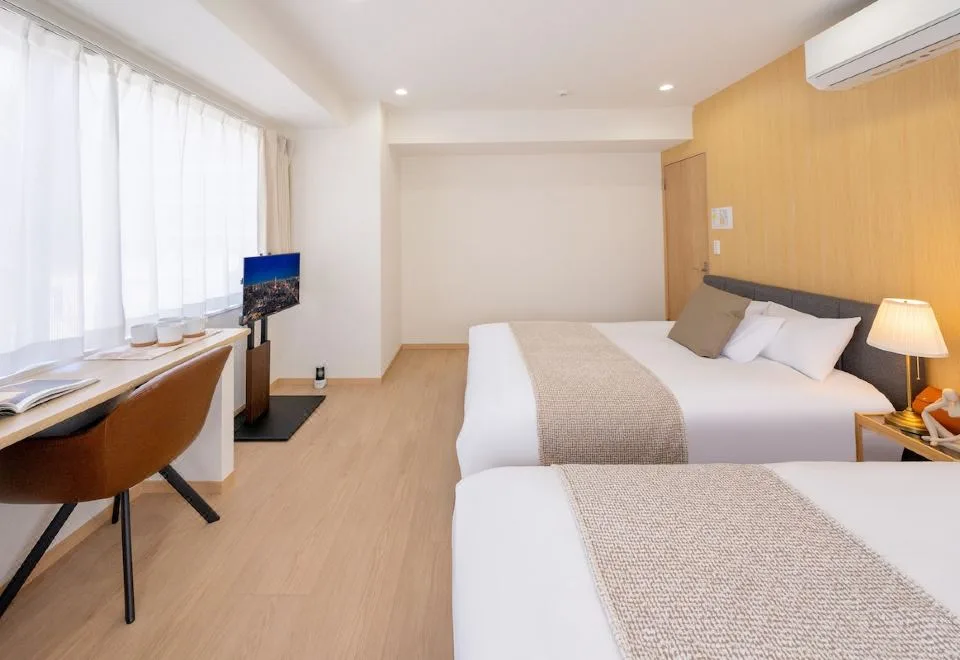
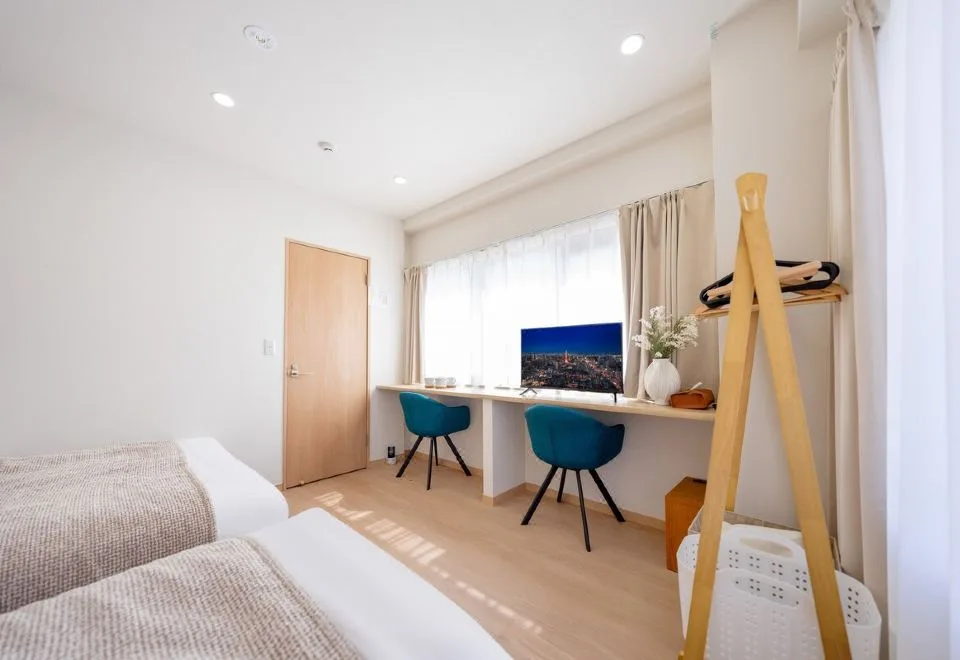
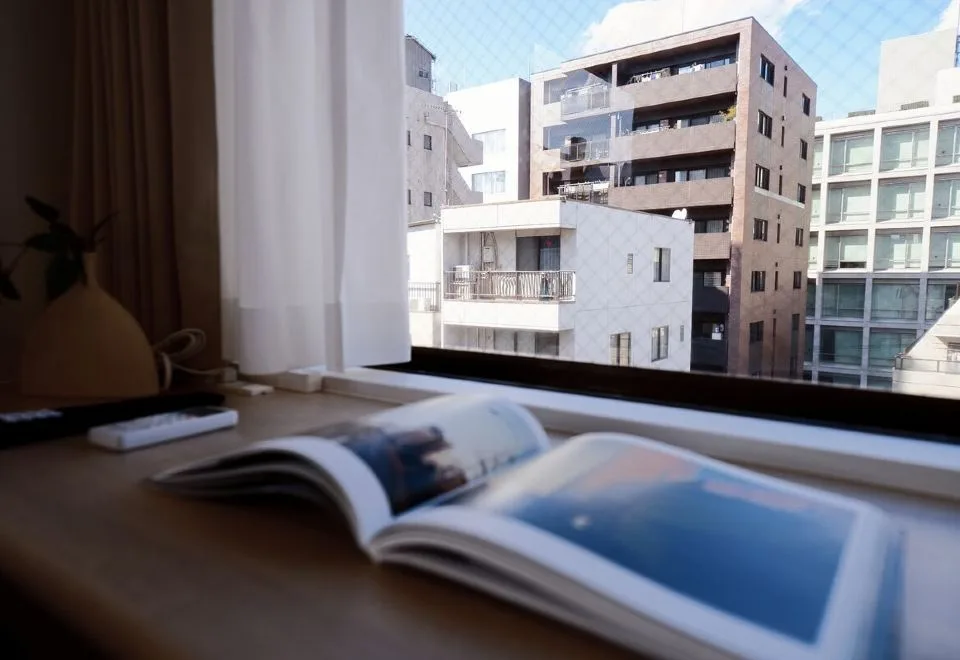
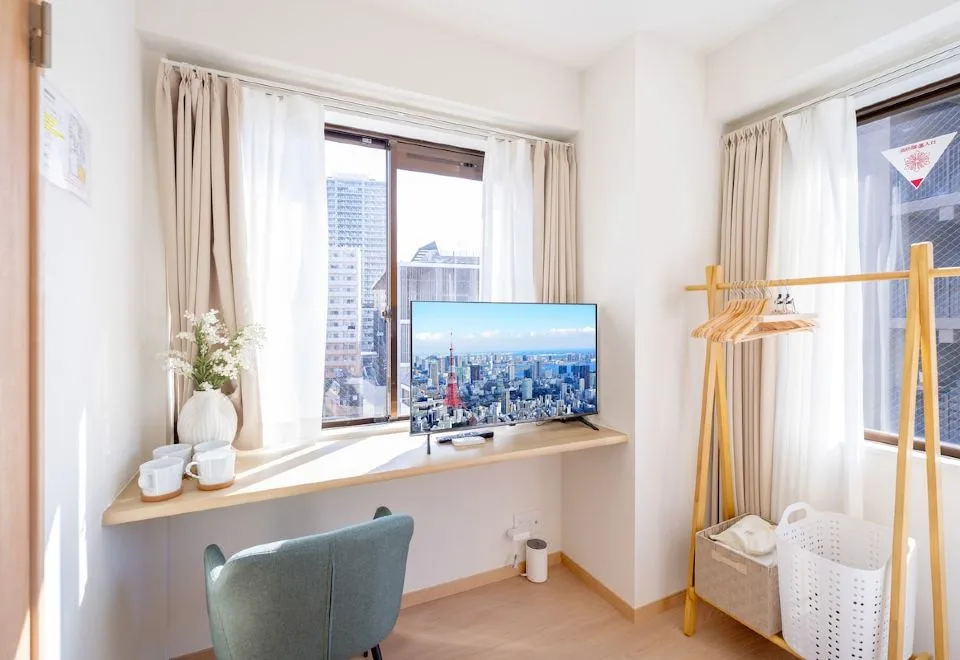
Across the seven photos the room looks consistent: two beds set apart with a walkway between them, a desk by the window, a small table at the window too, street views outside, a fridge standing in one corner, and hangers by the beds. Daylight comes through the window and keeps the room bright, with just enough seat at the desk to sit and plan the day. The photos show different angles and different rooms, so take the unit you book as the final word: check the passage by the beds and the luggage space first, then match them against the room name. The room holds nothing extra beyond the beds, desk, fridge, and hangers: enough for a few days, while a longer stay needs your own storage plan.
How I would plan this stay
Use Hatchobori for transport, sightseeing during the day and returning to sleep. For several nights, check laundry and trash arrangements first. Leave some leeway on arrival day so self check-in does not clash with your next timed reservation.
Here is how I plan it: on day one, finish self check-in, drop the bags, then walk a loop through Ginza or Nihonbashi. On day two, head for the Tsukiji market area and Kabukiza, and come back to rest at night. For a longer stay, settle laundry and rubbish handling first, keep the schedule loose, and leave a buffer on arrival day so self check-in never collides with the next timed booking.
This place suits someone who treats the room as a simple base for rest: out sightseeing in the day, back to sleep at night, with self check-in on your own schedule and no queue at a desk. If you want a front desk, daily housekeeping, luggage storage, or breakfast included, another place will fit better.
For two people travelling together, this place is straightforward: two beds to sleep apart, cases opened by the beds, back to rest at night, and out early the next morning, without coming back for things during the day. With a child, a child aged 0 to 2 stays free without an extra bed, but there is no bed to add for a third person, so settle the headcount first. On your own, the twin room gives one person plenty of space, and the desk and fridge both get used. If you want a staffed front desk, daily housekeeping, or breakfast included, this place does not have them, and another place will fit better.
For one night, put the focus on transport: the Hibiya and JR Keiyo lines both meet at Hatchobori, so walk to Ginza, Nihonbashi, and Tsukiji in the day and come back to sleep at night. For three nights or more, settle laundry and rubbish handling first, keep the schedule loose, split Ginza and Nihonbashi across two days, and leave the Tsukiji Outer Market for one of the mornings.
Pros and cons at a glance
Pros
- JR Hatchobori Station is 270 metres away, about a 4-minute walk; Hibiya Line elevators outside the Sakuragawa Park-side gate reach street level at exits A2 and A3.
- Two beds for sleeping separately, with a desk, a window-side table, a fridge, and hangers all in place for a short stay.
- Self check-in with the door code arranged in advance, on your own arrival time; check-in from 16:00, check-out by 11:00.
- Shintomicho Station is 600 metres away, Ginza 700 metres, Nihonbashi 1.0 kilometre, and the Tsukiji Outer Market 1.2 kilometres.
- Children of all ages are welcome, and a child aged 0 to 2 stays free when no extra bed is needed.
Cons
- No breakfast is provided and there is no restaurant; arrange breakfast the night before or eat out.
- No room type allows an extra bed or a crib, so three or more guests must confirm the sleeping capacity first.
- There is no front desk on site; the door code must be arranged with the host two days before arrival, or you will be stuck outside looking for it.
- Pets and service animals are not allowed, and guests must be aged 18 to 99.
Information checked: November 22, 2026.