
TOKYO / CHUO
MANGA ART HOTEL, BAKUROCHO
MANGA ART HOTEL, BAKUROCHO
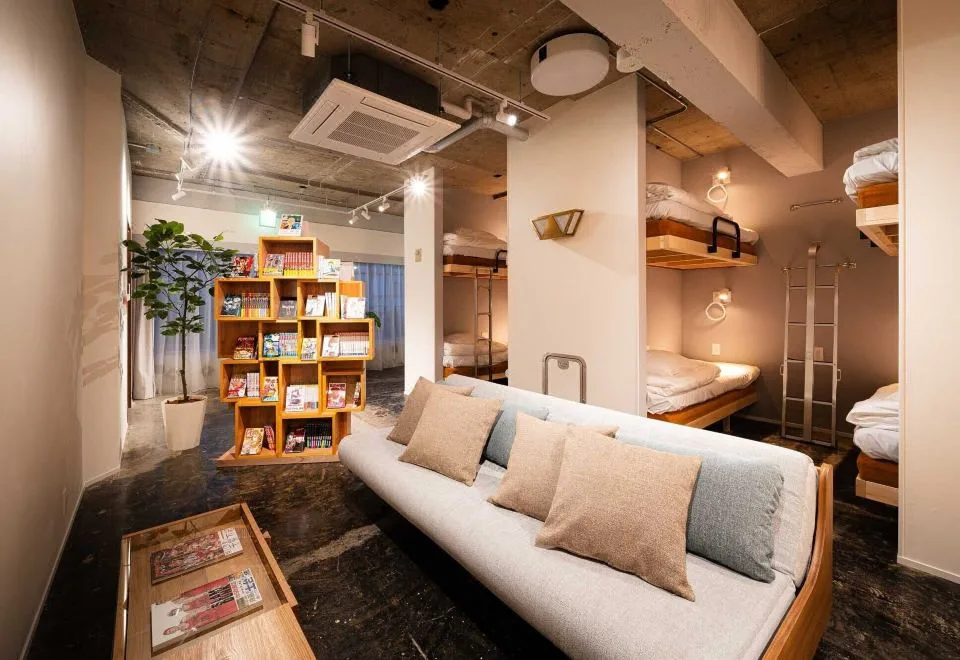
MANGA ART HOTEL, BAKUROCHO works for friends or families who love manga and want to share an entire floor. Around 400 manga volumes, a long sofa and reading table turn returning to the accommodation into part of the itinerary. This Bakurocho property offers full-floor apartment-style accommodation, unlike capsule-style rooms at other locations under the same brand.
Is this place right for your group?
- For groups: The approximately 75 m² full-floor rooms come in Type A and Type B, with different bunk widths and maximum occupancies.
- Everyday amenities: Two showers, two toilets, a kitchen and washer-dryer help groups manage their own routines.
- Plan ahead: No luggage storage or cleaning during a stay. Bring your own toothbrush, sleepwear and other personal items.
Choose the bunks and sleeping arrangements first
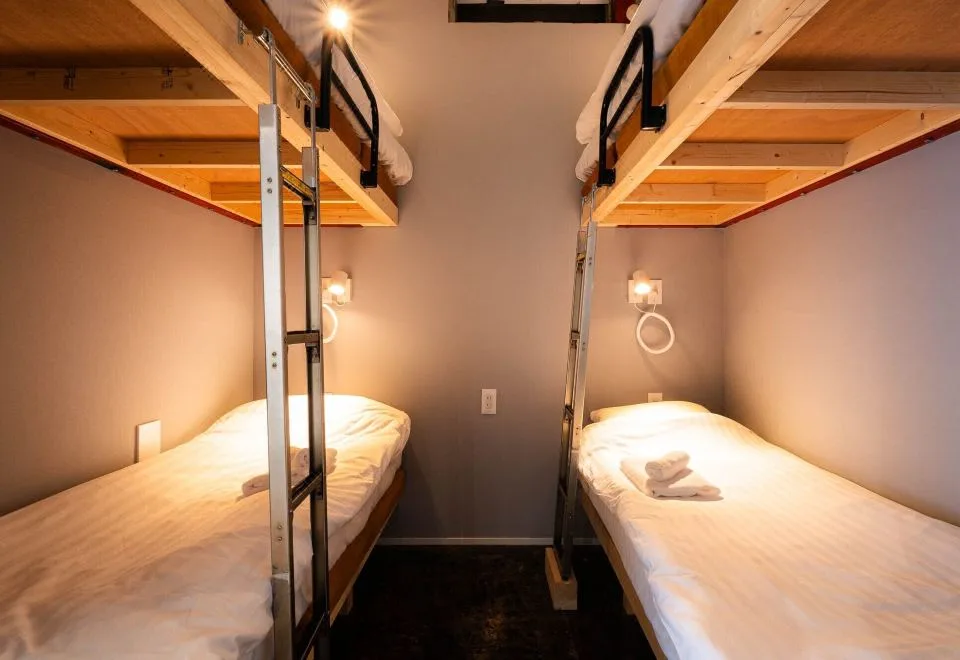
Type A on the second floor is about 75 m² and accommodates up to 10 guests, with four sets of semi-single bunk beds plus a semi-double sofa bed. Type B on floors 3–5 is also around 75 m² and accommodates up to 12, with three sets of double-width bunks and a semi-double sofa bed.
Both types are open-plan one-room apartments occupying an entire floor. Allocate upper and lower bunks and shared beds before arrival. Different sleep schedules may be difficult because there are no separate bedrooms. Each unit has two showers, two toilets, two washbasins, a washer-dryer and an induction kitchen, making self-catered group stays practical.
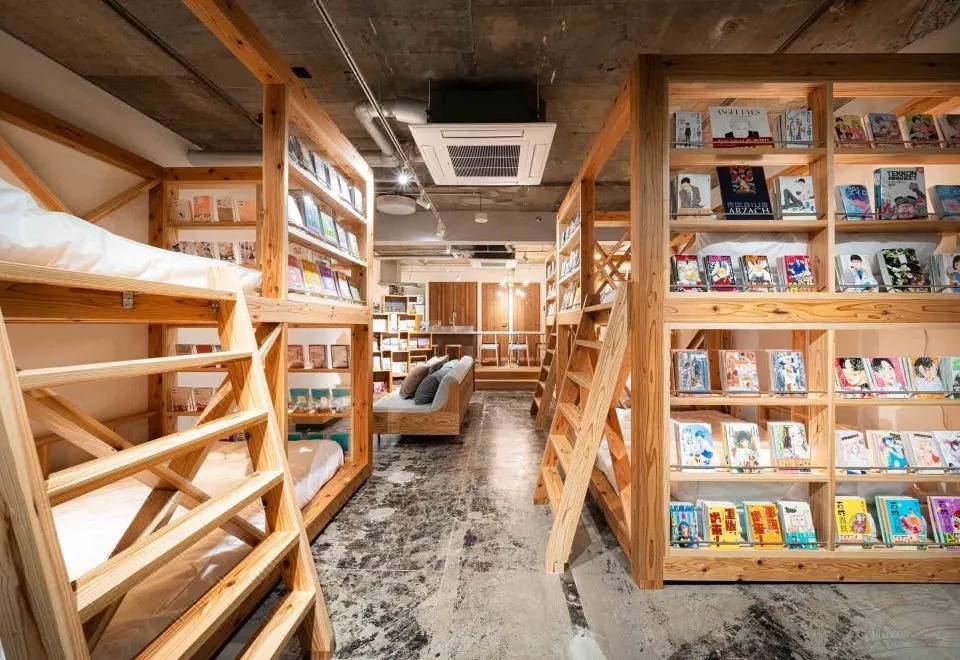
I check the outlets first: every bunk has its own socket, so nobody has to fight over charging at night. Around 400 manga volumes sit on the shelves beside the reading table, and the long sofa is the reading seat. Go out in the day, come back and read in the evening, with no separate reading slot to plan. Popular titles may already be in another guest’s hands, so keep the one you want when you find it instead of hunting for it at bedtime. Take your time with the shelves; there is no need to finish a volume in one sitting.
Two showers, two toilets and two washbasins are the most practical setup for a group. Nobody queues to wash up before heading out in the morning. A washer-dryer, induction kitchen, fridge, microwave and tableware are all in the room, so food bought outside can be heated up and a multi-night stay does not mean eating out every day. The kitchen is for cooking yourself: bring your own ingredients and seasoning, because no meals are served here.
Match the headcount and the bunks before booking: Type A takes up to 10, Type B up to 12, and the bunks and sofa bed all count toward that number. No extra bed can be added, and no crib fits any room type. Children of all ages are welcome, but a child without an extra bed may still cost extra, so include children in the booking to get the exact price. The guest checking in must be at least 18. There are only four rooms in the whole building, one Type A on the second floor and three Type B on floors 3 to 5, so book early for busy dates.
The manga is not decoration: around 400 volumes sit in the room, and in the evening everyone picks one up, so the sofa and reading table become the common room with nowhere else to go. Children who love manga settle in here happily, swapping one book for the next, and the room itself becomes part of the trip. Light sleepers should think ahead: the open-plan room has no partitions, so a late reader turning pages and an early riser packing bags can both be heard. Bring earplugs if you sleep lightly.
Choose between Type A and Type B by headcount and bunk width: up to ten people take Type A, with four sets of semi-single bunks to spread across; eleven or twelve can only take Type B, whose three double-width bunks sleep wider. Leave the semi-double sofa bed for the latest sleeper or the earliest riser, so midnight trips do not wake the bunks. Sort out who takes the upper and lower bunks before arrival instead of arguing over them at the door.
Check the official room information against the exact category and facilities in your booking.
Breakfast is flexible when you prepare your own
Planning your own breakfast is the most flexible choice. An induction kitchen, fridge, microwave and tableware allow you to bring back simple food. Keep manga clean when eating and agree on how to share the dining and reading areas.
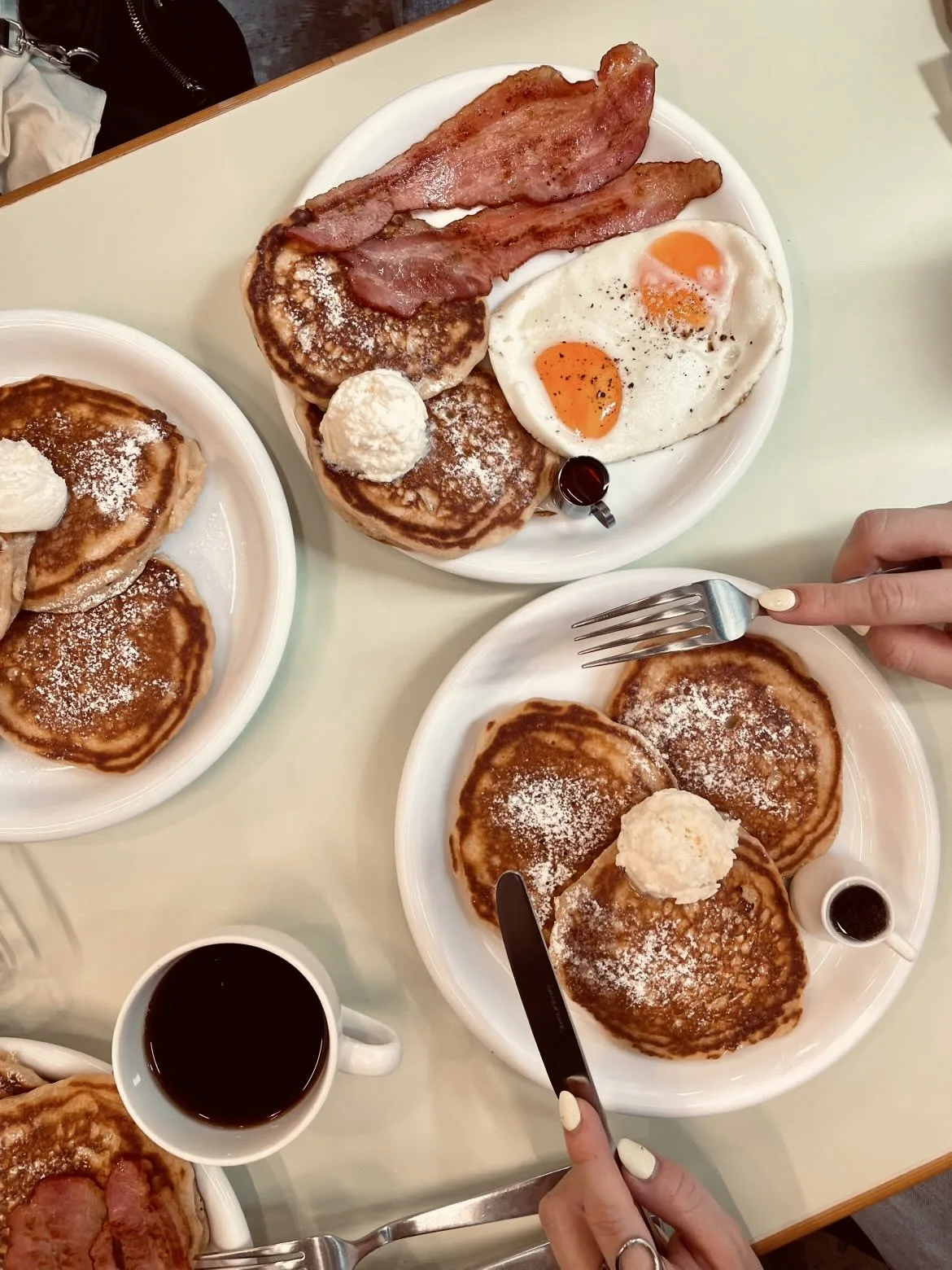
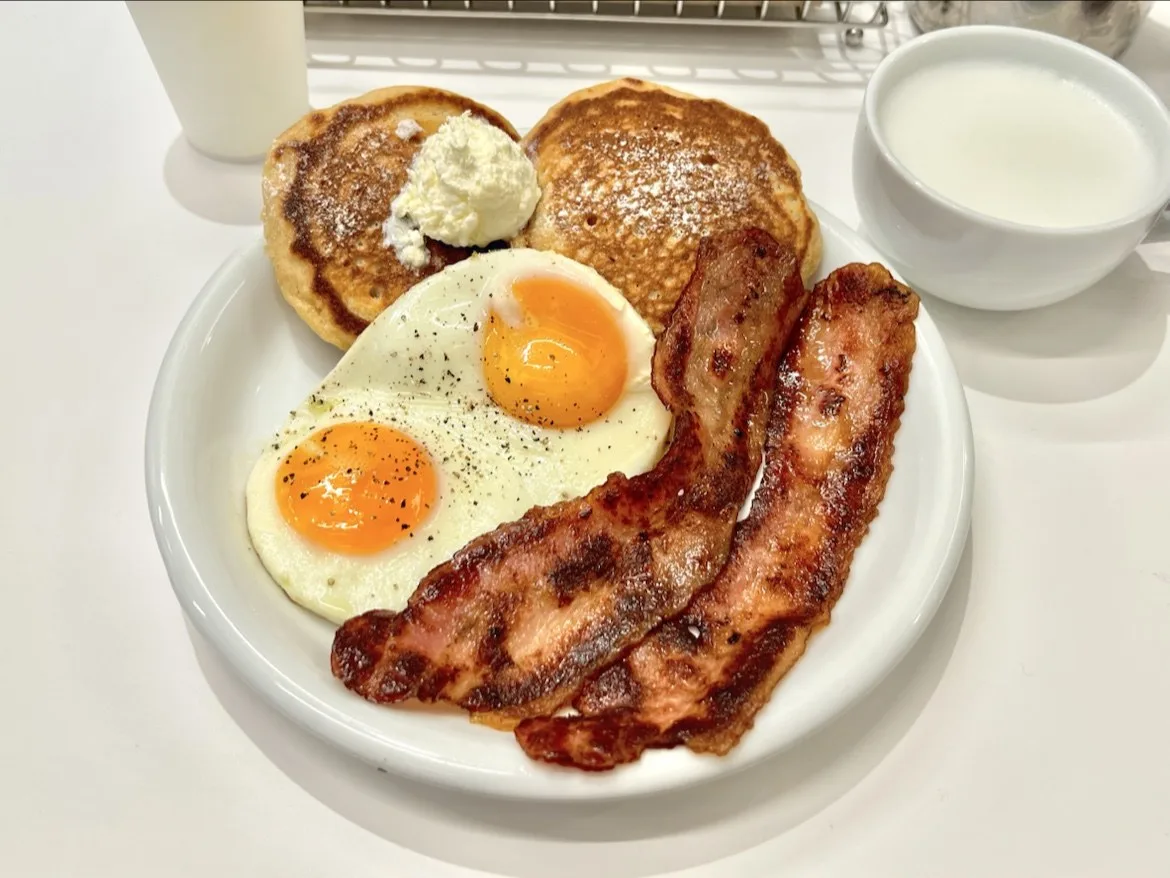
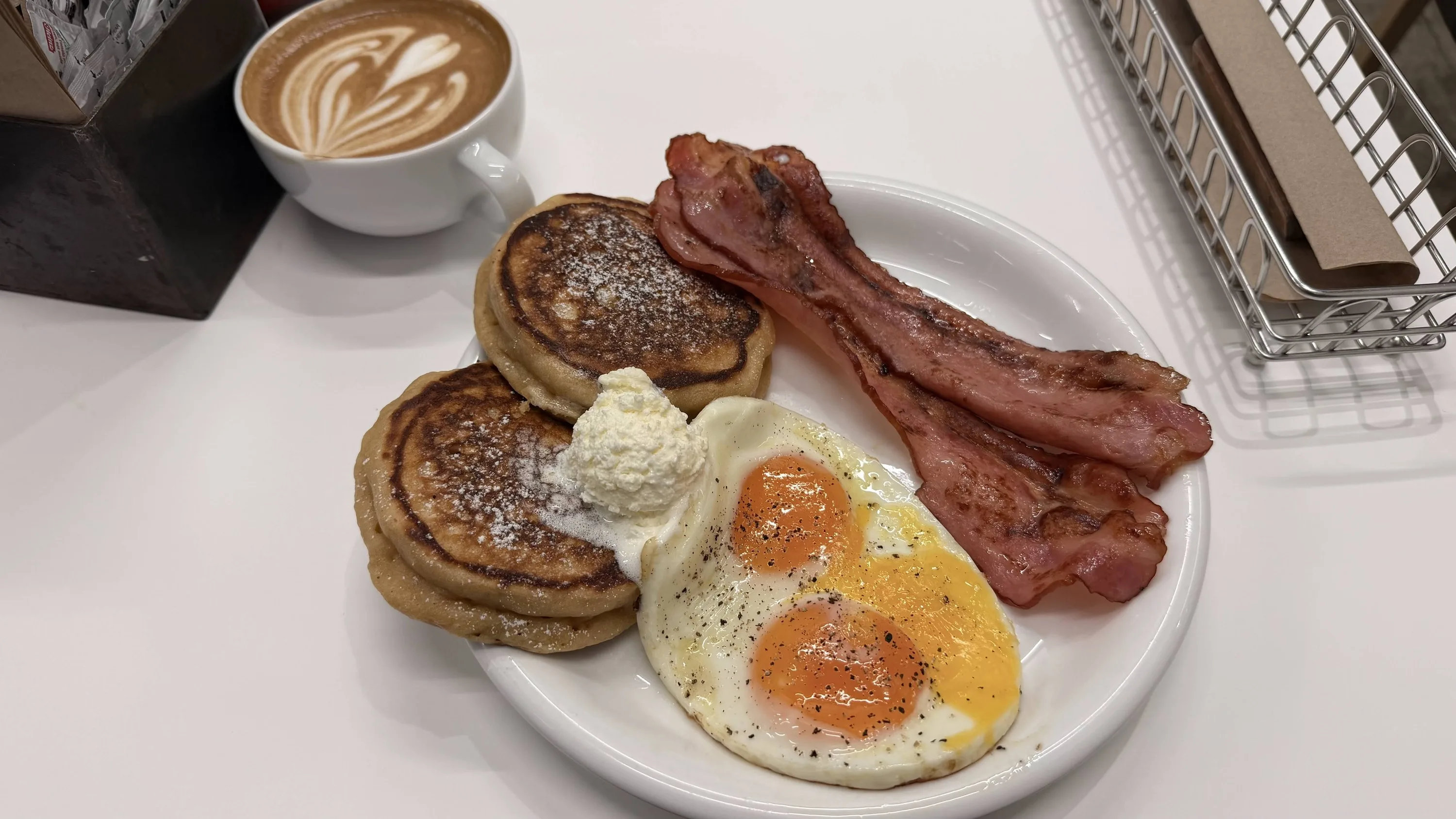
There is no breakfast included and no breakfast restaurant, so plan breakfast yourself. A 7-Eleven sits downstairs: rice balls, bread and drinks are a few steps away, and heating them up in the room kitchen is the easiest option. For something freshly made, walk toward Nihonbashi, but leave enough time and do not pack the morning too tight.
Eating in the room means looking after the manga: keep books away from the dining table and put a lid on drinks before carrying them to the reading corner. I keep the table for eating and the sofa for reading, so the books stay free of grease and the tableware gets washed and put away after use.
For a late-night snack, the 7-Eleven downstairs covers it: buy food, heat it in the kitchen, and there is no need to go out after dark. For something freshly made in the morning, walk toward Nihonbashi with time to spare, and keep food away from the manga when you bring it back.
Access, station exits and luggage
Address: 1-10-12 Nihonbashi-Bakurocho, Chuo City, Tokyo 103-0002, Japan.
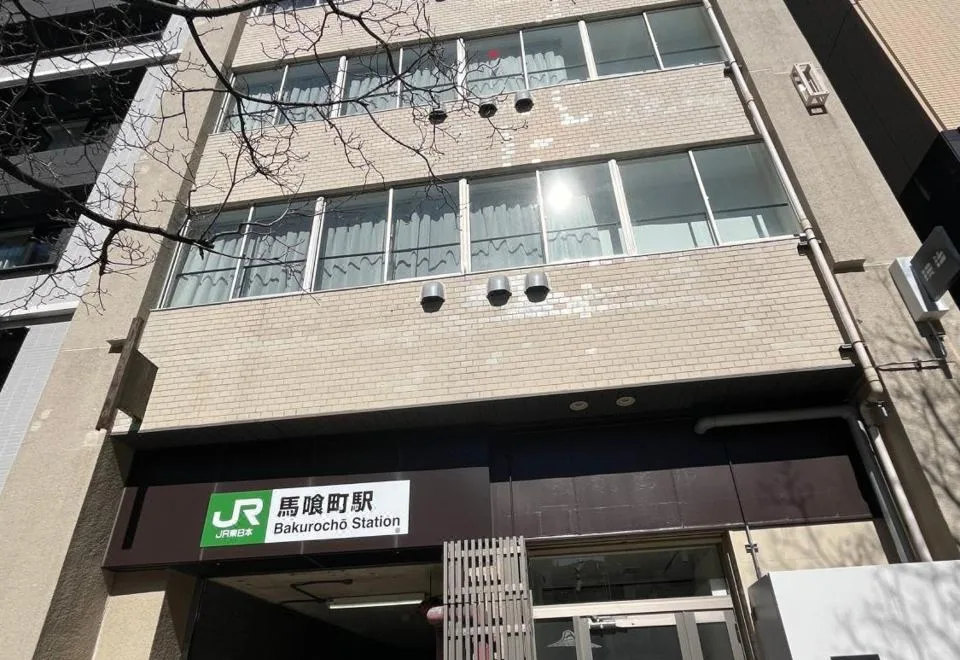
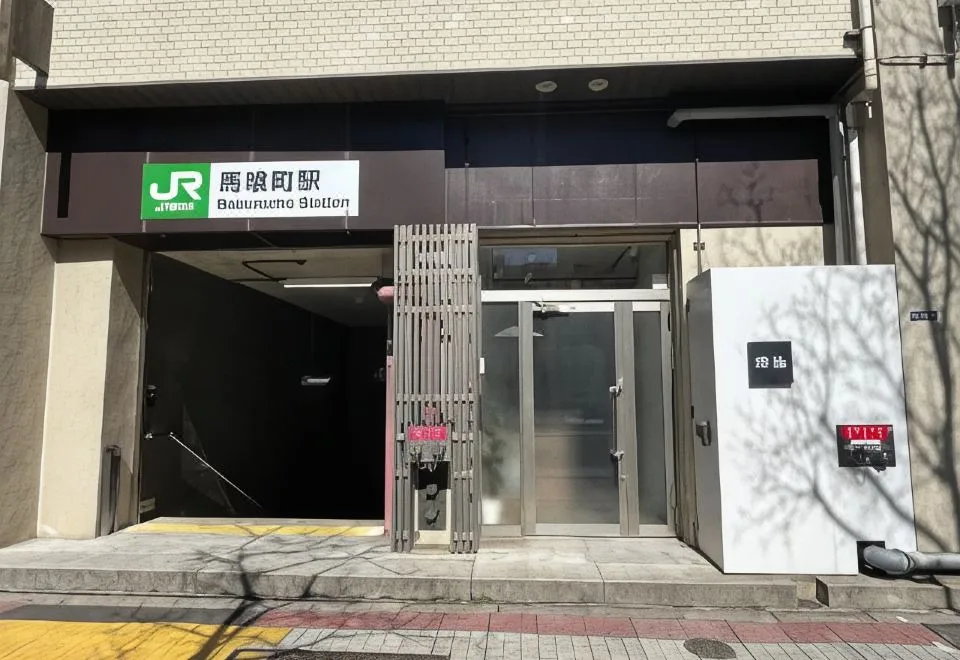
Bakurocho Exit 4 is close to the building, but the hotel explicitly notes that this exit has stairs only. With bulky suitcases or strollers, use the A4 elevator exit serving Bakuroyokoyama/Higashi-nihombashi. The official above-ground walk is about four minutes, worth it to avoid carrying cases on stairs.
For large luggage or strollers, check both the platform-to-ticket-gate route and the gate-to-street route. The return elevator must also reach the platform you need. The nearest exit is not always the easiest with baggage.
With large luggage, a stroller or a wheelchair, I go straight to the A4 exit of Bakuroyokoyama or Higashi-nihombashi: both A4 exits have elevators, and the walk from street level to the hotel is about four minutes, with no suitcases to carry up stairs. JR Bakurocho Exit 4 is right beside the hotel but has stairs only, fastest on foot with empty hands, not with bags. The return trip works the same way: head for an A4 exit first, and the elevators connect platform and street.
From JR Tokyo Station the Sobu Rapid reaches Bakurocho in about five minutes, which makes this a good base for days around Tokyo Station. Higashi-nihombashi is about a five-minute walk, and its Asakusa Line runs direct trains to both Haneda and Narita airports, so arrival and departure days need no transfers with luggage. Akihabara is about a 15-minute walk, Nihonbashi about 1.4 km, Senso-ji and Ueno Park under five minutes by car, and Tokyo Skytree and Tokyo Dome each about 3.7 km. The day’s destinations all sit inside that circle.
Drivers should plan parking first: the hotel lists no car park of its own, but paid parking nearby is plentiful, so check the nearest lot and its rates before booking instead of circling on arrival. Daily life is easy: a grocery store is within walking distance, and the 7-Eleven downstairs plus nearby shops cover food and supplies. This area belongs to the Tokyo Station and Nihonbashi district, an easy walk to Nihonbashi and Tokyo Station by day and quiet at night.
Short stays and multiple nights: know the restrictions
The official rules say no cleaning during consecutive nights, no luggage storage before arrival or after checkout, and no luggage delivery service. This suits groups happy to tidy up themselves and spend evenings reading. Bring toothbrushes, sleepwear, razors and slippers. Even for one night, arrange where luggage will go before check-in.
Check-in runs 16:00 to 22:00 and checkout is before 11:00. Staff are at the front desk only from 10:00 to 18:00; outside those hours, register online in advance and check in by video call with staff, fully contactless, with no deposit. If a late flight means you cannot make it by 22:00, ask how to get in when you book instead of finding the desk unstaffed on arrival.
The building has an elevator, free Wi-Fi in public areas, non-smoking public spaces, and staff who speak English and Japanese. Safety equipment includes a first-aid kit, safety alarm, smoke detectors, CCTV in public areas, fire extinguishers and security staff. The hotel opened on 1 April 2024 in a seven-storey building, and the top floor holds a drop-in shared work lounge, useful if you want a place to use a laptop during the day.
Cleanliness in the bathrooms and public areas is a point in this hotel’s favour: the bathrooms are well kept and the common areas stay tidy even with ten people sharing them. The beds are comfortable, and every bunk has its own socket, so phones, watches and earphones charge separately without a fight. Enough sockets and bathrooms for everyone is what makes a group stay here run smoothly.
Staff are at the desk only from 10:00 to 18:00, so anyone arriving later checks in by video: register online first, then call staff on video at the door to get in, without meeting anyone in person. First-timers should charge the phone and check the signal before arriving, because a dead battery at the door is a bad start. Checkout is before 11:00, so pack bags first and leave without a last-minute rush.
Photos of manga, beds and common areas
The photos group different angles to show bed-side passages, washing space and room layouts. They may represent different arrangements, so use your reserved category to confirm the actual setup.
Manga reading and beds
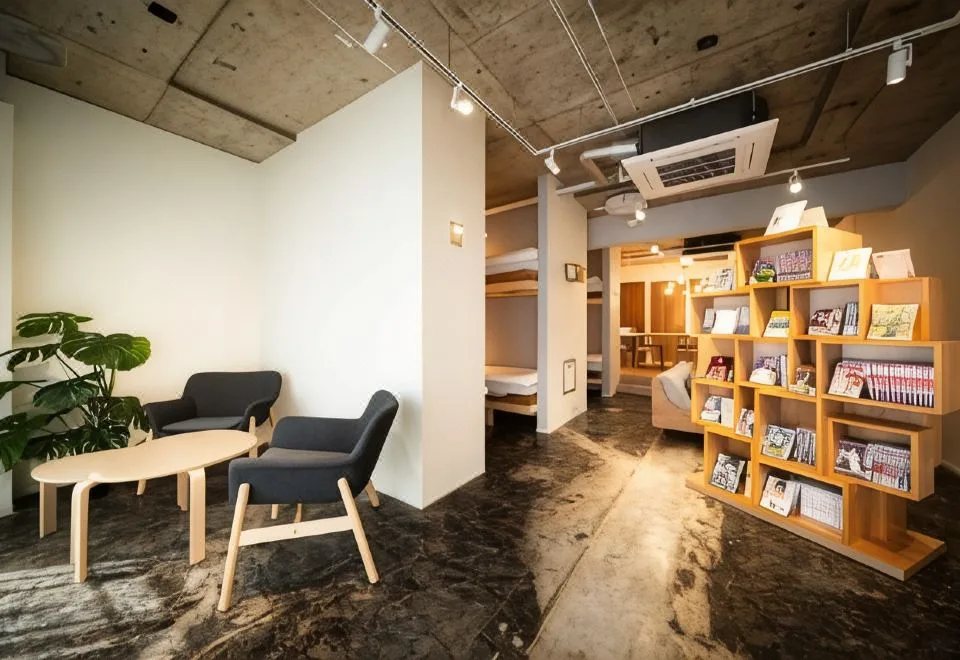
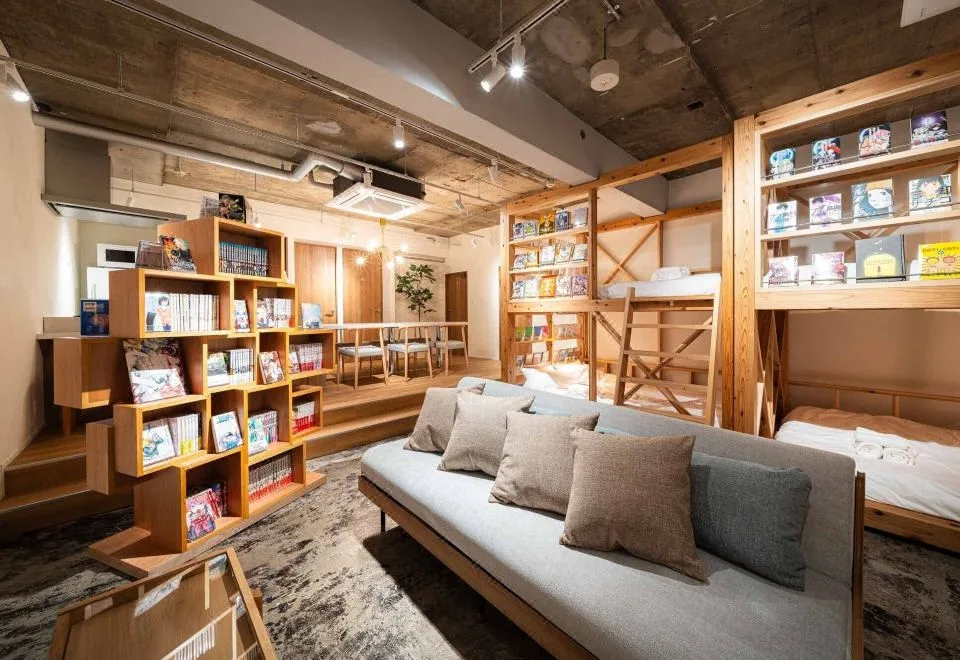
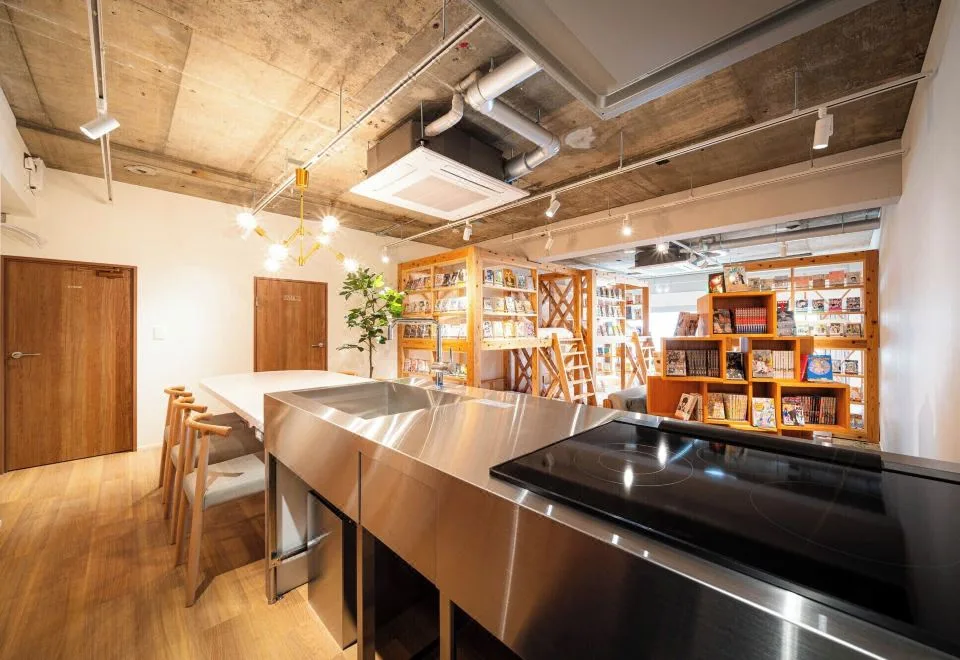
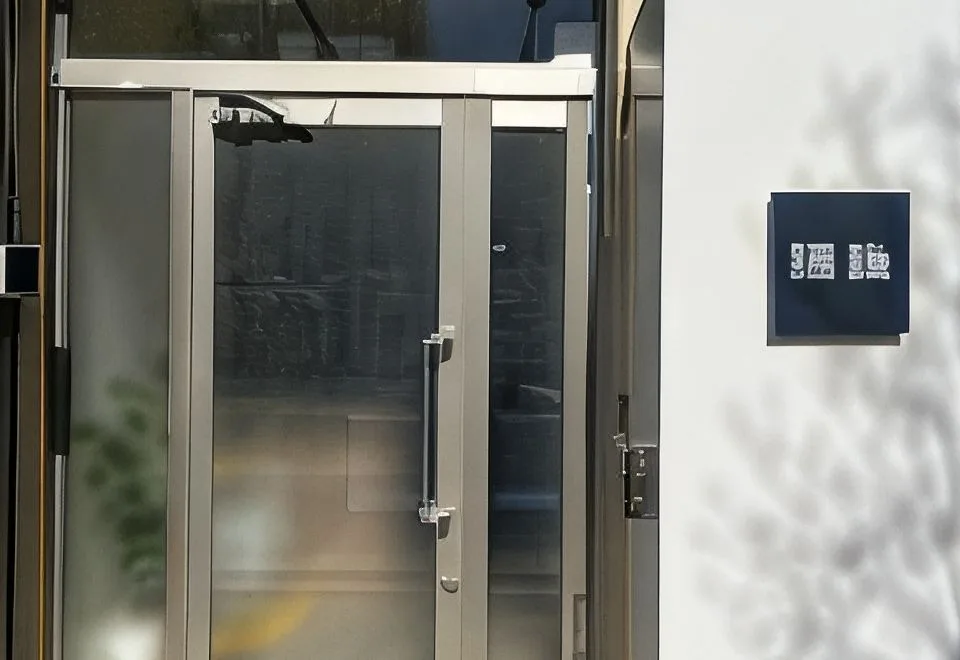
Building entrance and station location
How I’d plan a stay
Use Bakurocho as a transport base and visit Nihonbashi or Higashi-nihombashi during the day, then read manga in the evening. For an early checkout, pack the previous night rather than disturbing others by sorting bags next to the bunks at dawn.
If you are a group of four to twelve who want the evening for manga and conversation, this place fits you well. For one or two people, a 75 m² full floor is more space than you need. The bunks and bathrooms go unused, and a regular double room makes more sense. Think twice if you carry a lot of luggage, travel with small children, or want daily housekeeping: there is no luggage storage and no cleaning during a stay, and toothbrushes and sleepwear are yours to bring, so the longer you stay, the more you do things yourself.
For planning, I would use this place as a base around Tokyo Station: arrive at Tokyo Station and drop bags on day one, walk to Akihabara and Ueno on day two, and take the direct airport train from Higashi-nihombashi on day three without changing hotels or moving luggage. A longer stay works too: the washer-dryer is in the room, so pack light, buy groceries and cook for yourself, and the spending beyond the room rate stays low.
Pros and cons at a glance
Pros
- A full 75 m² floor: Type A sleeps up to 10, Type B up to 12, so a group stays together instead of splitting across rooms.
- Around 400 manga volumes, a long sofa and a reading table. The evening reading starts the moment you come back.
- Two showers, two toilets, two washbasins, plus a washer-dryer and an induction kitchen.
- JR Bakurocho is under 100 metres away, and the A4 elevator exits at Bakuroyokoyama and Higashi-nihombashi are about a four-minute walk.
- A 7-Eleven sits downstairs, and online pre-registration with video-call check-in means no deposit and no queue at the desk.
Cons
- No luggage storage, no luggage delivery and no cleaning during a stay; bring your own toothbrush, sleepwear, razor and slippers.
- No extra beds or cribs in any room type, so the headcount has to be settled before booking.
- JR Bakurocho Exit 4 has stairs only. With large luggage, walk to an A4 elevator exit instead.
- No breakfast is served and there is no breakfast restaurant; buy breakfast and cook it yourself.
- Staff are at the front desk only until 18:00 and check-in ends at 22:00, so late arrivals must ask how to get in when booking.
Information checked: November 22, 2026.