
TOKYO / CHUO
Premium Apart MONday GINZA EAST
Premium Apart MONday GINZA EAST
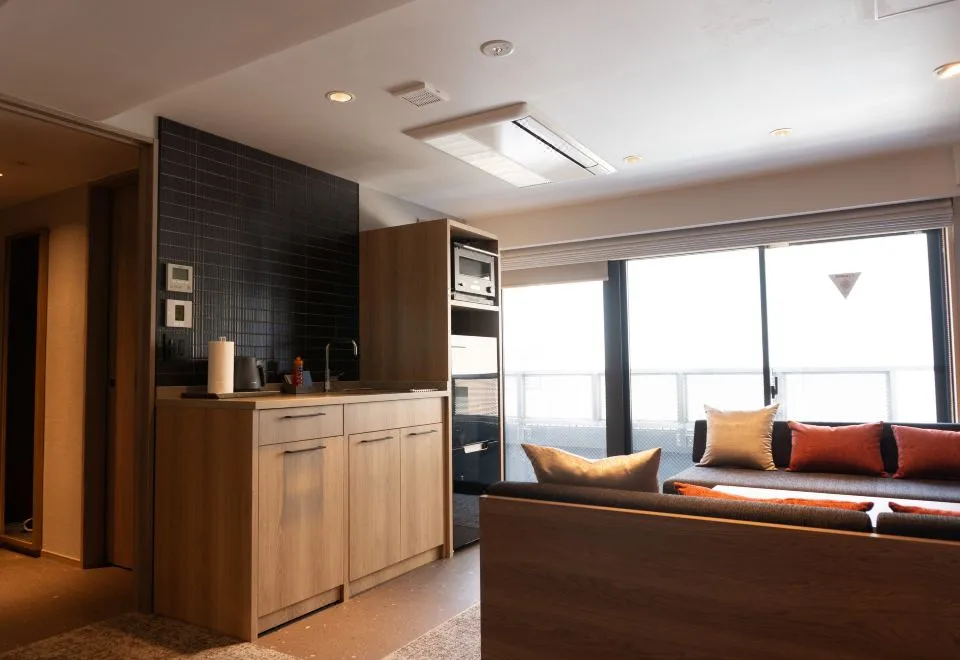
If everyone in your family wants space to unwind after a day out, start by looking at the room layout here. The kitchen, sitting area and in-room washing machine make this a practical choice for several nights, especially when you bring dinner back to the apartment. The property is in Irifune; use the complete hotel name when navigating, as other MONday properties are nearby.
Is this apartment hotel right for you?
- Room choice: Basic Room 2 has no kitchen. A one-bedroom suite works better when you want separate sleeping and living areas.
- Cooking: Many rooms with a kitchen do not have a stovetop. Plan on reheating or simple food preparation, not full cooking.
- Luggage: Use the elevator exits A2/A3 at Hatchobori station.
Choose the sleeping setup before comparing living space
For two guests, start with Basic Room 2 at 25.67 or 29.14 m², with two 120 cm beds but no kitchen. Standard Room 3 is 29.78 m², with a 140 cm bed and a 90 cm sofa bed. Four guests who do not want to fold away the sofa bed every day can compare Superior Room 4, at 31.97 or 35.44 m², with two 140 cm beds.
For six guests, compare the one-bedroom Suite 6 at 43.37–44.73 m² with the 52.29 m² Premium Suite 6. Both offer two 140 cm beds and two 90 cm sofa beds; the larger unit leaves more room for living. The hotel notes that many kitchen-equipped rooms lack a hob, so a kitchen should not be mistaken for permission to cook over a flame.
Compare the hotel’s room and amenity information with the exact room type on your reservation.
Count people, luggage and kitchen needs together before you choose. Two people on a short stay with light luggage can sleep fine in the 25.67 m² Basic Room 2 — the trade-off is no kitchen, so late-night food has to be brought back and eaten in the room. For separate sleeping and living areas, the 29.78 m² Standard Room 3 adds a 90 cm sofa bed: folded away it works as a small sofa by day, opened up it becomes a bed at night, and the passage gets narrower than the photos suggest when two people try to pass each other.
Four people who do not want to fold a sofa bed away every day should look at Superior Room 4 at 31.97 or 35.44 m², with two 140 cm beds — the simplest sleeping setup. Six people can compare the one-bedroom Suite 6 at 43.37–44.73 m² with the 52.29 m² Premium Suite 6: two 140 cm beds plus two 90 cm sofa beds, and the extra floor area in the larger unit sits mostly in the living area, so open suitcases do not block the door. Travelling with children, know this first: no room type allows an extra bed or crib, and children sharing a bed may still cost extra, so add the children to the booking and compare the total price.
Two people with heavy luggage should look straight at Superior Room 4 at 31.97 m²: two 140 cm beds to sleep apart, one large case on each side, and no taking turns to unpack in the morning. A family of three watching the budget can manage with the 29.78 m² Standard Room 3 and its 90 cm sofa bed — fold it away by day and the living area is free for meals. Six people splitting the cost can compare the one-bedroom Suite 6 at 43.37 m² with the 52.29 m² version: the difference sits in the living area, and on a night when everyone has luggage, the larger one is the one that does not feel crowded.
Breakfast: plan to eat in or head out
The hotel does not serve breakfast. A kitchenette makes it easier to prepare a simple breakfast or late-night snack, especially for children eating on their own schedule. If you prefer a restaurant, plan around the station you are using that day rather than assuming the shops of Ginza are right outside the door. I eat takeaway dinners at the dining table in the room.
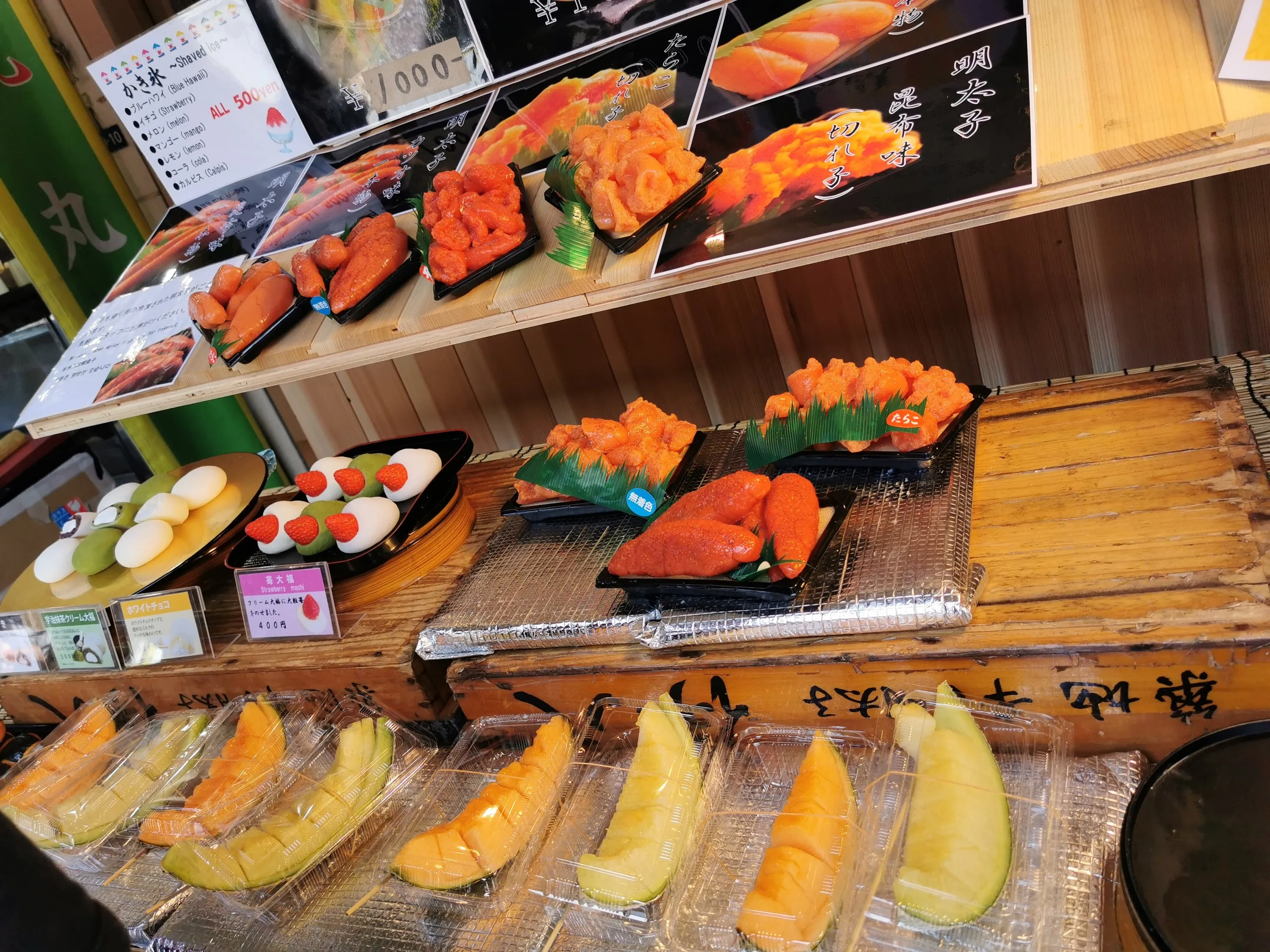
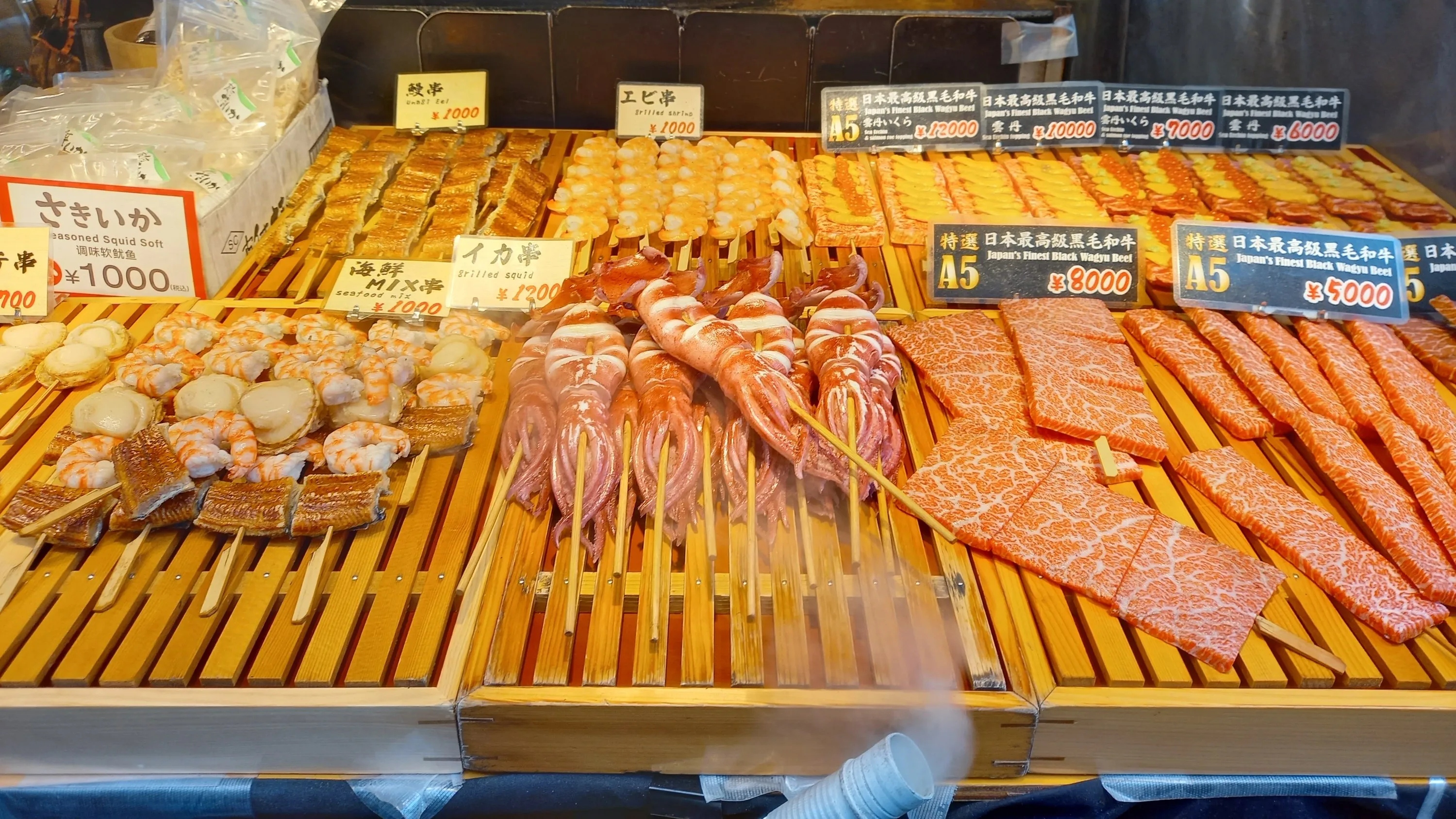
Build breakfast into each day: the hotel does not serve it, so bring dinner back from Ginza or Tsukiji the night before and reheat it in the room kitchen in the morning — the easiest option. For something freshly made, the Tsukiji Outer Market is 1 km away; give it a whole morning rather than settling for a makeshift breakfast in the room. Children who sleep in are no problem — the kitchen is in the room, so you decide when to eat instead of fitting a restaurant schedule.
Ginza is only 430 metres away, but close does not mean outside the door: for a proper dinner, walk about 960 metres toward Ginza-itchome, where the station and a row of restaurants sit, then bring a late snack back on the way home. For bread and coffee in the morning, the shops around Hatchobori outnumber the ones by the hotel entrance — pick something up before your train instead of travelling hungry.
Give the Tsukiji Outer Market breakfast a whole morning: it is about 1 km on foot from the hotel, so eat there first and stroll back without rushing for a train; on the way back, pick up bread at Hatchobori Station for the next morning. For sushi or yakiniku in the evening, the row of restaurants about 960 metres toward Ginza-itchome is the place to look — book ahead before returning to the room, and the popular places need no waiting in line.

Stations and elevator routes for suitcases
Address: 1-9-12 Irifune, Chuo City, Tokyo 104-0042, Japan.
The usual walk is around four minutes from Hatchobori exit A2 or six minutes from Shintomicho exit 7. With large luggage, a wheelchair, or a stroller, use Hatchobori exits A2 or A3, not Shintomicho: exits A2 and A3 have elevators to the street, and from street level it is about a four-minute walk to the hotel. Exit 7 at Shintomicho is the fastest walk when you travel light.
On the Hibiya Line to Hatchobori, leave through the Tsukiji-side ticket gate and take the A2 or A3 elevator to the street, then walk above ground to Irifune 1-9-12. Between the platform and the gate there is no direct elevator — a stair lift runs there, operated with staff help — but once you are through the gate, the elevator takes you to the street without carrying luggage up stairs. On the JR Keiyo Line to Hatchobori, exit B2 also has an elevator; from there walk the same way toward Irifune.
The return trip works the same way: head for the A2 or A3 elevator exits rather than the nearest stair exit, and check that the return elevator connects to the platform you need. Allow extra time on arrival day — the elevator exit and the closest exit are not the same one, and taking the wrong exit means walking back.
The location sits between Ginza and Nihonbashi: Ginza at 430 metres, Nihonbashi at 930 metres, both walkable; Ginza-itchome Station at 960 metres, Tsukiji Outer Market about 1 km, JR Yurakucho Station about 1.4 km and the Tokyo International Forum about 1.5 km. JR Hatchobori Station is only 290 metres from the hotel, about a five-minute walk, and the Keiyo Line runs toward Tokyo Station and Maihama. For a slower day, eat breakfast in Tsukiji in the morning, drop things off in the room at noon, shop in Ginza in the afternoon and walk back to Irifune in the evening with no transfer.
Hatchobori Station serves two lines: the Hibiya Line toward Tsukiji and Roppongi, and the Keiyo Line toward Tokyo Station and Maihama. Ginza-itchome Station is 960 metres away, with the Yurakucho Line toward Ikebukuro and Shinkiba, handy for Toyosu and Tsukishima too. The hotel stands at Irifune 1-9-12 — navigate with the full name, Premium Apart MONday GINZA EAST, because other MONday properties sit nearby, and you do not want the wrong building.
The Tsukijigawa Park day camp ground is only 530 metres away as the crow flies — families with children can spend an afternoon there and walk back to the hotel in the evening without a train. The park sits by Tsukiji, so buying cooked food on the way back for dinner in the room is easy. A little further out, the Tokyo International Forum is about 1.5 km away, where exhibitions and concerts are held — walk over in the evening for the view, then take the Keiyo Line back to Hatchobori.
Short stays versus several nights
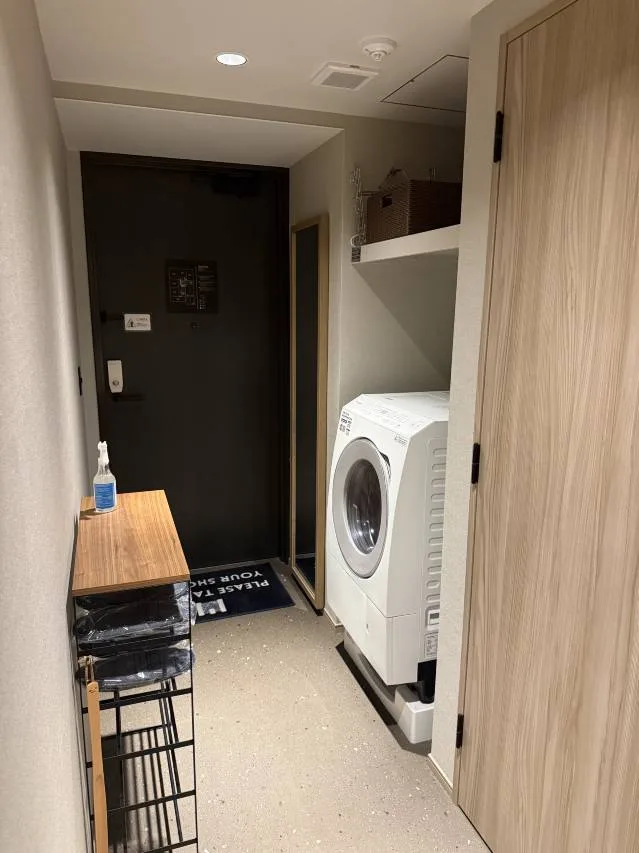
Having a washer in the room is especially helpful for a family staying several nights. Ask about housekeeping and trash collection when you arrive; do not assume full daily cleaning. I check the sofa-bed linen and the room size as soon as I walk in: unfold the sofa bed and look at the passage again, because the opened-up layout feels different from the folded-away photos. The space itself works for a family — what matters is how much room is left for luggage once the beds are open.
The in-room washing machine is the biggest advantage of a longer stay: wash each day’s clothes in the evening and collect them in the morning, so you do not need a week of changes in your luggage. Hang next-day clothes as soon as you return and wash the dirty ones the same evening, and the room never gets messier.
One or two nights, and you do not need to unpack everything — Basic Room 2 is enough. Three nights or more, and the in-room washing machine and kitchen start to earn their keep: wash clothes daily, make breakfast yourself, and the room rate works out better than eating out every day. The longer you stay, the more the one-bedroom layout pays off — one person can get up early without waking the other, and evenings can be spent apart.
On arrival day, look over the room before you head out: open the sofa bed once and check that two people can pass in the passage; open the kitchen and check whether you can cook over a flame — most rooms cannot, so eat a hot dinner out or bring one back; and find the washing machine, because you will use it every day on a longer stay.
Photos: bedrooms, bathrooms and common spaces
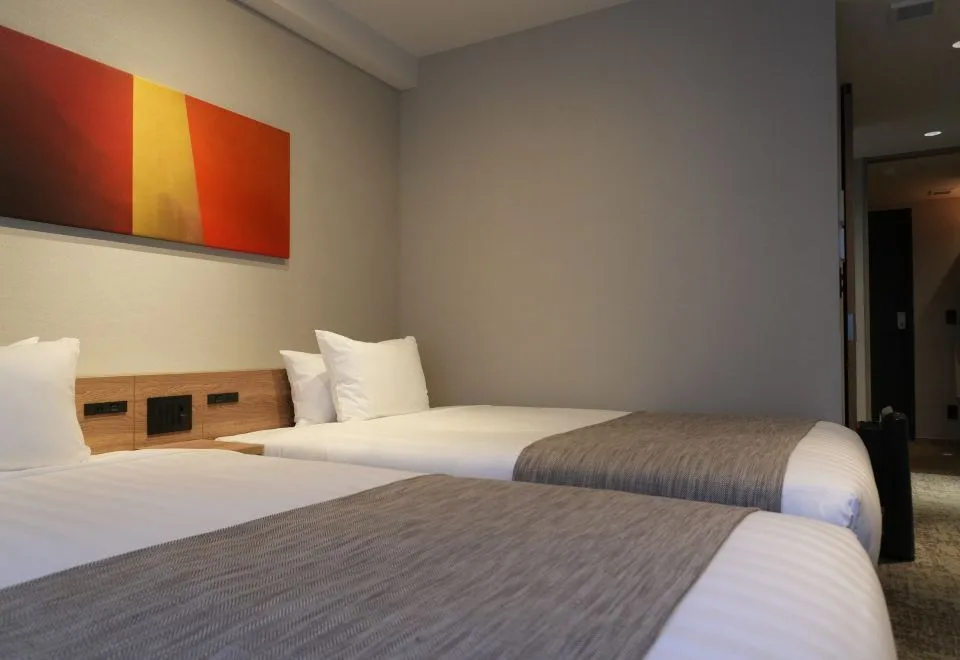
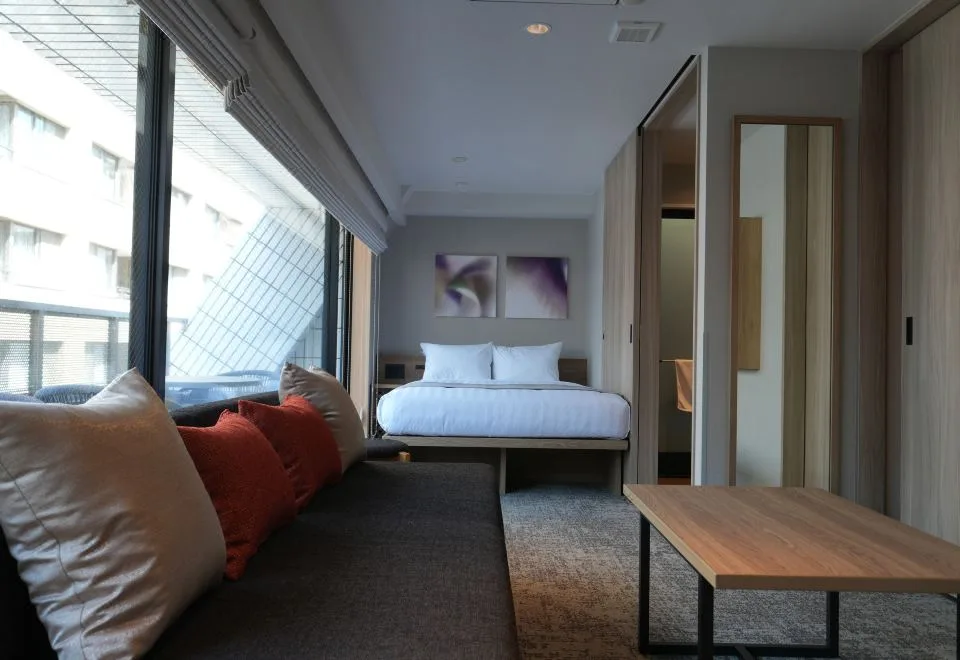
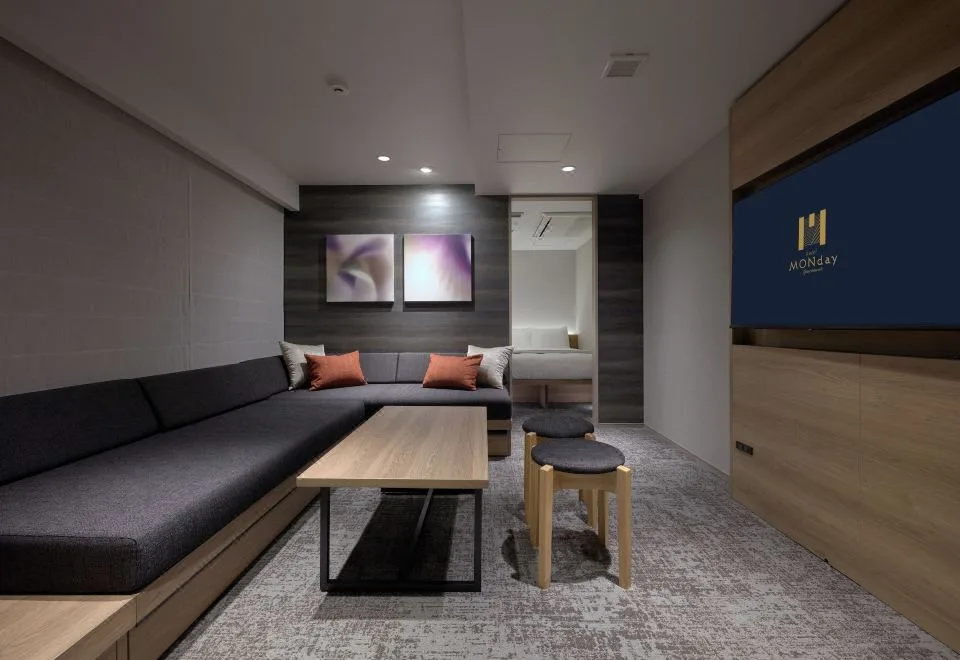
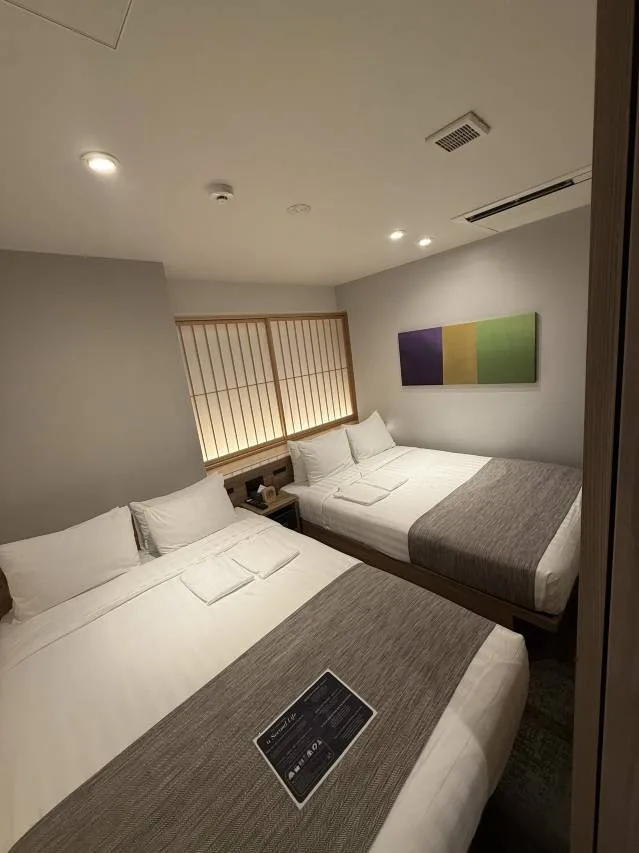
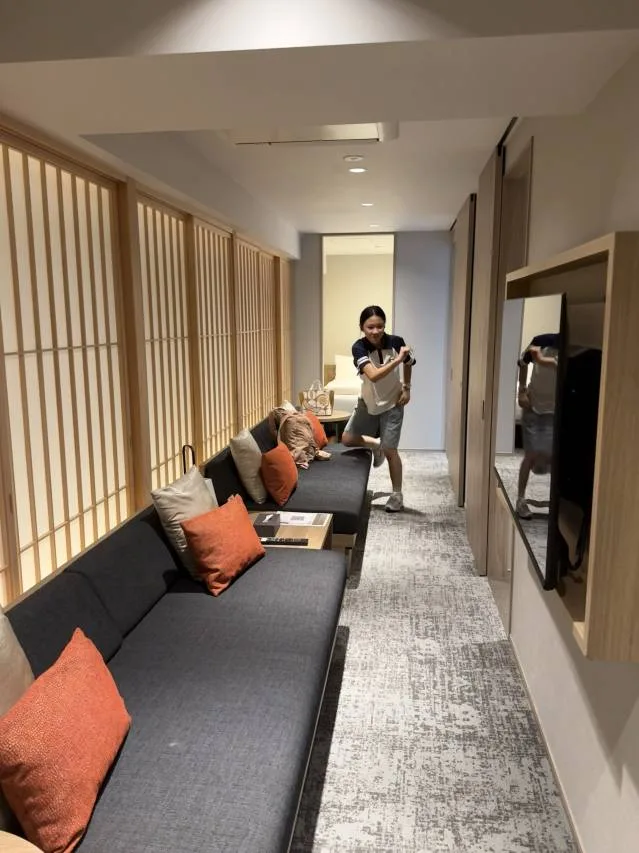
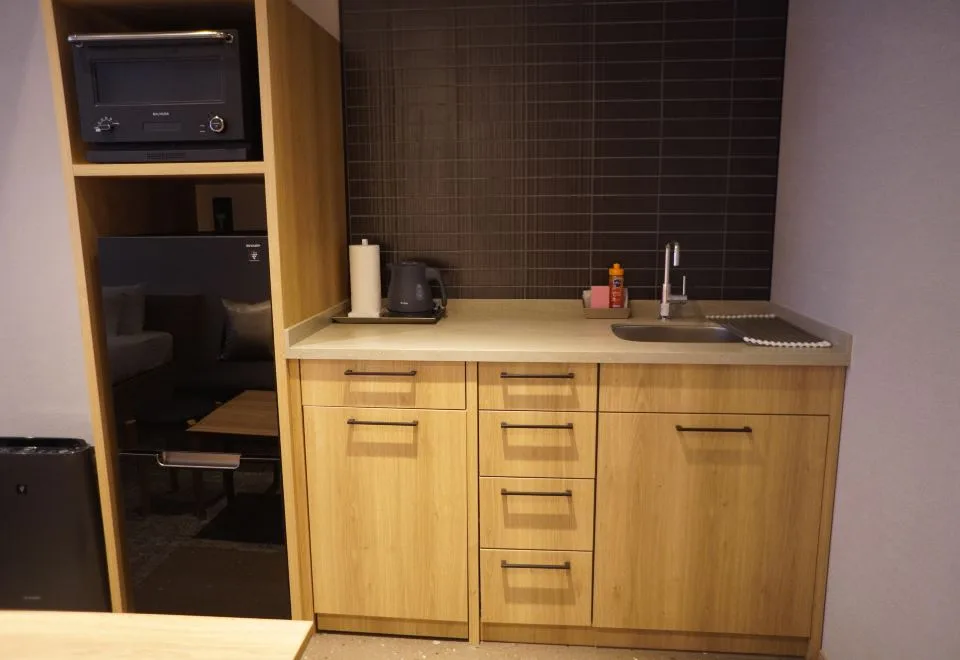
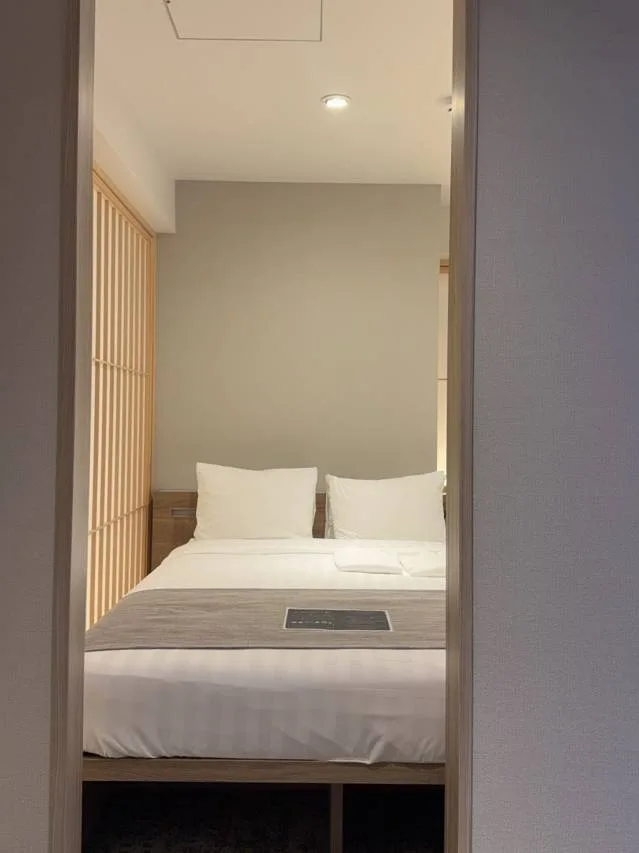
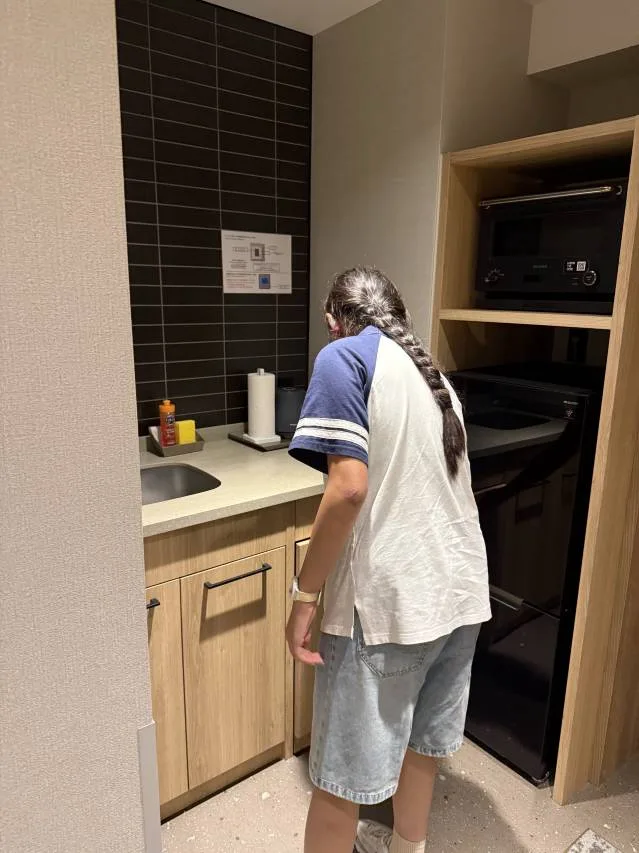
These photographs are grouped by use. Look at the passage beside each bed, the bathroom sink and where luggage can be placed. Photos show different rooms and guest circumstances; compare the exact layout of your booked room.
Bedroom and living room
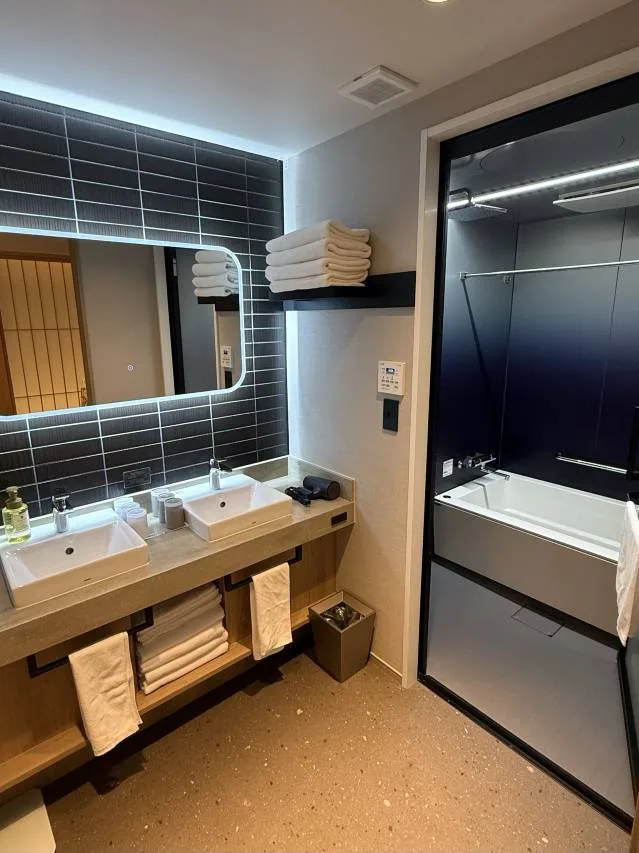
Kitchen, laundry and bathroom
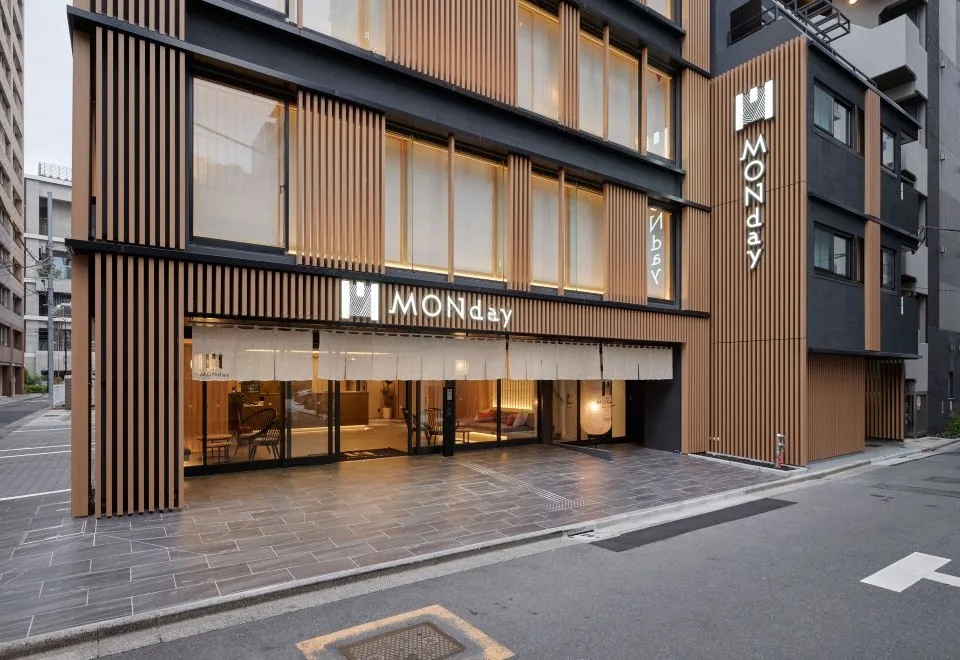
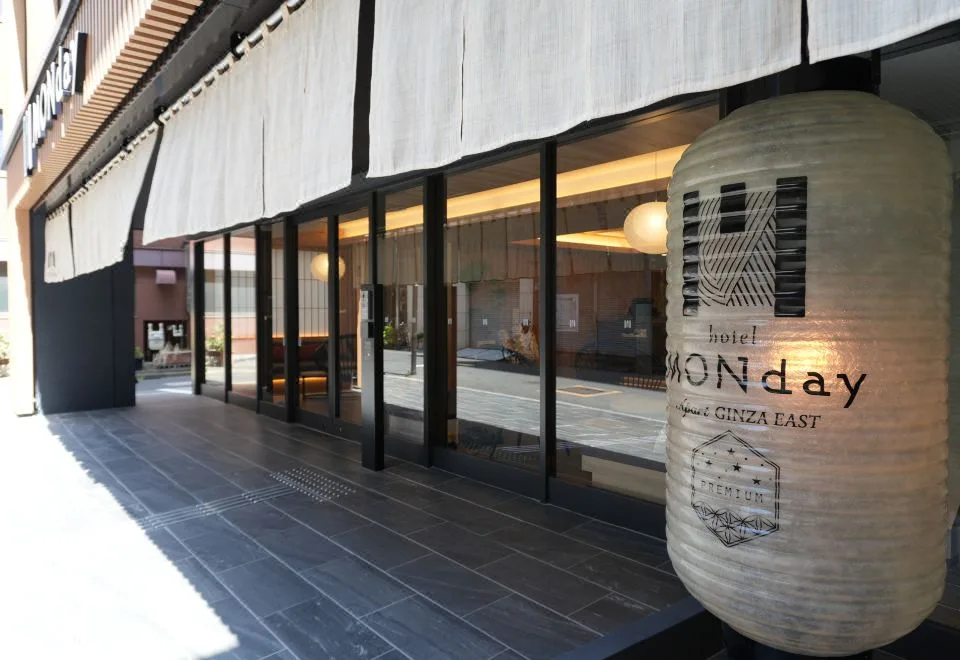
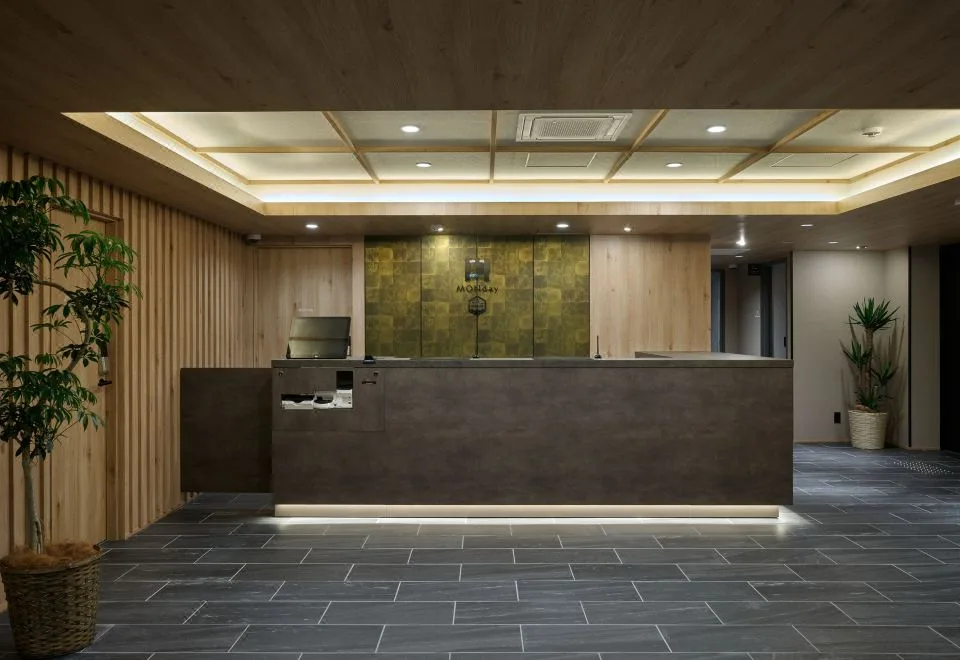
Entrance and lobby
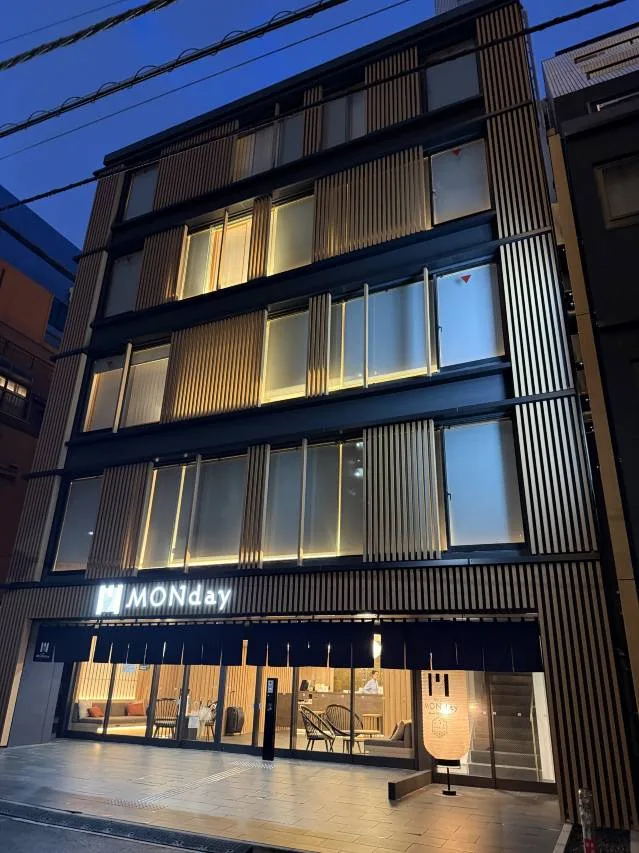
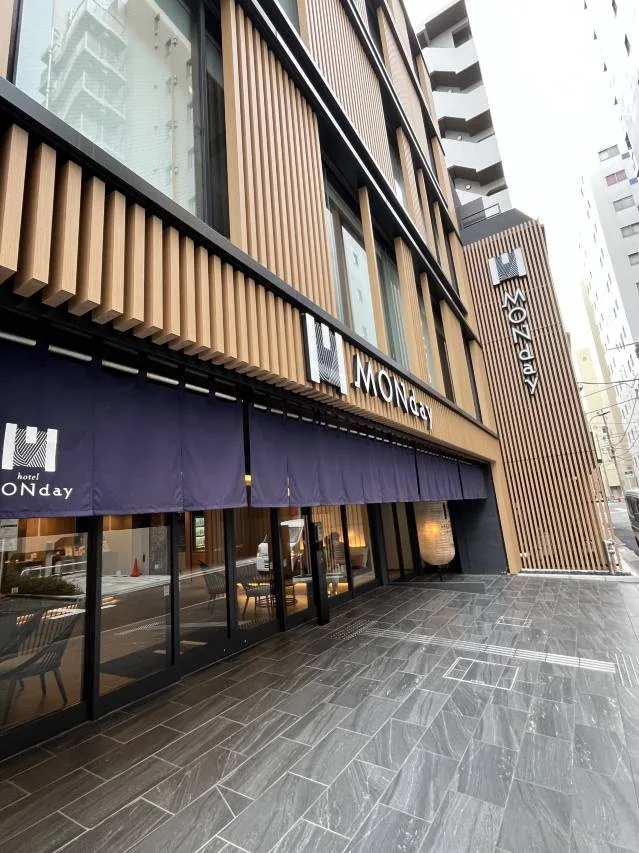
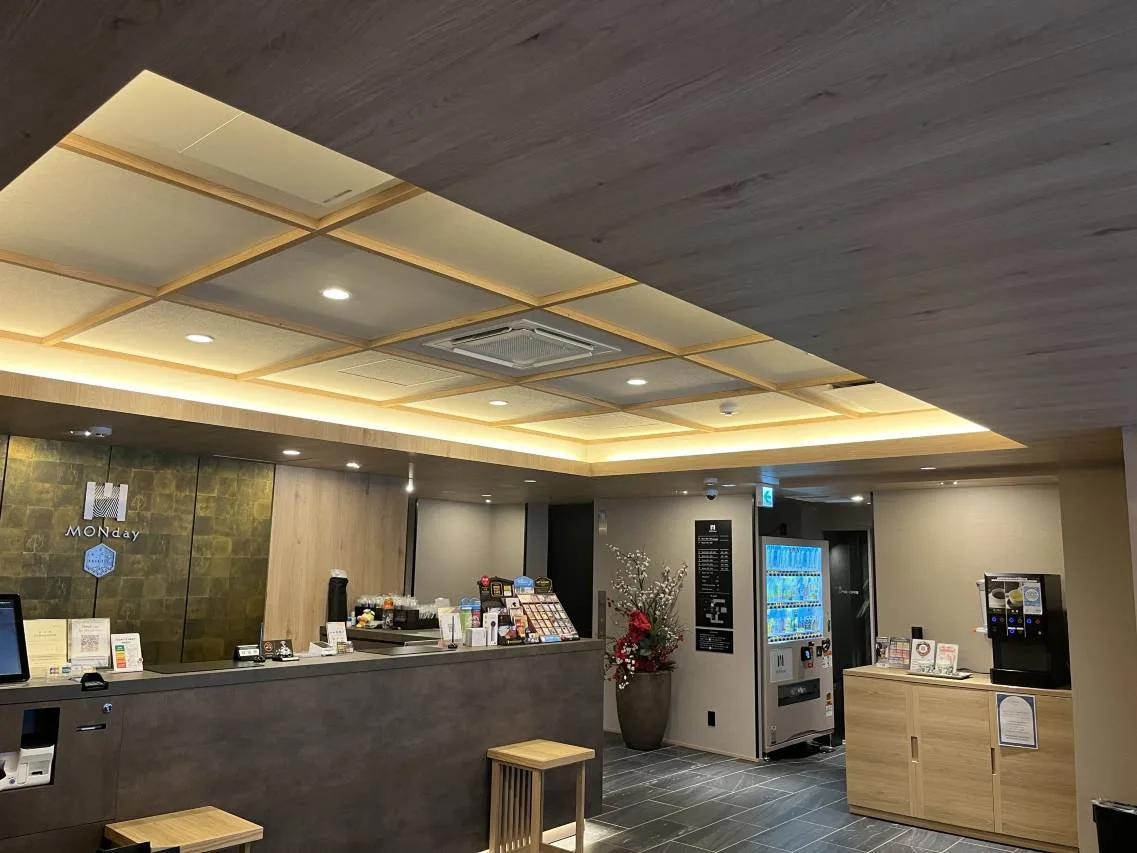
Policies and facilities to know before you check in
Check-in starts at 3 p.m. and checkout is by 10 a.m., with the front desk staffed around the clock. Guests must be at least 18 to check in. No deposit is required, and you can pay at the hotel in cash or by card. Children of all ages are welcome, but no room type allows an extra bed or crib, children sharing a bed may still cost extra, and you should add the children to the booking. Pets are not allowed, and neither are service animals — settle that before you book.
Three facilities matter most here: the private car park inside the hotel — paid, book ahead, very few spaces; free luggage storage, so you can shop after checkout without dragging a case; and free Wi-Fi in the public areas. The in-room washing machine and kitchen cover daily laundry and breakfast during a longer stay, but most kitchen-equipped rooms have no hob, so cooking means reheating, not cooking over a flame.
How I would plan a stay
Use Hatchobori for transport, allow a morning for Tsukiji breakfast and another half day for Ginza shopping, then make one evening an early return to wash clothes and organize purchases. Checkout is relatively early, so dry your laundry and pack before the last night ends.
Decide it this way: first, how many people and how many nights — two people on a short stay take Basic Room 2, three or more, or anyone who wants sleeping and living kept apart, should look at a one-bedroom suite. Then breakfast and laundry — if you are happy handling breakfast yourself and washing clothes daily, this place fits. Finally transport — if you ride the Hibiya or Keiyo Line often and carry heavy luggage, remember the Hatchobori A2 and A3 elevator exits. If all three line up, book it.
After a day shopping in Ginza, drop your purchases in the room first, then go out for dinner — no carrying bags back late at night. On the Tsukiji breakfast day, head out early, come back for a nap, and walk around Nihonbashi in the afternoon.
Pros and cons at a glance
Pros
- The one-bedroom suite keeps sleeping and living apart, so a family returning to the room does not have to crowd around one bed.
- An in-room washing machine and kitchen make several nights easy — no laundromat hunt, and takeaway dinner has somewhere to be eaten.
- Room types are split clearly by headcount: two guests at 25.67 or 29.14 m², three at 29.78 m², four at 31.97 or 35.44 m², six at 43.37 to 52.29 m², with bed widths stated per type.
- Hatchobori exits A2 and A3 have elevators to the street, and the hotel is about a four-minute walk from there.
- Check-in from 3 p.m., checkout by 10 a.m., front desk staffed around the clock, and luggage can be left at the hotel.
Cons
- Most kitchen-equipped rooms have no hob, so cooking means reheating and simple preparation, not cooking over a flame.
- The hotel serves no breakfast — mornings either start in the room kitchen or out at a restaurant.
- No room type allows an extra bed or crib, so travelling with children means counting heads and fees first.
- Check the sofa-bed linen and the room size when you walk in: the passage narrows once the sofa bed is open.
- The private car park costs JPY 4,000 a day, has very few spaces and must be booked in advance; checkout at 10 a.m. is early, so pack the night before.
Information checked: November 21, 2026.