
TOKYO / CHUO
WAYPOINT TSUKIJI TOKYO
WAYPOINT TSUKIJI TOKYO
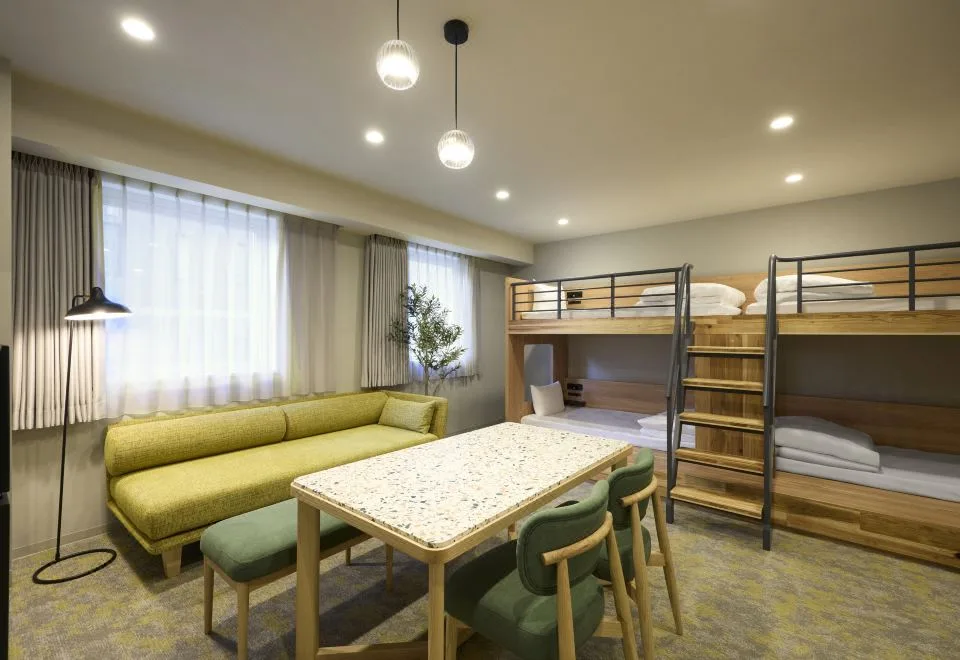
WAYPOINT TSUKIJI TOKYO works well for families and friends who want to stay together with Tsukiji breakfasts within walking distance. Wooden bunk beds, dining tables and sitting areas give the rooms an easygoing, hostel-like feel. Anyone who dislikes climbing ladders should look first at room types with standard beds.Tsukiji Station is a two-minute walk, and the Tsukiji Outer Market and Ginza are both within strolling distance.
Is it the right fit for your group?
- Choose beds first: Decide who sleeps where, then compare the bathroom and floor space for bags.
- Breakfast: Prepare something simple in your room or eat nearby without committing to the hotel’s meal schedule.
- For longer stays: Check where the laundry is and how cleaning works; pack before your last morning.
Match the sleeping arrangements to the group’s size
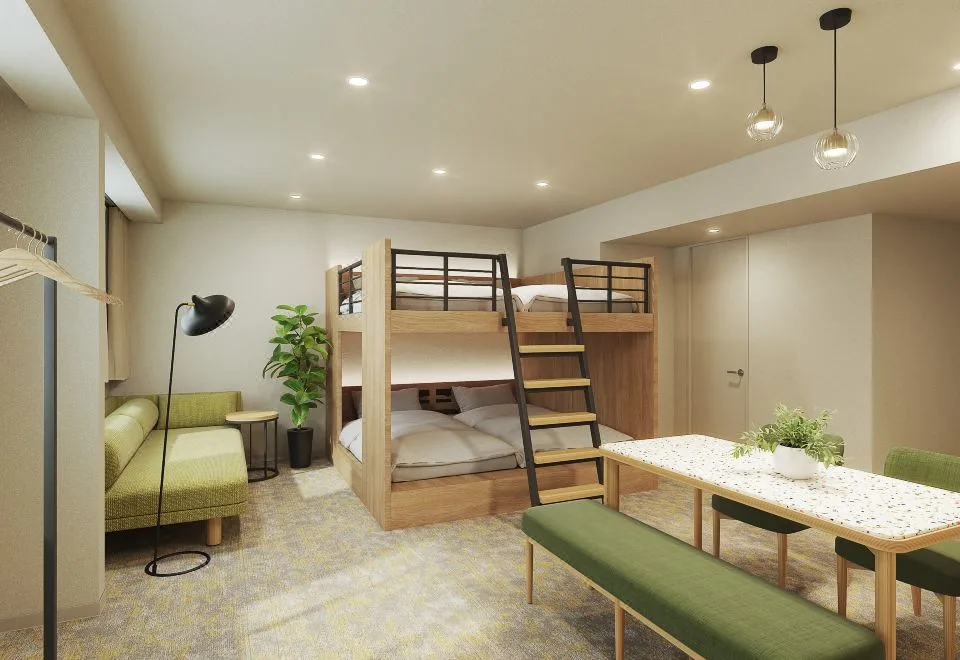
Four guests can compare the 26 m² Compact Bunk, 31.8 m² Standard Bunk and 35.5 m² Superior Bunk. All use bunk beds, with more room to move in the latter two. Three guests who prefer not to climb ladders can consider the 31.8 m² Triple Bed: three regular beds plus a sofa bed, with a maximum occupancy of four.
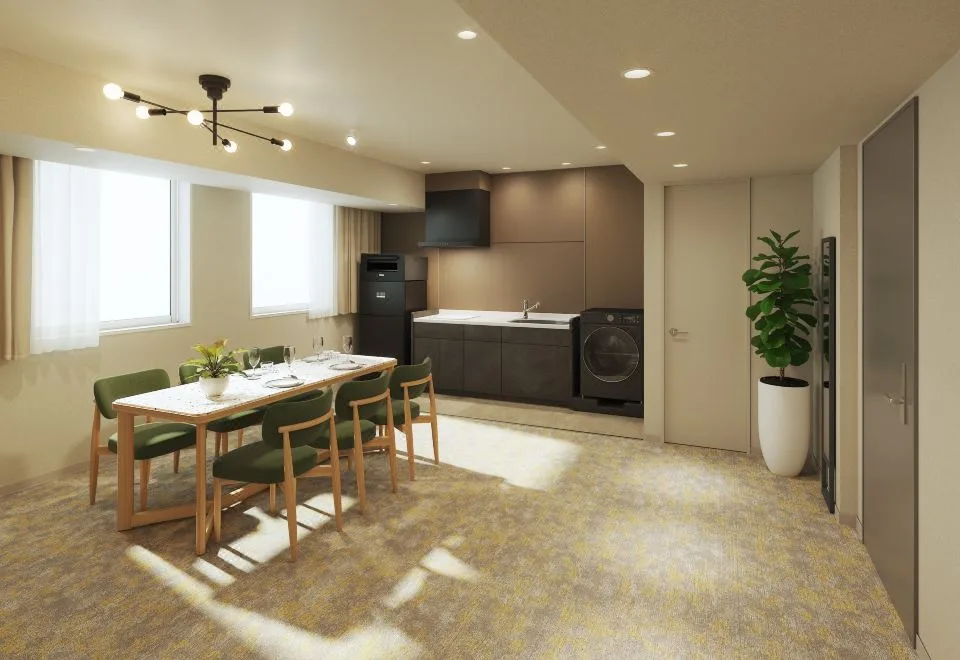
Families of five can compare the 36.9 or 37.2 m² Deluxe Bunk, with bunk beds and a sofa bed. Bathrooms vary by floor between shower-only and bathtub layouts. For six guests who also want in-room food preparation and laundry, the 68.2 m² Suite Bunk has a kitchenette, microwave and washer-dryer, though its bathroom has a shower only. A kitchen makes a bigger difference to a longer stay than the occupancy figure alone.
Four of us, and I start by asking who takes the top bunk. The 26 m² Compact Bunk fits four bunk beds with bags stored against the wall; the 31.8 m² Standard Bunk adds five square metres, just enough for two suitcases to open at once; the 35.5 m² Superior Bunk adds a little more breathing room, so four people taking turns at the washbasin in the morning are not queuing in the corridor. All three have bathtubs — the difference is floor space, so choose by how your group wakes up.
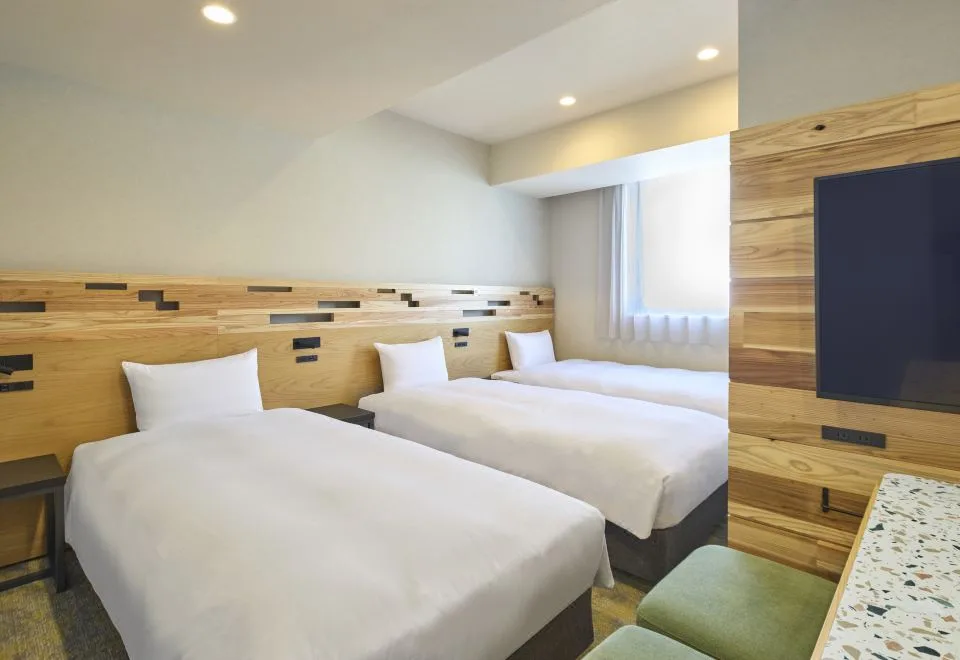
Three people who would rather not climb a ladder should look at the 31.8 m² Triple Bed first: three regular beds plus a sofa bed, sleeping up to four. Its L-shaped layout needs a moment of planning — the corner where bed meets sofa eats a little walkway, so decide which side goes against the wall before opening the suitcases. Five people fit the 36.9 or 37.2 m² Deluxe Bunk, bunk beds plus a sofa bed, with the bathroom varying by floor between shower and bathtub; if you want a bath, ask which floor has the tub rooms.
| Room type | Area and occupancy | Key feature |
|---|---|---|
| Compact Bunk | 26 m² / up to 4 guests | Bunk beds and bathtub |
| Standard Bunk | 31.8 m² / up to 4 guests | Bunk beds and bathtub |
| Superior Bunk | 35.5 m² / up to 4 guests | Bunk beds and bathtub |
| Triple Bed | 31.8 m² / up to 4 guests | Three standard beds plus sofa bed |
| Deluxe Bunk | 36.9 or 37.2 m² / up to 5 guests | Bunk beds and sofa bed; bathroom varies by floor |
| Suite Bunk | 68.2 m² / up to 6 guests | Kitchenette and washer-dryer; shower only |
Six people who also want to cook a little and do laundry in the room need the 68.2 m² Suite Bunk, the only room type where you can cook a little and do laundry in the room. It earns its keep on stays of three nights or more: things bought at Tsukiji during the day can be warmed up in the evening, and clothes washed tonight are ready tomorrow. Its bathroom has a shower only, so anyone who likes a soak should know that in advance.
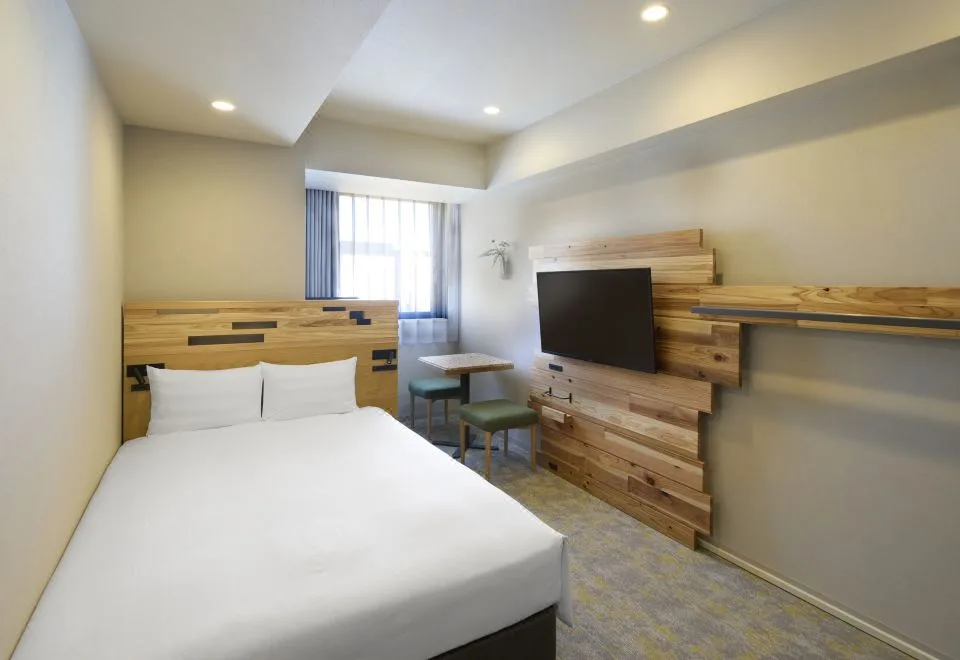
Before booking, I compare the hotel’s official room page with the exact room name and facilities on the booking: the same Bunk name can have a different bathroom on another floor, and the Deluxe Bunk is the one to ask about. The area figures in the table are a starting point; the photos show what the numbers cannot — the passage beside the bed and where the bags actually go.
With small children in a bunk room, I agree with them first that the top bunk is for sleeping only, not for playing; the ladder side stays clear against the wall, so nobody fumbles for it in the dark at night. The bottom bunk goes to the youngest child or anyone afraid of heights, the top to the sound sleeper who never gets up at night — divided that way, the whole family sleeps well.
Between five and six people, the difference is more than a bed count: the 36.9 or 37.2 m2 Deluxe Bunk sleeps five comfortably, and a sixth person means moving up to the Suite Bunk. The Suite adds in-room cooking and laundry, and the price reflects the kitchen and laundry, not one more bed. With the headcount sitting between five and six, ask first where the sixth person sleeps, then decide whether the kitchen is worth the upgrade to the Suite.
Breakfast is outside the hotel
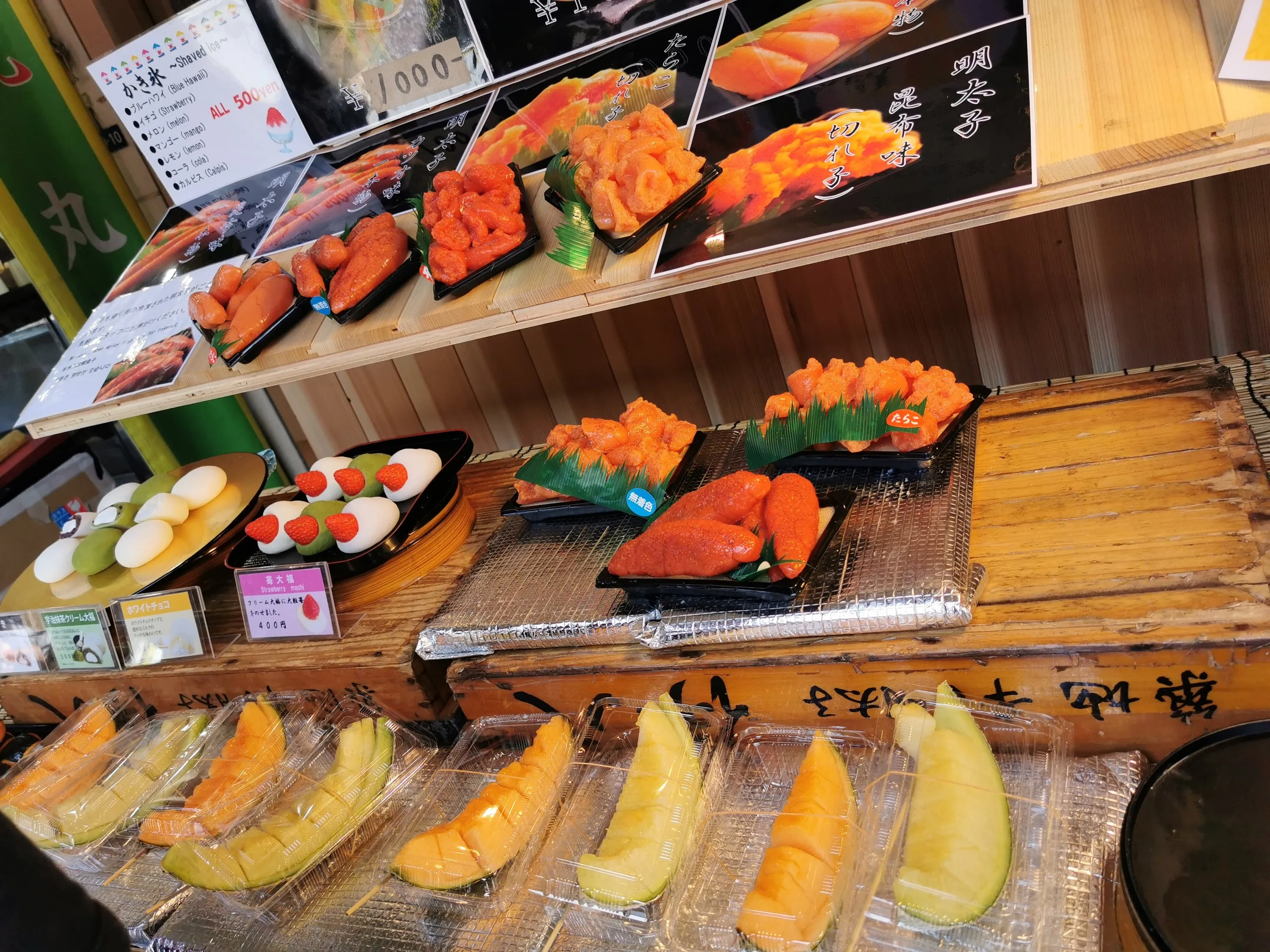
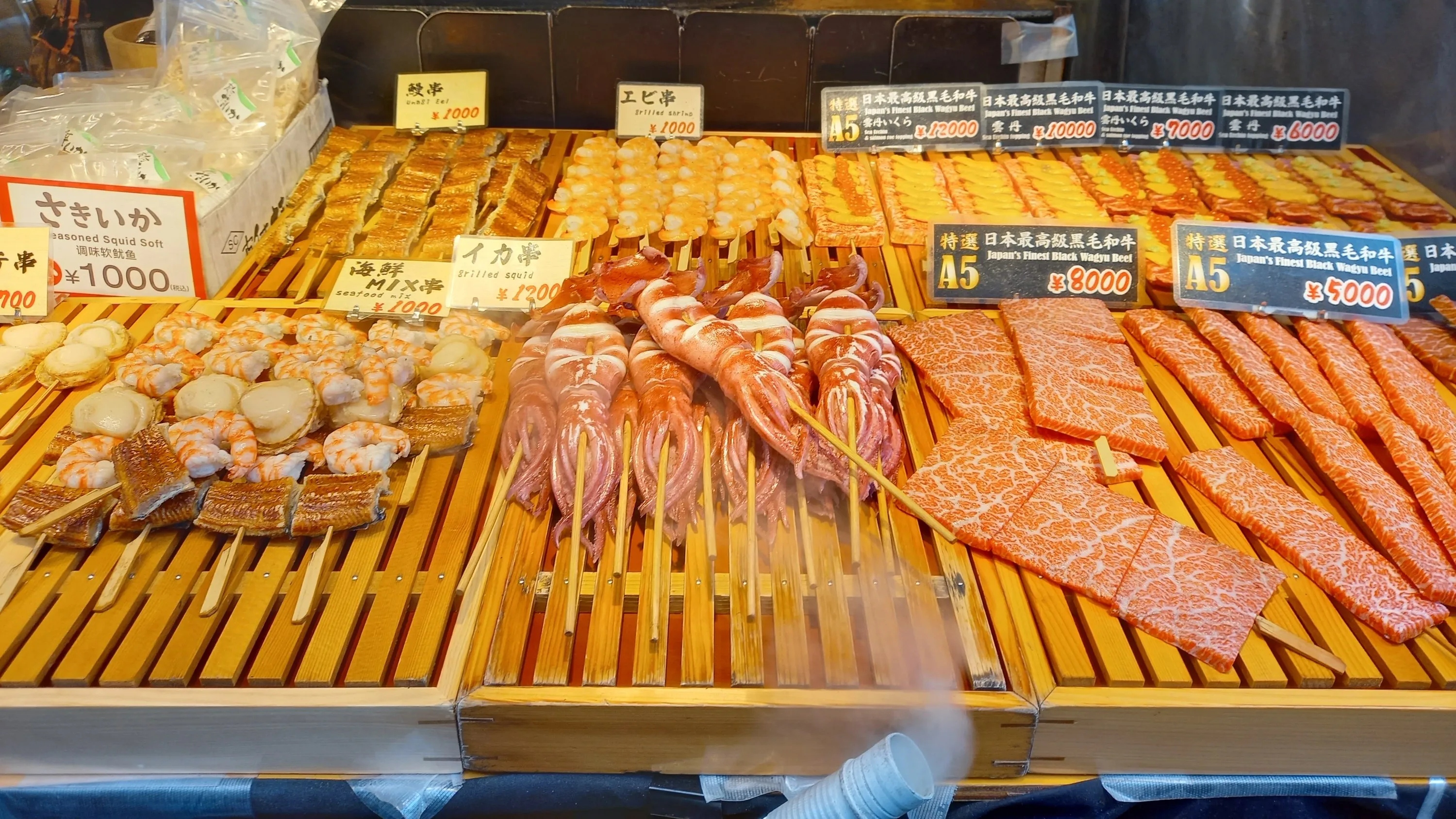
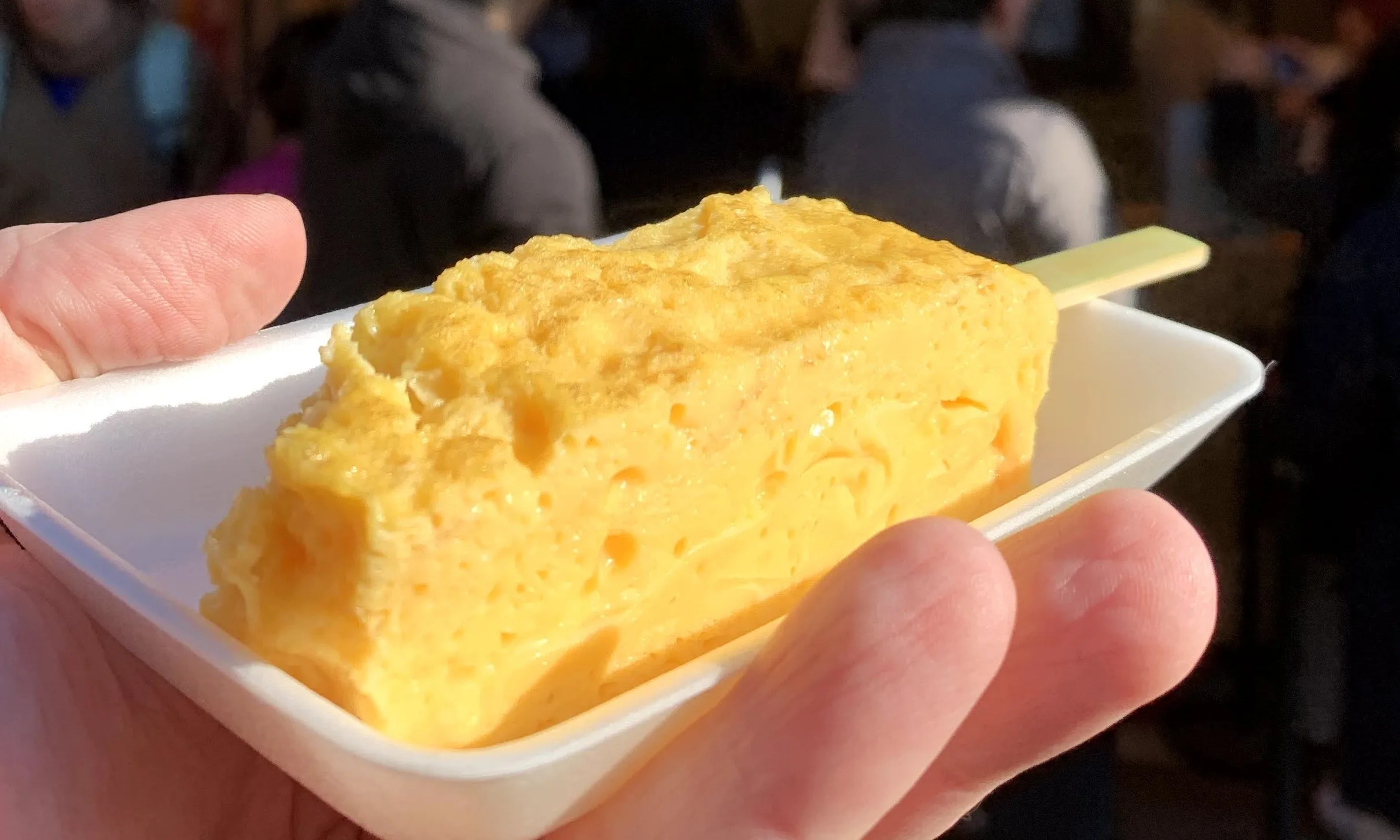
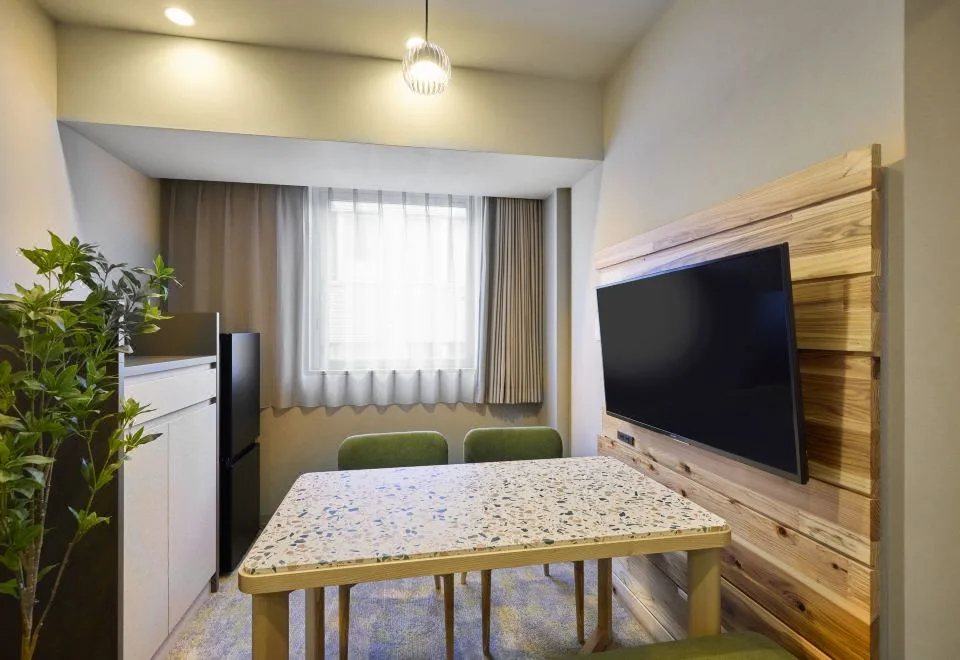
There is no breakfast service in the hotel, and I count that as a plus: the Tsukiji Outer Market is a 420-metre walk, so mornings can start at a sashimi bowl, seafood bowl or tamagoyaki stall; for a quieter start, buy bread at a nearby bakery and eat at the dining table in your room. If you leave early, buy bread and fruit the night before instead of waiting for the market to open.
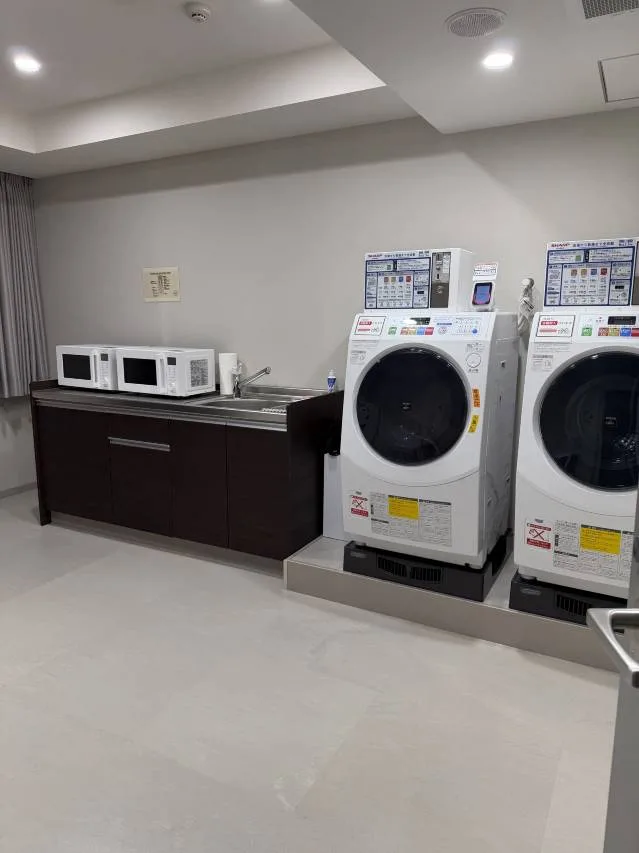
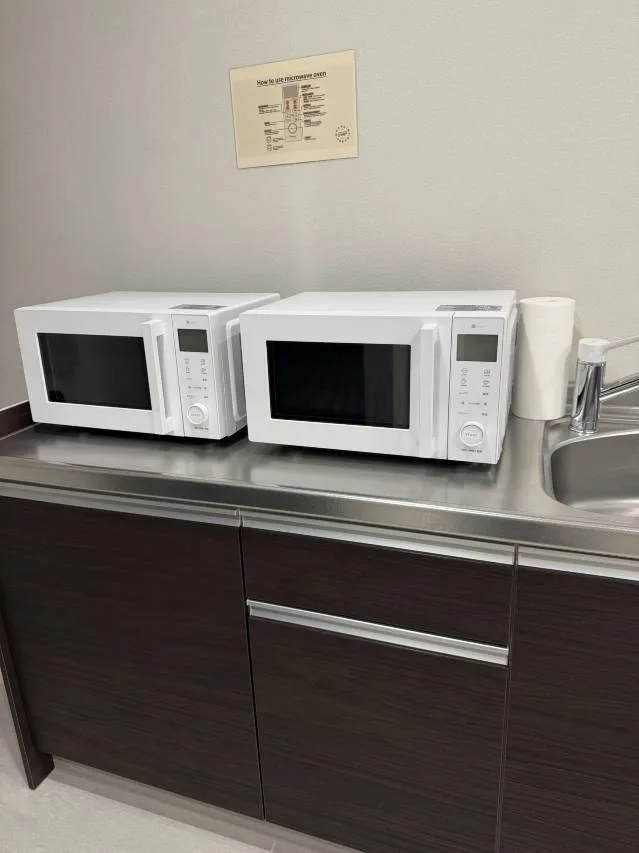
No kitchen in the room is no problem — the shared microwaves on floors 5 to 9 are available around the clock, so a bento or soup bought on the way back can be heated up. The Suite Bunk has its own kitchenette and microwave, so six people never have to queue downstairs. Note where the microwave is on your first day and it serves you for the whole stay.
The Tsukiji Outer Market is busiest in the morning — arrive before eight for the widest choice at the stalls and the shortest queues. Buy tamagoyaki or nori as souvenirs on the way back after breakfast; they fit neatly into a suitcase. Most stalls are stand-and-eat, so with children or a stroller, pick a shop with seats and sit down to eat.
Getting here from Tsukiji Station with suitcases
Address: 2-9-3 Tsukiji, Chuo City, Tokyo 104-0045, Japan.
Tsukiji Station is 110 metres from the hotel, about a two-minute walk. With large luggage, a wheelchair or a stroller, use the Tsukiji Honganji-side ticket gate and take the elevator up to Exit 1 or Exit 2, then walk back along the street to 2-9-3 Tsukiji — no carrying bags up and down stairs at any point. Both segments, platform to gate and gate to street, have elevators, and the return trip uses the same route down to the platform. The Hibiya Line’s two directions have separate gates, so head for the Honganji side once you are off the train.
The hotel sits right between Tsukiji and Ginza: the Tsukiji Outer Market is 420 metres away, Ginza 310 metres, Tsukijigawa Park 200 metres — all an easy stroll. Shintomicho Station is 190 metres away, adding the Yurakucho Line as an option. Nihonbashi is 1.2 km, the Ginza Art Aquarium 910 metres, the Tokyo International Forum 1.3 km and the Imperial Palace 2.8 km, all within walking distance or one subway stop. For Tokyo Disney Resort, walk to Hatchobori and change to the Keiyo Line, allowing extra time for the transfer.
Walking back from Ginza in the evening, follow Harumi-dori toward Tsukiji — the street is lit and busy, and there is no detour with shopping bags in hand. Ginza department stores mostly close around eight, so dinner followed by a stroll back times out just right. For dinner or an evening in Ginza, the walk from the hotel is short enough that the way back needs no train at all.
Short stays and longer stays: shared facilities matter
There are shared microwaves and coin-operated laundry facilities on floors 5 to 9, available around the clock; they are not installed in every guest room. The dining tables and keypad entry work well for me; the L-shaped triple room feels tight once bags stay open, so for a longer stay I compare the larger room types. Toothbrushes and combs are available at reception, and I shield the keypad when entering the room code.
On a stay of three nights or more, I wash clothes on the second evening: the coin laundry on floors 5 to 9 runs all day and night, so there is no queue even late at night, and the last evening is left for packing instead of a morning rush at the machines. Toothbrushes and combs are available at reception, so one less set in the suitcase leaves more room for everything else.
Keypad entry means no room card to carry — phone and wallet are enough for the day out. I keep the code in a phone note rather than on paper, and shield the screen when typing it in. Coming back late at night needs no trip to reception; the code opens the door, which is a small mercy on evenings out with children.
Before you check in: times, fees and house rules
Check-in is 15:00 to 22:00 and check-out is by 11:00, with staff at reception around the clock. Arriving after 22:00, check the check-in information on your booking first — rooms open with a keypad code, so shield the screen as you type it. Arriving early, leave your bags at reception and walk to Tsukiji for a late breakfast, then come back to check in.
Children of all ages are welcome, though a child sharing a bed without an extra bed may still incur an extra charge, so enter the number of children when booking. No room type allows an extra bed or a crib, so plan the headcount against the room’s maximum instead of hoping to add a bed on arrival. Guests checking in must be at least 18 years old. No deposit is required, and pets and service animals are not allowed.
The building has an elevator, free Wi-Fi in public areas, and luggage storage at reception. The front desk speaks Chinese, English and Japanese, so questions about directions, laundry or room types get answered directly. Public areas are non-smoking and the building has non-smoking floors; smoke detectors, fire alarms, extinguishers and a first-aid kit are installed, with security staff and cameras in public areas. Children’s toothbrushes are available at reception, so there is no need to pack them.
Drivers should ask reception about parking in advance — the hotel has its own car park. Luggage storage and front-desk service run through the night, so even a late arrival finds someone at the desk.
On checkout day, close the keypad door and pack by 11:00, leave the bags at reception, and fit in one more lunch in Tsukiji. Heading for the airport, either Shintomicho or Tsukiji Station works for the departure, and the bags are already stored, so the last walk through the market is hands-free.
Use photos to judge room and bathroom space
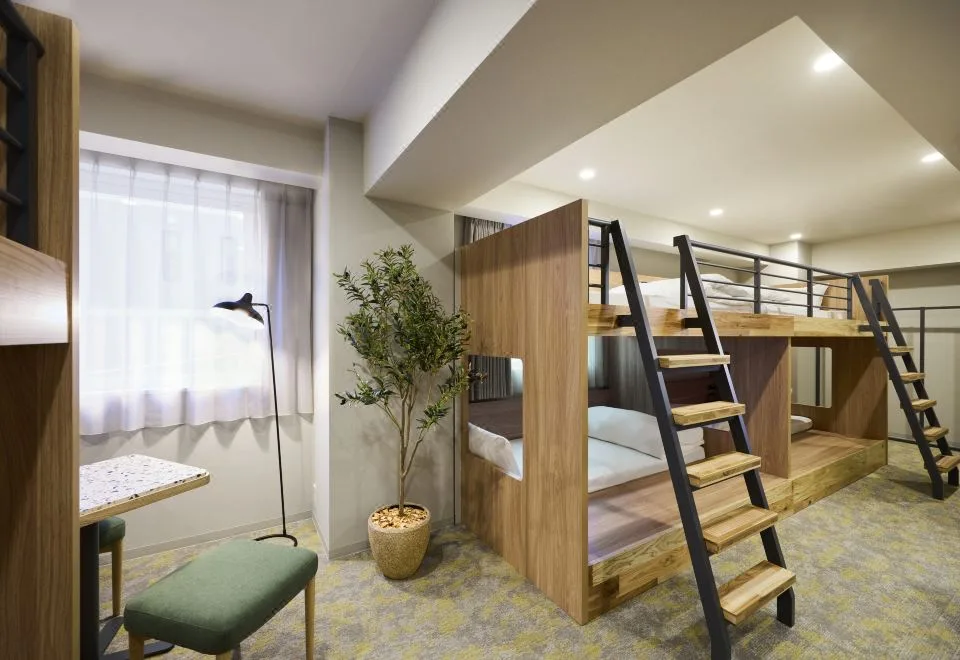
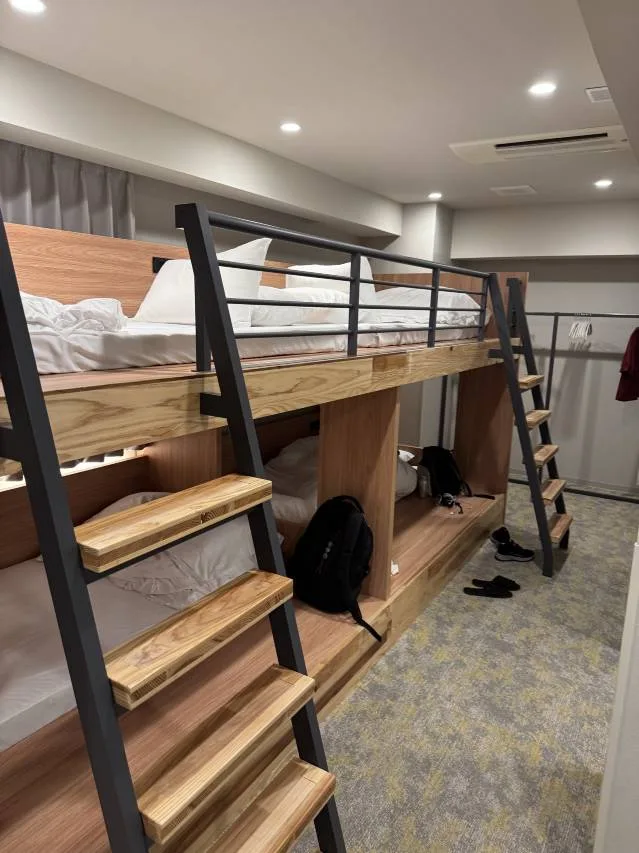
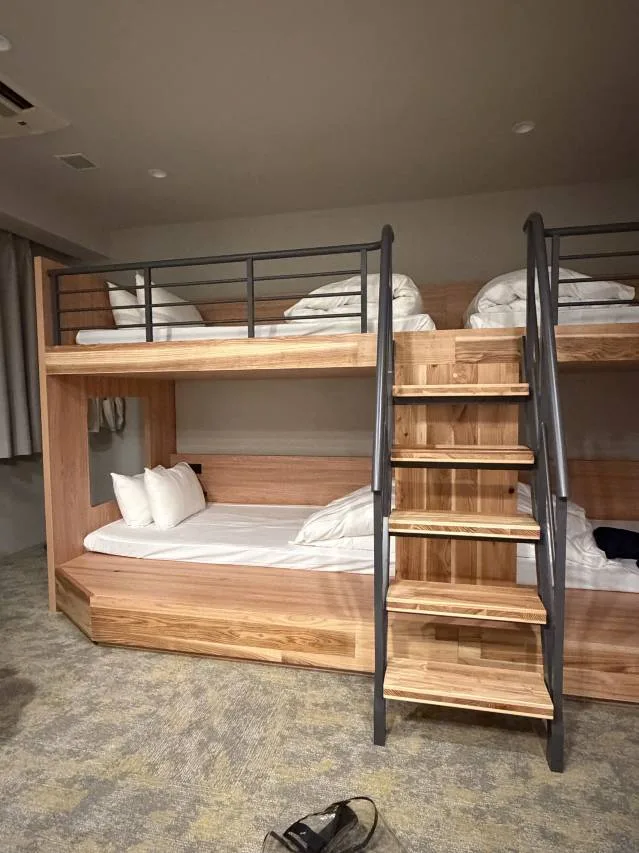
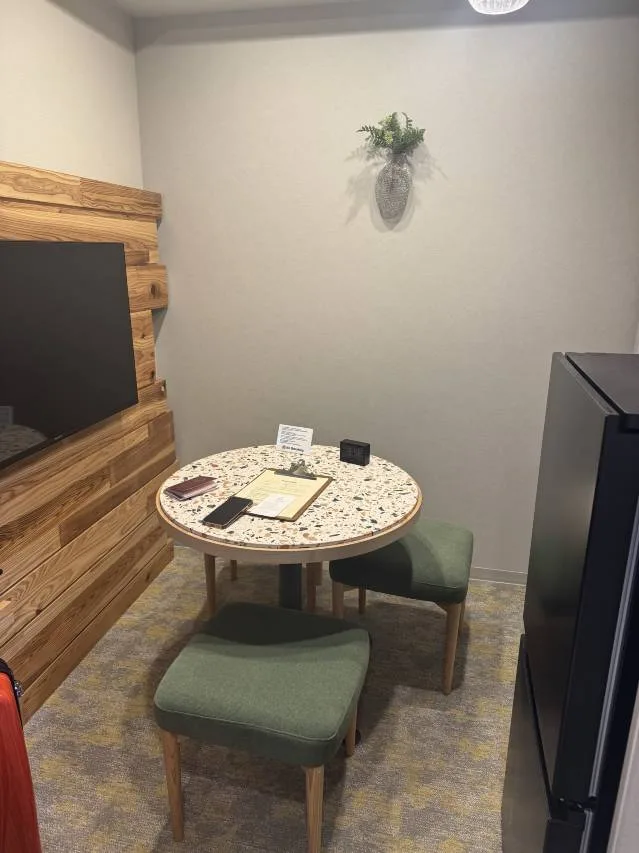
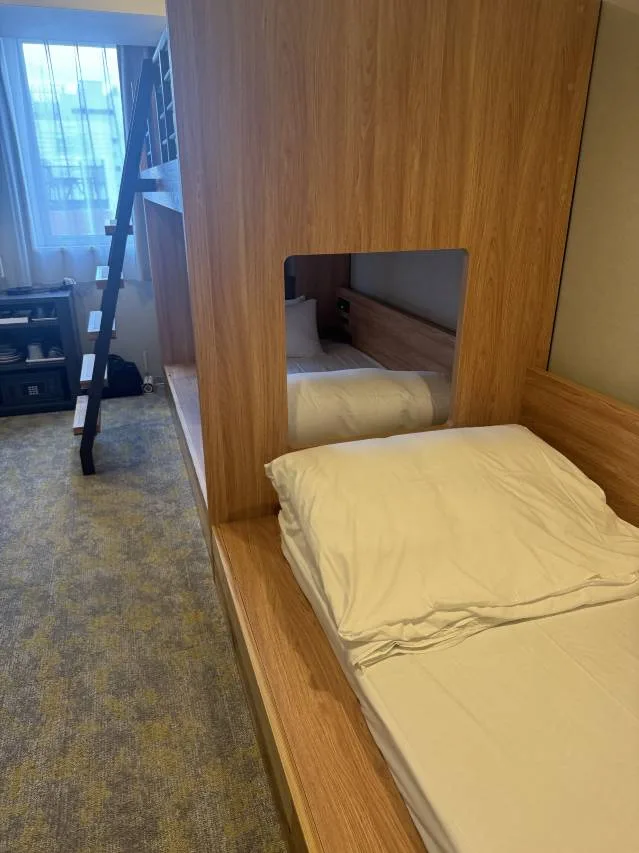
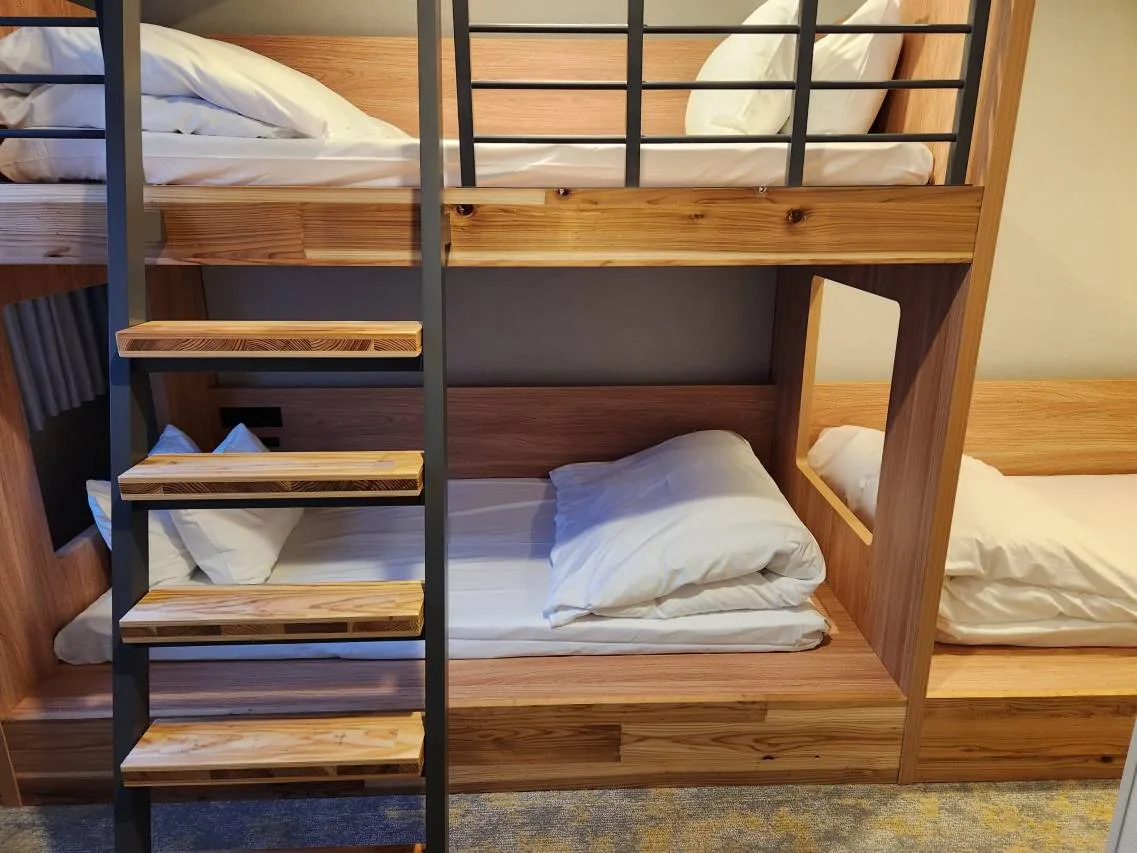
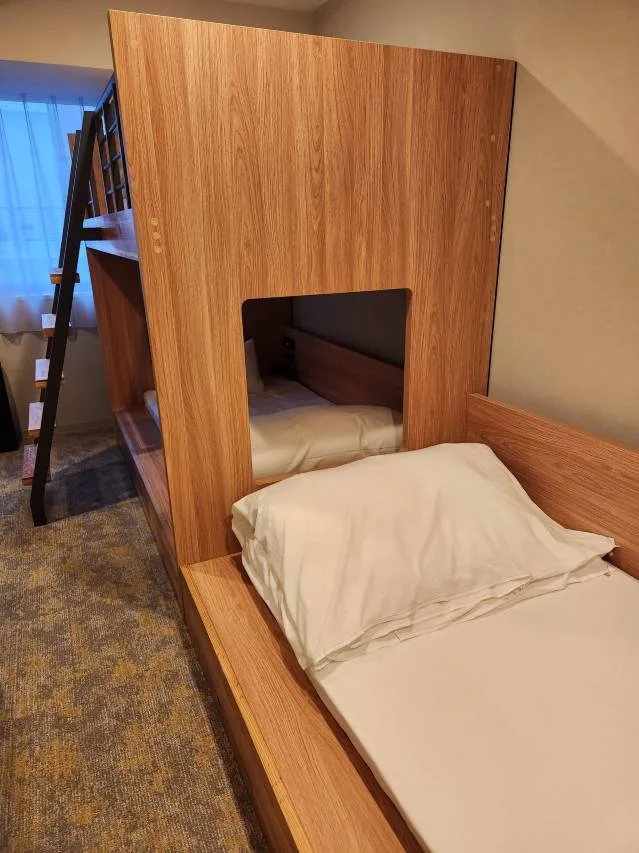
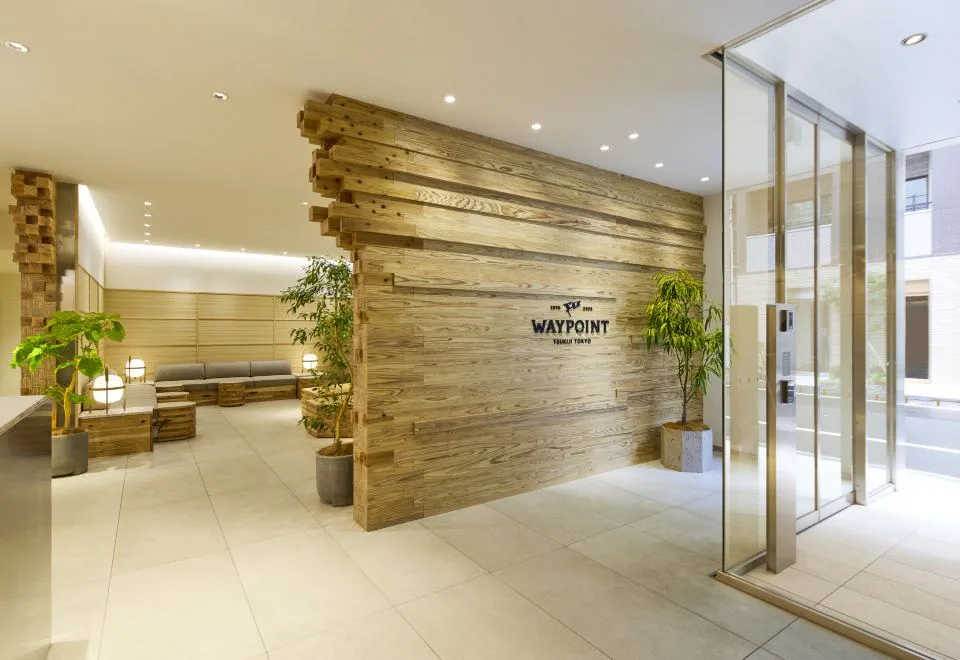
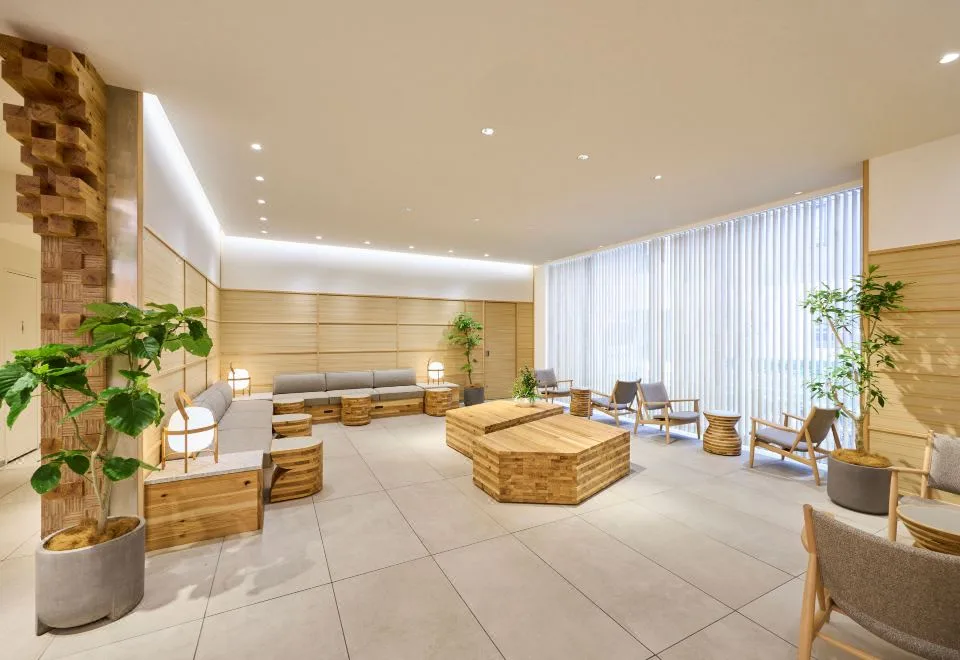
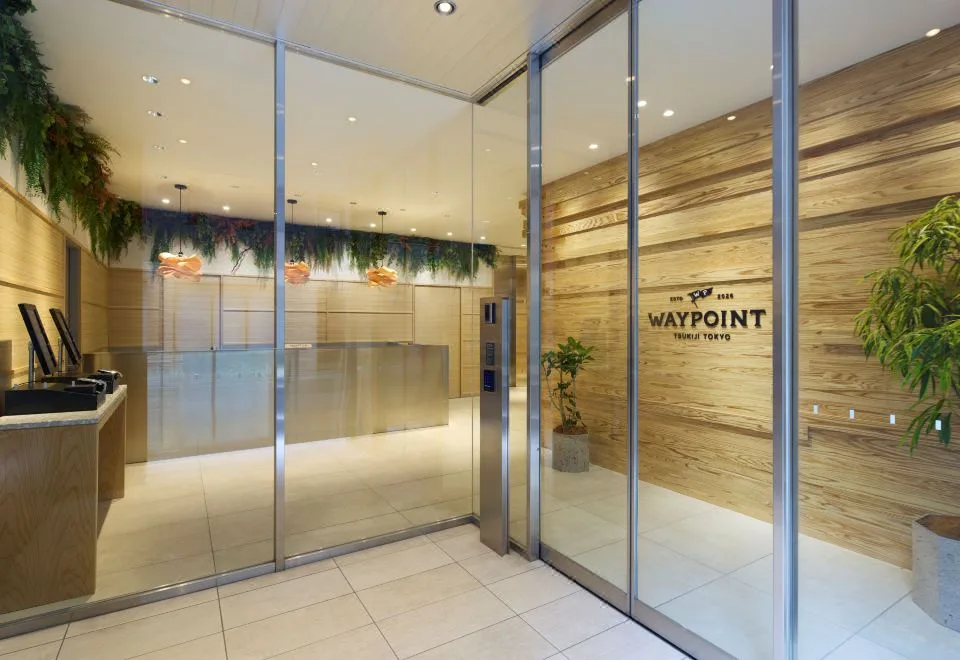
The photos below are grouped by use: the bed areas show whether the passage beside the bed fits two suitcases passing, the bathroom areas show the washbasin and storage, and the shared areas show the laundry facilities and lobby seating. They come from different rooms, so judge by the room type you booked; the ladder position on the bunks and how the sofa bed opens out are both visible in the photos.
Look closely at the bathroom photos for storage beside the washbasin: with four people taking turns, toothbrushes, skincare and a hair dryer all need a place to sit, and the photos show whether there is one. The bunk ladder’s position is visible in the photos too — whoever sleeps on top should check which side it is on, so the midnight trip down is straightforward.
Room types and beds
Laundry and shared amenities
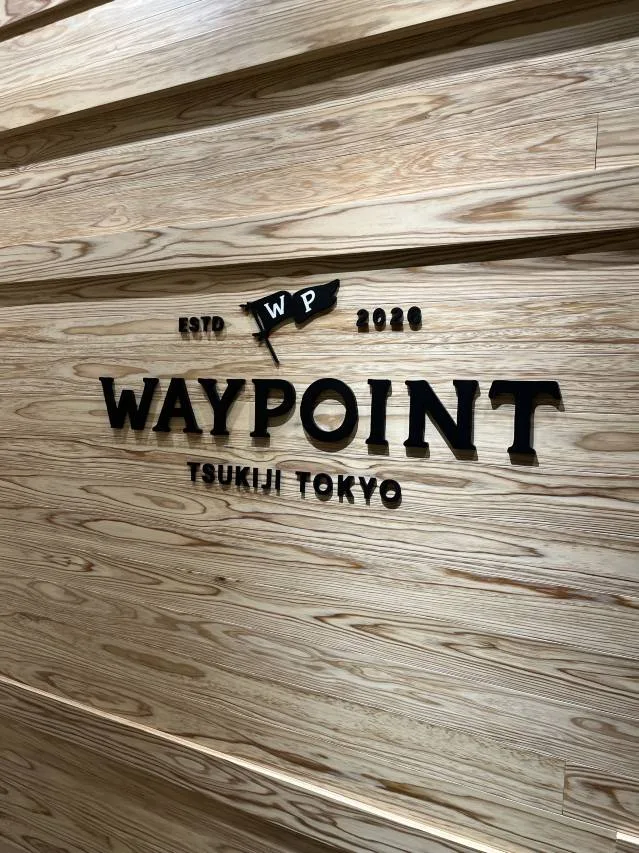
Lobby and entrance
How I would plan the location
Spend the morning around Tsukiji and continue to Ginza in the afternoon. For Tokyo Disney Resort, consider the connection to the Keiyo Line at Hatchobori and allow time for walking and transfers. On a multi-night stay, plan a laundry evening instead of leaving every load to the checkout day.
My plan looks like this: the first morning belongs to the Tsukiji Outer Market, the afternoon to Ginza; the second day to Nihonbashi or the Imperial Palace, with laundry done that evening; the last day, check out by 11:00, leave bags at reception and walk around nearby. Six people in the Suite Bunk get the kitchen and washer-dryer in the room, so the schedule can stay loose; four or fewer in a Bunk room, with beds assigned and bags stowed, find it as easy as any standard hotel.
On a rainy day, keep the plan indoors: the Tokyo International Forum is 1.3 km away and the Ginza Art Aquarium 910 metres, both close enough to walk with an umbrella. If you would rather not go out at all, the dining table in the room doubles as a work desk — eat a bought bento in the room and head out once the rain stops.
Pros and cons
Pros
- Tsukiji Station is about a two-minute walk (110 metres); the Tsukiji Outer Market (420 metres) and Ginza (310 metres) are both within strolling distance.
- Room types for four to six people, 26 to 68.2 m², with bunk beds and regular beds to match the headcount.
- The Suite Bunk has a kitchenette, microwave and in-room washer-dryer — most useful on stays of three nights or more.
- Shared microwaves and coin laundry on floors 5 to 9 are available around the clock, so laundry late at night means no queue.
- Reception is staffed around the clock in Chinese, English and Japanese, with keypad entry and luggage storage.
Cons
- No breakfast is served in the hotel — breakfast means the market, a bakery, or preparing your own.
- No room type allows an extra bed or a crib, so the headcount has to fit the room’s maximum.
- Bunk-bed rooms need climbing a ladder; anyone who dislikes that is left with the Triple Bed.
- The Deluxe Bunk bathroom varies by floor between shower and bathtub, and the Suite Bunk has a shower only.
Information checked: November 21, 2026.