
Hilton Hiroshima
Hilton Hiroshima is a comfortable base when I want to spend time at the hotel, not merely sleep after sightseeing. Trip rates it 9.3 out of 10 from 528 reviews — cleanliness 9.7, amenities and service 9.3, location 8.9 — and Google Maps reviewers give it 4.4 from about 2,100 reviews. Opened in 2022 as the first Hilton in the Chugoku-Shikoku region, it has 420 rooms starting at 35 m², with a pool, breakfast and lounge options; reaching JR Hiroshima Station still requires a transfer.
Room comparison
Deluxe rooms are 35 m² on floors 7–12. Premium rooms remain 35 m² on floors 13–18, so the main difference is height. The 48 m² Deluxe Corner adds floor space; Executive rooms on floors 19–22 remain 35 m² and may include lounge access according to the selected rate. I would pay extra only for a benefit I plan to use.
| Room type | Area and floor | Main difference |
|---|---|---|
| Deluxe Twin / King | 35 m² · floors 7–12 | Standard room with window seating |
| Premium Twin / King | 35 m² · floors 13–18 | Higher floor, same area |
| Deluxe Corner | 48 m² · floors 7–12 | 13 m² more than base room |
| Executive Twin / King | 35 m² · floors 19–22 | Check Executive Lounge benefits |
Above the four base types, the ladder keeps going: a 71 m² one-bedroom suite, a 92 m² Deluxe Suite, a 127 m² Premium Suite, and a 163 m² Presidential Suite. Travelling with three or four people, the Corner Twin for four or a Premium room for three is the place to look; the accessible King room is 35 m² with a window, non-smoking, and sleeps two.
The Executive value is not the area: Executive rooms on floors 19–22 are still 35 m², and what they add is direct lounge access. The 48 m² Executive Corner for four is the only tier that gives you space and the lounge together. My rule is simple — lounge time every evening makes Executive pay; to sleep higher up only, Premium on floors 13–18 is enough, and the price gap goes toward breakfast instead.
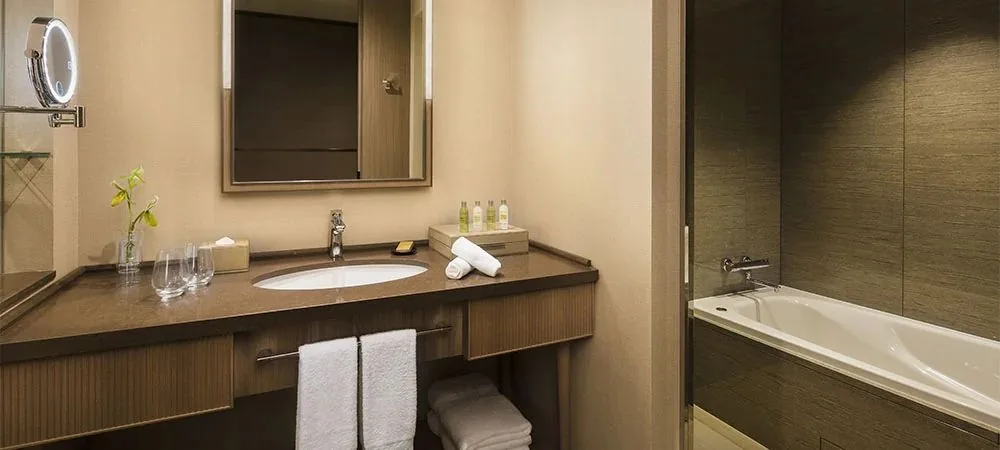
I have checked the room details too: all rooms are non-smoking, Wi-Fi is charged, every floor has an ice machine, and rooms come with a flat-screen TV, a safe, a desk and tea bags, while the bathroom has free toiletries and a bidet. Bath before bed? The bathtub photo is the one to study; working from the room, weigh the desk as well as the window seat.
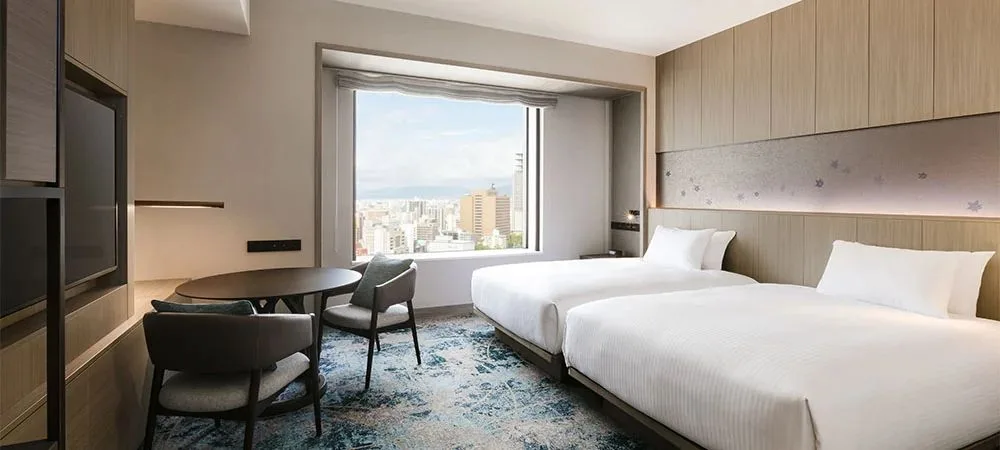
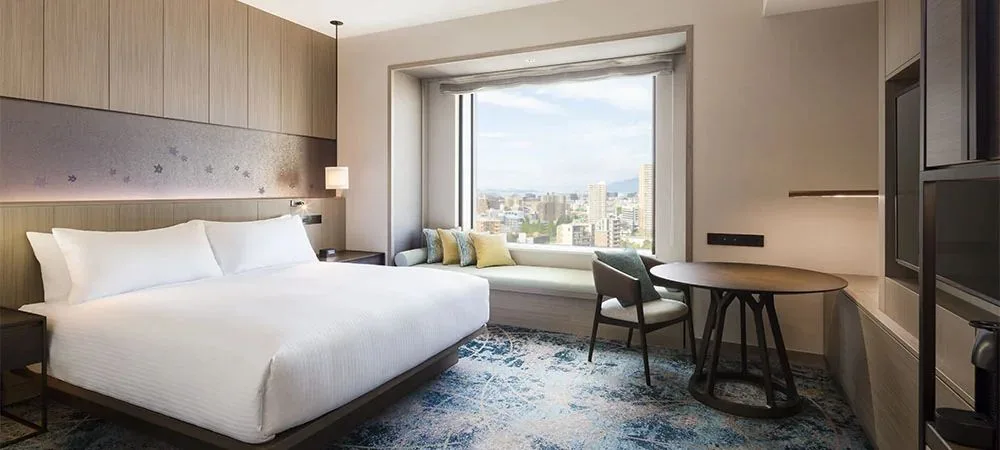
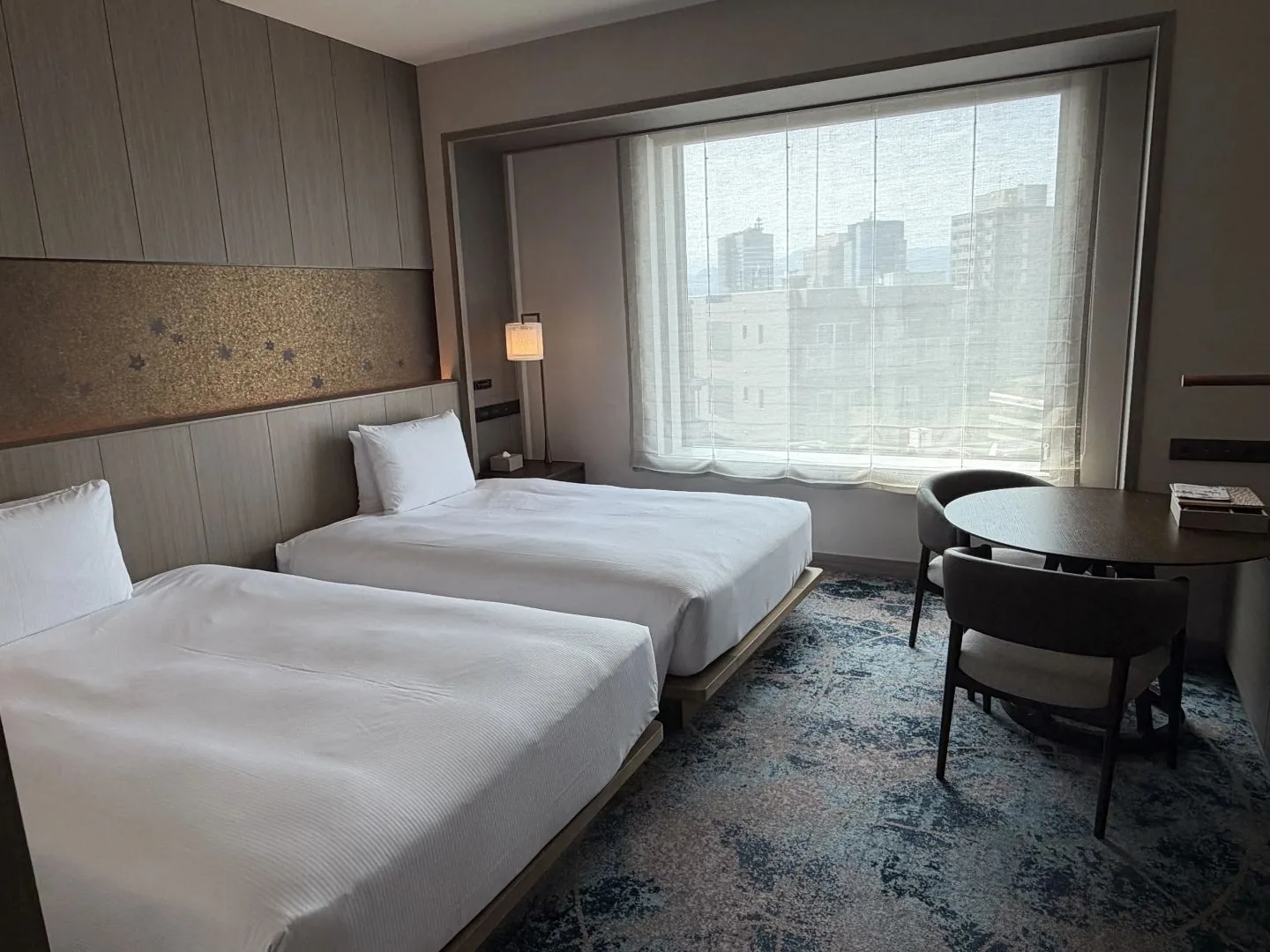
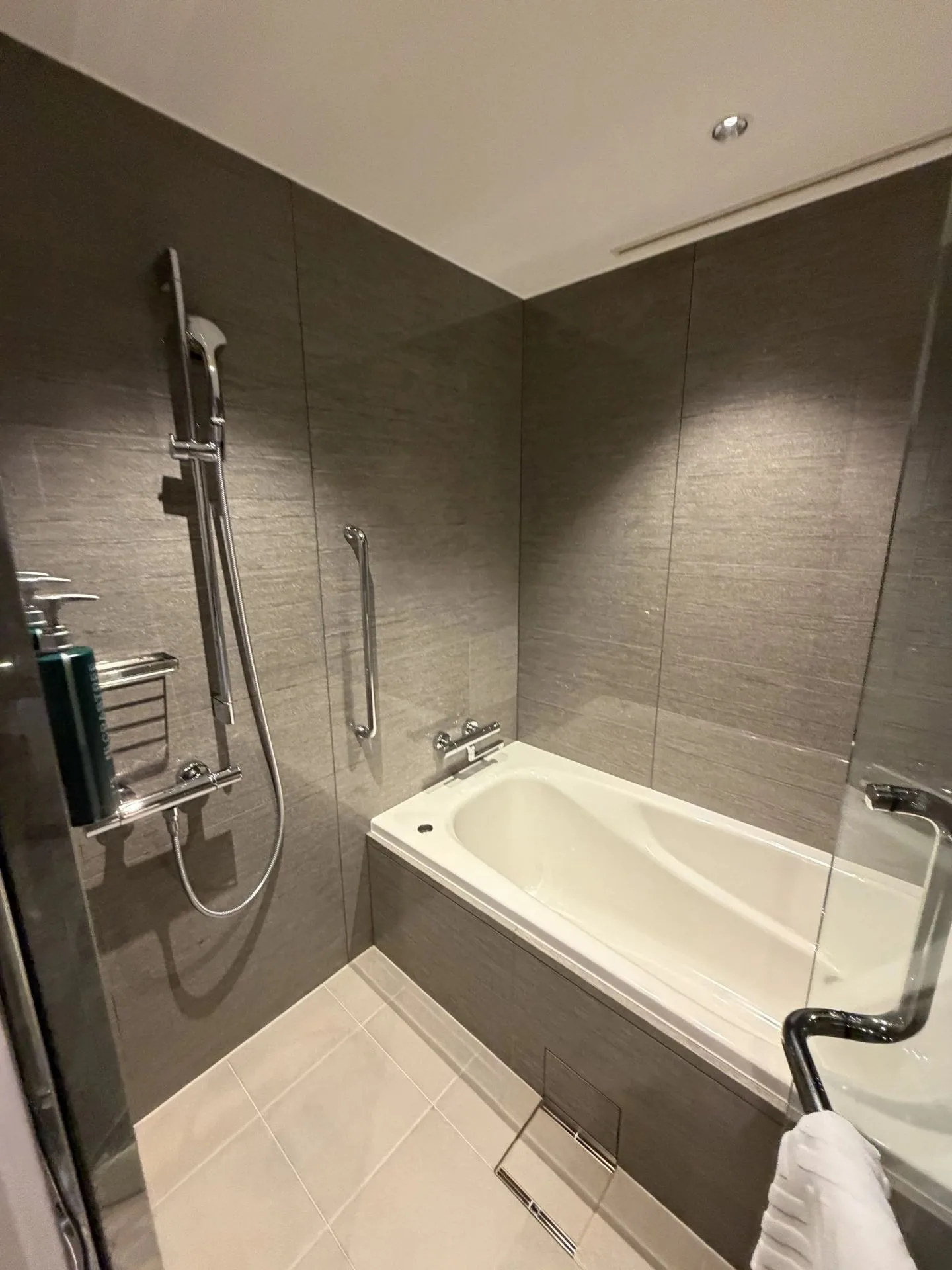
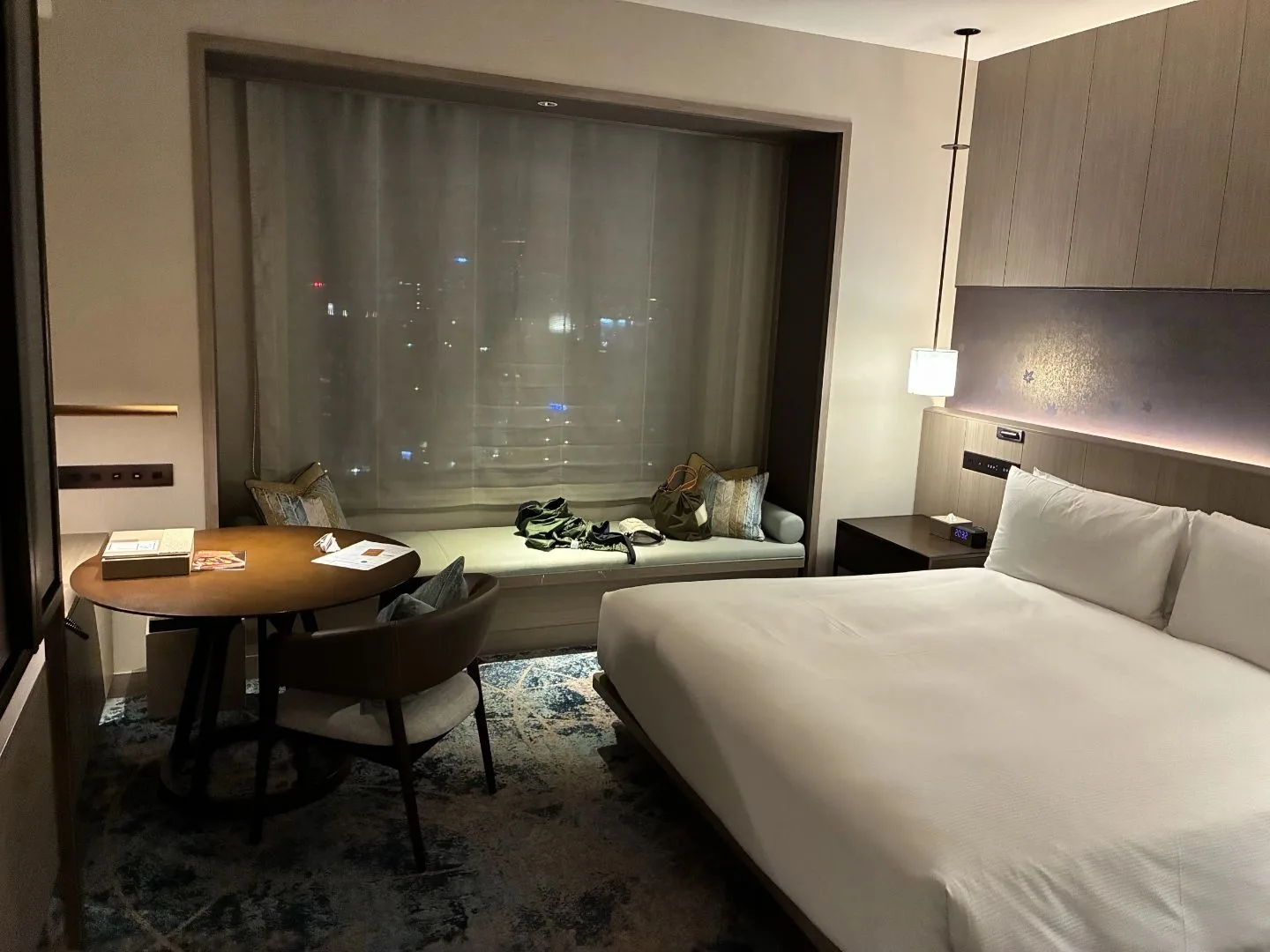
Soundproofing decides how well you sleep, and in the 15 Trip reviews I read, good soundproofing, deep sleep and first-rate bedding come up again and again. I choose by the bed first: the Twin gives two single beds for friends travelling together, while the King gives one unbroken king bed for couples. The window seat is for switching off after you come back — city lights at night, daylight through the window in the morning — and both are photographed for you.
On lighting, I learned it from the reviews: the room light runs dim, and for make-up you go to the bathroom, where the light is brighter. For make-up or desk work in the room, compare the daylight and evening photos — the evening King photo shows the warm, dim tone, while the daylight Twin photo is bright through the window. In the bathroom photo, the bathtub and shower are separate, and the vanity and mirror are big enough for two people taking turns in the morning.
I compare official photos with guest photos side by side: the official shots show the layout, the guest shots show the light and how the room is actually used. The Deluxe Twin official shot shows two beds, a round table and window seating in one frame; the three guest shots are the Twin room in daylight, the bathtub and shower area, and the King room at night. Match each photo to its room name and you know which one is the room you want to book.
Breakfast experience
Mozaik on the sixth floor serves a Japanese-Western buffet, with bread, eggs, fruit and Hiroshima-influenced dishes such as conger eel omelet or chirashi rice on the buffet. A relaxed breakfast is worth more to me than adding it before an early train. I compare the supplement with the breakfast-inclusive rate before I decide.
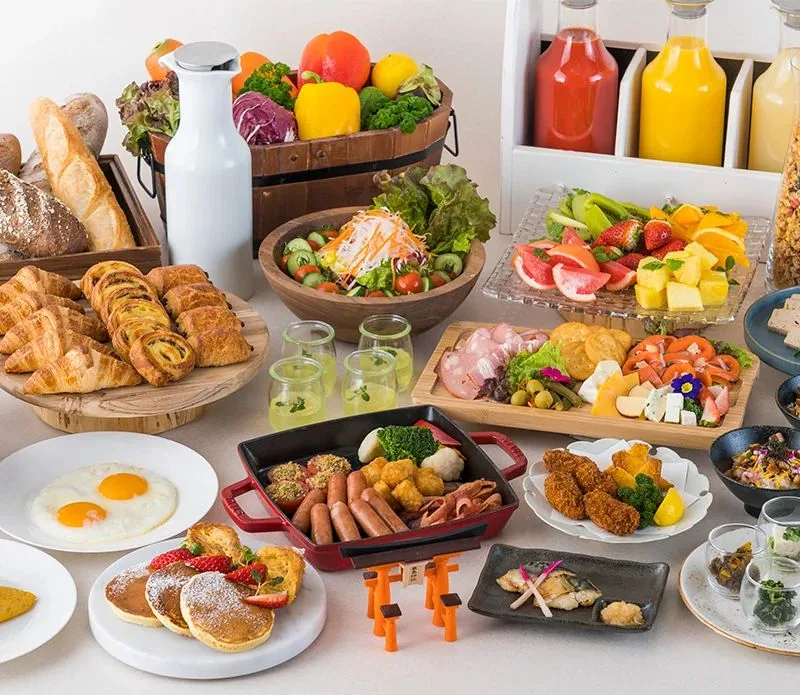
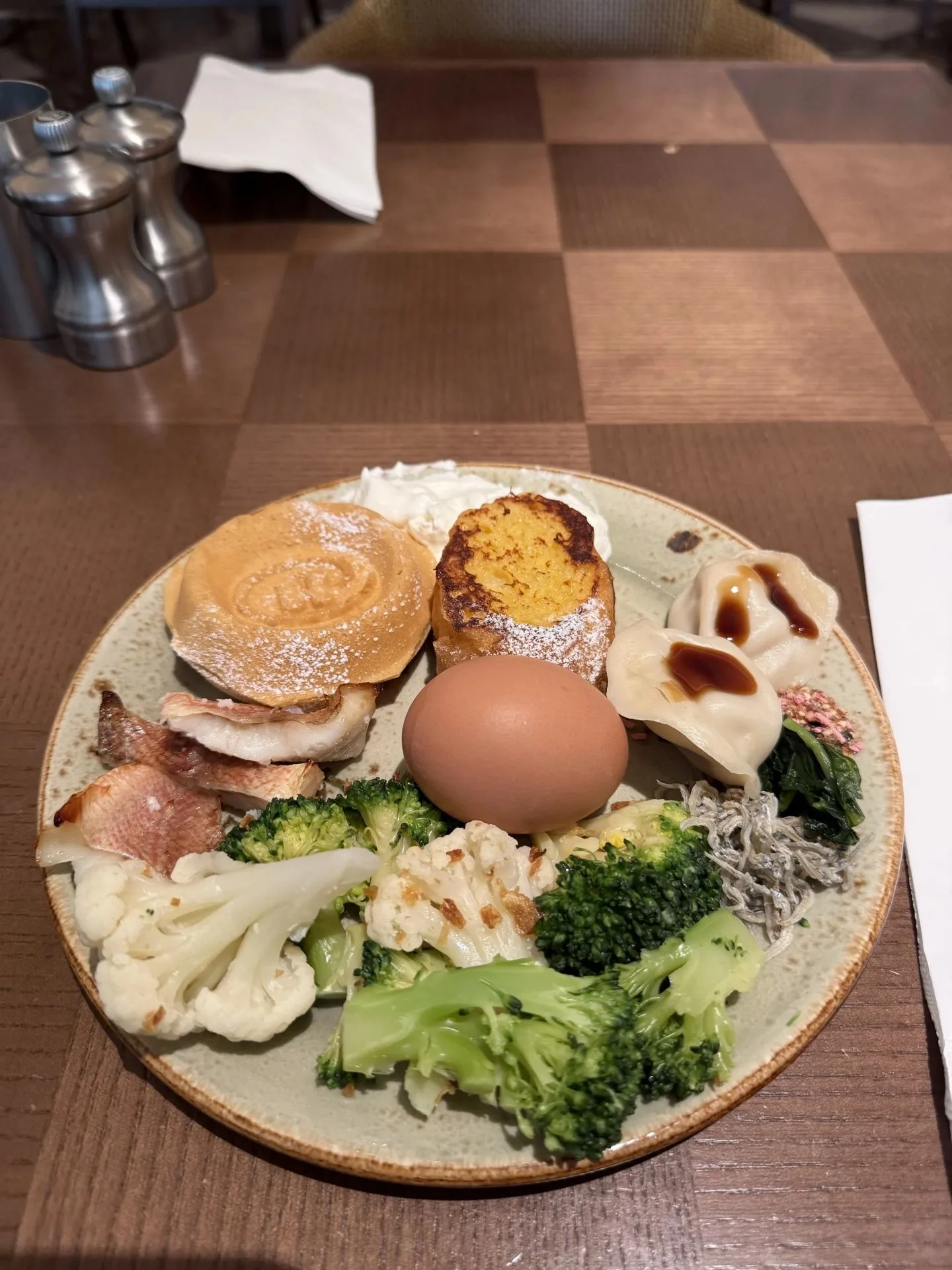
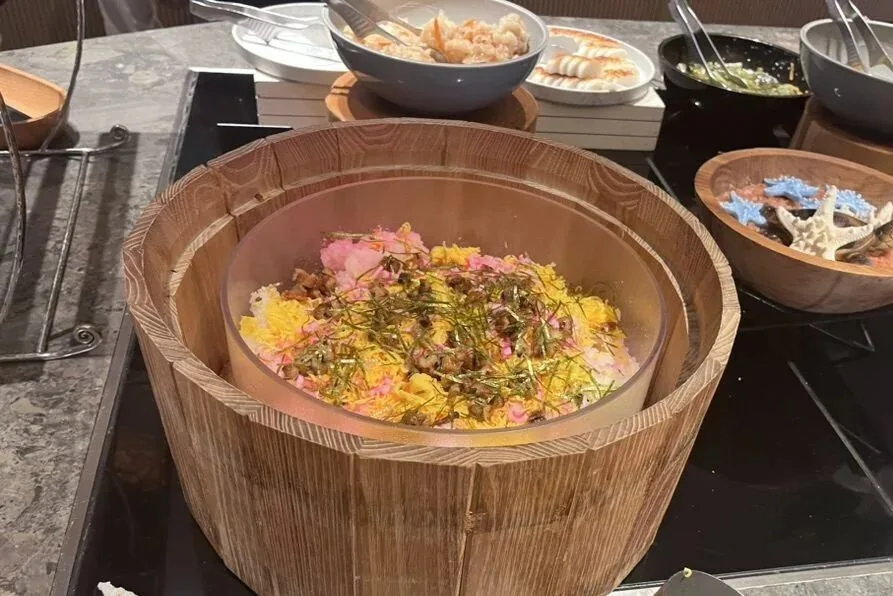
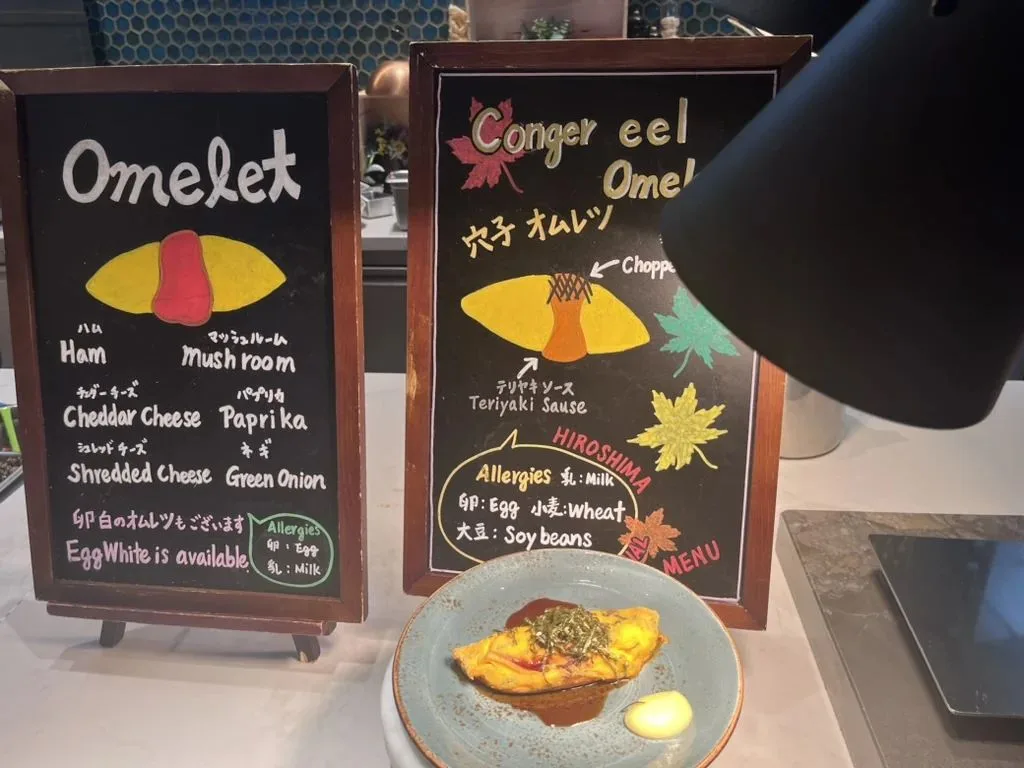
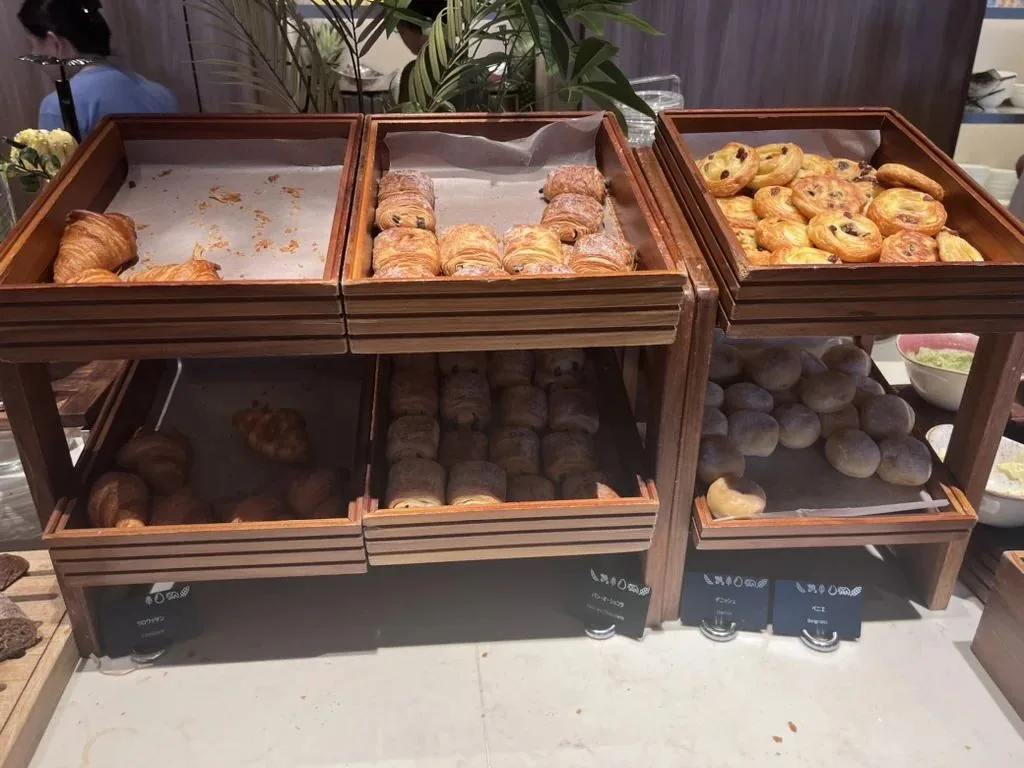
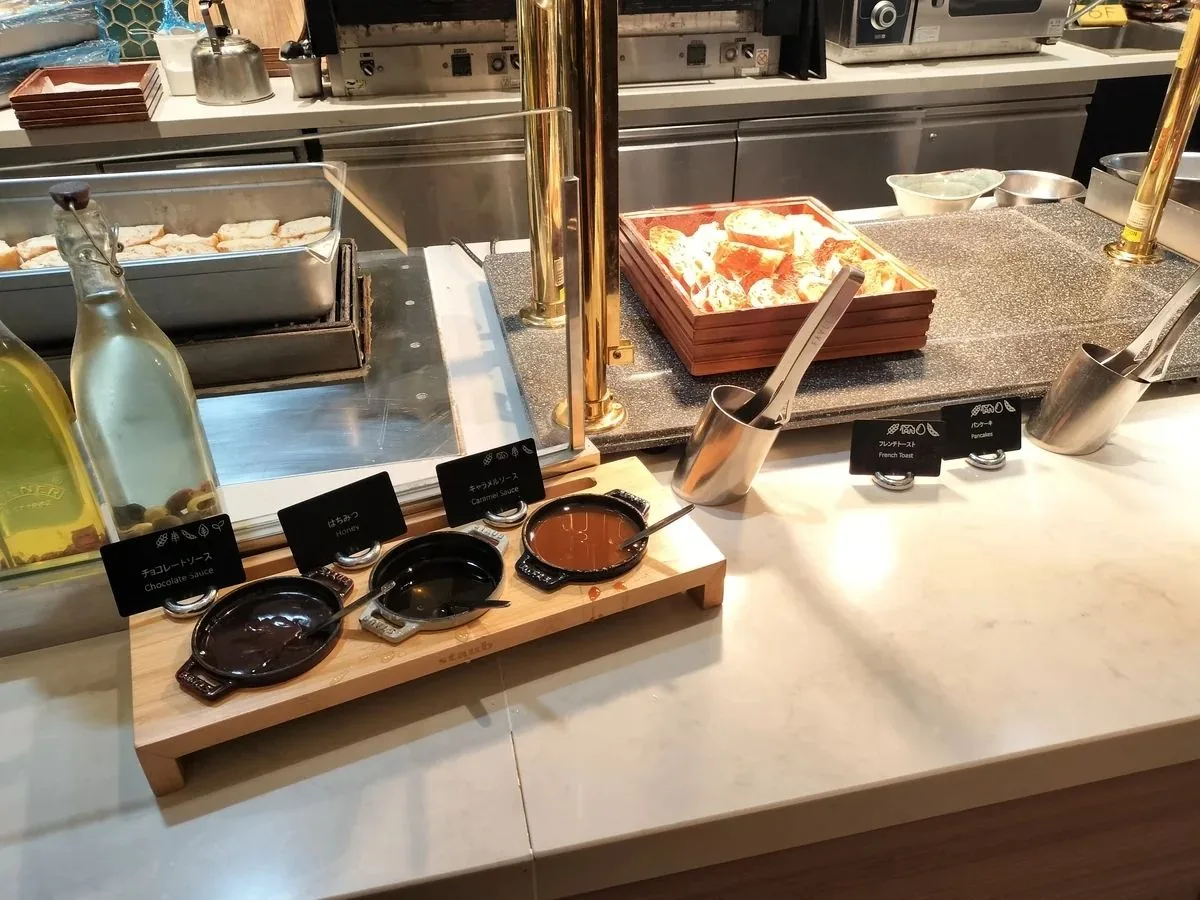
Trip highlights that 89% of guests especially like the breakfast here, with a wide buffet, a varied menu, creative drinks and signature dishes. The conger eel omelet is the made-to-order egg station’s signature — the sample plate and menu board are both photographed for you; the conger eel chirashi sits in a wooden tub, and that is where a Japanese-style breakfast starts; croissants, French toast and pancakes sit in wooden boxes at the counter, so sweet and savoury both fit on one plate.
Breakfast has two sides you should know first: at peak hours the buffet gets crowded and the food can taste ordinary — that is the reservation I found in the 15 reviews — and one review notes heavy cooking-oil smell, strong enough to change clothes after eating. If crowds bother you, go at 6:30 when it opens; if the smell bothers you, change in your room afterwards and carry on with your day.
Breakfast runs 6:30–10:00 on weekdays and 6:30–10:30 on weekends and Japanese holidays, and the official reference price is ¥3,500. Compare the breakfast-inclusive rate against that figure per person per day, not against the menu price alone. With children, the maths changes: for a family of two adults and two children, the room is booked for adults and you top up the difference at check-in and buy the children’s breakfast — the top-up is small, so write the headcount correctly when you book.
Executive-floor breakfast is a separate calculation: I compared the review sample against Mozaik, and the Executive floor comes out better for both breakfast and happy hour — the happy hour portions are enough for dinner. Booking Executive? Do not buy Mozaik breakfast on top; with a standard room, whether ¥3,500 is worth it depends on a full breakfast that morning.
Getting around
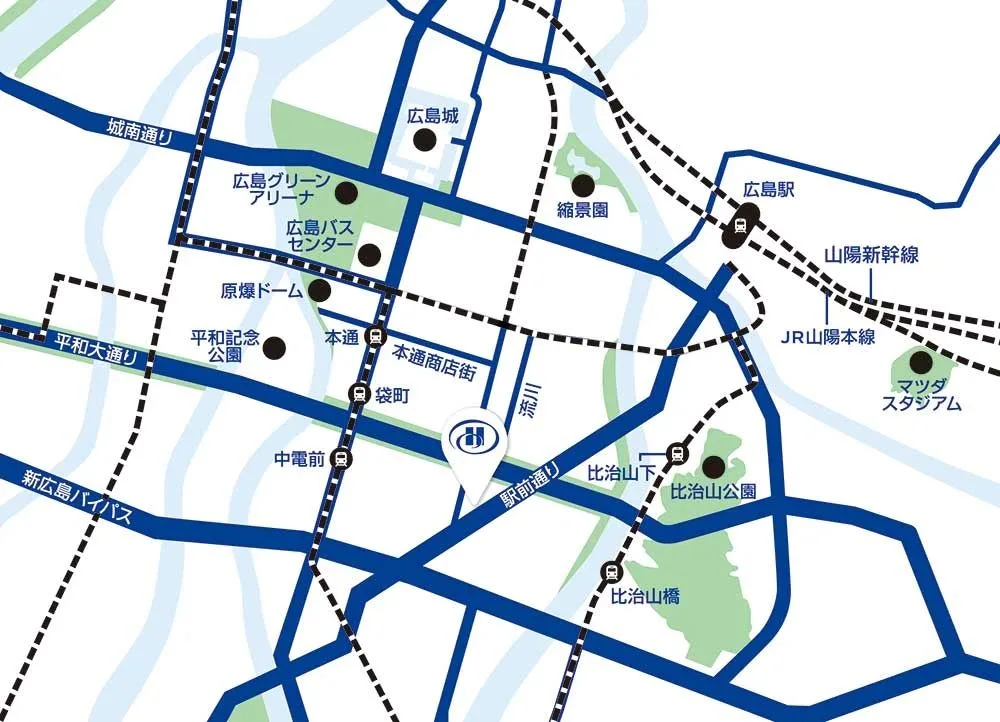
The hotel is at 11-12 Fujimicho, Hiroshima. From Hiroshima Station South Exit, the hotel’s access guide suggests bus route 50 toward Takaramachi-kita, followed by a short walk. Compare this with a taxi when carrying large bags. The downtown setting suits shopping and dining, but is not right beside the station.
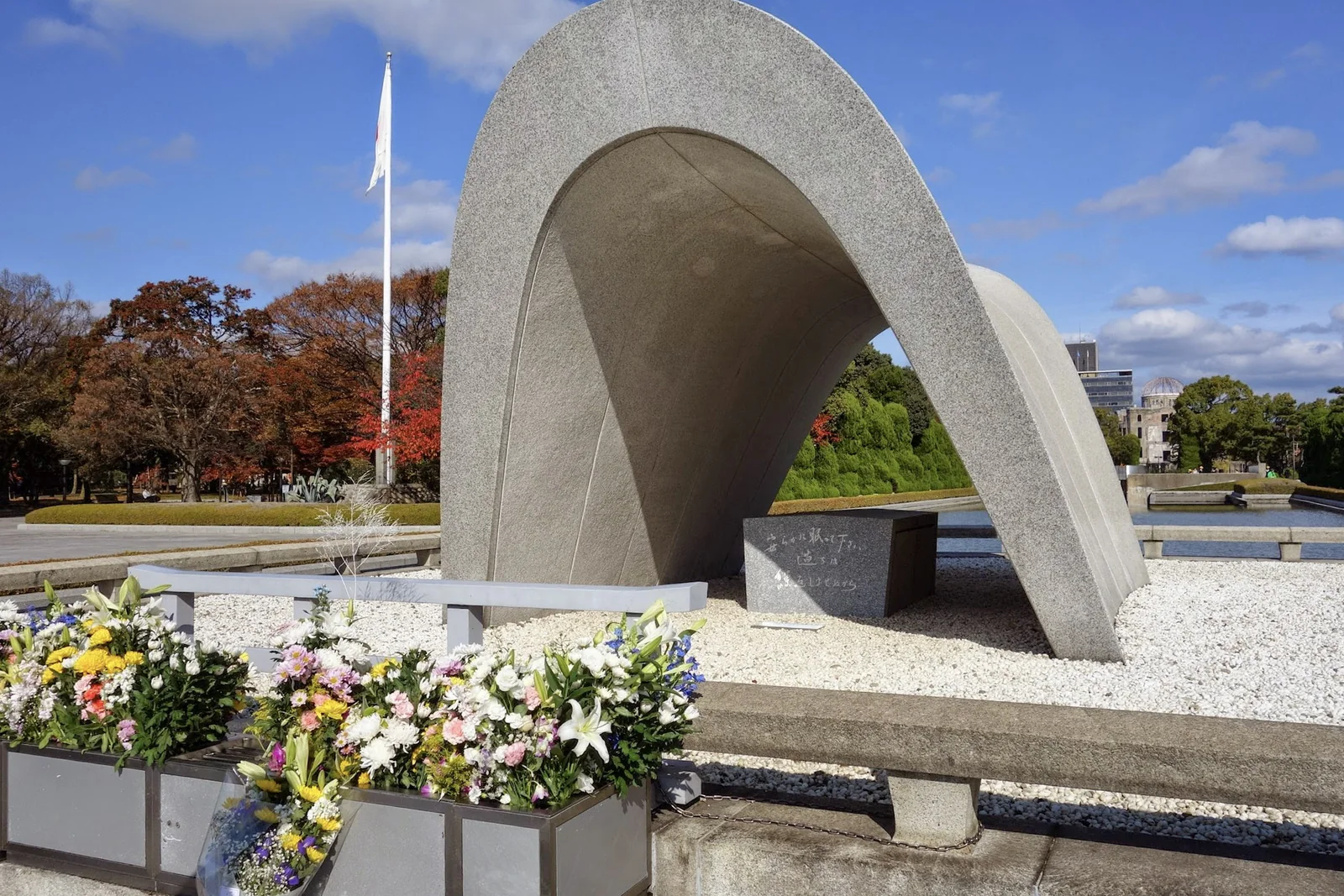
Here are the distances in walking terms: JR Hiroshima Station is 1.9 km away, and Peace Memorial Park is 1.3 km — about a 20-minute walk. Higashisenda Park is 630 m, Nagarekawa street 700 m, and Ondo Onsen 470 m, all within strolling range. Walk back from the Peace Memorial Park in the daytime and you can shower and rest without changing transport again.
For a Miyajima day trip, Itsukushima Shrine is 24.8 km away and the Miyajima pier 23.7 km — allow separate time for the ferry and the ride there and back; Hiroshima Green Arena is under 5 minutes by car, so staying here works for a game or a concert too. The central shopping district is also under 5 minutes by car.
A taxi is the easiest option with luggage: reviews put the fare from Hiroshima Station at ¥1,200 to ¥2,000 for a 10-minute ride. Bus 50 also stops right outside the hotel, so you board without dragging bags to a stop. To skip the taxi fare, the bus takes 10 minutes to Takaramachi-kita and a 2-minute walk after that — the shortest walk-off of the three bus routes. The official guide also lists bus 102 to Tanaka-cho (10 minutes, then a 3-minute walk) and bus 301 from the North Exit to Fujimicho (15 minutes, then a 5-minute walk).
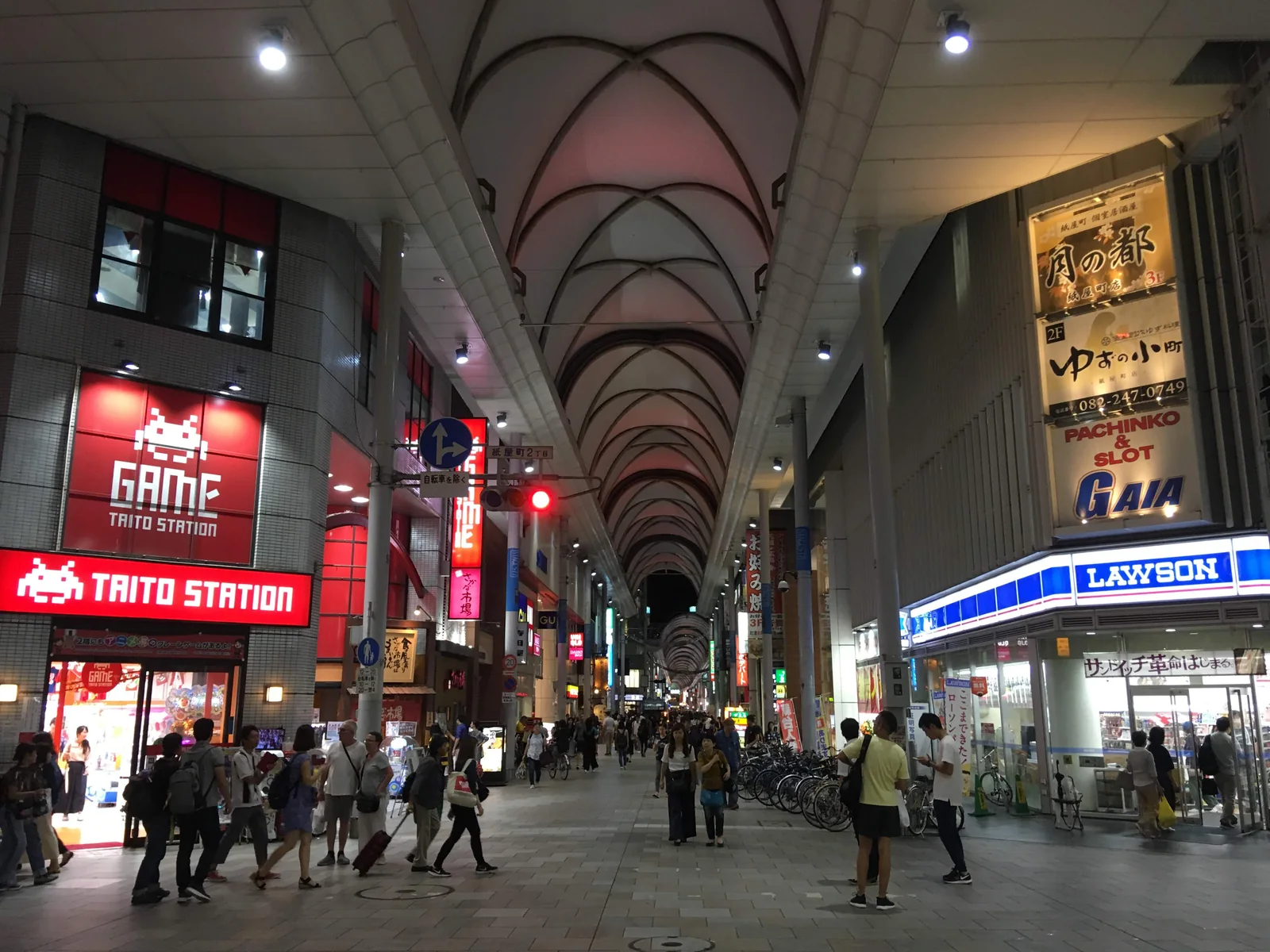
For the neighbourhood, Fuji Grand Hiroshima covers supermarket food and daily goods, and a 7-Eleven sits right across the street for a late-night drink. Namiki-dori, Hondori and Hatchobori make one shopping walk — Hatchobori is 10 minutes on foot, and Hondori has a roof, so you can browse even in the rain. Peace Memorial Park and its museum deserve their own time; at 1.3 km away, the visit and the walk back both fit. Itsukushima Shrine is 24.8 km away, a day trip rather than a walk, and the Hiroshima Green Arena is under 5 minutes by car.
One night or several
The pool and guestroom window-side seating make a longer hotel stay attractive. In the 15 Trip reviews I read, clean rooms, comfortable beds and good soundproofing come up again and again, and the lighting runs dim. For work or getting ready under bright light, check daylight and evening room photographs.
The pool is the best reason to leave time for the hotel: the indoor pool comes with a pool lounge, and Trip highlights call it clean, beautiful and worth trying; a hot tub, sauna, spa and gym share the same floor. The water quality and the pool staff’s warmth are the strengths I found in the 15 reviews — four nights here still felt worth repeating. Come back in the afternoon, swim a lap, then go to dinner, and the room rate buys more than a night’s sleep.
Opened in autumn 2022 as the first Hilton flagship in the Chugoku-Shikoku region, the hotel has 420 rooms including 16 suites, four restaurants and bars, a Spa by L’OCCITANE, and 19 banquet and meeting rooms. The ballroom holds more than 1,000 people, and the spa is the first L’OCCITANE spa in the Chugoku-Shikoku region.
For a longer stay, the laundry question matters most: there is no self-service laundry, only paid dry cleaning and laundry service. Daily laundry needs pricing in before you book instead of assuming a coin laundry exists. Check-in is 15:00 and check-out 12:00, the front desk runs 24 hours, and guests must be at least 18 to check in. No room takes an extra bed or a crib, pets are not allowed, and the hotel’s own car park is ¥2,700 a day with no reservation needed — but it is small and often full, so drivers need a backup plan; the car park also has EV charging spaces, charged. The front desk serves in English, Korean and Japanese, and the lobby has Western staff on duty, so English works smoothly.
How should you read the negative reviews? Start with the dates and the rooms. The 15 reviews I read run from December 2025 to September 2026, with scores from 6 to 10. The lowest, 6, found five big bags of rubbish in the room — the staff handled the follow-up well. A 7.5 marks down the missing self-service laundry; an 8.7 notes the small, often-full car park and a New Year dinner for two adults and two children at ¥21,000 with ordinary food. Not being beside the station is a trade-off you can confirm on the map; dim lighting and breakfast taste depend on your own habits.
In Trip’s review summary, the facilities topic drew 192 comments, convenience 157, service 117, location 75, dining 80, and guest suggestions 9; on location convenience, 147 guests wrote that they were satisfied with where the hotel sits. On Trip’s October 2026 list, it ranked second among Hiroshima’s luxury hotels.


Advantages and trade-offs
Pros
- Rooms start at 35 m²: even the base room has window seating, with space to open a suitcase.
- Clear room choices: floor, corner space and lounge needs can be compared separately, with suites up to 163 m².
- Breakfast with local flavour: conger eel omelet and chirashi, and 89% of guests like the breakfast here.
- Pool, spa and gym all in place: the indoor pool has its own lounge, and the hot tub and sauna share the floor.
- A new hotel opened in 2022: 420 rooms, new hardware, good soundproofing, cleanliness scored 9.7.
- Strong downtown convenience: a 7-Eleven across the street, Fuji Grand supermarket, Hatchobori a 10-minute walk.
Cons
- Not beside JR Hiroshima Station: arrival, departure and daily JR trips all need a bus or taxi added in.
- An upgrade does not always add area: Deluxe, Premium and standard Executive rooms are all 35 m².
- No self-service laundry: only paid dry cleaning and laundry service, so price it in for longer stays.
- Small car park, often full: ¥2,700 a day, so drivers need a backup plan.
- Breakfast is crowded at peak hours and smells of cooking oil: go at 6:30 when it opens, or choose Executive-floor breakfast.
My decision
Deluxe covers the standard 35 m² space, Corner adds extra room, and Executive only pays when its benefits get used. Three or four travelling together? Compare the Corner Twin for four and the suites above it; driving in, settle the parking backup first. Station transfers belong in the budget of time as well as money.
Facts checked: 2026-11-19